
Atari
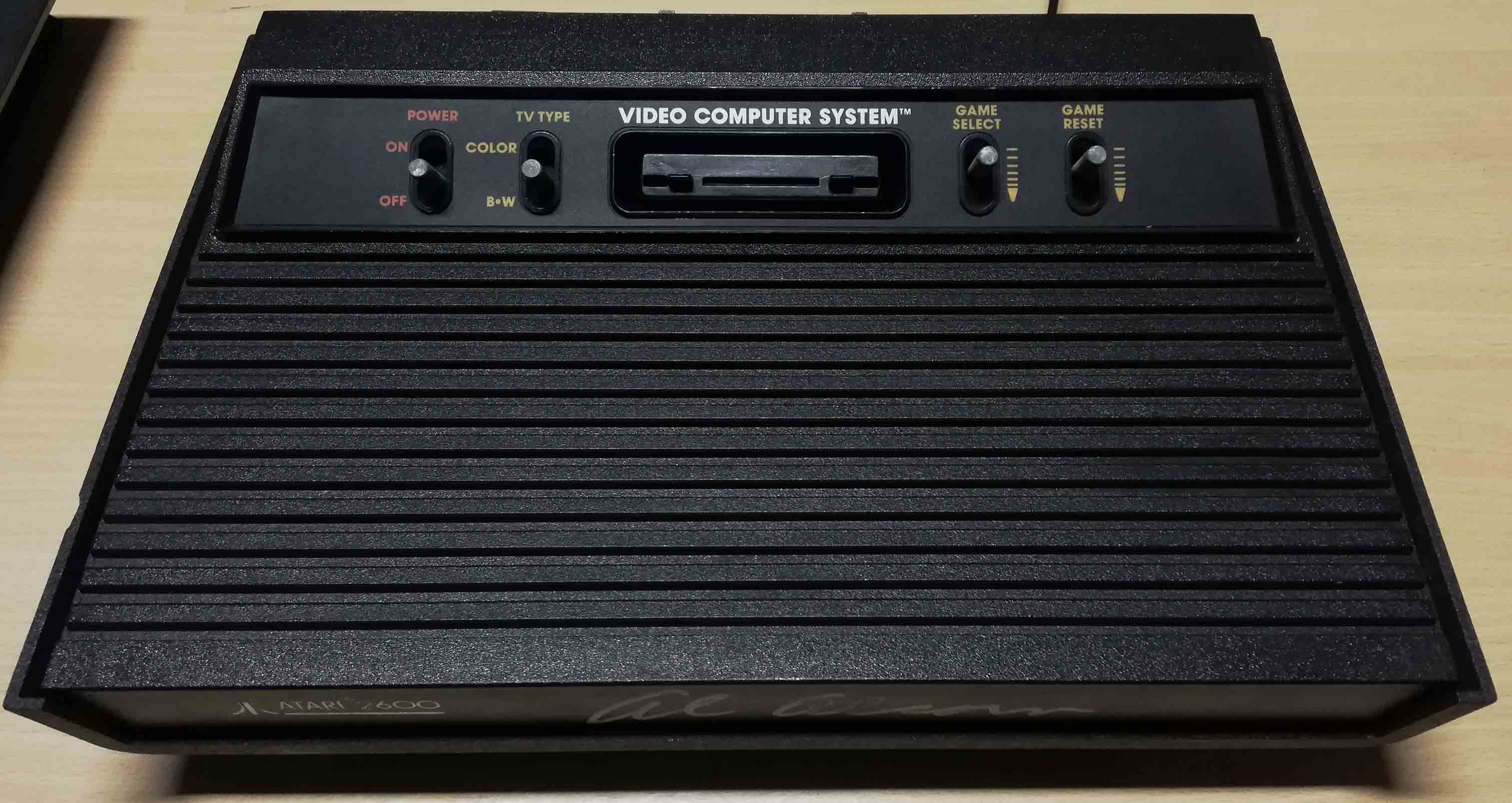 The Atari 2600 hardware was based on the MOS Technology 6507 chip, offering a maximum resolution of 160 x 192 pixels (NTSC), 128 colors, 128 bytes of RAM with 4 kB on cartridges (64 kB via bank switching). The design experienced many makeovers and revisions during its 14-year production history, from the original "heavy sixer" to the Atari 2600 Jr. at the end. The system also has many controllers and third-party peripherals.
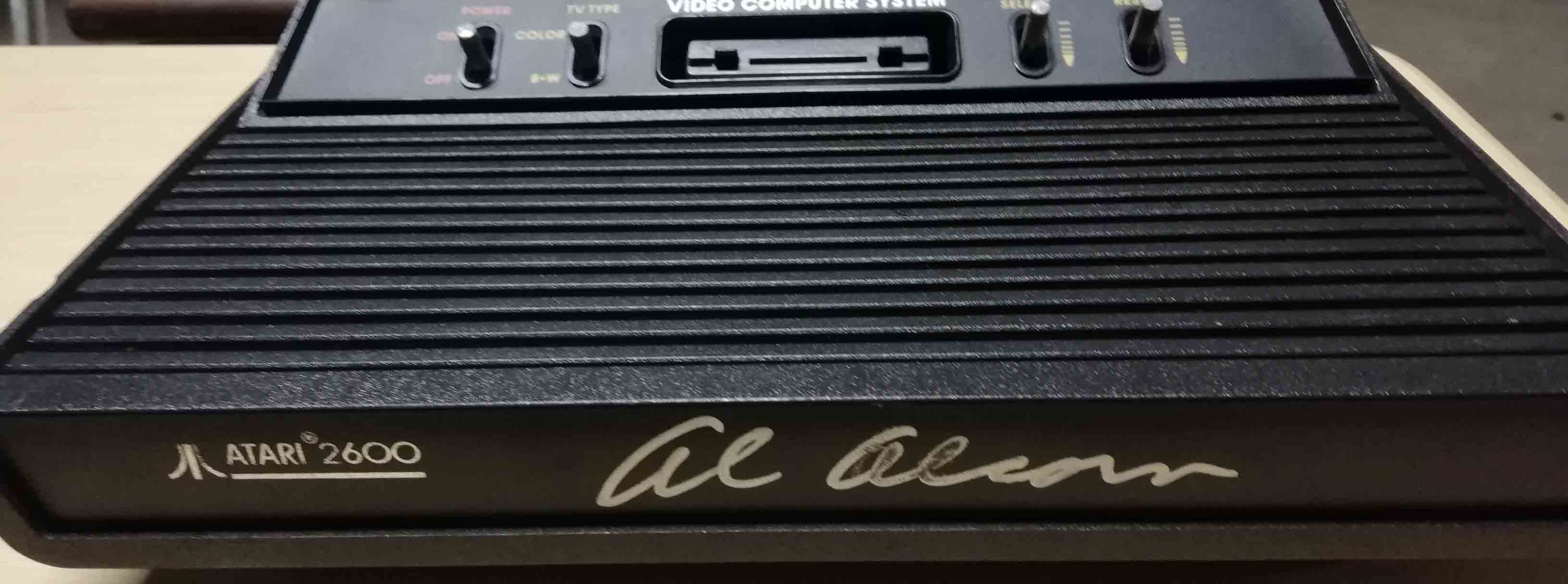 Great success of the event, which took place in Rome in 2019, with the name of VCFI (Vintage Computer Festival Italia). On this occasion we had the opportunity to host many characters from this fantastic world, including the famous Allen Acorn, of which we had the opportunity to meet him and get us to sign a console!
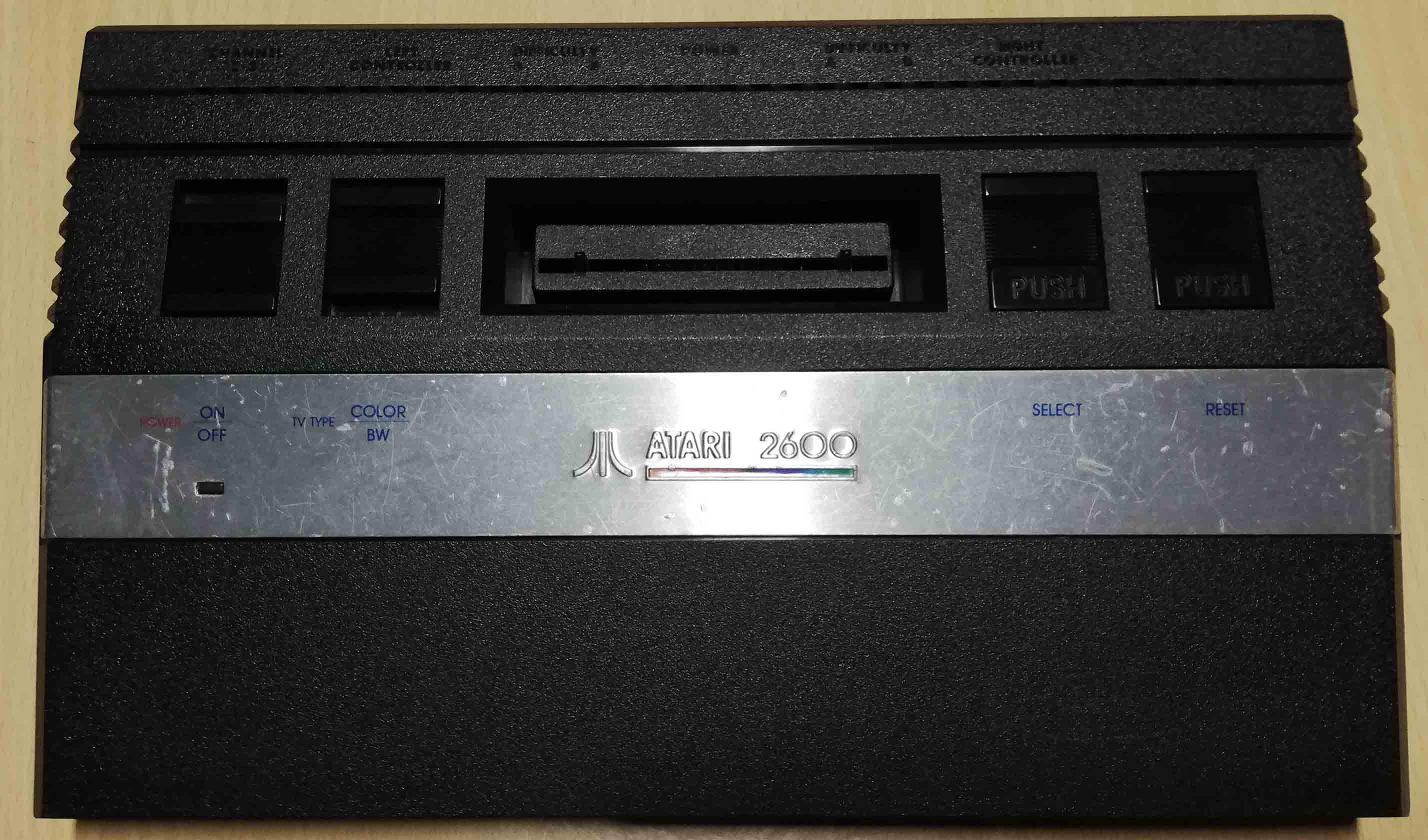
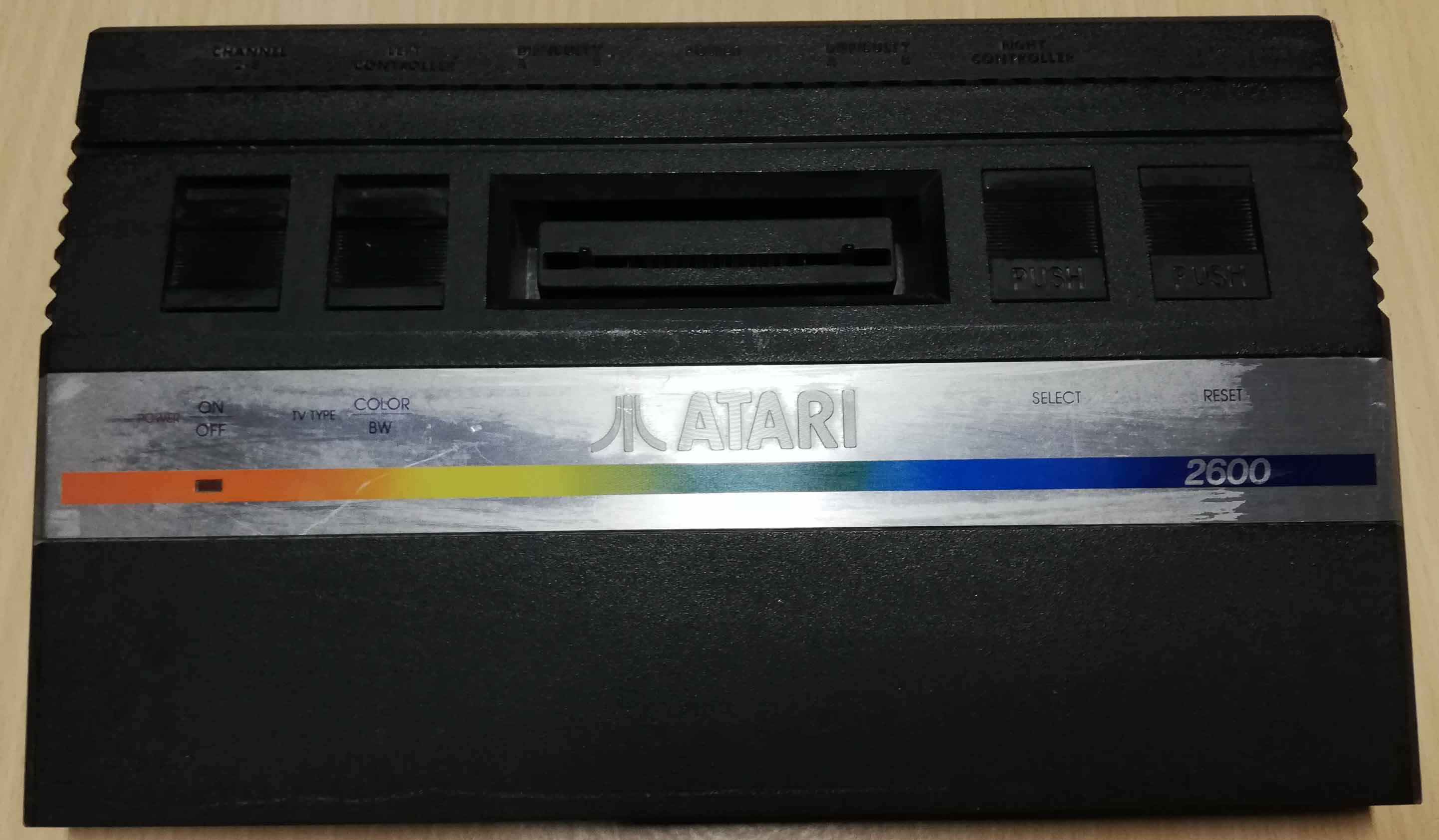 Atari 2600 JR. The 1986 model has a smaller, cost-reduced form factor with an Atari 7800-like appearance. It was advertised as a budget gaming system (under $49.99) with the ability to run a large collection of games. Released after the video game crash of 1983, and after the North American launch of the Nintendo Entertainment System, the 2600 was supported with new games and television commercials promoting "The fun is back!". Atari released several minor stylistic variations: the "large rainbow" (shown), "short rainbow", and an all-black version sold only in Ireland. Later European versions include a joypad.
 The Atari XE Video Game System (Atari XEGS) is an industrial redesign of the Atari 65XE home computer and the final model in the Atari 8-bit
 computer series. It was released by Atari Corporation in 1987 and marketed as a home video game console alongside the Nintendo Entertainment System, Sega's Master System, and Atari's own Atari 7800. The XEGS is compatible with existing Atari 8-bit computer hardware and software. Without keyboard, the system operates as a stand-alone game console. With the keyboard, it boots identically to the Atari XE computers. Atari packaged the XEGS as a basic set consisting of only the console and joystick, and as a deluxe set consisting of the console, keyboard, CX40 joystick, and XG-1 light gun.


1000 games for your color TV (NE 74 Year 1981)
By structuring microprocessors, it's possible to create an infinite number of
video games, similar to those we're used to seeing in any bar, with the advantage of being able to use your home
TV for this purpose. It doesn't matter whether it's black and white or color. So, in the evening,
instead of going out, as you've been saying, with a pocket full of 100-lire coins to go play in bars, you can stay
at home, sitting in front of the TV and playing for free with
your friends, mostly being able to modify the game at any time by simply inserting a different ROM into the socket.

Nuova Elettronica N.74 (1981) Nuova Elettronica

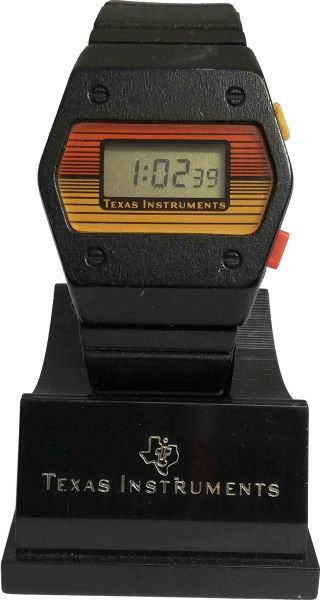
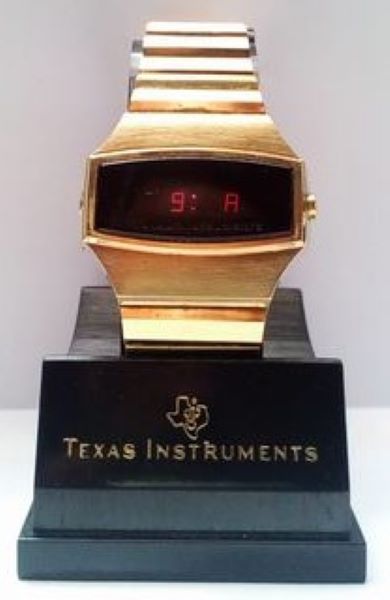
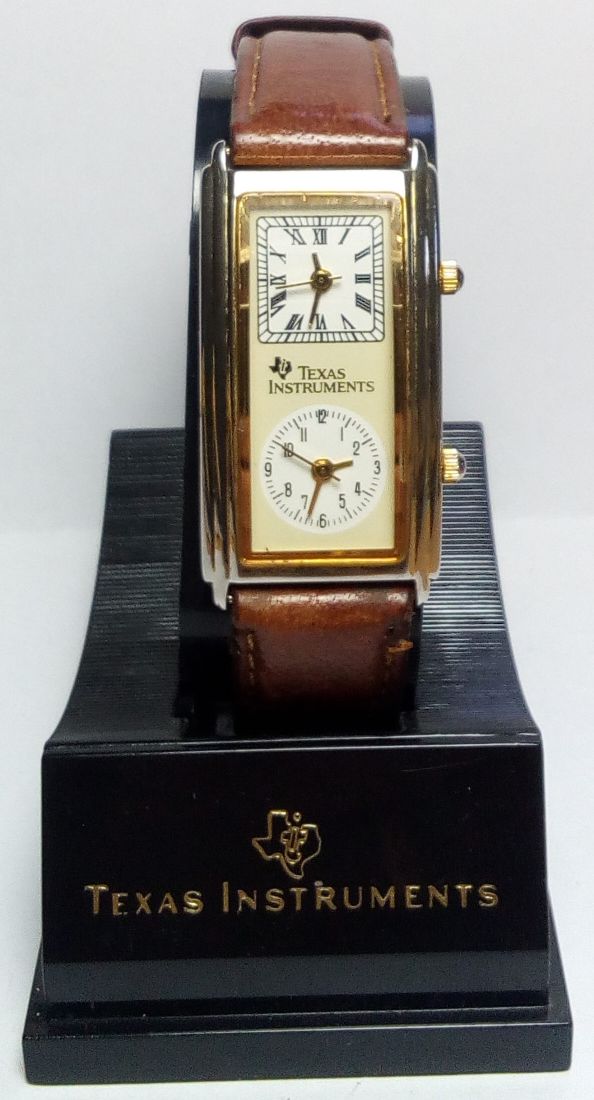
.jpg "Core Module Watch")

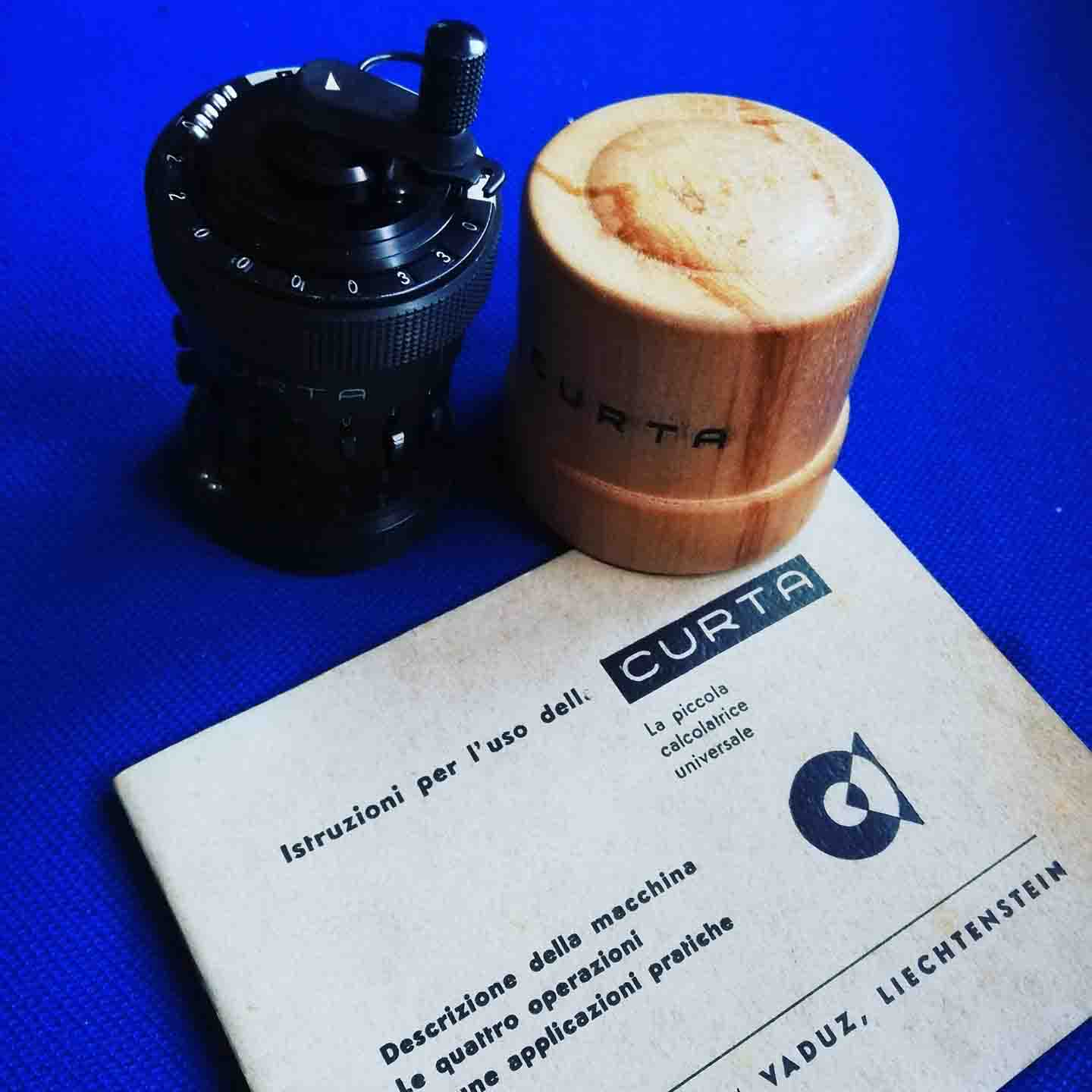
.jpg "Calculator Fuller")

.jpg "Olivetti Valentine")
.jpg "Battle Star Galactica")
.jpg "APPLE")


.png)