
TI Museum
|
Name Cartridge |
Year |
Released |
Number |
Manual |
Speech |
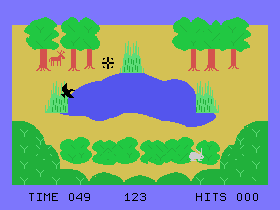
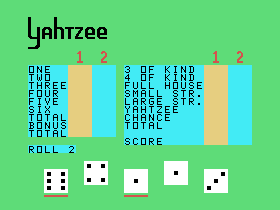
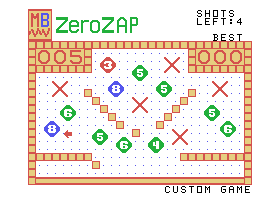
Screenshot |
Screenshot |
Screenshot |
|
4A Flyer |
1986 |
John Phillips |
BDAF |
YES |
|
|
|
|
|
Accounting Assistant |
1981 |
Scott Foresman |
SF30429 |
|
|
 |
|
|
|
Addition |
1982 |
Texas Instruments |
PHM 3090 |
|
|
|
|
|
|
Addition & Subtraction 1 |
1981 |
Scott Foresman |
PHM 3027 |
YES |
YES |
|
|
|
|
Addition & Subtraction 1 |
1981 |
Scott Foresman |
SF30201 |
YES |
YES |
|
|
|
|
Addition & Subtraction 2 |
1981 |
Scott Foresman |
PHM 3028 |
YES |
YES |
 |
|
|
|
Addition & Subtraction 3 |
1984 |
Scott Foresman |
SF30226 |
|
|
|
|
|
|
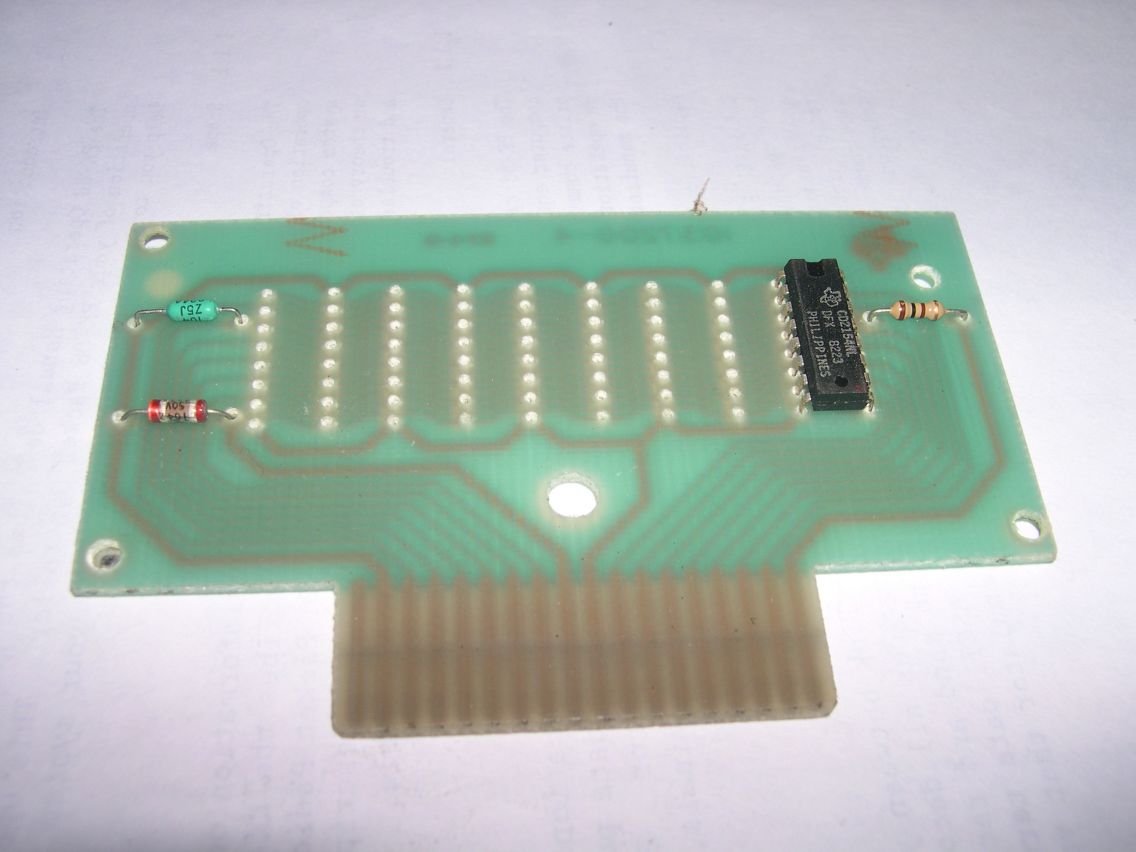
Adventure |
1981 |
Adventure International |
PHM 3041 |
YES |
|
 |
|
|
|
Alien addition |
1982 |
Texas Instruments |
PHM 3115 |
|
|
|
|
|
|
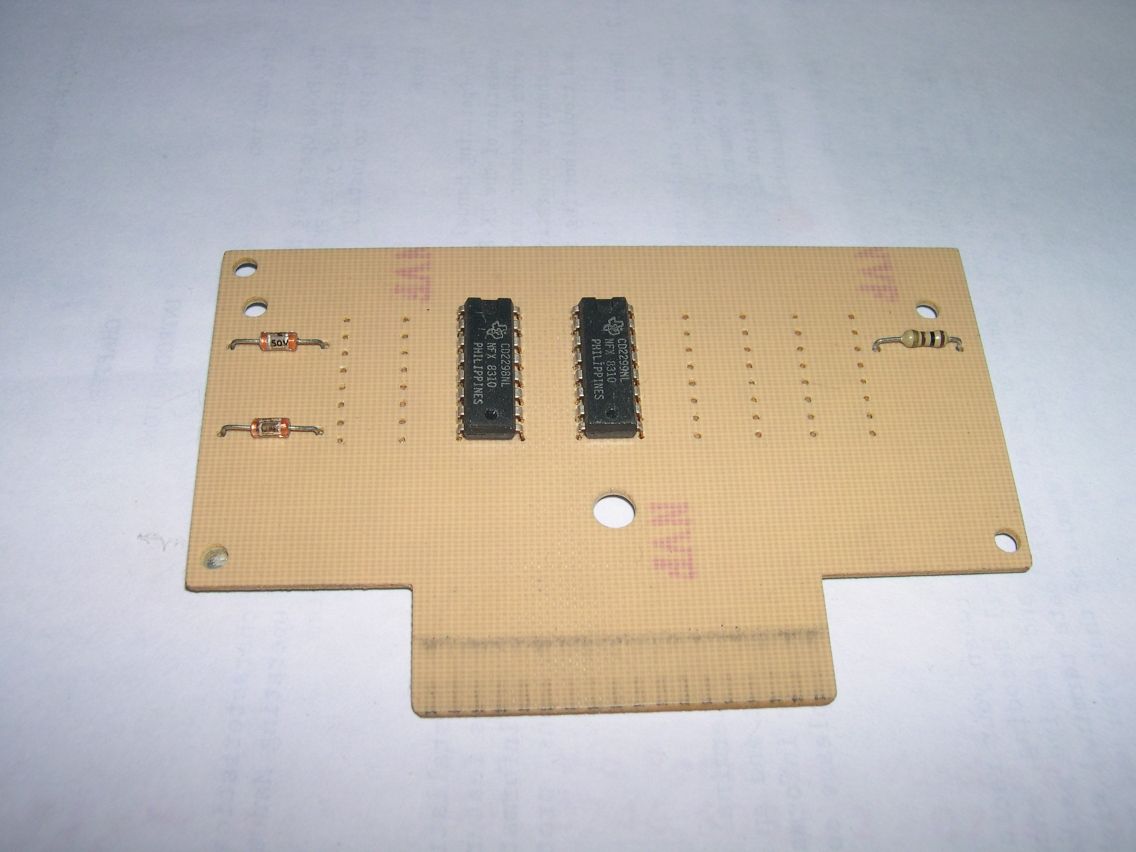
Alligator mix |
1982 |
Texas Instruments |
PHM 3114 |
|
|
 |
|
|
|
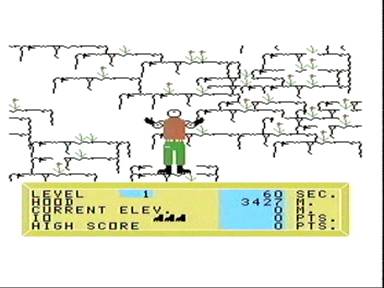
Alpiner |
1982 |
Texas Instruments |
PHM 3056 |
YES |
YES |
|
|
|
|
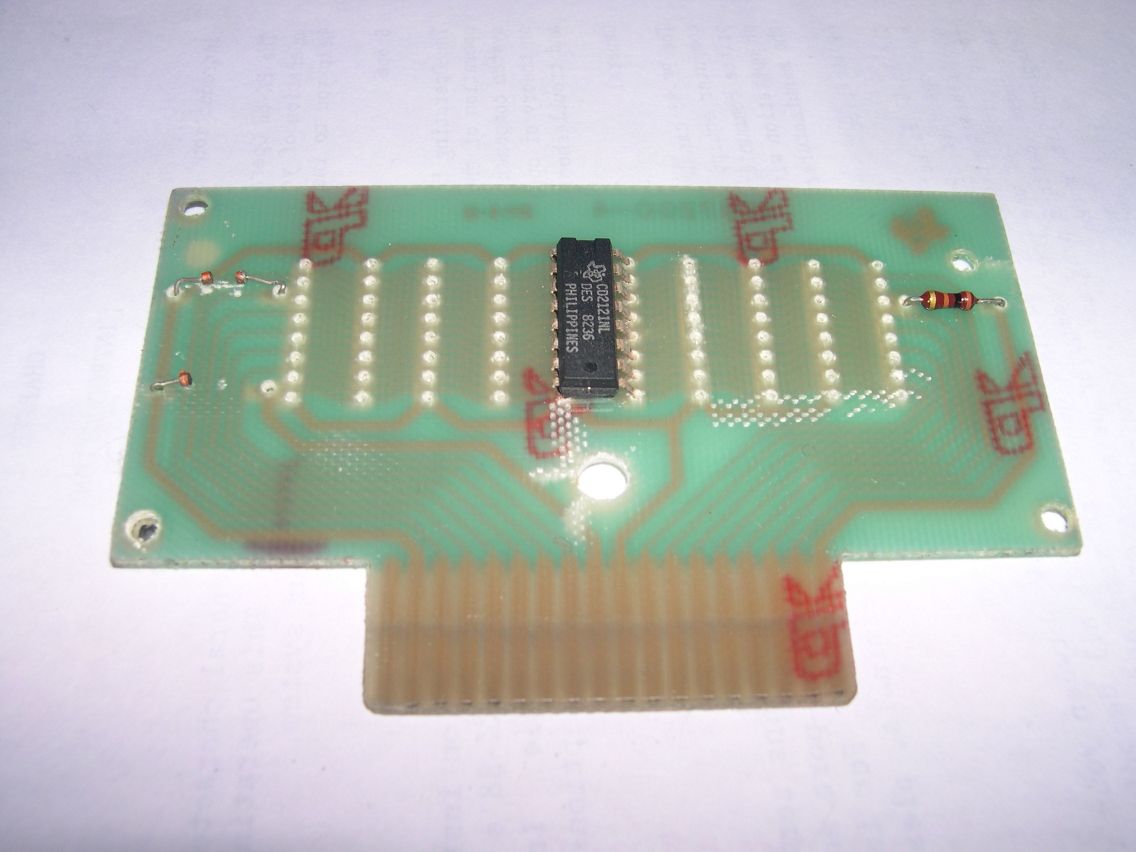
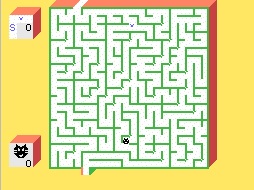
A-maze-ing |
1980 |
Texas Instruments |
PHM 3030 |
YES |
|
 |
|
|
|
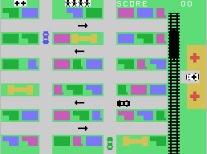
Ambulance |
1983 |
Funware |
FW1005 |
|
|
|
|
|
|
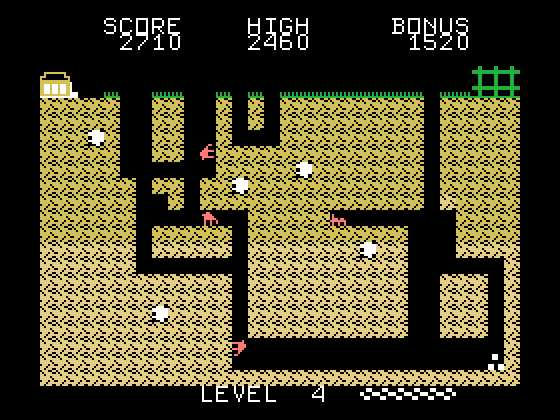
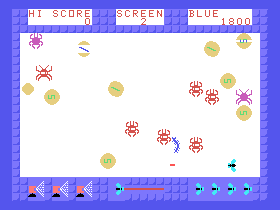
Ant-eater 8k |
1983 |
Romox |
ROM02025 |
|
|
|
|
|
|
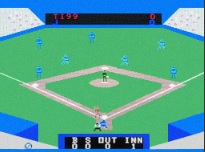
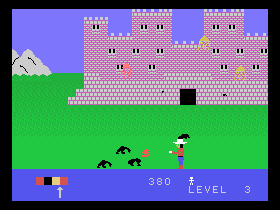
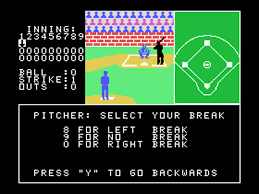
Championship Baseball |
1983 |
Milton Bradley MBX |
PHM 3148 |
|
YES |
|
|
|
|
Beginning grammar |
1978 |
Texas Instruments |
PHM 3003 |
YES |
|
|
|
|
|
Beyond word |
1988 |
DataBiotics |
TR 2017 |
|
|
|
|
|
|
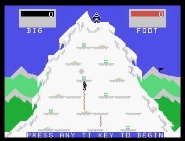
Bigfoot |
1983 |
Milton Bradley MBX |
PHM3151 |
|
YES |
|
|
|
|
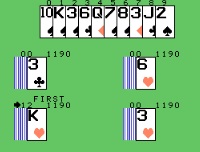
Black jack e poker |
1980 |
Texas Instruments |
PHM 3033 |
|
|
|
|
|
|
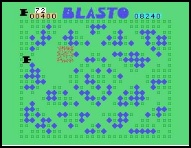
Blasto |
1980 |
Milton Bradley |
PHM 3032 |
YES |
|
|
|
|
|
Black Hole |
1983 |
DaTaBioTics |
BABD |
|
|
|
|
|
|
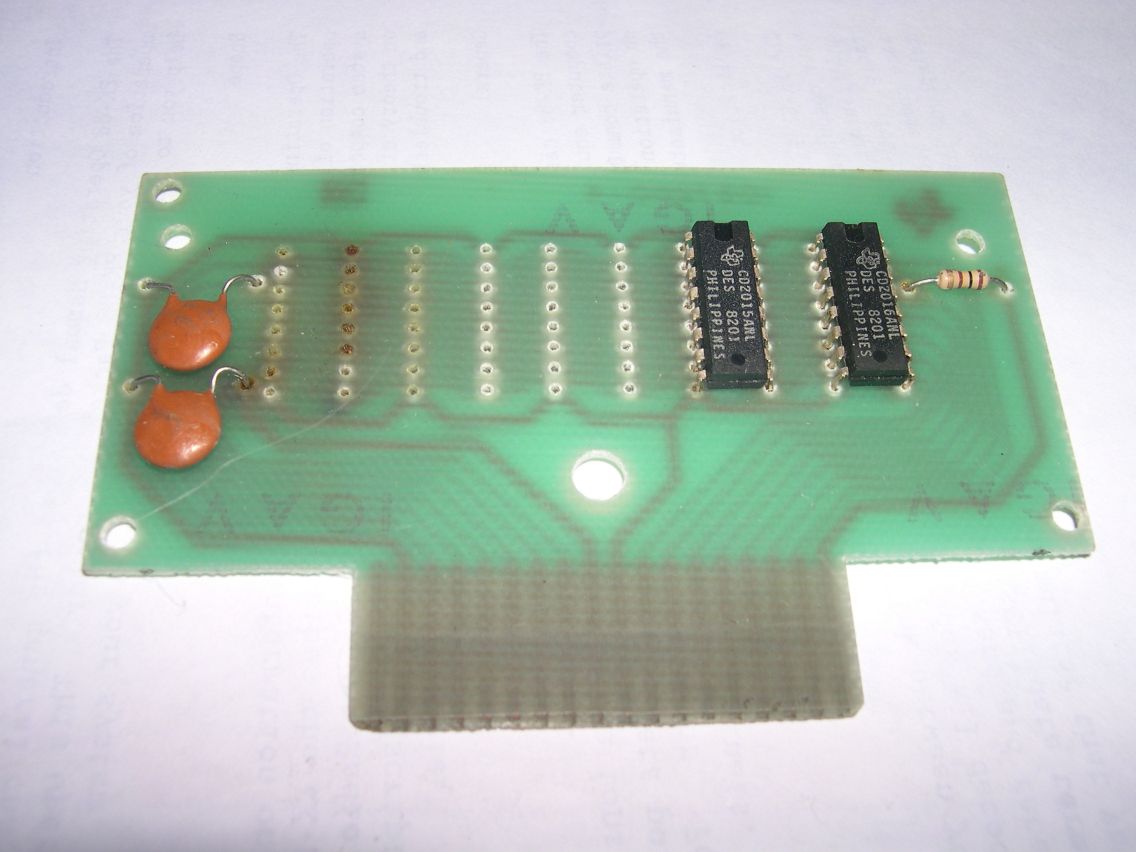
Budget managent |
|
|
|
|
|
 |
|
|
|
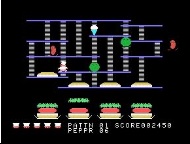
Burgertime |
1983 |
Data East USA |
PHM 3233 |
|
|
|
|
|
|
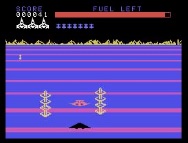
Buck Rogers - Planet of Zoom |
1983 |
Sega Enterprises |
PHM 3226 |
|
YES |
|
|
|
|
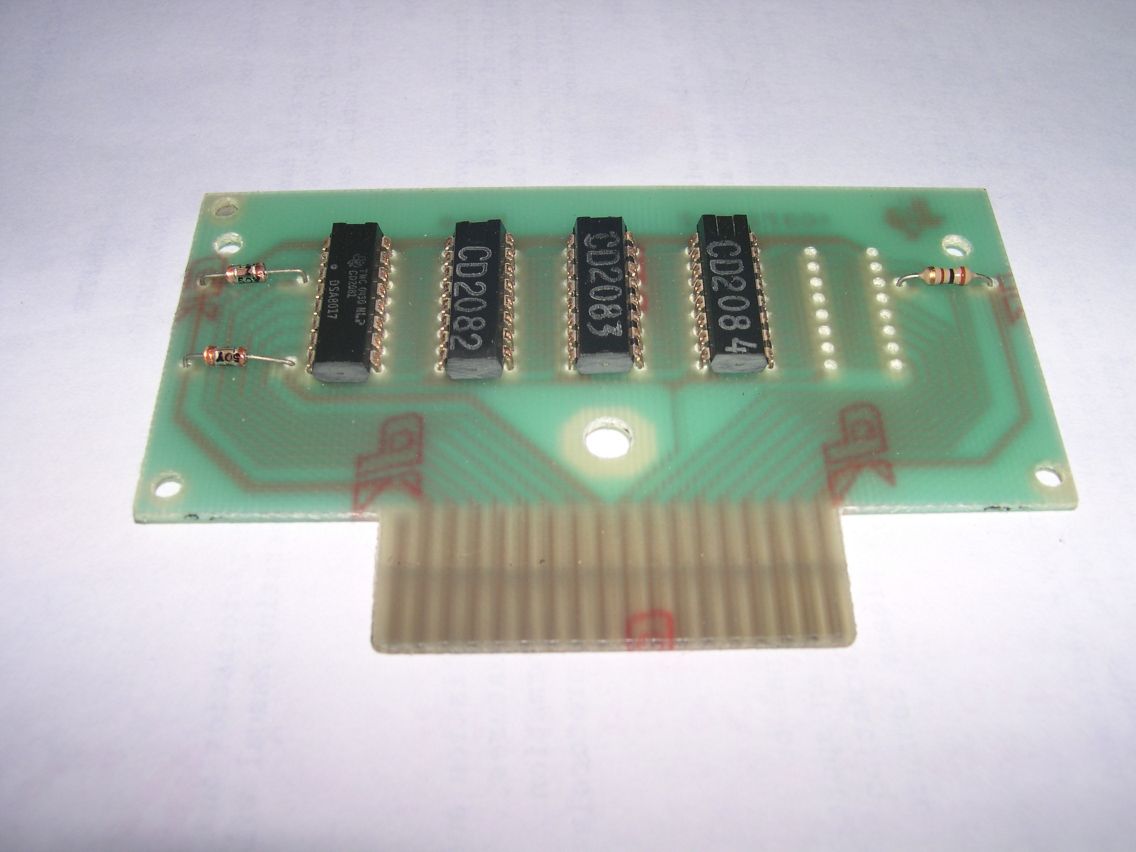
calcolo di una equazione dimostrativa |
|
|
|
|
|
 |
|
|
|
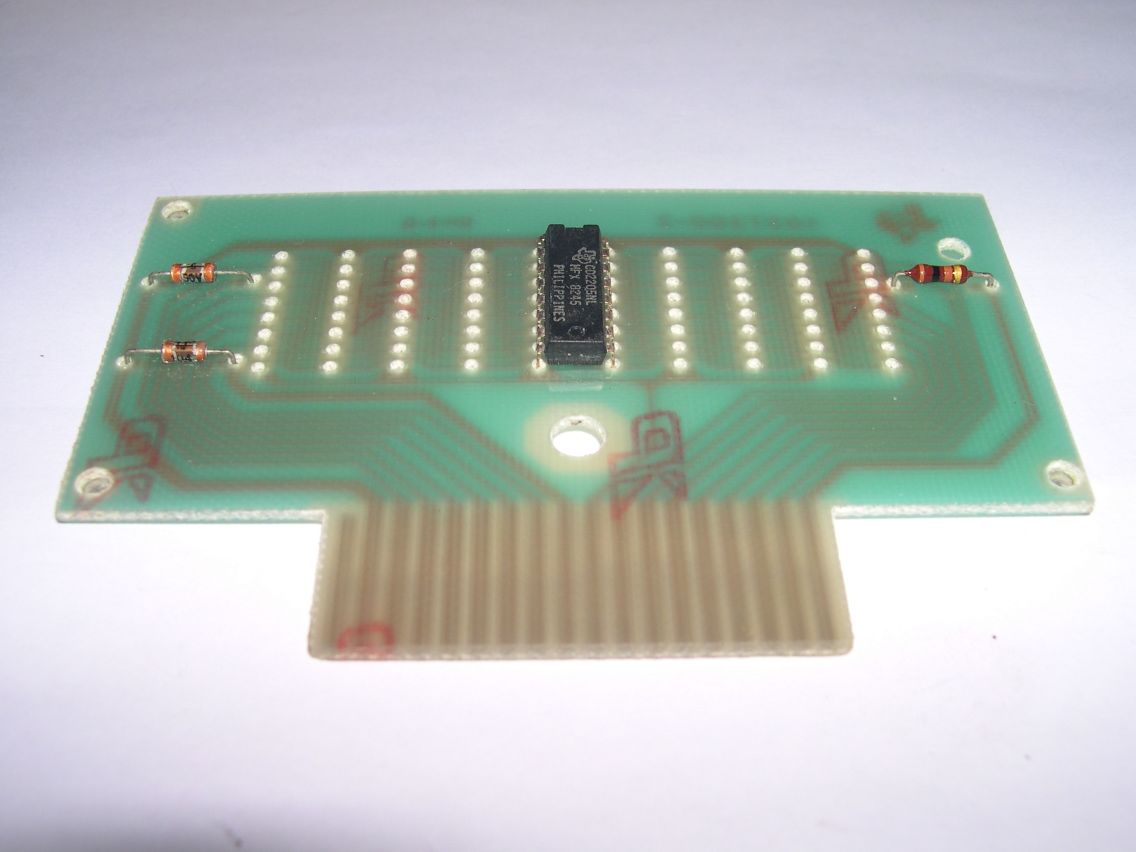
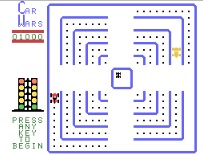
Car wars |
1981 |
Texas Instruments |
PHM 3054 |
YES |
|
 |
|
|
|
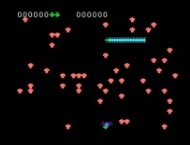
Centipede |
1983 |
Atarisoft |
RX8503 |
|
|
|
|
|
| Chicken coop | 1986 | Navarone | TRI-BAAH |  |
||||
|
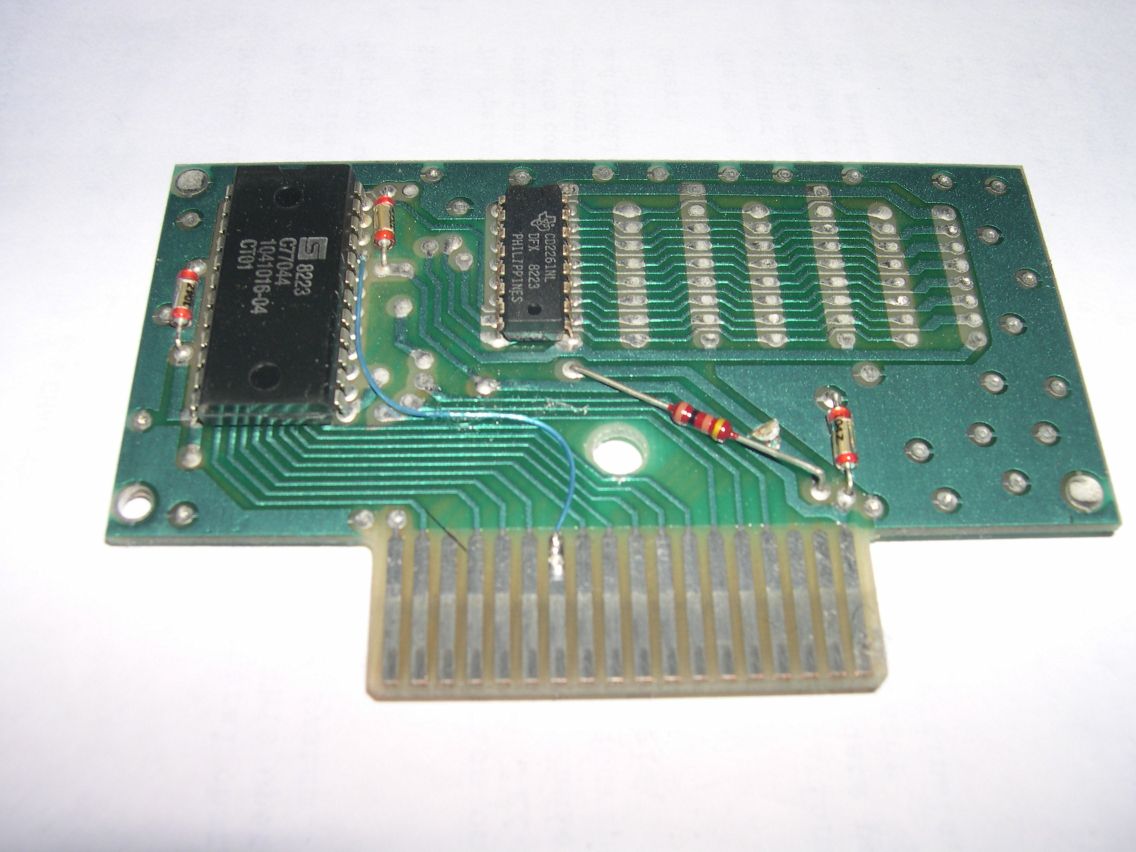
Chisolm trail |
1982 |
Texas Instruments |
PHM 3110 |
YES |
|
 |
|
|
|
Computer math games II |
1982 |
Texas Instruments |
PHM 3083 |
YES |
|
|
|
|
|
Computer math games III |
1983 |
Texas Instruments |
PHM 3085 |
|
|
|
|
|
|
Computer math games VI |
1982 |
Texas Instruments |
PHM 3088 |
YES |
|
|
|
|
|
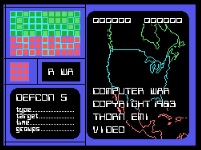
Computer War |
1983 |
Thorn EMI Video |
|
|
|
|
|
|
|
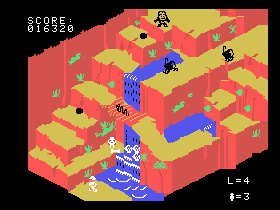
Congo bongo |
1983 |
Sega Enterprises |
PHM 3227 |
|
|
|
|
|
|
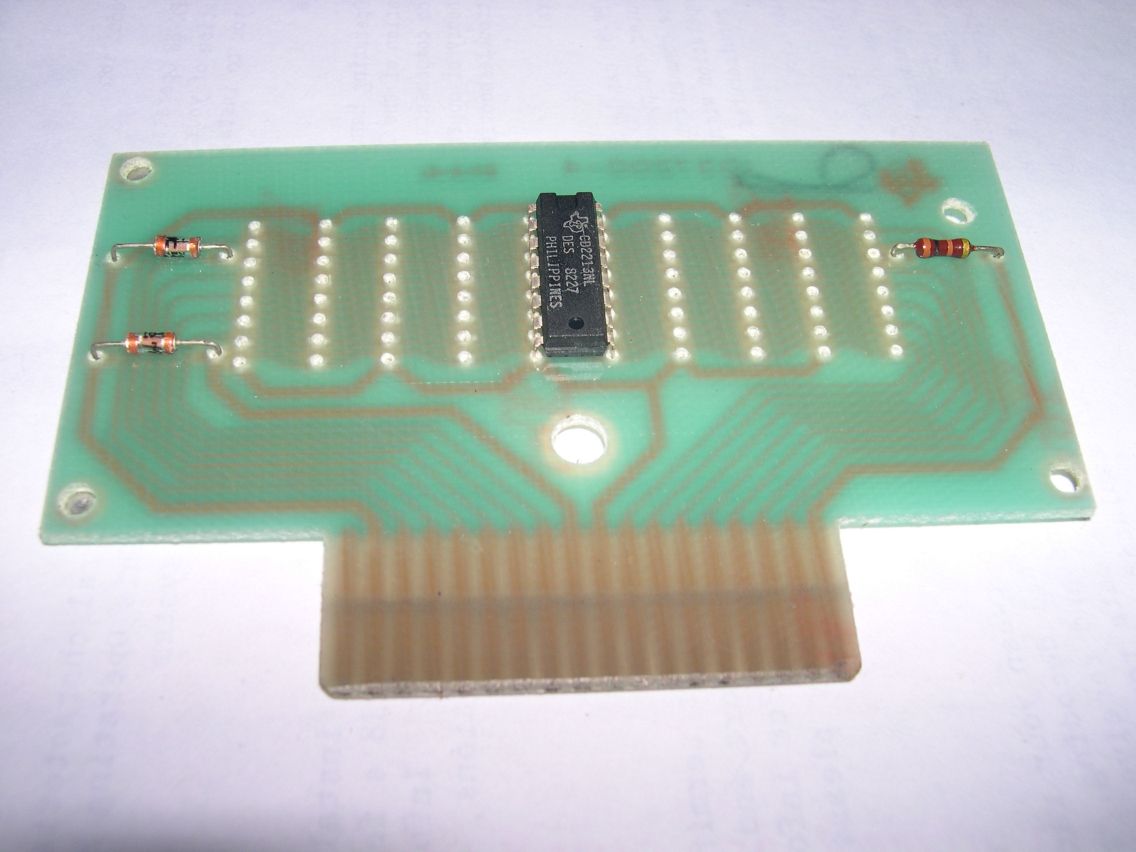
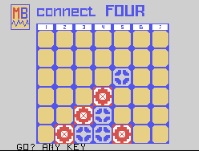
Connect four |
1980 |
Milton Bradley |
PHM 3038 |
YES |
|
 |
|
|
|
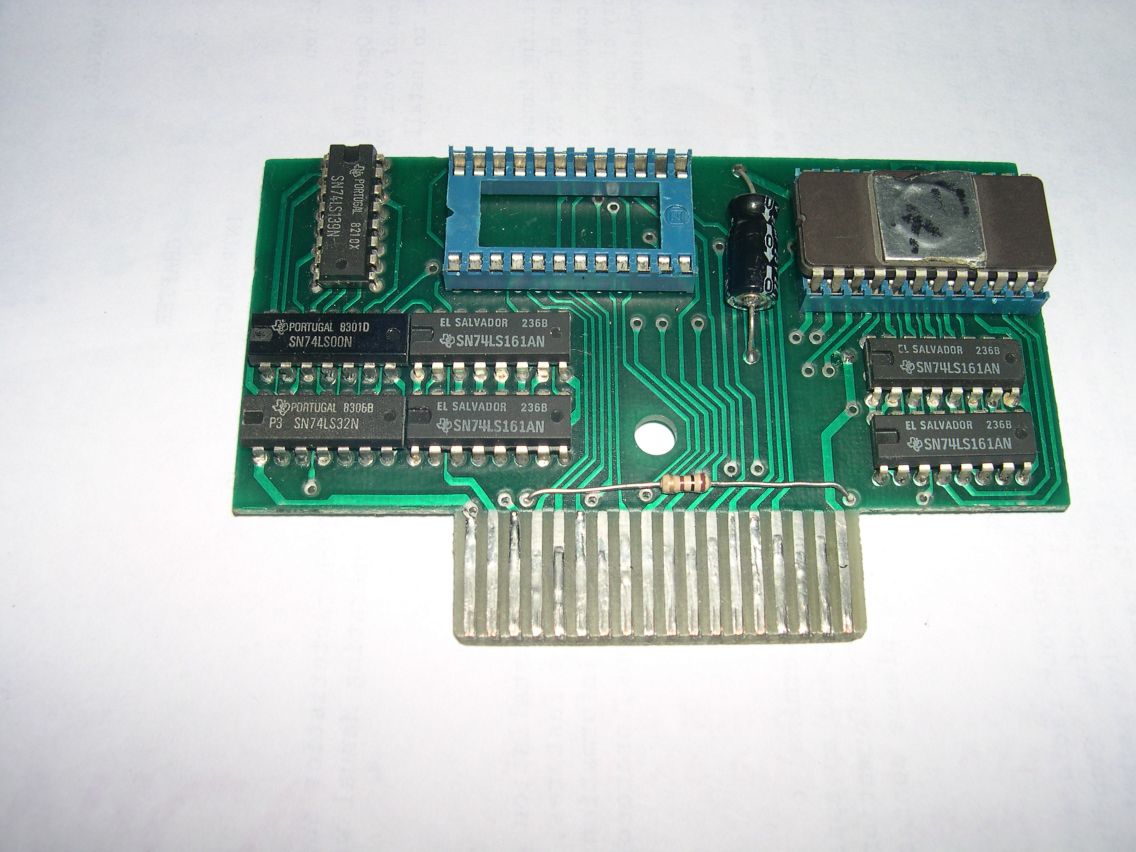
Console Test |
|
|
|
|
|
 |
|
|
|
CorCom PDM99 |
|
|
|
|
|
|
|
|
|
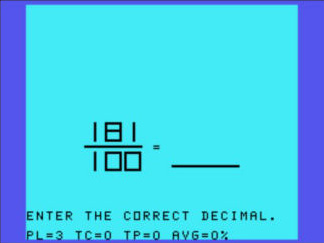
Decimals |
1982 |
Texas Instruments |
PHM 3096 |
|
|
|
|
|
|
Decimals 1 |
1983 |
Scott Foresman |
SF30229 |
|
|
|
|
|
|
Decimals 2 |
1983 |
Scott Foresman |
SF30244 |
YES |
|
|
|
|
|
Defender |
1983 |
Atarisoft |
RX8506 |
|
|
|
|
|
|
Demolition Division |
1982 |
Texas Instruments |
PHM 3116 |
YES |
|
|
|
|
|
Demostration |
1979 |
Texas Instruments |
PHM 3001 |
|
|
|
|
|
|
Diagnostic |
1979 |
Texas Instruments |
PHM 3000 |
|
|
|
|
|
|
Dig Dug |
1982-83 |
Namco & Atarisoft |
RX8509 |
|
|
|
|
|
|
Disk Fixer 2.0 |
1984 |
Navarone |
|
|
|
|
|
|
|
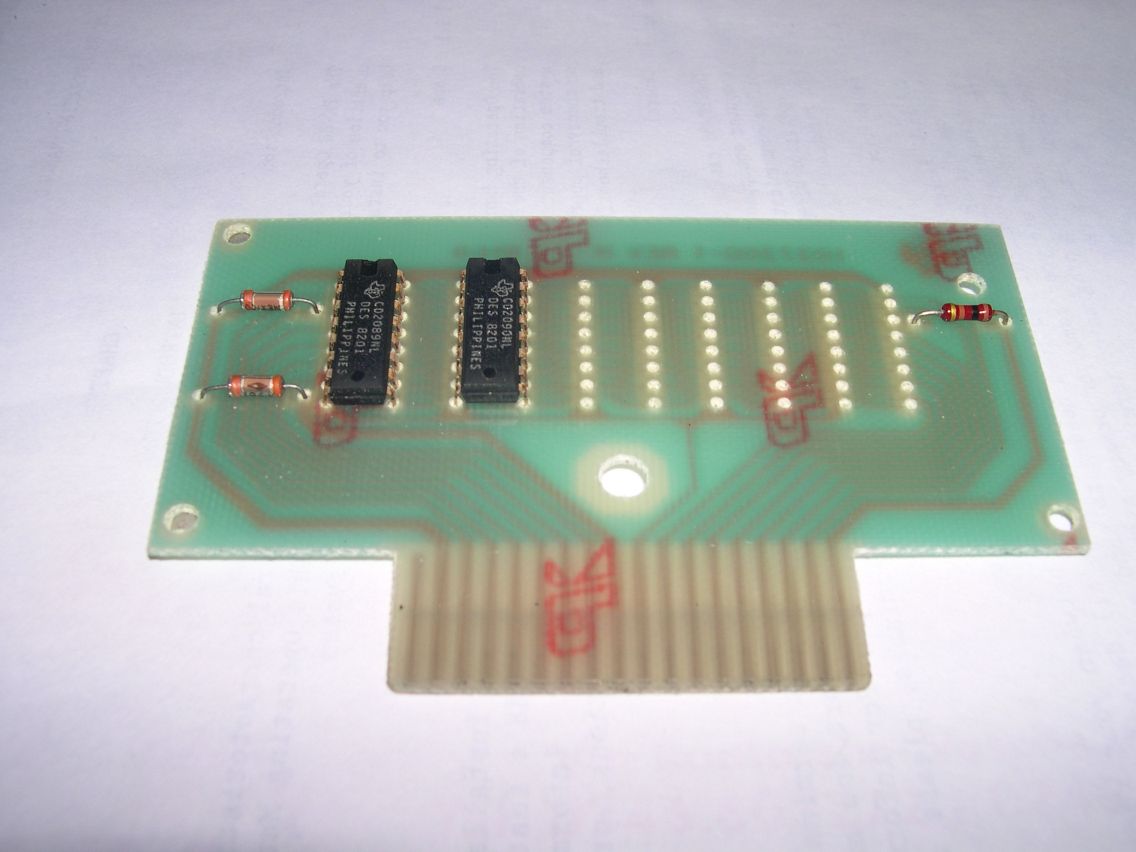
Disk manager 1 |
1980 |
Texas Instruments |
PHM 3019 |
|
|
 |
|
|
|
Disk manager 2 |
1982 |
Texas Instruments |
PHM 3089 |
|
|
|
|
|
|
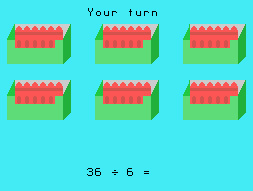
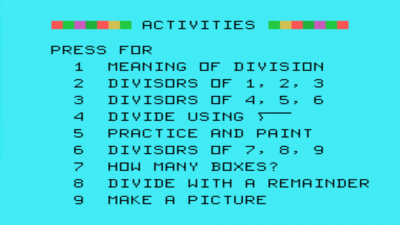
Division |
1982 |
Texas Instruments |
PHM 3093 |
YES |
|
|
|
|
|
Division 1 |
1982 |
Scott Foresman |
SF 30210 |
|
YES |
|
|
|
|
Division 1 |
|
Texas Instruments |
PHM 3049 |
|
|
|
|
|
|
Donkey Kong |
1983 |
Atarisoft |
RX8512 |
|
|
|
|
|
|
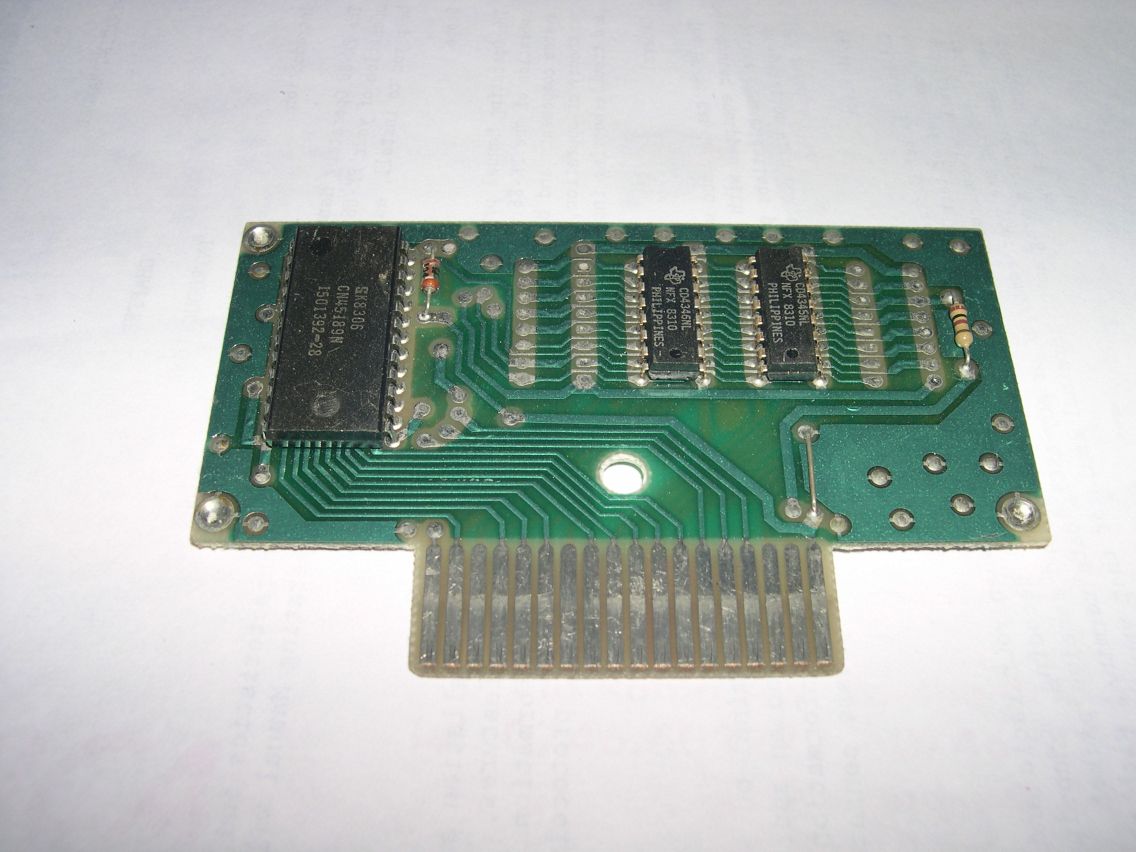
Dragon mix |
1982 |
Texas Instruments |
PHM 3117 |
|
|
 |
|
|
| Driving Demon | 1983 | FunWare | FW1008 | 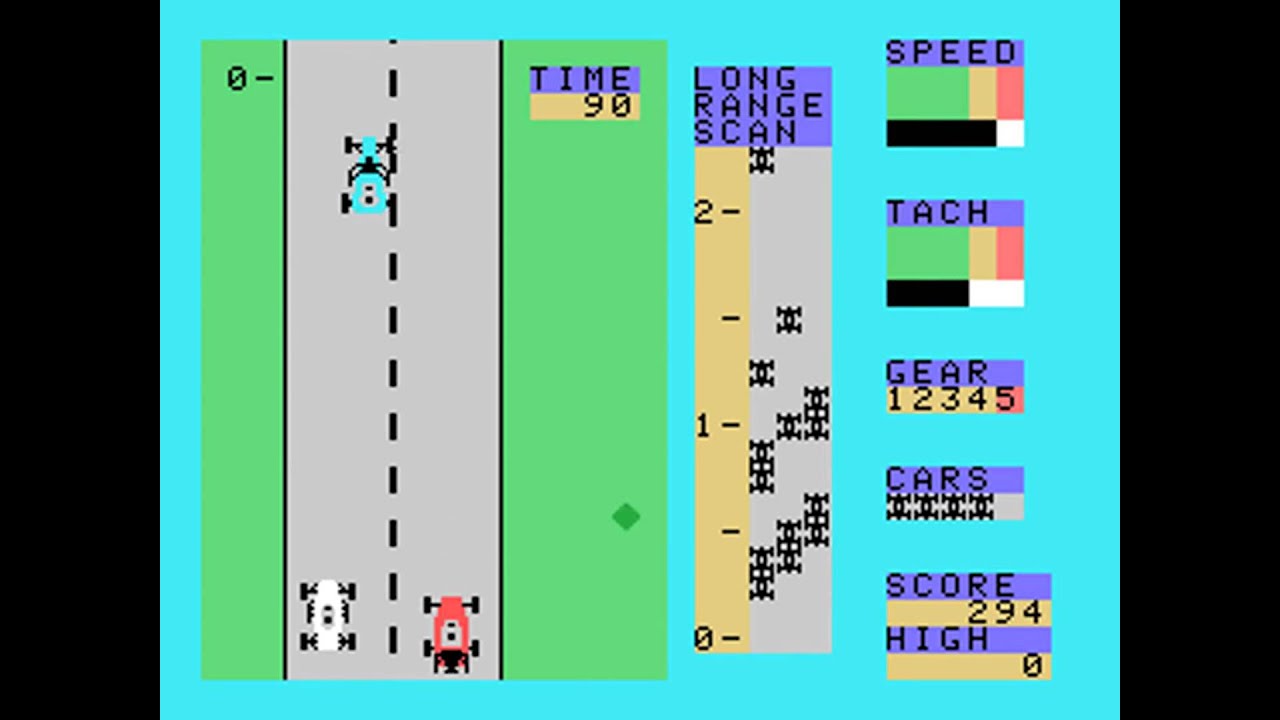 |
||||
|
Early learning fun |
1982 |
Texas Instruments |
PHM 3002 |
YES |
|
|
|
|
|
Early Logo Learning Fun |
1982 |
Texas Instruments |
PHM 3144 |
|
|
|
|
|
|
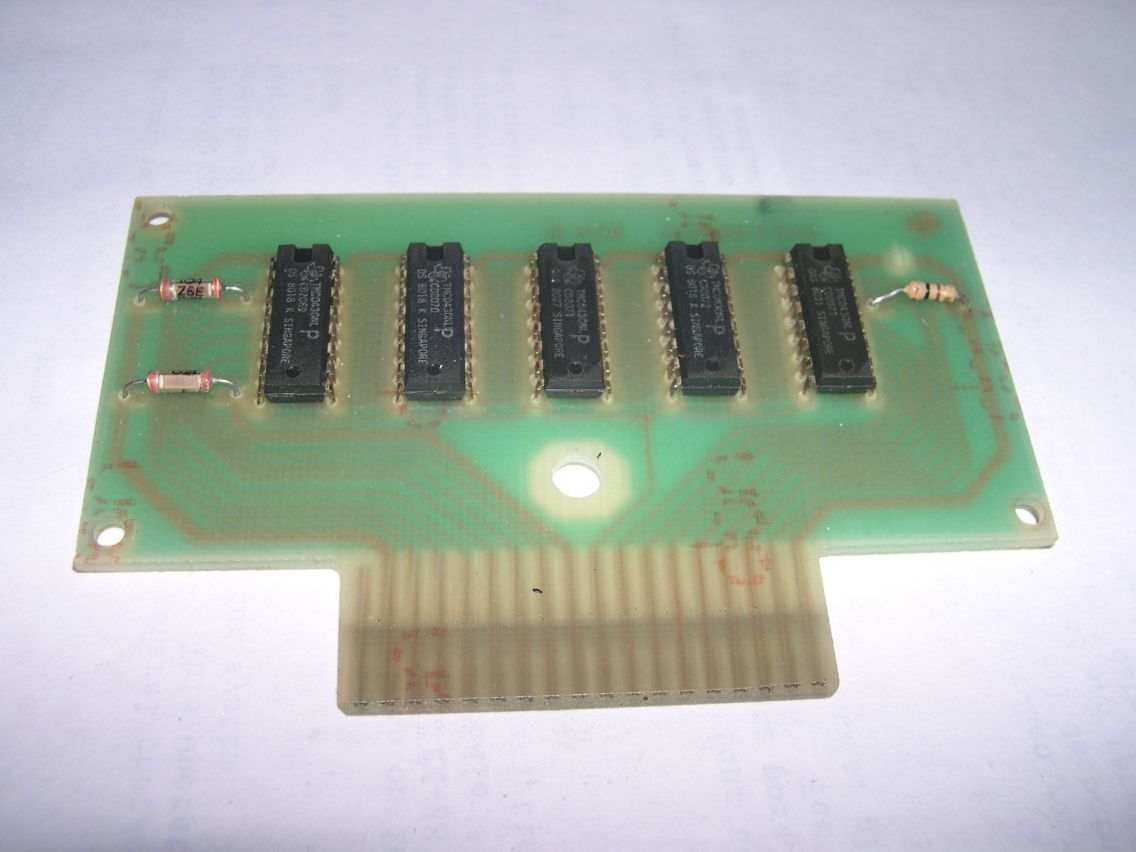
Early reading |
1980 |
Texas Instruments |
PHM 3015 |
|
YES |
 |
|
|
| Eches | 1982 | Texas Instrument | 103055-0031 | |||||
|
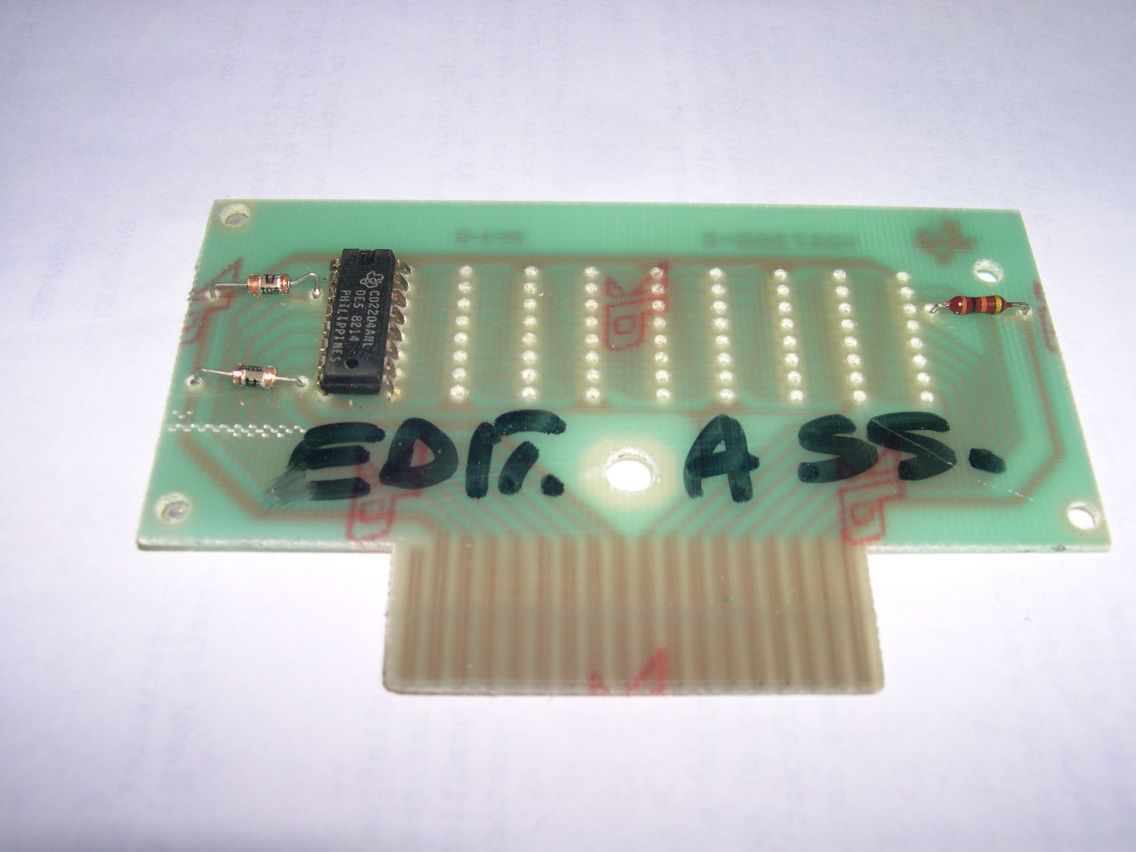
Editor assembler |
1981 |
Texas Instruments |
PHM 3055 |
|
|
 |
|
|
|
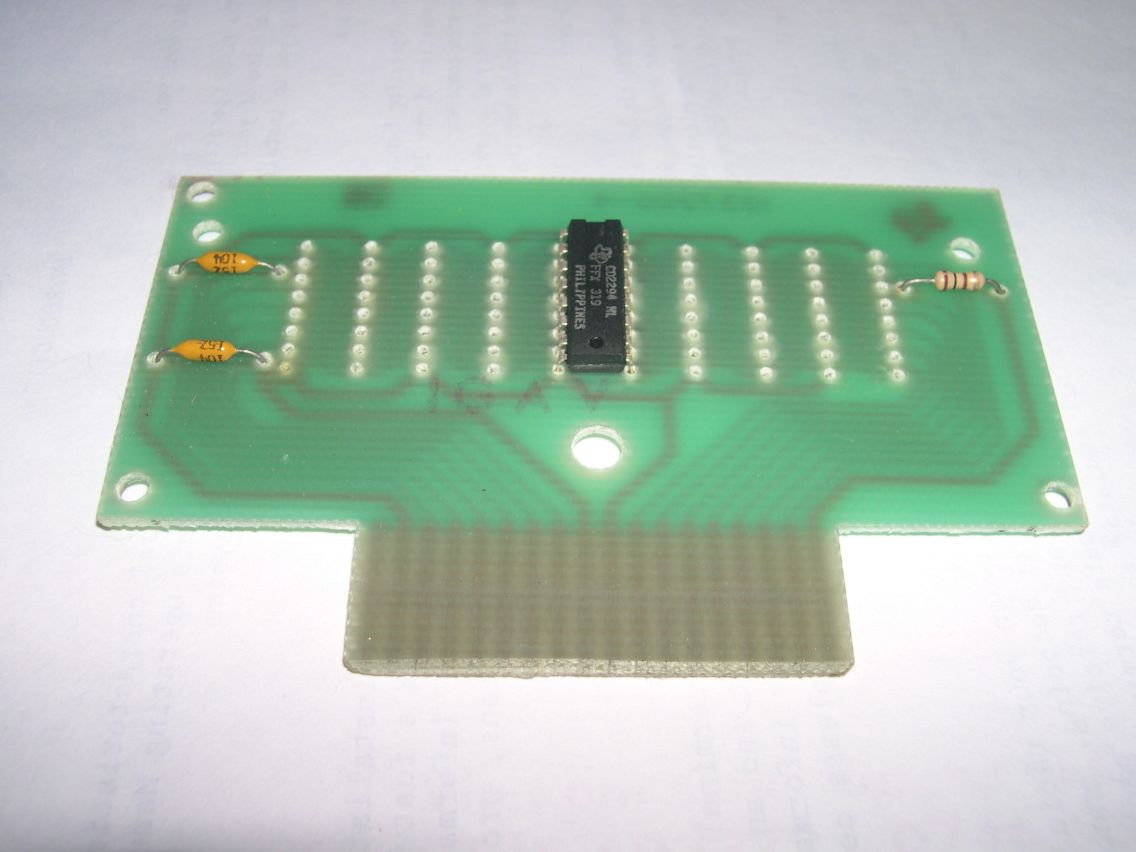
elaborazioni testo |
|
|
|
|
|
 |
|
|
|
Equations |
1982 |
Texas Instruments |
PHM 3100 |
|
|
|
|
|
|
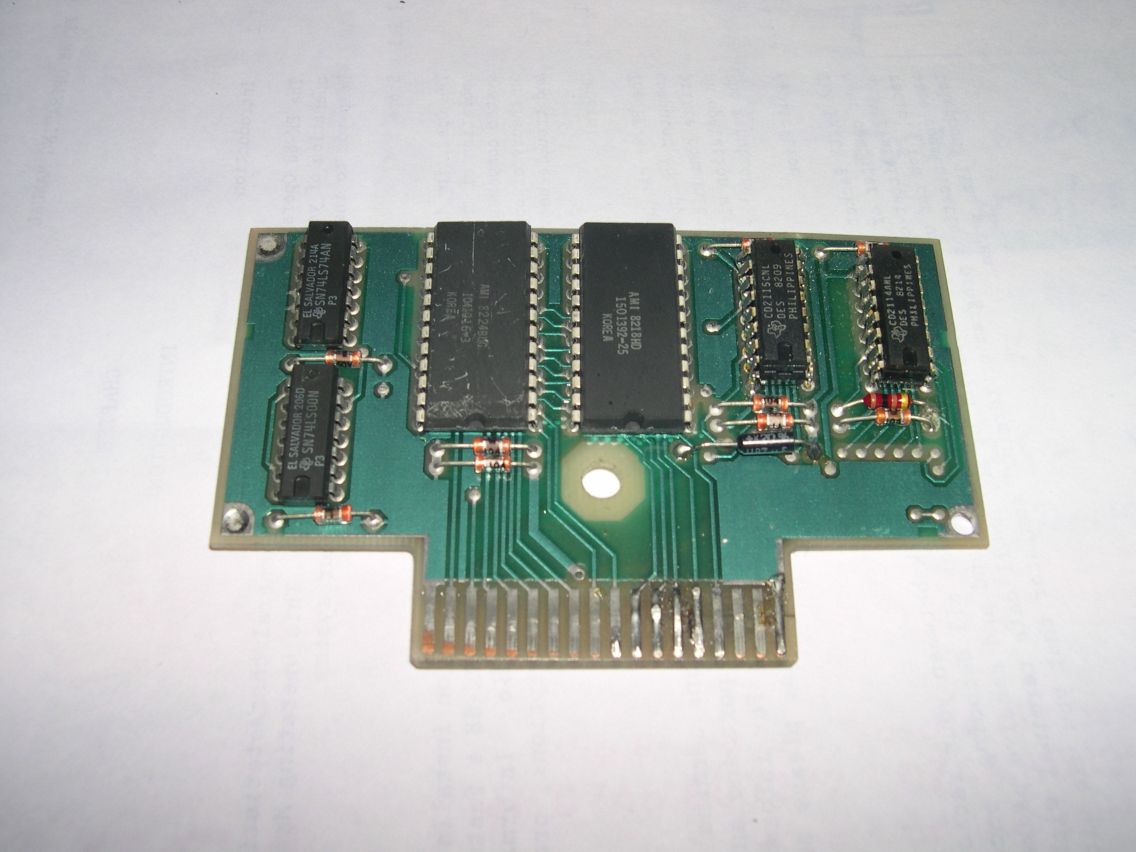
Extended Basic v110 |
1981 |
Texas Instruments |
PHM 3026 |
|
YES |
 |
|
|
|
Extended Basic II plus |
1985 |
Mechatronic |
TEN-41488 |
|
|
|
|
|
|
Face Maker |
1983 |
Spinnaker |
PHM 3177 |
YES |
|
|
|
|
|
Fathom |
1983 |
Imagic |
PHM 3222 |
YES |
YES |
|
|
|
|
Football |
1979 |
Texas Instruments |
PHM 3009 |
|
|
|
|
|
|
For dimostration |
|
|
|
|
|
 |
|
|
|
Fractions 1 |
1982 |
Scott Foresman |
SF30220 |
|
|
|
|
|
| Fractions 2 | 1983 | Texas Instruments | PHM30238 | |||||
|
Fractional Numbers |
1982 |
Texas Instruments |
PHM 3095 |
YES |
|
|
|
|
|
Frog Jump |
1982 |
Scott Foresman |
SF31177 |
|
|
|
|
|
|
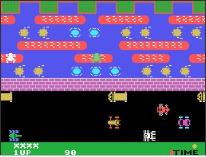
Frogger |
1984 |
Parker Brothers |
PB1610 |
YES |
|
|
|
|
|
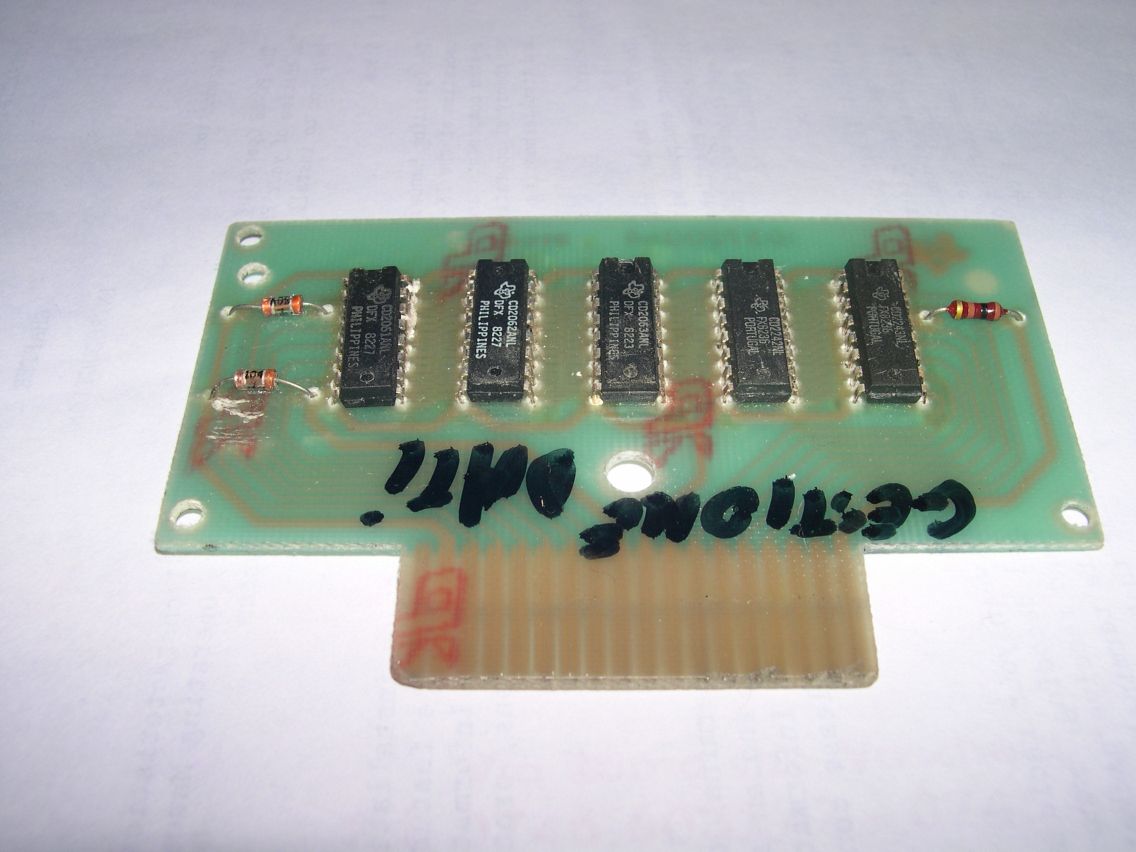
Gestione dati personali |
|
|
|
|
|
 |
|
|
|
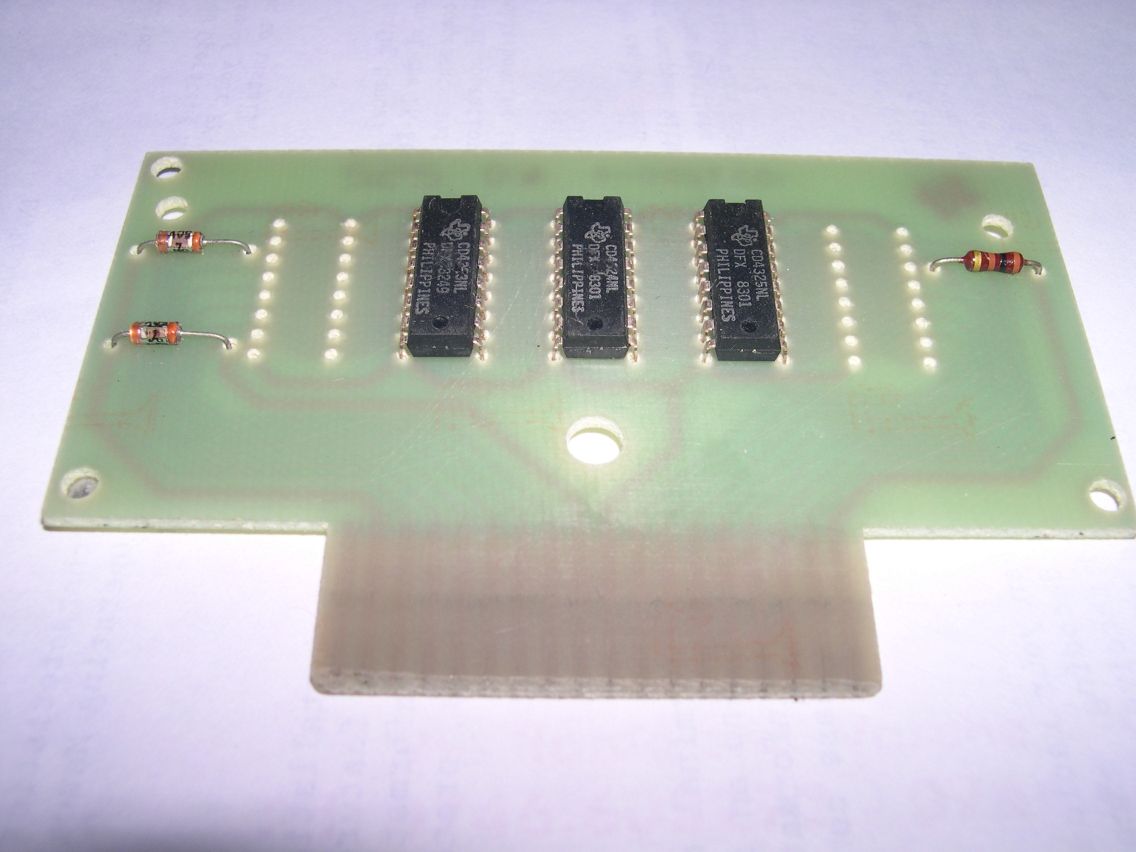
Gioco matematico |
|
|
|
|
|
 |
|
|
|
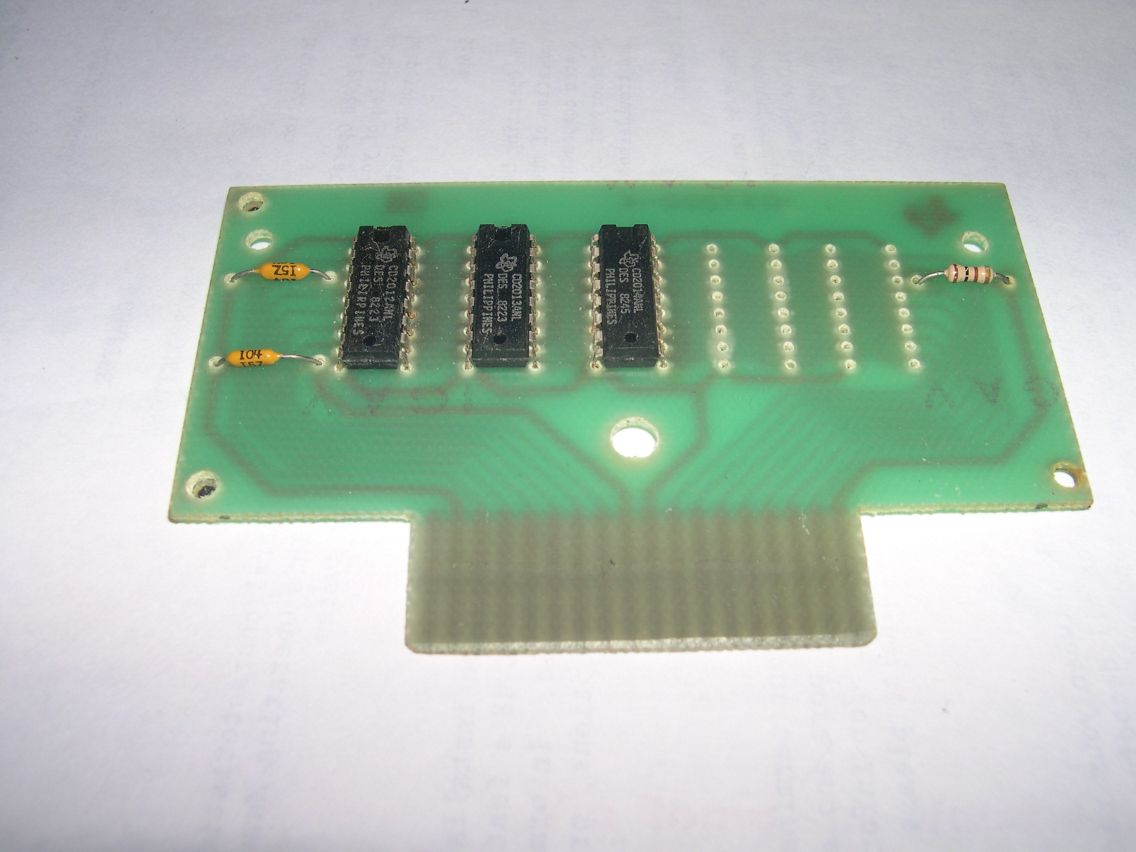
Grammatica inglese |
|
|
|
|
|
 |
|
|
|
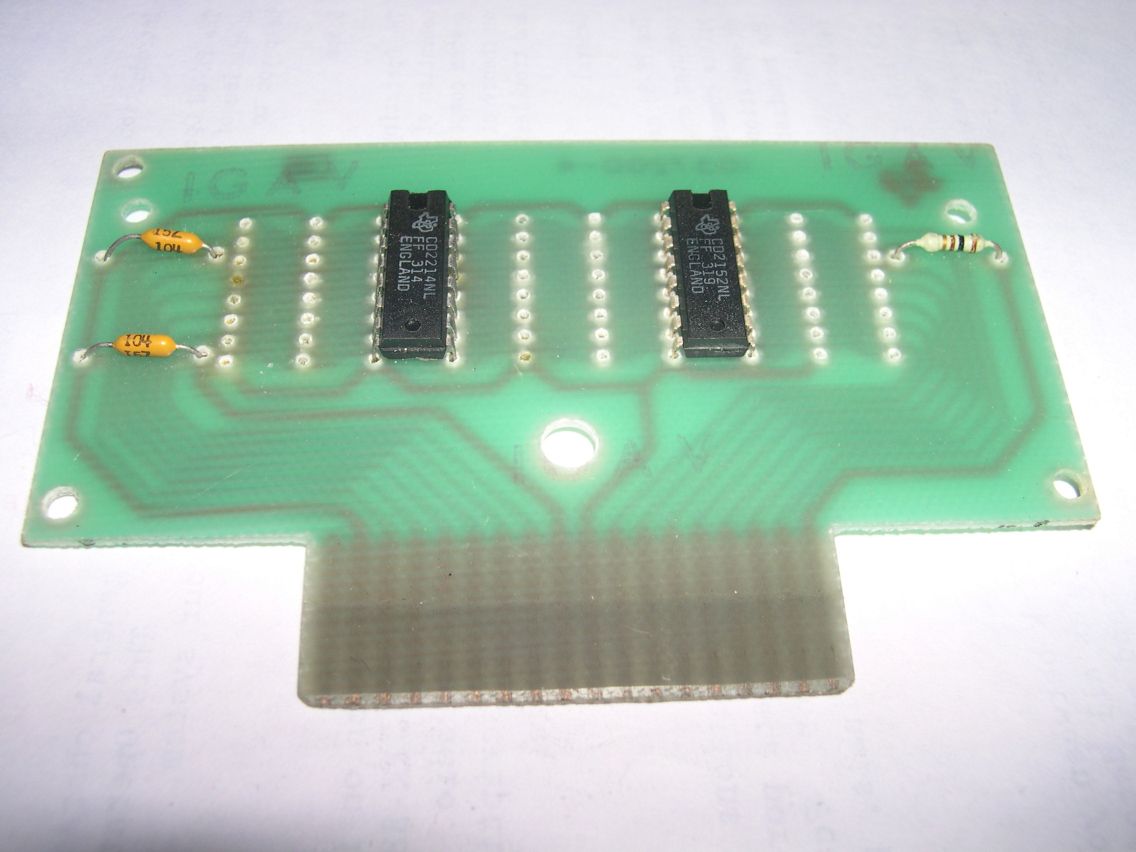
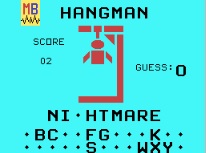
Hangman |
1981 |
Milton Bradley |
PHM 3037 |
|
|
 |
|
|
|
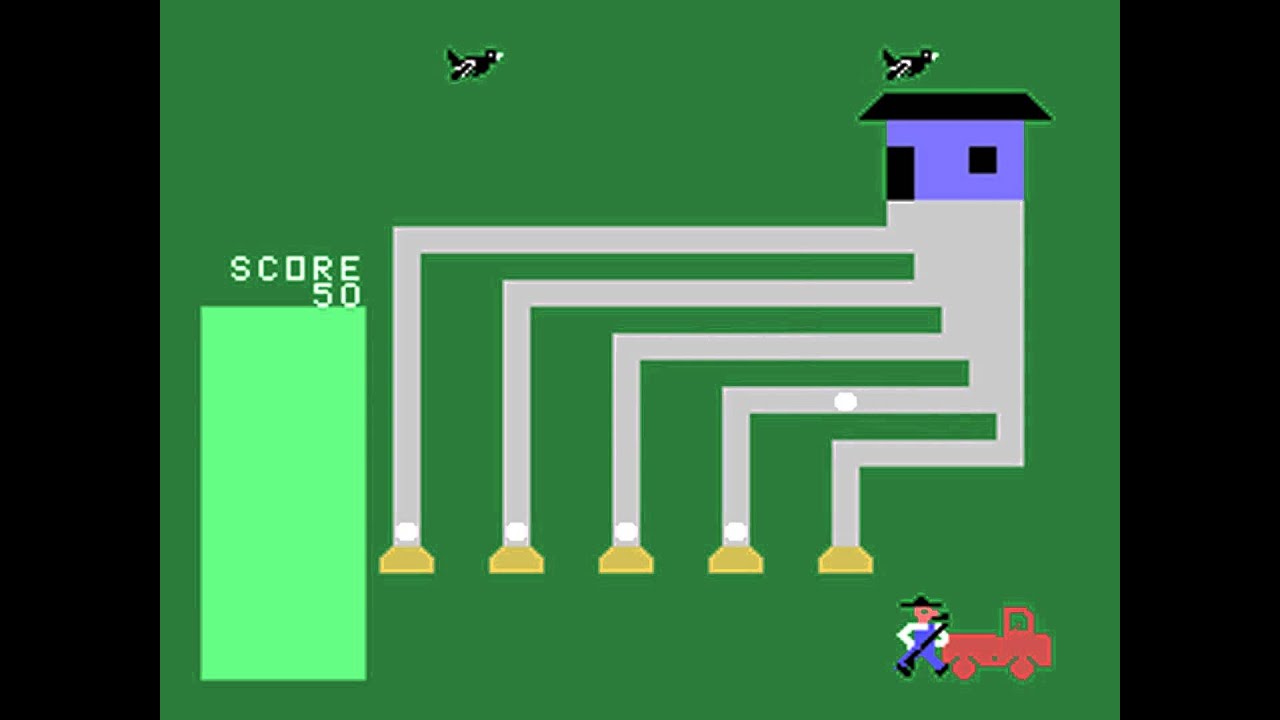
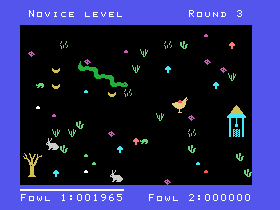
Henhouse |
1983 |
Funware |
FW 1001 |
YES |
|
|
|
|
|
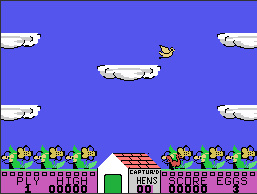
Hen pecked |
1983 |
Romox |
|
|
|
|
|
|
|
Home financial decisions |
1978 |
Texas Instruments |
PHM 3006 |
YES |
|
|
|
|
|
HomeWork helper plus |
1984 |
Navarone |
AS-04 |
|
|
|
|
|
|
Honey Hunt |
1983 |
Texas Instruments MBX |
PHM3156 |
YES |
YES |
|
|
|
|
Hopper |
1983 |
Texas Instruments |
PHM 3229 |
YES |
|
|
|
|
|
House hold budget management |
1979 |
Texas Instruments |
PHM 3007 |
YES |
|
|
|
|
|
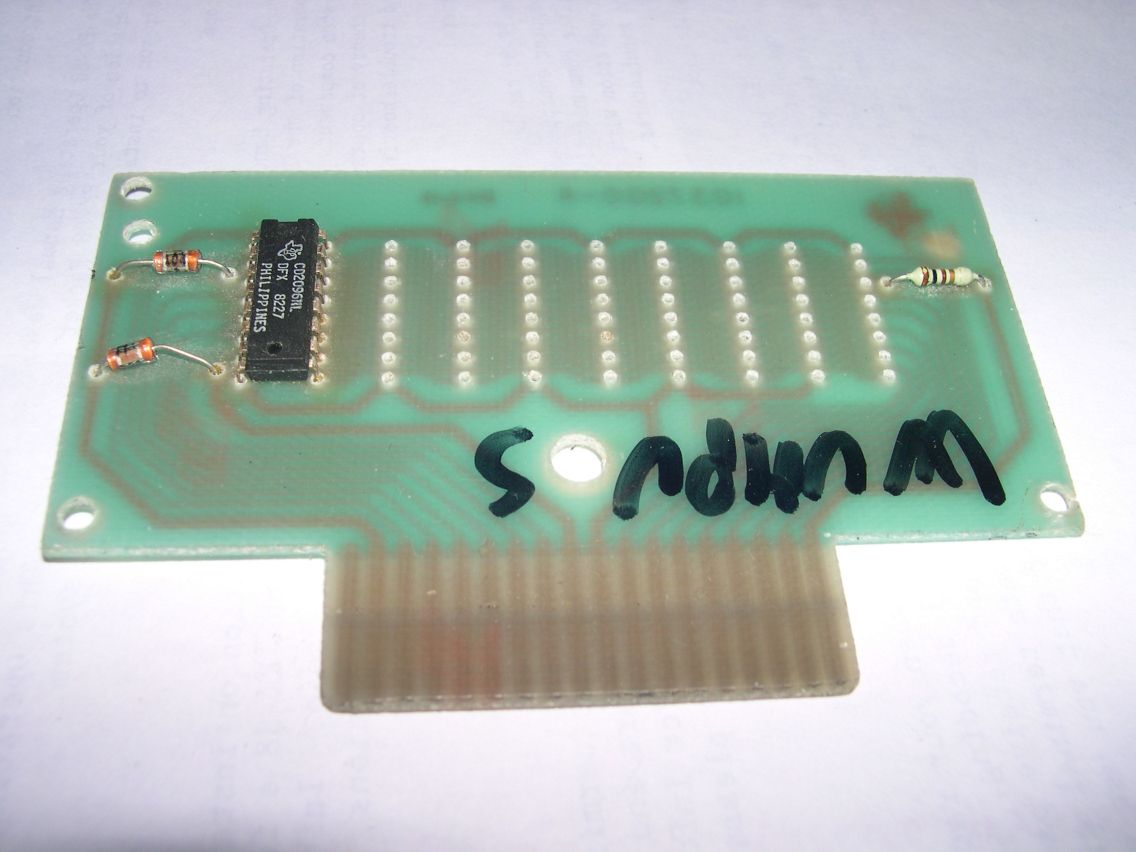
Hunt the wumpus |
1980 |
Texas Instruments |
PHM 3023 |
YES |
|
 |
|
|
|
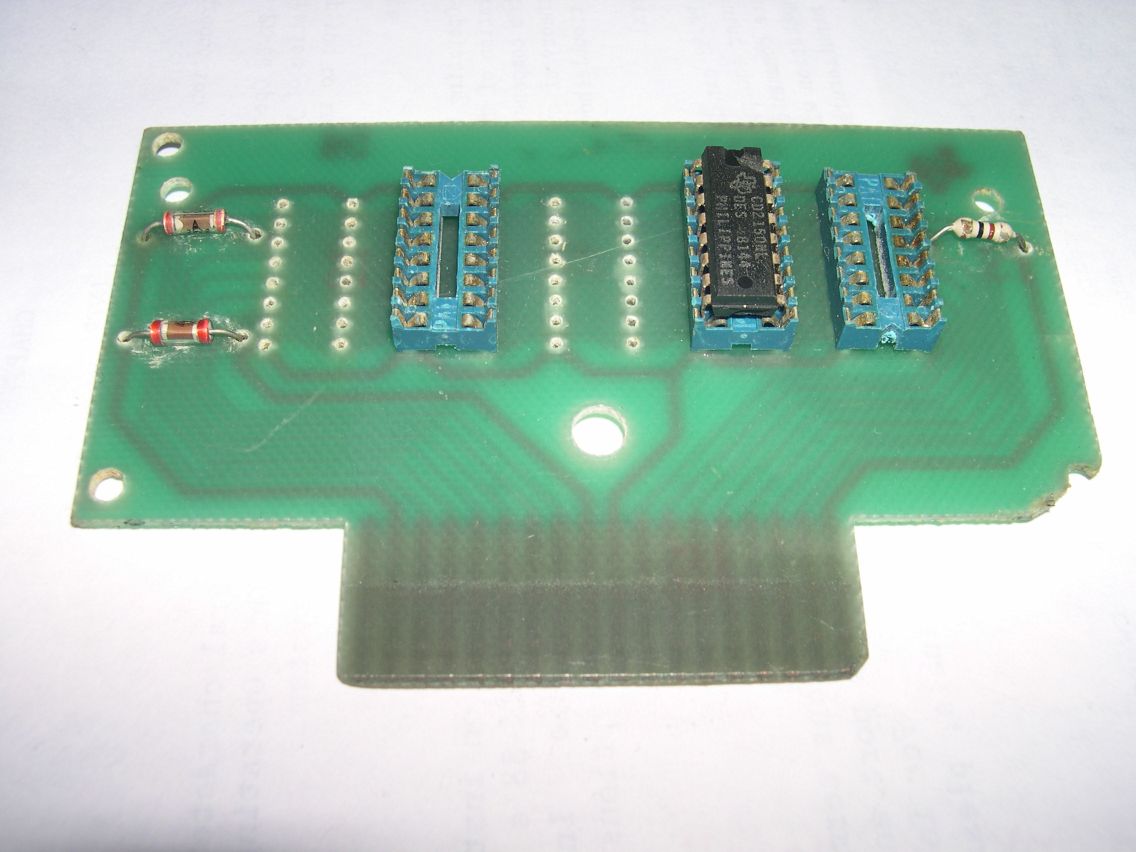
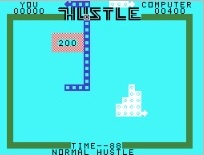
Hustle |
1980 |
Texas Instruments |
PHM 3034 |
YES |
|
 |
|
|
|
I'm Hiding |
1983 |
Milton Bradley |
MBX |
|
YES |
|
|
|
|
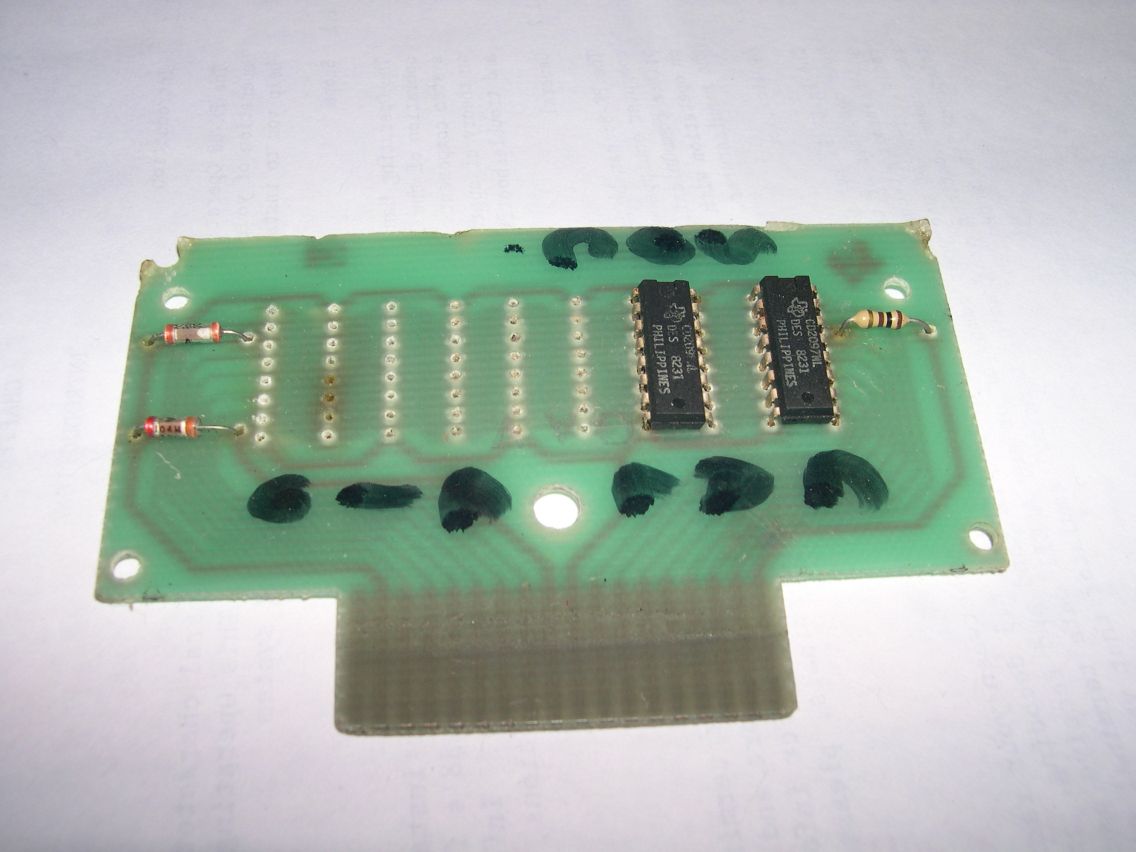
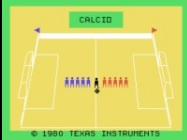
Indoor soccer |
1980 |
Texas Instruments |
PHM 3024 |
YES |
|
 |
|
|
|
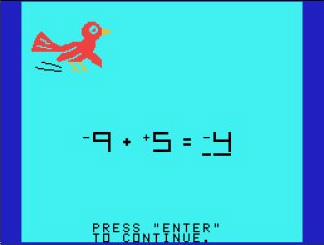
Integers |
1982 |
Texas Instruments |
PHM 3094 |
|
|
|
|
|
|
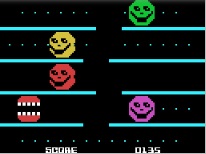
Jawbreaker II |
1983 |
Sierra On-Line |
PHM 3194 |
YES |
|
|
|
|
|
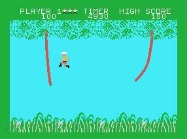
Jungle Hunt |
1982-83 |
Taito & Atarisoft |
RX8528 |
|
|
|
|
|
|
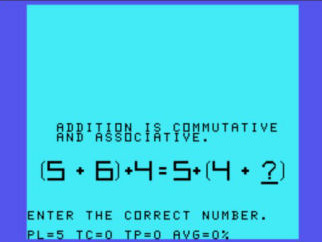
Laws of arithmetic |
1982 |
Texas Instruments |
PHM 3099 |
|
|
|
|
|
|
M*a*s*h |
1983 |
20th Century Fox |
PHM 3158 |
|
YES |
|
|
|
|
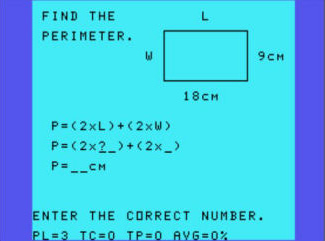
Measurement Formulas |
1982 |
Texas Instruments |
PHM 3101 |
YES |
|
|
|
|
|
Meteor belt |
1983 |
Texas Instruments MBX |
PHM 3152 |
|
YES |
|
|
|
|
Meteor multiplication |
1982 |
Texas Instruments |
PHM 3119 |
YES |
|
|
|
|
|
Micro pinball |
1984 |
DaTaBioTics |
BADE |
YES |
|
|
|
|
|
Microsoft multiplan |
1981 |
Microsoft |
PHM 3113 |
|
|
|
|
|
|
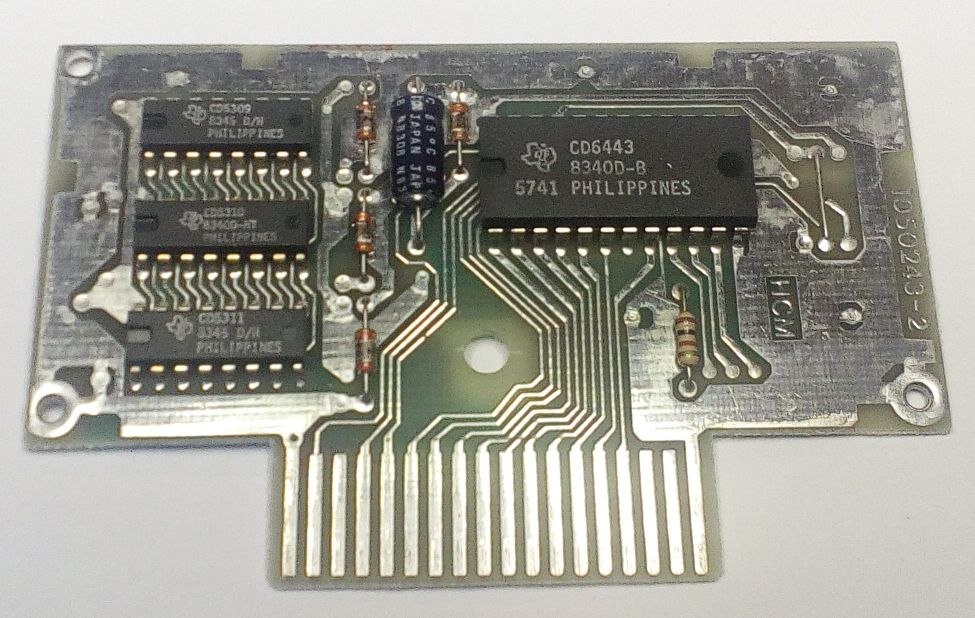
Microsurgeon |
1983 |
Imagic |
PHM 3220 |
YES |
YES |
 |
|
|
|
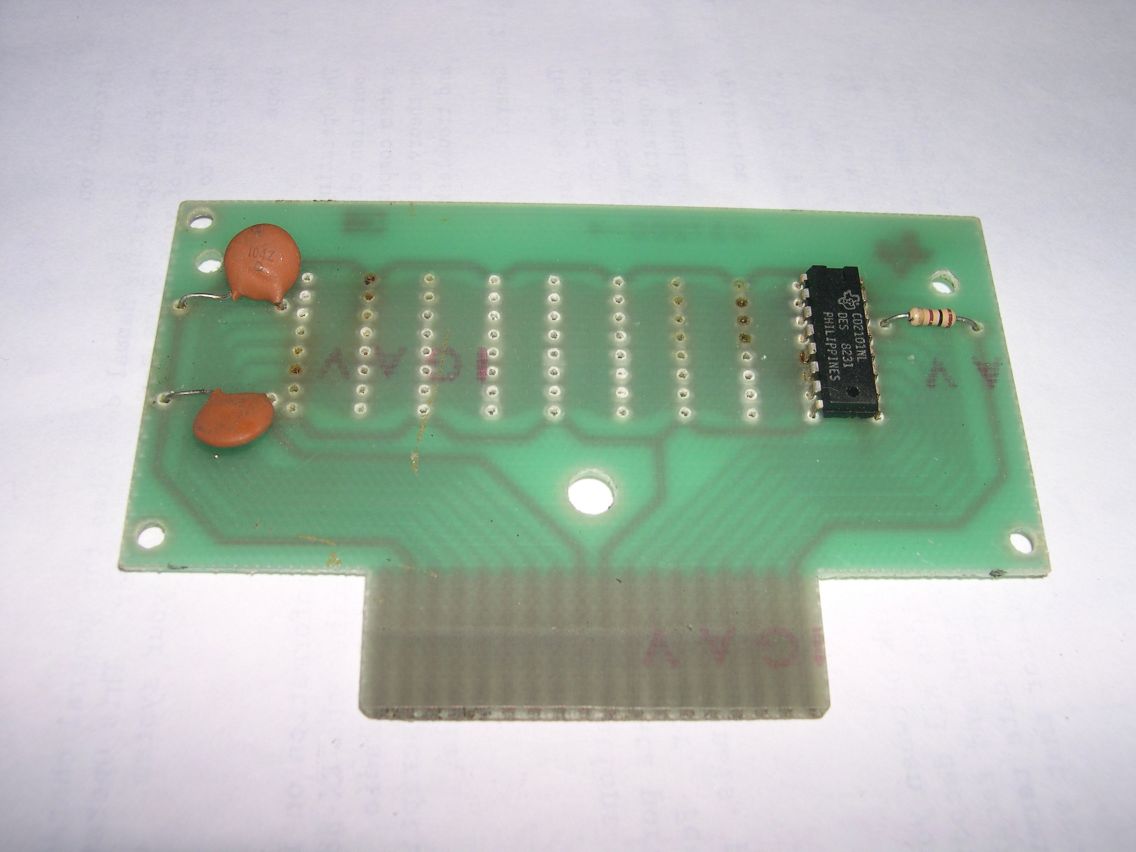
Mind challenger |
1980 |
Texas Instruments |
PHM 3025 |
|
|
 |
|
|
|
Miner 2049 er |
1983 |
Tigervision |
7-009-99 |
|
|
|
|
|
|
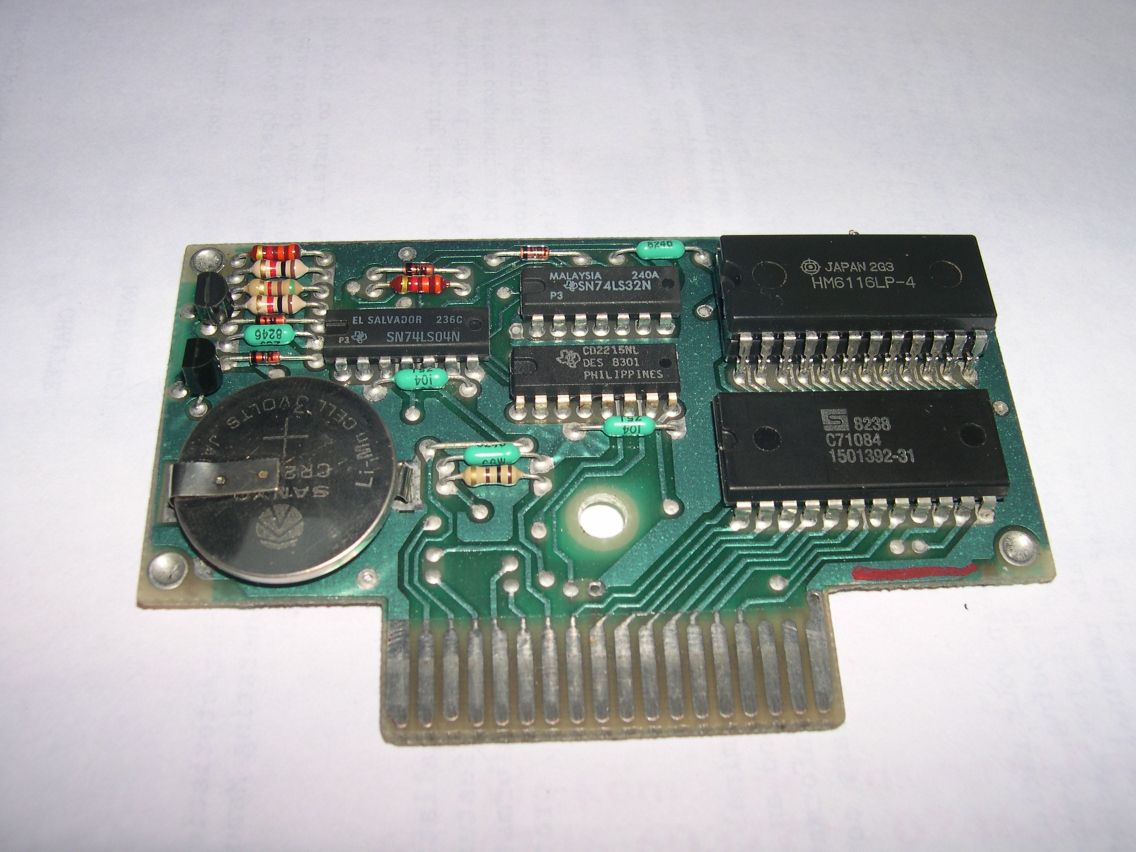
Mini memory |
1981 |
Texas Instruments |
PHM 3058 |
|
|
 |
|
|
| Miniwriter II | ||||||||
|
Miniwriter III |
1986 |
DaTaBioTics |
|
|
|
|
|
|
|
Minus mission |
1982 |
Texas Instruments |
PHM 3118 |
YES |
|
|
|
|
|
Moon mine |
1983 |
Texas Instruments |
PHM 3131 |
YES |
YES |
|
|
|
|
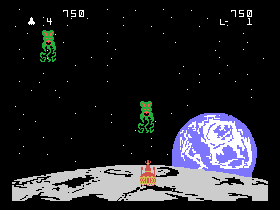
Moonpatrol |
1982 |
Atarisoft |
RX8531 |
YES |
|
|
|
|
|
Moonsweeper |
1983 |
Imagic |
PHM 3224 |
|
|
|
|
|
|
Ms. Pac-Man |
1983 |
Atarisoft |
RX8543 |
|
|
|
|
|
|
Multiplication |
1982 |
Texas Instruments |
PHM 3029 |
YES |
|
|
|
|
|
Multiplication 1 |
1981 |
Scott Foresman |
SF30207 |
YES |
YES |
|
|
|
|
Multiplication 2 |
1982 |
Scott Foresman |
SF302223 |
|
|
|
|
|
|
Munch man |
1982 |
Texas Instruments |
PHM 3057 |
YES |
|
|
|
|
|
Munch man 2 |
1987 |
John Phillips |
BDAG |
|
|
|
|
|
|
Munch mobile |
1983 |
SNK Electronics |
PHM 3146 |
|
|
|
|
|
|
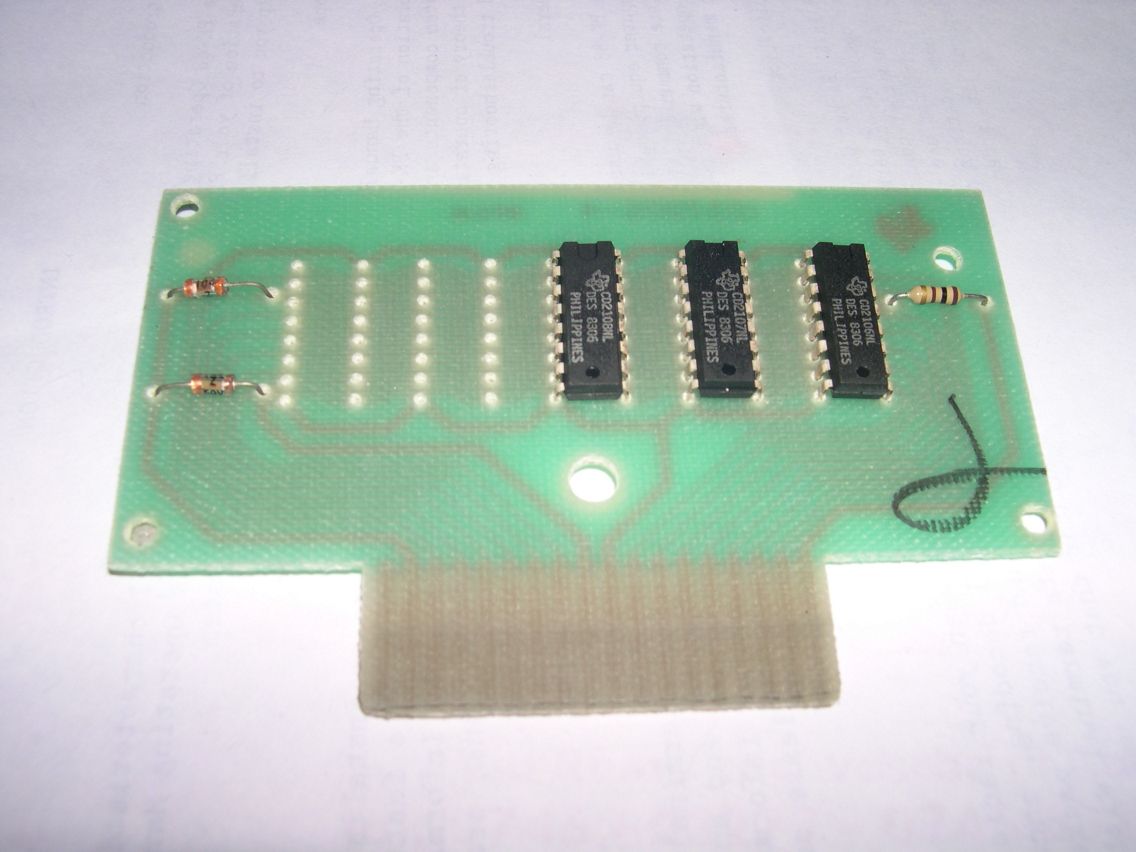
Music maker |
1980 |
Texas Instruments |
PHM 3020 |
YES |
|
 |
|
|
|
Number Bowling |
1983 |
Scott Foresman |
SF31189 |
YES |
|
|
|
|
|
Number Readiness |
1982 |
Texas Instruments |
PHM 3098 |
YES |
|
|
|
|
|
Numeration 1 |
1983 |
Scott Foresman |
PHM3050 |
YES |
YES |
|
|
|
|
Numeration 2 |
1983 |
Scott Foresman |
PHM 3051 |
|
YES |
|
|
|
|
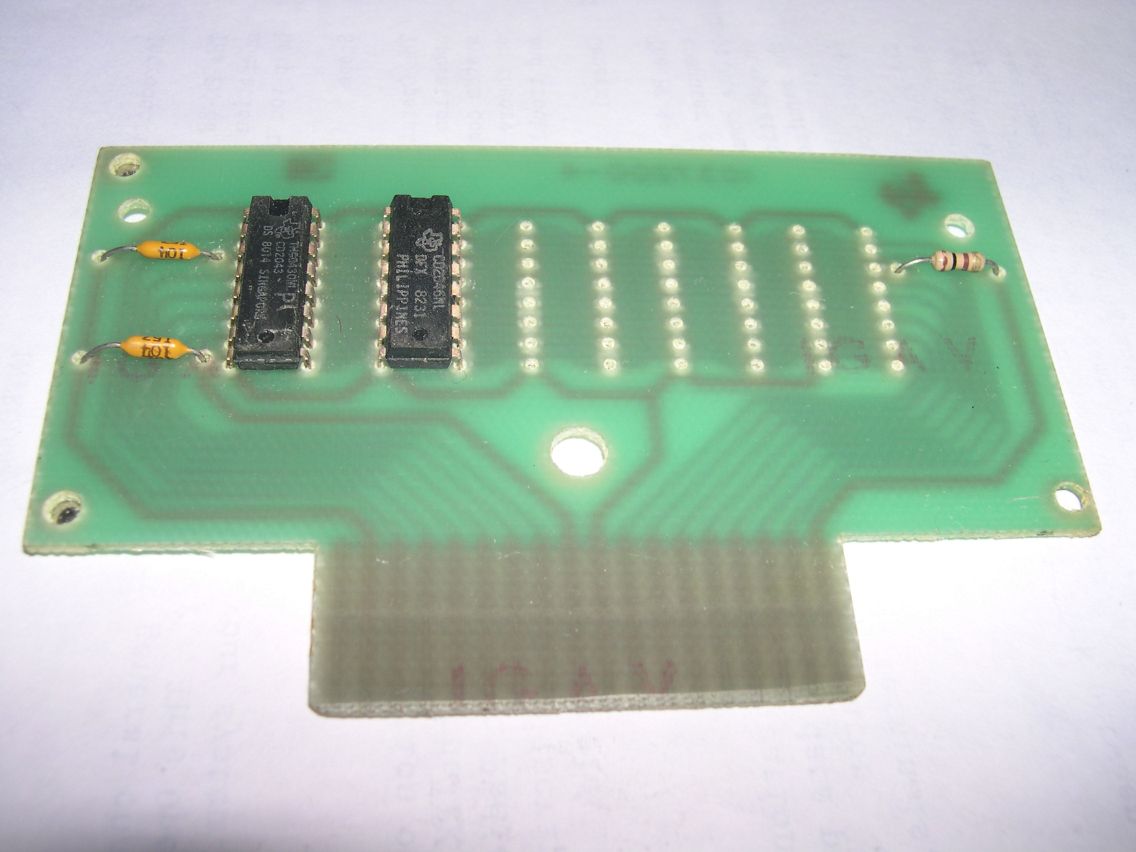
Numero magico |
1979 |
Texas Instruments |
PHM 3004 |
YES |
|
 |
|
|
|
Othello |
1982 |
CBS Video |
PHM 3067 |
YES |
|
|
|
|
|
Paint n Print |
1985 |
Navarone |
GP-100-700 |
|
|
|
|
|
|
Pac-Man |
1983 |
Atarisoft |
RX8500 |
|
|
|
|
|
|
Parsec |
1982 |
Texas Instruments |
PHM 3112 |
YES |
YES |
|
|
|
|
Percents |
1982 |
Texas Instruments |
PHM 3097 |
|
|
|
|
|
|
Personal real estate |
1980 |
Texas Instruments |
PHM 3022 |
|
|
|
|
|
|
Personal record keeping ( usa ) |
1980 |
Texas Instruments |
1103056 |
YES |
|
|
|
|
|
Personal record keeping ( D / I ) |
1982 |
Texas Instruments |
PHM 3013 |
|
|
|
|
|
|
Personal Report Generator |
1980 |
Texas Instruments |
PHM 3044 |
|
|
 |
|
|
|
Phisycal fitness |
1978 |
Texas Instruments |
PHM 3010 |
YES |
|
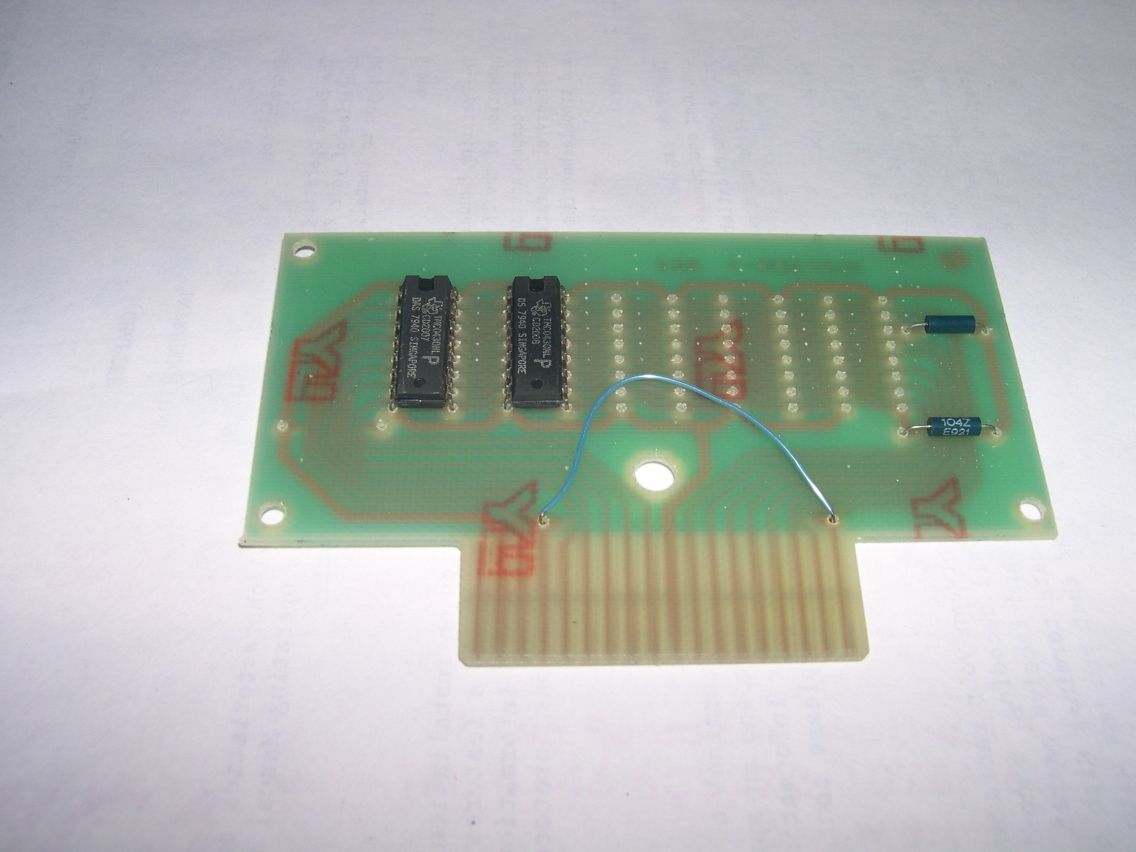 |
|
|
|
Picnic Paranoia |
1983 |
Atarisoft |
RX8517 |
|
|
|
|
|
|
Picture Parts |
1983 |
Scott Foresman |
SF 31180 |
|
|
|
|
|
|
Plato interpreter |
1982 |
Control Data |
PHM 3122 |
YES |
|
|
|
|
|
Pole Position |
1982-83 |
Namco & Atarisoft |
RX8534 |
|
|
|
|
|
|
Popeye |
1984 |
Parker Brothers |
PB1650 |
|
|
|
|
|
|
Princess and the frog |
1982 |
Romox |
99ERD12 |
|
YES |
|
|
|
|
Protector II |
1983 |
Atarisoft |
RX8516 |
|
|
|
|
|
|
Pro Ttyper |
1987 |
DaTaBioTics |
BABG |
|
|
|
|
|
|
Pyramid Puzzler |
1983 |
Scott Foresman |
SF31186 |
|
|
|
|
|
|
Q-bert |
1984 |
Park Brothers |
PB1620 |
|
|
|
|
|
|
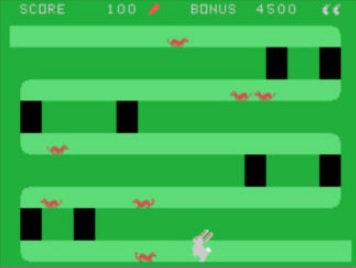
Rabbit trail |
1983 |
Funware |
FW1004 |
YES |
|
|
|
|
|
Reading Flight |
1982 |
Scott Foresman |
PHM 3082 |
YES |
YES |
|
|
|
|
Reading Fun |
1982 |
Scott Foresman |
PHM 3043 |
|
YES |
|
|
|
|
Reading skill course |
|
|
|
|
|
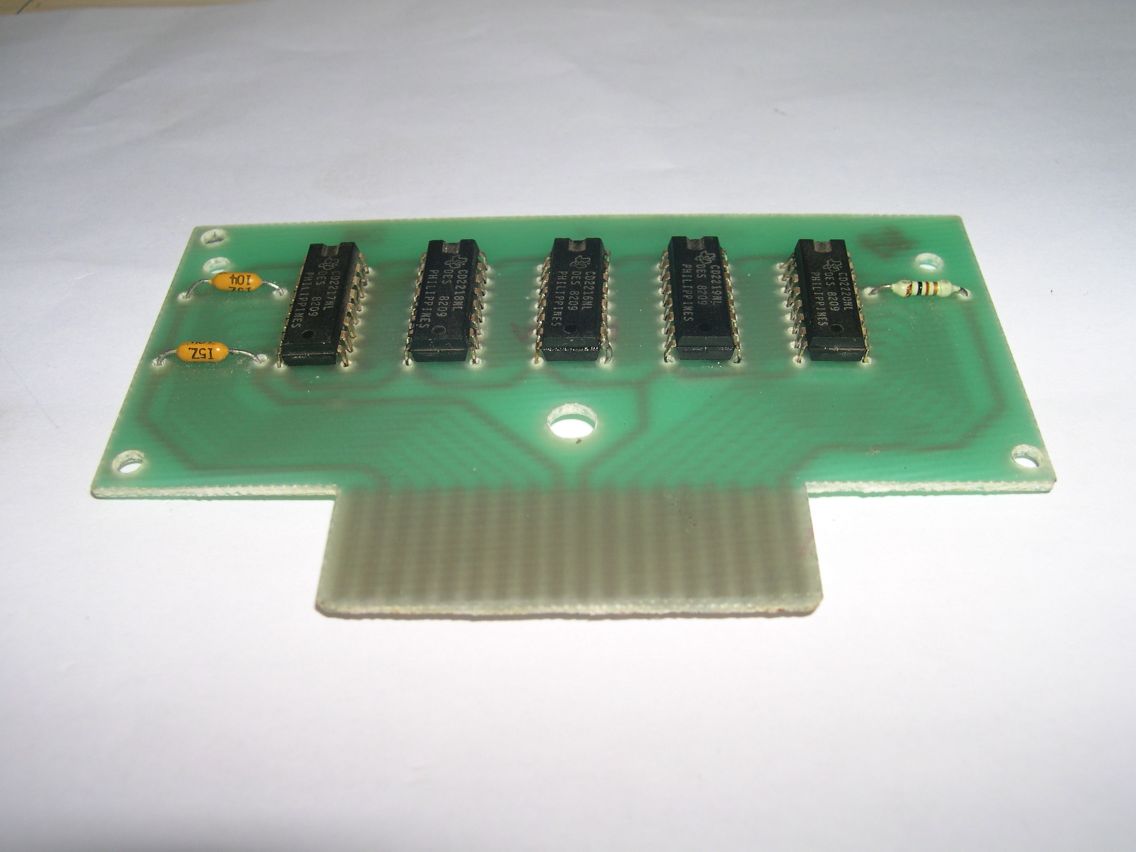 |
|
|
|
Reading Adventures |
1983 |
Scott Foresman |
SF 30117 |
|
|
|
|
|
| Reading cheers | 1983 | Scott Foresman | SF30115 | |||||
|
Reading ON |
1982 |
Scott Foresman |
PHM 3046 |
|
|
|
|
|
|
Reading Power |
1983 |
Scott Foresman |
SF 30121 |
YES |
|
|
|
|
| Reading Rainbows | 1983 | Scott Foresman | SF 30113 | |||||
|
Reading Rally |
1982 |
Scott Foresman |
PHM 3048 |
YES |
|
|
|
|
|
Reading Trail |
1983 |
Scott Foresman |
SF 30119 |
|
|
|
|
|
|
Reading Roundup |
1982 |
Scott Foresman |
PHM 3047 |
YES |
YES |
|
|
|
|
Reading Roundup |
1983 |
Scott Foresman |
SF 30118 |
|
|
|
|
|
| Reading Wonders | 1983 | Scott Foresman | SF30123 | |||||
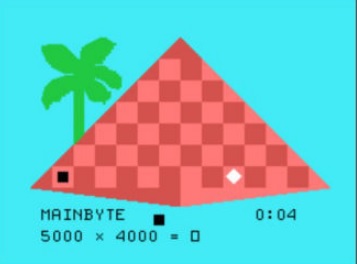
| Red Baron | 1988 | DaTaBioTics | ||||||
|
Return to Pirate's Isle |
1983 |
Texas Instruments |
PHM 3189 |
|
|
|
|
|
|
Robotron 2048 |
2019 |
Atari |
ti99iuc |
|
|
|
|
|
|
Rotor Raiders |
1983 |
ROMOX |
ROM06025 |
|
|
|
|
|
|
Scolastic spelling level 3 |
1982 |
Texas Instruments |
PHM 3059 |
|
YES |
|
|
|
|
Scolastic spelling level 4 |
1982 |
Texas Instruments |
PHM 3060 |
|
YES |
|
|
|
|
Scolastic spelling level 5 |
1982 |
Texas Instruments |
PHM 3061 |
|
YES |
|
|
|
|
Scolastic spelling level 6 |
1982 |
Texas Instruments |
PHM 3062 |
|
YES |
|
|
|
|
Securities Analysis |
1979 |
Texas Instruments |
PHM 3012 |
|
|
|
|
|
|
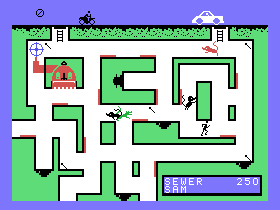
Sewermania |
1983 |
Milton Bradley MBX |
PHM 3150 |
|
YES |
|
|
|
|
Shamus |
1983 |
Atarisoft |
RX8518 |
|
|
|
|
|
|
Slymoids |
1983 |
Texas Instruments |
PHM 3197 |
YES |
|
|
|
|
|
Sneggit |
1982 |
Texas Instruments |
PHM 3145 |
|
|
|
|
|
|
Space Bandits |
1984 |
Milton Brdley MBX |
PHM3149 |
|
YES |
|
|
|
|
Space Journey |
1983 |
Scott Foresman |
SF 31192 |
YES |
|
|
|
|
|
Sound track trolley |
1983 |
Texas Instruments MBX |
PHM 3157 |
YES |
YES |
|
|
|
|
Speech Editor |
1980 |
Texas Instruments |
PHM 3011 |
|
YES |
|
|
|
|
Spot Shoot |
1987 |
DaTaBioTics |
|
YES |
|
|
|
|
| Star Gazer I | 1988 | John Philips | BBBA | |||||
|
Star Maze |
1983 |
Scott Foresman |
SF3182 |
|
|
|
|
|
|
Star Trap |
|
DaTaBioTics |
|
YES |
|
|
|
|
|
Star Runner |
1987 |
DaTaBioTics |
BAAP |
|
|
|
|
|
|
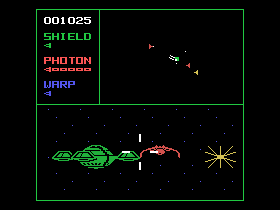
Star trek |
1983 |
Sega Enterprises |
PHM 3225 |
|
YES |
|
|
|
|
Statistik |
1979 |
Texas Instruments |
PHM 3014 |
|
|
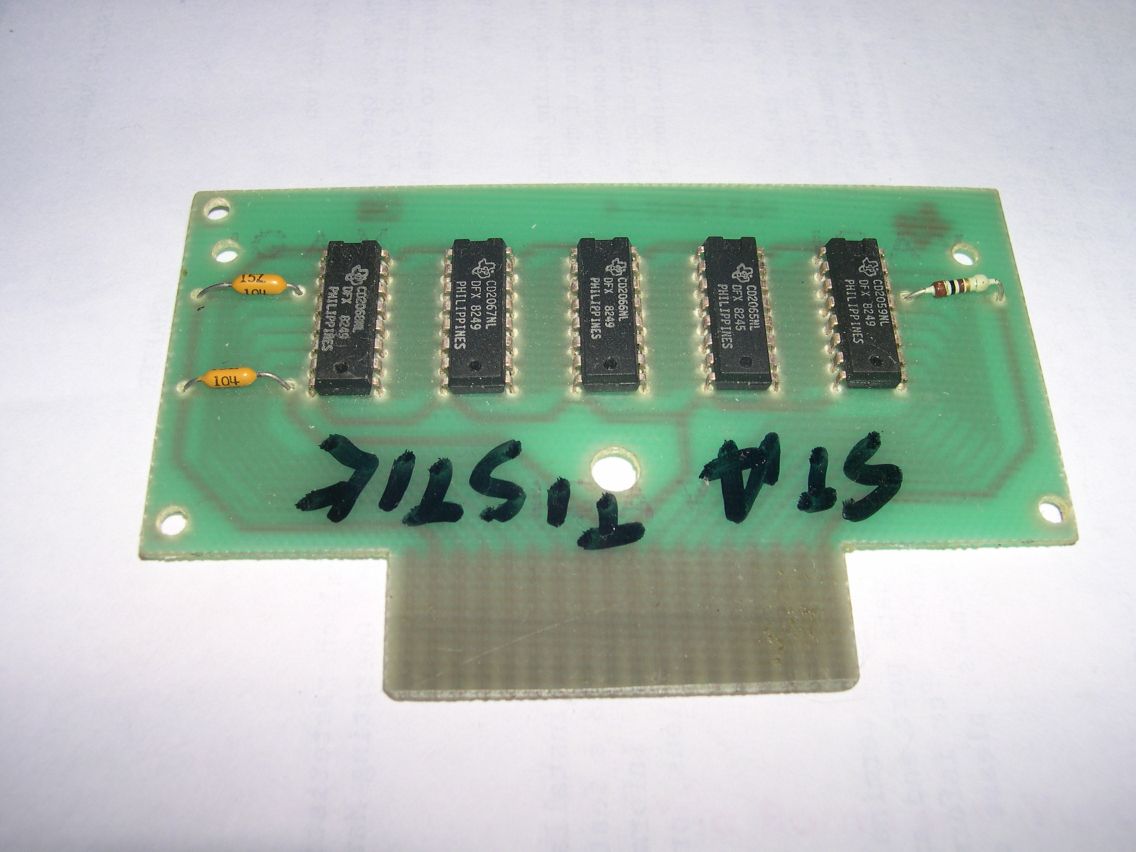 |
|
|
|
Story machine |
1982-83 |
Spinnaker |
PHM 3178 |
YES |
|
|
|
|
|
Strike Three |
1988 |
John Philips |
|
|
|
|
|
|
|
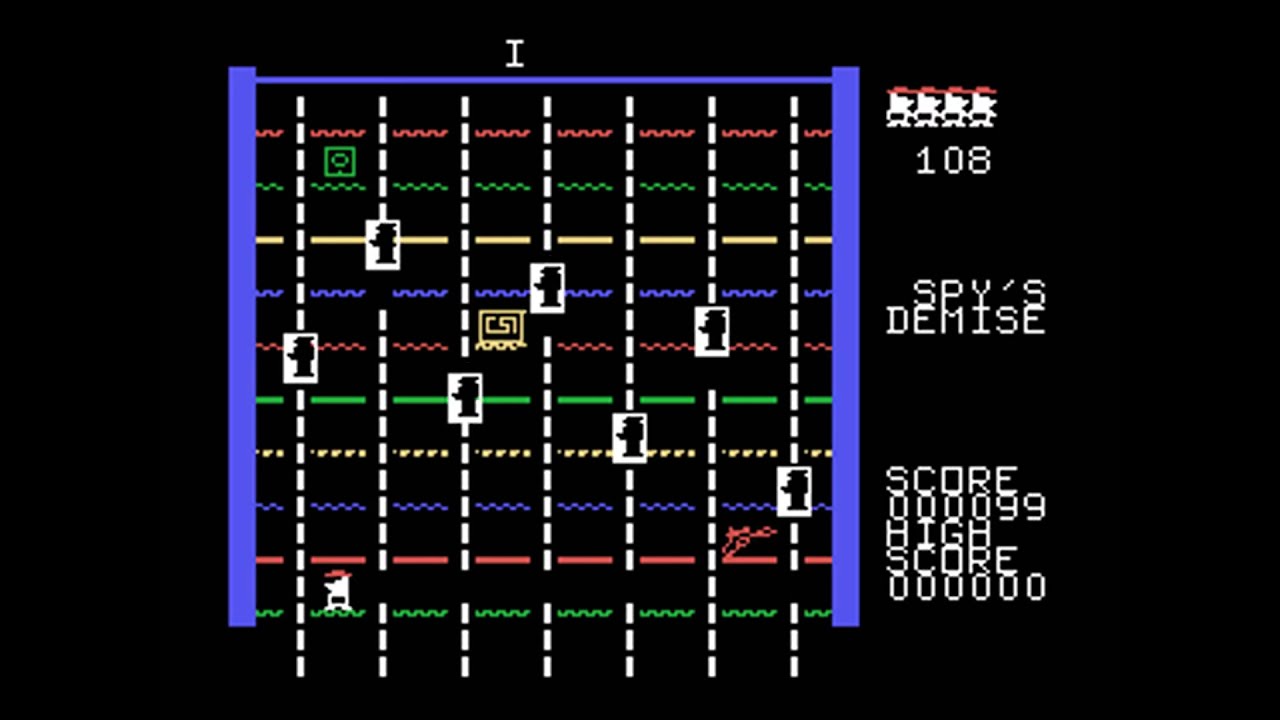
Spy's Demise |
1987 |
DaTaBioTics |
BABC |
|
|
|
|
|
| ST Nick | 1983 | FunWare | BDAC | 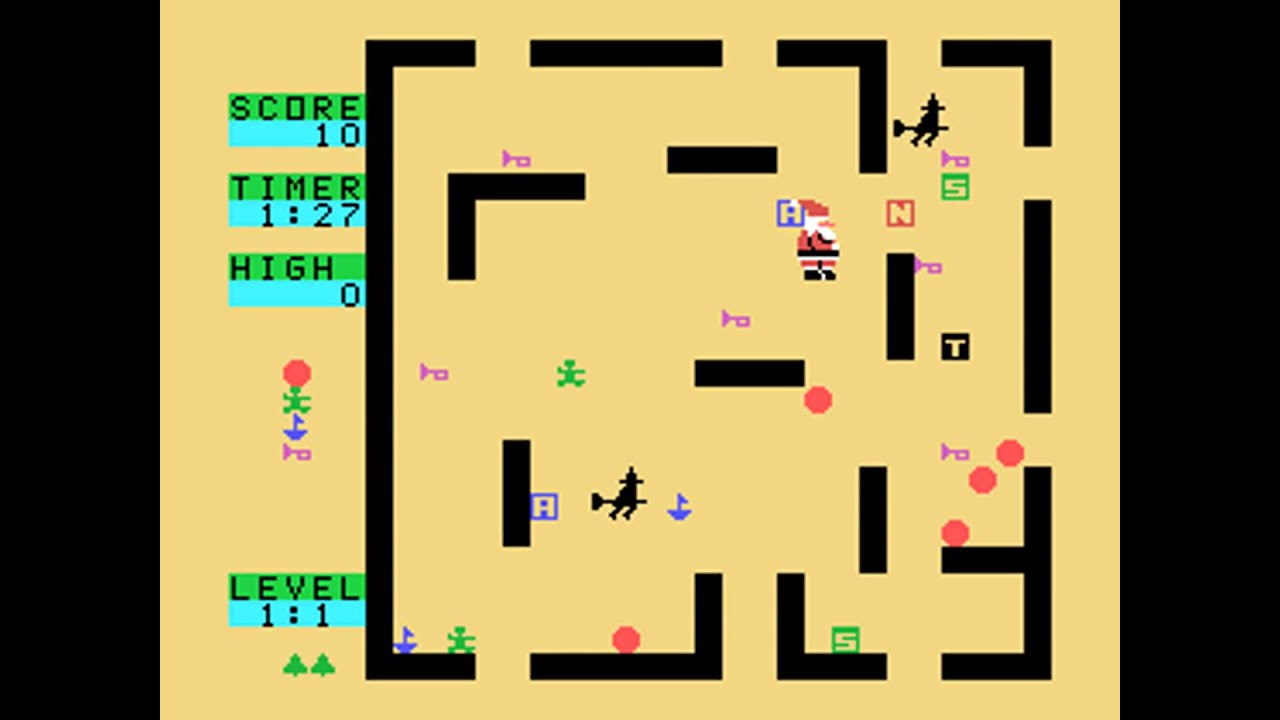 |
||||
|
Subtraction |
1982 |
Texas Instruments |
PHM 3091 |
|
|
|
|
|
|
Super demon attack |
1983 |
Texas Instruments |
PHM 3219 |
|
YES |
|
|
|
|
Super extended Basic |
1987 |
Triton |
BDHK |
|
|
|
|
|
|
Superfly |
1983 |
Milton Bradley MBX |
PHM3153 |
YES |
YES |
|
|
|
|
Superstorm |
2019 |
Atari |
ti99iuc |
|
|
|
|
|
|
Tax investment record keeping |
1980 |
Texas Instruments |
PHM 3016 |
|
|
|
|
|
|
Terminal Emulator 1 |
1980 |
Texas Instruments |
PHM 3017 |
|
|
|
|
|
|
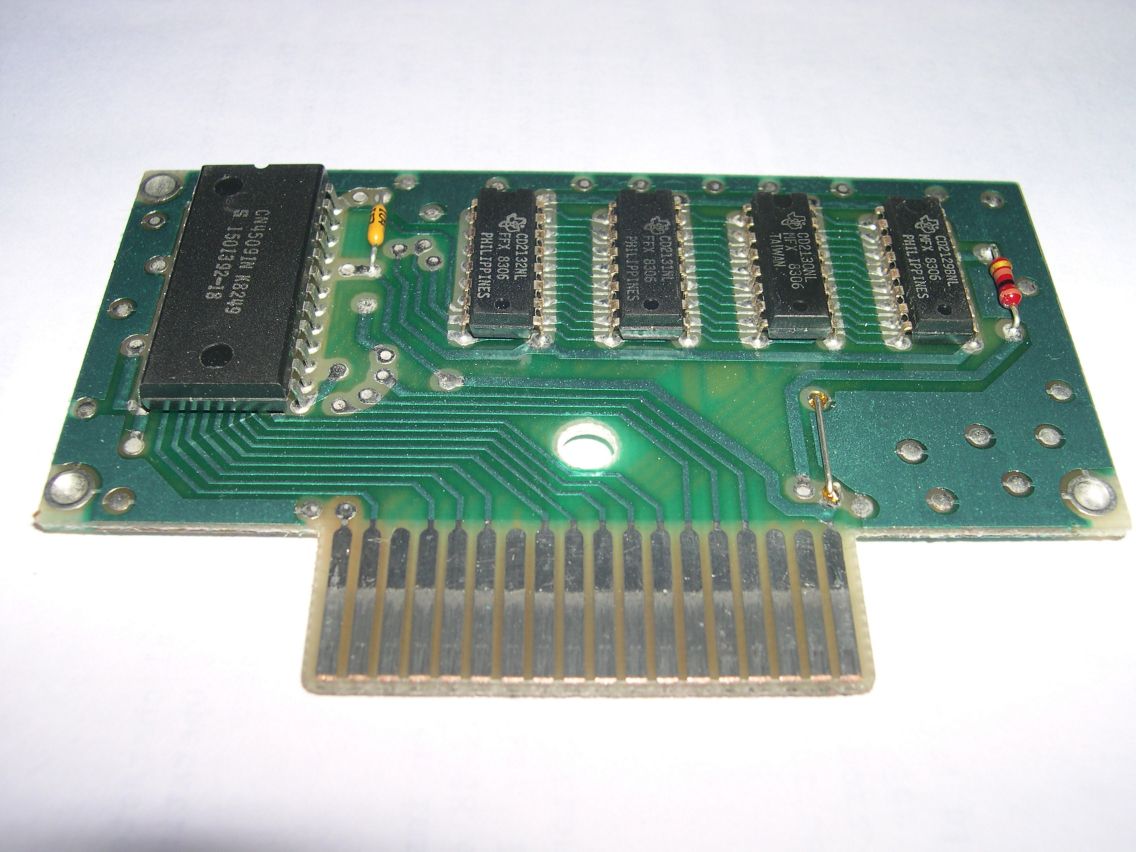
Terminal emulator 2 |
1980 |
Texas Instruments |
PHM 3035 |
YES |
YES |
 |
|
|
|
Terry Turtles Adventure |
1983 |
Texas instruments MBX |
PHM3154 |
YES |
|
|
|
|
|
TEX turbo and the big bug battles |
2016 |
DSAPSC |
|
|
|
|
|
|
|
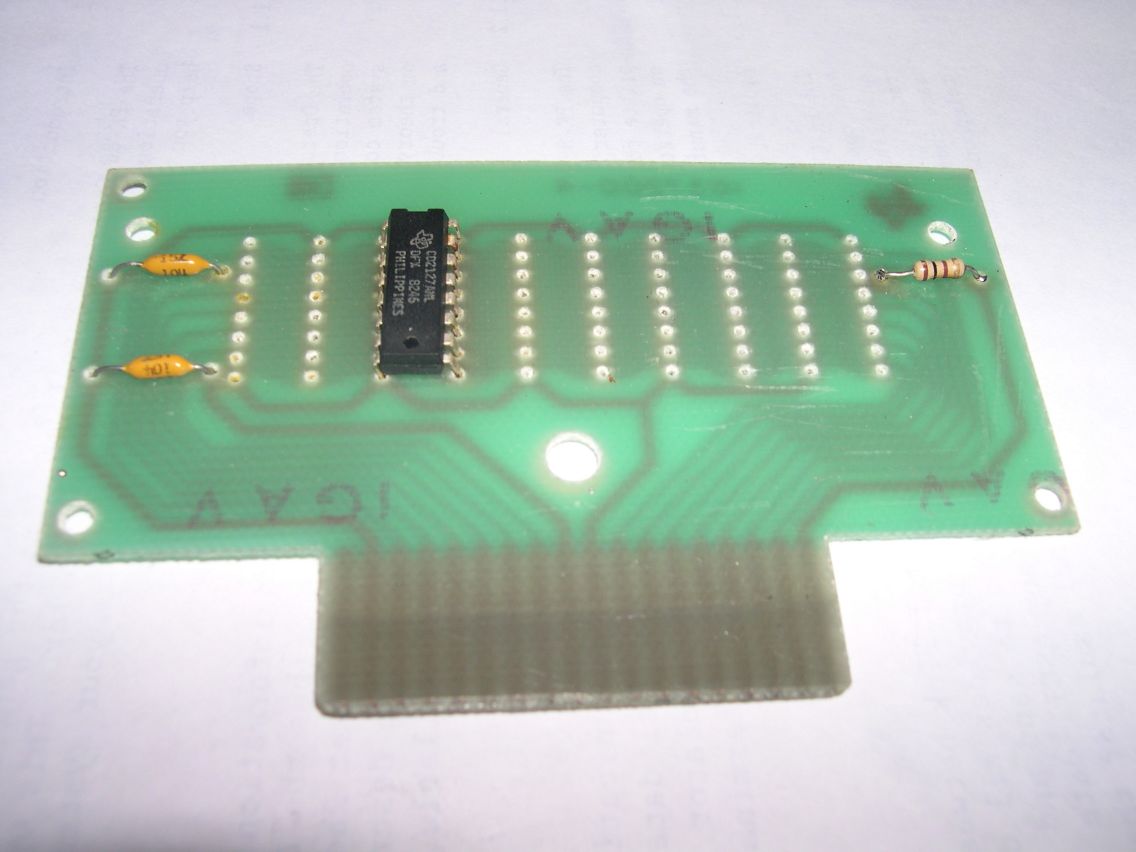
The Attak |
1980 |
Texas Instruments |
PHM 3031 |
YES |
|
 |
|
|
|
The great word race |
1987 |
tritor products |
|
|
|
|
|
|
|
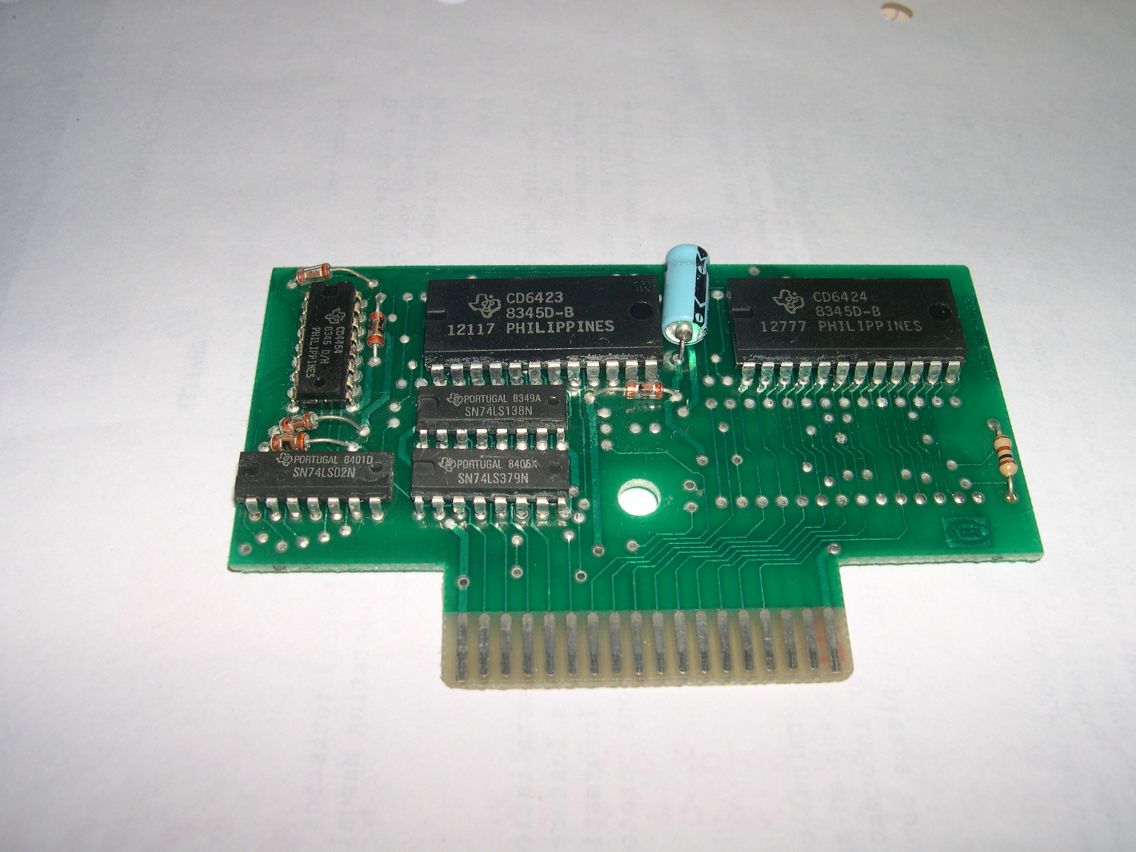
TI calc |
1983 |
Texas Instruments |
PHM 3213 |
YES |
|
 |
|
|
|
TI extended basic 1.00 |
1982 |
Texas Instruments |
PHM 3026 |
|
|
|
|
|
|
TI invaders |
1981 |
Texas Instruments |
PHM 3053 |
|
|
|
|
|
|
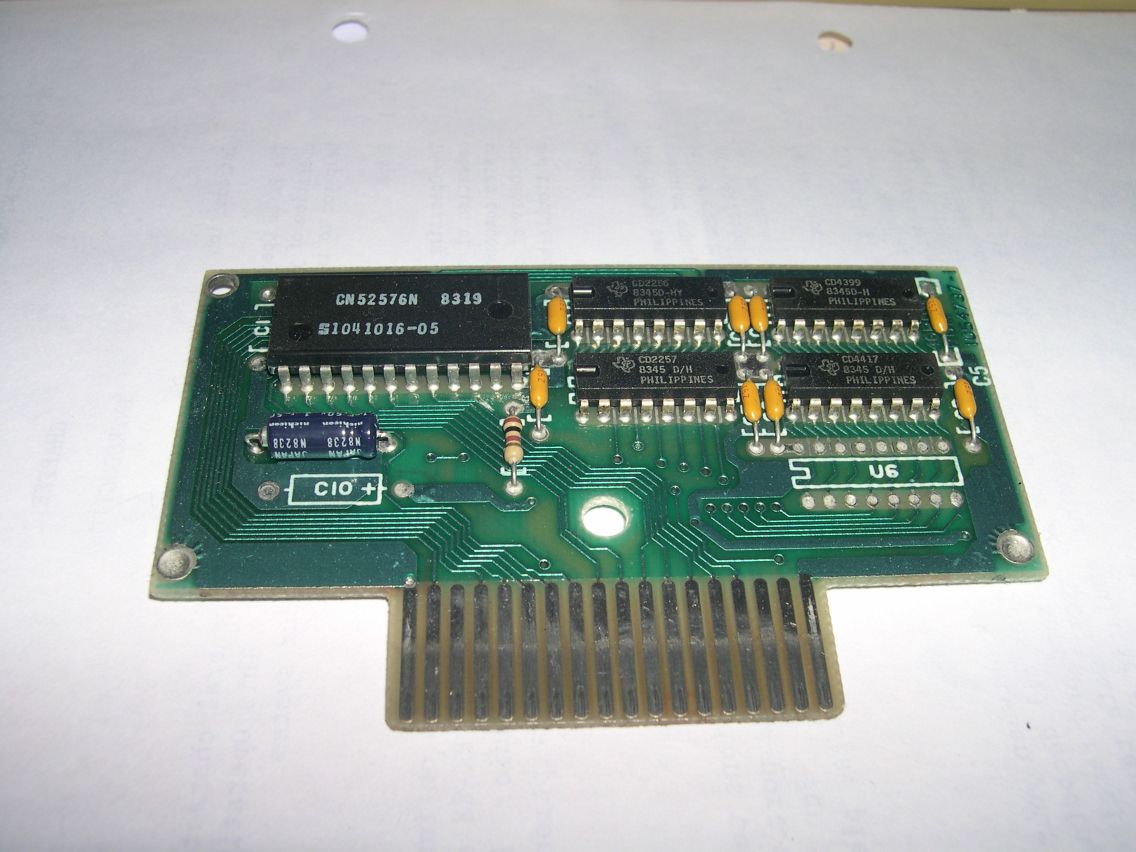
TI logo |
1981 |
Texas Instruments |
PHM 3040 |
|
|
 |
|
|
|
TI logo II |
1984 |
Texas Instruments |
PHM 3109 |
|
|
|
|
|
|
TI logo mondadori |
|
|
|
|
|
|
|
|
|
TI planner |
1987 |
DaTaBioTics |
BJBS |
|
|
|
|
|
|
TI writer word processor |
1982 |
Texas Instruments |
PHM 3111 |
|
|
|
|
|
|
Tombstone city |
1981 |
Texas Instruments |
PHM 3052 |
|
|
|
|
|
|
Touch typing tutor |
1982 |
Texas Instruments |
PHM 3064 |
|
|
|
|
|
|
Treasure Island |
1983 |
Data East USA |
PHM 3168 |
|
|
|
|
|
|
TRIS clone |
1989 |
Asgard |
|
YES |
|
|
|
|
|
Tunnels of doom |
1982 |
Texas Instruments |
PHM 3042 |
|
|
|
|
|
|
Video chess |
1979 |
Texas Instruments |
PHM 3008 |
|
|
|
|
|
|
Video graphs |
1979 |
Texas Instruments |
PHM 3005 |
YES |
|
|
|
|
|
Videogames 1 |
1980 |
Texas Instruments |
PHM 3018 |
YES |
|
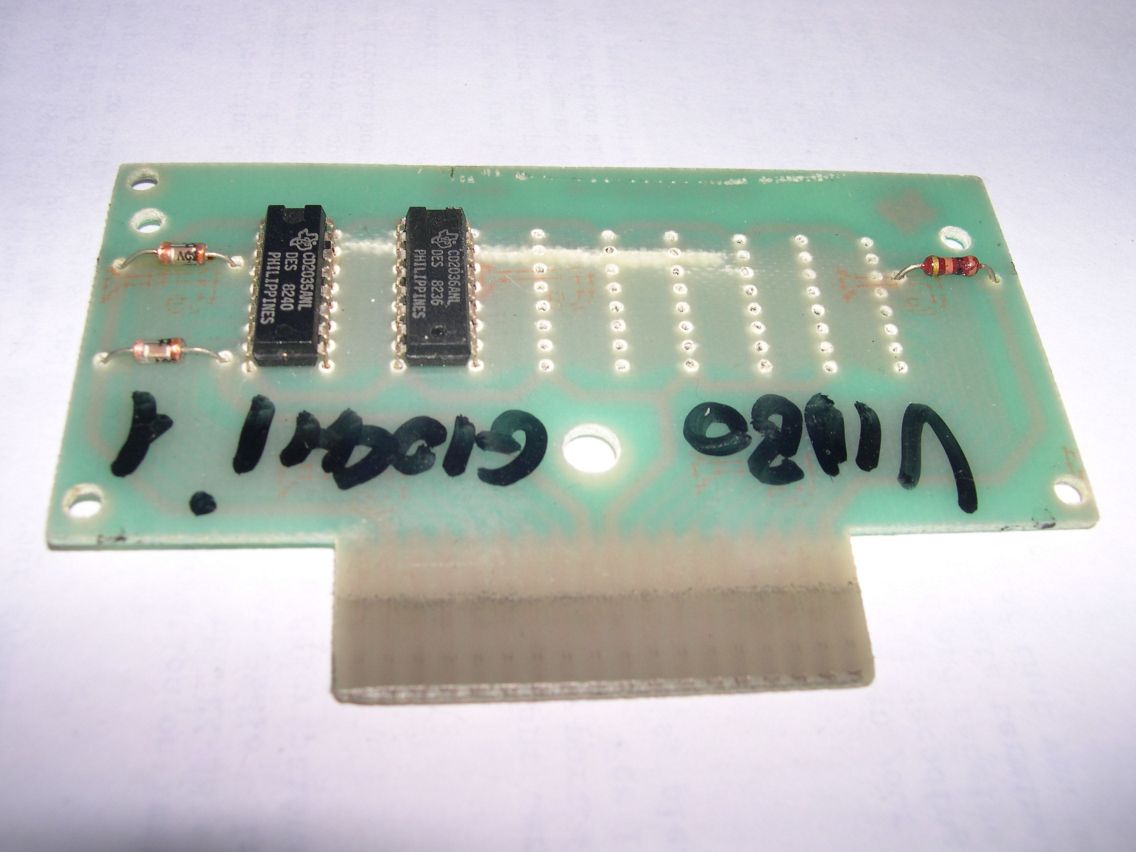 |
|
|
| Video Vegas | 1982 | FunWare | FW1002 | |||||
|
Yathzee |
1980 |
Milton Bradley |
PHM 3039 |
YES |
|
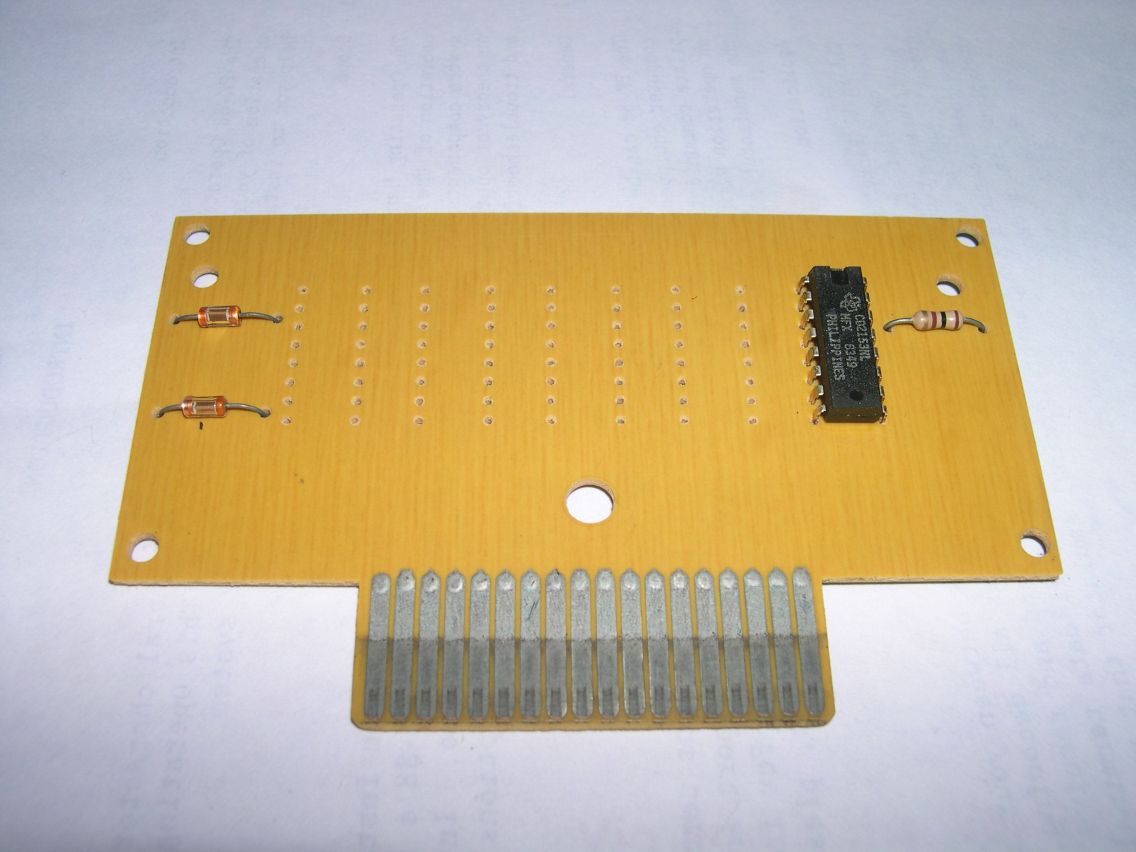 |
|
|
|
Zero Zap |
1981 |
Milton Bradley |
PHM 3036 |
|
|
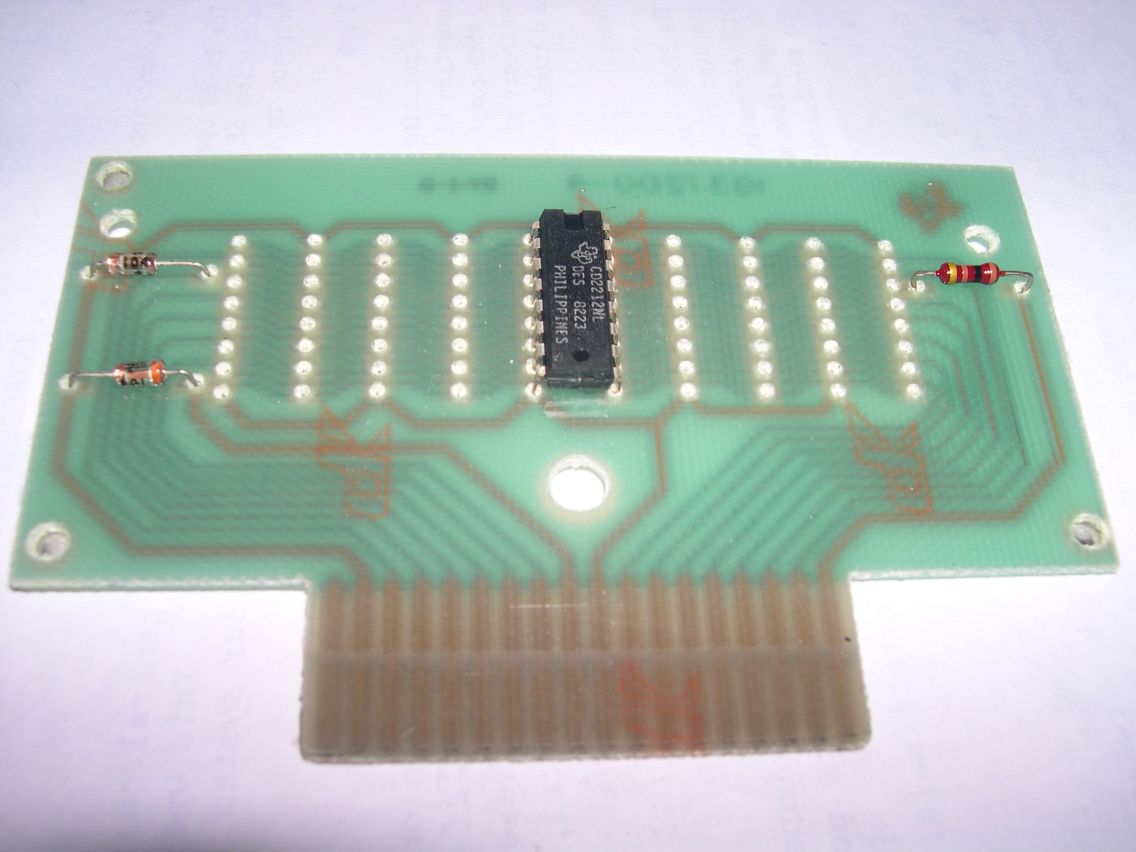 |
|
|
|
Weight control nutrition |
1980 |
Texas Instruments |
PHM 3021 |
YES |
|
|
|
|
|
Word Radar |
1982 |
Texas Instruments |
PHM 3185 |
YES |
|
|
|
|
|
Word Invasion |
1982 |
Texas Instruments |
PHM 3169 |
|
|
|
|
|
|
Word Write XTRA |
1988 |
DaTaBioTics |
|
|
|
|




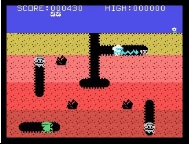









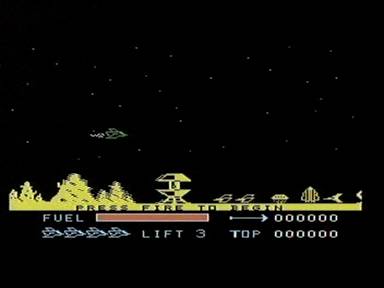
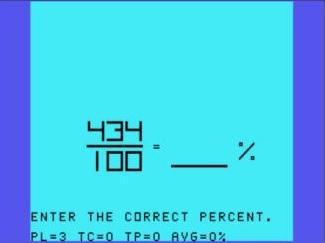
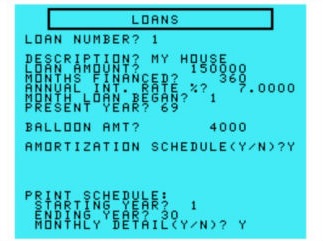
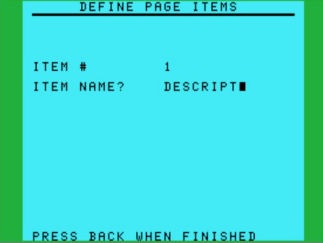

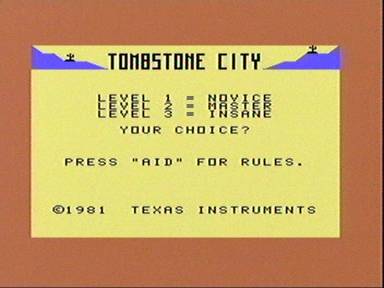
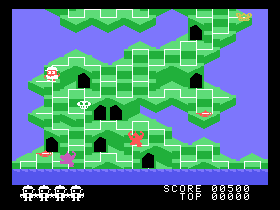
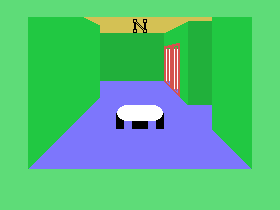
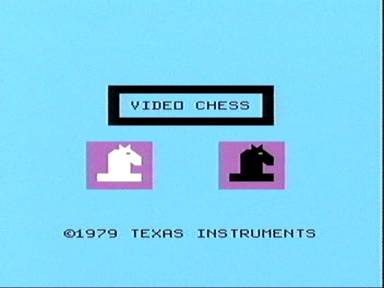
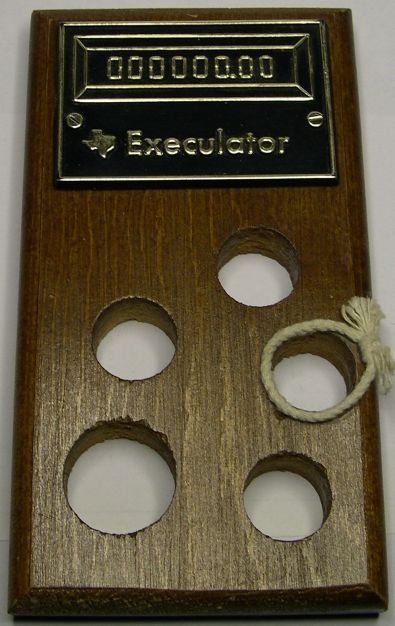
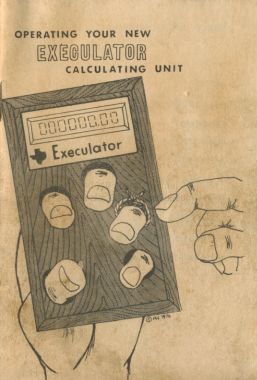
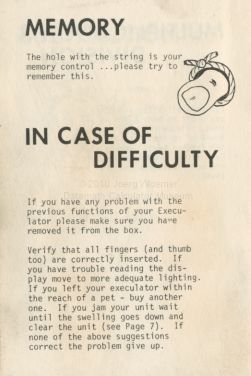
 TEXAS Instruments, a leader in mathematics education and inventor of the integrated circuit has transformed the world over the past 60 years, he has produced the new Execulator built with renewable materials, uses no batteries, solar cells, silicon, display, completely bio-degradable.
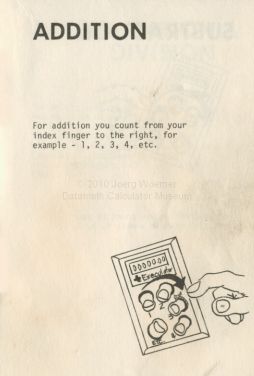
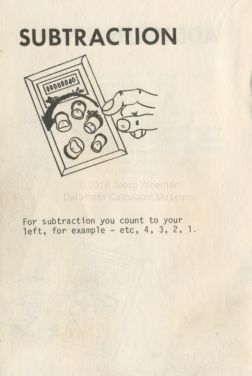
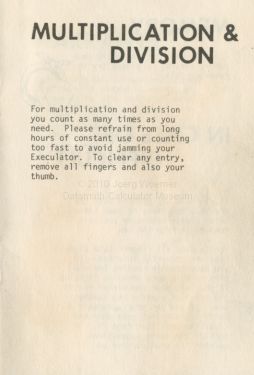
Execulator performs addition, subtraction, multiplication, and even divisions. Unfortunately, the calculations with the% are not supported, but has a constant memory, remember.
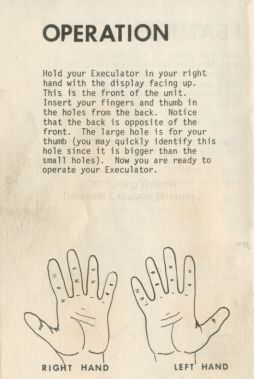
The operation is simple Execulator developed for right-handed and left-handed, for the latter it takes a bit of experience.
 Texas Instruments, leader nell' educazione della matematica e inventore del circuito integrato ha trasformato il mondo negli ultimi 60 anni, ha prodotto il nuovo Execulator, costruito con materiali rinnovabili, non utilizza batterie, ne celle solari, ne silicio, ne display, completamente bio-degradabile .
Execulator esegue addizione, sottrazione, moltiplicazione, e anche le divisioni. Purtroppo, i calcoli con la percentuale % non sono supportati, ma può utilizzare la memoria costante.
Il funzionamento è semplice, Execulator può essere utilizzato sia da destri che da mancini, per quest' ultimi ci vuole un pò di pratica

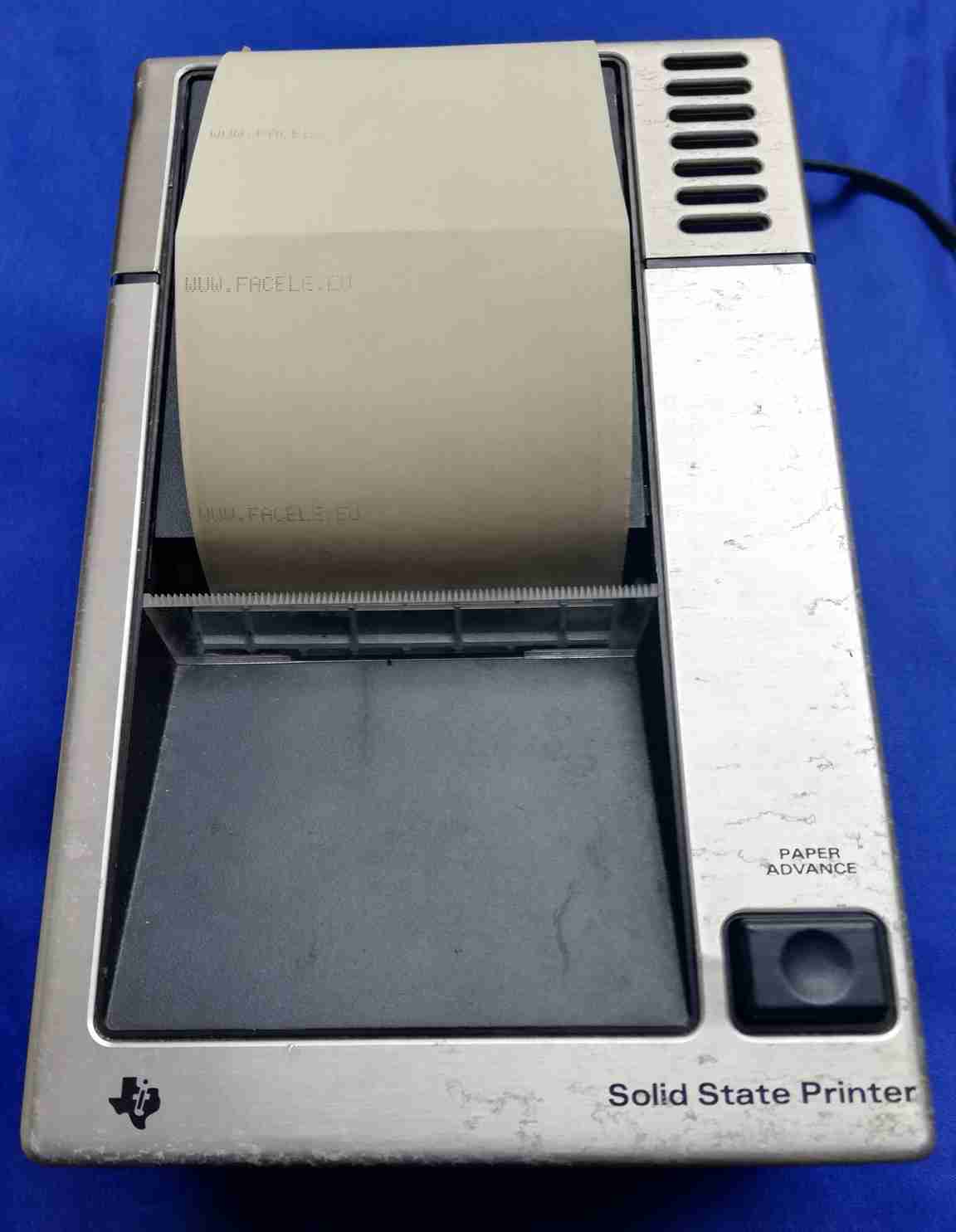
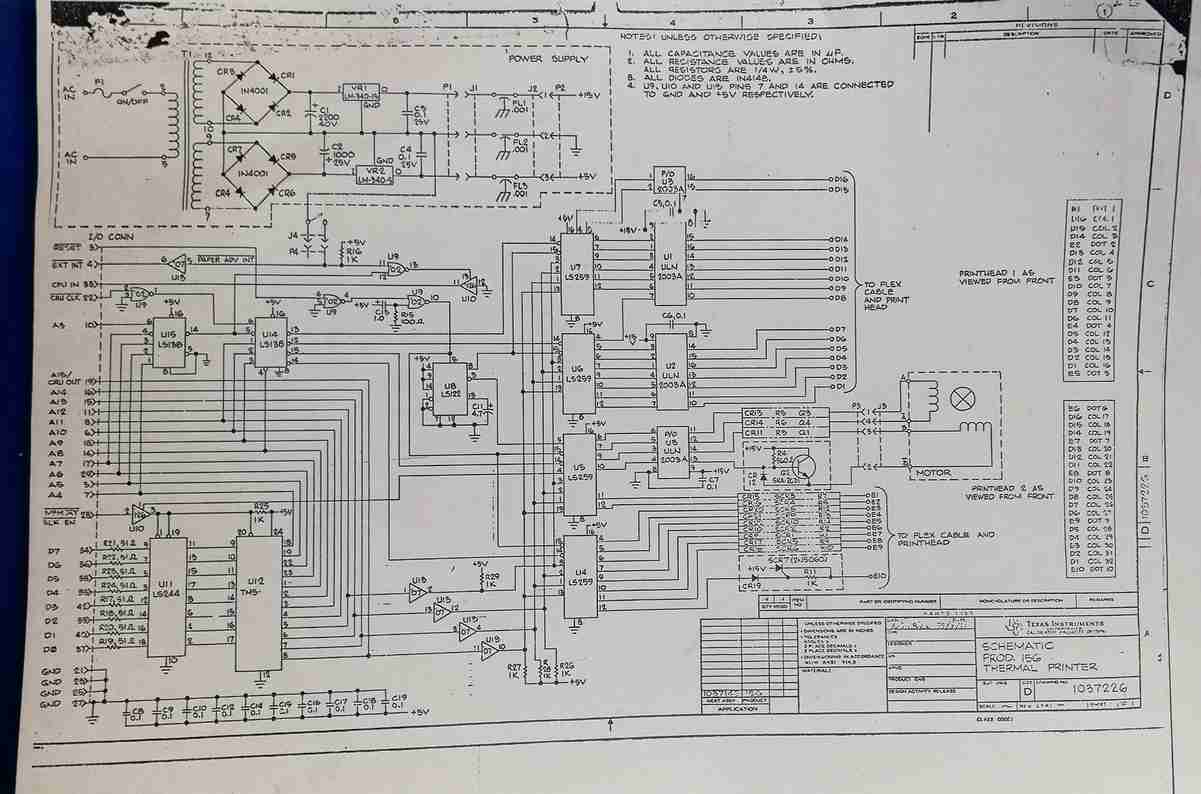 Description: PHP 1900 Sidecar Thermal Printer Solid State
If you want print, use this line in basic:
100 OPEN #1:"TP",OUTPUT
110 PRINT #1: "ciao"
120 CLOSE #1
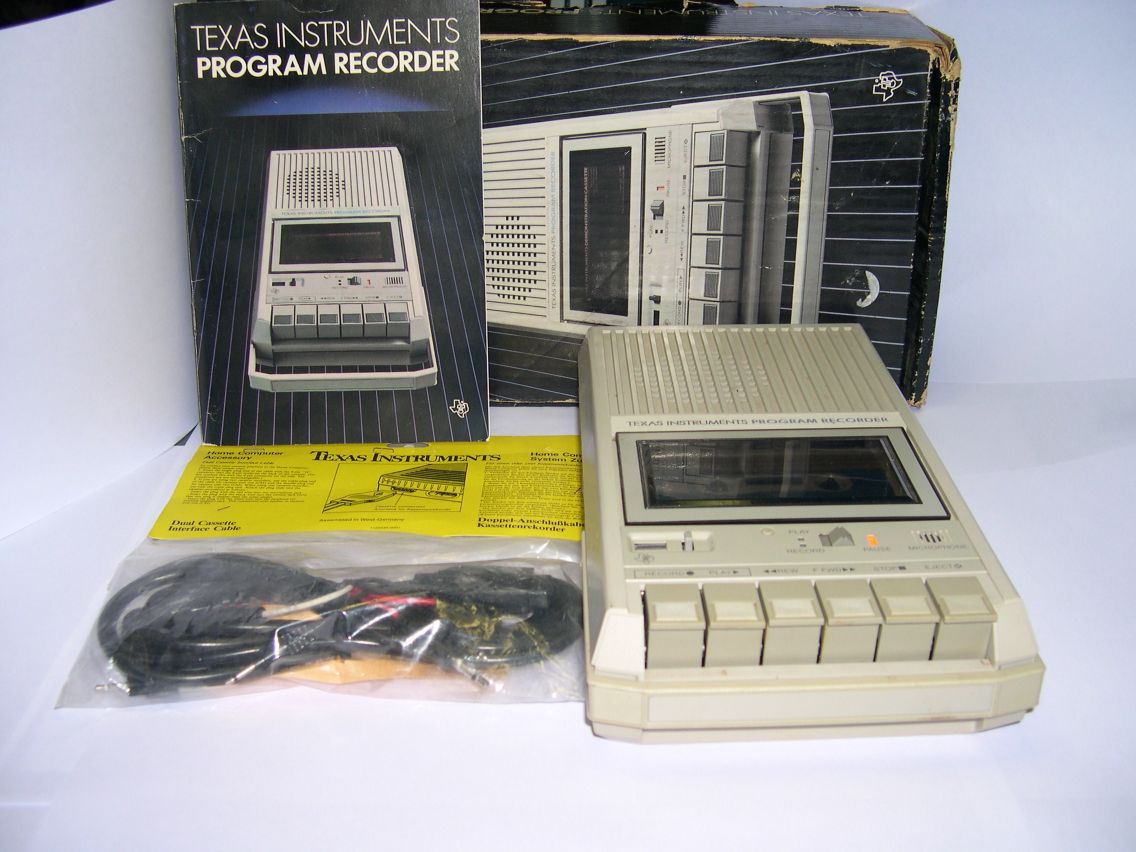 Description: PHP2700 Program Recorder
For many of us the program recorder was the first device we had to save the programs we had typed into the console. Compared to a disk drive system, the program recorder was much less expensive and, while slow, did a good job and was quite reliable.
🏪 SHOP
🛍️ On this page, the volunteer organization objects for sale are displayed.
💰 The proceeds will be used to support the activities of the volunteer organization.
❤️🔥 Public fundraising is increasingly recognized today as a fundamental tool to support the initiatives of associations.
📢 Here are the ads! 📦 For shipping, contact me ✉️ sending your address 🏠 for a quote 💬💶!!!
🎨 Paintings

In this section you will find reproductions in ink and acrylic on 40x60 cardboard ,
donated by the artist Lia Jonescu
|
Electric Heart of Texas Instruments 80 Eur each + ask for shipping |
The Birth of Digital Dreams 80 Eur each + ask for shipping |
|
Orbit of Digital Time 80 Eur each + ask for shipping |
The Talking Chip 80 Eur each + ask for shipping |

Explosion of Digital Logic 80 Eur each + ask for shipping |
Math in Color 80 Eur each + ask for shipping |

Calculator Dreams 80 Eur each + ask for shipping |


🎮 Cartridges TI-99/4A
🖥️ Home Computer TI-99/4A
|
25 Eur + ask for shipping |
25 Eur + ask for shipping |
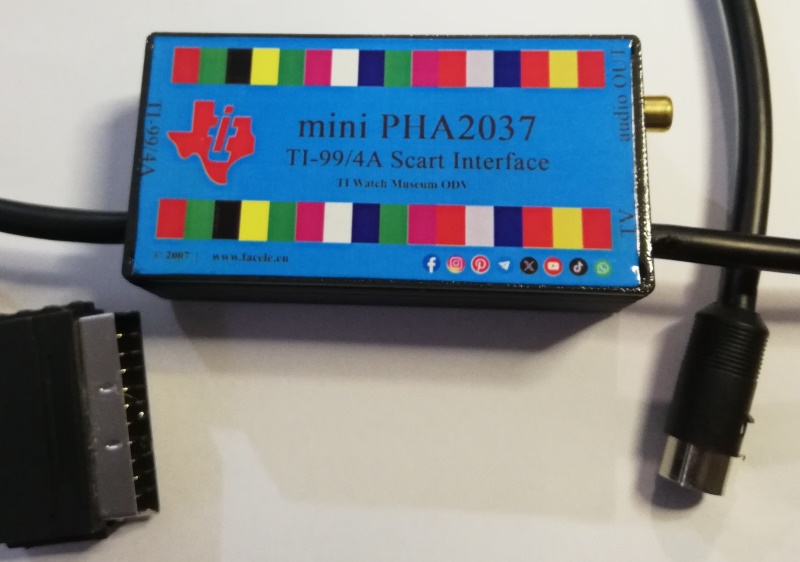
Mini PHA 2037 V.2.0 ( Pal Scart Interface ) 90 Eur + ask for shipping |
EPROM adpater 2532 to 2732 for TI-99/4A 25 Eur + ask for shipping
|
|
25 Eur + ask for shipping |
35 Eur + ask for shipping + 3d printed shell 40 Eur + ask for shipping
|
|
Ram Expansion 32 Kbyte with 3D printed shell 50 Eur + ask for shipping |
Final Grom 99 with 3d printed shell 90 Eur + ask for shipping
|
|
3D printed slider to turn on the TI-99/4A 2 pcs 10 Eur + ask for shipping
|
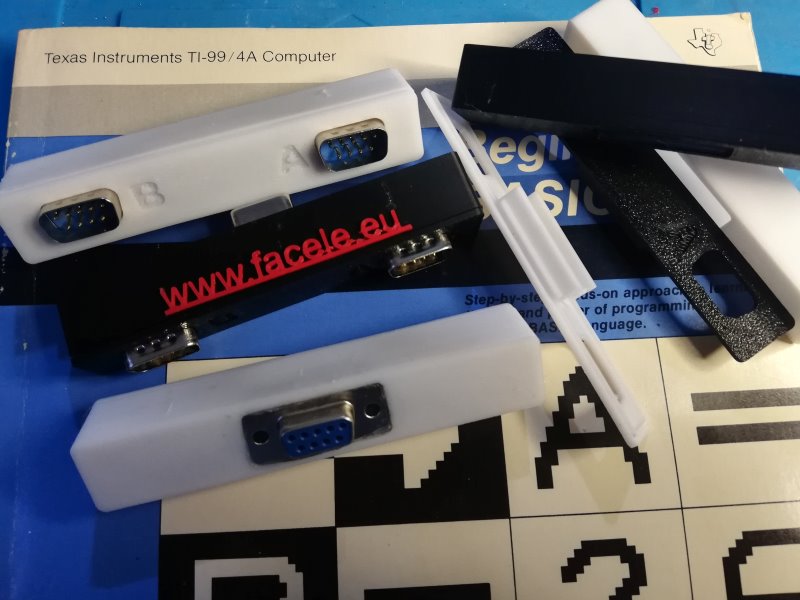

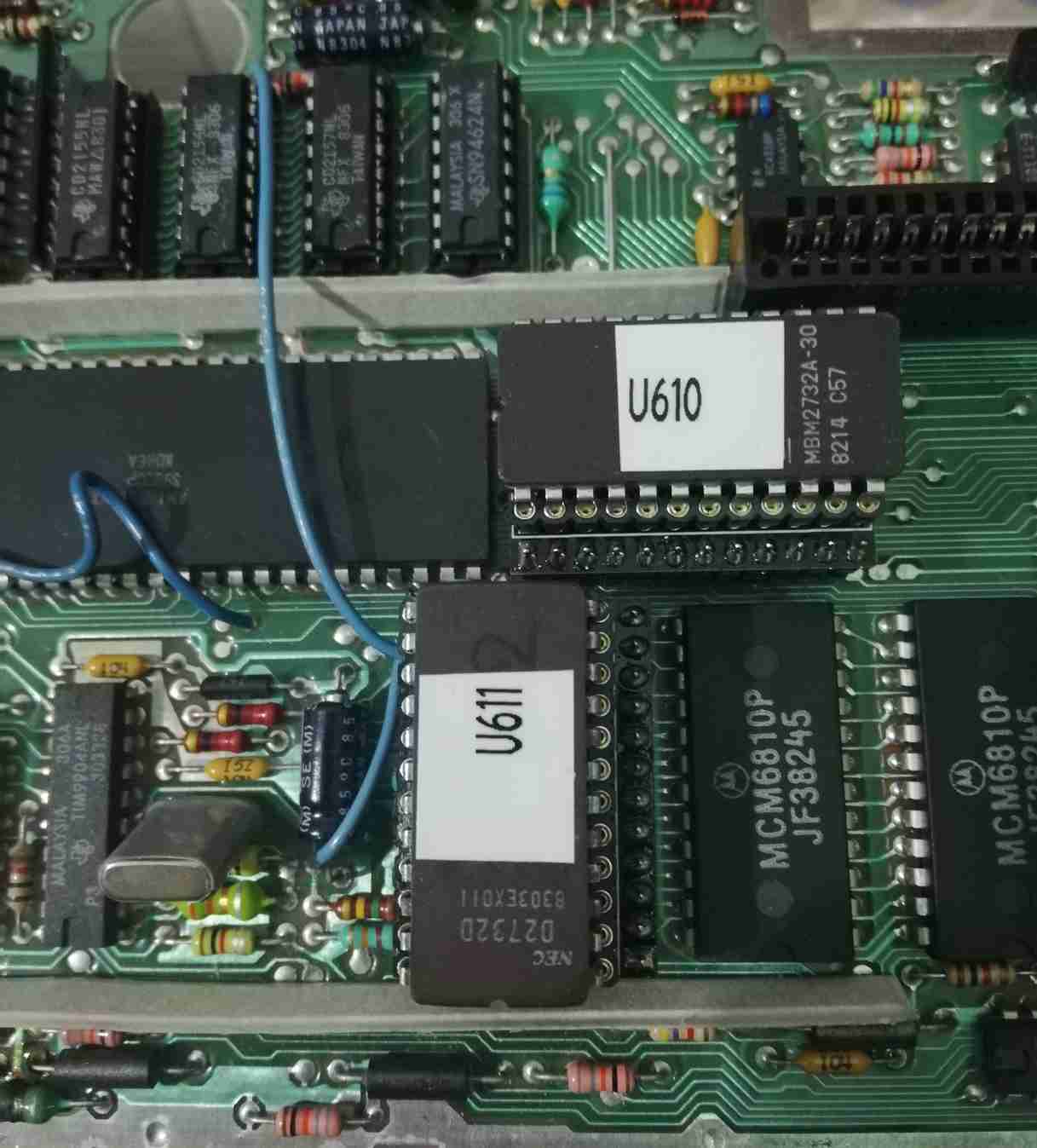

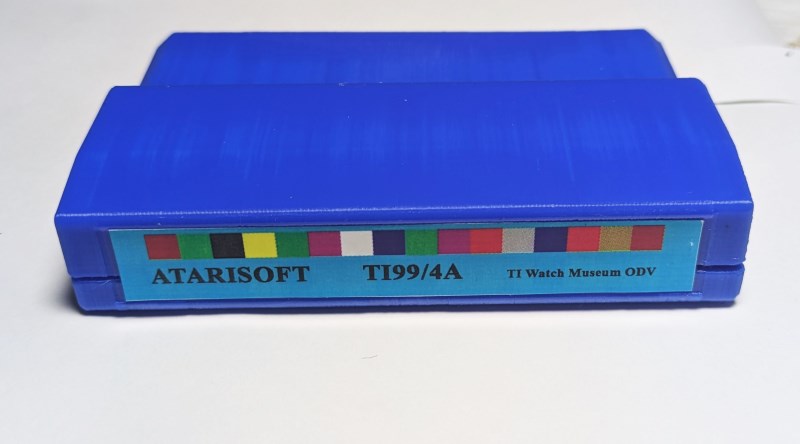
.jpg)


🧮 Texas Instruments Calculators
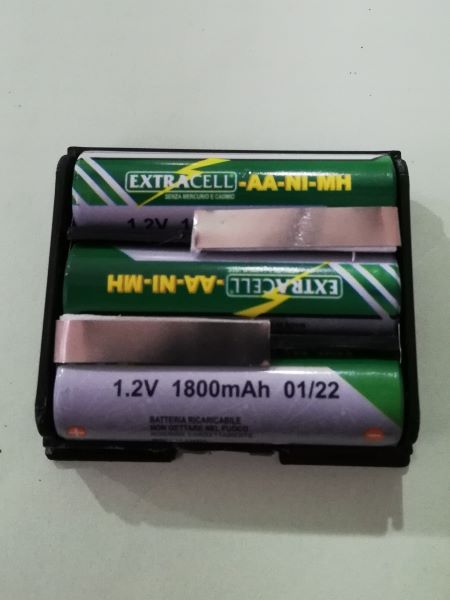 NEW BATTERY PACK BP1 ( SR-50, SR-51, SR-50A, SR51A, SR52, SR56, TI-58, TI-58C, TI-59 ) NEW BATTERY PACK BP1 ( SR-50, SR-51, SR-50A, SR51A, SR52, SR56, TI-58, TI-58C, TI-59 )
NI-MH 1800 mA 30 Eur + ask for shipping |
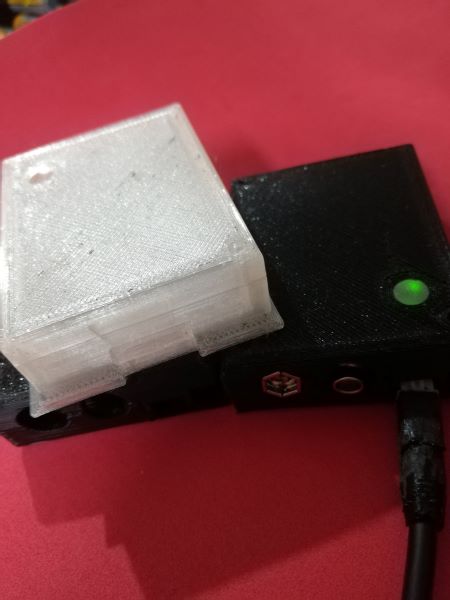
NEW BATTERY PACK BP7 ( TI-51-III, TI-55, TI-57, TI-42 MBA, MBA) BP8 ( SR-40, TI-15, TI-30, TI-31, TI-33, TI-41, TI-45, BA, BA1, Money Manager, Programmer BP9 ( TI-45 ) 40 Eur + ask for shipping |
.jpg)
NEW COVER ( TI-51-III, TI-55, TI-57, TI-42 MBA, MBA ) ( SR-40, TI-15, TI-30, TI-31, TI-33, TI-41, TI-45, BA, BA1, Money Manager, Programmer ) ( TI-45 ) 5 Eur + ask for shipping |
.jpg)
Stickers Grillo Parlante N. 2 stickers 10 Eur + ask for shipping |
🧮 # Texas Instruments
|
20 Eur + ask for shipping |
   
Game Handheld A very simple, handheld game with a super-vintage LED display, but with modern components.
|


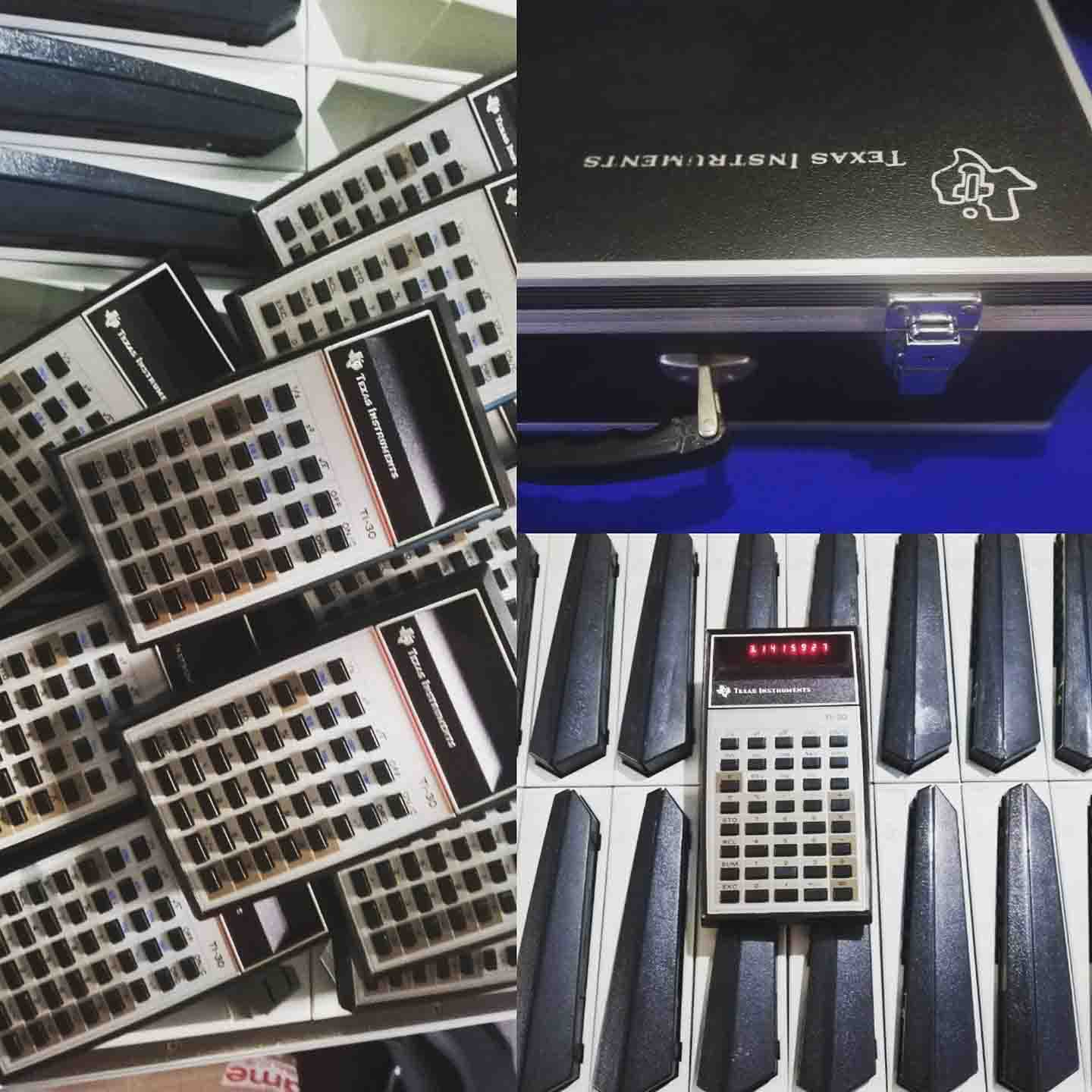
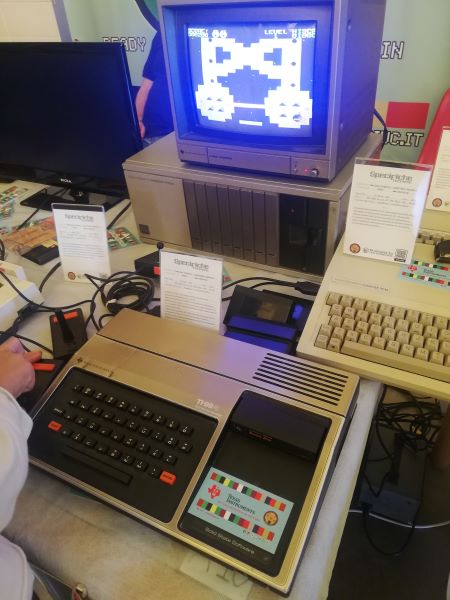 The commercial life of the TI-99/4 was however short with the announcement of its replacement with the 99 / 4A which would then be presented at the "Consumer Electronics Show", on June 30, 1981.
In order not to disappoint its customers, Texas Instruments offered to replace the old computer / 4 with the new Texas Instruments TI-99 / 4A totally free of charge but on the condition that the purchase of the / 4 had been at least 6 months before. of the release of the new model, only the shipping costs were charged to the customer.
The company T.I. tried to market the Texas Instruments TI-99/4 also in Italy and France, but due to delays, its distribution was immediately interrupted to make way for the / 4A already present in the US market. In any case, in Europe the 99/4 found no interest in the market also precisely because of the monitor alley which had a US NTSC standard and therefore problematic for European standards. Texas Instruments, strangely, never officially announced the discontinuation of the TI-99/4. In total, around 25,000 units were produced.
 TI-99/4 with inernal Speaker. In the end we also managed to get a nice TI-99/4 with internal speaker and volume control. In this photo a 32Kbyte memory expansion and an RS232 interface complete the set.
Here are the original manuals and the masks to use for playing or teaching.


 A detail from the inside, the PCB with an operational amplifier, used to drive the internal speaker via the volume slider potentiometer, which is located on the bottom of the TI-99/4.


Compared to all the others, this version has a very important peculiarity to keep in mind: the power supply that provides the three voltages (+12vdc, +5vdc and -5vdc) is not located inside the computer but outside in a plastic box as shown in the photo.

It is important to note that the 4-pin connector has a different sized pin than the other 3 pins.
Home Computer TI-99/4A
Audio Guide
|
|
|
|
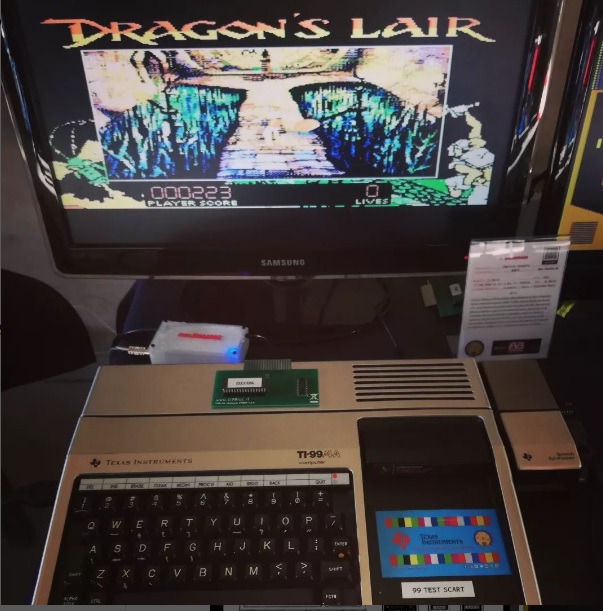 Home Computer TI-99/4A Enhanced version of the TI-99/4 model marketed at the end of 1979, it was placed on the market starting from June 1981, had a certain diffusion especially in the USA but due to the commercial war with Commodore International it was unable to achieve a significant number of sales, especially due to the success of the Commodore 64, and production ceased just two years after launch. It supports lowercase writing, unlike some machines of the time which required specific expansion, and a full-travel keyboard, and is based on the TMS-9900, a 16-bit CPU clocked at 3 MHz. The graphics are 16 colors with a video resolution of 256 x 192 pixels, organized in 32 columns x 24 rows, with characters (ASCII or user definable) based on 8 x 8 pixels.
Built around a single block, which contains the CPU, the motherboard and the cartridge slot (SSC Solid State Cartridge), it also had a 5.25" floppy disk drive, a serial card, among other options. RS-232 equipped with two serial ports and one parallel, a P-Code card for supporting the Pascal programming language, a thermal printer, an acoustic coupler, tape drives for saving and loading data (on normal cassettes), a pair of joysticks and a 32 kB memory expansion. The peculiarity of the machine was that it was sold already equipped with a monitor (a modified version of a 13" Zenith Color TV), as the RF adapter for connection to a normal TV it never obtained certification from the Federal Communications Commission. In Italy it was sold without a monitor and the video output was fully compatible with normal televisions. Another peculiarity for the time was the presence of an optional speech synthesizer, exactly like the one present in the Atari 2600, which allowed the software or games to be equipped with speech synthesis. The synthesizer was provided free of charge to customers after the purchase of a certain number of cartridges, and was widely used in several video games written by TI itself.
TI99-4A Main BOARD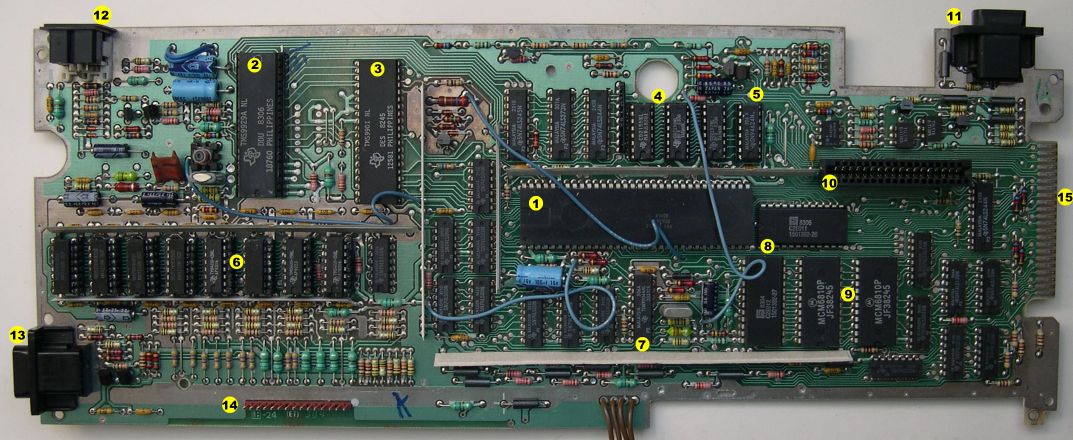 Released:June 1981 Price: US$525 (without monitor) How many:2.8 Million
CPU:TI TMS9900, 3MHz Memory:16K RAM, 26K ROM Sound: 3: channels + effect Joystick: 2
Display:Video via an RF modulator 32 characters by 24 lines text 192 X 256, 16 color graphics
Ports:ROM cartridge (on front) Data storage cassette Audio/Video output Joystick input CPU bus expansion
Peripherals:Speech Synthesizer Peripheral Expansion Box Data storage cassette 300 baud modem
OS:ROM BASIC
| 1 | TMS9900 CPU central process unit |
| 2 | TMS9918A VDP video display processor |
| 3 | TMS9901 HW Interface |
| 4 | Grom Chips CD2155/CD2156/CD2157 |
| 5 | TMS9919/SN94624 Sound Chips |
| 6 | 8 x TMS4116 RAM Chips |
| 7 | TMS9904 Clock Generator |
| 8 | 2 x 4k ROM chips (1501392-26) |
| 9 | 2 x 128 byte MCM6810P Scratch-pad RAM |
| 10 | Command Module Connector ( cartridges ) |
| 11 | Cassette Port |
| 12 | Video Port |
| 13 | Joystick Port |
| 14 | Keyboard Connector |
| 15 | Expansion Port |
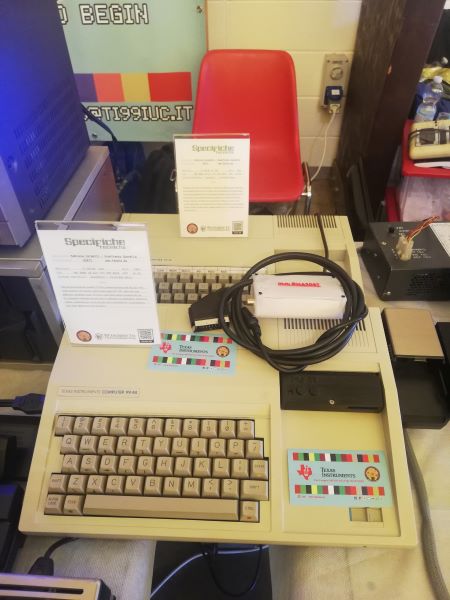 In August of 1983 TI released the TI-99/4A QI. Though this name was not official for the console, it was what the motherboard was designated. QI stood for Quality Improved. No visual changes were made to the exterior of the console, and in fact they are very hard to distinguish from the beige models. On the other hand, major changes were made to the internal components of the QI. We will take a look at these changes a little later.
One change that was made that created major grumbling was TI's decision to change the internal workings to lockout unlicensed ROM cartridges. This was done to keep other 3rd party companies from producing cartridges for the TI-99/4A. Not all QI consoles had this "feature", and even non QI, later beige consoles may have. It is easy to determine if you have the lockout or not. Look at the first screen (the one with the color bars) when you turn on the console, if you show a copyright date of 1981 you do not have the lockout, but if it shows a copyright date of 1983 then you do.
The TI-99/4 and TI-99/4A are home computers released by Texas Instruments in 1979 and 1981, respectively. Based on the Texas Instruments TMS9900 microprocessor originally used in minicomputers, the TI-99/4 was the first 16-bit home computer, and the associated video display controller provided color graphics and sprite support that was among the best of its era.
The calculator-style keyboard of the TI-99/4 was cited as a weak point, and TI's reliance on ROM cartridges and their practice of limiting developer information to select third parties resulted in a lack of software for the system. The TI-99/4A was released in June 1981 to address some of these issues, featuring a simplified internal design, full-travel keyboard, improved graphics, and a unique expansion system. At half the price of the original model, sales picked up significantly and TI supported the 4A with peripherals, including a speech synthesizer and a "Peripheral Expansion System" box to contain hardware add-ons. TI released developer information and tools, but the insistence on remaining sole publisher continued to starve the platform of software.
The 1981 US launch of the TI-99/4A followed the Commodore VIC-20 by several months. Commodore's CEO Jack Tramiel had once been offended by TI's predatory pricing during the mid-1970s, and retaliated with a price war by repeatedly lowering the price of the VIC-20 and forcing TI to do the same. By 1983, the 99/4A was selling for under US$100, at a loss. Even with the increased user base created by the heavy discounts, Texas Instruments suffered a US$330 million loss in the third quarter of 1983 and announced the discontinuation of the TI-99/4A in October 1983, with production ended in March 1984.
The TI-99/4 was intended to fit in the middle of a planned range of TI-99 computers, none of which were ultimately released but prototypes and documentation have been rediscovered after the TI-99/4A was discontinued.
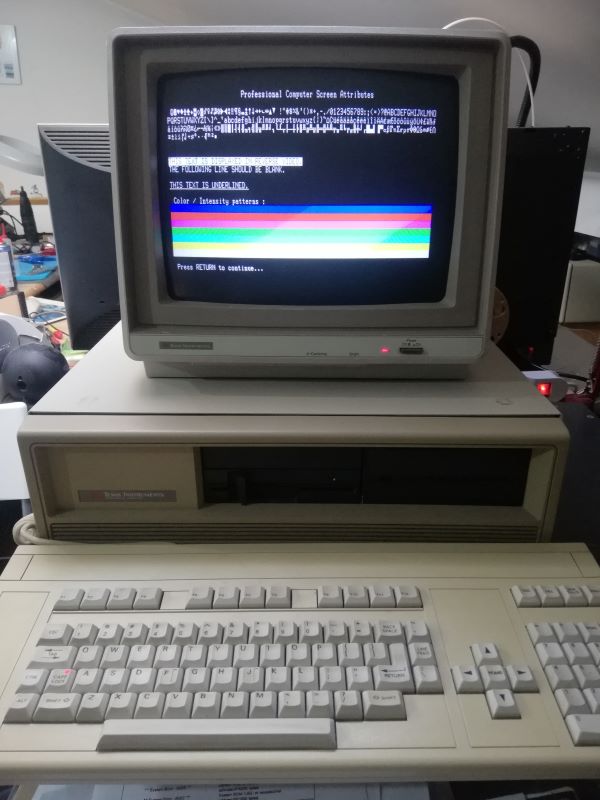
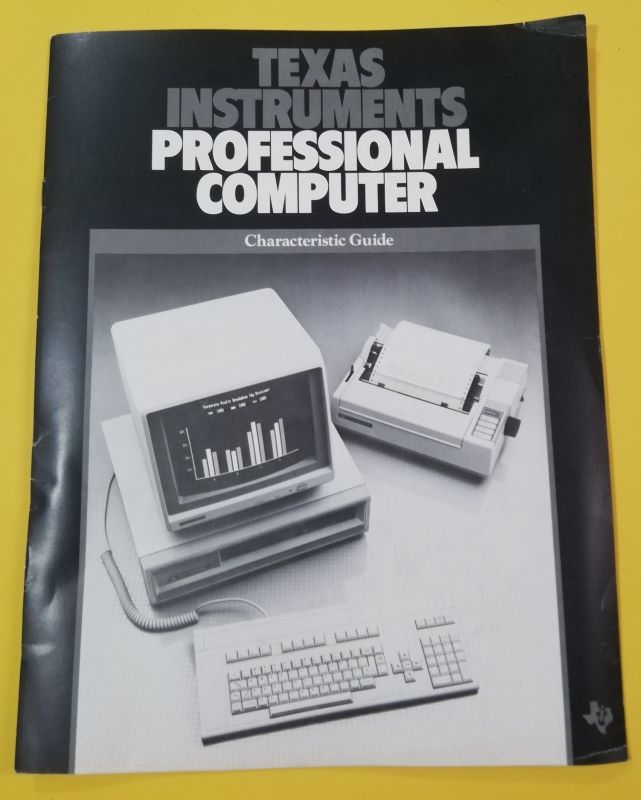 Model: Professional Computer (PC) Color Version
Adapter: 110 volt or 220 volt (Italy)
Year: 1983
Keyboard: QWERTY full-stroke keyboard with arrow keys and separated numeric keypad
Cpu: Intel 8086 Speed: 5 mhz CO-processor: 8087 Ram: 64k (up to 768k) Sound: Beeper
Text mode: 80 x 25 Graphics mode: 720 x 300
Size - Weight: 47 x 42 x 19 cm / 12 kg with monochrome monitor / 14 kg with the color monitor
I/O ports: Parallel/Centronics port, 5 expansion slots (non IBM compatible), 4 x serial ports
Media: two 5''1/4 disk-drive (320k) OS: MS-DOS 2.1 CP/M 86, UCSD P-system, Prologue and Concurrent CP/M 86.
Peripherals: 10Mb or 20Mb hard-drive ( need interface), RAM expansion cards, Voice recognition card, Ethernet card.
Price: 64k model about 3000$ (USA, november 1983) / 64k model : £ 4.000.000 (Italy, 1985)
Info: The TIPC is very similar to the IBM PC both architecturally and from a user-experience perspective, with some technically superior aspects.It is based on the Intel 8088 CPU and an optional Intel 8087 floating point coprocessor. It supports MS-DOS compatible operating systems,but is not a fully IBM PCcompatible computer. Alternative operating systems are CP/M-86, Concurrent CP/M-86, and the UCSD p-System. The TIPC was reviewed in Byte magazine in its December 1983 issue. The CPU clocked at 5 MHz (a bit faster than the 4.77 MHz of the IBM PC) and has 64 KB of RAM pre-installed. A RAM board can be installed in an expansion slot providing an additional 192 KB or RAM, for a maximum of 256 KB. A later version supports up to 768 KB of total memory. The computer featured 5 expansion slots and has either a 12-inch green-phosphor monochrome (CRT) monitor or a 12-inch color monitor with a color graphics resolution of 720x300 pixels. For text, the display shows 25 lines of 80 columns each. The device has a 5¼-inch floppy disk drive and can support a second floppy drive or a "Winchester" hard drive without requiring the use of an expansion slot or separate chassis, and typically features one of each.
Troubleshooting
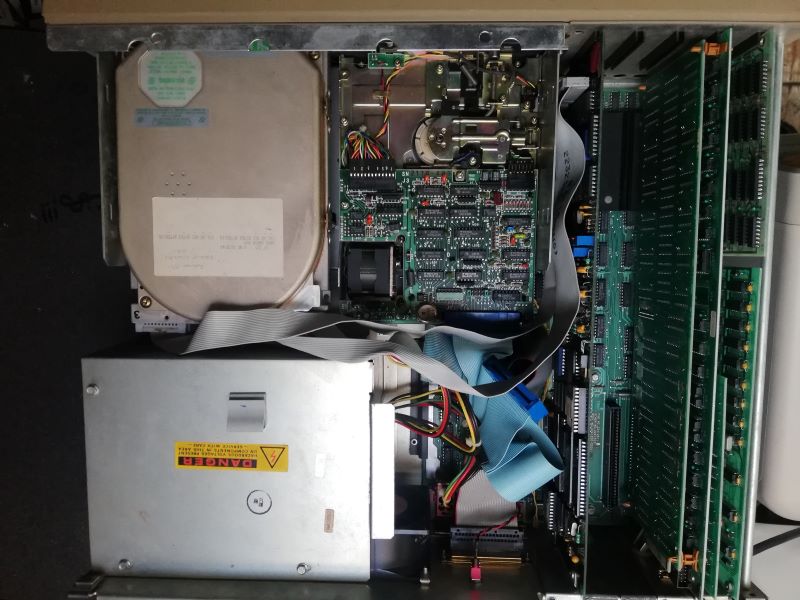
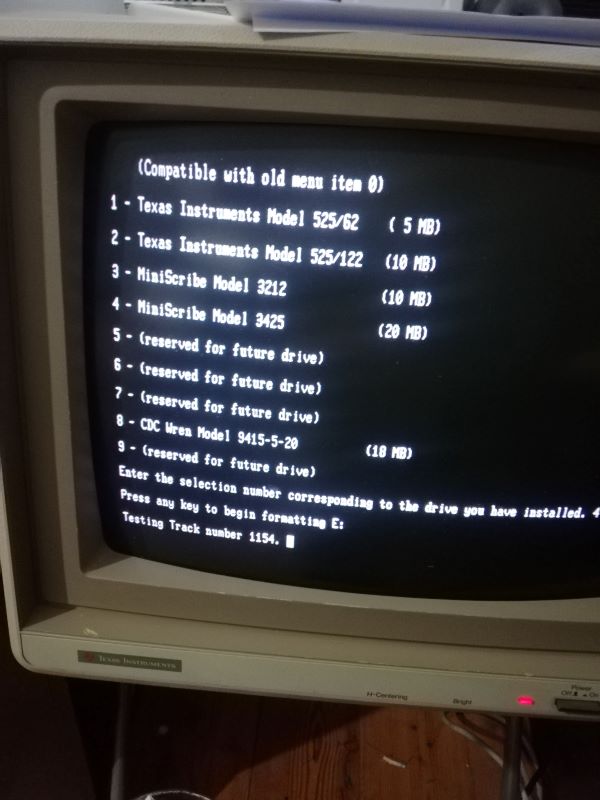 For this TIPC we used a Seagate ST225 (20 mByte) to be formatted with option 4 (miniscribe 3425). One thing that takes you back in time is the wship.com command from DOS 2.13 that allows you to park the HD heads.
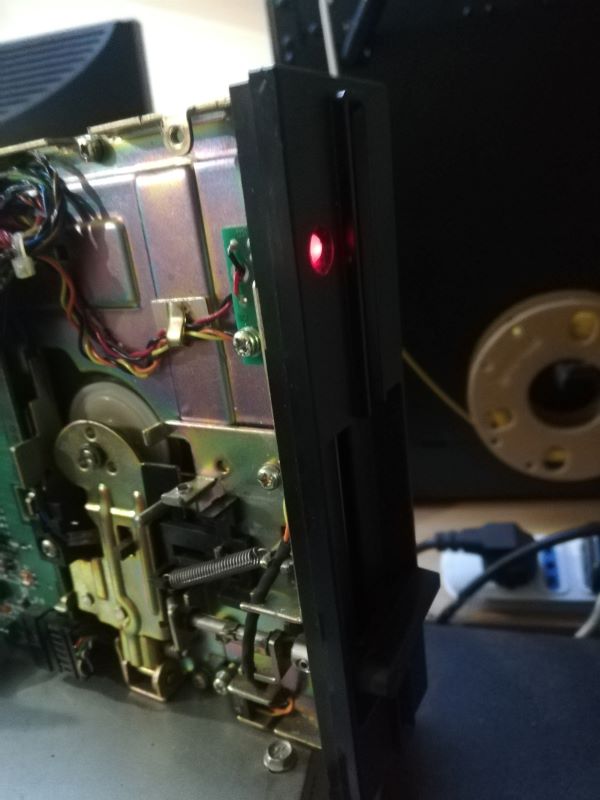 As for the floppy we used this 360 kByte y53, as we have to repair the original one.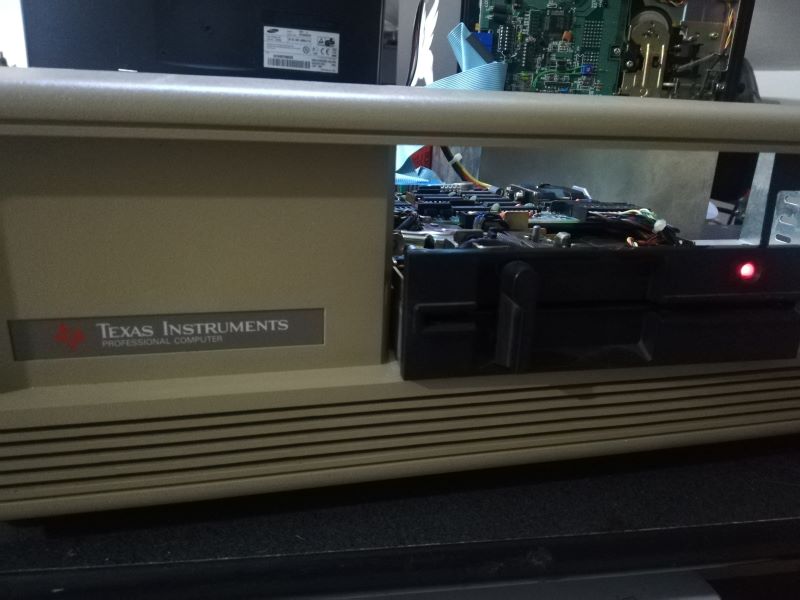
Library
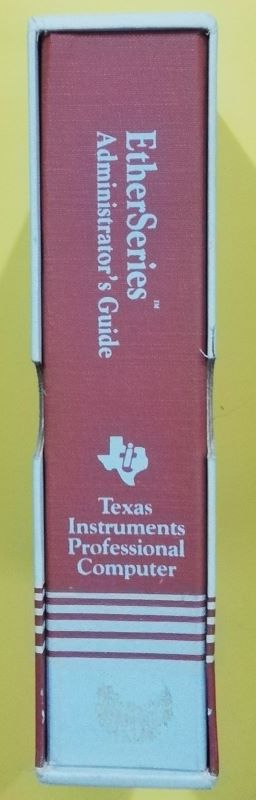
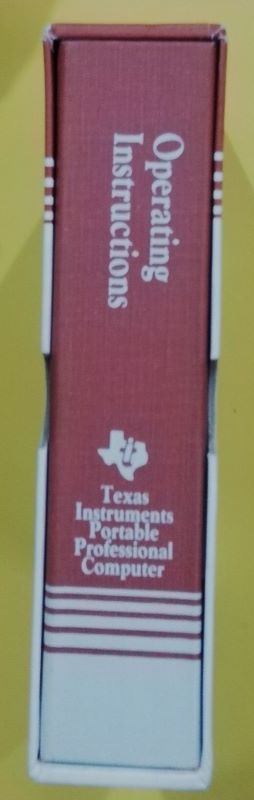
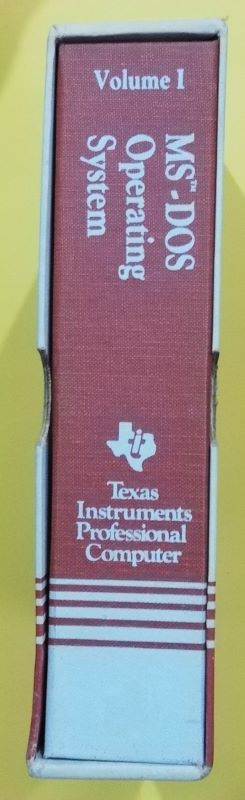
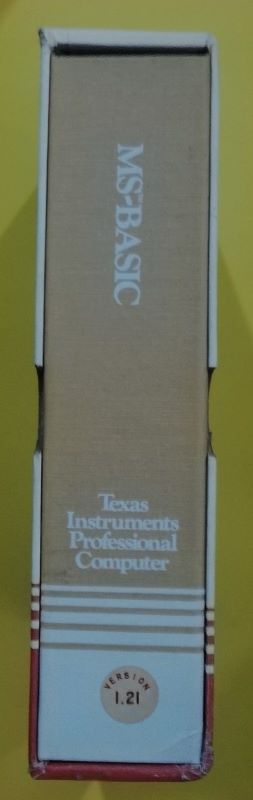
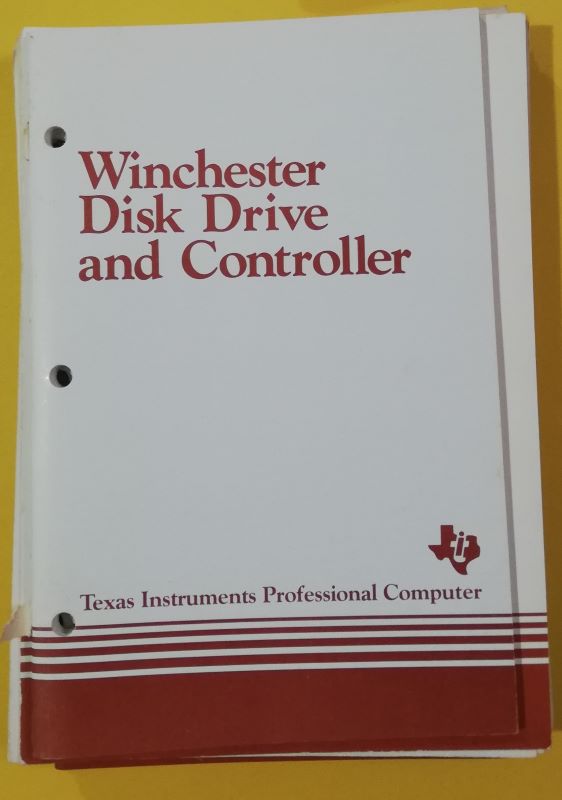
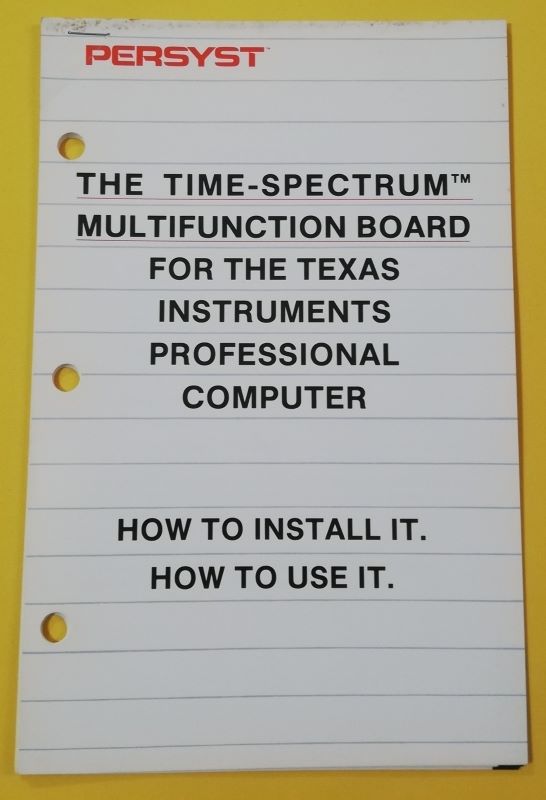
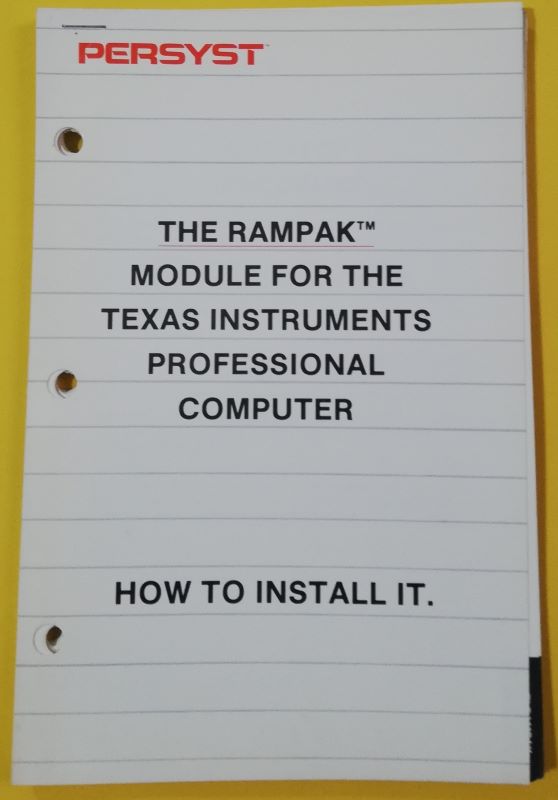
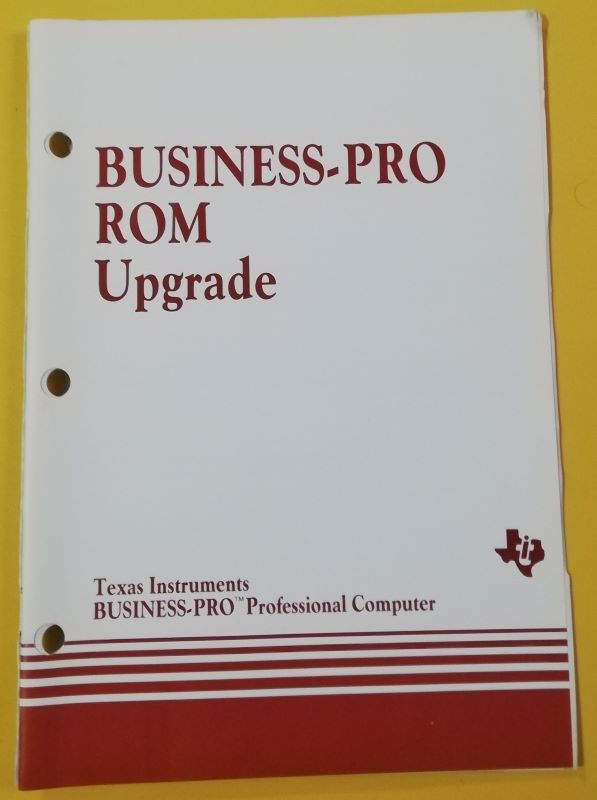
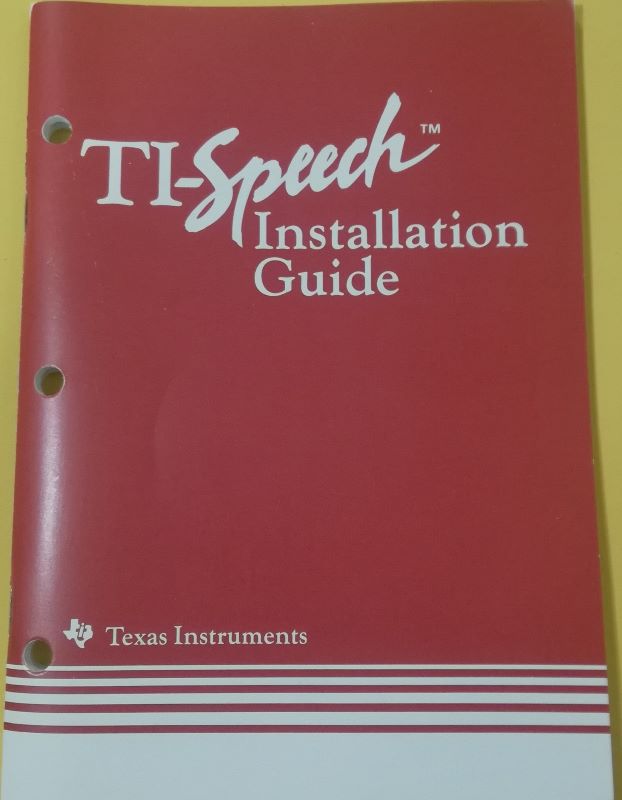
Hardware Interface
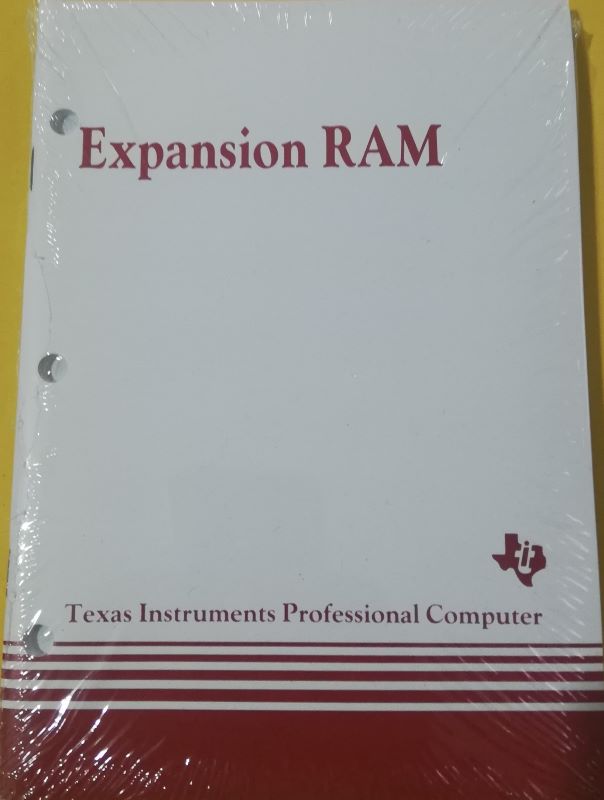
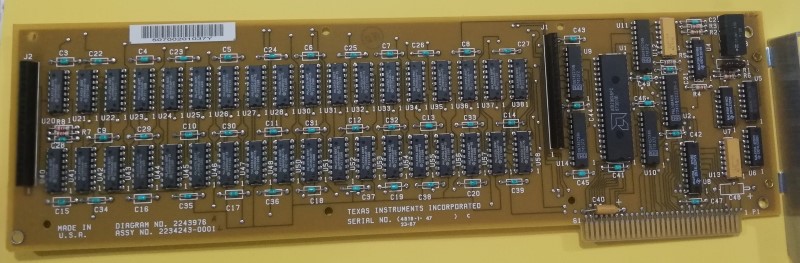 Model: Expansion RAM Card assy: 2234243-0001
Info:
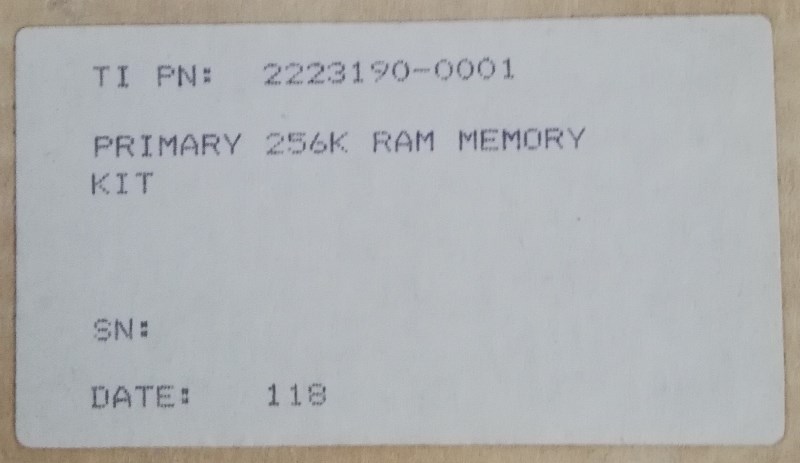
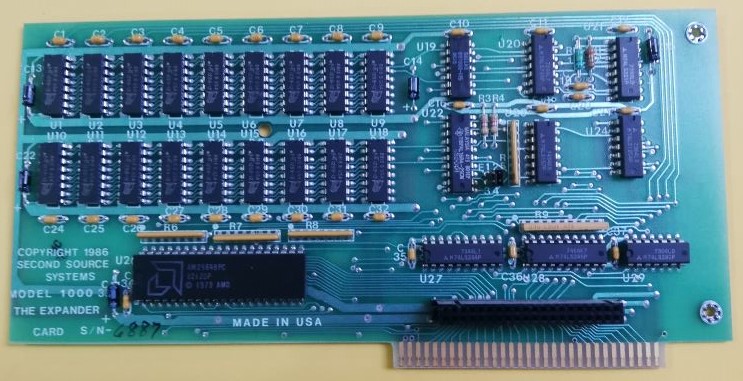
Model: Expander Card Second Source Mod.1000
Model: Second Source Mod. SP1100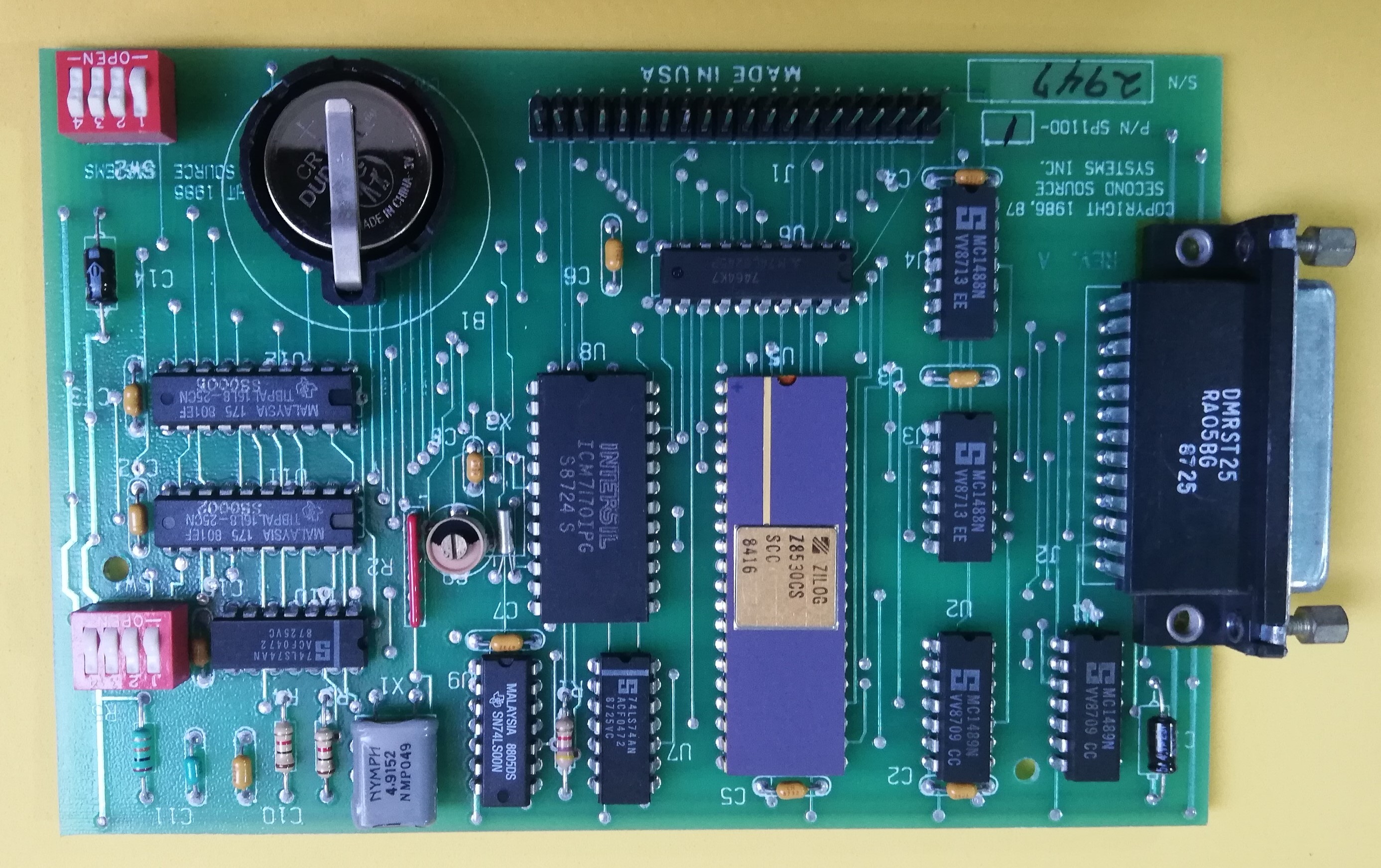
Info: This board is mounted in sandwich on the expander board, battery is BR2325
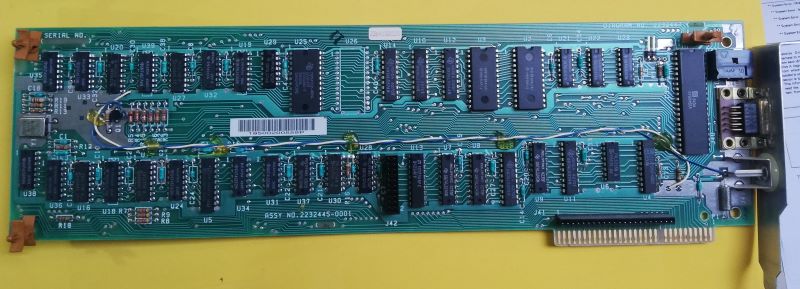 Model: Monochrome Graphics Video Controller assy:2232445-001
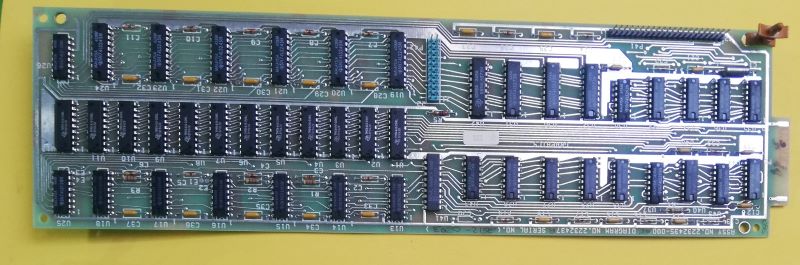
Model: Color Graphics Video Controller assy:2232435-000
Info: For monochromatic operation, only the monochromatic card is used; to have the color function it is necessary to insert the color card sandwiched on the monochromatic card.
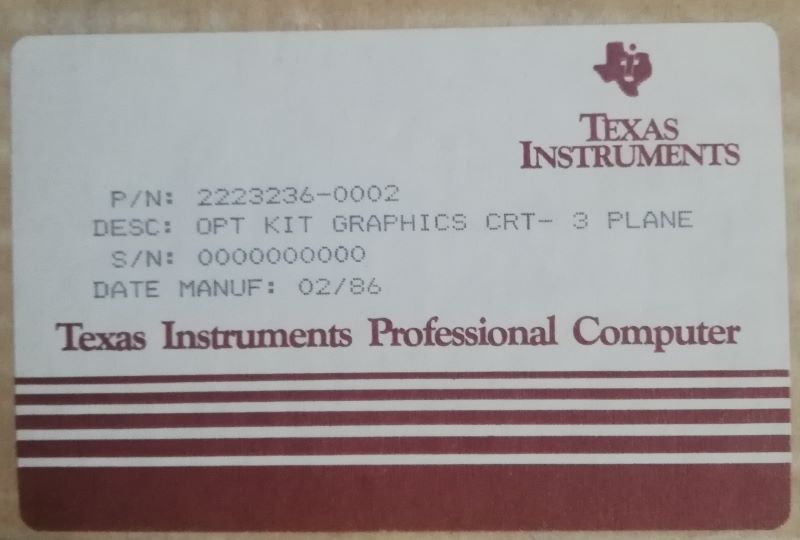
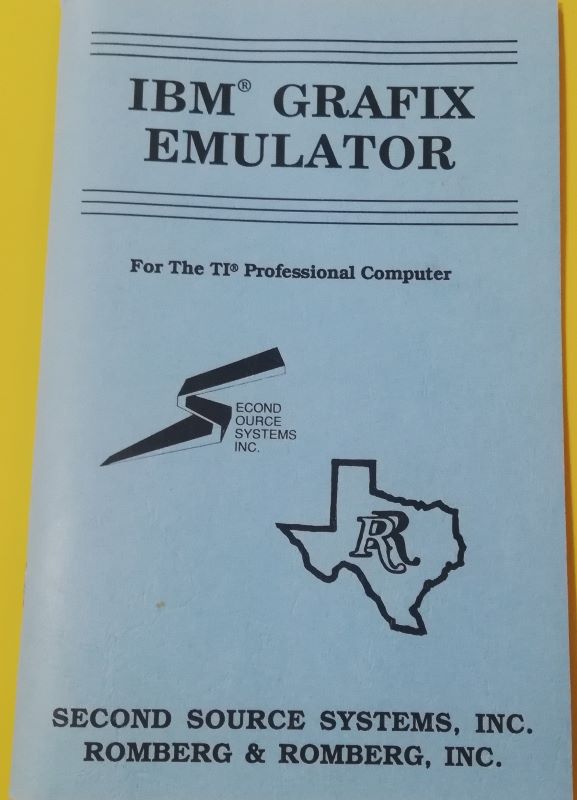
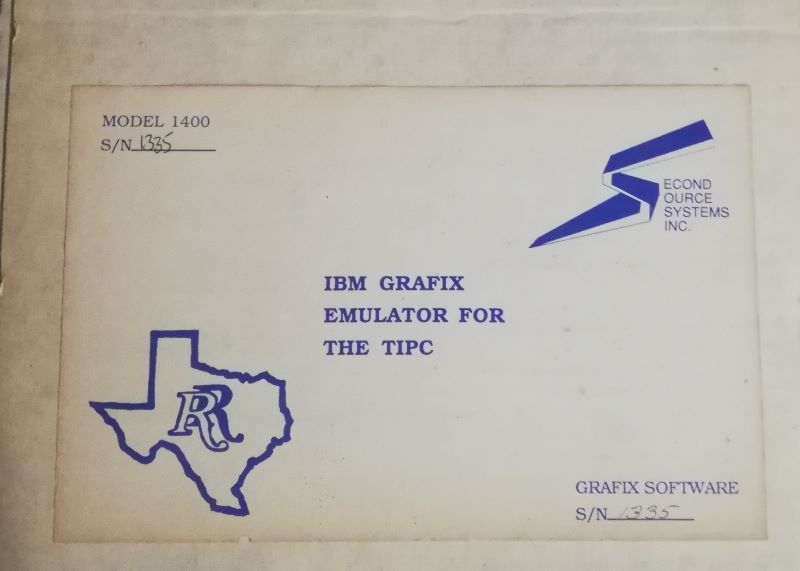
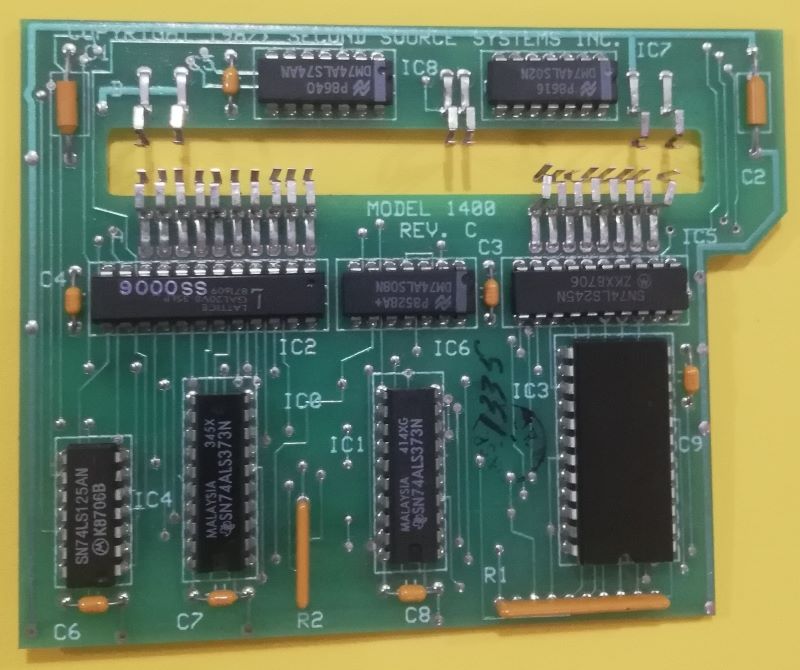 Model: IBM Graphics Emulator
Info:
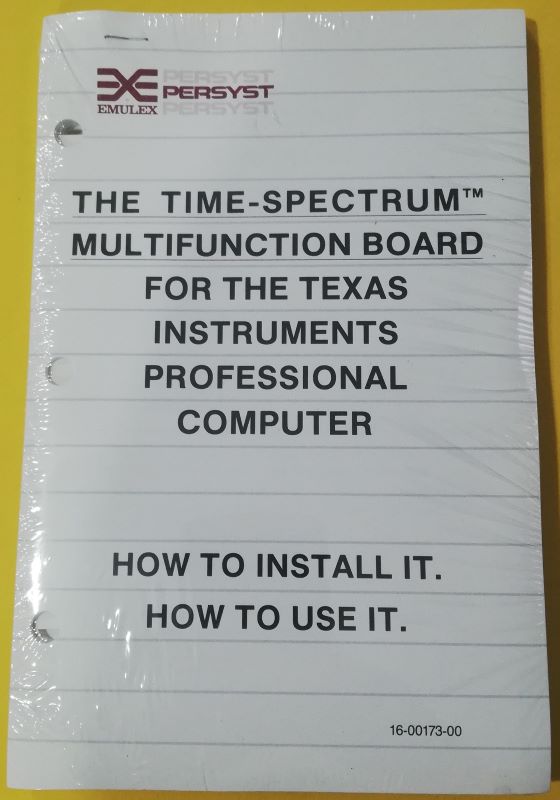
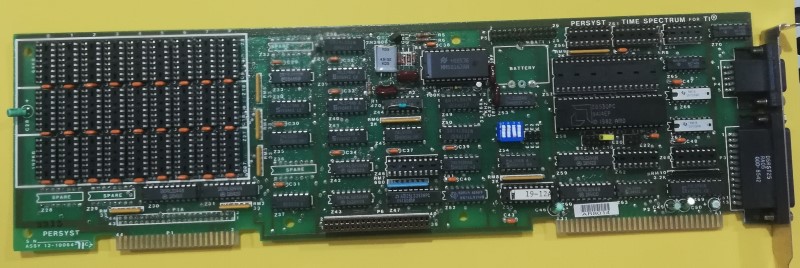 Model: The time Spectrume multifunction Board
Info:
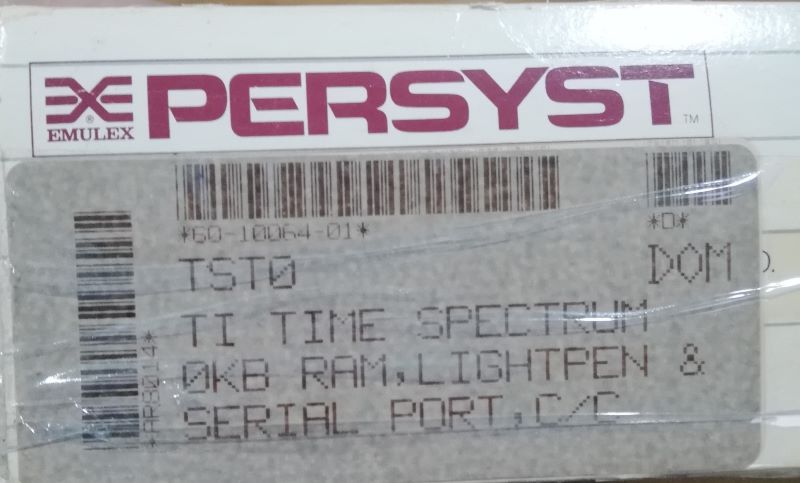
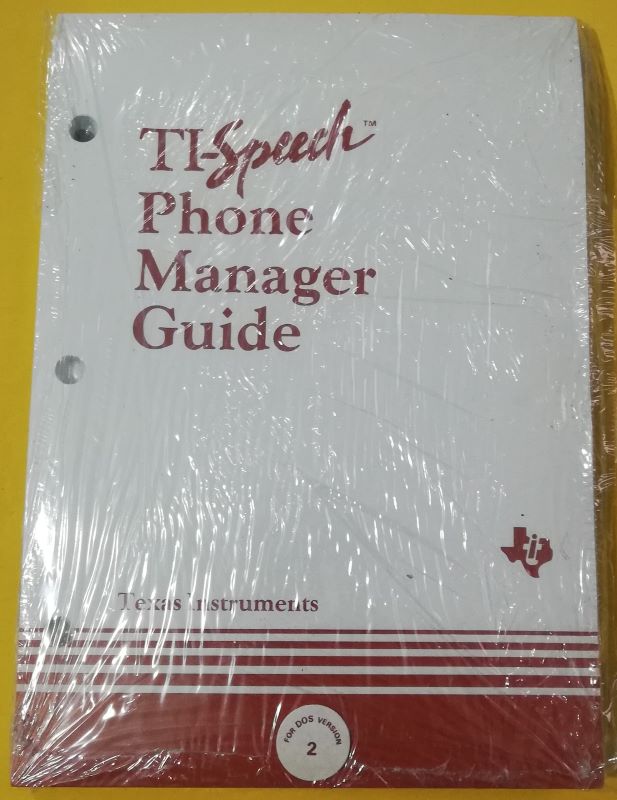
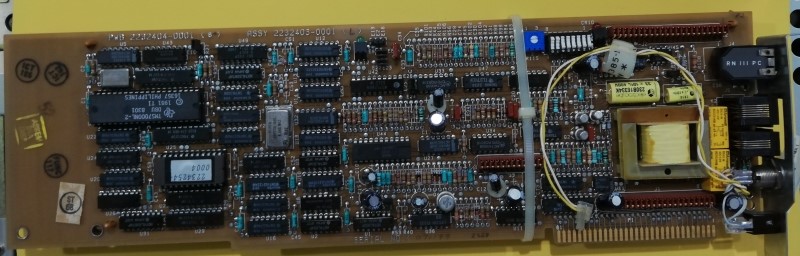 Model: TI speech Phone Manager
Info:
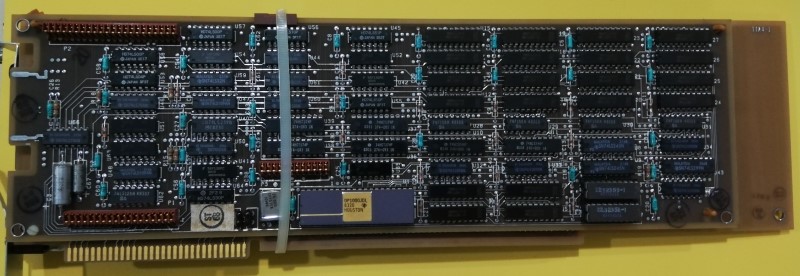
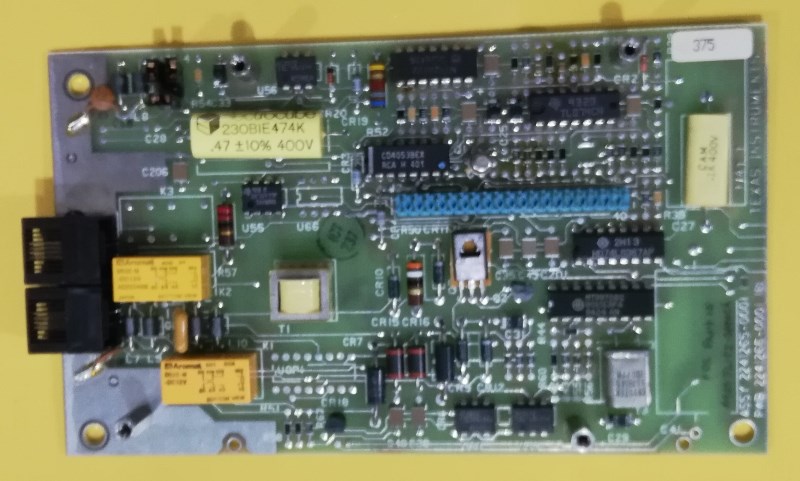
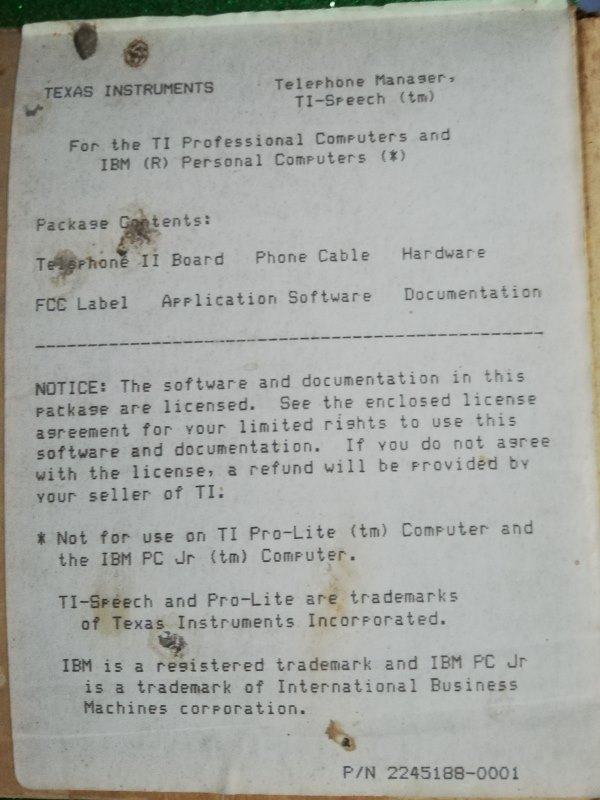
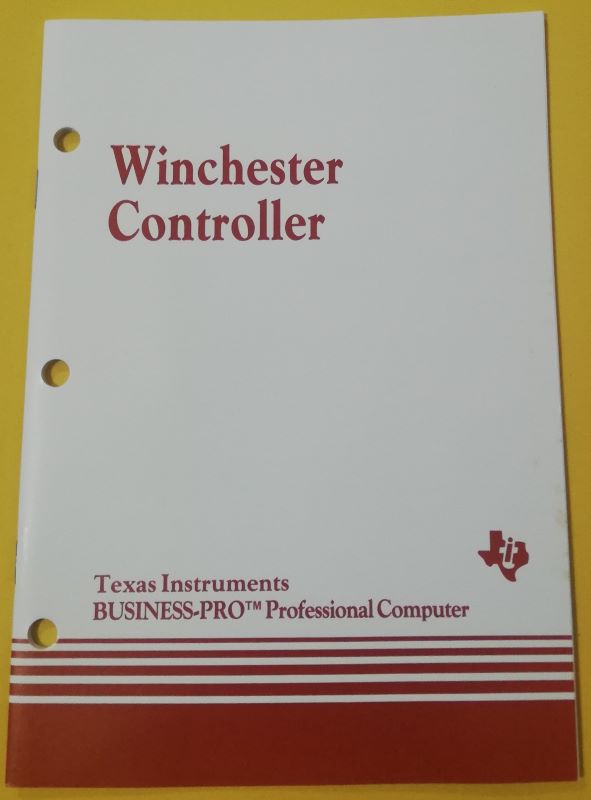
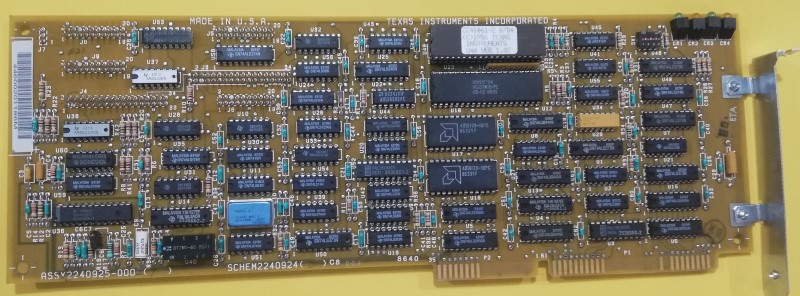 Model: Winchester Controller
Info:
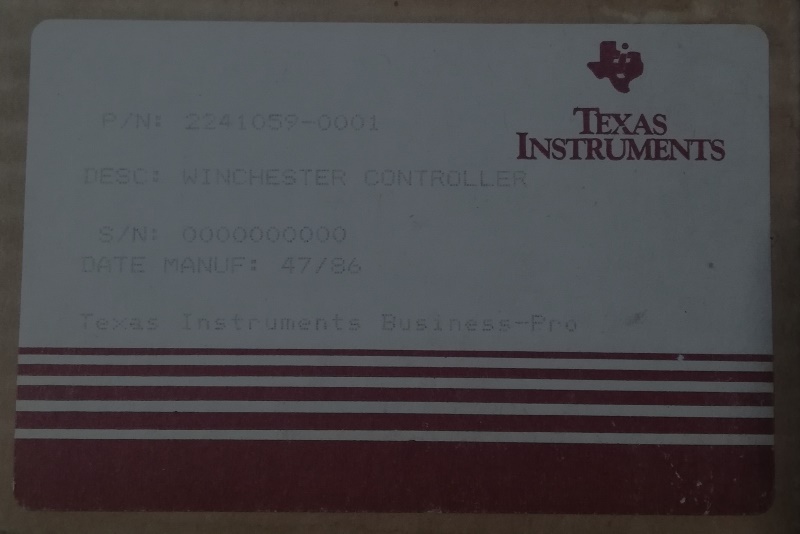
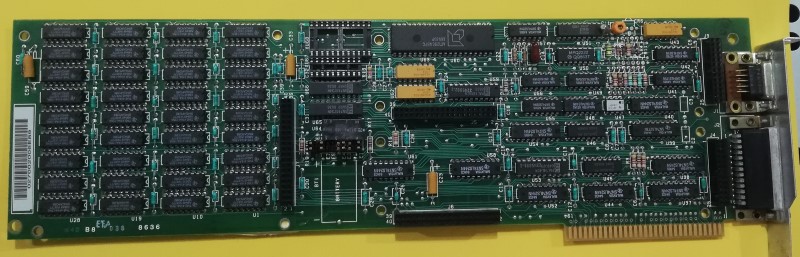
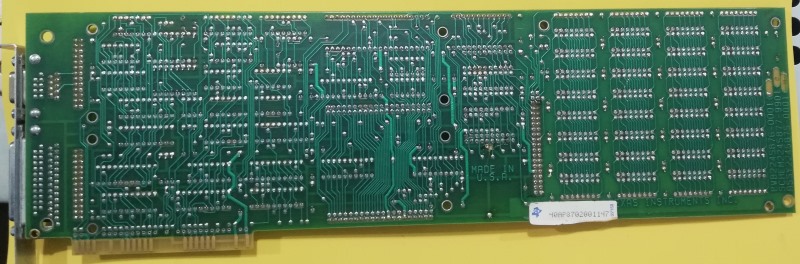
Model: Memory and clock assy: 2245876
Info: There is also a memory upgrade daughter board (256K Secondary Multi-Function Kit assy:2245895)
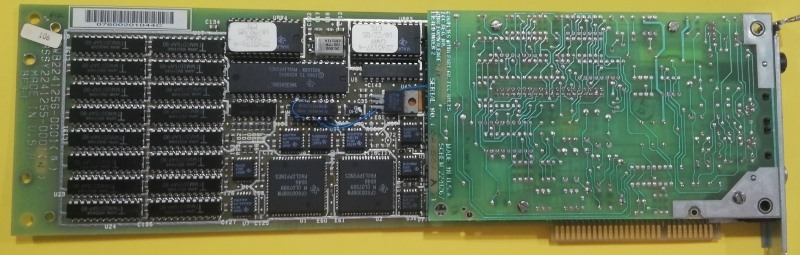
Model: Unidentified card
Info:
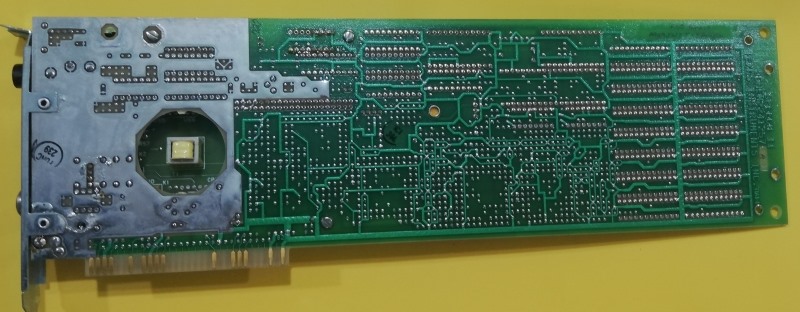
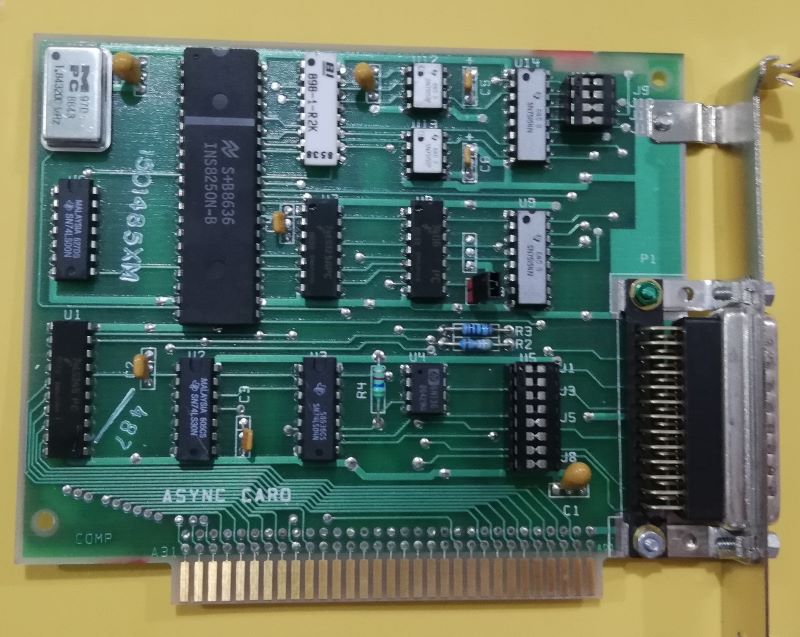
Model: Async Card
Info: I'm not sure if it can be used with the TIPC
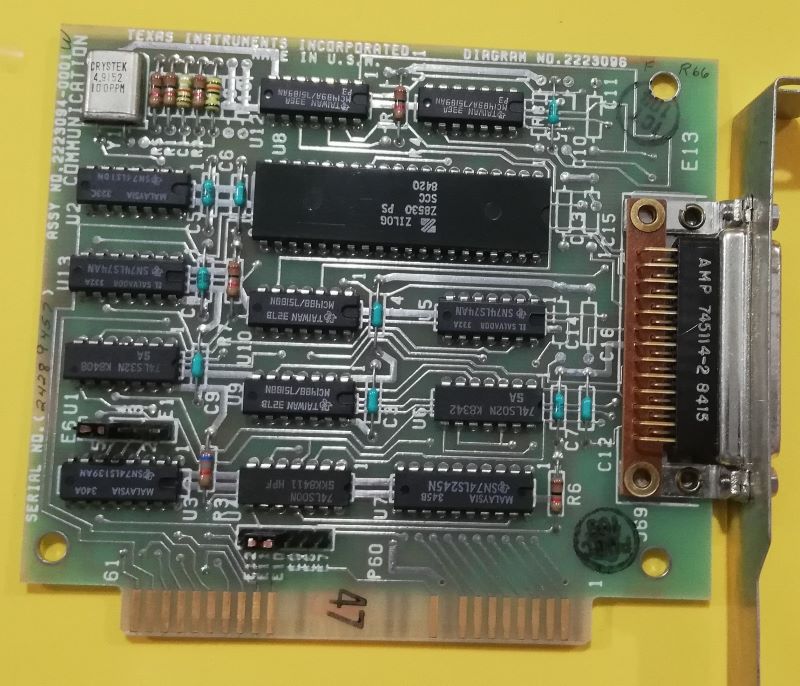
Model: Communication Card
Info: I'm not sure if it can be used with the TIPC
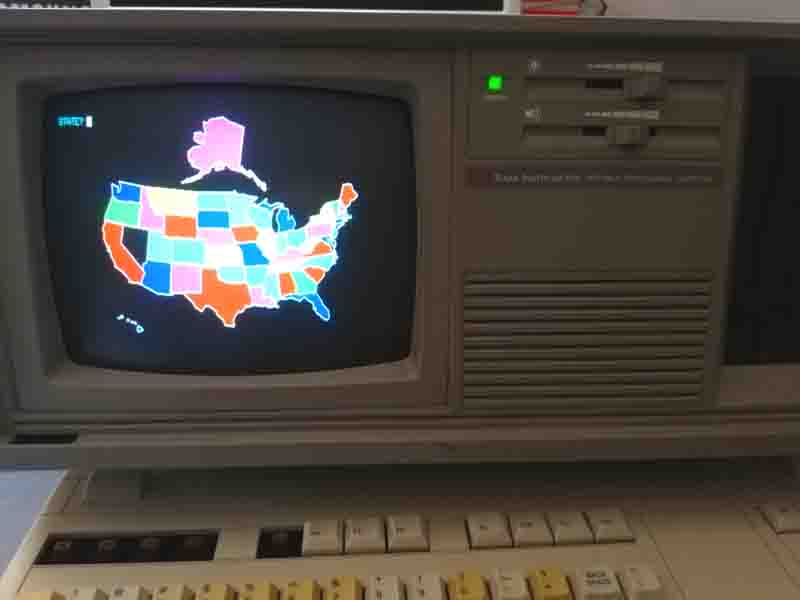
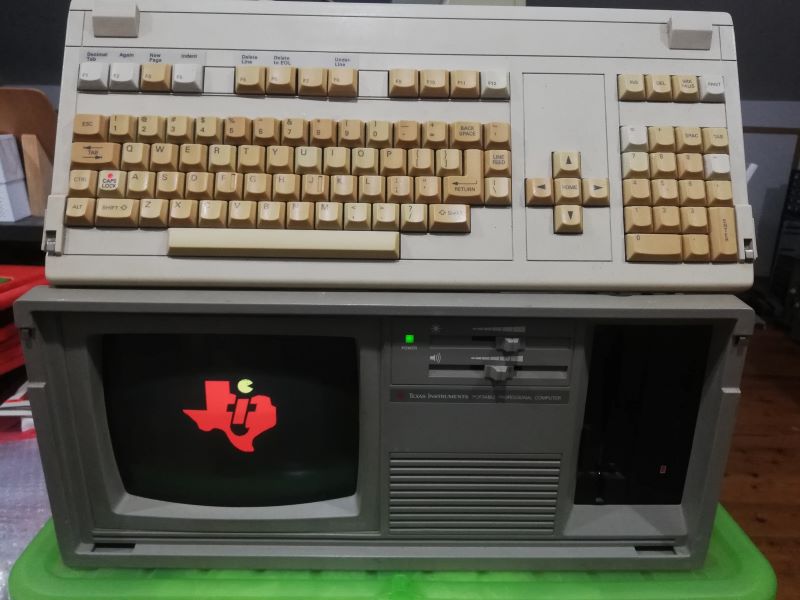 Model: Portable Professional Computer (PPC) Color Version
Adapter: 110 volt
Year: 1983
Keyboard: QWERTY full-stroke keyboard with arrow keys and separated numeric keypad
Cpu: Intel 8086 Speed: 5 mhz CO-processor: 8087
Ram: 64k (up to 768k) Sound: Beeper
Text mode: 80 x 25 Graphics mode: 720 x 300
Size - Weight: 47 x 42 x 19 cm / 12 kg with the monochrom monitor / 14 kg with the color monitor
I/O ports: Parallel/Centronics port, 5 expansion slots (non IBM compatible), 4 x serial ports
Media: two 5''1/4 disk-drive (320k)
OS: MS-DOS 2.1 CP/M 86, UCSD P-system, Prologue and Concurrent CP/M 86.
Peripherals: 10Mb or 20Mb hard-drive ( need interface), RAM expansion cards, Voice recognition card, Ethernet card.
Price: 64k model about 3000$ (USA, november 1983) / 64k model : £ 4.000.000 (Italy, 1985)
TroubleShooting
Video Tests
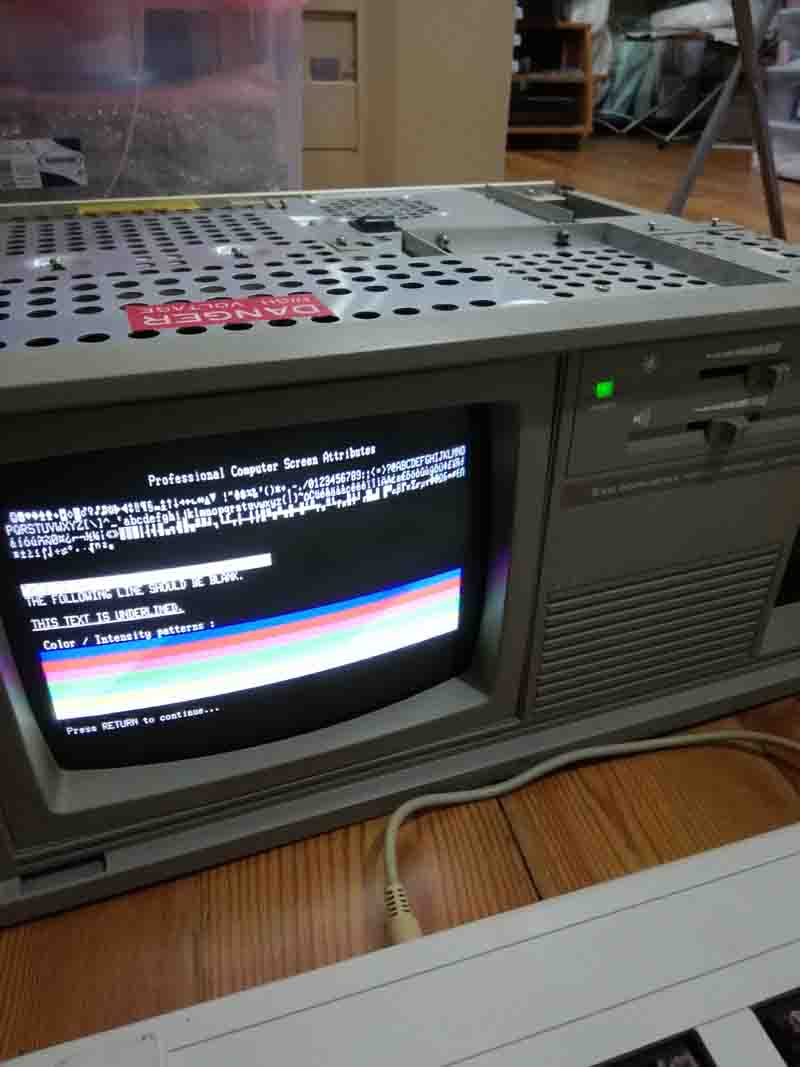
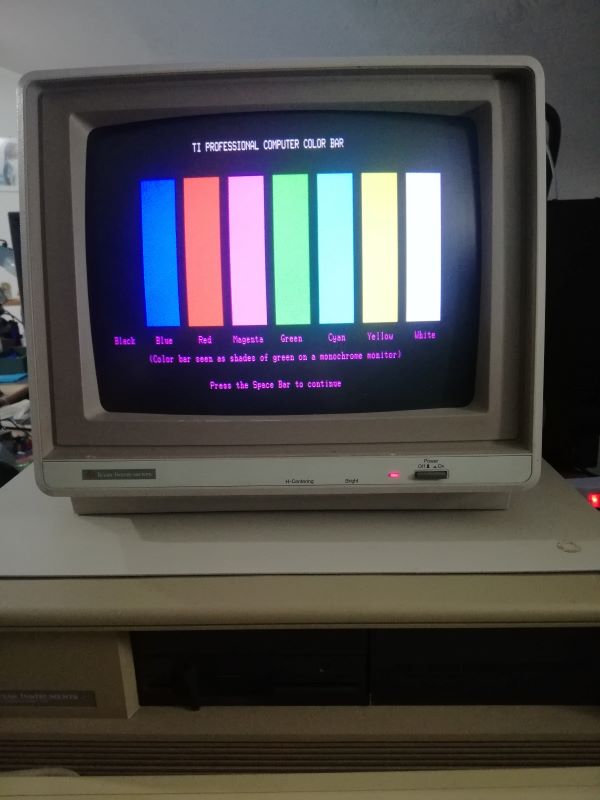
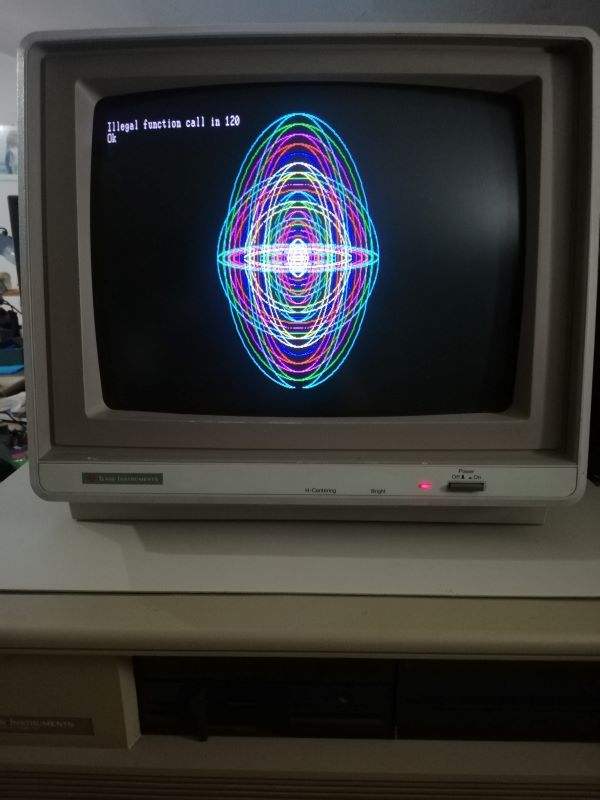
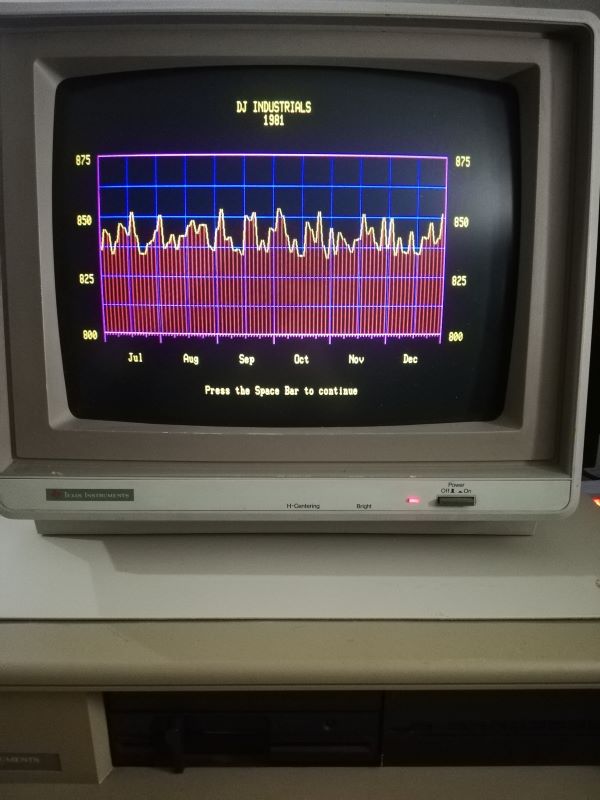
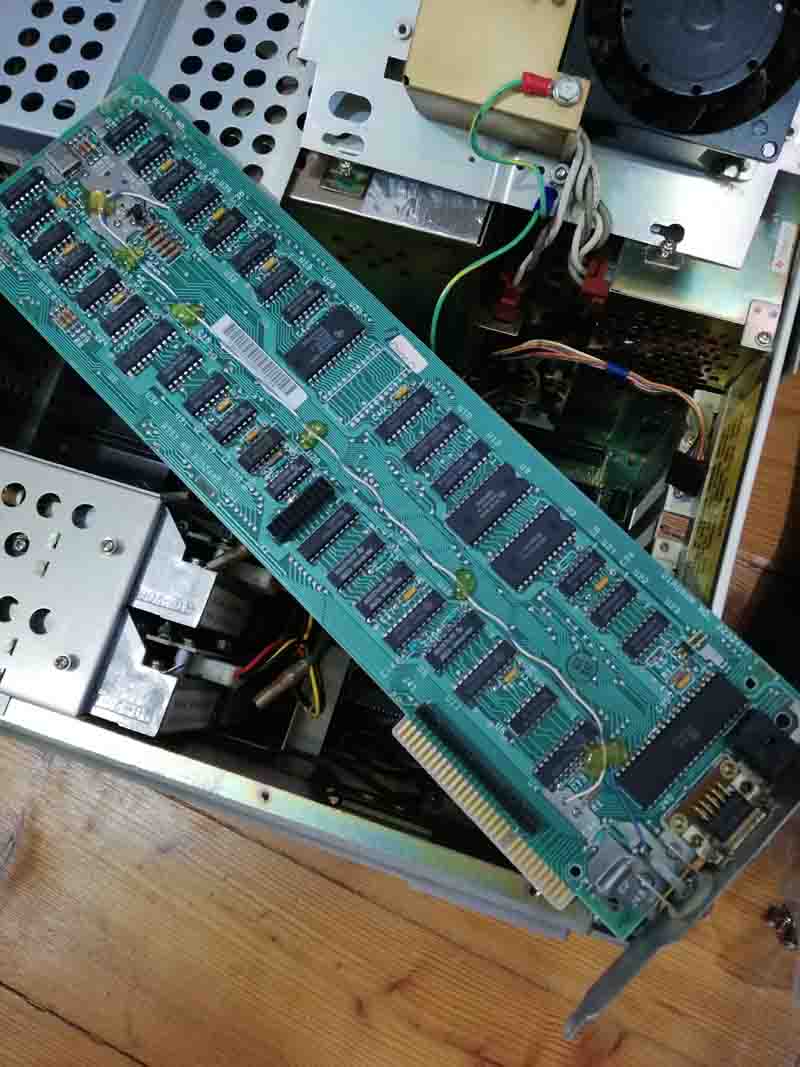 Here you can see some video card tests.
Here we tell you about some necessary repairs after the mother board broke, during the 2nd edition dedicated to Texas Instruments in the city of Rieti in 2023.
Mother Board broke
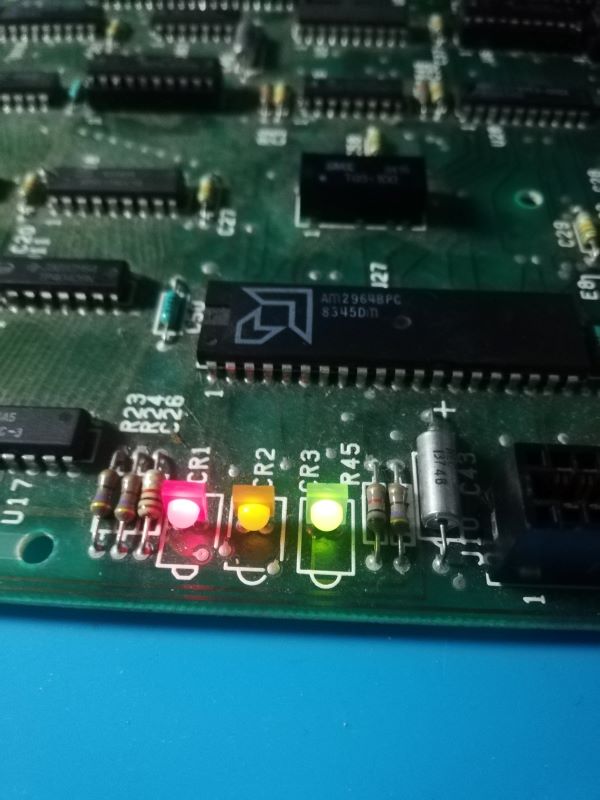
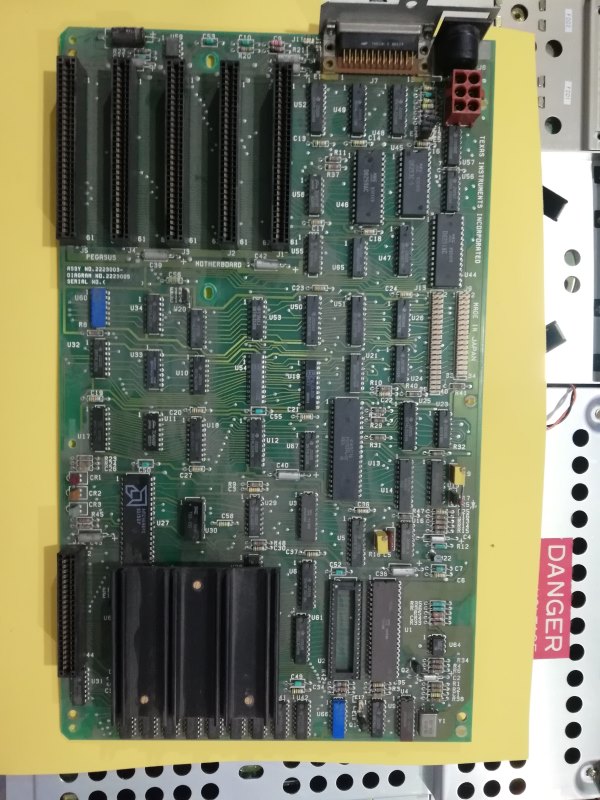 The first thing to do in the event of a fault is to check the status of the three LEDs above the mother board CR1, CR2, CR3. Normal operation at boot is the switching on of all three and subsequently the switching on of the red, orange and solid green. In our case all three are turned on, the manual states that there is a block in reading the EPROMs.
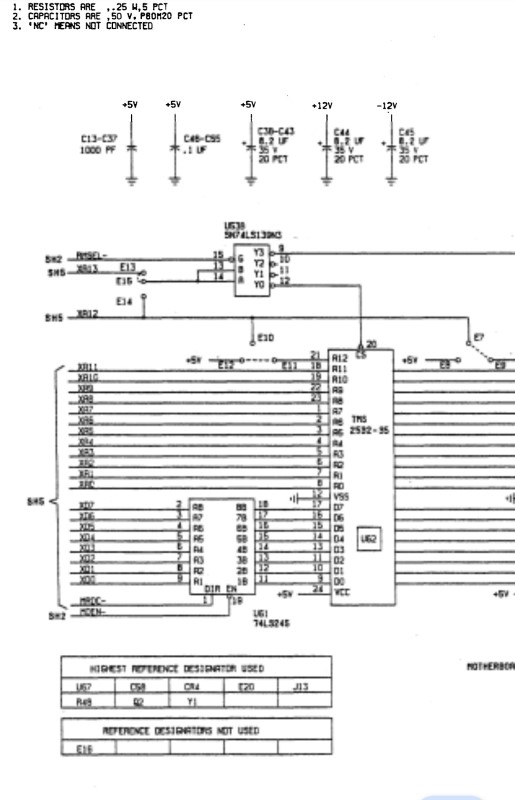 We started investigating both with the oscilloscope and with a logic analyzer, we concentrated on reading the data and in particular on U61.
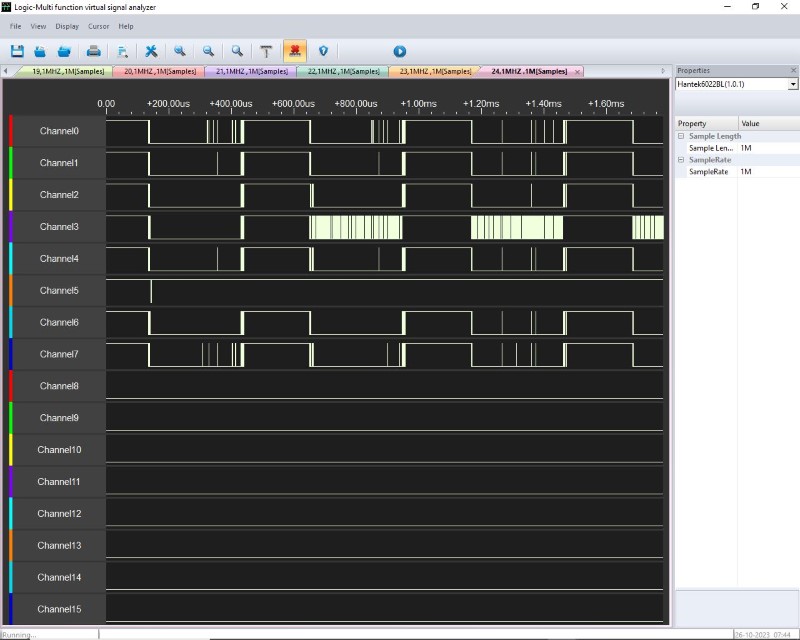
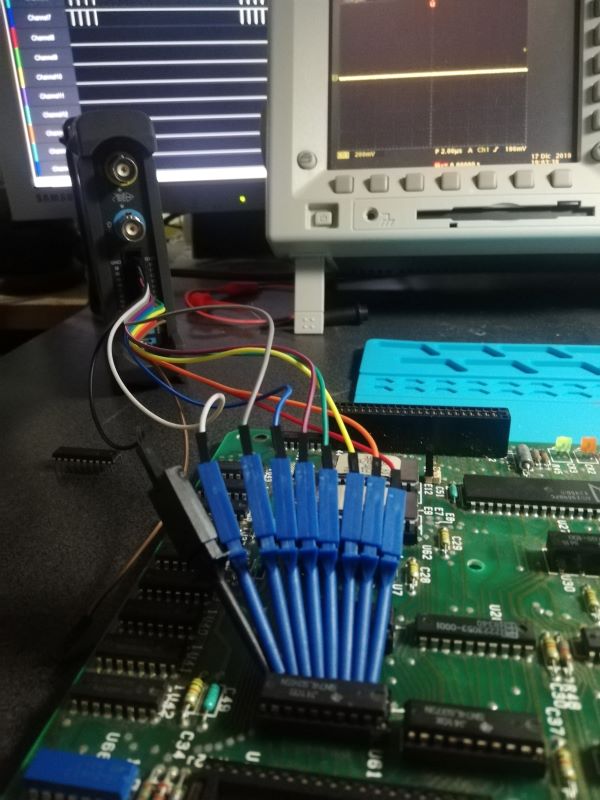
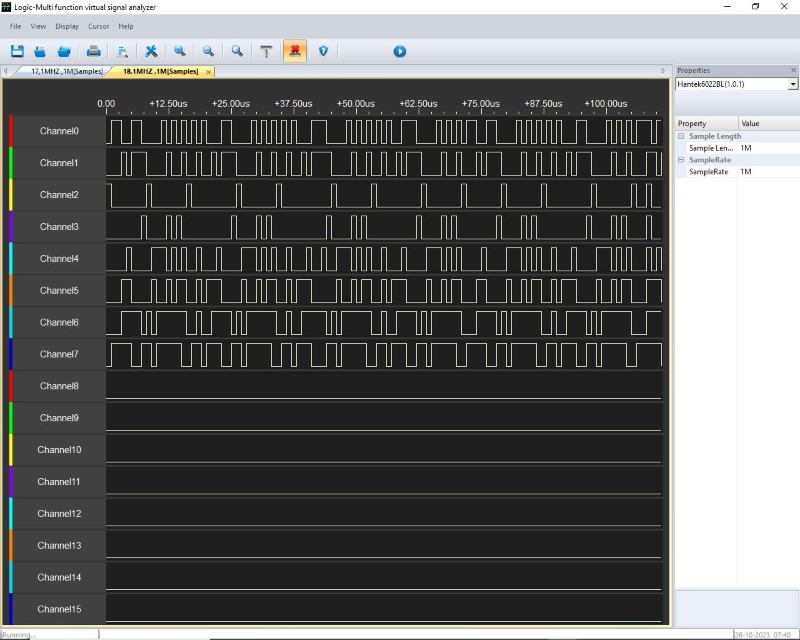 We noticed that on the EPROM side and on the U61 (74LS245) bus transceiver side, the data was not moving. After replacement, the mother board works again
 Blank Screen
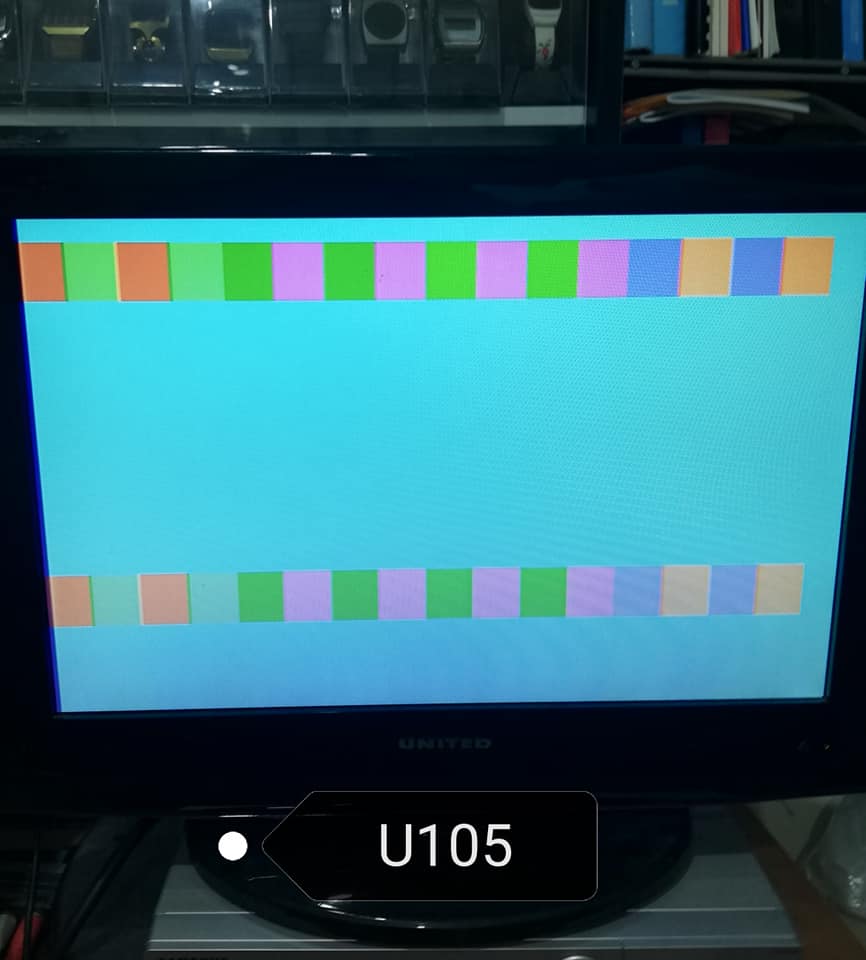
The problem is having the screen black after a few seconds, while it goes black the images tend to distort.
.jpg)
.jpg)
.jpg)
After checking that the power supplies are correct, we moved on to the various clocks, including the 4 clocks out of phase with each other of the TMS9900 CPU, then we moved on to the clock of the TMS9929 VDP, we were lucky it wasn't correct, we replaced the quartz and the capacitor from 12 pF.
VDP RAM wrong
If you have a problem with the 4116 video RAM and you don't have the oscilloscope, you can basically use these photos to find the faulty RAM. This help is useful if one of the RAMs has the DOUT pin locked (broken ram).
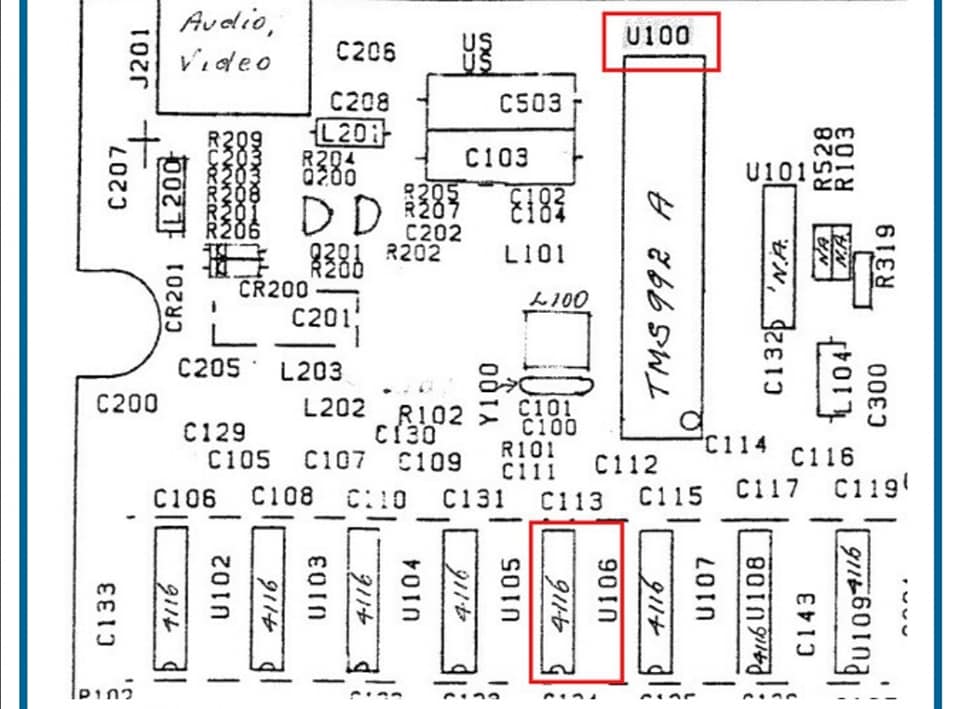 Wiring diagram.
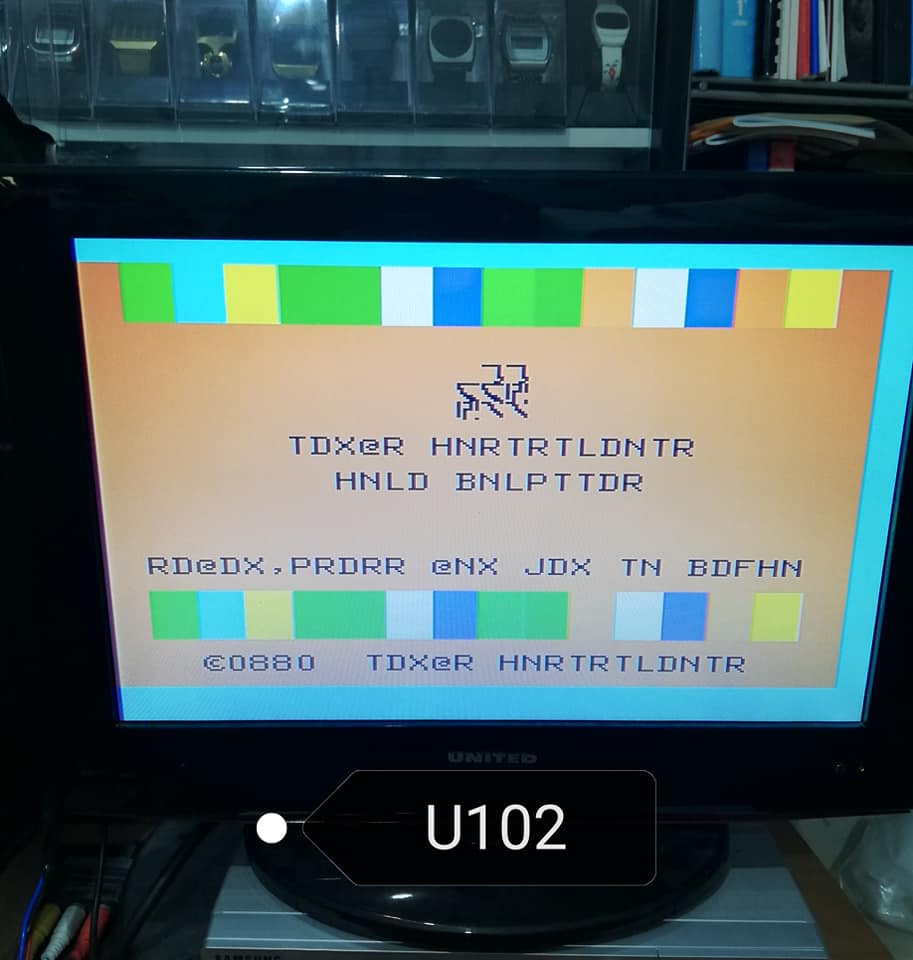
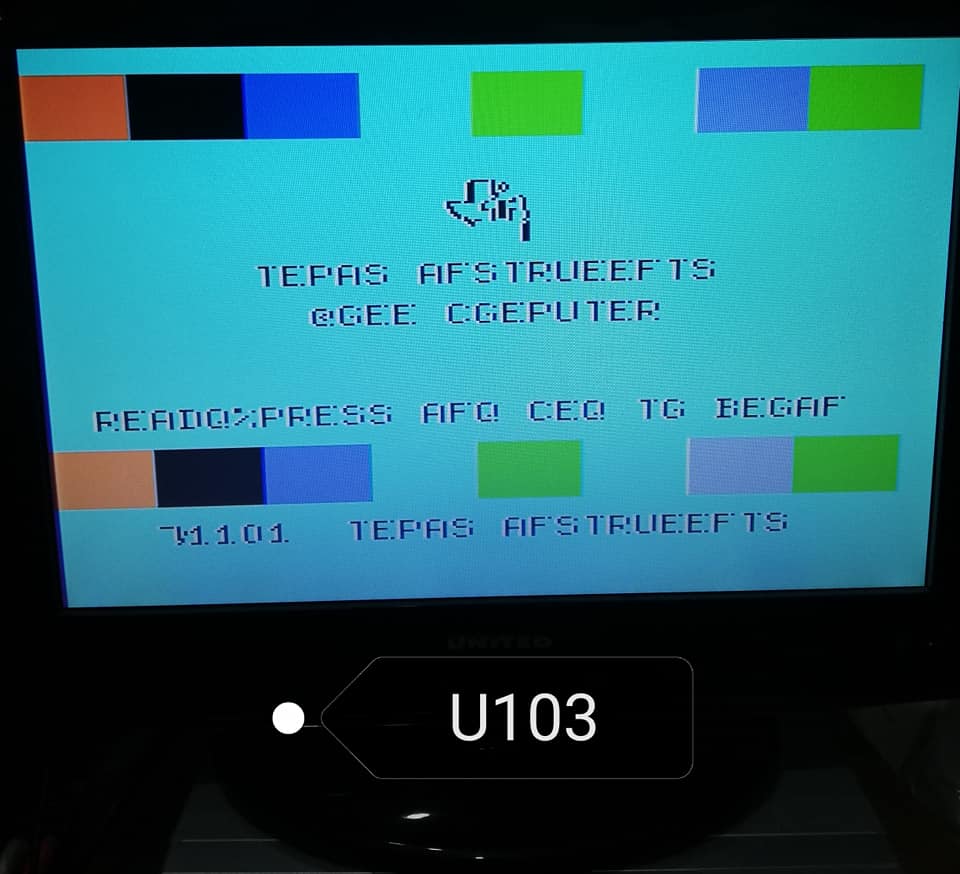
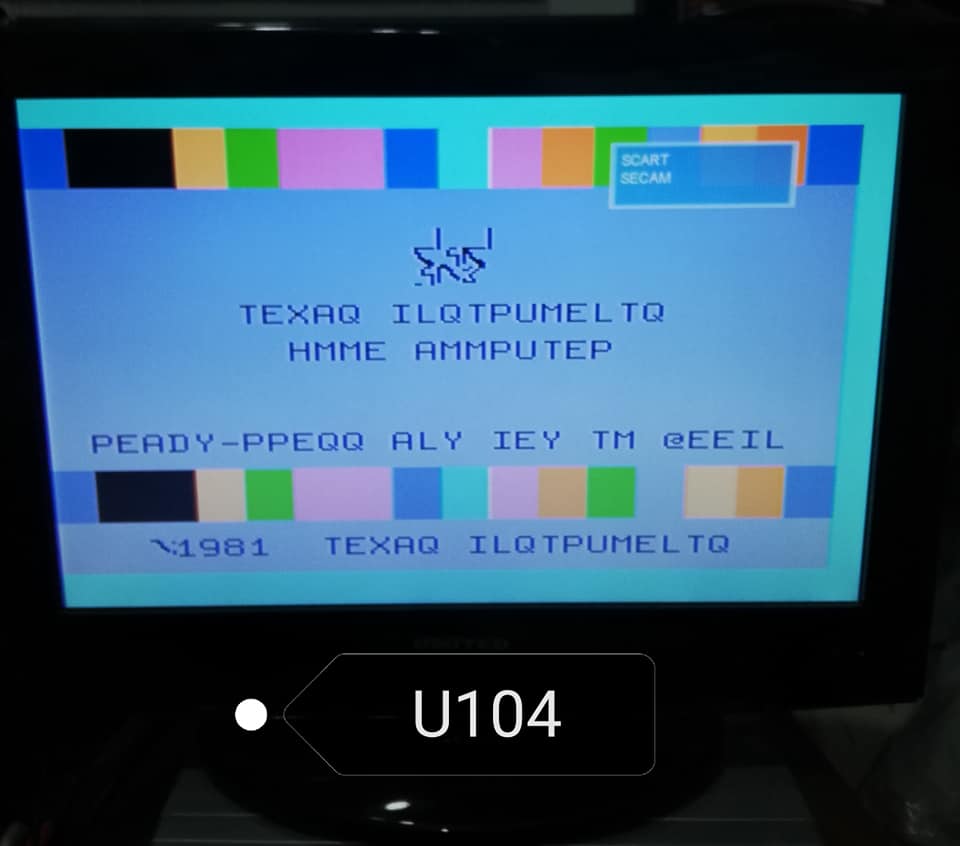
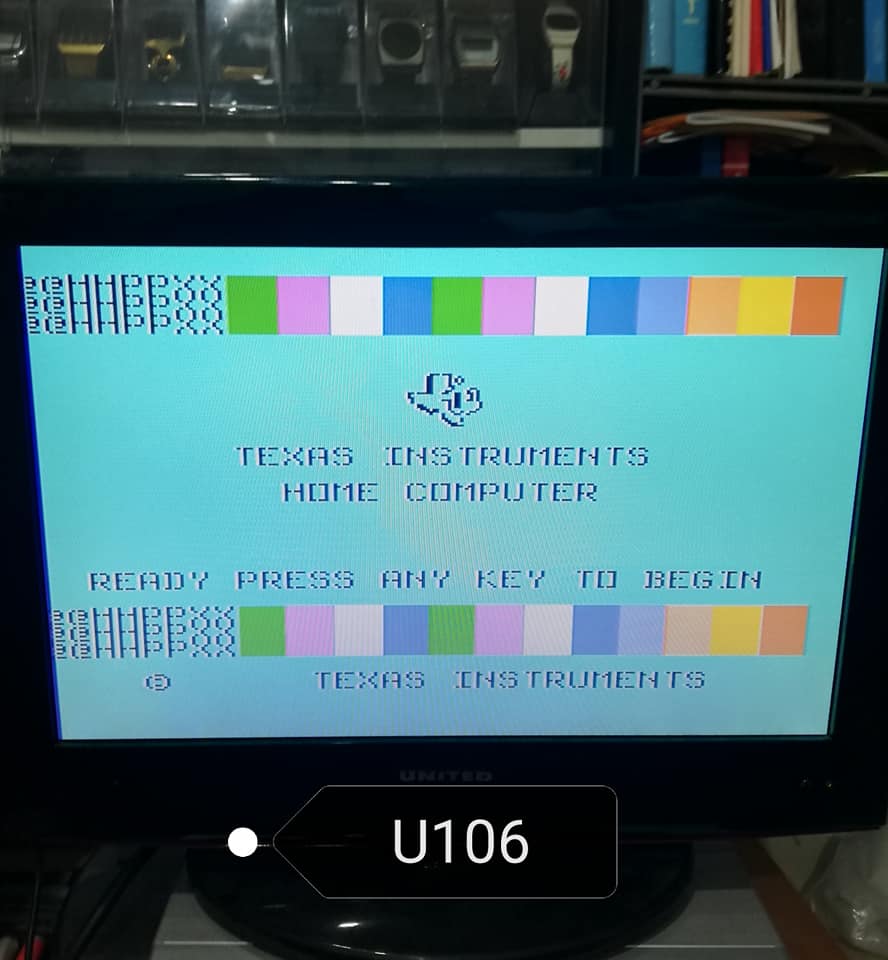
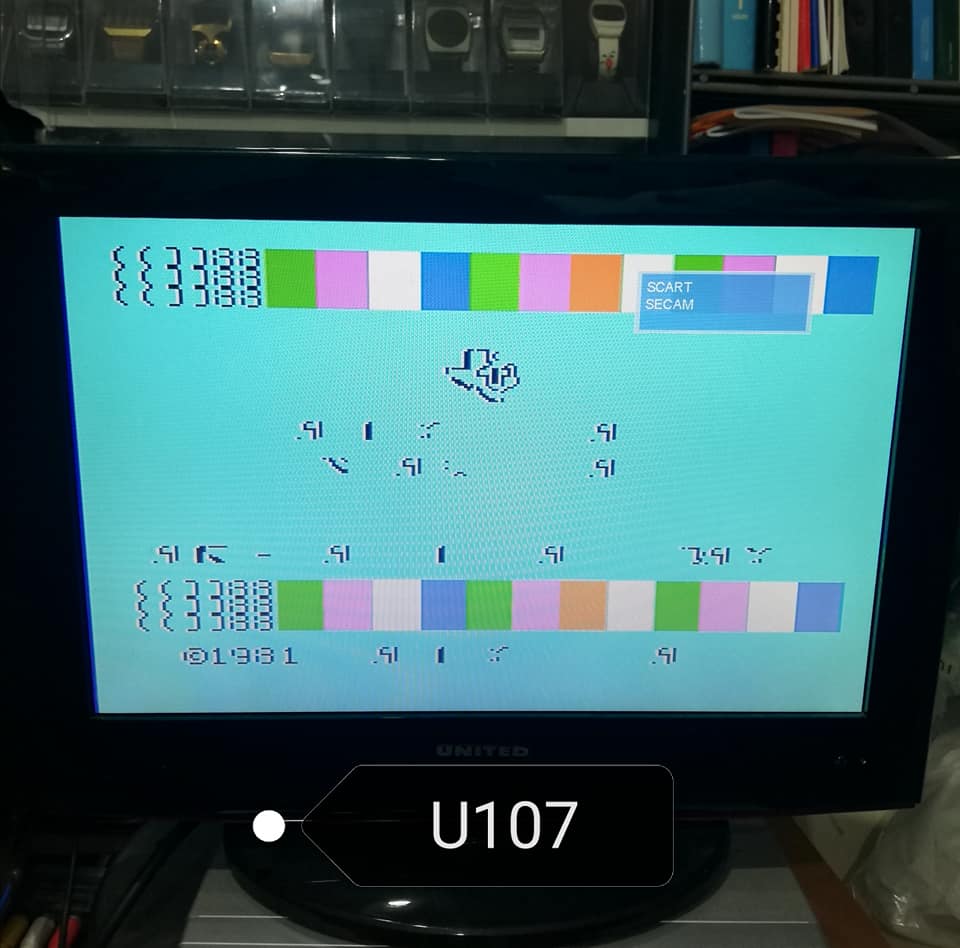
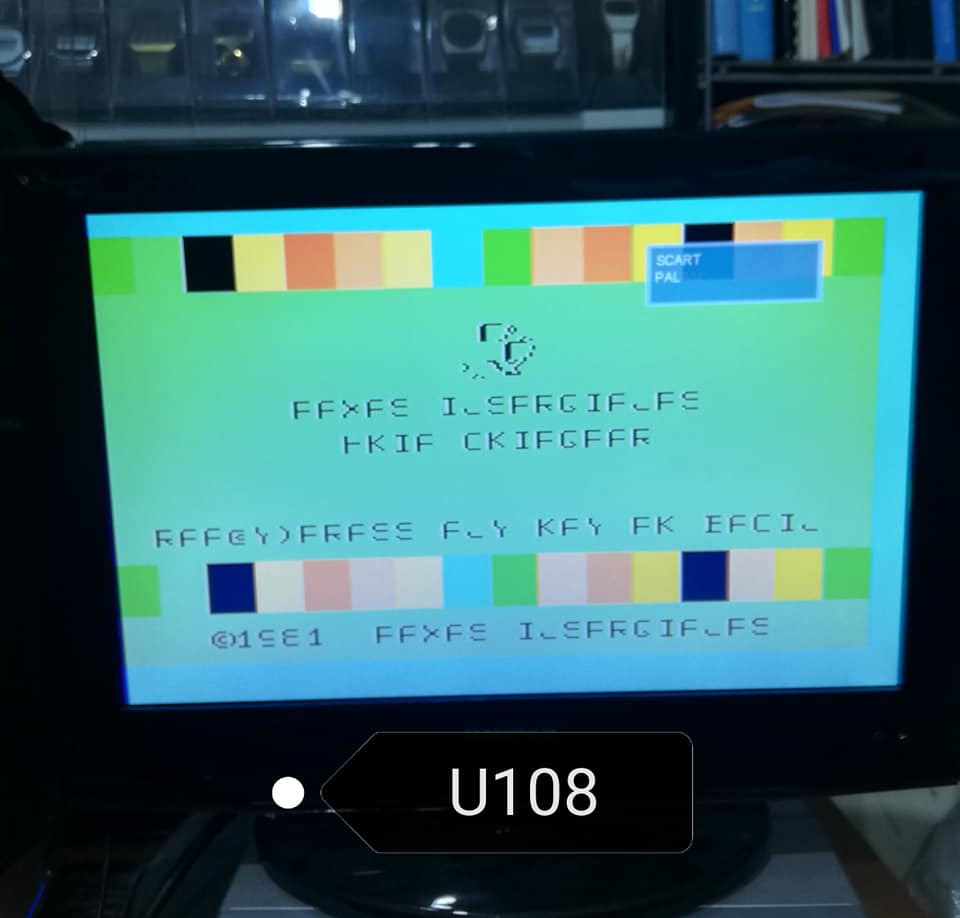
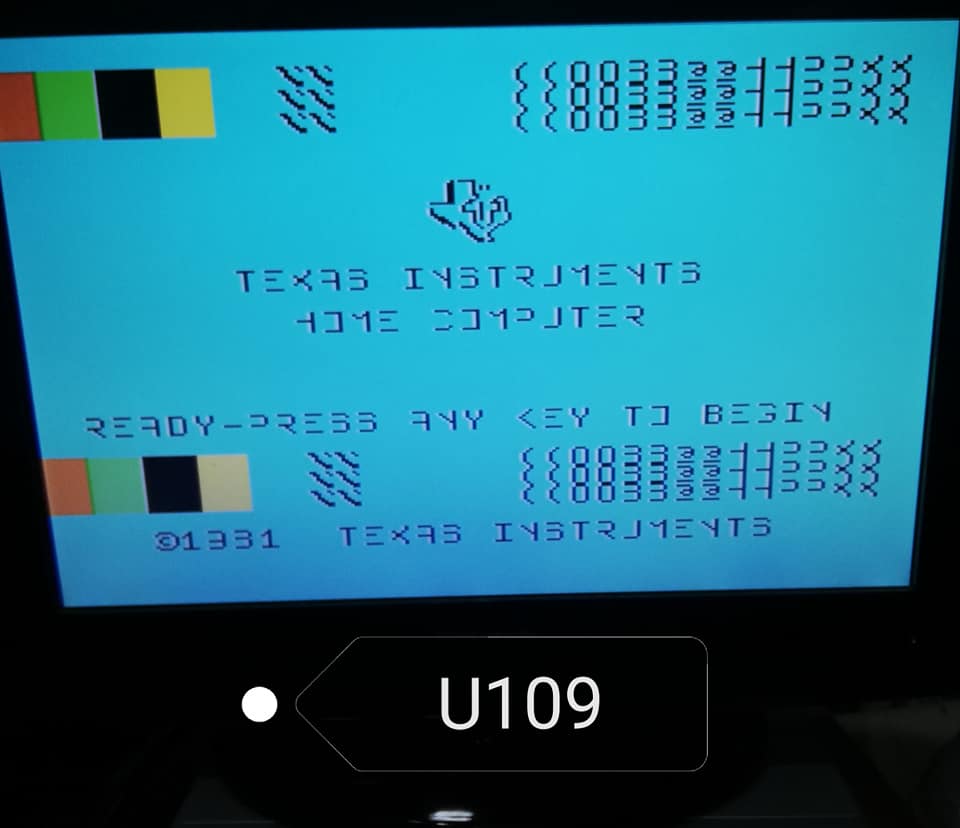
The videoprocessor use in the TI-99/4A comes in three flavors, that differ uniquely by the kind of output signal they send to the monitor port.
The TMS9918A issues a 525-lines, NTSC signal for US television format.
The TMS9928A issues a 525-line signal, in the form of a B&W luminance/sync signal and two color differential signals. This is meant to drive a RGB monitor, with a minimal external circuitery.
The TMS9929A issues a 625-line signal, in the same format as the 9928A. It is meant for use with the european PAL system.
DEBUGGING HELP
By John Guion
Dallas TI Home Computer Group
PROBLEM AREAS
1 CONSOLE WILL NOT POWER UP
1.1 General information.
Failure of the TI-99/4A console to power up and produce the TI title screen is a common problem that is also the hardest to track down and fix since failure of nearly any component in the console or power supply can cause this.
The following are not intended as solutions to the problem, but merely as points to check that may aid in finding the actual problem and fixing it.
Unless a particular part is suspected, replace any socketed chips possible with known working equivalents before de-soldering any components. Since the socketed chips are common causes of lock up, eliminating them as possible problems first may save excess soldering on the board. The console will power up if the sound chip is removed entirely, but not if that chip is shorted internally.
A simple TTL logic probe can be used for tracing signals in the circuit. An oscilloscope may also be used and has the advantage of being able to check clock signals for proper frequency. When a signal should exist as an output from a particular device, be sure to check that device's input for proper signals before attempting to replace the component. When checking for locked up signals, try to trace all signals back through the circuit to the point of origin. A set of schematics (available from several sources, including TI) will help greatly in this part of debugging.
Tracing locked signals can determine whether or not the signal is missing due to a faulty component that it must pass through or what power up operation was occurring during lock up.
1.2 Console power up procedure.
A. TMS9900 CPU resets and addresses low ROM locations.
B. TMS9900 initializes.
C. TMS9900 sets up workspace registers in MCM6810 RAM.
D. TMS9900 begins GROM read.
E. TMS9900 enters delay loop for about 1/4 second.
F. TMS9919 sound chip is disabled.
G. TMS9918A VDP chip is initialized.
H. 4116 VDP RAM is initialized (requires about 1 second).
I. Title screen is loaded into VDP.
J. TMS9919 sound chip emits beep.
K. TMS9900 CPU enters keyboard scan.
L. System is ready for use.
1.3 Voltage/signal checklist.
A. Check power supply for +5V, +12V, and -5V. Lack of -5V often results in a grey flickering screen on power up.
Check for +5V on chips throughout board.
Check TMS9900 for -5V at pin^1; +5V at pins^2, 33, 59, and 64; and +12V at pin^27. If any voltages are missing, check for shorts on main board. Replace power supply if necessary.
B. Check TMS9900 pins^8, 9, 25, and 28 for clock signal. If not found, check TIM9904 clock generator pins^1, 2, 3, and 4 for clock signal. If not found, check TIM9904 supply voltages (+5V at pin^20, +12V at pin^13), crystal, and tank circuit. If no external problem can be found, possible TIM9904 failure.
C. Check TMS9918A pin^39 and pin^40 for the 10.73863 MHz clock. If missing, check crystal and oscillator circuit. Otherwise, check TMS9918A pin^36 and pin^37 for clock outputs. If not found, remove GROMs and sound processor (located next to GROMs) and test again for clock. If missing, possible TMS9918A failure. Reinsert GROMs and sound processor after tests.
D. Check TMS9918A pins^14 (-CSW) and^15(-CSR) for lock up. If locked up, check memory enable from pin^6 of 74LS32 and pin^13 of 74LS138 located next to MCM6810. Trace signal to find possible failure.
E. Check TMS9918A pin^13 (MODE) for lock up. If locked up, trace signal back to TMS9900. Also check for other components that may be locking up this line (it is used as A14). If no other fault can be found on that line, possible TMS9918A failure.
F. Check TMS9918A pin^1 (-RAS), pin^2 (-CAS), and pin^11 (-R/W) for lock up. If locked up, possible TMS9918A failure.
G. Check TMS9918A pins^17 through 24 (data lines) for signals. If missing, trace to fault. Possible TMS9918A or TMS9900 failure.
H. Check TMS9918A pins^3 through 10 (RAM address/data lines) for signals. If missing, possible TMS9918A failure.
I. Check 4116 RAM pin^14 (DATA OUT) on each chip for signal. Each chip missing signal may be at fault as well as TMS9918A.
J. Check TMS9900 pin^62 (READY) for lock up. If locked up, check TMS9900 pin^6 (-RESET) for signal. If pin^6 is locked up low, possible TIM9904 failure. If high, possible TMS9900 failure. If TMS9900 pin^6 is not locked up, trace circuit back from pin^62 to find fault.
K. Check all three GROMs (CD2155, CD2156, and CD2157) at pin^10 (-CS) and pin^15 (GREADY) for signals. If either is missing, remove all three GROMs and test pin^10 again for signal. If the signal at pin^10 does not exist, trace back through circuit to find failure. If signal exists, replace GROMs one at a time until GROM that causes lock up on pin^15 is found.
L. Check all three GROMs for signal on pin^11 (M0/A14) and pin^12 (M1/DBIN). If missing, trace circuit to find break in signal path.
M. Check each GROM for -5V at pin^14, +5V at pin^9, and -.8V to -.6V at pin^16. If missing, check for broken trace. If -.8V/-.6V is missing or at
-5V, check diode connected to that line.
N. Remove sound generator. If console powers up, check pin^16 for +5V, pin^4 for clock from TMS9918A, pin^5 (-WE) for signal, and pin^6 (-CS) for signal from 74LS138 closest to MCM6810. If these signals exist, possible sound chip failure.
O. Check TMS9918A pin^36 for composite video output. If missing, check TMS9918A crystal and clock circuit and pin^16 (-INT) for interrupt signal. If signals exist, possible TMS9918A failure.
P. Check GROMs for clock on pin^13. If missing, check clock output on TMS9918A pin^37. If signal on TMS9918A exists, check for break in signal path. If not, check TMS9918A oscillator circuit. If oscillator operates, possible TMS9918A failure.
Q. Check pin^20 (-CS) of console ROMs for lockup. If locked up, trace circuit back to find fault.
R. Check pins^7 and 9 through 15 of 74LS138 nearest I/O port to determine memory area accessed during lock up. Check pin^4 (-MEMEN) for lock up. If no signal can be found on pin^7 or pins^9 through 15, possible 74LS138 failure.
S. Check pin^11 (-CS) of MCM6810 RAMs for lock up. If locked up, trace circuit back to find fault.
T. Check TMS9901 pin^5 (-CE) for lock up. If locked up, check 74LS138 nearest I/O port for failure. Check TMS9901 pin^11, 17, and 18 for lock up. If locked up, trace circuit back to find fault.
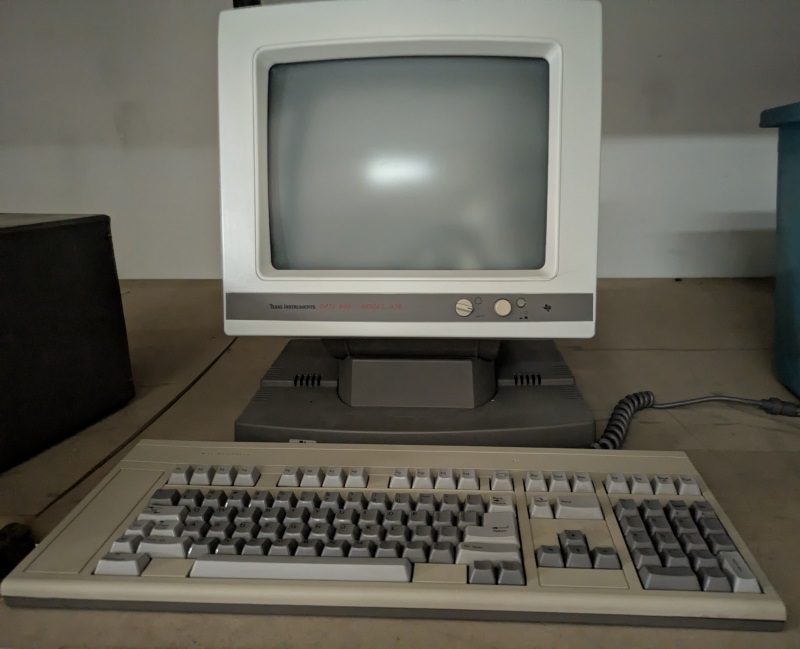 Model: 924 VDT
Adapter: 110 volt or 220 volt (Italy)
Year: 1987
Keyboard: Detached, low-profile, adjustable tilt Standard typewriter layout Acoustic feedback Calculator-style numeric keypad
Display: 14-inch (diagonal measure) cathode ray tube Cpu: ? Speed: ? mhz CO-processor: - Rom: ? kRam: ? k Sound: Beeper
Text mode: 80 columns or 132 columns by 24 rows Graphics mode: 2 colors
Size - Weight: 47 x 24 x 55 cm / 3 kg with monochrome monitor
I/O ports: -
Media: -OS: -
Peripherals: -
Price: - $ (USA) / £ (Italy)
Info: The Texas Instruments TI Model 924 was a vintage video display terminal introduced in 1987. It was primarily used as a workstation console for multi-user Unix and minicomputer environments and featured a dedicated, specialized keyboard
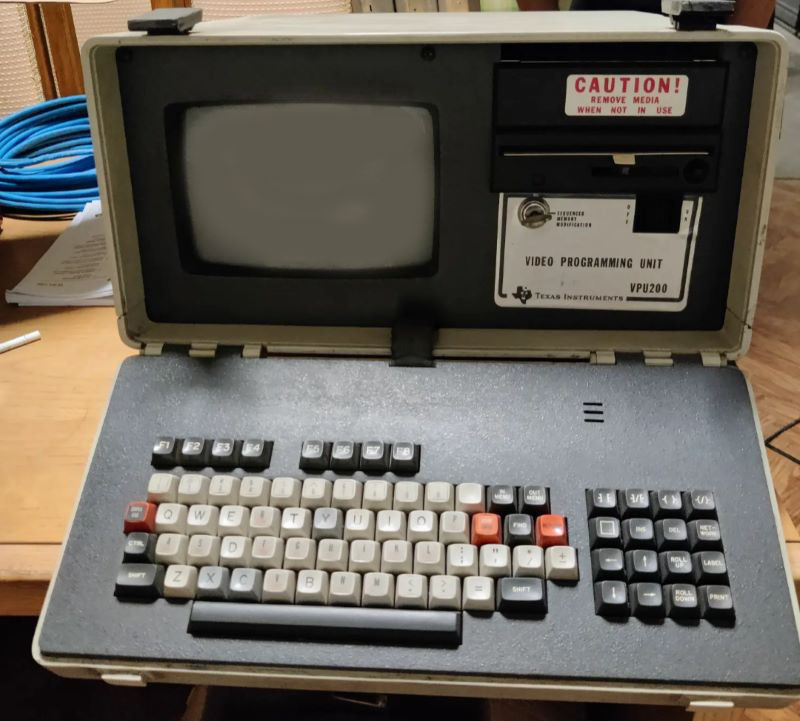
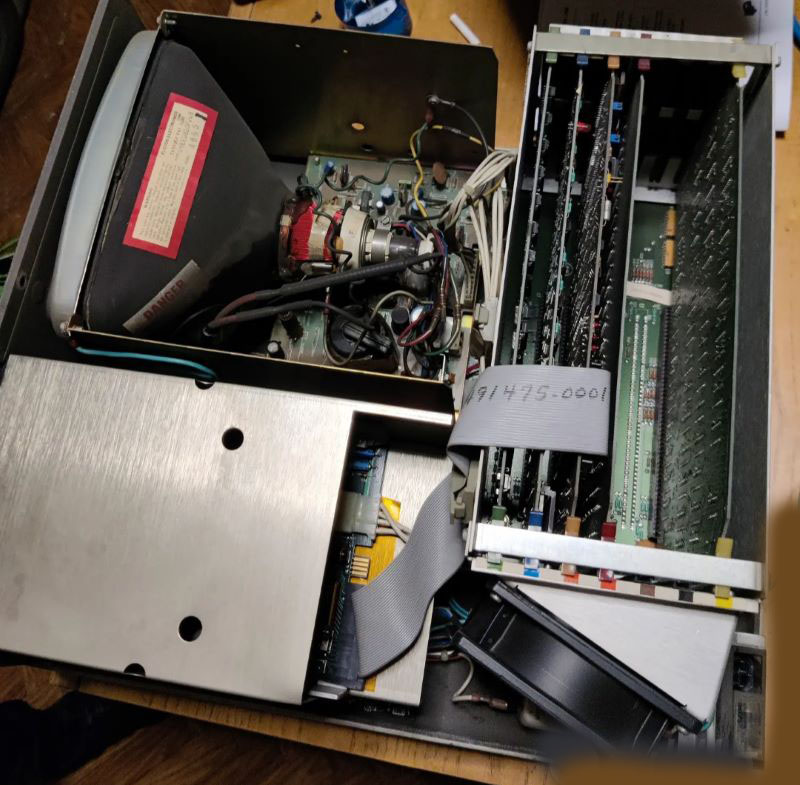
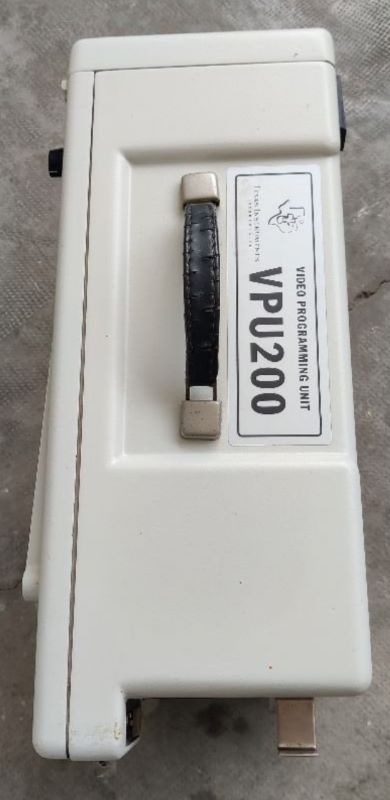
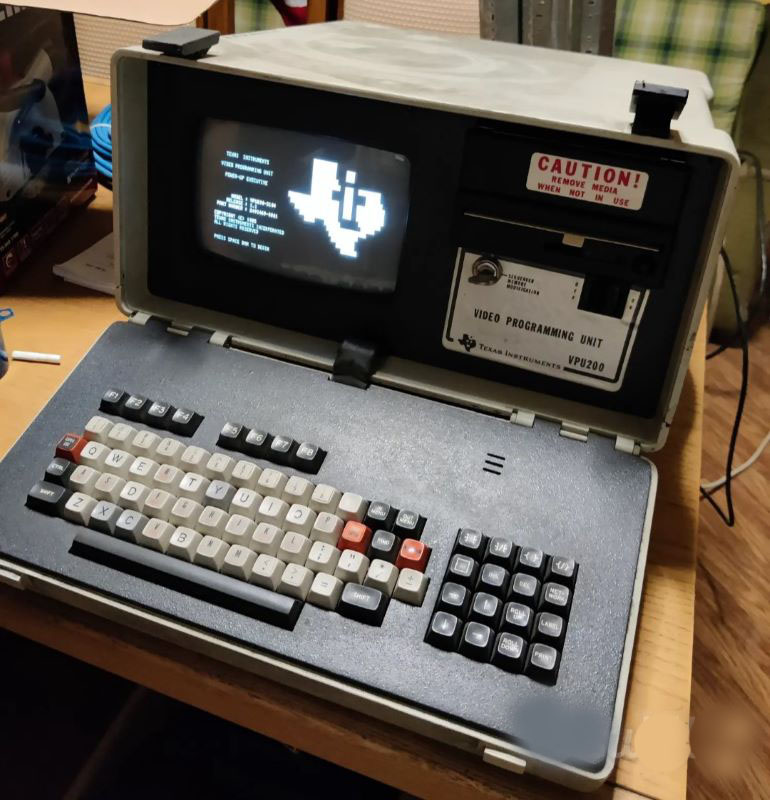 Model: VPU200 - 3104
Adapter: 110 volt or 220 volt (Italy)
Year: 1984
Keyboard: QWERTY full-stroke keyboard with arrow keys and separated numeric keypad
Cpu: TMS9900 Speed: 5 mhz CO-processor: - Rom: 8kRam: 128k Sound: Beeper
Text mode: 80 x 25 Graphics mode: 2 colors
Size - Weight: 47 x 24 x 55 cm / 18 kg with monochrome monitor
I/O ports: -
Media: one 5''1/4 disk-drive (320k) OS: -
Peripherals: -
Price: - 3000$ (USA, november 1983) / - model : £ 4.000.000 (Italy, 1985)
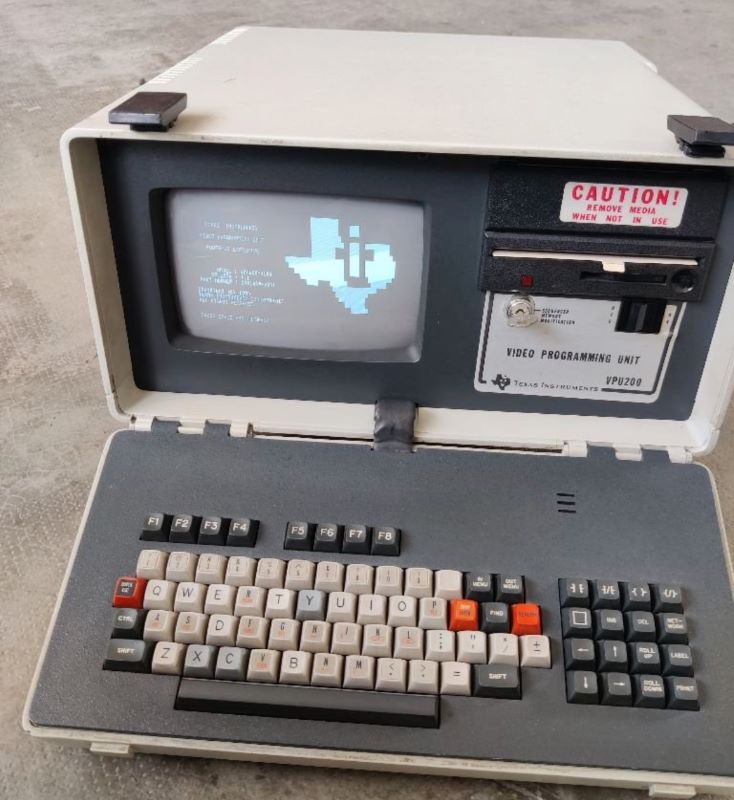
Info: The VPU200–3104 is a self-contained unit which houses a CRT display screen and features an attached hinge keyboard and a 3.3 MByte floppy disk drive. When the unit is not in use, the keyboard can be folded upward toward the display screen and latched in that position. The bottom of the keyboard then becomes the front of a completely closed case. For ease of handling, a carrying strap is affixed to one side of the case. The VPU200 is an industrial computer terminal and must be treated with the care given to electronic test equipment.
Apple Computer 1
Audio Guide
|
|
|
|
.jpg) The Apple Computer 1, originally released as the Apple Computer and known later as the Apple I or Apple-1, is an 8-bit desktop computer released by the Apple Computer Company (now Apple Inc.) in 1976. It was designed by Steve Wozniak. The idea of selling the computer came from Wozniak's friend and Apple co-founder Steve Jobs. The Apple I was Apple's first product, and to finance its creation, Wozniak sold his HP-65 calculator for $500 and Jobs sold a second hand VW Microbus, for a few hundred dollars (Wozniak later said that Jobs planned instead to use his bicycle to get around). Wozniak demonstrated the first prototype in July 1976 at the Homebrew Computer Club in Palo Alto, California.
The Apple Computer 1, originally released as the Apple Computer and known later as the Apple I or Apple-1, is an 8-bit desktop computer released by the Apple Computer Company (now Apple Inc.) in 1976. It was designed by Steve Wozniak. The idea of selling the computer came from Wozniak's friend and Apple co-founder Steve Jobs. The Apple I was Apple's first product, and to finance its creation, Wozniak sold his HP-65 calculator for $500 and Jobs sold a second hand VW Microbus, for a few hundred dollars (Wozniak later said that Jobs planned instead to use his bicycle to get around). Wozniak demonstrated the first prototype in July 1976 at the Homebrew Computer Club in Palo Alto, California.
Production was discontinued on September 30, 1977, after the June 10, 1977 introduction of its successor, the Apple II, which Byte magazine referred to as part of the "1977 Trinity" of personal computing (along with the PET 2001 from Commodore Business Machines and the TRS-80 Model I from Tandy Corporation).

Finally my version of APPLE I with all the possible Texas Instruments chips!


Replica of the probable APPLE 1 A prototype. The motherboard is very different from the production units. The 6800 area is populated. There is no switch board above the 74154. No connectors. Orange capacitors. The logo is different. The chips are arranged in the same way as the production units, but the tracking lines are very different. For unknown reasons a change was made. According to the screenshots, the prototype worked.


PSA DNA certified autograph !!!
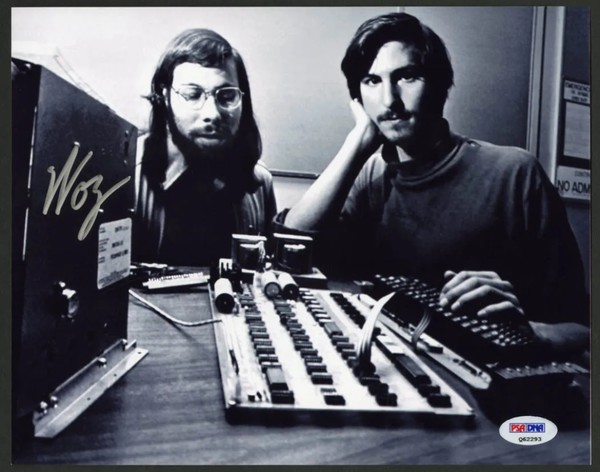

One of the things purchased in the American market is this photo, signed by Steve Wozniak and certified by PSA/DNA.
This is one of the dreams, for us retrocomputer enthusiasts, sooner or later I'll assemble it!
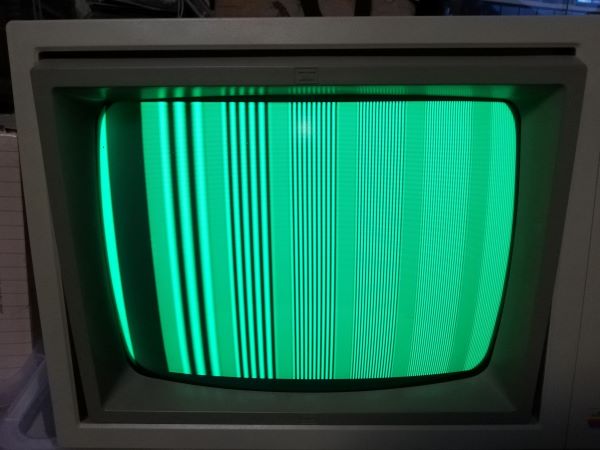
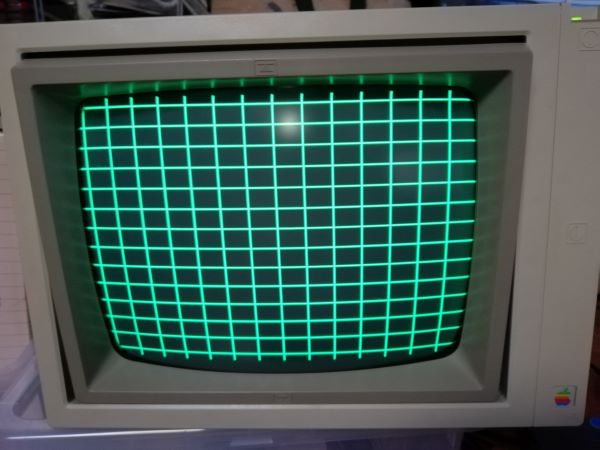
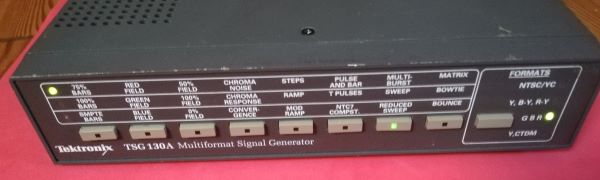 Let's start with setting up a monitor for the Apple I
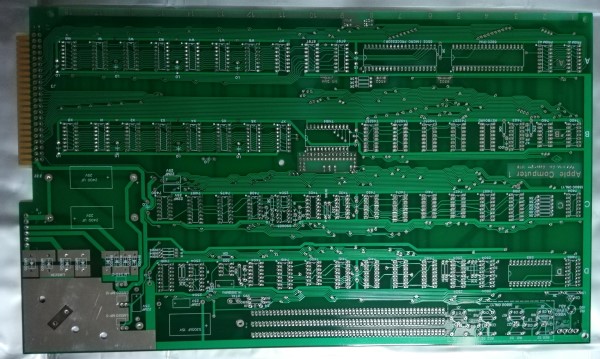
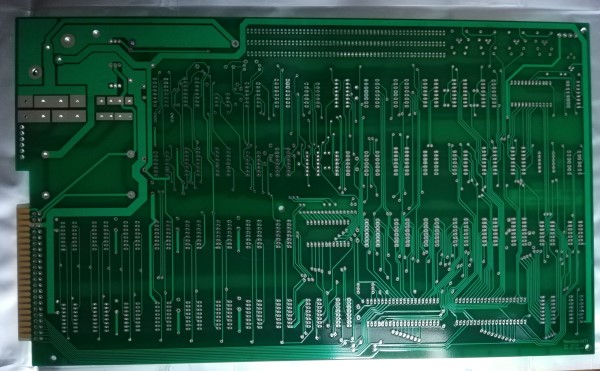 this is the pcb we use for assembly
Some considerations on the computer. Looking at the long side PCB, you will see numbers at the bottom, ranging from 1 to 18, the same goes for the left side, you will see letters ranging from A to D.The combination of the letters on the left and the numbers on the bottom form a nearly perfect grid on the PCB, this is widely used in documentation among hobbyists to identify chips or circuit parts.
In principle it can be divided into three parts, at the top right there is the power supply with the three large Blue capacitors, at the bottom all the components including the references A1 to A18 and B1 to B18, the computer with the micro, ram, prom, etc... Above all the components included by references C1 to C18 and D1 to D18, the video or terminal part. This section works independently, because in effect it is like a copy of a terminal or teletype. These terminals, or teleprinters, take ASCII characters and print them on the screen, or print them on paper.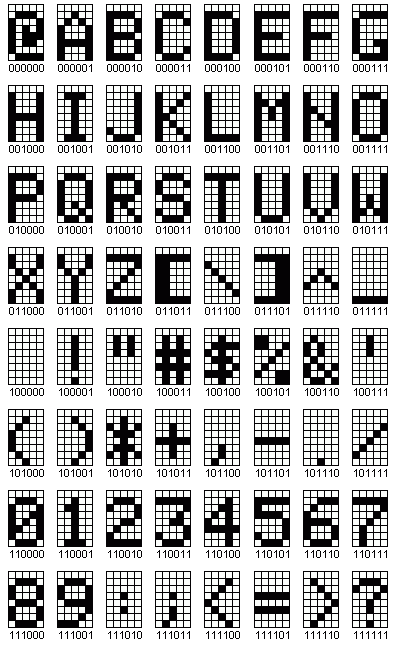
Then the computer part (bottom part) takes the ASCII characters one at a time and sends them to the video (top part), to be displayed. The heart of the video comes down to the character ROM at position D2, which contains the BIT patterns for 64 characters. These are the only characters that APPLE 1 can display. The screen is 40 columns wide x 24 rows, for a total of 960 characters.
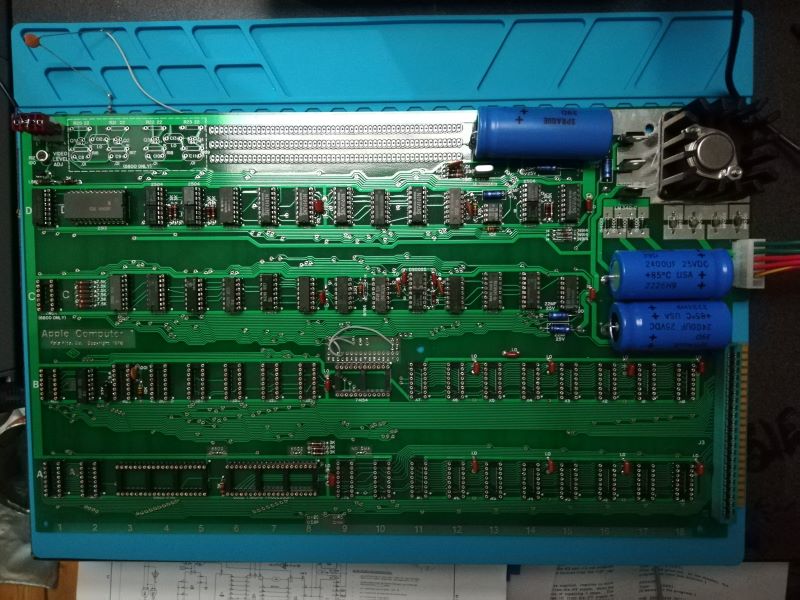
In this phase you can see the complete pcb of the components relating only to the video terminal part. The problems encountered were, a faulty LM323 (it went into protection when I inserted more than 5 chips), a faulty SN74174 (it blocked the reset), the faulty video output transistor (Chinese).
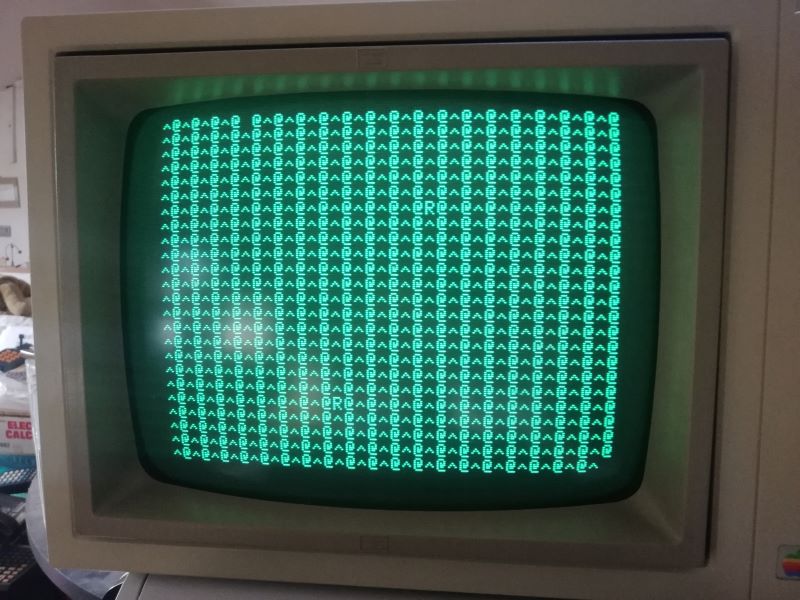
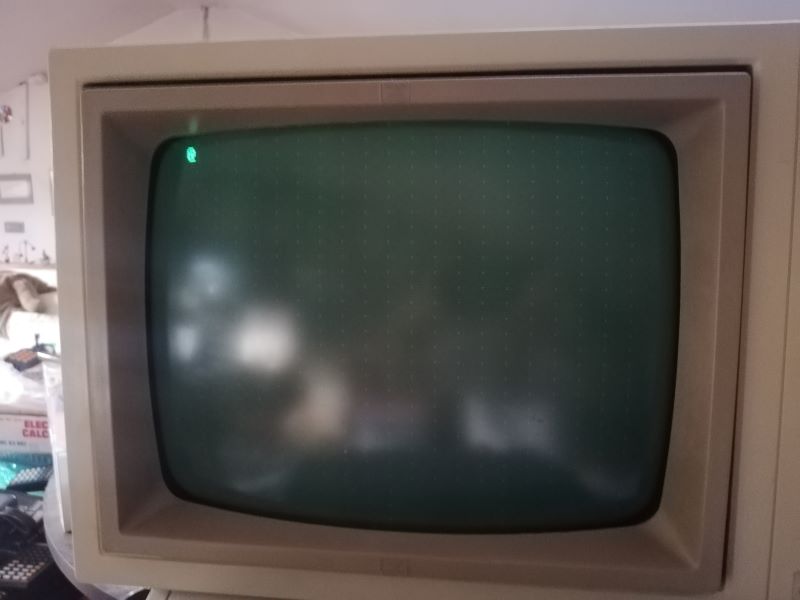 Here you can see how I fed the pcb the reset, of the video part, all random characters, then I gave a +5 volt on pin 13 of the keyboard.
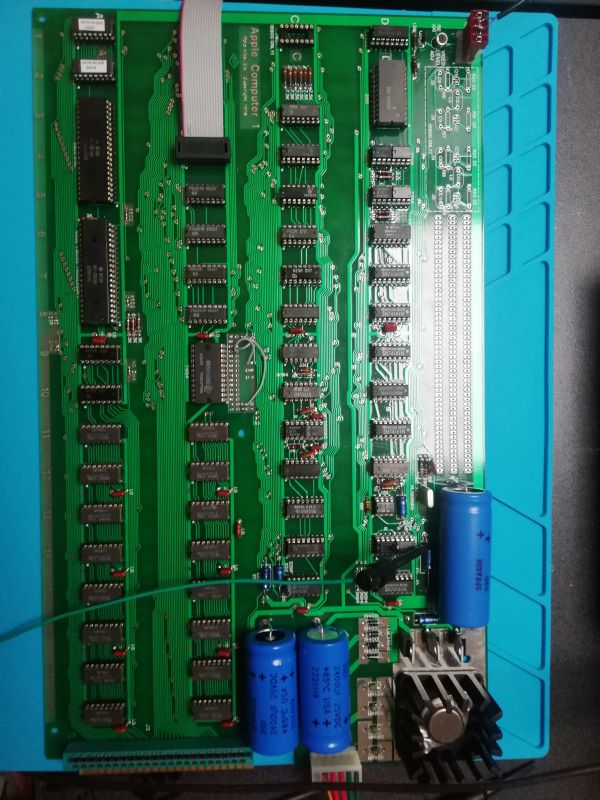
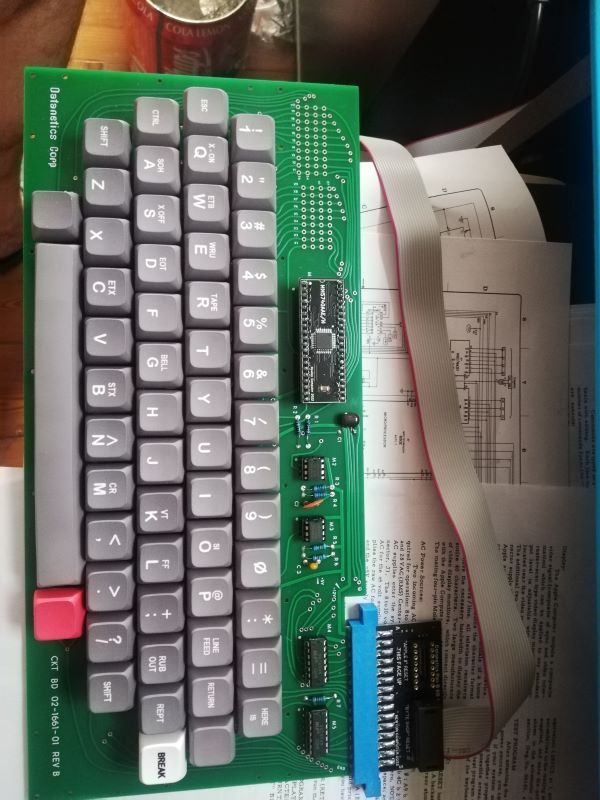 Now it's time to insert all the remaining components, and connect a compatible keyboard. At this stage I only encountered a bad ram and a 7400 with a bent pin.
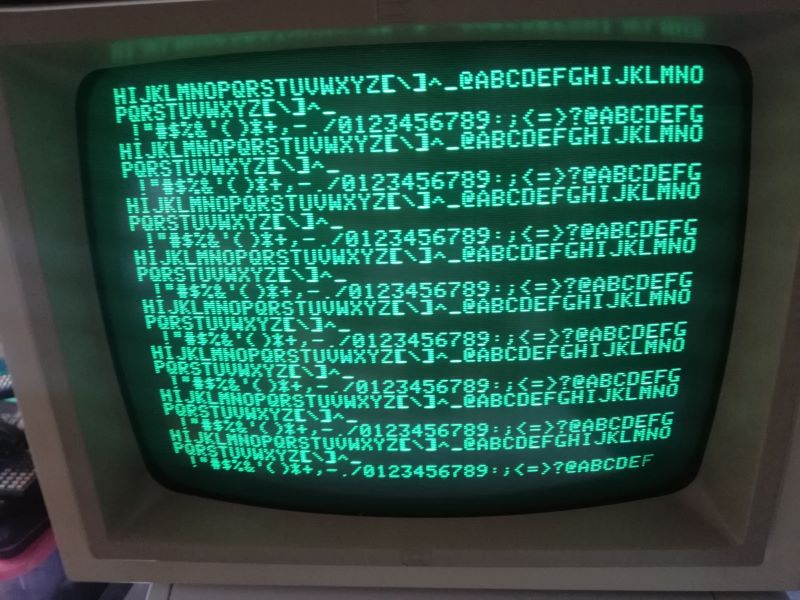 To do a little test, enter these lines of hexadecimal code:
0: A9 00 AA 20 EF FF E8 8A 4C 02 00 return
Type 0: A return in this way the memory locations with the hexadecimal values will be displayed
Type R return ( R means run the program)
Let's play with P-Lab Claudio's WiFi modem and Francesco's BBS
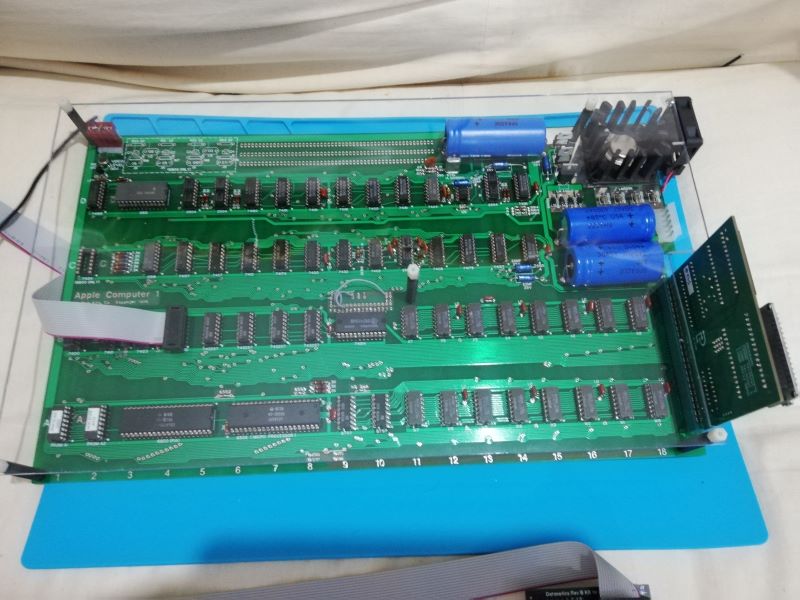 For configuration, follow the instructions on the P-Lab website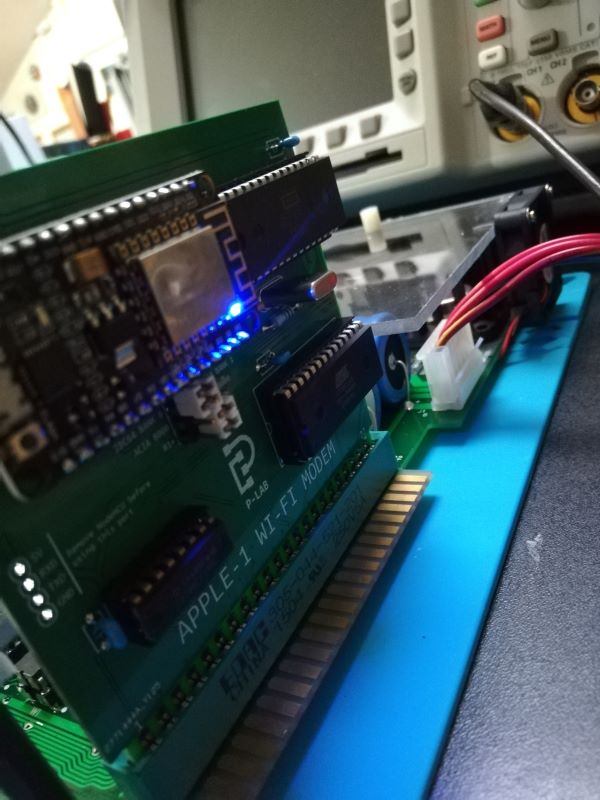
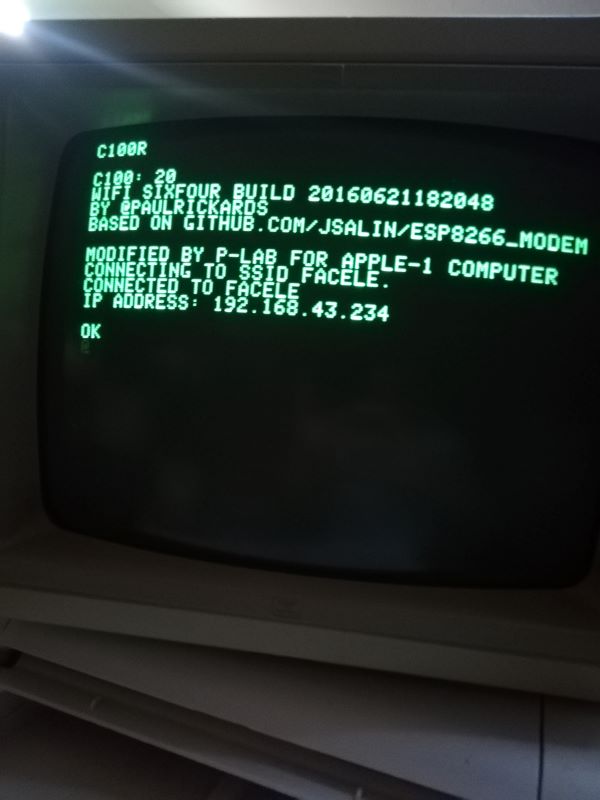
Insert the modem after configuring it for your WiFi network. Type the command C100R after resetting the computer. Check the connection to the previously configured wifi network. Type ATE1R command to get echo of typing.
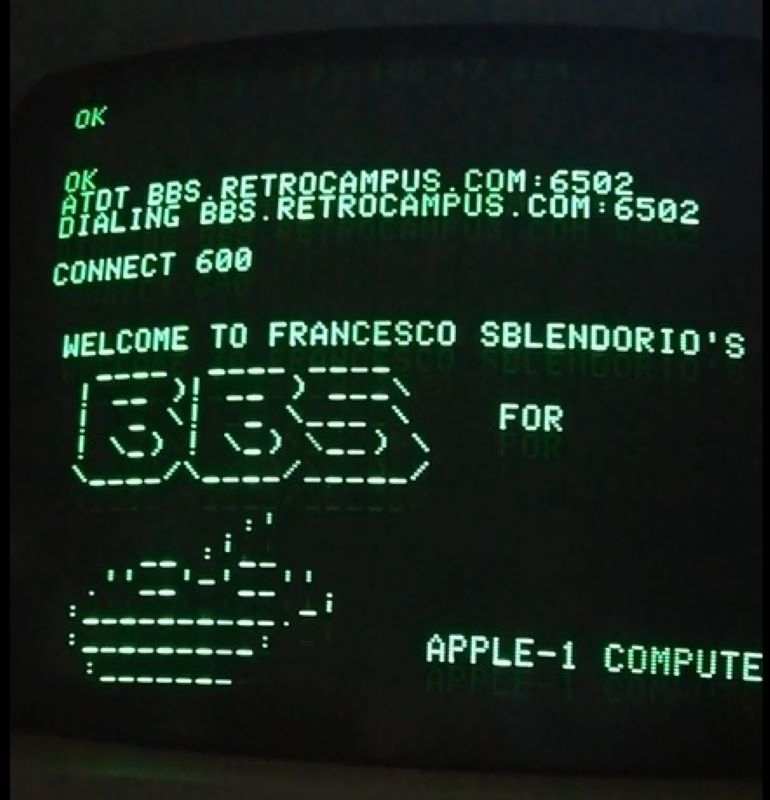 Typing the command ATDT BBS.RETROCAMPUS.COM:6502 will start the connection to Francesco's BBS.
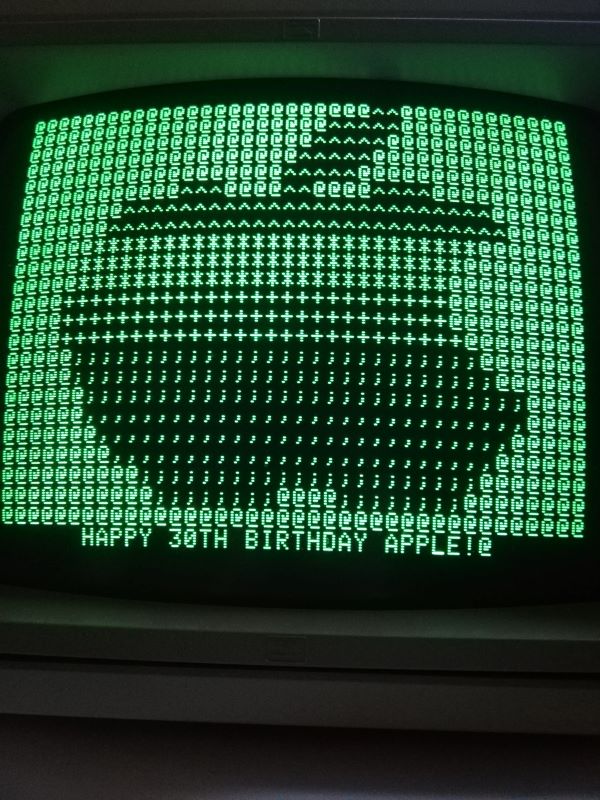
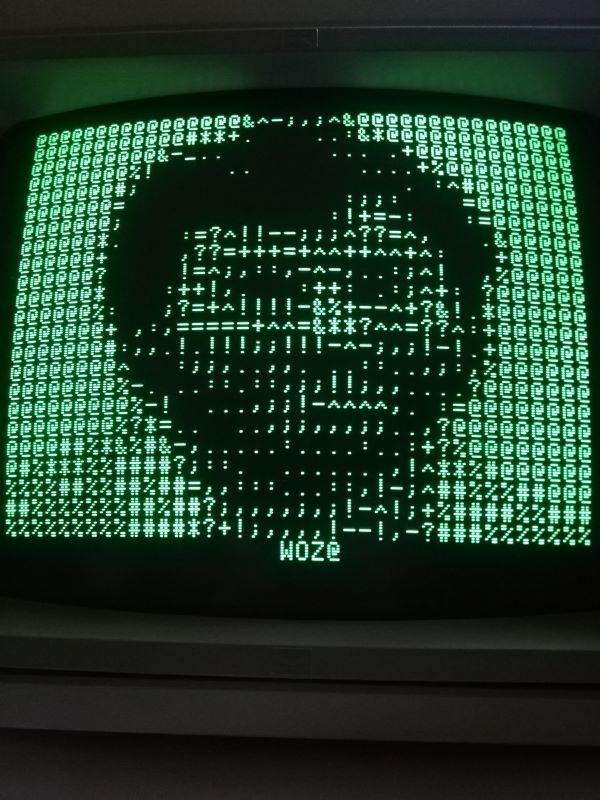
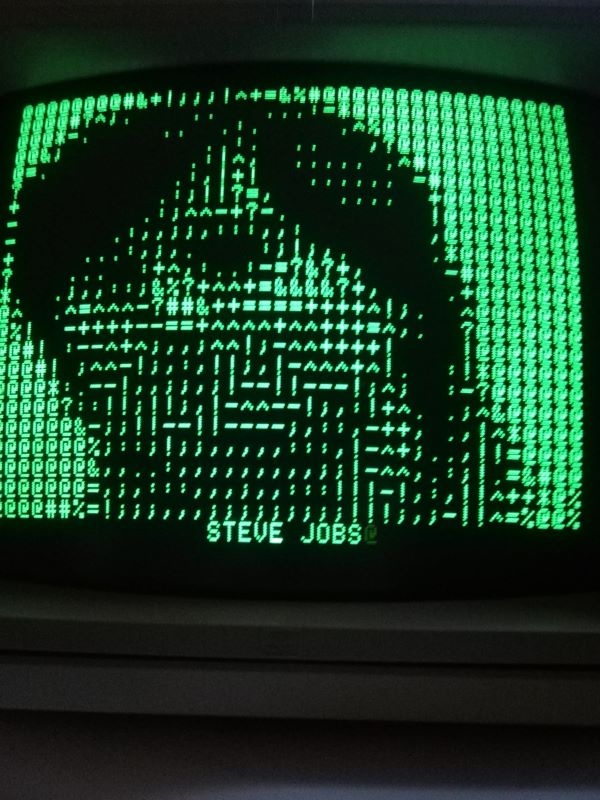
Fiddling with the BBS menus.
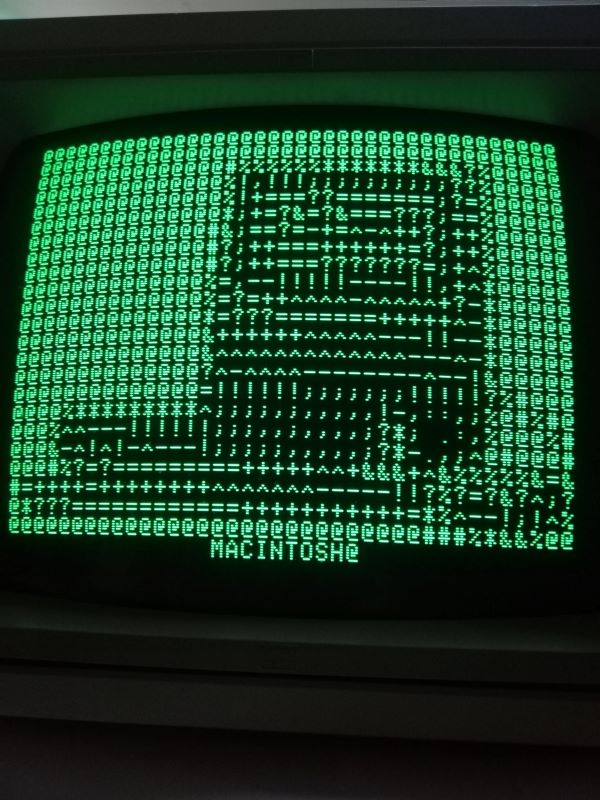
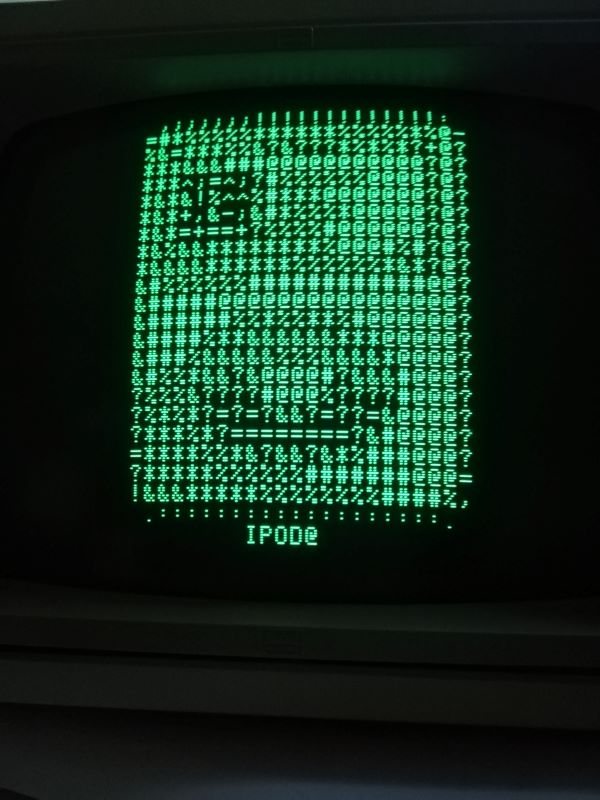
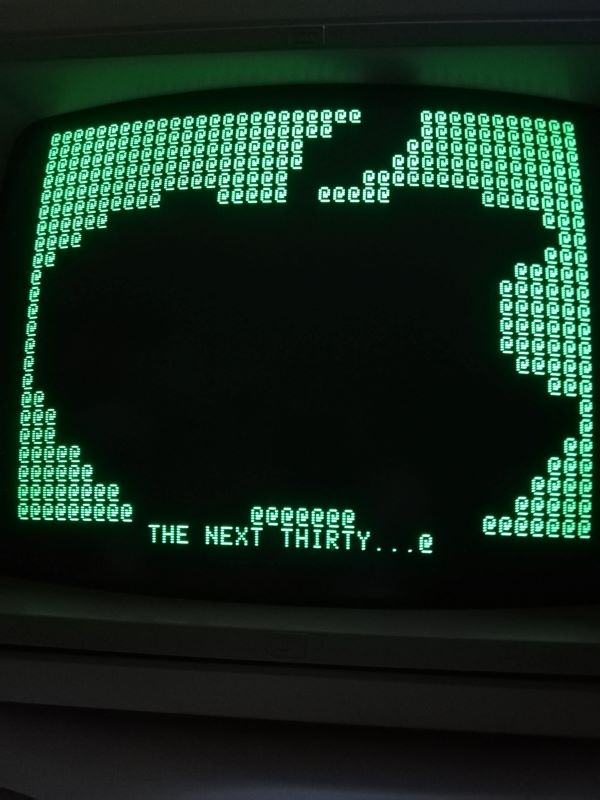
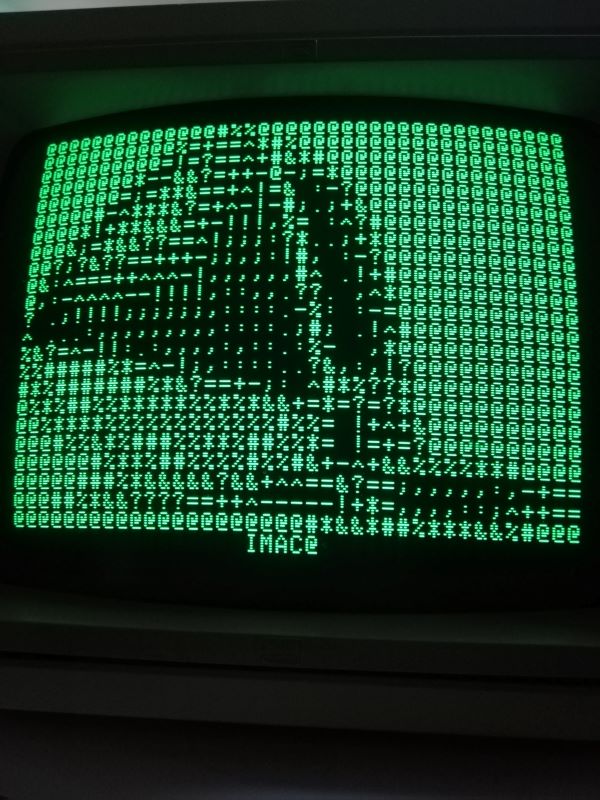
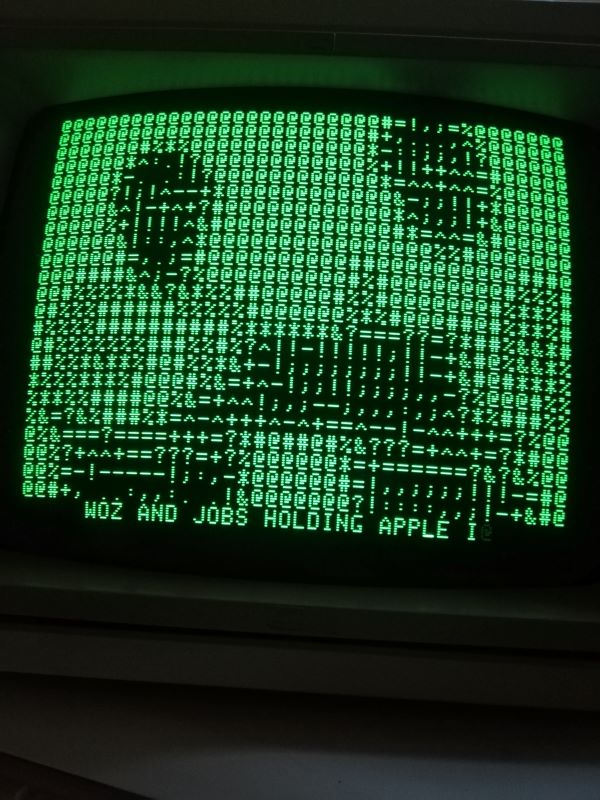
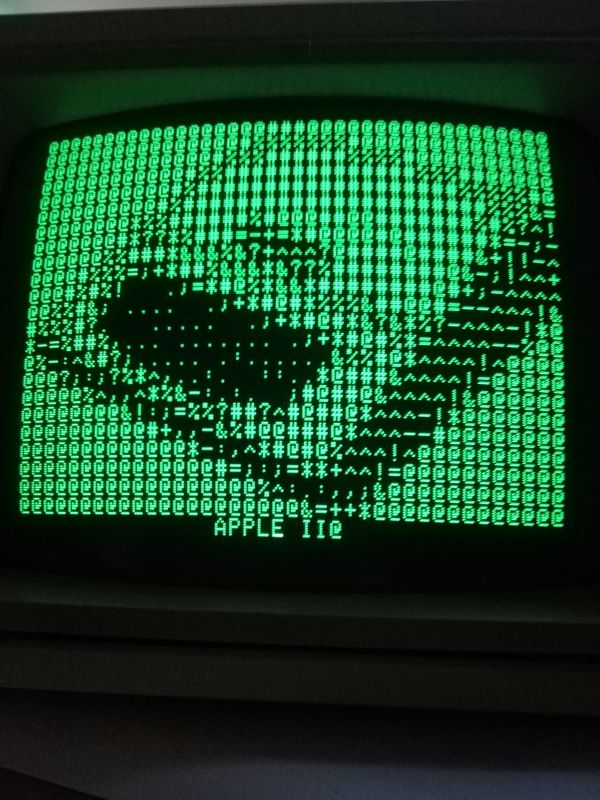
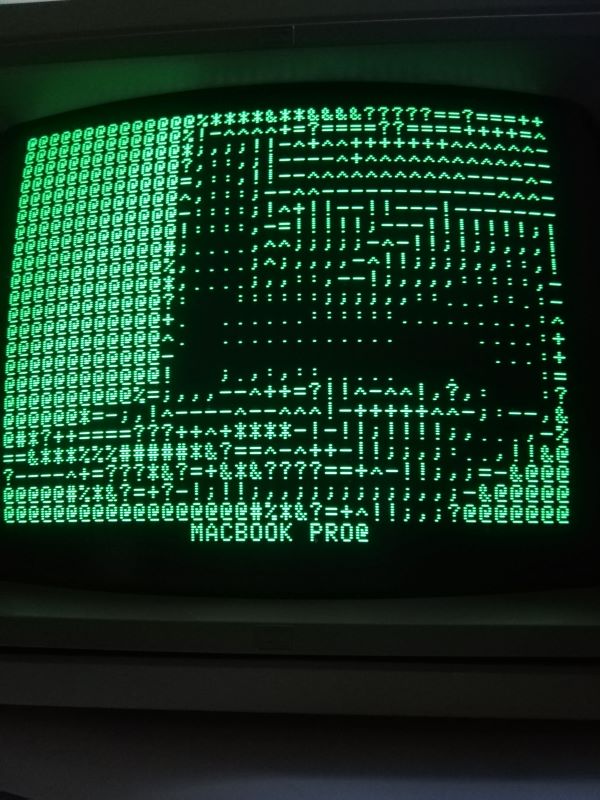
We too have our own page on Francesco's BBS
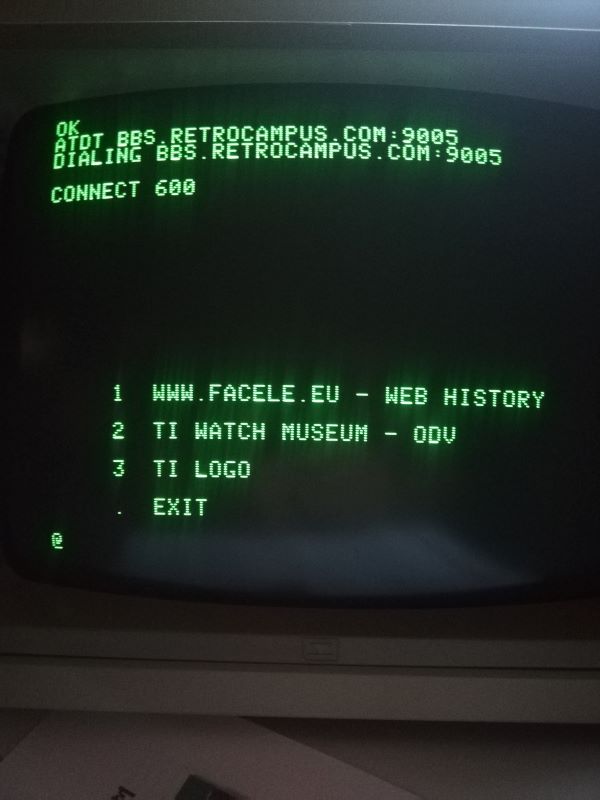
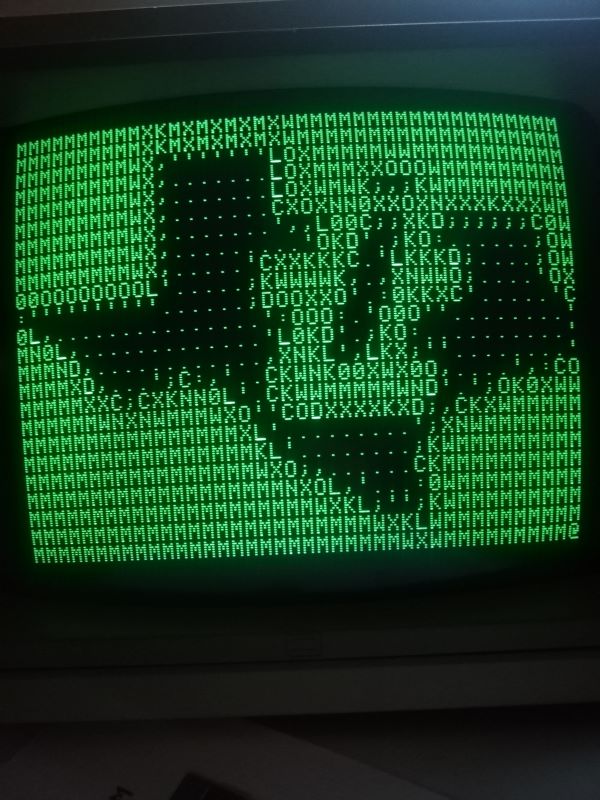 To connect to our page type ATDT BBS.RETROCAMPUS.COM:9005
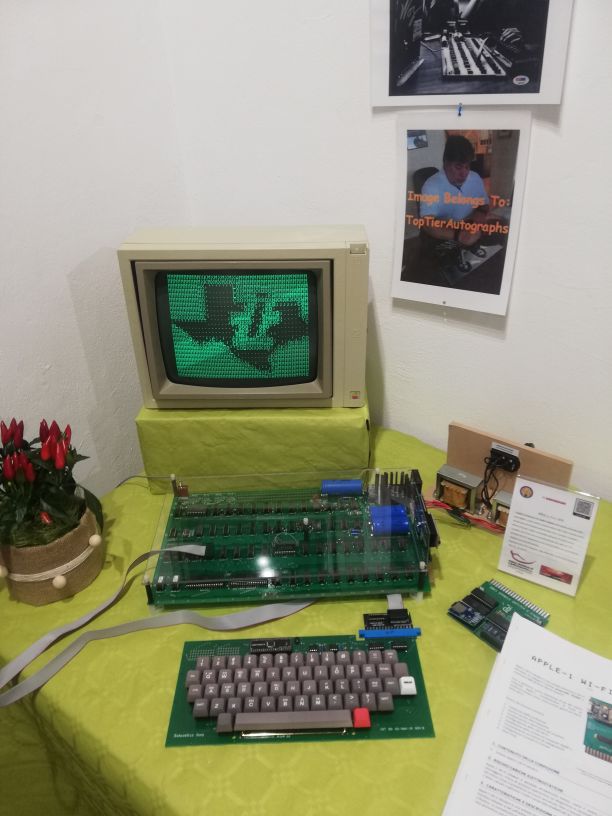
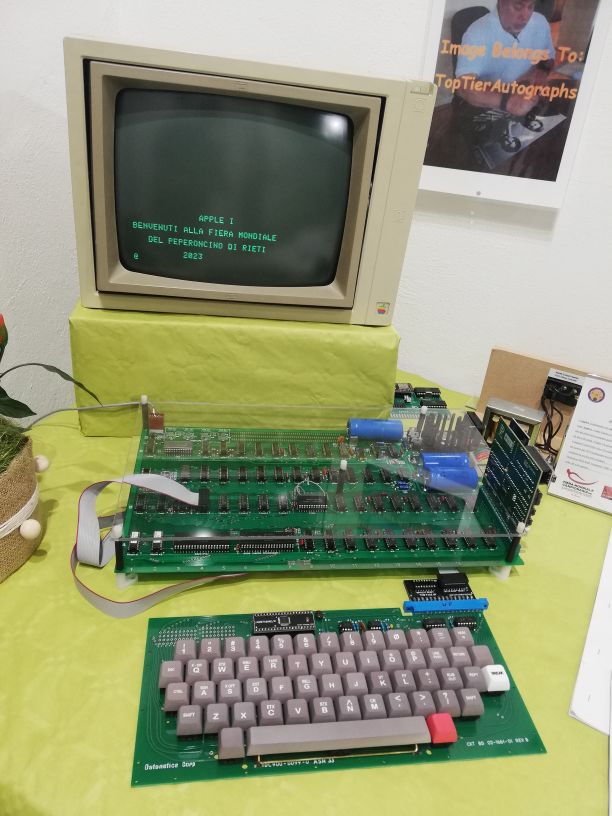 Here are some photos of the 2nd edition dedicated to Texas Instruments in the city of Rieti during the world chilli pepper fair, you can find the photos in the gallery!
Apple Computer 1
Audio Guide
|
|
|
|
Replica of the probable APPLE 1 A prototype. The motherboard is very different from the production units. The 6800 area is populated. There is no switch board above the 74154. No connectors. Orange capacitors. The logo is different. The chips are arranged in the same way as the production units, but the tracking lines are very different. For unknown reasons a change was made. According to the screenshots, the prototype worked.
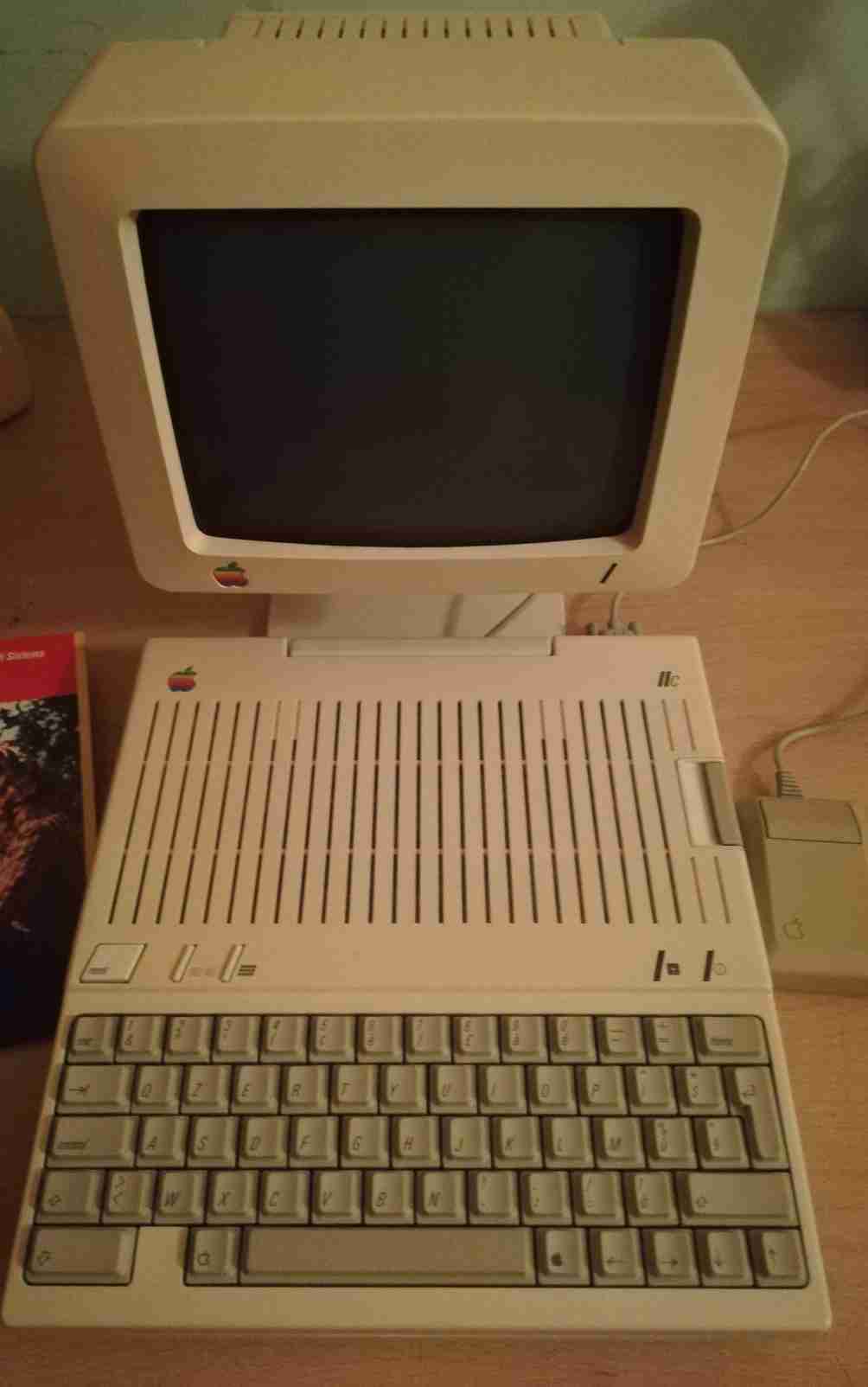 The Apple IIc, the fourth model in the Apple II series of personal computers, is Apple Computer’s first endeavor to produce a portable computer. The result was a 7.5 lb (3.4 kg) notebook-sized version of the Apple II that could be transported from place to place. The c in the name stood for compact, referring to the fact it was essentially a complete Apple II computer setup (minus display and power supply) squeezed into a small notebook-sized housing. While sporting a built-in floppy drive and new rear peripheral expansion ports integrated onto the main logic board, it lacks the internal expansion slots and direct motherboard access of earlier Apple II models, making it a closed system like the Macintosh. However, that was the intended direction for this model — a more appliance-like machine, ready to use out of the box, requiring no technical know-how or experience to hook up and therefore attractive to first-time users.
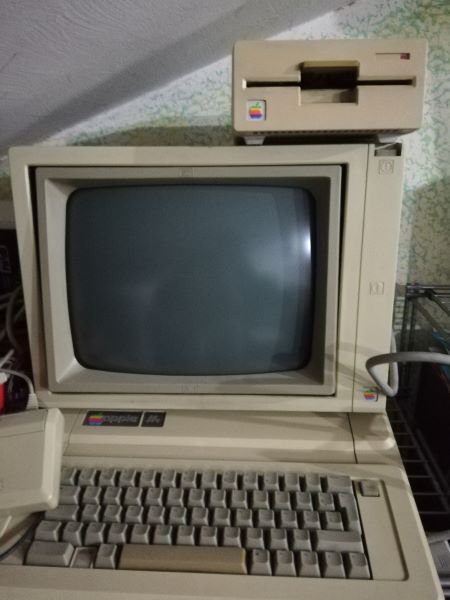 The Apple IIe (styled as Apple //e) is the third model in the Apple II series of personal computers produced by Apple Computer. The e in the name stands for enhanced, referring to the fact that several popular features were now built-in that were formerly only available as upgrades or add-ons in earlier models. Improved expandability combined with the new features made for a very attractive general-purpose machine to first-time computer shoppers. As the last surviving model of the Apple II computer line before discontinuation, and having been manufactured and sold for nearly 11 years with relatively few changes, the IIe earned the distinction of being the longest-lived computer in Apple's history.
 The first generation iPod started the iPod market on October 22, 2001 with the slogan "1000 songs in your pocket". It had a black and white screen, 5GB and a click wheel with a menu button at the top, left and left and right buttons to the sides, a select button in the middle and in between the four buttons and the select button was where users moved their finger around the wheel to go up and down. A 10GB iPod was released on March 20, 2002.
The second generation iPod was released on July 17, 2002. It had the same style as the first generation iPod. At first, 10GB iPod and 20GB iPod were available for $399 and $499 and later a 5GB iPod came out for $299.


Wikipedia Ipod Classic first generation
Apple Computer LISA 2/10
.jpg)
Audio Guide
|
|
|
|
This Lisa XL was recovered with 5x1000 donations !
Apple Computer Lisa 2/10
Lisa Macintosh XL is a modified version of the Apple Lisa personal computer made by Apple Computer. In the Macintosh XL configuration, the computer shipped with MacWorks XL, a Lisa program that allowed 64 K Macintosh ROM emulation. An identical machine was previously sold as Lisa 2/10 with the Lisa OS only. Macintosh XL has a 400K 3.5" floppy drive and an internal 10 MB proprietary "Widget" hard drive with provision for an optional 5 or 10 MB external ProFile hard drive with the addition of a parallel interface card. The machine uses a Motorola 68000 CPU, clocked at 5 MHz together with 512 KB RAM. Macintosh XL was discontinued in April 1985.
New Life with new HD
.jpg) Unfortunately, another thing you have to do with these older systems is replace the hard drive with a newer one. This is where VintageMicros comes in handy.
Unfortunately, another thing you have to do with these older systems is replace the hard drive with a newer one. This is where VintageMicros comes in handy.
Special thanks to John for his help.
Description
The X/ProFile provides an interface between the Apple parallel interface protocol and economical, readily available, and better performing IDE storage devices.
With the X/ProFile you can:
- Utilize economical and readily available IDE hard drives
- Use the Compact Flash socket as the storage media or for backup
- Use the Copy function for backup and experimentation
- Attain a performance boost
In addition, when using the X/ProFile, a much larger drive can be used with some operating systems -- you can use up to:
- 5 MB in Apple /// SOS and Lisa OS 1.0
- 10 MB in Lisa OS 2.0, 3.0, 3.1
- 16 MB in MacWorks XL
- 32 MB in MacWorks Plus 1.0.18 and Apple ][ ProDOS
- 2 GB in MacWorks Plus II
To maintain collector value, when mounting the X/ProFile in an original Apple product, no irreversible modifications are required. The universal form-factor allows mounting:
- internally in a Lisa 2 above the floppy drive
- in an original Apple ProFile case
- in another external case
Standard 40 pin IDE header and mounting holes allow easy installation of:
- a 3.5" hard drive, or
- a 2.5" drive (requires a common IDE cable adapter)
Compact Flash socket can be used for:
- copying data from/to an IDE hard drive for backup/restore and experimentation
- main storage media
.jpg)
.jpg)
.jpg)
Floppy Emulator
.jpg)
.jpg)
.jpg) Let's connect a floppy emulator just remove the cable from the original floppy and connect it to the new one, I have to thank Paolo Cognetti for giving me this floppy emulator, I built a small adapter for the flat cable and, let's load MAcWorks 3.0, it will allow us to use the MAC software with the LISA.
Let's connect a floppy emulator just remove the cable from the original floppy and connect it to the new one, I have to thank Paolo Cognetti for giving me this floppy emulator, I built a small adapter for the flat cable and, let's load MAcWorks 3.0, it will allow us to use the MAC software with the LISA.
.jpg)
.jpg)
We load one of the most played games in the world " Space Invaders ".
TroubleShooting
We finally have a nice Apple Lisa too, this is the 2-10 model
.jpg) The first thing to do is check the power supply, in fact we have replaced all the filter capacitors in both low and high voltage.
The first thing to do is check the power supply, in fact we have replaced all the filter capacitors in both low and high voltage.
.jpg) after a general check of the capacitors of the various CPU, I/O and RAM cards and that there were no obvious faulty or corroded parts, we began testing all the power supplies available.
after a general check of the capacitors of the various CPU, I/O and RAM cards and that there were no obvious faulty or corroded parts, we began testing all the power supplies available.
.jpg)
the main problem these machines suffer from is the breakdown of the boot EPROMs found on the CPU, in fact we have replaced them.
.jpg)
.jpg)
.jpg) a general check was also carried out for the video and CRT part, to make it work we had to close the safety switches located under the front panel and the rear panel.
a general check was also carried out for the video and CRT part, to make it work we had to close the safety switches located under the front panel and the rear panel.
Let's fix the keyboard
.jpg)
.jpg) One problem that plagues this popular computer is the keyboard.
One problem that plagues this popular computer is the keyboard.
.jpg)
.jpg)
After more than 40 years the pads that I know are inside each button have lost their conductivity, here you can see what they look like now!
All the pads need to be replaced, for the replacement we contacted TEXELEC.COM for the purchase.
A very important thing when removing the old pads and inserting the new ones is to pay attention when inserting the new pads inside the button. The button has four plastic tabs that lock the pad, make sure you hear the click.
.jpg) Work finished.
Work finished.
Let's fix Video Card and CRT
.jpg)
Surely after many years it is necessary to replace some capacitors and clean the trimmers with isopropyl alcohol that regulate the CRT video card.
.jpg)
.jpg)
.jpg) Since the keyboard has been repaired, we can enter the service menu by pressing the keys (apple + s) at the same time. Press the 5 key to get the reticle.
Since the keyboard has been repaired, we can enter the service menu by pressing the keys (apple + s) at the same time. Press the 5 key to get the reticle.
.jpg)
 The trimmers once cleaned with alcohol, must be calibrated, for ease mark the initial position. For this operation you need an alignment grid, apple code 077-8043.
( R5 - contrast ), ( R34 - horizantal phase ), ( R-22 height ), ( R19 - vertical hold ), ( R2 - width ), ( R31- vertical linearity )
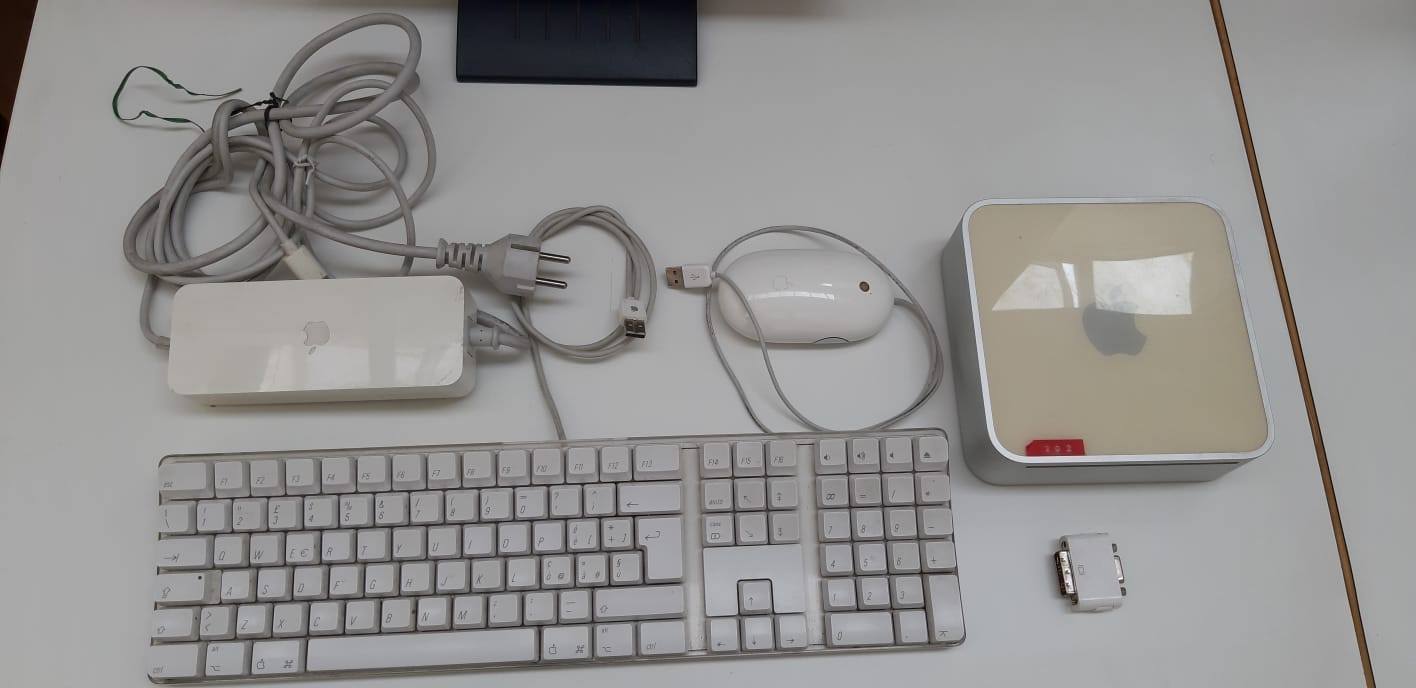
The Mac Mini (stylized as Mac mini) is a small form-factor desktop computer developed and marketed by Apple Inc, positioned betwees only consumer desktop computer since 2005 to ship without a display, a keyboard, and a mouse. The machine was initially branded it as BYODKM (Bring Your Own Display, Keyboard, and Mouse), as a deliberate strategic process to pitch users to switch from PC running other operating systems such as Microsoft Windows and Linux.
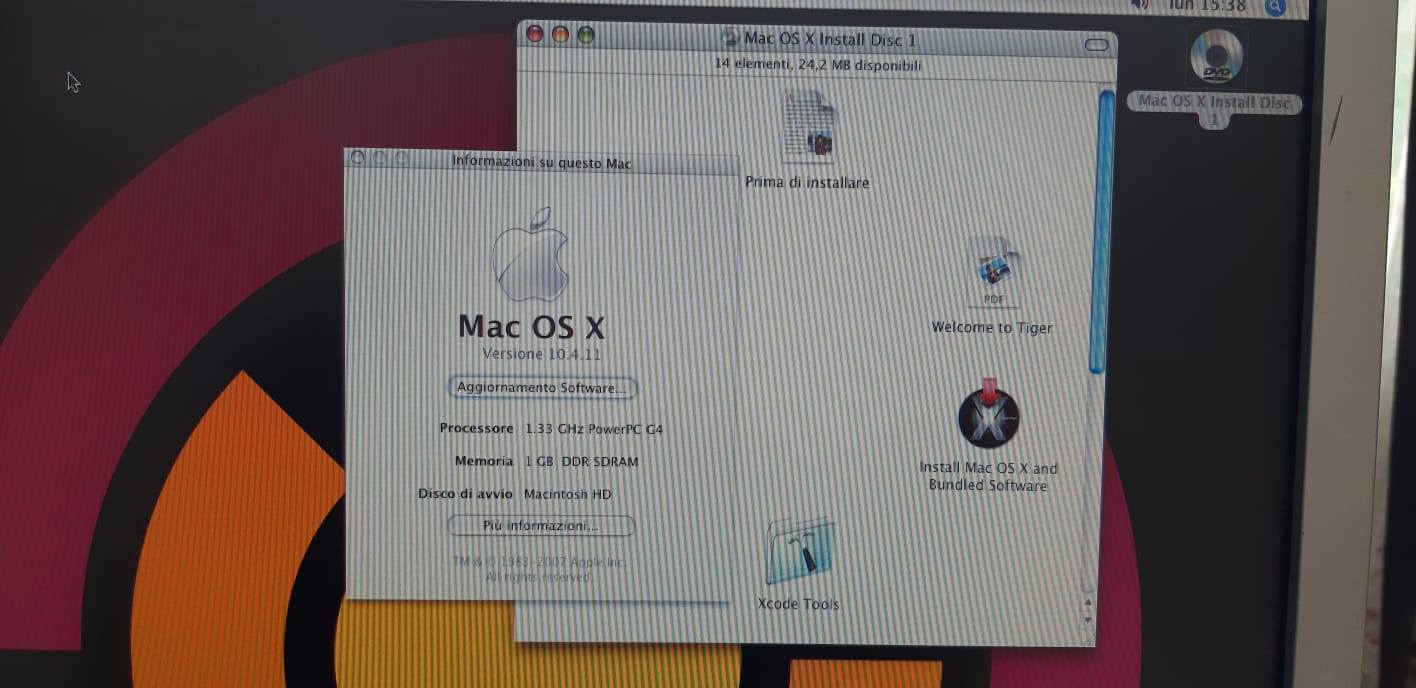
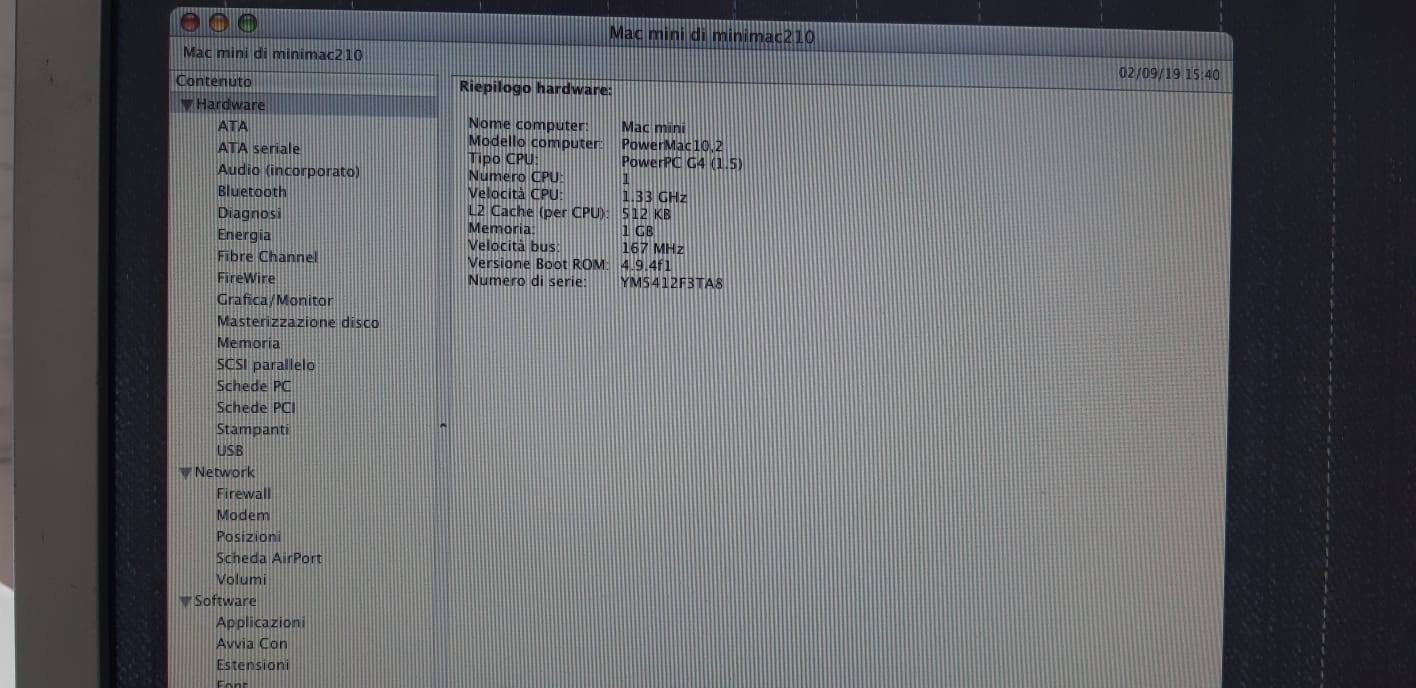
The original Mac Mini was introduced in January 2005 as a base model to PowerPC G4 architecture. Announced in February 2006, the second-generation lineup featured advanced components and numerous internal software updates. The third-generation, unveiled in June 2010, brought forth a thinner unibody aluminum case and an HDMI port, more readily positioning it as a home theater device alternative to the Apple TV.
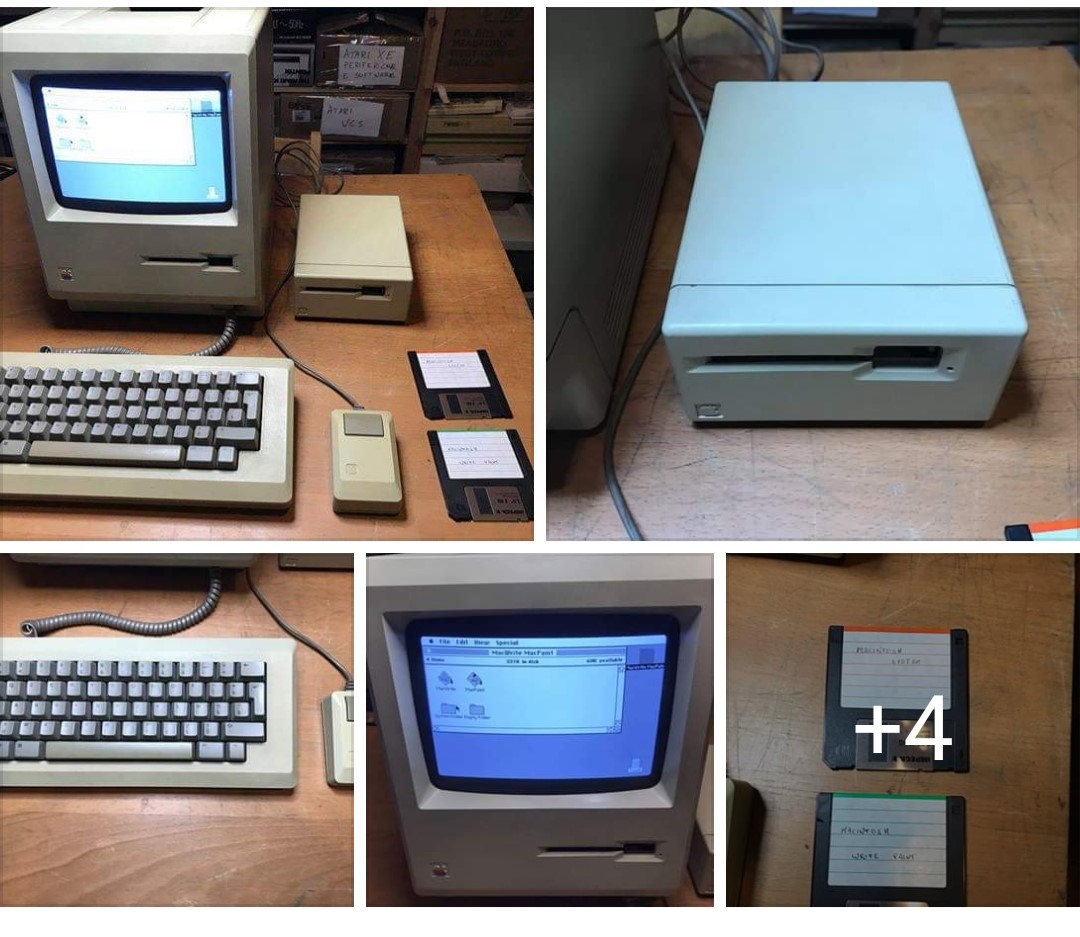 The Macintosh 512K is a personal computer manufactured by Apple and marketed from September 10, 1984 to April 14, 1986. The Macintosh 512K is the second computer (in order of time) of the Macintosh family and belongs to the first series of the classic Macintosh: it was presented as an update of the first Macintosh and has been replaced by the Macintosh 512K.
| Type | In | Out | Type | TI calculators | BP |
| AC9100 | 120V | 8.0V 160mA | DC | TI-2500 Version 1 | |
| AC9110 | 120V | 7.5V 325mA | AC | TI-2500 Version 2 | |
| AC9120 | 120V | 6.9V 200mA | DC | TI-2510, (TI-2500 Version 3, TI-2500B, TI-2550 using 4*AA alkaline) | |
| AC9130 | 120V | 8.2V 225mA or 6.9V 100mA |
AC | TI-2500 Version 3, TI-2500B, TI-2500-II SR-10, SR-11, SR-50, SR-50A, SR-51, SR-51A, SR-52, SR-56, TI-2550, TI-2550 II |
3*AA NiCd, BP1, BP1A, BP2, BP3 |
| AC9130A | 120V | 5.6V 200mA | AC | SR-16, SR-50A, SR-51A, SR-52, SR-56, TI-2550 II, TI-2550 III | 3*AA NiCd, BP1, BP1A, BP2, BP3 |
| AC9130SW | 120/240V | 8.4V 225mA | AC | TI-2500 Version 3, TI-2500B, TI-2500-II SR-10, SR-11, SR-50, SR-50A, SR-51, SR-51A, SR-52, SR-56, TI-2550, TI-2550 II, TI-2550 III |
3*AA NiCd, BP1, BP1A, BP2, BP3 |
| AC9131 | 120V | 3.3V 500mA | AC | TI-1600, TI-1650, TI-1680, SR-51-II, TI-57 (1977), TI-58, TI-58C, TI-59 1976-1977: SR-40, TI-30, TI-31, BA |
BP1, BP1A, BP5, BP6, RK1 |
| AC9131A | 240V | 5.0V 250mA | AC | TI-1600, TI-1650, TI-1680, SR-51-II, TI-57 (1977), TI-58, TI-58C, TI-59 1976-1977: SR-40, TI-30, TI-31, BA |
BP1, BP1A, BP5, BP6, RK1 |
| AC9132 | 120V | 5.7V 240mA | AC | TI-1680, TI-51-III, TI-55, TI-57 (1978), TI-41, TI-42 MBA, MBA 1978-1981: SR-40, TI-15, TI-30, TI-31, TI-33, TI-45, BA, BA1, Money Manager, Programmer |
BP7, BP8, RK2 |
| AC9132A | 240V | 7.0V 200mA | AC | TI-1680, TI-51-III, TI-55, TI-57 (1978), TI-41, TI-42 MBA, MBA 1978-1981: SR-40, TI-15, TI-30, TI-31, TI-33, TI-45, BA, BA1, Money Manager, Programmer |
BP7, BP8, RK2 |
| AC9133 | 120V | 5.7V 240mA | AC | TI-88 | BP88 |
| AC9140 | 120V | 6.0V 175mA 6.9V 100mA | AC | TI-1500 | |
| AC9150 | 120V | 8.0V 100mA | AC | TI-150 | |
| AC9160 | Exactra 22, Exactra 23 | ||||
| AC9170 | 120V | 11.0V 140mA | DC | TI-5050 | |
| AC9171 | 120V | 12.5V 265mA | AC | TI-5050M, TI-5100, TI-5200 | |
| AC9172 | 120V | 12.5V 265mA | AC | TI-5025 | |
| AC9175 | 120V | 6.0V 500mA | DC | TI-5000, TI-5005 (II), TI-5006, TI-5006II, TI-5008, TI-5019, TI-5024, TI-5027 (II), TI-5029, TI-5030, TI-5030 II, TI-5032, TI-5032 SVC, TI-5033 (II), TI-5033 SV, TI-5035 (II), TI-5048, TI-5128 | |
| AC9180 | 120V | 9.5V 50mA 9.0V 10mA | DC | SR-16-II, TI-1000, TI-1025, TI-1050, TI-12xx, TI-14xx | n.a. |
| AC9182 | 120V | 8.3V 10mA | DC | TI-30 | |
| AC9199 | 120V | 6.0V 285mA | DC | TI Language Teacher, Speak & Spell series | |
| AC9200 | 115/230V | 8.0V 100mA | AC | TI-2500 Version 3 SR-10, SR-11, SR-16, SR-50, SR-51 |
3*AA NiCd, BP1 |
| AC9201 | 120V | 6.0V 350mA | DC | CC-40, PC-200, PC-324, TI-5010, TI-5024, TI-5029, ViewScreen | |
| AC9201E | 220V | 6.0V 350mA | DC | CC-40, PC-200, C-324, TI-5010, TI-5024, TI-5029, ViewScreen | |
| AC9203 | 120V | 9.0V 700mA | DC | HX-1000, HX-3100 | |
| AC9211U | 100-240V | 5.0V 1000mA | DC | HTI-Nspire CX, TI-84 PLUS C S.E. | |
| AC9222 | 120/240V | 5.8V 1.2A | DC | SR-22 | BP200 |
| AC9250 | 120V | 6.0V 500mA | DC | TI-5006II, TI-5019, TI-5032 SVC | |
| AC9350 | 120V | 6.0V 500mA | DC | TI-5006II, TI-5019, TI-5032 SVC, TI-5033 SV | |
| AC9400 | 120V | 6.0V 500mA | DC | TI-5006II, TI-5019, TI-5032 SVC, TI-5033 SV | |
| AC9401 | 120V | t.b.d. | DC | HX-1010 | |
| AC9460 | 120/240V | 6.0V 500mA | DC | Vocaid | |
| AC9610 | 120/240V | 21.0V 2150mA | AC | HX-5102 | |
| AC9470 | 120/240V | 5.5V 300mA | DC | TI-5027 II | |
| AC9900 | AC | SR-10, SR-11, SR-16, SR-50, SR-51 | 3*AA NiCd, BP1 | ||
| Type C | 220-240V | TI-2500 Version 2, TI-2550 (Remark: Maybe switched to 125V) | |||
| AC9900/A | 220V | 8V 50mA | DC | SR-16-II, TI-1000, TI-1025, TI-1050, TI-12xx, TI-14xx | n.a. |
| AC9900/B | 220V | 10.0V 170mA | AC | SR-50A, SR-51A, SR-52, SR-56 | BP1, BP1A |
| AC9900/C | 220V | 6.0V 175mA | AC | TI-1500 | |
| AC9900/E | 220V | 7.0V 170mA | AC | TI-2500 Version 3, TI-2500B, TI-2500-II SR-10, SR-11, SR-50, SR-50A, SR-51, SR-51A, SR-52, SR-56, TI-2550 II, TI 2550 III |
3*AA NiCd, BP1, BP1A, BP2, BP3 |
| AC9900/G | 220V | 12.5V 265mA | AC | TI-5050M, TI-5100, TI-5200 | |
| AC9900/H AC9900/Ht |
220V | 6.2V 200mA | AC | TI-1600, TI-1650, TI-2550-IV, SR-51-II, TI-57 (1977), TI-58, TI-58C, TI-59 1976-1977: SR-40, TI-30, TI-31, BA |
??, BP1A, BP4, BP5, BP6, RK1 |
| AC9900/R | 220V | 8.5V 120mA | AC | TI-51-III, TI-55, TI-57 (1978), TI-41, TI-42 MBA, MBA 1978-1981: SR-40, TI-15, TI-30, TI-31, TI-33, TI-45, BA, BA1, Money Manager, Programmer |
BP7, BP8, RK2, RK3 |
| AC9900/T | TI-5140, TI-5142 | ||||
| AC9900/T2 | 220V | 7.0V 200mA | AC | TI-5120, TI-5130, TI-5142-III | |
| AC9900/Z1 | TI-5008 | ||||
| AC9900/Z3 | 220V | 6.0V 350mA | DC | TI-5010, TI-5024, TI-5029 | |
| AC9920 | 120/220V | 6.0V 2000mA | DC | TI-Presenter | |
| AC9930 | 120/220V | 6.0V 2000mA | DC | TI-Presenter | |
| AC9940 | 120/220V | 6.0V 4000mA | DC | TI-Nspire Docking Station, Charging Bay | |
| DC9105 | 13.5V | 5.5V 300mA | DC | SR-52, TI-58, TI-59 | BP1, BP1A |
| DC9900/H | 12-28V | 6.1V 240mA | DC | TI-58, TI-59 | BP1, BP1A |
| Name | Type | Voltage | Capacity | Height | Diameter | Weight | Alternatives |
| AAAA | Alkaline | 1.5 V | 595 mAh | 42.5 mm | 8.3 mm | 6.0 grams | MN2500 |
| AAA | Alkaline | 1.5 V | 1100 mAh | 44.5 mm | 10.5 mm | 11.5 grams | LR03, AM4, MN2400 |
| AA | Alkaline | 1.5 V | 2600 mAh | 50.5 mm | 14.5 mm | 23.0 grams | LR06, AM3, MN1500 |
| C | Alkaline | 1.5 V | 7800 mAh | 50.0 mm | 26.2 mm | 61 grams | LR14, AM2, MN1400 |
| D | Alkaline | 1.5 V | 16500 mAh | 61.5 mm | 34.2 mm | 134 grams | LR20, AM1, MN1300 |
| N | Alkaline | 1.5 V | 1000 mAh | 30.2 mm | 12.0 mm | 11.0 grams | LR1, AM5, MN1900 |
| 9-Volt | Alkaline | 9.0 V | 500 mAh | 48.5 mm | 27*18 mm | 46 grams | 6LR61, AM6, MN1604 |
| LR41 | Alkaline | 1.5 V | 35 mAh | 3.6 mm | 7.9 mm | 1.0 grams | Ucar 192, G3A |
| LR43 | Alkaline | 1.5 V | 80 mAh | 4.2 mm | 11.6 mm | 1.6 grams | Ucar 186, RW 84 |
| LR44 | Alkaline | 1.5 V | 115 mAh | 5.4 mm | 11.6 mm | 1.8 grams | Ucar 157/A, RW 82 |
| LR54 | Alkaline | 1.5 V | 50 mAh | 3.0 mm | 11.6 mm | 1.1 grams | LR1130, Ucar 189, RW 89 |
| LR55 | Alkaline | 1.5 V | 25 mAh | 2.1 mm | 11.6 mm | 0.8 grams | LR1120, Ucar 191, RW 80 |
| SR41 | Silver-oxide | 1.5 V | 42 mAh | 3.6 mm | 7.9 mm | 1.0 grams | S736, V392 |
| SR44 | Silver-oxide | 1.5 V | 175 mAh | 5.4 mm | 11.6 mm | 1.8 grams | S76, V357 |
| SR55 | Silver-oxide | 1.5 V | 67 mAh | 2.1 mm | 11.6 mm | 0.8 grams | SR1120 |
| CR1216 | Lithium | 3.0 V | 25 mAh | 1.6 mm | 12.5 mm | 0.7 grams | BR1216 |
| CR1220 | Lithium | 3.0 V | 35 mAh | 2.0 mm | 12.5 mm | 0.8 grams | |
| CR1616 | Lithium | 3.0 V | 55 mAh | 1.6 mm | 16.0 mm | 1.2 grams | BR1616 |
| CR1620 | Lithium | 3.0 V | 60 mAh | 2.0 mm | 16.0 mm | 1.2 grams | DL1620 |
| CR2016 | Lithium | 3.0 V | 90 mAh | 1.6 mm | 20.0 mm | 1.8 grams | DL2016, LF-1/4V |
| CR2025 | Lithium | 3.0 V | 170 mAh | 2.5 mm | 20.0 mm | 2.5 grams | DL2025 |
| CR2032 | Lithium | 3.0 V | 230 mAh | 3.2 mm | 20.0 mm | 3.0 grams | DL2032, LF-1/2V |
| CR2320 | Lithium | 3.0 V | 135 mAh | 2.0 mm | 23.0 mm | 2.9 grams | BR2320 |
| CR2420 | Lithium | 3.0 V | 135 mAh | 2.0 mm | 24.0 mm | 3.0 grams | LF-1/3W |
| CR2430 | Lithium | 3.0 V | 280 mAh | 3.0 mm | 24.5 mm | 4.0 grams | DL2430, LF-1/2W |
| CR2450 | Lithium | 3.0 V | 560 mAh | 5.0 mm | 24.5 mm | 6.2 grams | |
| LR1 | Alkaline | 1.5 V | mAh | 12.0 mm | 30.2 mm | 10.0 grams | MN9100, LR1A |
| Type | Cells | Voltage | TI calculators | Charger |
| BP1 | 3*AA | 3.6V | SR-50, SR-51 | AC9200 AC9900 |
| BP1A | 3*AA | 3.6V | BP1 could be replaced with BP1A SR-50A, SR51A, SR52, SR56 TI-58, TI-58C, TI-59 |
AC9130 AC9900/E AC9131 AC9900/H |
| BP2 | 2*AA | 2.4V | TI-2550 II | AC9130 AC9900/E |
| BP3 | 1*AA | 1.2V | TI-2550 III | AC9130A AC9900/E |
| BP4 | 2*AA | 2.4V | TI-2550-IV | AC9900/H |
| BP5 | 1*AA | 9V | 1976-1977: SR-40, TI-30, TI-31, BA RK1 (Rechargeable Kit introduced 1976) |
AC9131 AC9900/H |
| BP6 | 2*AA | 2.4V | SR-51-II, TI-57 (1977) | AC9131 AC9900/H |
| BP7 | 2*AA | 9V | TI-51-III, TI-55, TI-57 (1978), TI-42 MBA, MBA | AC9132 AC9900/R |
| BP8 | 2*AA | 9V | 1978-1981: SR-40, TI-15, TI-30, TI-31, TI-33, TI-41, TI-45, BA, BA1, Money Manager, Programmer RK2 (Rechargeable Kit introduced 1976), RK3 (European Version) |
AC9132 AC9900/R |
| BP9 | 2*AA | 9V | TI-45 | |
| BP88 | 1*AA | 1.2V | TI-2550-IV | AC9133 |
| BP200 | 4*D | 4.8V | SR-22 | AC9222 |
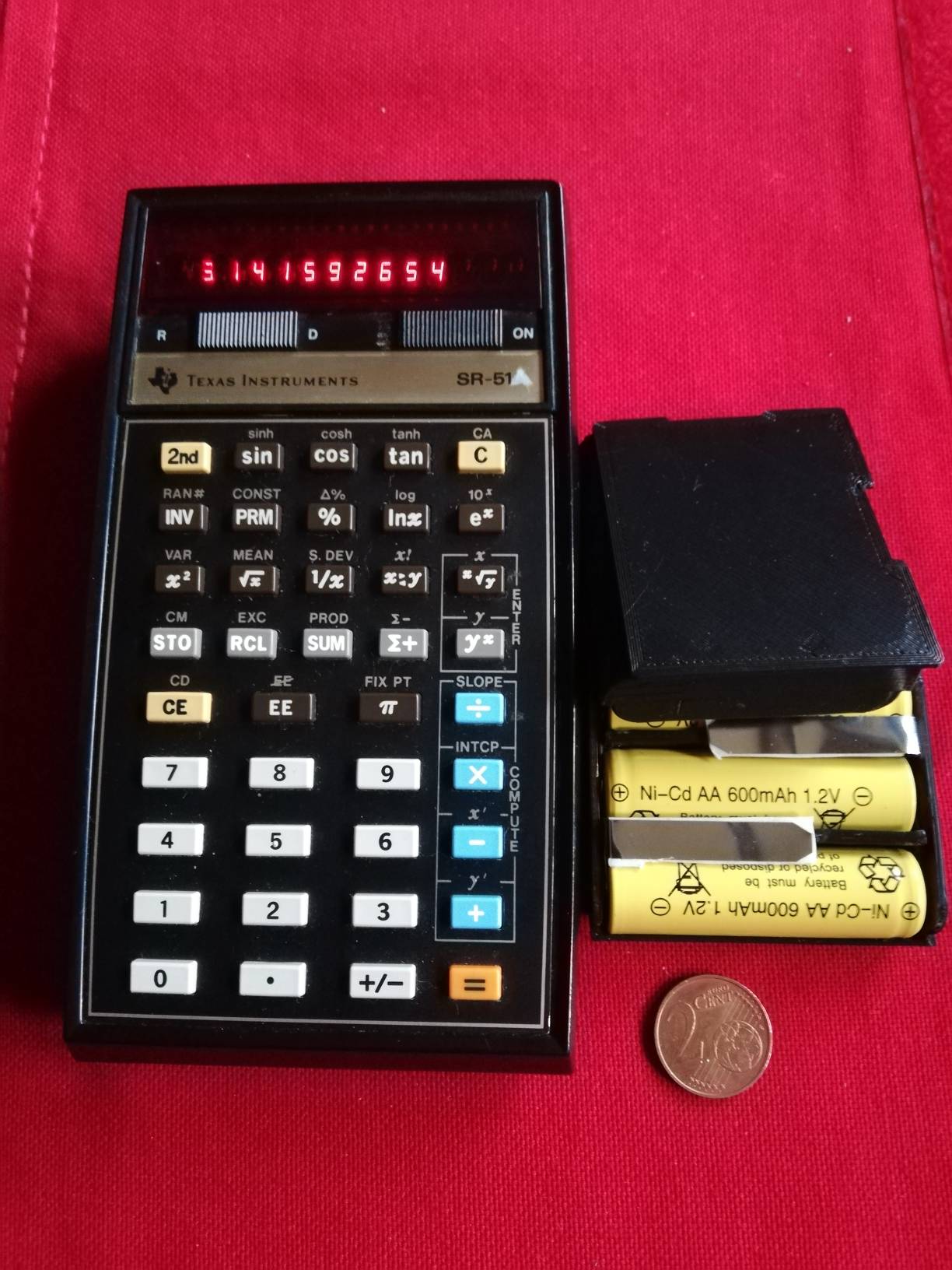 Description: New battery pack with black 3D printed cover, but you can ask for a color other than black!
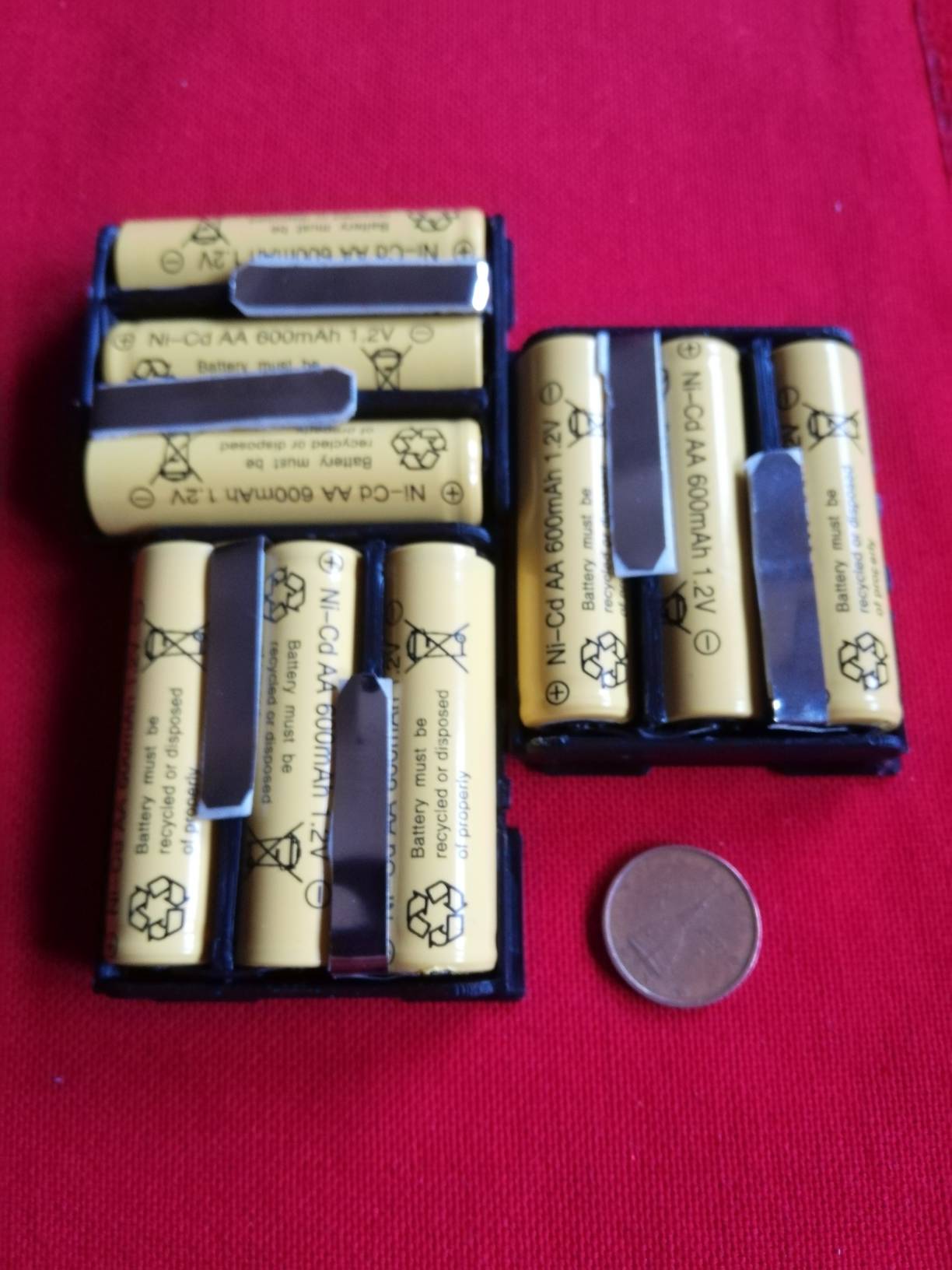
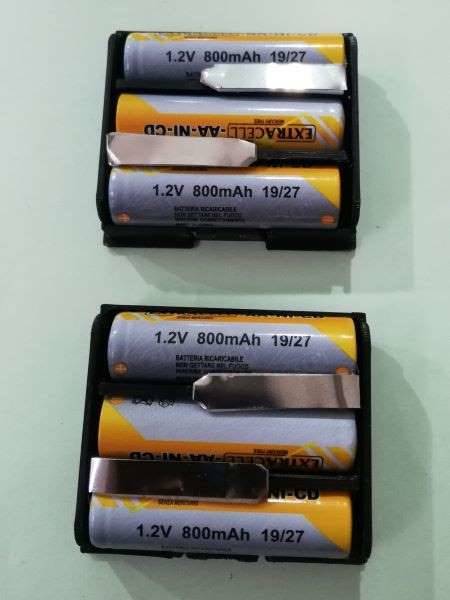 There are two types of batteries, the 600 or 800 mA NI-CD and the 1800 mA NI-MH.
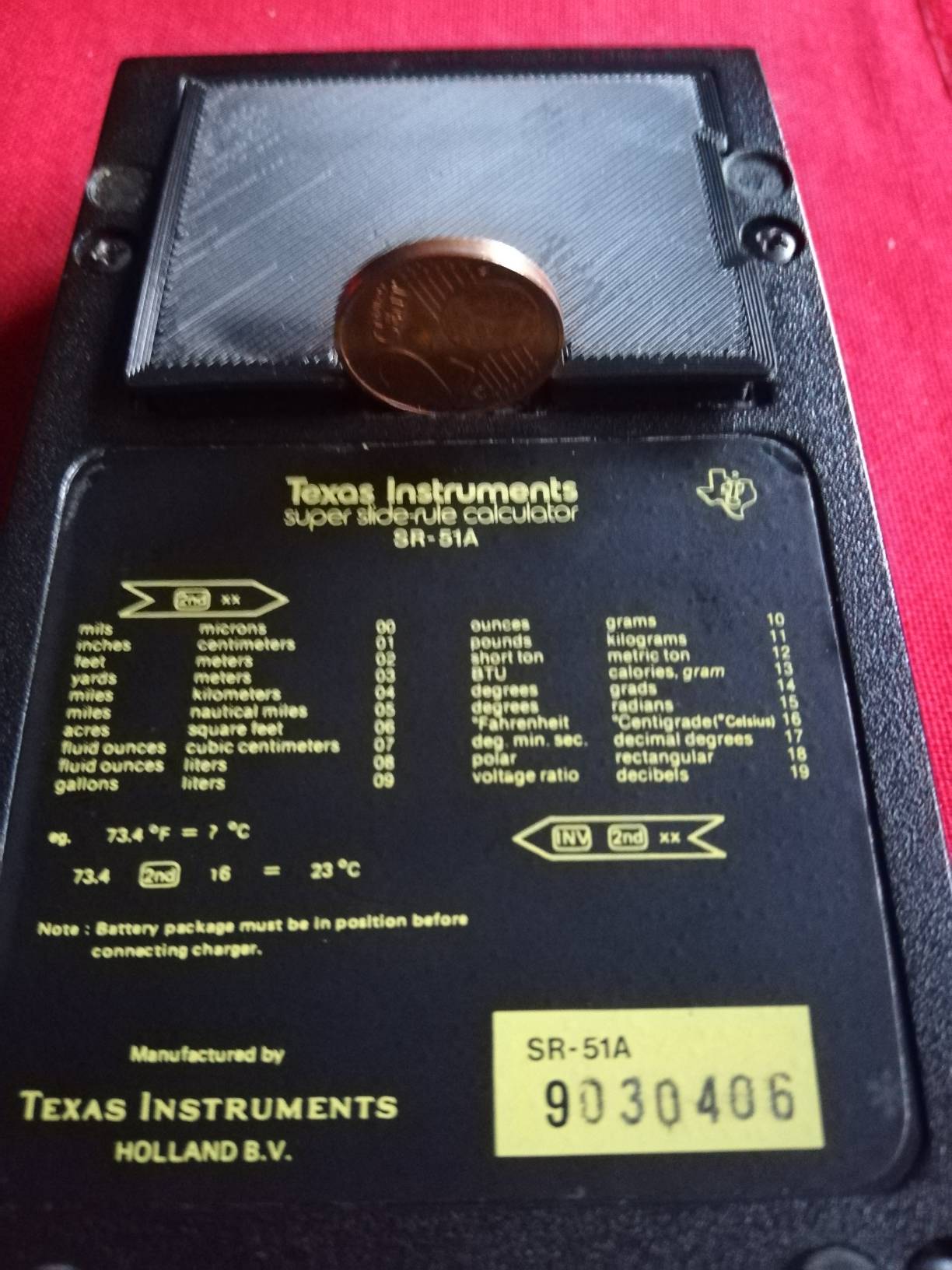 It is important to use a 2 cent coin or similar, in order to reduce the risk of breaking the hook tab!
Calculators that use these Battery Packs are:
BP1 ( SR-50, SR-51)
BP1A ( SR-50A, SR51A, SR52, SR56, TI-58, TI-58C, TI-59 )
Description: Our cover can be used to replace BP-6, BP-7, BP-8, BP-9 battery packs, but using a 9 volt battery. It was .jpg) designed and built to give new life to your beloved calculators! The new cover is built with the non-toxic material called PLA using 3D printing, the color is black, but you can have other colors such as red and transparent. It can be used with the following calculators:
designed and built to give new life to your beloved calculators! The new cover is built with the non-toxic material called PLA using 3D printing, the color is black, but you can have other colors such as red and transparent. It can be used with the following calculators:
(SR-51-II, TI-57(1977), TI-51-III, TI-55, TI-57 (1978), TI-42 MBA, MBA)
( TI-15, TI-30, TI-31, TI-33, TI-41, TI-45, BA, BA1, Money Manager,TI- Programmer, TI-45)
The most important thing for inserting and removing the cover from the compartment from the calculator is the use of a 2 cent coin. VERY IMPORTANT not to break the hook tab!
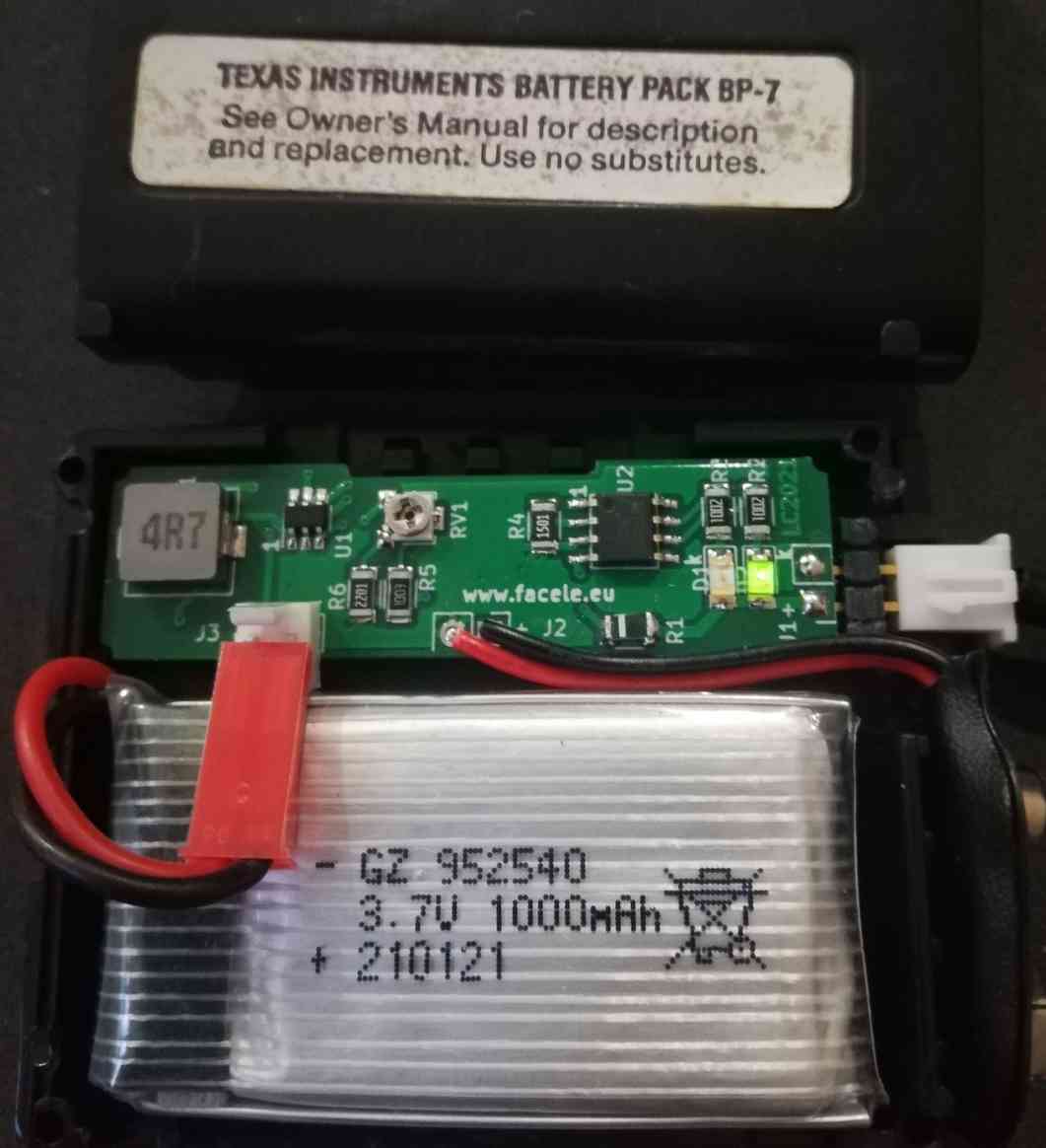
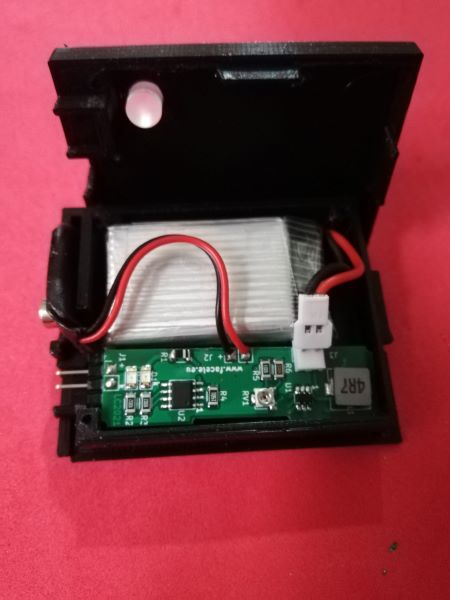 Description: This circuit with its 3d printed case, can be used to replace the original BP7 - BP8 - BP9.
Calculators that use these Battery Packs are
BP7 ( TI-51-III, TI-55, TI-57, TI-42 MBA, MBA )
BP8 ( SR-40, TI-15, TI-30, TI-31, TI-33, TI-41, TI-45, BA, BA1, Money Manager, Programmer )
BP9 ( TI-45 )
The calculators listed were produced in the 70s and 80s, almost all of their accumulators have become defective. Texas Instruments has called their BP (Battery Packs) leak-proof. In fact all the liquid that comes out of the cells does not come out of the BP, but remaining inside destroys all the contents !
The two batteries used in the older BPs are AA size and have a nominal capacity of around 500mAh. The new BP uses a 3,7 volt 1000 mah LI-PO battery, and a PCB that performs a specific check / recharge for this type of battery, there is also a STEP-UP circuit necessary to supply a voltage of 9 volts for the operation of the Calculators.
What will come to you if you decide to take it
1- PCB and Cover 3D, with all components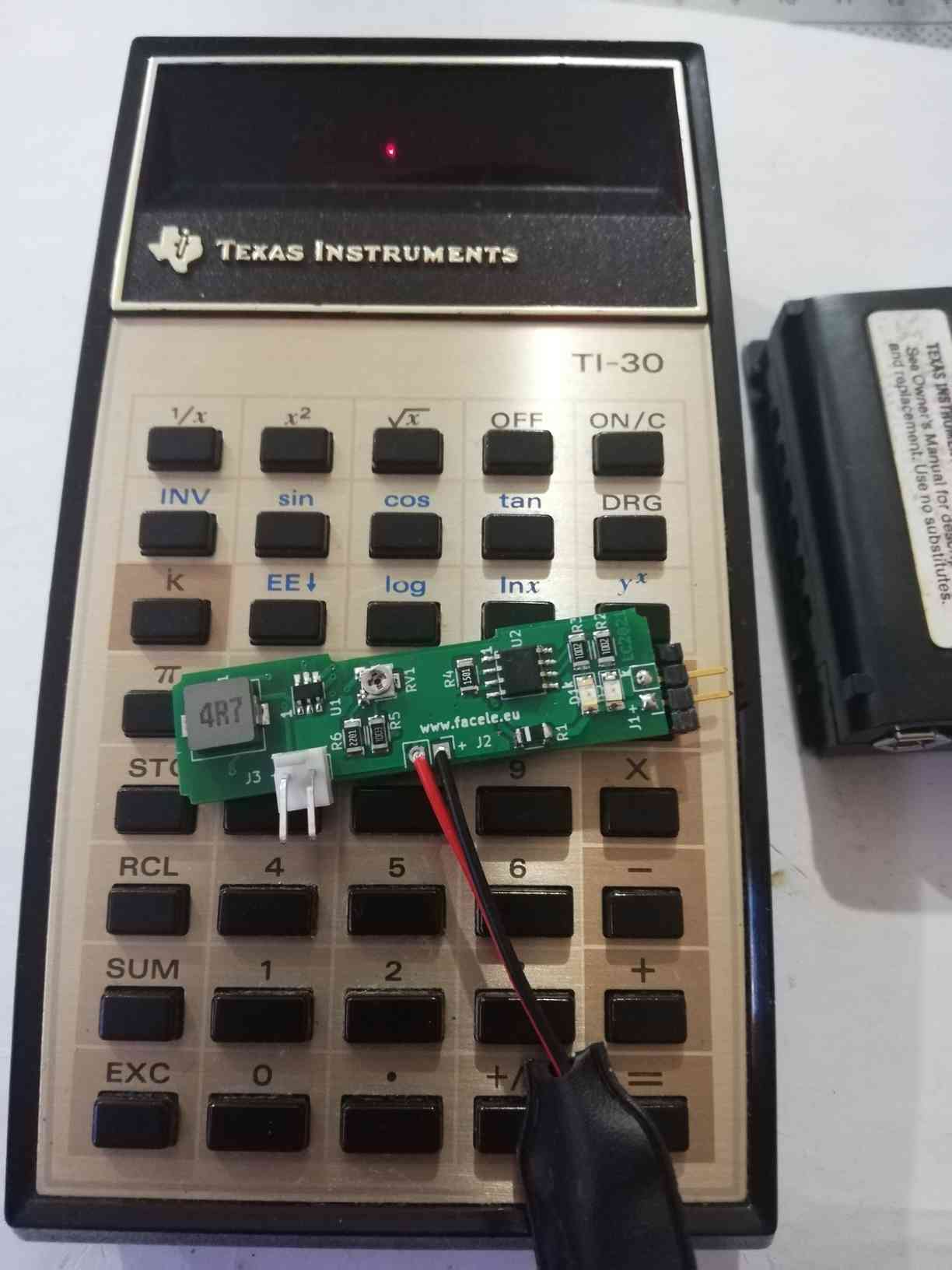
2- Li-PO 800/1000 mah battery 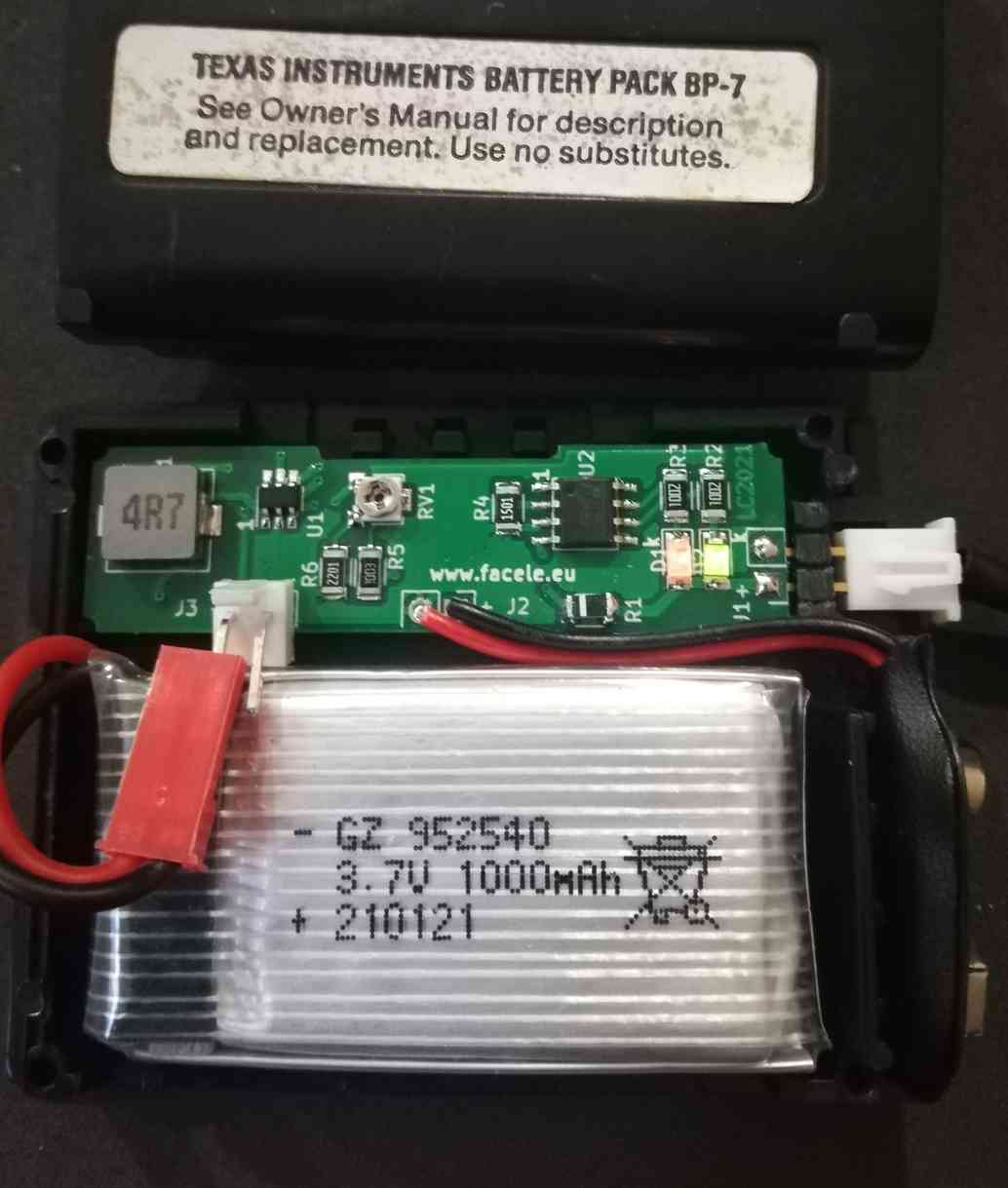
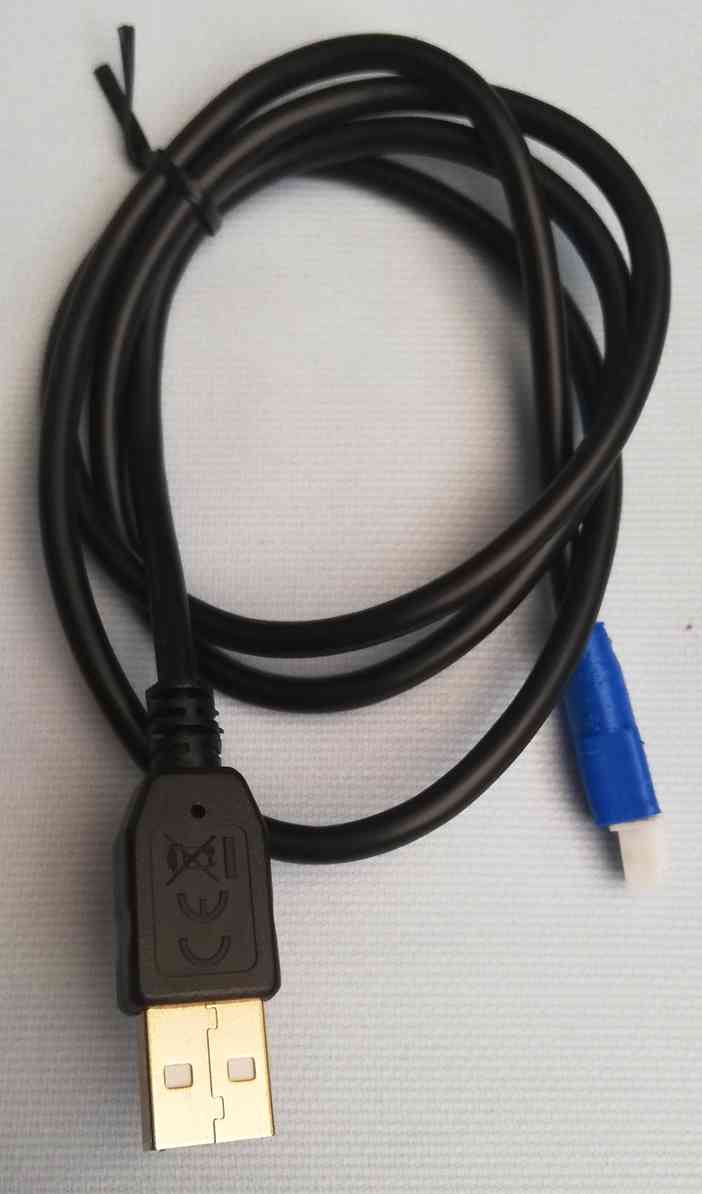
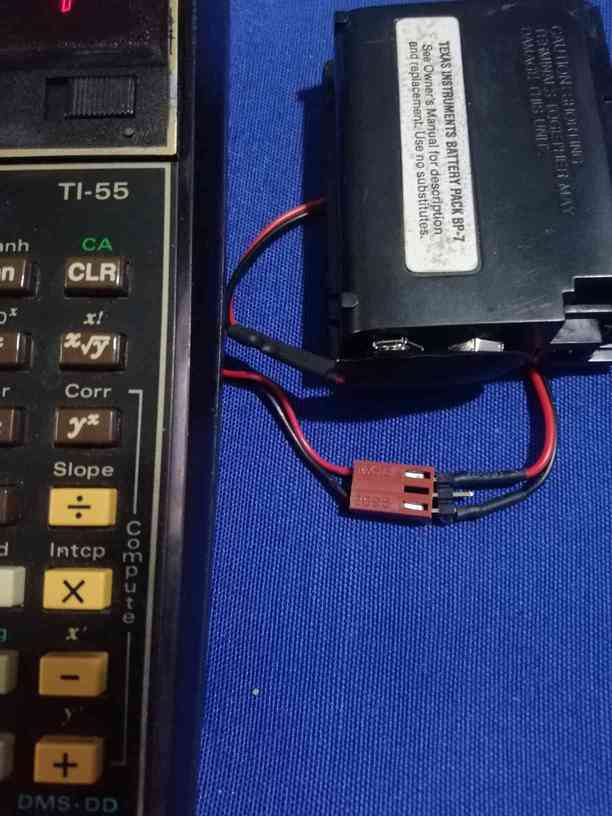 3- USB cable for charging
4 - adapter cable for BP7
5- instructions necessary for the replacement.
To recharge the new BP you can use the USB cable supplied, unfortunately for the size I could not insert a micro-USB connector, but make a cable with a specific connector.
One last thing, the circuit is equipped with a trimmer that allows you to vary the output voltage for other applications between 4.5 volts and 25 volts with a maximum current of 500 mah, but ATTENTION any variation could destroy the load downstream of the new BP.
Troubleshooting and Info
When the LEDs are ON and flashing at the same time -> The battery is probably disconnected
When the LEDs are OFF at the same time -> The input voltage is too low or the PCB is faulty
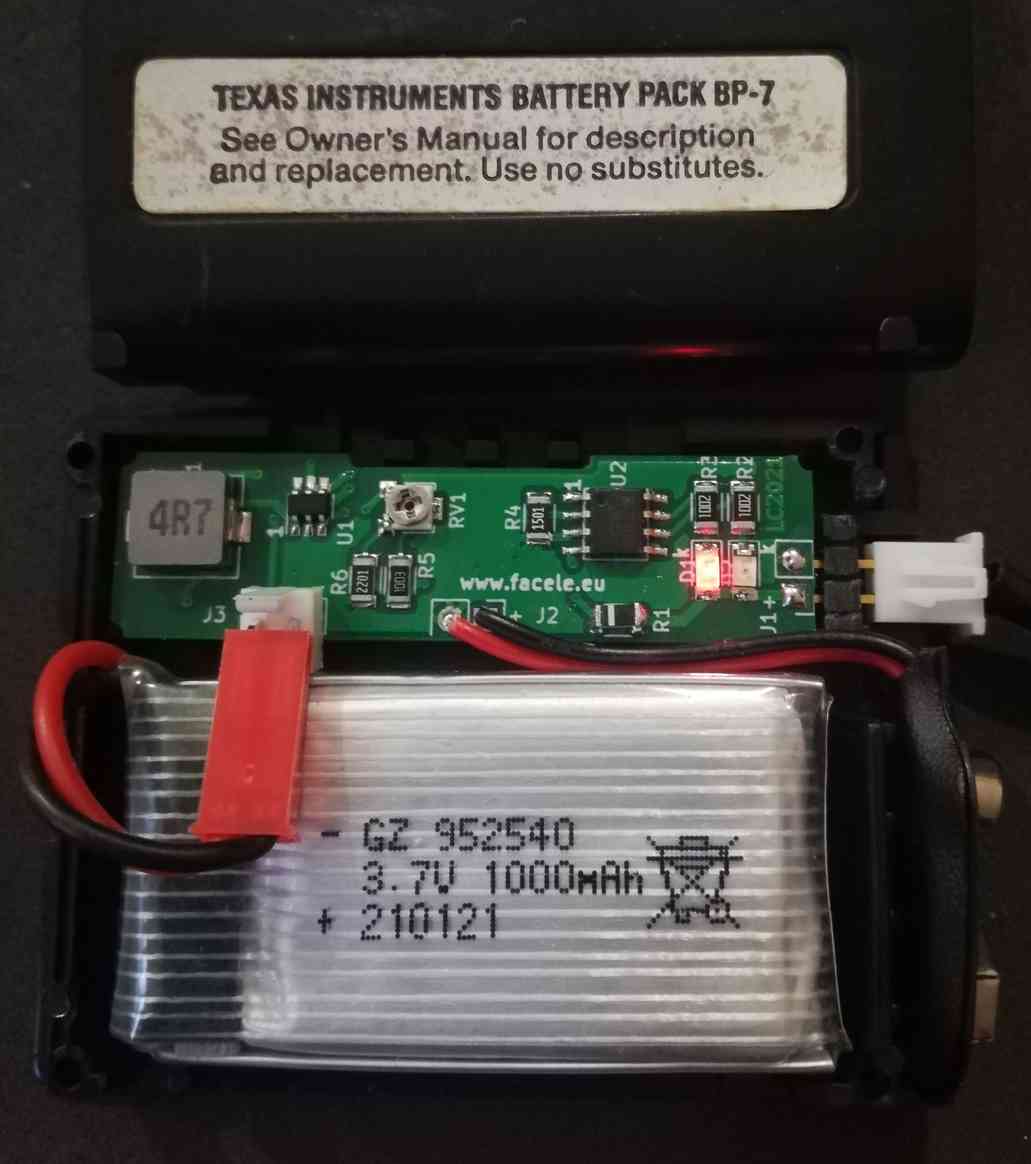
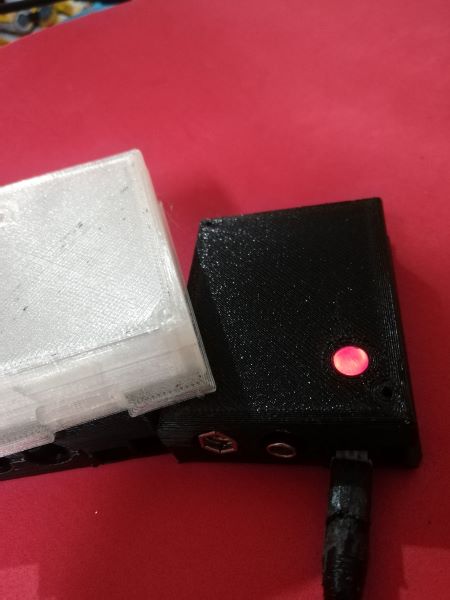 When the red LED is ON -> The battery is charging
When the green LED is ON -> The battery is charged
On this page you can find the correspondence between the calculators produced by Texas Instruments and the chips used.
| Type | Year | Function | Calculator | Comments |
| First TI chip set produced for Canon Inc. This set of 3 Integrated Circuits was streamlined to the Pocketronic with its thermal printer. These chips are manufactured in a "state of the art" 10-micron 1-metal PMOS process and using Dual-Inline Ceramic or Plastic (DIC/DIP) packages with 40 pins and 28 pins |
||||
| TMC1730 | 1970 | Canon Pocketronic (Monroe 10) | ||
| TMC1731 | ||||
| TMC1732 | ||||
| Second TI chip set produced for Canon Inc. The second chipset supported displays instead the thermal printer of the Pocketronic. Two different Data Chips are known, the Arithmetic Chip was later replaced. These chips are manufactured in a "state of the art" 10-micron 1-metal PMOS process and using Dual-Inline-Ceramic or Plastic (DIC/DIP) cases with 40 pins and 28 pins. |
||||
| TMC1733 | 1971 | Data Chip | Canon L121 (Monroe 620) | |
| TMC1733A | 1971 | Data Chip | Canon L120 | |
| TMC1734 | 1971 | Data Chip | Canon L160 (Monroe 610) | |
| TMC1737 | 1971 | Data Chip | Canon L100 | |
| TMC1753 | 1971 | Timing Chip | Canon Canola L121 | |
| TMC1754 | 1971 | Entry Chip | Canon Canola L121 | |
| TMC1755 | 1971 | Arithmetic Chip | ||
| TMC1807 | 1971 | Arithmetic Chip | Canon Canola L121 | Replaced the TMC1755 |
| Third TI chip set produced for Canon Inc. This chipset consists of 6 Integrated Circuits, one of them was later replaced. These chips are manufactured in a "state of the art" 10-micron 1-metal PMOS process and using Dual-Inline-Plastic (DIP) cases with 40 pins. |
||||
| TMC1761 | 1971 | Canon L163 (Monroe 650) | ||
| TMC1763 | 1971 | Canon L163, L167P | ||
| TMC1764 | 1971 | Canon L163 | ||
| TMC1765 | 1971 | Canon L163, L167P | ||
| TMC1765 | 1971 | Canon L167P | ||
| TMC1767 | 1971 | Canon L163 | ||
| TMC1768 | 1971 | Canon L163 | ||
| TMC1793 | 1971 | Canon L163 | Replaced the TMC1768 | |
| TMC1812 | 1971 | Canon L167P | ||
| TMC1816 | 1971 | Canon L167P | ||
| TMC1771SC | ||||
| TMC1772SC | ||||
| TMC1773SC | ||||
| Forth TI chip set produced for Canon Inc.Compared with the previous chipsets the trend goes toward single-chip solutions. Both chips contain together 512*13-bit read-only program memory, a 19*16-bit random-access memory and support calculators with up to 14 digits display width. These chips are manufactured in a "state of the art" 10-micron 1-metal PMOS process and using Dual-Inline- Plastic (DIP) cases with 40 pins. |
||||
| TMC1824 | 1971 | Data Chip | Canon L100A, LE-10 | |
| TMC1825 | 1971 | ROM Chip | ||
| First TI chip set produced for Sumlock-Compucorp.This large chipset was developed by the engineers of Compucorp and produced by AMI. Later TI qualified as a second source to AMI. The chipset forms one of the first programmable calculators, the Compucorp 324G Scientist. | ||||
| TMC1864 | 1971 | TCL08 - Display | Compucorp 324G | Replaced by TMC1884 |
| TMC1866 | 1971 | TCL06 - Data | Processor board | |
| TMC1867 | 1971 | TCL05 - Data | Processor board | |
| TMC1868 | 1971 | TCL01 - Printer | Compucorp 325 | Printer driver |
| TMC1869 | 1971 | TCL02 - Keyboard | Keyboard-scanning electronic | |
| TMC1870 | 1971 | TCL04 - Data | Processor board | |
| TMC1871 | 1971 | TCL03 - ROM | Interface to RAM and ROM | |
| TMC1872 | 1971 | TCL07 - Data | Processor board | |
| TMC1884 | 1971 | TCL08 - Display | Display multiplexer | |
| First TI chip set produced for Olivetti.This rare chipset was found in October 2010 by fellow collector Miguel from Argentina in an Olivetti Logos 270 desktop printing calculator. The keyboard of the calculator sports unusual [*=] [/=] [Q], [P], [R] keys and [S] and [T]memories. These chips are manufactured in a "state of the art" 10-micron 1-metal PMOS process and using Dual-Inline- Plastic (DIP) cases with 28 pins (TMC1829) and 16 pins (TMC1827, TMC1828). |
||||
| TMC1827 | 1972 | not yet discovered | Olivetti Logos 270 | |
| TMC1828 | 1972 | not yet discovered | ||
| TMC1829 | 1972 | not yet discovered | ||
| Second TI chip set produced for Olivetti.This rare chipset was found recently in an Olivetti 55 desktop printing calculator from the Logos 50/60 series. The keyboard of the calculator sports additional [00][000] keys, unusual [*=] [/=] keys and a memory. These chips are manufactured in a "state of the art" 10-micron 1-metal PMOS process and using Dual-Inline- Plastic (DIP) cases with 28 pins (TMC1876) and 16 pins (TMC1828, TMC1877). |
||||
| TMC1828 | 1972 | not yet discovered | Olivetti 55 , Logos 59 | |
| TMC1876 | 1972 | not yet discovered | Logos 59 | |
| TMC1877 | 1972 | not yet discovered | ||
| TMC1878 | 1972 | Logos 59 | ||
| TMCX01NC | 1977 | Logos 40 | ||
| TMCX02NC | 1977 | Logos 40 | ||
| TMCX03NC | 1977 | Logos 40 | ||
| First commercial available single chip calculator.The first commercial available "calculator-on-a-chip" was an MOS integrated circuit announced by TI in September 17, 1971. Find the original press release here. The chip contains 3520-bit read-only program memory, a 182-bit serial-access memory and a decimal arithmetic logic unit as well as control, timing, and output decoders but no drivers for the display. This results in an overall complexity of roughly 5,000 transistors. The typical supply voltage of this chip is ±7.2 V at roughly 15 mA power consumption. These chips are manufactured in a "state of the art" 10-micron 1-metal PMOS process and using Dual-Inline- Plastic (DIP) cases with 28 pins. It took about a year till the first copy of the original design appeared. US based company MOSTEK introduced the MK5020P December, 1972. |
||||
| TMS1802 | 1971 | Single chip, Basic | unknown | Renamed to TMS0102 |
| TMS1875 | 1972 | Single chip, Basic | Heathkit IC-2008 | Renamed to ??? |
| TMS0101 | 1972 | Single chip, Basic | Canon Palmtronic LE-83, LE-80, LE-84, TOKO mini 8 | +,-,= keys, 8 digits |
| TMS0102 | 1972 | Single chip, Basic | Columbia II | [+=],[-=] keys, 8 digits |
| TMS0103 | 1972 | Single chip, Basic | Bowmar 901B, 905, Summit K16, Commodore 301, C110, US-8,Minuteman 2, Eldorado 8C, 8K , Montgomery Ward TXI8642A, K83, K86,Singer Friden 123,Advance mini executive, Sinclair Executive, Radio Shack EC-200 | [+=],[-=] keys, 8 digits |
| TMS0105 | 1972 | Single chip, Basic | Canon L800, XAM TE-8000, Aristo M27,Crown CL-90K,Toshiba BC-801B,Mayfair Sound Products 2W01B,I.T.C. K-80M, Victor 85"Tallymate",MBO Junior | [+=],[-=] keys, 8 digits |
| TMS0106 | 1972 | Single chip, Basic | TI-3500, Canon L100S, Busicom LE-100A,TESAK 10D, TESAK syrtis 10P,Inno Hit K-10LS, IME mod.400, Nuova elettronica 35/36 | [+=],[-=] keys, 10 digits, Panaplex |
| TMS0107 | 1972 | Single chip, Basic | Bowmar 901D, TX1000, K106, A100 | [+=],[-=] keys, 10 digits |
| TMS0109 | 1972 | Single chip, Basic | TI-3000 | [+=],[-=] keys, 8 digits, Panaplex |
| TMS0110 | 1972 | Single chip, Basic | TI-2500 Preseries | +,-,= keys, 8 digits |
| TMS0111 | 1972 | Single chip, Basic | Minimath prototypes | +,-,= keys, 8 digits, LCD |
| TMS0112 | 1972 | Single chip, Basic | Toshiba BC-0802 | [+=],-,= keys, 8 digits |
| TMS0115 | 1972 | Single chip, Basic | Panasonic JE-850U | +,-,= keys, 8 digits |
| TMS0118 | 1972 | Single chip, Basic | +,-,= keys, 10 digits | |
| TMS0119 | 1972 | Single chip, Basic | TI-2500, Heathkit IC-2108 | +,-,= keys, 8 digits |
| TMS0708 | 1973 | Single chip, Basic | Canon Palmtronic LE-85 | +,-,= keys, 8 digits |
| First commercial available single chip scientific calculator.The original single-chip calculator was limited to basic calculators. The TMS0120 added to the 8 digit mantissa a two digit exponent display but still uses external display drivers. | ||||
| TMS0120 | 1972 | Single chip, Sci | SR-10, EC-425, P300 | +,-,= keys, x2,1/x,sqr(x), 8+2 digits |
| Later single chip calculators.There are some later single-chip calculators using external drivers for the display. One calculator, the Exactra 20 used only digit drivers, the segment drivers of the calculators were connected directly to the display. The TMS0135 e.g. contains 8,192 Bits ROM (Read-only program Memory), a 256 Bit RAM (Random-access Memory) and a decimal arithmetic logic unit as well as control, timing, and output decoders and the segment drivers for the display. This gives an overall complexity of roughly 8800 transistors. | ||||
| TMS0121 | 1973 | Single chip, Basic | Olympia CD101 | +,-,= keys, 10 digits |
| TMS0122 | 1974 | Single chip, Basic | Olympia CD80, Panasonic JE-851 | +,-,= keys, 8 digits |
| TMS0123 | 1973 | Single chip, Basic | [+=],[-=] keys, x2, sqr(x), 10 digits | |
| TMS0125 | 1973 | Single chip, Basic | Canon LE-100 | +,-,= keys, 10 digits |
| TMS0126 | 1973 | Single chip, Basic |
Canon LE-80R, Commodore 3101, Kings Point EC-8413 , Casio ROOT-8, Casio root 8S |
[+=],[-=] keys, x2, sqr(x), 8 digits |
| TMS0127 | 1973 | Single chip, Basic | Bowmar MX-80, K-106P | [+=],[-=] keys, %, 10 digits |
| TMS0128 | 1973 | Single chip, Basic | Canon LE-82, JCE Percent, montgomery ward p8p,Kessel P408,Advance 80, JC penney MM3R, Minuteman 3 | [+=],[-=] keys, %, 8 digits |
| TMS0130 | 1973 | Single chip, Basic | Panasonic JE-860U | +,-,= keys, sqr(x), PI |
| TMS0131 | 1973 | Single chip, Basic | Panasonic JE-855U | |
| TMS0132 | 1974 | Single chip, Basic | APF Mark VII, Craig 4510, EMG hunor 88 | [+=],- keys, Memory, 8 digits |
| TMS0135 | 1974 | Single chip, Basic | Exactra 20, Exactra TI-2000 | +,-,= keys, 8 digits |
| TMS0137 | 1974 | Single chip, Basic | Sears 8 | +,-,= keys, %, 8 digits |
| TMS0137 | 1974 | Single chip, Basic | Canon Pocketronic II | uses Printer chip TMS0641 |
| Chip set for 12 digit calculators. One limitation of the 28-pin packages of the TMS01xx was the maximum number of 10 or 8+2 digits for the results. For desktop calculators Texas Instruments developed chipsets with 40-pin packages for the integrated circuits. | ||||
| TMS0201 | 1973 | Data chip, Basic | TI-4000, Canon L121F, L1210 | 12 digits, Panaplex |
| TMS0202 | 1973 | Data chip, Sci | SR-20 | 10+2 digits, Panaplex |
| TMS0203 | 1973 | Data chip, Basic | TI-450, TI-500, TI-620, TEAL 6121D | 12 digits, Panaplex |
| TMS0206 | 1973 | Data chip | Olympia CD401A | |
| TMS0207 | 1973 | Data chip, HEX | SR-22 | 10+2 digits, Panaplex |
| TMS0221 | 1974 | Not yet discovered | TI-500 | Used together with TMS0203 |
| TMS0301 | 1973 | ROM chip, Basic | TI-4000 | [+=],[-=] keys, Memory, K |
| TMS0302 | 1973 | ROM chip, Basic | Canon L121F | [+=],[-=] keys, Memory, K |
| TMS0304 | 1973 | ROM chip, Sci | SR-20 | +,-,= keys, x2,1/x,sqr(x),x!,PI,e |
| TMS0305 | 1974 | ROM chip, Basic | TI-500 | Printing only |
| TMS0306 | 1974 | ROM chip, Basic | TI-620 | Printing only |
| TMS0318 | 1973 | ROM chip, Basic | Olympia CD401A | |
| TMS0320 | 1973 | ROM chip, Basic | TEAL 6121D | [+=],[-=] keys, Memory, EX, K,sqr(x) |
| TMC0321 | 1973 | Two chip, Basic | Canon L1210 | [+=],[-=] keys, Memory, K,sqr(x) |
| TMC0322 | 1973 | Two chip, Basic | TI-450 | [+=],[-=] keys, Memory, K |
| TMC0323 | 1973 | ROM chip, HEX | SR-22 | |
| TMC0404 | 1973 | 2nd ROM chip, HEX | SR-22 | |
| TMC0406 | 1974 | 2nd ROM chip | TI-620 | Printing only |
| TMC1073NL | Aristo R4000 | |||
| Chip set for scientifical calculators. With the TMC0500 building blocks Texas Instruments created a novel architecture for scalable scientific calculators. The architecture used minimum a 2-chip design with the Arithmetic chip and the SCOM (scanning read only memory) but was expandable to a maximum of 8 SCOMs, additional RAM as program memory for programmable calculators, additional RAM for general purpose registers and even a chip driving a printer borrowed from the TMS0200 family. Most scientific and programmable calculators manufactured by Texas Instruments between the years 1974 and 1982 (SR-50..TI-59) are based on these chips. | ||||
| TMC0501 | 1974 | ARITH | SR-50(A),51(A),51-II,52,56, 60, TI-5230 |
10+2 digits |
| TMC0501E | 1979 | Enhanced ARITH | SR-60A, TI-58(C),TI-59, PTK-1096 = TI59 | 10+2 digits |
| TMC0521 | 1974 | SCOM | SR-50, SR-50A | Basic system: TMC0501 + TMC0521 |
| TMC0522 | 1974 | SCOM1 | SR-51, SR-51A | Adds statistical functions (ROM) and conversion constants |
| TMC0523 | 1974 | SCOM2 | SR-51, SR-51A | |
| TMC0524 | 1975 | SCOM | SR-52 | |
| TMC0526 | 1976 | SCOM | SR-60 | |
| TMC0531 | 1976 | SCOM | SR-50A | Differences to TMC0521 not known |
| TMC0532 | 1976 | SCOM1 | SR-51A | Found in late models |
| TMC0533 | 1976 | SCOM2 | SR-51A | |
| TMC0534 | 1976 | SCOM | SR-52 | Differences to TMC0524 not known |
| TMC0537 | 1976 | SCOM1 | SR-56 | Adds statistical functions (ROM) and programmability |
| TMC0538 | 1976 | SCOM2 | SR-56 | |
| TMC0561 | 1975 | BROM | SR-52, PC-100A | |
| TMC0562 | 1975 | BROM | SR-52 | 2 chips piggy back in SR-52 |
| TMC0569 | 1975 | BROM | PC-100A | |
| TMC0571 | 1977 | BROM | TI-58, TI-59 | see TMC0582 |
| TMC0572 | 1978 | BROM | TI-5230 | see TMC0587 |
| TMC0573 | 1979 | BROM | TI-58C | see TMC0580 |
| TMC0580 /CD2400 |
1979 | DSCOM | TI-58C | Instead of TMC0582 on TI-58/59 |
| TMC0580 /CD2401 |
1979 | DSCOM | TI-58C | Instead of TMC0583 on TI-58/59 |
| TMC0581 | 1976 | DSCOM | SR-51-II | combines TMC0522 + TMC0523 |
| TMC0582 | 1977 | DSCOM | TI-58, TI-59, TI-58C (1), SR-60(A) | 2 DSCOM + BROM adds to 6k*13 instruction memory for the TI-59 |
| TMC0583 | 1977 | DSCOM | TI-58, TI-59, TI-58C (1), SR-60(A) | |
| TMC0584 | 1977 | DSCOM | SR-60(A) | Enhanced instructions of SR-60(A) |
| TMC0587 | 1978 | DSCOM | TI-5230 | 2 DSCOM + BROM adds to 6k*13 instruction memory for the TI-5230 |
| TMC0588 | 1978 | DSCOM | TI-5230 | |
| TMC0591 | 1979 | TI-58C | Interface to S-RAM | |
| TMC0594 | 1977 | MAGNETIC I/O | TI-59 only | |
| TMC0595 | 1975 | MAGNETIC I/O | SR-52 | adds programmability to TMC0524 |
| TMC0596 | 1977 | MAGNETIC I/O | SR-60A | |
| TMC0598 | 1977 | PRAM | TI-58 (2), TI-59 (4), TI-5230 (7) | 240*8 RAM (240 program steps or 30 data registers) each |
| TMC0599 | 1975 | PRAM | SR-52 (2), SR-56 (1), SR-60A (13) | 240*8 RAM (240 program steps or 30 data registers) each |
| TMC0251 | 1976 | Printer | PC-100A,B,C | Drives PC-100 printer |
| TMC0253 | 1976 | Display | SR-60(A) | Drives alphanumeric display |
| TMC0254 | 1976 | Printer | SR-60(A) | Drives thermal printer |
| TMC0255 | 1978 | Printer | TI-5230 | Drives thermal printer |
| TMC0261 | 1976 | Display, Printer | TI-5040 | Single-chip printing calculator |
| TMC0262 | 1978 | Display, Printer | TI-5025 | Single-chip printing calculator |
| TMC0263 | 1980 | Display, Printer | TI-5135 | Single-chip printing calculator |
| TMC0540 | 1977 | PROM -Customer- | TI-58(C), TI-59 | List of all known ROM-Codes here |
| TMC0541 | 1977 | PROM -1- | TI-58(C), TI-59 | Master Library |
| TMC0542 | 1977 | PROM -2- | TI-58(C), TI-59 | Applied Statistics |
| TMC0543 | 1977 | PROM -3- | TI-58(C), TI-59 | Real Estate Investment |
| TMC0544 | 1977 | PROM -4- | TI-58(C), TI-59 | Surveying |
| TMC0545 | 1977 | PROM -5- | TI-58(C), TI-59 | Marine Navigation |
| TMC0546 | 1977 | PROM -6- | TI-58(C), TI-59 | Aviation |
| TMC0547 | 1977 | PROM -7- | TI-58(C), TI-59 | Leisure Library |
| TMC0548 | 1977 | PROM -8- | TI-58(C), TI-59 | Securities Analysis |
| TMC0549 | 1977 | PROM -9- | TI-58(C), TI-59 | Business Decisions |
| TMC0550 | 1977 | PROM -10- | TI-58(C), TI-59 | Math Utilities |
| TMC0551 | 1977 | PROM -11- | TI-58(C), TI-59 | Electrical Engineering |
| TMC0553 | 1977 | PROM -SE- | TI-58(C), TI-59 | Structural Engineering |
| TMC0554 | 1977 | PROM -12- | TI-58(C), TI-59 | Agriculture |
| TMC0555 | 1977 | PROM -13- | TI-58(C), TI-59 | RPN Simulator |
| Second generation single chip calculators. Texas Instruments introduced with the TMS0600 and TMS0800 single-chip calculator circuits about two years after the introduction of the TMS0100 family a two-tier approach: The TMS0600 adding enhancements like a memory register and additional functionality while keeping the need for external segment- and digit-drivers and the TMS0800 for cost sensitive applications, reducing the feature set but integrating both a clock driver and segment drivers. | ||||
| TMS0601 | 1974 | Single chip, Basic | TI-2550, montgomery ward p200, P8m | +,-,= keys, Memory, 8 digits |
| TMS0602 | 1973 | Single chip, Sci | SR-11 | +,-,= keys, x2,1/x,sqr(x),PI |
| TMC0605 | 1974 | Single chip, Basic | Canon LE-81M | +,-,= keys, ±%, sqr(x), 8 digits |
| TMS0801 | 1973 | Single chip, Basic | Canon LE-84, Sinclair Cambridge | +,-,= keys, Constant, 8 digits |
| TMS0803 | 1974 | Single chip, Basic | TI-1500, Kovac 808, HORNET mini 816 | +,-,= keys, %, 8 digits |
| TMC0805 | 1974 | Single chip, Sci | Sinclair Scientific | UPN, log, sin..., 8 digits |
| TMS0806 | 1974 | Single chip, Basic | Exactra 19 | +,-,= keys, 6 (8) digits |
| TMS0807 | 1974 | Single chip, Basic | Canon LE-85 | [+=],[-=] keys, sqr(x) 8 digits |
| TMS0833 | 1974 | MBO Expert | ||
| TMS0851 | 1974 | Privileg 804D. IME minime 3 | ||
| TMS0852 | 1974 | Single chip, Basic | TI-150 | +,-,= keys, %, 8 digits |
| TMS0855 | 1975 | Single chip, Basic | Canon LD-80, Canon LD-81, Silver-Reed 8, Santronic 80S | +,-,= keys, %, sqr(x) |
| TMS0893 | 1976? | Single chip, Basic | Tabulex alpha | |
| TMC1007NL | 1976 | Single chip | TSI speech+ | |
|
TMC1170NL/ZA0541 |
1977 | rom chip | Kosmos 1 |
|
| TMC1172NL | 1977 | rom chip | Kosmos 2 | |
| TMS1470NL/MP1133 | 1979 | rom chip | Kosmos Astro | |
|
Third generation single chip calculators. With the TMS1001 Texas Instruments introduced the first member of the famous TMS1000 Microcomputer family. The chip contains a microcomputer complete with a program ROM having 1,024 8-bit Words; a temporary storage RAM; input (from keypad); output (to control keypad scan and LED display); and an oscillator (clock). The TMS1000 chip was designed to span a range of hand-held calculator products (from four-function up through simple memory calculators). Since the chip had to be customized with the ROM program appropriate to a product, other programmable features were included to improve the chip's flexibility. Today we know 13 different chips used in TI calculators. These chips vary in implementation technology, number of I/O lines, display drive, amount of ROM (up to 26.6k Bits) and amount of RAM (up to 1,280 Bits). Calculator applications range from simple four-function calculators to the 50-step programmable TI-57. As of mid 1979, over 35 million TMS1000 chips were deployed in both calculator and non-calculator applications, establishing the TMS1000 as the computer architecture with the largest installed base. The internal clock rate varies from 200 to 450 kHz, depending on technology. Die photos courtesy of Sean Riddle. RAM-size determination courtesy of Ken Shirriff. |
||||
| TMS1001 | 1974 | Single chip, Sci | SR-16 | Full scientific (w/o trig), 8+2 digits |
| TMC1014/1214 | TI-5050 | |||
| ZA0535 | 1975 | Single chip, Sci | Canon F-2 | Full scientific, 8+2 digits |
| ZA0536 | 1976 | Single chip | Canon T-8 | Full scientific, 8+2 digits,sexagesimal |
| TMS1016 | 1975 | Single chip, Sci | SR-16-II, Concept III | Full scientific (w/o trig), 8+2 digits |
| TMS1042 | Single chip, Basic | Olympia CD45A, Canon LD-8Ms, Canon Palmtronic 8M | ||
| TMS1043 | 1975 | Single chip, Basic | TI-2550-III | +,-,= keys, %, x2,1/x,sqr(x) |
| TMS1044 | 1975 | Unisonic 1040, Bonark 121, Victor 104R | ||
| TMS1045 | Single chip, Basic | Toshiba BC-8111B, BC-8112SL, Canon L813, F-31,Toshiba BC-8018b | +,-,= keys, %, x2,1/x,sqr(x) | |
| TMS1071 | 1975 | Single chip, Basic | TI-2550-II, Homeland 8105 | +,-,= keys, %, x2,1/x,sqr(x) |
| TMS1073 | 1976 | Single chip, Basic | TI-5100, Toshiba BC-1015 | |
| TMS1079 | 1979 | Single chip, Basic | Canon MD-8 | Two-line display, 8+8 digits |
| TMS1115 | 1976 | Single chip, Printing | TI-5050M | |
| TMS1273 | 1976 | Single chip, Basic | Toshiba BC1270 | [+=],[-=] keys, Memory, K,sqr(x), 12 digits |
| TMC1278 | 1976 | Single chip, Basic | TI-5200 | |
| TMC1309 | 1977 | Single chip, Printing | TI-5220 | Drives thermal printhead |
| TMC1312 | 1977 | Single chip, Printing | TI-5225 | Drives thermal printhead |
| TMC1372 | 1977 | Single chip, Printing | TI-5220, TI-5225 (ZA0396) | Drives VF-Display |
| TMC1376 | 1977 | Single chip, Printing | TI-5230 | Drives VF-Display |
| ZA0552 | 1976 | Single chip, Basic | Canon L1010, LD-10M | 10 digits |
| ZA0571 | 1976 | Single chip, Basic | Adman L-0830T, IME minime 5 | %, K, 8 digits |
| TMS0952 | 1975 | Single chip, Basic | TI-1200, TI-1250, western auto (Citation, Electronic wizard) | +,-,= keys, Memory, sign + 8 digits |
| TMS0954 | 1976 | Single chip, Basic | TI-1260 | +,-,= keys, Memory, conversions |
| TMS0972 | 1976 | Single chip, Basic | TI-1250, National 835A, Binatone memory, RJP 3000, Bhosei 3000, Radioshack EC-201, Texet 2001, Texet 880, Zayre Concept II, LJG 880, Privileg 842M, Conic EL-601, Sears 82, Agilis 800 , Dog Vanity Fair | 8 digits, minor changes ton TMS0952 |
| TMS0974 | 1976 | Single chip, Basic | TI-1270 | +,-,= keys, x2,1/x,sqr(x),PI, 8 digits |
| TMS0975 | 1976 | Single chip, Toy | Little Professor | |
| TMC0907 | 1977 | Toy | Wiz-A-Tron, Cyclon Battlestar | |
| TMC0921 | 1977 | Single chip, Basic | TI-1050, Western Auto Citation (66-4986-7) | +,-,= keys, Memory, srq(x), % |
| TMC0923 | 1977 | Single chip, Basic | TI-1025, Hema 1025, Western Auto Citation | +,-,= keys, Memory, % |
| TMC1981 | 1977 | Single chip, Basic | TI-1680 | uses TMC0999 |
| TMC1982 | 1977 | Toy | TI Dataman | |
| TMC1983 | 1978 | Single chip, Sci | TI-45 | Full scientific, 8 (5+2) digits |
| TMC1984 | 1978 | Toy | Spelling B (original) | uses TMC0272 |
| TMC1986 | 1980 | Toy | Math Marvel | |
| TMC1991 | 1977 | Single chip, Basic | TI-1000 | +,-,= keys, % |
| TMC1992 | 1977 | Single chip, Basic | TI-1000 Version 2 | +,-,= keys, % |
| TMC0980 | 1978 | Custom design | Goulds Pumpulator | ROM code CD9801 |
| TMC0981 | 1976 | Single chip, Sci | TI-30, SR-40, Privileg SR35nc | Full scientific, 8 (5+2) digits |
| TMC0982 | 1976 | Single chip, Fin | Business Analyst | Full financial, 8 (5+2) digits |
| TMC0983 | 1978 | Single chip, HEX | TI Programmer | HEX calculator, ROM code ZA0675 |
| TMC0984 | 1976 | Single chip, Sci | TI-33 | Full scientific, 3 mem., 8 (5+2) digits |
| TMC0985 | 1977 | Single chip, Sci | OEM, TEXET 2001 scinetific | Full scientific, no AOS, 8 (5+2) digits |
| TMC1501 | 1977 | Single chip, Sci | TI-57 Programmable, Hiradastechnika PTK1050 = TI57, radio shack EC-4000 | Full scientific, programm.,8+2 digits |
| TMC1081 | 1978 | Panasonic JE170U | ||
| TMC1502 | 1977 | Single chip, Fin | The MBA | Full financial, huge mem.,8+2 digits |
| TMC1503 | 1977 | Single chip, Sci | TI-55,PTK-1030 = SR-51 II | Full scientific, huge mem.,8+2 digits |
| TMC0271 | 1978 | Toy | Speak & Spell (1978) | |
| TMC0272 | 1978 | Toy | Spelling B (UK) | Uses TMC1984 |
| TMC0273 | 1980 | Toy | Mr. Challenger | |
| TMC0274 | 1978 | Toy | Spelling B | |
| TMC0270/CD2702 | 1980 | Toy | La dictee magique | |
| TMC0270/CD2705 | 1980 | Toy | Speak & Read | |
| TMC0270/CD2708 | 1980 | Toy | Speak & Math (UK) | |
| TMS1000 / MP0271 | 1984 | Toy | Mr MUS-I-CAL, Monkey see | |
| First generation C-MOS single chip calculators.
In 1978 Texas Instruments introduced the first CMOS calculator chips based on the TMS1000 Microcomputer family. The TP0320 architecture is similar to the TMC0980 chips introduced two years earlier for the TI-30 calculator. The main difference – beside the manufacturing process – is the permanent connection of the internal memory (12*64 Bits RAM + 64 Bits Display RAM) to the supply voltage. This feature allowed the „Constant Memory“ found on the calculators based on the TP0320 family like the TI-50 or TI-53. Even after you turn off the calculator its user memory is stored inside the chip. The supply current is low enough to buffer the memory more than a year from two small button cells. The program memory with 2k*9 Bits ROM allowed the conversion of most calculating features known from Majestic calculators (Scientific, Statistical and Financial calculator or even Flight computers). Die photo courtesy of Sean Riddle. RAM-size determination courtesy of Ken Shirriff. Remember that the first LCD-calculators sold by Texas Instruments used foreign calculator chips manufactured by Toshiba. Find more information about them here. Together with the CMOS process the employees of Texas Instruments changed the nomenclature of the chips. Instead of the leading characters TMS (Texas MOS Standard) or TMC (Texas MOS Custom) the abbreviation TP appeared for the new device families. These Microcomputers got both ROM programmability and Gate programmability (e.g. segment decoder). The derivatives were either numbered like TP0320, TP0321... or got a CD (Custom Design) number, e.g. CD3202. |
||||
| TP0320/CD3201 | 1978 | Single chip, Fin | TI Investment Analyst | Full financial, 8 (5+2) digits |
| TP0320/CD3202 | 1980 | Single chip, Fin | TI-30-II, TI-30 LCD | Full scientific, 8 (5+2) digits |
| TP0321 | 1978 | Single chip, Sci | TI-50 | Full scientific, 8 (5+2) digits |
| TP0322 | 1978 | Single chip, Fin | TI Business Analyst II | Full financial, 8 (5+2) digits |
| TP0323 | 1978 | Single chip, Sci | TI-53 | Full scientific, 8 (5+2) digits |
| TP0324 | 1978 | Single chip, Sci | TI-35 | Full scientific, 8 (5+2) digits |
| TP0325 | 1979 | Single chip, Fin | Business Card | Full financial, 8 (5+2) digits |
| TP0326 | 1979 | Single chip, Sci | TI-38, TI-20 | TI-35 w/o statistics |
| TP0327 | 1979 | Single chip, Sci | Sharp EL-503 | Reduced keyboard, 8 (5+2) digits |
| TP0328 | 1980 | Flight Computer | Jeppesen avstar | Conversions and calculations |
| Simplified C-MOS single chip calculators. During the calculator war (about 1976 to 1978) a lot of customized chip architectures appeared even from Texas Instruments. Instead using the TMS1000 device with the large ROM and RAM amount some "area optimized“ architectures appeared. Don’t forget that in the early days of IC-Technology the yield of designs with some thousands of transistors was poor! The TP0310 introduced in the year 1978 based on the serial architecture of the TMS0920 optimized for the TMS1050 calculator. This was the most compact design with only 511*9 Bits ROM and 40*5 Bits RAM using a one-bit serial adder. Only few calculators make use of the TP0310 devices. Die photo courtesy of Sean Riddle. RAM-size determination courtesy of Ken Shirriff. | ||||
| TP0311 | 1978 | Single chip, Basic | TI-1030 | +,-,= keys, Memory, srq(x), % |
| TP0314 | 1978 | Single chip, Basic | TI-1070 | +,-,= keys, Memory, x2,1/x,sqr(x),PI |
| Enhanced C-MOS calculator chips.
The TP0320 architecture with only 28-pin housings, 2k*9 Bits ROM and (12+1)*64 Bits RAM limited calculator designs to simple Scientific (TI-50), Statistical (TI-35) and Financial (Business Analyst II) calculators driving displays with only 8 digits (or 5 digits + 2 exponents) resolution. The "programmable" TI-53 stored as much as 32 key entries in the memory, that’s it!Texas Instruments introduced with the TP0455 architecture a new design to overcome these limitations. It is related to the TMS1000 architecture but added time-keeping capabilities, a more flexible display driver and a different RAM architecture with 128*4 Bits capacity. The TP0455 is still gate-programmable. The first use of the TP0455 was the CD4501 design found in the Time Card introduced end of the year 1981. The TI-55 II demonstrated the flexibility of the TP0455 architecture, two chips formed a powerful Master-Slave architecture. The Master uses a 40-pin housing and scans the keyboard, drives a huge display with 8+2 digits and performs the math capabilities. The Slave in the well known 28-pin housing doubles the memory capacity of the calculator. This allows e.g. 56 program steps compared to the 32 steps of the TI-53.The TP0455 design was soon replaced with the TP0456 and most designs were converted. The CD numbers were incremented 50 units to distinguish the difference between TP0455 (e.g. CD4515) and TP0456 e.g. CD4565). The TP0456 seems to be upward compatible to the TP0320, we know with the TI-30 LCD and TI-30-II calculators using either the CD3202 or CD4565 design. Die photo courtesy of Sean Riddle. RAM-size determination courtesy of Ken Shirriff. |
||||
| TP0455/CD4501C | 1981 | Single chip, Basic | Time Card | not yet discovered |
| TP0455/CD4505A | 1981 | Dual chip, Sci | TI-55 II Slave | Full scientific, 56 steps |
| TP0455/CD4506A | 1981 | Dual chip, Sci | TI-55 II Master | Full scientific, 56 steps |
| TP0455/CD4507B | 1981 | Single chip, Sci | TI-35, TI-40 | Replaces TP0324 |
| TP0455/CD4508C | 1982 | Single chip, Clock | TI-2000 (Time Manager) | Full Alarm Clock |
| TP0455/CD4509B | 1982 | Single chip | TI-1890 (Converter) | US/ISO converter |
| TP0455/CD4511A | 1982 | Single chip | CA-800 | Cassette Interface for TI-88 |
| TP0455/CD4512 | 1982 | Dual chip | AC-II Master | not yet discovered |
| TP0455/CD4513 | 1982 | Dual chip | AC-II Slave | not yet discovered |
| TP0455/CD4514B | 1982 | Single chip | TI-2001GTI | Car computer |
| TP0455/CD4515 | 1982 | Single chip, Sci | TI-30 LCD | Replaces TP0320-2 |
| TP0455/CD4518 | 1982 | Single chip | CMF | not yet discovered |
| TP0455/CD4519 | 1982 | Single chip | LCD Programmer | base-8 and base-16 calculator |
| TP0456/CD4551 | 1981 | Dual chip, Sci | TI-54 Master | Scientific with complex numbers |
| TP0456/CD4553 | 1983 | Dual chip, Fin | BA-54, BA-55 | Full financial, 40 steps |
| TP0456/CD4554 | 1983 | Dual chip, Fin | BA-54, BA-55 | Full financial, 40 steps |
| TP0456/CD4555 | 1981 | Dual chip, Sci | TI-54, TI-55II, TI-57 LCD Slave | Full scientific |
| TP0456/CD4556 | 1981 | Dual chip, Sci | TI-55 II Master | Full scientific, 56 steps |
| TP0456/CD4557 | 1982 | Single chip, Sci | TI-35 | Replaces TP0324 |
| TP0456/CD4557A | 1986 | Single chip, Sci | TI-30 Stat | Replaces TP0324 |
| TP0456/CD4558A | 1982 | Single chip, Clock | TI-2000 (Time Manager) | Full Alarm Clock |
| TP0456/CD4559A | 1982 | Single chip | TI-1890 (Converter) | US/ISO converter |
| TP0456/CD4560 | 1982 | Single chip | TI-?? | not yet discovered |
| TP0456/CD4561D | 1982 | Single chip | CA-800 | Cassette Interface for TI-88 |
| TP0456/CD4562 | 1982 | Dual chip | AC-II Master | not yet discovered |
| TP0456/CD4563 | 1982 | Dual chip | AC-II Slave | not yet discovered |
| TP0456/CD4564 | 1982 | Single chip | TI-2001GTI | Car computer |
| TP0456/CD4565 | 1982 | Single chip, Sci | TI-30 LCD, TI-30 III | Replaces TP0320-2 |
| TP0456/CD4566 | 1982 | Single chip | Microwave Controller | Oops |
| TP0456/CD4568 | 1982 | Single chip | CMF | not yet discovered |
| TP0456/CD4569 | 1982 | Single chip | LCD Programmer | base-8 and base-16 calculator |
| TP0456/CD4570 | 1982 | Single chip | LCD Little Professor | Educational toy |
| TP0456/CD4571 | 1982 | Single chip, Fin | BA-35 | Full financial |
| TP0456/CD4572 | 1982 | Dual chip, Sci | TI-57 LCD Master | Full scientific, 40 steps |
| TP0456/CD4573 | 1983 | Dual chip | PC-200 | Printer for TI-66 and BA-55 |
| TP0456/CD4574 | 1983 | Dual chip | PC-200 | Printer for TI-66 and BA-55 |
| TP0456/CD4614 | 1986 | Dual chip, Sci | TI-60 Slave | Full scientific, 84 steps |
| TP0456/CD4616 | 1986 | Single chip | MathStar | Educational toy |
| TP0456/CD4617 | 1987 | Dual chip | TI Spelling B | Educational toy |
| TP0456/CD4618 | 1987 | Dual chip | TI Spelling B | Educational toy |
| TP0456/CD4631 | 1989 | Single chip | Math...ToGo!, Professor 1.2.3 | Educational toy |
| TP0456/CD4632 | 1989 | Single chip | Time...ToGo!, Professor Time | Educational toy |
| TP0456/CD4633 | 1989 | Single chip | Words...ToGo! | Educational toy |
| TP0456/CD4634 | 1989 | Single chip | Professor ABC | Educational toy |
| TP0458/CD4805 | 1987 | Dual chip, Sci | TI-65 Slave | Full scientific, 100 steps, Timer |
| TP0458/CD4806 | 1987 | Dual chip, Sci | TI-65 Master | Full scientific, 100 steps, Timer |
| TP0458/CD4808 | 1986 | Dual chip, Sci | TI-30 Galaxy | Full scientific |
| TP0458/CD4810 | 1986 | Dual chip, Sci | TI-62 Galaxy Master | Full scientific, 100 steps |
| TP0458/CD4811 | 1986 | Dual chip, Sci | TI-62 Galaxy Slave | Full scientific, 100 steps |
| TP0458/CD4812 | 1987 | Single chip, Fin | BA-III | Full financial |
| TP0458/CD4815 | 1986 | Dual chip, Sci | TI-60 Master | Full scientific, 84 steps |
| TP0458/CD4816 | 1988 | Single chip, Sci | Galaxy Junior | Educational calculator |
| Failed C-MOS single chip calculators | ||||
| TP0485/CD2901 | 1982 | Multi chip, Sci | TI-88 | Timekeeping, Key Scan and I/O Controller Revisions -, C, H, K observed |
| TP0485/CD2902 | 1982 | Multi chip, Sci | TI-88 | Master Controller Revisions -, C, H, K observed |
| TP0485/CD2903 | 1982 | Multi chip, Sci | TI-88 | Arithmetic Controller No revisions observed |
| TP0530 | 1982 | Multi chip, Sci | TI-88 | Generic designation for Memory chips |
| TP0531 | 1982 | Multi chip, Sci | TI-88 | Read/Write Memory (592 program steps or 74 data memories) Revisions -, A, B, C observed |
| TP0532/CD5402 | 1982 | Multi chip, Sci | TI-88 | Read Only Memory (7,500 program memories) Revisions -, B, C, E observed |
| TP0532/CD5403 | 1982 | Multi chip, Sci | TI-88 | CROM Read Only Memory (7,500 program steps) No revisions observed |
| display drivers | ||||
| SN75491 | 1972 | 4 segment driver | TI-2500 | Introduced with the TMS0102 |
| SN75492 | 1972 | 6 digit driver | TI-2500 | Introduced with the TMS0102 |
| SN75493 | 1972 | 4 segment driver | SR-10 | aka SN27422, SN27915 |
| SN75494 | 1972 | 6 digit driver | SR-10 | aka SN27423, SN27914 |
| SN75497 | 1974 | 7 digit driver | SR-50 | aka SN27882 |
| SN75498 | 1974 | 9 digit driver | TI-2550-II | |
| Clock Generation Chips and clock Buffer Chips. Some earlier calculators are using Integrated Circuits instead of discrete electronics to generate the single-phase or dual-phase clock signals of the calculator chips. Die photos courtesy of Sean Riddle. | ||||
| SN97211 | 1975 | 192 kHz, opposite phases, TMC0500 | SR-52 | Ceramic resonator, 384 kHz |
| TP0190N | 1975 | CMOS Clock Buffer | SR-52 | Unbuffered CD4011A @ 15.8V |
|
TP0240,TP0300, TP0301,TP0355 |
1975 | 192 kHz, opposite phases, TI-58 227.5 kHz, opposite phases, TI-59 |
TI-58, TI-59 | Ceramic resonator, 384 kHz or 455 kHz |
| DC/DC Converter Chips. Some earlier calculators are using DC/DC converters to generate the supply voltages of the calculator chips. Die photos courtesy of Sean Riddle. | ||||
| SN77203 | 1980 | 1-cell, +3 V, -4 V, LBI, SI/O | TI-88 | Used with TI-88, CA-800, PC-800 |
further additions and changes are from www.facele.eu
Most collectors of early electronic calculators will sooner or later ask themselves: „How old is this piece of history in my hands“? The answer is quiet easy, in conjunction with the pictured albums here in the Datamath Calculator Museum you get a rough estimate of the timeframe each calculator was built. Some models had a very short lifetime, e.g. the rare SR-16 was manufactured between October 1974 and early 1975. Other calculators stayed longer, the famous TI-68 was introduced 1991 and was available in some countries till the year 2000. If you inspect the calculators manufactured by Texas Instruments carefully you will notice small numbers stamped with ink on the body shell, embossed in the plastic mold or printed on the license plate. These numbers look typically like 314, 2676 ATA or I1090. If you study this article carefully you’ll learn that the first calculator is a Datamath Version 2 manufactured April, 1973, the second calculator was produced in the Abilene, TX facility and the third is a modern, Taiwanese LCD calculator. Interested in getting more information?
• Search the numbers
Starting with the introduction of both the Datamath and the early Desktop calculators Texas Instruments used visible ink to stamp the manufacturing date on the back of the calculator housing using a 3-digit code. Unfortunately in most cases the ink got lost over the time on the polished surfaces of the early calculators. Later models like the TI-2550 or Exactra line used a structured surface and the ink is more durable. Some calculators like the SR-50 got the date code printed on hidden places like the internal plastic frame below the battery pack. If you can read only parts of the numbers you should open the calculator and search the manufacturing date on the integrated circuits to limit the possible date range. Calculators introduced in the year 1976 or later use another coding with 4-digits embossed into the mold of the rear case shell. This method was durable, in some cases the readability is limited due to bad adjusted temperature or pressure of the tooling. With the TI-1750, the first Texas Instruments calculator produced in Japan another coding scheme using 3-digits was introduced. These early LCD-calculators with their metal housing got small adhesive license plates carrying the model designation, serial number, date and origin of manufacturing. Later far East products use a novel 4-digit coding for the date of manufacturing.
• Decipher the code
You should be able to decipher 5 different coding schemes of the manufacturing date to cover all calculators and related products manufactured by Texas Instruments. In addition you get in most cases the information of the place of manufacturing.
3-digit date code
Early calculators introduced between the years 1972 and 1975 make use of a three digit code to define the week and year of manufacturing.
Example: 314 reads as 31th week of the year 1974
You notice immediately that this code was not Y2K compliant and there was a need for another coding scheme.
The origin of the calculator is usually Dallas, TX if not otherwise noted. Only the TI-2500 / TI-3500 was reported to be produced in Italy, UK and Spain and the SR-10 / SR-11 in Brazil and Spain.
3-digit "Early Far East" date code
Calculators produced in Far East and Souteast Asia during the late 70s and early 80s use a three digit code to define the month and last digit of the year of manufacturing
Example: 104 reads as October 1984
The manufacturer of the calculator is coded with one letter and the origin written in plain words. A table is given with the 4-digit "far East" code.
4-digit date code
Calculators introduced later than 1975 and not produced in Asia use a four digit code to define the week and year of manufacturing.
Example: 2676 reads as 26th week of the year 1976
The origin of the calculator is coded with three letters and / or written in plain words.
| Code | Origin | Plant |
| ATA | USA | Abilene, TX |
| ATD | USA | Austin, TX |
| DTA | USA | Dallas, TX |
| LTA | USA | Lubbock, TX |
| MTA | USA | Midland, TX |
| STA | USA | Sherman, TX |
| Argentine | Buenos Aires | |
| CIB | Brazil | Campinas |
| El Salvadore | San Salvadore | |
| ACH | Holland | Almelo |
| HK | Hong Kong | |
| RCI | Italy | Rieti Cittaducale |
| PII | Philippines | |
| Portugal | Oporto | |
| MCS | Spain | |
|
RCT |
Turkey | |
| P | United Kingdom | Plymouth |
4-digit "Far East" date code
Calculators produced in Far East and Southeast Asia use a four digit code to define the month and year of manufacturing.
Example: 1090 reads as October 1990
The manufacturer of the calculator is coded with one letter and the origin written in plain words.
| Code | Maunfacturer | Origin |
| A | unknown | China |
| C | Cal-Comp | (Taiwan), Thailand |
| C | Compal | Taiwan, China |
| G | Kinpo | China |
| I | Inventec | Taiwan, Malaysia |
| K | Kinpo | Taiwan |
| L | Kinpo | Philippines |
| L | Leo Electronics | Japan, China |
| N | Nam Tai | China |
| O | unknown | Thailand |
| P | Inventec Pudong | China |
| S | Inventec Shanghai | China |
| T | Toshiba | Japan |
| Z | Zeny | Taiwan, China |
6-digit "European" date code
Calculators produced in Italy use sometimes a six digit code giving the day of production.
Example: RCI240595 reads as May 24, 1995
3-digit "European" date code
Both the Financial Investment Analyst and Fixed Income Securities calculators manufactured between 1988 and 1991 in Italy use a three digit code to define the week and year of manufacturing.
Example: 439 reads as 43th week 1989
The years 1990 and 1991 are encoded with the digit 0 resp. 1.
3¼-character "Radio Shack" date code
Calculators manufactured for Radio Shack in the Seventies, Eighties, and Nineties usually sport a 3-character or 4-character date code.
Example: 1A5 reads as 1st month 1985 or 1995. The character A is just serving as a separator between month and year.
4-digit "Integrated Circuit" date code
Most Integrated Circuits (ICs) manufactured by Texas Instruments or Toshiba use a four digit code to define the week and year of manufacturing.
Example: 7424 reads as 24th week of the year 1974
The origin of the IC is written in plain words. Early Texas Instruments ICs manufactured by Texas Instruments using a metal–oxide–semiconductor (MOS) process, use a TMS designation and we learned from the TMS1000 and TMS7000 documentation the TI Standard Symbolization: TMX, TMP, and TMS are representative of the evolutionary stages of product development from engineering prototypes through fully qualified production devices:
| • TMSxxxx Experimental devices that are not representative of the final device's electrical specifications and has not completed reliability verification • TMPxxxx Final silicon die that conforms to the device's electrical specifications but has not completed quality and reliability verification • TMSxxxx Fully qualified production devices |
Devices with on-chip ROM (Read-only Memory) usually include a Cxxxx or CDxxxx reference and might have two different © information:
| • ©19xxTI Texas Instruments Microcode copyright • ©19xxTI Texas copyright of ROM Code |
3-character "Japan Integrated Circuit" date code
Most integrated circuits (IC‘s) manufactured by Hitachi and some other Japanese companies use a three digit/letter/digit code to define the year, month and week of manufacturing.
Example: 3B4 reads as 4th week within February of the year 1973
| 2nd Character | Month |
| A | January |
| B | February |
| C | March |
| D | April |
| E | May |
| F | June |
| G | July |
| H | August |
| J | September |
| K | October |
| L | November |
| M | December |
The origin of the IC is written in plain words.
4-character "Sharp Integrated Circuit" date code
Most integrated circuits (IC‘s) manufactured by Sharp in the 1980s use a four character code to define the year, month and week of manufacturing.
| • First Character: Identification Number • Second Character: Last digit of production year • Third Character: Production month • Forth Character: Production week |
Example: 538A reads as 1st week within August of the year 1983
| 3rd Character | Month |
| 1 | January |
| 2 | February |
| 3 | March |
| 4 | April |
| 5 | May |
| 6 | June |
| 7 | July |
| 8 | August |
| 9 | September |
| X | October |
| Y | November |
| Z | December |
| 4th Character | Week |
| A | 1st Week of Month |
| B | 2nd Week of Month |
| C | 3rd Week of Month |
| D | 4th Week of Month |
| E | 5th Week of Month |
On this page you can find the game that used Texas Instruments chips, including various versions of the TMS1000, TMS1965, SN76477 etc.
| TYPE | YEAR | MARKED | TOY DESCRIPTION |
| TMS0970 | 1977 | CP0904A | Milton Bradley Comp IV |
| TMS0970 | 1977 | MP0905B | Parker Brothers Codename Sector |
| TMS1000 | 1980 | MP0027 |  24 Melody USA 24 Melody USA |
| TMS1000 | 1978 | MP3310 | 24 Melody Italy |
| TMS1000 | 1983 | MP3318 | 24 Melody France |
| TMS1000 | 1983 | MP3228 | 24 Melody Germany |
| TMS1000 | 1981 | MP1137 | 30 Tune Melody |
| TMS1000 | 1978 | MP0057 | APH Student Speech+ (same ROM contents as TSI Speech+?) |
| TMS1000 | 1979 | MP0154 | Fonas 2 Player Baseball |
| TMS1000 | 1979 | MP0158 |  Entex Soccer (6003) Entex Soccer (6003) |
| TMS1000 | 1979 | MP0163 | A-One LSI Match Number/LJN Electronic Concentration |
| TMS1000 | 1980 | MP0166 | A-One Arrange Ball/LJN Computer Impulse/Tandy Zingo (model 60-2123) |
| TMS1000 | 1979 | MP0168 | Conic Multisport/Tandy Sports Arena (model 60-2158) |
| TMS1000 | 1979 | MP0170 | Conic Football |
| TMS1000 | 1980 | MP0220 | Tomy Teacher |
| TMS1000 | 1980 | MP0230 | Entex Blast It (6015) |
| TMS1000 | 1982 | MP0271 |  Radio Shack Monkey See Radio Shack Monkey See |
| TMS1000 | 1979 | MP0907 | Conic Basketball (101-006) |
| TMS1000 | 1979 | MP0908 | Conic Electronic I.Q. |
| TMS1000 | 1979 | MP0910 | Conic Basketball (101-003) |
| TMS1000 | 1979 | MP0914 | Entex Baseball 1 |
| TMS1000 | 1979 | MP0915 | Bandai System Control Car: Cheetah/The Incredible Brain Buggy |
| TMS1000 | 1979 | MP0919 | Tiger Copy Cat (model 7-520) |
| TMS1000 | 1979 | MP0920 | Entex Space Battle (6004) |
| TMS1000 | 1979 | MP0923 | Entex Baseball 2 (6002) |
| TMS1100 | 1979 | MP1022 | Texas Instruments unknown thermostat |
| TMS1100 | 1980 | MP1030 | APF Mathemagician |
| TMS1100 | 198? | MP1072 | unknown device |
| TMS1470 | 1979 | MP1133 | Kosmos Astro |
| TMS1100 | 1980 | MP1180 | Tomy Power House Pinball |
| TMS1100 | 1979 | MP1181 | Conic Football 2 |
| TMS1100 | 1980 | MP1183 | E.R.S. Superbowl XV Football/Tandy Championship Football (model 60-2151) |
| TMS1100 | 1979 | MP1185 | Fonas 3-in-1: Football Basketball Soccer |
| TMS1100 | 1980 | MP1193 | Tandy Championship Football (model 60-2150) |
| TMS1100 | 1980 | MP1204 | Entex Baseball 3 (6007) |
| TMS1100 | 1980 | MP1209 | U.S. Games Space Cruiser/Strategy Football |
| TMS1100 | 1980 | MP1211/COPL44 |  Entex Space Invader (6012) Entex Space Invader (6012) |
| TMS1100 | 1980 | Tomy Atomic Pinball | |
| TMS1100 | 1980 | MP1215 | Tiger Playmaker |
| TMS1100 | 1980 | MP1218 | Entex Basketball 2 (6010) |
| TMS1100 | 1980 | MP1219 | U.S. Games Super Sports-4 |
| TMS1100 | 1980 | MP1221 | Entex Raise The Devil (6011) |
| TMS1100 | 1983 | MP1231 | Tandy 3-in-1 Sports Arena (model 60-2178) |
| TMS1100 | 1982 | MP1296 | Entex Black Knight Pinball (6081) |
| TMS1100 | 1981 | MP1311 | Bandai TC7: Air Traffic Control |
| TMS1100 | 1983 | MP1312 | Gakken FX-Micom R-165/Radio Shack Science Fair Microcomputer Trainer |
| TMS1100 | 1985 | MP1359 | Capsela CRC2000 |
| TMS1170 | 1980 | MP1525 | Coleco Head to Head: Electronic Baseball |
| TMS1370 | 1982 | MP1604 | Gakken Invader 2000/Tandy Cosmic Fire Away 3000 |
| TMS1700 | 1981 | MP1801 | Tiger Ditto/Tandy Pocket Repeat (model 60-2152) |
| TMS1370 | 1979 | MP2105 | .jpg) Gakken / Entex Poker (6005) Gakken / Entex Poker (6005) |
| TMS1370 | 1980 | MP2110 | Gakken Invader/Tandy Fire Away |
| TMS1370 | 1981 | MP2139 | Gakken Galaxy Invader 1000/Tandy Cosmic 1000 Fire Away |
| TMS1040 | 1979 | MP2726 | Tomy Break Up |
| TMS1070 | 1980 | MP2788 | Bandai Flight Time (? note: VFD-capable) |
| TMS1730 | 1989 | MP3005 | Tiger Copy Cat (model 7-522) |
| TMS1000 | 1978 | MP3200 | Parker Brothers Electronic Master Mind |
| TMS1000 | 1977 | MP3201 | Milton Bradley Electronic Battleship (1977 model 4750A) |
| TMS1000 | 1979 | MP3206 |  Concept 2000 Mr MUS-I-CAL Concept 2000 Mr MUS-I-CAL |
| TMS1000 | 1977 | MP3208 |  Milton Bradley Electronic Battleship (1977 model 4750B) Milton Bradley Electronic Battleship (1977 model 4750B) |
| TMS1000 | 1978 | MP3226 | |
| TMS1000 | 1979 | MP3232 | Fonas 2 Player Baseball (no "MP" on chip label) |
| TMS1000 | 1979 | MP3260 | Electroplay Quickfire |
| TMS1000 | 1979 | MP3300 | Milton Bradley Simon (Rev F) |
| TMS1000 | 1979 | MP3301A | .jpg) Milton Bradley Big Trak Milton Bradley Big Trak |
| TMS1000 | 1979 | MP3320A | Coleco Head to Head: Electronic Basketball |
| TMS1000 | 1979 | MP3321A | Coleco Head to Head: Electronic Hockey |
| TMS1200 | 1979 | MP3352 | Tiger Sub Wars (model 7-490) |
| TMS1000 | 1981 | M32001 | Coleco Quiz Wiz Challenger (note: MP3398 MP3399 M3200x?) |
| TMS1000 | 1990 | M32018 | unknown device (have decap/dump) |
| TMS1000 | 1983 | M32045B | Chrysler Electronic Voice Alert (11-function) -> eva.cpp |
| TMS1100 | 1978 | MP3403 | Marx Electronic Bowling |
| TMS1100 | 1978 | MP3404 |  Merlin Parker Brothers Merlin Parker Brothers |
| TMS1100 | 1985 | Capsela CRC2000 | |
| TMS1100 | 1979 | MP3405 |  Coleco Amaze-A-Tron Coleco Amaze-A-Tron |
| TMS1100 | 1979 | MP3407 | General Electric The Great Awakening (model 7-4880) |
| TMS1100 | 1978 | MP3415 | Coleco Electronic Quarterback |
| TMS1100 | 1979 | MP3435 | Coleco Zodiac |
| TMS1100 | 1979 | MP3438A | Kenner Star Wars Electronic Battle Command |
| TMS1100 | 1979 | MP3450A | .jpg) Microvision cartridge: Block Buster Microvision cartridge: Block Buster |
| TMS1100 | 1979 | MP3454 | .jpg) Microvision cartridge: Star Trek Phaser Strike Microvision cartridge: Star Trek Phaser Strike |
| TMS1100 | 1980 | MP3455 | .jpg) Microvision cartridge: Pinball Microvision cartridge: Pinball |
| TMS1100 | 1979 | MP3457 | .jpg) Microvision cartridge: Mindbuster Microvision cartridge: Mindbuster |
| TMS1100 | 1979 | MP3460 | Coleco Head to Head: Electronic Football |
| TMS1100 | 1979 | MP3474 | .jpg) Microvision cartridge: Vegas Slots Microvision cartridge: Vegas Slots |
| TMS1100 | 1979 | MP3475 | .jpg) Microvision cartridge: Bowling Microvision cartridge: Bowling |
| TMS1100 | 1979 | MP3476 | Milton Bradley Super Simon |
| TMS1100 | 1980 | MP3479 | .jpg) Microvision cartridge: Baseball Microvision cartridge: Baseball |
| TMS1100 | 1979 | MP3481 | .jpg) Microvision cartridge: Connect Four Microvision cartridge: Connect Four |
| TMS1100 | 1980 | MP3489 | Kenner Live Action Football |
| TMS1100 | 1979 | MP3491 | Mattel Thoroughbred Horse Race Analyzer |
| TMS1100 | 1980 | MP3493 | Milton Bradley OMNI Entertainment System (1/2) |
| TMS1100 | 1980 | MP3494 | Milton Bradley OMNI Entertainment System (2/2) |
| TMS1100 | 1980 | MP3496 | .jpg) Microvision cartridge: Sea Duel Microvision cartridge: Sea Duel |
| TMS1100 | 1981 | M34009 | .jpg) Microvision cartridge: Alien Raiders (note: MP3498 MP3499 M3400x..) Microvision cartridge: Alien Raiders (note: MP3498 MP3499 M3400x..) |
| TMS1100 | 1980 | @M34012 | Mattel Dungeons & Dragons - Computer Labyrinth Game |
| TMS1100 | 1981 | M34014 | Coleco Bowlatronic |
| TMS1100 | 1981 | M34017 | Microvision cartridge: Cosmic Hunter |
| TMS1100 | 1981 | M34018 | Coleco Head to Head: Electronic Boxing |
| TMS1100 | 1982 | M34038 | Parker Brothers Lost Treasure |
| TMS1100 | 1982 | M34047 | Microvision cartridge: Super Blockbuster |
| TMS1100 | 1983 | M34078A | Milton Bradley Electronic Arcade Mania |
| TMS1100 | 1985 | M34137 | Technasonic Weight Talker |
| TMS1000 | 1983 | MP4486A | Vulcan XL 25 |
| TMS0970 | 1979 | MP6061 |  Texas Instruments Electronic Digital Thermostat (from patent the one in MAME didn't have a label) Texas Instruments Electronic Digital Thermostat (from patent the one in MAME didn't have a label) |
| TMS0980 | 1979 | MP6100A | Ideal Electronic Detective |
| TMS0980 | 1979 | MP6101B | Parker Brothers Stop Thief |
| ? | 1982 | MP6354 | Tsukuda The Dracula (? note: 40-pin VFD-capable) |
| ? | 1983 | MP6361 | .jpg) Defender Strikes (? note: VFD-capable) Defender Strikes (? note: VFD-capable) |
| TMS1400 | 1980 | MP7302 | Tiger Deluxe Football with Instant Replay |
| TMS1400 | 1982 | MP7304 | Tiger 7 in 1 Sports Stadium (model 7-555) |
| TMS1400 | 1980 | MP7313 | 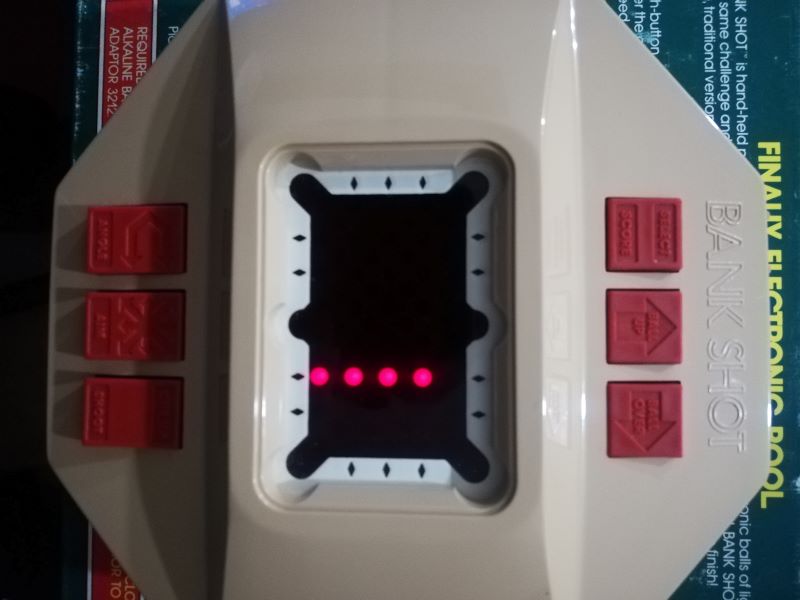 Parker Brothers Bank Shot Parker Brothers Bank Shot |
| TMS1400 | 1980 | MP7314 | Parker Brothers Split Second |
| TMS1400 | 1985 | MP7324 | Tiger K28/Coleco Talking Teacher -> tispeak.cpp |
| TMS1400 | 1981 | MP7332 | Milton Bradley Dark Tower |
| TMS1400 | 1981 | MP7334 | 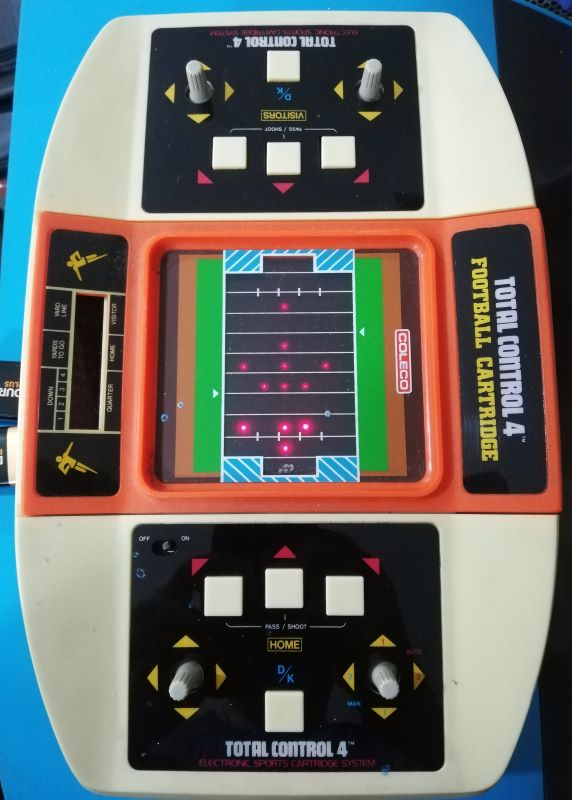 Coleco Total Control 4 Coleco Total Control 4 |
| TMS1400 | 1982 | MP7351 | Parker Brothers Master Merlin |
| TMS1670 | 1980 | MP7551 | Entex Color Football 4 (6009) |
| TMS1670 | 1980 | MPF553 | Gakken/Entex Jackpot: Gin Rummy & Black Jack (6008) (note: assume F to be a misprint) |
| TMS1670 | 1981 | MP7573 | Entex Select-A-Game cartridge: Football 4 -> sag.cpp |
| TMS2370 | 1983 | M30026 | Yaesu FT-757 Display Unit part |
| TMS2670 | 1983 | M95041 | Tsukuda Game Pachinko (have decap missing MCU emulation) |
| TMS1000 | 1976 | TMS1007 | 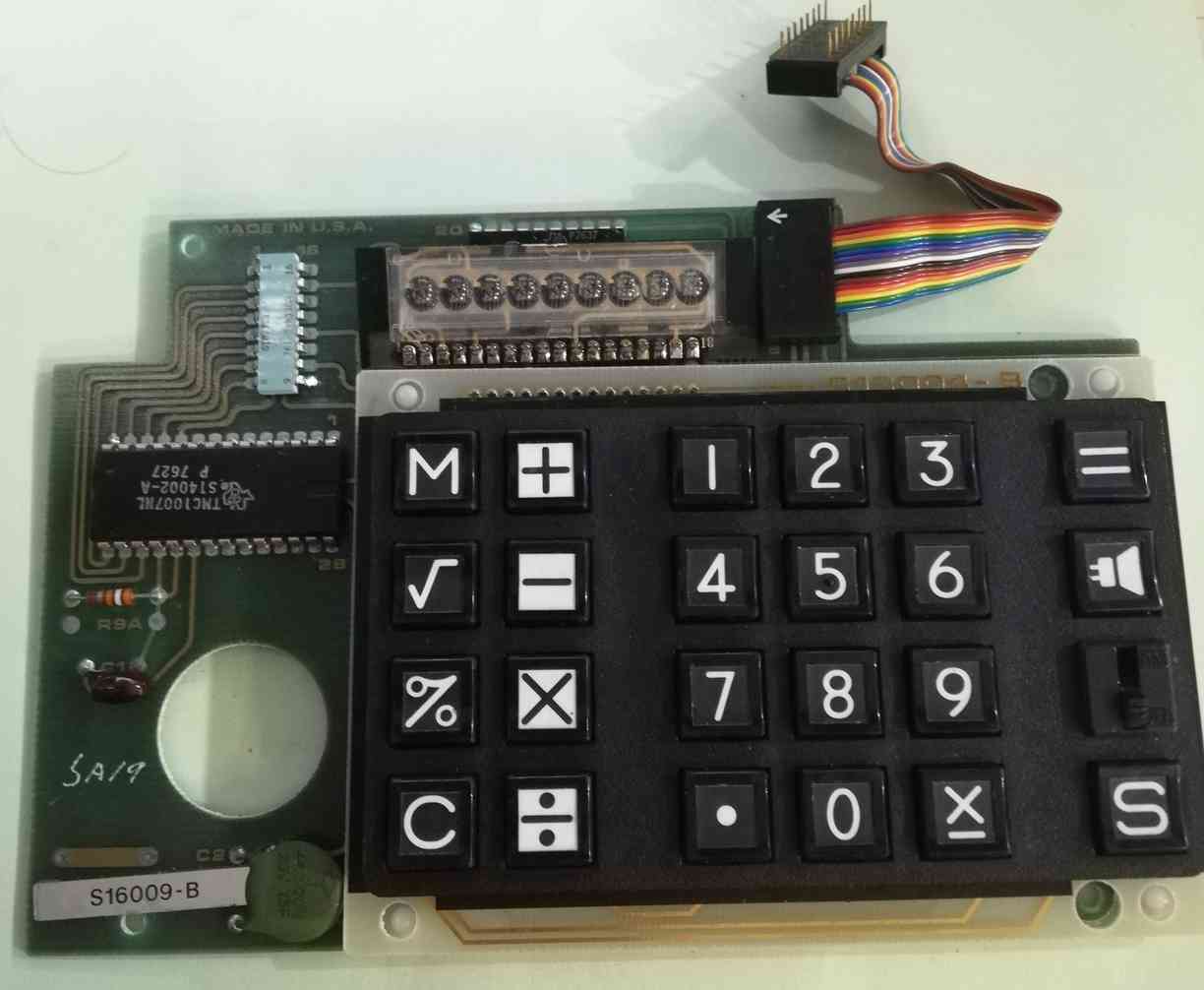 TSI Speech+ (S14002-A) TSI Speech+ (S14002-A) |
| TMS1100 | 1981 | CD7282SL | Tandy-12 (serial is similar to TI Speak & Spell series) |
| TMS1955 | 1976 | 4 Ball & Paddle variants | |
| TMS1965 | 1976 | 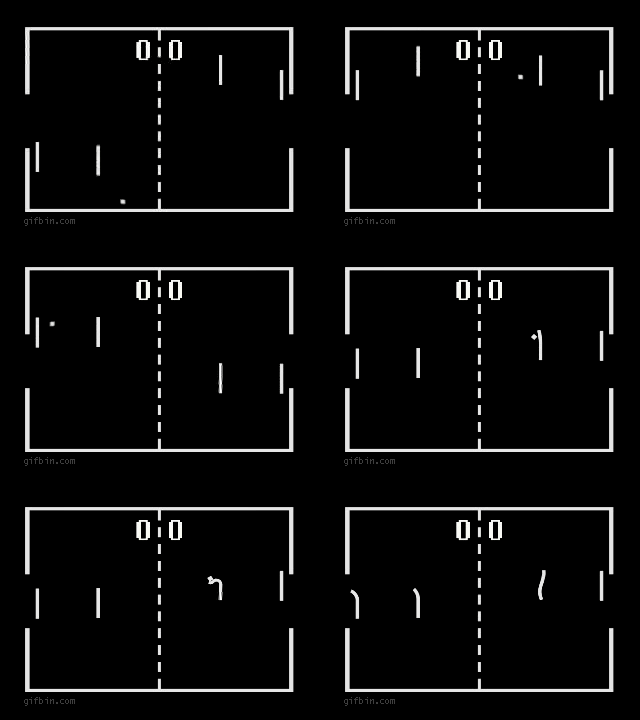 6 Ball & Paddle variants 6 Ball & Paddle variants |
|
| SN76410N | 1977 | 6 Ball & Paddle variants | |
| SN76423N | 1976 | Automatic random english, automatic serve, automatic upper/lower rebounds for Ball & Paddle games | |
| SN76424N | 1976 | System regulator and wall generator for color applications | |
| SN76425N | 1976 | System regulator, wall generator, horizontal/vertical sync generator (may be same as SN 94025N used by Magnavox) | |
| SN76426N | 1976 | Dual vharacter generator (may be same as SN 94026N used by Magnavox) | |
| SN76427N | 1976 | Wall and ball generator for Ball & Paddle games (may be same as SN 94027N used by Magnavox) | |
| SN76428N | 1976 | Hockey, Tennis and Handball game logic, and video summer (may be same as SN 94028N used by Magnavox) | |
| SN76430N | 1976 | Horizontal and vertical sync generated by counting-down from 3.58MHz clock, color generator, video summer (combines ball, paddle, wall, scores, etc.) | |
| SN76431N | 1976 | Position generator for two complex characters | |
| SN76432N | 1976 | Programmable ROM for three complex characters (Hockey, Tennis, Handball) | |
| SN76440N | 1976 | Space War game logic | |
| SN76442N | 1976 | Complex characters for Race Car, Rocket Ship and Universal Man | |
| SN76443N | 1976 | Complex characters for Flying Bird and Universal Man | |
| SN76444N | 1976 | Complex characters for Rocket Ship, Hockey and Tennis | |
| SN76445N | 1976 | Complex characters for Gunfighter and Universal Man | |
| SN76446N | 1976 | Complex characters for exploding rocket | |
| SN76449N | 1976 | Complex characters for exploding helicopter | |
| SN76460N | 1976 | Digital on-screen scoring generator (scores 0-20 and 'W' for winner) | |
| SN76462N | 1976 | Digital on-screen scoring generator (scores 0-18 only) | |
| SN76477N | 1976 | Programmable complex sound generator | |
| SN76483N | 1976 | Space War obstacles generator | |
| SN76484N | 1976 | Space War switching logic | |
| SN76499N | 1976 | 2.045MHz clock output generated from 3.58MHz crystal input, color phase generator and video summer designed to interface with TMS 1955 or equivalent (GI AY-3-8500) | |
| SN94025N | 1975 | (612086) | Regulator, Sync and Wall Generator (Odyssey 100 and 200) |
| SN94026N | 1975 | (612087) | Player Generator (Odyssey 100 and 200) |
| SN94027N | 1975 | (612088) | Ball and Wall Generator (Odyssey 100 and 200) |
| SN94028N | 1975 | (612089) | Video Summer and Logic (Odyssey 100 and 200) |
| SN94029N | 1975 | (612090) | Scoring Generator (Odyssey 200) |
| SN94069N | 1976 | (612109) | .jpg) Color Generator (Odyssey 500) Color Generator (Odyssey 500) |
| SN94092N | 1979 | (612108) | Score Generator (Odyssey 500) |
| SN94093N | 1976 | (612101) | Character Controller (Odyssey 500) |
| SN94192N | 1976 | Character Generator (Odyssey 500) |
|
|
TMS3615NS |
1981 | ||
| TMS3617NS | 1983 | Octave Multiple Tone Synthesizer 6 footage ( Italy ) | |
| TMS3834NL | 1976 | Display clock with multiplexer nixie (Nuova Elettronica N° 45/46) with VFD ( N° 50/51) | |
| TMS3874NL | 1980 | Display clock with multiplexer led (Nuova Elettronica N° 74) | |
| TMS??? | 1990 |  Jingle Ball ITaly 1990 Jingle Ball ITaly 1990 |
.jpg)
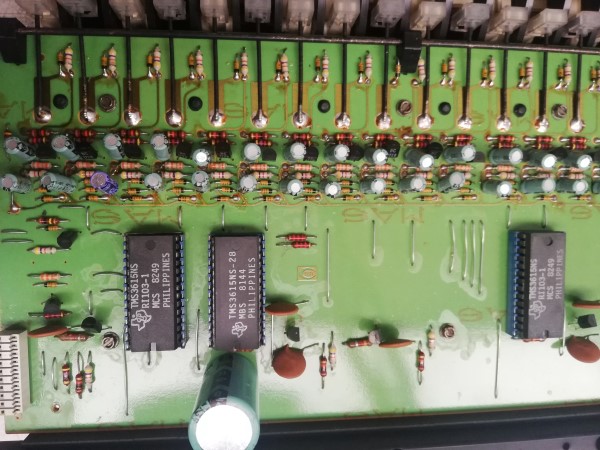
On this page you can find the correspondence between the various games that used speech synthesis and the chip used.
| Type | Year | Function | Product | Comments |
| First Voice Synthesis Processors (VSP) | ||||
| TMS5100 (TMC0281) |
1978 | 4-bit peripheral | Speak & Spell, Math, Read, Language Tutor | First VSP (TI internal name ‘0280’) |
| TMS5100A (TMC0281) |
1980 | 4-bit peripheral | Speak & Spell line | Die shrink of TMS5100 |
| TMS5110 (TMC0280/CD2801) |
1980 | 4-bit peripheral | Speak & Spell line | New version of TMS5100, updated LPC table |
| TMS5110A (TMC0280/CD2801) |
1981 | 4-bit peripheral | Speak & Spell line | Die shrink of TMS5110 |
| TMS5110A (TMC0280/CD2802) |
1981 | 4-bit peripheral | Touch & Tell | Different LPC table |
| TSP5110A (TMC0281/CD2801A) |
1985 | 4-bit peripheral | Speak & Spell line | |
| TMS5100 | ||||
| TMS5200 (TMS0285/CD2501E) |
1981 | 8-bit FIFO | (TI internal name ‘0285’) | |
| TMS5220 (CD2805E?) |
1982 | 8-bit FIFO | Speak & Learn | Improved TMS5200, updated LPC table |
| TMS5220C | 1983 | 8-bit FIFO | Enhanced TMS5220 | |
| TSP5220C | 1985 | 8-bit FIFO | Identical with TMS5220C | |
| First Voice Synthesis Memories (VSM) | ||||
| TMS6100NL (TMC0350) |
1978 | 128kBit | Speak & Spell | First VSM |
| TMS6125NL (TMC0355) |
1978 | 16kBit | Spelling B | |
| TMC0351 | 1978 | 128kBit | Speak & Spell (1978) | First VSM |
| TMC0352 | 1978 | 128kBit | Speak & Spell (1978) | Memory, 8 digits |
| TMC0350/CD2302 | 1978 | 128kBit | Speak & Spell Module | © 1978 Vowel Power |
| TMC0350/CD2305 | 1978 | 128kBit | Speak & Spell Module | © 1979 Super Stumpers 4-6 |
| TMC0350/CD2307 | 1978 | 128kBit | Speak & Spell Module | © 1979 Super Stumpers 7-8 |
| TMC0350/CD2308 | 1978 | 128kBit | Speak & Spell Module | © 1979 Basic Builders |
| TMC0350/CD2309 | 1978 | 128kBit | Speak & Spell Module | © 1979 Mighty Verbs |
| TMC0350/CD2310 | 1978 | 128kBit | Speak & Spell Module | © 1980 Homonym Heroes |
| TMC0350/CD2311 | 1979 | 128kBit | Language Tutor | © 1979 Spoken English |
| TMC0350/CD2312 | 1979 | 128kBit | Language Tutor | © 1979 Spoken English |
| TMC0350/CD2313 | 1979 | 128kBit | Language Tutor | © 1979 Spoken English |
| TMC0350/CD2314 | 1979 | 128kBit | Language Tutor | © 1979 Spoken English |
| TMC0350/CD2315 | 1979 | 128kBit | Language Tutor | © 1979 Spoken Spanish |
| TMC0350/CD2316 | 1979 | 128kBit | Language Tutor | © 1979 Spoken Spanish |
| TMC0350/CD2317 | 1979 | 128kBit | Language Tutor | © 1979 Spoken Spanish |
| TMC0350/CD2318 | 1979 | 128kBit | Language Tutor | © 1979 Spoken Spanish |
| TMC0350/CD2327 | 1979 | 128kBit | Language Tutor | © 1979 Spoken French |
| TMC0350/CD2328 | 1979 | 128kBit | Language Tutor | © 1979 Spoken French |
| TMC0350/CD2329 | 1979 | 128kBit | Language Tutor | © 1979 Spoken French |
| TMC0350/CD2330 | 1979 | 128kBit | Language Tutor | © 1979 Spoken French |
| TMC0350/CD2331 | 1979 | 128kBit | Language Tutor | © 1979 Spoken German |
| TMC0350/CD2332 | 1979 | 128kBit | Language Tutor | © 1979 Spoken German |
| TMC0350/CD2333 | 1979 | 128kBit | Language Tutor | © 1979 Spoken German |
| TMC0350/CD2334 | 1979 | 128kBit | Language Tutor | © 1979 Spoken German |
| TMC0350/CD2345 | 1980 | 128kBit | Buddy | |
| TMC0350/CD2346 | 1980 | 128kBit | Buddy | |
| TMC0350/CD2347 | 1980 | 128kBit | Speak & Spell Module | © 1980 Vowel Ventures |
| TMC0350/CD2348 | 1980 | 128kBit | Speak & Spell Module | © 1980 Noun Endings |
| TMC0350/CD2349 | 1980 | 128kBit | Speak & Spell Module | © 1980 Magnificent Modifiers |
| TMC0350/CD2350 | 1980 | 256kBit | Speak & Spell (1980) | Double VSM |
| TMC0350/CD2352 | 1980 | 256kBit | La Dictée Magique | Double VSM |
| TMC0350/CD2353 | 1981 | 256kBit | La Dictée Magique | © 1981 Les Mots de Base |
| TMC0350/CD2354 | 1982 | 256kBit | Speak & Spell Compact (1982) | |
| TMC0350/CD2355 | 1981 | 256kBit | Touch & Tell Module | © 1981 Animal Friends |
| TMC0350/CD2360 | 1982 | 256kBit | Speak & Spell Module | © 1982 ET Fantasy Module |
| TMC0350/CD2361 | 1982 | 256kBit | Touch & Tell Module | © 1982 World of Transportation |
| TMC0350/CD2362 | 1982 | 256kBit | Touch & Tell Module | © 1982 Little Creatures |
| TMC0350/CD2363 | 1982 | 256kBit | Touch & Tell Module | © 1982 E.T. |
| TMC0350/CD2381 | 1986 | 256kBit | Speak & Math | Double VSM |
| TMC0350/CD2392 | 1980 | 256kBit | Speak & Math | Double VSM |
| TMC0350/CD2393 | 1980 | 256kBit | Speak & Math | Double VSM |
| TMC0350/CD2394 | 1980 | 256kBit | Speak & Read | Double VSM |
| TMC0350/CD2395 | 1980 | 256kBit | Speak & Read | Double VSM |
| TMC0350/CD2396 | 1980 | 256kBit | Speak & Read Module | © 1980 Sea Sights |
| TMC0350/CD2397 | 1980 | 256kBit | Speak & Read Module | © 1980 Who´s Who At The Zoo |
| TMC0350/CD3509 | 1980 | 256kBit | Language Teacher | © 1980 German for Travel |
| TMC0350/CD3534 | 1981 | 256kBit | Speak & Read Module | © 1981 A Dog on a Log |
| TMC0350/CD3535 | 1981 | 256kBit | Speak & Read Module | © 1981 The Seal That Could Fly |
| TMC0350/CD3536 | 1981 | 256kBit | Speak & Read Module | © 1981 A Ghost in the House |
| TMC0350/CD3538 | 1981 | 256kBit | Speak & Read Module | © 1981 On The Track |
| TMC0350/CD3539 | 1981 | 256kBit | Speak & Read Module | © 1981 The Third Circle |
| TMC0350/CD3540 | 1981 | 256kBit | Speak & Read Module | © 1981 The Millionth Knight |
| TMC0355/CD2601 | 1978 | 16kBit | Mr. Challenger | Small housing |
| TMC0355/CD2602 | 1978 | 16kBit | Spelling B | Small housing |
| TMC0355/CD2603 | 1978 | 16kBit | LETTERlogic (France) | Small housing |
| TMC0355/CD2604 | 1978 | 16kBit | LETTERlogic | Small housing |
| TMC0355/CD2605 | 1980 | 16kBit | Mr. Challenger (Espaniol) | Small housing |
| TMC0355/CD2607 | 1979 | 16kBit | Spelling ABC | Small housing |
| CD2610 | 1981 | ??? | Touch & Tell | Small housing |
| CD2611 | 1981 | Touch & Tell Module | © 1981 Alphabet Fun | |
| CD2612 | 1981 | Touch & Tell Module | © 1981 Number Fun | |
| CD2613 | 1981 | Touch & Tell Module | © 1981 All About Me | |
| CD2614 | 1981 | Speak & Math | Found in 1986 model | |
| TMC0350/CD62047 | 1981 | ??? | La Dictée Magique | © 198? Les Animaux Familiers |
| TMC0350/CD62048 | 1981 | ??? | La Dictée Magique | © 198? Les Magasins De La Rue |
| TMC0350/CD62170 | 1981 | ??? | Touch & Tell (UK) | |
| TMC0350/CD62171 | 1981 | ??? | Le Livre Magique | |
| TMC0350/CD62172 | 1981 | ??? | Tipp & Sprich | |
| TMC0350/CD62173 | 1981 | ??? | Les Maths Magiques | |
| TMC0350/CD62175 | 1981 | ??? | Speak & Spell (UK) | |
| TMC0350/CD62176 | 1982 | ??? | Libro Parlante | |
| TMC0350/CD62177 | 1982 | ??? | La Dictée Magique | © 198? Les Mots Difficiles |
| TMC0350/CD62178 | 1982 | ??? | La Dictée Magique | © 198? Les Extra-Terrestres |
| TMC0350/CD62190 | 1982 | ??? | Grillo Parlante | |
| TMC0350/CD62313 | 198x | ??? | Grillo Parlante Module | SuperModulo |
| Later Speech Synthesizers (TSP50C0x/1x) | ||||
| TSP50C04 | 4k ROM, 576 bits RAM |
|||
| TSP50C06 | 6k ROM, 576 bits RAM |
|||
| TSP50C10 | 8k ROM, 1088 bits RAM |
3 D/A channels | ||
| TSP50C10/CSM10047 | 16k ROM, 1088 bits RAM |
Super Speak & Math | ||
| TSP50C10/CSM10087 | 16k ROM, 1088 bits RAM |
Super Speak & Spell | Only models manufac. later 1991 | |
| TSP50C11 | 16k ROM, 1088 bits RAM |
3 D/A channels | ||
| TSP50C11/CSM11012 | 16k ROM, 1088 bits RAM |
Peek-A-Boo Zoo | ||
| TSP50C11/CSM11039 | 16k ROM, 1088 bits RAM |
Passport Game | ||
| TSP50C11/CSM11122 | 1992 | 16k ROM, 1088 bits RAM |
Talking Mouse Computer | |
| TSP50C11/CSM11124 | 16k ROM, 1088 bits RAM |
Magic Clown | ||
| TSP50C11/CSM11125 | 16k ROM, 1088 bits RAM |
Storytime Sorter | ||
| TSP50C11/CSM11128 | 16k ROM, 1088 bits RAM |
Mouse Computer | ||
| TSP50C11/CSM11129 | 16k ROM, 1088 bits RAM |
L'Ordinateur Magique | ||
| TSP50C11/CSM11157 | 1993 | 16k ROM, 1088 bits RAM |
My Own Playphone | |
| TSP50C11/CSM11159 | 16k ROM, 1088 bits RAM |
Magic Melody | ||
| TSP50C11/CSM11163 | 16k ROM, 1088 bits RAM |
Teddy Touch & Tell | ||
| TSP50P11 | 16k OTP-ROM, 1088 bits RAM |
User programmable | ||
| TSP50C12 | 16k ROM, 1088 bits RAM |
68 pins, LCD driver | ||
| TSP50C13 | 8k ROM, 1088 bits RAM |
|||
| TSP50C14 | 16k ROM, 576 bits RAM |
|||
| TSP50C14 | 16k ROM, 576 bits RAM |
Discovery Depot | ||
| TSP50C14 | 16k ROM, 576 bits RAM |
Touch & Talkies | ||
| TSP50C14/CSM14042 | 16k ROM, 576 bits RAM |
Touch & Talkies | Crazy Clubhouse | |
| TSP50C14/CSM14053 | 16k ROM, 576 bits RAM |
Touch & Talkies | Wordy Wagon | |
| TSP50C19 | 32k ROM, 576 bits RAM |
|||
| TSP53C32A | 16k ROM, 1088 bits RAM |
TSP50C10 with integrated word list (Female voice, 48 words) |
||
| TSP53C33A | 16k ROM, 1088 bits RAM |
TSP50C10 with integrated word list (Male voice, 48 words) |
||
| Later Speech Synthesizers (MSP50C3x) | ||||
| MSP50C30 | 4k ROM, 8320 bits RAM |
100 pins (package), 68 pins (die) | ||
| CSM30003 | 4k ROM, 8320 bits RAM |
Catalogue part | 100 pins (package), 68 pins (die) | |
| MSP50C32 | 16k ROM, 2176 bits RAM |
16 pins (package), 16 pins (die) | ||
| MSP50C33 | 32k ROM, 2176 bits RAM |
16 pins (package), 16 pins (die) | ||
| MSP50C34 | 64k ROM, 2176 bits RAM |
16 pins (package), 30 pins (die) | ||
| MSP50P34 | 64k OTP-ROM, 2176 bits RAM |
User programmable 16 pins (package), 30 pins (die) |
||
| MSP50C37 | 16k ROM, 2176 bits RAM |
28 pins (package), 28 pins (die) | ||
| MSP50P37 | 16k OTP-ROM, 2176 bits RAM |
User programmable 28 pins (package), 28 pins (die) |
||
| MSP53C39 | Synthesizer for music (FM) and speech (LPC, MELP, CELP) |
|||
| Later Speech Synthesizers (TSP50C50/TSP50C4x) | ||||
| TMP50C40/CM54128 | 1986 | Little Maestro | ||
| TMP50C40/CD54129 | 1986 | Speak & Music | ||
| TMP50C40/CD54148 | 1986 | La Musique Magique | ||
| TMP50C40/CD54149 | 1986 | Speak & Music (UK) | ||
| TMP50C40/CD54169 | 1986 | Fonillo Suonaparla | ||
| TMP50C40/CD54170 | 1986 | Mathe-Fix | ||
| TSP50C41/CSM41014 | 1988 | Voyager | ||
| TSP50C42/CSM42005 | Touch & Discover | |||
| TSP50C42/CSM42008 | 1988 | Super Speak & Read | ||
| TSP50C42/CSM42014 | 1989 | Super Libro Parlante | ||
| TSP50C42/CSM42020 | Super Speak & Spell | Only during the years 1989-1990 | ||
| TSP50C42/CSM42023 | 1989 | Le Super Livre Magique | Like Touch & Discover | |
| TSP50C42/CSM42024 | 1990 | Speak & Spell Professor | Chinese Version | |
| TSP50C42/CSM42025 | 1990 | Lesefreund, Chatter-Book | ||
| TSP50C42/CSM42027 | 1990 | La Super Dictée Magique | ||
| TSP50C42/CSM42030 | 1990 | Super Speak & Spell (91) La Super Dictée Magique |
||
| TSP50C42/CSM42031 | El Loro Parlachín, El Loro Profesor | |||
| TSP50C42/CSM42042 | 1992 | Touch & Discover School Edition | ||
| TSP50C42/CSM42047 | Magic Reading Desk | |||
| TSP50C43/CSM57303 | Music Star | |||
| TSP50C44/CSM44012 | Computer Fun | |||
| TSP50C44/CSM44017 | Computer Fun | English edition | ||
| TSP50C44/CSM44024 | Computer Fun | German edition | ||
| Later Speech Synthesizers (MSP50C6XX) | ||||
| MSP50C601 | 1999/2000 | 128k*17 ROM 640*17 RAM |
17-bit words ROM, 17-bits words RAM | |
| MSP50C604 | 1999/2000 | 64k*17 ROM 640*17 RAM |
||
| MSP50C605 | 1999/2000 | 224k*17 ROM 640*17 RAM |
||
| MSP50C614 | 1999/2000 | 32k*17 ROM 640*17 RAM |
||
| MSP50P614 | 1999/2000 | 32k*17 EPROM 640*17 RAM |
EPROM based MSP50C614 for evaluation | |
| Later Speech Synthesizers Memories (TSP60Cxx) | ||||
| TSP60C18 | 256kBit | DIP16 | ||
| TSP60C81 | 1024kBit | DIP28 | ||
| TSP60C18/CMM18001 | Super Speak & Math | |||
| TSP60C18/CMM18004 | Super Speak & Spell | |||
| TSP60C19/CMM19002 | Touch & Discover | © 1987 | ||
| TSP60C19/CMM19005 | Voyager | © 1988 | ||
| TSP60C19/CMM19006 | Computer Fun | |||
| TSP60C19/CMM19010 | Chatter-Book | |||
| TSP60C19/CMM19016 | Super Libro Parlante | © 1989 | ||
| TSP60C19/CMM19018 | Lesefreund | |||
| TSP60C19/CMM19025 | Le Super Livre Magique | © 1989 | ||
| TSP60C19/CMM19027 | Chatter-Book | |||
| TSP60C19/CMM19028 | Lesefreund Module | |||
| TSP60C19/CMM19031 | La Super Dictée Magique | © 1990 | ||
| TSP60C19/CMM19035 | Grillo Parlante Piu | © 1990 | ||
| TSP60C19/CMM19036 | El Loro Parlanchín | © 1990 | ||
| TSP60C19/CMM19037 | Grillo Parlante Piu | © 1990 Modulo di Espansione No1 | ||
| TSP60C19/CMM19040 | Computer Fun (UK) | © 1990 | ||
| TSP60C19/CMM19041 | El Loro Parlanchín | © 1990 Modulo de Extension No1 | ||
| TSP60C19/CMM19044 | La Super Dictée Magique | © 1991 Module d' extension No2 | ||
| TSP60C19/CMM19048 | Super Speak & Spell (91) | |||
| TSP60C19/CMM19049 | La Super Dictée Magique | © 1991 Anglais 1 | ||
| TSP60C19/CMM19054 | El Loro Profesor | |||
| TSP60C21/CMM21002 | Touch & Discover | © 1987 | ||
| TSP60C21/CMM21003 | Touch & Discover Module | © 1987 New Discoveries | ||
| TSP60C21/CMM21004 | Touch & Discover Module | © 1987 Advanced Discoveries | ||
| TSP60C21/CMM21008 | Super Speak & Read Module | © 1988 | ||
| TSP60C21/CMM21011 | Voyager Module | © 1988 Journey into Space | ||
| TSP60C21/CMM21013 | Voyager Module | © 1988 Journey to Birds & Reptiles | ||
| TSP60C21/CMM21014 | Voyager Module | © 1989 Journey across The United States | ||
| TSP60C21/CMM21016 | Voyager Module | © 1988 Journey to The Prehistoric World | ||
| TSP60C21/CMM21018 | Voyager Module | © 1988 Journey to Exotic Animals | ||
| TSP60C21/CMM21026 | La Lecture Magique | © 1989 Module d' extension No1 | ||
| TSP60C21/CMM21028 | Voyager Module | © 1989 Journey to U.S. Presidents | ||
| TSP60C21/CMM21029 | Voyager Module | © 1989 Journey to Language Arts | ||
| TSP60C21/CMM21030 | Voyager Module | © 1989 Journey to Human Anatomy | ||
| TSP60C80/CMM80002 | Super Speak & Read Magic Reading Desk |
© 1988 | ||
| TSP60C80/CMM80004 | Speak & Spell Professor | © 1991 CHINESE MODULE II | ||
| TSP60C80/CMM80008 | Touch & Discover School Edition | © 1992 ENGLISH MODULE | ||
| TSP60C81/CMM81006 | Passport Game | |||
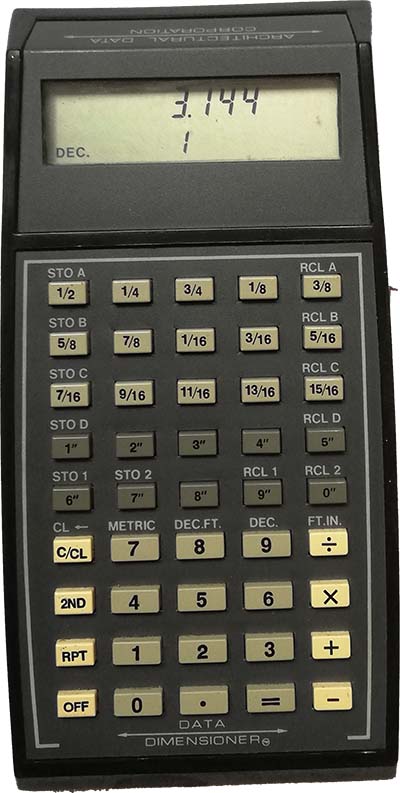 Model: Architectural Data Corp Data Dimensioner
Battery: 3 x ni-cd AA
AC adapter: ?
Year: 1985
Chip: TI ADC1984C / C11202NL / uPD7225G
Info: Architectural Data Corp introduced in 1984 with the Data Dimensioner ® an innovative product to calculate with mixed dimensions such as feet, inches, fractions and convert them to their metric or decimal equivalents.
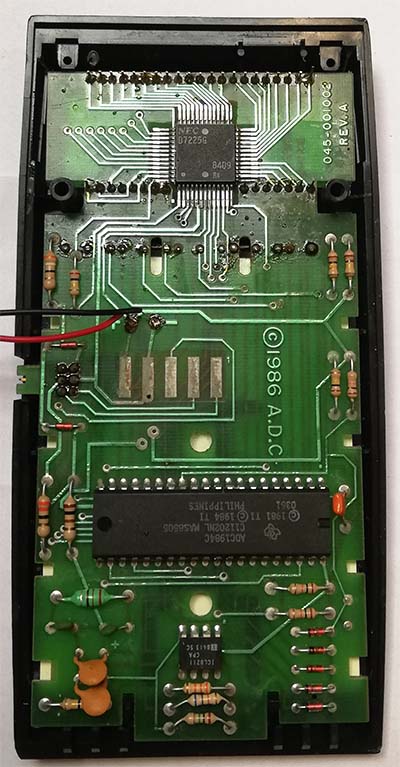
 Main components on the PCB are a Texas Instruments single-chip microcontroller with the markings ADC1984C and C11202NLsupported by a standard LCD driver NEC uPD7225G. Architectural Data Corp replaced the complete electronics of the TI-58C calculator and swapped the power hungry LED-Display with a then state-of-the-art LC-Display with two lines and alphanumerical font.
 Model: M27 version 2
Battery: 5 x AA cells
AC adapter:
Year: 1973
Chip: TMS0105NL
Info: Version 1: Rectangular design, no CE key / Version 2: Rectangular design, red CE key / Version 3: Rounded design, red CE key. Made in Germany
 Model: R-4000
Battery: 2 x D cells
AC adapter:
Year: 1978
Chip: TMS1073NL
Info: made in Germany
 Model: Bonark 121
Battery: 2 x AA
AC adapter:
Year: 1977
Chip: TMC1044NL
Info:
 Model: 905
Battery: 3 x 1,2 ni-cd
Adapter: 6 volt AC
Year: 1973
Chip: TMS0103NC
Info:
Model: MX-80
Battery: 6 x 1,2 ni-cd
Adapter: 14 vac
Year: 1973
Chip: TMS0127NC
Info:
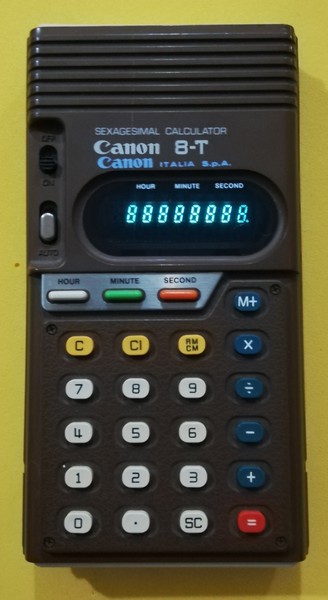
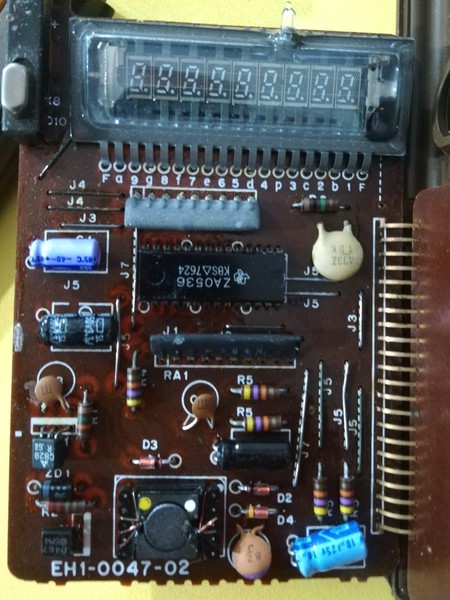 Model: 8-T
Battery: 2 x AA
Adapter:
Year: 1976
Chip: ZA0536
Manual:
Info:The Canon Palmtronic 8-T is an unique sexagesimal calculator dealing not only with decimal numbers but also with Hours, Minutes and Seconds./ Made in Japan
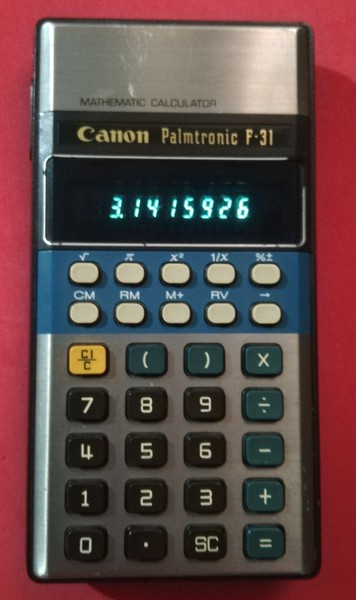
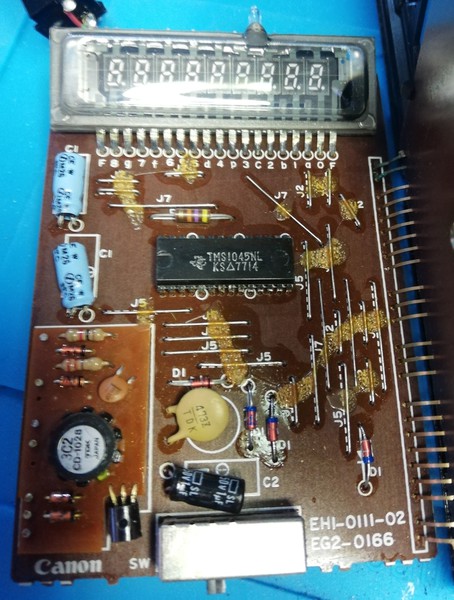 Model: F-31
Battery: 2 x AA
Adapter:
Year: 1977
Chip: TMS1045
Manual:
Info:The Canon Palmtronic F-31 is another calculator based on the TMS1000 Microcomputer family. The TMS1045 found inside the F-31 is similar to the calculator circuit of the TI-2550-III./ Made in Japan
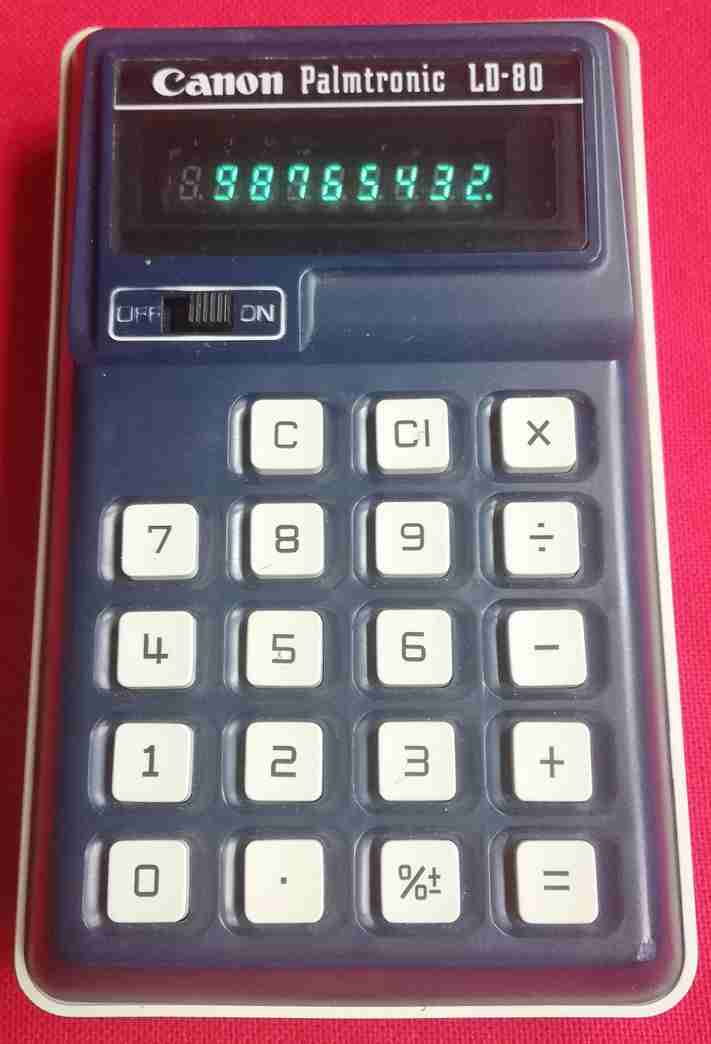 Model: LD-80
Battery: 4 x AA
Adapter: AD-1
Year: 1974
Chip: TMS0855
Manual:
Info: made in Japan
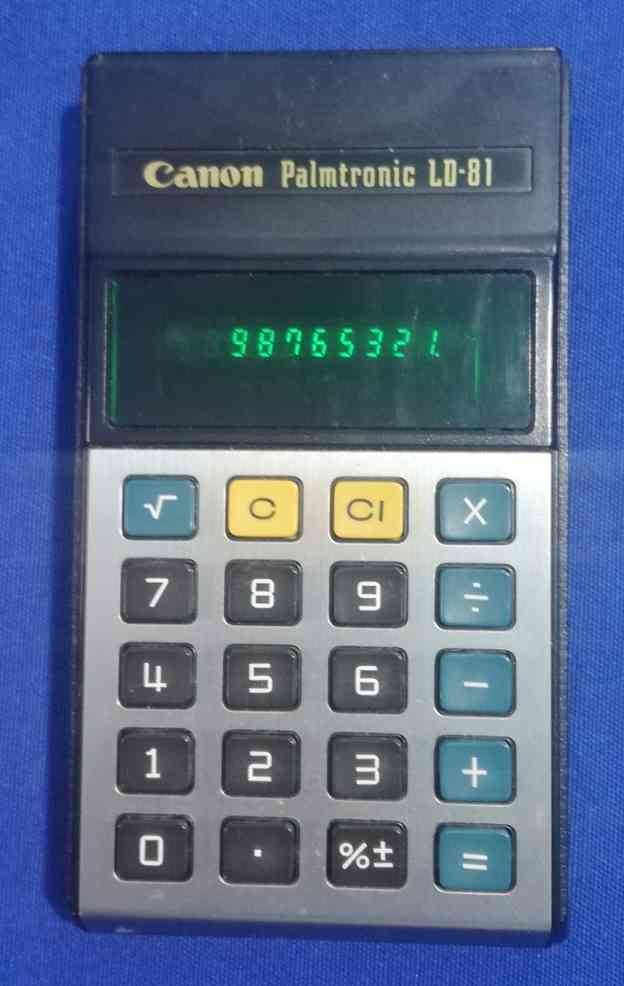 Model: LD-81
Battery: 4 x AA
Adapter: AD-1
Year: 1974
Chip: TMS0855
Manual:
Info: made in Japan
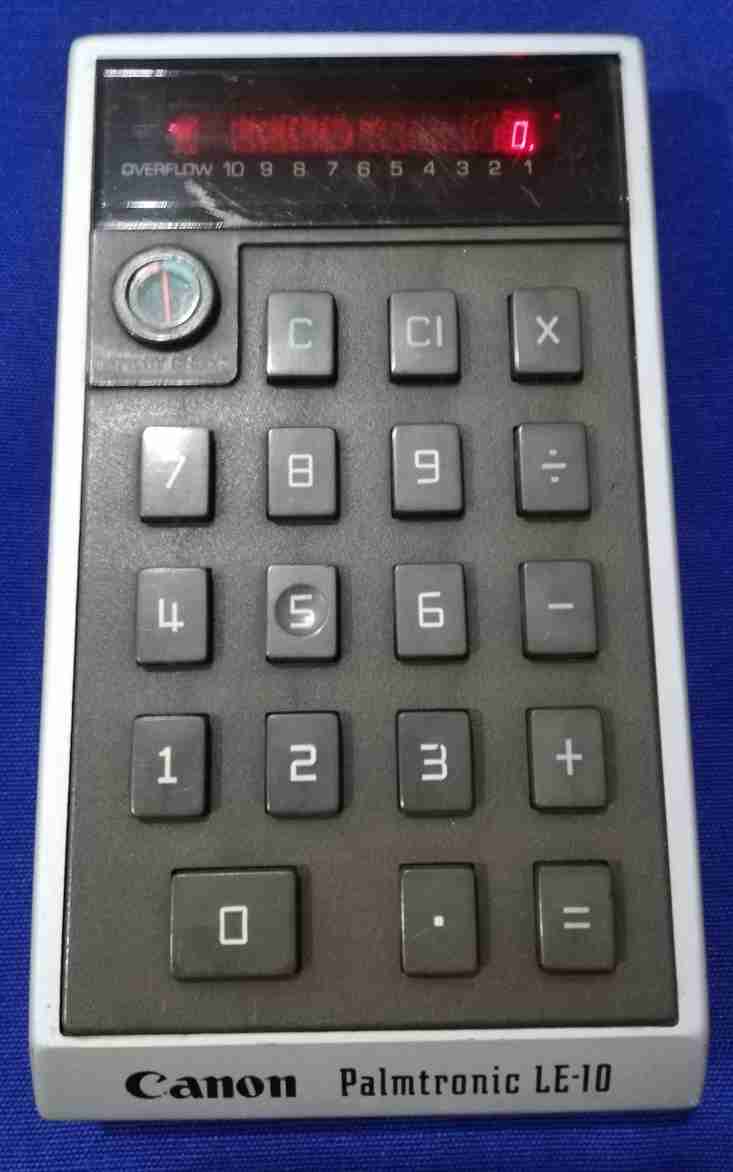 Model: LE-10 Palmtronic
Battery: 4 x AA ni-cd
Adapter:
Year: 1972
Chip: TMC1824, TMC1825A
Manual:
Info: made in Japan
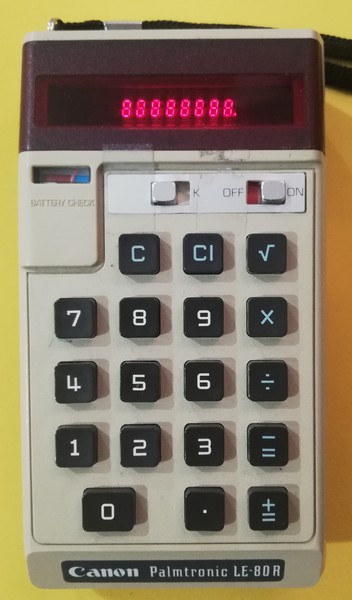 Model: LE-80R
Battery: 4 x AA
Adapter:
Year: 1973
Chip: TMS0126
Manual:
Info: made in Japan
 Model: LE-81M
Battery: 4 x AA ni-cd
Adapter:
Year: 1974
Chip: TMC0605
Manual:
Info: made in Japan
 Model: LE-83
Battery: 4 x AA
Adapter:
Year: 1974
Chip: TMS0101
Manual:
Info: made in Japan
 Model: LE-84
Battery: 4 x AA
Adapter:
Year: 1974
Chip: TMS0801
Manual:
Info: made in Japan
 Model: LE-85
Battery: 4 x AA
Adapter:
Year: 1974
Chip: TMS0807
Manual:
Info:made in Japan
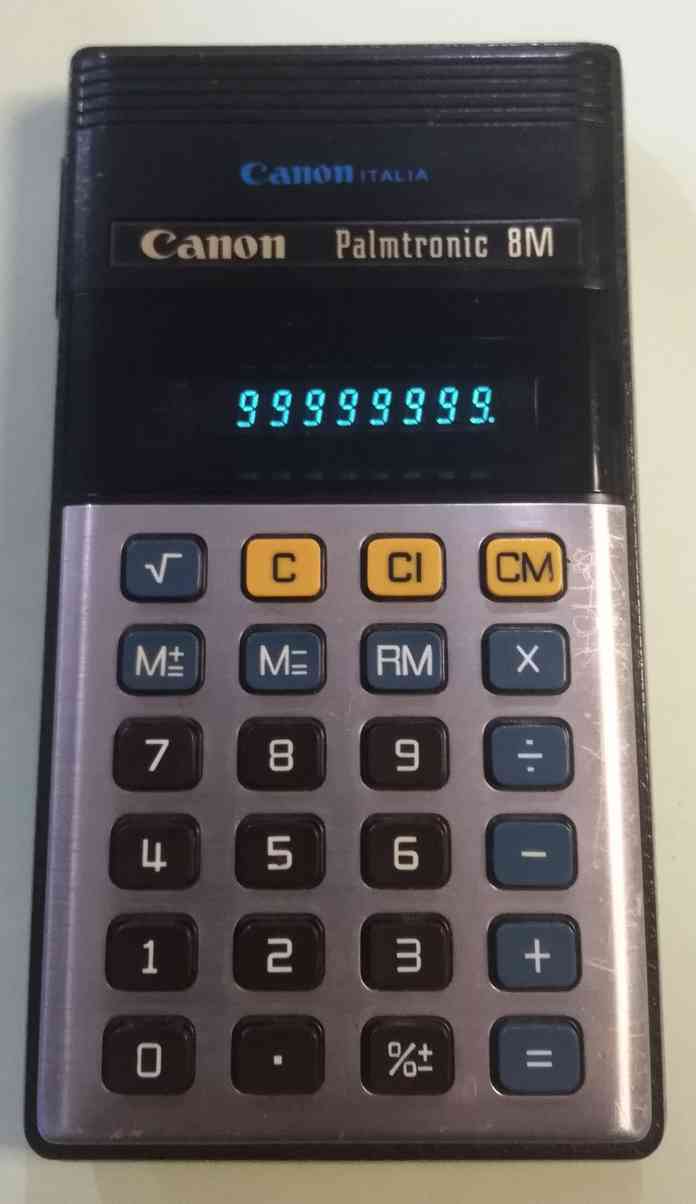
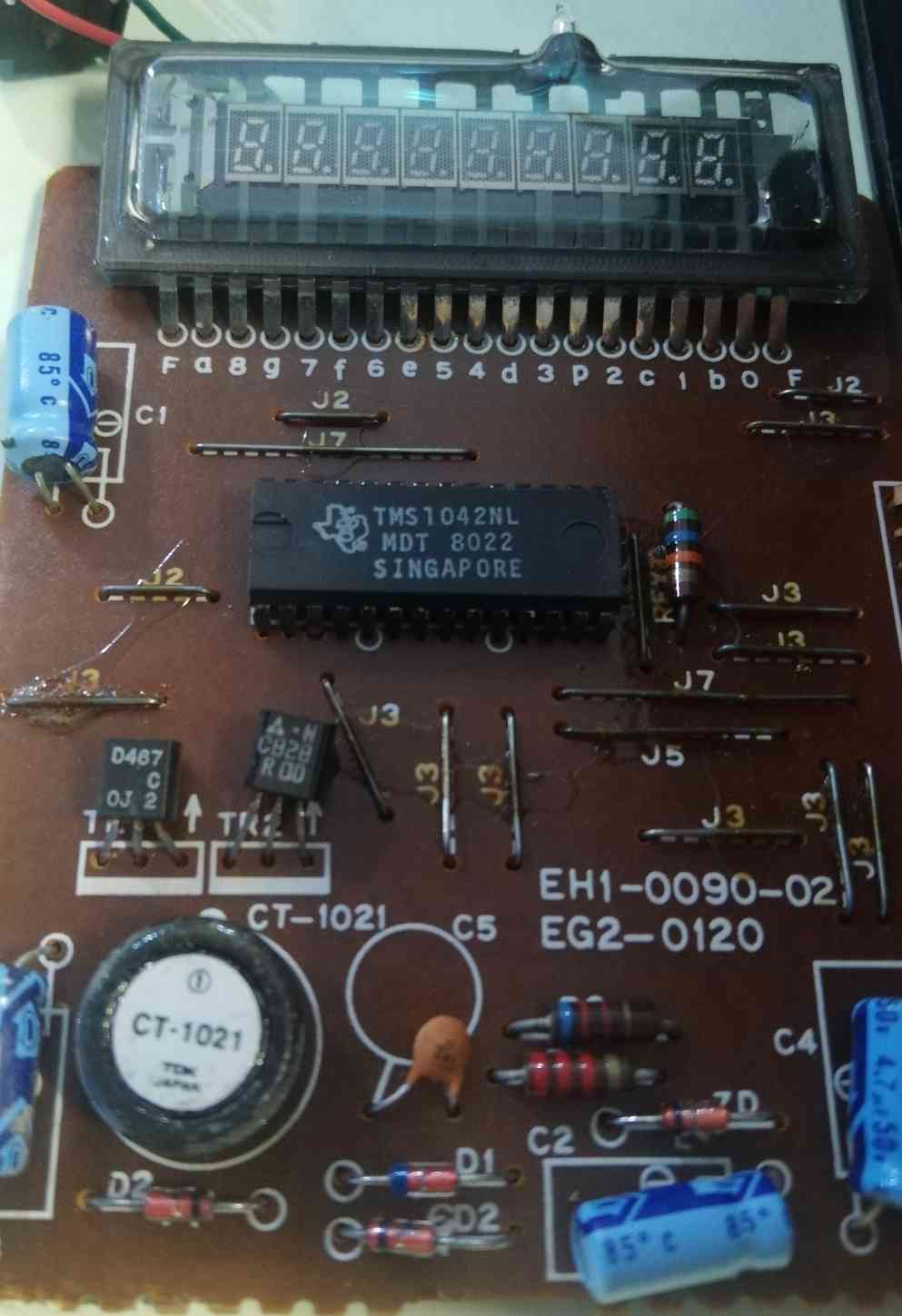 Model: Palmtronic 8M
Battery: 2 x AA
Adapter:
Year: 1980
Chip: TMS1042NL
Manual:
Info: made in Japan
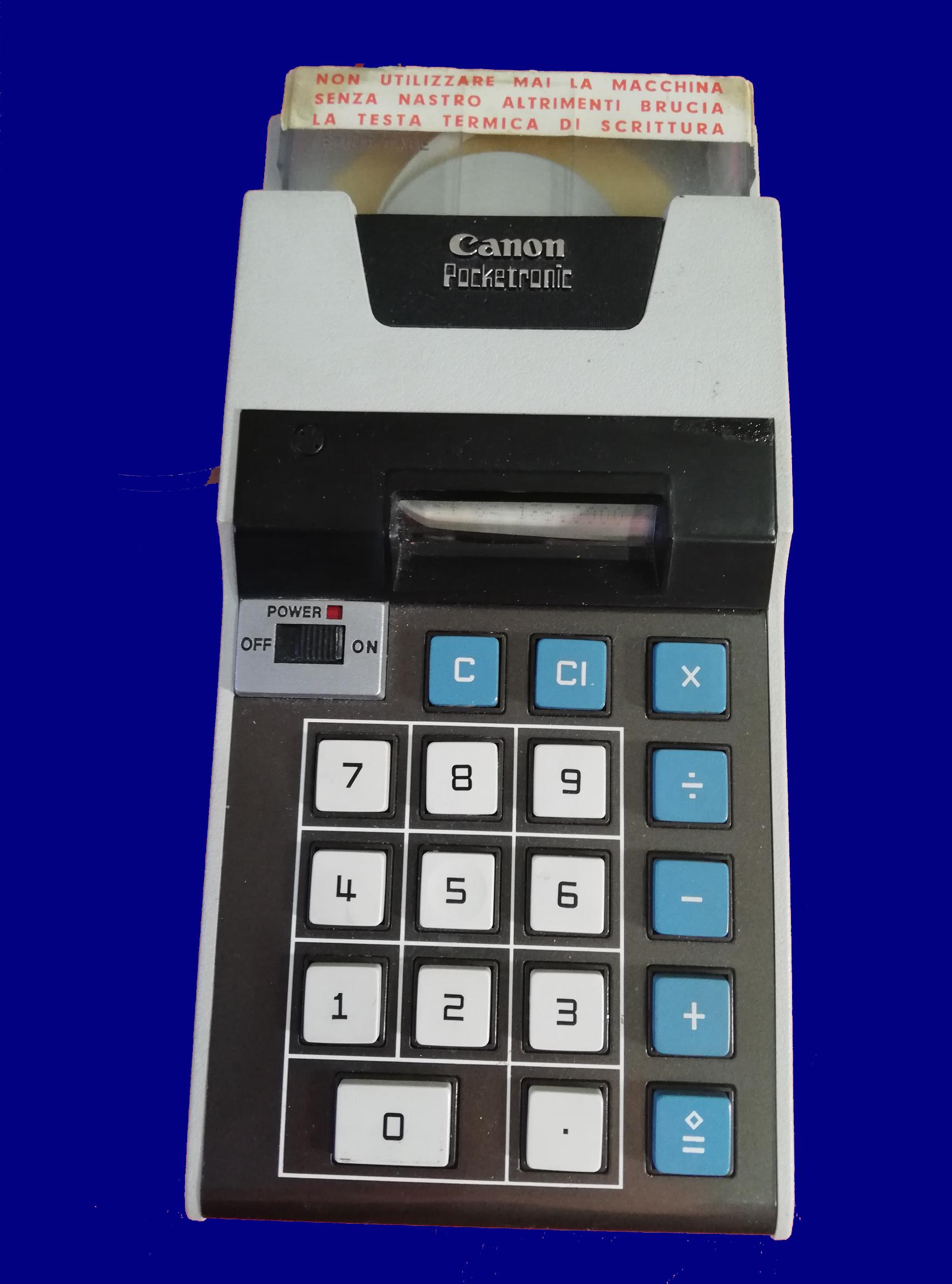 Model: Pocketronic Canon
Battery: 6*NiCd AA + 7*NiCd 2/3AA
Adapter: Charger 21
Year: 1972
Chip: TMC1730, TMC1731, TMC1732, SN21893
Manual: 
Info:made in Japan .Canon immediately understood the Texas Instruments project started in September 1965 and ended in 1967 of Cal-Tech's potential. Together they developed the Canon Pocketronic, the first calculator based on LSI (Large Scale Scale Integrated) circuits. Three LSI circuits were needed to have a calculation capacity of 12 digits, 8 integers and 4 decimals.The calculator was manufactured in Japan but uses many components produced by Texas Instruments. In addition to the LSI circuits, they used the print head for thermal paper and transistors.
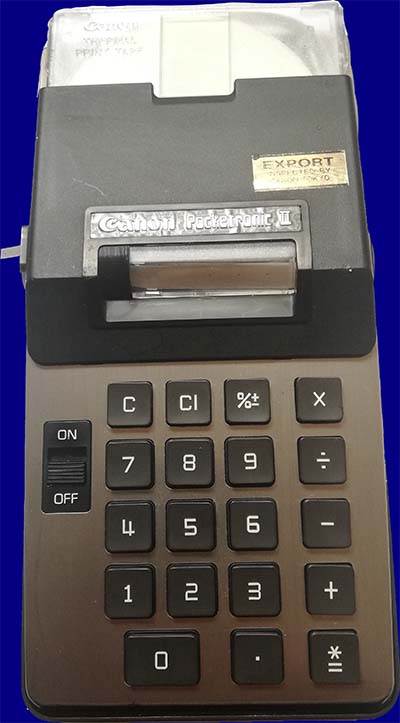 Model: Pocketronic II
Battery: 11 x NiCd AA
Adapter: CANON ch-1
Year: 1974
Chip: TMS0138, TMS0641
Manual:
Info: made in Japan
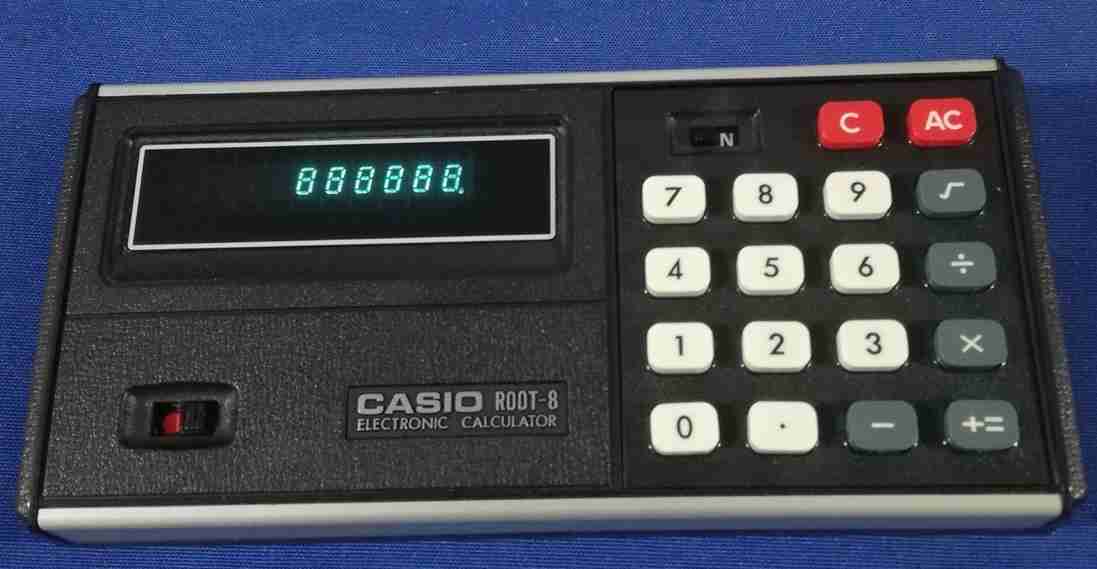
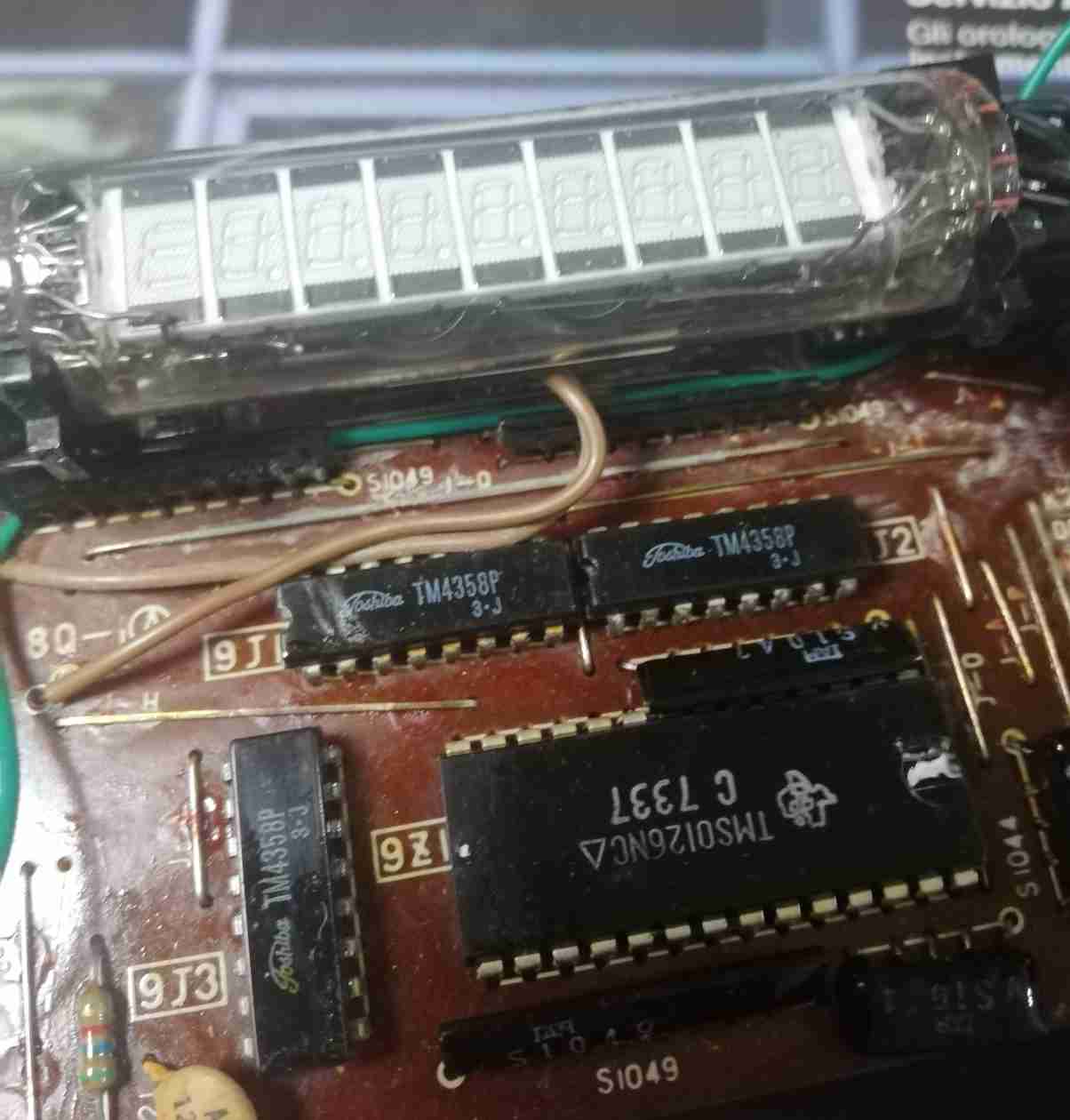 Model: ROOT-8
Battery: 4 x AA
AC adapter:
Year: 1973
Chip: TMS0126NC
Info: made in Japan
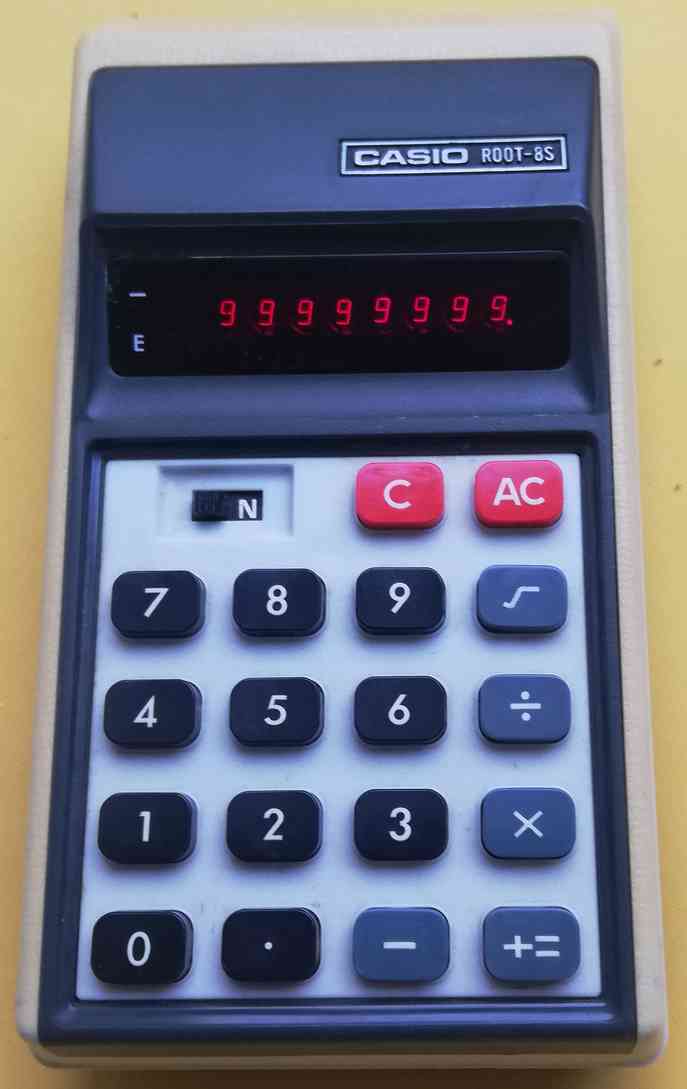 Model: ROOT-8S
Battery: 4 x AA
AC adapter: AD4145
Year: 1974
Chip: TMS0126NC
Info: made in Japan
.jpg) Model: 301
Model: 301
Battery: 4 x 1,2 ni-cd huasa
Adapter: Adapter AC-DC 801
Year: 1973
Chip: TMS0103NC
Manual:
Info: made in Japan
.jpg)
.jpg)
.jpg)
.jpg)
.jpg)
.jpg)
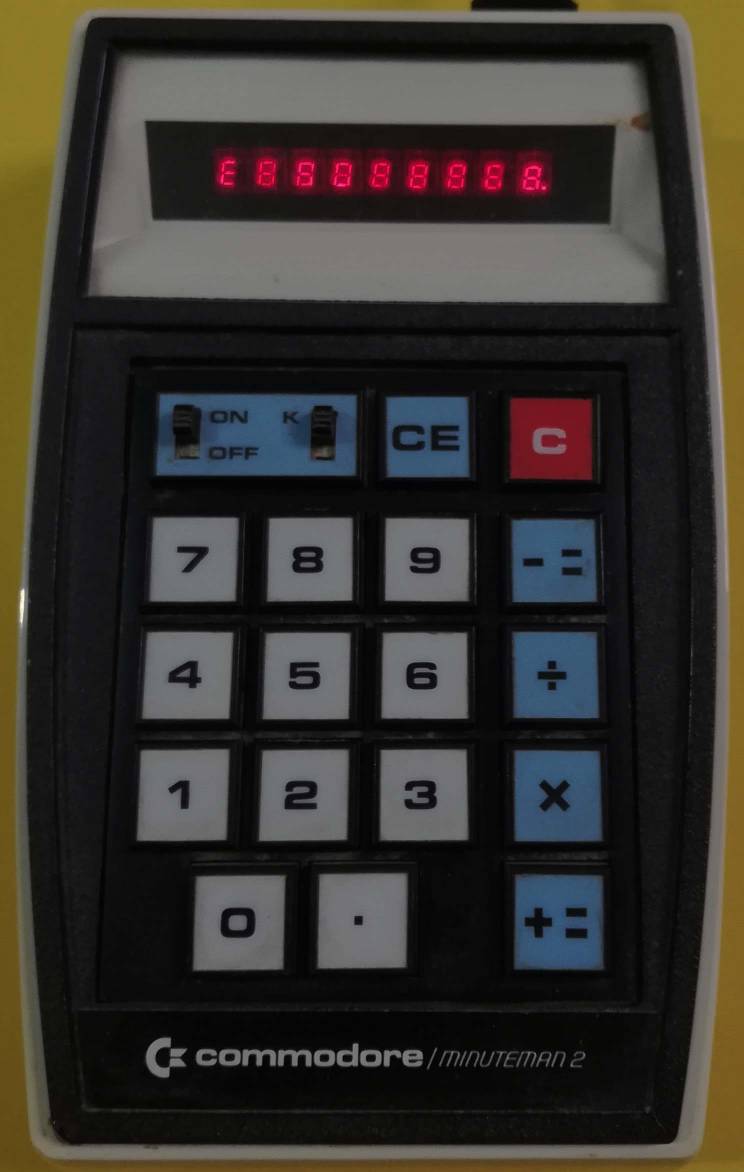 Model: Minuteman 2Battery: 6 x ni-cd AA
Adapter: Adapter ac 110 - dc 7,2 volt
Year: 1973
Chip: TMS0103NC
Manual:
Info: made in Japan
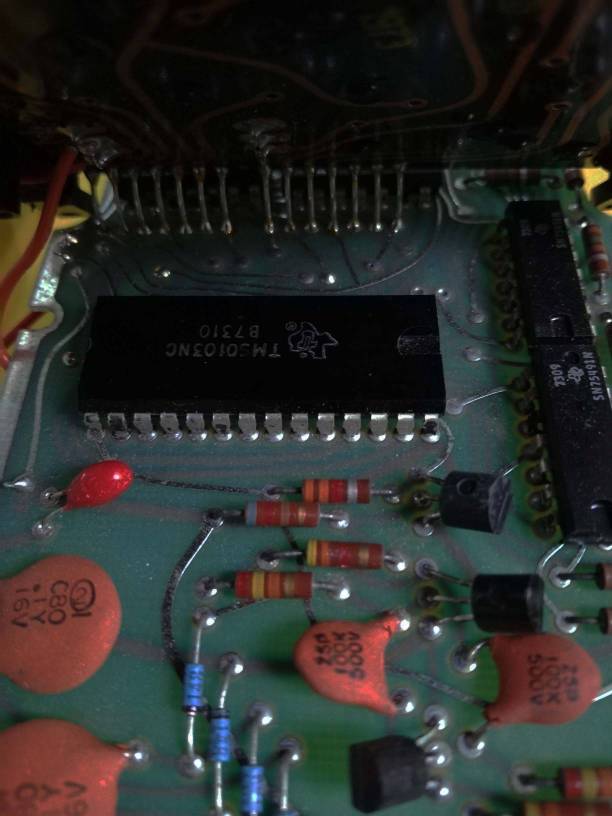
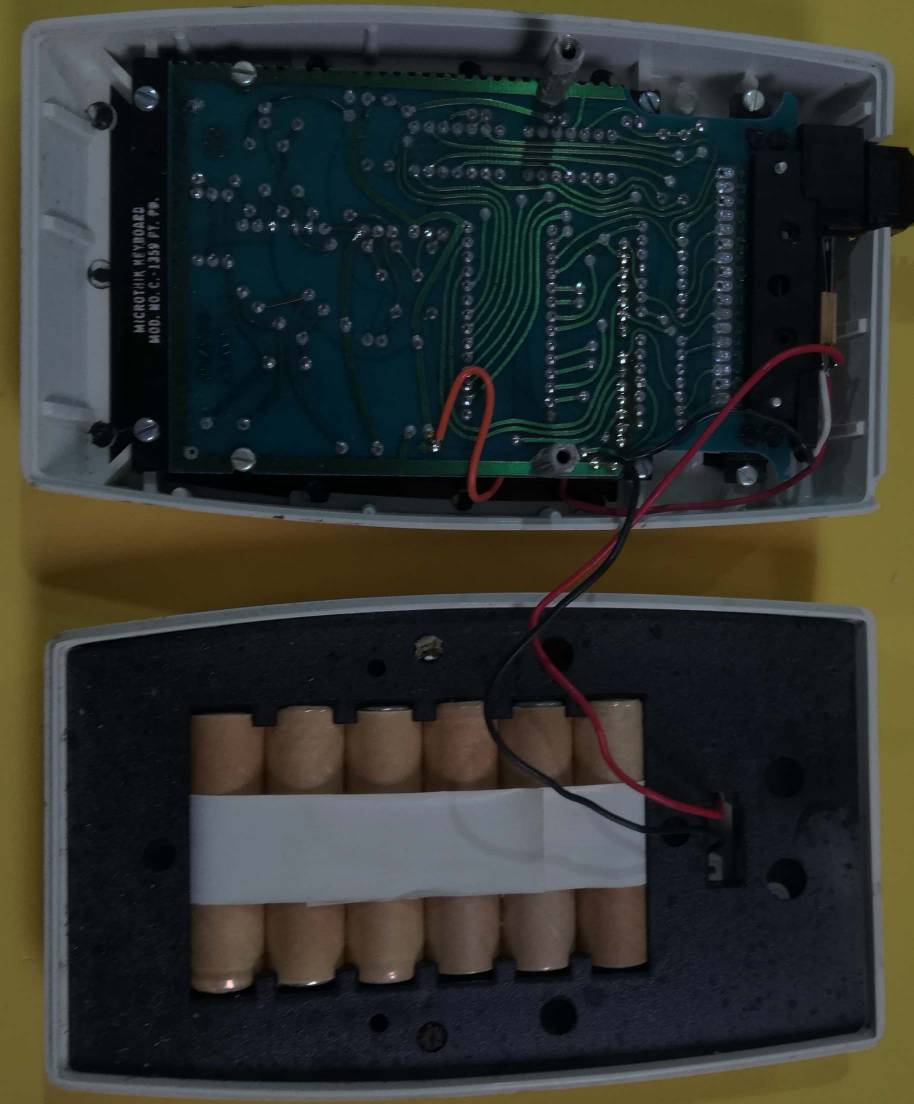
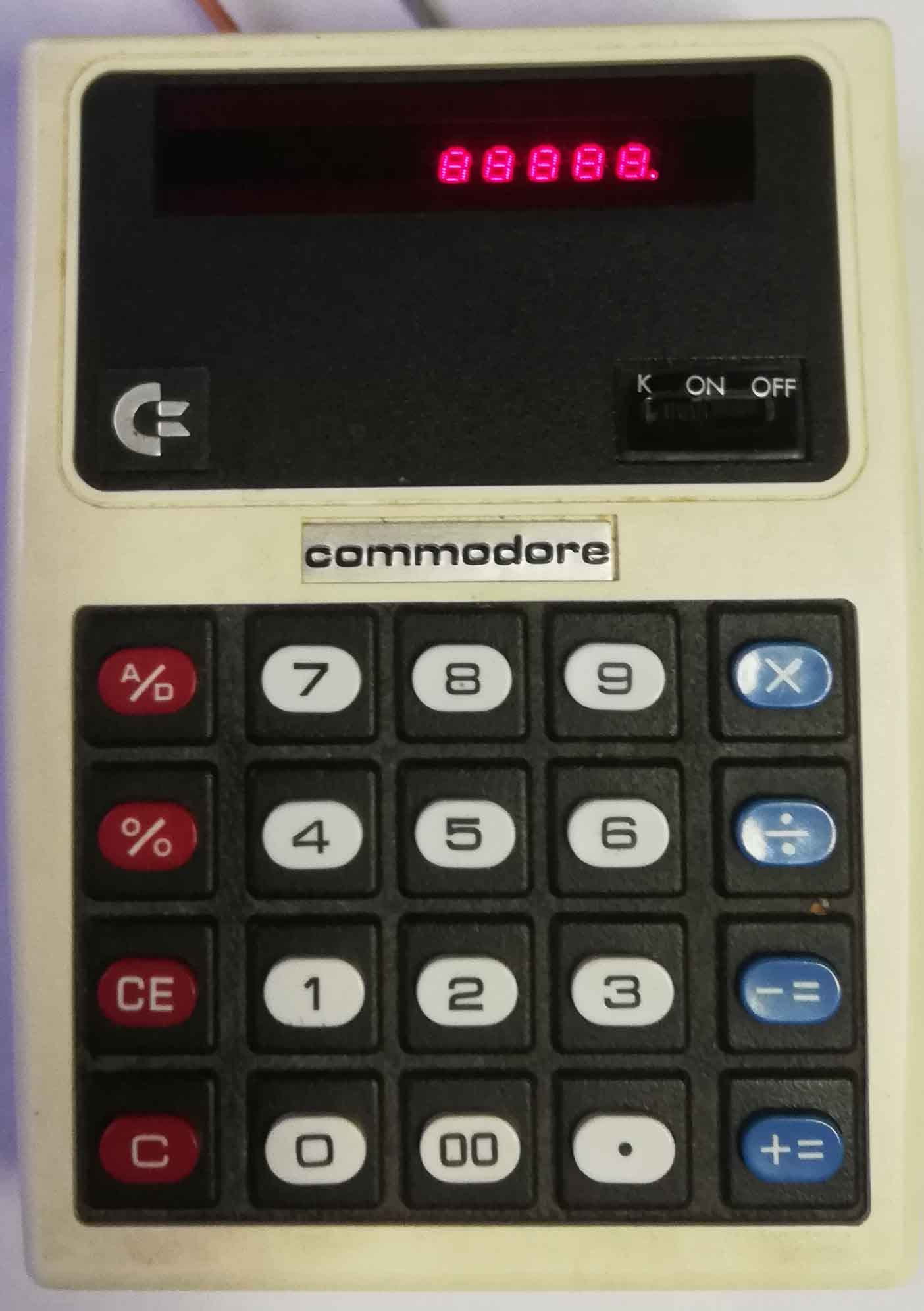 Model: Minuteman 3Battery: 4 x ni-cd 1/3 AA
Adapter: Adapter dc 6 volt
Year: 1973
Chip: TMS0128nc
Manual:
Info: made in Japan
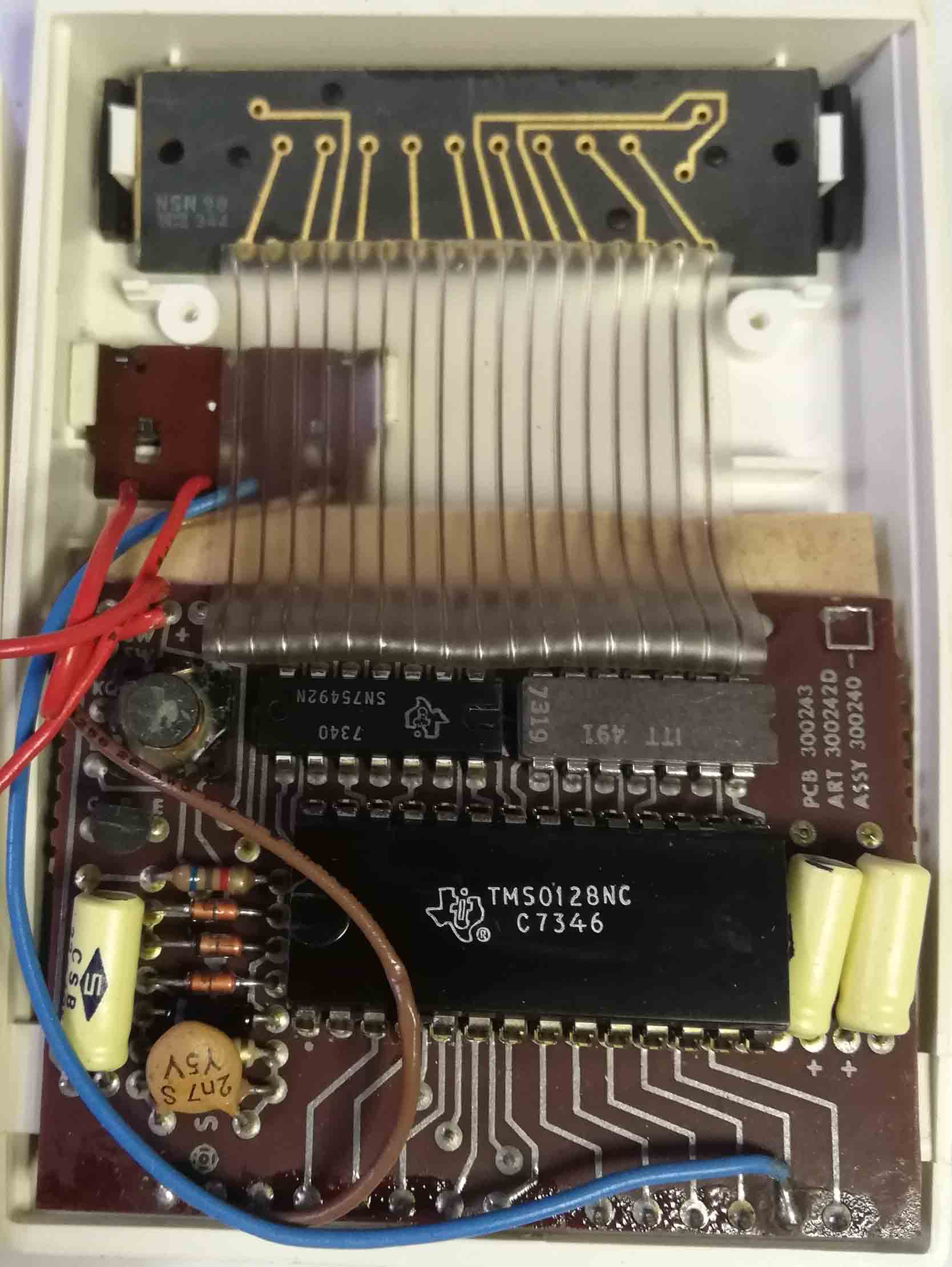
 Model: US-8
Battery:
Adapter: Adapter AC 110
Year: 1972
Chip: TMS0103NC
Manual:
Info: made in Japan
 Model: 324G Programable (two 80-step memories).
Battery: 4 x D cell rechargeable
Adapter: 3490059 6.5V DC
Year: 1973
Chip: Board 1) Texas Instruments TMC 1864NC, TMC 1871NC, General Instruments 8KR029, 8KR03A, Intel 4x 2102, AMD 3x 93L0059X. Board 2) Texas Instruments TMC 1866MC, TMC 1867NC, TMC 1870, TMC 1872NC. Board 3) Texas Instruments TMC 1869NC, TMC 1884NC.
Manual:
Info: The Compucorp 324G could be called the best engineered calculator of its time. Introduced in the year 1972 the 300-line from Computer Design Corporation (CDC) were far ahead of their time. CDC, Los Angeles designed an universal data-processor with external ROM's for the operating system and mathematical functions and external RAM for data- and program-storage. Made in USA
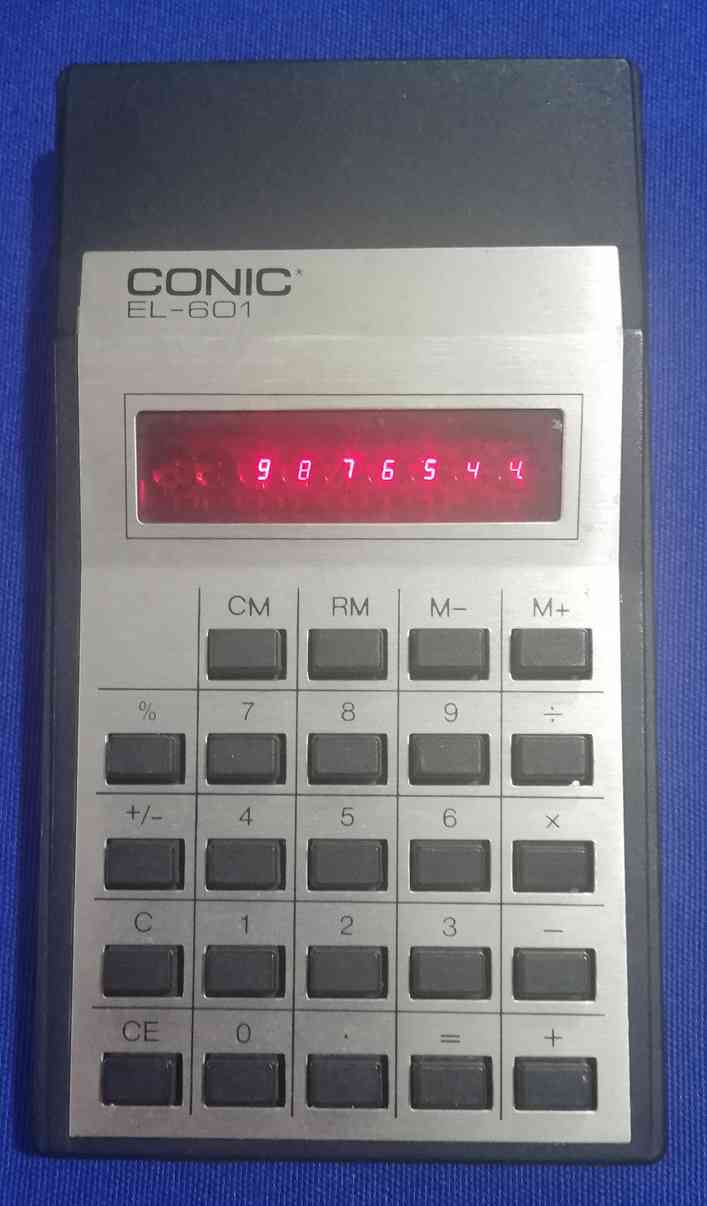 Model: EL-601
Battery: 9 volt
AC adapter:
Year: 1975
Chip: TMS0972
Info: This is a nearly perfect copy of the TI-1250
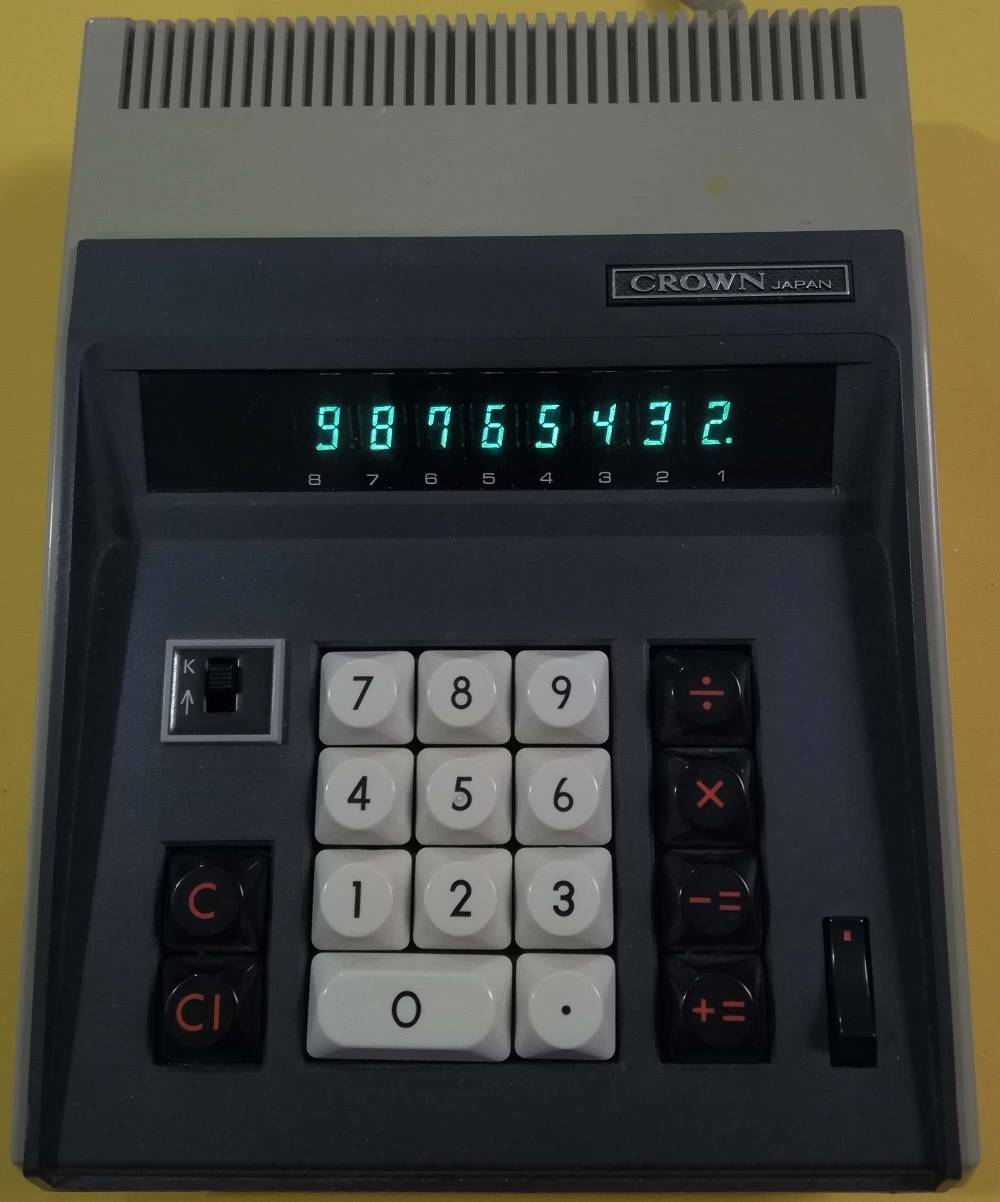 Model: CL-80K
Battery:
Adapter: Adapter AC 110
Year: 1972
Chip: TMS0105BNC
Manual:
Info: made in Japan
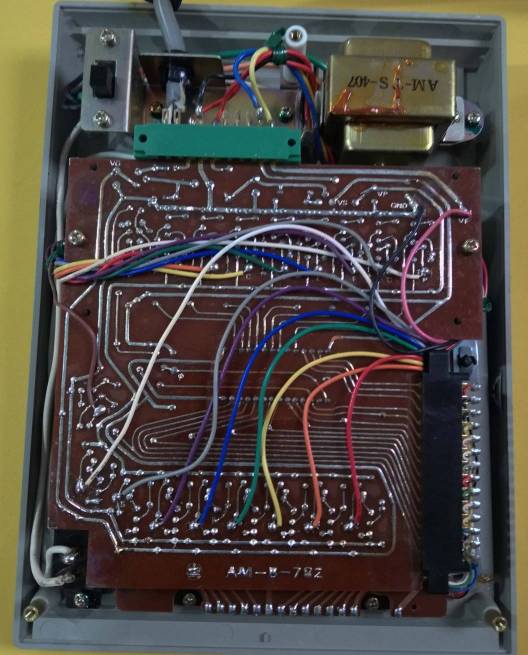
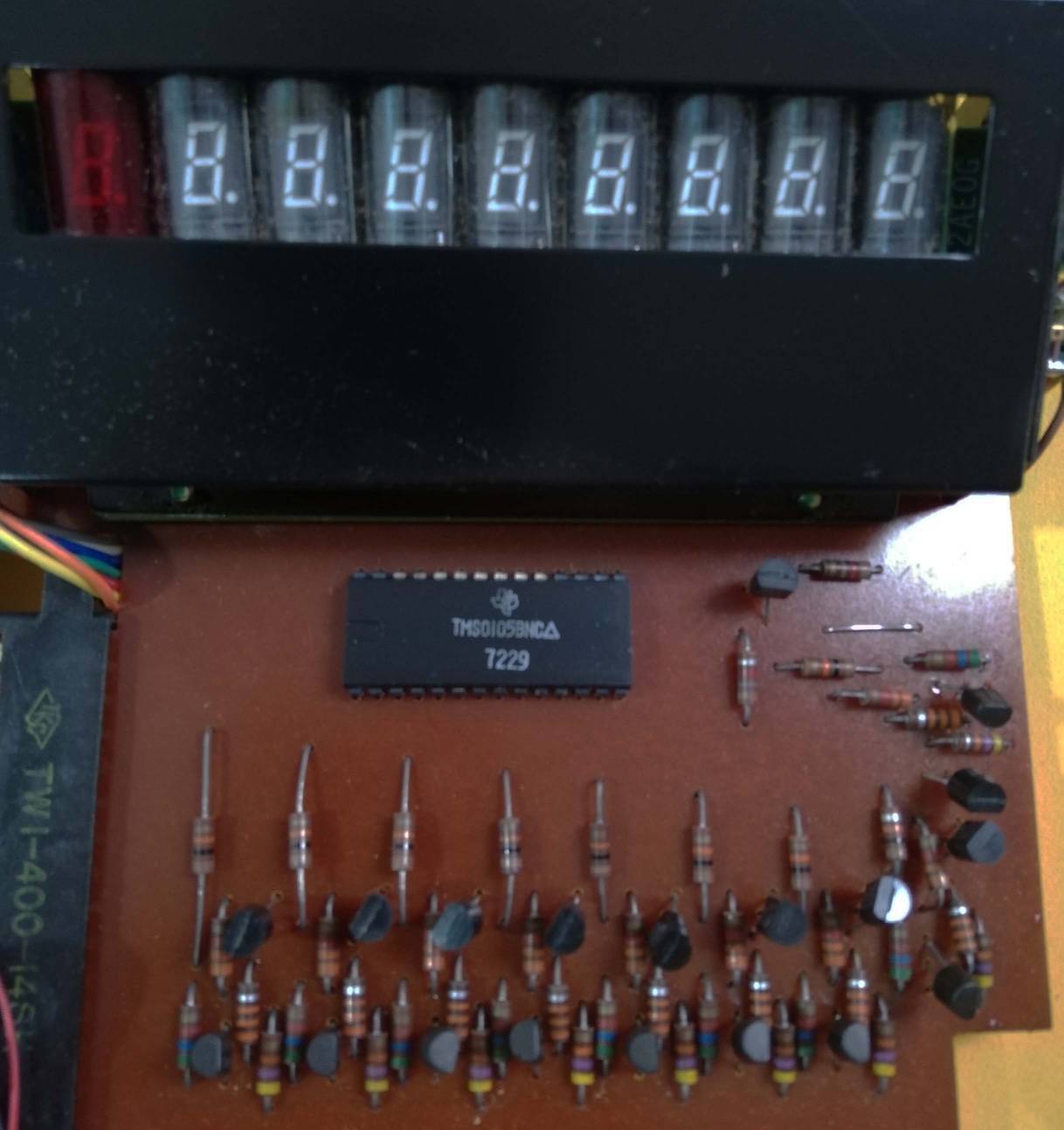
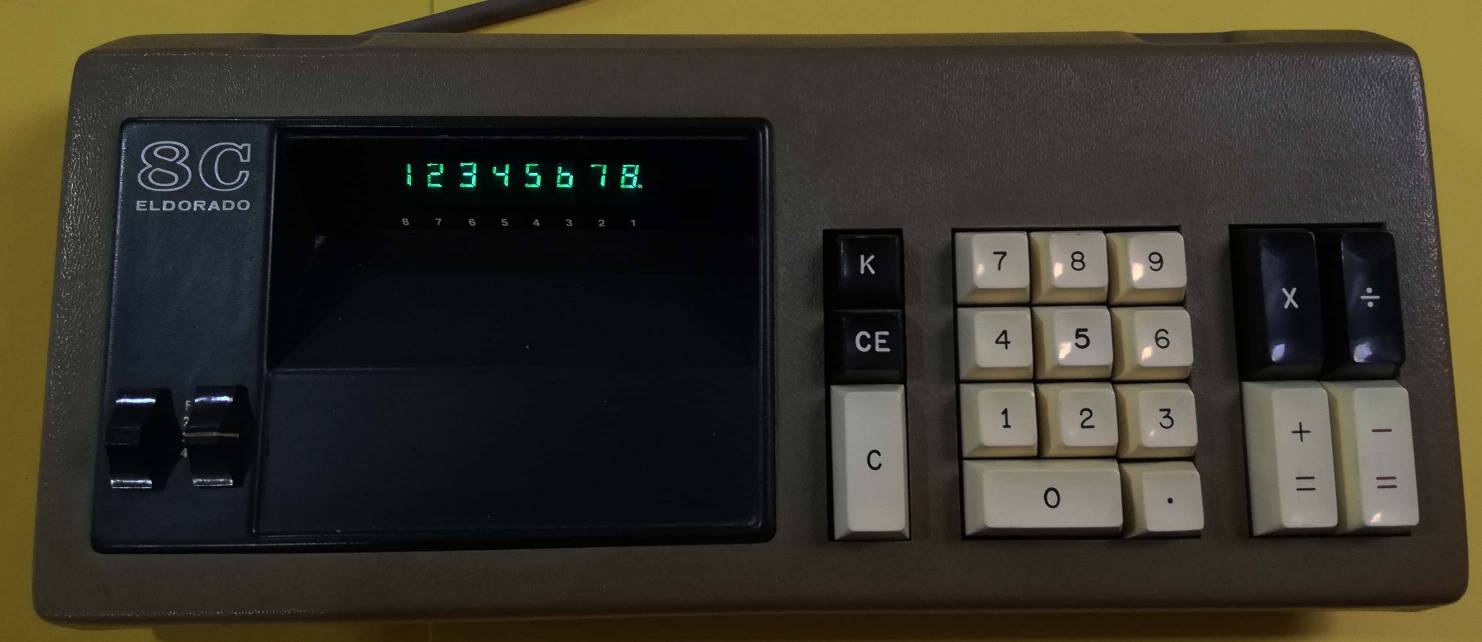 Model: 8C
Battery:
Adapter: Adapter AC 110
Year: 1971
Chip: TMS1802
Manual:
Info: made in Japan
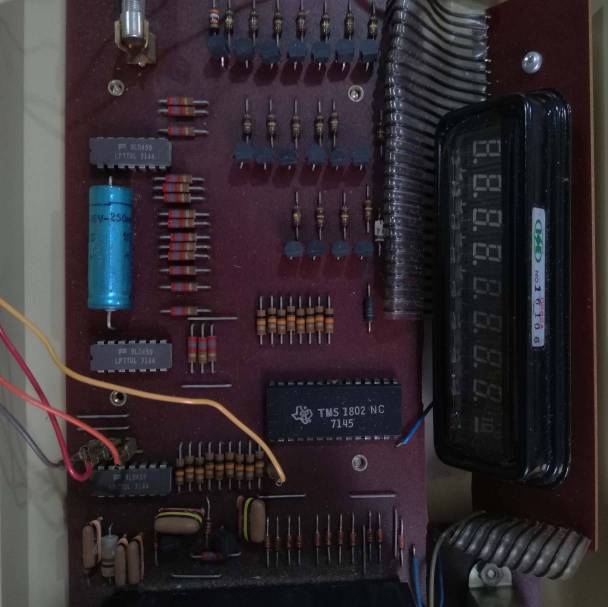
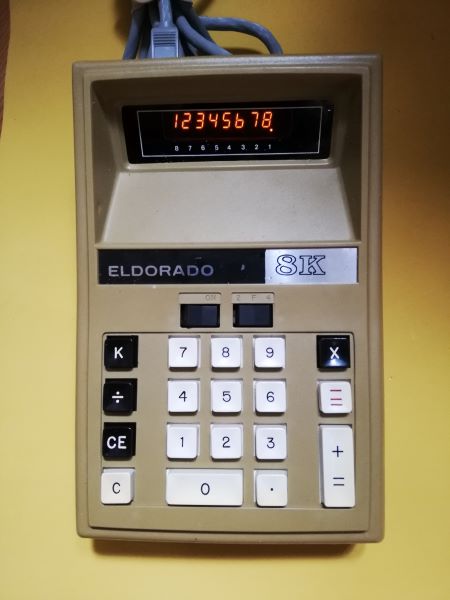 Model: 8K
Battery: 4 x ni-cd 1/2 C
Adapter: cable AC 110
Year: 1972
Chip: TMS0103
Manual:
Info:made in Japan
.jpg) Model: Director Two
Model: Director Two
Battery: no
Adapter: cable AC 110
Year: 1972
Chip: TMS0103
Manual:
Info:made in Japan
.jpg)
.jpg)
.jpg)
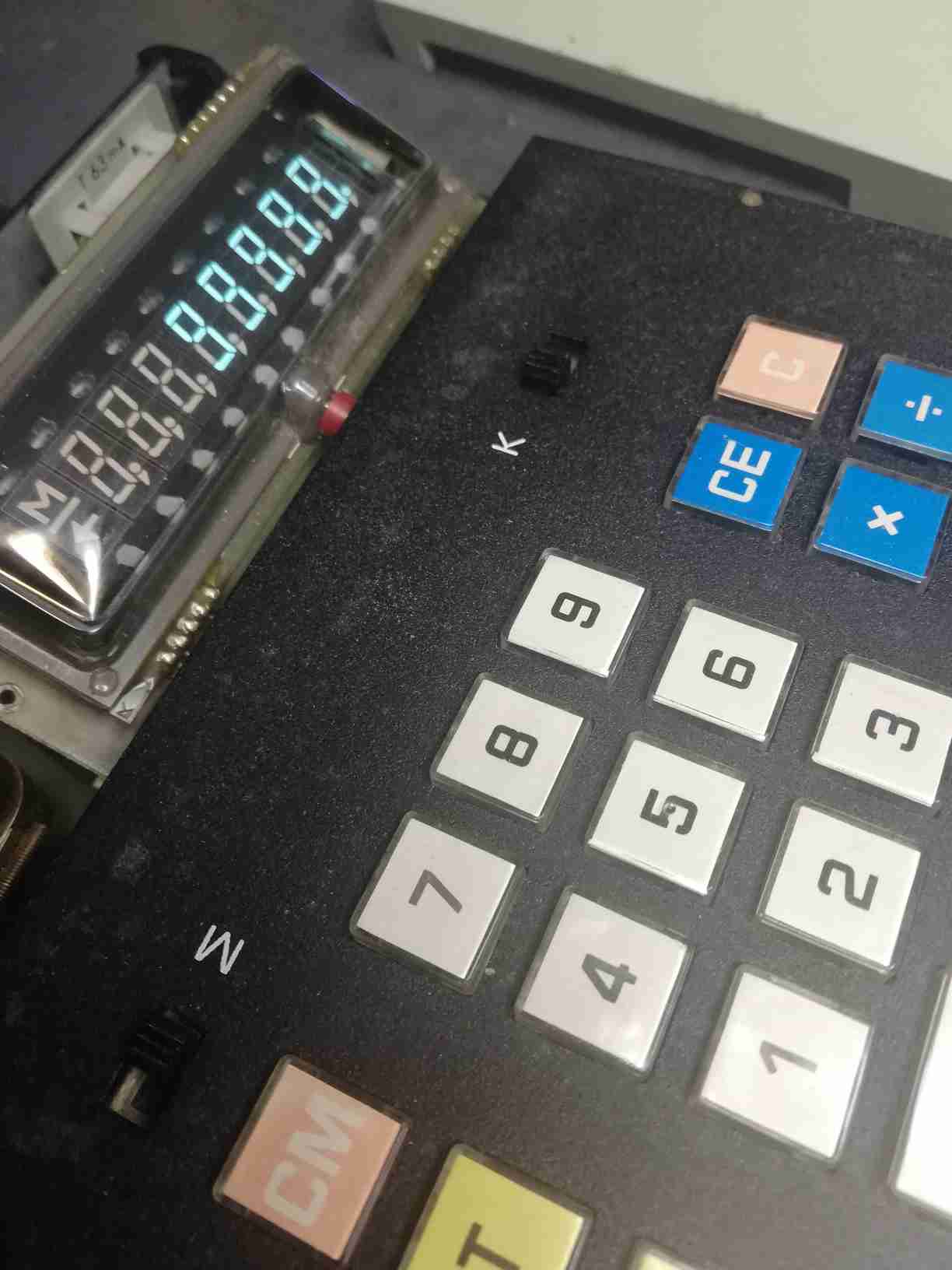
Model: Hunor 88
Battery: no
Adapter: AC 220 volt
Year: 1977
Chip: TMS0132
Info:The Hunor 88 was produced from 1977 to 1979.
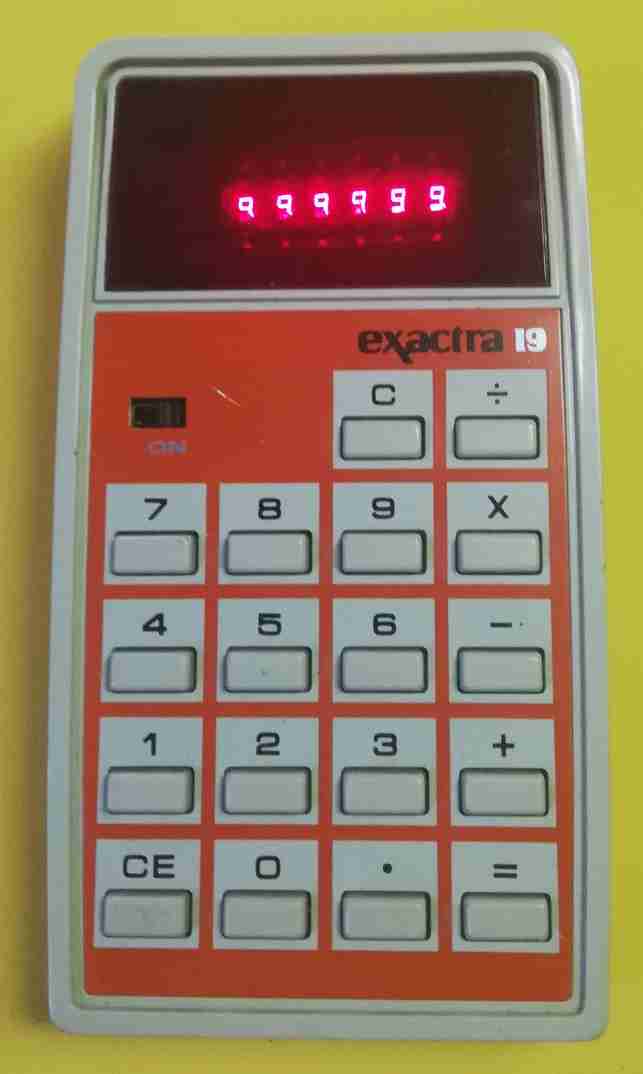 Model: Exactra 19
Battery: 3 x AA
Adapter:
Year: 1974
Chip: TMC0806
Manual: with permission www.datamath.org
Info:When The Ohio State University approached Texas Instruments early in Summer 1974 with the demand of Thousands of high quality calculators in the $15.00 to $20.00 range for a Classroom Experiment, they actually initiated the development of this Exactra 19.
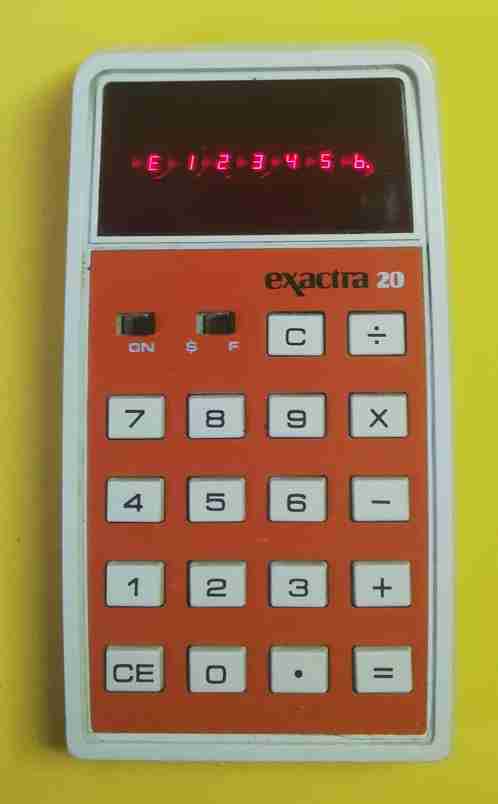 Model: Exactra 20
Battery: 3 x AA
Adapter:
Year: 1974
Chip: TMC0135
Manual: with permission www.datamath.org
Info: Texas Instruments introduced early in 1974 the Exactra line of calculators with the handheld models Exactra 20, Exactra 21, Exactra 22 and Exactra 23. The line was complemented with one desktop calculator named Exactra 31. The Exactra calculators do not use the name of the manufacturer on their nameplates, you have to read the small printed on the reverse to locate the Texas Instruments logo. The reasons are not clear, let us assume that in the middle of the decline of the calculator prices the marketing guys tried to establish a low-budget line.
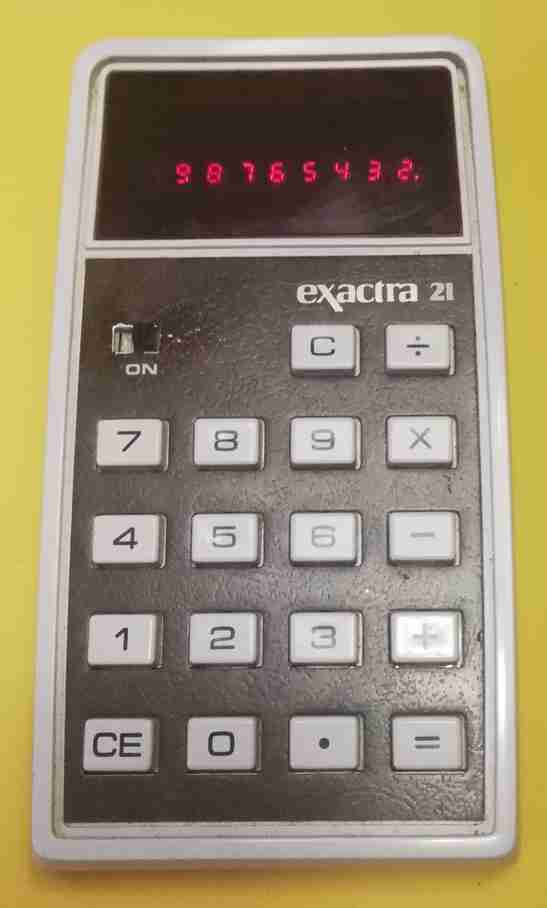 Model: Exactra 21
Battery: 3 x AA
Adapter:
Year: 1975
Chip: TMC0803
Manual:
Info: The Exactra 21 with it's brown keyplate uses a 8-digit display and similar electronics to the TI-1500 and TI-2500-II calculators.
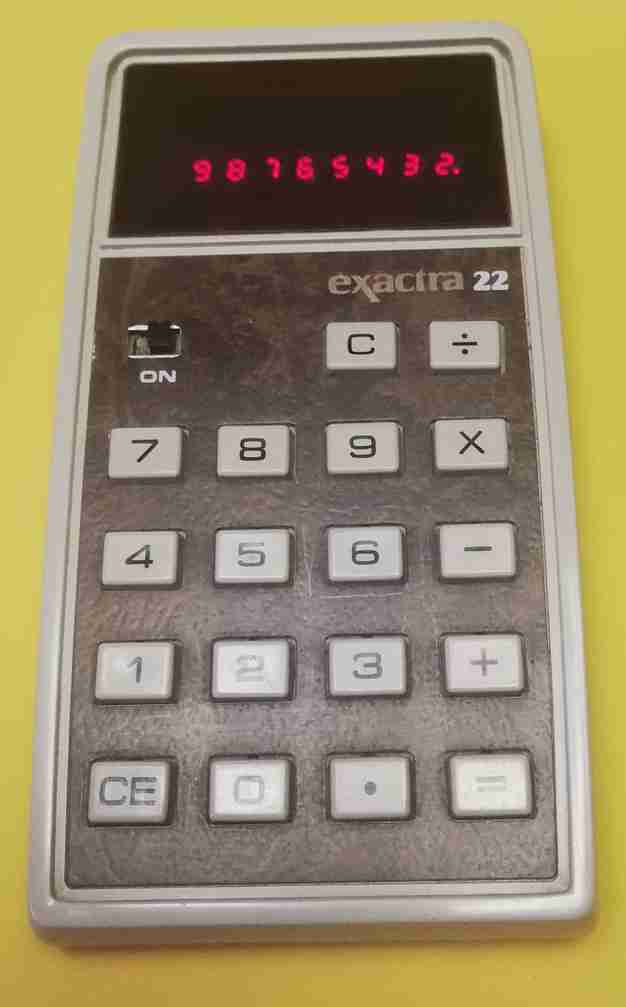 Model: Exactra 22
Battery: 3 x AA
Adapter: AC9160
Year: 1975
Chip: TMC0803
Manual:
Info:
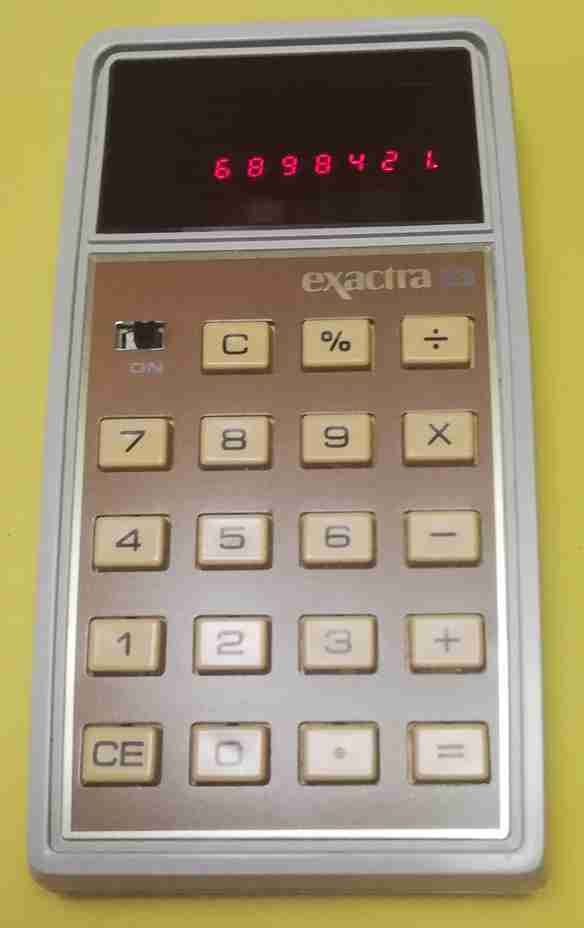 Model: Exactra 23
Battery: 3 x AA
Adapter: AC9160
Year: 1975
Chip: TMC0803
Manual: with permission www.datamath.org
Info: The Exactra 23 could be called the fully loaded model in the cheap Exactra line. It sports an 8-digit display, a %-key and a connector for an external power supply.
 Model: Exactra 31
Battery: no
Adapter: 120 volt
Year: 1974
Chip: TMS0109
Manual:
Info: Nothing else than a restyled TI-3000 with an additional sliding switch to select between Chain and Constant mode.
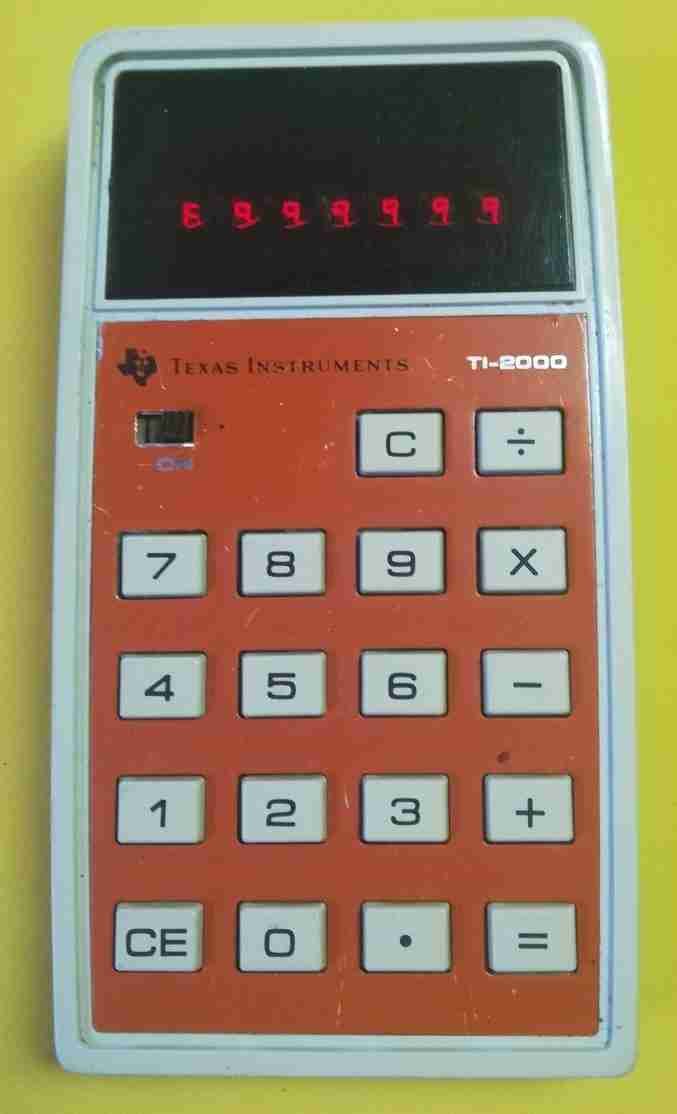 Model: Exactra TI-2000
Battery: 3 x AA
Adapter:
Year: 1975
Chip: TMC0135
Manual: with permission www.datamath.org
Info: Finally found the TI-2000 in the Exactra part of the Museum. The label on the backside of the TI-2000 indicates with the bold "Made in Italy" already that the TI-2000 was manufactured for the European market.
 Model: Barbie
Battery: 9 volt
AC adapter:
Year: 1985
Chip: TMS0972
Info:A lot of LED-calculators used the TMS0972 calculator chip developed for the TI-1200. The cutest ever was this Barbie calculator marketed by Concept 2000.
 Model: BINATONE MEMORY
Battery: 9 volt
Adapter:
Year: 1976
Chip: TMS0972
Info: This is a nearly perfect copy of the TI-1250. Made in Homg Kong
 Model: BOHSEI 3000
Battery: 9 volt
Adapter:
Year:
Chip: TMS0972
Info: This is a nearly perfect copy of the TI-1250. Made in Homg Kong
.jpg) Model: Dog Vanity Fair
Model: Dog Vanity Fair
Battery: 9 volt
AC adapter:
Year: 1979
Chip: TMS0972
Info:A lot of LED-calculators used the TMS0972 calculator chip developed for the TI-1200. The cutest ever was this Barbie calculator marketed by Vanity Fair.
.jpg)
.jpg)
.jpg)
 Model: Little Leaners
Battery: 9 volt
AC adapter:
Year: 1985
Chip: TMS0972
Info:A lot of LED-calculators used the TMS0972 calculator chip developed for the TI-1200.
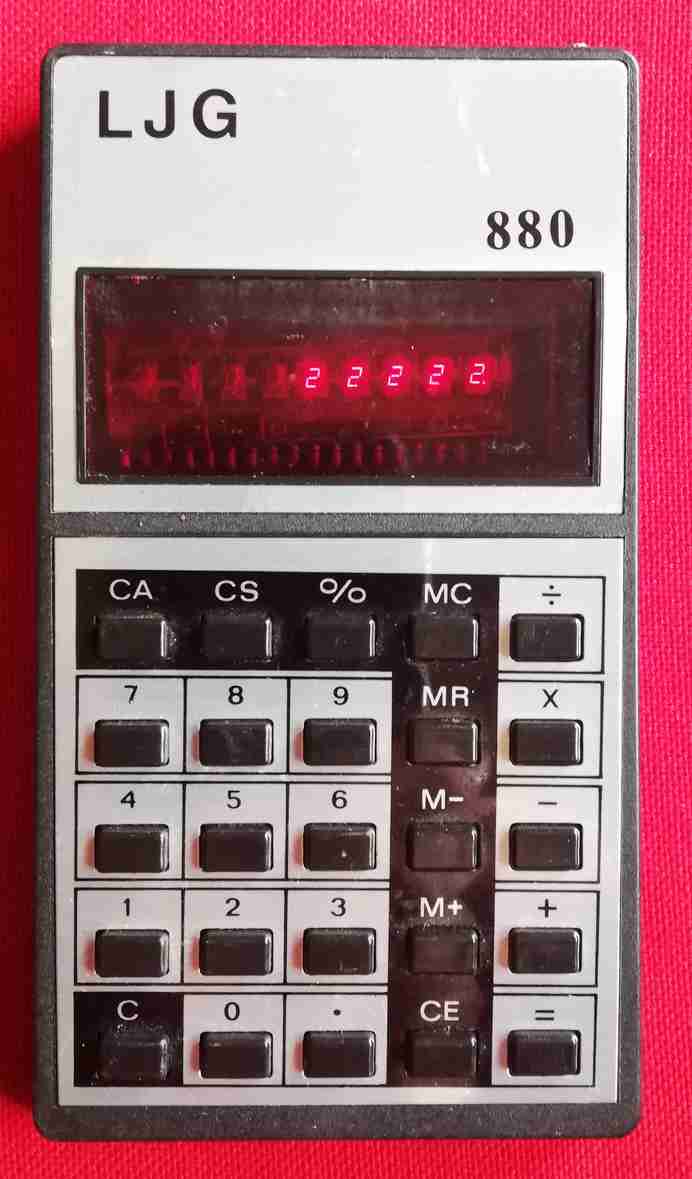 Model: LJG 880
Battery: 9 volt
Adapter:
Year:
Chip: TMS0972
Info: This is a nearly perfect copy of the TI-1250. Made in Homg Kong
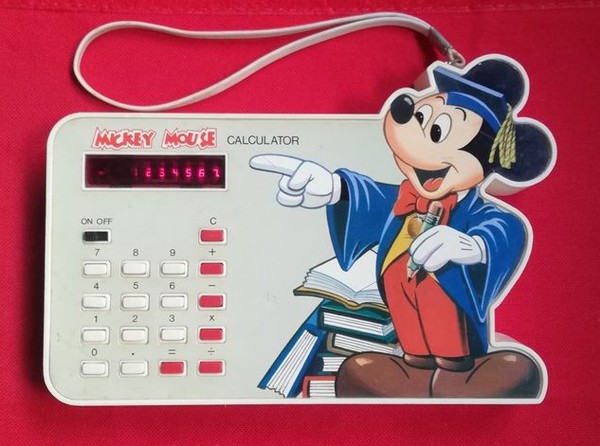 Model: Mickey Mouse
Battery: 9 volt
AC adapter:
Year: 1985
Chip: TMS0972
Info:A lot of LED-calculators used the TMS0972 calculator chip developed for the TI-1200.
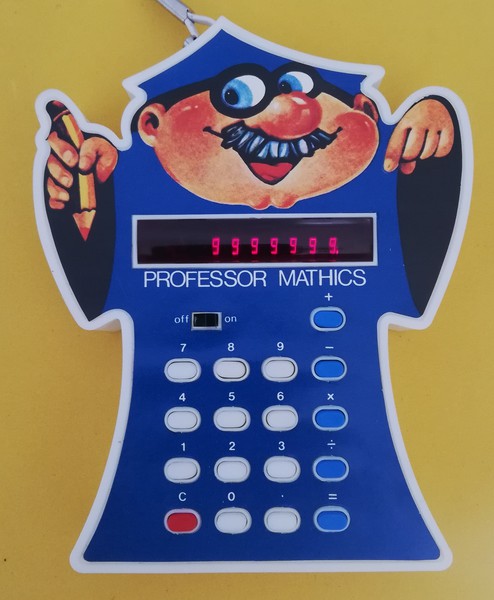
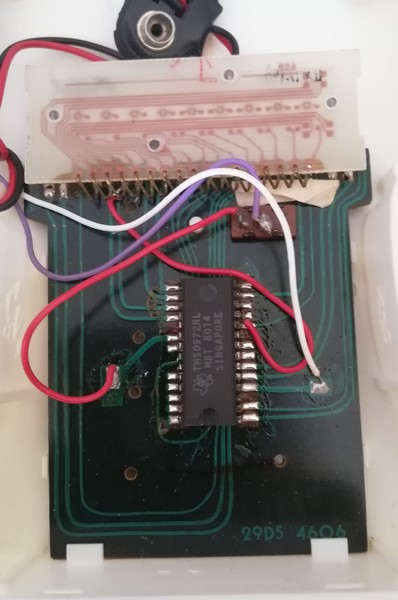 Model: Professor Mathics
Battery: 9 volt
AC adapter:
Year: 1985
Chip: TMS0972
Info:A lot of LED-calculators used the TMS0972 calculator chip developed for the TI-1200.
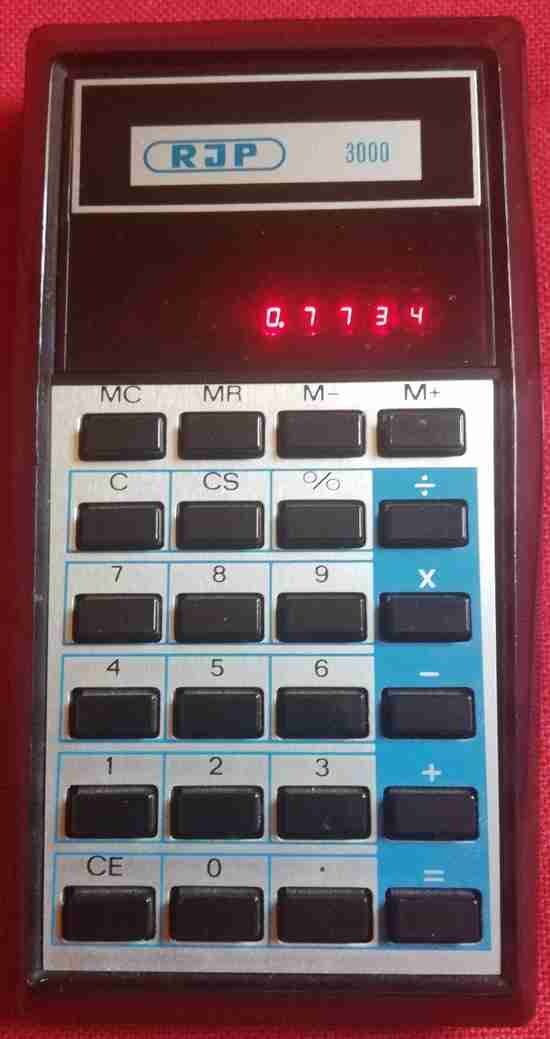
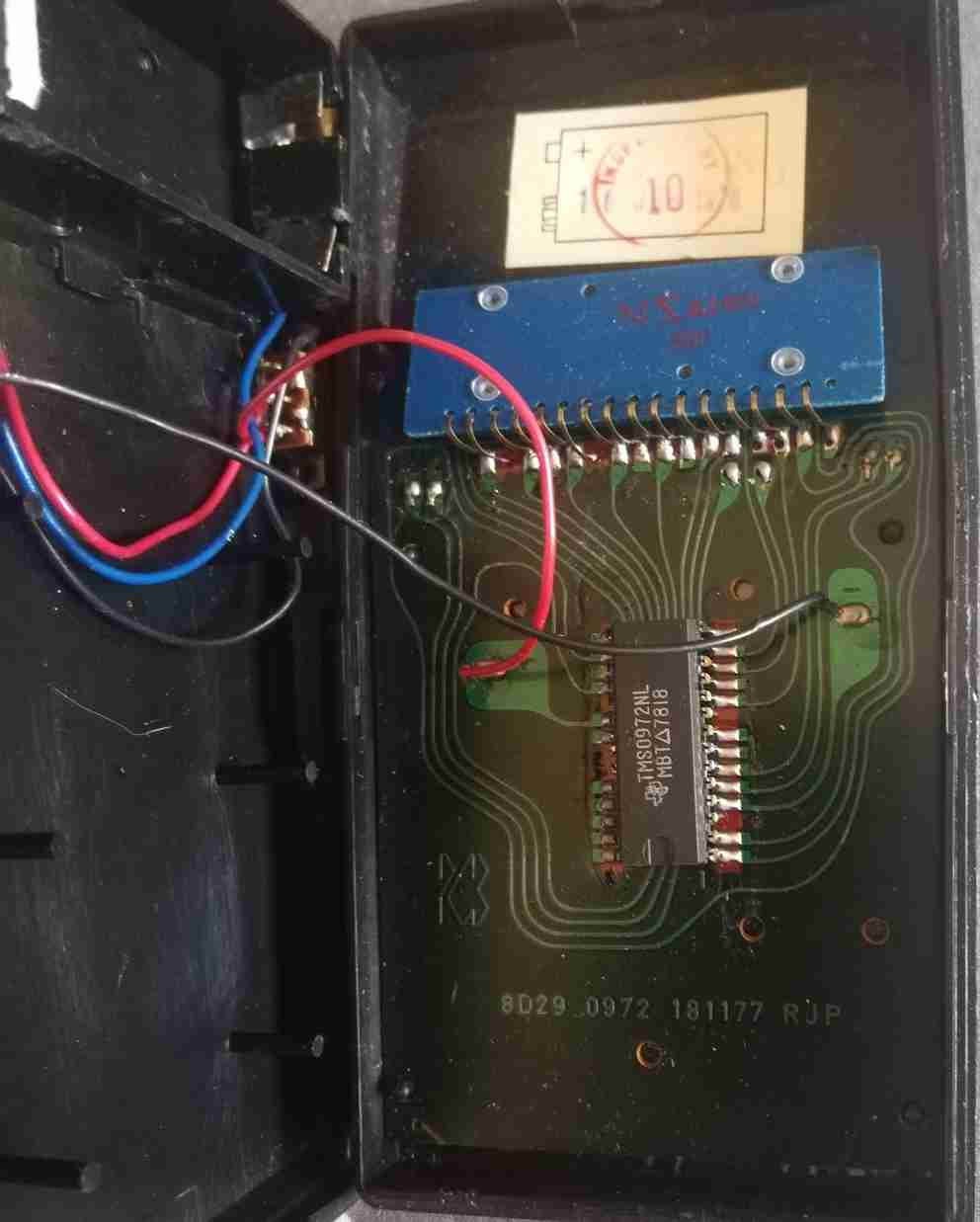 Model: RJP 3000
Battery: 9 volt
Adapter:
Year:
Chip: TMS0972
Info: This is a nearly perfect copy of the TI-1250. Made in Homg Kong
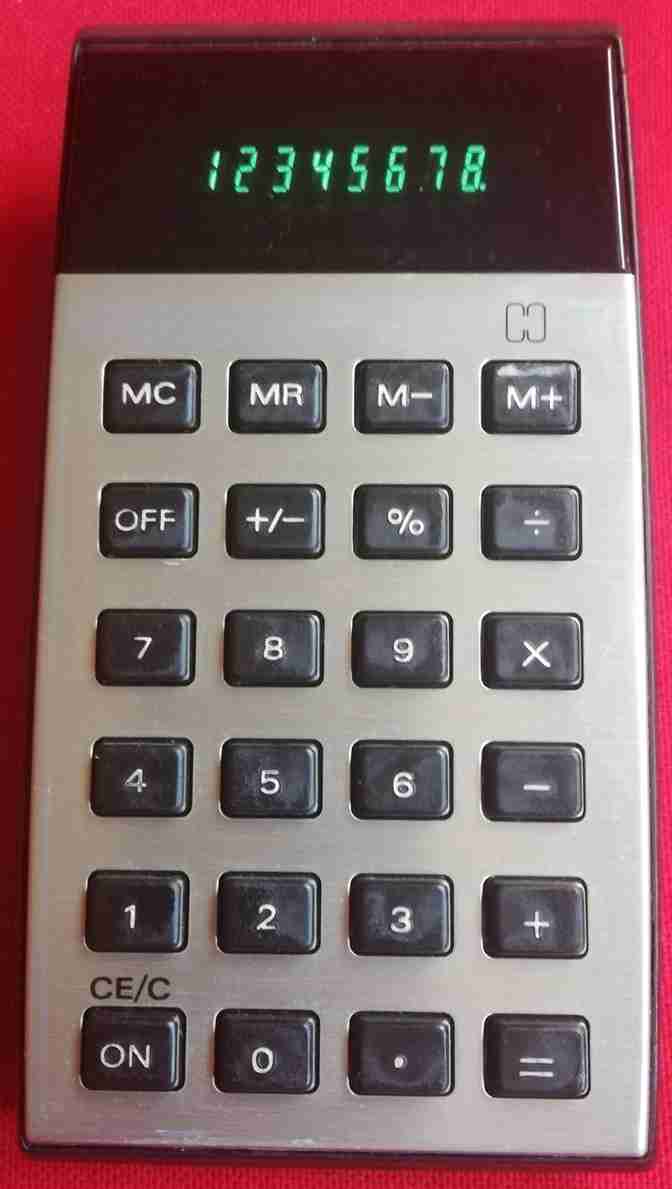 Model: Hema 1025
Battery: 9 volt
Adapter: AC9180
Year: 1976
Chip: TMC0923
Info:Nothing else than a TI-1025 with a sticker from the Dutch Department store HEMA.
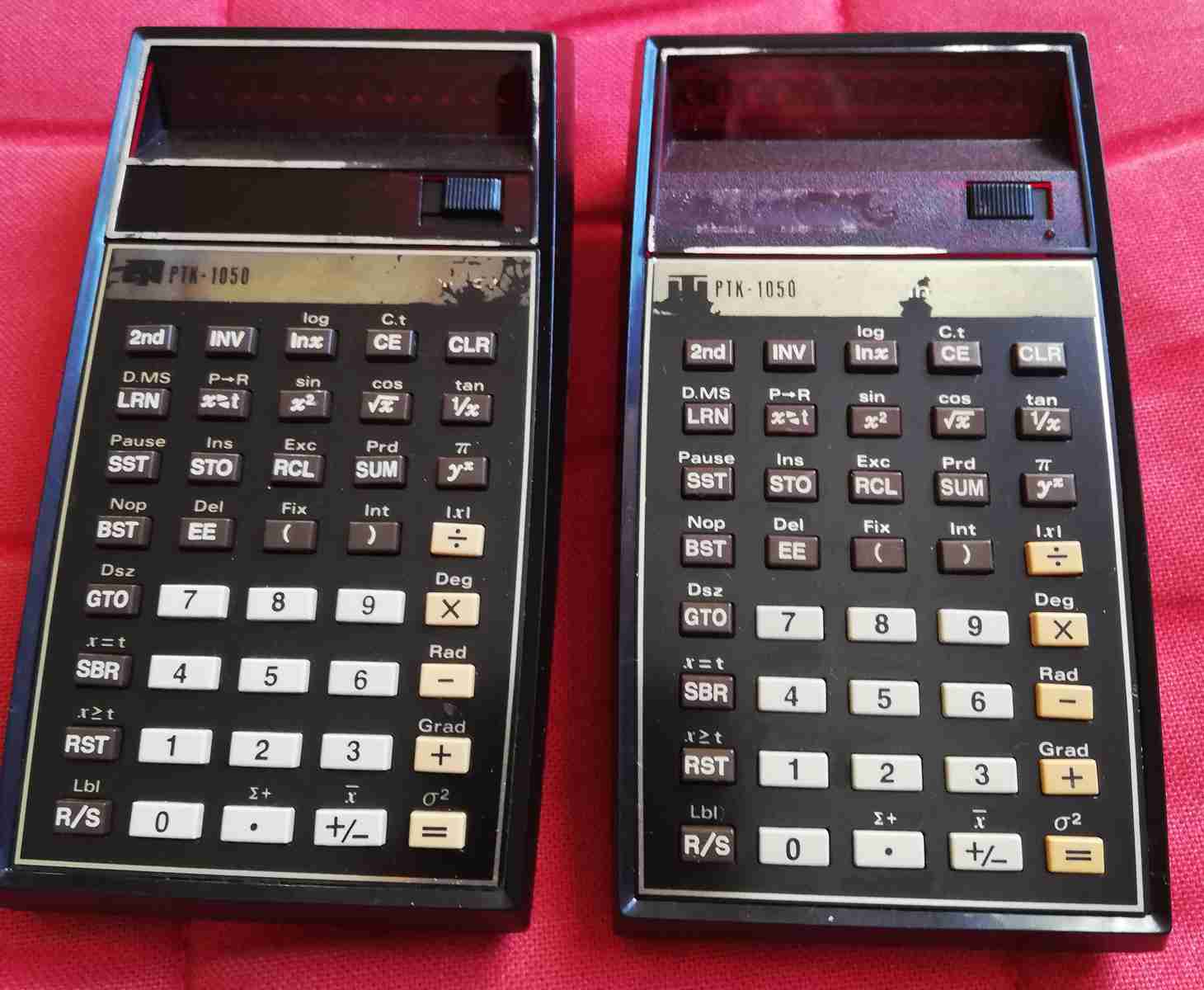 Model: PTK-1050
Battery: BP6, BP7
Adapter: AC9131, AC9132
Year: 1979
Chip: TMC1501
Info: This PTK-1050 (1979) is one of several calculators sold by the Híradástechnika in Budapest, Hungary in the 1970s. It is 100% identical to the TI-57, on the left built in the USA, on the right built in the EU.adio Shack
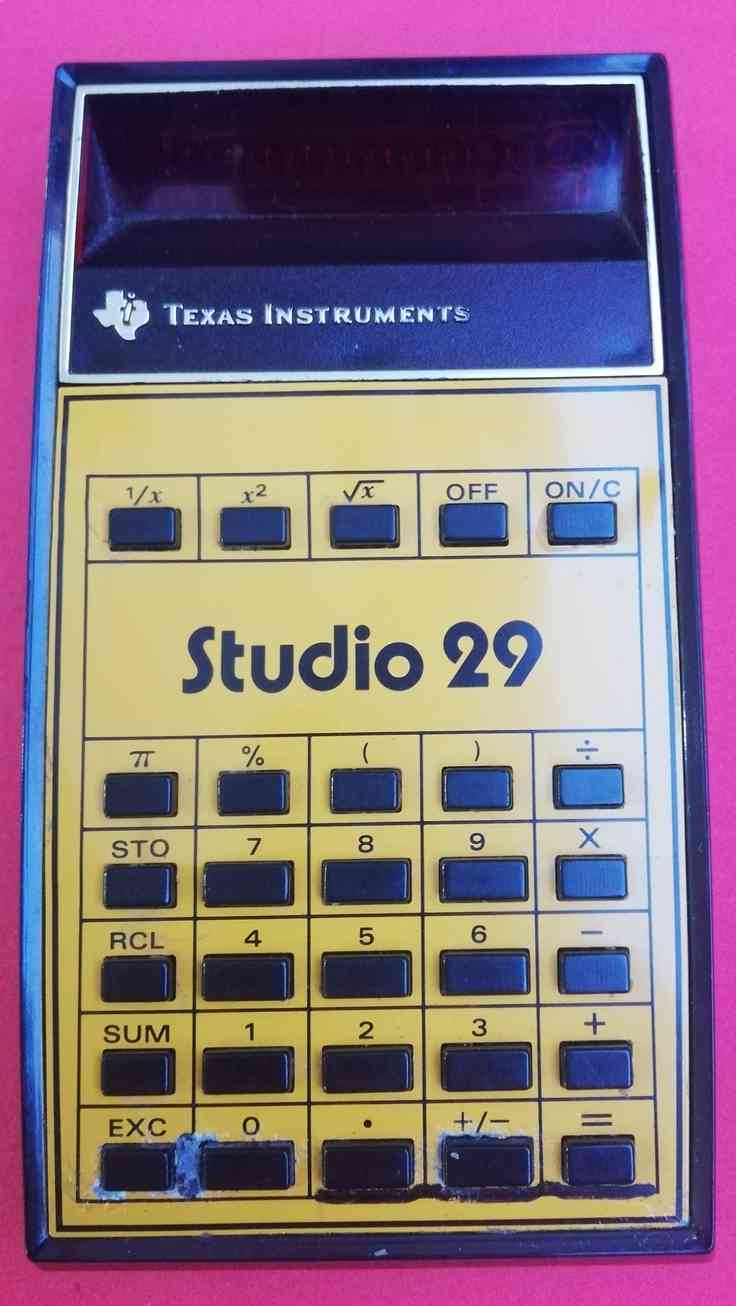 Model: Studio 29 Koh-I-Noor
Battery: 9 vot
Adapter:
Year: 1979
Chip: TMS0981
Info: Made in Italy (RIETI) RCI
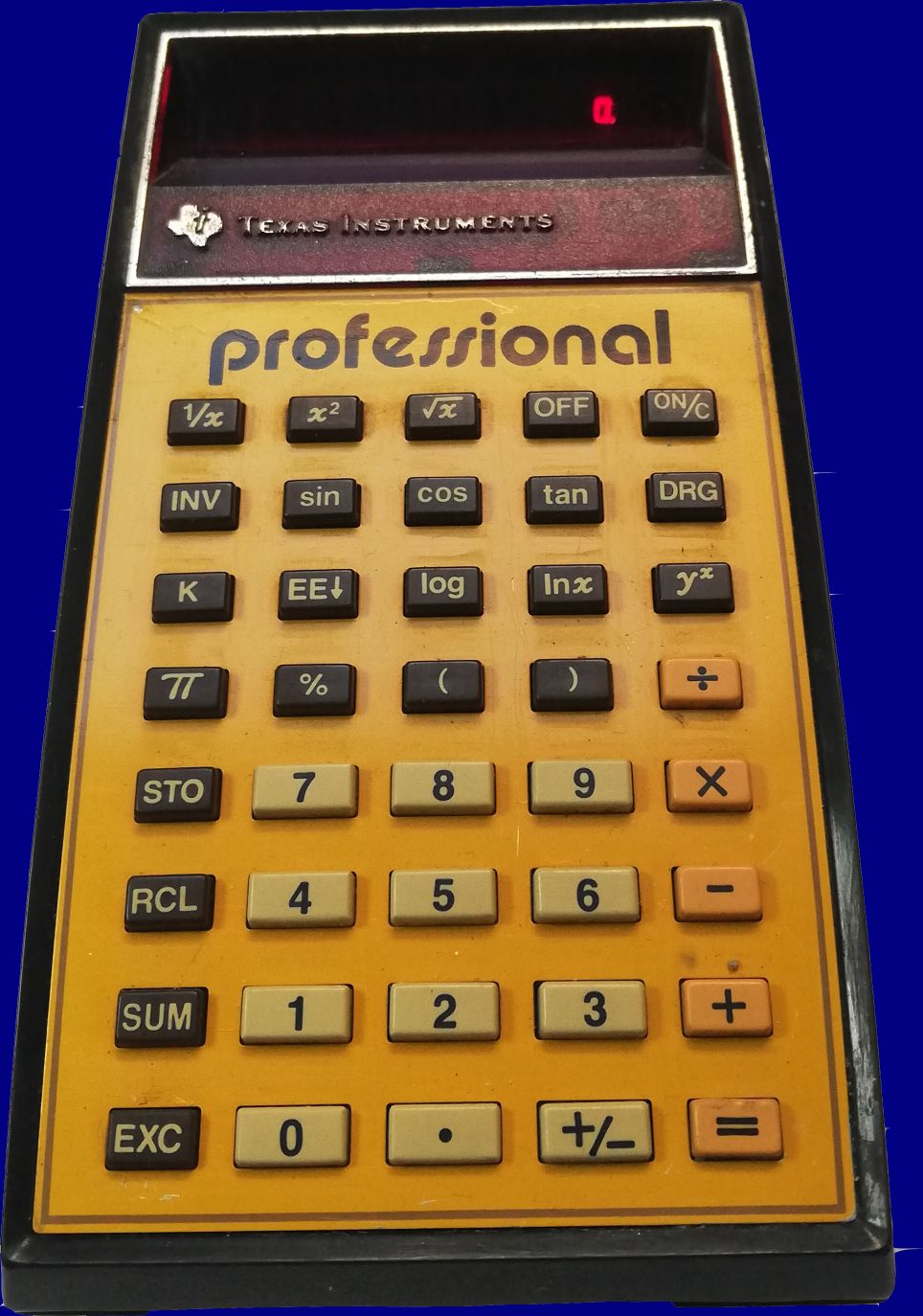 Model: TI Professional Koh-I-Noor
Battery: 9 volt or RK2
Adapter: AC9900/r
Year: 1978
Chip: TMS0981
Info: Made in Italy (RIETI) RCI
It is obvious that the model professional - manufactured for Koh-I-Noor Hardtmuth - is a hybrid of three different products:
| • The basic functionality is borrowed without any doubts from the TI-30 introduced in 1976 • The double-shot injection molded keys are known from the Business Analyst-I • The yellow-brown keyboard plate is... unique |
Dismantling this model professional manufactured in 1978 reveals a standard TI-30 printed circuit board (PCB) with the well-known TMS0981 single-chip calculator circuit.
 Model: TI-1050 Koh-I-Noor
Battery: 9 volt
Adapter: AC9180
Year: 1977
Chip: TMC0921
Info:Made in Italy Rieti ( RCI ). Donated from Marie Collas (FR).
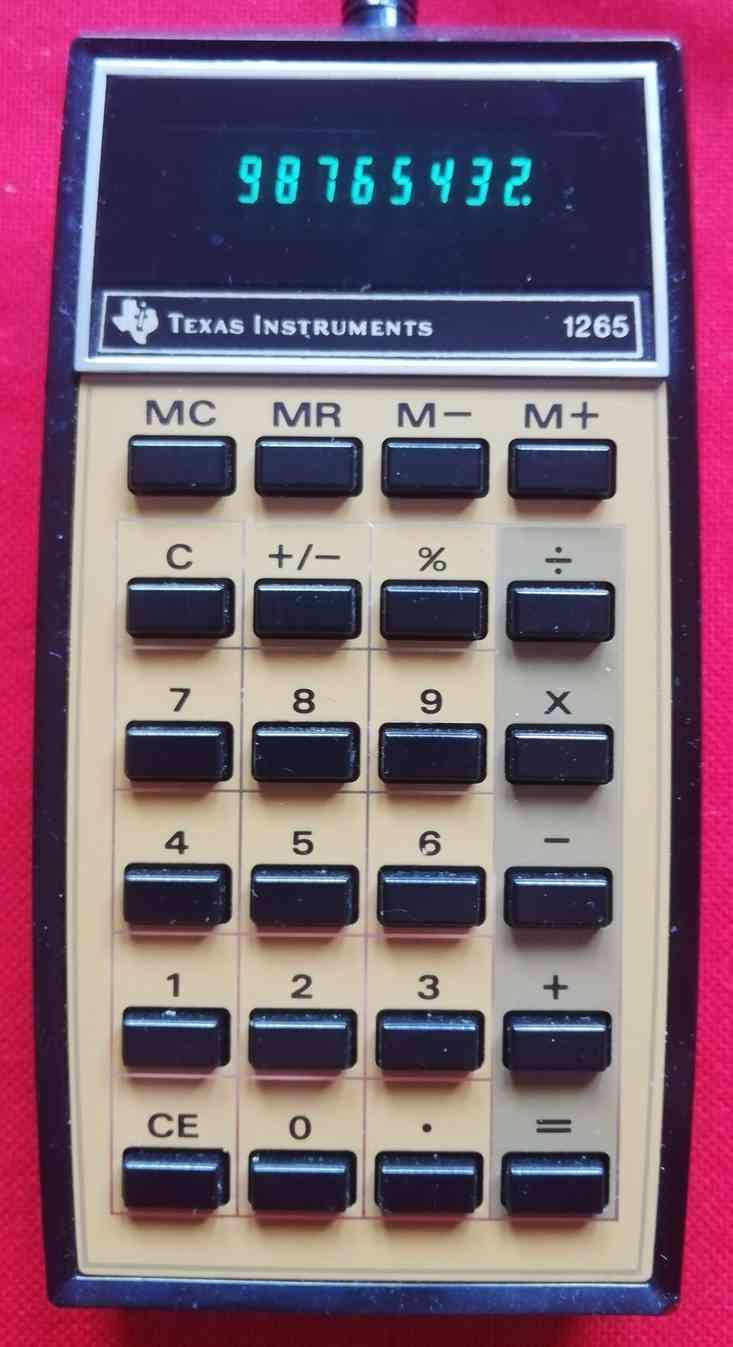 Model: TI-1265 Koh-I-Noor
Battery: 9 volt
Adapter: AC9180
Year: 1977
Chip: TMS1043
Info: Made in Italy Rieti ( RCI ).
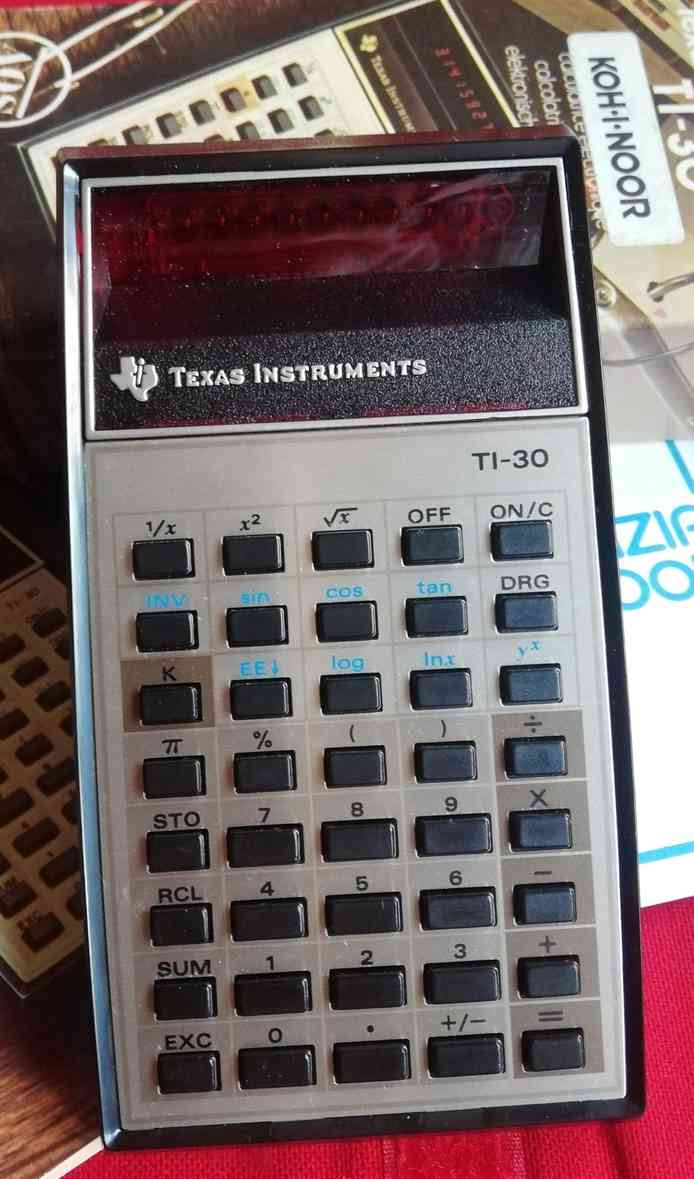 Model: TI-30 Koh-i-Noor
Battery: 9 volt
Adapter: BP7
Year: 1980
Chip: TMC0981
Info:One of the best-selling calculators in the world, Koh-I-Noor sold it here under its own brand. Produced in the 27th week of 1980 (2780RCI) by Texas Instruments in the plant of Rieti, in Italy!
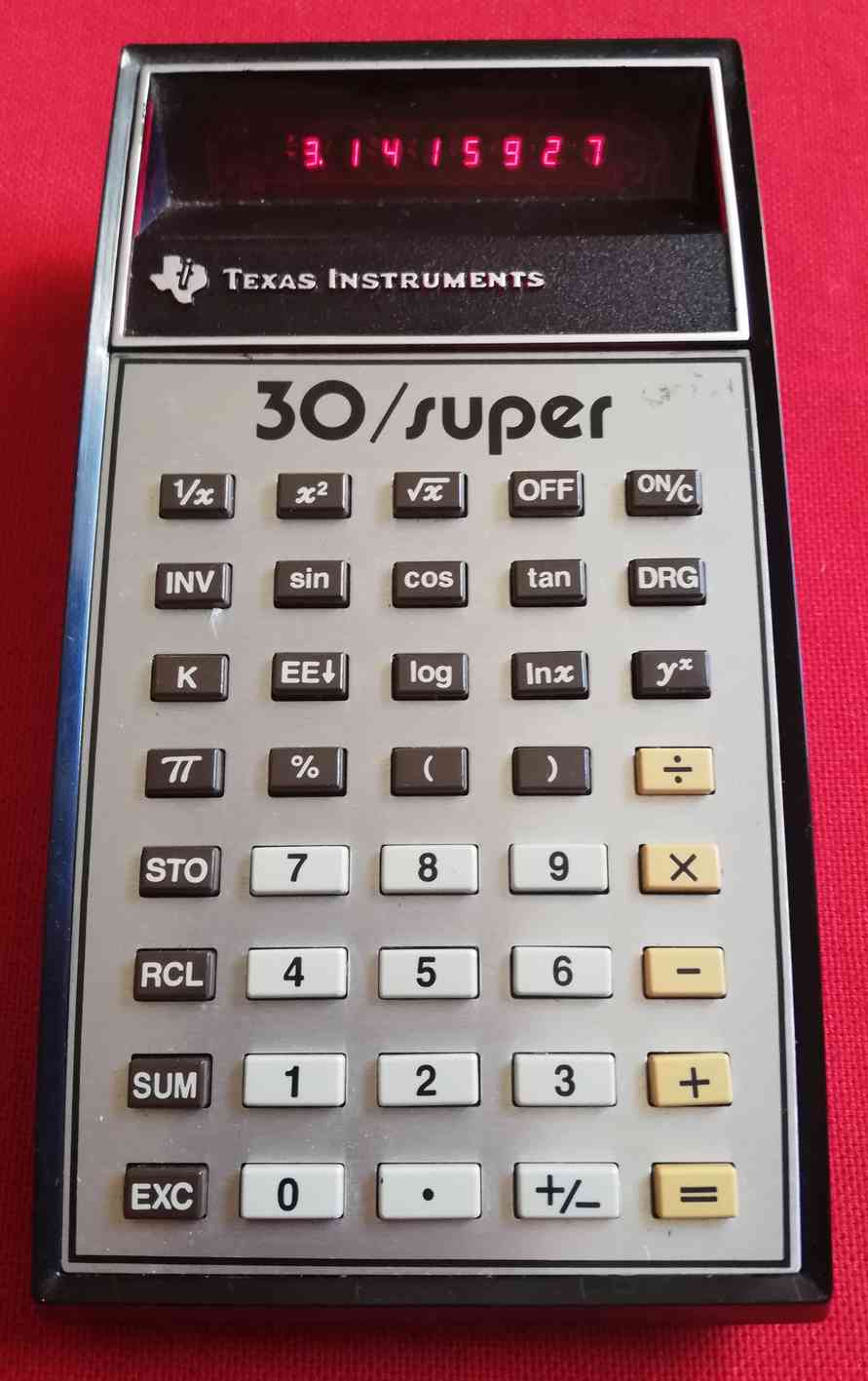 Model: TI-30 super Koh-I-Noor
Battery: 9 vot
Adapter:
Year: 1979
Chip: TMC0981
Info: Made in Italy (RIETI) RCI
It is obvious that the model 30/super - manufactured for Koh-I-Noor Hardtmuth - is a hybrid of three different products:
| • The basic functionality is borrowed without any doubts from the TI-30 introduced in 1976 • The double-shot injection molded keys are known from the Business Analyst-I • The printed Texas Instruments logo between the display and keyboard are carried over from the European TI-45 |
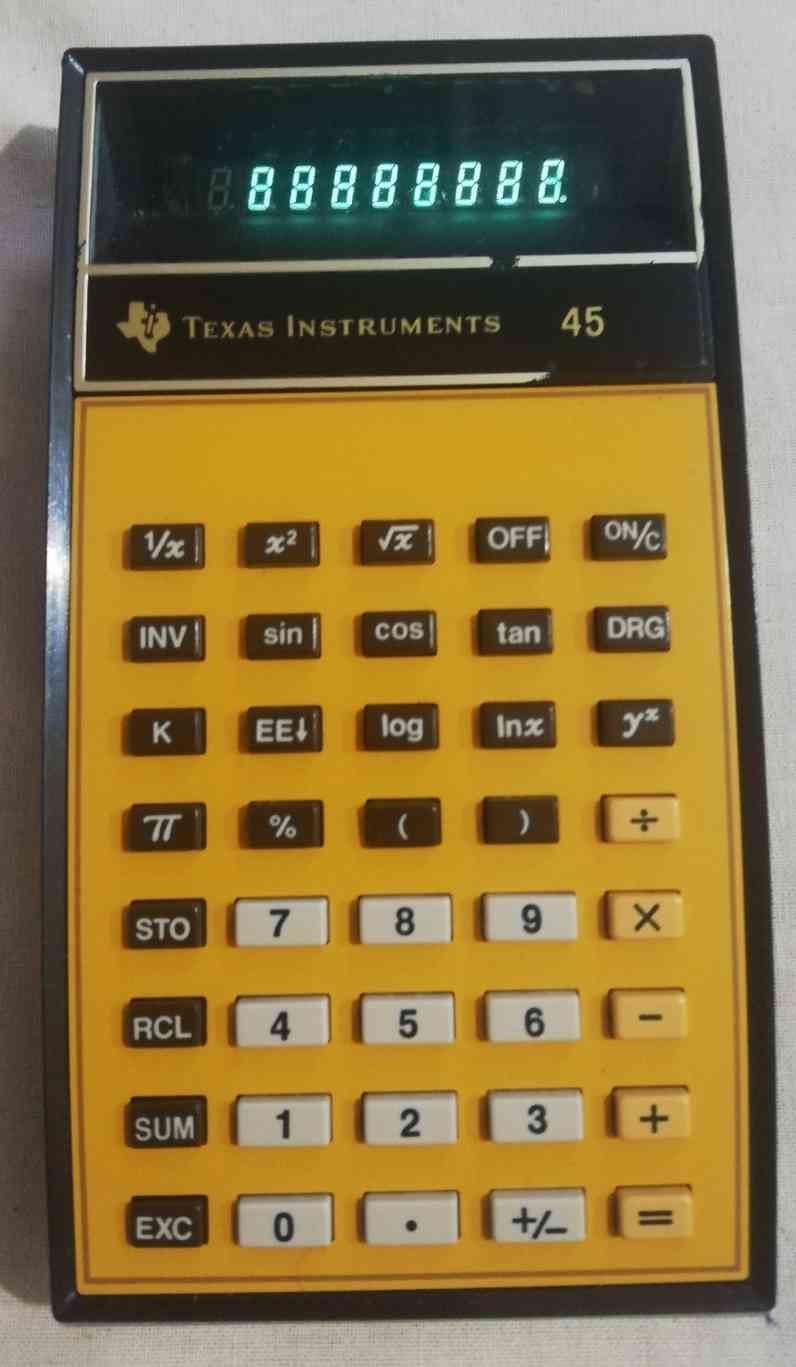
 Model: TI-45 Koh-I-Noor
Battery: 9 vot
Adapter: BP7
Year: 1978
Chip: TMC1983
Info: TI-45 (Koh-I-Noor Hardtmuth) features a green vacuum fluorescent display (VFD). Produced in the 9th week of 1978 (0978RCI) by Texas Instruments in the plant of Rieti, in Italy!
 Model: Astro
Battery: 2 x AA alkaline
Adapter:
Year: 1979
Chip: TMS1470NL/MP1133
Info:Astro by Kosmos International, Inc. is the World's first hand-held astrological computer. Astro provides information based not only on the Sun like daily newspaper horoscopes but on the positions of three additional planets which have a major influence on the life: Mercury, Venus and Mars:
| • Sun symbolizes motivation, identity and goals • Mercury is the thinking function. It indicates the manner in which person communicates thoughts and perceptions • Venus rules emotions and indicates a person's social values - who and what he likes and how he likes it • Mars is action, defining drive and initiative |
The key features of the Astro include:
| • Natal Horoscope Astro gives the Zodiac positions of the Sun, Mercury, Venus and Mars on the date of birth for any person. With this information you can have instant insight into any individual's personality. • Astrological Compatibility Astro compares the personality traits of any two people for an indication of compatibility. Green lights appear when traits are similar. Yellow lights appear when traits are different or in conflict. • Daily Horoscopes Astro computes the astrological conditions for any day - between date of birth and December 31, 1999 - and compares them with your astrological makeup. If conditions are agreeable to your personality, a green light will appear. Yellow lights indicate a difference between prevailing influences and your personal needs. |
The Astro was the most advanced product in Kosmos' product line of Kosmos 1, Kosmos 2, Mini-BIO, BIO-Clock and this Astro. Even Radio Shack (a Tandy corporation company), a large US based store chain selling electronic products and parts, distributed the Astro in a slightly different design.
 Model: Kosmos 1
Battery: 3 x AA
Adapter:
Year: 1977
Chip: TMC1170NL/ZA0541 or
TMC1172NLMS0952
Info:Kosmos International, Inc. based in Atlanta, Georgia introduced already in the year 1977 this pocket-sized biorhythm calculator. On a first glance you notice the [BIO] key on the calculator keypad and the three „sine-waves“ representing our:
| • Physical Cycle (P) • Emotional Cycle (S) • Intellectual Cycle (I) |
 Model: Kosmos 1 red
Battery: 3 x AA
Adapter:
Year: 1977
Chip: TMC1170NL/ZA0541 or
TMC1172NLMS0952
Info:Kosmos International, Inc. based in Atlanta, Georgia introduced already in the year 1977 this pocket-sized biorhythm calculator. On a first glance you notice the [BIO] key on the calculator keypad and the three „sine-waves“ representing our:
| • Physical Cycle (P) • Emotional Cycle (S) • Intellectual Cycle (I) |
| • The 6 red and amber LED's at the end of the three "sine-waves" were omitted • The housing feels much cheaper • Manufacturing was moved from Japan to Taiwan |
 Model: Kosmos 2
Battery: 2 x AA
Adapter:
Year: 1979
Chip: TMC1172NL
Info:Kosmos International, Inc. based in Atlanta, Georgia introduced with the Kosmos 1 already in the year 1977 a pocket-sized biorhythm calculator.On a first glance you notice the original calculator keypad and the three „sine-waves“ representing our:
| • Physical Cycle (P) • Emotional Cycle (S) • Intellectual Cycle (I) |
This Kosmos 2 was introduced in 1979 as the successor of the original design and obviously was the result of some cost reduction programs:
| • The 6 red and amber LED's at the end of the three "sine-waves" were omitted • The housing feels much cheaper • Manufacturing was moved from Japan to Taiwan |
 Model: Kovac 808
Battery: 9 volt
Adapter:
Year: 1974
Chip: TMS0803
Info: Made in Japan
 Model: MBO Junior
Battery: 5 x ni-cd
AC adapter: Adapter 8 VDC
Year: 1972
Chip: TMC0105
Info:A special feature of this calculator is the possibility of setting the number of decimal places with the selector. Made in Germany


 Model: Montgomery Ward P200 (TXI-8662A)
Battery: 3*AA NiCd or 4*AA Alkaline
Adapter: AC9130 or AC9120
Year: 1974
Chip: TMS0601
Manual:
Info: The P200 could be easily identified as a close relative of the TI-2550. Both calculators use the same electronics, the same layout of the keyboard and even an identical mold for the housing bottom. The different look is achieved through a new mold for the upper half of the housing and a different style of the memory keys. The color of the housing is slightly different, too.
 Model: Montgomery Ward P300 (TXI-8663A)
Battery: 3*AA NiCd or 4*AA Alkaline
Adapter: AC9130
Year: 1974
Chip: TMS0120, 2*SN75493, 2*SN27423
Manual:
Info: This Montgomery Ward P300 aka TXI-8663A could easily identified as larger brother of the P200 aka TXI-8662A and a close relative of the SR-10.
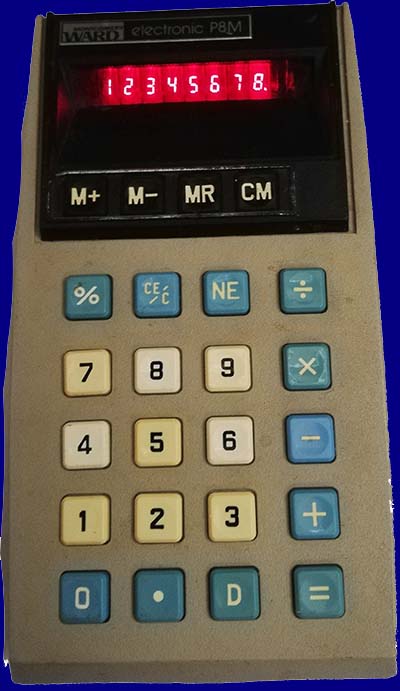 Model: Montgomery Ward P8M (TXI-8646A)
Battery: 4 x AA
Adapter:
Year: 1974
Chip: TMS0601
Manual:
Info:
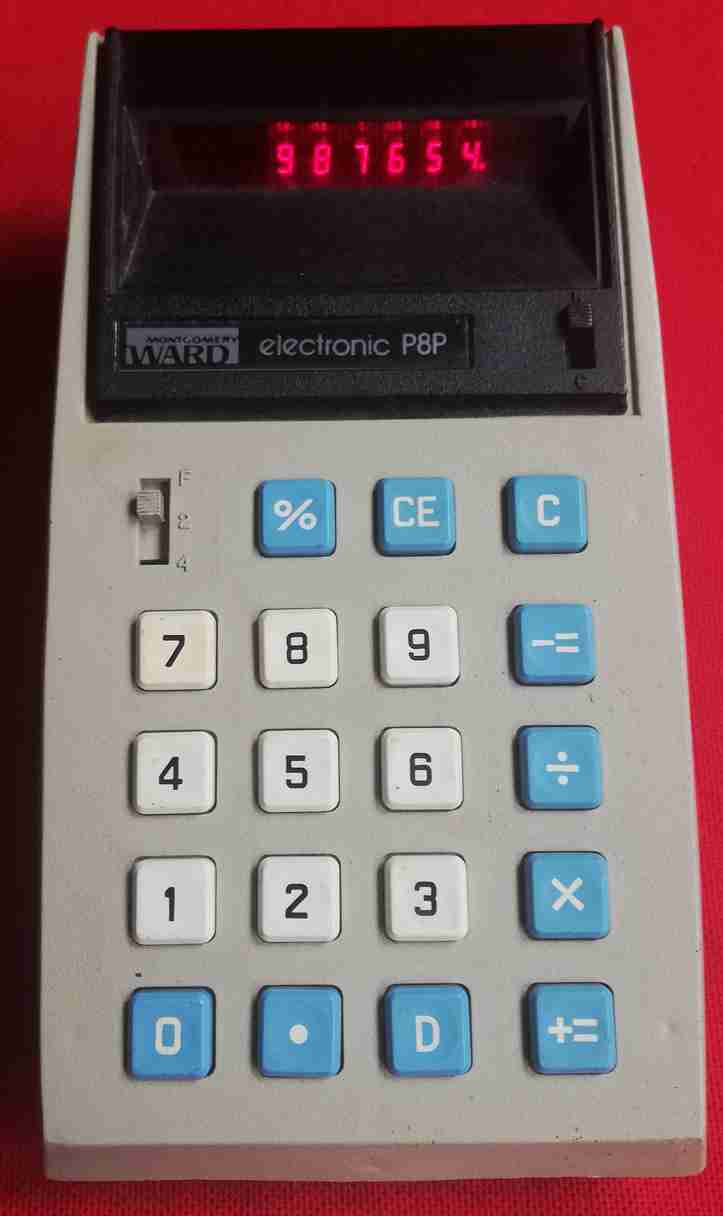 Model: Montgomery Ward P8P (TXI-8645A)
Battery: 4 x AA
Adapter:
Year: 1978
Chip: TMS0128
Manual:
Info:
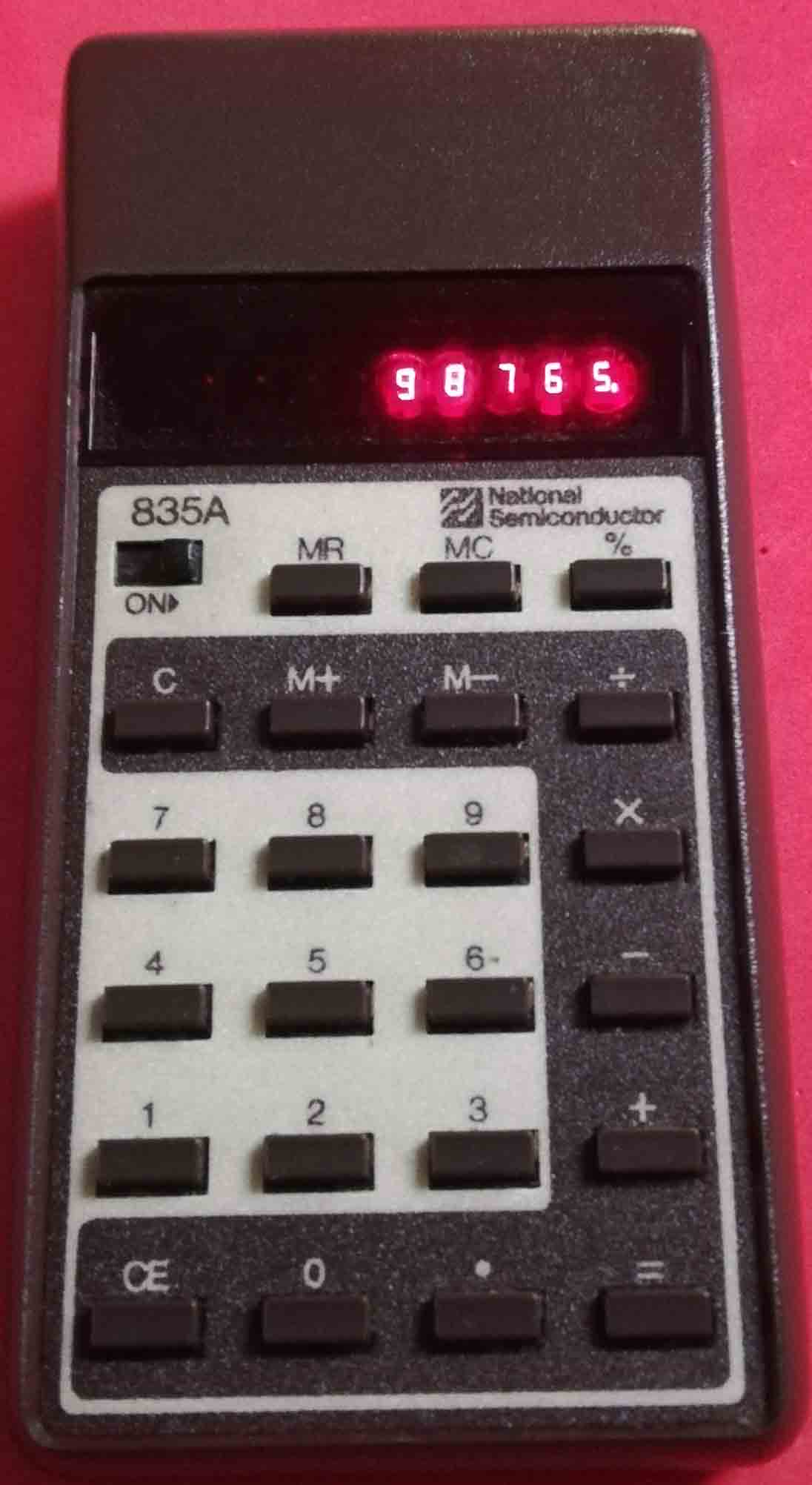
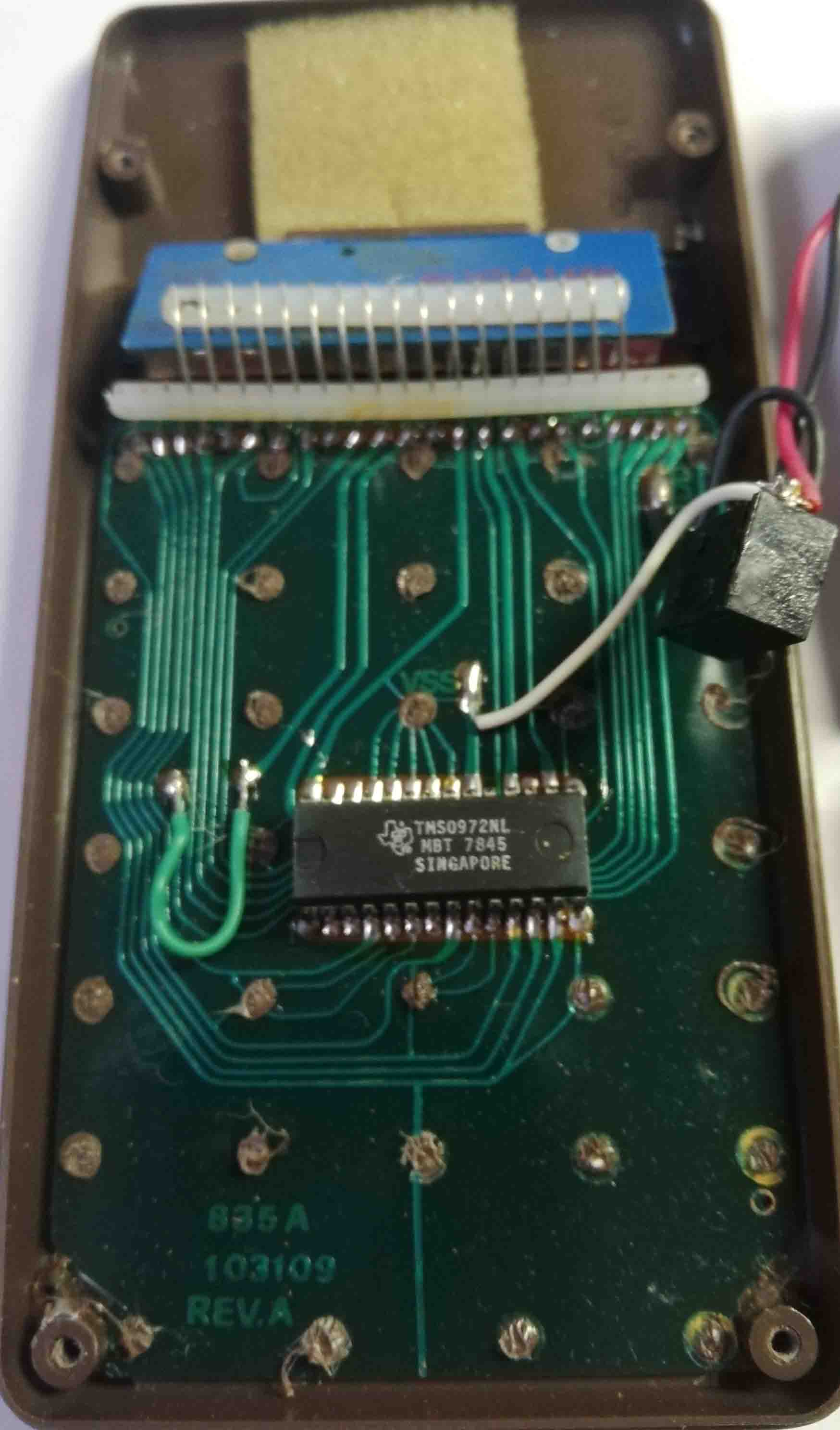 Model: 835A
Battery: 9 v
Adapter: 9v dc
Year: 1976
Chip: TMS0972
Info: National Semiconductor
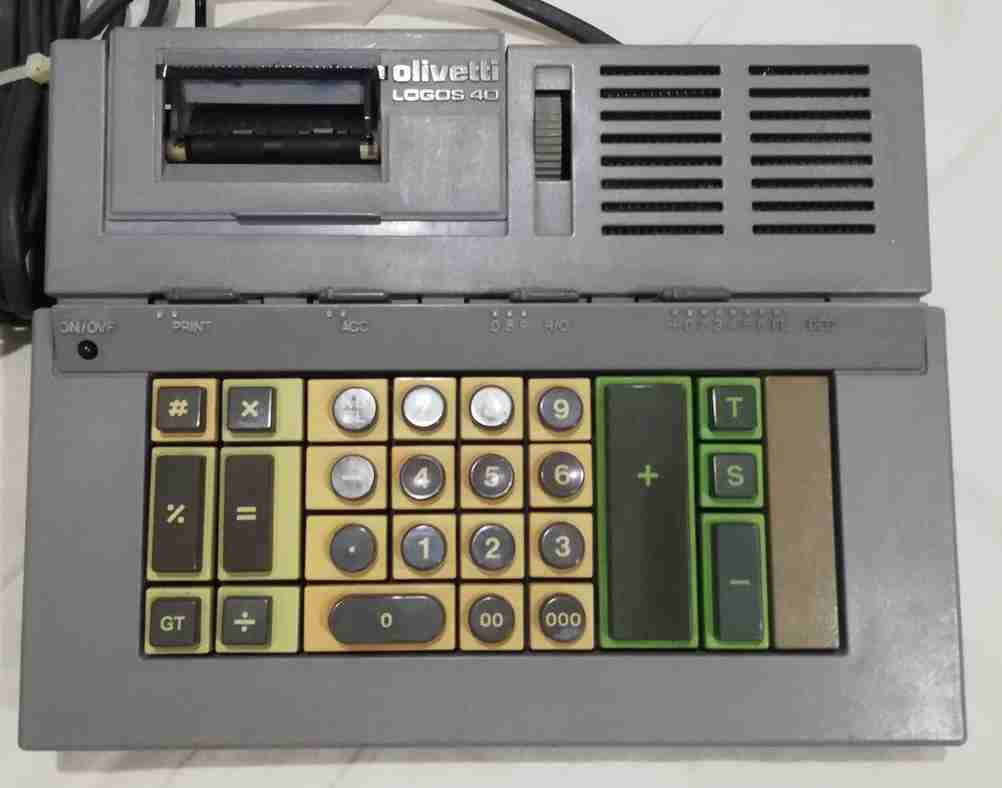 Model: Logos 40
Battery: no
AC adapter: 220 volt AC
Year: 1977
Chip: TMCXC01NC,TMCXC02NC,TMCX03NC
Info: Designed and built in Ivrea, one of the first Olivetti calculators in which electronics are introduced, without display, the built-in printer is faster and quieter than previous models, the keyboard is made up of switches and magnets that control reed contacts.
The design of the machine, which has won numerous awards, is the signature of the designer Mario Bellini. Made in ITALY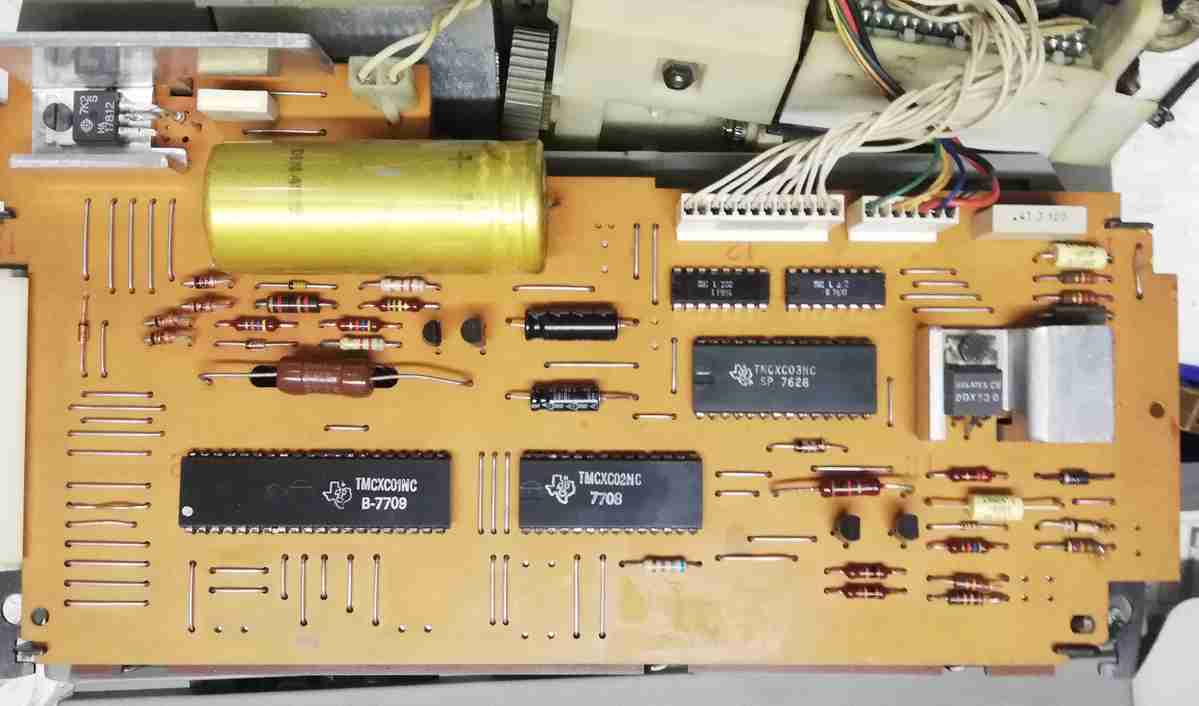
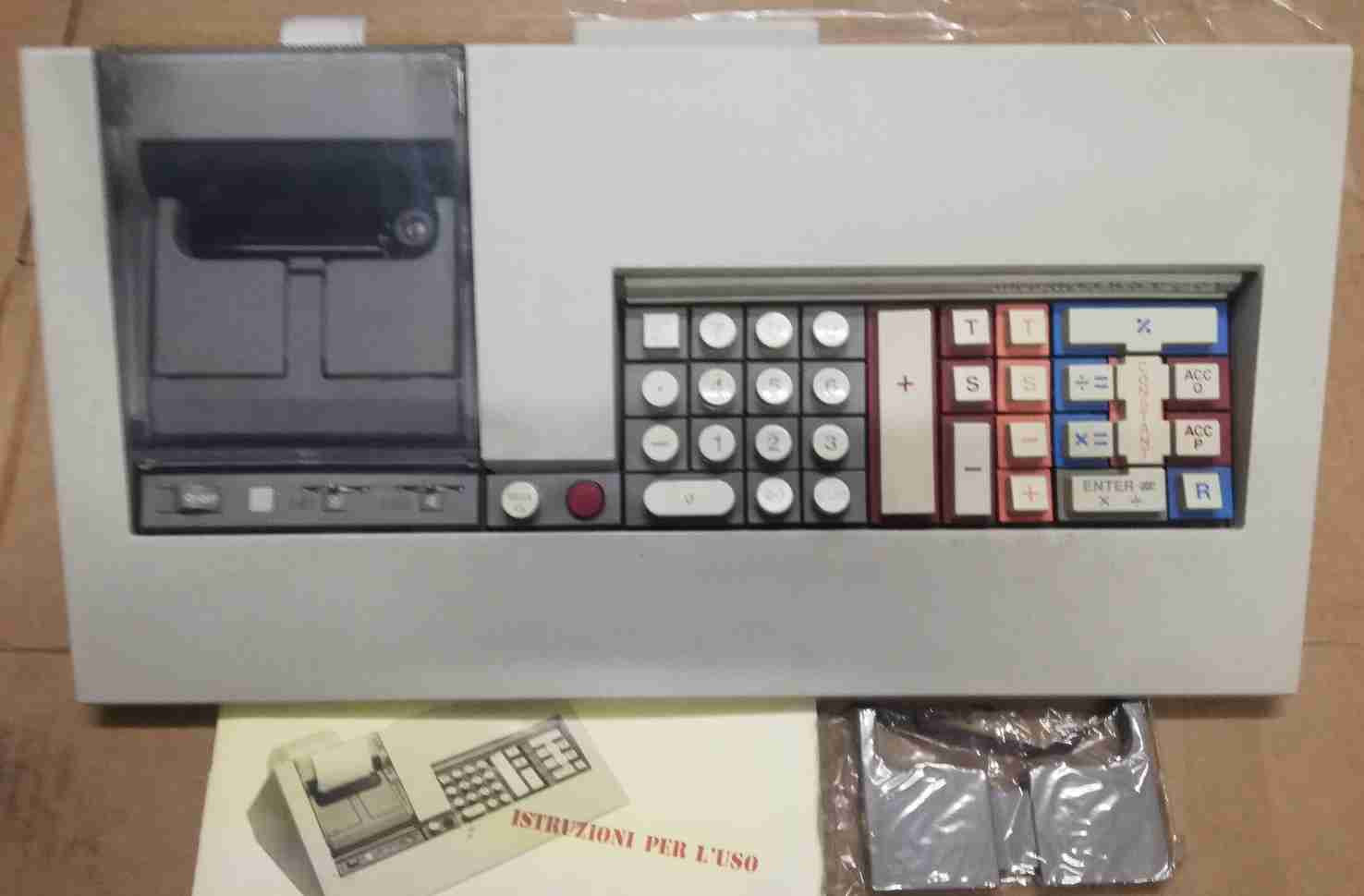 Model: Logos 59
Battery: no
AC adapter: 220 volt AC
Year: 1973
Chip: TMC1876, TMC1878, TMC1828.
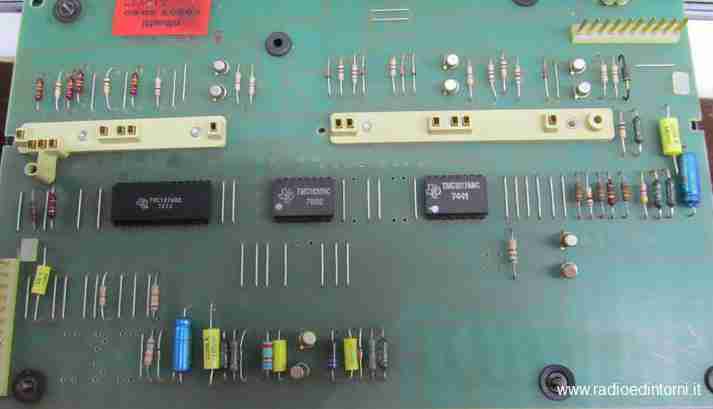
Info: Designed and built in Ivrea, one of the first Olivetti calculators in which electronics are introduced, without display, the built-in printer is faster and quieter than previous models, the keyboard is made up of switches and magnets that control reed contacts.
The design of the machine, which has won numerous awards, is the signature of the designer Mario Bellini. Made in ITALY.
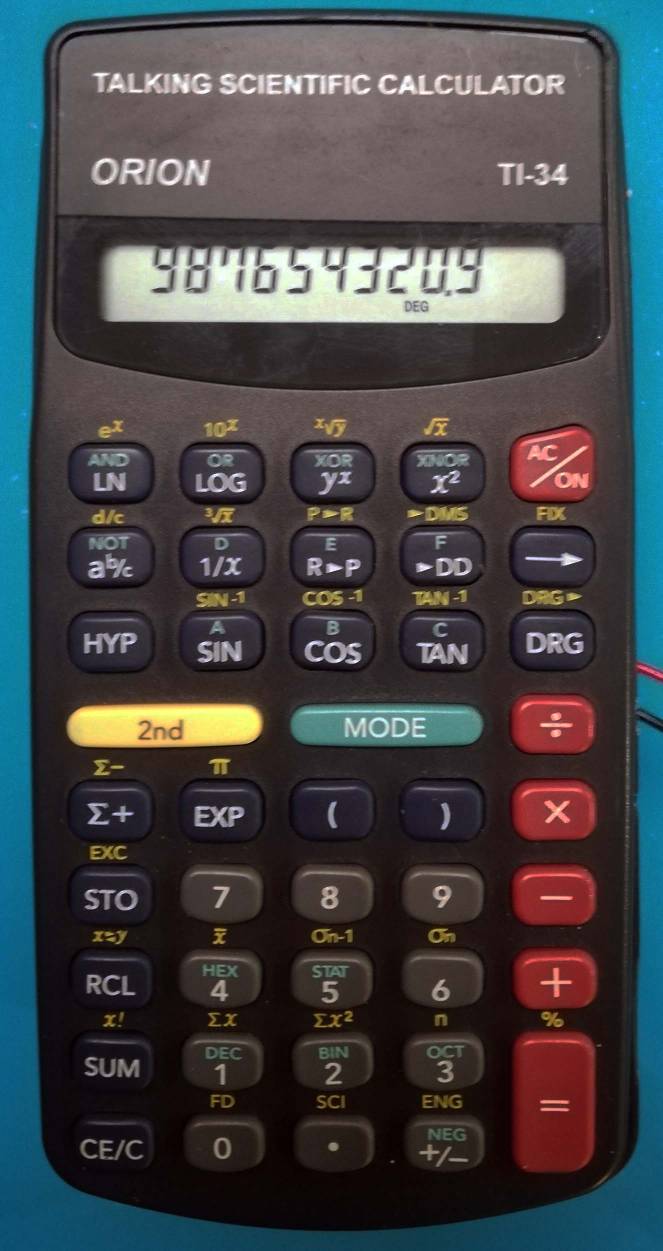 Model: TI-34 Orion
Battery: 5 x AA ni-cd
Adapter: DC 9volt 300 ma
Year: 1996
Chip:
Info: Specializing in the development and manufacture of products for people with disabilities, Orbit Research’s mission is to employ cutting-edge technology to bring to the community at affordable prices, products that are essential for an independent and productive lifestyle. Further information on the ORION TI-34 developed for vision impaired people is available at www.orbitresearch.com.
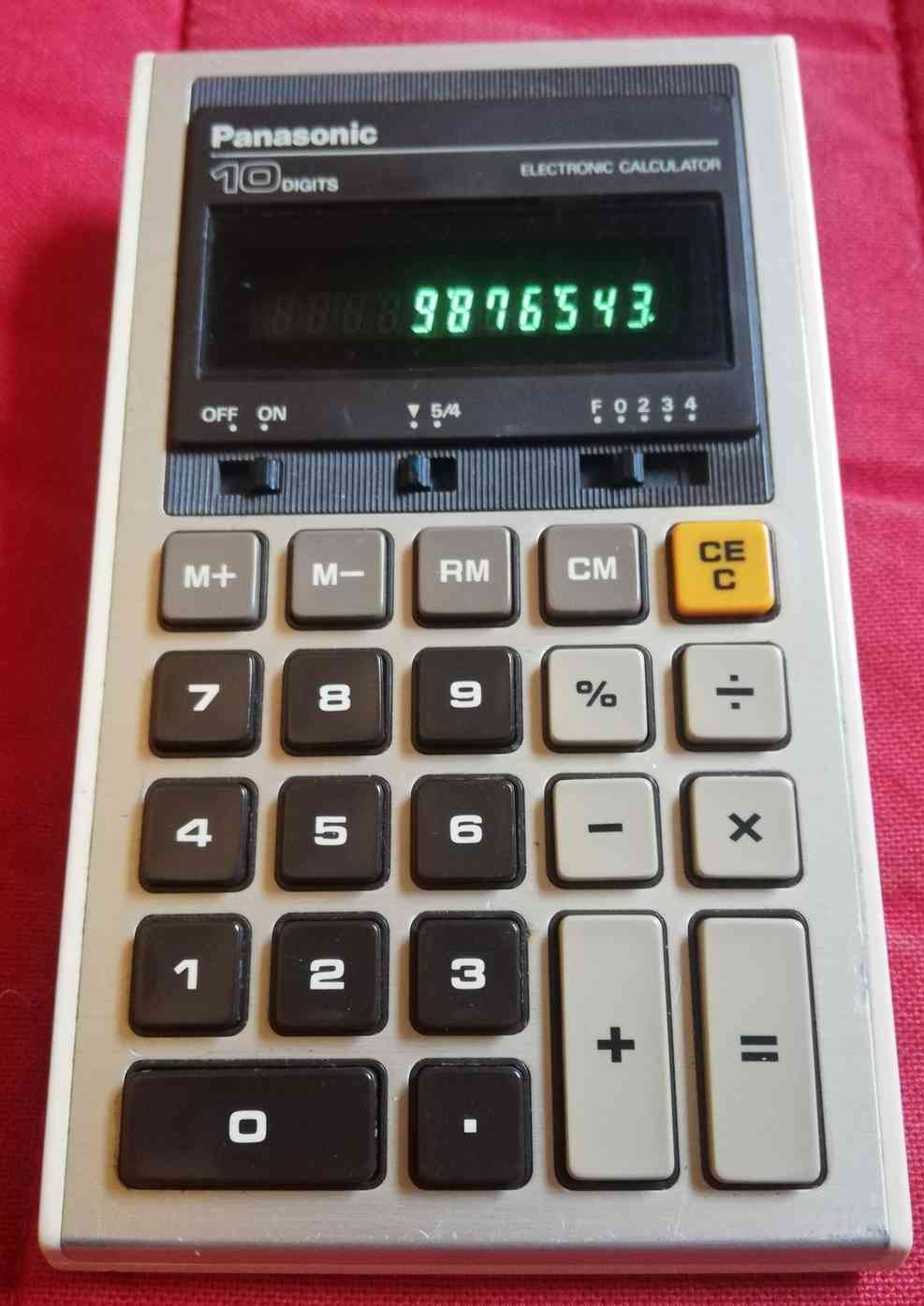 Model: JE-170U
Battery: 2 x AA
AC adapter: 3 volt adapter
Year: 1980
Chip: TMC1081NL
Info: made in Japan
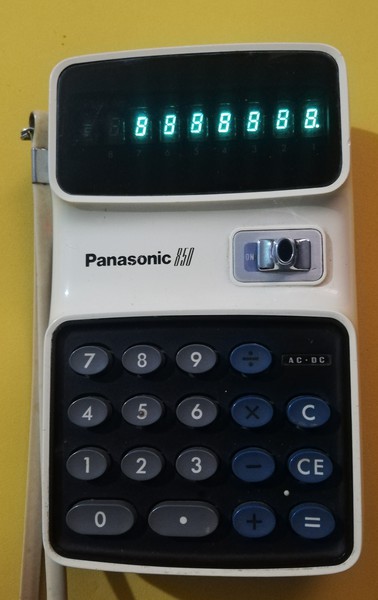
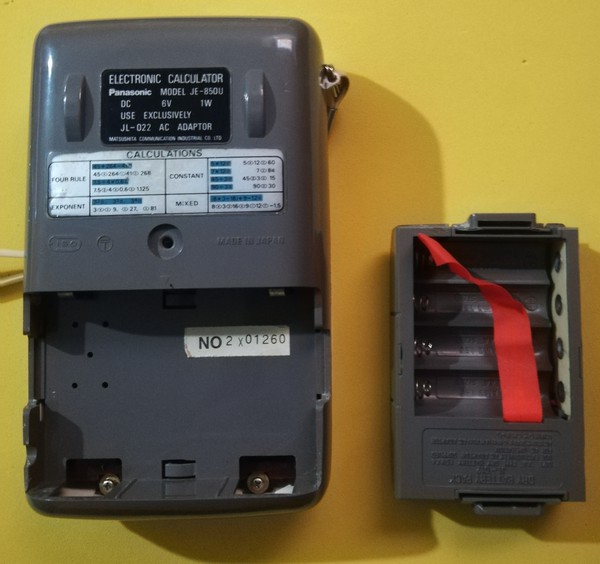 Model: JE-850
Battery: 4 x ni-cd AA
AC adapter: 6 VDC
Year: 1973
Chip: TMC0115NC
Info:The peculiarity of this model was the use of classic AA batteries. Made in Japan
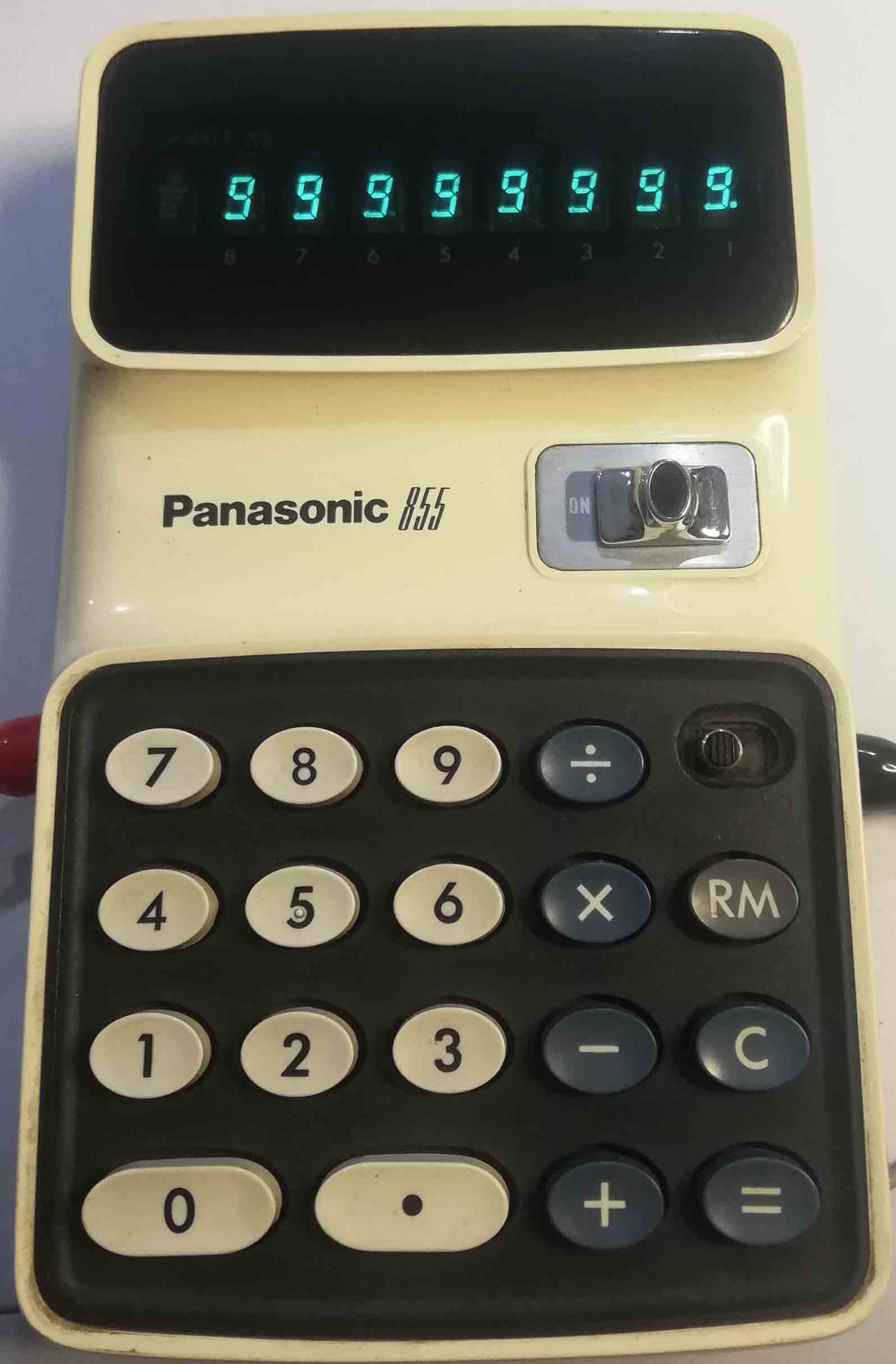 Model: JE-855
Battery: 4 x ni-cd AA
AC adapter: 6 VDC
Year: 1973
Chip: TMC0131NC
Info: made in Japan
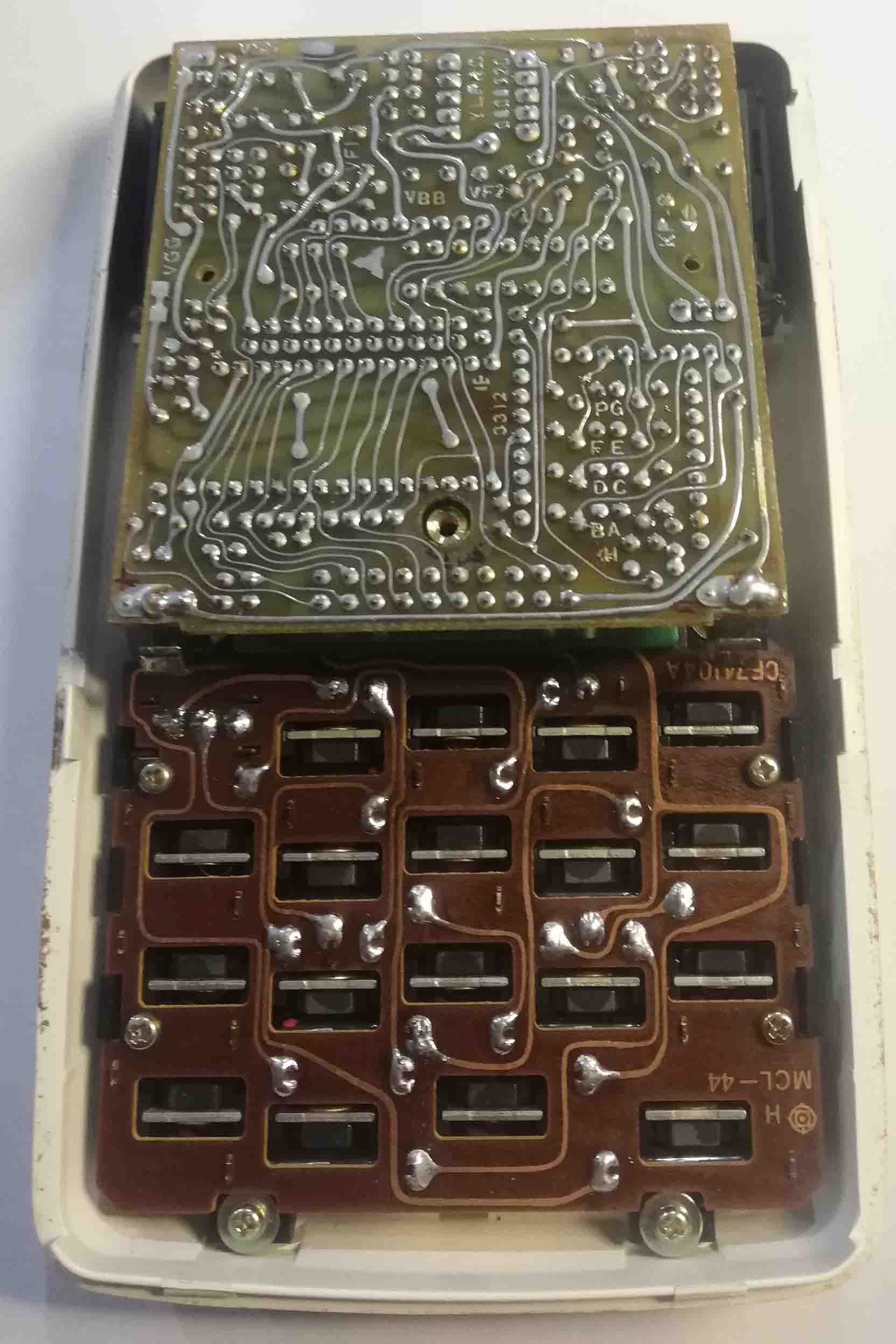
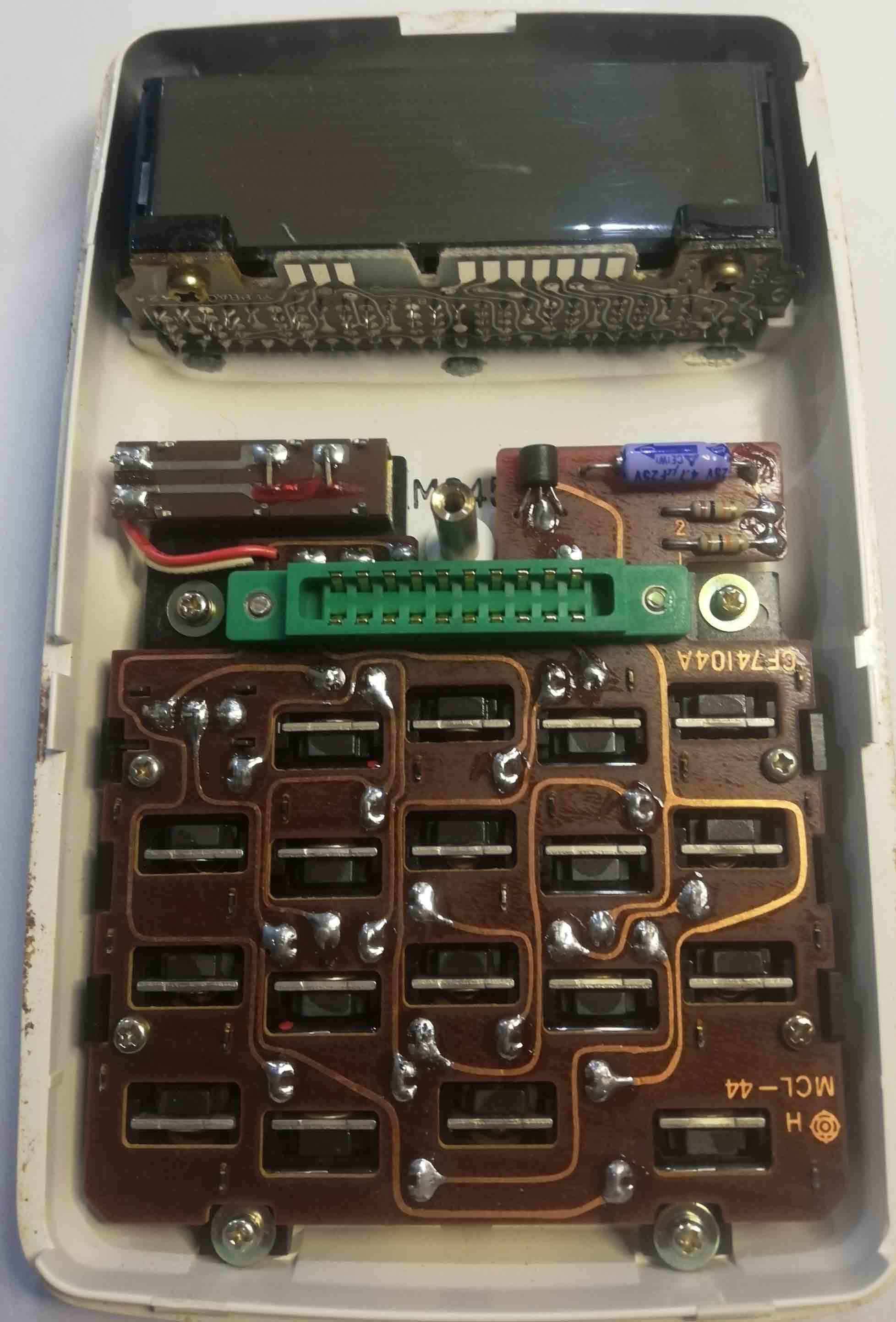
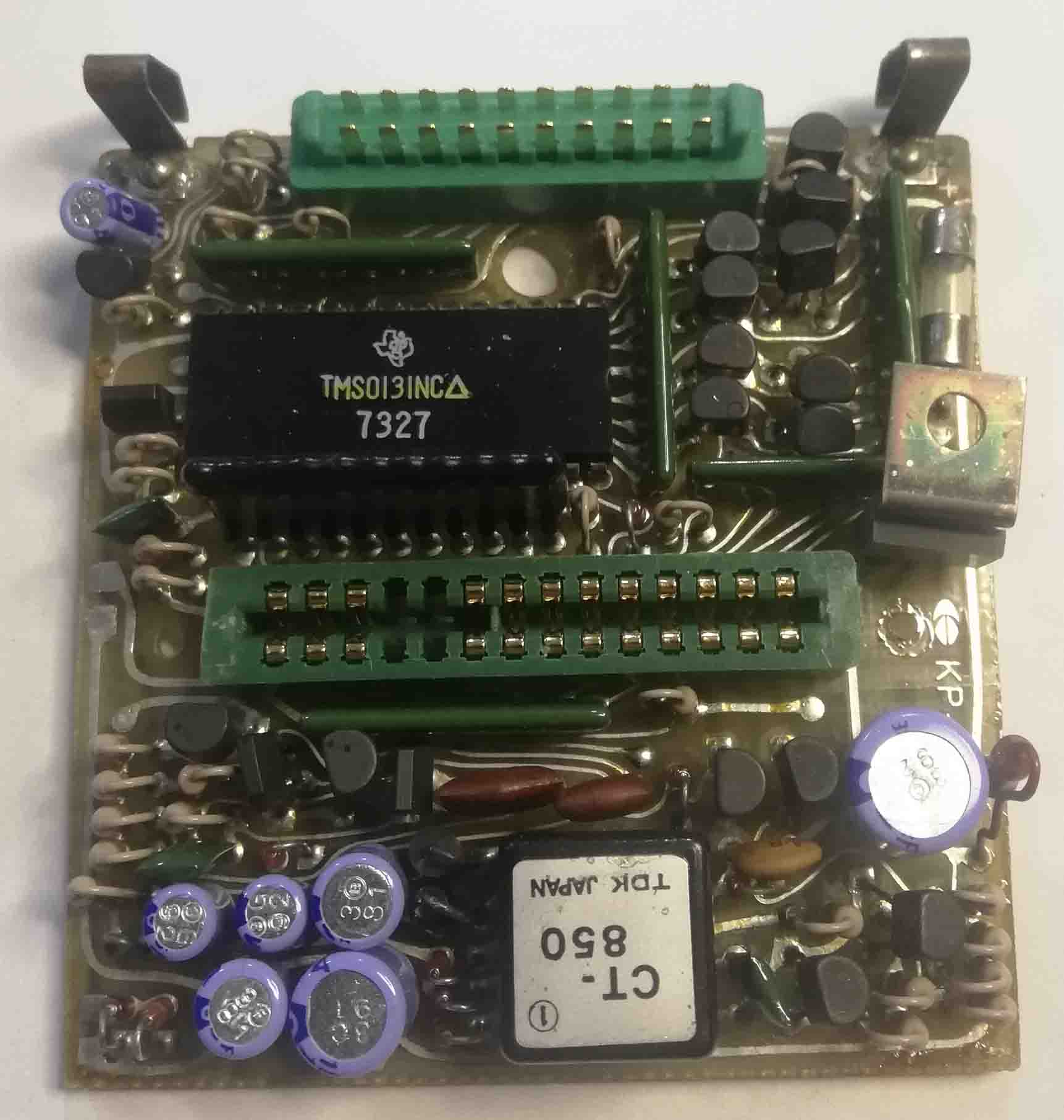
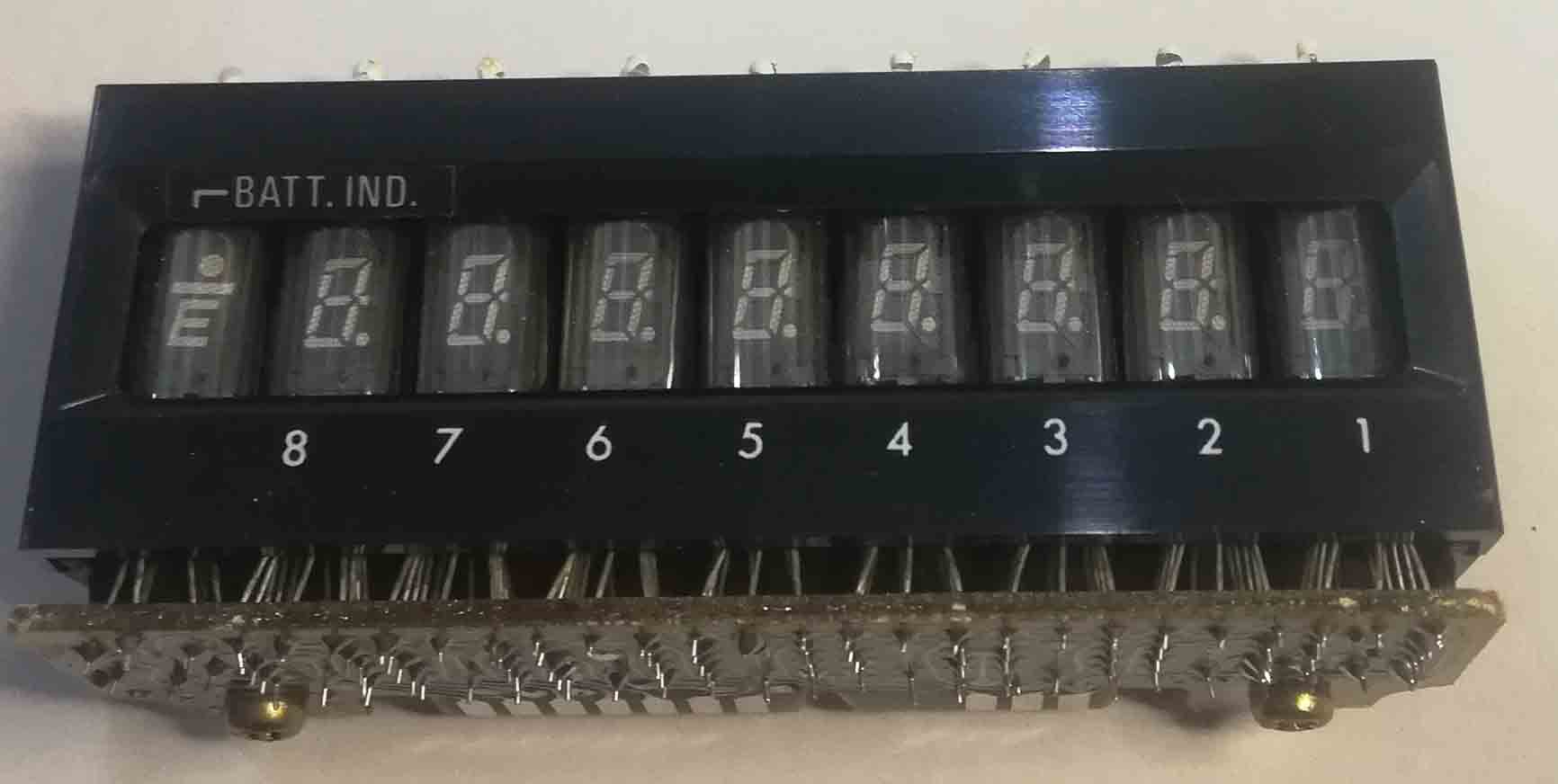
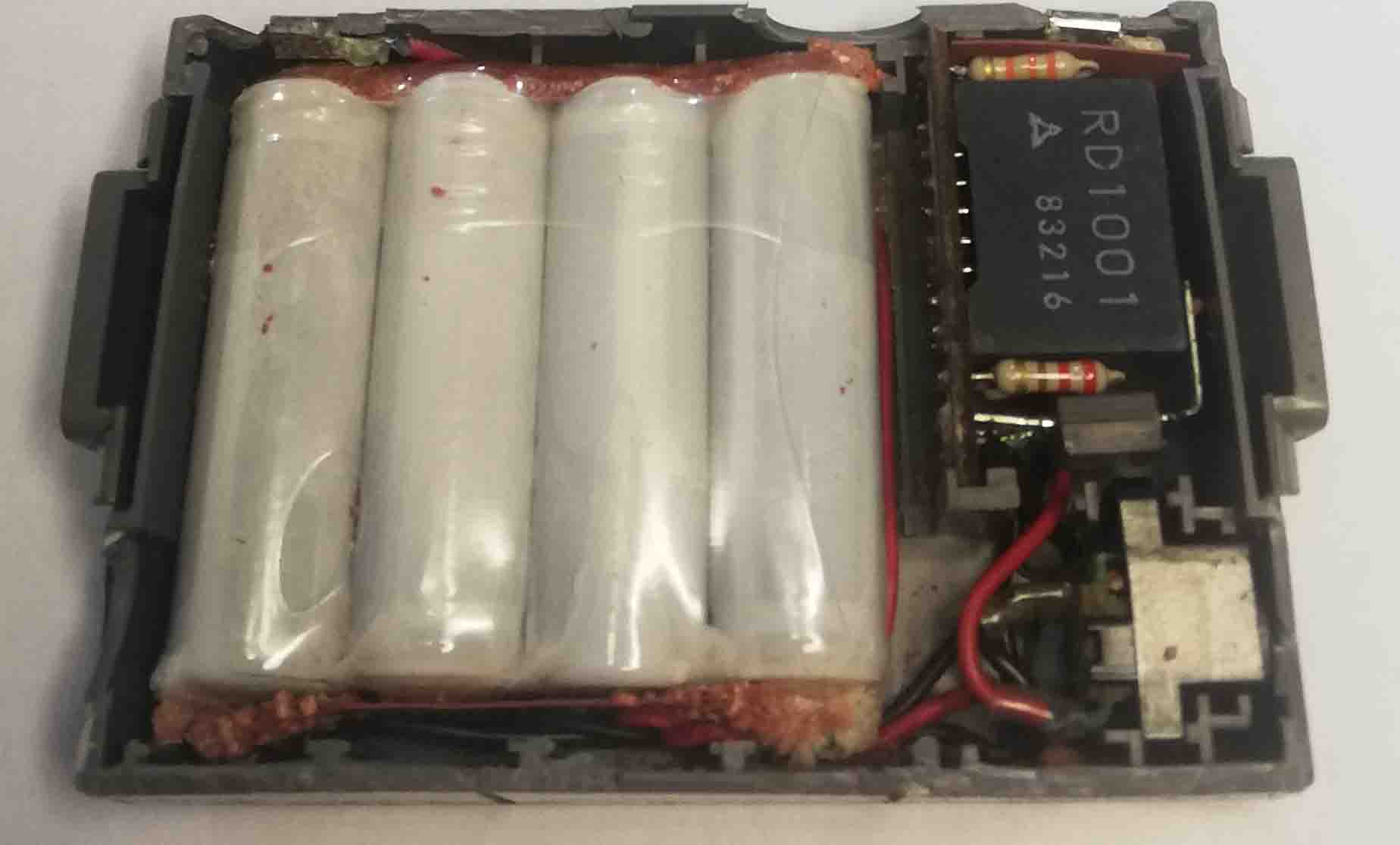
 Model: JE-860
Battery: 4 x ni-cd AA
AC adapter: 6 VDC
Year: 1973
Chip: TMC0130NC Display: VFD
Info:A special feature of this model is that it has the pi available on the keyboard compared to the previous model JE-855. made in Japan


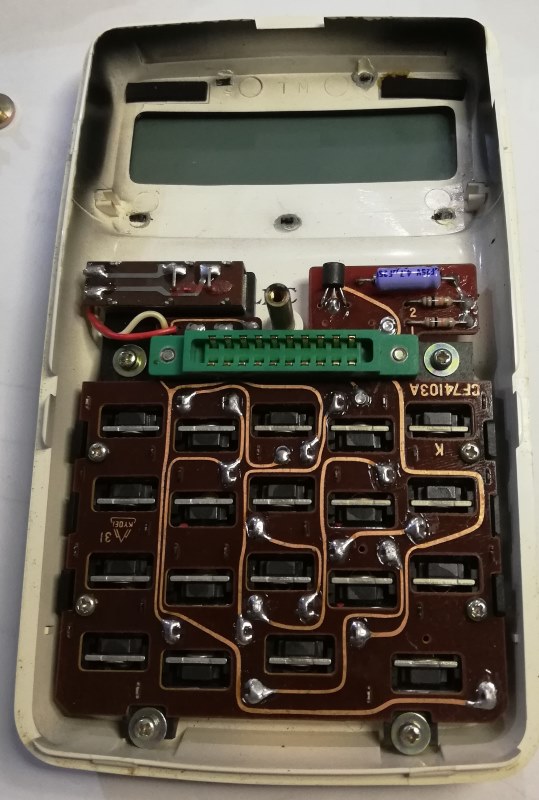

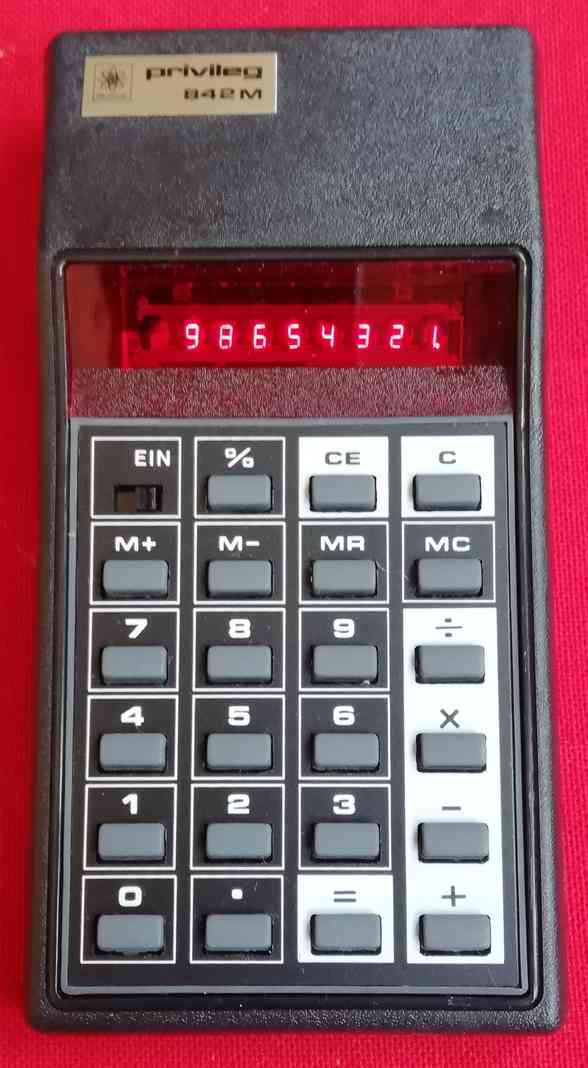
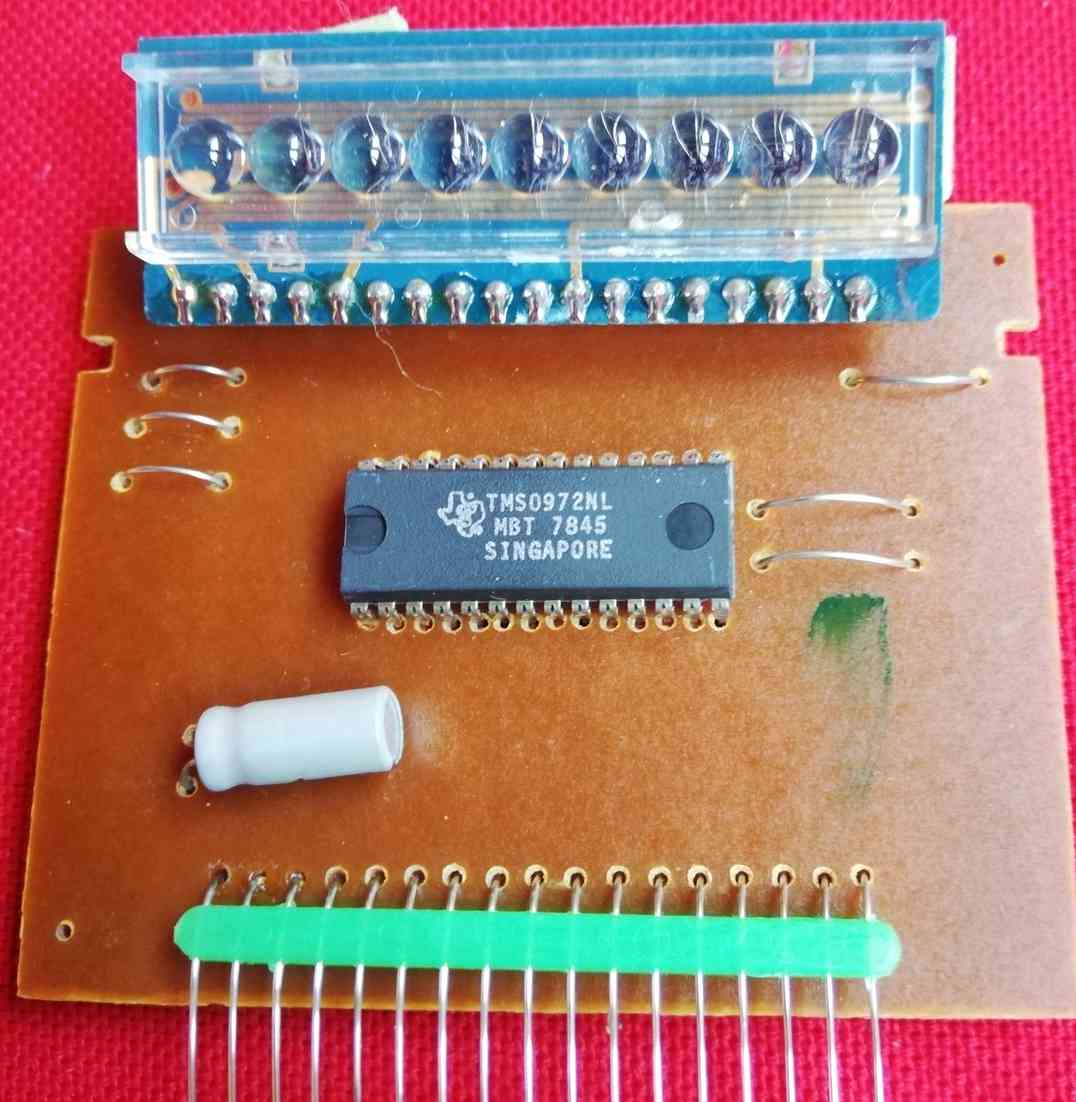
Model: 842M
Battery: 9 volt
Adapter:
Year: 1978
Chip: TMS0972
Info: Is a nearly perfect copy of the TI-1250
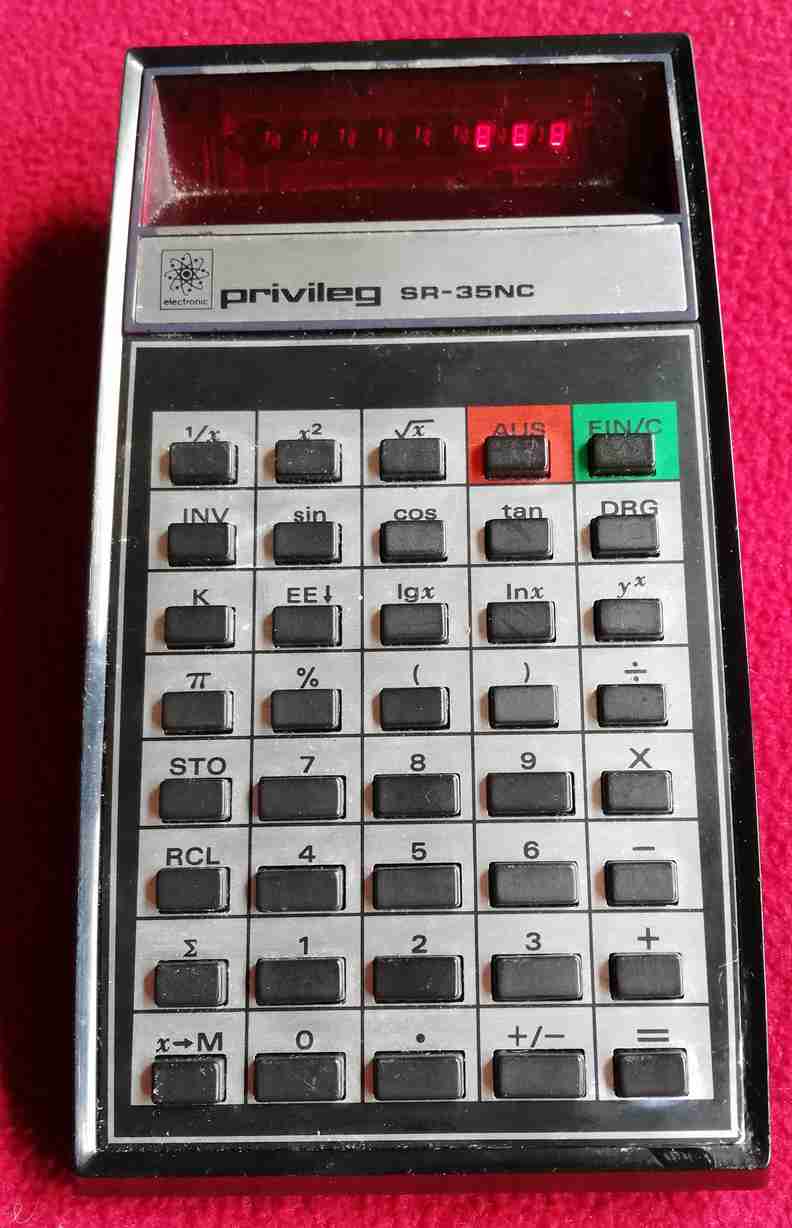 Model: SR-35NC
Battery:
Adapter:
Year: 1978
Chip: TMC0981
Info: Interesting calculator, this German edition of a TI-30. The Privileg SR-35NC is indeed nothing else than a Texas Instruments TI-30 with a restyled and translated key plate, and a sticker instead the molded TI-logo and TEXAS INSTRUMENTS nameplate.
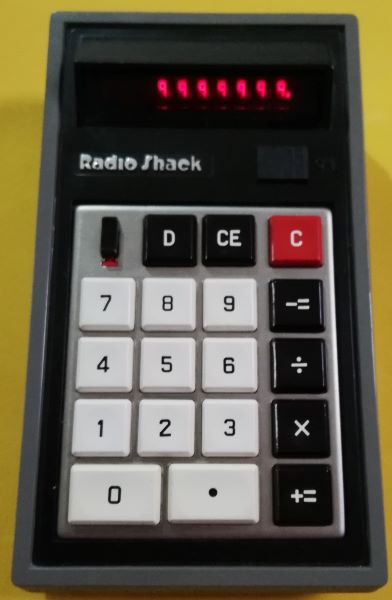 Model: EC-200
Battery: 4 x 1,5 AA / 4 x 1,2 Ni-Cd
Adapter:
Year: 1973
Chip: TMS0109 or TMS0103, 2*SN75491, 2*SN75492
Info:
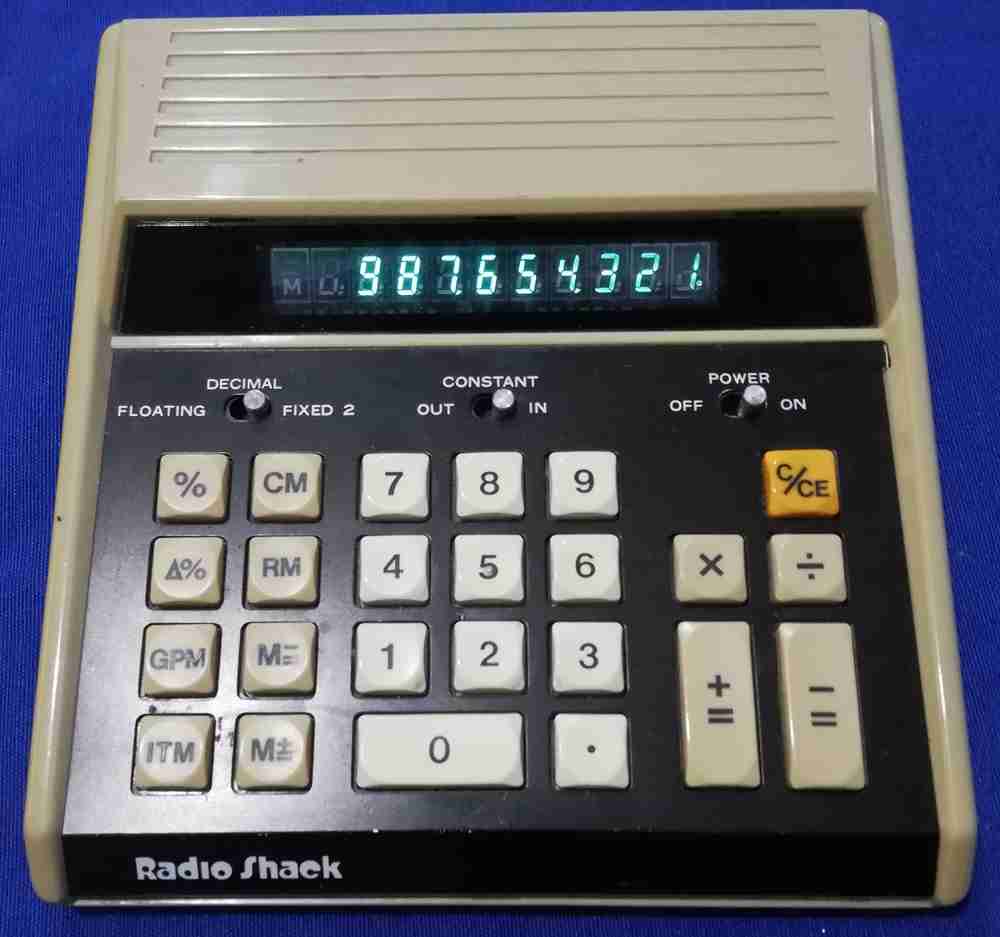 Model: EC-2001 desktop
Battery: 2 x D cells
Adapter: 6 volt adapter
Year: 1978
Chip: TMC1073NL
Info: Radio Shack
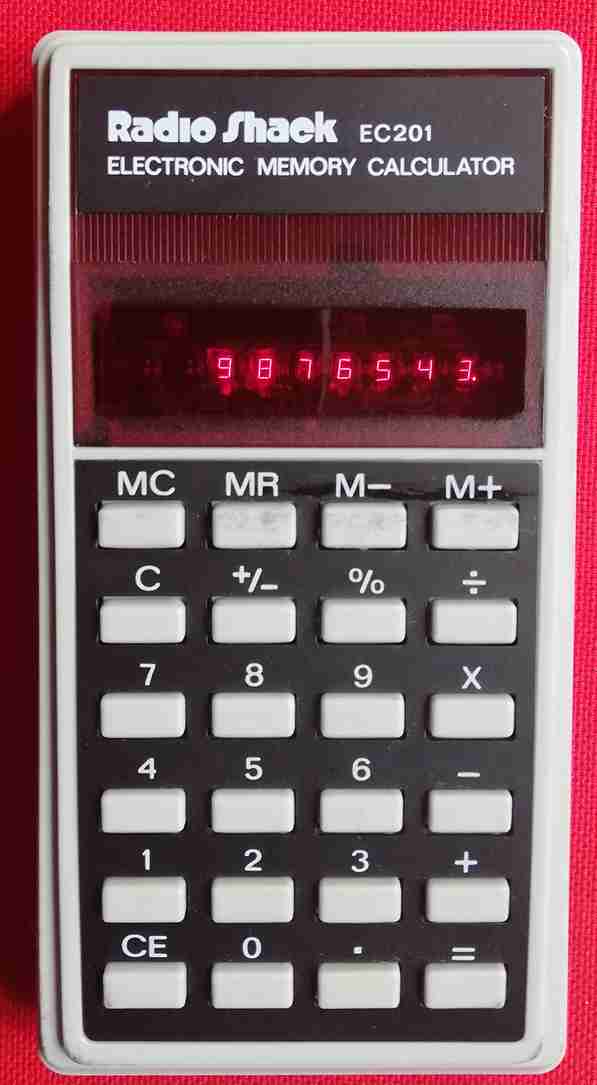 Model: EC-201
Battery: 9 volt
Adapter:
Year: 1979
Chip: TMS0972
Info:
 Model: EC-314 Kosmos 2
Battery: 2 x AA
Adapter:
Year: 1979
Chip: TMC1172NL
Info: Same version of the kosmos 2, but with the radio brand shack, Kosmos International, Inc. based in Atlanta, Georgia introduced with the Kosmos 1 already in the year 1977 a pocket-sized biorhythm calculator.On a first glance you notice the original calculator keypad and the three „sine-waves“ representing our:
| • Physical Cycle (P) • Emotional Cycle (S) • Intellectual Cycle (I) |
This Kosmos 2 was introduced in 1979 as the successor of the original design and obviously was the result of some cost reduction programs:
| • The 6 red and amber LED's at the end of the three "sine-waves" were omitted • The housing feels much cheaper • Manufacturing was moved from Japan to Taiwan |
 Model: EC-4000
Battery: BP6 , BP7
Adapter: AC9131, AC9132
Year: 1979
Chip: TMC1501
Info:The Radio Shack EC-4000 does not only look like an early TI-57 Programmable, it's 100% identical. Please notice that Texas Instruments used in Italy a simple sticker instead the molded TI-logo and TEXAS INSTRUMENTS nameplate found with the US-built TI-57 Programmable.
 Model: EC-425
Battery: 3 x AA nicd
Adapter: AC9130
Year: 1974
Chip: TMS0120
Info: The EC-425 is easily identified as a close relative of the TI SR-10, as is the Montgomery Ward P300. Both calculators use the same electronics, the same layout of the keyboard and even an identical mold for the housing bottom. The different look is achieved through a new mold for the upper half of the housing, shared with the Ward P300, and a different color of the function keys.
 Model: Spell master Radio shack
Battery: 4 x 1,5 V type C
AC adapter:
Year: 1988
Chip:
Info: The Radio Shack Spellmaster) was manufactured in 1988 and represents the last design iteration of the Speak & Spell family. The printed circuit board (PCB) itself is much smaller than the original Speak & Spell design.
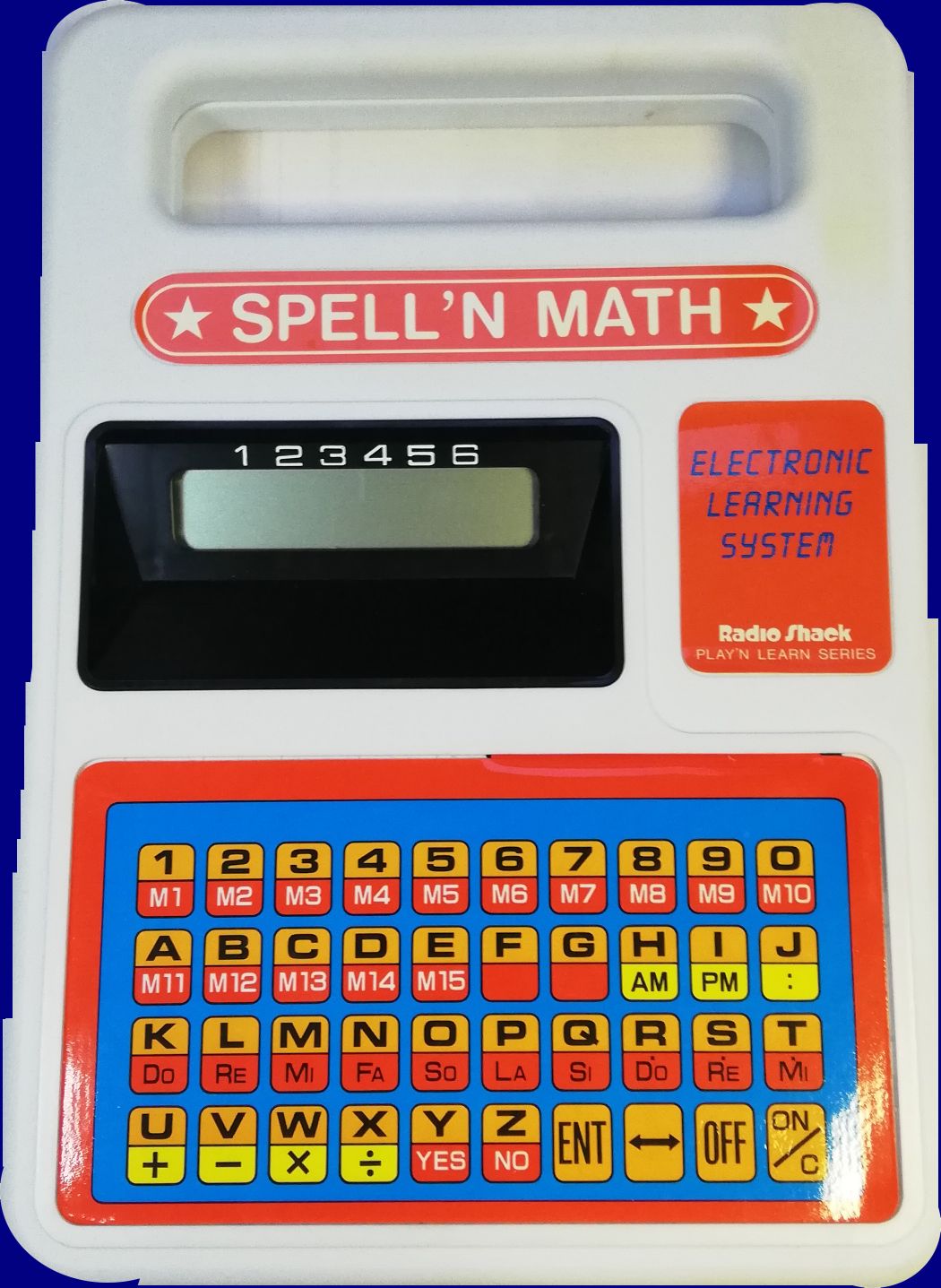 Model: Spell' N
Battery: 4 x 1,5 V type C
AC adapter:
Year: 1992
Chip:
Info:
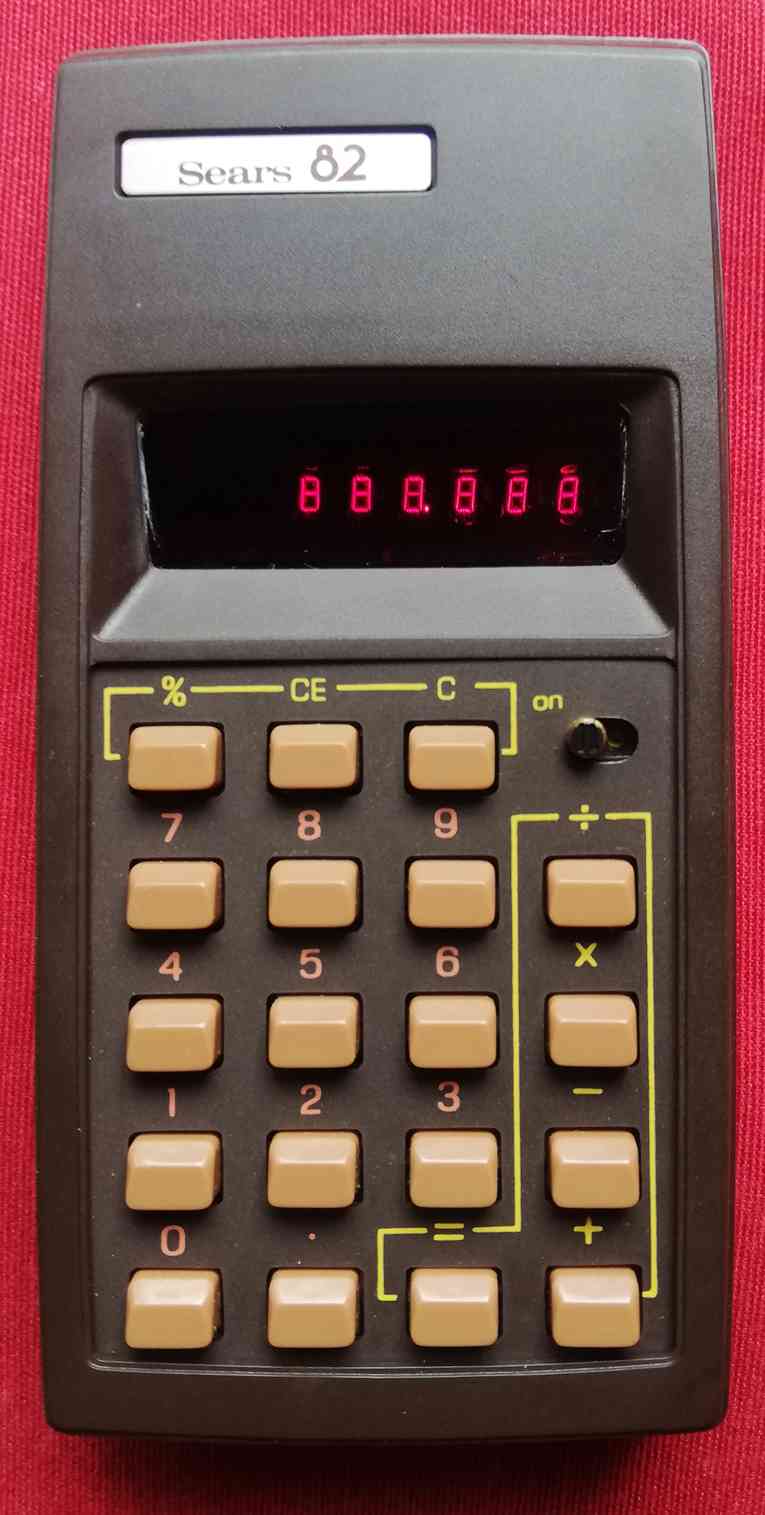 Model: sears 82
Battery: 9 volt
AC adapter: 3 volt adapter
Year: 1978
Chip: TMC0972NL
Info: made in Japan
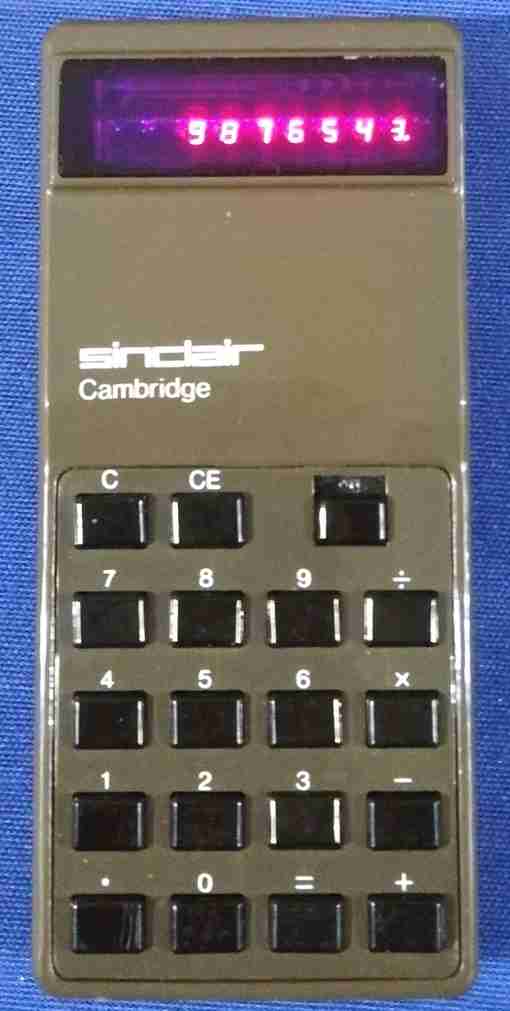
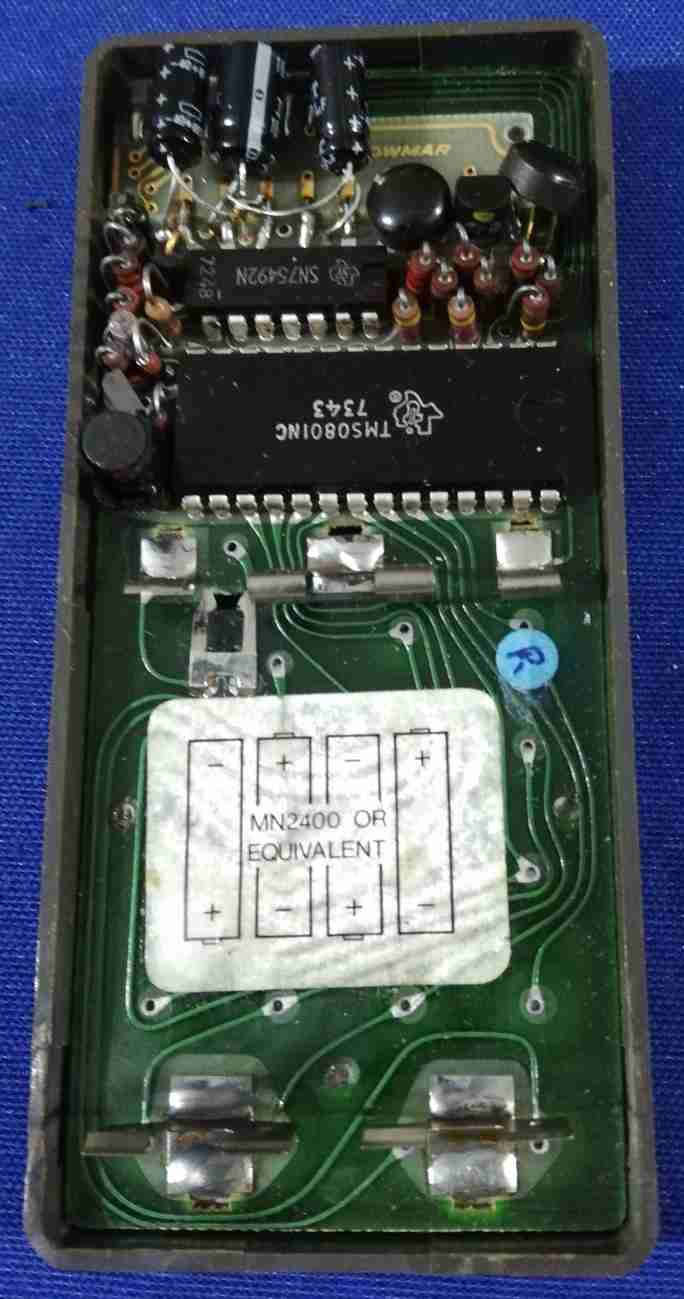 Model: Cambridge Type 2
Battery: 4 x AAA cells
AC adapter:
Year: 1973
Chip: TMS0801NC
Info: made in England
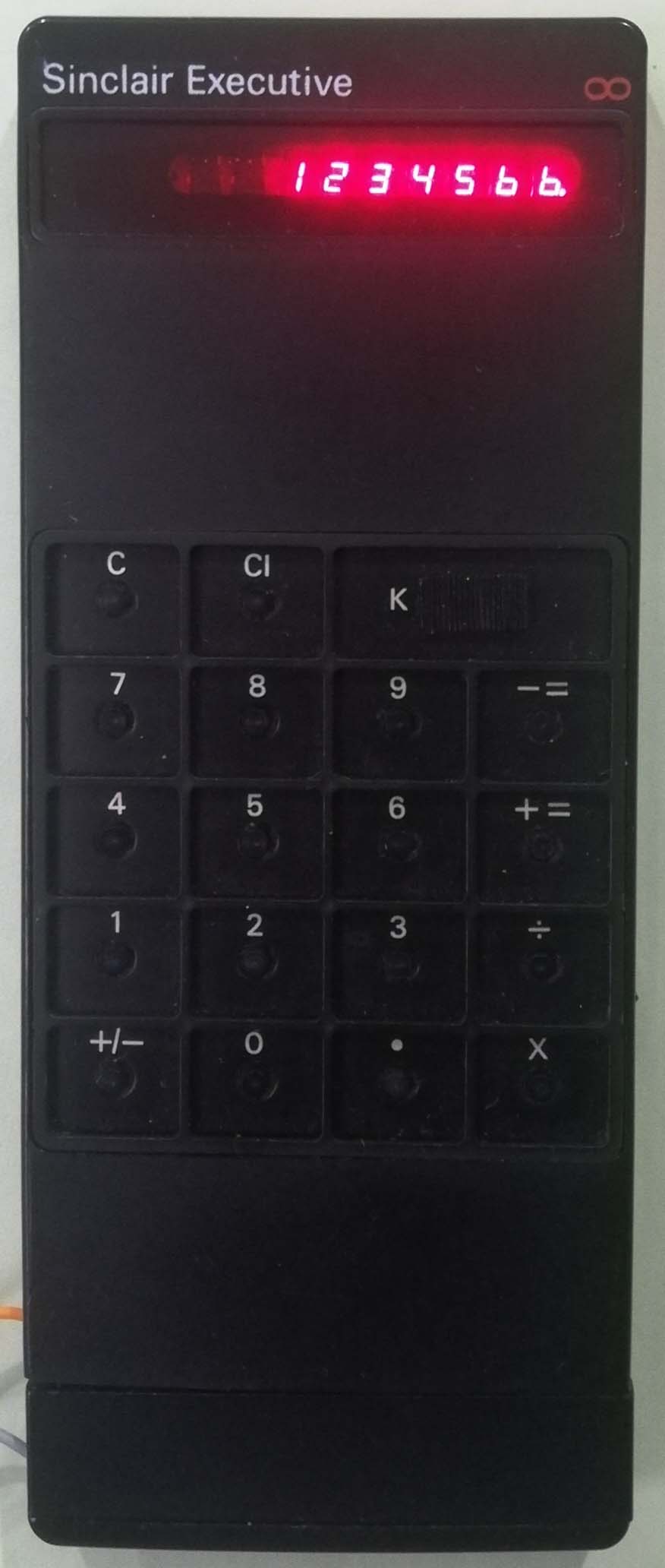
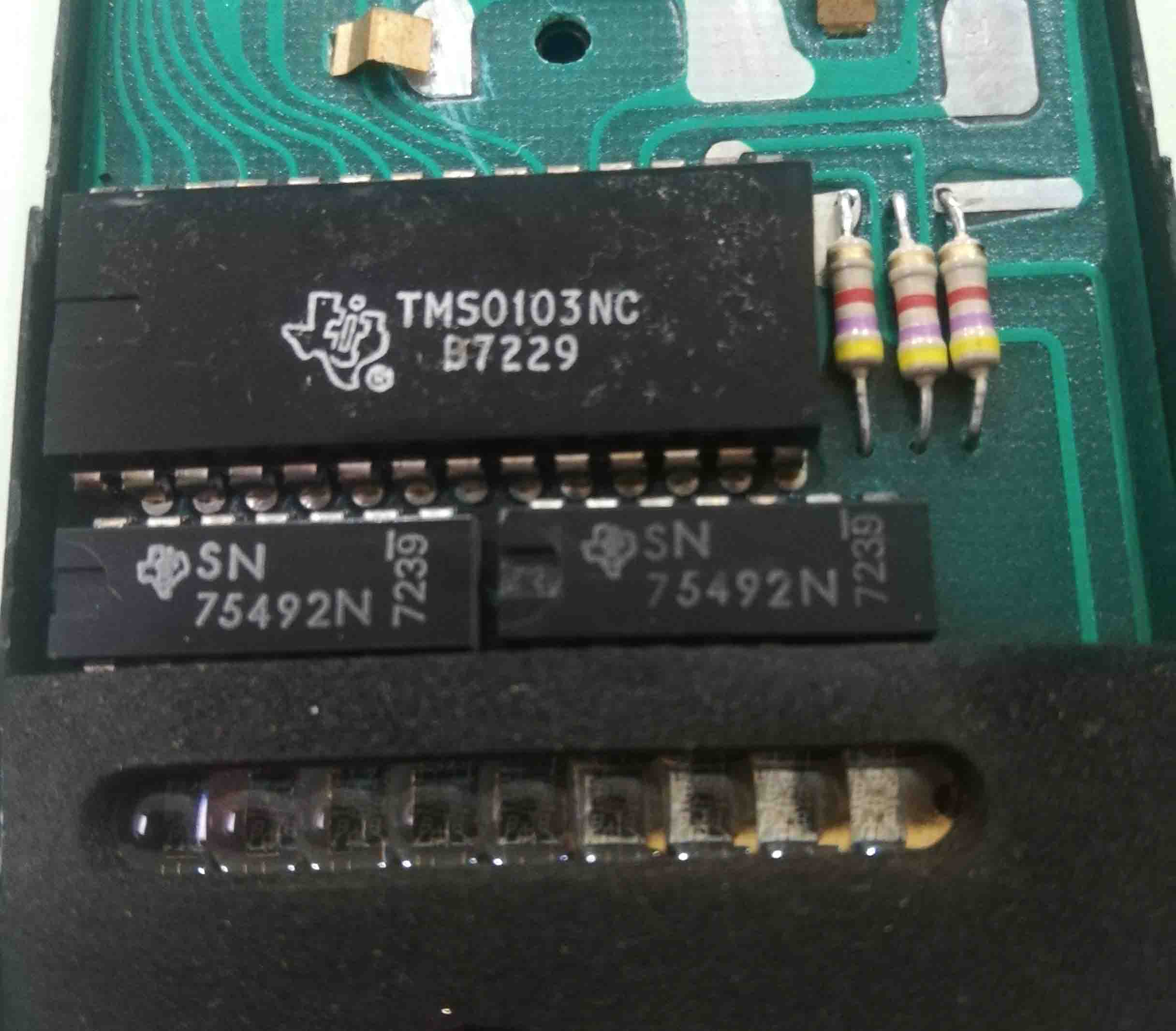 Model: Sinclaire Executive Type 1
Battery: 4 x AAA cells
AC adapter:
Year: 1972
Chip: TMS0103NC
Info:made in England
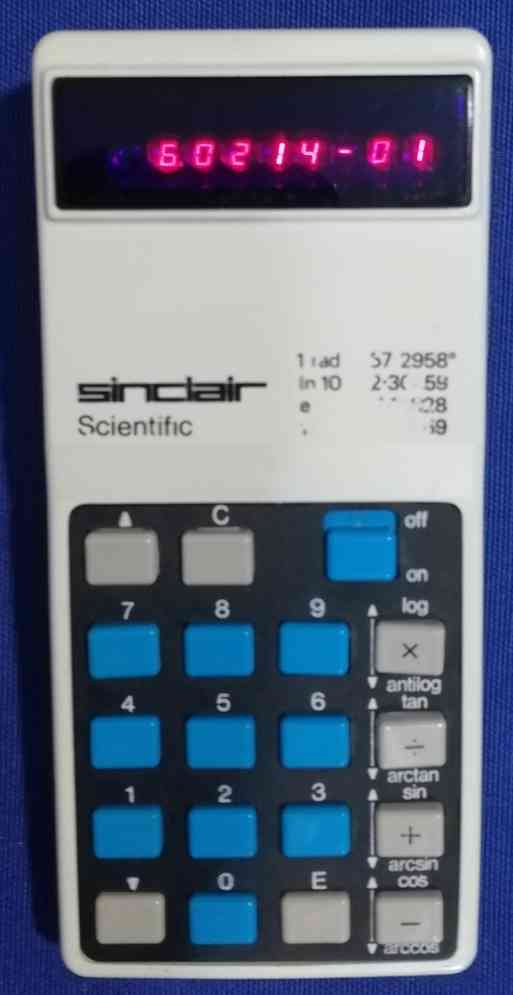
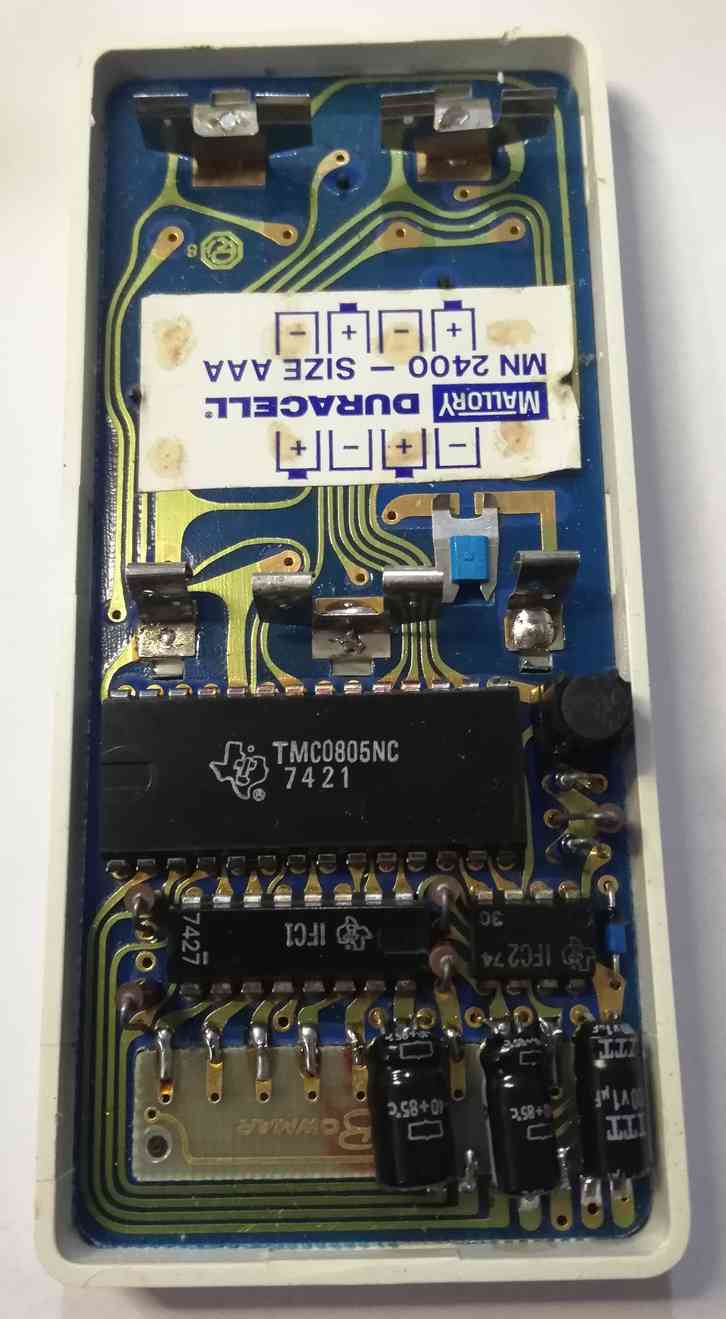 Model: Scientific
Battery: 4 x AAA cells
AC adapter:
Year: 1974
Chip: TMS0805NC
Info: made in England
How to use this unusual calculator
The Sinclair Scientific calculator uses reverse Polish notation (RPN) and scientific notation, so the key sequences are totally different from regular calculators. Numbers automatically have a decimal point inserted; use E to set the exponent. Operations are entered after the number and there is no equals key. Use the up and down arrows to select scientific functions. A display such as 1.2300 01 indicates 1.23*10^1, i.e. 12.3. A few examples:
To divide 17 by 3, enter 1 7 E 1 + 3 ÷
To take the sin of 0.01 radians, enter 0 0 1 ▲ +
To take antilog of .5 (to compute 10^.5), enter 5 E - 1 ▼ ×
Reverse Engineering from Ken Shirriff's blog
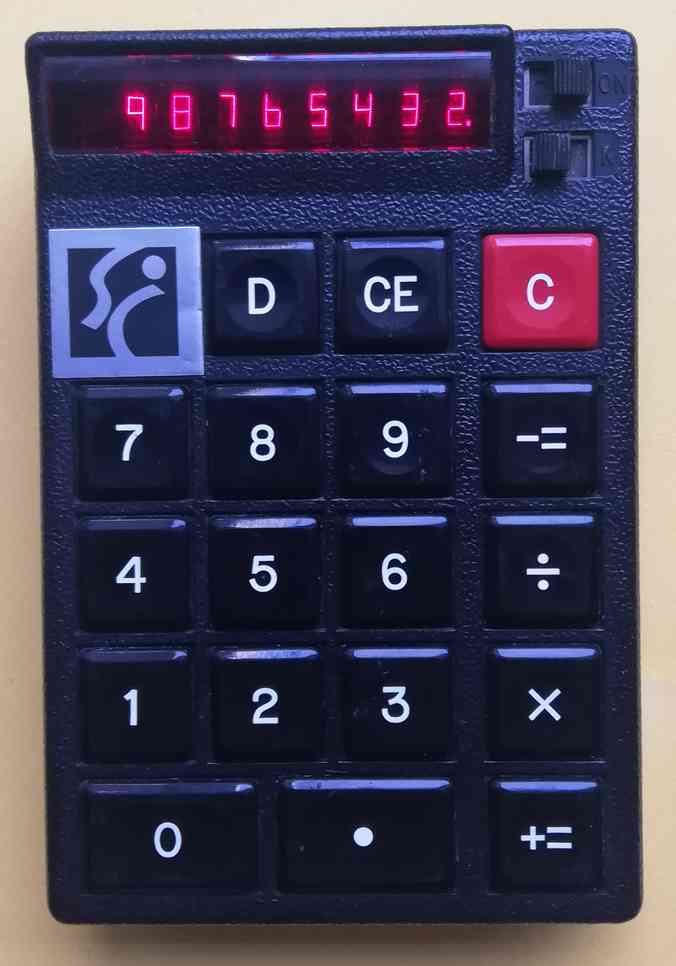 Model: Summit K16
Battery: 9 volt
Adapter: 9 volt
Year: 1972
Chip: TMS0103NC
Info: Made in U.S.A
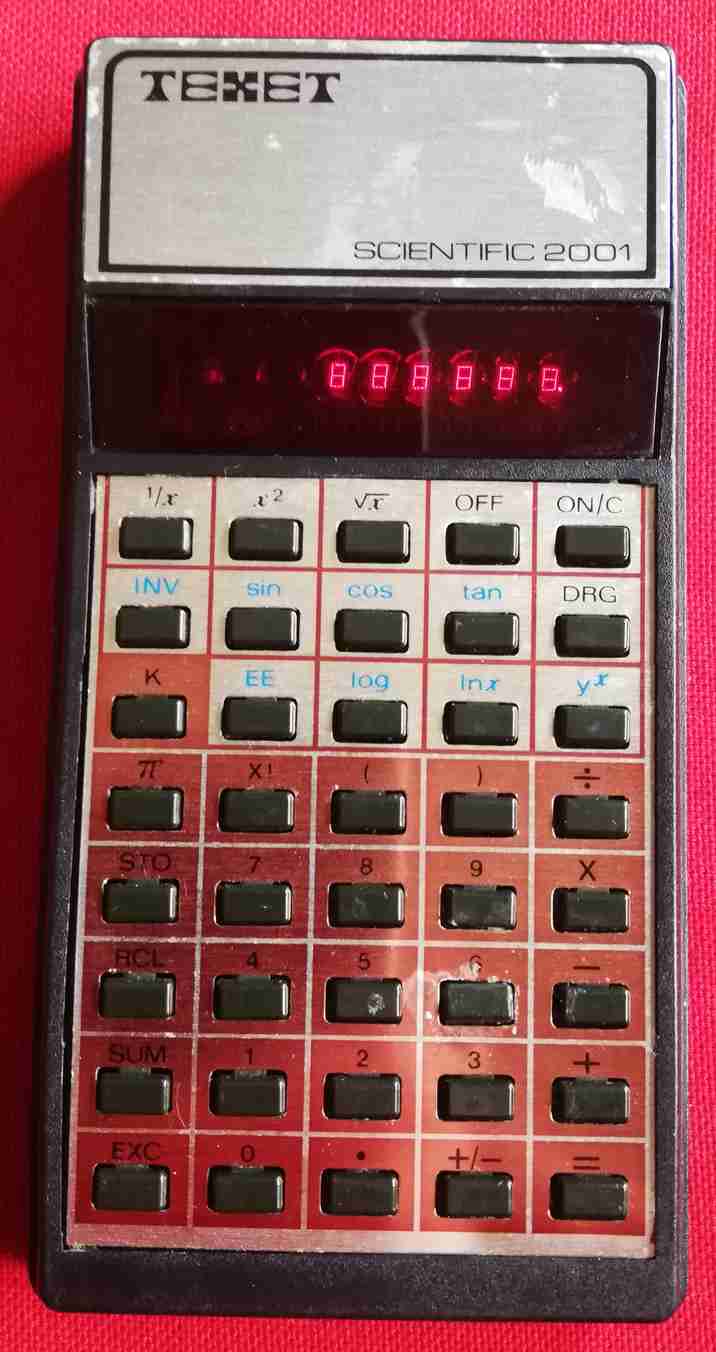 Model: TEXET 2001 scientific
Battery: 9 volt
Adapter:
Year: 1976
Chip: TMS0985
Info:
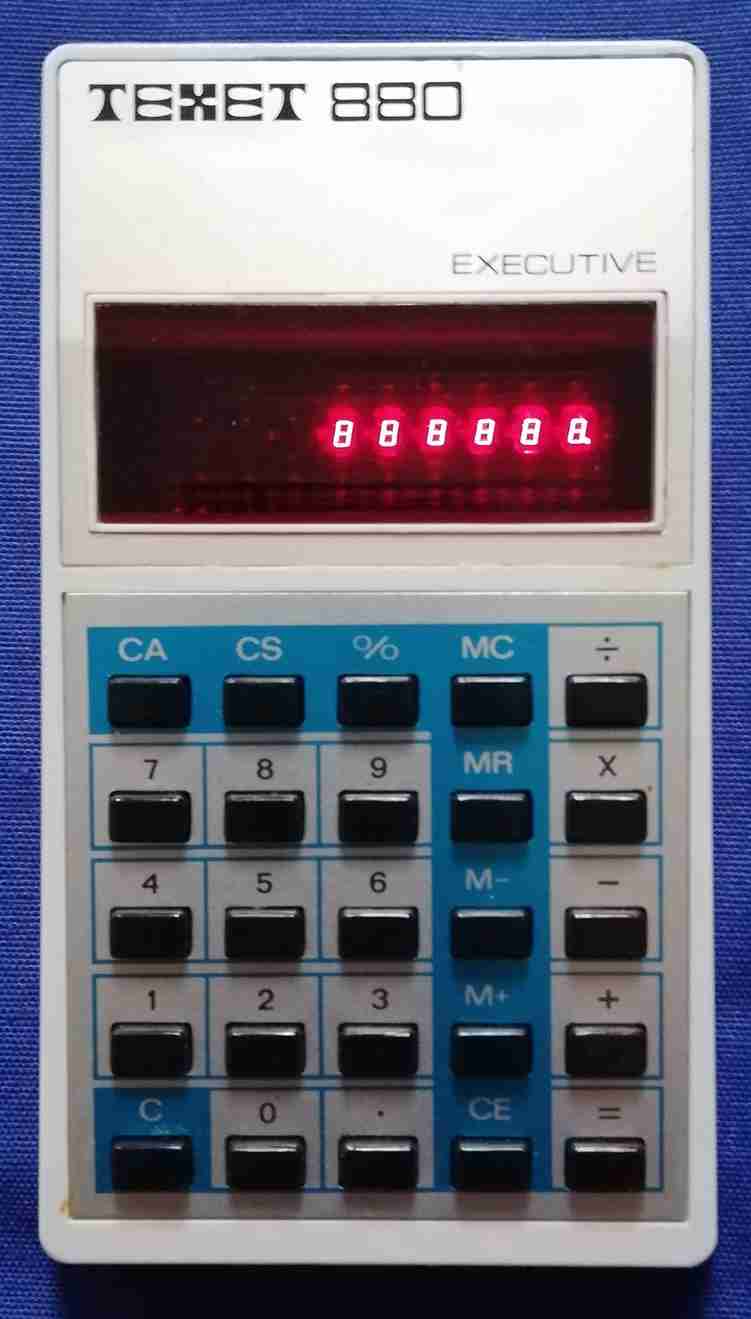 Model: TEXET 880
Battery: 9 volt
Adapter:
Year:
Chip: TMS0972
Info: This is a nearly perfect copy of the TI-1250. Made in Homg Kong
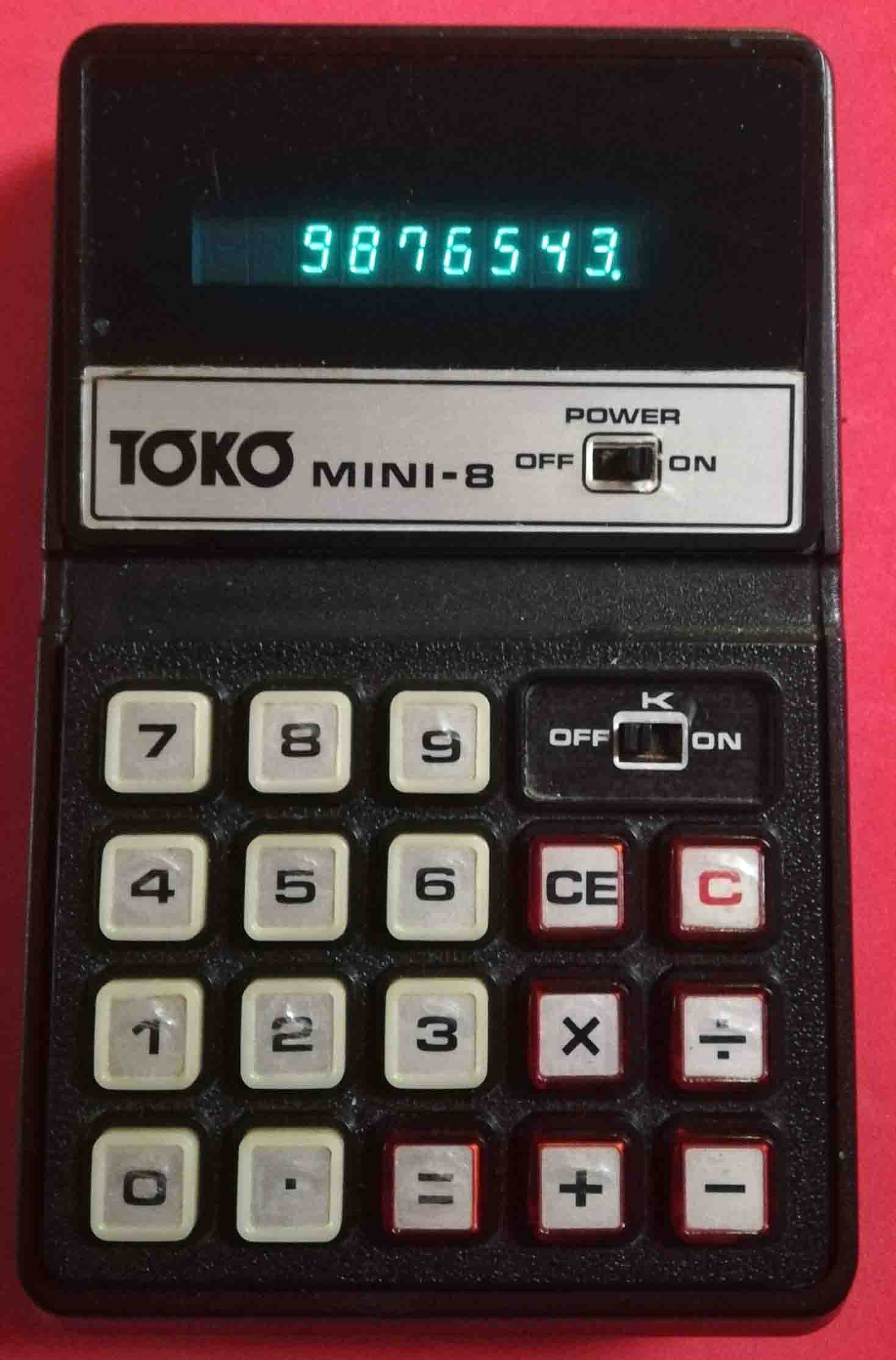 Model: TOKO mini 8
Battery: 4 x AA
Adapter: 6 vdc
Year:
Chip: TMS0101NC
Info:Made in Japan. According to the Toko, Inc., website, Toko was established in Tokyo in 1955 as a manufacturer of components for portable radios with the name TOKO Radio Coil Laboratories. The firm continues to manufacture electronic components.This relatively large handheld electronic calculator has a plastic case and eighteen square keys with rounded corners. These include ten digit keys, a decimal point key, a total key, four arithmetic function keys, a clear entry key, and a clear key. A switch on the right of the top row of keys can be set to having the constant (K) on or off. Behind this is an on/off switch. Test left of it reads: TOKO MINI-8. Behind this is an eight-digit green vacuum fluorescent display. A jack for a power adapter is on the right side.
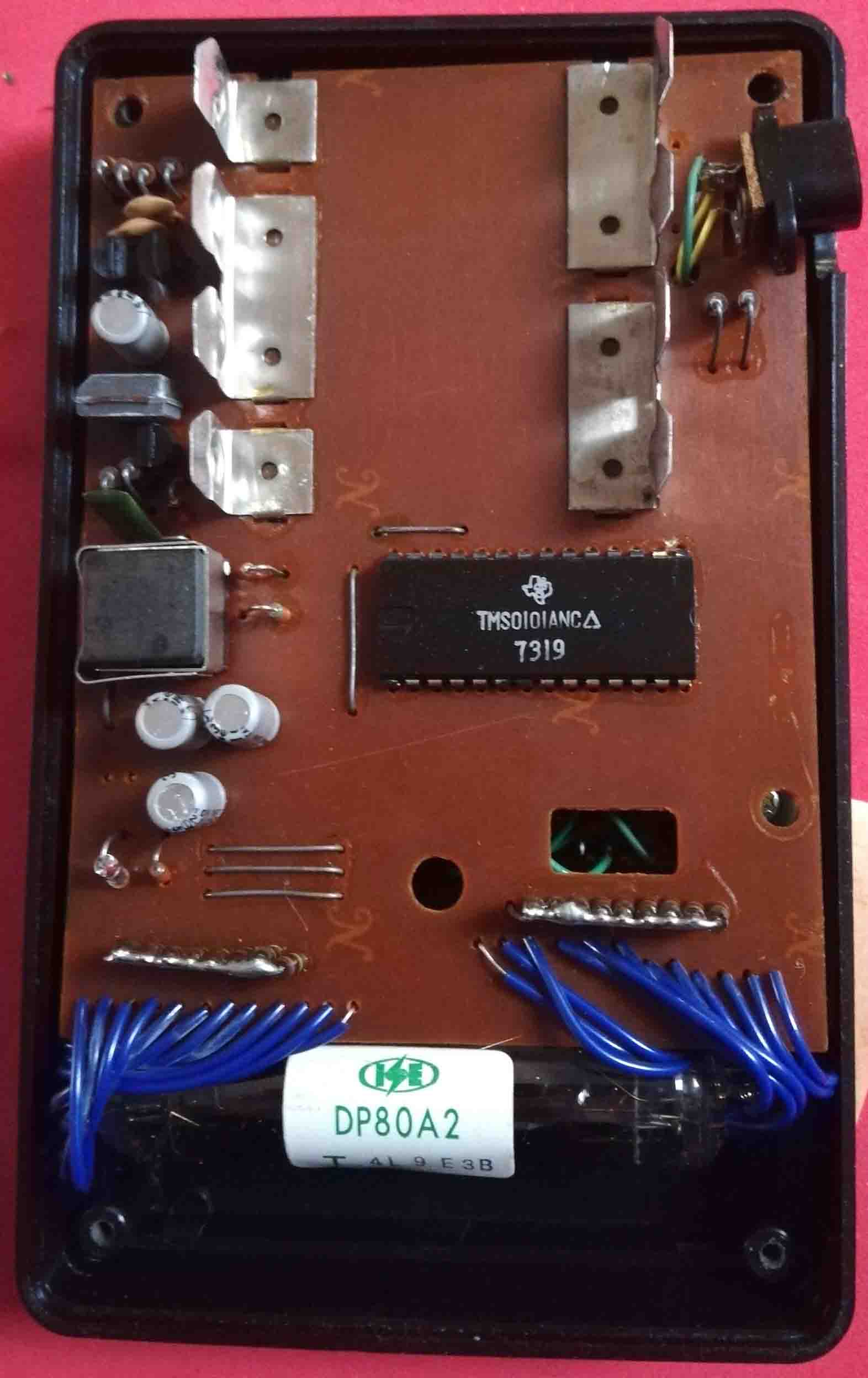
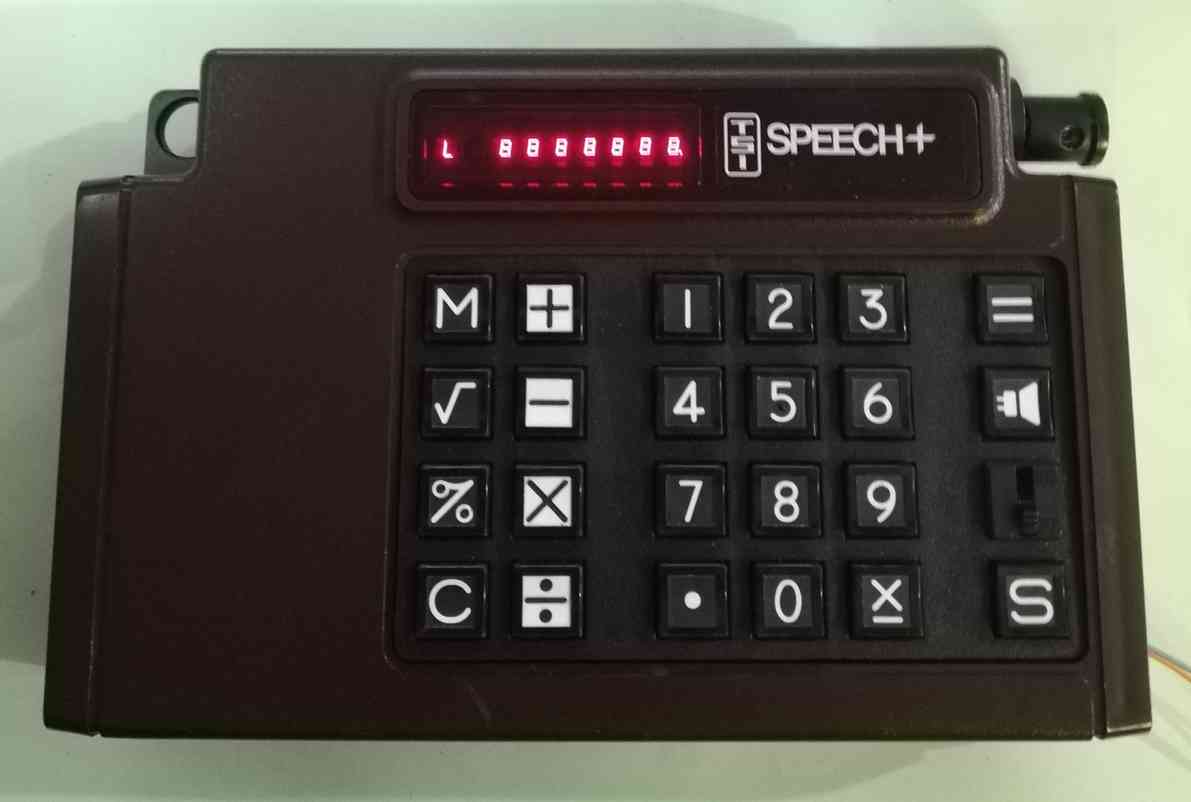 Model: TSI speech+
Battery: 4 x ni-cd
Adapter: 9 vac
Year: 1976
Chip: TMC1007NL
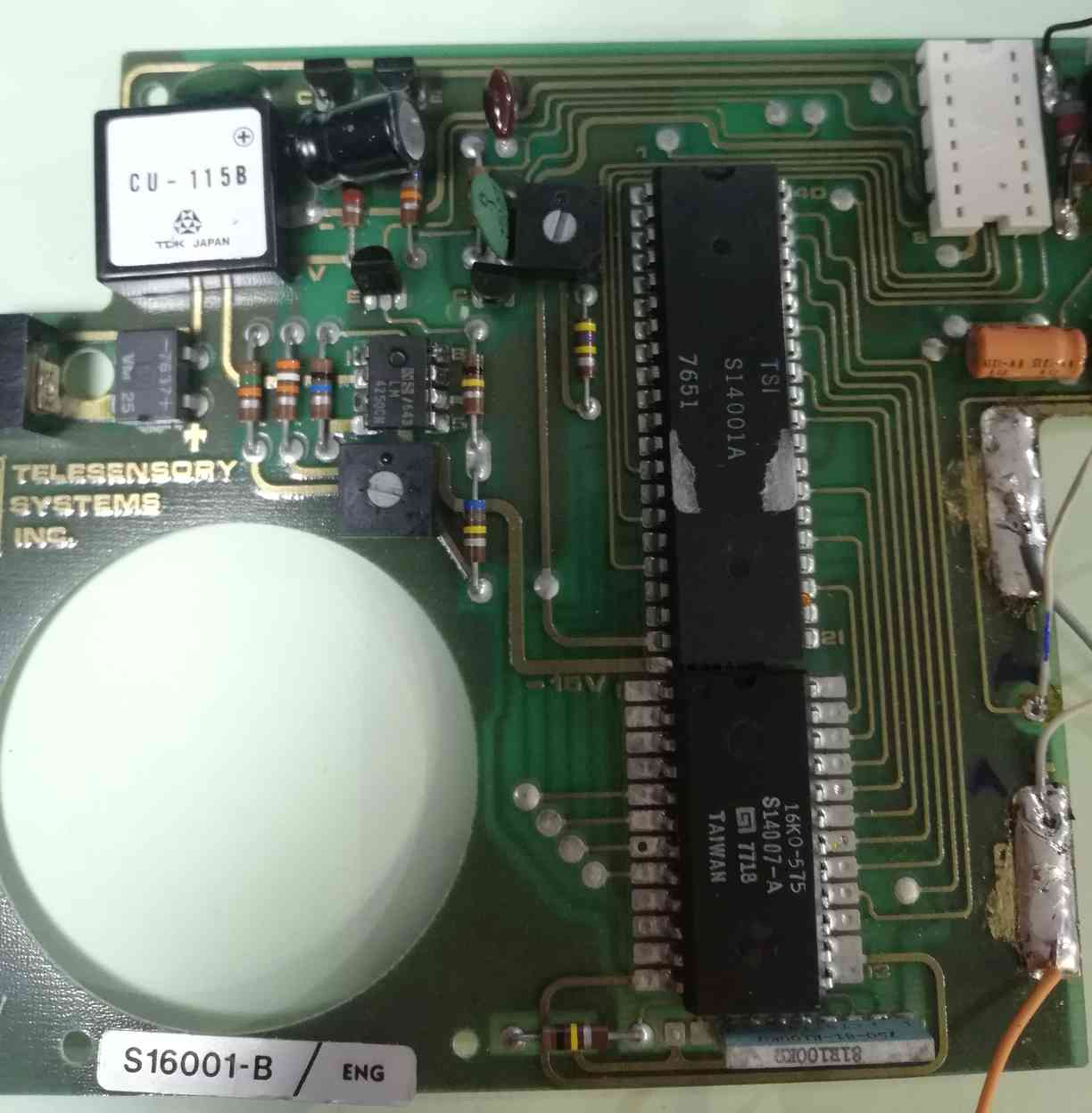
Info: TSI Speech + with Texas Instruments chip the TMC1007. In the early 1970s, Telesensory Systems Inc. Speech + was the first portable talking calculator for the blind, an interesting point is that, to aid the blind in use, the numbers on the keyboard are in the same order as a phone (with 1 at the top) instead of in the normal order of a calculator (with 9 at the top).
with permission of the author www.vintagecalculators.com
 Model: unisonic 1040
Battery: 4 x AAA
Adapter: 6 volt adapter
Year: 1974
Chip: TMS1044
Info:
 Model: 104R
Battery: 3 x AA
AC adapter:
Year: 1975
Chip: TMS1044NL
Info:
 Model: Citation (66-4986-7)
Battery: 9 volt
Adapter:
Year: 1978
Chip: TMC0921
Info: If you remove the key-plate known from e.g. the "electronic Wizard" from this Citation you'll get a TI-1000. Everything else is identical, even the back of the calculators tells you the manufacturer Texas Instruments.
 Model: Citation (66-4987-5) TI-1025
Battery: 9 volt
Adapter: AC9180
Year: 1977
Chip: TMC0923
Info: With the discontinuation of the TI-1200 family in 1977, Western Auto consequently replaced the M4987 "Citation" calculators and its siblings M4986 and M4988 with products based on the TI-1000 family. While the backside of the revised "Citation" calculator is missing any reference to the previous M4987 designation, sports the sales box a part number 66-4987-5, obviously a reference to the original naming scheme.
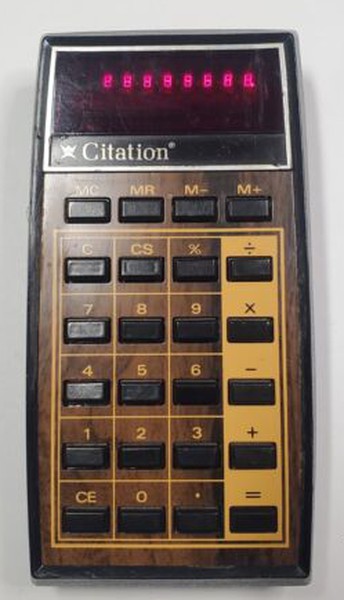 Model: Citation (66-4987-5)
Battery: 9 volt
Adapter: AC9180
Year: 1977
Chip: TMS0972
Info:The TMS0952 introduced with the original design of the M4986 was soon replaced with the TMS0972, a pin-compatible design dropping the additional resistors and capacitor and further reducing the manufacturing costs of the M4986 series. This contribution of cost cutting had a side effect for the customer, Texas Instruments decided to use with the TMS0972 an 8-digit LED display instead of the previous 9-digit display. While the 9th (leftmost) digit was originally used only for the negative sign and didn't impact most calculations, should you try this example:
| • 11111111 [-] 23456789 [=] - TMS0952: -12345678 • 11111111 [-] 23456789 [=] - TMS0972: -.1234567 (flashing) |
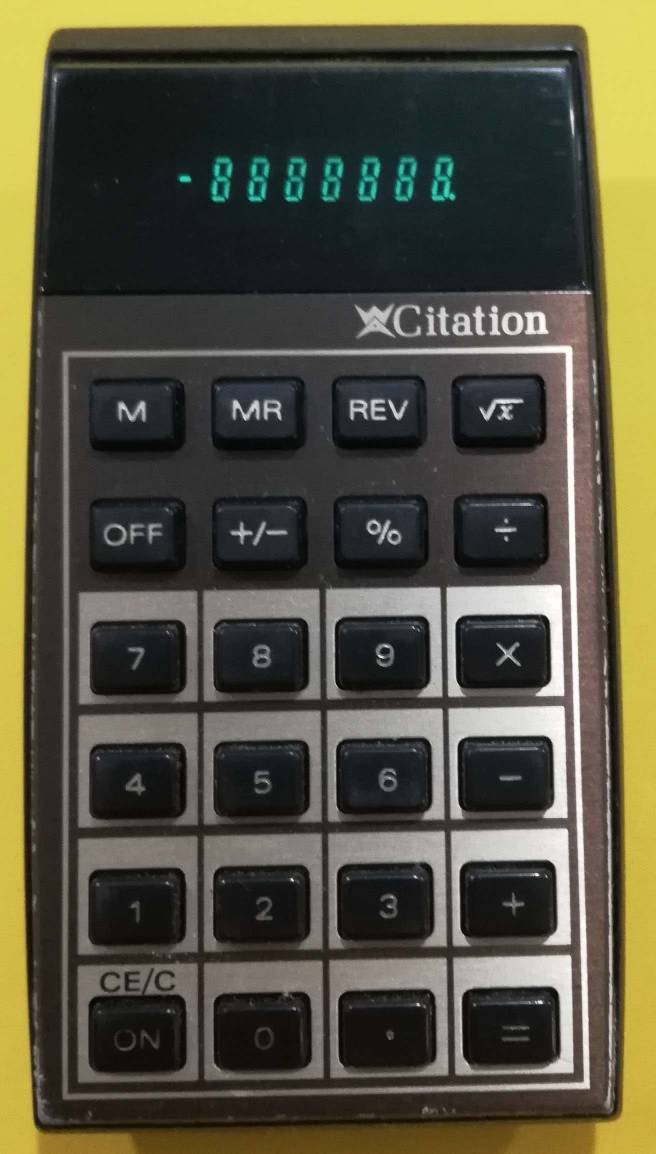 Model: Citation (66-4988-3)
Battery: 9 volt
Adapter:
Year: 1978
Chip: TMC0921
Info:If you remove the key-plate known from e.g. the "electronic Wizard" from this Citation you'll get a TI-1050. Everything else is identical, even the back of the calculators tells you the manufacturer Texas Instruments.
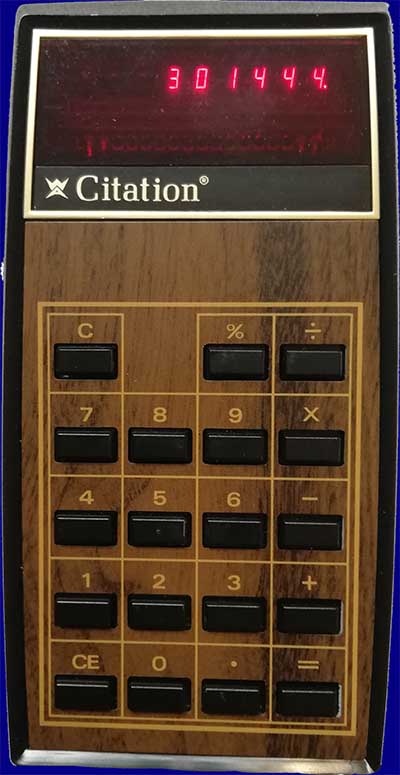 Model: Citation ( M4986-7 )
Battery: 9 volt
Adapter: AC9180
Year: 1976
Chip: TMS0952
Info: This calculator is identical to the TI-1200 sold under different names from the Western Auto company. The most common names are "Citation" or "M4986". The only difference from the TI-1200 is the wooden template and the missing TI logo.
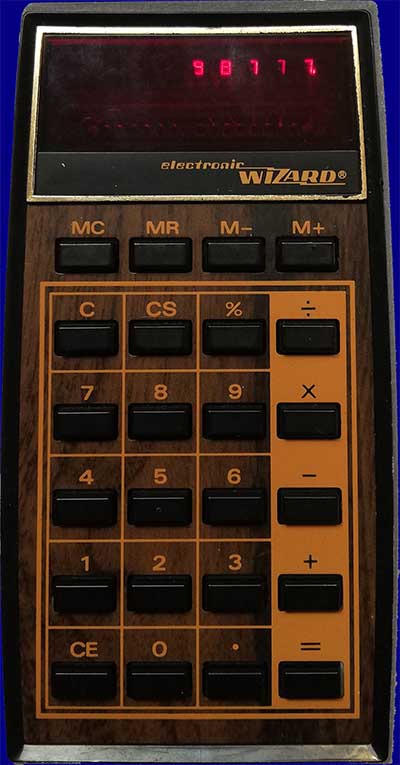 Model: Electronic Wizard ( M4987 )
Battery: 9 volt
Adapter: AC9180
Year: 1975
Chip: TMS0952
Info: This calculator is identical to the TI-1250 sold under different names from the Western Auto company. The most common names are "Electronic Wizard" or "M4987", but later also obtained the confusing "Citation" plate. The only difference from the TI-1250 is the wooden template and the missing TI logo.
 Model: TE-8000
Battery: no
Adapter: AC 110 volt
Year: 1973
Chip: TMS0105
Info:TE8000 is a four-function desk calculator from 1973, built with a Texas Instruments single-chip processor.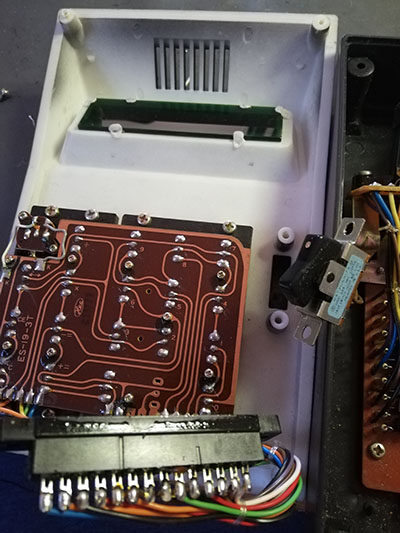
The calculator is housed in a rectangular plastic box finished in imitation woodgrain.
The main circuit board and the display tube board are fastened to the base with a pair of light metal brackets. A 2-pin mains connector and the power transformer are mounted at the rear of the box, with the power switch attached to the moulded top cover. The transformer secondaries are hard-wired to the circuit board.
The display uses a set of miniature eight-segment vacuum fluorescent tubes, Futaba type DG10R1. (The small eighth segment at the centre right gives a "proper" numeral 4, but the processor only drives the usual seven segments). Eight tubes are used for the numerical display, and one (at the right) for polarity and error indication.
The keyboard is built as a single module and is attached to the main board via a cable and edge connector.
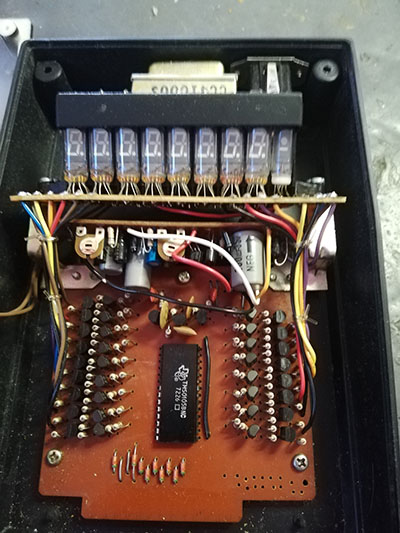
The TMS-0105 series single-chip processors contain all of the calculator circuitry with the exception of the power supplies and display drivers.
The rather untidy circuit board has a simple power supply at the rear and the TMS-0105 chip in the centre. The anode drivers for the nine tubes are at the left, with the eight segment drivers (seven plus decimal point) at the right. The keyboard attaches to the edge connector at the bottom.
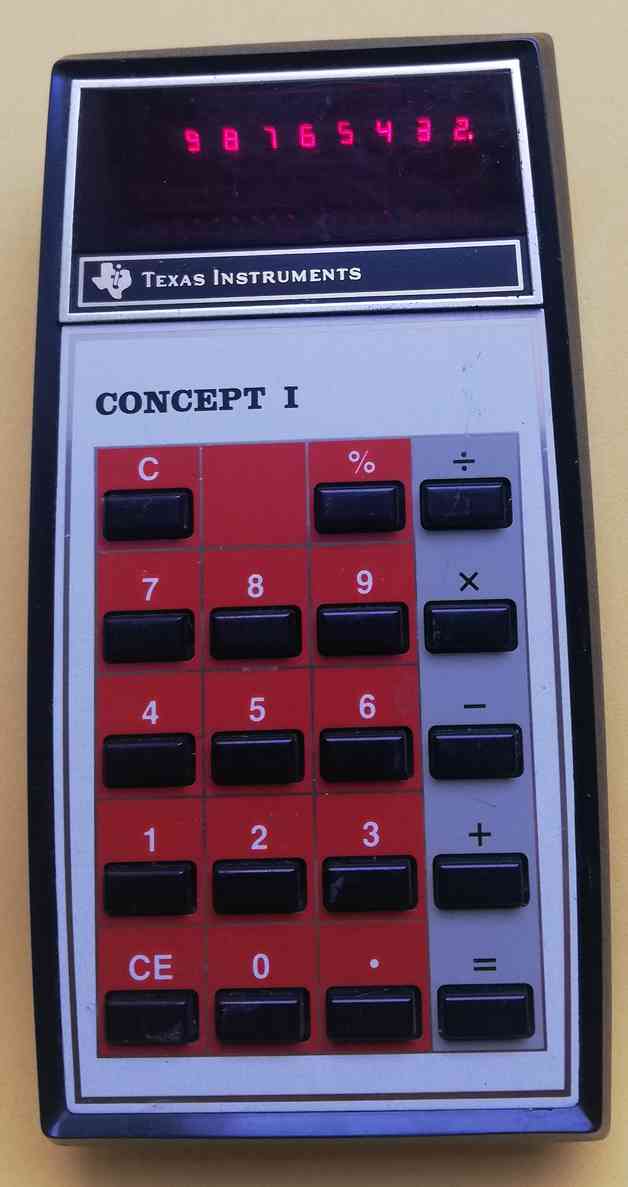 Model: Concept I
Battery: 9 volt
Adapter: AC9180
Year: 1976
Chip: TMS0972
Manual: with permission www.datamath.org
Info: The Zayre CONCEPT Calculator Series culminated in June 1976 with the introduction of the Texas Instruments CONCEPT I, CONCEPT II, and CONCEPT III calculators based on the TI-1200, TI-1250, resp. SR-16 II but disappeared already in August 1979 with the clearance sales of the CONCEPT COMPACT calculators.
 Model: Concept II
Battery: 9 volt
Adapter: AC9180
Year: 1976
Chip: TMS0972
Manual: with permission www.datamath.org
Info: The Zayre CONCEPT Calculator Series culminated in June 1976 with the introduction of the Texas Instruments CONCEPT I, CONCEPT II, and CONCEPT III calculators based on the TI-1200, TI-1250, resp. SR-16 II but disappeared already in August 1979 with the clearance sales of the CONCEPT COMPACT calculators.
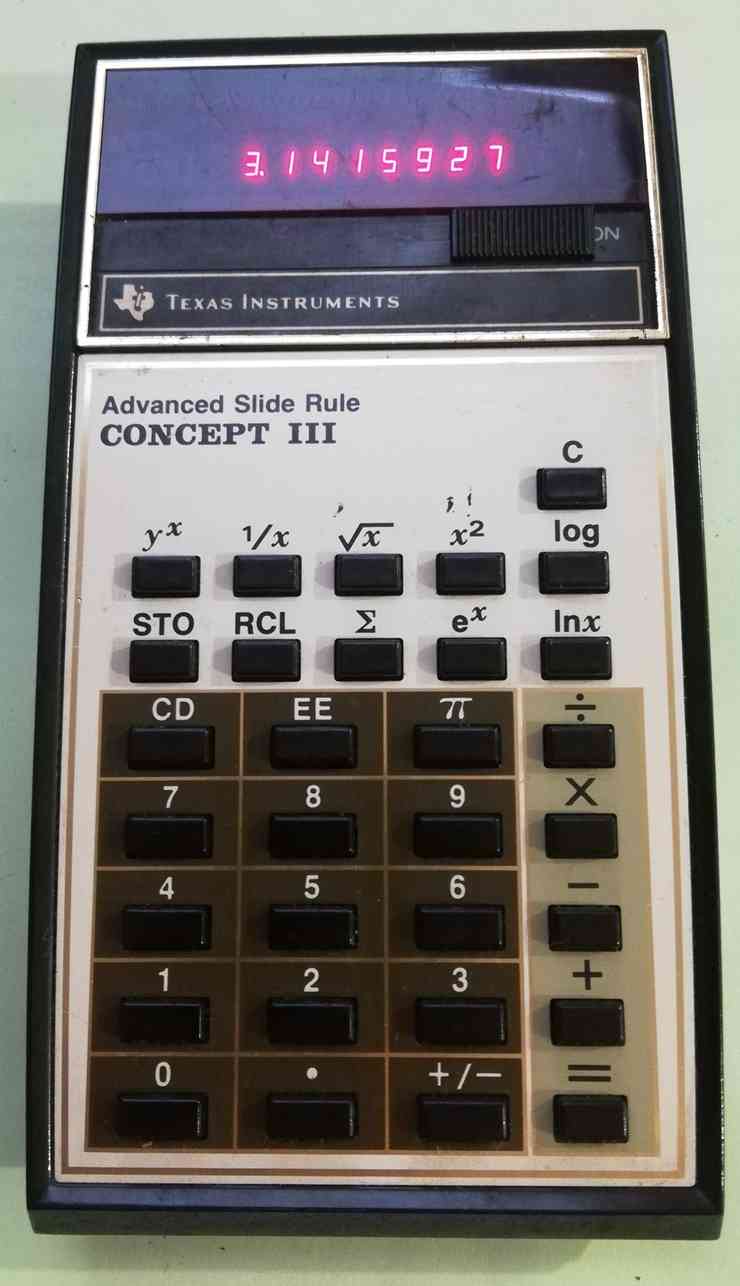
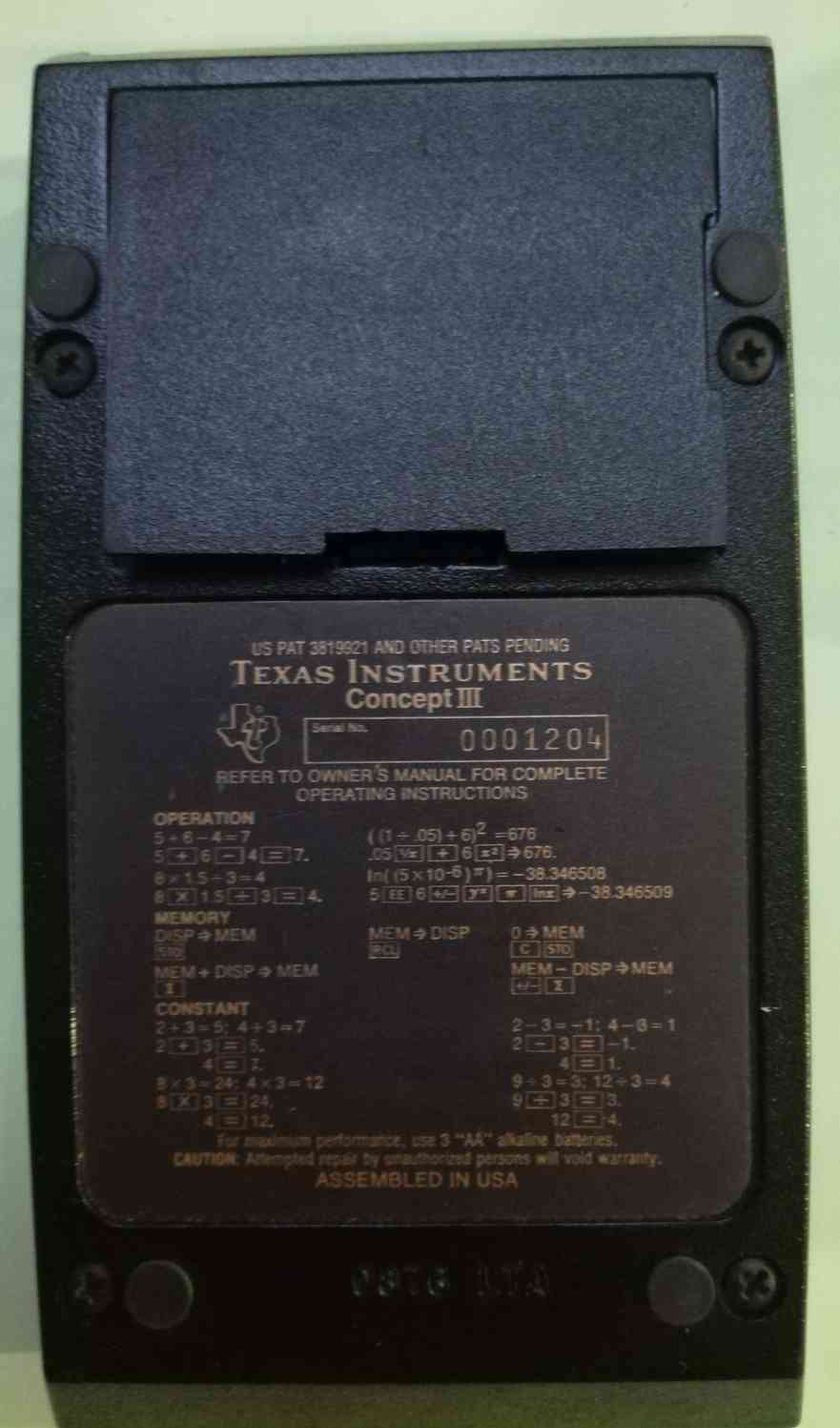 Model: Concept III
Battery: 3 x AA
Adapter: AC9180
Year: 1976
Chip: TMS1016, SN27882 x 2
Manual: with permission www.datamath.org
Info: The Zayre CONCEPT Calculator Series culminated in March 1976 with the introduction of the Texas Instruments CONCEPT I, CONCEPT II, and CONCEPT III calculators based on the TI-1200, TI-1250, resp. SR-16 II but disappeared already in August 1979 with the clearance sales of the CONCEPT COMPACT calculators. Following the path of the Slide Rule (SR) calculators like the wonderful SR-16, the CONCEPT III was called Advanced Slide Rule. If you explore the calculator deeper, you'll immediately catch the similarities to the SR-16 II. The only differences are the coloring schema of the faceplate and the size of the letters. The slightly oversized keyboard printing was continued later with the TI-1255.Dismantling this Zayre CONCEPT III manufactured in February 1976 by Texas Instruments in Lubbock, Texas reveals no differences to the SR-16-II, the printed circuit board (PCBs) of the two calculators are 100% identical. Both the SR-16-II and this rare CONCEPT III calculator are based on a TMS1016 single-chip calculator circuit, a member of the famous TMS1000 Microcomputer family developed already in 1974.
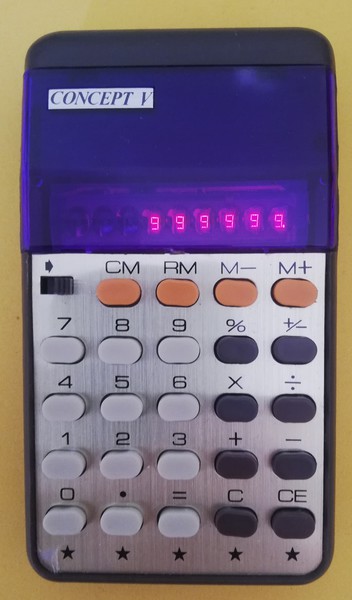 Model: Concept V
Battery: 9 volt
Adapter:
Year: 1976
Chip: TMS0972nl
Manual:
Info: The Zayre CONCEPT Calculator Series culminated in March 1976 with the introduction of the Texas Instruments CONCEPT I, CONCEPT II, and CONCEPT III calculators based on the TI-1200, TI-1250, resp. SR-16 II but disappeared already in August 1979 with the clearance sales of the CONCEPT COMPACT calculators. Following the path of the Slide Rule (SR) calculators like the wonderful SR-16, the CONCEPT III was called Advanced Slide Rule. If you explore the calculator deeper, you'll immediately catch the similarities to the SR-16 II. The only differences are the coloring schema of the faceplate and the size of the letters. The slightly oversized keyboard printing was continued later with the TI-1255.Dismantling this Zayre CONCEPT III manufactured in February 1976 by Texas Instruments in Lubbock, Texas reveals no differences to the SR-16-II, the printed circuit board (PCBs) of the two calculators are 100% identical. Both the SR-16-II and this rare CONCEPT III calculator are based on a TMS1016 single-chip calculator circuit, a member of the famous TMS1000 Microcomputer family developed already in 1974.
 Model: Avstar Piper
Battery: 2 x LR43
Adapter:
Year: 1981
Chip: TPO328
Info:This Piper "Flight Computer" gives you an example of using existing products like the TI-35 for other purposes. We know similar approaches from the insurance business (view the TI-58 manufactured for Lloyd) but this one uses a specialized integrated circuit to perform different computations and conversions:
| • Alt/AS: Calibrated, True Airspeed, Pressure, Density Altitude • WIND: Wind Speed, Direction, Course and Heading • TSD: Time-Speed-Distance, Distance and fuel consumption • CMP: Computes in the above modes the different values • CNV: Convert between US and SI-units • T: Time calculations |
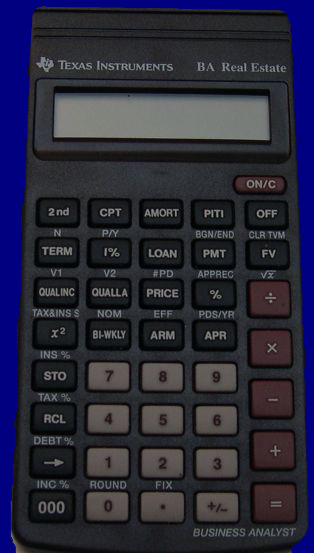 Model: BA real estate
Battery: 2 x LR44
Adapter:
Year: 1993
Chip: T6m51 Toshiba
Info: modern LCD 1991 - 1999
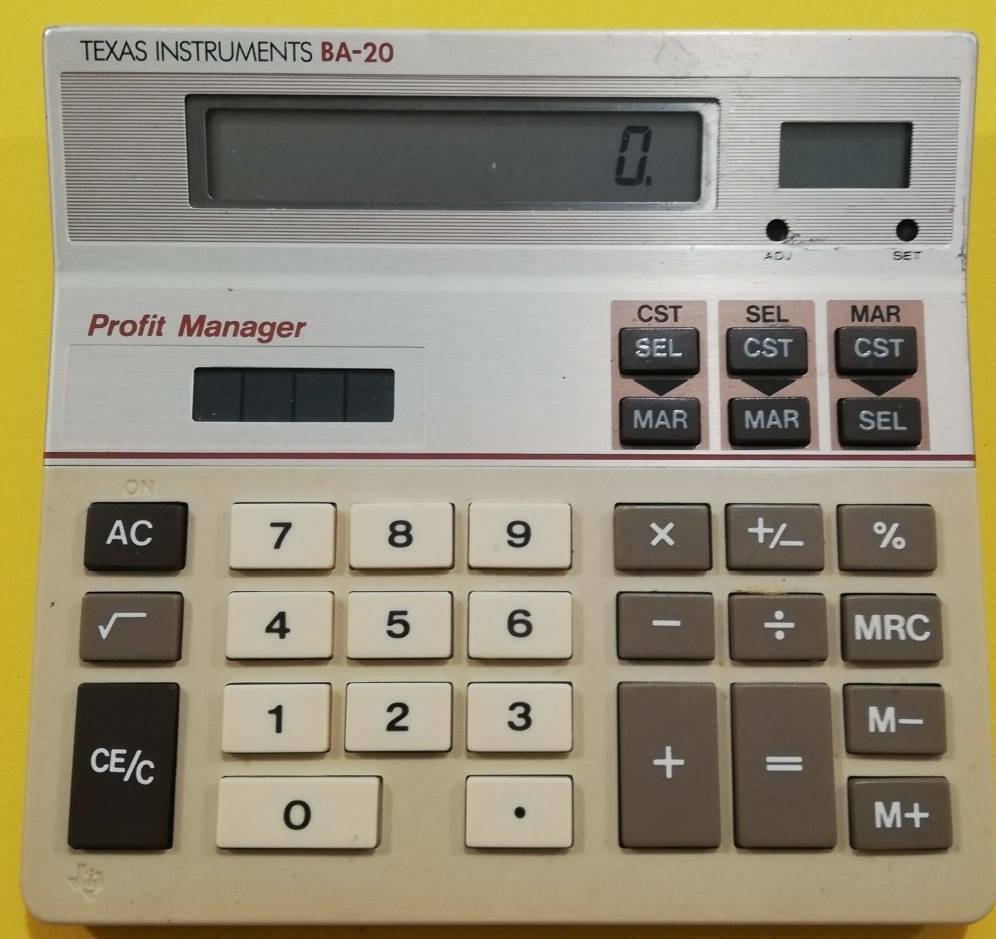 Model: BA-20
Battery: LR41
Adapter:
Year: 1997
Chip: Inventa LI3163
Info: Malysia
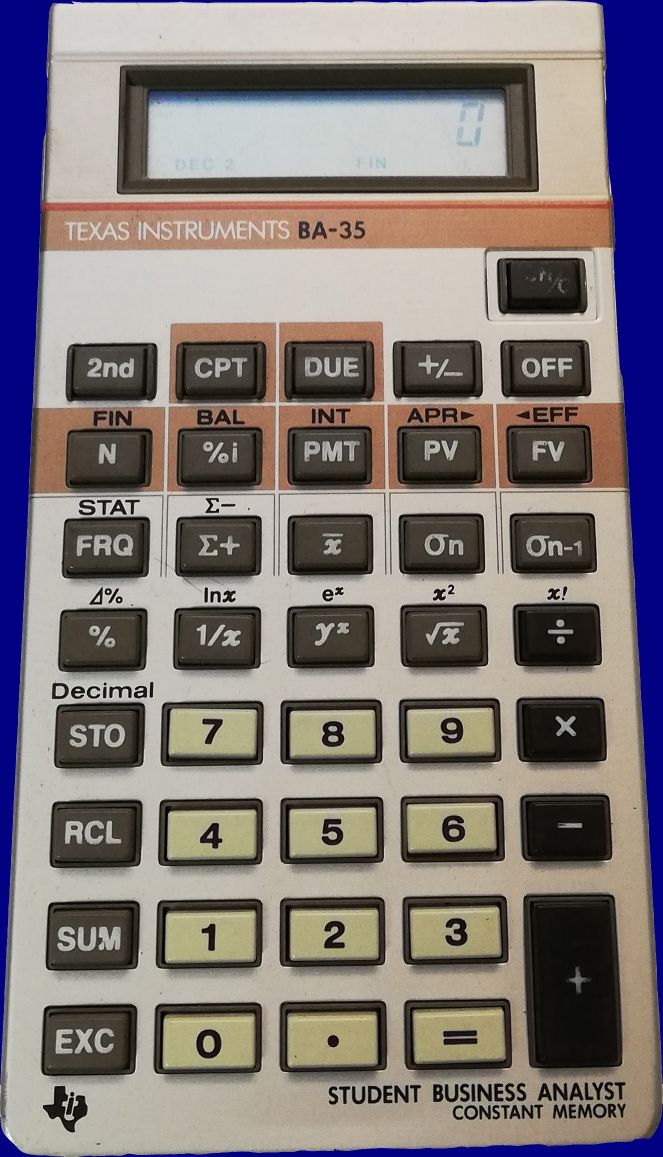 Model: BA-35 student business analyst
Battery: 2 x LR44
Adapter:
Year: 1981
Chip: CD4571
Info: modern LCD 1982 - 1987
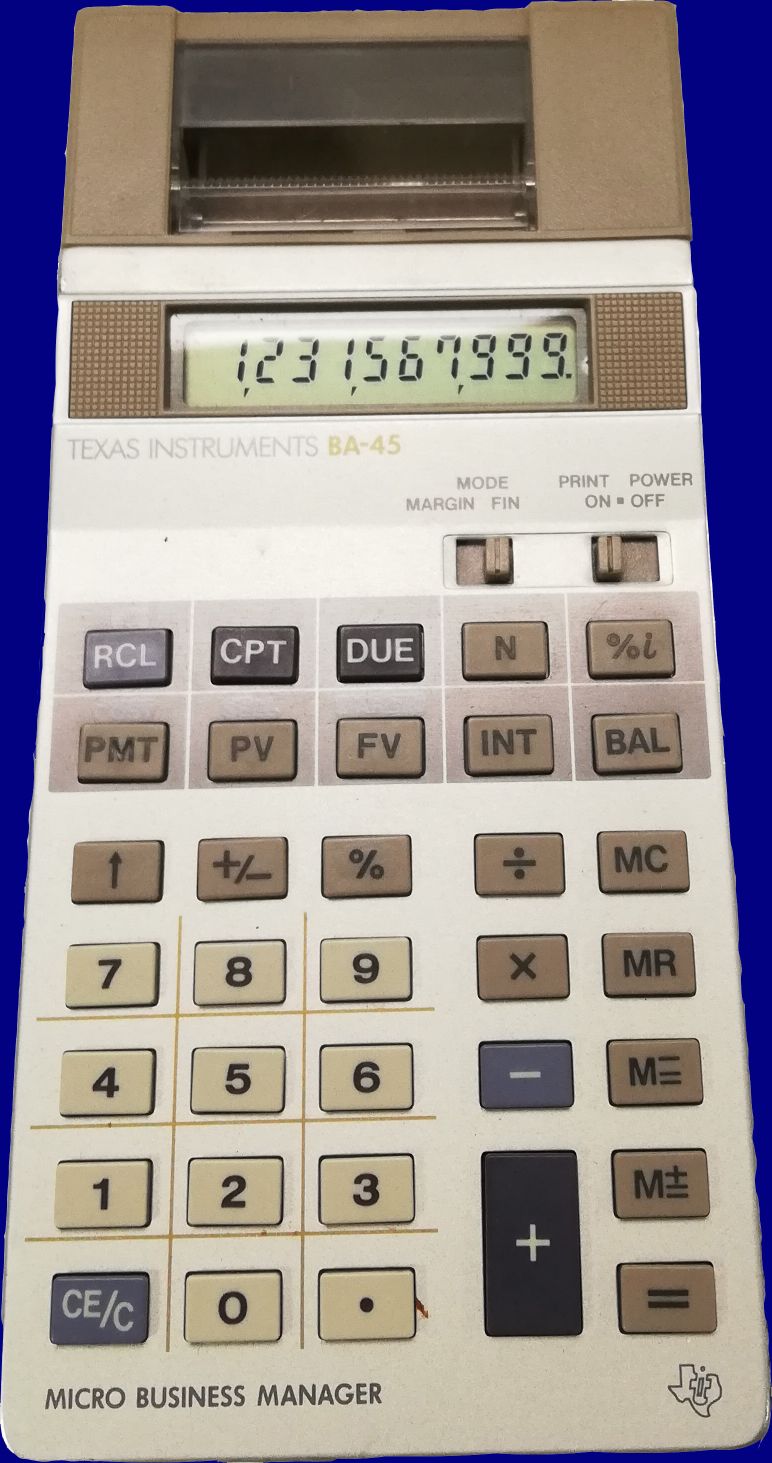 Model: BA-45 mcro business manager
Battery: 4 x AAA
Adapter:
Year: 1984
Chip: nec UPD7503
Info: later HANDHELD printing made in Japan scientific
 Model: BA-54
Battery: 2 x LR44
Adapter:
Year: 1997
Chip: CD4553 CD4554
Info: slanted LCD generation
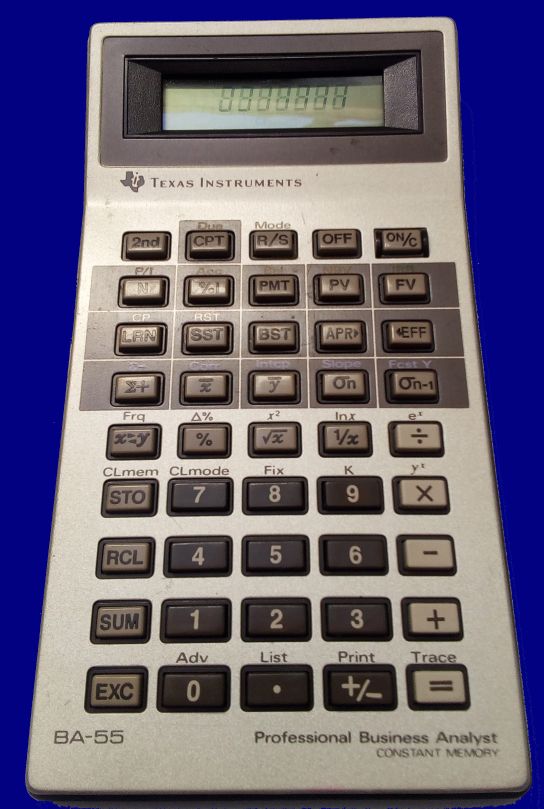 Model: BA-55
Battery: 2 x LR44
Adapter:
Year: 1983
Chip: CD4553 CD4554
Info: slanted LCD generation
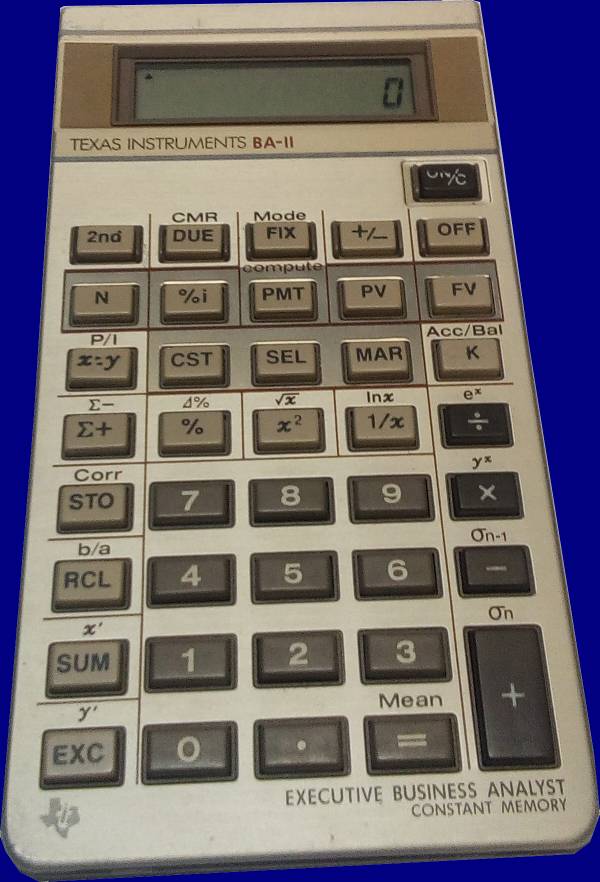 Model: BA-II
Battery: 2 x LR44
Adapter:
Year: 1985
Chip: TPO322
Info: Business Analyst II
Donated by Onofri Rodolfo (Rudy)
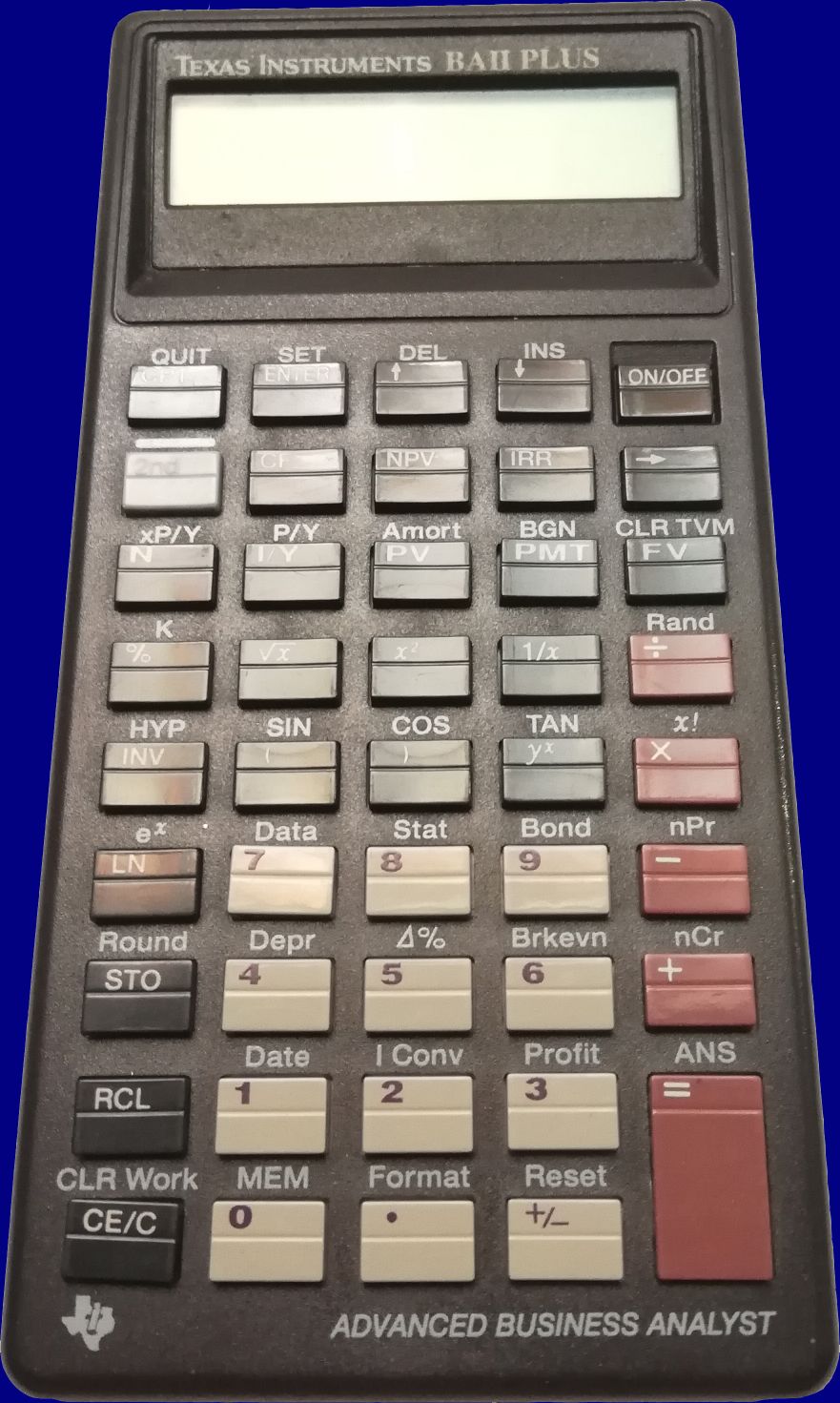 Model: BA II plus
Battery: CR2032
Adapter:
Year: 1996
Chip: T6a53 Toshiba
Info: modern LCD 1991 - 1999
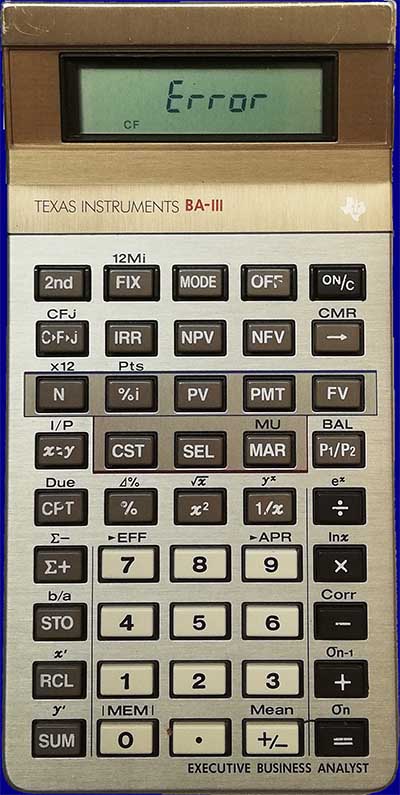 Model: BA-III
Battery: 2 x LR44
Adapter:
Year: 1985
Chip: TPO322
Info:
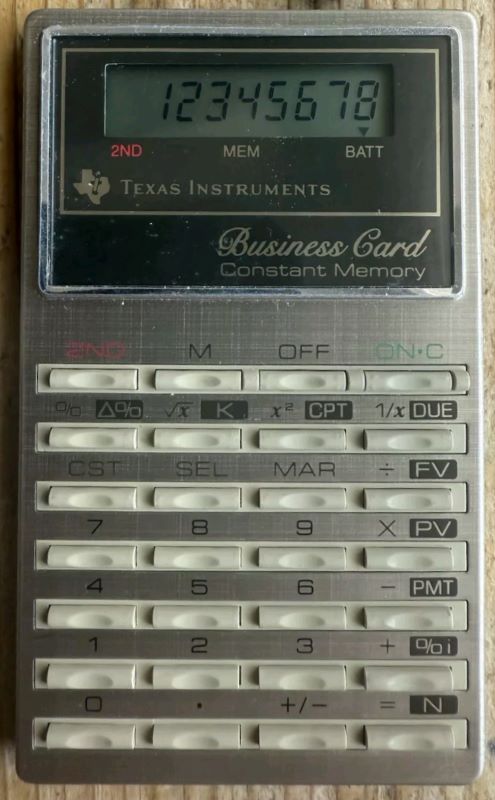 Model: Business Card
Battery: 2 x LR54
Adapter:
Year: 1979
Chip: TP-0325
Info:
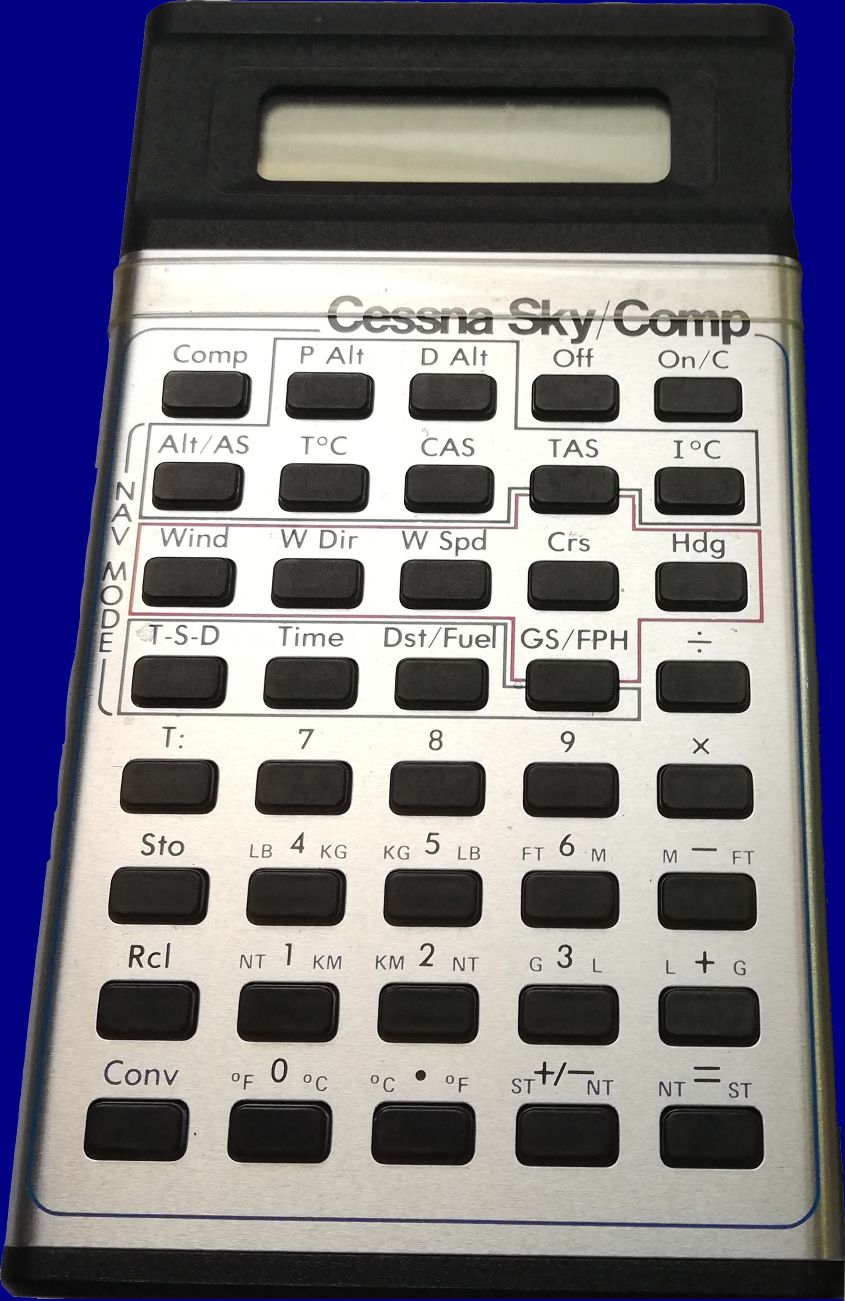 Model: Cessna Sky Comp
Battery: 2 x LR43
Adapter:
Year: 1983
Chip: TPO328
Info: JEPPESSEN line
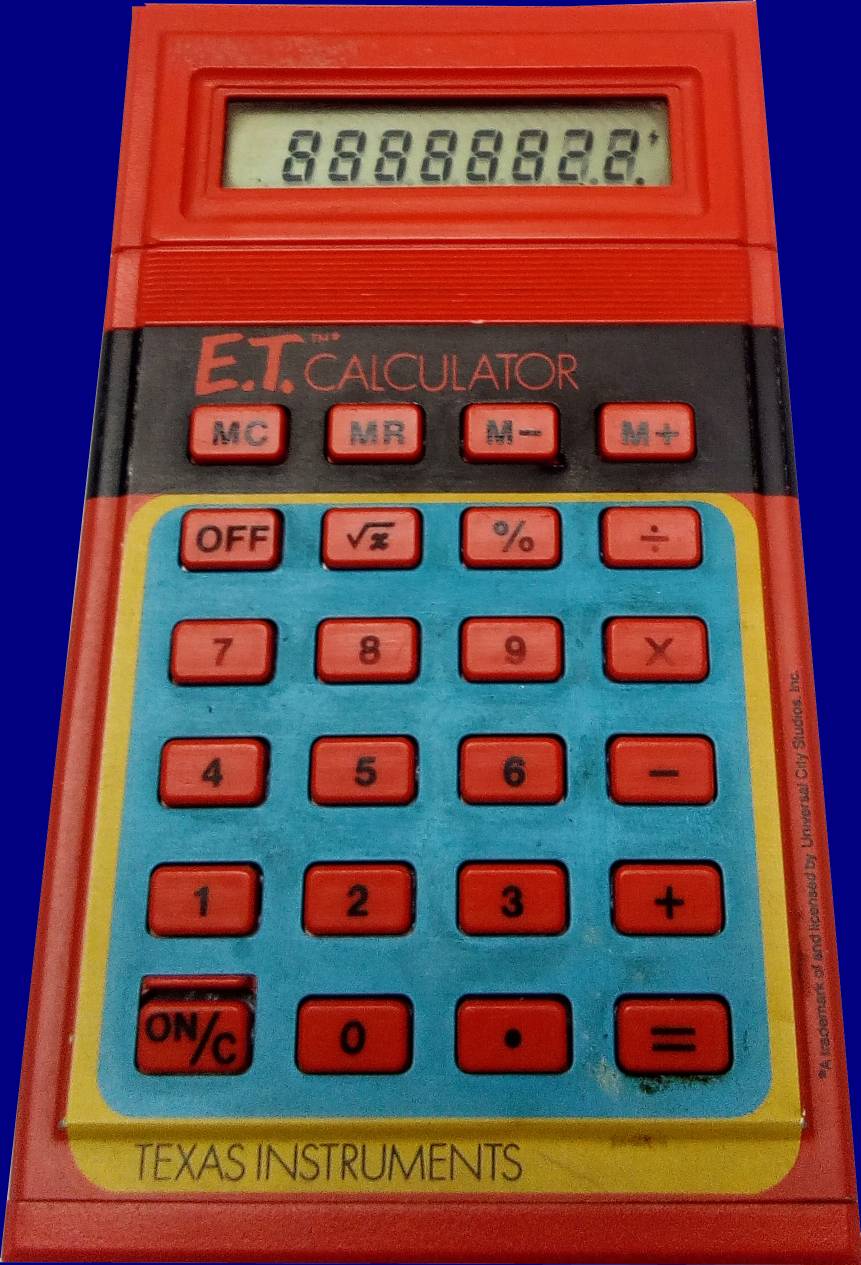 Model: ET calculator
Battery: 2 x LR44
Adapter:
Year: 1982
Chip: TP0311
Info: slimline LCD - first solar LCD
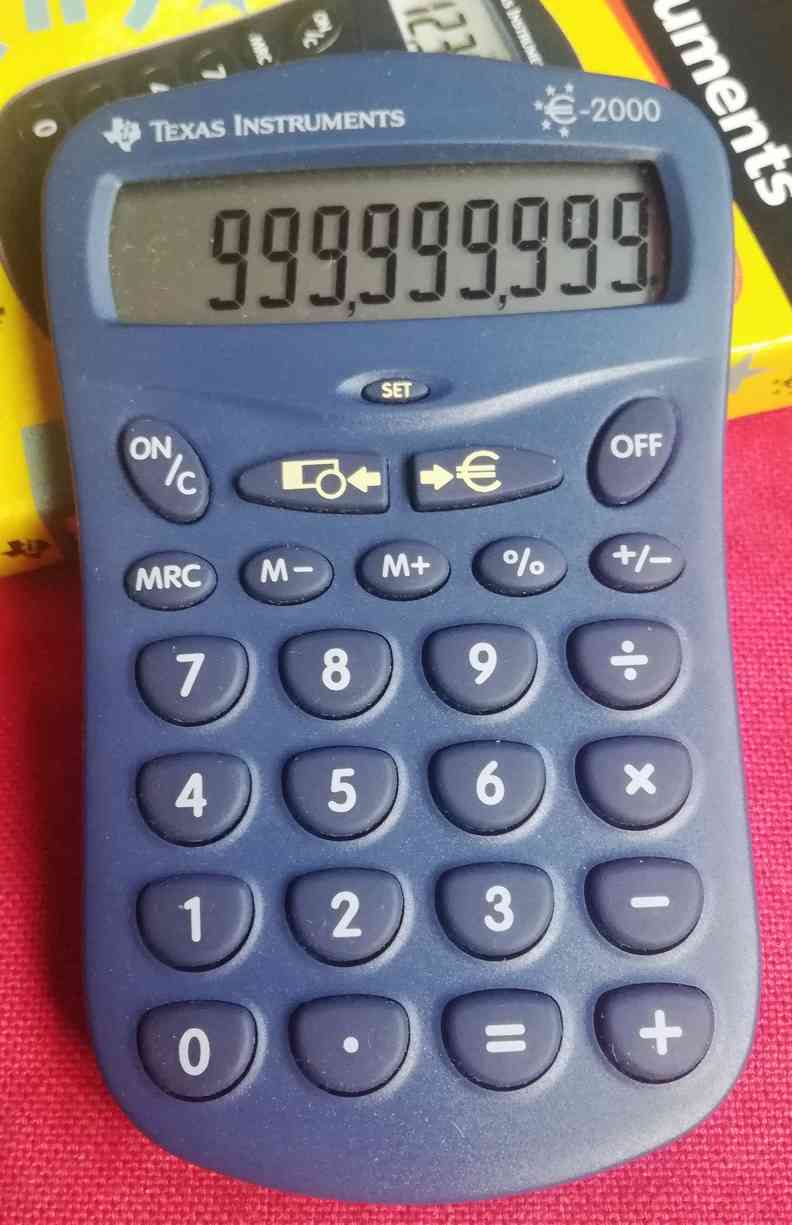 Model: Eur-2000
Battery: LR54
Adapter:
Year: 1988
Chip:
Info: The €-2000 calculator combines the usual basic calculator functions with an Euro currency conversion.
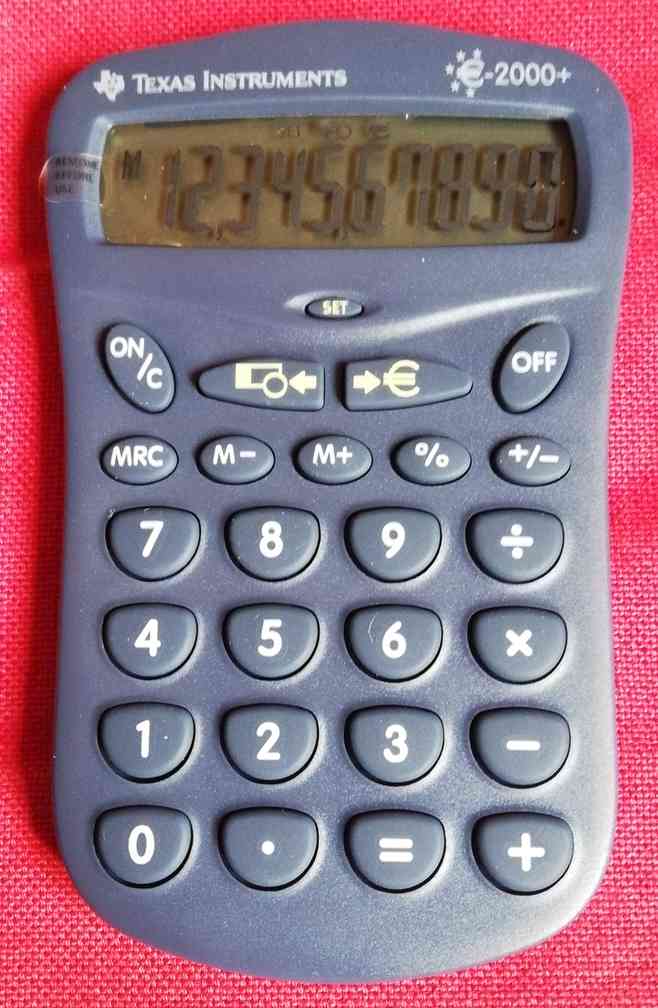 Model: Eur-2000+
Battery: LR54
Adapter:
Year: 2001
Chip:
Info:The €-2000+ calculator combines the usual basic calculator functions with an Euro currency conversion. The exchange rate between the Euro and the Home currency is entered with the small SET-key. Two additional keys allow the conversion in both directions.This calculator added a continuous memory to the earlier €-2000 and a feature to set the number of decimal places (for the curious, you have to press the ON/C key about two seconds to enter the F-0-2 menu). Nevertheless kept the internal construction of the €-2000+ identical with its predecessor.
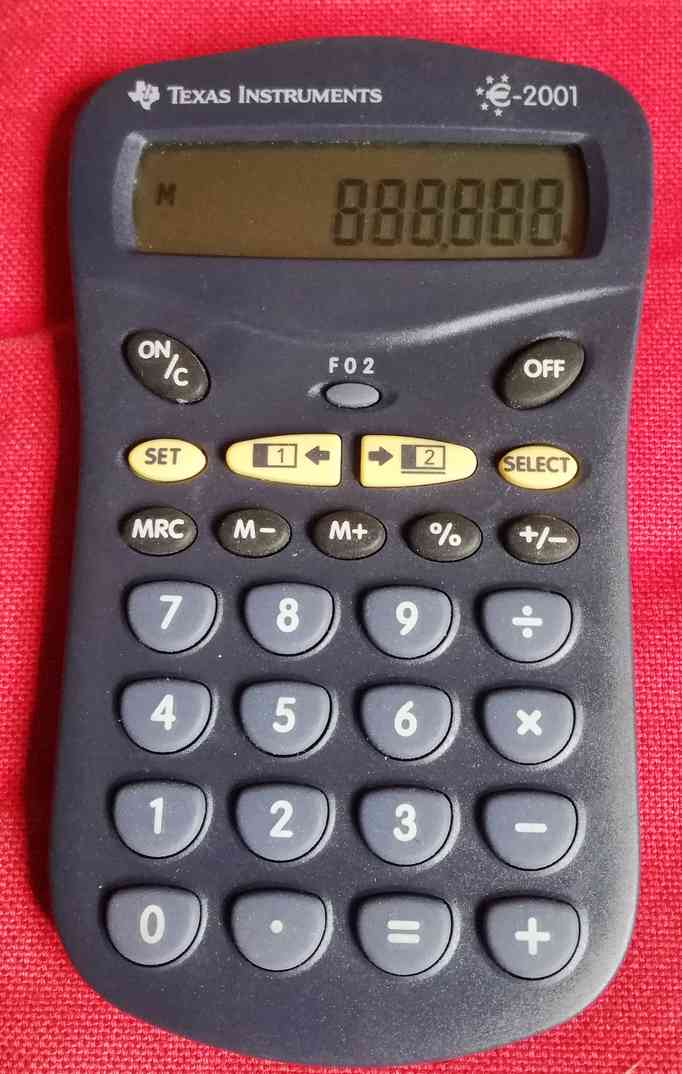 Model: Eur-2001
Battery: LR54
Adapter:
Year: 1999
Chip:
Info:The €-2001 calculator combines the usual basic calculator functions with a very convenient Euro currency conversion. All of the 11 yet defined exchange rates are preprogrammed in the calculator, 4 additional ones could be added later. The home country is selected with the Select-key. Two additional keys allow the conversion in both directions. A similar calculator using a desktop housing was introduced with the €-1796 and the €-2003.A simpler calculator was sold with the €-2000. Searching calculators in Europe without the Euro-conversion was difficult in 1999, one example is the TI-1726.In 2006 Texas Instruments surprised customers in Europe with a complete new family of Euro Calculators labeled EC-3, EC-5 and EC-7 Pro.
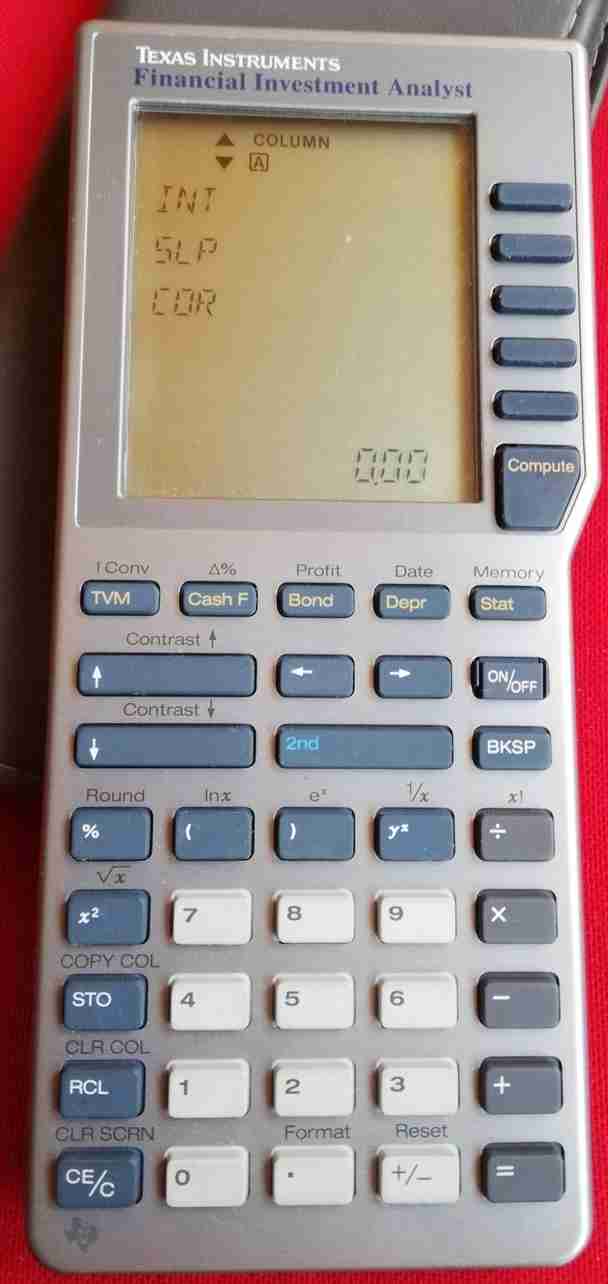 Model: FIA-10 Financial Investment Analyst
Battery: 2 x CR2032
Adapter:
Year: 1989
Chip: TMC70035, LH5821, TC5518, TC54256
Info:
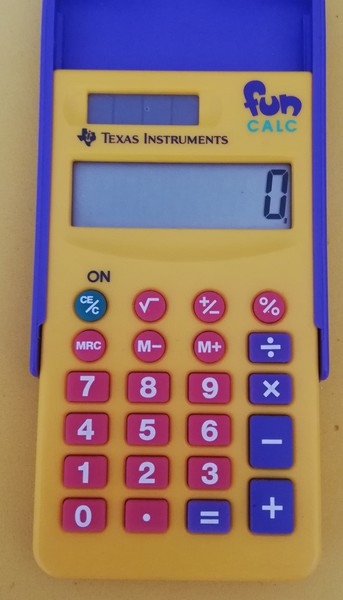 Model: Fun Calc
Battery: Solar
Adapter:
Year: 1994
Chip:
Info:The Fun Calc is based on the TI-7140 introduced already in 1994, too.
 Model: Galaxy 9
Battery: CR2032
Adapter:
Year: 1999
Chip: Toshiba T6A60
Info: GALAXY line
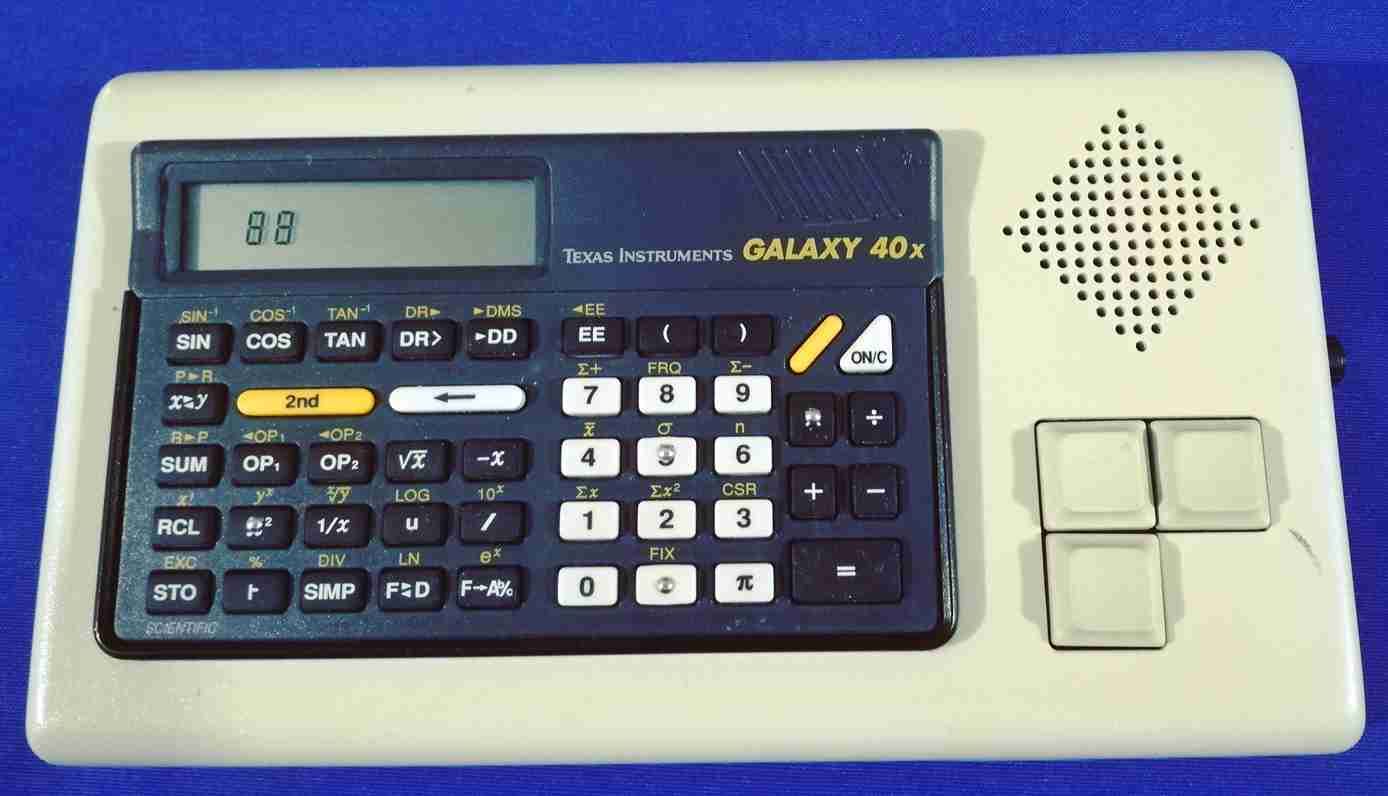 Model: Galixa Speech
Battery: 4 AA-size NiCd
Adapter: 9V 100mA DC
Year: 2000
Chip: HD64180, M272001, U6264
Galaxy 40x: Toshiba T6A59
Info: Made in Germany
This Galixa Speech is a scientific calculator with natural voice speech output. Numerical data on the display panel can be spoken digit by digit or as a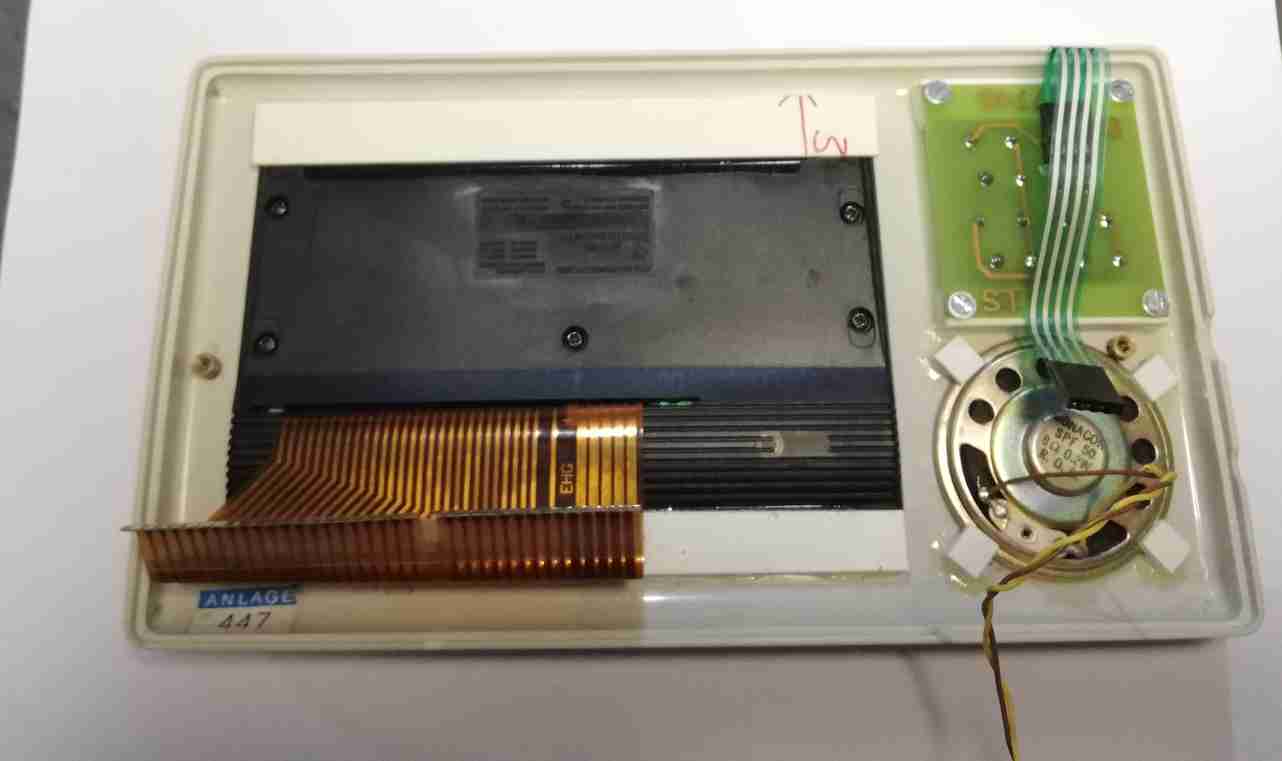 complete number. It speaks all key functions: e.g. when the [SIN] key is pressed the calculator says "Sine"; these announcements can be repeated. It also has a built-in clock and alarm function. The volume can be adjusted using a knob.
The language of the 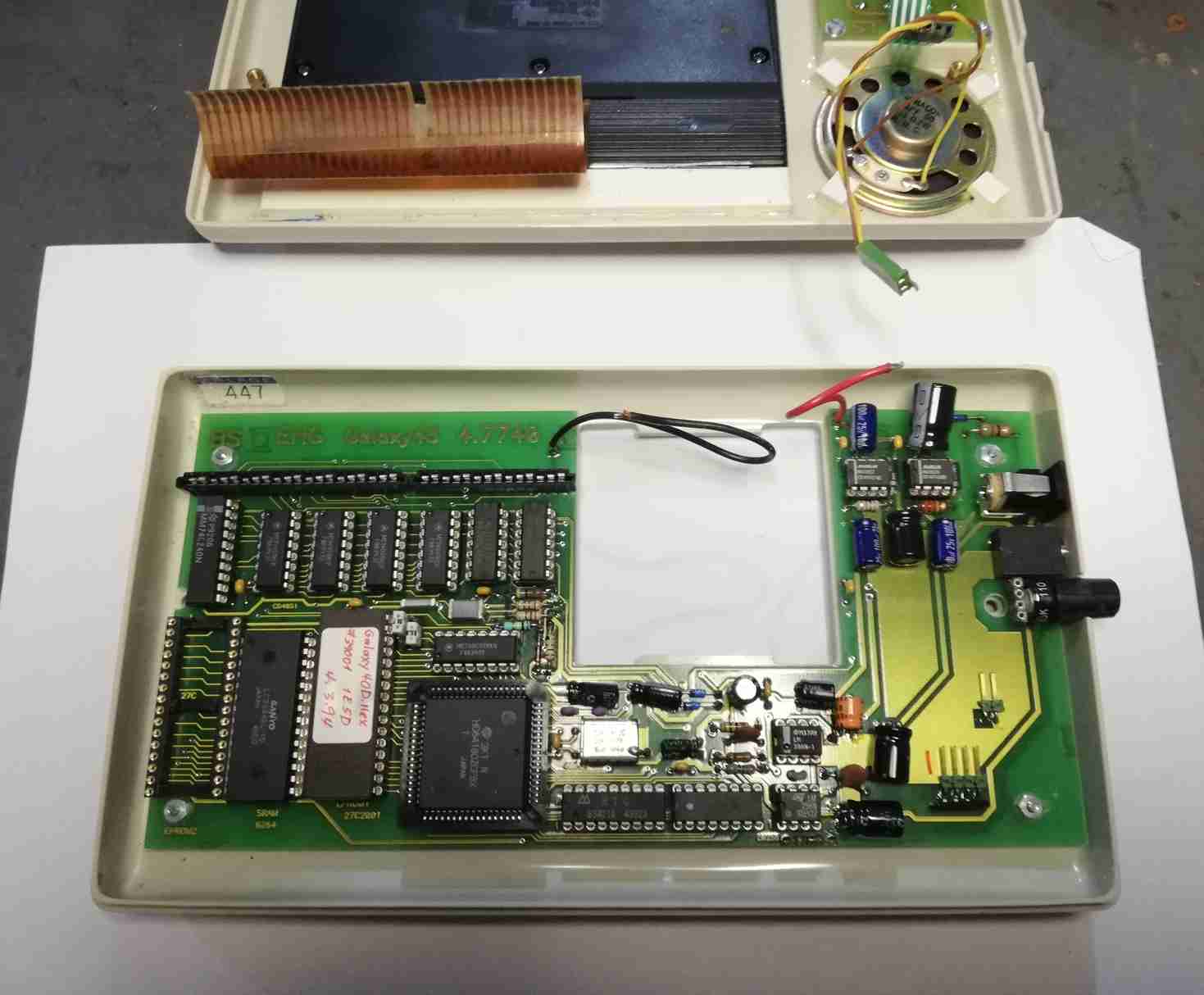 Galixa Speech could be choosen between: German, English, French, Italian, Dutch, Spanish,Swedish, Swabian German
EHG Handy Tech Elektronik GmbH introduced the first scientific calculator with voice output and 10-cell Braille display with the Galixa Braille. The first calculator with an upgradeable Braille cell output was the Braillotron TI-2550 II developed by Mr. Schoenherr.
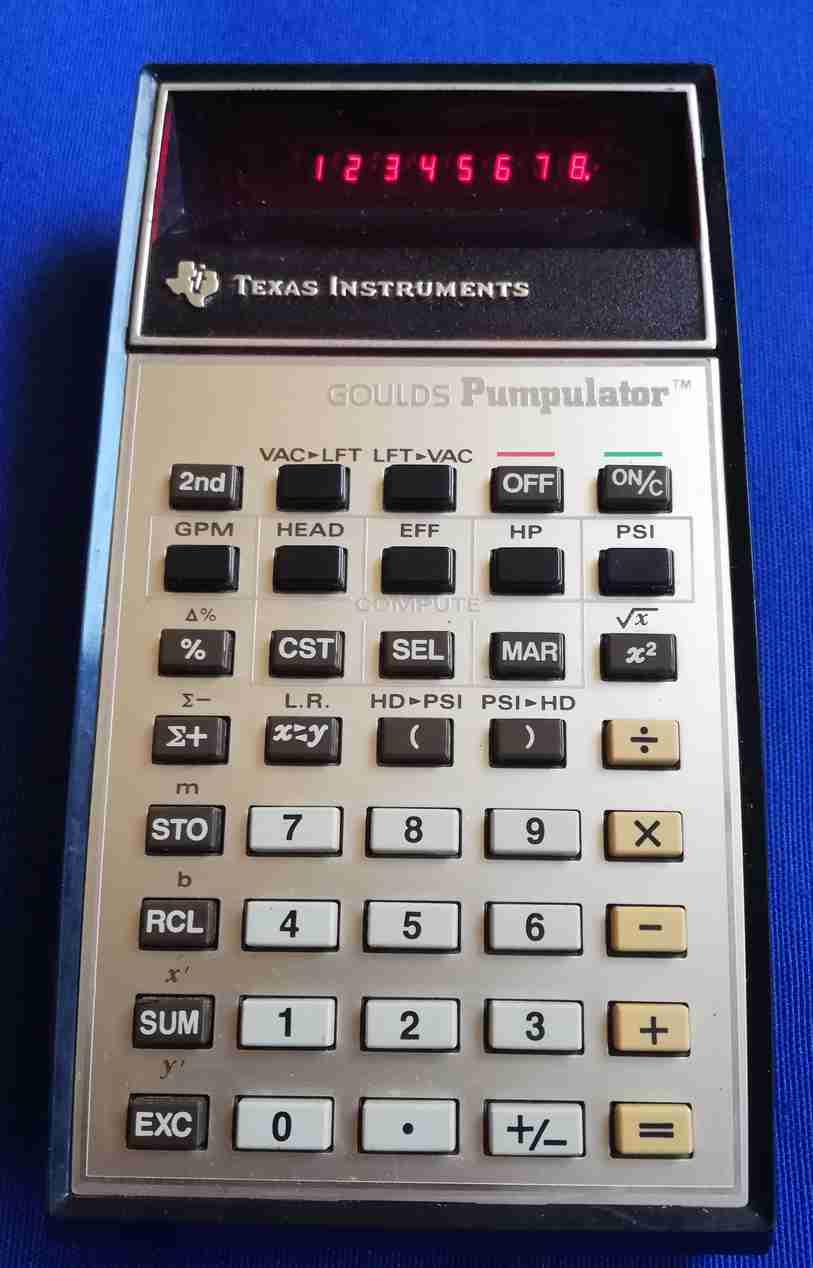 Model: Goulds Pumpulator
Battery: 9 volt o
Adapter: AC9132
Year: 1980
Chip: TMC0980 (CD9801)
Info: MAJESTIC line
Manual: with permission www.datamath.org
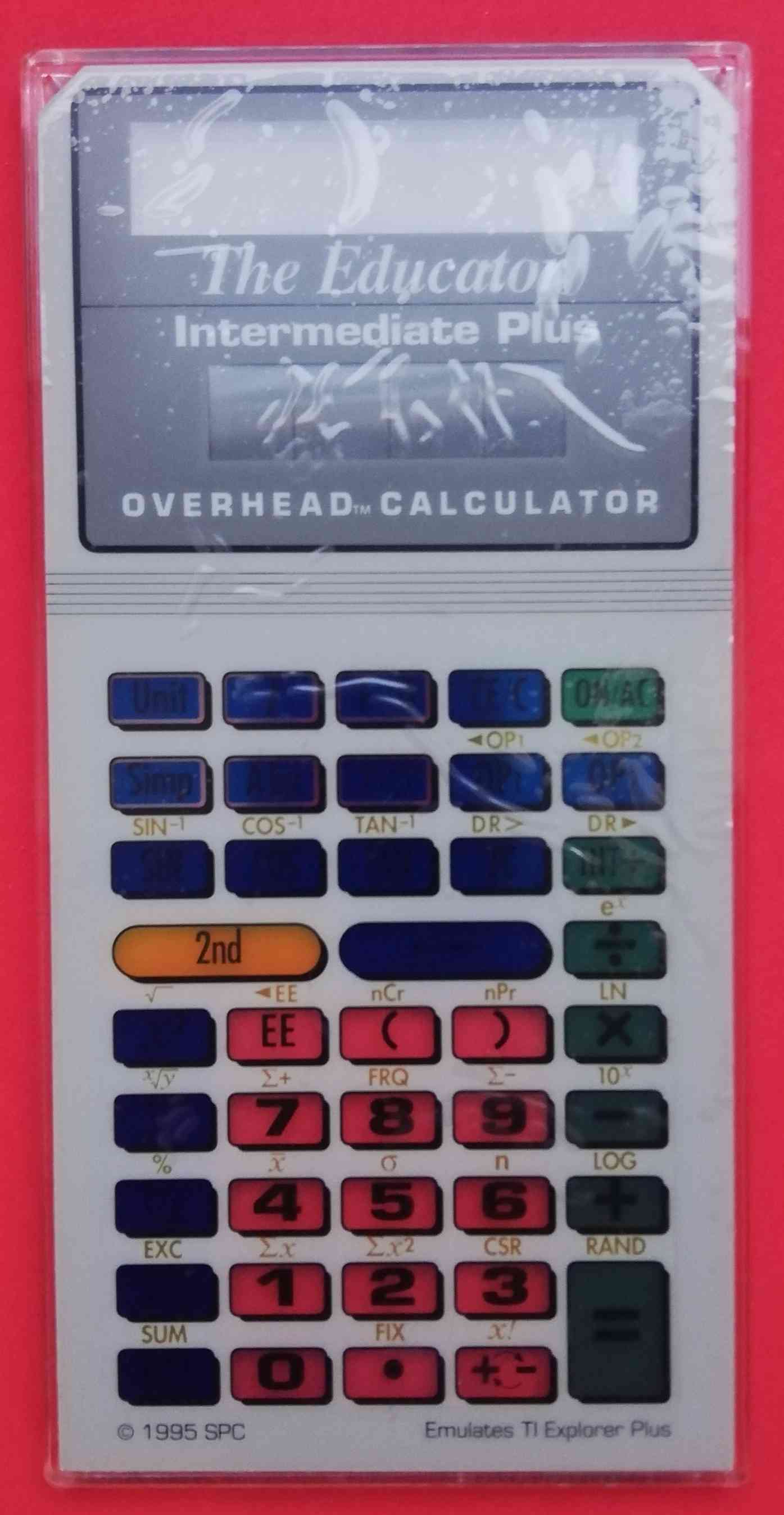 Model: Intermediate plus overhead
Battery:
Adapter:
Year:
Chip: made in China
Info: The California based company Stokes Publishing Company, Inc. distributes under the label "The Educator®"
calculators optimized for teaching purposes. William T. Stokes filed already July 30, 1991 the US Patent Application U.S. Pat. No. 5,035,502
with the title "Transparent calculator for overhead projection".
 Model: Jeppesen Avstar 1980
Battery: 2 x LR44
Adapter:
Year: 1980
Chip: TPO328
Info: JEPPESSEN line
 Model: Jeppesen Avstar 1986
Battery: 2 x LR44
Adapter:
Year: 1986
Chip: TPO328
Info: JEPPESSEN line
 Model: Jeppesen Prostar
Battery: 2 x LR44
Adapter:
Year: 1983
Chip: CD4575 - CD4576
Info: JEPPESEN line
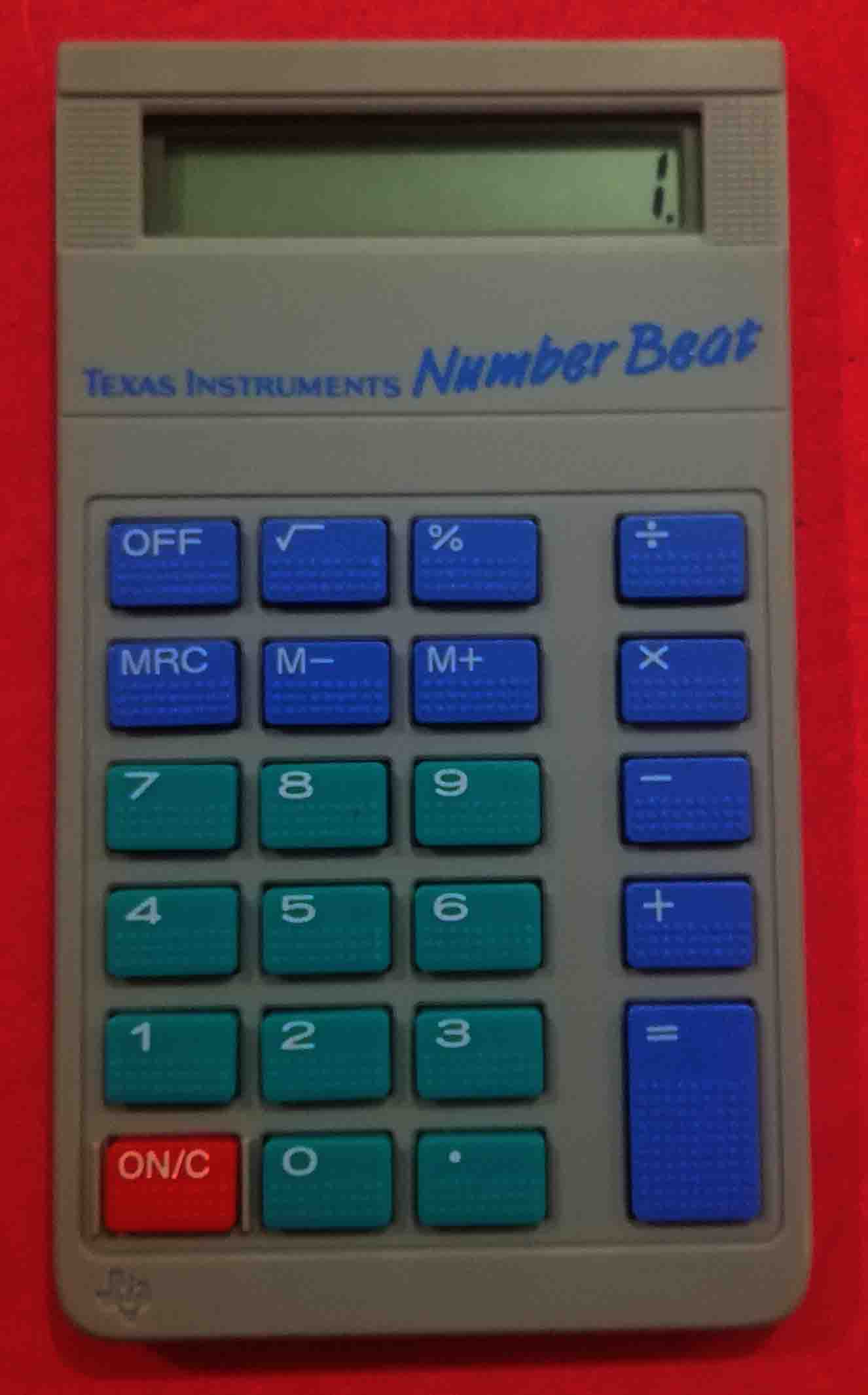 Model: Number Beat
Battery: LR43
Adapter:
Year: 1987
Chip:
Info:
 Model: Spirit of 76
Battery: 9 volt
Adapter:
Year: 1972
Chip: TMC0952
Info:
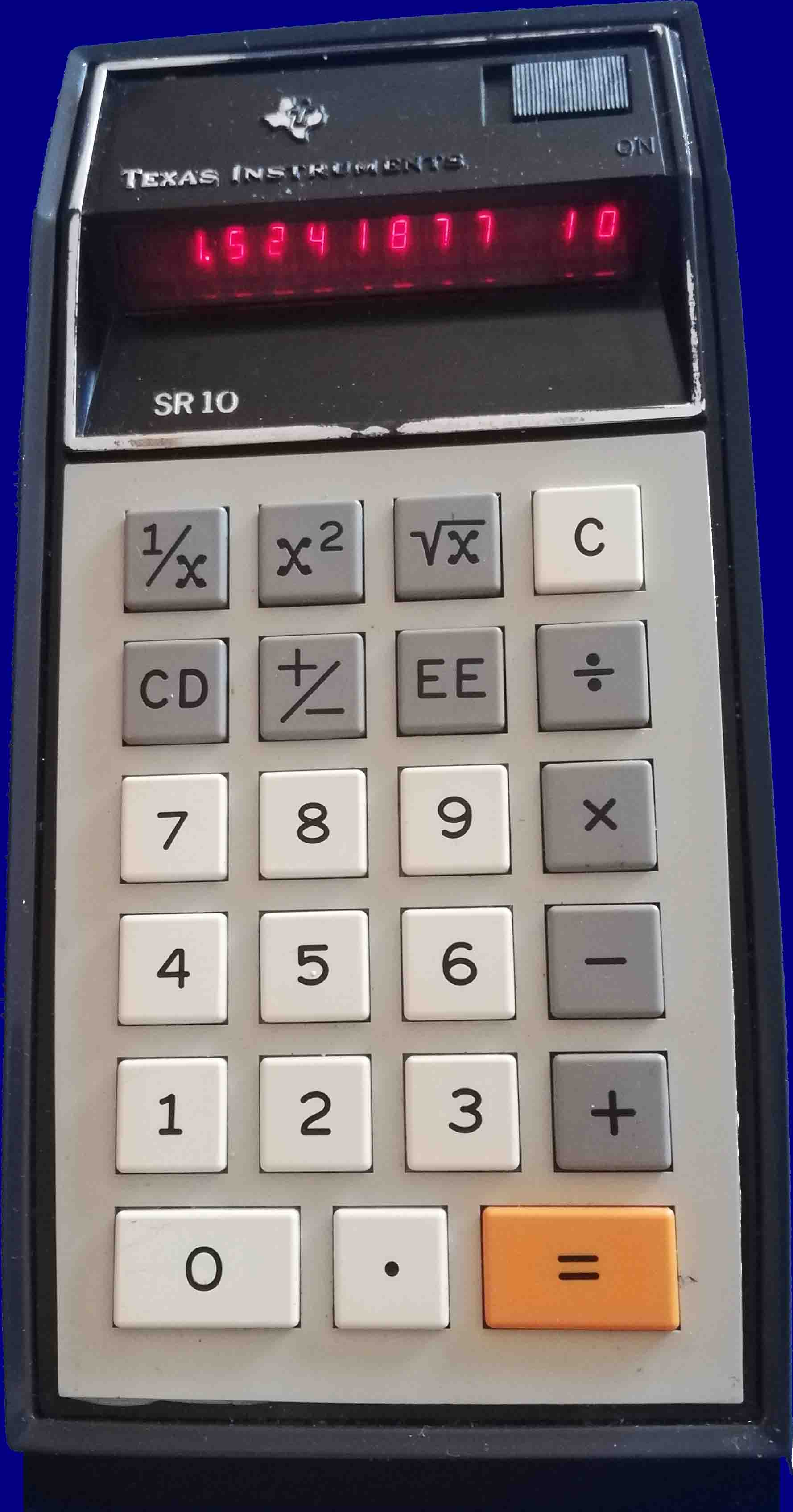 Model: SR-10 Italy
Battery: 3 x AA ni-cd
Adapter: AC9900
Year: 1973
Chip: TMS0120
Info: TIP line - classic first GENERATION the logo is inside the display
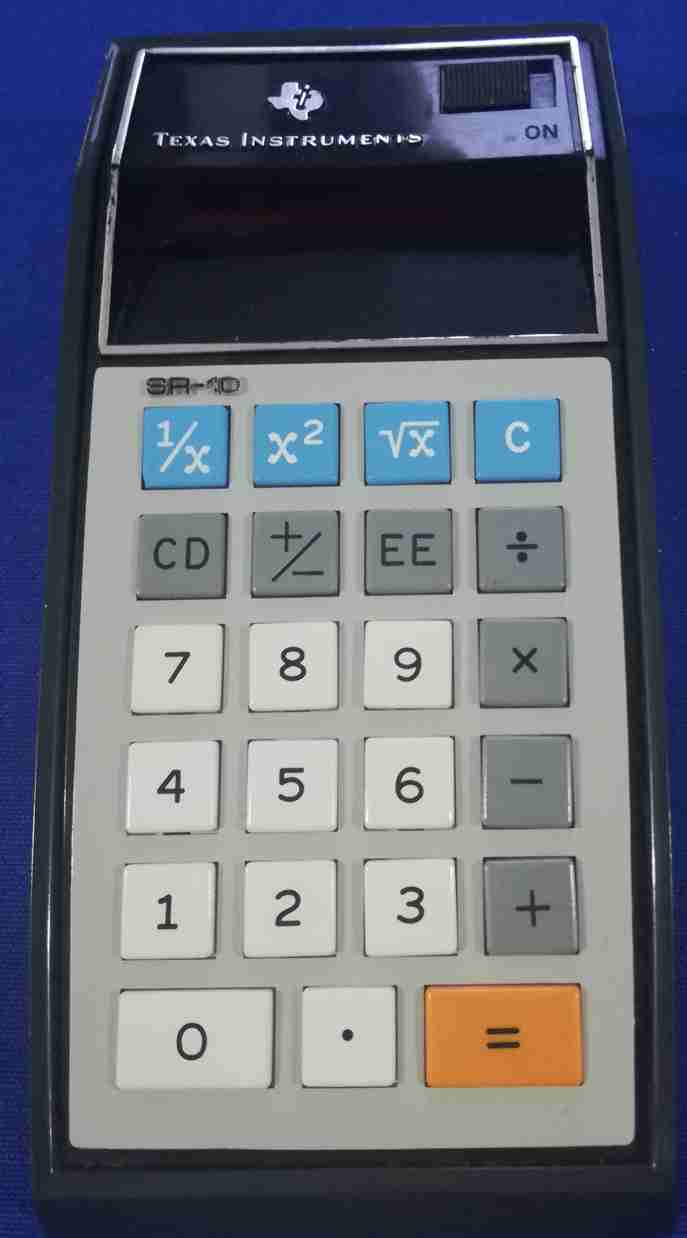 Model: SR 10 Italy
Battery: 3 x AA ni-cd
Adapter: AC9900
Year: 1973
Chip: TMS0120
Info: This Calculator has 4 upper keys BLUE prototype or Fake ?
 Model: SR-10 vers. 2
Battery: 3 x AA ni-cd
Adapter: AC9900
Year: 1973
Chip: TMS0120
Manual: with permission www.datamath.org
Info: TIP line - classic first GENERATION
 Model: SR-11
Battery: 3 x AA ni-cd
Adapter: AC9900
Year: 1974
Chip: TMS0602
Manual: with permission www.datamath.orgInfo: TIP line - classic first GENERATION
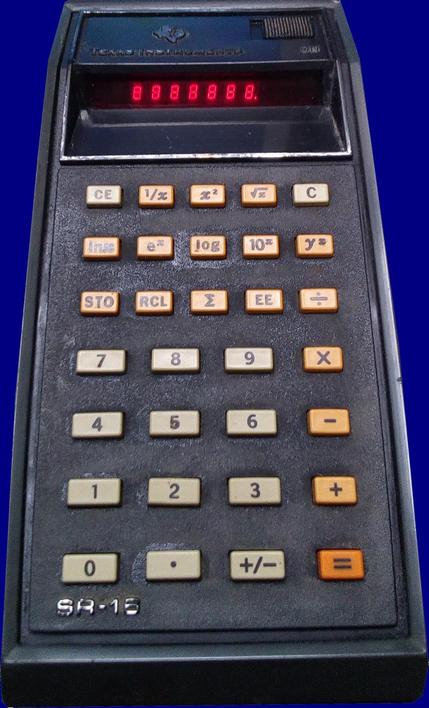 Model: SR-16
Battery: 3 x AA ni-cd
Adapter: AC9200
Year: 1975
Chip: TMC1001
Manual: with permission www.datamath.org
Info: TIP line - classic first GENERATION
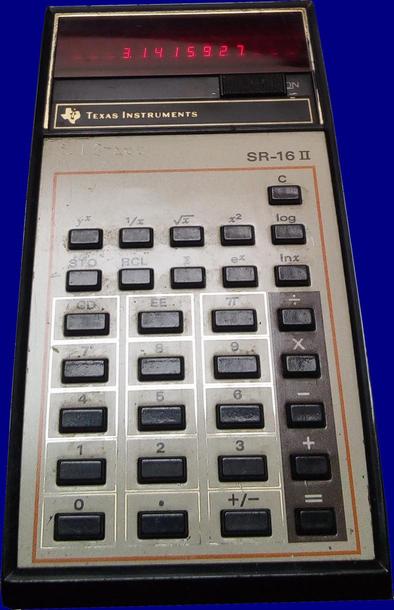 Model: SR-16 II
Battery: 3 x AA
Adapter: AC8190
Year: 1975
Chip: TMC1016
Info: classic second GENERATION
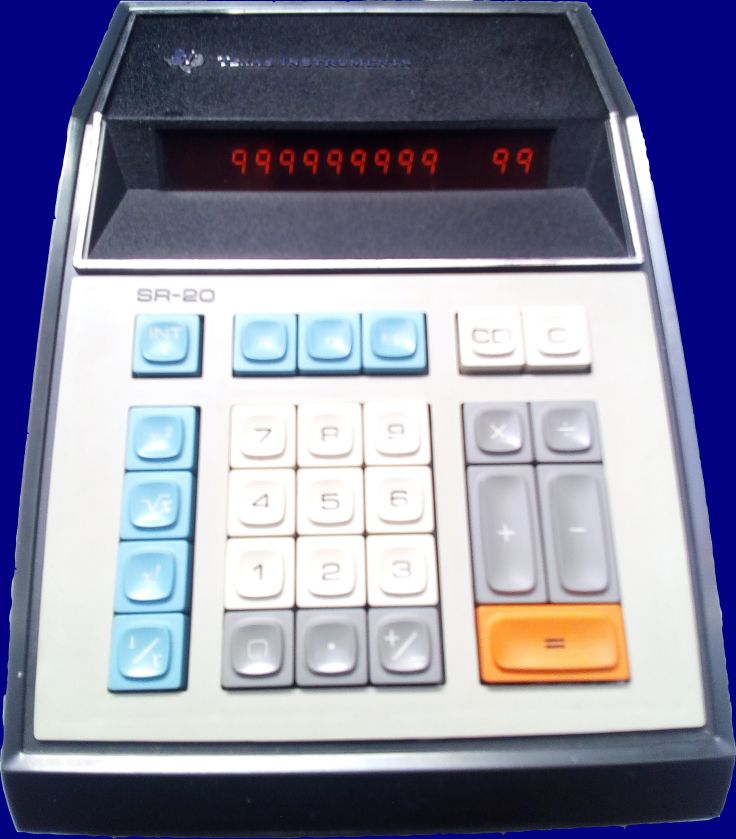 Model: SR-20
Battery:
Adapter: AC 110 volt
Year: 1973
Chip: TMS02020, TMS0304
Manual: with permission www.datamath.org
Info: DESKTOP line
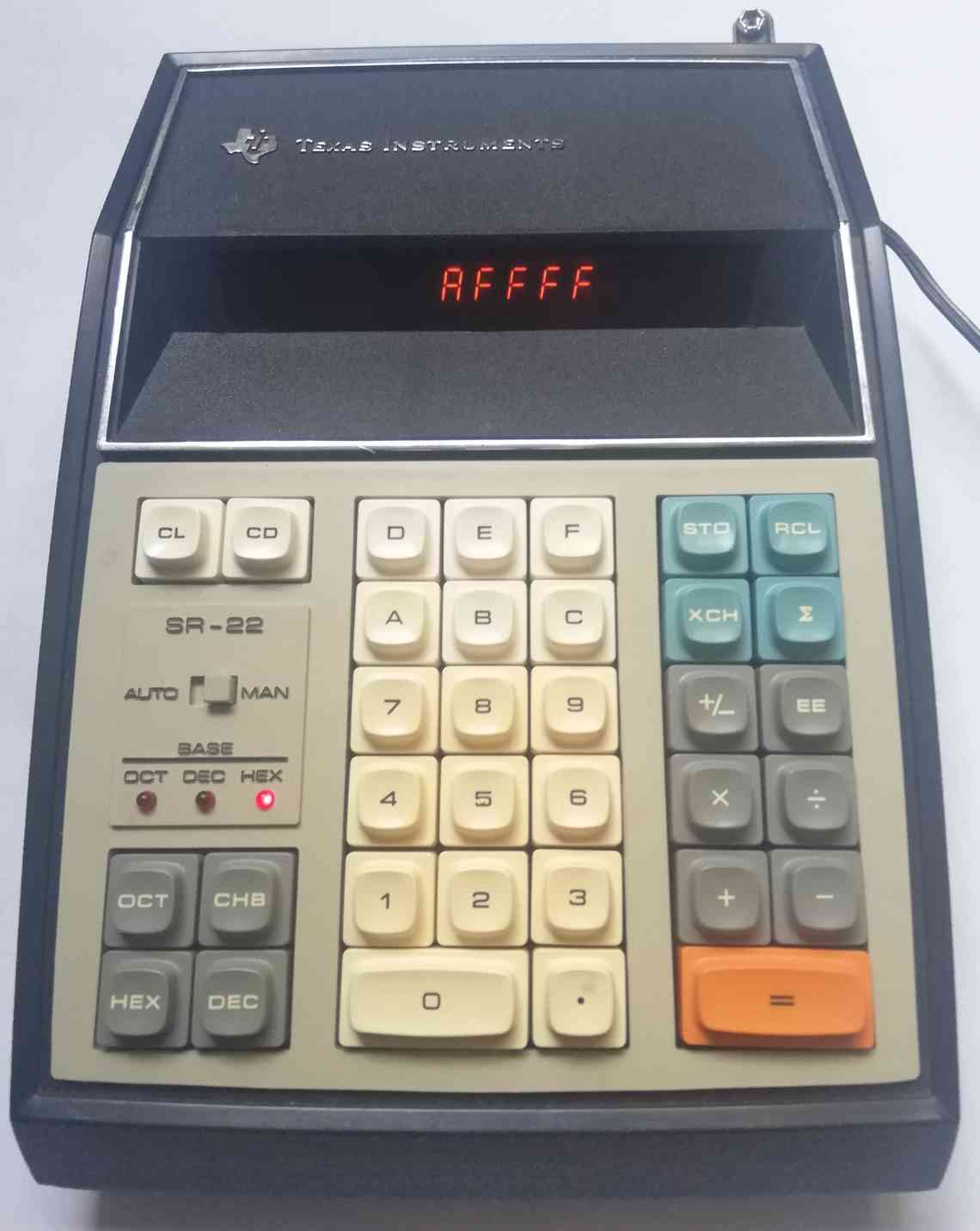
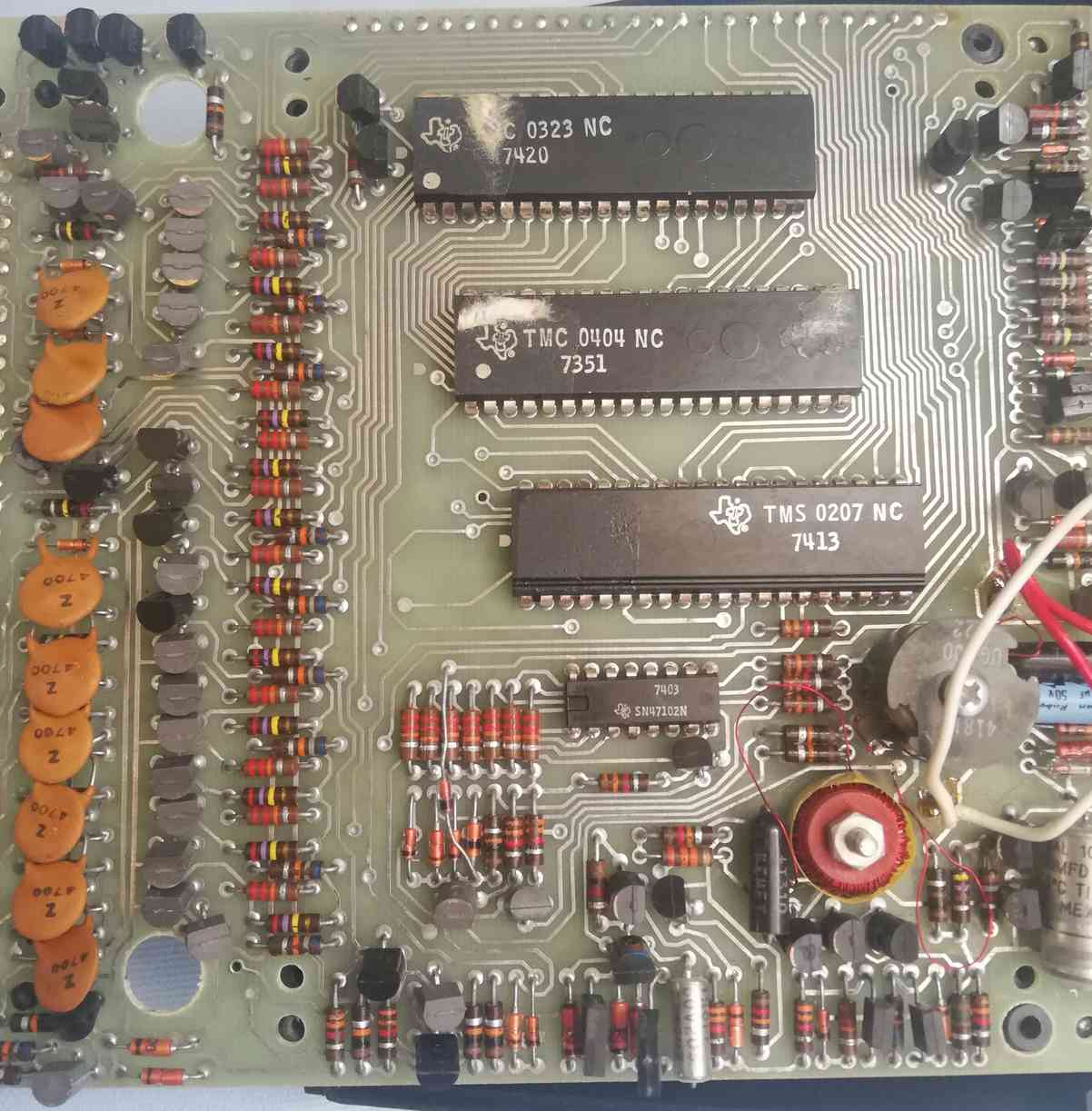
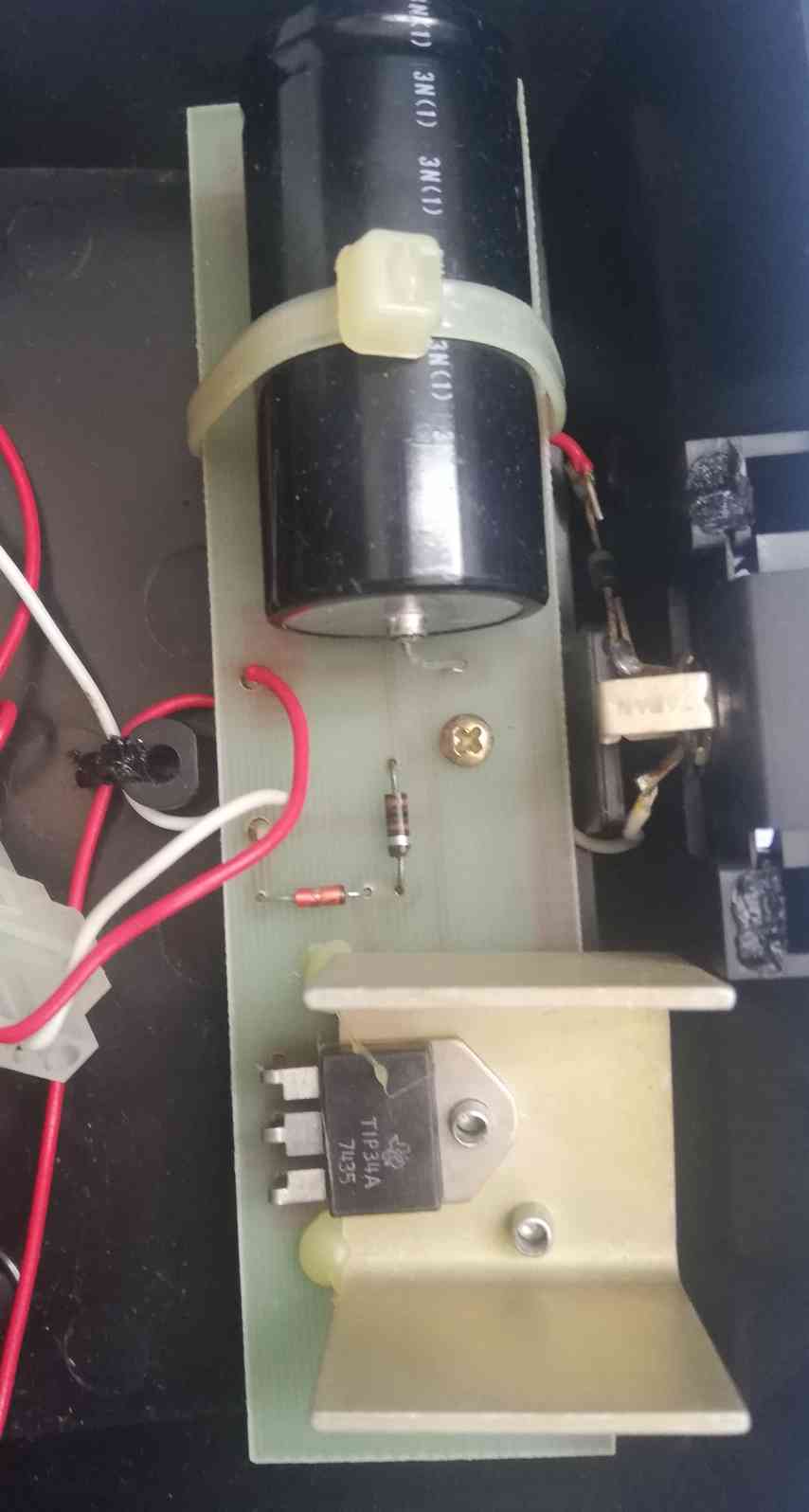 Model: SR-22
Battery: no
Adapter: AC9222
Year: 1974
Chip: TMS0207, TMC0323, TMC0404
Info: Look carefully at the display of the SR-22 and you'll notice immediately that this calculator could perform amazing calculations. It is the only calculator reported so far to perform Octal-Decimal-Hexadecimal conversions on the base of floating point numbers.
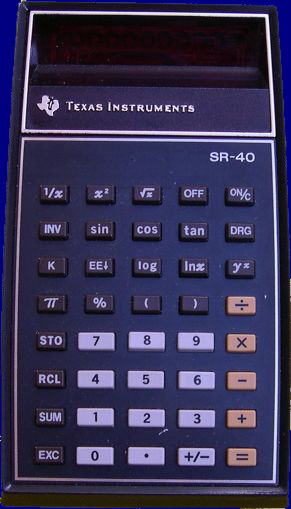 Model: SR-40
Battery: BP 5
Adapter: AC9132
Year: 1976
Chip: TMC0981
Manual: with permission www.datamath.org
Info: MAJESTIC line
.jpg) Model: SR-40 LCD
Model: SR-40 LCD
Battery: 2 x AA
Adapter: NO
Year: 1981
Chip: TP0320
Manual:
Info:The extremely rare SR-40 LCD (1981) calculator produced in Brazil is an interesting model, as at first glance it looks very similar to the European version of the TI-30 LCD. However, a few differences set it apart. One of the most noticeable differences concerns the keys: while the European TI-30 LCD features the **N!** (factorial) key, the Brazilian SR-40 LCD has the **x!** key, a detail that might reflect slight variations in functionality or target use. Another notable difference is the design of the battery compartment. The SR-40 LCD uses two AA batteries, but the compartment cover requires a coin to be opened, unlike the sliding cover of the European TI-30 LCD. This feature probably represents an adaptation for greater durability or security in battery replacement. These small variations between the models highlight production differences between different markets, making the SR-40 LCD a particularly rare and interesting piece for vintage calculator collectors.
.jpg)
.jpg)
.jpg)
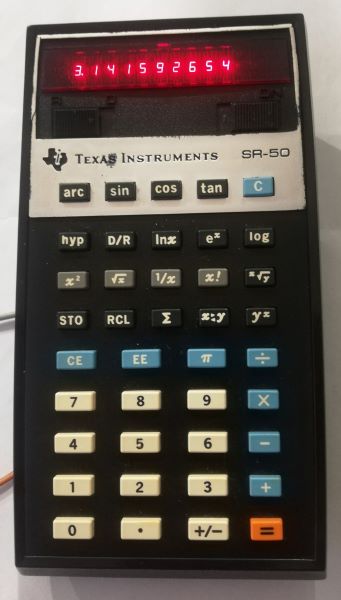 Model: SR-50
Battery: BP 1
Adapter: AC9200
Year: 1974
Chip: TMC0501 / 0521
Manual: with permission www.datamath.org
Info: TIP line - classic first GENERATION
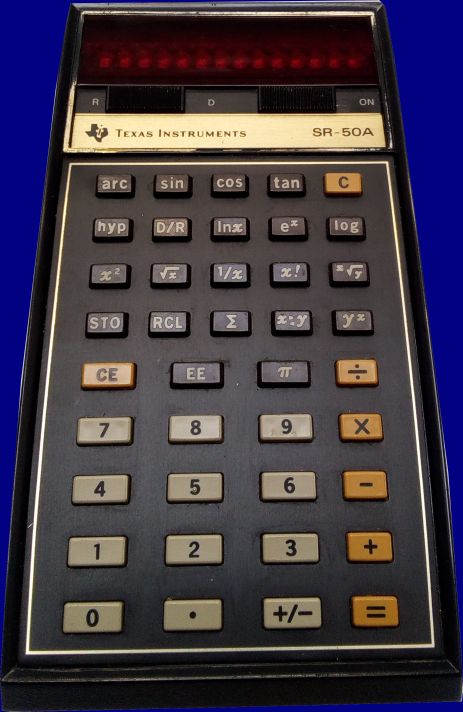 Model: SR-50 A
Battery: BP 1 A
Adapter: AC9130
Year: 1976
Chip: TMC0501 - TMC0503
Manual: with permission www.datamath.org
Info: classic second GENERATION
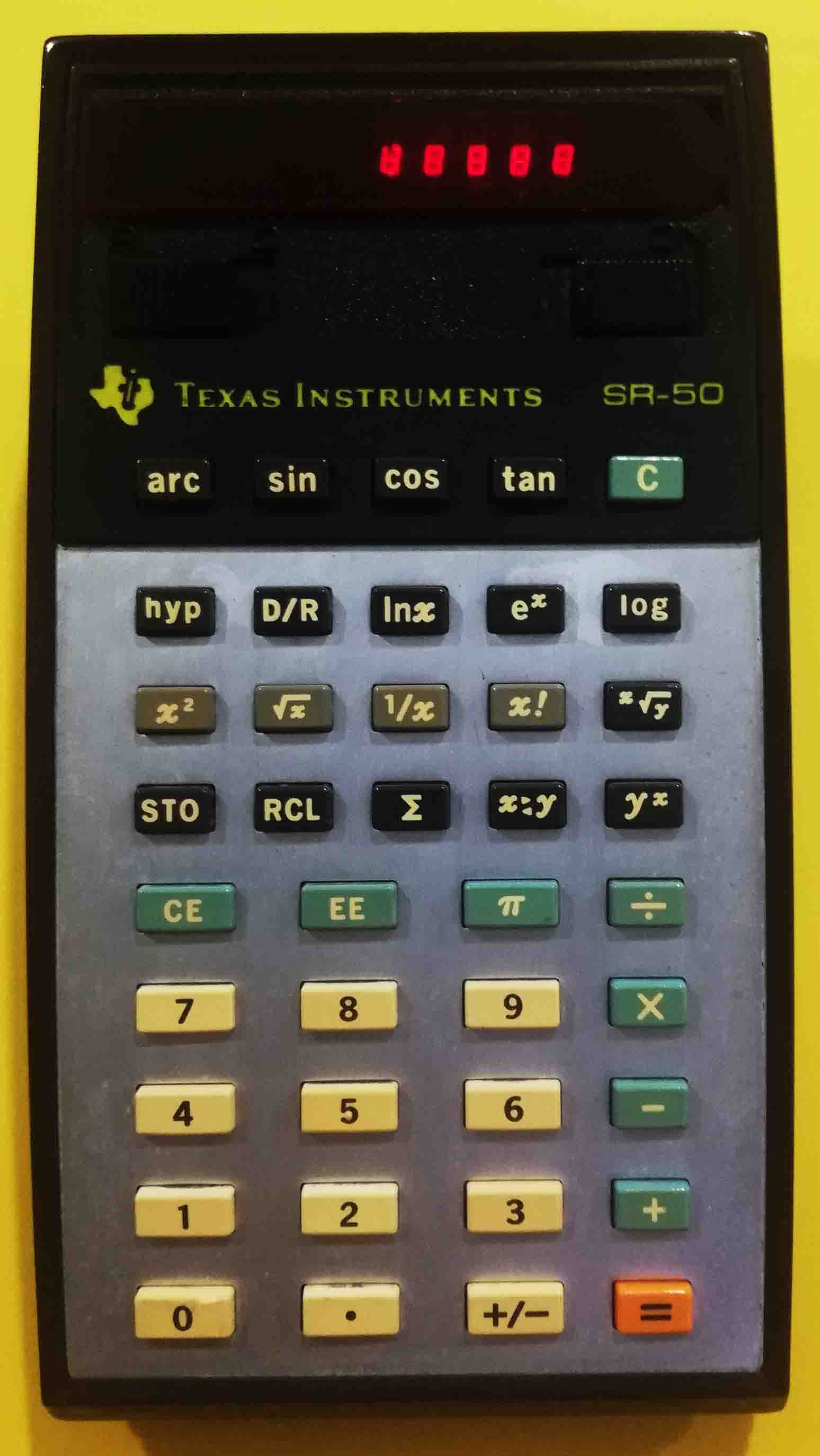 Model: SR-50 Dismac
Battery: BP 1
Adapter: AC9200
Year: 1974
Chip: TMC0501 / 0521
Manual:
Info: Fellow calculator collector Marie Lisa Collas surprised us in December 2015 with this unusual looking SR-50manufactured for Dismac Industrial S.A. in Brazil. Texas Instruments changed the appearance of the original dramatically by simply switching the silver colored aluminum bezel from the display frame to the keyboard. Purchased in 2022.
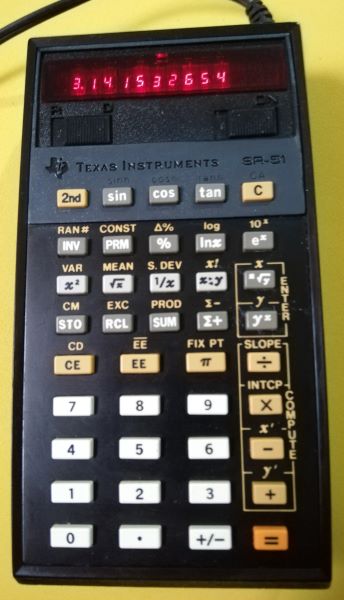 Model: SR-51 1v
Display: 10 + 2
Battery: BP 1
Adapter: AC9200
Year: 1975
Chip: TMC0501, TMS0522, TMC0523
Manual:
Info:With the SR-51 Texas Instruments began a series of scientific calculators that added statistical functions and conversions to the "usual functions". But none of them are engineered as flawlessly as the SR-51. It was built as a tank to survive decades of use like its close relative SR-50. Compared to previous models, the SR-51 got a keyboard design with white, gray, yellow and orange keys and gave a perspective to later TI calculators. To reduce manufacturing costs and to give a similar look and feel to the SR-52 and SR-56 calculators, the SR-51 was replaced within months with the SR-51A. Logically it is quite rare. However, two different variants are known: this model from an early production batch uses huge yellow characters for the 2 shifted functions, while the later SR-51 sports much finer print.
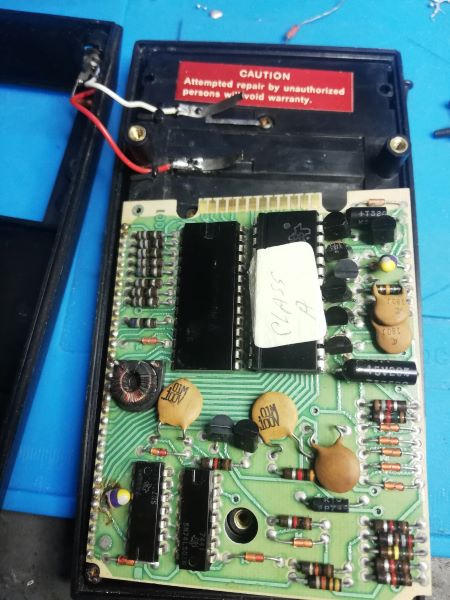
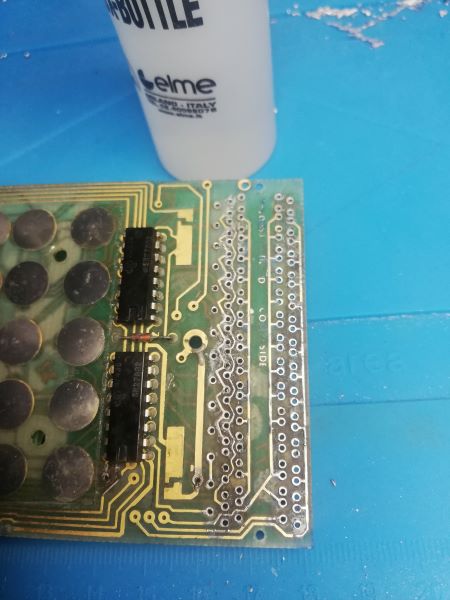
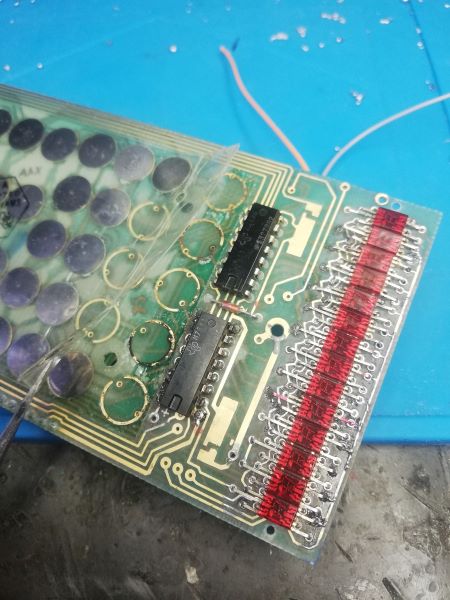
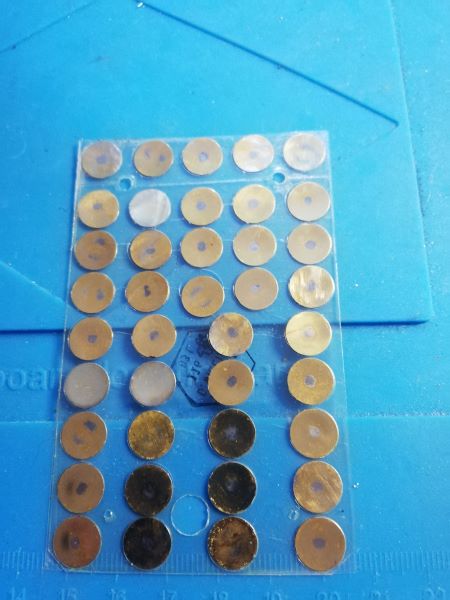
This rare model had many parts corroded by battery acid, the 7-segment displays completely corroded, the replacement and cleaning of the keyboard can be seen on the side.
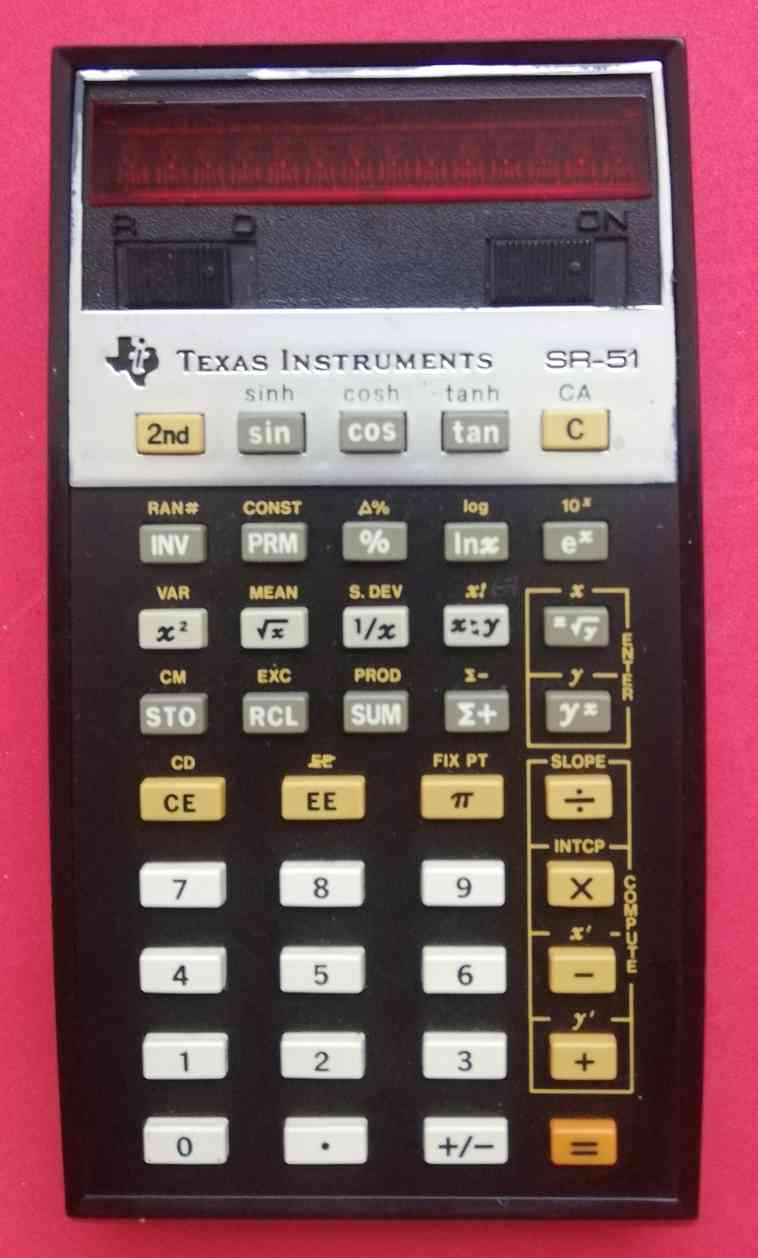 Model: SR-51 2v
Battery: BP 1
Adapter: AC9200
Year: 1975
Chip: TMC0501, TMS0522, TMC0523
Manual: with permission www.datamath.org
Info:
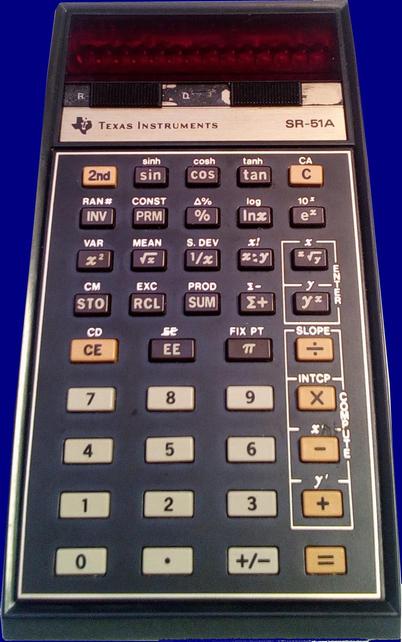 Model: SR-51 A
Battery: BP 1
Adapter: AC9130
Year: 1976
Chip: TMC0501 / 522 / 523
Info: classic second GENERATION
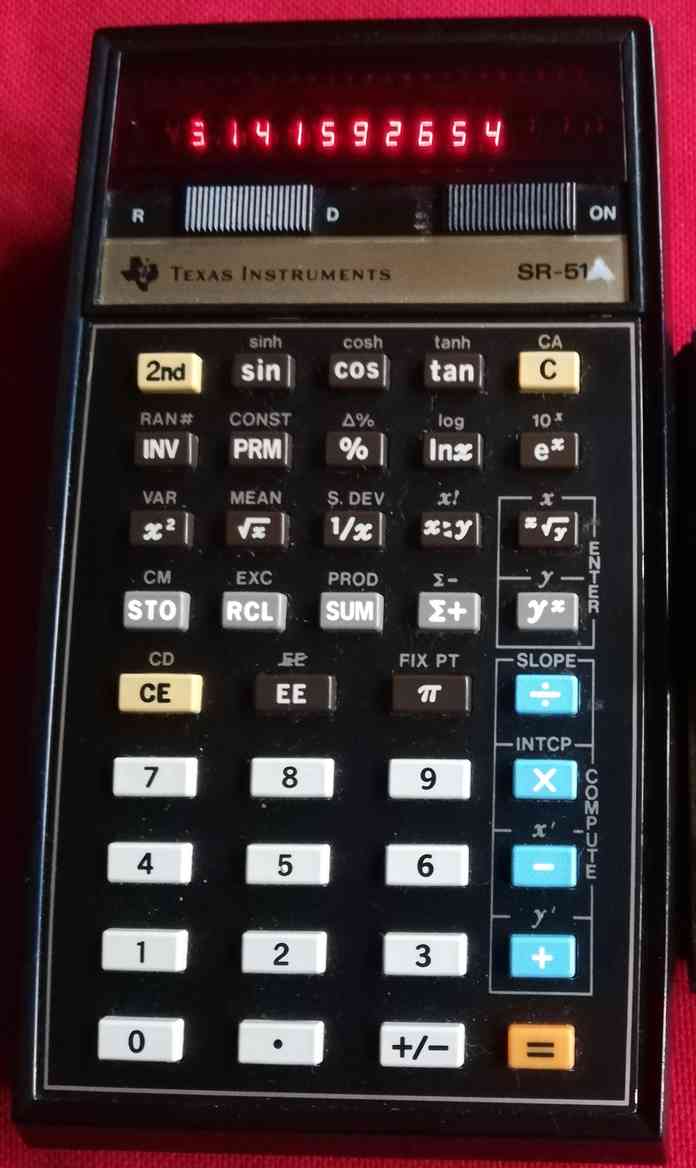 Model: SR-51 A
Battery: BP 1
Adapter: AC9130
Year: 1976
Chip: TMC0501 / 522 / 523
Info:This calculator has the 4 keys for BLUE operations is it a prototype or a fake?
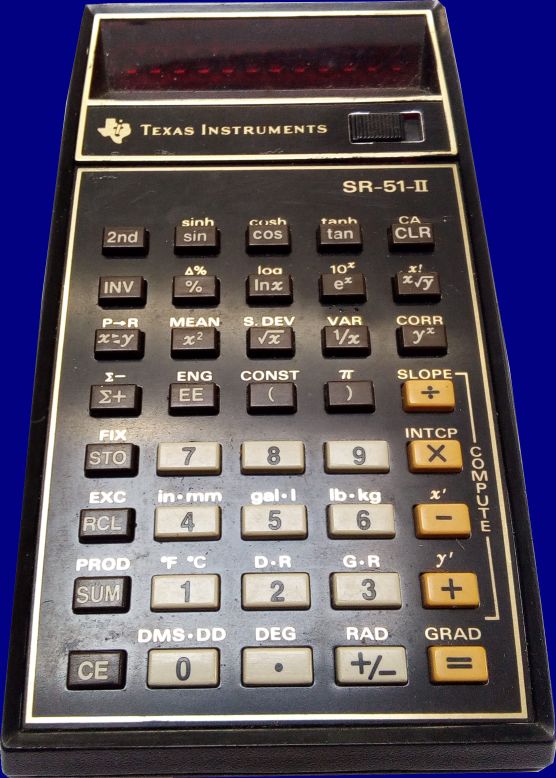 Model: SR-51 II
Battery: BP 6
Adapter: AC9131
Year: 1977
Chip: TMC0501 / 581
Manual: with permission www.datamath.org
Info: MAJESTIC line
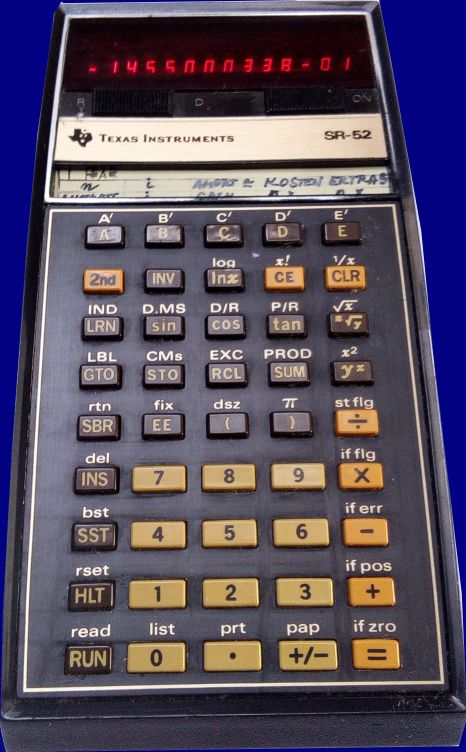 Model: SR-52
Battery: 3 x AA
Adapter: AC9130A or DC9105
Year: 1975
Chip: TMC0501 / 0524 /0595 / 2xTMC0599, 2xTMC0561/0562
Manual: with permission www.datamath.org basic library
Info: classic second GENERATION
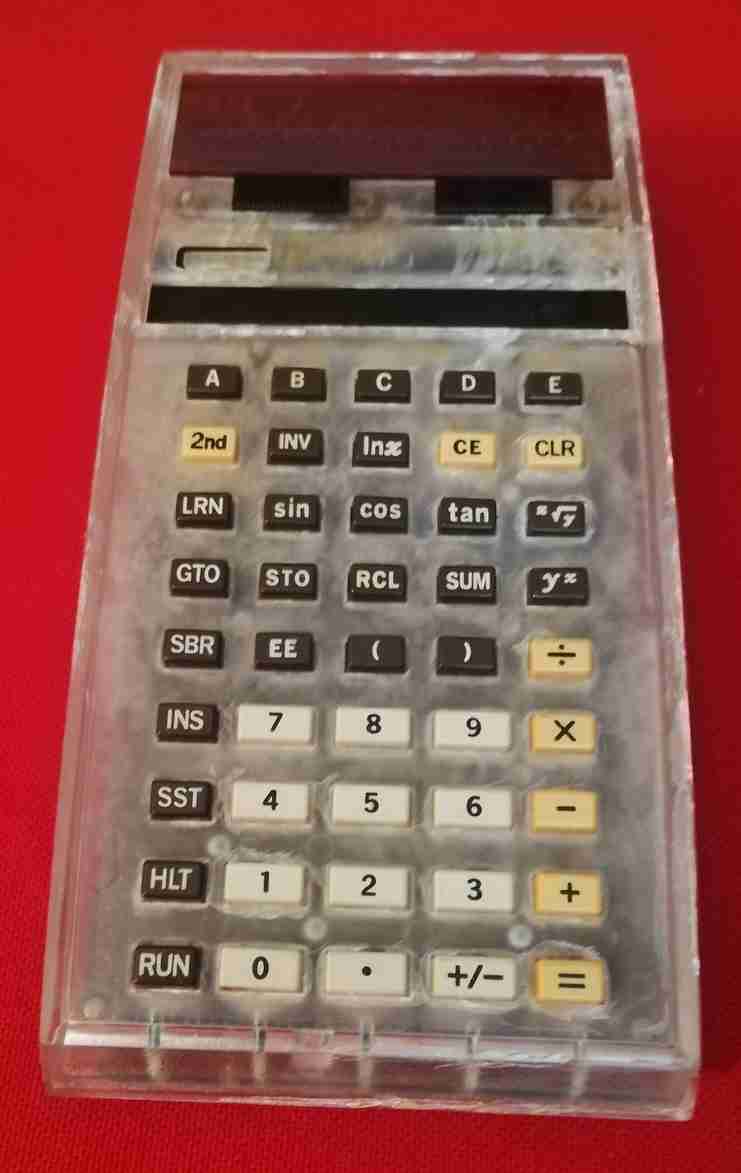 Model: SR-52 clear case
Battery: 3 x AA
Adapter: AC9130A
Year: 1976
Chip: TMC0501, TMS0537, TMC0538, TMC0599
Info: This SR-52 Clear-Clase Prototype was most likely manufactured in November 1974 and is a strange hybrid sporting.
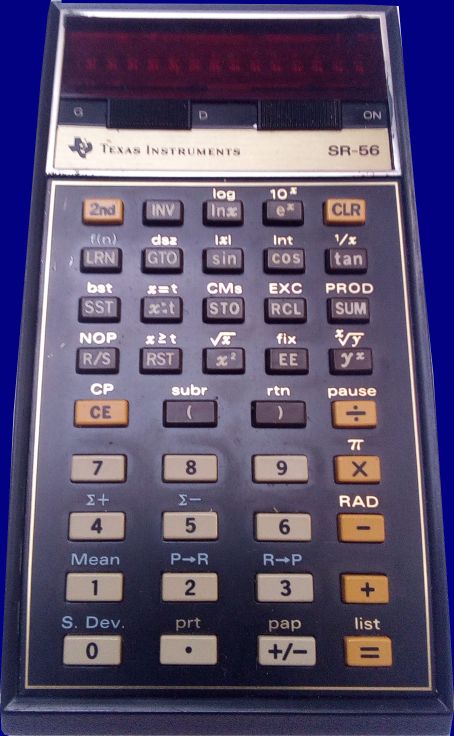 Model: SR-56
Battery: 3 x AA
Adapter: AC9130A
Year: 1976
Chip: TMC0501, TMS0537, TMC0538, TMC0599
Manual: with permission www.datamath.org
Info: classic second GENERATION
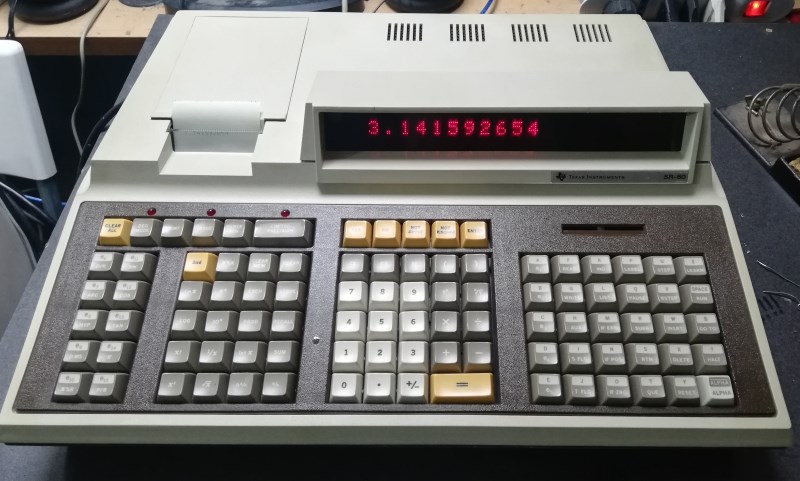
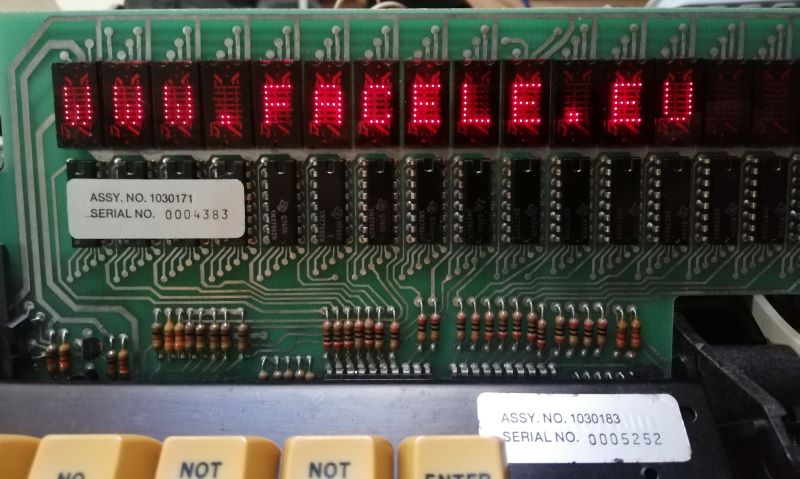 Model: SR-60
Battery: NO
Adapter: AC 110 volt or AC 220 volt
Year: 1976
Chip: TMC0501, TMC0526 or TMC0536, TMC0564, TMC0565, TMC0566, TMC0567, TMC0568 or TMC0570, TMC0596, 5*TMC0599, TMC0253, TMC0254
Info: Texas Instruments introduced in 1976 with the SR-60 their first high-end programmable desktop calculator. Priced at $1695 and with a footprint of roughly 17" by 14.5" (430 mm * 370 mm) the SR-60 resembled more a computer than a programmable calculator.
Based on the SR-52 and SR-56 series of programmable calculators, the SR-60 integrated a full-sized keyboard with 95 keys, a large alphanumeric display with 20 characters, a thermal dot-matrix printer with 20 characters and a magnetic card reader for saving and loading both programs and data.
One of the main advantages of the SR-60 is the huge memory for data and program, already the base model could hold 480 program steps and 40 memory registers. Two memory expansion modules were available, one implemented with just two small daughter boards holding 5 resp. 3 TMC0599 RAM chips accessible through a bottom panel in the housing. The second memory expansion, a huge printed circuit board (PCB) with a total of 27 TMC0599 RAM chips, was mounted below the keyboard next to the Main PCB.
The SR-60 operates using pure algebraic logic (e.g., problems are presented to the machine as they would be written on paper). The calculator adheres to the PEMDAS (Parenthesis, Exponentiation, Multiplication, Division, Addition, Subtraction) order of precedence. The [(] and [)] keys may be used to group expressions to override the PEMDAS rules as required. Parentheses can be nested up to ten levels deep. The machine calculates and displays results to ten significant digits, and always formats the display to provide maximum accuracy.
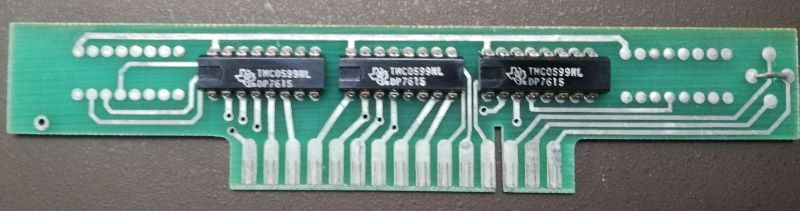
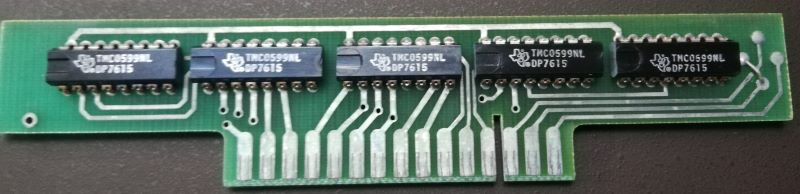
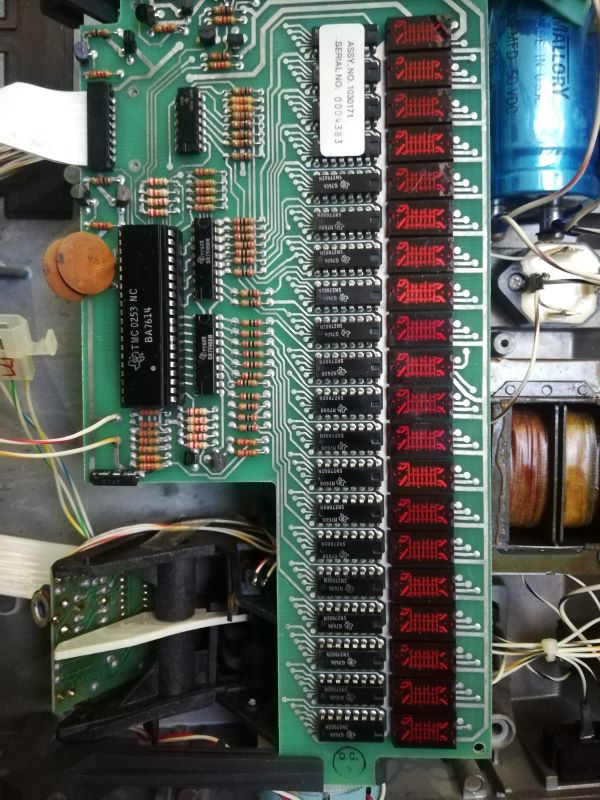
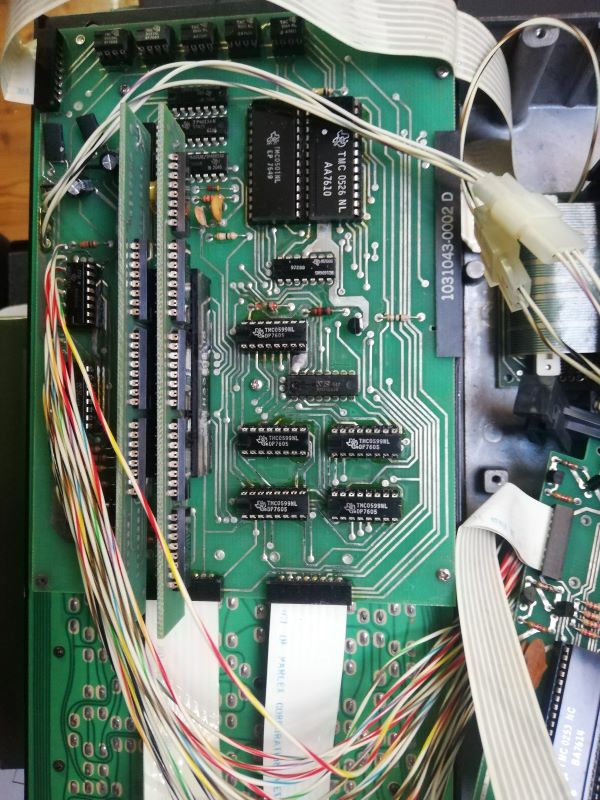
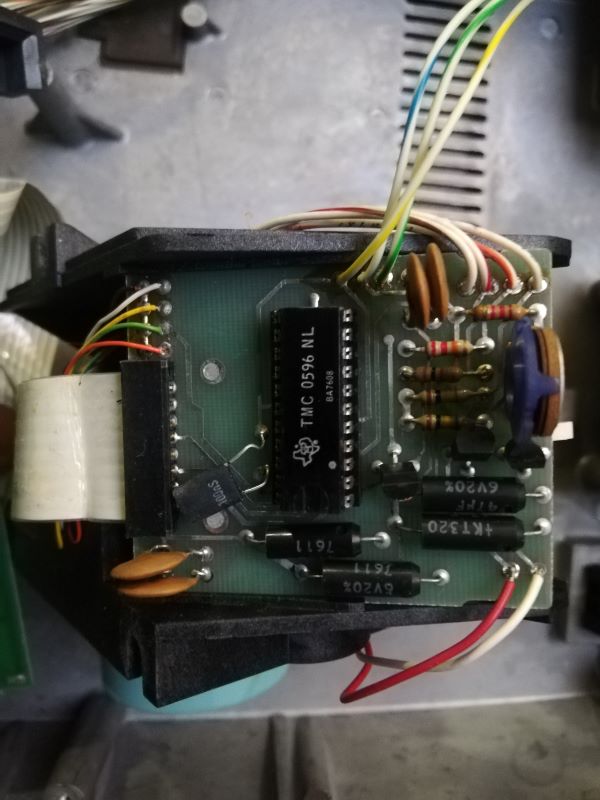
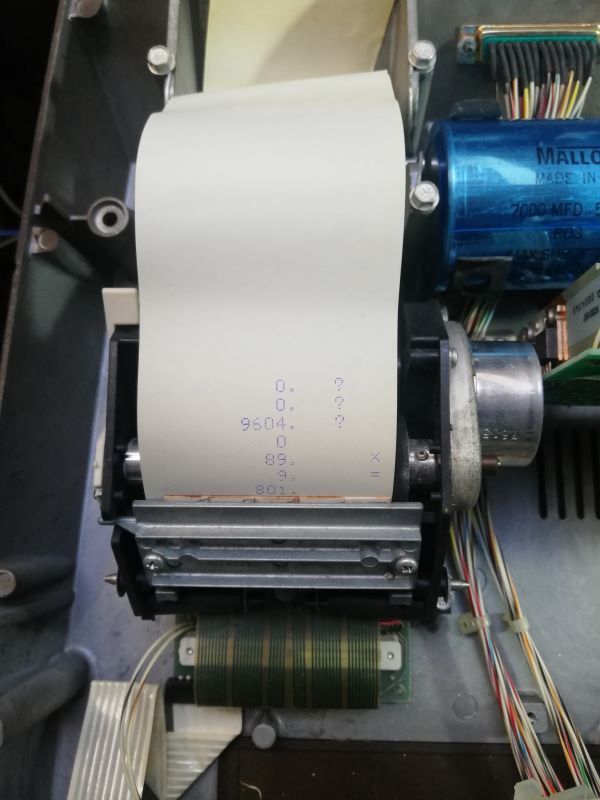
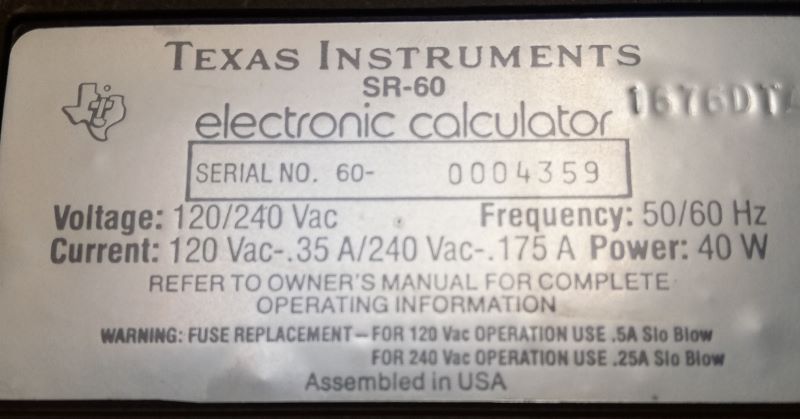
with permission of the author www.datamath.org
Claudio Larini. My interest in the world of information technology was born as soon as I finished high school, before leaving for the university adventure at the Polytechnic of Milan, after having purchased the first issue of a magazine, Micro and Personal Computer in September 1979. So after having consulted the "Market Guide", which was divided between Personal Computers, Programmable Calculators and Microprocessor Boards, and compatibly with the available budget I decided to purchase a programmable calculator.
SR-60 EMULATOR (and others ....) Claudio Larini ITALY
TroubleShooting
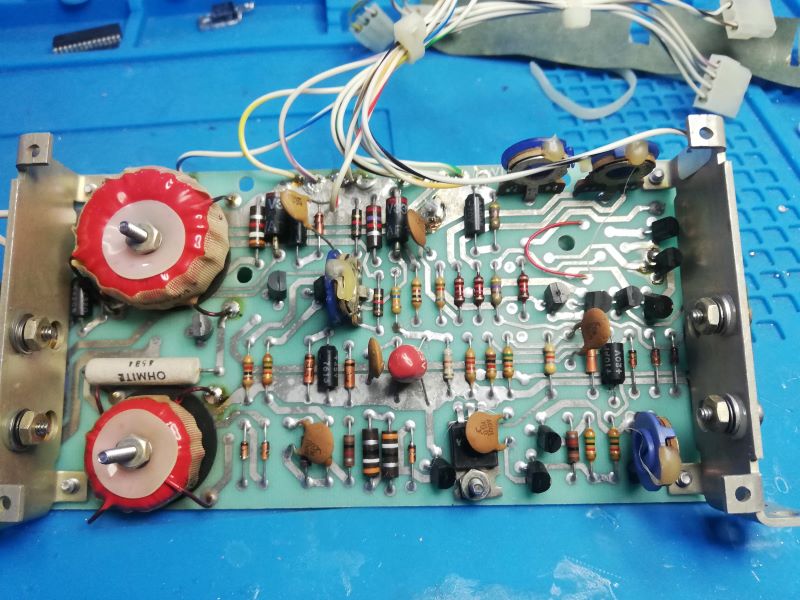 After finding the SR-60 and checking it, we realized that it wasn't working. We started with the power supply. This power supply provides all power for the individual PCBs, (-20, -15.8, -10, -5 and -19) with an input voltage ranging from -26.5 to -42. At this point we realized that the -15.8 voltage that powers the main PCB was not being supplied.

 As expected with these 50 year old objects, the filter capacitors, in this case 10uF, failed, one was shorted, another changed value.
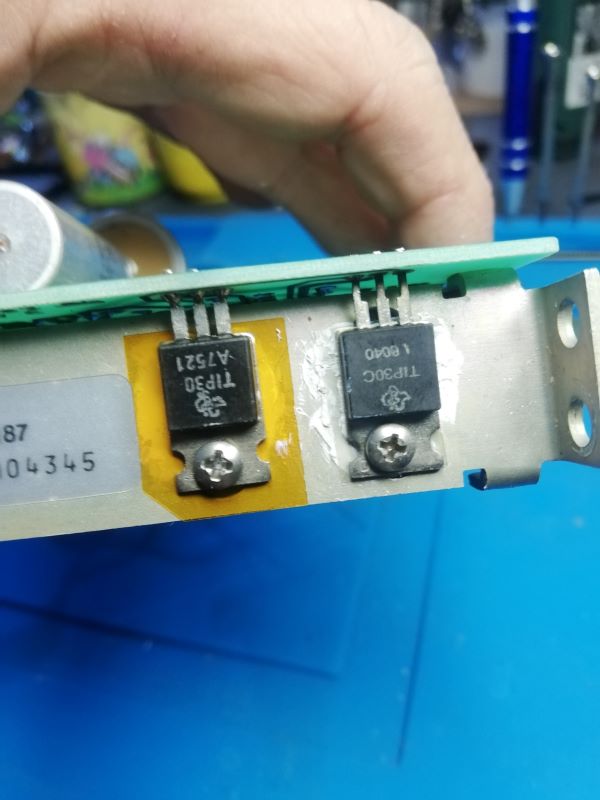
Causing the breakage of three transistors in the power supply, the TIP30 replaced with one from the stock of components we have from the 70s and 80s, in addition to the A1872 replaced with a BC556 and an A2031 replaced with a BC547. We were unable to find the latter the same .
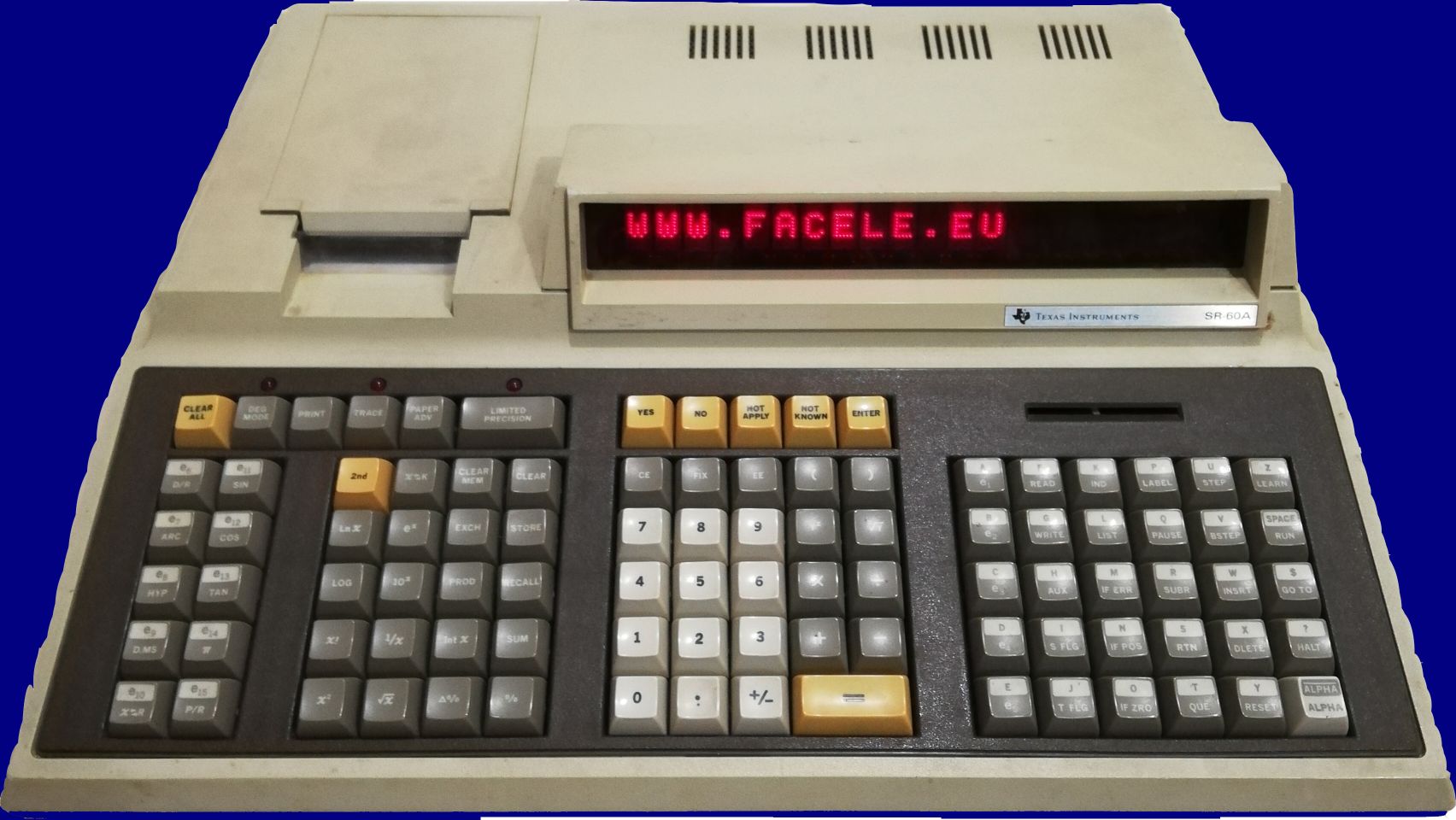 Model: SR-60 A
Battery:
Adapter: AC 110 volt
Year: 1978
Chip:TMC0501, ...TMC0526, 5*TMC0599, TMC0253
Info: Texas Instruments introduced in 1976 with the SR-60 their first high-end programmable desktop calculator. Priced at $1695 and with a footprint of roughly 17" by 14.5" (430 mm * 370 mm) the SR-60 resembled more a computer than a programmable calculator. Based on the SR-52 and SR-56 series of programmable calculators, the SR-60 integrated a full-sized keyboard with 95 keys, a large alphanumeric display with 20 characters, a thermal dot-matrix printer with 20 characters and a magnetic card reader for saving and loading both programs and data. One of the main advantages of the SR-60 is the huge memory for data and program, already the base model could hold 480 program steps and 40 memory registers. Two memory expansion modules were available, one implemented with just two small daughter boards holding 5 resp. 3 TMC0599 RAM chips accessible through a bottom panel in the housing. The second memory expansion, a huge printed circuit board (PCB) with a total of 27 TMC0599 RAM chips, was mounted below the keyboard next to the Main PCB. A fully-optioned SR-60 could hold programs with a maximum of 5760 steps and 430 memory registers.
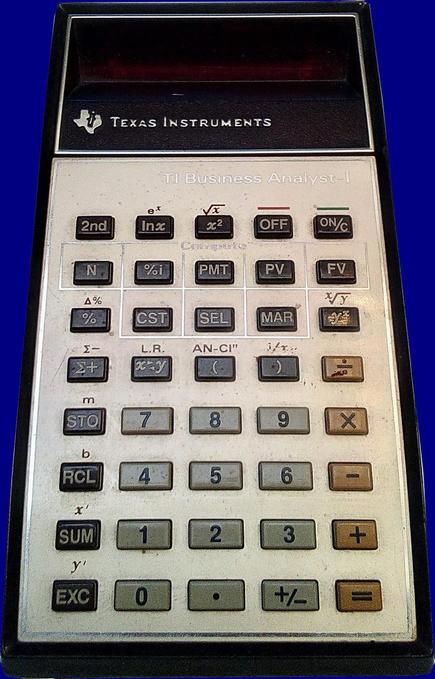 Model: TI business analyst I LED
Battery: 9 volt or RK2
Adapter: AC9132
Year: 1981
Chip: TMC0982
Info: MAJESTIC line
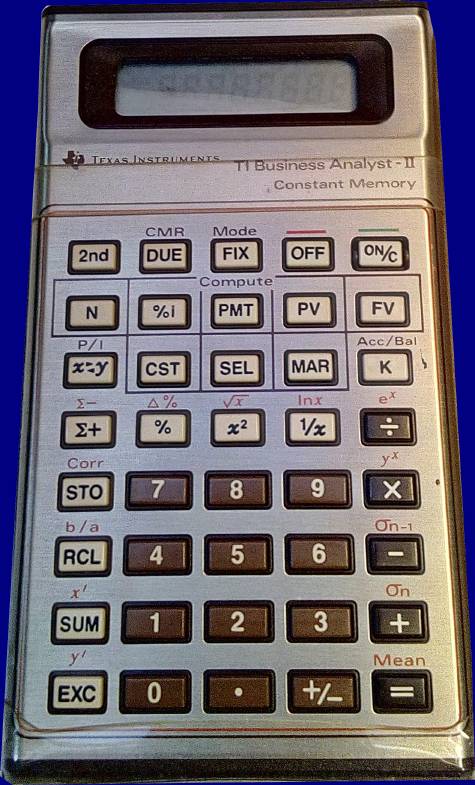 Model: TI business analyst II lcd
Battery: 2 x LR44
Adapter:
Year: 1980
Chip: TPO322
Info: first LCD and slimline LCD
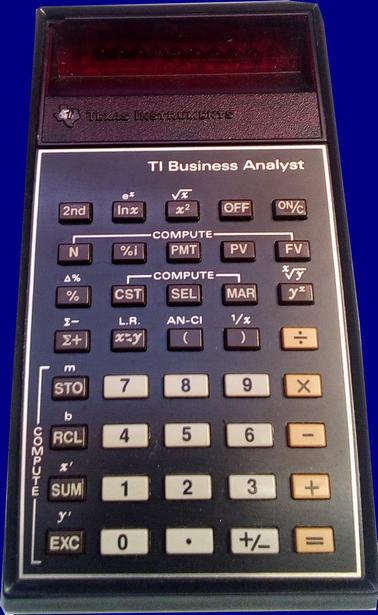 Model: TI business analyst
Battery: BP5 , BP8
Adapter: AC9131 , AC9132
Year: 1978
Chip: TMC0982
Info: MAJESTIC line
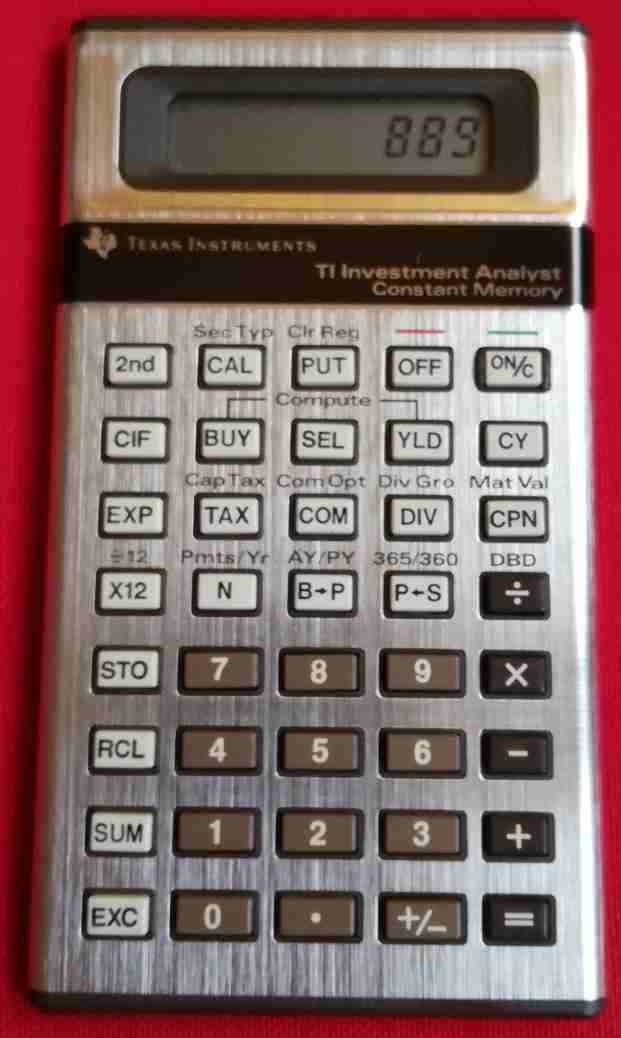 Model: TI Investment Analyst
Battery: 2 x LR44
Adapter:
Year: 1980
Chip: TP0320 (CD3201)
Info:
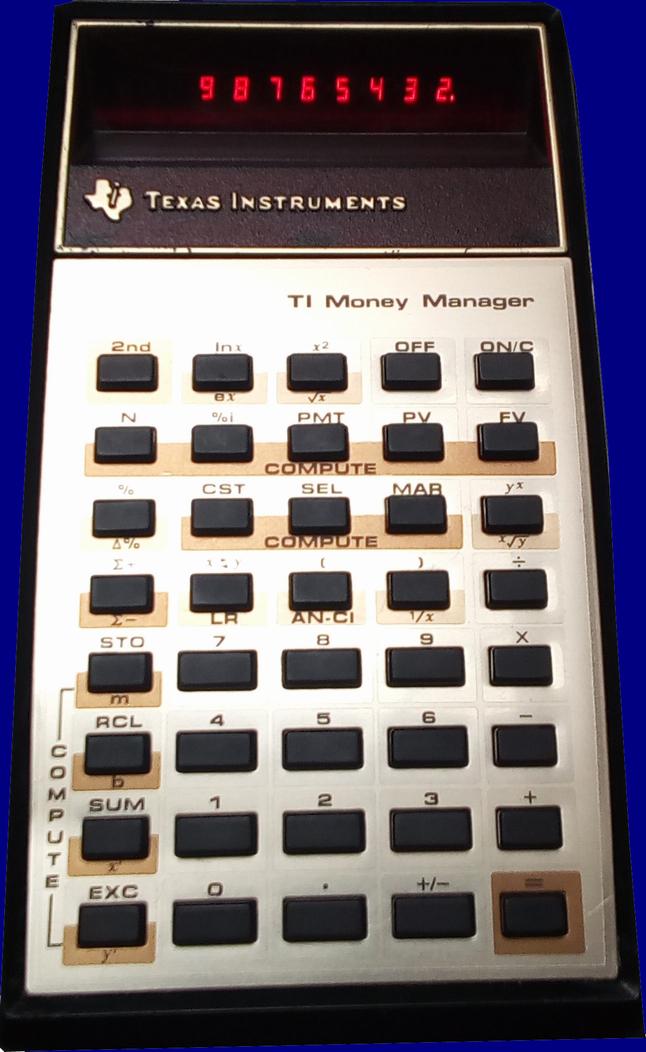 Model: TI money manger led
Battery: BP 7
Adapter: AC9132
Year: 1977
Chip: TMC0982
Info: MAJESTIC line
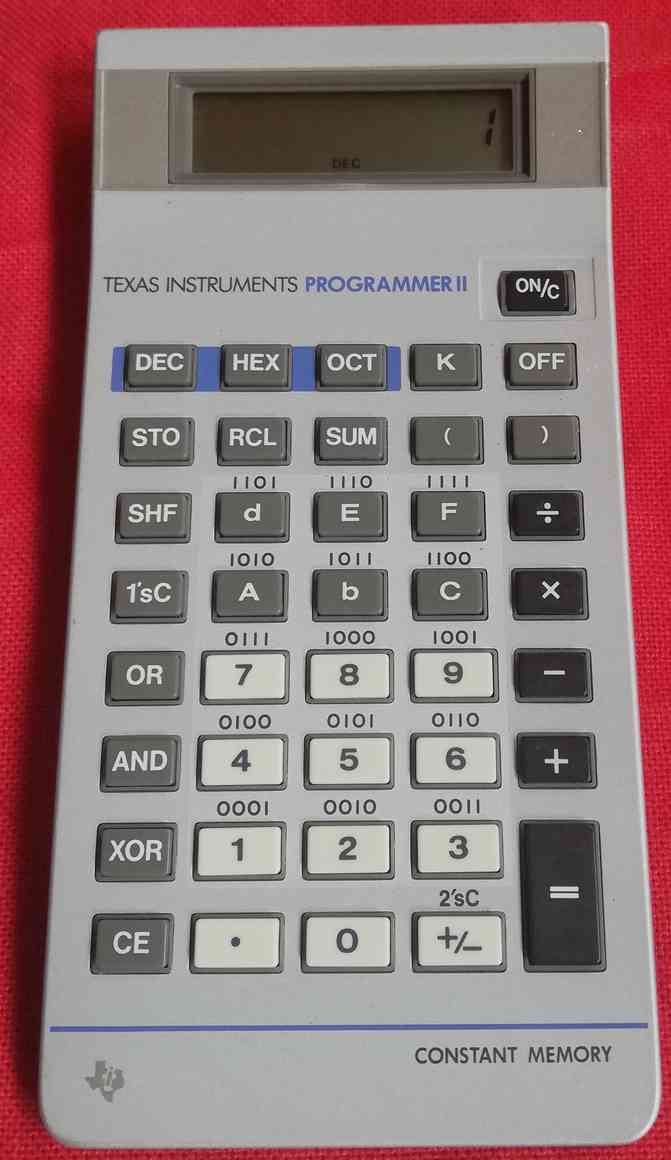 Model: TI programmer II lcd
Battery: 2 x LR44
Adapter:
Year: 1985
Chip: TPO456/CD4569
Info: If you take your time comparing this calculator with all other members of the second slanted series (BA-54, TI-57-II) you notice something very special. The keyboard position doesn't fit to the usual spacing. The ON/C-key is misplaced and one key is super-sized. You have to open the calculator to get the answer: This is not the usual construction of a slanted calculator! A very small printed-circuit-board, actual the form factor of a modern slimline calculator like the BA-II, is fitted into the housing.
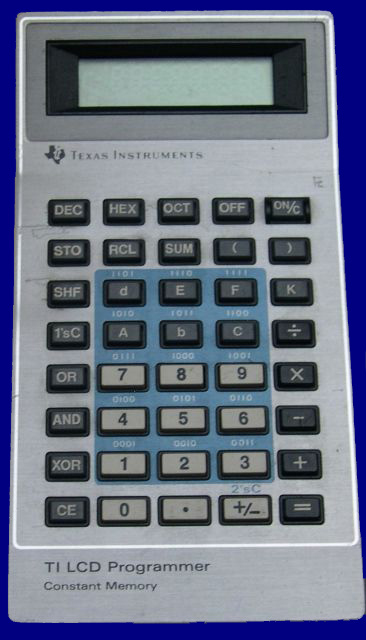 Model: TI programmer lcd
Battery: 2 x LR44
Adapter:
Year: 1983
Chip: CD4569
Info: slanted LCD generation
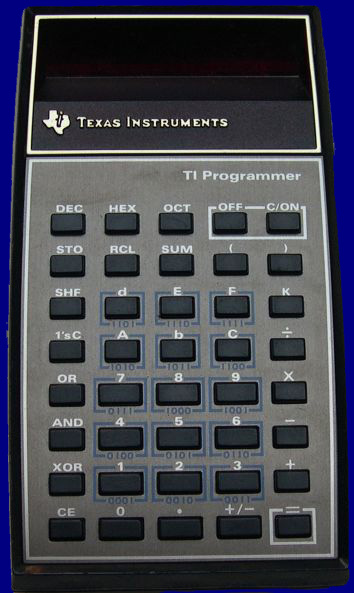 Model: TI programmer led
Battery: BP 8
Adapter: AC9132
Year: 1980
Chip: TMC0983
Info: MAJESTIC line
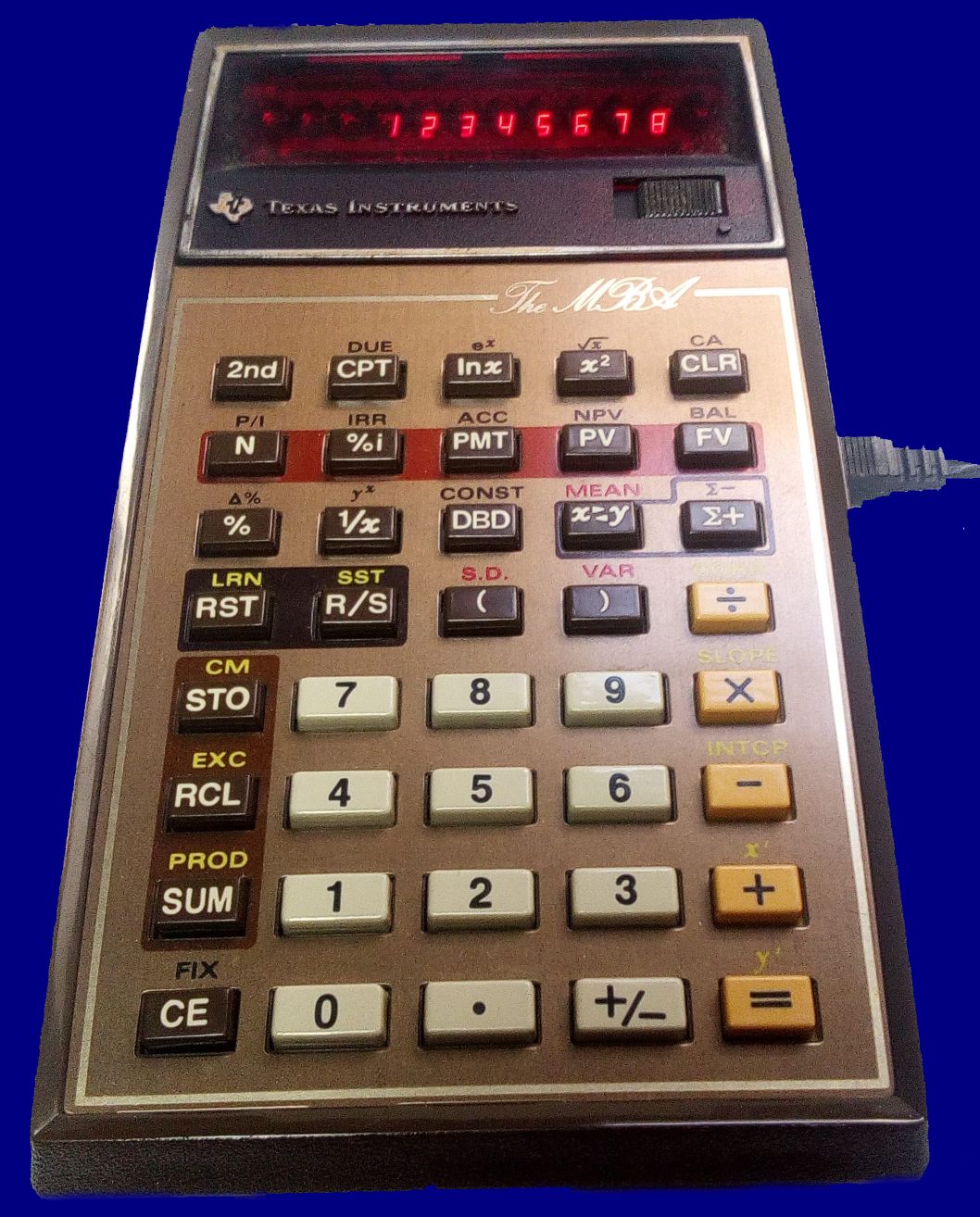 Model: TI the MBA
Battery: BP 7
Adapter: AC9132
Year: 1981
Chip: TMC1502
Info: MAJESTIC line Made in USA
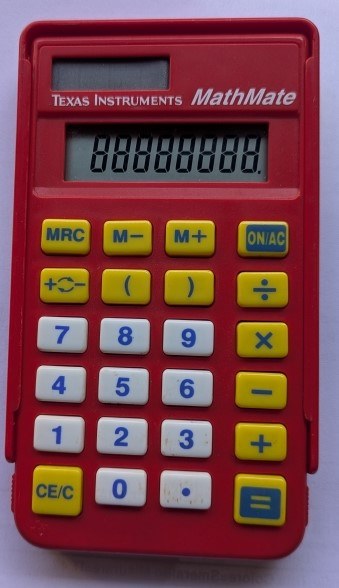 Model: TI-0007 MathMate
Battery: solar
Adapter:
Year: 1991
Chip:
Info:
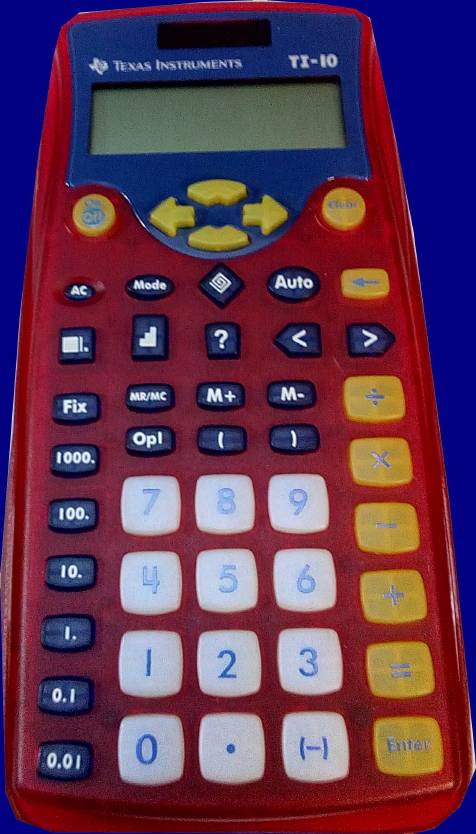 Model: TI-10
Battery: solar, CR2025
Adapter:
Year: 2002
Chip:
Info: modern LCD 2000 - 2017
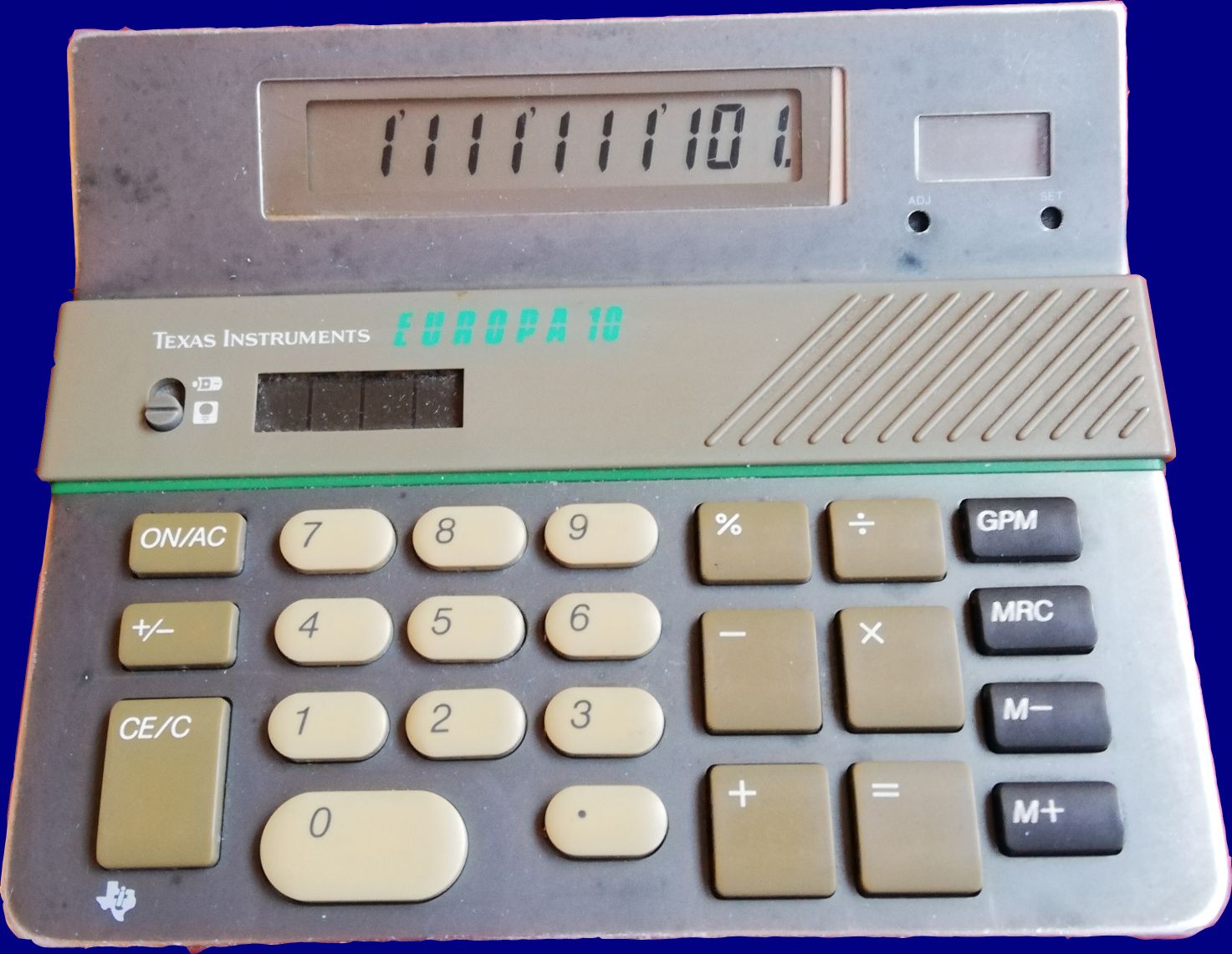 Model: TI-10 europa
Battery: solar
Adapter:
Year: 1995
Chip:
Info: modern DESKTOP
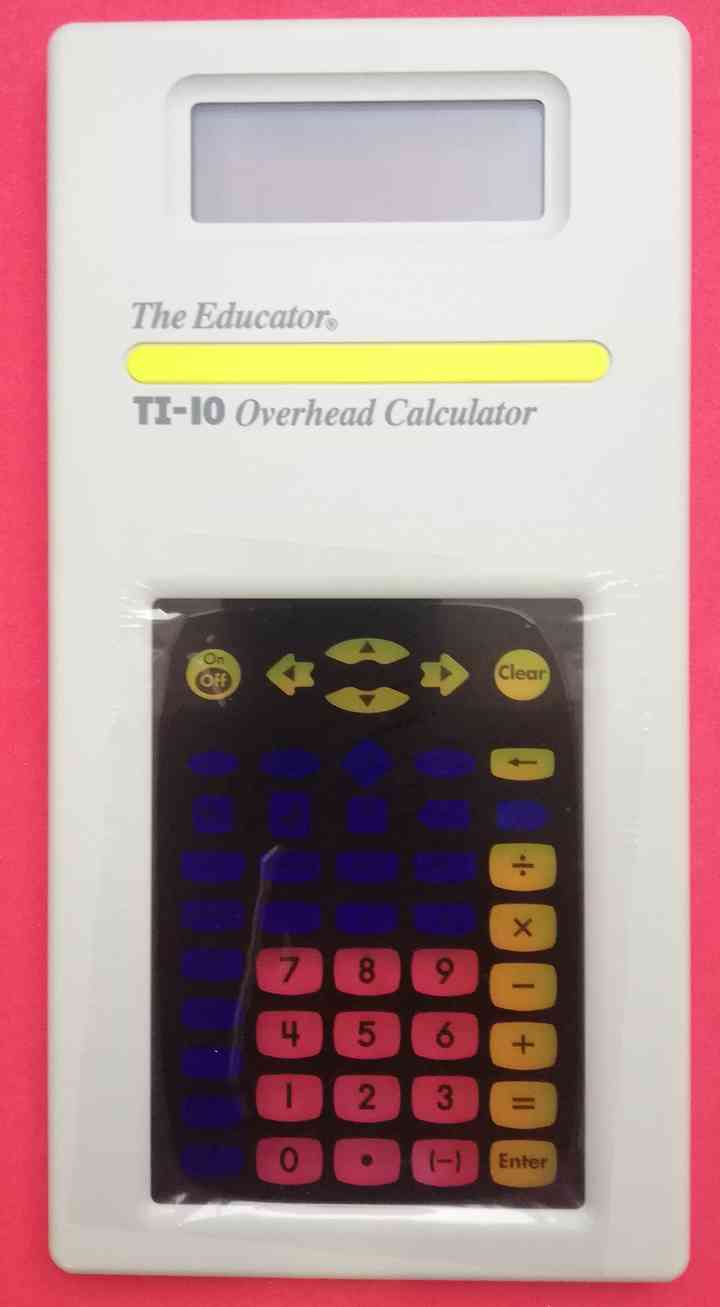 Model: TI-10 overhead
Battery:
Adapter:
Year: 2006
Chip: made in China
Info: The California based company Stokes Publishing Company, Inc. distributes under the label "The Educator®"
calculators optimized for teaching purposes. William T. Stokes filed already July 30, 1991 the US Patent Application U.S. Pat. No. 5,035,502
with the title "Transparent calculator for overhead projection".
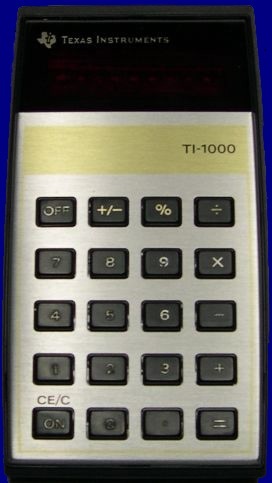 Model: TI-1000 gold
Battery: 3 x AAA ni-cd
Adapter: AC9180
Year: 1977
Chip: TMC1991 or TMC1992
Info:

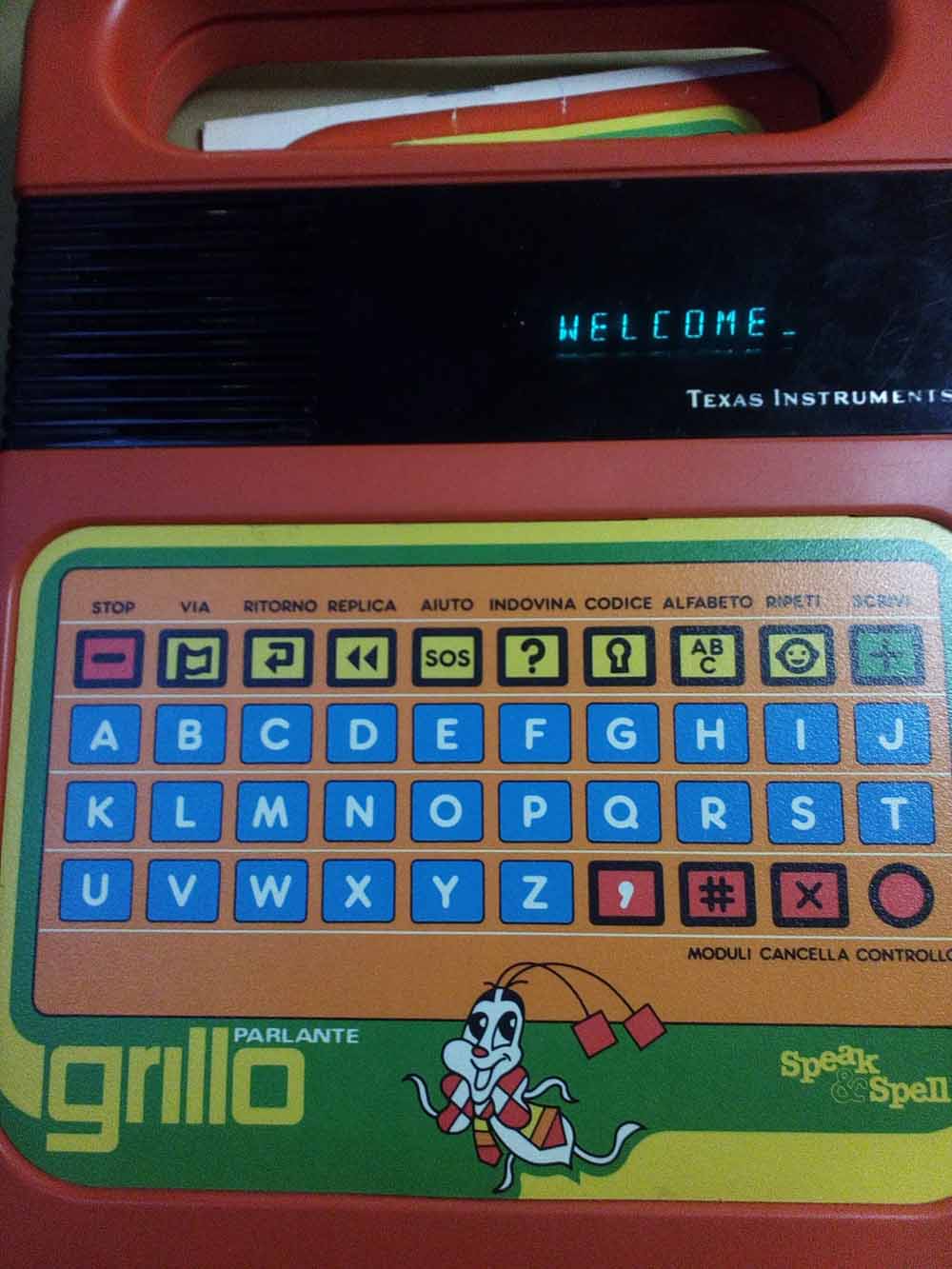
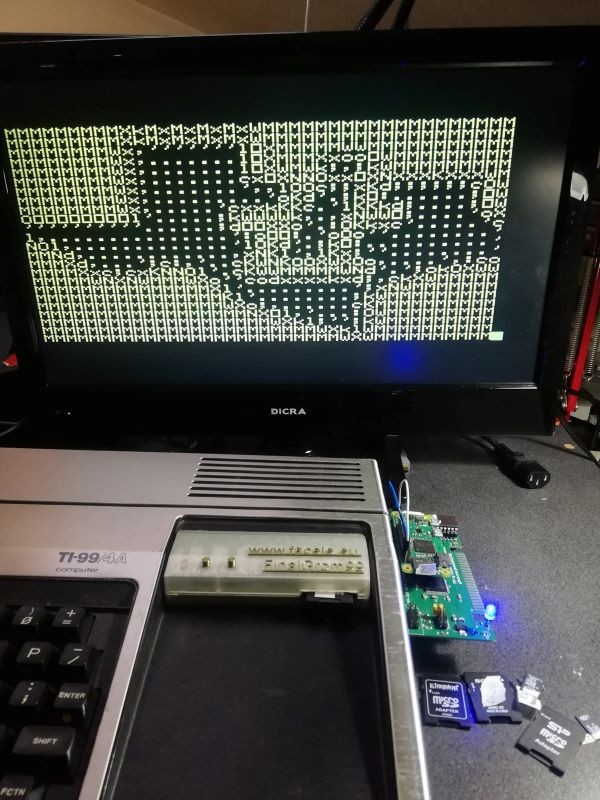
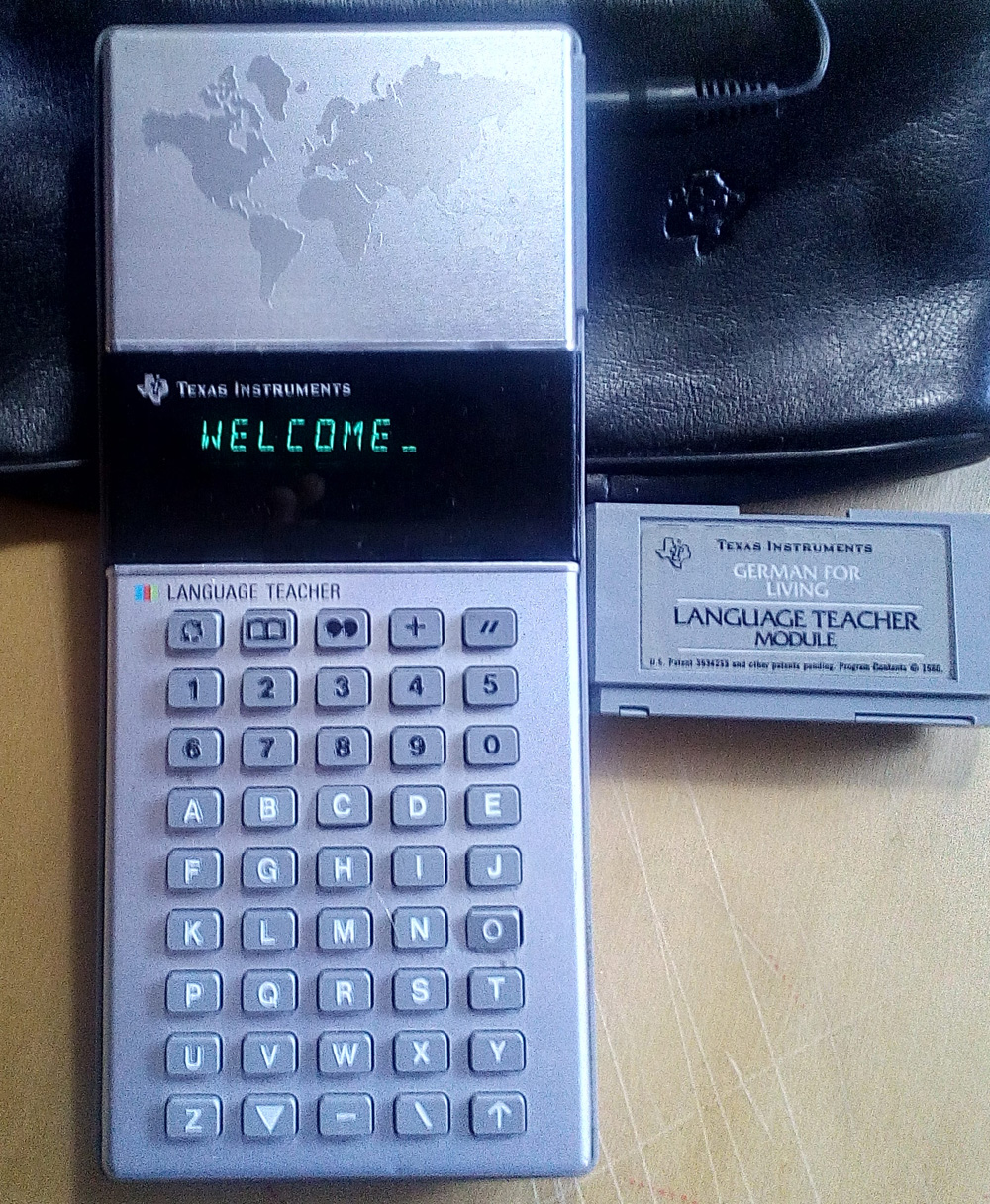
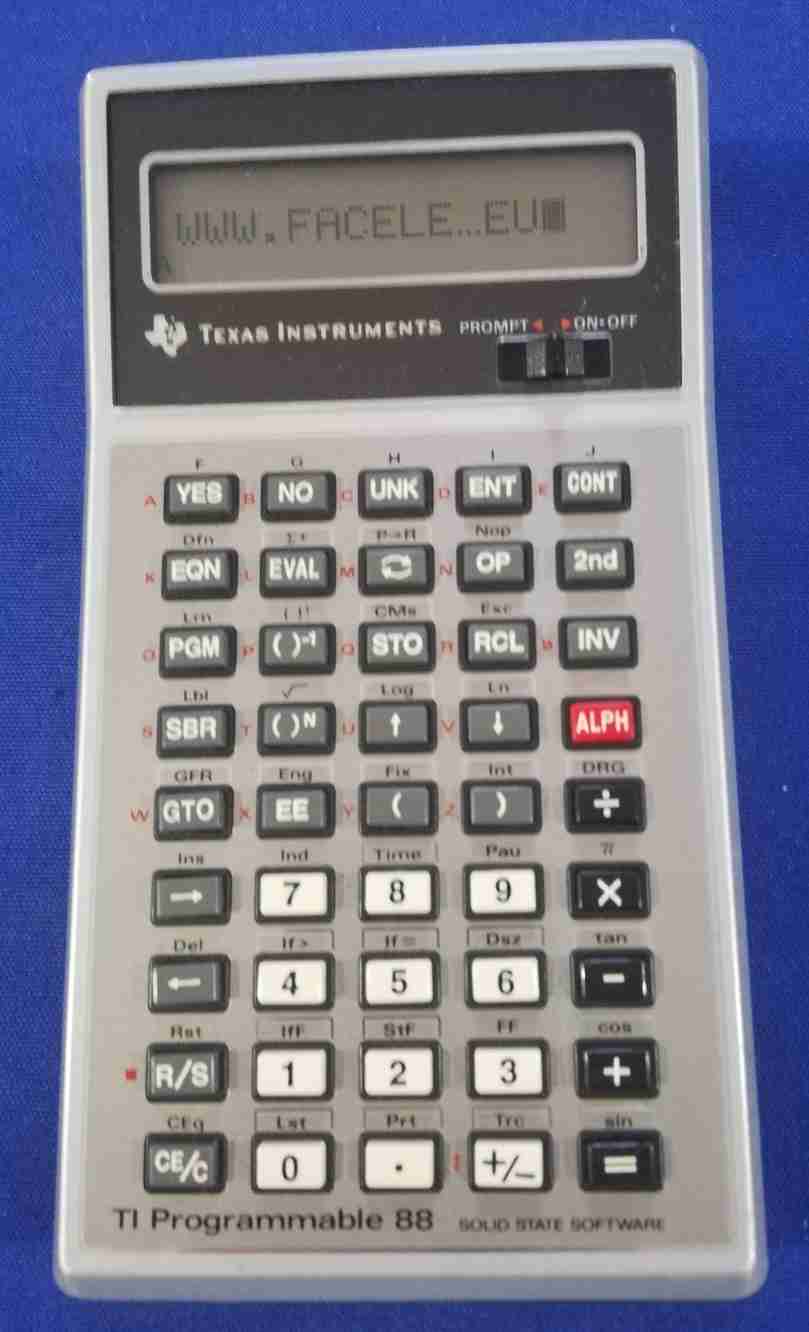
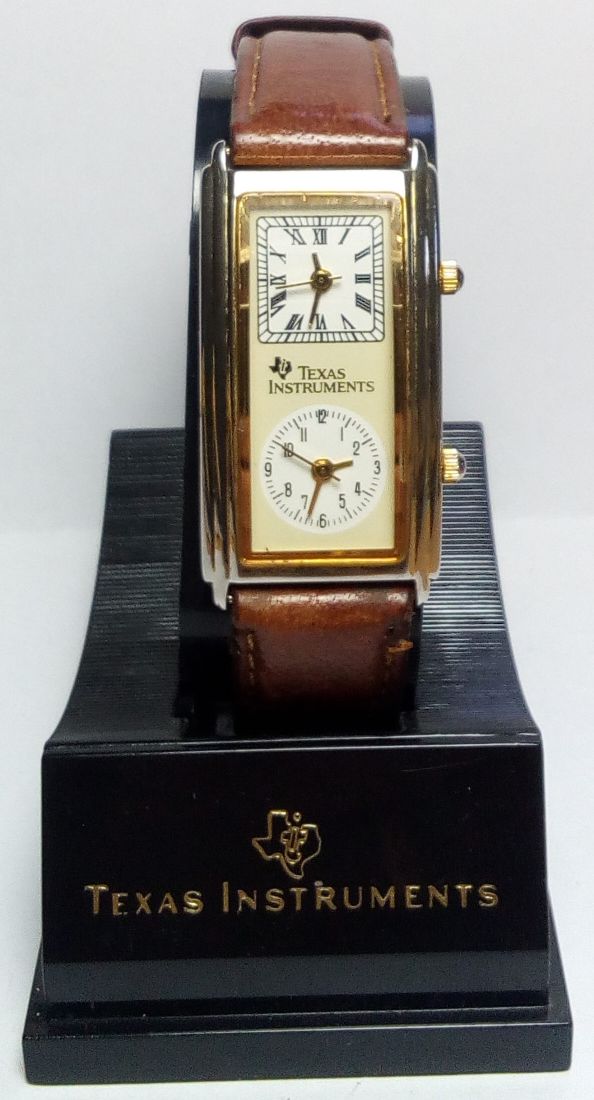
.jpg "Core Module Watch")

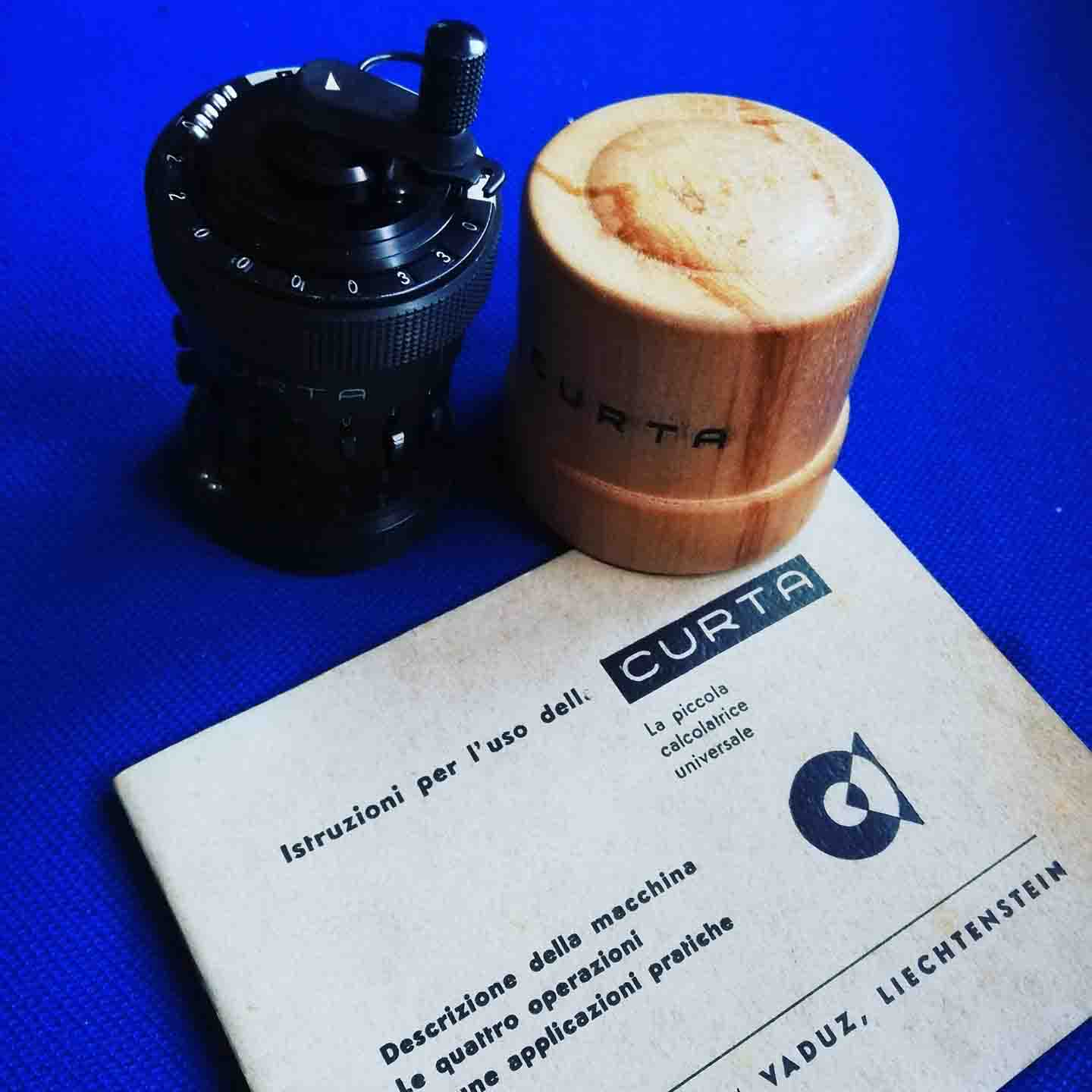
.jpg "Calculator Fuller")
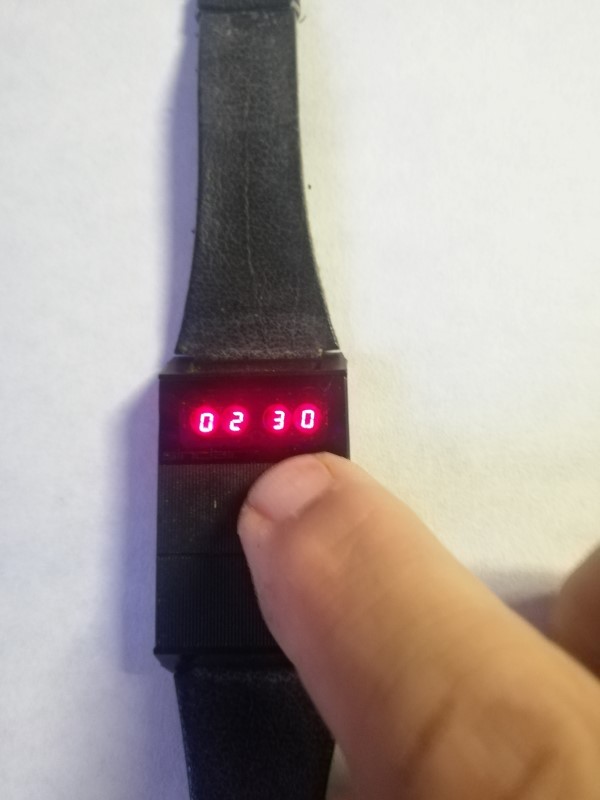

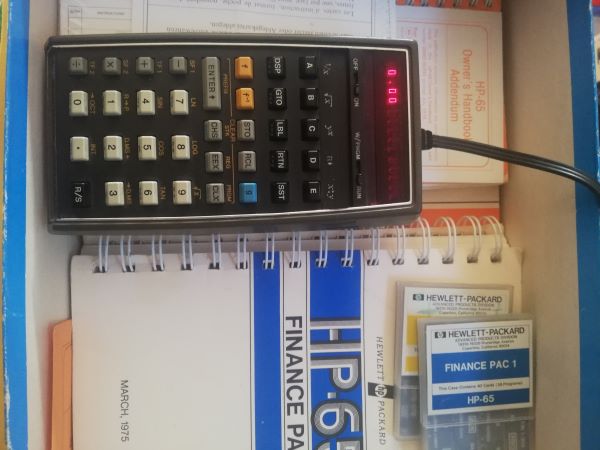
.jpg "Olivetti Valentine")
.jpg "Battle Star Galactica")
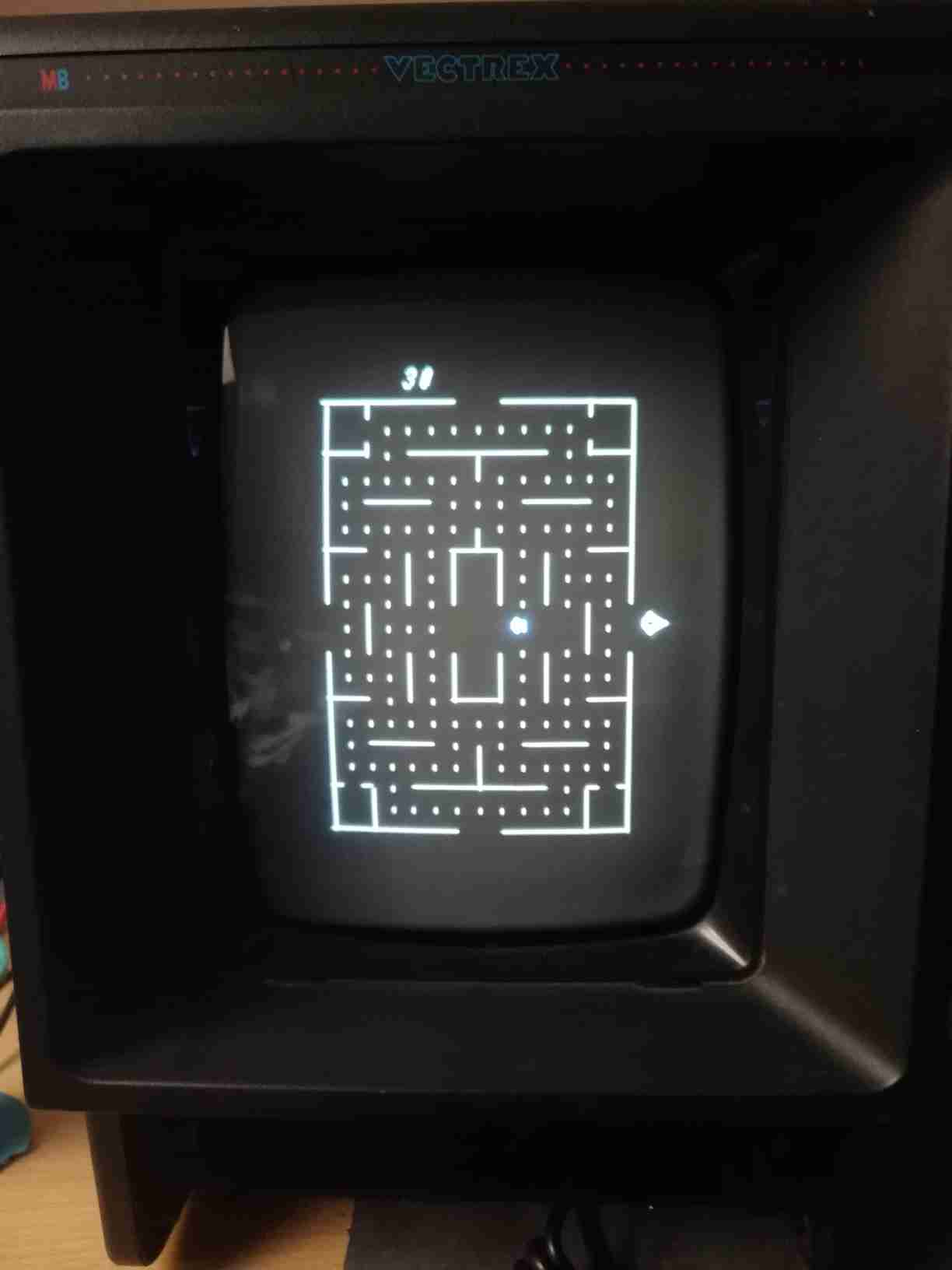


.png)