
TI Museum
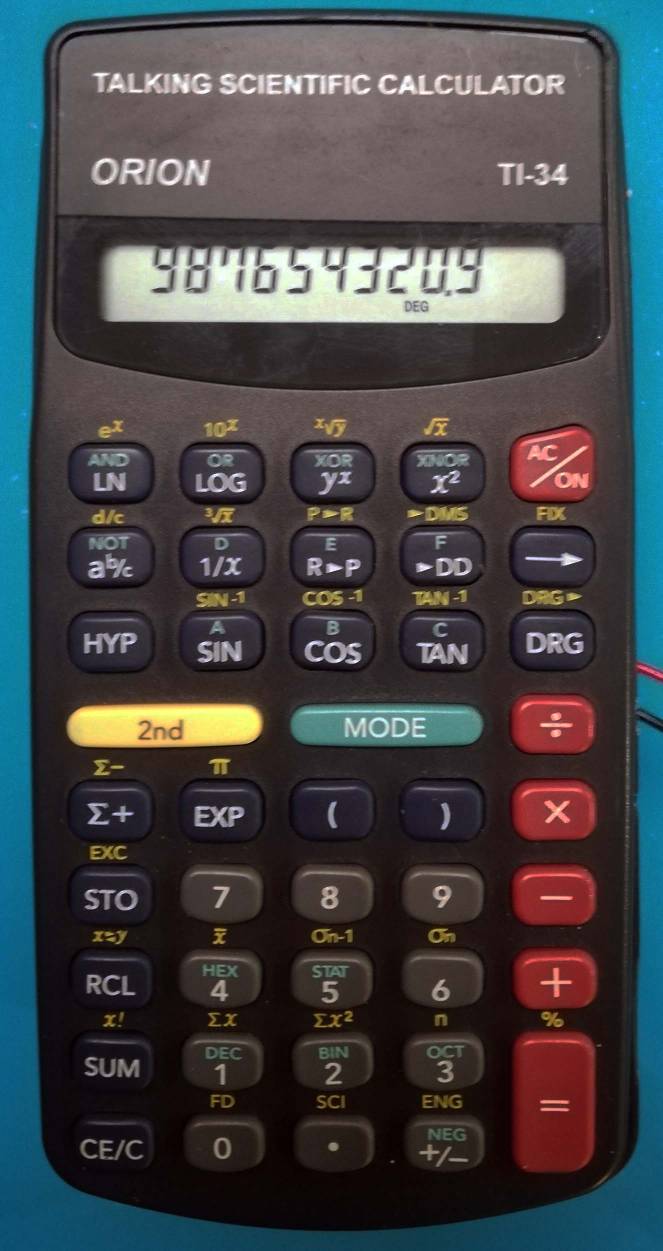 Model: TI-34 Orion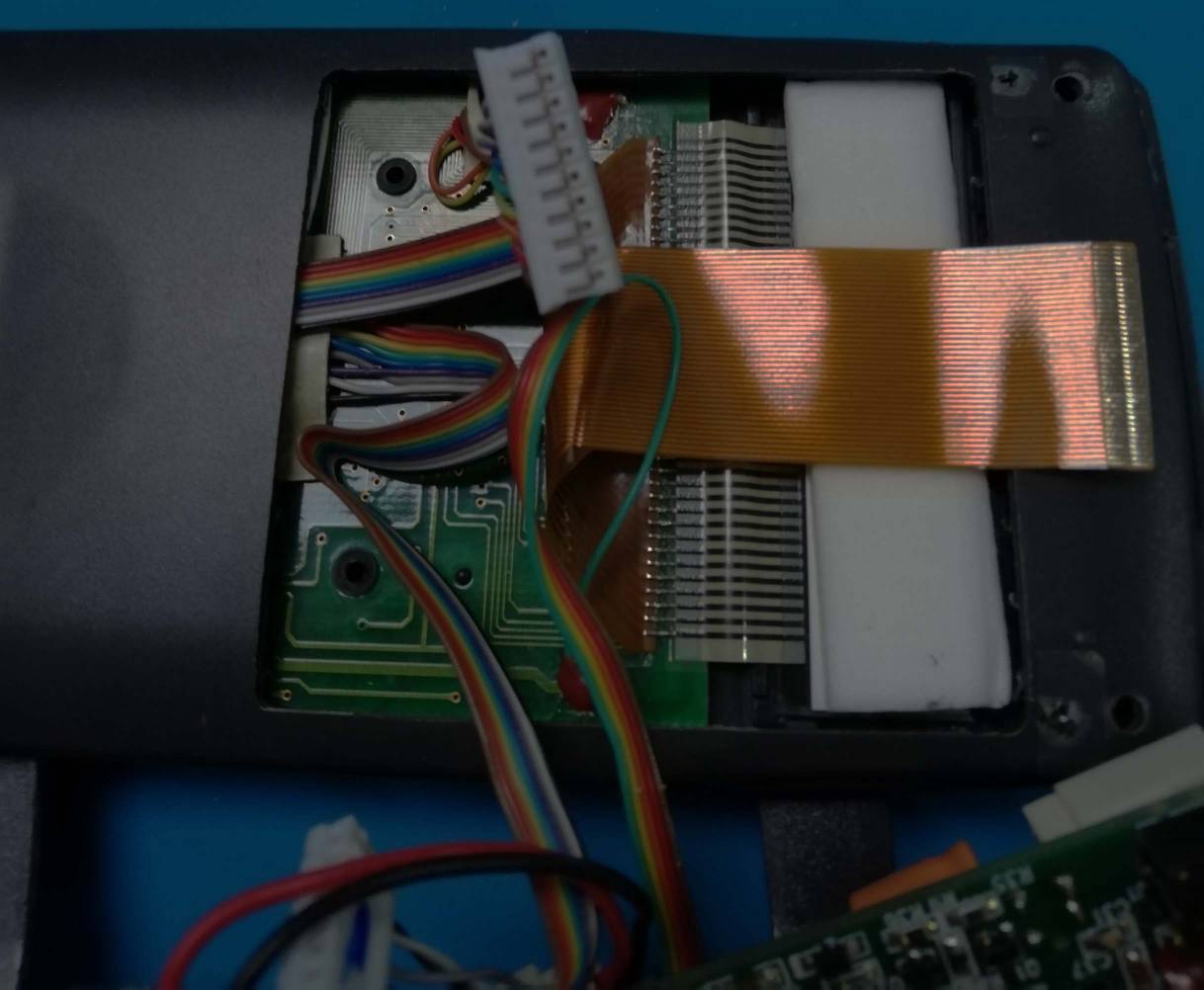
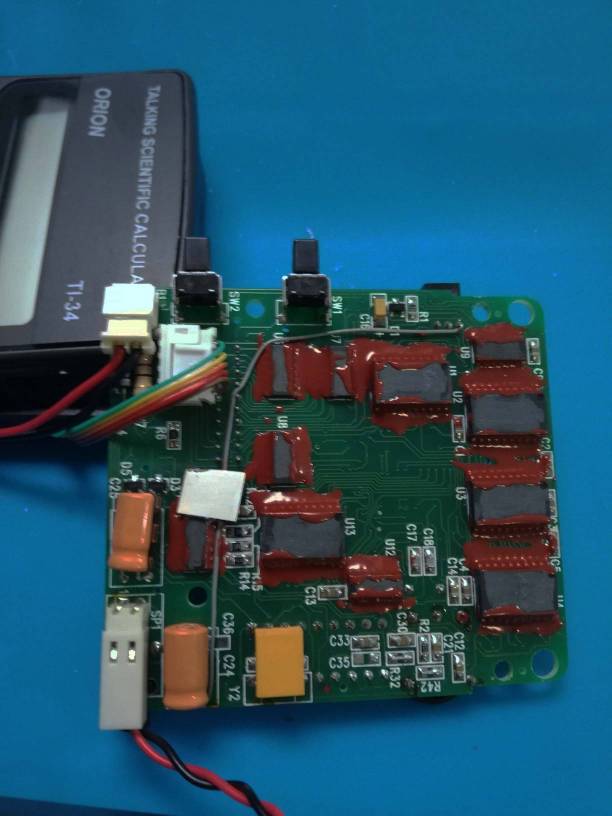
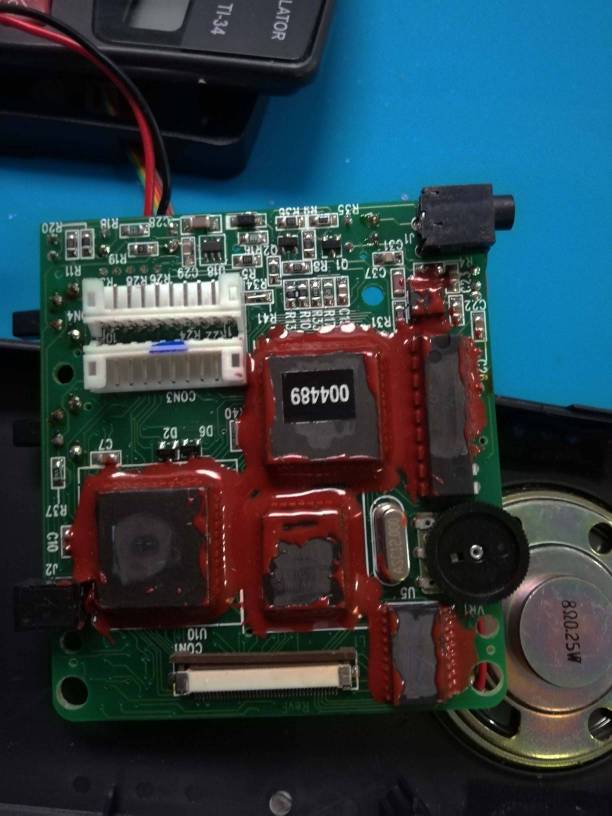
Battery: 5 x AA ni-cd
Adapter: DC 9volt 300 ma
Year: 1996
Chip:
Info: Specializing in the development and manufacture of products for people with disabilities, Orbit Research’s mission is to employ cutting-edge technology to bring to the community at affordable prices, products that are essential for an independent and productive lifestyle. Further information on the ORION TI-34 developed for vision impaired people is available at www.orbitresearch.com.
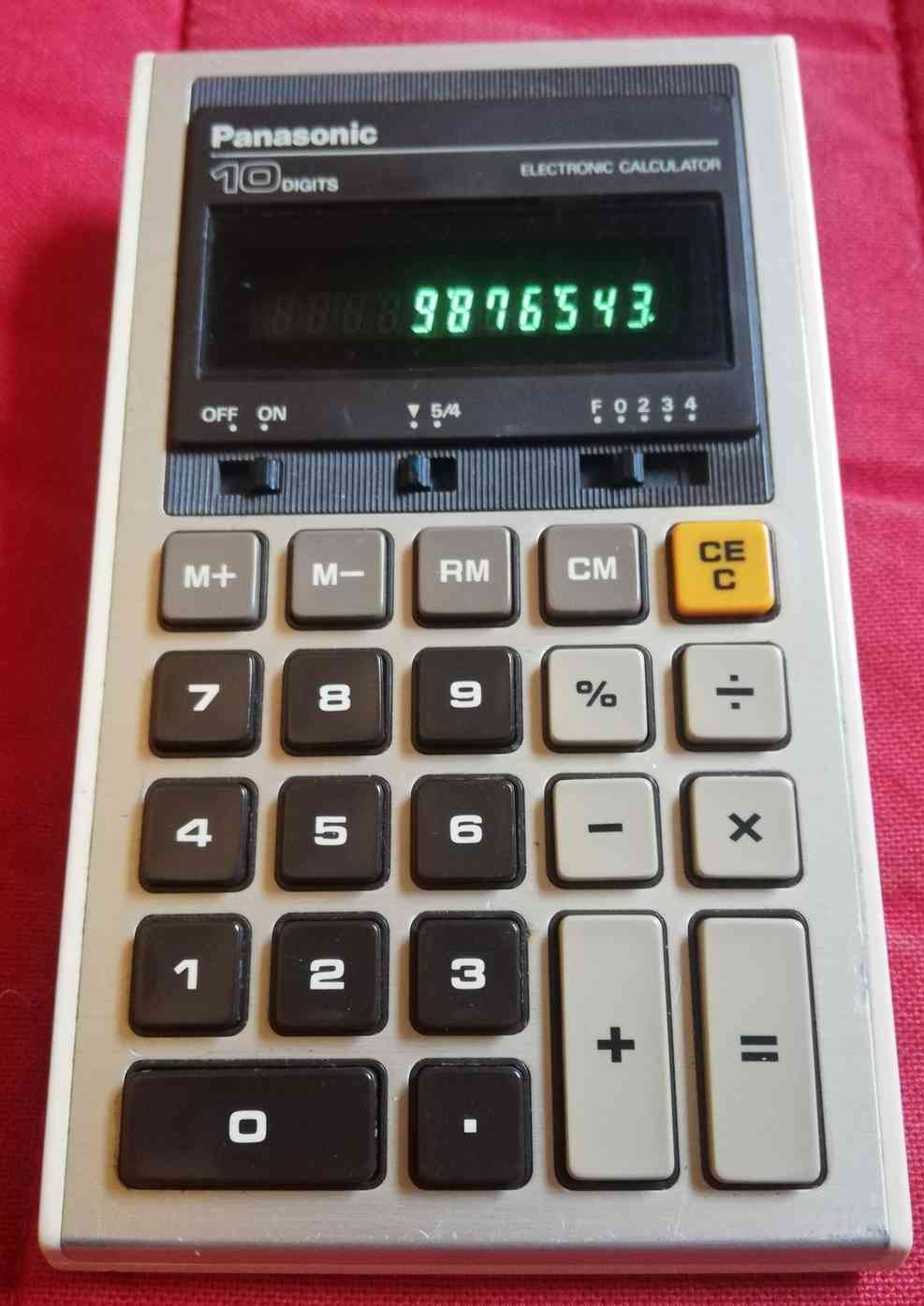 Model: JE-170U
Battery: 2 x AA
AC adapter: 3 volt adapter
Year: 1980
Chip: TMC1081NL
Info: made in Japan
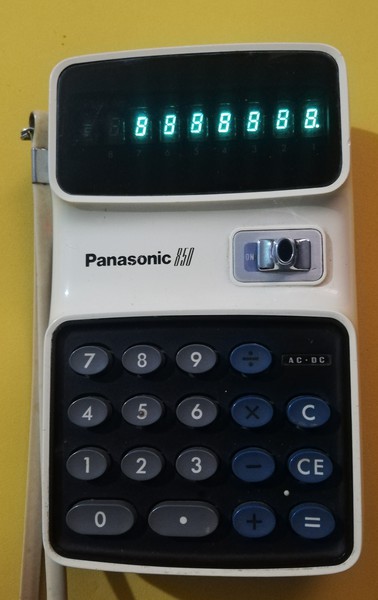
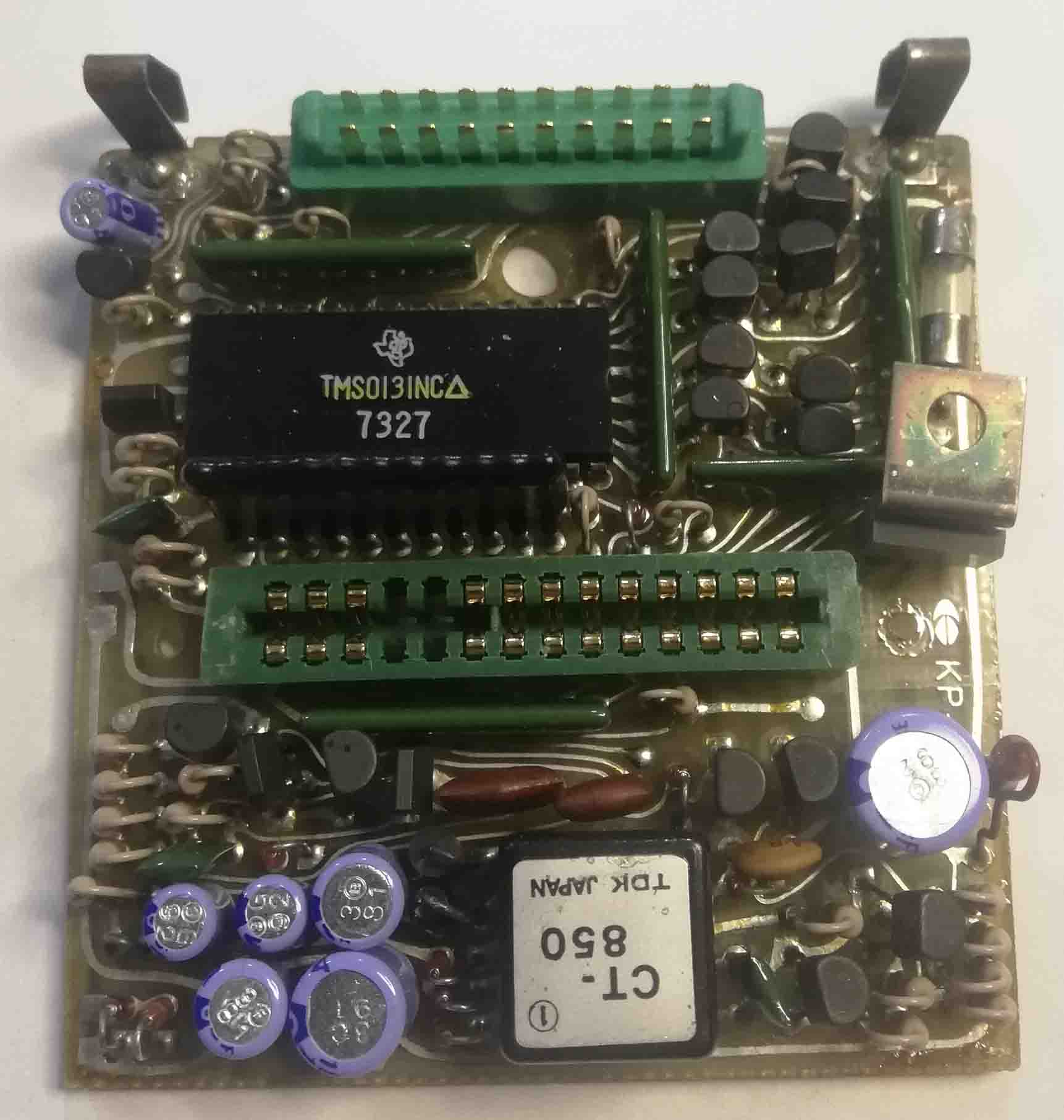
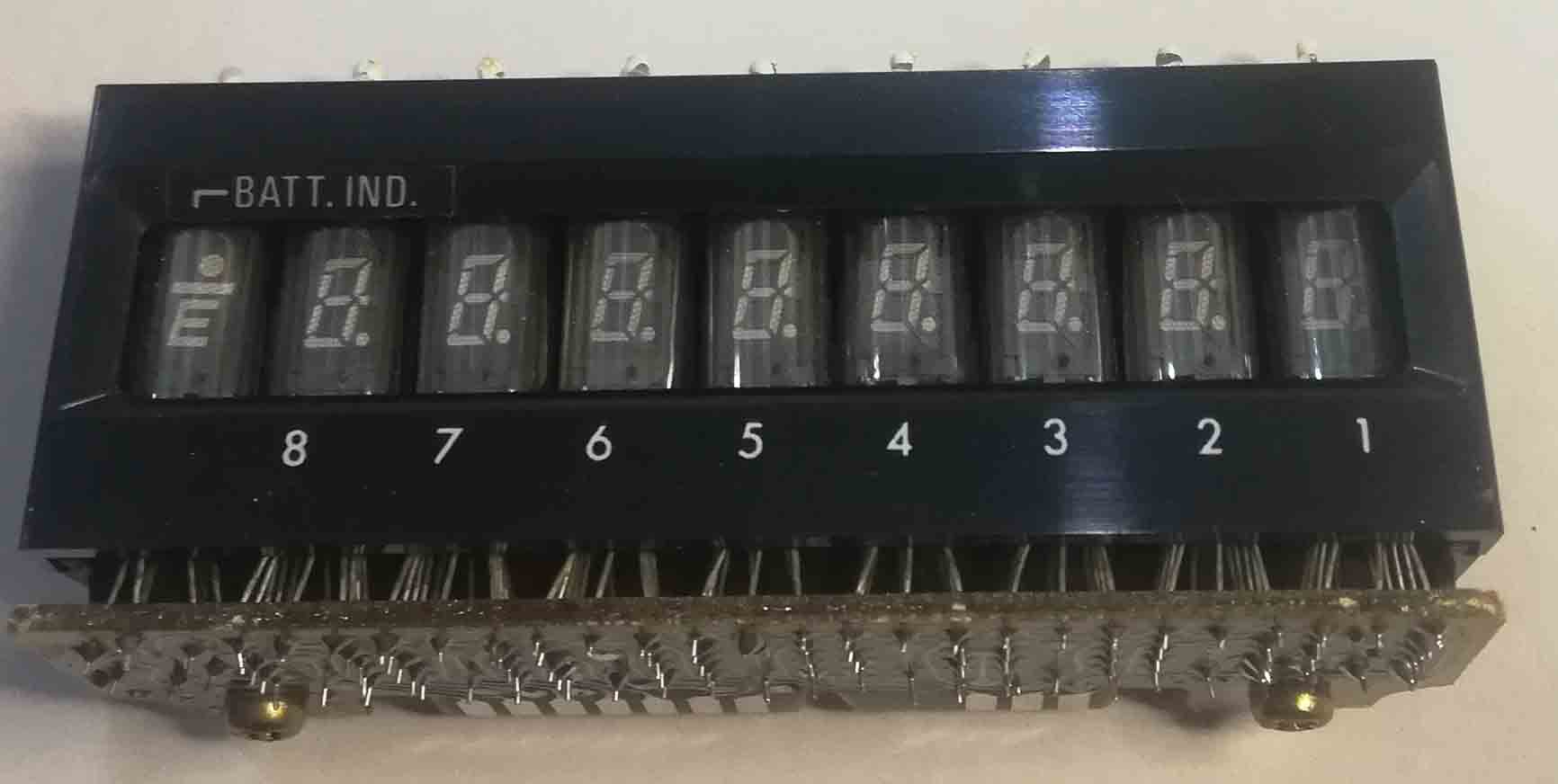
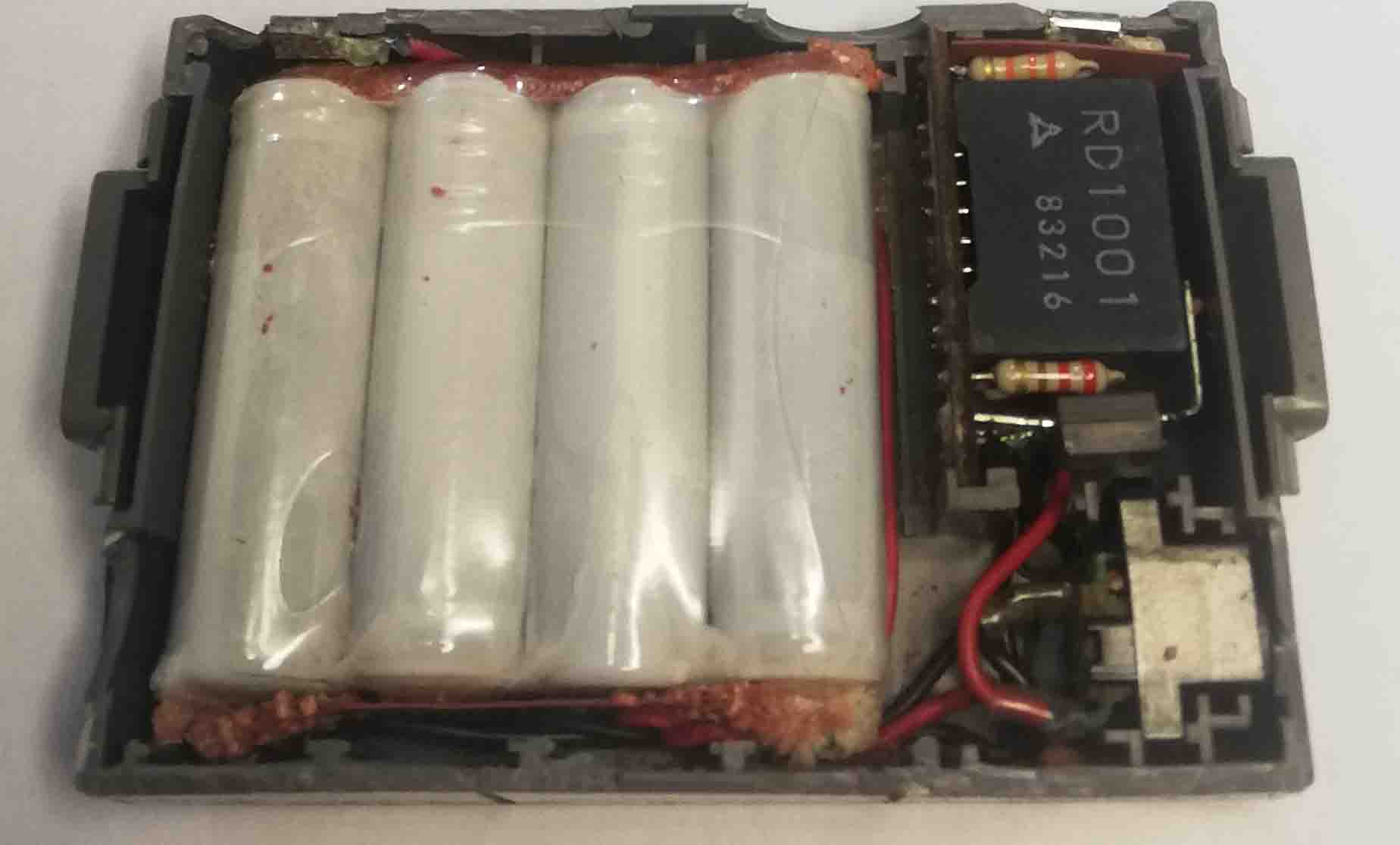
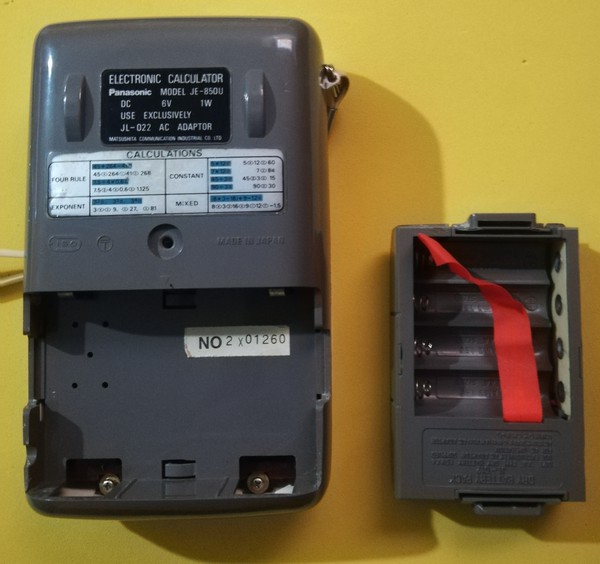 Model: JE-850
Battery: 4 x ni-cd AA
AC adapter: 6 VDC
Year: 1973
Chip: TMC0115NC
Info:The peculiarity of this model was the use of classic AA batteries. Made in Japan
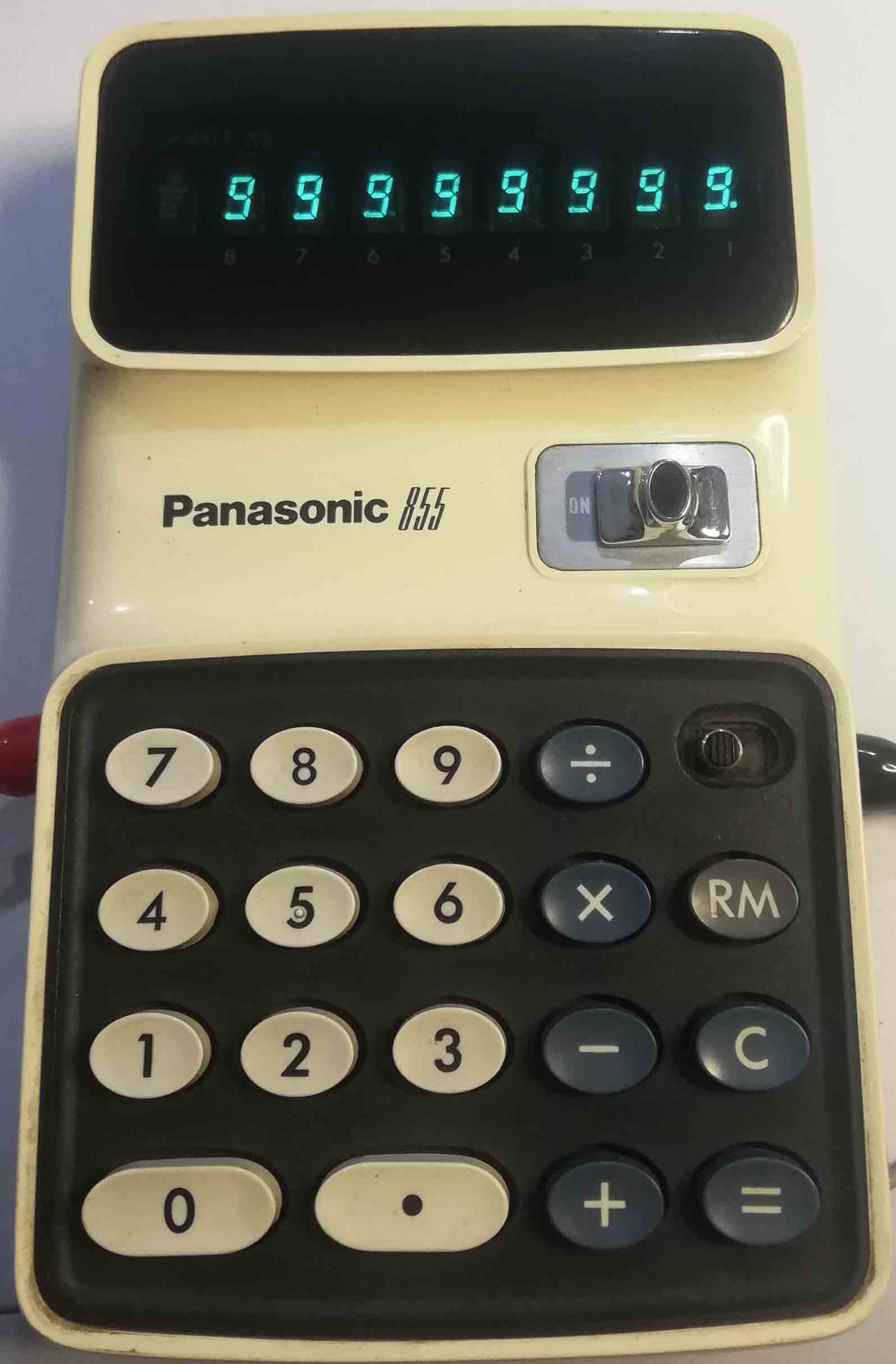 Model: JE-855
Battery: 4 x ni-cd AA
AC adapter: 6 VDC
Year: 1973
Chip: TMC0131NC
Info: made in Japan
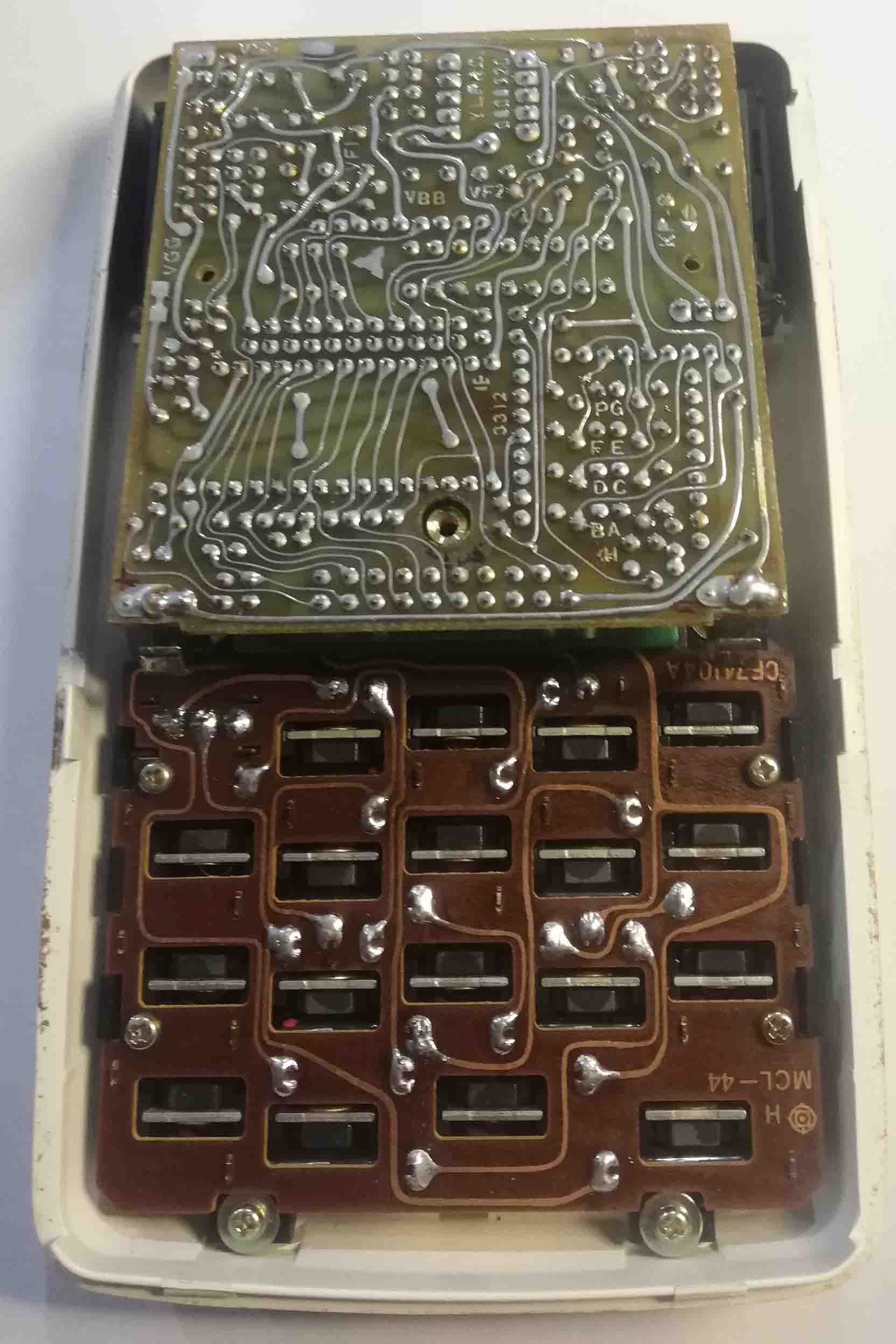
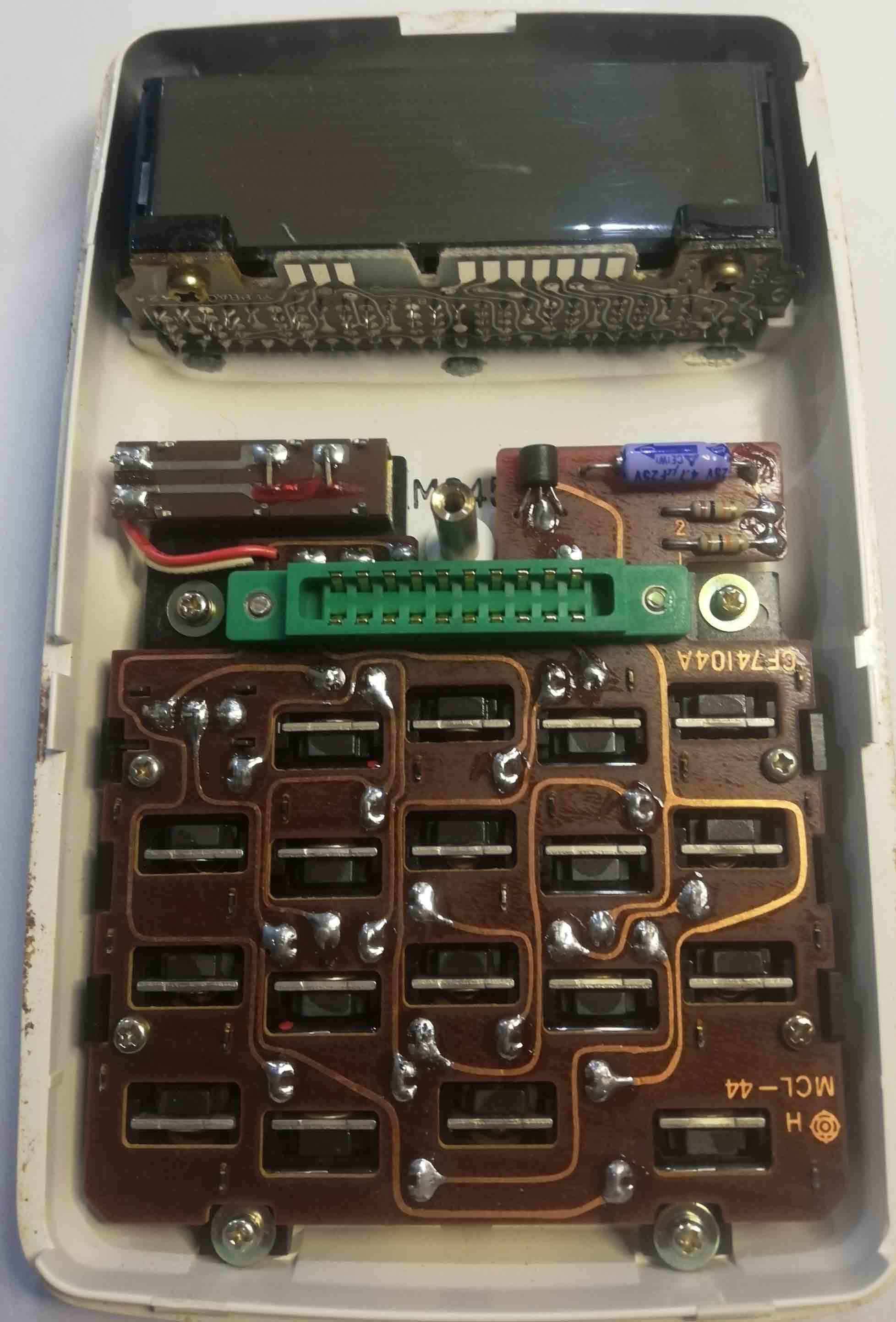
 Model: JE-860
Battery: 4 x ni-cd AA
AC adapter: 6 VDC
Year: 1973
Chip: TMC0130NC Display: VFD
Info:A special feature of this model is that it has the pi available on the keyboard compared to the previous model JE-855. made in Japan



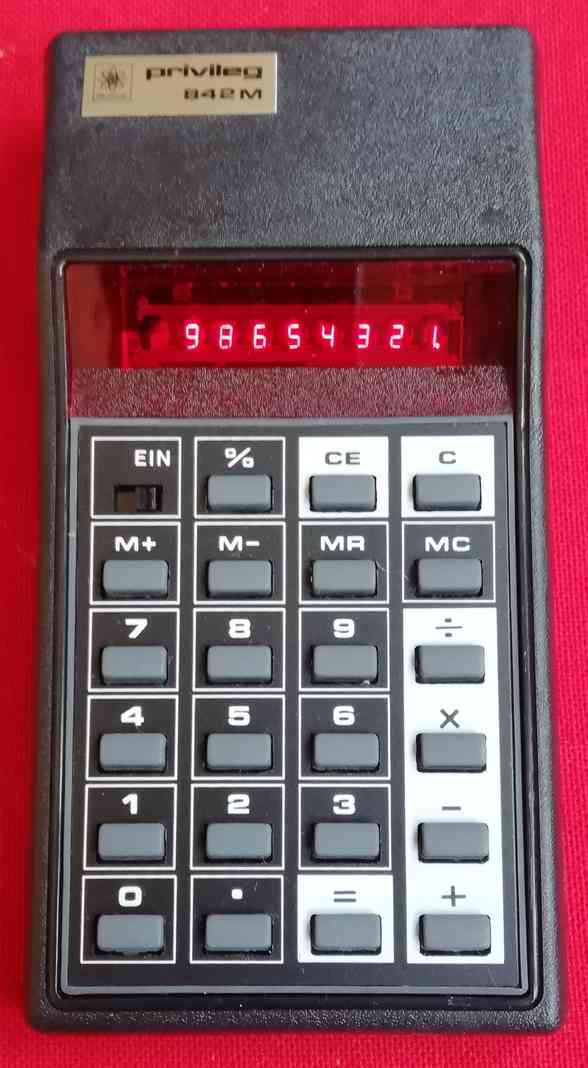
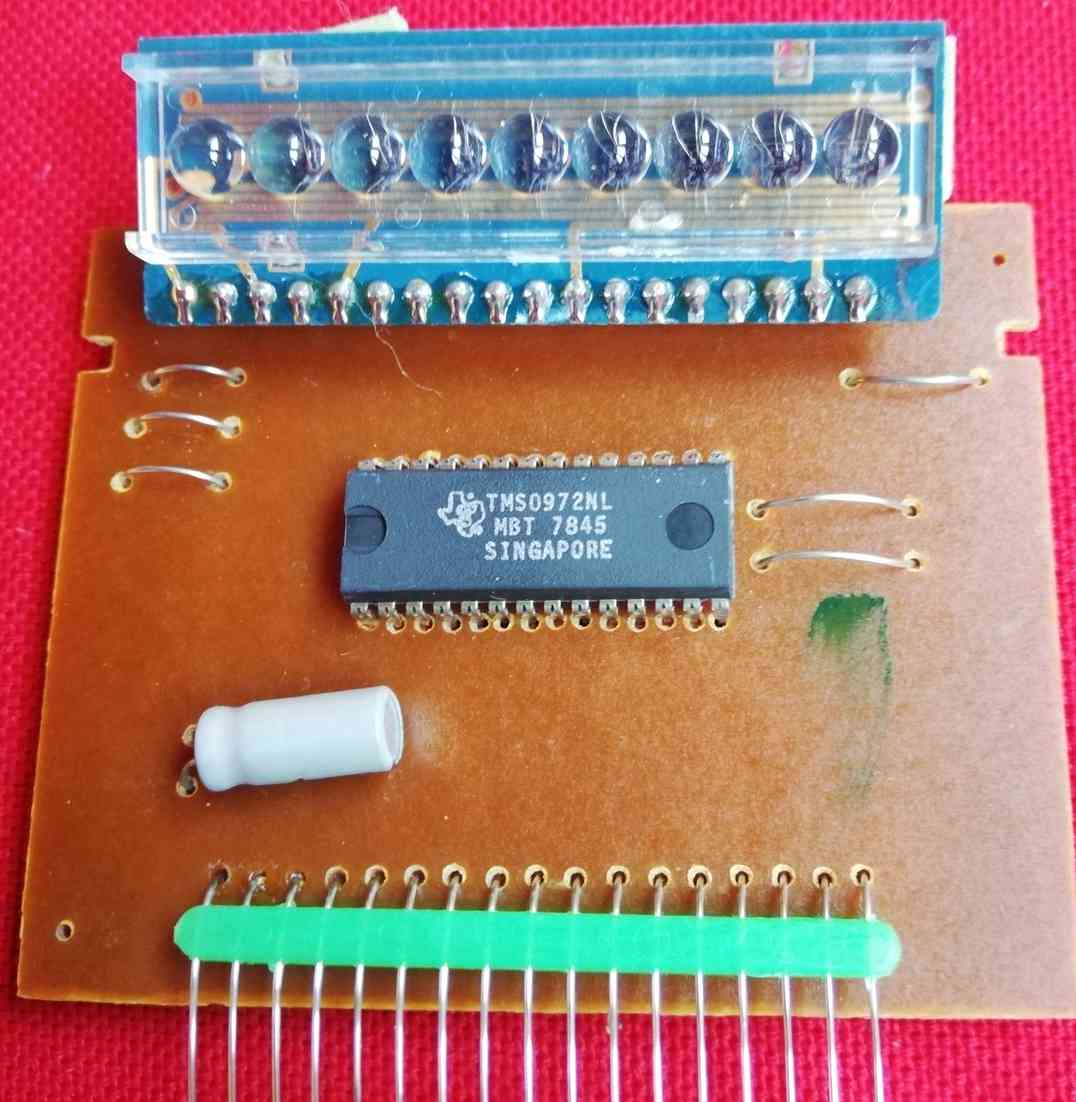
Model: 842M
Battery: 9 volt
Adapter:
Year: 1978
Chip: TMS0972
Info: Is a nearly perfect copy of the TI-1250
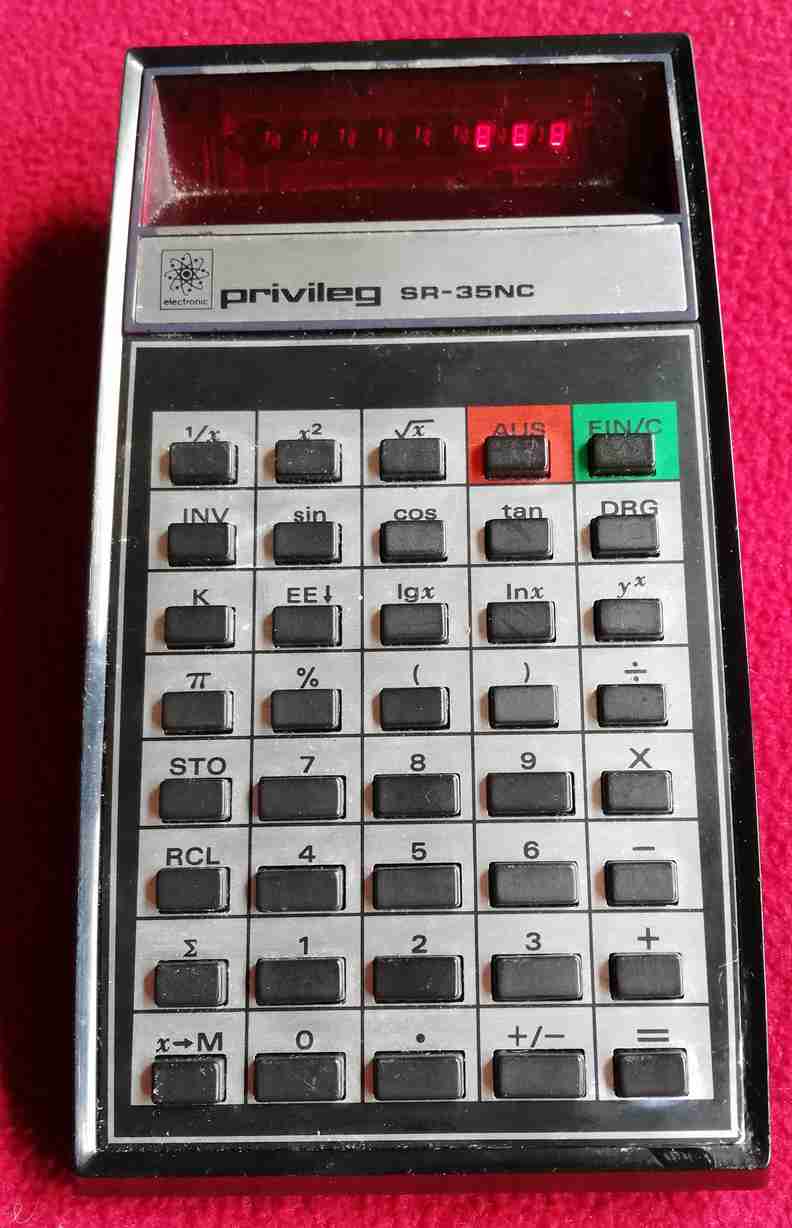 Model: SR-35NC
Battery:
Adapter:
Year: 1978
Chip: TMC0981
Info: Interesting calculator, this German edition of a TI-30. The Privileg SR-35NC is indeed nothing else than a Texas Instruments TI-30 with a restyled and translated key plate, and a sticker instead the molded TI-logo and TEXAS INSTRUMENTS nameplate.
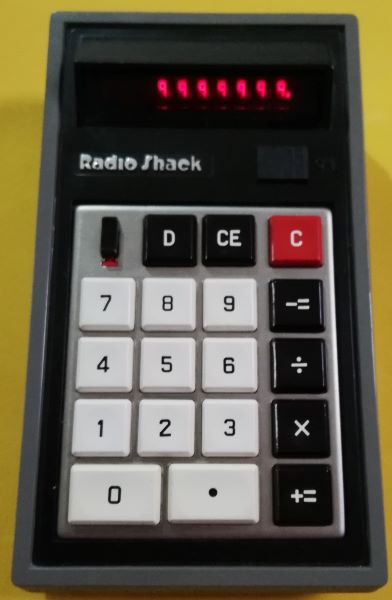 Model: EC-200
Battery: 4 x 1,5 AA / 4 x 1,2 Ni-Cd
Adapter:
Year: 1973
Chip: TMS0109 or TMS0103, 2*SN75491, 2*SN75492
Info:
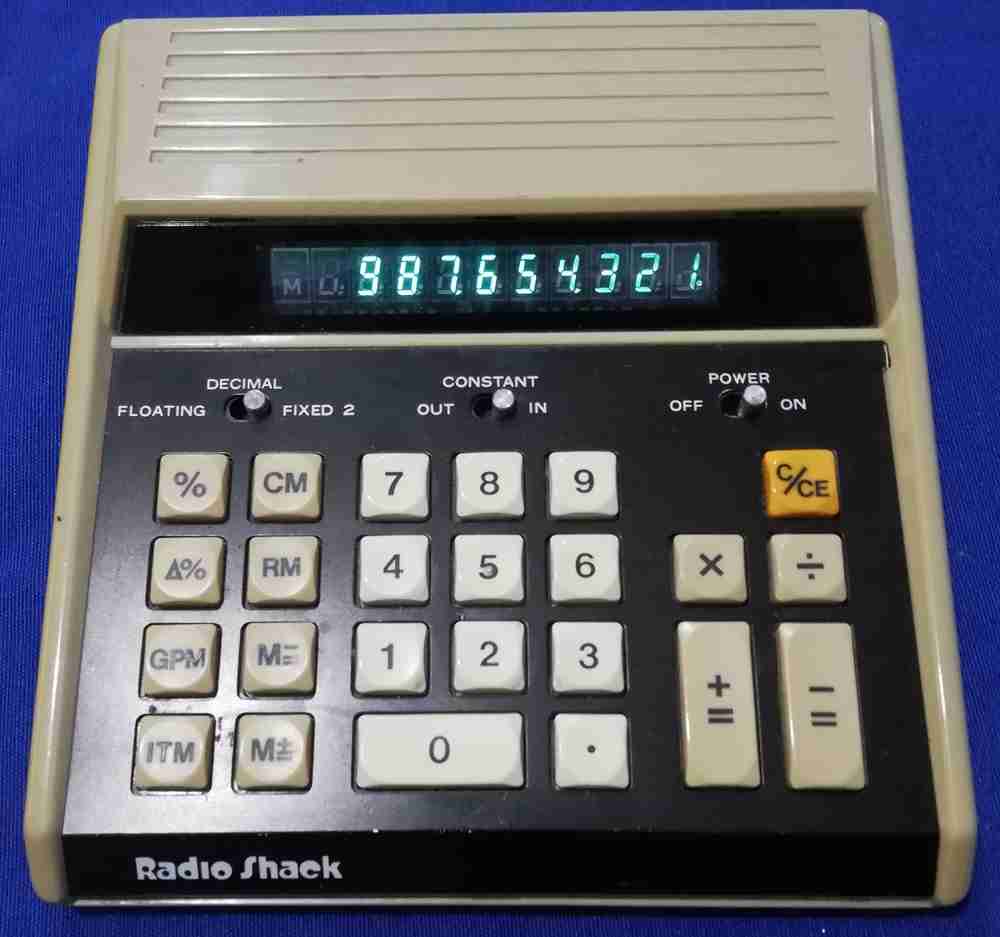 Model: EC-2001 desktop
Battery: 2 x D cells
Adapter: 6 volt adapter
Year: 1978
Chip: TMC1073NL
Info: Radio Shack
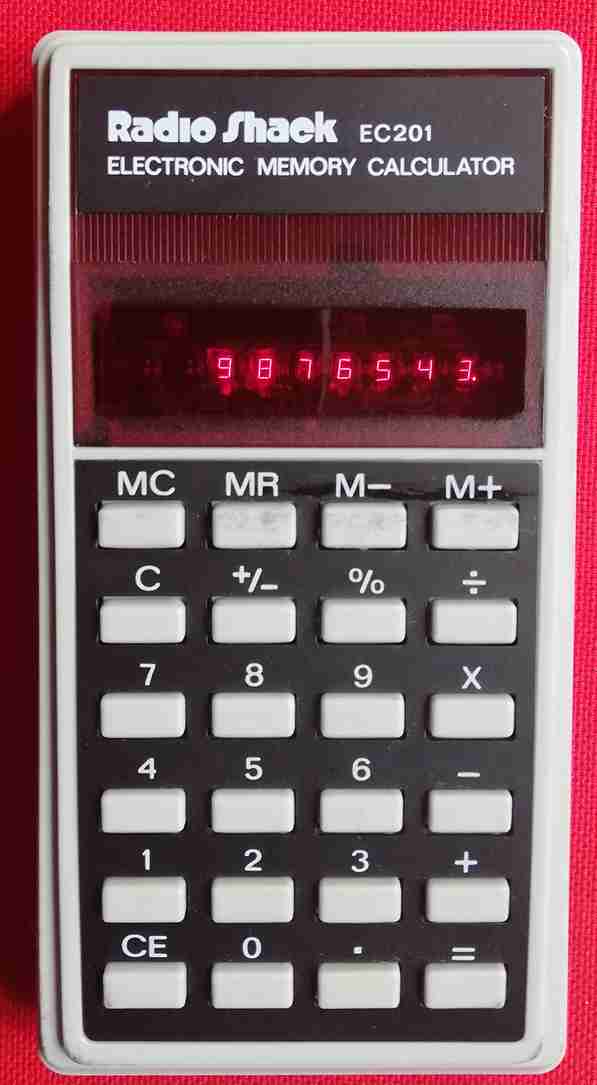 Model: EC-201
Battery: 9 volt
Adapter:
Year: 1979
Chip: TMS0972
Info:
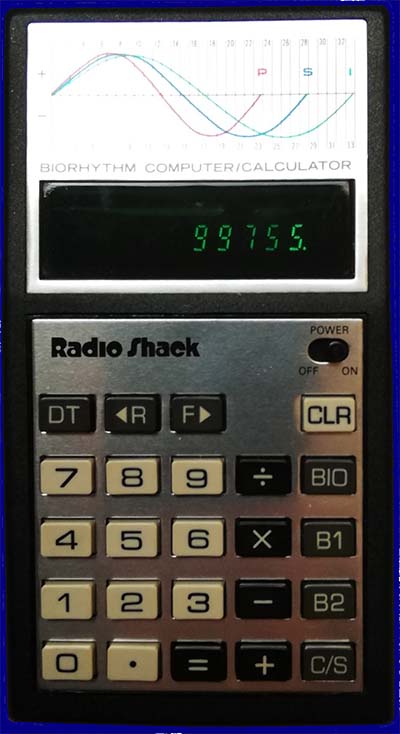 Model: EC-314 Kosmos 2
Battery: 2 x AA
Adapter:
Year: 1979
Chip: TMC1172NL
Info: Same version of the kosmos 2, but with the radio brand shack, Kosmos International, Inc. based in Atlanta, Georgia introduced with the Kosmos 1 already in the year 1977 a pocket-sized biorhythm calculator.On a first glance you notice the original calculator keypad and the three „sine-waves“ representing our:
| • Physical Cycle (P) • Emotional Cycle (S) • Intellectual Cycle (I) |
This Kosmos 2 was introduced in 1979 as the successor of the original design and obviously was the result of some cost reduction programs:
| • The 6 red and amber LED's at the end of the three "sine-waves" were omitted • The housing feels much cheaper • Manufacturing was moved from Japan to Taiwan |
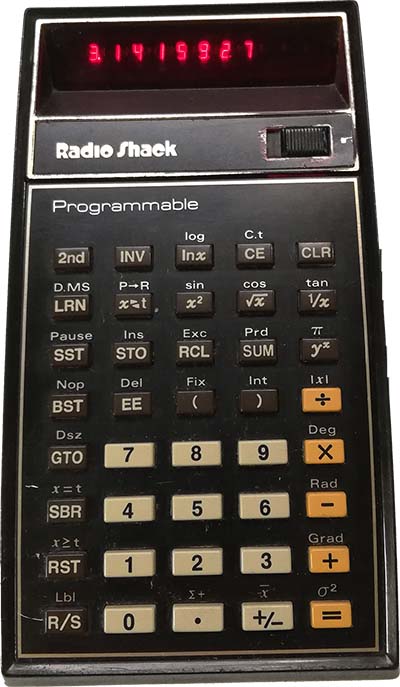 Model: EC-4000
Battery: BP6 , BP7
Adapter: AC9131, AC9132
Year: 1979
Chip: TMC1501
Info:The Radio Shack EC-4000 does not only look like an early TI-57 Programmable, it's 100% identical. Please notice that Texas Instruments used in Italy a simple sticker instead the molded TI-logo and TEXAS INSTRUMENTS nameplate found with the US-built TI-57 Programmable.
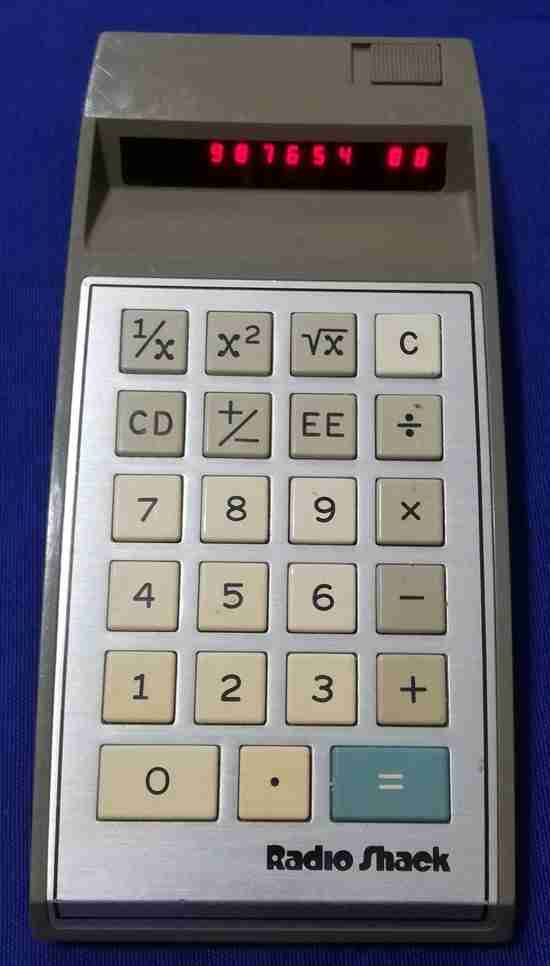 Model: EC-425
Battery: 3 x AA nicd
Adapter: AC9130
Year: 1974
Chip: TMS0120
Info: The EC-425 is easily identified as a close relative of the TI SR-10, as is the Montgomery Ward P300. Both calculators use the same electronics, the same layout of the keyboard and even an identical mold for the housing bottom. The different look is achieved through a new mold for the upper half of the housing, shared with the Ward P300, and a different color of the function keys.
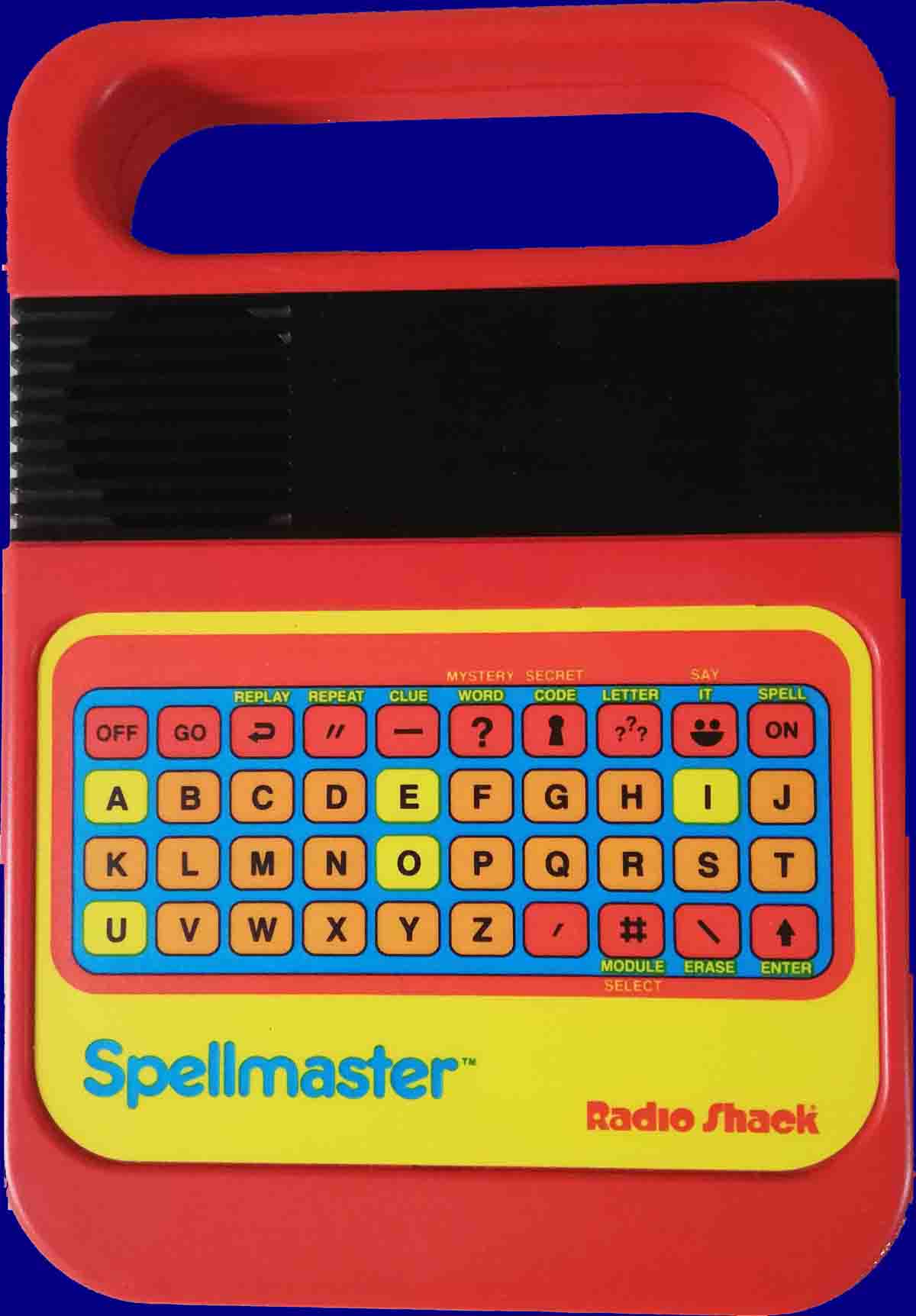 Model: Spell master Radio shack
Battery: 4 x 1,5 V type C
AC adapter:
Year: 1988
Chip:
Info: The Radio Shack Spellmaster) was manufactured in 1988 and represents the last design iteration of the Speak & Spell family. The printed circuit board (PCB) itself is much smaller than the original Speak & Spell design.
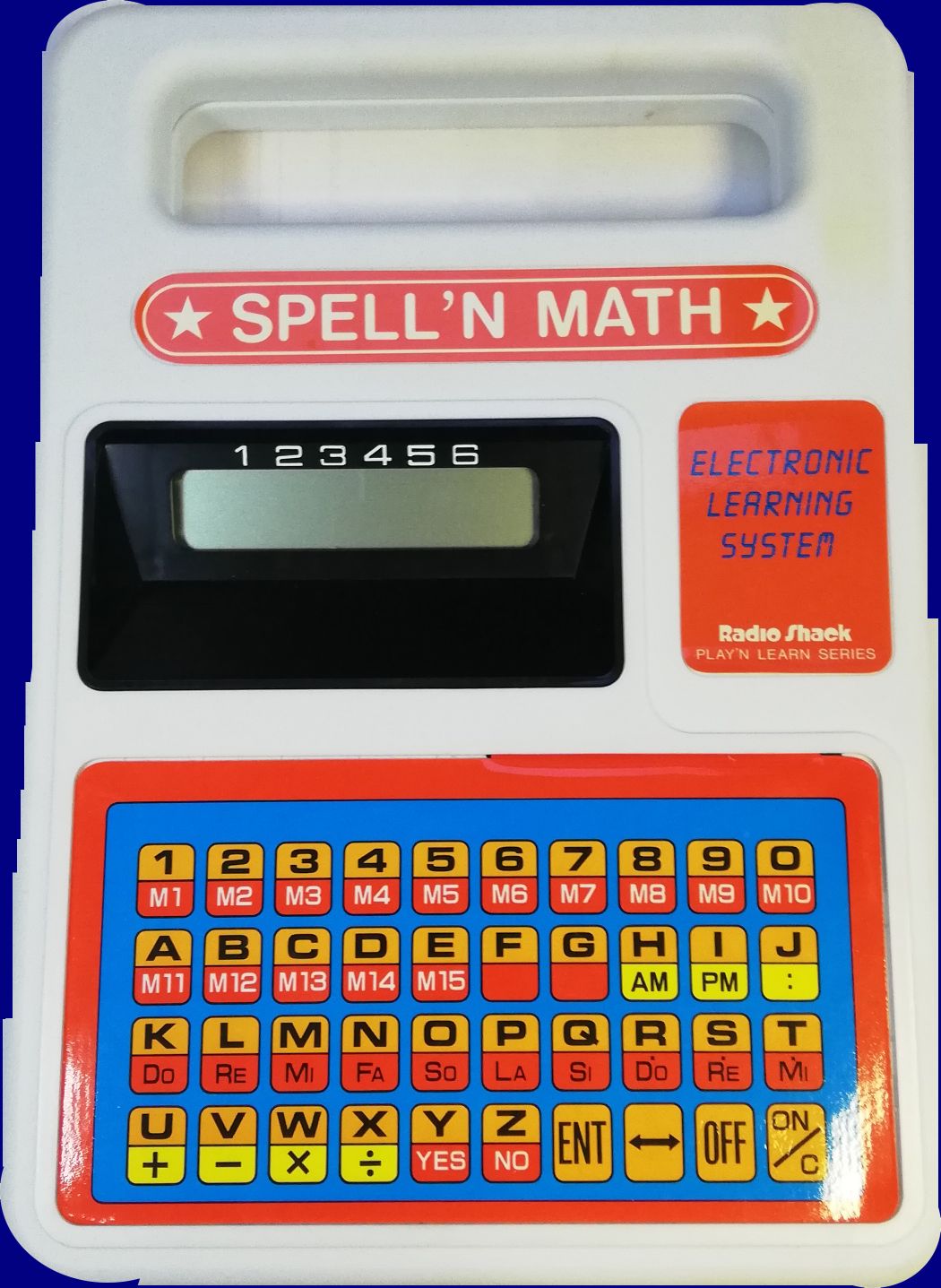 Model: Spell' N
Battery: 4 x 1,5 V type C
AC adapter:
Year: 1992
Chip:
Info:
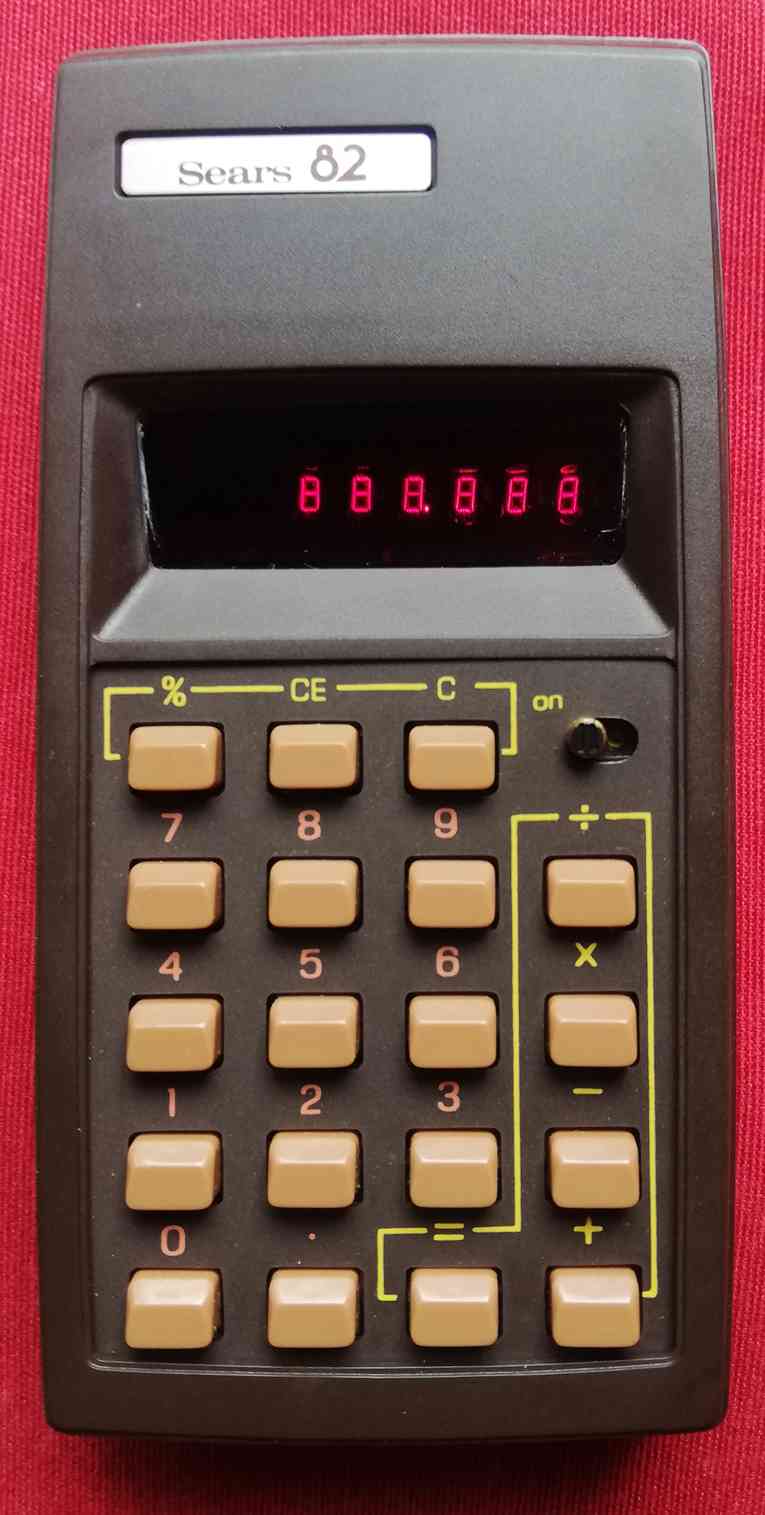 Model: sears 82
Battery: 9 volt
AC adapter: 3 volt adapter
Year: 1978
Chip: TMC0972NL
Info: made in Japan
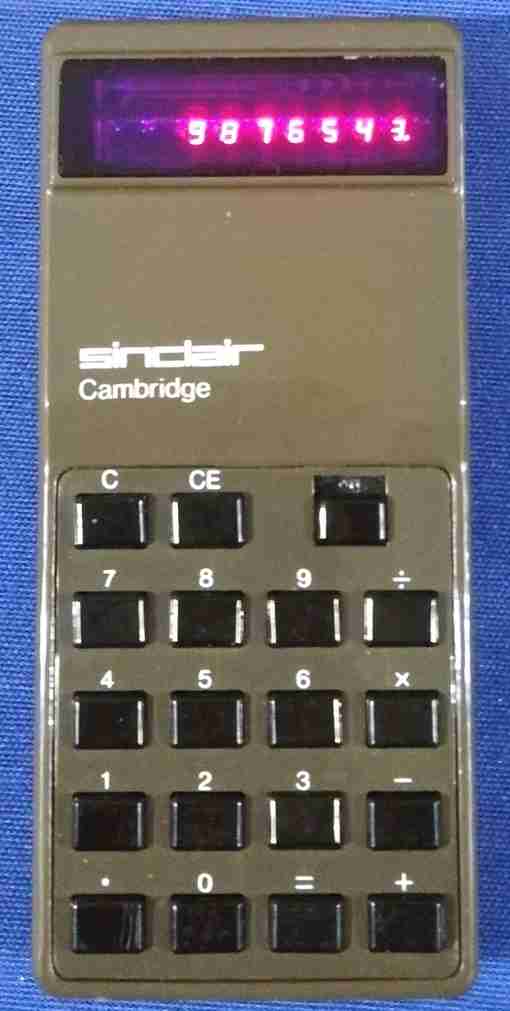
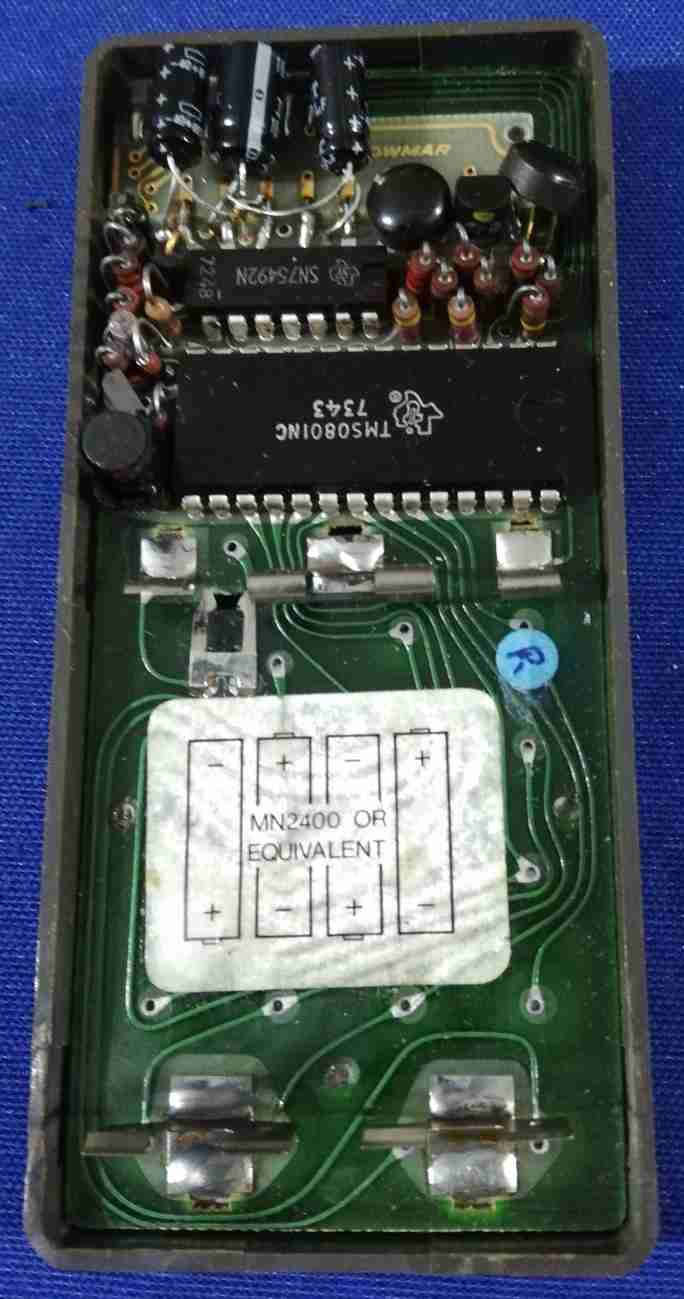 Model: Cambridge Type 2
Battery: 4 x AAA cells
AC adapter:
Year: 1973
Chip: TMS0801NC
Info: made in England
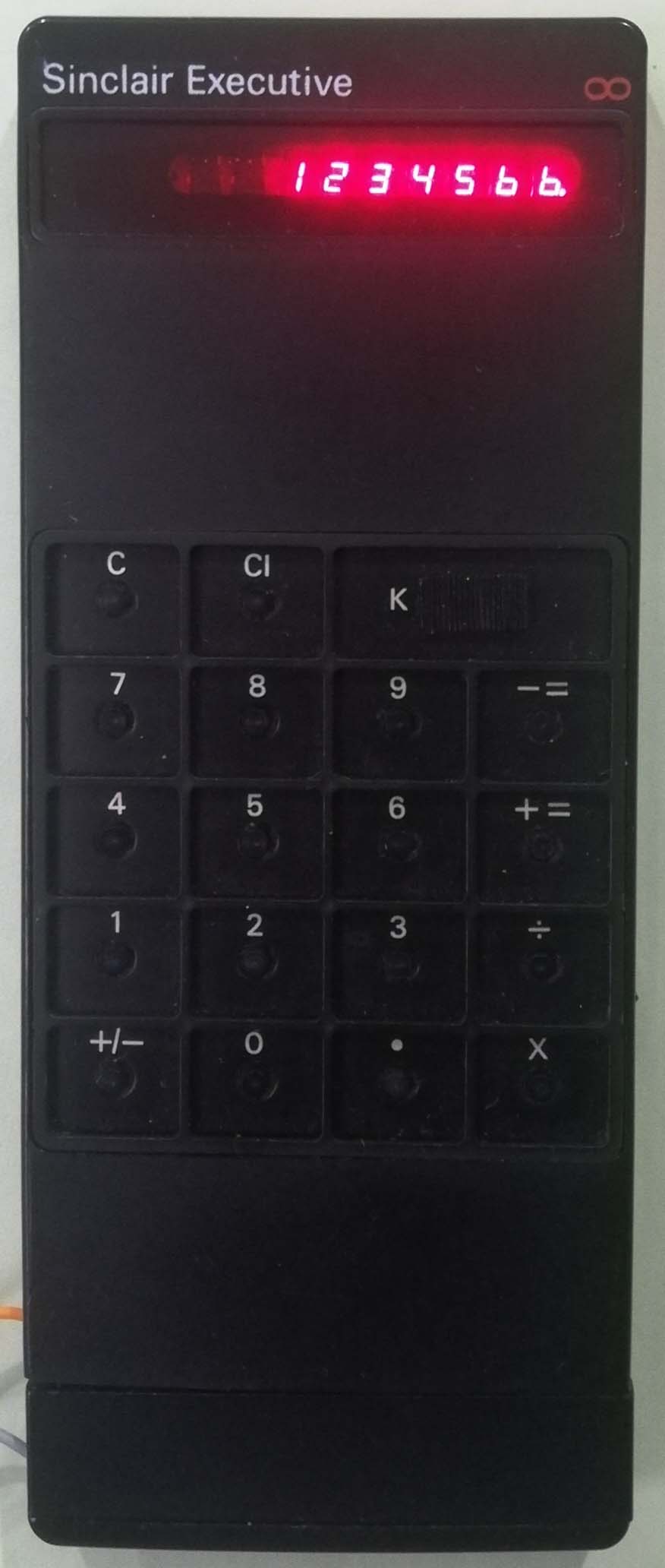
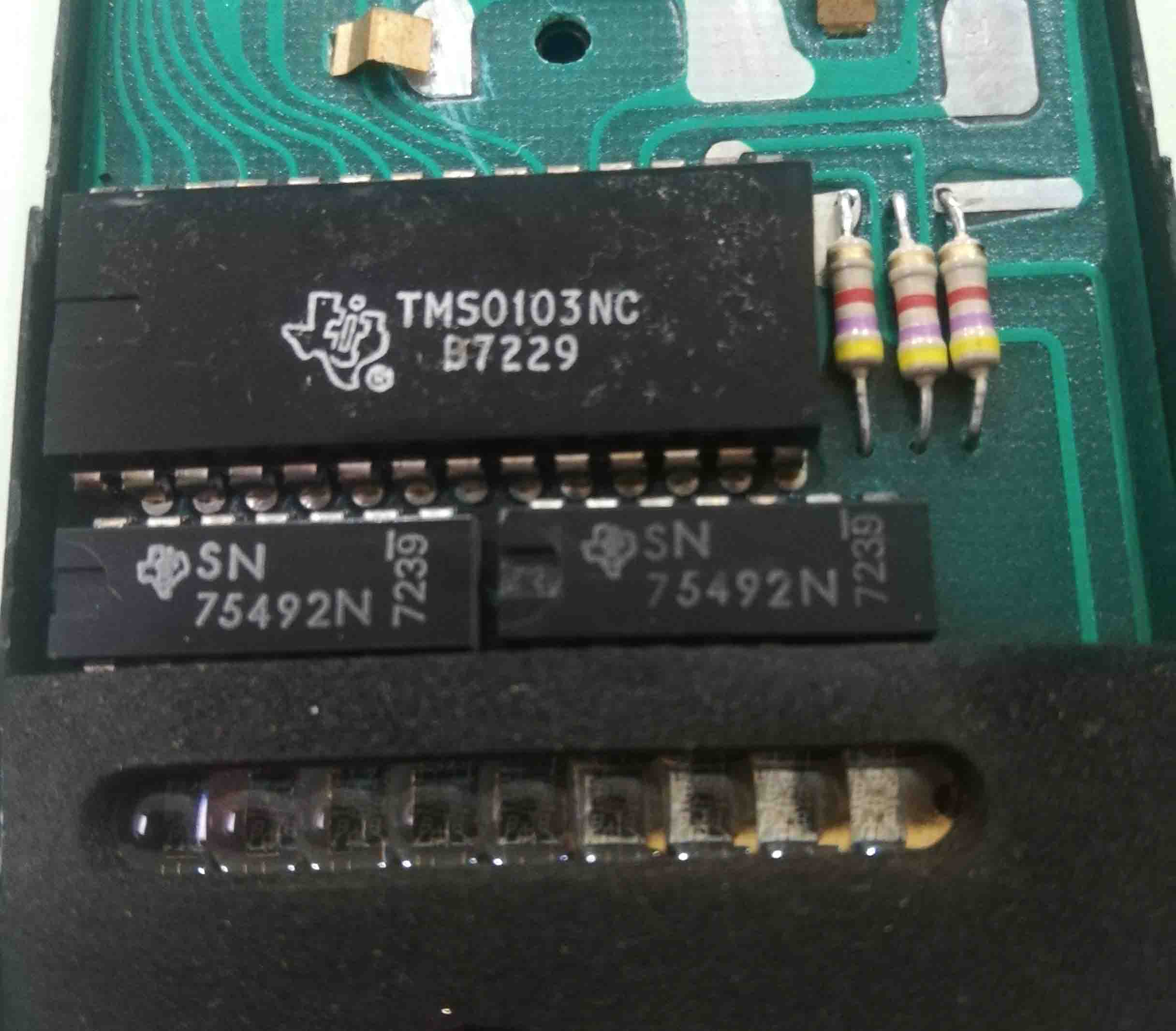 Model: Sinclaire Executive Type 1
Battery: 4 x AAA cells
AC adapter:
Year: 1972
Chip: TMS0103NC
Info:made in England
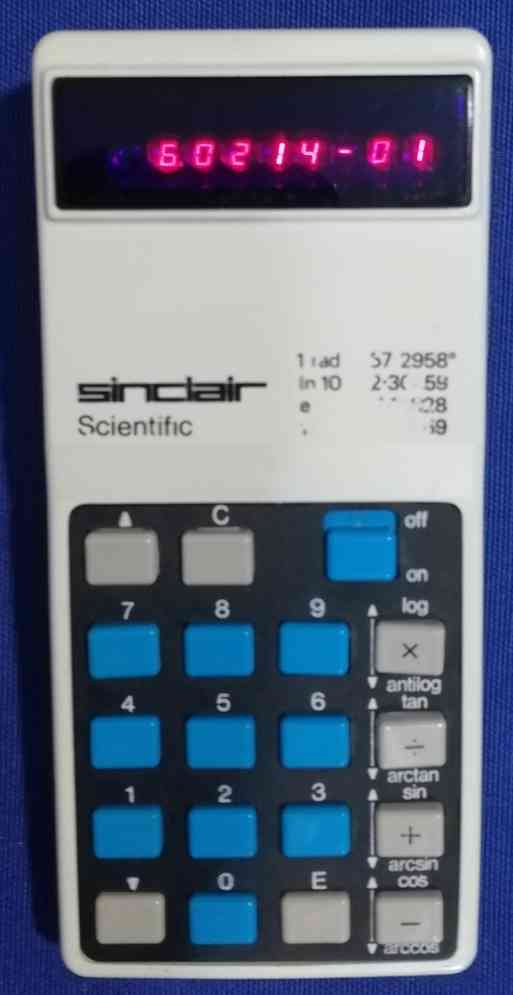
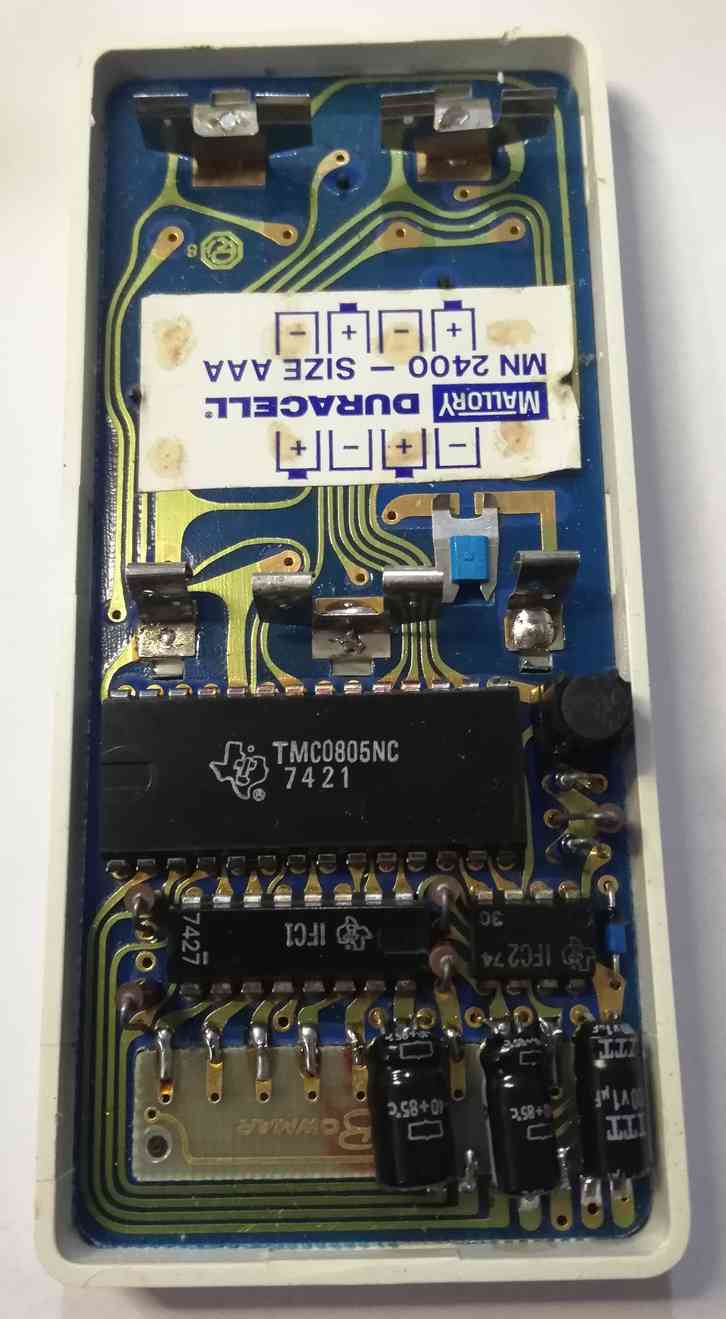 Model: Scientific
Battery: 4 x AAA cells
AC adapter:
Year: 1974
Chip: TMS0805NC
Info: made in England
How to use this unusual calculator
The Sinclair Scientific calculator uses reverse Polish notation (RPN) and scientific notation, so the key sequences are totally different from regular calculators. Numbers automatically have a decimal point inserted; use E to set the exponent. Operations are entered after the number and there is no equals key. Use the up and down arrows to select scientific functions. A display such as 1.2300 01 indicates 1.23*10^1, i.e. 12.3. A few examples:
To divide 17 by 3, enter 1 7 E 1 + 3 ÷
To take the sin of 0.01 radians, enter 0 0 1 ▲ +
To take antilog of .5 (to compute 10^.5), enter 5 E - 1 ▼ ×
Reverse Engineering from Ken Shirriff's blog
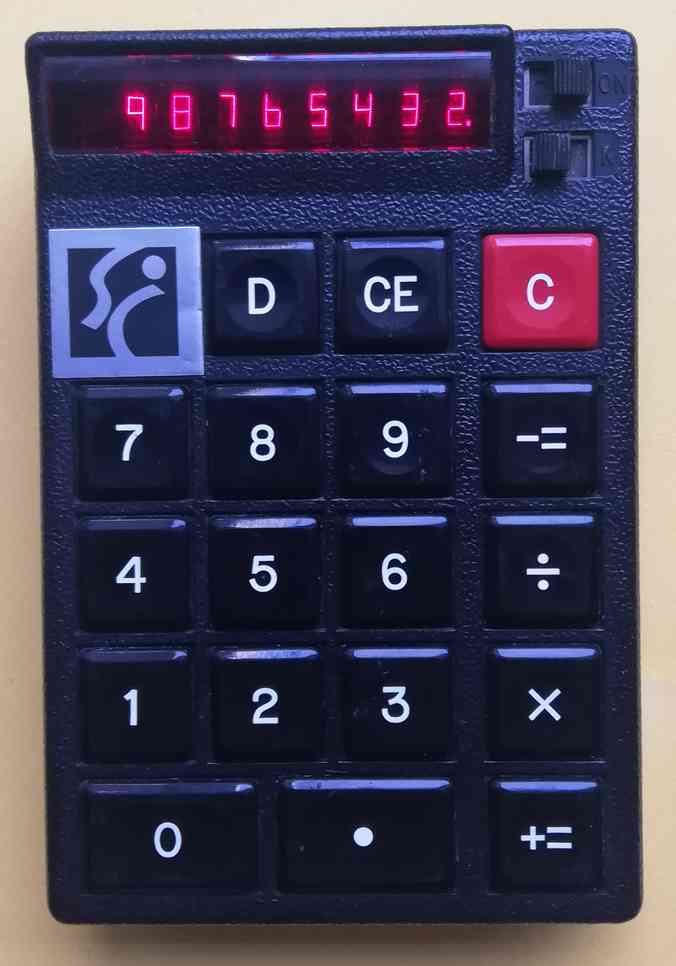 Model: Summit K16
Battery: 9 volt
Adapter: 9 volt
Year: 1972
Chip: TMS0103NC
Info: Made in U.S.A
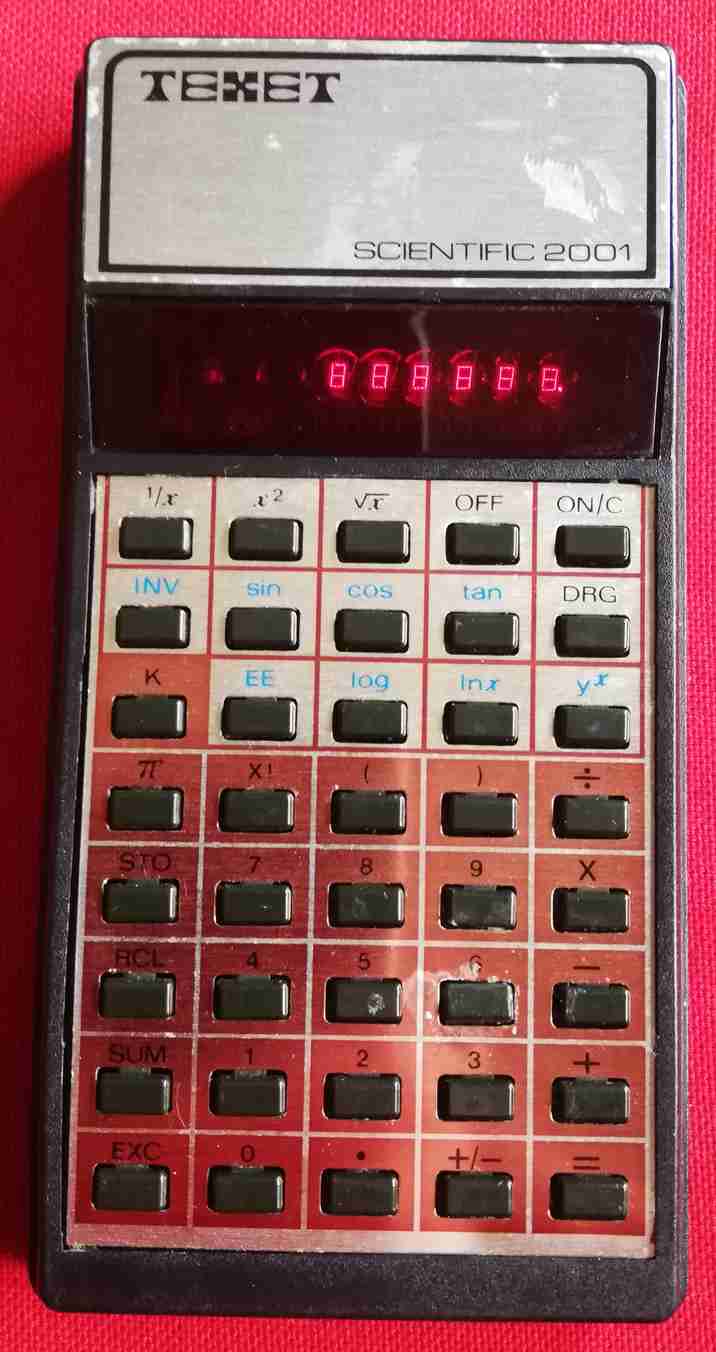 Model: TEXET 2001 scientific
Battery: 9 volt
Adapter:
Year: 1976
Chip: TMS0985
Info:
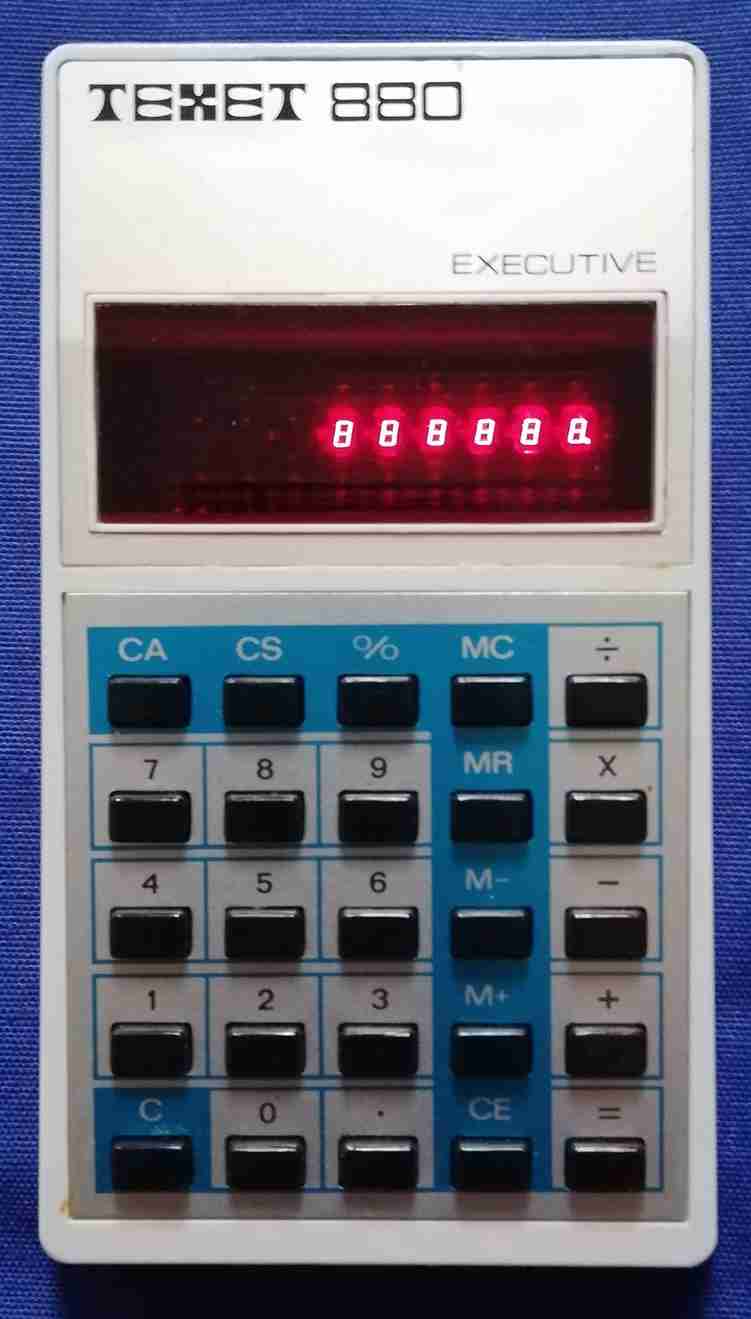 Model: TEXET 880
Battery: 9 volt
Adapter:
Year:
Chip: TMS0972
Info: This is a nearly perfect copy of the TI-1250. Made in Homg Kong
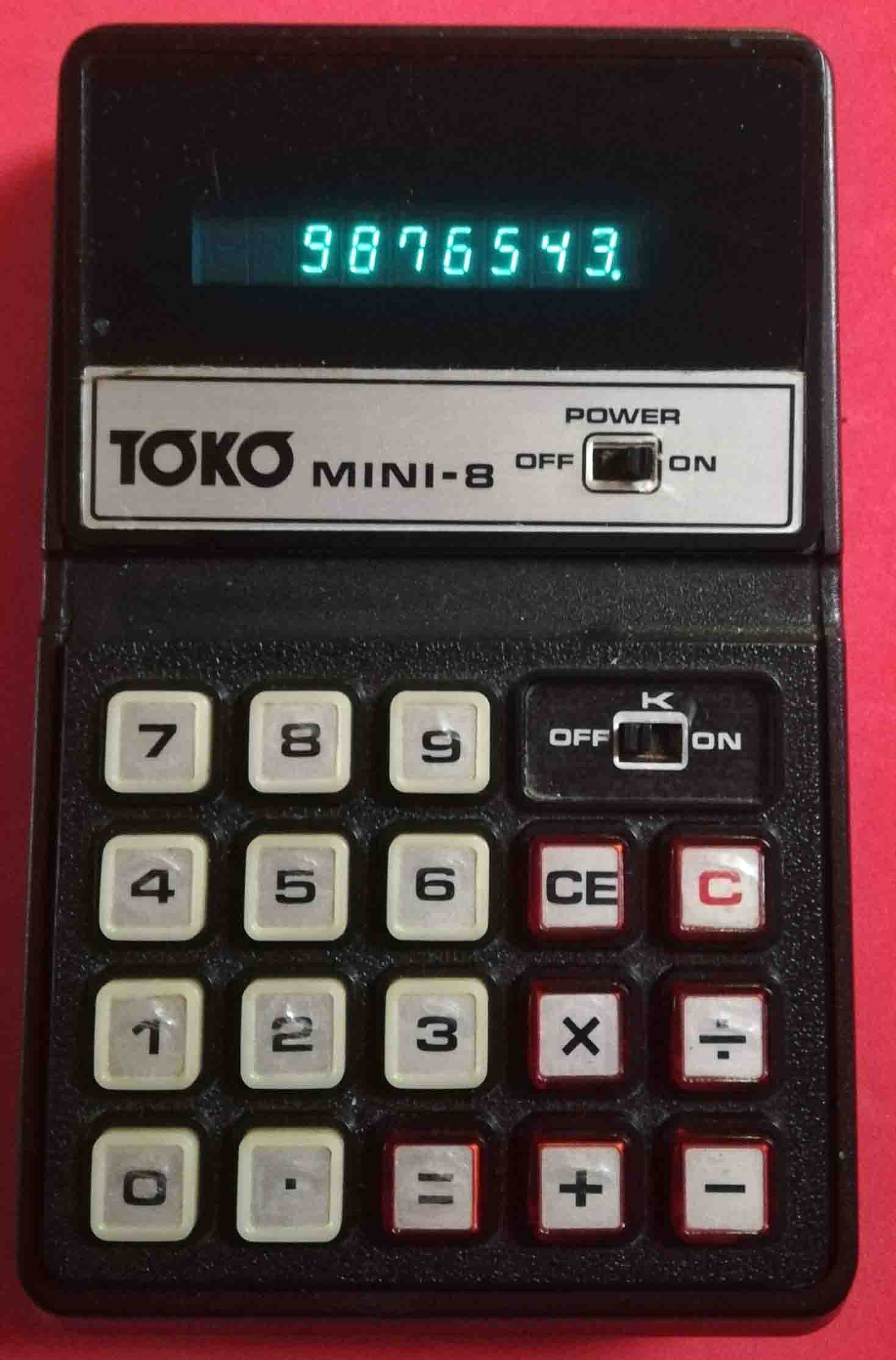 Model: TOKO mini 8
Battery: 4 x AA
Adapter: 6 vdc
Year:
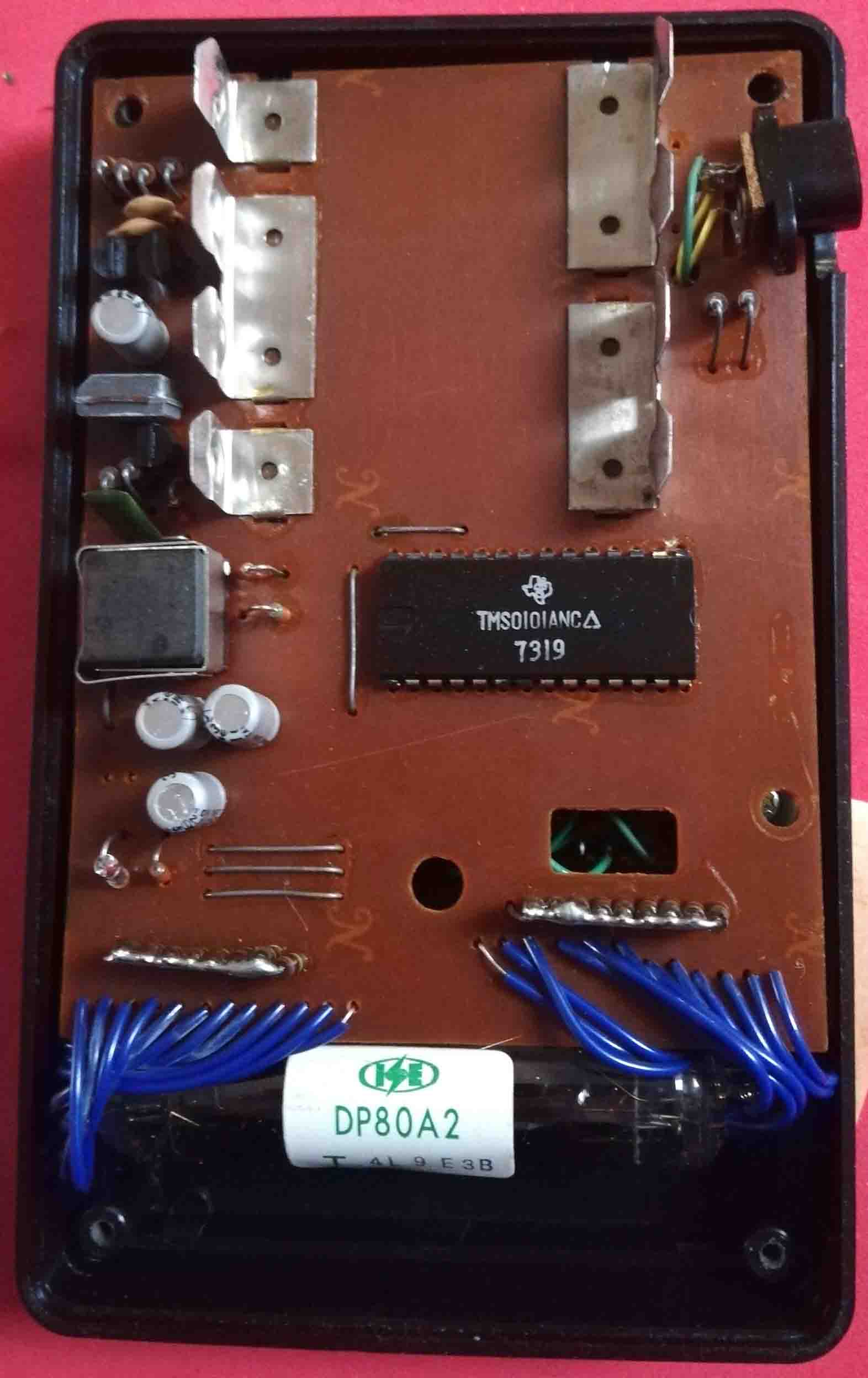
Chip: TMS0101NC
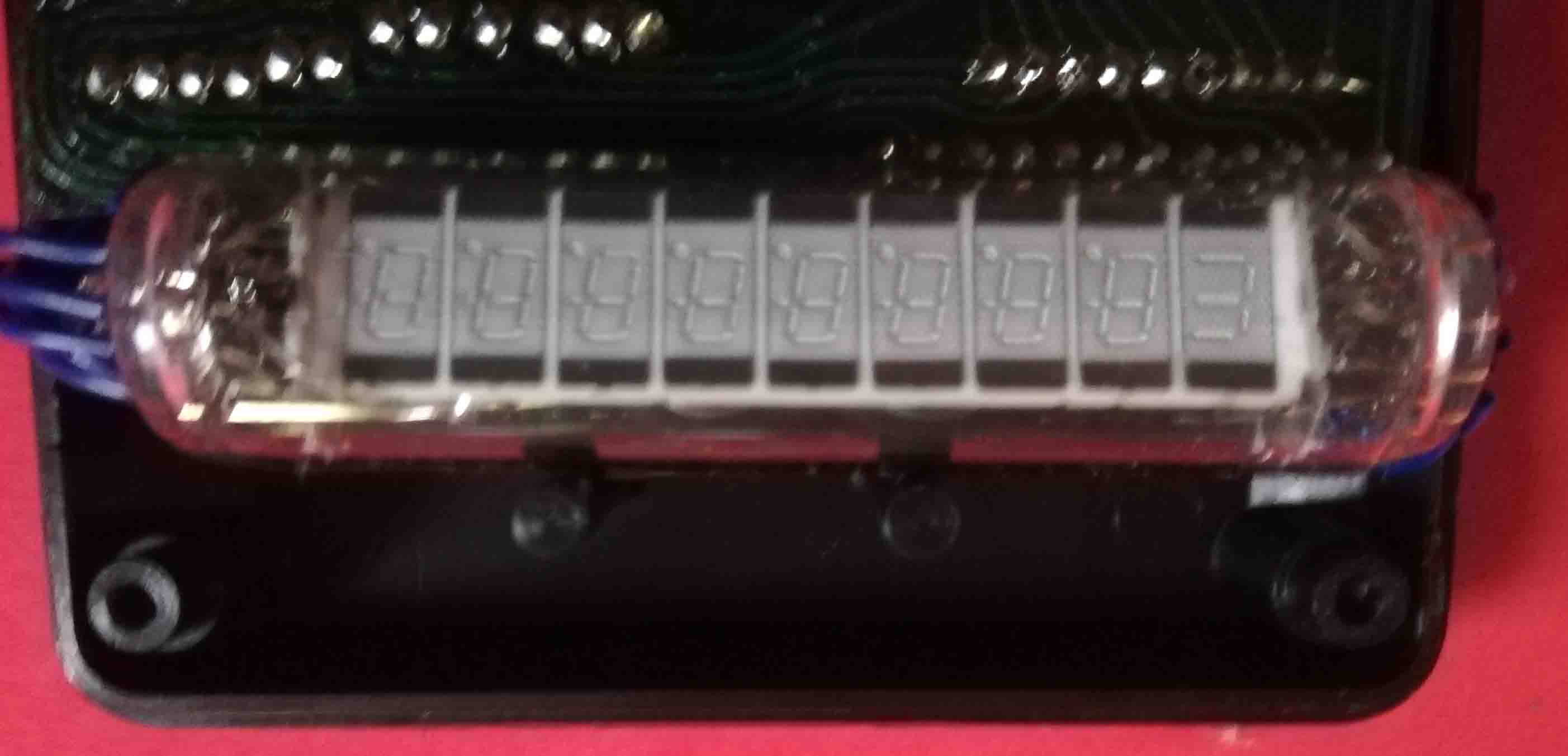
Info:Made in Japan. According to the Toko, Inc., website, Toko was established in Tokyo in 1955 as a manufacturer of components for portable radios with the name TOKO Radio Coil Laboratories. The firm continues to manufacture electronic components.This relatively large handheld electronic calculator has a plastic case and eighteen square keys with rounded corners. These include ten digit keys, a decimal point key, a total key, four arithmetic function keys, a clear entry key, and a clear key. A switch on the right of the top row of keys can be set to having the constant (K) on or off. Behind this is an on/off switch. Test left of it reads: TOKO MINI-8. Behind this is an eight-digit green vacuum fluorescent display. A jack for a power adapter is on the right side.
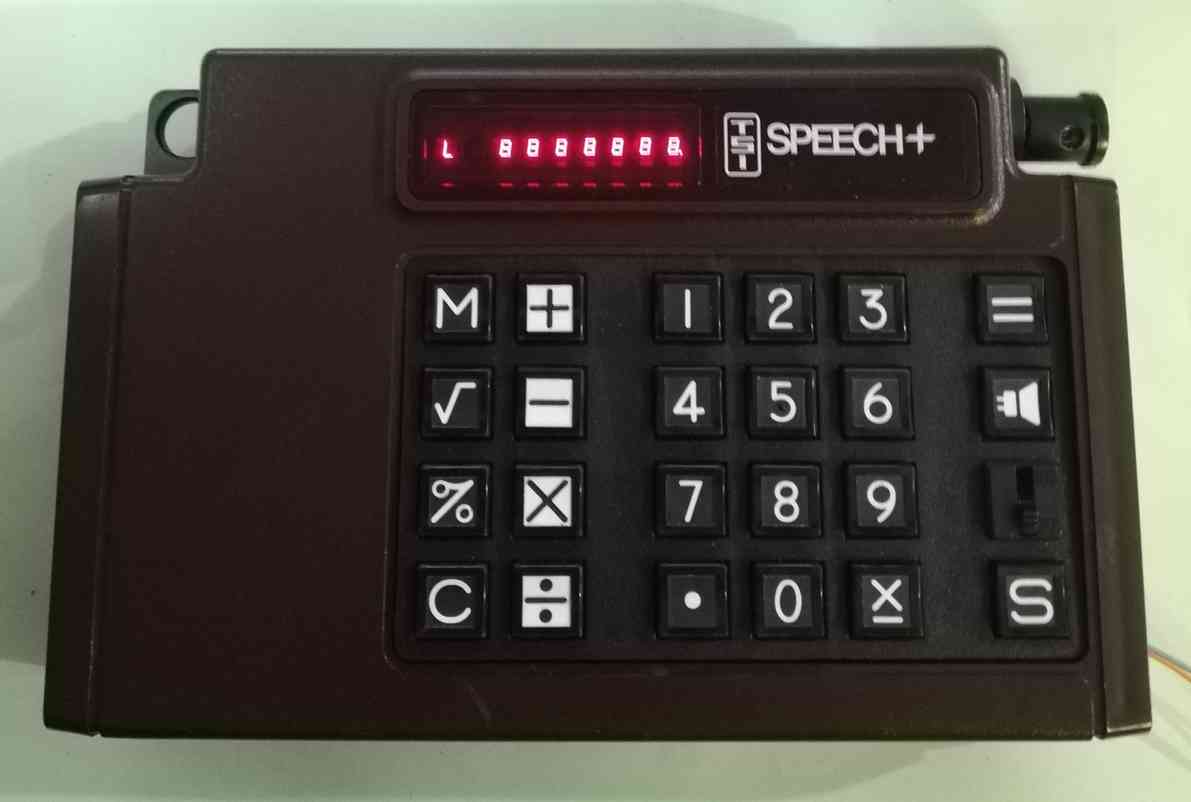 Model: TSI speech+
Battery: 4 x ni-cd
Adapter: 9 vac
Year: 1976
Chip: TMC1007NL
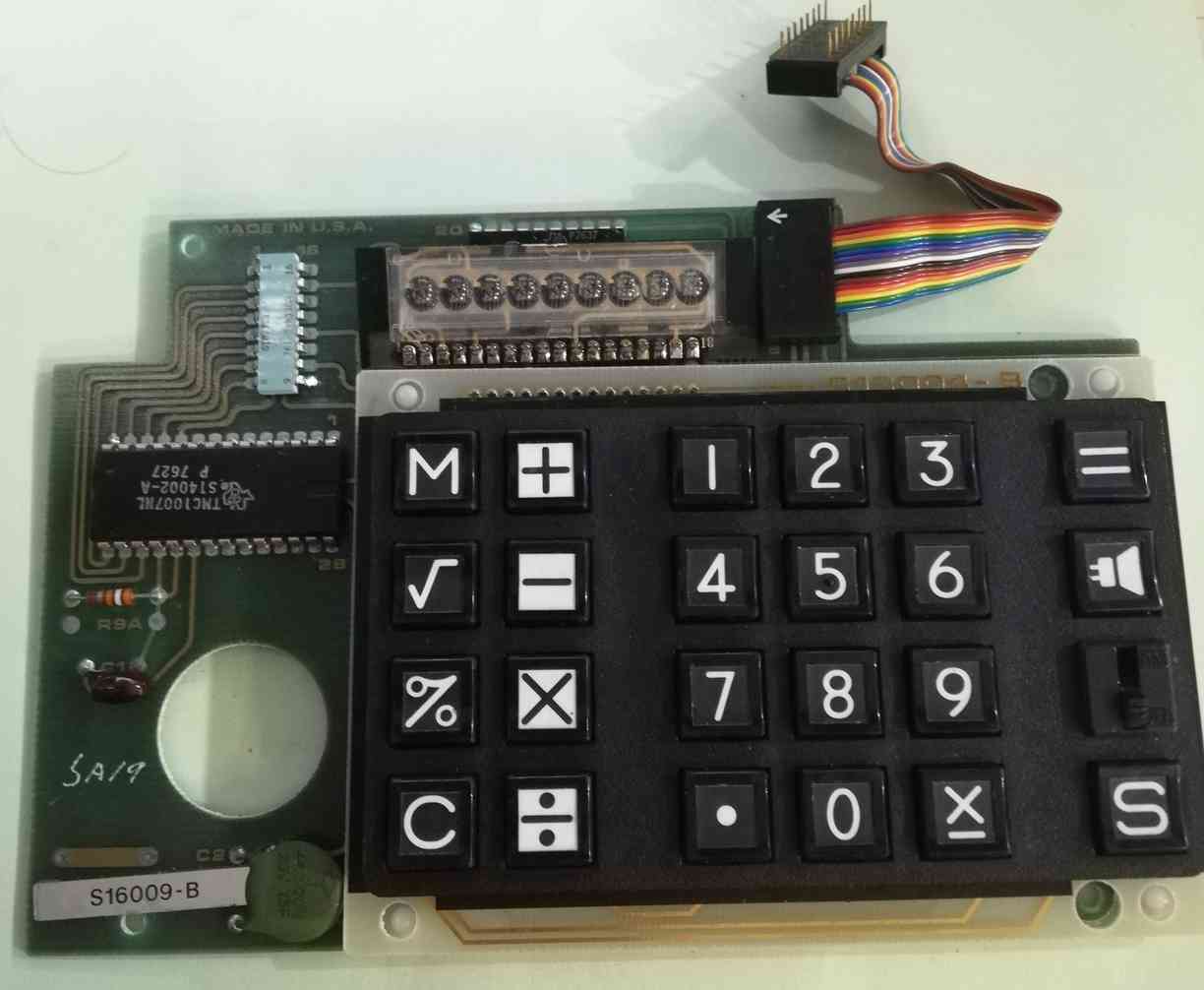
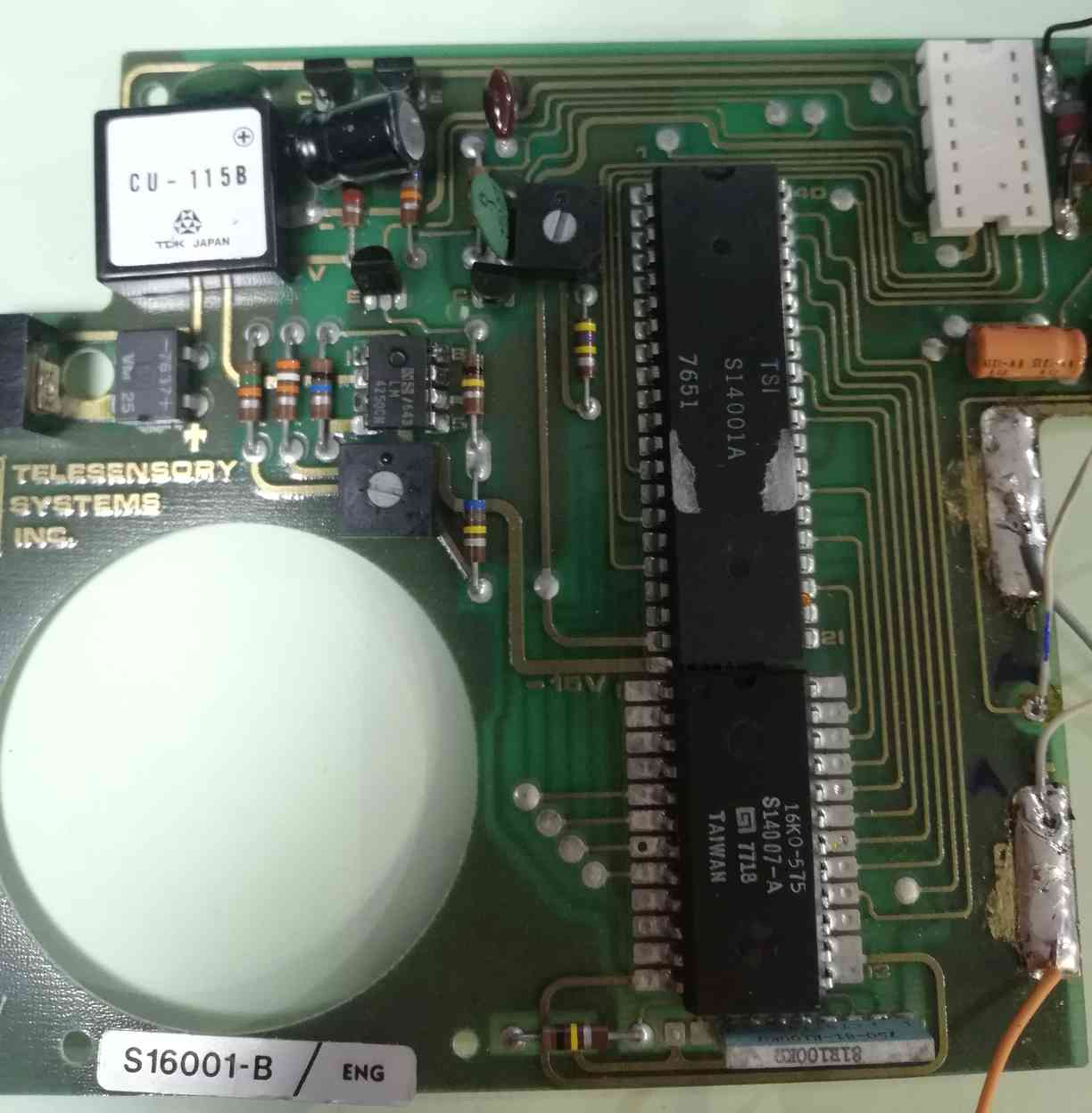
Info: TSI Speech + with Texas Instruments chip the TMC1007. In the early 1970s, Telesensory Systems Inc. Speech + was the first portable talking calculator for the blind, an interesting point is that, to aid the blind in use, the numbers on the keyboard are in the same order as a phone (with 1 at the top) instead of in the normal order of a calculator (with 9 at the top).
with permission of the author www.vintagecalculators.com
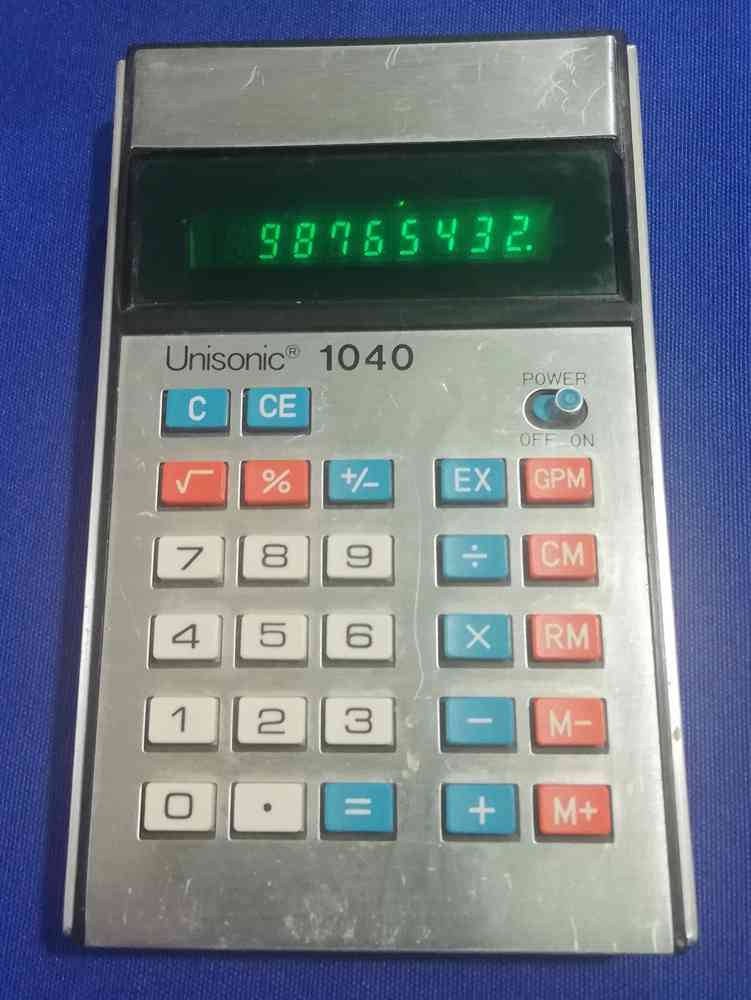 Model: unisonic 1040
Battery: 4 x AAA
Adapter: 6 volt adapter
Year: 1974
Chip: TMS1044
Info:
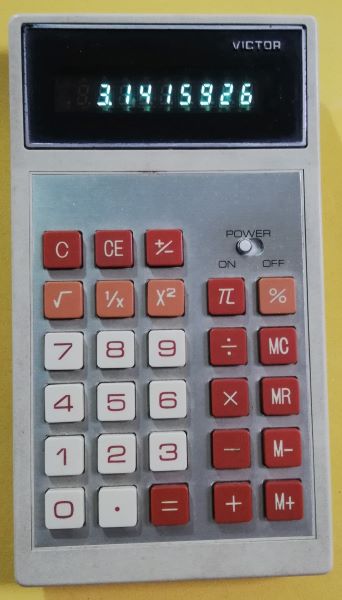 Model: 104R
Battery: 3 x AA
AC adapter:
Year: 1975
Chip: TMS1044NL
Info:
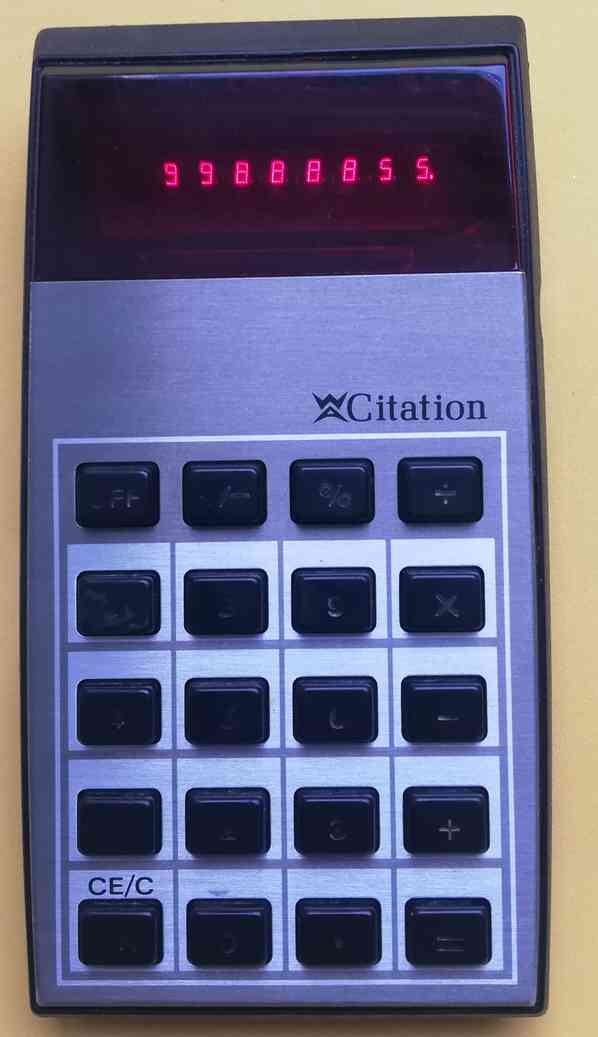 Model: Citation (66-4986-7)
Battery: 9 volt
Adapter:
Year: 1978
Chip: TMC0921
Info: If you remove the key-plate known from e.g. the "electronic Wizard" from this Citation you'll get a TI-1000. Everything else is identical, even the back of the calculators tells you the manufacturer Texas Instruments.
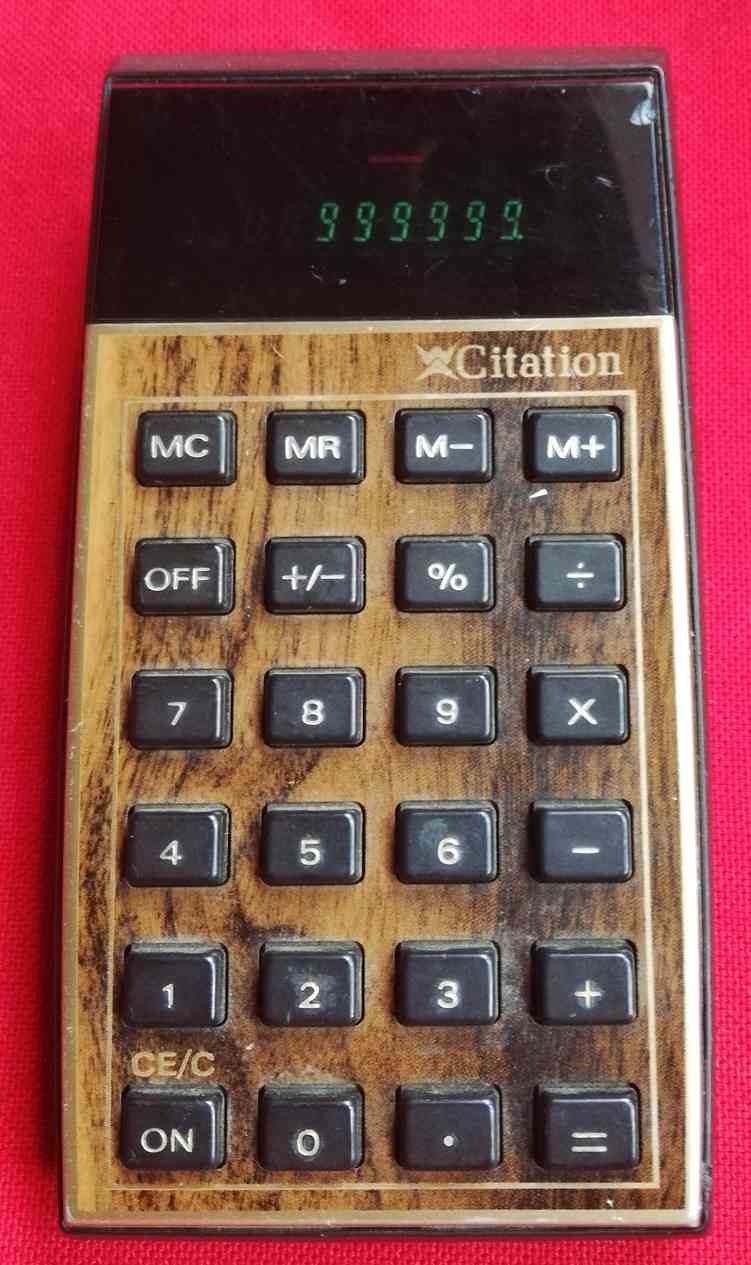 Model: Citation (66-4987-5) TI-1025
Battery: 9 volt
Adapter: AC9180
Year: 1977
Chip: TMC0923
Info: With the discontinuation of the TI-1200 family in 1977, Western Auto consequently replaced the M4987 "Citation" calculators and its siblings M4986 and M4988 with products based on the TI-1000 family. While the backside of the revised "Citation" calculator is missing any reference to the previous M4987 designation, sports the sales box a part number 66-4987-5, obviously a reference to the original naming scheme.
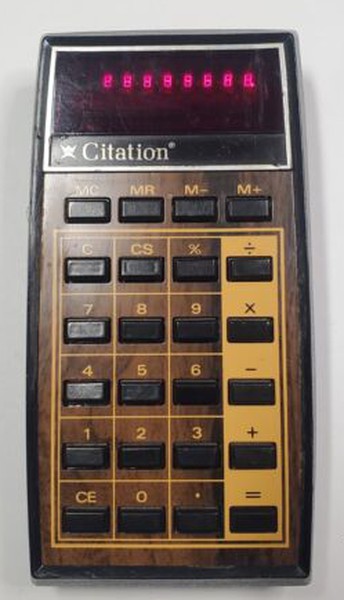 Model: Citation (66-4987-5)
Battery: 9 volt
Adapter: AC9180
Year: 1977
Chip: TMS0972
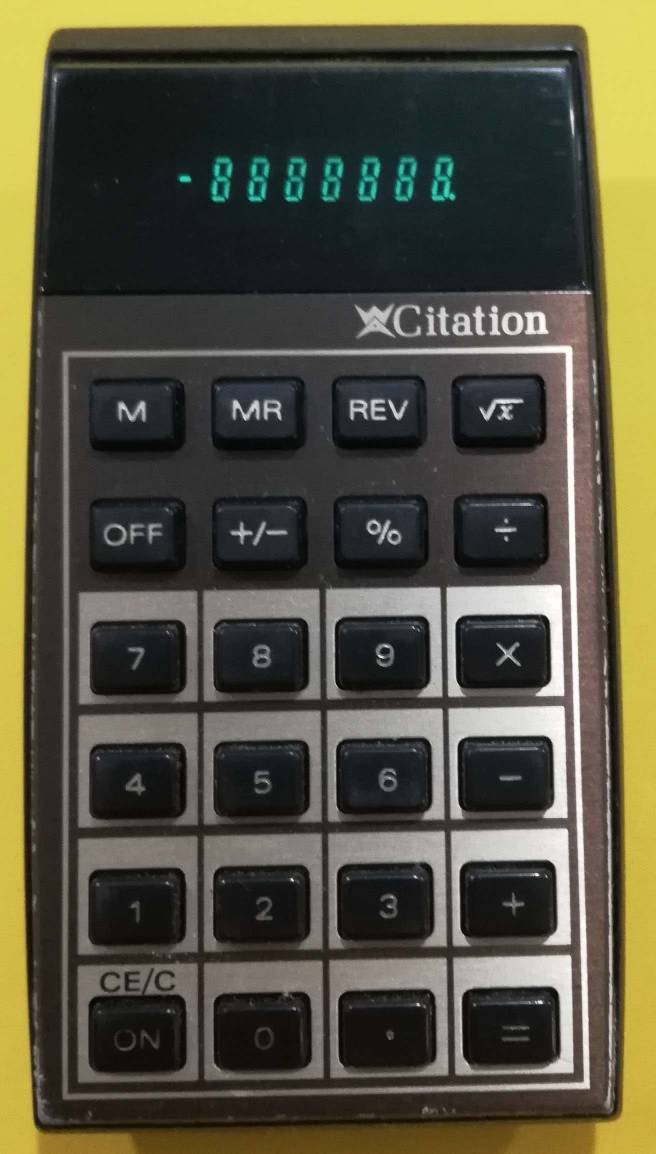
Info:The TMS0952 introduced with the original design of the M4986 was soon replaced with the TMS0972, a pin-compatible design dropping the additional resistors and capacitor and further reducing the manufacturing costs of the M4986 series. This contribution of cost cutting had a side effect for the customer, Texas Instruments decided to use with the TMS0972 an 8-digit LED display instead of the previous 9-digit display. While the 9th (leftmost) digit was originally used only for the negative sign and didn't impact most calculations, should you try this example:
| • 11111111 [-] 23456789 [=] - TMS0952: -12345678 • 11111111 [-] 23456789 [=] - TMS0972: -.1234567 (flashing) |
 Model: Citation (66-4988-3)
Battery: 9 volt
Adapter:
Year: 1978
Chip: TMC0921
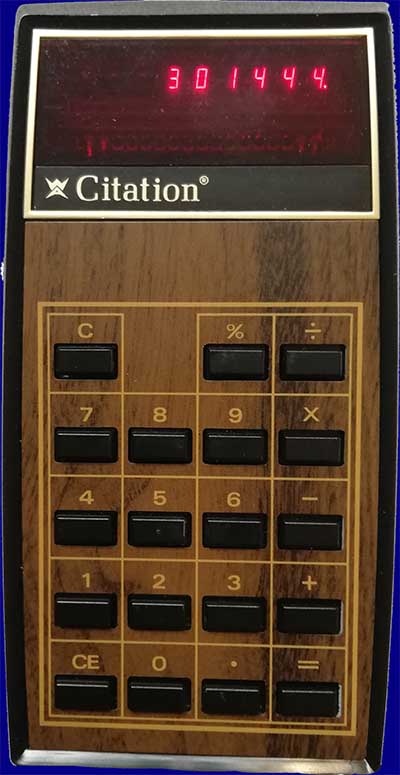
Info:If you remove the key-plate known from e.g. the "electronic Wizard" from this Citation you'll get a TI-1050. Everything else is identical, even the back of the calculators tells you the manufacturer Texas Instruments.
 Model: Citation ( M4986-7 )
Battery: 9 volt
Adapter: AC9180
Year: 1976
Chip: TMS0952
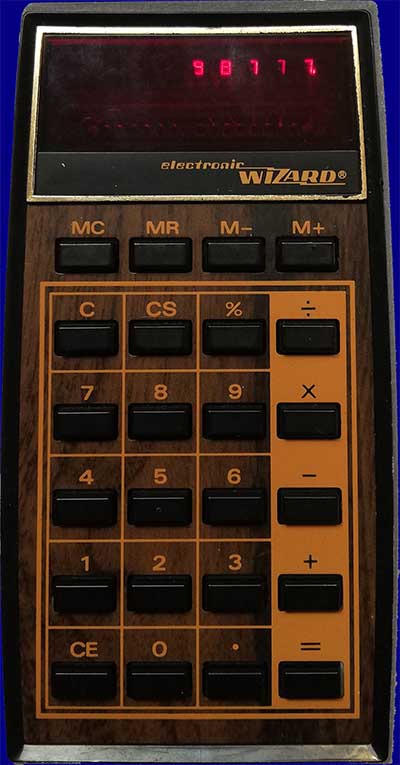
Info: This calculator is identical to the TI-1200 sold under different names from the Western Auto company. The most common names are "Citation" or "M4986". The only difference from the TI-1200 is the wooden template and the missing TI logo.
 Model: Electronic Wizard ( M4987 )
Battery: 9 volt
Adapter: AC9180
Year: 1975
Chip: TMS0952
Info: This calculator is identical to the TI-1250 sold under different names from the Western Auto company. The most common names are "Electronic Wizard" or "M4987", but later also obtained the confusing "Citation" plate. The only difference from the TI-1250 is the wooden template and the missing TI logo.
 Model: TE-8000
Battery: no
Adapter: AC 110 volt
Year: 1973
Chip: TMS0105
Info:TE8000 is a four-function desk calculator from 1973, built with a Texas Instruments single-chip processor.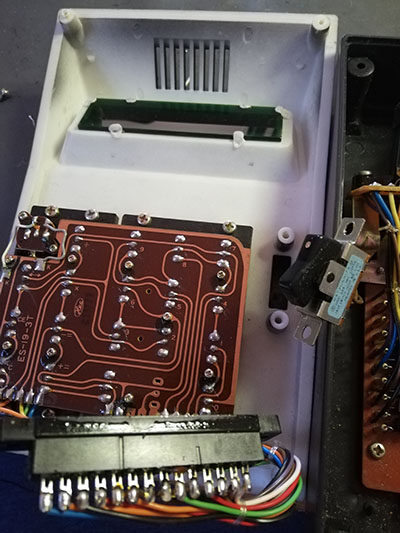
The calculator is housed in a rectangular plastic box finished in imitation woodgrain.
The main circuit board and the display tube board are fastened to the base with a pair of light metal brackets. A 2-pin mains connector and the power transformer are mounted at the rear of the box, with the power switch attached to the moulded top cover. The transformer secondaries are hard-wired to the circuit board.
The display uses a set of miniature eight-segment vacuum fluorescent tubes, Futaba type DG10R1. (The small eighth segment at the centre right gives a "proper" numeral 4, but the processor only drives the usual seven segments). Eight tubes are used for the numerical display, and one (at the right) for polarity and error indication.
The keyboard is built as a single module and is attached to the main board via a cable and edge connector.
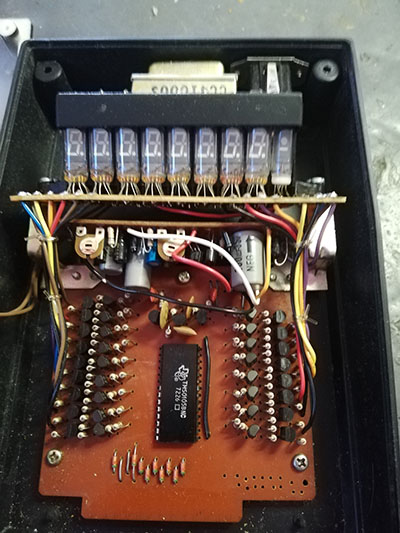
The TMS-0105 series single-chip processors contain all of the calculator circuitry with the exception of the power supplies and display drivers.
The rather untidy circuit board has a simple power supply at the rear and the TMS-0105 chip in the centre. The anode drivers for the nine tubes are at the left, with the eight segment drivers (seven plus decimal point) at the right. The keyboard attaches to the edge connector at the bottom.
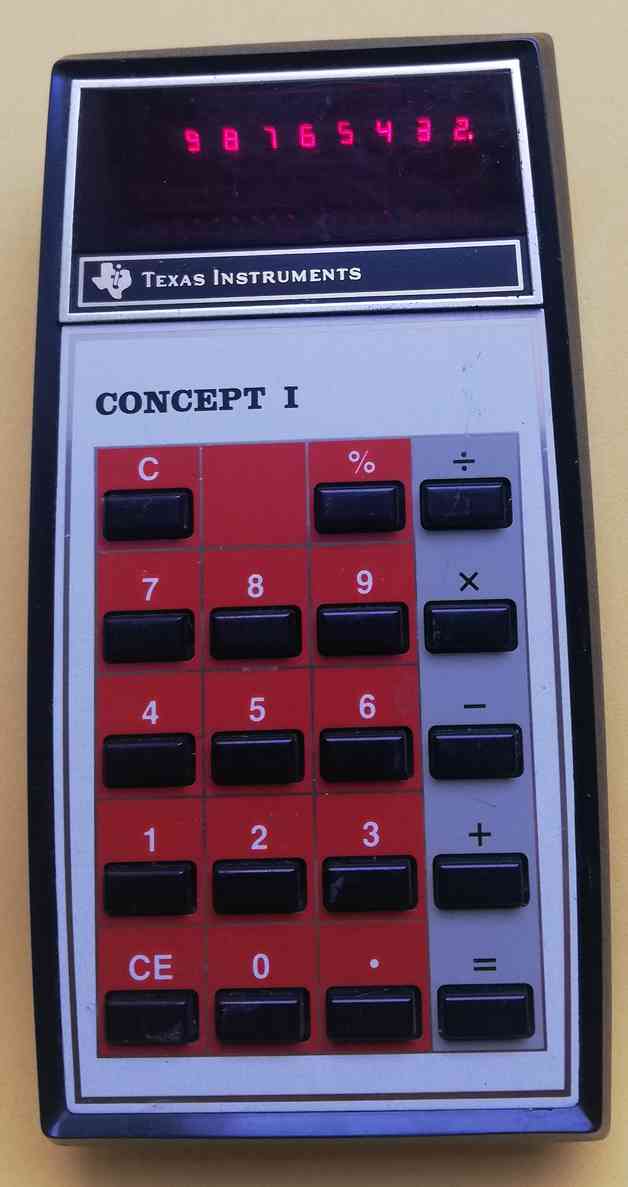 Model: Concept I
Battery: 9 volt
Adapter: AC9180
Year: 1976
Chip: TMS0972
Manual: with permission www.datamath.org
Info: The Zayre CONCEPT Calculator Series culminated in June 1976 with the introduction of the Texas Instruments CONCEPT I, CONCEPT II, and CONCEPT III calculators based on the TI-1200, TI-1250, resp. SR-16 II but disappeared already in August 1979 with the clearance sales of the CONCEPT COMPACT calculators.
 Model: Concept II
Battery: 9 volt
Adapter: AC9180
Year: 1976
Chip: TMS0972
Manual: with permission www.datamath.org
Info: The Zayre CONCEPT Calculator Series culminated in June 1976 with the introduction of the Texas Instruments CONCEPT I, CONCEPT II, and CONCEPT III calculators based on the TI-1200, TI-1250, resp. SR-16 II but disappeared already in August 1979 with the clearance sales of the CONCEPT COMPACT calculators.
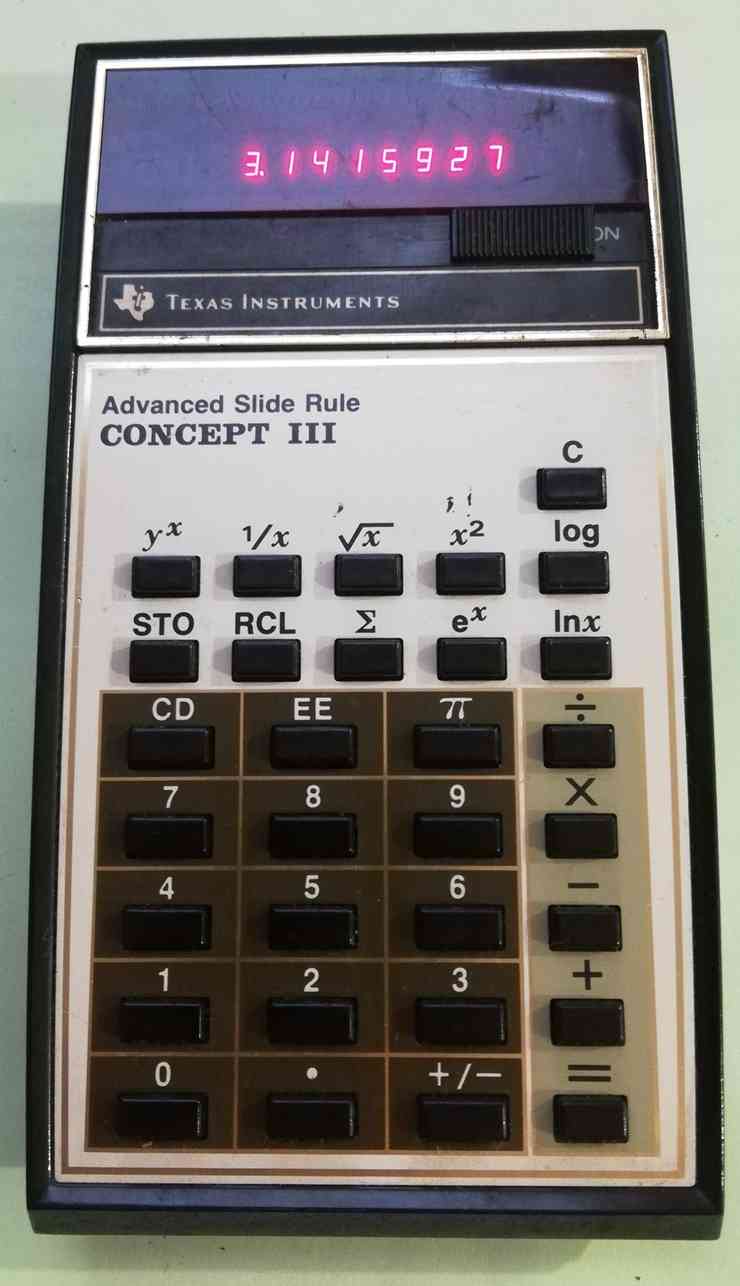
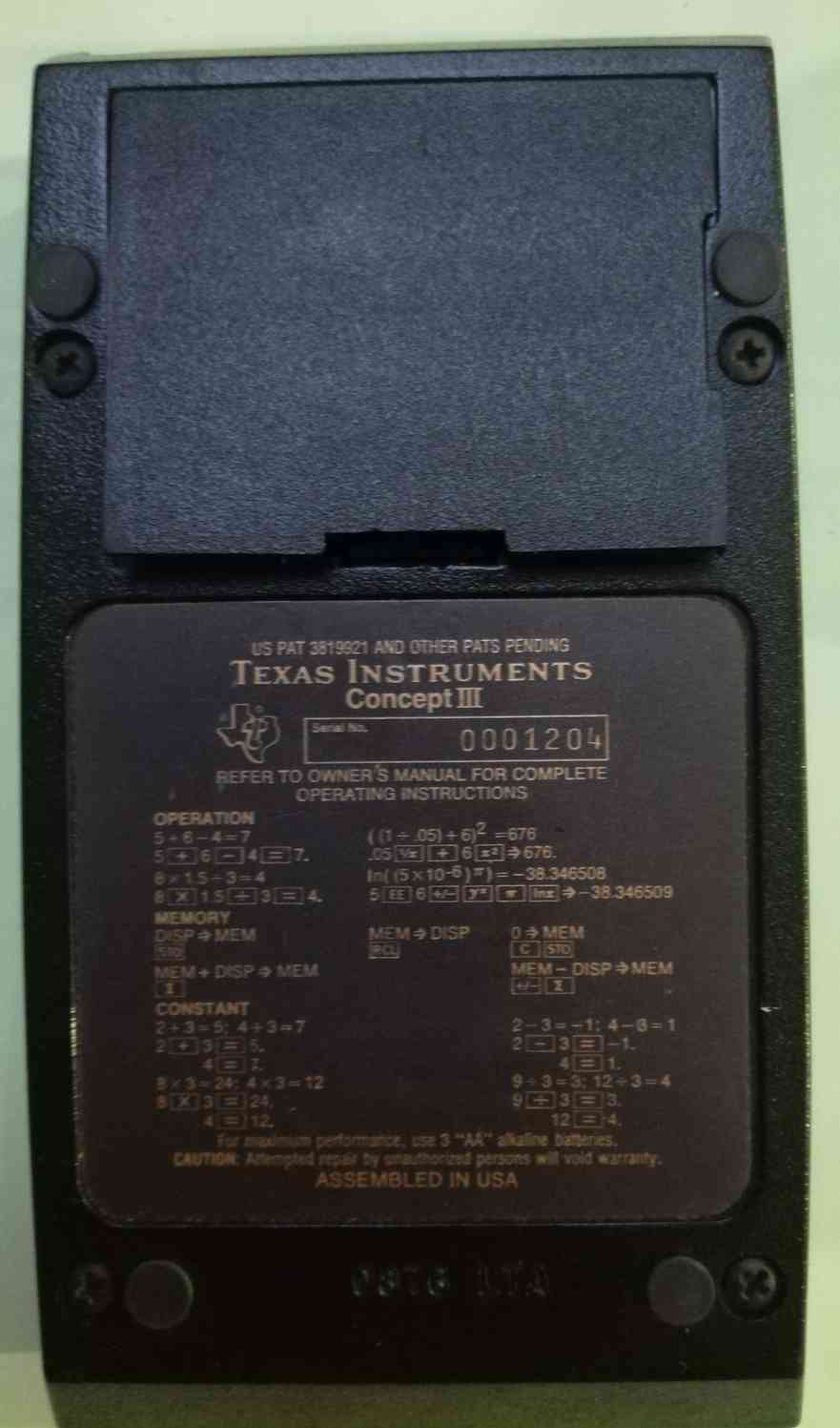 Model: Concept III
Battery: 3 x AA
Adapter: AC9180
Year: 1976
Chip: TMS1016, SN27882 x 2
Manual: with permission www.datamath.org
Info: The Zayre CONCEPT Calculator Series culminated in March 1976 with the introduction of the Texas Instruments CONCEPT I, CONCEPT II, and CONCEPT III calculators based on the TI-1200, TI-1250, resp. SR-16 II but disappeared already in August 1979 with the clearance sales of the CONCEPT COMPACT calculators. Following the path of the Slide Rule (SR) calculators like the wonderful SR-16, the CONCEPT III was called Advanced Slide Rule. If you explore the calculator deeper, you'll immediately catch the similarities to the SR-16 II. The only differences are the coloring schema of the faceplate and the size of the letters. The slightly oversized keyboard printing was continued later with the TI-1255.Dismantling this Zayre CONCEPT III manufactured in February 1976 by Texas Instruments in Lubbock, Texas reveals no differences to the SR-16-II, the printed circuit board (PCBs) of the two calculators are 100% identical. Both the SR-16-II and this rare CONCEPT III calculator are based on a TMS1016 single-chip calculator circuit, a member of the famous TMS1000 Microcomputer family developed already in 1974.
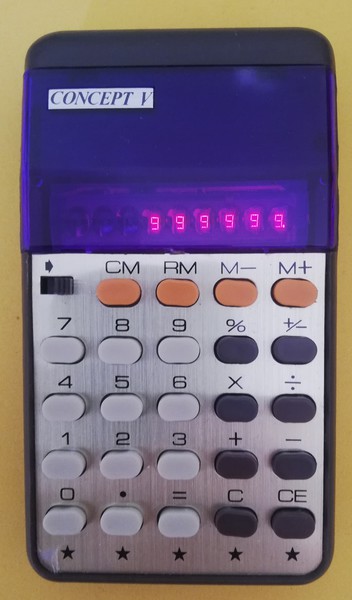 Model: Concept V
Battery: 9 volt
Adapter:
Year: 1976
Chip: TMS0972nl
Manual:
Info: The Zayre CONCEPT Calculator Series culminated in March 1976 with the introduction of the Texas Instruments CONCEPT I, CONCEPT II, and CONCEPT III calculators based on the TI-1200, TI-1250, resp. SR-16 II but disappeared already in August 1979 with the clearance sales of the CONCEPT COMPACT calculators. Following the path of the Slide Rule (SR) calculators like the wonderful SR-16, the CONCEPT III was called Advanced Slide Rule. If you explore the calculator deeper, you'll immediately catch the similarities to the SR-16 II. The only differences are the coloring schema of the faceplate and the size of the letters. The slightly oversized keyboard printing was continued later with the TI-1255.Dismantling this Zayre CONCEPT III manufactured in February 1976 by Texas Instruments in Lubbock, Texas reveals no differences to the SR-16-II, the printed circuit board (PCBs) of the two calculators are 100% identical. Both the SR-16-II and this rare CONCEPT III calculator are based on a TMS1016 single-chip calculator circuit, a member of the famous TMS1000 Microcomputer family developed already in 1974.
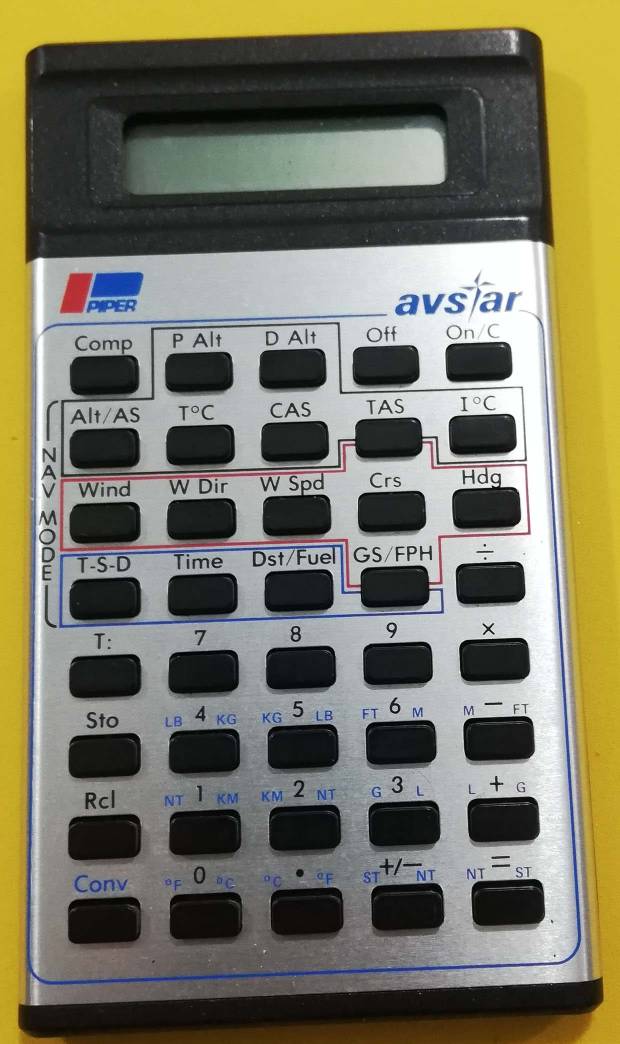 Model: Avstar Piper
Battery: 2 x LR43
Adapter:
Year: 1981
Chip: TPO328
Info:This Piper "Flight Computer" gives you an example of using existing products like the TI-35 for other purposes. We know similar approaches from the insurance business (view the TI-58 manufactured for Lloyd) but this one uses a specialized integrated circuit to perform different computations and conversions:
| • Alt/AS: Calibrated, True Airspeed, Pressure, Density Altitude • WIND: Wind Speed, Direction, Course and Heading • TSD: Time-Speed-Distance, Distance and fuel consumption • CMP: Computes in the above modes the different values • CNV: Convert between US and SI-units • T: Time calculations |
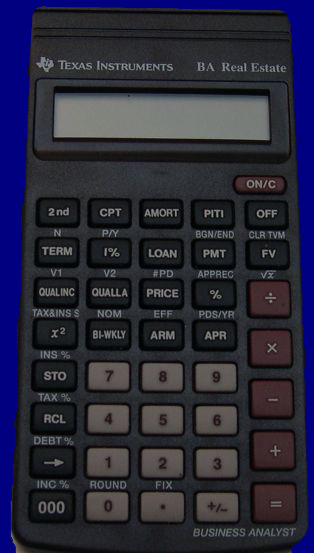 Model: BA real estate
Battery: 2 x LR44
Adapter:
Year: 1993
Chip: T6m51 Toshiba
Info: modern LCD 1991 - 1999
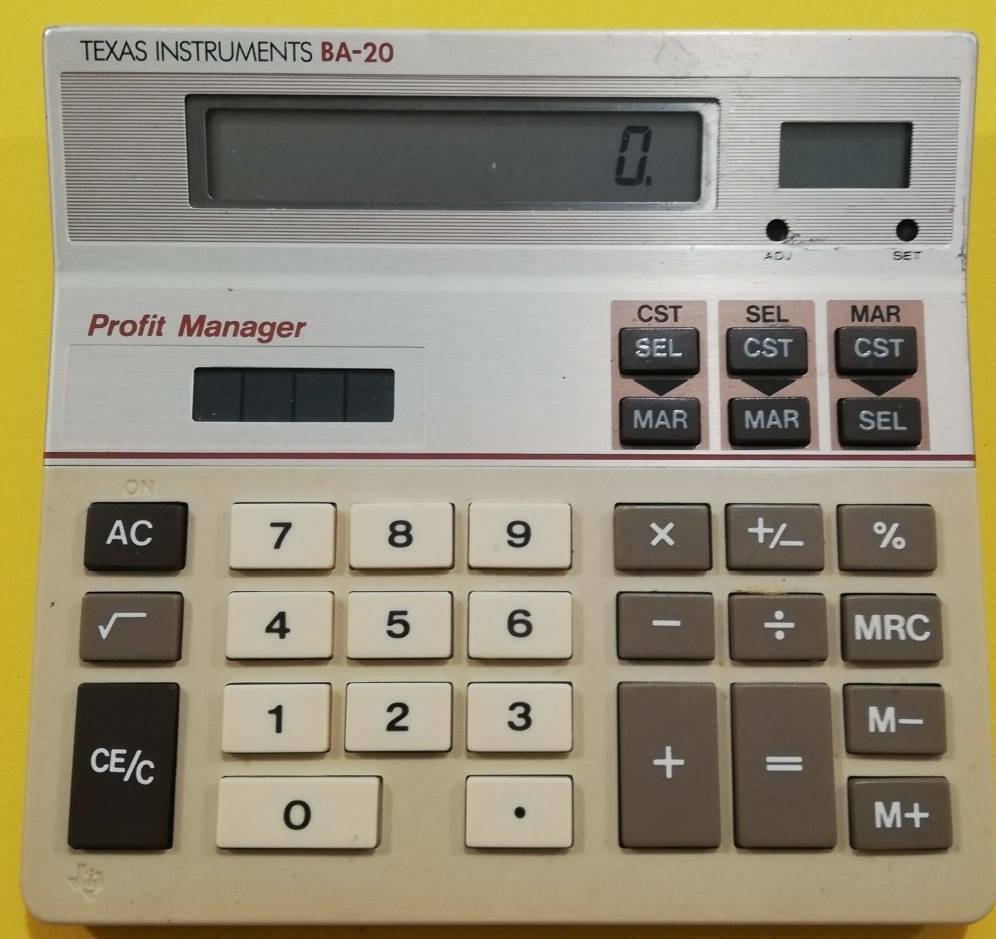 Model: BA-20
Battery: LR41
Adapter:
Year: 1997
Chip: Inventa LI3163
Info: Malysia
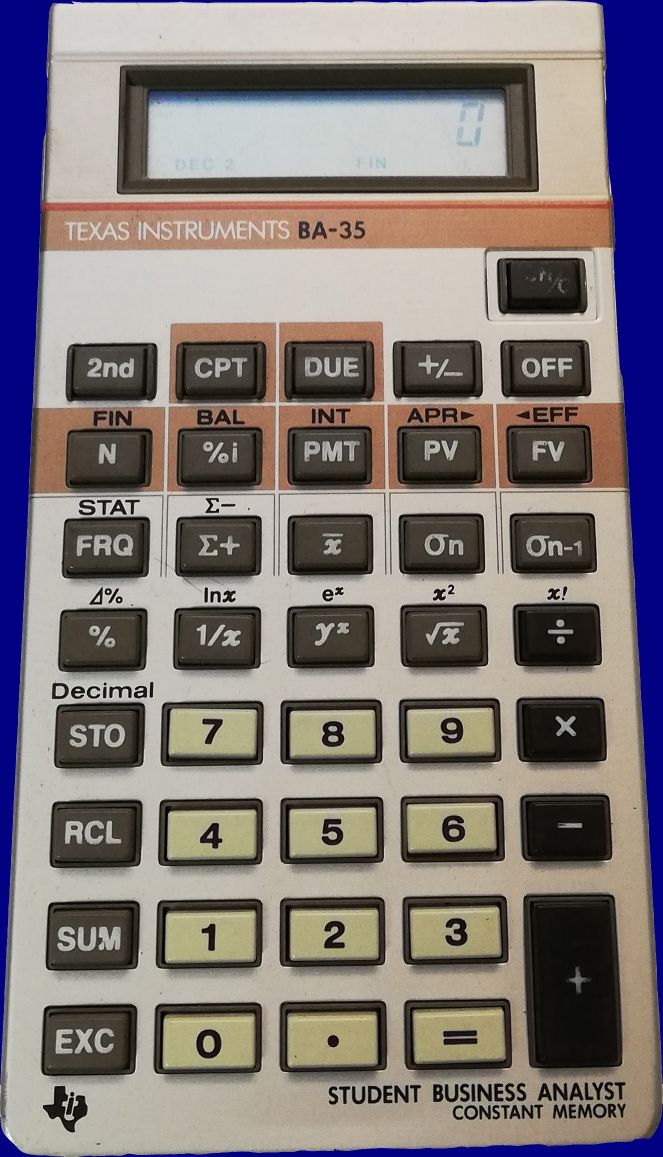 Model: BA-35 student business analyst
Battery: 2 x LR44
Adapter:
Year: 1981
Chip: CD4571
Info: modern LCD 1982 - 1987
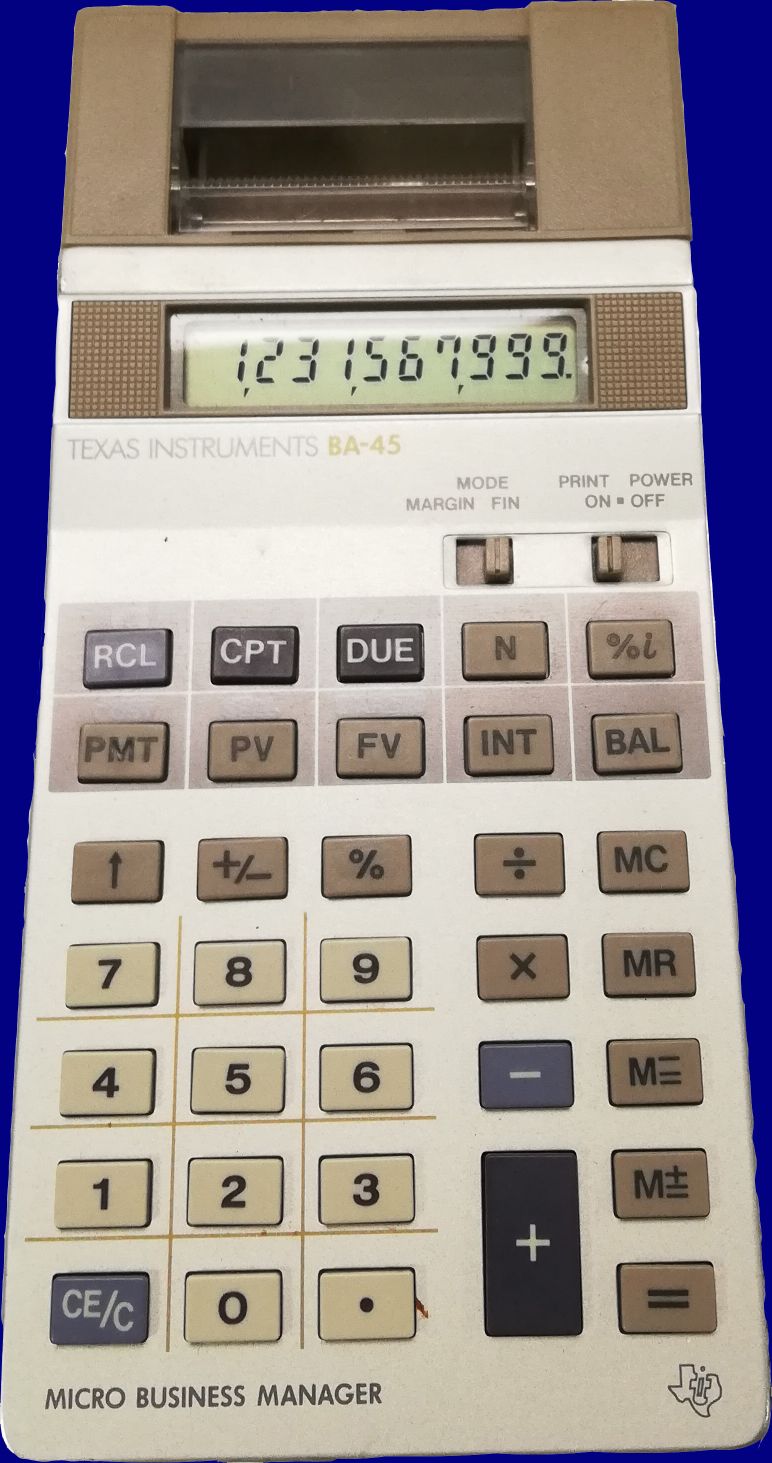 Model: BA-45 mcro business manager
Battery: 4 x AAA
Adapter:
Year: 1984
Chip: nec UPD7503
Info: later HANDHELD printing made in Japan scientific
 Model: BA-54
Battery: 2 x LR44
Adapter:
Year: 1997
Chip: CD4553 CD4554
Info: slanted LCD generation
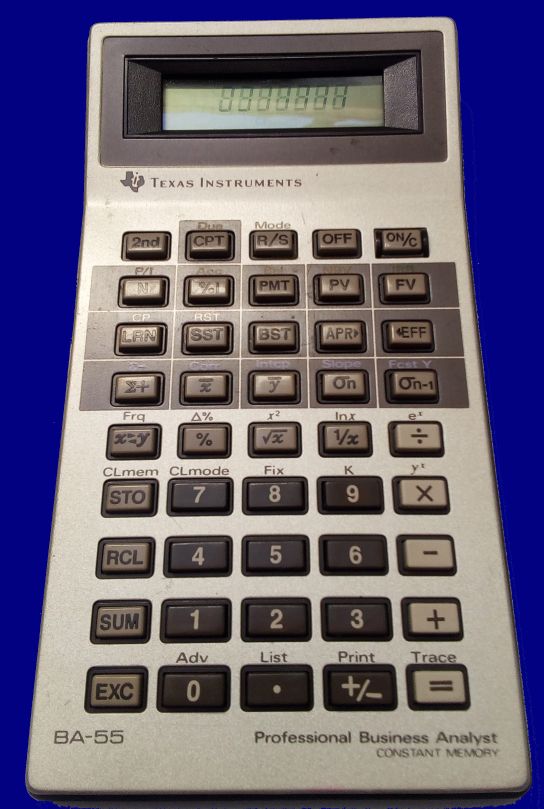 Model: BA-55
Battery: 2 x LR44
Adapter:
Year: 1983
Chip: CD4553 CD4554
Info: slanted LCD generation
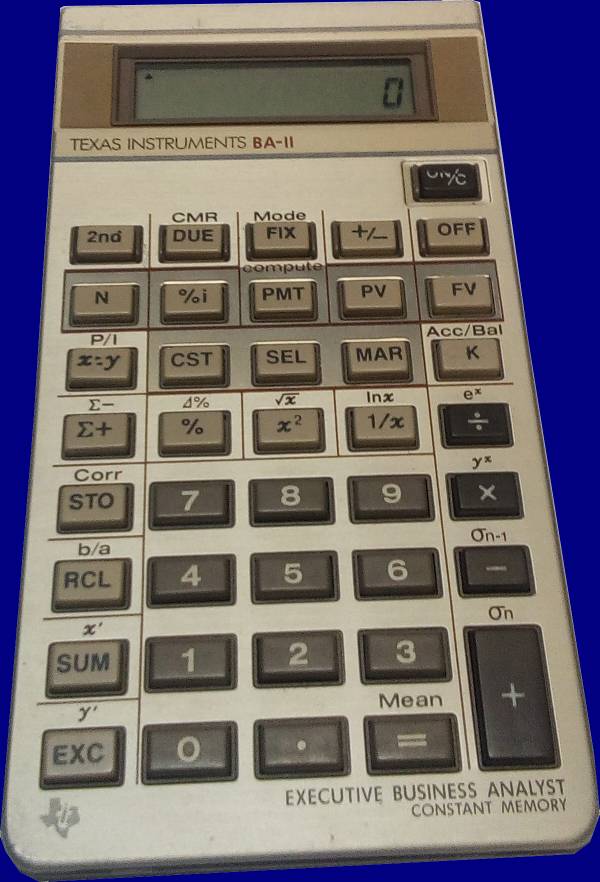 Model: BA-II
Battery: 2 x LR44
Adapter:
Year: 1985
Chip: TPO322
Info: Business Analyst II
Donated by Onofri Rodolfo (Rudy)
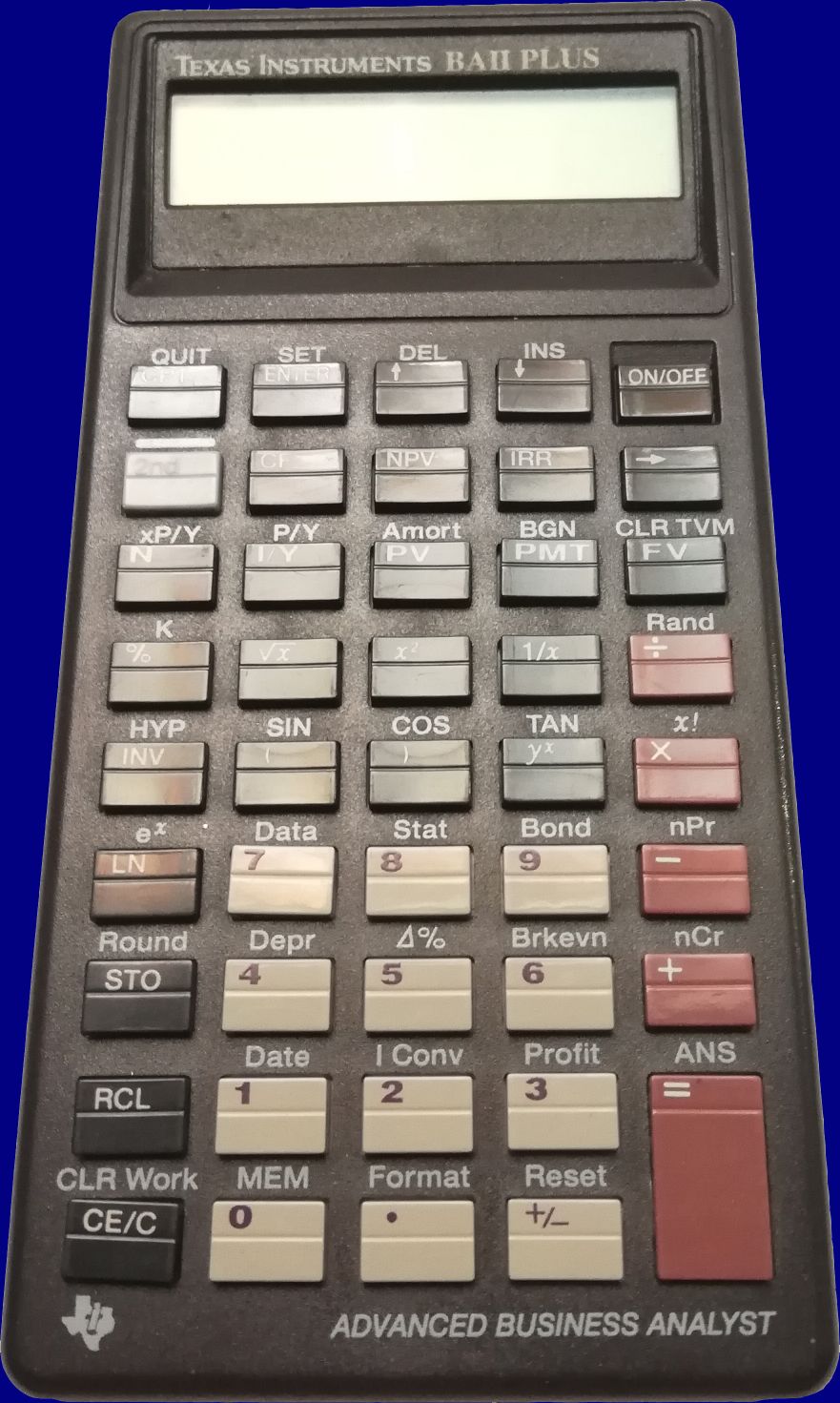 Model: BA II plus
Battery: CR2032
Adapter:
Year: 1996
Chip: T6a53 Toshiba
Info: modern LCD 1991 - 1999
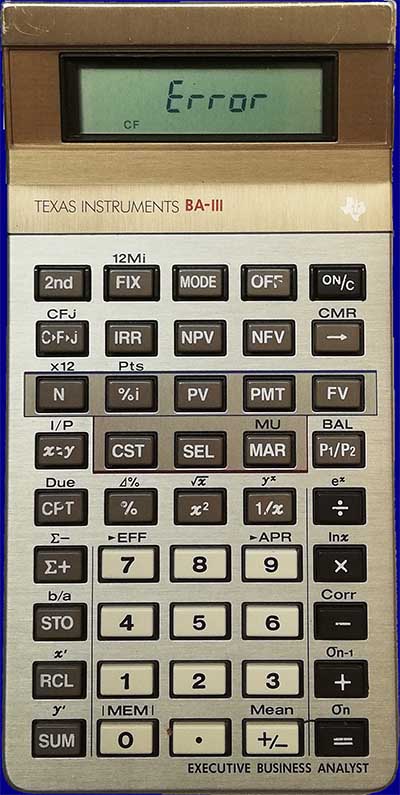 Model: BA-III
Battery: 2 x LR44
Adapter:
Year: 1985
Chip: TPO322
Info:
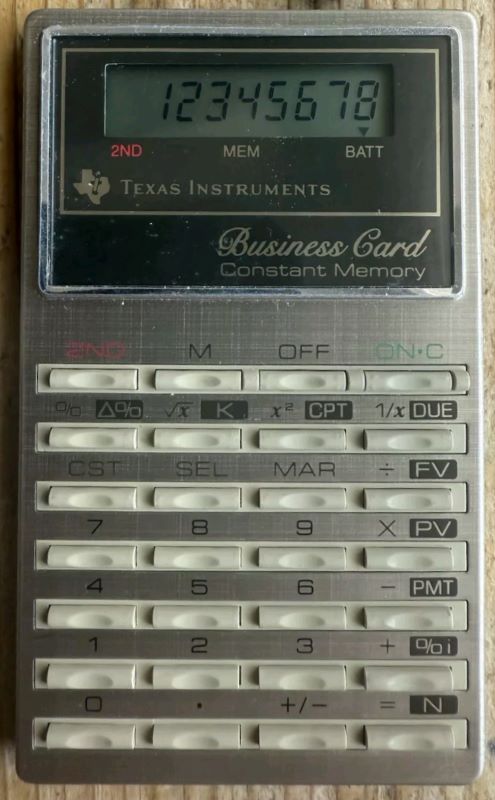 Model: Business Card
Battery: 2 x LR54
Adapter:
Year: 1979
Chip: TP-0325
Info:
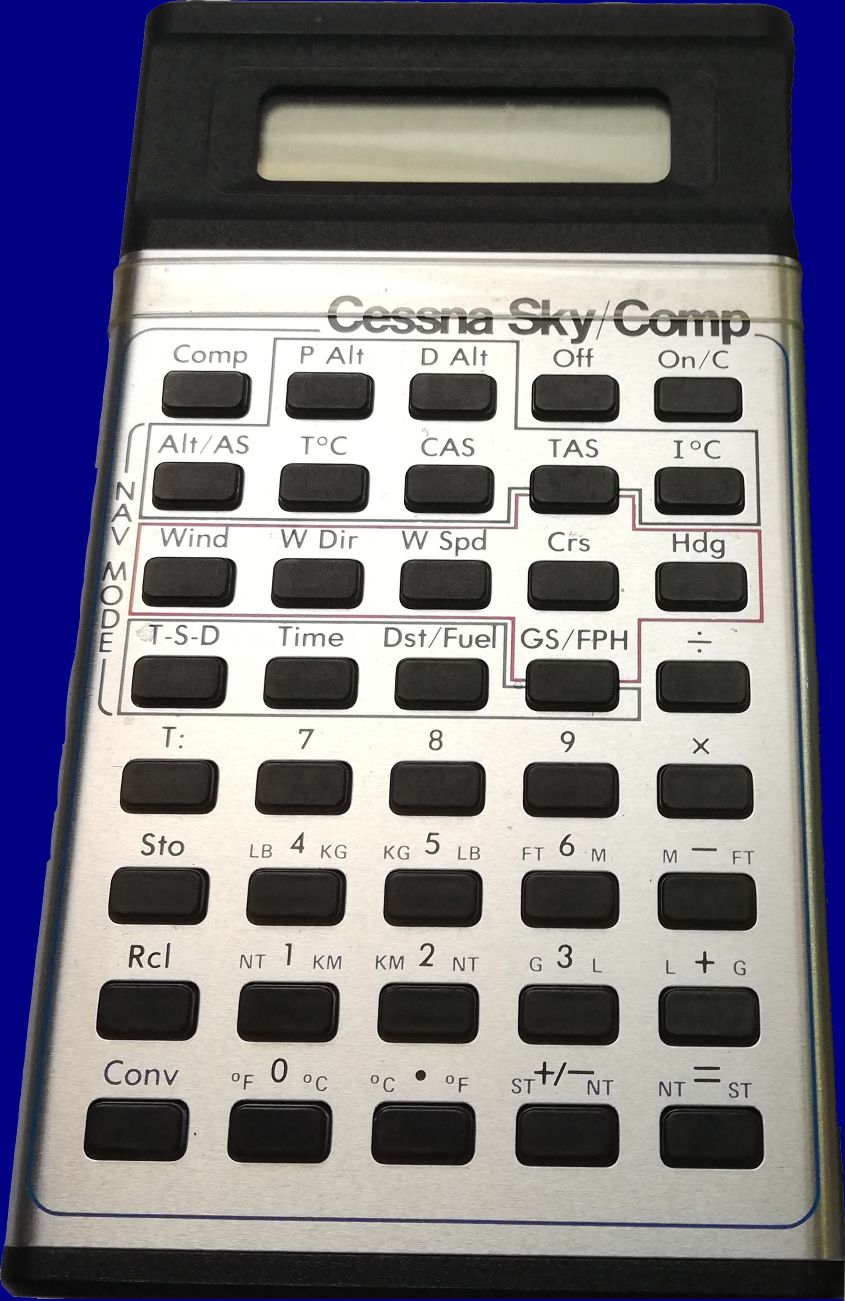 Model: Cessna Sky Comp
Battery: 2 x LR43
Adapter:
Year: 1983
Chip: TPO328
Info: JEPPESSEN line
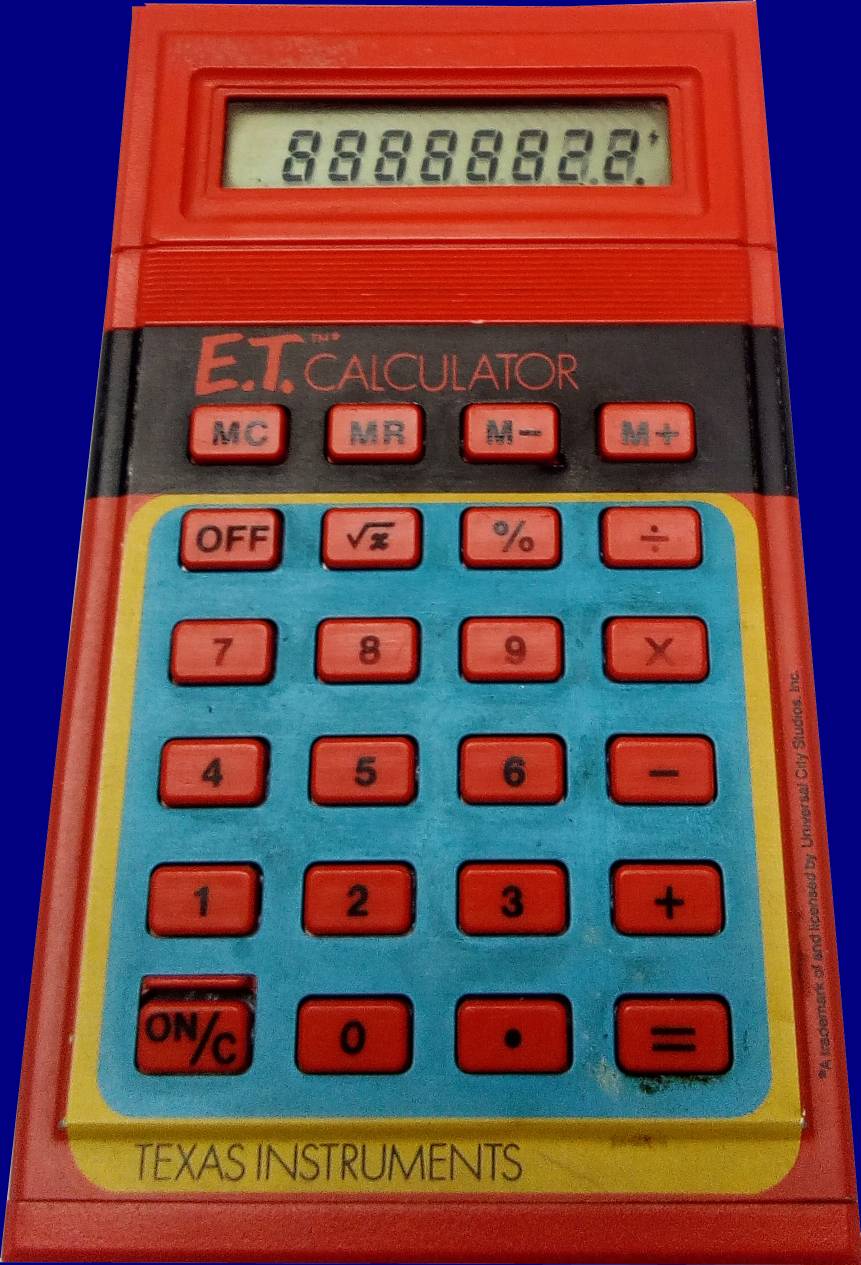 Model: ET calculator
Battery: 2 x LR44
Adapter:
Year: 1982
Chip: TP0311
Info: slimline LCD - first solar LCD
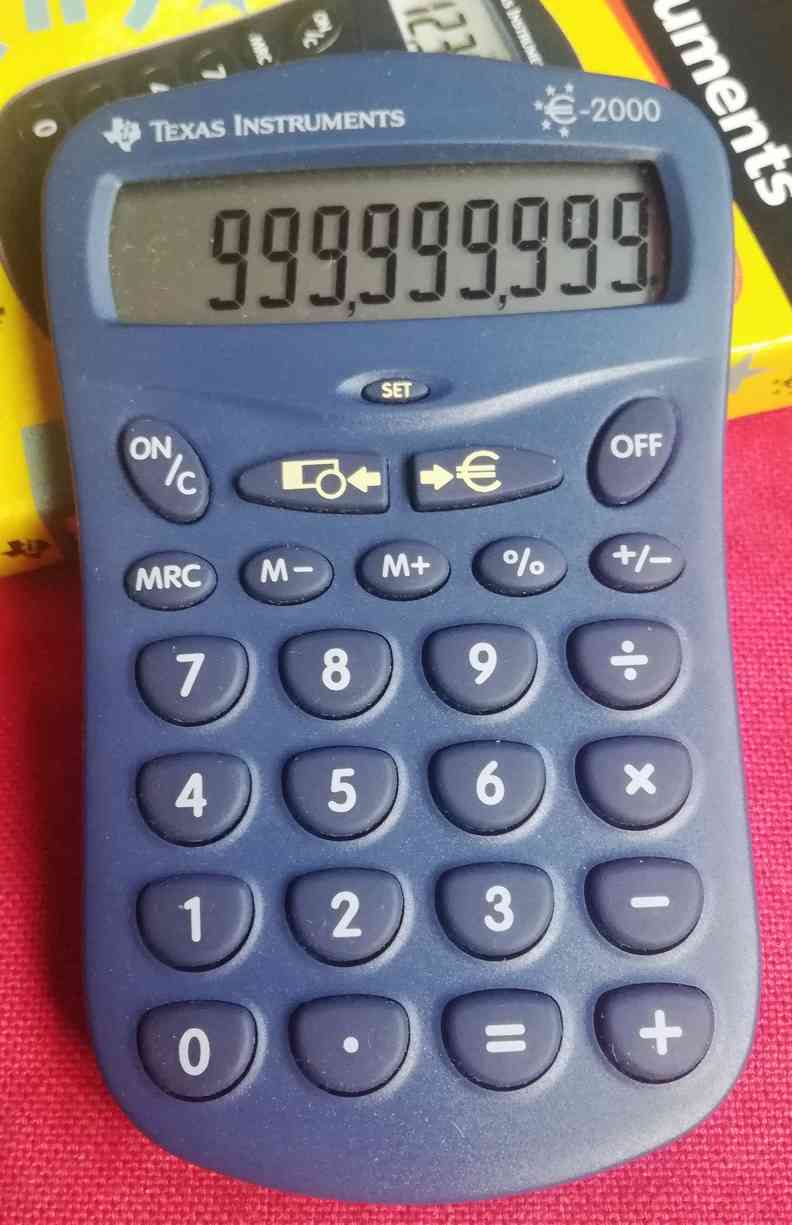 Model: Eur-2000
Battery: LR54
Adapter:
Year: 1988
Chip:
Info: The €-2000 calculator combines the usual basic calculator functions with an Euro currency conversion.
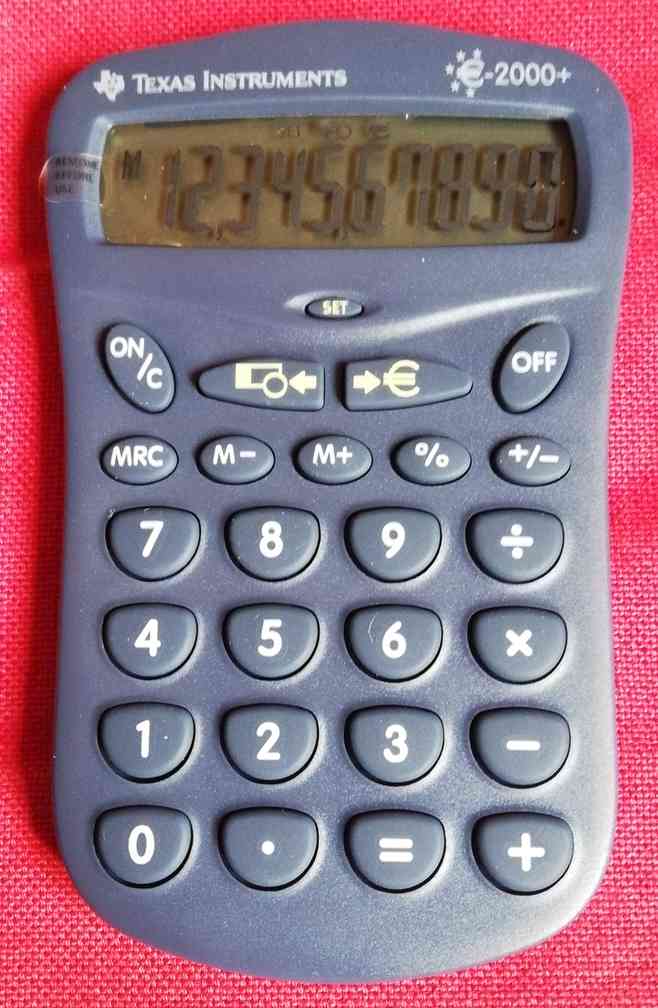 Model: Eur-2000+
Battery: LR54
Adapter:
Year: 2001
Chip:
Info:The €-2000+ calculator combines the usual basic calculator functions with an Euro currency conversion. The exchange rate between the Euro and the Home currency is entered with the small SET-key. Two additional keys allow the conversion in both directions.This calculator added a continuous memory to the earlier €-2000 and a feature to set the number of decimal places (for the curious, you have to press the ON/C key about two seconds to enter the F-0-2 menu). Nevertheless kept the internal construction of the €-2000+ identical with its predecessor.
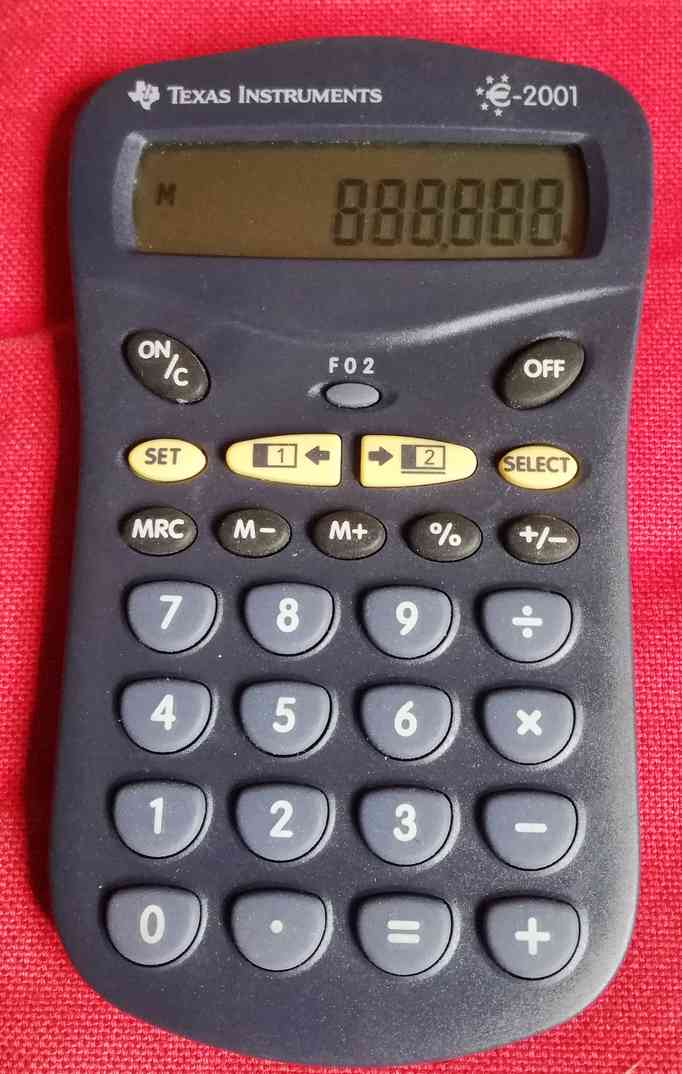 Model: Eur-2001
Battery: LR54
Adapter:
Year: 1999
Chip:
Info:The €-2001 calculator combines the usual basic calculator functions with a very convenient Euro currency conversion. All of the 11 yet defined exchange rates are preprogrammed in the calculator, 4 additional ones could be added later. The home country is selected with the Select-key. Two additional keys allow the conversion in both directions. A similar calculator using a desktop housing was introduced with the €-1796 and the €-2003.A simpler calculator was sold with the €-2000. Searching calculators in Europe without the Euro-conversion was difficult in 1999, one example is the TI-1726.In 2006 Texas Instruments surprised customers in Europe with a complete new family of Euro Calculators labeled EC-3, EC-5 and EC-7 Pro.
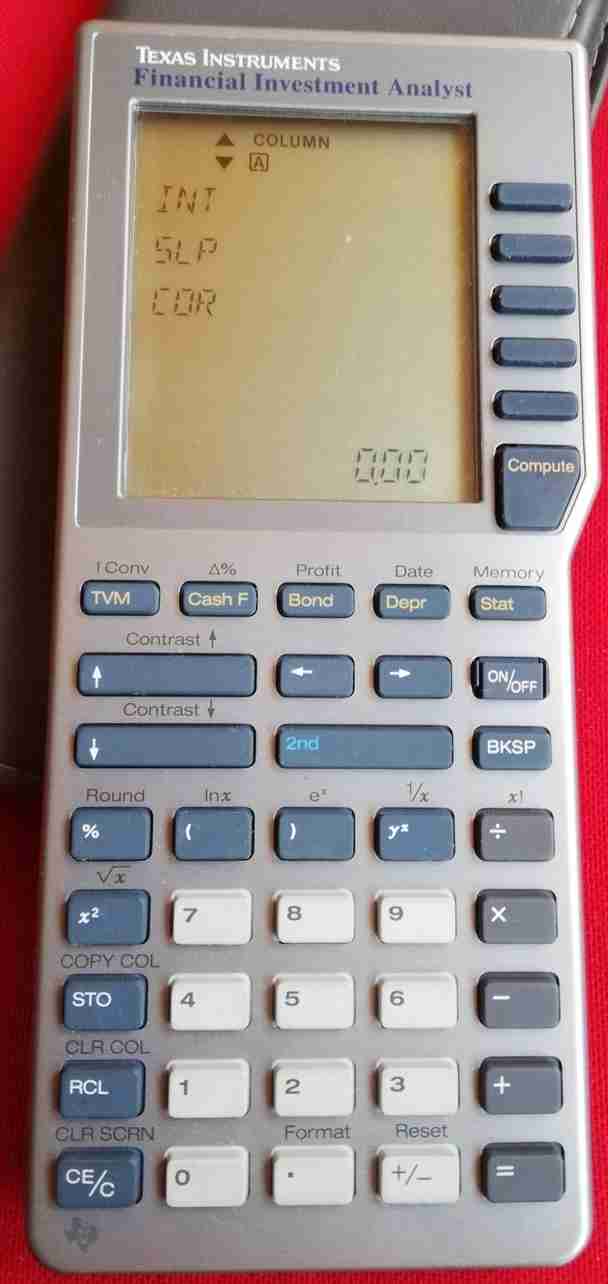 Model: FIA-10 Financial Investment Analyst
Battery: 2 x CR2032
Adapter:
Year: 1989
Chip: TMC70035, LH5821, TC5518, TC54256
Info:
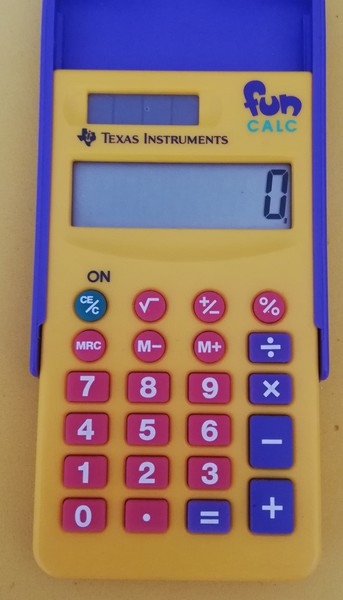 Model: Fun Calc
Battery: Solar
Adapter:
Year: 1994
Chip:
Info:The Fun Calc is based on the TI-7140 introduced already in 1994, too.
 Model: Galaxy 9
Battery: CR2032
Adapter:
Year: 1999
Chip: Toshiba T6A60
Info: GALAXY line
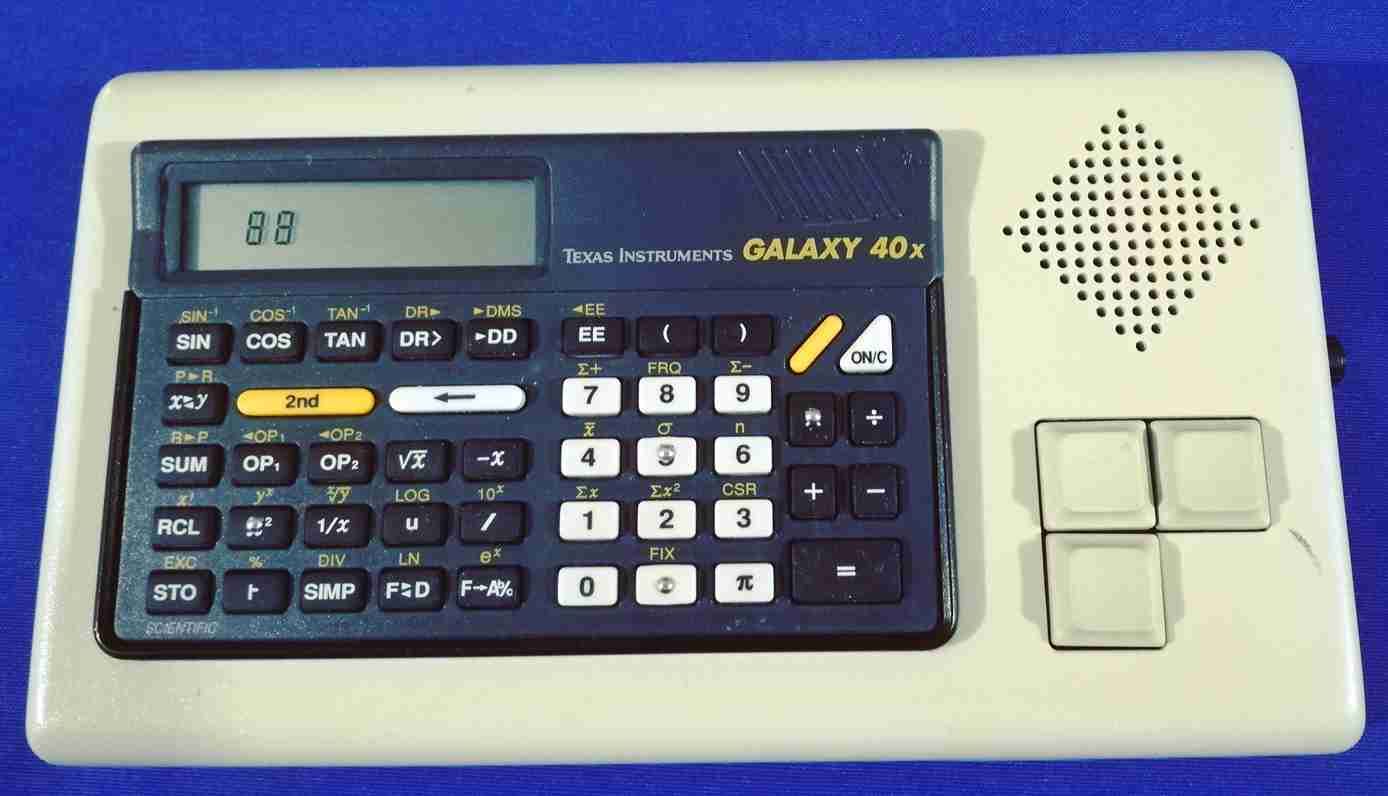 Model: Galixa Speech
Battery: 4 AA-size NiCd
Adapter: 9V 100mA DC
Year: 2000
Chip: HD64180, M272001, U6264
Galaxy 40x: Toshiba T6A59
Info: Made in Germany
This Galixa Speech is a scientific calculator with natural voice speech output. Numerical data on the display panel can be spoken digit by digit or as a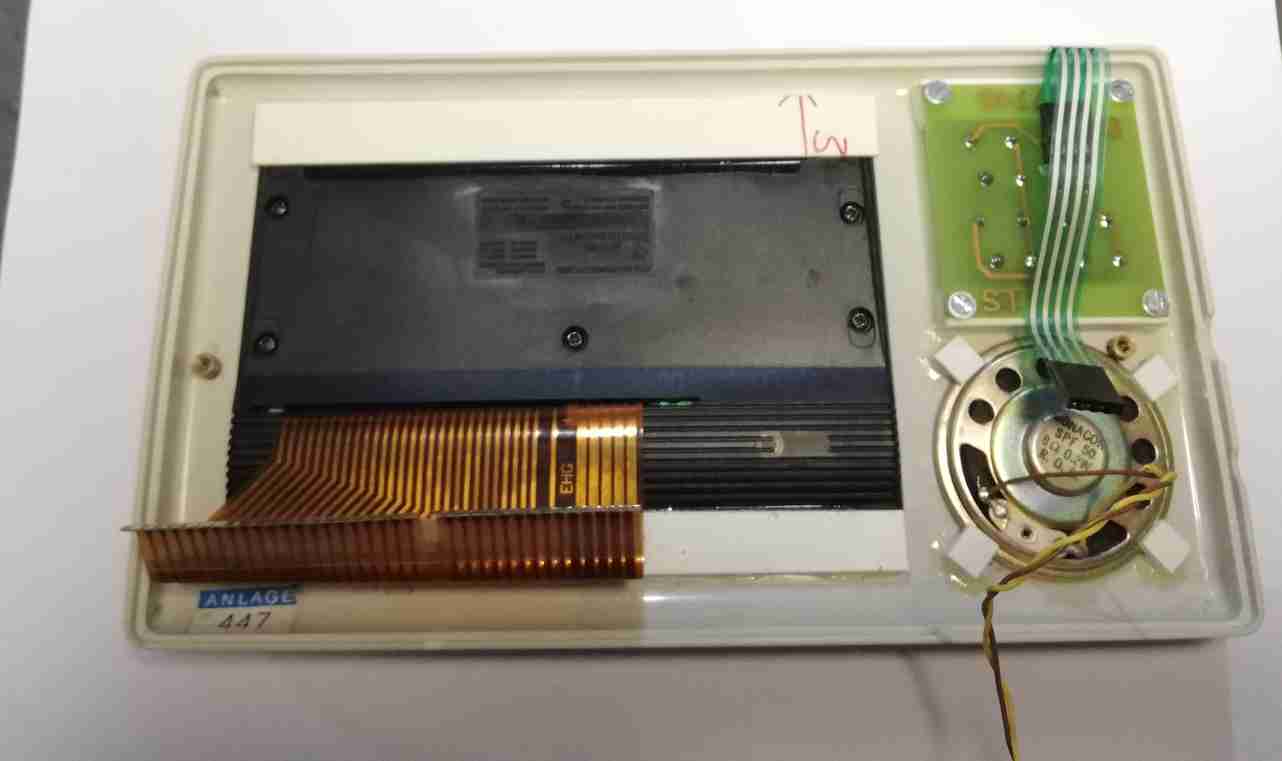 complete number. It speaks all key functions: e.g. when the [SIN] key is pressed the calculator says "Sine"; these announcements can be repeated. It also has a built-in clock and alarm function. The volume can be adjusted using a knob.
The language of the 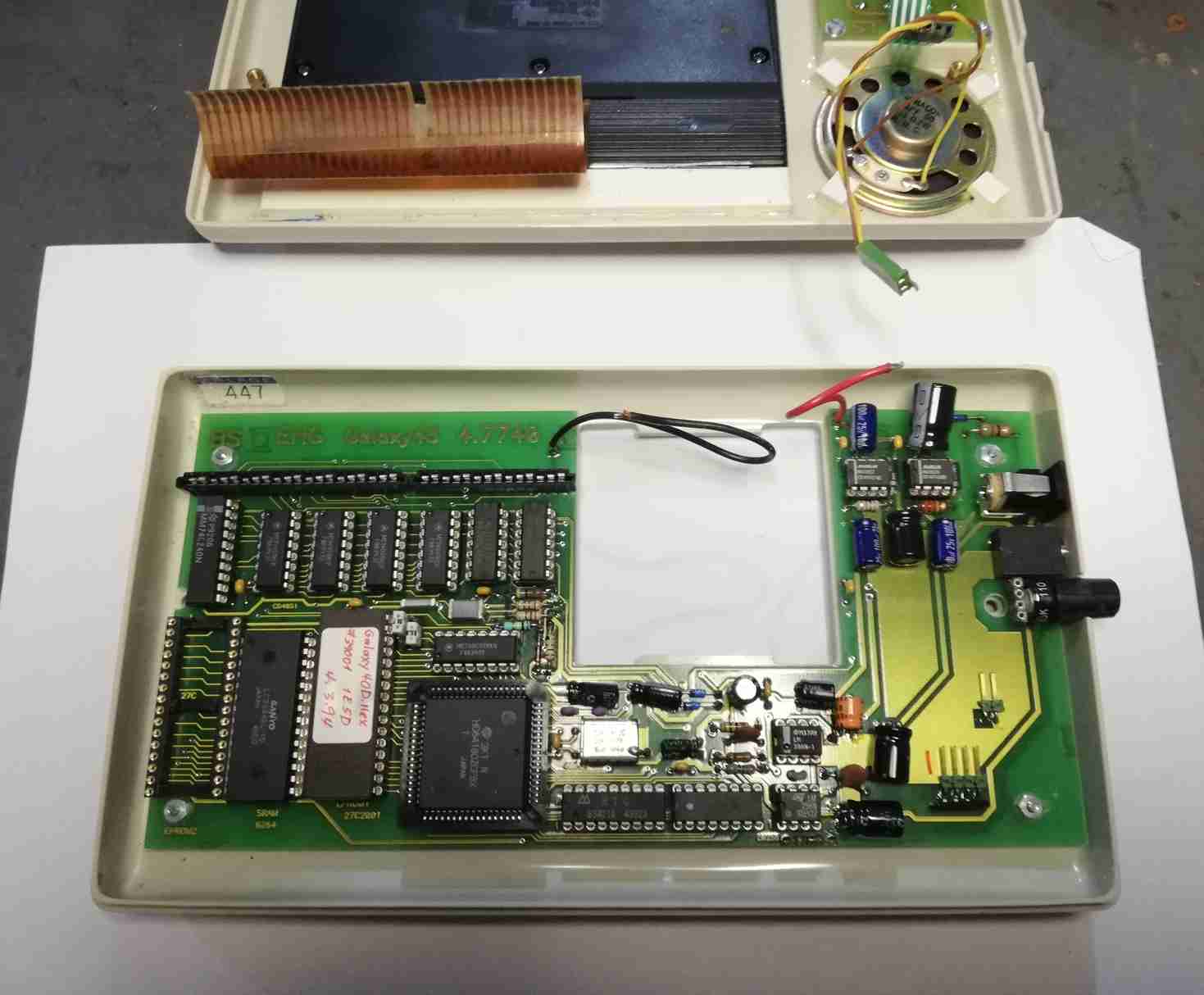 Galixa Speech could be choosen between: German, English, French, Italian, Dutch, Spanish,Swedish, Swabian German
EHG Handy Tech Elektronik GmbH introduced the first scientific calculator with voice output and 10-cell Braille display with the Galixa Braille. The first calculator with an upgradeable Braille cell output was the Braillotron TI-2550 II developed by Mr. Schoenherr.
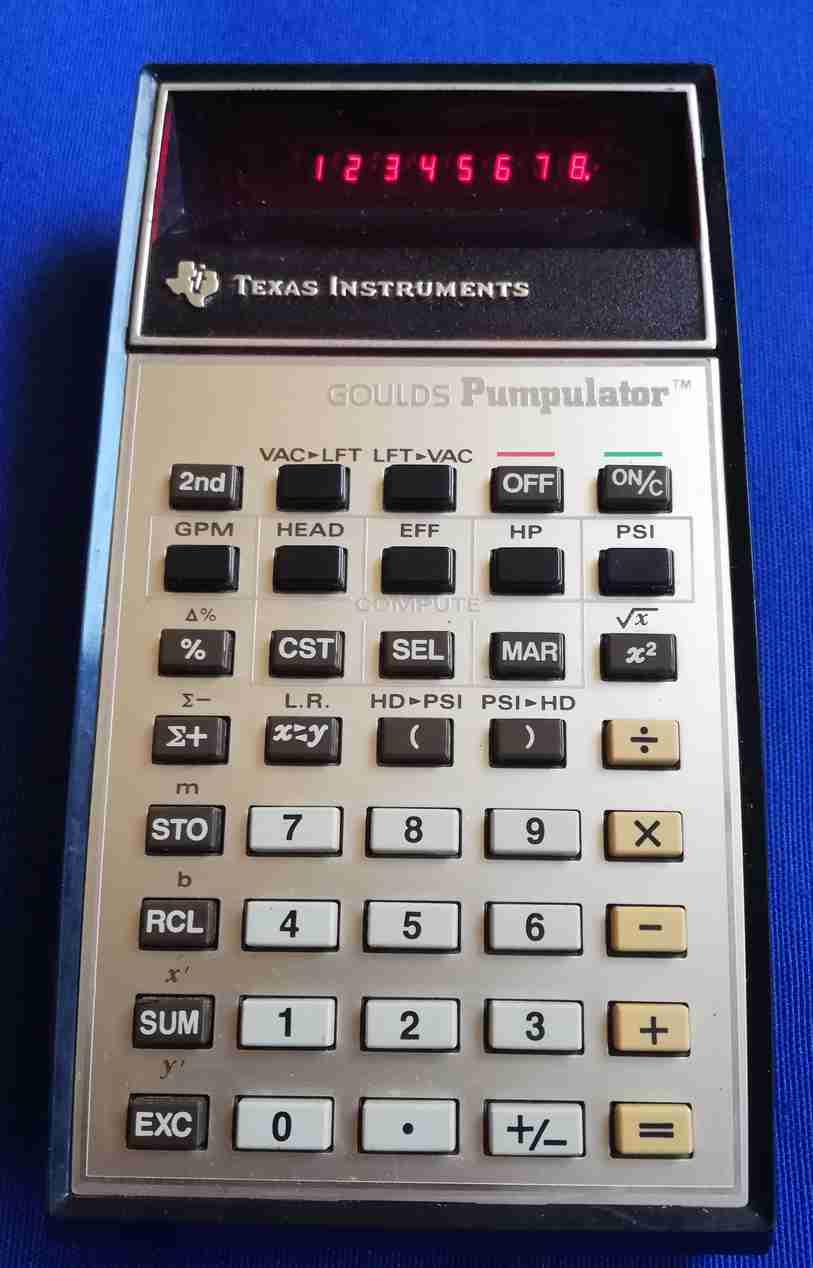 Model: Goulds Pumpulator
Battery: 9 volt o
Adapter: AC9132
Year: 1980
Chip: TMC0980 (CD9801)
Info: MAJESTIC line
Manual: with permission www.datamath.org
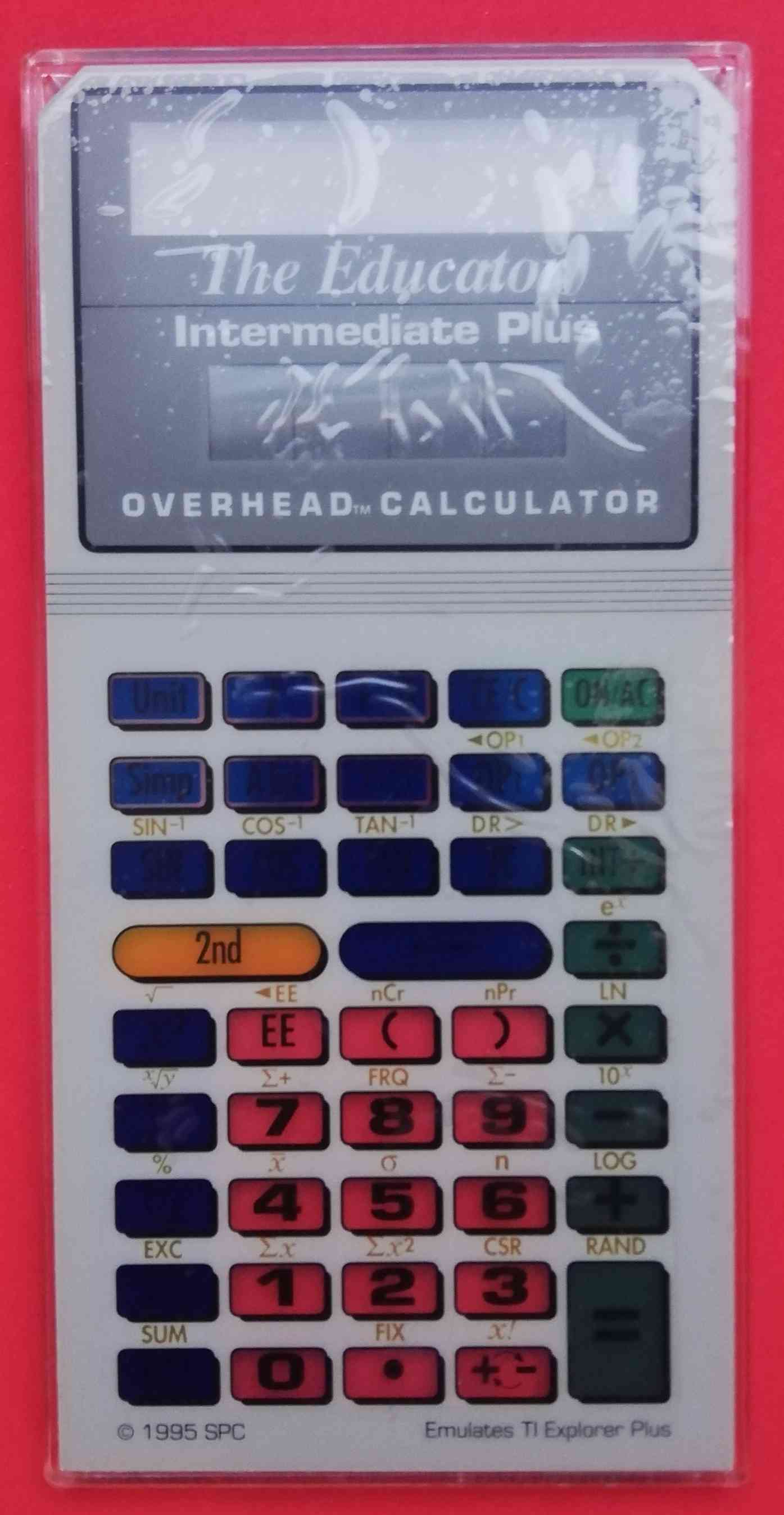 Model: Intermediate plus overhead
Battery:
Adapter:
Year:
Chip: made in China
Info: The California based company Stokes Publishing Company, Inc. distributes under the label "The Educator®"
calculators optimized for teaching purposes. William T. Stokes filed already July 30, 1991 the US Patent Application U.S. Pat. No. 5,035,502
with the title "Transparent calculator for overhead projection".
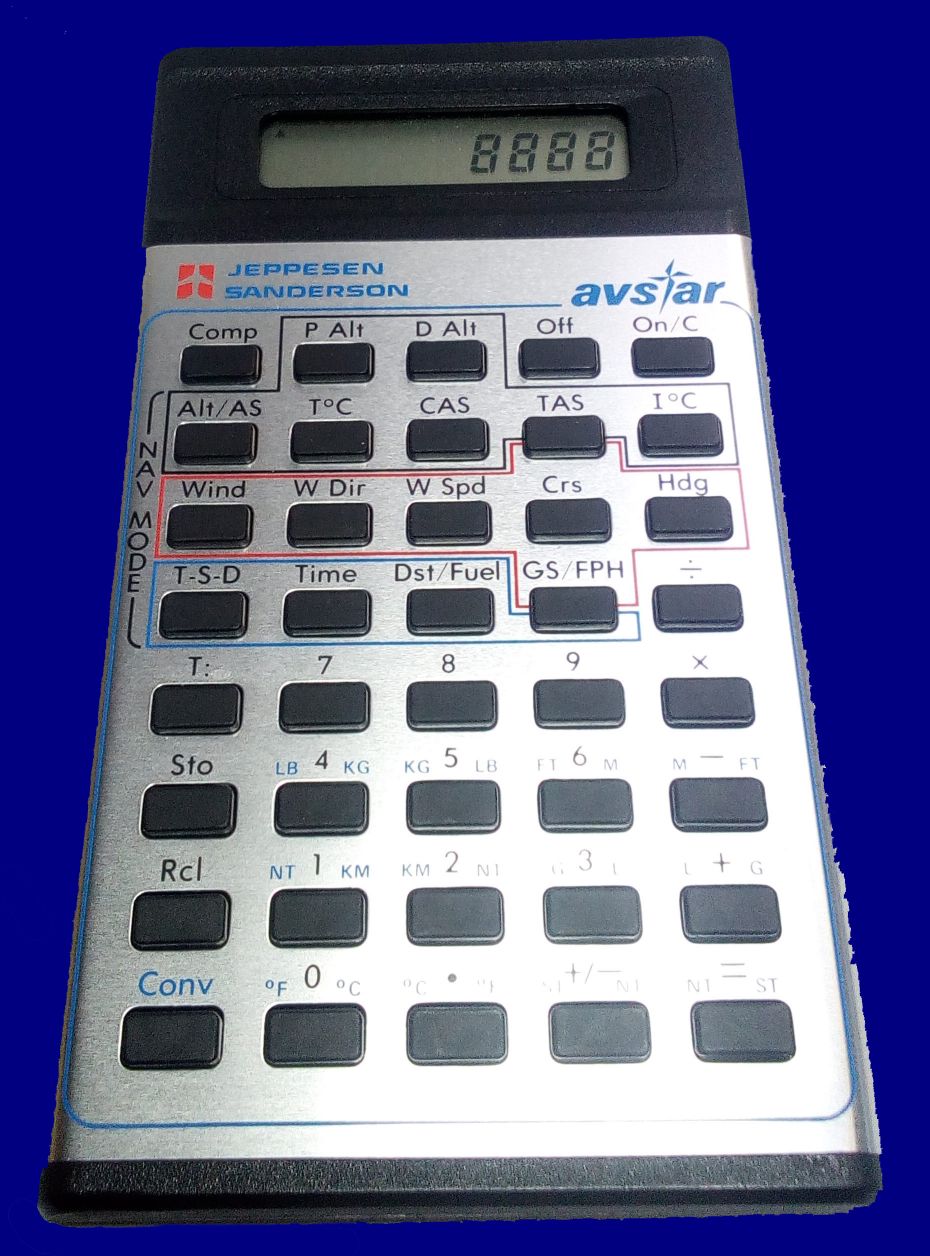 Model: Jeppesen Avstar 1980
Battery: 2 x LR44
Adapter:
Year: 1980
Chip: TPO328
Info: JEPPESSEN line
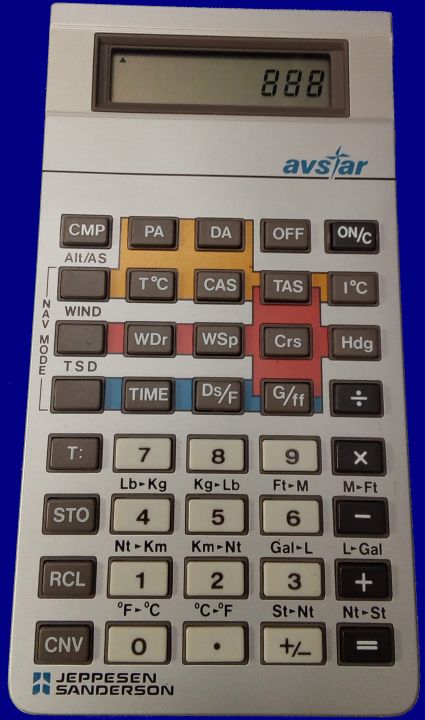 Model: Jeppesen Avstar 1986
Battery: 2 x LR44
Adapter:
Year: 1986
Chip: TPO328
Info: JEPPESSEN line
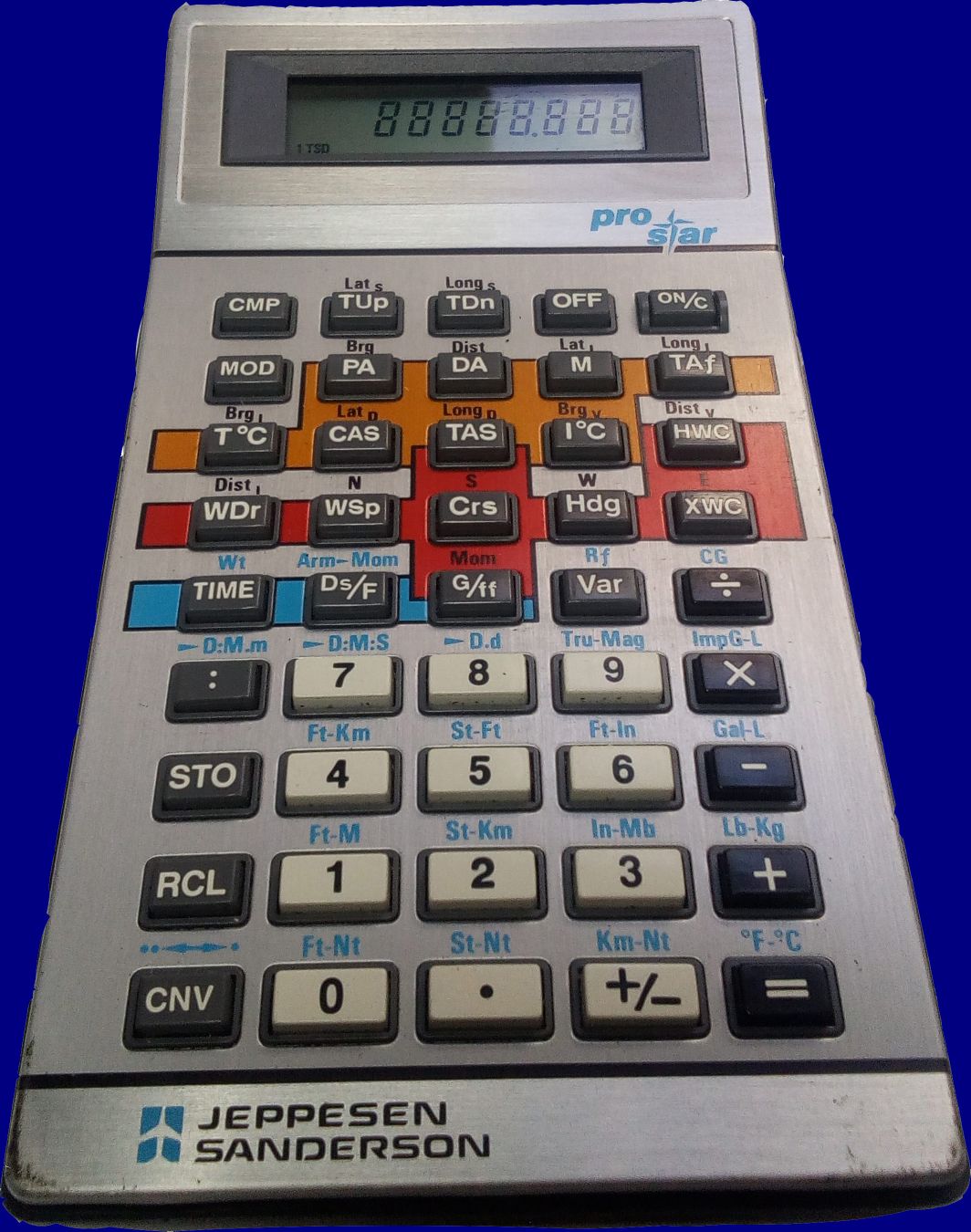 Model: Jeppesen Prostar
Battery: 2 x LR44
Adapter:
Year: 1983
Chip: CD4575 - CD4576
Info: JEPPESEN line
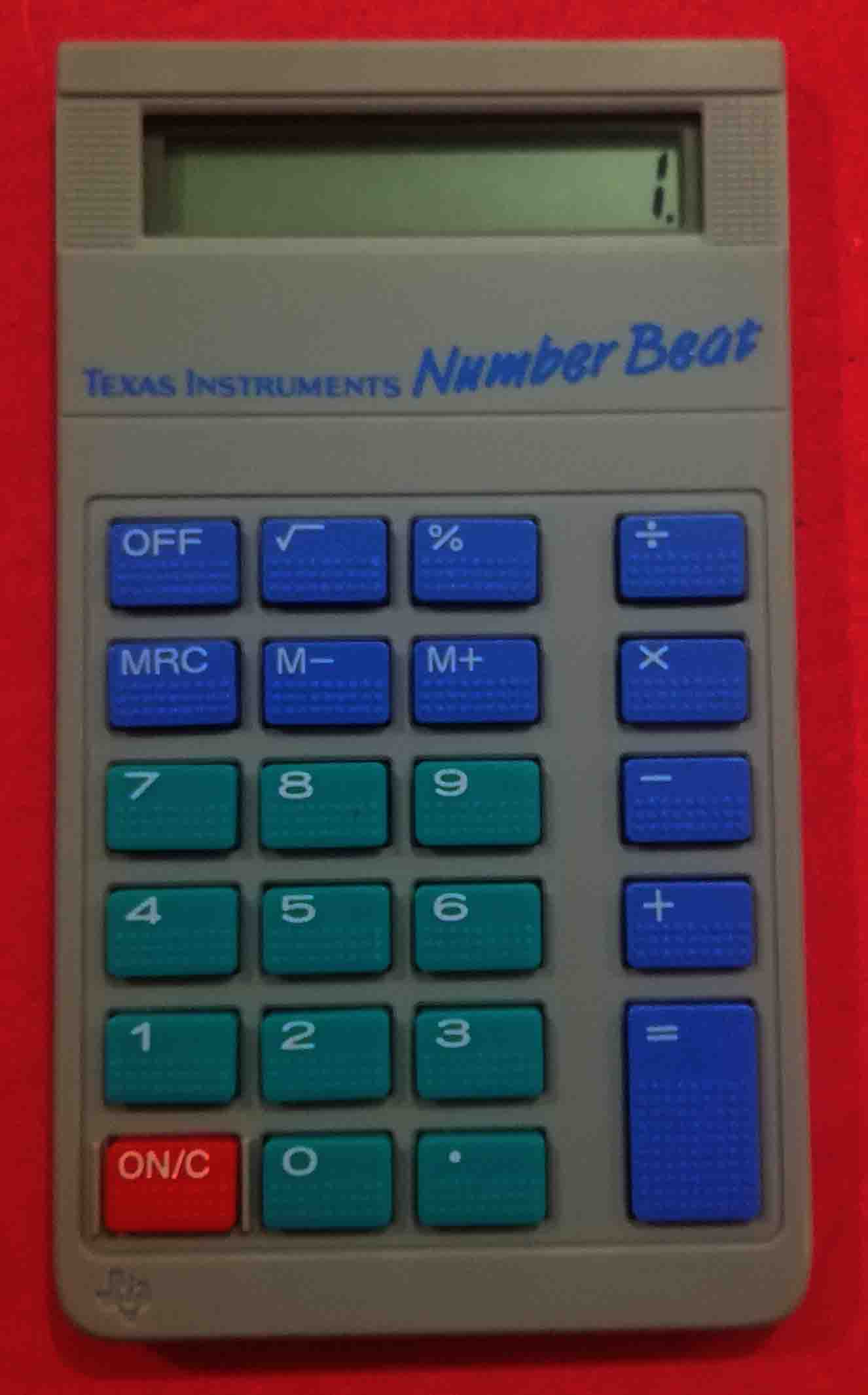 Model: Number Beat
Battery: LR43
Adapter:
Year: 1987
Chip:
Info:
 Model: Spirit of 76
Battery: 9 volt
Adapter:
Year: 1972
Chip: TMC0952
Info:
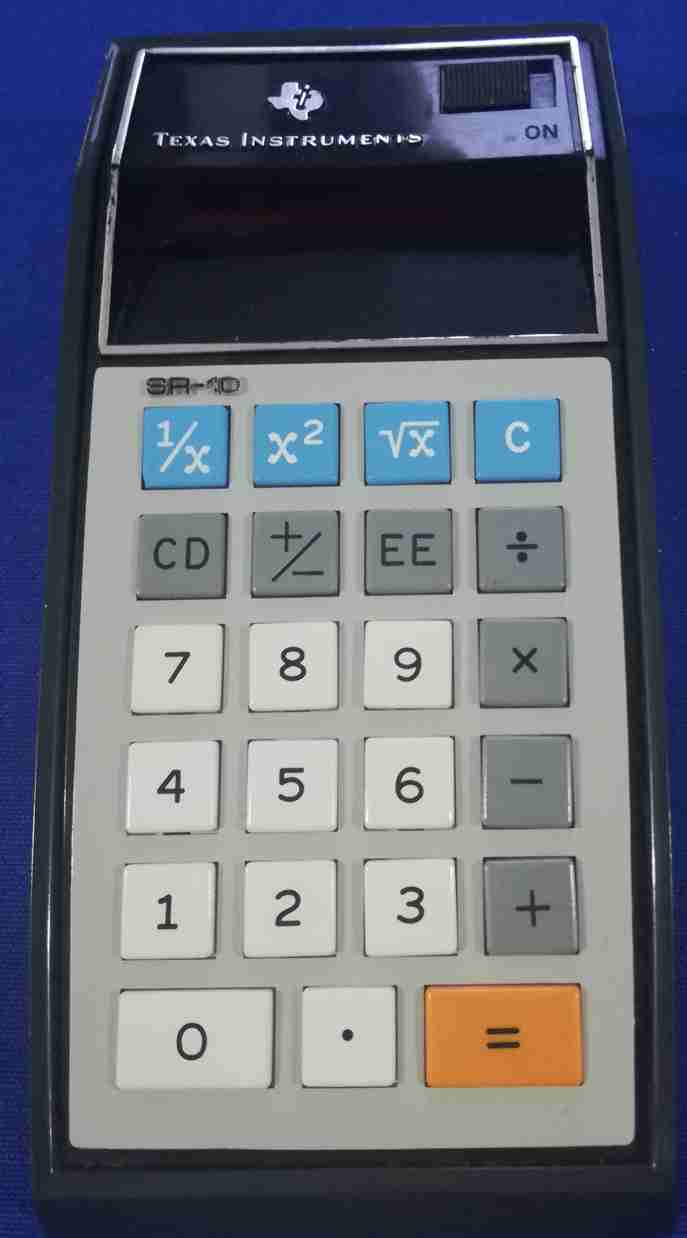
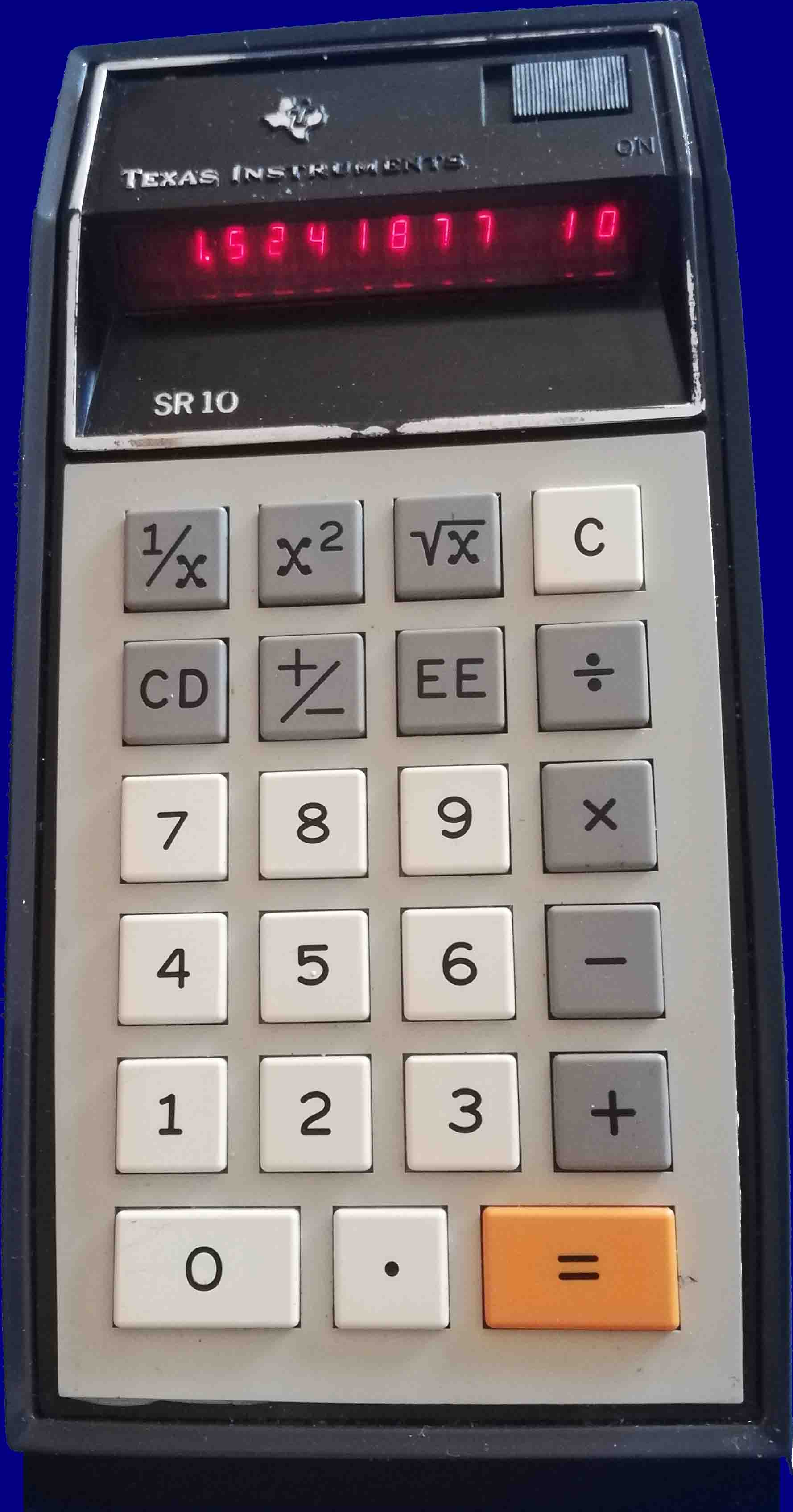 Model: SR-10 Italy
Battery: 3 x AA ni-cd
Adapter: AC9900
Year: 1973
Chip: TMS0120
Info: TIP line - classic first GENERATION the logo is inside the display
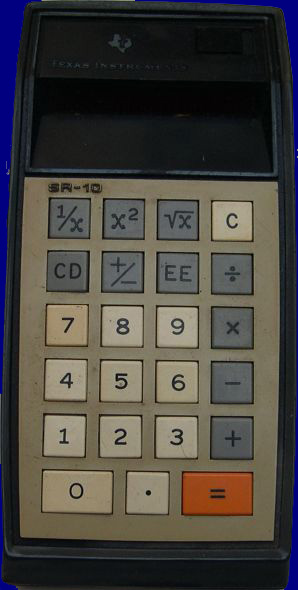
 Model: SR 10 Italy
Battery: 3 x AA ni-cd
Adapter: AC9900
Year: 1973
Chip: TMS0120
Info: This Calculator has 4 upper keys BLUE prototype or Fake ?
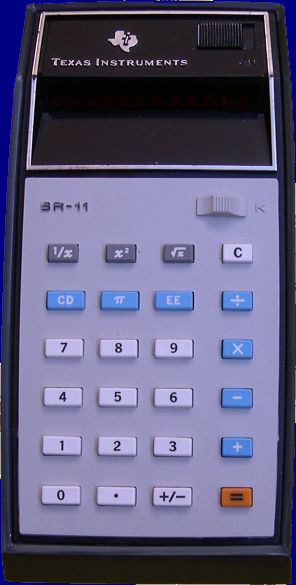
 Model: SR-10 vers. 2
Battery: 3 x AA ni-cd
Adapter: AC9900
Year: 1973
Chip: TMS0120
Manual: with permission www.datamath.org
Info: TIP line - classic first GENERATION
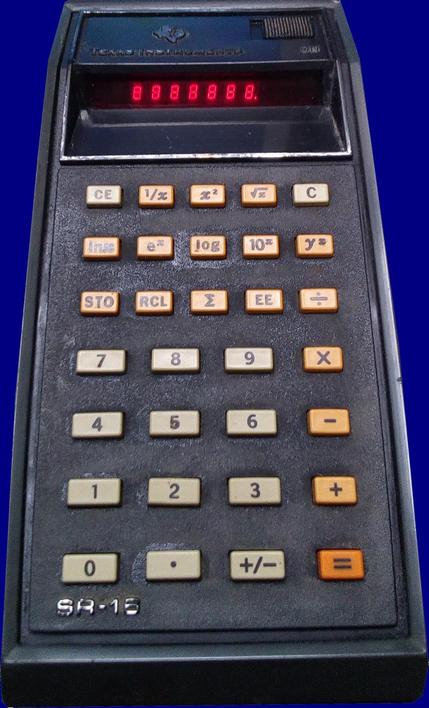
 Model: SR-11
Battery: 3 x AA ni-cd
Adapter: AC9900
Year: 1974
Chip: TMS0602
Manual: with permission www.datamath.orgInfo: TIP line - classic first GENERATION
 Model: SR-16
Battery: 3 x AA ni-cd
Adapter: AC9200
Year: 1975
Chip: TMC1001
Manual: with permission www.datamath.org
Info: TIP line - classic first GENERATION
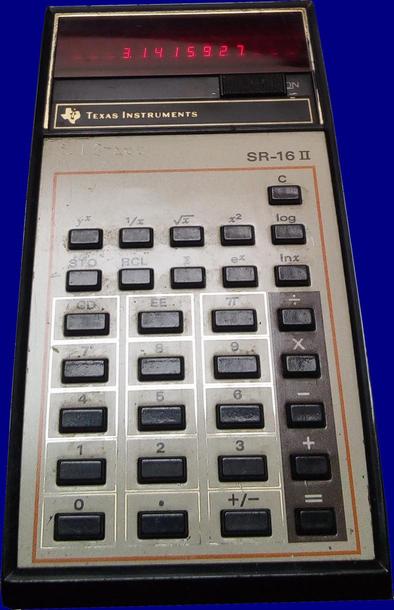 Model: SR-16 II
Battery: 3 x AA
Adapter: AC8190
Year: 1975
Chip: TMC1016
Info: classic second GENERATION
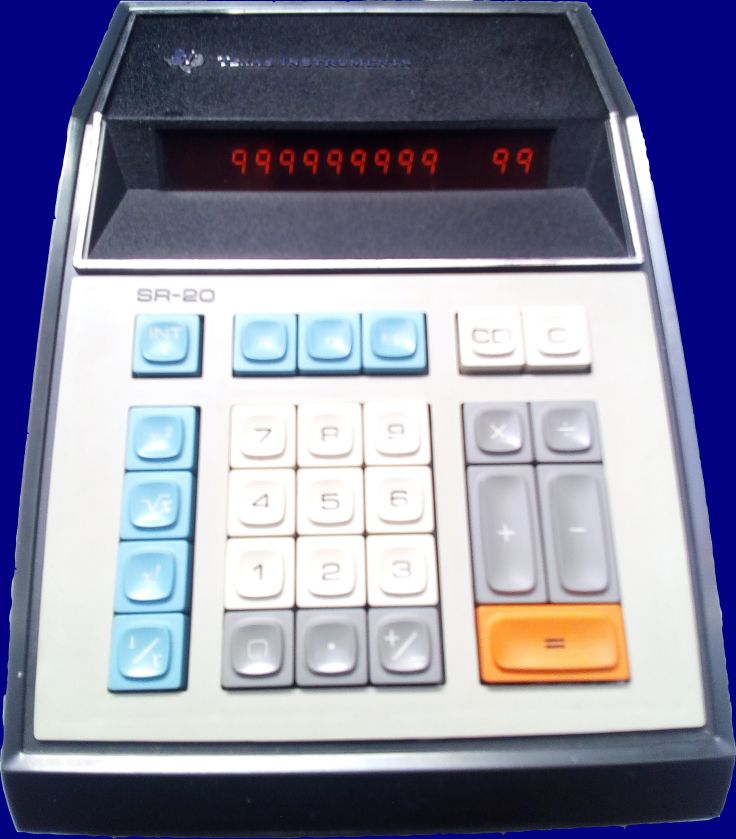 Model: SR-20
Battery:
Adapter: AC 110 volt
Year: 1973
Chip: TMS02020, TMS0304
Manual: with permission www.datamath.org
Info: DESKTOP line
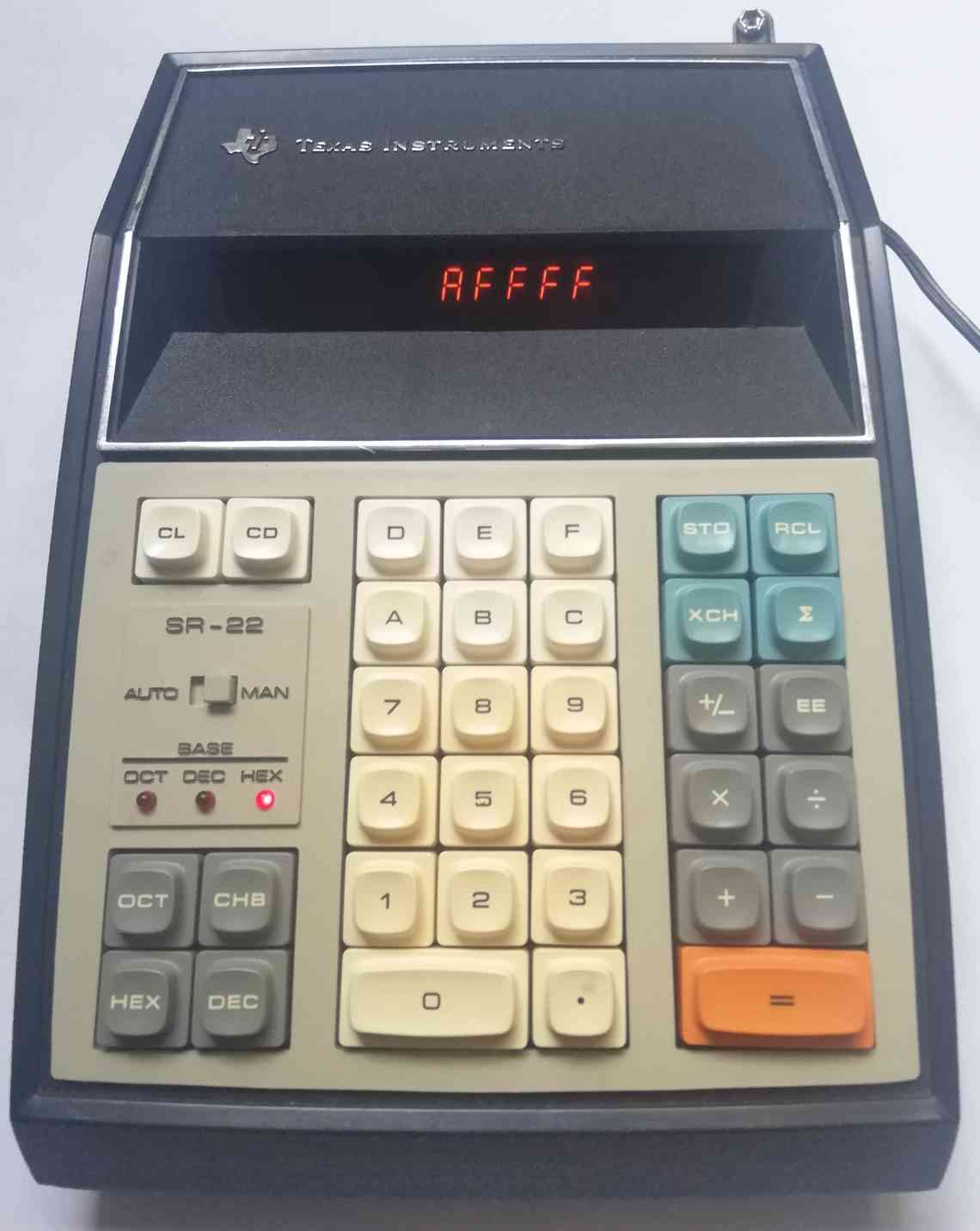
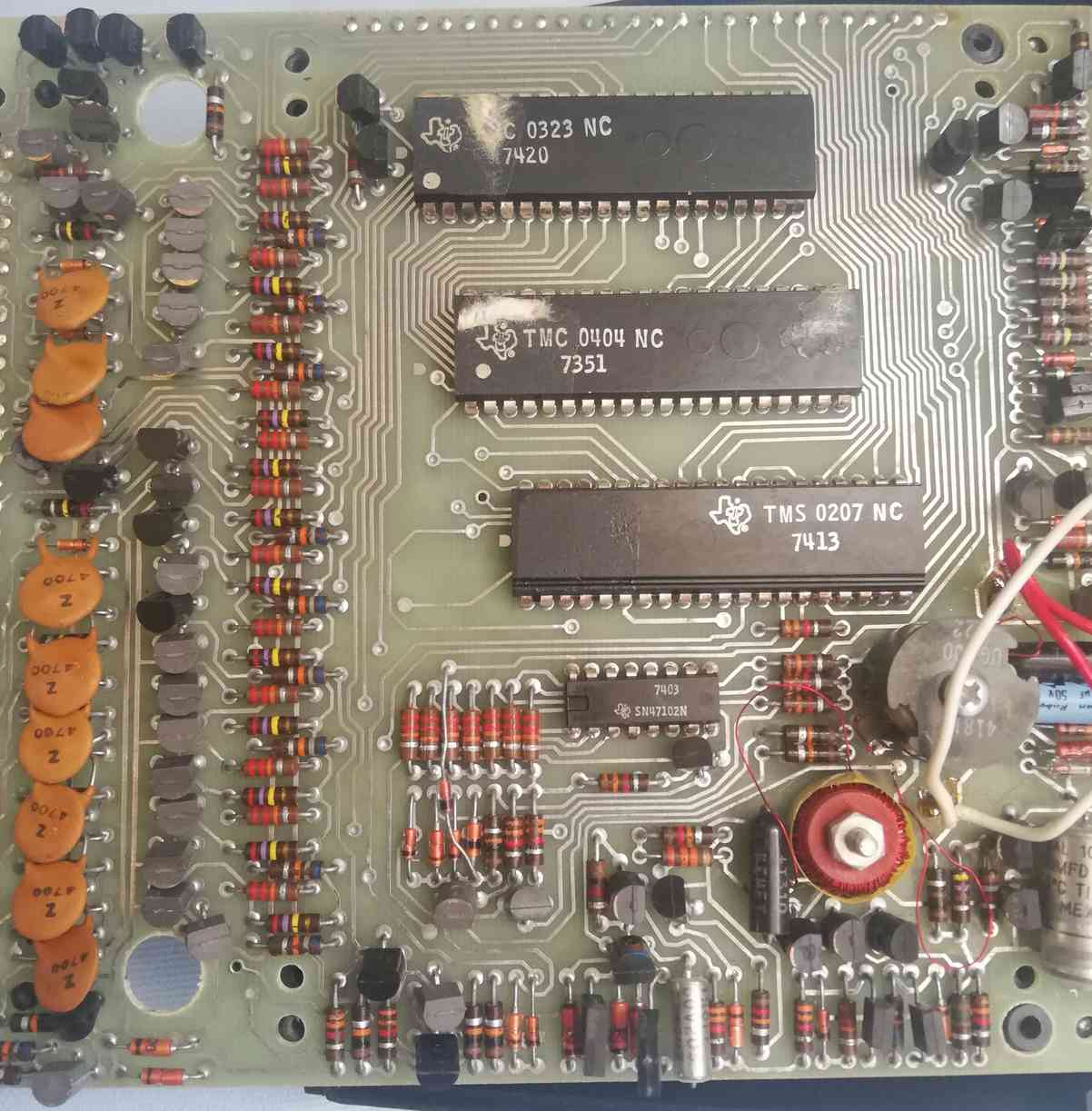
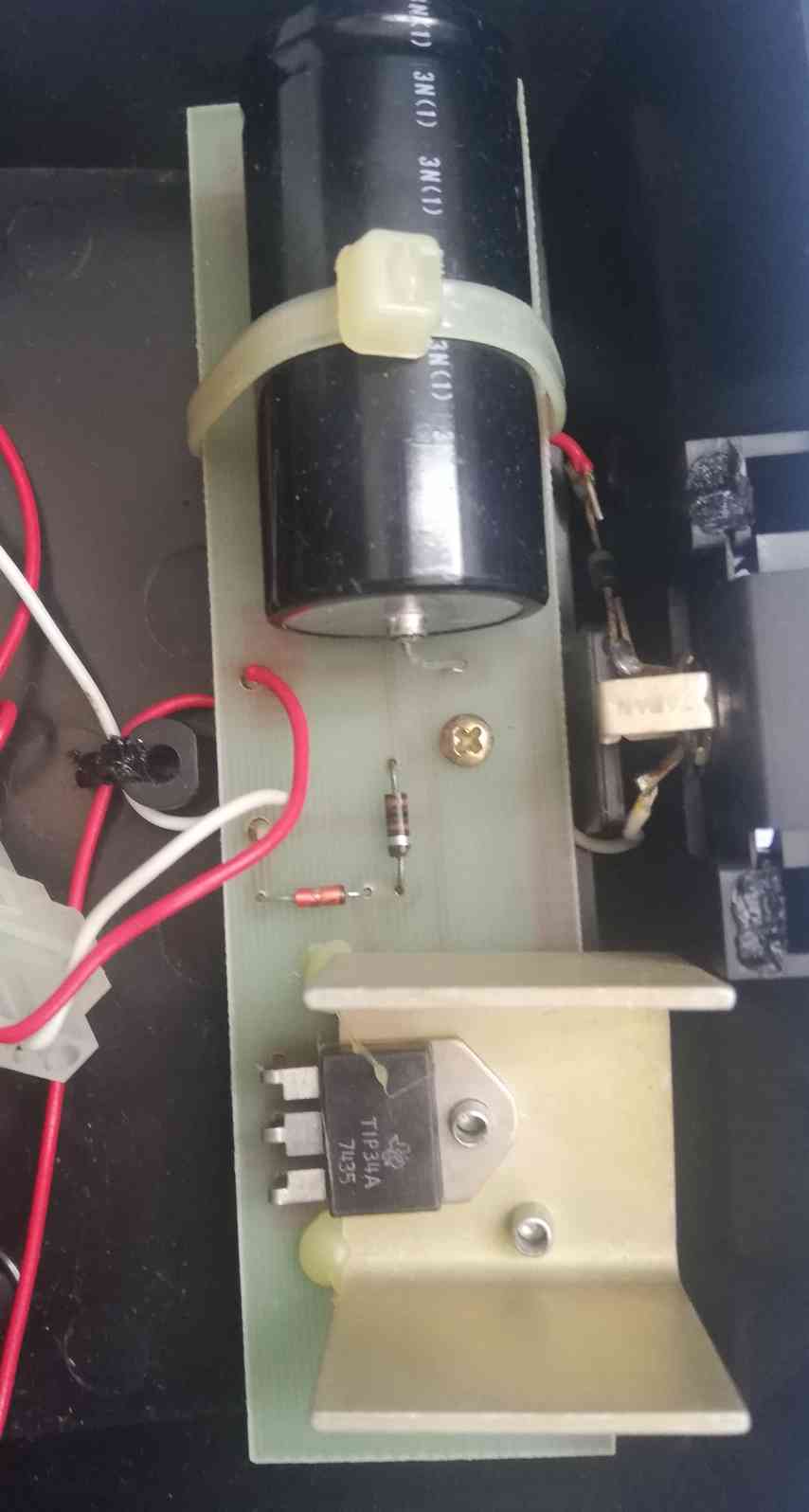 Model: SR-22
Battery: no
Adapter: AC9222
Year: 1974
Chip: TMS0207, TMC0323, TMC0404
Info: Look carefully at the display of the SR-22 and you'll notice immediately that this calculator could perform amazing calculations. It is the only calculator reported so far to perform Octal-Decimal-Hexadecimal conversions on the base of floating point numbers.
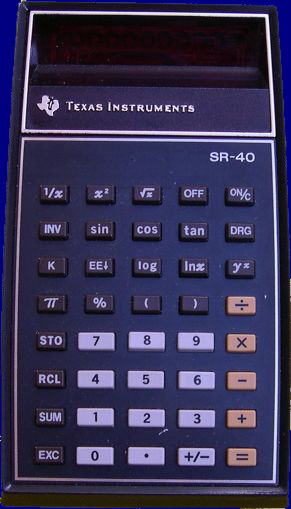 Model: SR-40
Battery: BP 5
Adapter: AC9132
Year: 1976
Chip: TMC0981
Manual: with permission www.datamath.org
Info: MAJESTIC line
.jpg) Model: SR-40 LCD
Model: SR-40 LCD
Battery: 2 x AA
Adapter: NO
Year: 1981
Chip: TP0320
Manual:
Info:The extremely rare SR-40 LCD (1981) calculator produced in Brazil is an interesting model, as at first glance it looks very similar to the European version of the TI-30 LCD. However, a few differences set it apart. One of the most noticeable differences concerns the keys: while the European TI-30 LCD features the **N!** (factorial) key, the Brazilian SR-40 LCD has the **x!** key, a detail that might reflect slight variations in functionality or target use. Another notable difference is the design of the battery compartment. The SR-40 LCD uses two AA batteries, but the compartment cover requires a coin to be opened, unlike the sliding cover of the European TI-30 LCD. This feature probably represents an adaptation for greater durability or security in battery replacement. These small variations between the models highlight production differences between different markets, making the SR-40 LCD a particularly rare and interesting piece for vintage calculator collectors.
.jpg)
.jpg)
.jpg)
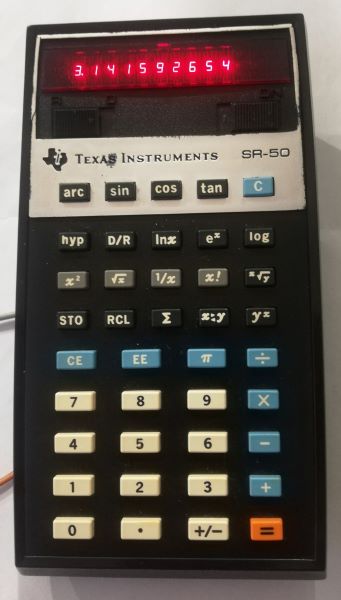 Model: SR-50
Battery: BP 1
Adapter: AC9200
Year: 1974
Chip: TMC0501 / 0521
Manual: with permission www.datamath.org
Info: TIP line - classic first GENERATION
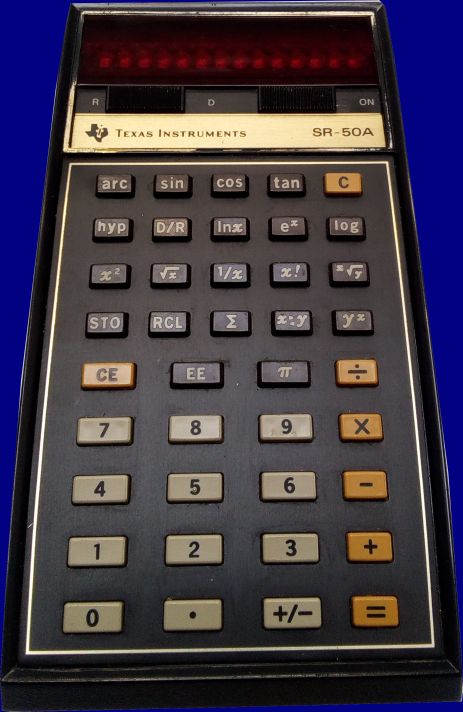 Model: SR-50 A
Battery: BP 1 A
Adapter: AC9130
Year: 1976
Chip: TMC0501 - TMC0503
Manual: with permission www.datamath.org
Info: classic second GENERATION
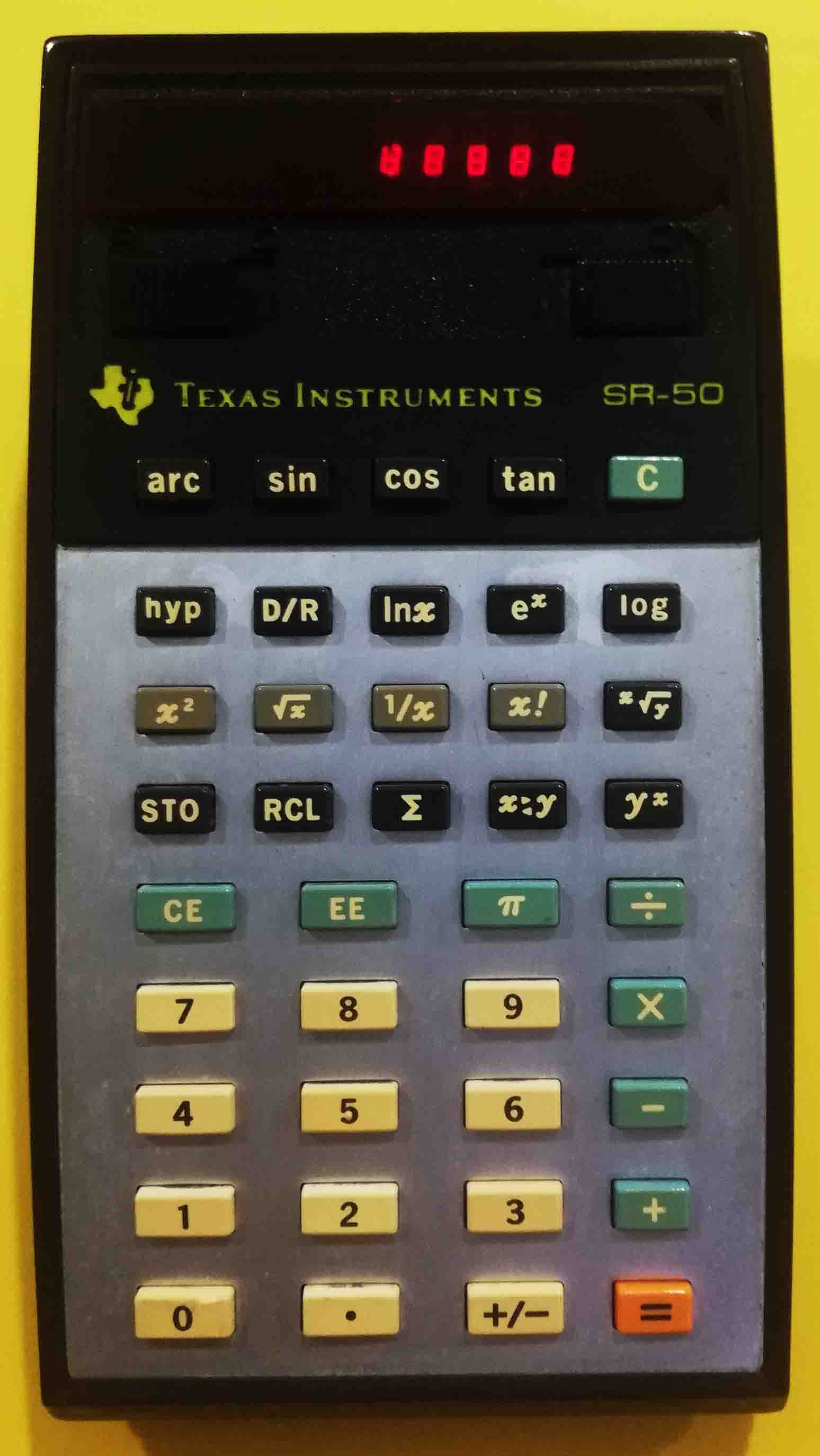 Model: SR-50 Dismac
Battery: BP 1
Adapter: AC9200
Year: 1974
Chip: TMC0501 / 0521
Manual:
Info: Fellow calculator collector Marie Lisa Collas surprised us in December 2015 with this unusual looking SR-50manufactured for Dismac Industrial S.A. in Brazil. Texas Instruments changed the appearance of the original dramatically by simply switching the silver colored aluminum bezel from the display frame to the keyboard. Purchased in 2022.
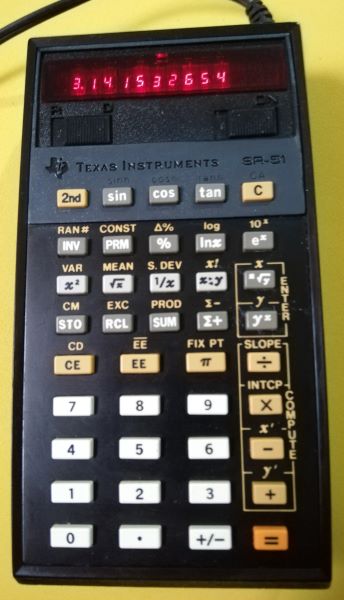 Model: SR-51 1v
Display: 10 + 2
Battery: BP 1
Adapter: AC9200
Year: 1975
Chip: TMC0501, TMS0522, TMC0523
Manual:
Info:With the SR-51 Texas Instruments began a series of scientific calculators that added statistical functions and conversions to the "usual functions". But none of them are engineered as flawlessly as the SR-51. It was built as a tank to survive decades of use like its close relative SR-50. Compared to previous models, the SR-51 got a keyboard design with white, gray, yellow and orange keys and gave a perspective to later TI calculators. To reduce manufacturing costs and to give a similar look and feel to the SR-52 and SR-56 calculators, the SR-51 was replaced within months with the SR-51A. Logically it is quite rare. However, two different variants are known: this model from an early production batch uses huge yellow characters for the 2 shifted functions, while the later SR-51 sports much finer print.
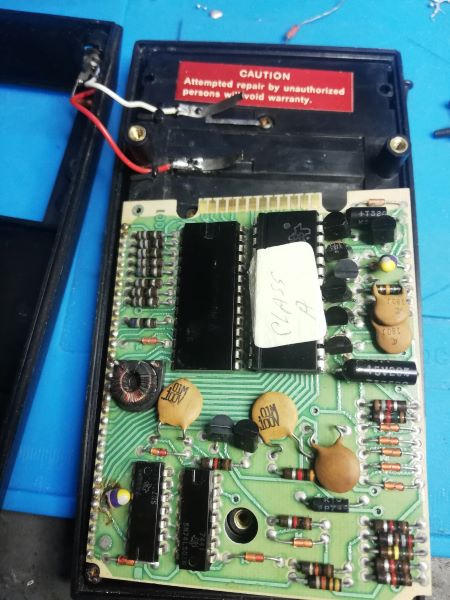
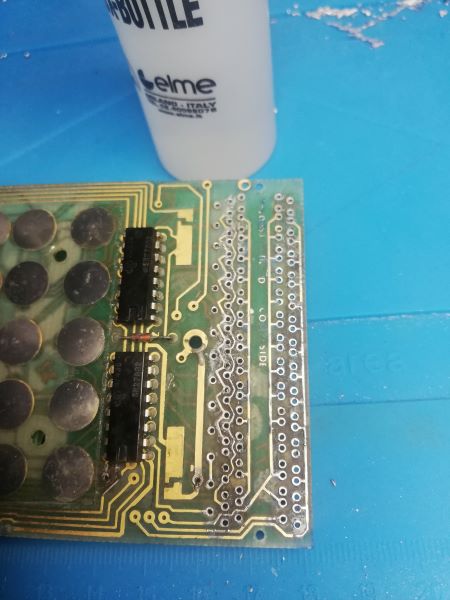
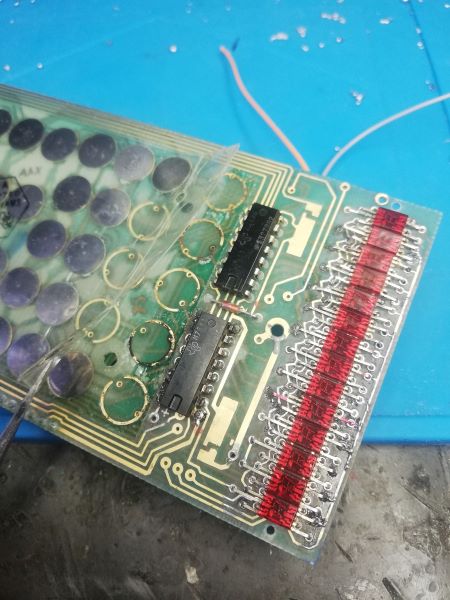
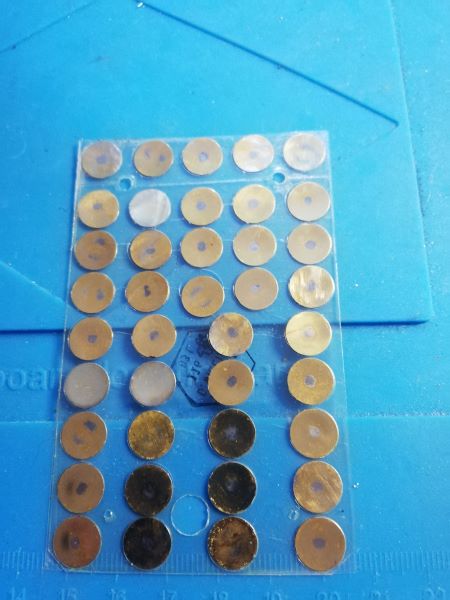
This rare model had many parts corroded by battery acid, the 7-segment displays completely corroded, the replacement and cleaning of the keyboard can be seen on the side.
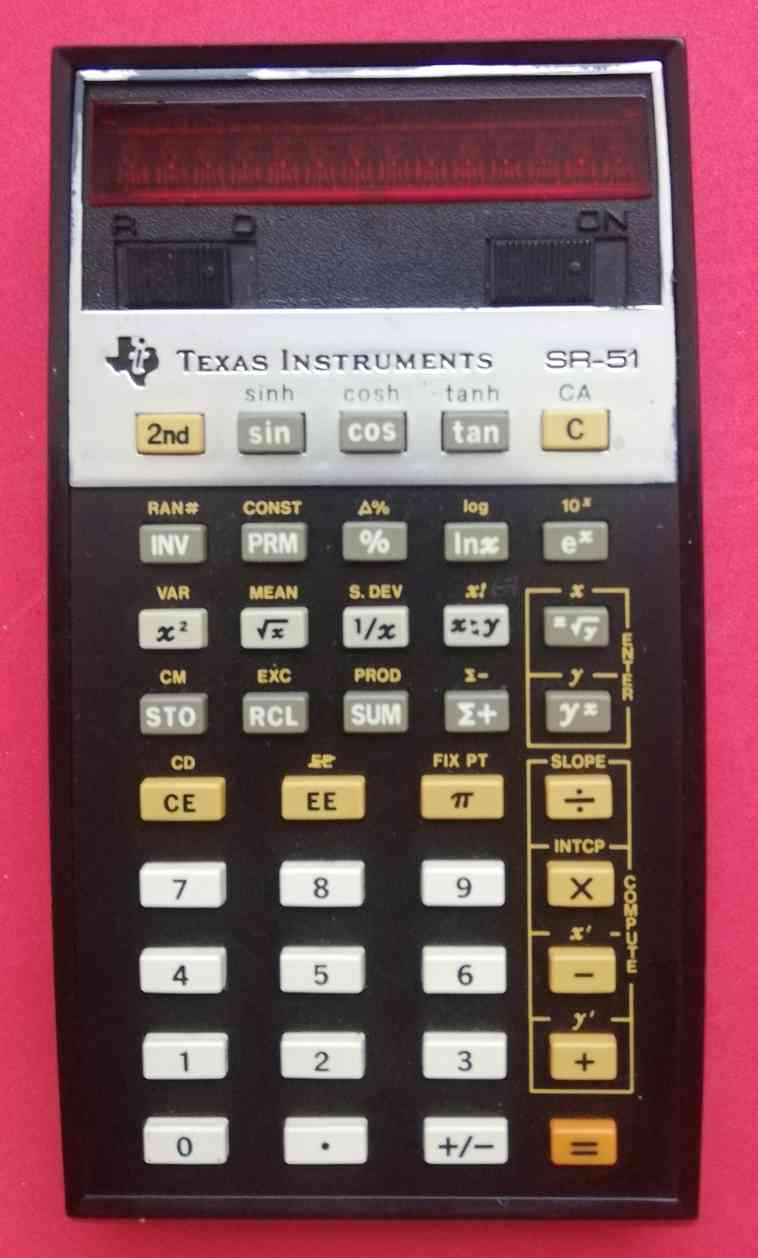 Model: SR-51 2v
Battery: BP 1
Adapter: AC9200
Year: 1975
Chip: TMC0501, TMS0522, TMC0523
Manual: with permission www.datamath.org
Info:
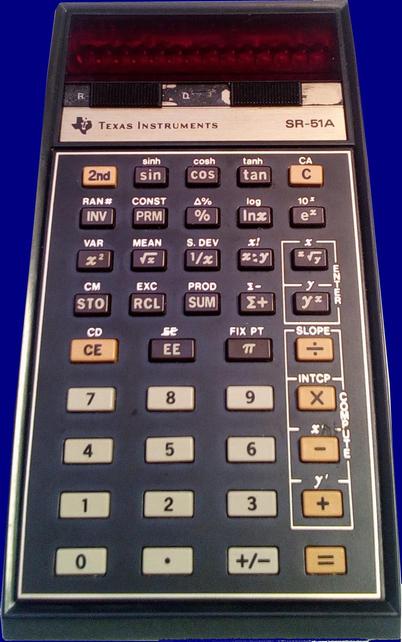 Model: SR-51 A
Battery: BP 1
Adapter: AC9130
Year: 1976
Chip: TMC0501 / 522 / 523
Info: classic second GENERATION
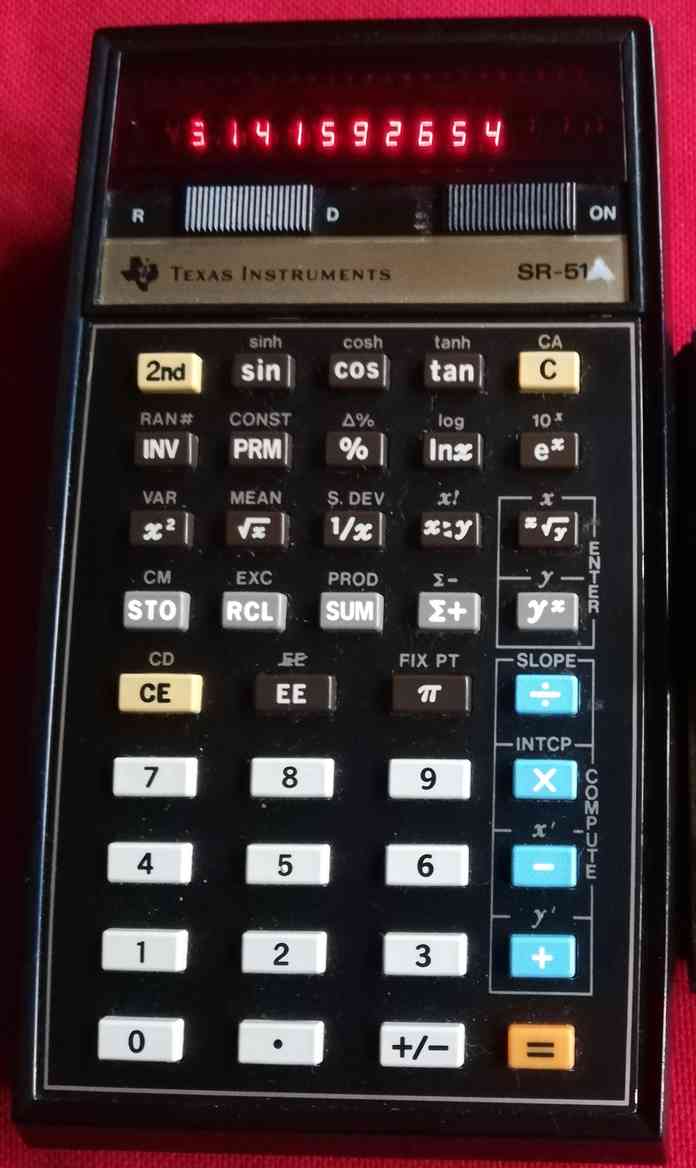 Model: SR-51 A
Battery: BP 1
Adapter: AC9130
Year: 1976
Chip: TMC0501 / 522 / 523
Info:This calculator has the 4 keys for BLUE operations is it a prototype or a fake?
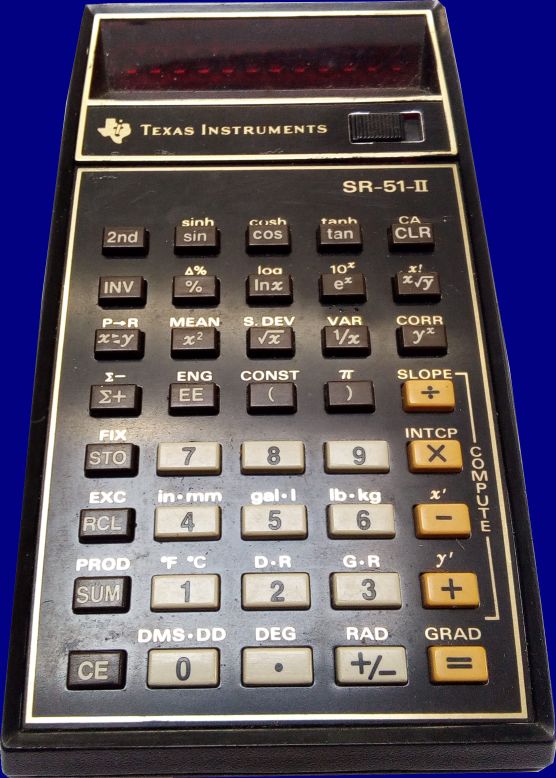 Model: SR-51 II
Battery: BP 6
Adapter: AC9131
Year: 1977
Chip: TMC0501 / 581
Manual: with permission www.datamath.org
Info: MAJESTIC line
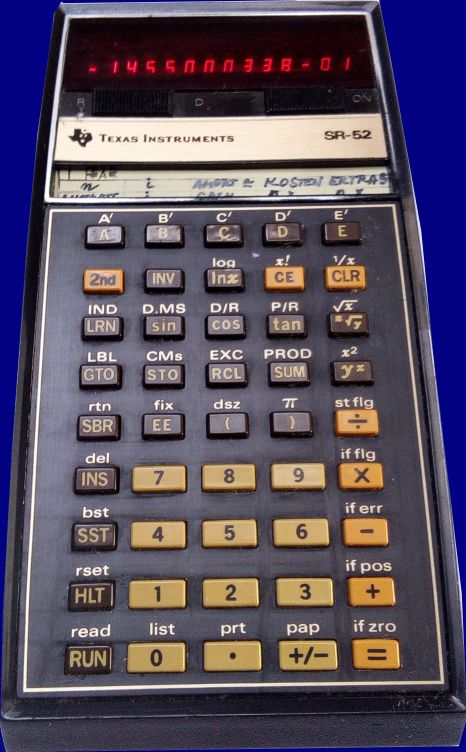 Model: SR-52
Battery: 3 x AA
Adapter: AC9130A or DC9105
Year: 1975
Chip: TMC0501 / 0524 /0595 / 2xTMC0599, 2xTMC0561/0562
Manual: with permission www.datamath.org basic library
Info: classic second GENERATION
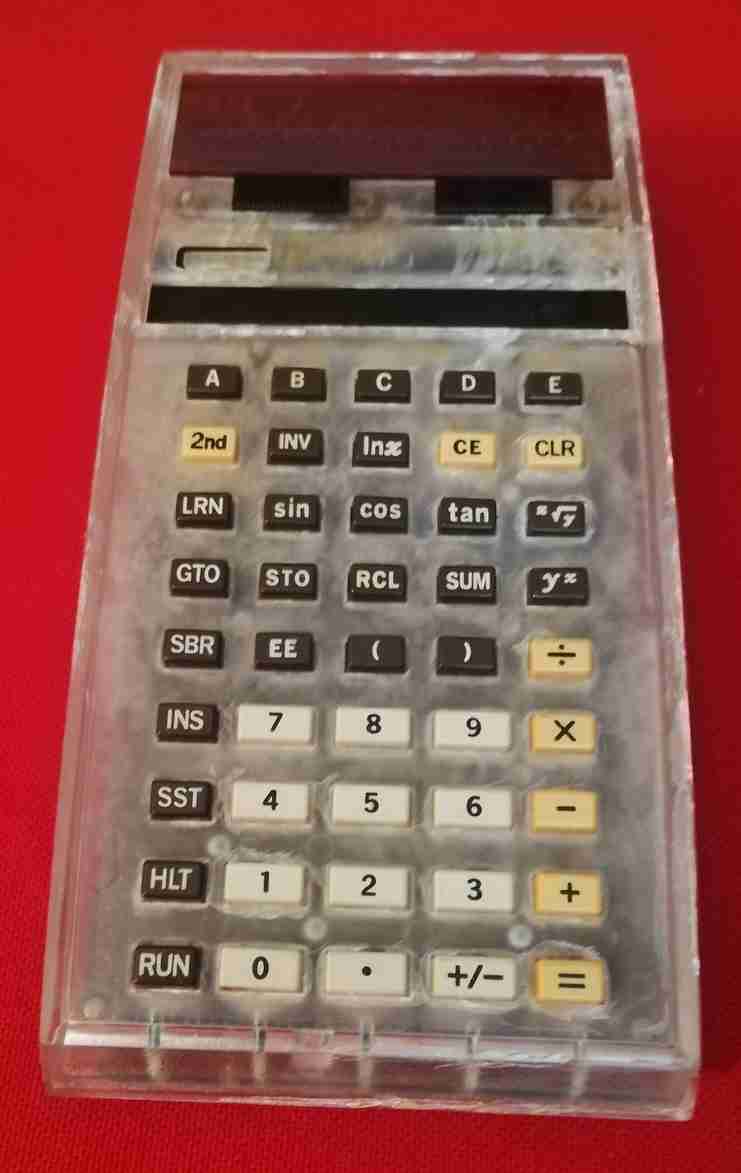 Model: SR-52 clear case
Battery: 3 x AA
Adapter: AC9130A
Year: 1976
Chip: TMC0501, TMS0537, TMC0538, TMC0599
Info: This SR-52 Clear-Clase Prototype was most likely manufactured in November 1974 and is a strange hybrid sporting.
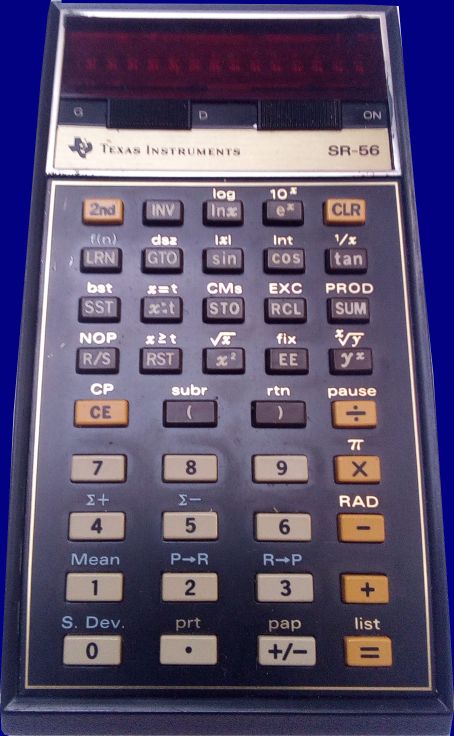 Model: SR-56
Battery: 3 x AA
Adapter: AC9130A
Year: 1976
Chip: TMC0501, TMS0537, TMC0538, TMC0599
Manual: with permission www.datamath.org
Info: classic second GENERATION
 Model: SR-60
Battery: NO
Adapter: AC 110 volt or AC 220 volt
Year: 1976
Chip: TMC0501, TMC0526 or TMC0536, TMC0564, TMC0565, TMC0566, TMC0567, TMC0568 or TMC0570, TMC0596, 5*TMC0599, TMC0253, TMC0254
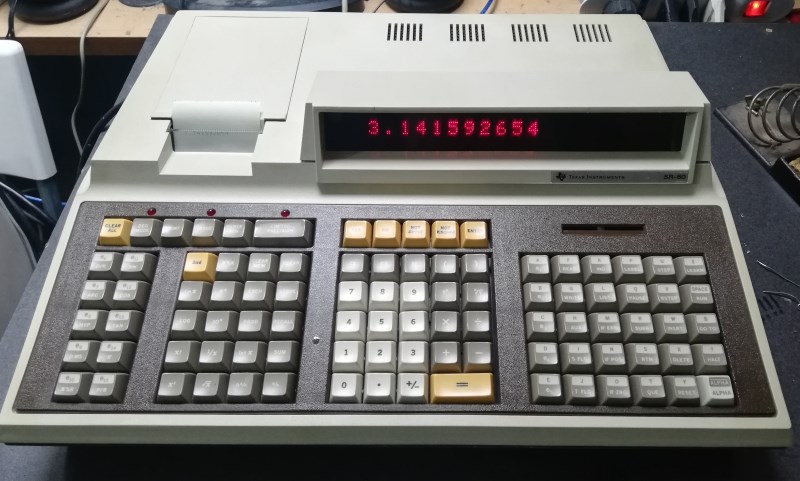
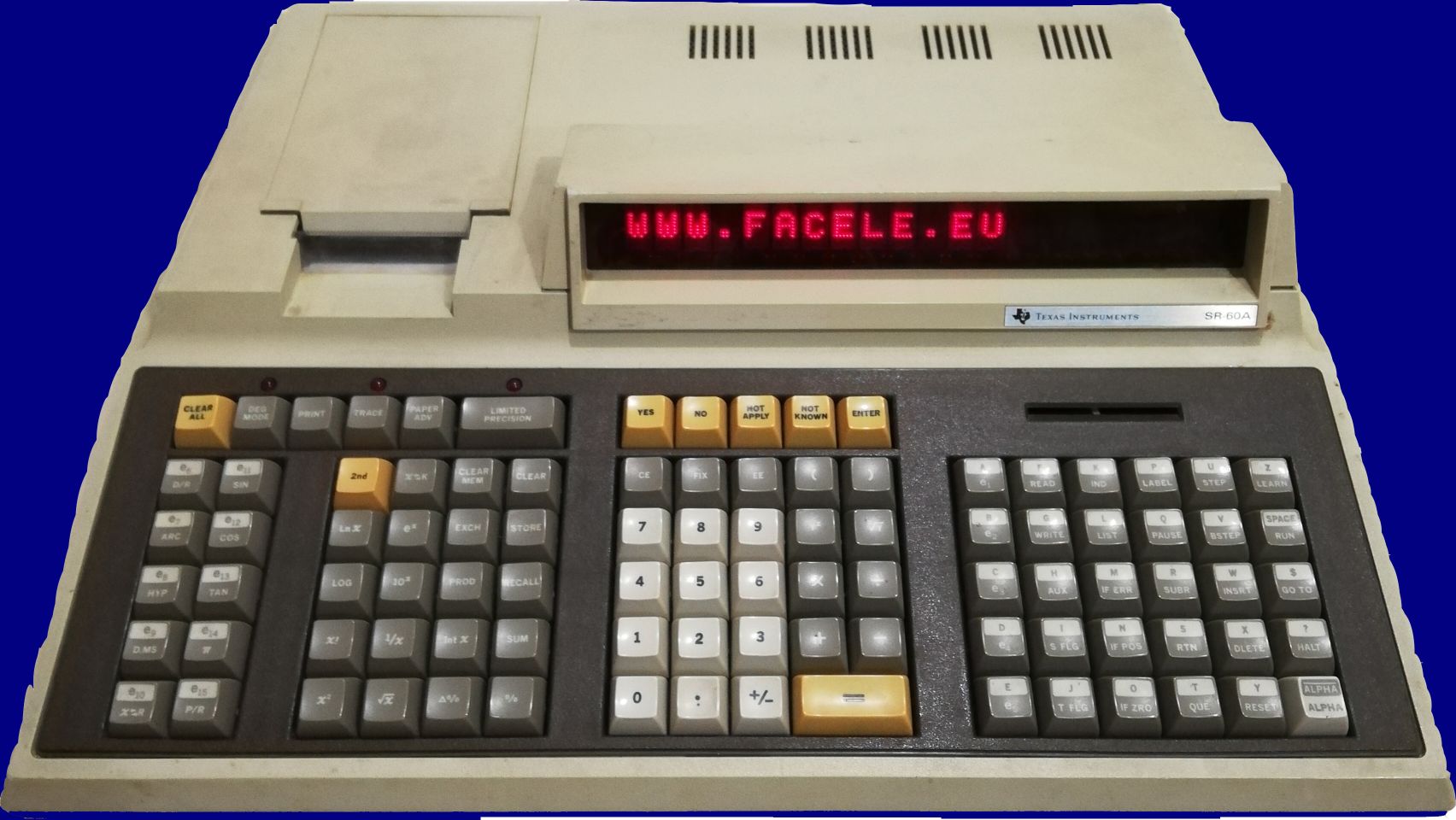
Info: Texas Instruments introduced in 1976 with the SR-60 their first high-end programmable desktop calculator. Priced at $1695 and with a footprint of roughly 17" by 14.5" (430 mm * 370 mm) the SR-60 resembled more a computer than a programmable calculator.
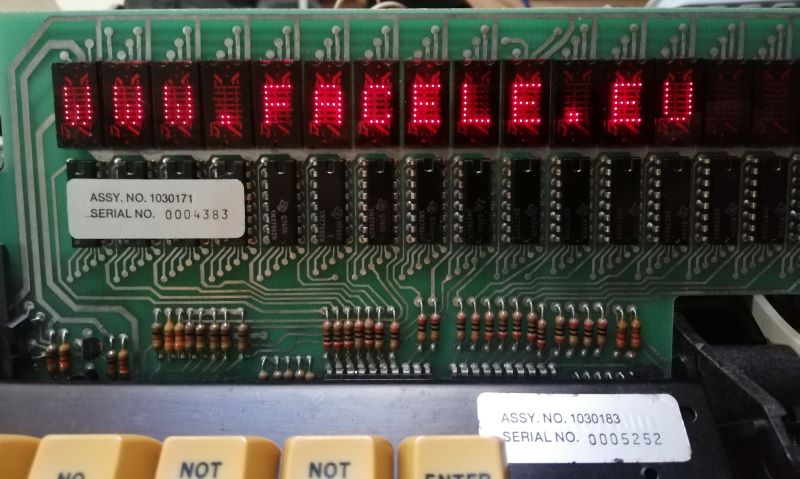
Based on the SR-52 and SR-56 series of programmable calculators, the SR-60 integrated a full-sized keyboard with 95 keys, a large alphanumeric display with 20 characters, a thermal dot-matrix printer with 20 characters and a magnetic card reader for saving and loading both programs and data.
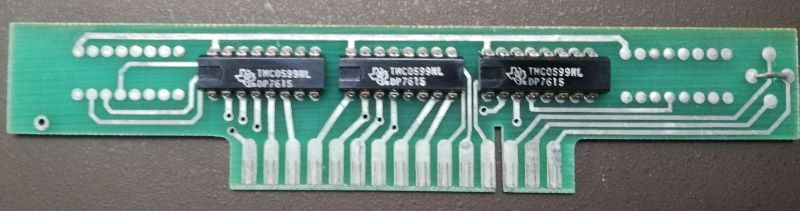
One of the main advantages of the SR-60 is the huge memory for data and program, already the base model could hold 480 program steps and 40 memory registers. Two memory expansion modules were available, one implemented with just two small daughter boards holding 5 resp. 3 TMC0599 RAM chips accessible through a bottom panel in the housing. The second memory expansion, a huge printed circuit board (PCB) with a total of 27 TMC0599 RAM chips, was mounted below the keyboard next to the Main PCB.
The SR-60 operates using pure algebraic logic (e.g., problems are presented to the machine as they would be written on paper). The calculator adheres to the PEMDAS (Parenthesis, Exponentiation, Multiplication, Division, Addition, Subtraction) order of precedence. The [(] and [)] keys may be used to group expressions to override the PEMDAS rules as required. Parentheses can be nested up to ten levels deep. The machine calculates and displays results to ten significant digits, and always formats the display to provide maximum accuracy.
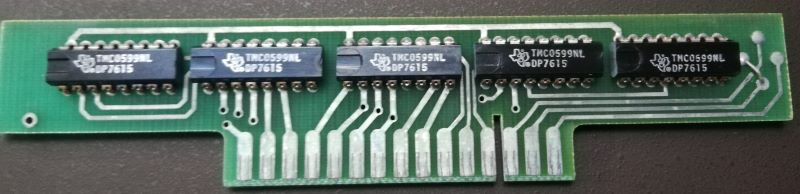
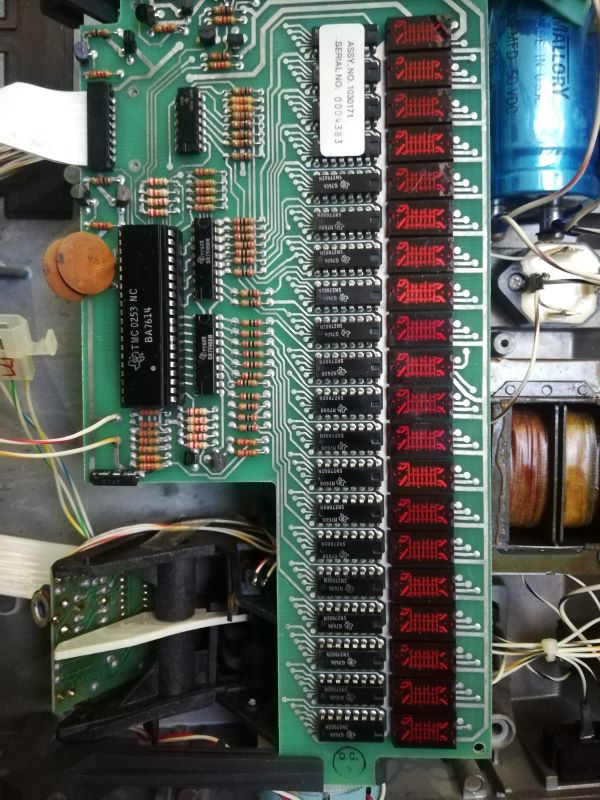
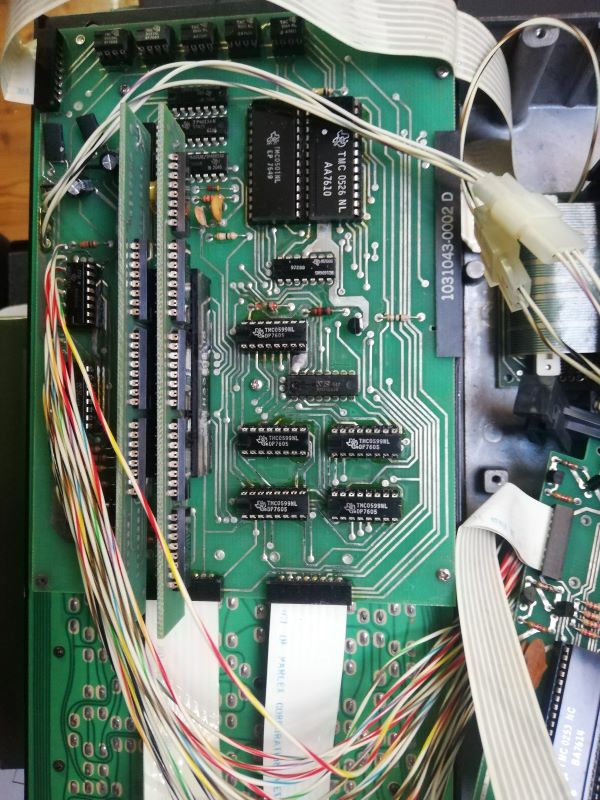
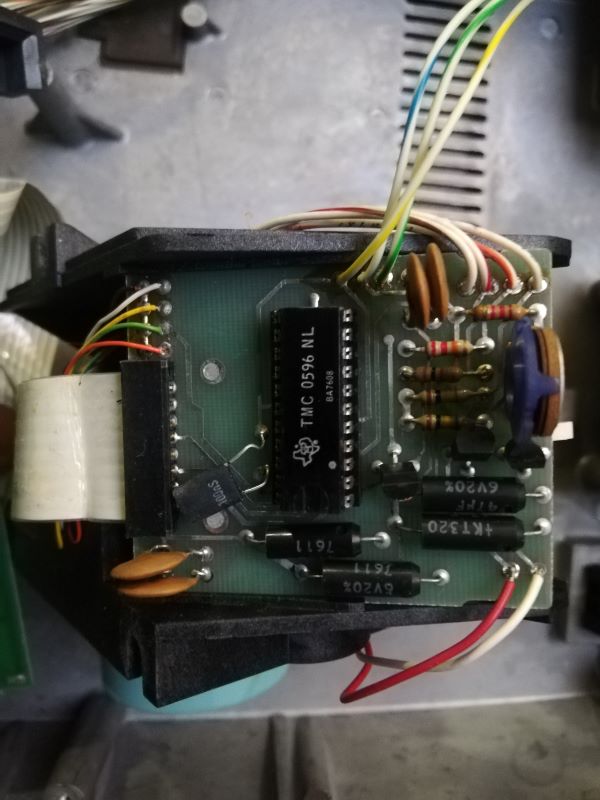
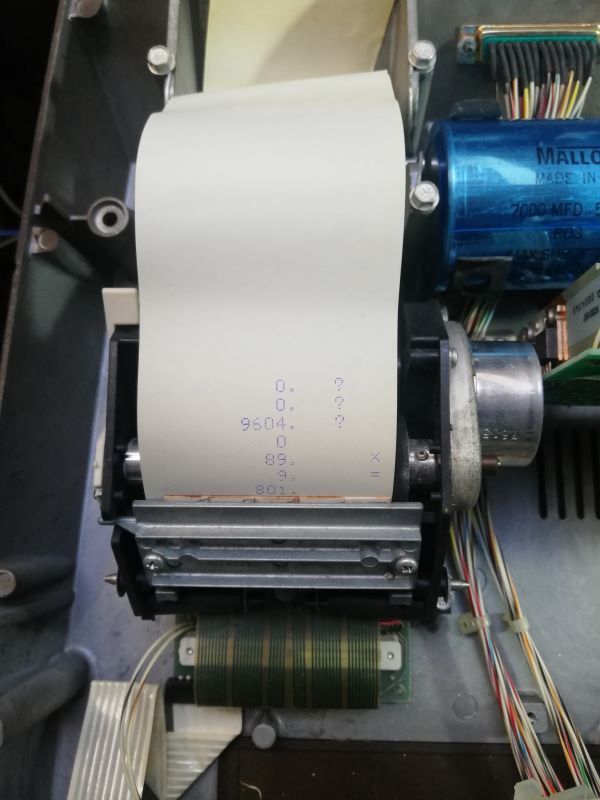
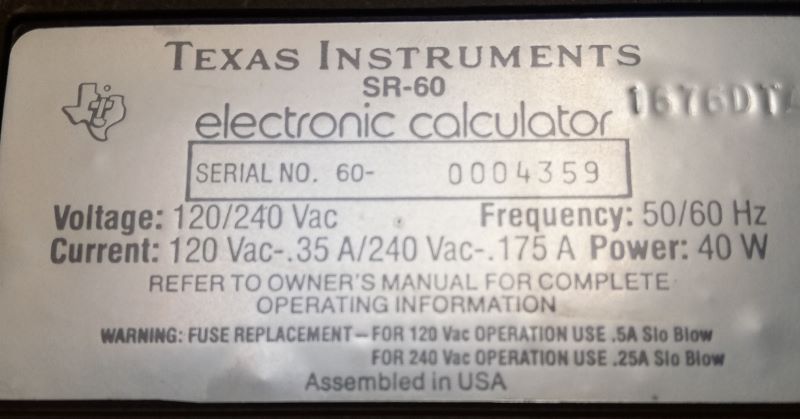
with permission of the author www.datamath.org
Claudio Larini. My interest in the world of information technology was born as soon as I finished high school, before leaving for the university adventure at the Polytechnic of Milan, after having purchased the first issue of a magazine, Micro and Personal Computer in September 1979. So after having consulted the "Market Guide", which was divided between Personal Computers, Programmable Calculators and Microprocessor Boards, and compatibly with the available budget I decided to purchase a programmable calculator.
SR-60 EMULATOR (and others ....) Claudio Larini ITALY
TroubleShooting 
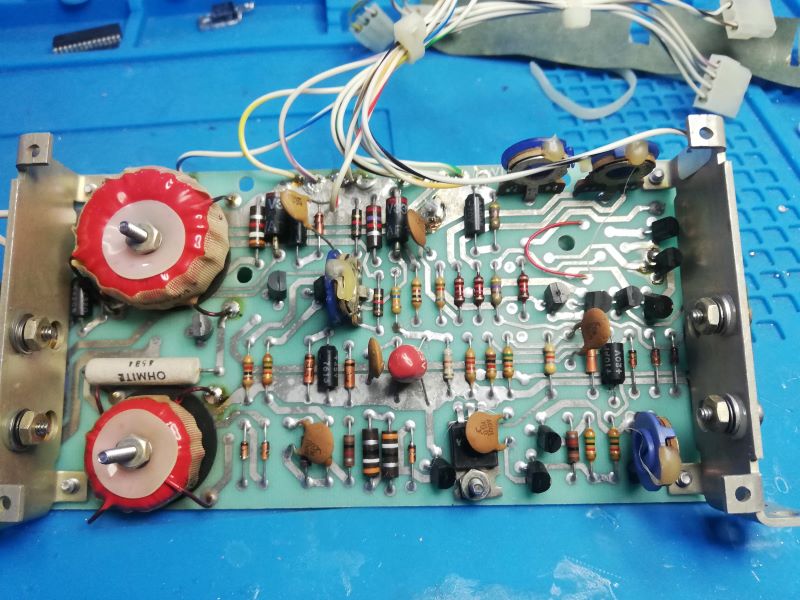 After finding the SR-60 and checking it, we realized that it wasn't working. We started with the power supply. This power supply provides all power for the individual PCBs, (-20, -15.8, -10, -5 and -19) with an input voltage ranging from -26.5 to -42. At this point we realized that the -15.8 voltage that powers the main PCB was not being supplied.

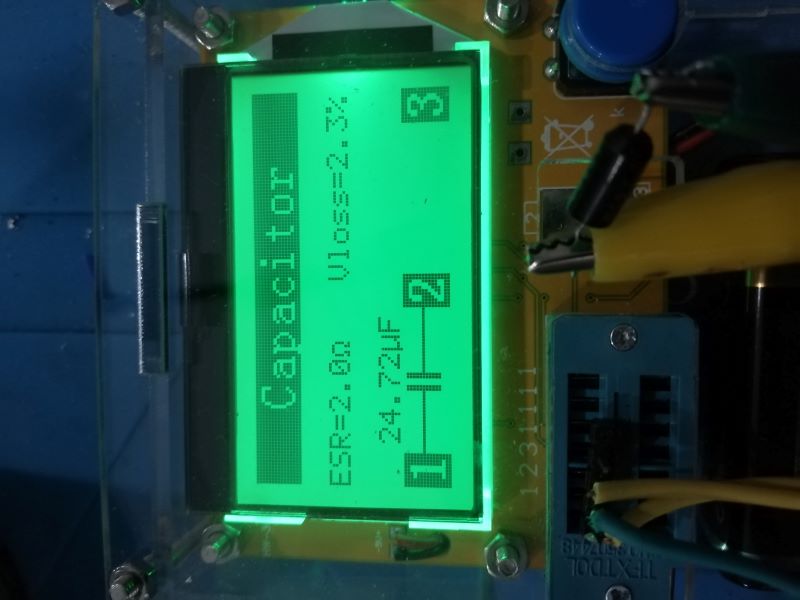 As expected with these 50 year old objects, the filter capacitors, in this case 10uF, failed, one was shorted, another changed value.
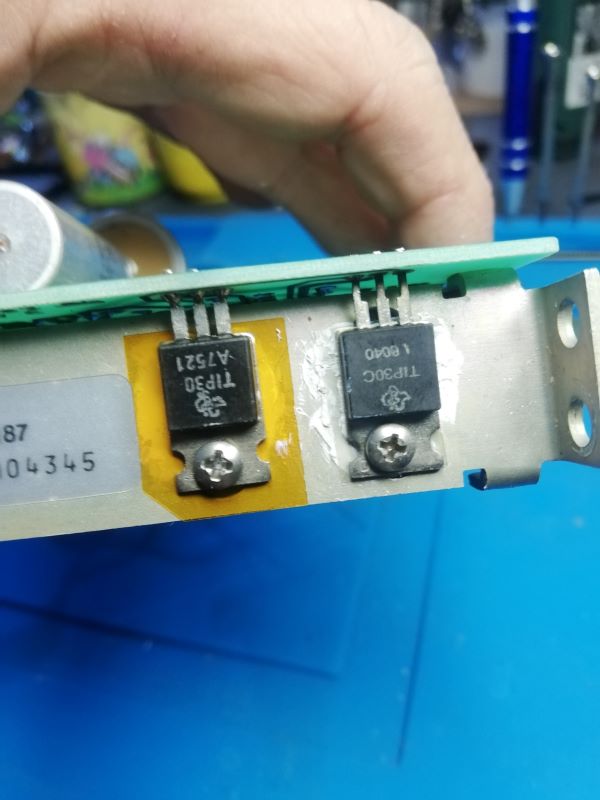
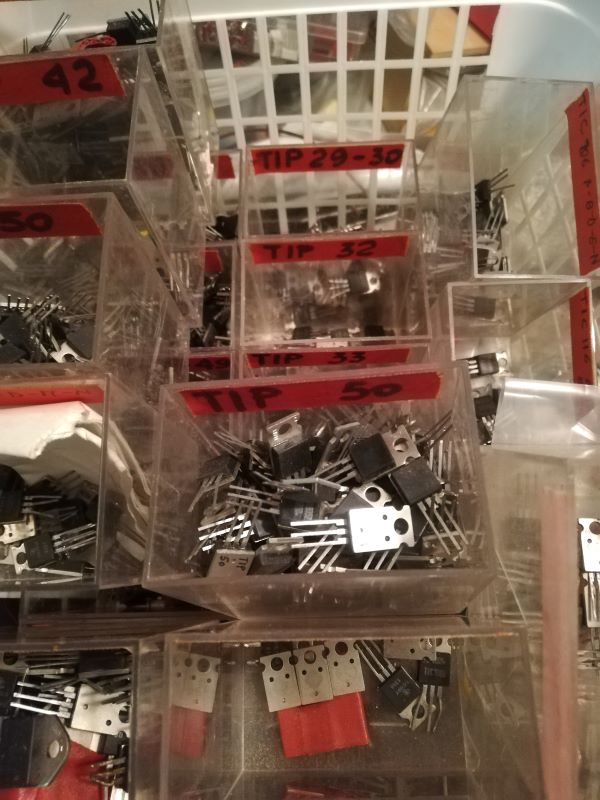
Causing the breakage of three transistors in the power supply, the TIP30 replaced with one from the stock of components we have from the 70s and 80s, in addition to the A1872 replaced with a BC556 and an A2031 replaced with a BC547. We were unable to find the latter the same .
 Model: SR-60 A
Battery:
Adapter: AC 110 volt
Year: 1978
Chip:TMC0501, ...TMC0526, 5*TMC0599, TMC0253
Info: Texas Instruments introduced in 1976 with the SR-60 their first high-end programmable desktop calculator. Priced at $1695 and with a footprint of roughly 17" by 14.5" (430 mm * 370 mm) the SR-60 resembled more a computer than a programmable calculator. Based on the SR-52 and SR-56 series of programmable calculators, the SR-60 integrated a full-sized keyboard with 95 keys, a large alphanumeric display with 20 characters, a thermal dot-matrix printer with 20 characters and a magnetic card reader for saving and loading both programs and data. One of the main advantages of the SR-60 is the huge memory for data and program, already the base model could hold 480 program steps and 40 memory registers. Two memory expansion modules were available, one implemented with just two small daughter boards holding 5 resp. 3 TMC0599 RAM chips accessible through a bottom panel in the housing. The second memory expansion, a huge printed circuit board (PCB) with a total of 27 TMC0599 RAM chips, was mounted below the keyboard next to the Main PCB. A fully-optioned SR-60 could hold programs with a maximum of 5760 steps and 430 memory registers.
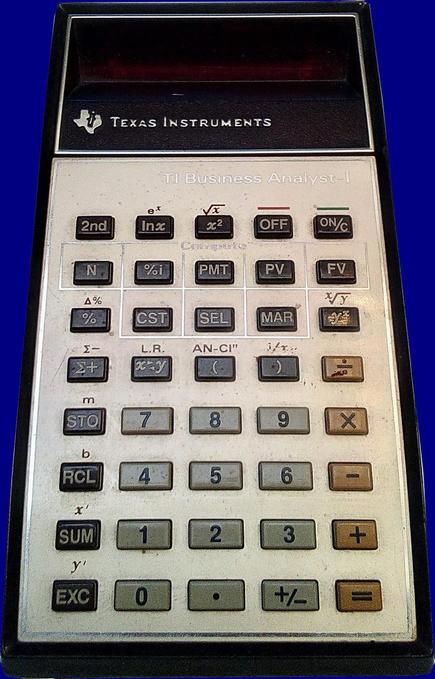 Model: TI business analyst I LED
Battery: 9 volt or RK2
Adapter: AC9132
Year: 1981
Chip: TMC0982
Info: MAJESTIC line
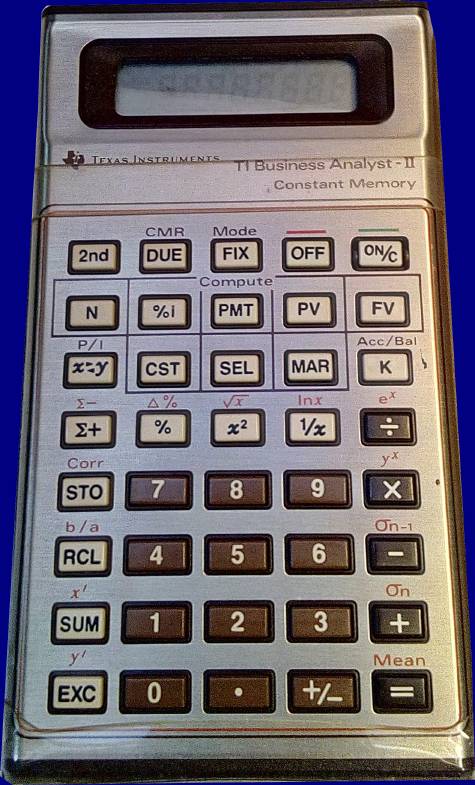 Model: TI business analyst II lcd
Battery: 2 x LR44
Adapter:
Year: 1980
Chip: TPO322
Info: first LCD and slimline LCD
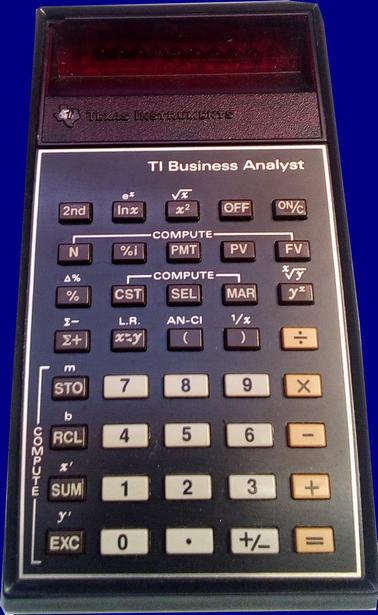 Model: TI business analyst
Battery: BP5 , BP8
Adapter: AC9131 , AC9132
Year: 1978
Chip: TMC0982
Info: MAJESTIC line
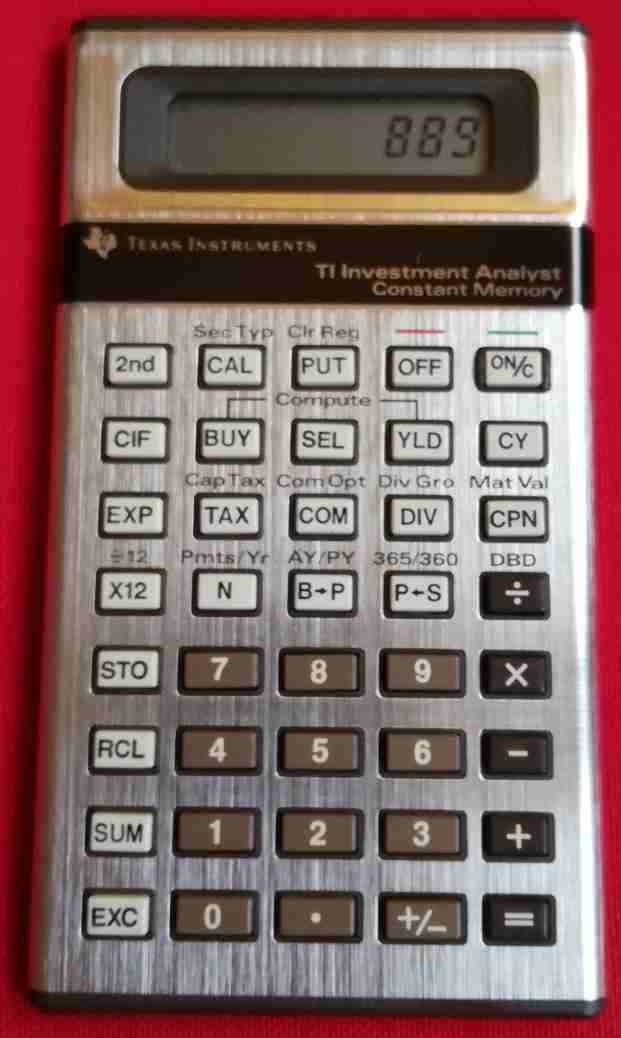 Model: TI Investment Analyst
Battery: 2 x LR44
Adapter:
Year: 1980
Chip: TP0320 (CD3201)
Info:
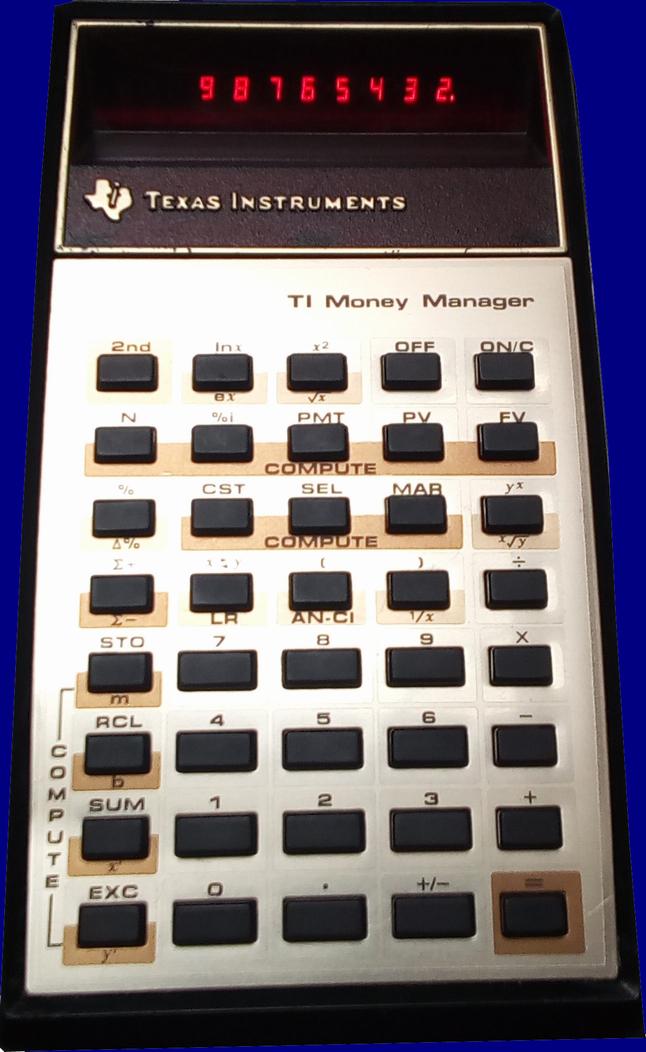 Model: TI money manger led
Battery: BP 7
Adapter: AC9132
Year: 1977
Chip: TMC0982
Info: MAJESTIC line
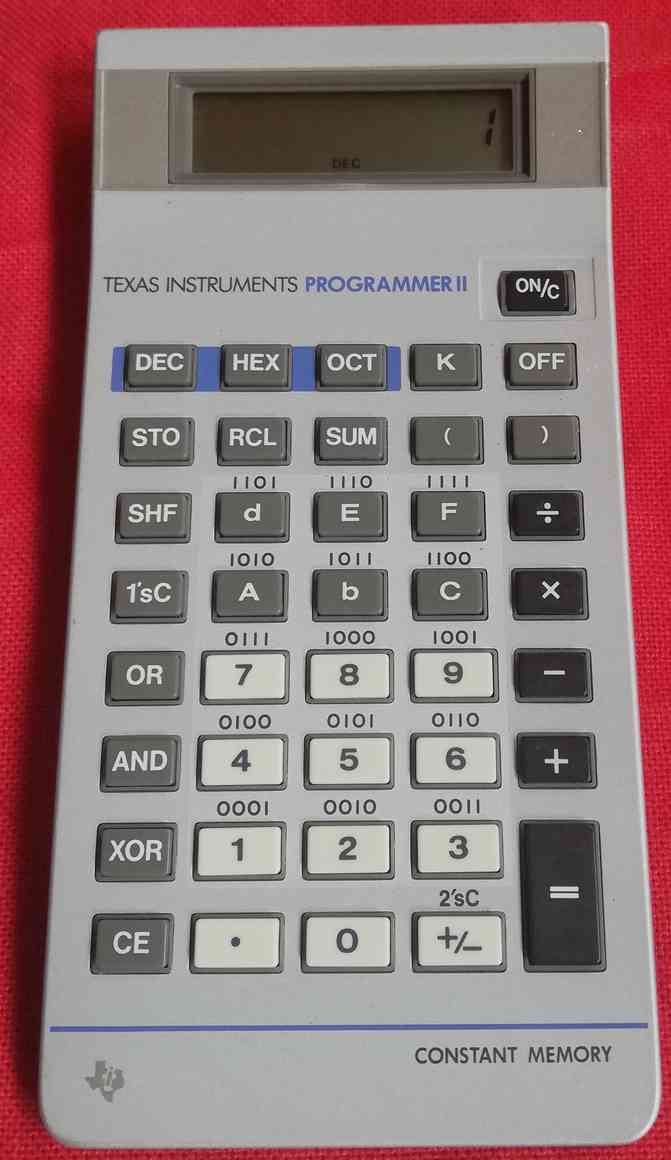 Model: TI programmer II lcd
Battery: 2 x LR44
Adapter:
Year: 1985
Chip: TPO456/CD4569
Info: If you take your time comparing this calculator with all other members of the second slanted series (BA-54, TI-57-II) you notice something very special. The keyboard position doesn't fit to the usual spacing. The ON/C-key is misplaced and one key is super-sized. You have to open the calculator to get the answer: This is not the usual construction of a slanted calculator! A very small printed-circuit-board, actual the form factor of a modern slimline calculator like the BA-II, is fitted into the housing.
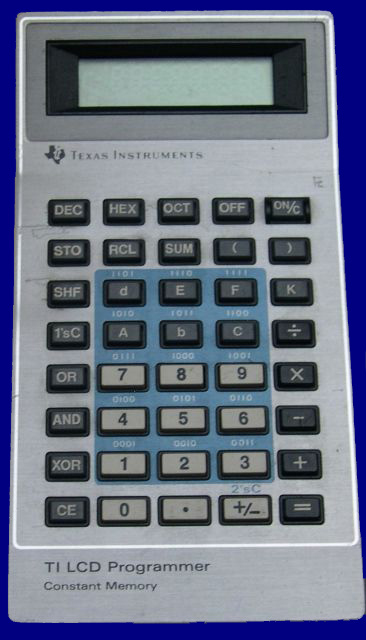 Model: TI programmer lcd
Battery: 2 x LR44
Adapter:
Year: 1983
Chip: CD4569
Info: slanted LCD generation
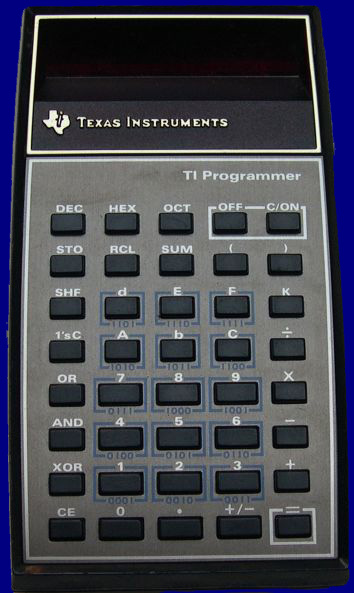 Model: TI programmer led
Battery: BP 8
Adapter: AC9132
Year: 1980
Chip: TMC0983
Info: MAJESTIC line
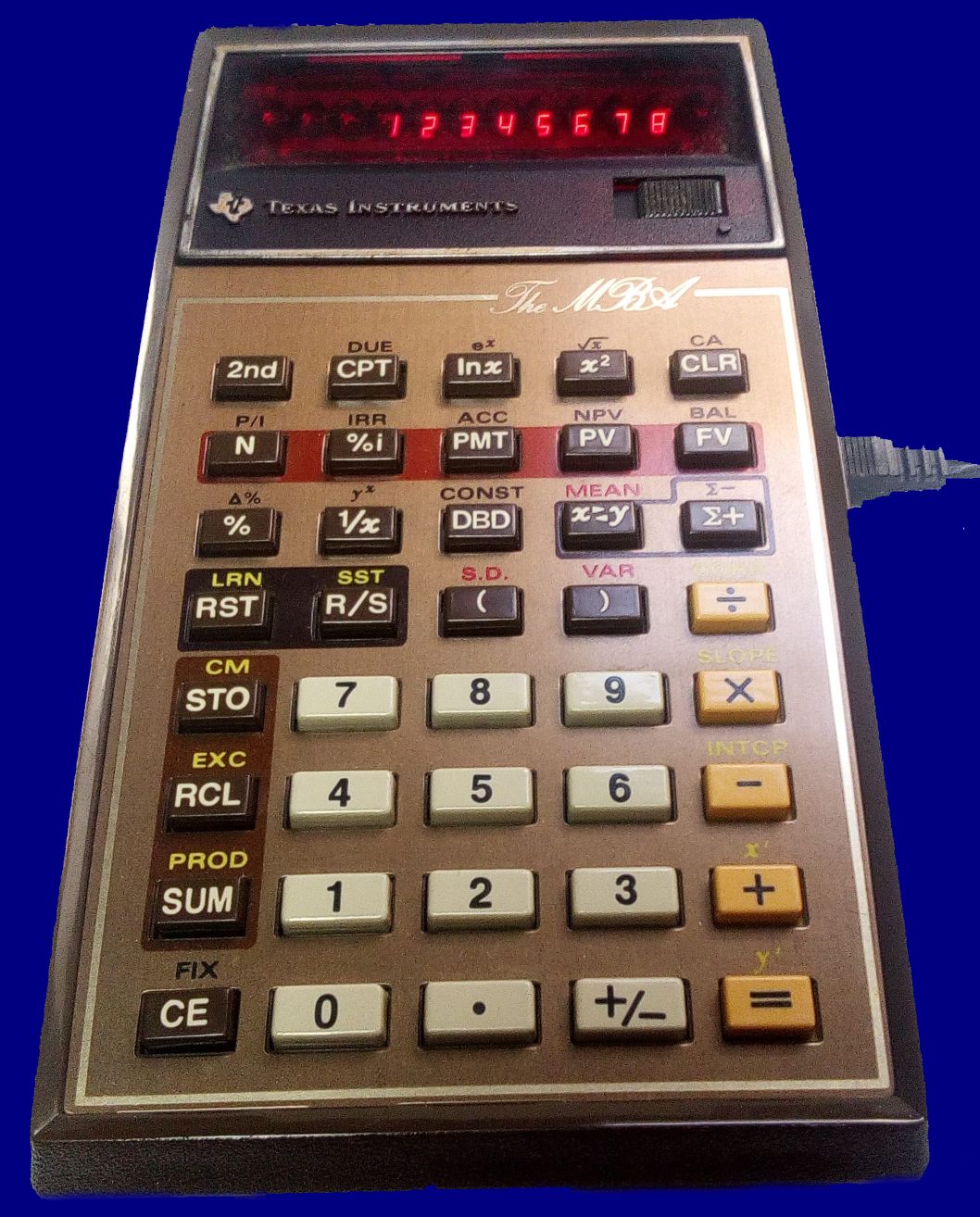 Model: TI the MBA
Battery: BP 7
Adapter: AC9132
Year: 1981
Chip: TMC1502
Info: MAJESTIC line Made in USA
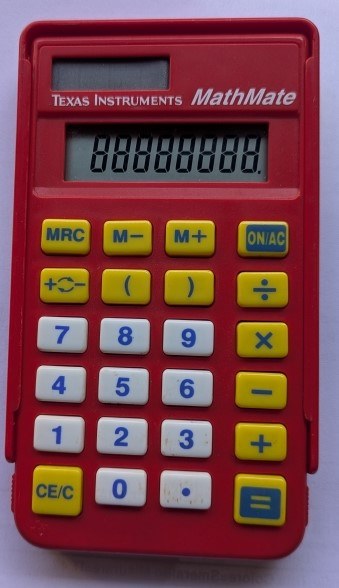 Model: TI-0007 MathMate
Battery: solar
Adapter:
Year: 1991
Chip:
Info:
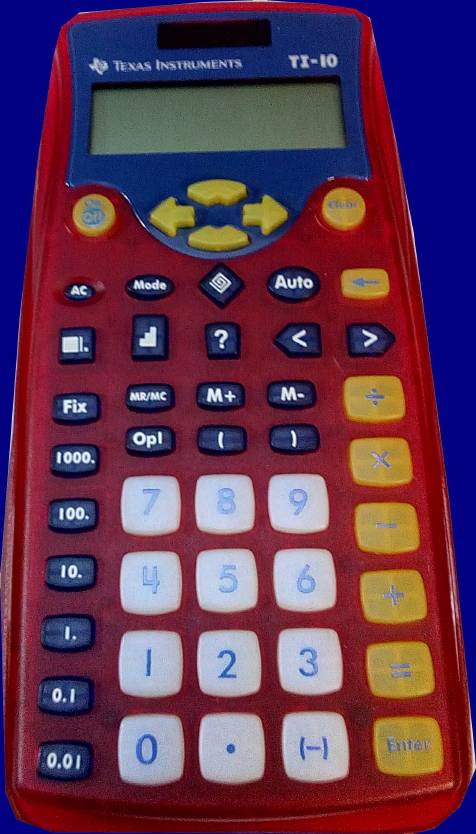 Model: TI-10
Battery: solar, CR2025
Adapter:
Year: 2002
Chip:
Info: modern LCD 2000 - 2017
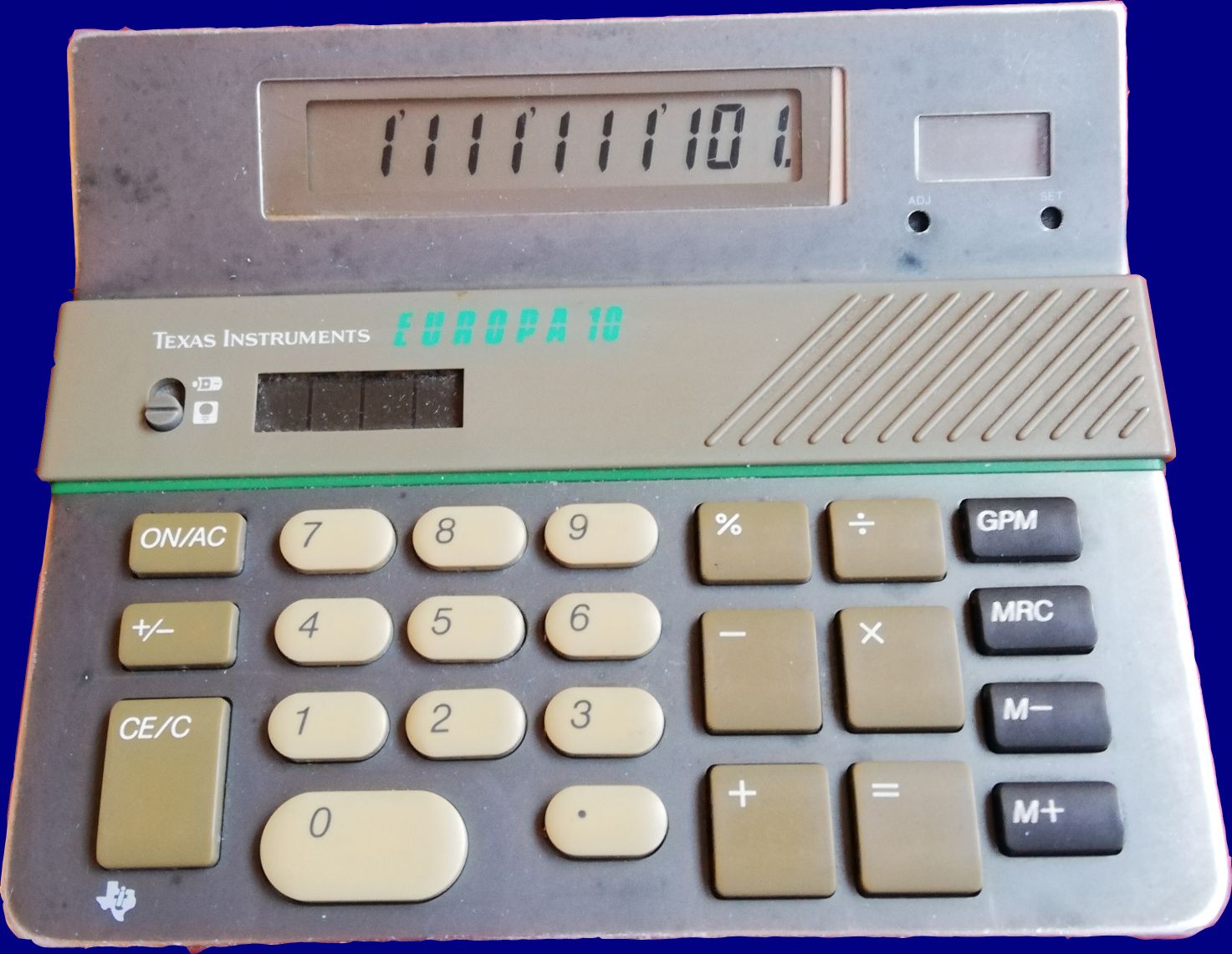 Model: TI-10 europa
Battery: solar
Adapter:
Year: 1995
Chip:
Info: modern DESKTOP
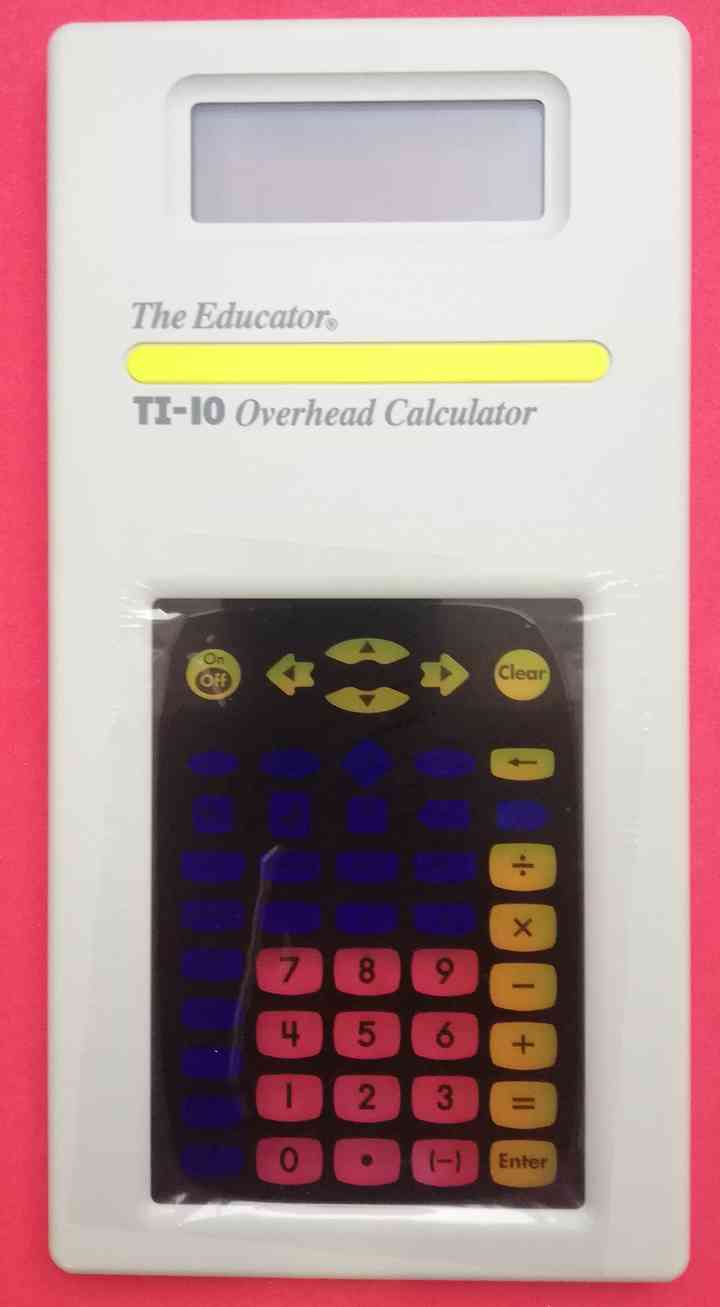 Model: TI-10 overhead
Battery:
Adapter:
Year: 2006
Chip: made in China
Info: The California based company Stokes Publishing Company, Inc. distributes under the label "The Educator®"
calculators optimized for teaching purposes. William T. Stokes filed already July 30, 1991 the US Patent Application U.S. Pat. No. 5,035,502
with the title "Transparent calculator for overhead projection".
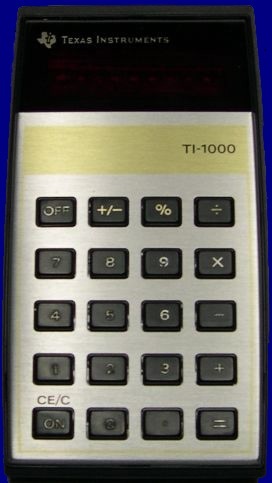 Model: TI-1000 gold
Battery: 3 x AAA ni-cd
Adapter: AC9180
Year: 1977
Chip: TMC1991 or TMC1992
Info:
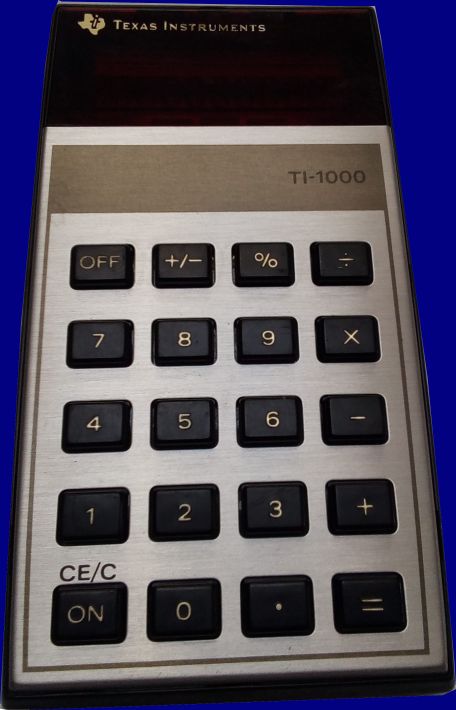 Model: TI-1000 silver
Battery: 3 x AAA ni-cd
Adapter: AC9180
Year: 1977
Chip: TMC1991 or TMC1992
Info:
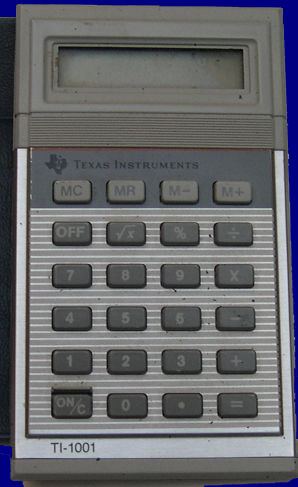 Model: TI-1001
Battery: 2 x LR43
Adapter:
Year: 1982
Chip: TP0311
Info: slimline LCD - first solar LCD
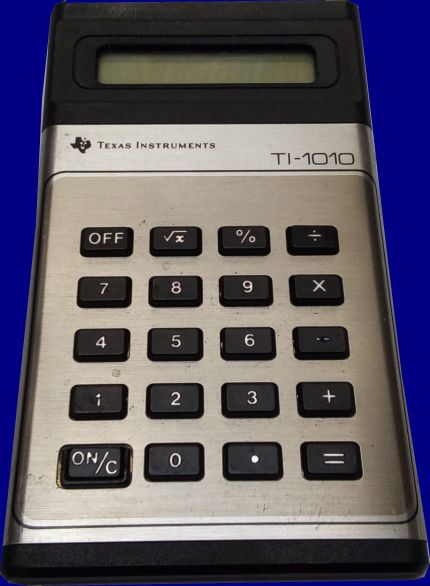 Model: TI-1002
Battery: 2 x LR1130
Adapter:
Year: 1983
Chip:
Info: made in Taiwan

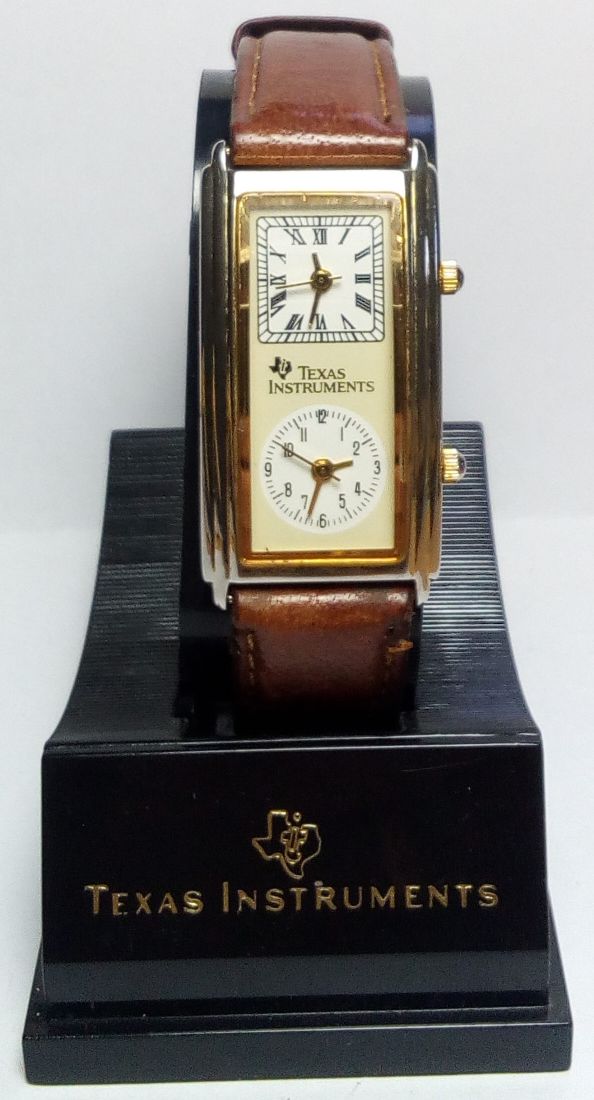
.jpg "Core Module Watch")

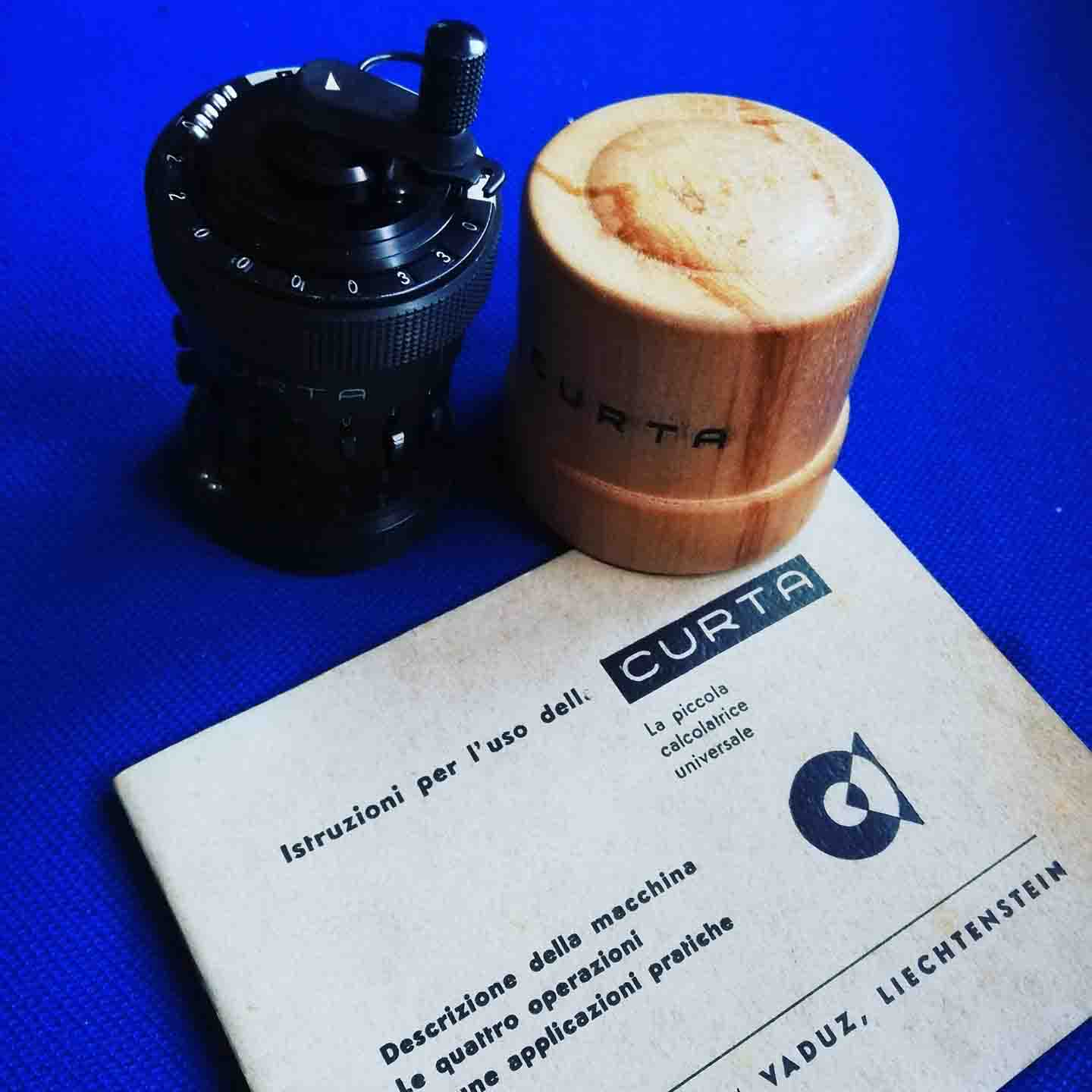
.jpg "Calculator Fuller")
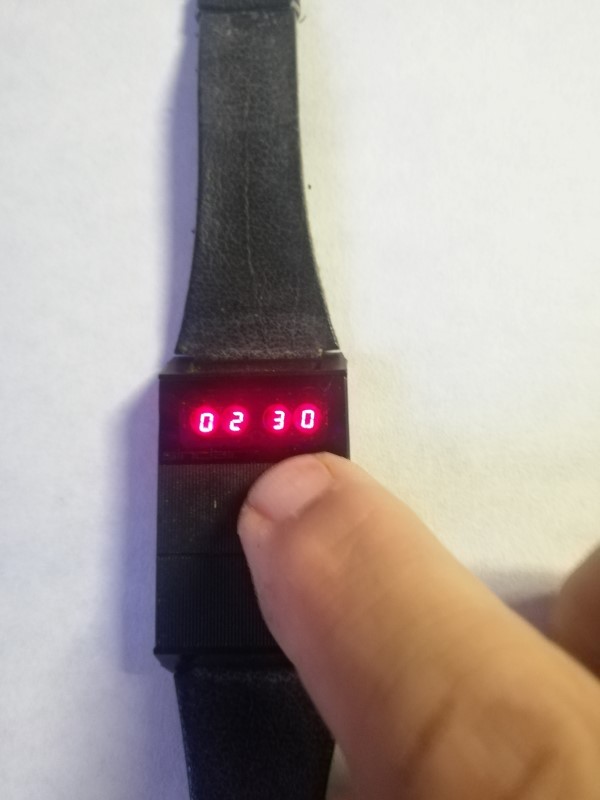

.jpg "Olivetti Valentine")
.jpg "Console / Games")
.jpg "Battle Star Galactica")
.jpg "APPLE")


.png)