
TI Museum
 Model: Mr MUS-I-CAL
Battery: 9 volt
AC adapter: no
Year: 1979
Chip: TMS1000/MP3206
Info:


 Model: Robot Logo
Battery: 4 x 1,5 C+ 2 x 9 volt
AC adapter:
Year: 1982
Chip: TMS5100 / MP3468 / CM62191
Info: Talking radio-controlled, 6 minutes of speech with more than 40 sentences, led lights and backward movement by pressing the remote control
.jpg)
.jpg)
Model: Simon
Battery: 1 x 9 volt
AC adapter:
Year: 1978
Chip: TMS1000 / MP3226
Info:The Simon is an electronic game of short-term memory skill invented by Ralph H. Baer and Howard J. Morrison, working for toy design firm Marvin Glass and Associates, with software programming by Lenny Cope. The device creates a series of tones and lights and requires a user to repeat the sequence. If the user succeeds, the series becomes progressively longer and more complex. Once the user fails or the time limit runs out, the game is over. The original version was manufactured and distributed by Milton Bradley and later by Hasbro after it took over Milton Bradley. Much of the assembly language code was written by Charles Kapps, who taught computer science at Temple University and also wrote one of the first books on the theory of computer programming. Simon was launched in 1978 at Studio 54 in New York City and was an immediate success, becoming a pop culture symbol of the 1970s and 1980s.


 Model: Star Trekulator
Battery: 4 x AA
AC adapter:
Year: 1976
Chip: TMS0855
Info:Vintage Mego Corporation 1976 Star Trek The Original Series Star Trekulator Electronic Calculator Of The Future. Released by Mego Corporation in 1976 as part of their series of Star Trek Toys and Action Figures. This fantastic Star Trekulator is a working replica of the calculator used aboard the USS Enterprise. It adds, subtracts, divides, multiples, figures square root and percentages at the flick of a switch. Watch the console flash the computer lights on the bridge of the Enterprise as you work. Great for homework and all your important calculations. Every time you press the total button, your answerappears on the display screen accompanied by Star Trek alarm sounds. A winner any way you add it up.
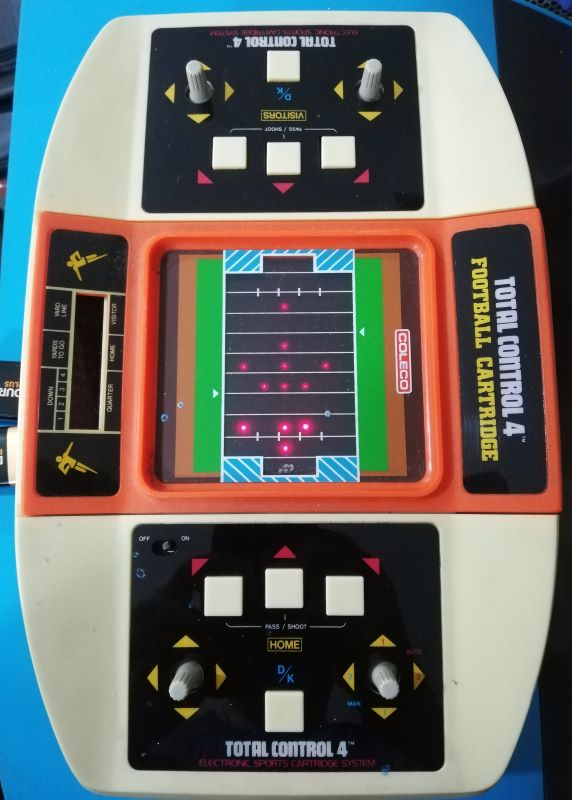
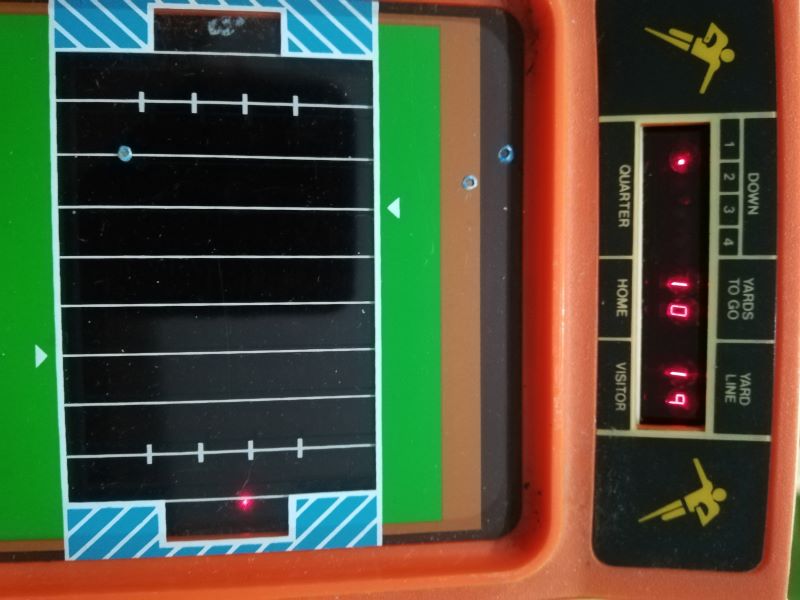
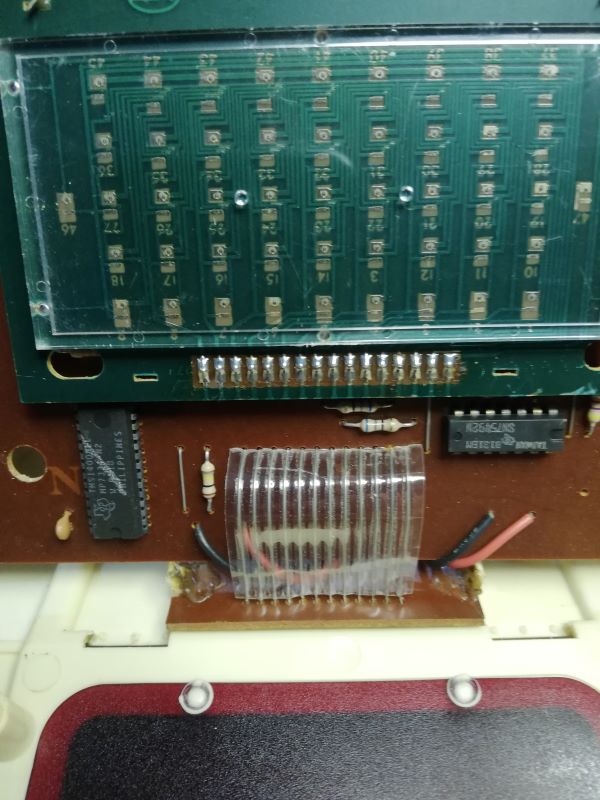
Model: Total Control 4
Battery: 2 x 9 volt battery
AC adapter:
Year: 1981
Chip: TMS1400 / MP7334
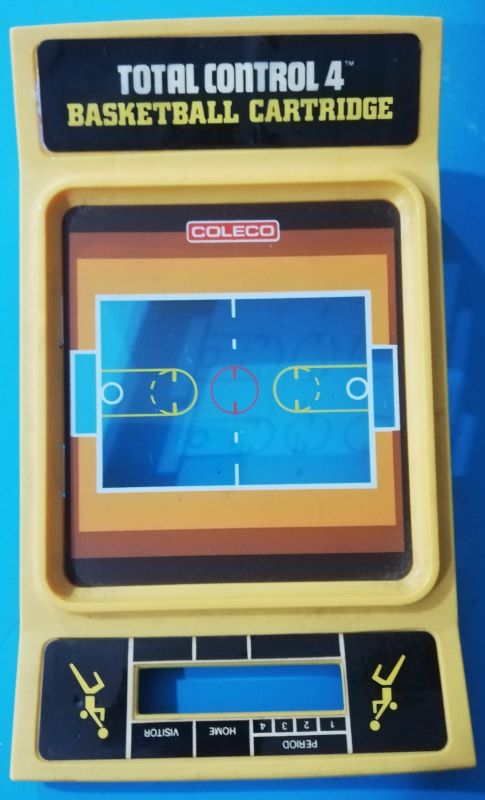
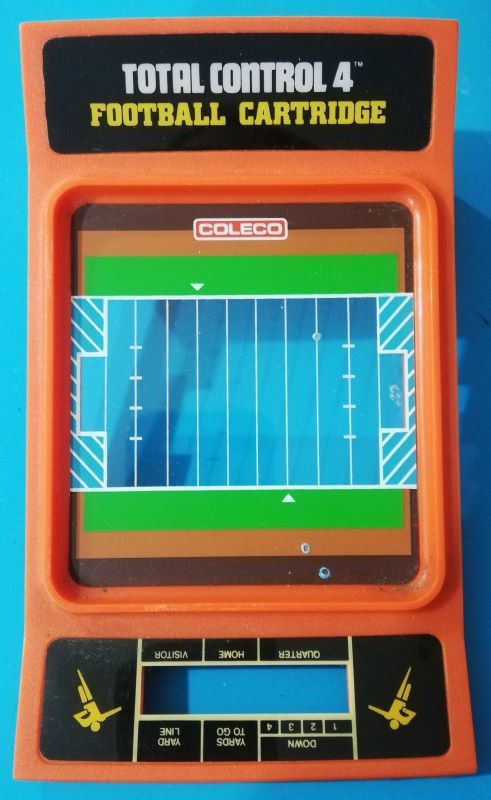
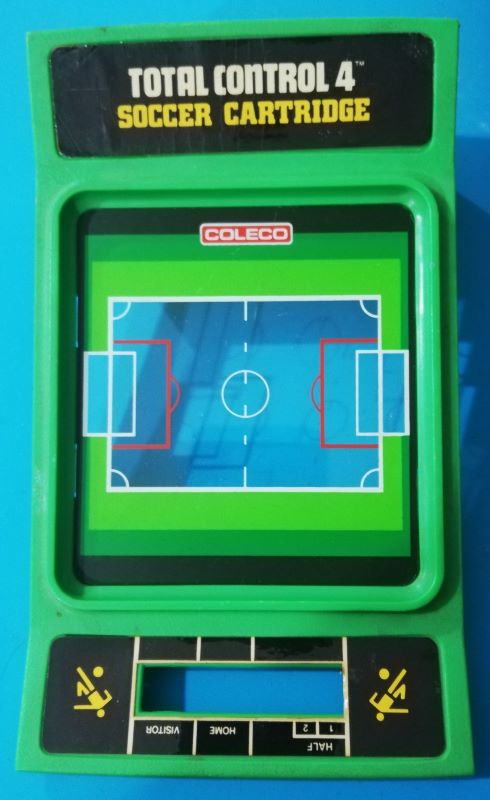
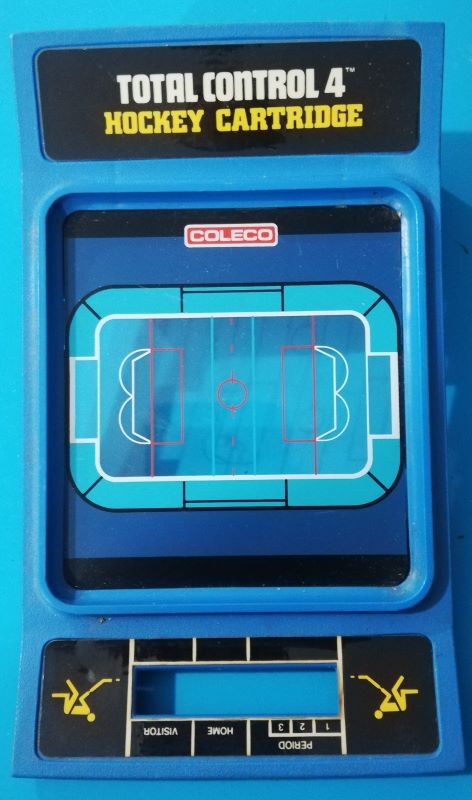
Info:Colecos Total Control 4 is a simple Tabletop, offering a range of multiplayer games with a sport-focus through various "cartridges". These cartridges actually do not contain any ROM or the like, but just some soldered path manipulating the LED-output on the tabletop. The "cartridges" serve as overlays as well.

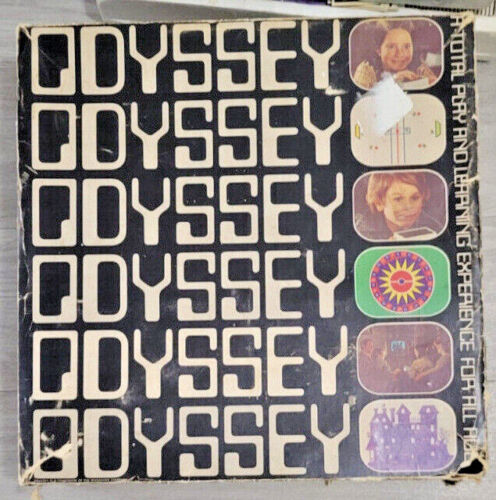
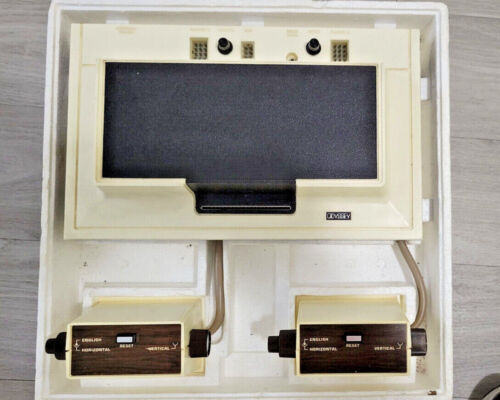 The Magnavox Odyssey is the first commercial home video game console. The hardware was designed by a small team led by Ralph H. Baer at Sanders Associates, while Magnavox completed development and released it in the United States in September 1972 and overseas the following year. The Odyssey consists of a white, black, and brown box that connects to a television set, and two rectangular controllers attached by wires. It is capable of displaying three square dots and one line of varying height on the screen in monochrome black and white, with differing behavior for the dots depending on the game played. Players place plastic overlays on the screen to display additional visual elements for each game, and the one or two players for each game control their dots with the knobs and buttons on the controller in accordance with the rules given for the game. The console cannot generate audio or track scores.
 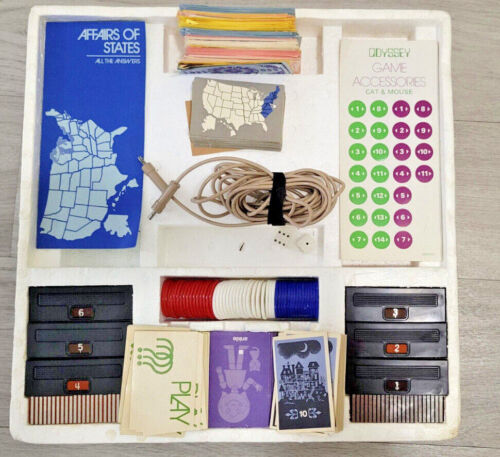 The Odyssey console came packaged with dice, paper money, and other board game paraphernalia to accompany the games, while a peripheral controller—the first video game light gun—was sold separately.
The idea for a video game console was conceived by Baer in August 1966. Over the next three years he, along with Bill Harrison and Bill Rusch, created seven successive prototype consoles. The seventh, known as the Brown Box, was shown to several manufacturers before Magnavox agreed to produce it in January 1971. After releasing the console through their dealerships, Magnavox sold 69,000 units in its first calendar year and 350,000 by the time the console was discontinued in 1975. 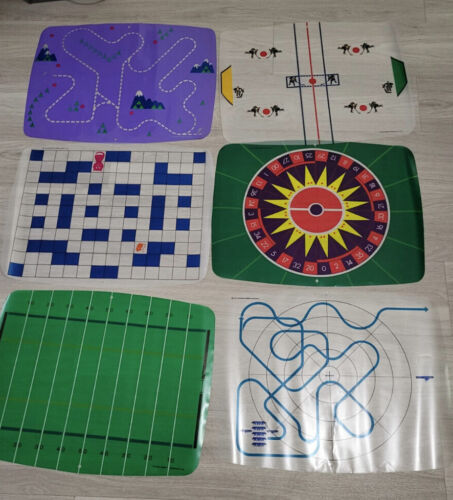 The console spawned the Odyssey series of dedicated consoles as well as the 1978 Magnavox Odyssey 2. One of the 28 games made for the system, a ping pong game, was an inspiration for Atari's successful 1972 Pong arcade game, in turn driving sales of the Odyssey. Patents by Baer and the other developers for the system and the games, including what was termed by a judge as "the pioneering patent of the video game art", formed the basis of a series of lawsuits spanning 20 years, earning Sanders and Magnavox over US$100 million. The release of the Odyssey marked the beginning of the first generation of video game consoles and was an early part of the rise of the commercial video game industry.
.jpg)
The Magnavox Odyssey 500 (model number: 7520) was released in 1976 for $130 as Magnavox's high-end companion to the Odyssey 300 and Odyssey 400 systems. The Odyssey 500 is essentially a deluxe version of the Odyssey 400 with several crucial improvements. The 500 featured color graphics (the first Odyssey game unit to do so) and replaced the standard paddles with sprites representing the athletes of its various games: a tennis player, a squash player, and a hockey player. The three players and three playfields were each chosen by separate toggle switches; games were thus selected by matching the player to its appropriate playfield. In addition to the Smash, Hockey, and Tennis games, Odyssey 500 featured a fourth game, Soccer, by using the squash player graphics with the hockey playing field.[9] Unlike the Odyssey 400, however, the 500 does not support four onscreen "players."
The Odyssey 500's manual acknowledged that the player graphics, being of different sizes, essentially represented different difficulty options. Interestingly, while Magnavox exploited the "mismatching" of players and playfields to market the Odyssey 500 as having a fourth game, the remaining five possible game combinations were not advertised or documented.
Odyssey 500 offers automatic serve, displays digital on-screen scores between plays, and provides manually adjustable ball speed control. As with all previous Odyssey units, power is delivered via an AC adapter or six "C" cell batteries.
One of the features we have for this console is the fact that it uses rebranded Texas Instruments chips.
| SN 94069N | 1976 | (612109) | Color Generator (Odyssey 500) |
| SN 94092N | 1979 | (612108) | Score Generator (Odyssey 500) |
| SN 94093N | 1976 | (612101) | Character Controller (Odyssey 500) |
| SN 94192N | 1976 | Character Generator (Odyssey 500 |
.jpg) The Microvision (also known as the Milton Bradley Microvision or MB Microvision) is the first handheld game console that used
The Microvision (also known as the Milton Bradley Microvision or MB Microvision) is the first handheld game console that used.jpg) interchangeable cartridges and in this sense is reprogrammable. It was released by the Milton Bradley Company in November 1979 for a retail price of $49.99.
interchangeable cartridges and in this sense is reprogrammable. It was released by the Milton Bradley Company in November 1979 for a retail price of $49.99.
The Microvision was designed by Jay Smith, the engineer who would later design the Vectrex video game console. The Microvision's combination of portability and cartridge-based system (it uses a Texas Instruments CHIP TMS1100 aka MP xxxxx).jpg) led to moderate success, with Smith Engineering grossing $15 million in the system's first year of release. However, very few cartridges, a small screen, and a lack of support from established home video game companies led to its demise in 1981. According to Satoru Okada, Nintendo's former head of R&D1, the Microvision gave birth to the Game Boy , the sequel to Game & Watch, after Nintendo designed with the Microvision's limitations in mind.
led to moderate success, with Smith Engineering grossing $15 million in the system's first year of release. However, very few cartridges, a small screen, and a lack of support from established home video game companies led to its demise in 1981. According to Satoru Okada, Nintendo's former head of R&D1, the Microvision gave birth to the Game Boy , the sequel to Game & Watch, after Nintendo designed with the Microvision's limitations in mind.
.jpg) |
CHIP MP3479 |
.jpg) |
CHIP MP3496 |
.jpg) |
CHIP MP34047 |
.jpg) |
CHIP MP3457 |
.jpg) |
CHIP MP3474 |
.jpg) |
CHIP MP3454 |
.jpg) |
CHIP MP3475 |
|
CHIP MP3455 |
.jpg) |
CHIP MP34009 |
.jpg) |
CHIP MP3481 |
 The Nintendo Entertainment System (NES) HVC001 is a home video game console developed and marketed by Nintendo. It was released as the Family Computer (Famicom), in Japan on
 July 15, 1983, and as the NES in test markets in the United States on October 18, 1985, followed by a nationwide launch on September 27, 1986. The NES was distributed in Europe, Australia, and parts of Asia throughout the 1980s. It was Nintendo's first programmable home console, succeeding the Color TV-Game line of dedicated consoles, and primarily competed with Sega's Master System in the third generation of video game consoles.
To power the console, use a voltage of 9 VDC (HVC-002) , taking into account that the positive is the external part of the connector.
Modification for video connection via RCA


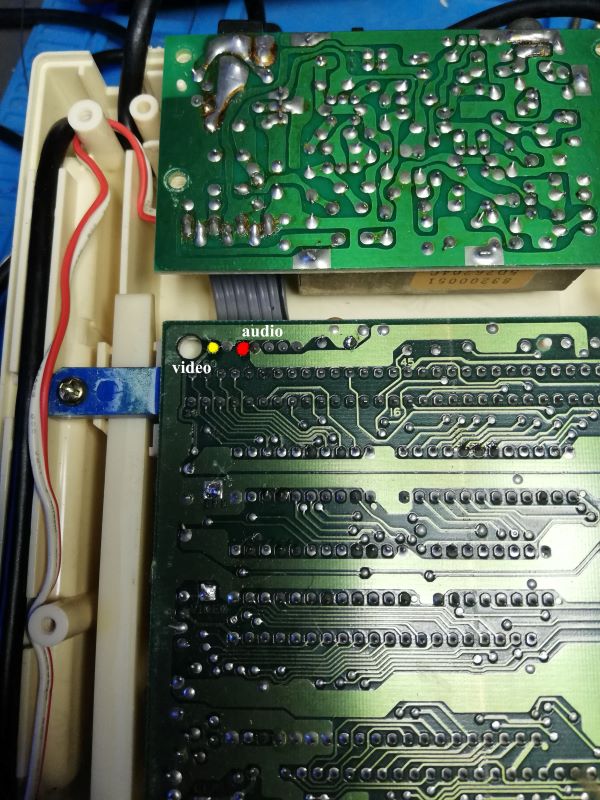
This is another version of pcb but you can use the same connection as in the photo above, in the yellow point (video) connect the wire (V) while in the red point (audio) the wire (A), while the ground (GND) where it is written GND above the PCB.
An audio problem may occur if the slider in the joystick is dirty, I recommend opening it and cleaning it.
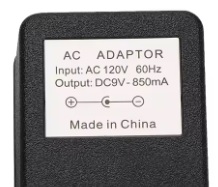
HVC-002 - 9 volt DC power supply with 5 mm round connector

 Super NES. The Super Nintendo Entertainment System, commonly shortened to Super Nintendo,Super NES or SNES, is a 16-bit home video game console developed by Nintendo that was released in 1990 in Japan, 1991 in North America, 1992 in Europe and Oceania and 1993 in South America. In Japan, it is called the Super Famicom (SFC). In South Korea, it is called the Super Comboy and was distributed by Hyundai Electronics. The system was released in Brazil on August 30, 1993, by Playtronic. In Russia and CIS, the system was distributed by Steepler from 1994 until 1996. Although each version is essentially the same, several forms of regional lockout prevent cartridges for one version from being used in other versions.
Donated from Marco Santini (IT)


The Magnavox Odyssey 2 (stylized as Magnavox Odyssey²), also known as Philips Odyssey 2, is a second generation home video game console that was released in 1978. It was sold in Europe as the Philips Videopac G7000, in Brazil and Peru as the Philips Odyssey and in Japan as Odyssey2 (オデッセイ2 odessei2). The Odyssey 2 was one of the five major home consoles prior to the 1983 video game market crash, along with Atari 2600, Atari 5200, Intellivision and ColecoVision.
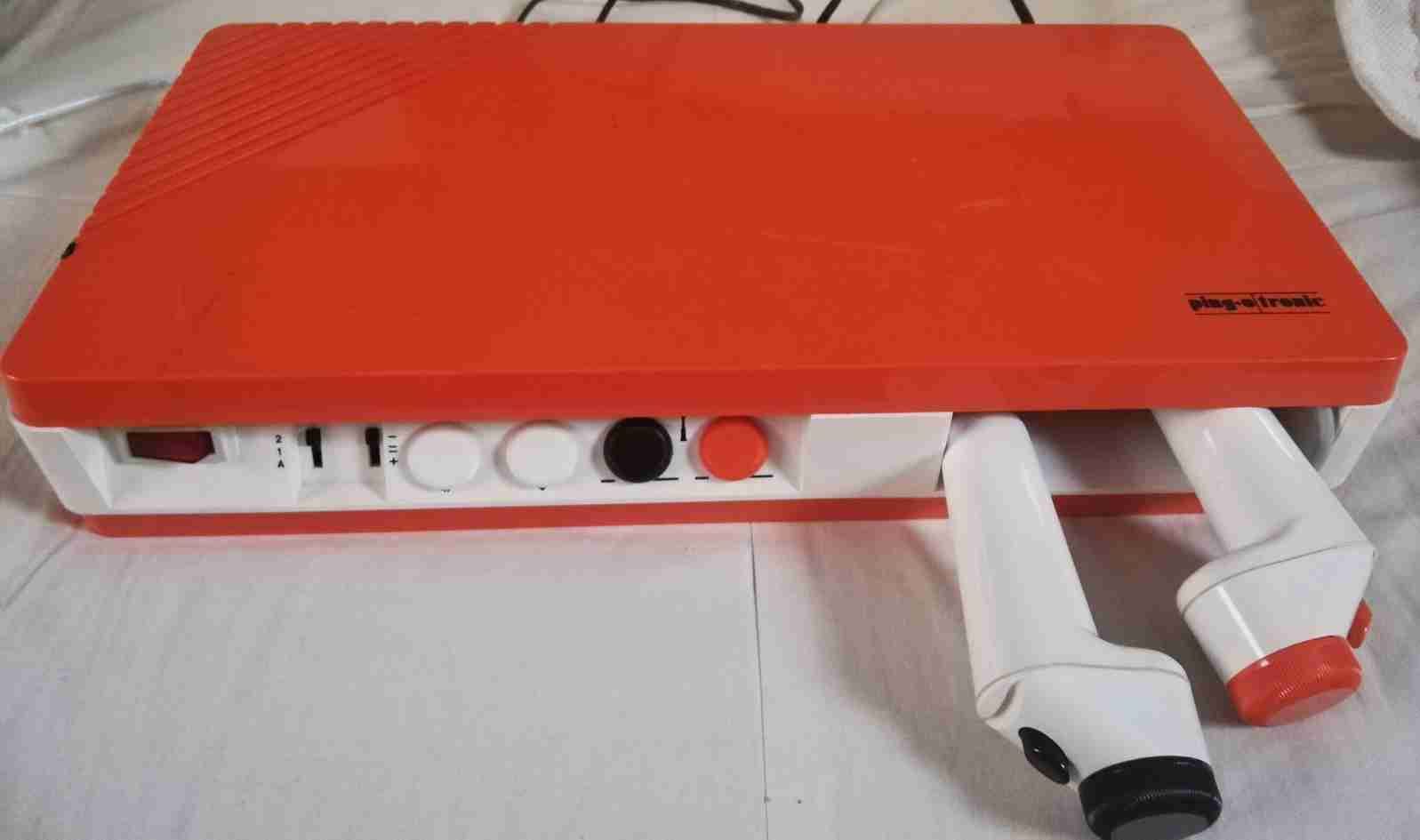 The Ping-o-Tronic is a first generation video game console produced by Zanussi and released under the Sèleco brand in late 1974. In the game mode it is similar to Pong. It was the first console of Italian production. In December 1974 it was on sale for 49,000 lire.
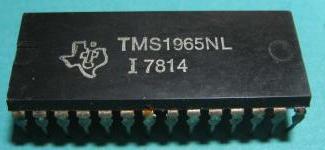
TMS 1965 PONG in chip
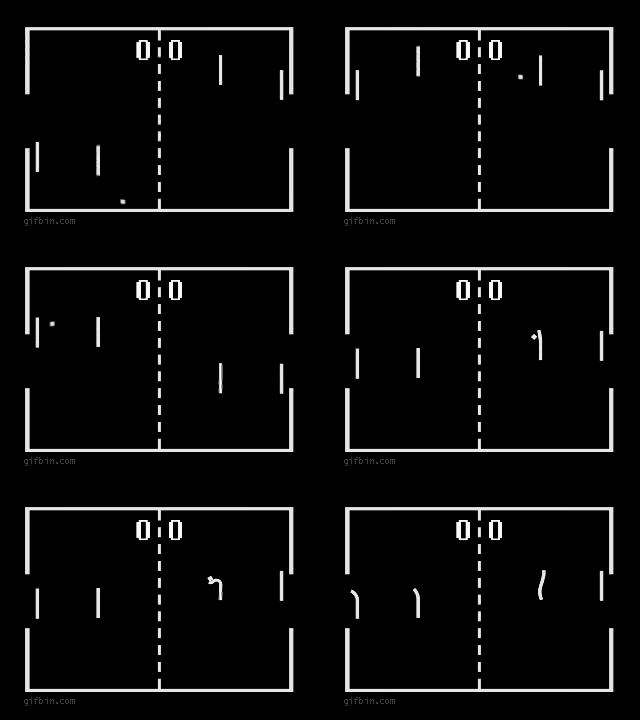
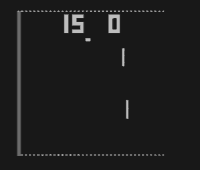
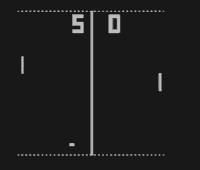
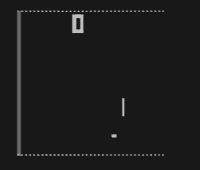
In 1975, Atari and Magnavox started selling improved systems using integrated circuits. Magnavox used several Texas Instruments (TI) chips, which replicated the design of the first Odyssey, itself based on 1967 transistor circuits. Atari, however, had the smart idea of designing the first "PONG in a chip" device, but these Atari chips were not available to other manufacturers, thus limitating the market considerably. Most Atari systems used a different chip because of the different games and features. Of course, a few discrete components interfaced the chip to the other parts of the system: the video modulator, the player controls, etc. These chips replaced most of the numerous components used in the early analog and digital systems. Although Atari chips were a smart design, the idea of integrating complex circuits into a single chip was a common idea at that time, and other video game manufacturers soon released their own video game chips.
Texas Instruments (TI) had an important role in 1975 since Magnavox asked the manufacturer to design a special chip set for the Odyssey 100 and later models. Each chip had a special function: paddle generator, collision detection, on-screen scoring, etc. They are detailed in the table at the end of this page. These chips were the SN764xx. It was possible to combine these chips to design a customised Ball & Paddle games, and even a Spacewar game.
Later, TI copied the Executive Games Television Tennis circuits and integrated them into a new chip: the SN76410N. This chip was very unsuccessfull and very few systems used it: Tele-Match 3300R, Ricochet Super Pro (model MT-4A), and Venture Electronics Video Sports VS-5. David Winter asked Glen Dash (who designed the Television Tennis) how this came to his attention. His reply was crystal clear: "The Tennis game was absolutely same, so much that it had the same bugs as my original design".
Because all these chips were unsuccessfull, TI decided to release another type of chip in 1977: the TMS-1955 and TMS-1965, both pin compatible with the GI AY-3-8500, hence a better success.
My first video game was created by a colleague of my father Bruno Romagnoli, simply using the Texas Instruments TMS1965 microprocessor, in the year 1977!
The first Italian's console to use the TMS1965 !
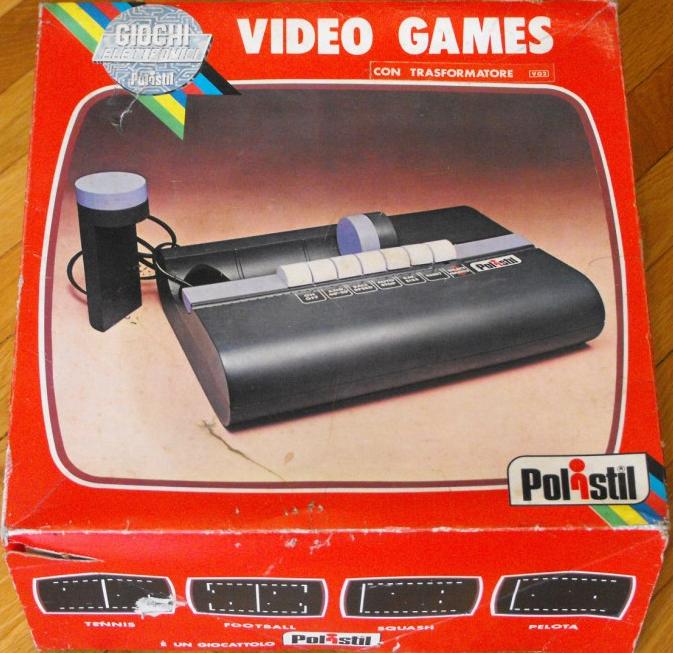

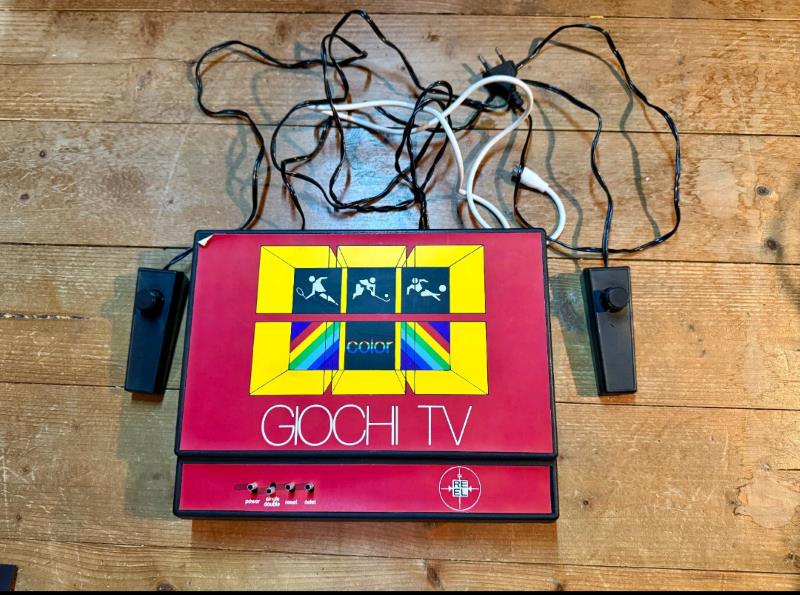
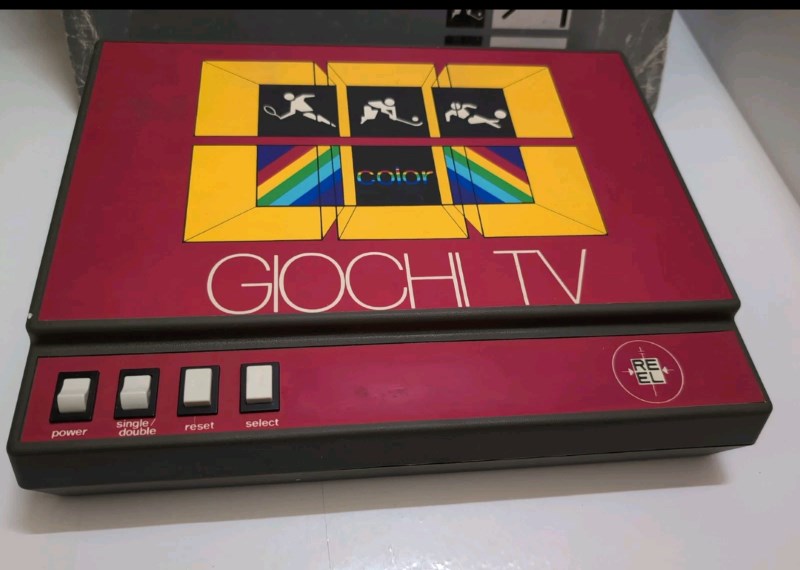 RE-EL. art-403. Un clone piuttosto diffuso del PONG di ATARI prodotto da REGGIANA ELETTRONICA (RE.EL TOYS), anno 1978.
Sono stati prodotti alcuni modelli alla fine degli anni 70 dalla Reggiana Elettronica : Art. 403 – versione a colori con 6 giochi, Art.401 – versione in b/n con 4 giochi, Art.402 – 6 giochi in B/N con fucile, Art.412 – Modello a colori a cassette intercambiabili.
The chip used by this console was the famous AY-3-8500, which is fully compatible with the TMS1965.
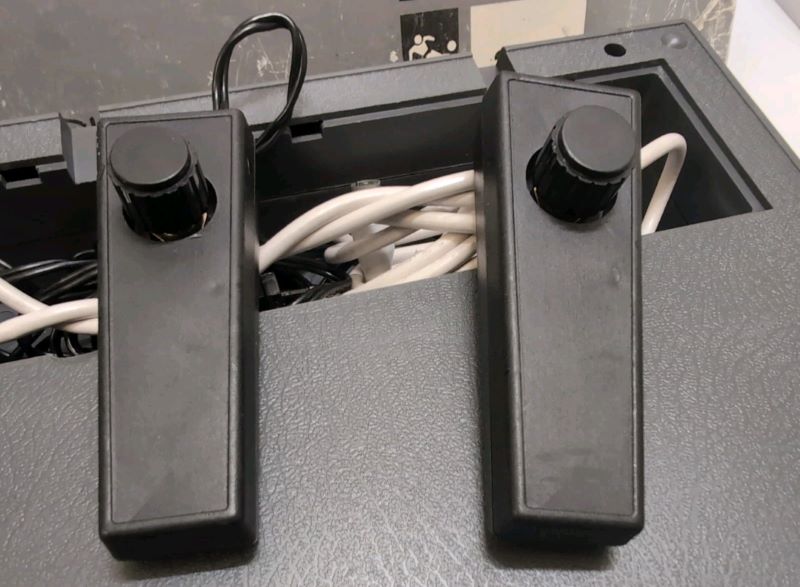
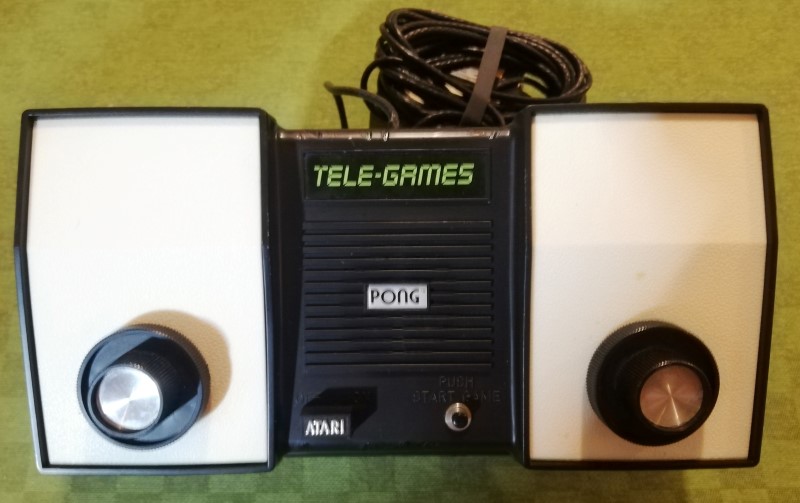 Telegames Pong
In 1975, Atari started looking for ways to distribute their new home “Pong” system, but it wasn’t easy finding a distributor due to the track record that Magnavox had with the Odyssey. Retailers felt the price of the system was too expensive to draw an interest from the general public. After being rejected by numerous toys and electronics manufacturers Atari tried contacting Sears & Roebuck to see if they would have any better luck trying to work out a distribution agreement. They were directed to Tom Quinn who was the buyer for Sears’ sporting goods department, and he expressed interest but wanted the system demonstrated for a few executives first. Al Alcorn travelled to Chicago to demonstrate the pong home system prototype for the Sears executives and despite some minor technical issues with the prototype was able to obtain their approval.
Now that the executives gave their blessing, Quinn started to work with Nolan Bushnell to see if they could reach an agreement. Quinn wanted exclusive rights to the system as well as 150,000 systems before the holiday season. Bushnell agreed to the terms even though he knew that Atari would not be able to produce 150,000 units with their current facility. Atari acquired a new factory through funding by venture capitalist Don Valentine in order to produce the promised 150,000 units for Sears. In the end Atari was able to fulfill the order for Sears. All systems manufactured in 1975 were branded with Sears’ “Tele-Games” name but in 1976 Atari started releasing a version under their own brand name.
The success of home pong just like the video arcade version resulted in a multitude of clone pong consoles. Unlike the Magnavox Odyssey the home pong console and the clone consoles were only able to play one game “Pong”. Even with the limited ability of playing just one game the Pong systems became extremely popular and easily outsold the Odyssey.
Sears’ first venture into video games was very successful and they decided to continue the partnership with Atari expanding the tele-games brand by offering other video game systems with built in games. Atari continued to manufacture systems branding them with the Sears Tele-Games brand and by early 1977 many systems with built in games were released under both the Atari brand and the Sears Tele-Games brand.
.
Raspberry Pi
Audio Guide

|
|

|
|
 Raspberry Pi is an innovative platform that, since its launch in 2012, has opened up new opportunities for makers of all levels and for those who want to learn to program without spending too much. It is characterized by all the qualities appreciated by professionals and hobbyists: it is economical, complete, compact and easy to configure. Chances are you've already heard of it, thanks to its popularity, dedicated books and magazines, and its distinctive raspberry logo. Whether you're interested in Computer Science or Electronics, Raspberry Pi offers endless possibilities for learning and experimentation. Beyond the technical aspects, Raspberry Pi can be seen as a "miniature computer", an entire hardware system enclosed in a single board. Born in England with the aim of promoting programming and computer culture, its extraordinary success has paved the way for countless other uses. Taking this initial mission into account, the motto that appears on the project's homepage is particularly significant: “Our mission is to put the power of programming and digital creation in the hands of people around the world.” This phrase perfectly sums up the essence of a tool that has fueled global creativity, without political, social or economic barriers, a path also followed by the BBC micro:bit, another successful British project.
.jpg)
.jpg)
.jpg)
.jpg)
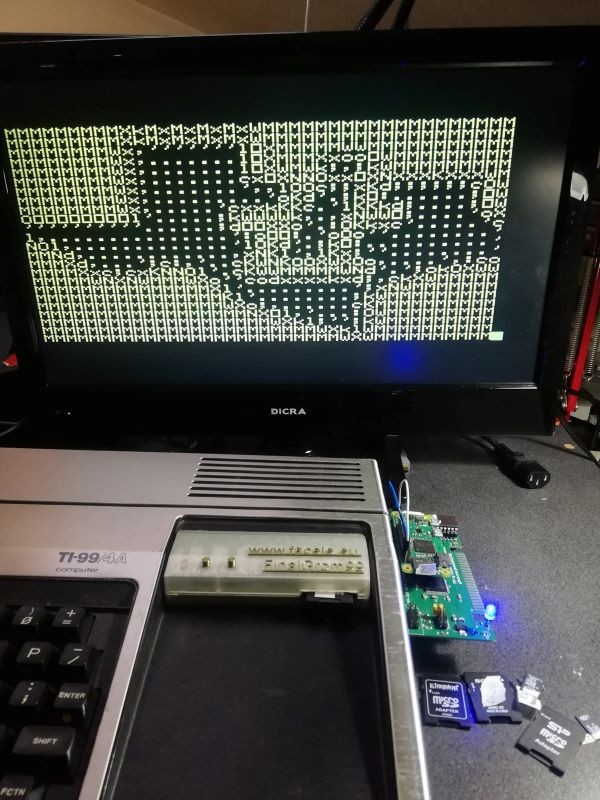
We used it to emulate our TI-99/4A via software, here we loaded the Texas Instruments game MunchMan.
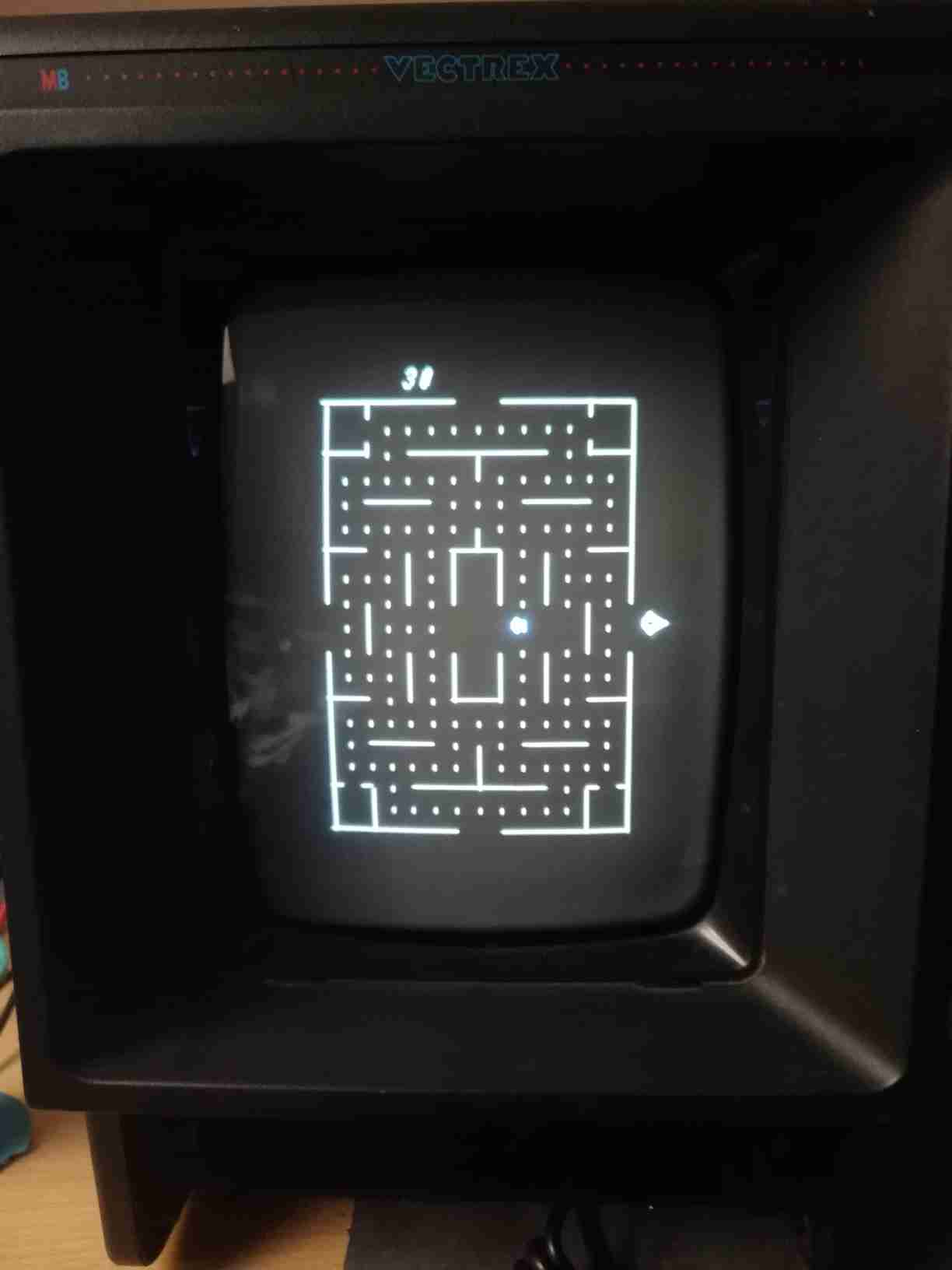
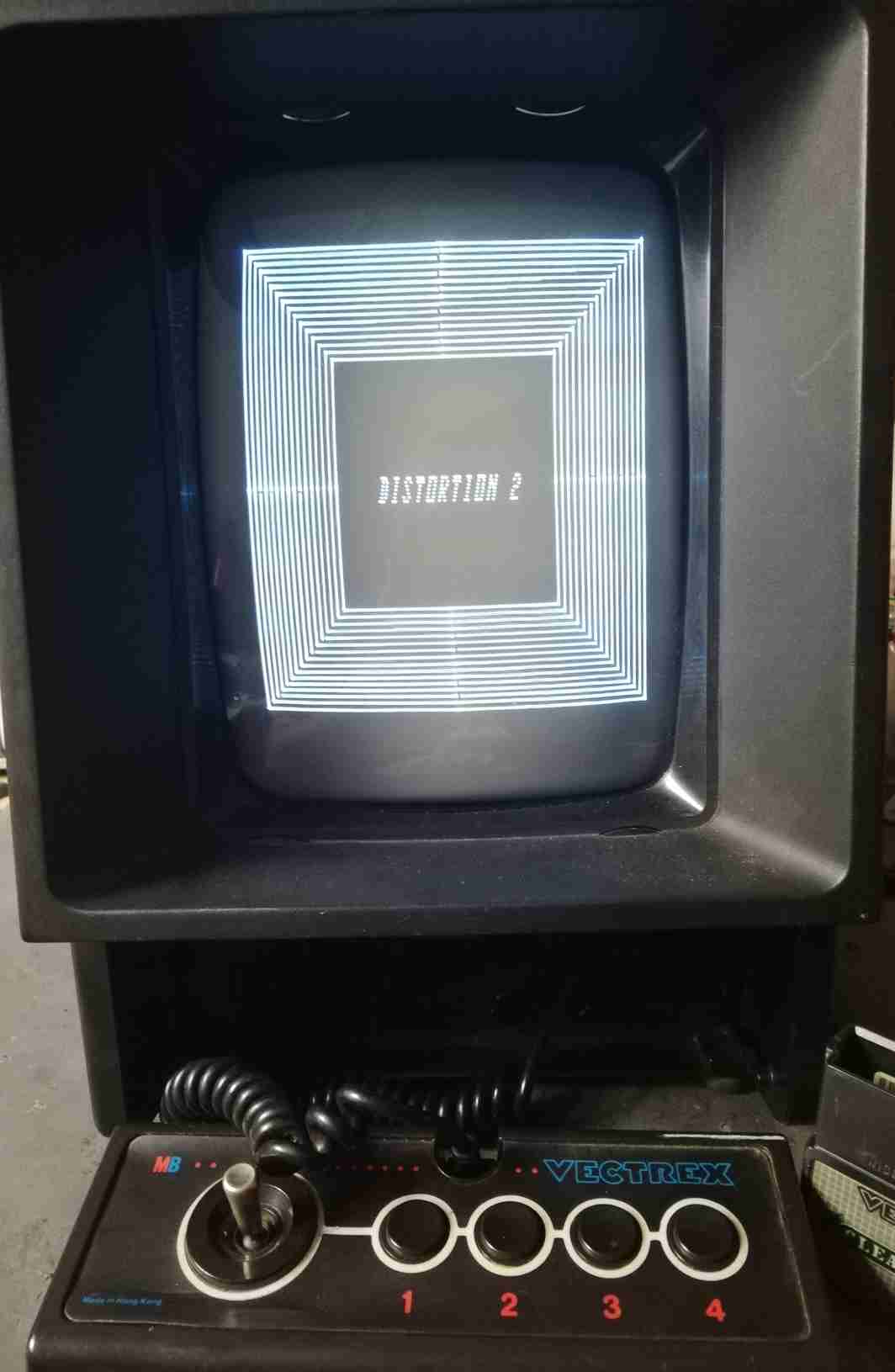 The Vectrex is an 8-bit console designed by Smith Engineering and distributed by General Consumer Electric (a subsidiary of General Electric), and later by the Milton Bradley Company. The Vectrex was the only home console to make hardware use of vector graphics (the same as bar classics such as Space Wars, Asteroids, Battlezone and Tempest) to play games on the integrated screen. Vectrex was also sold in the Japanese market under the name Bandai Vectrex Kousokusen.
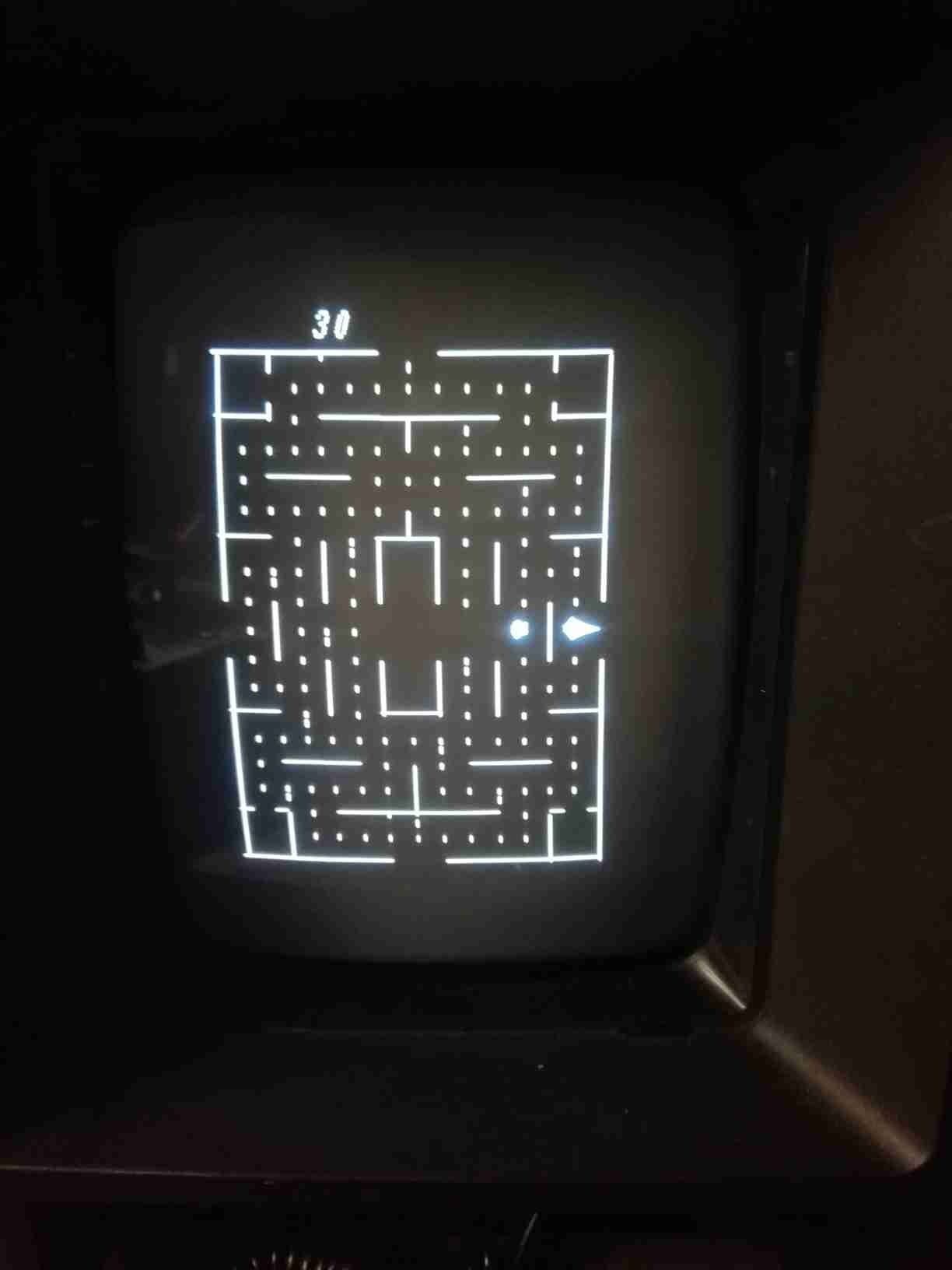
FAILURES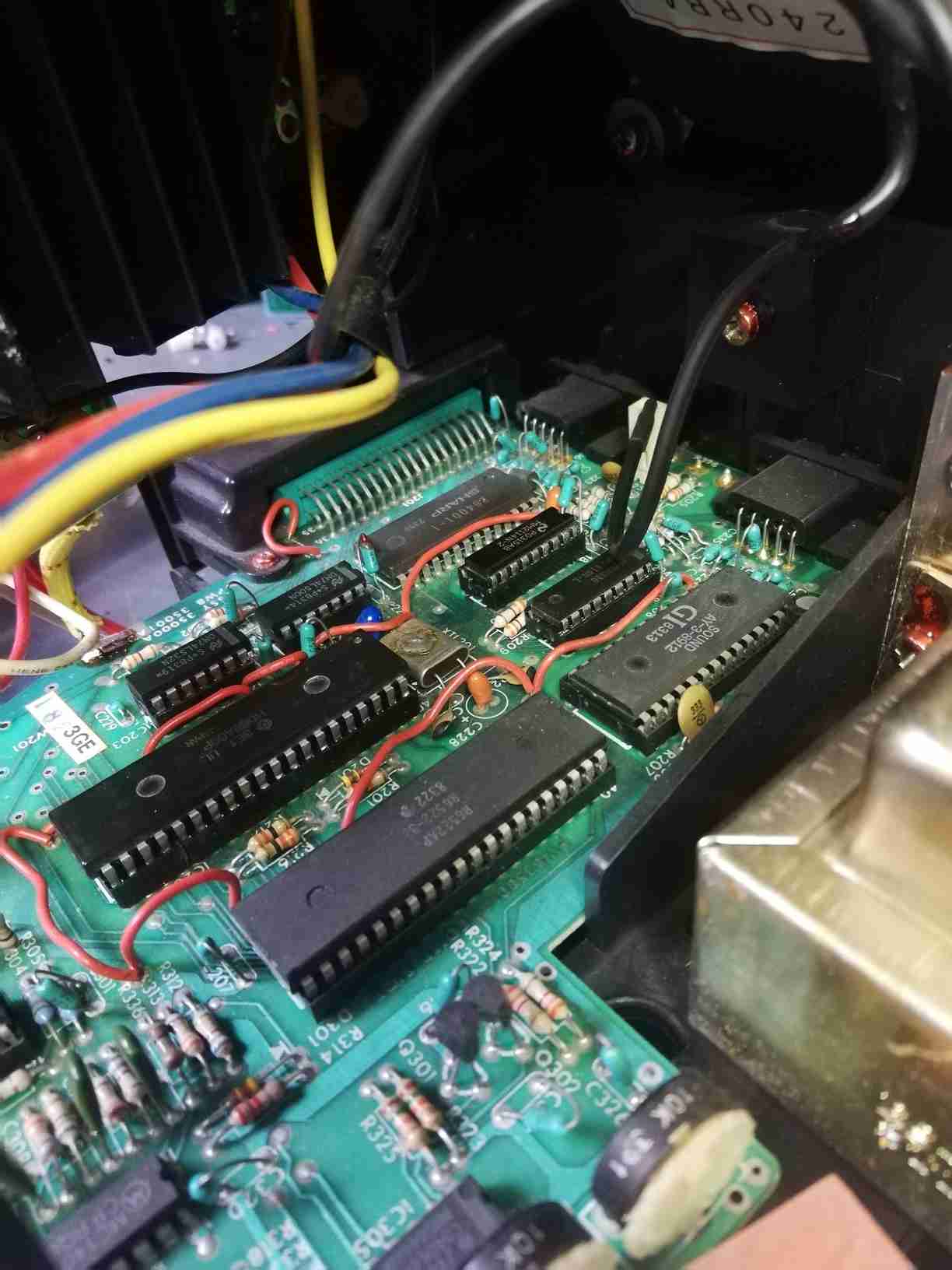
Problem encountered: With the Sweep Clean game some dots to eat in the game are not at the same distance.
With the game inserted BEDLAM, the menu appears but the game crashes immediately
Solution: IC204 RAM broken.
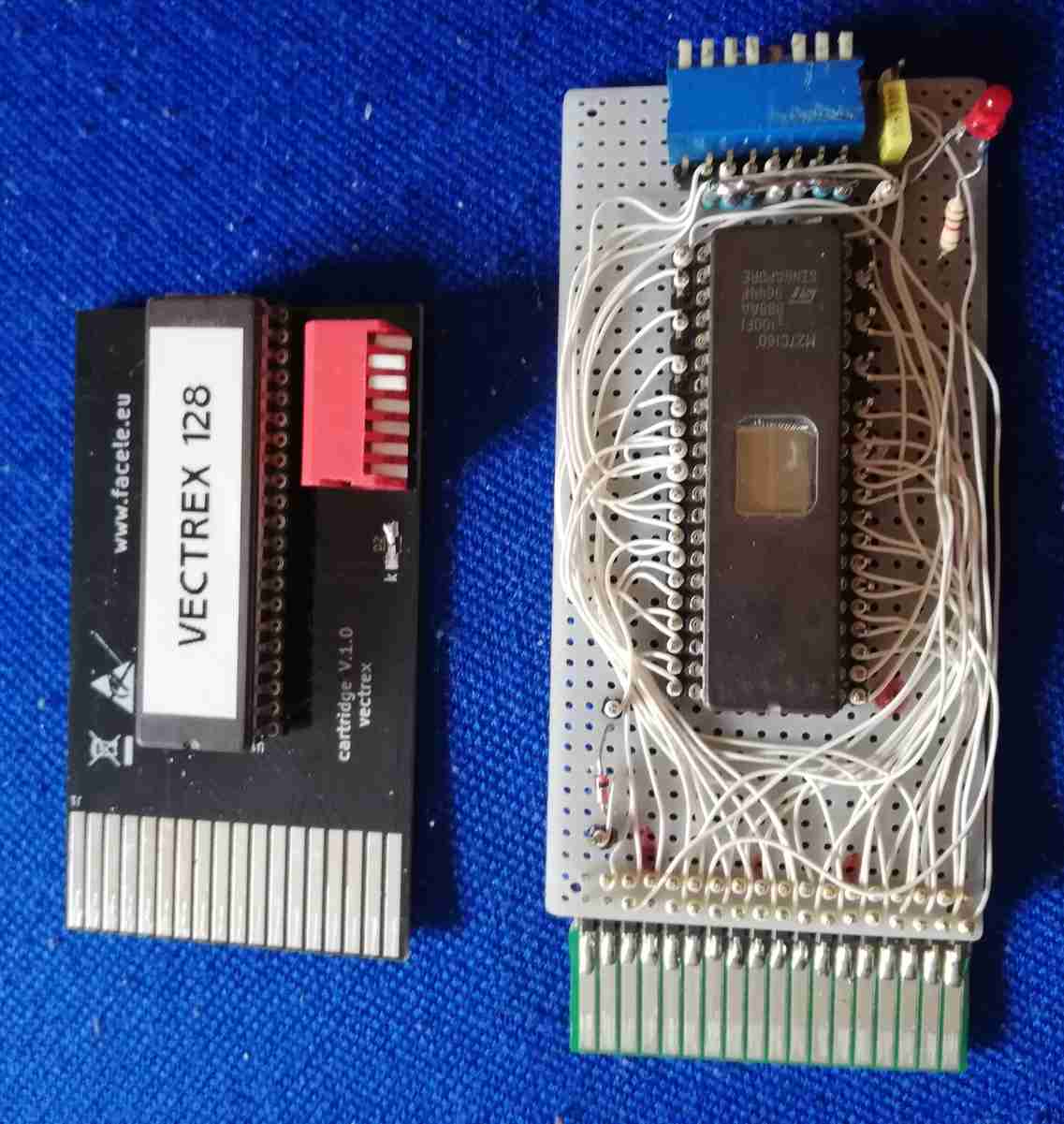
CARTRIDGE 128 PROGRAMS
Cartridge V.1.0 with demo e games

The file to be written to the EPROM has been split into four parts so that the 27C160 can be programmed using the TL866 programmer and an adapter.

 Model: Computer Fun
Battery: 4 x AA
AC adapter:
Year: 1990
Chip: TSP50C44 (CSM44017), TSP60C19 (CMM19040), HD44102, HD44105
Info: Texas Instruments introduced with the Computer Fun a perfect combination of their superb speech synthesizer technology known from products like the Super Speak & Spell and the appearance of a small notebook. othing else than the British speaking edition of the Computer Fun introduced two years earlier in the United States.
 Model: Crazy Club House
Battery: 4 x AA
AC adapter:
Year: 1994
Chip:
Info: made in China
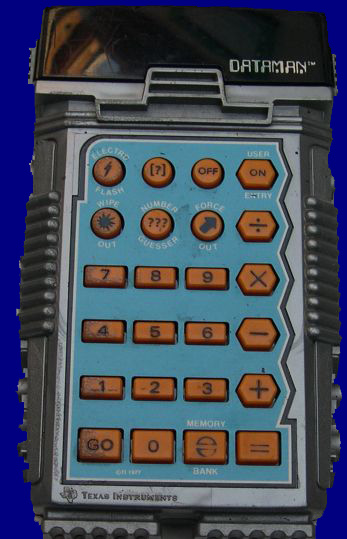 Model: Dataman
Battery: 9 volt
AC adapter:
Year: 1979
Chip: TMC1982
Info:
 Model: Dotto conta e parla
Battery: 4 x AA alkaline
AC adapter:
Year: 1986
Chip: TMS50C40 I
I nfo:Dotto Conta-Parla manufactured in March 1986 by Texas Instruments Rieti, Italy. The printed circuit board (PCB) of the educational toy is centered around a TMS50C40 standard Voice Synthesis Processor (VSP) chip.
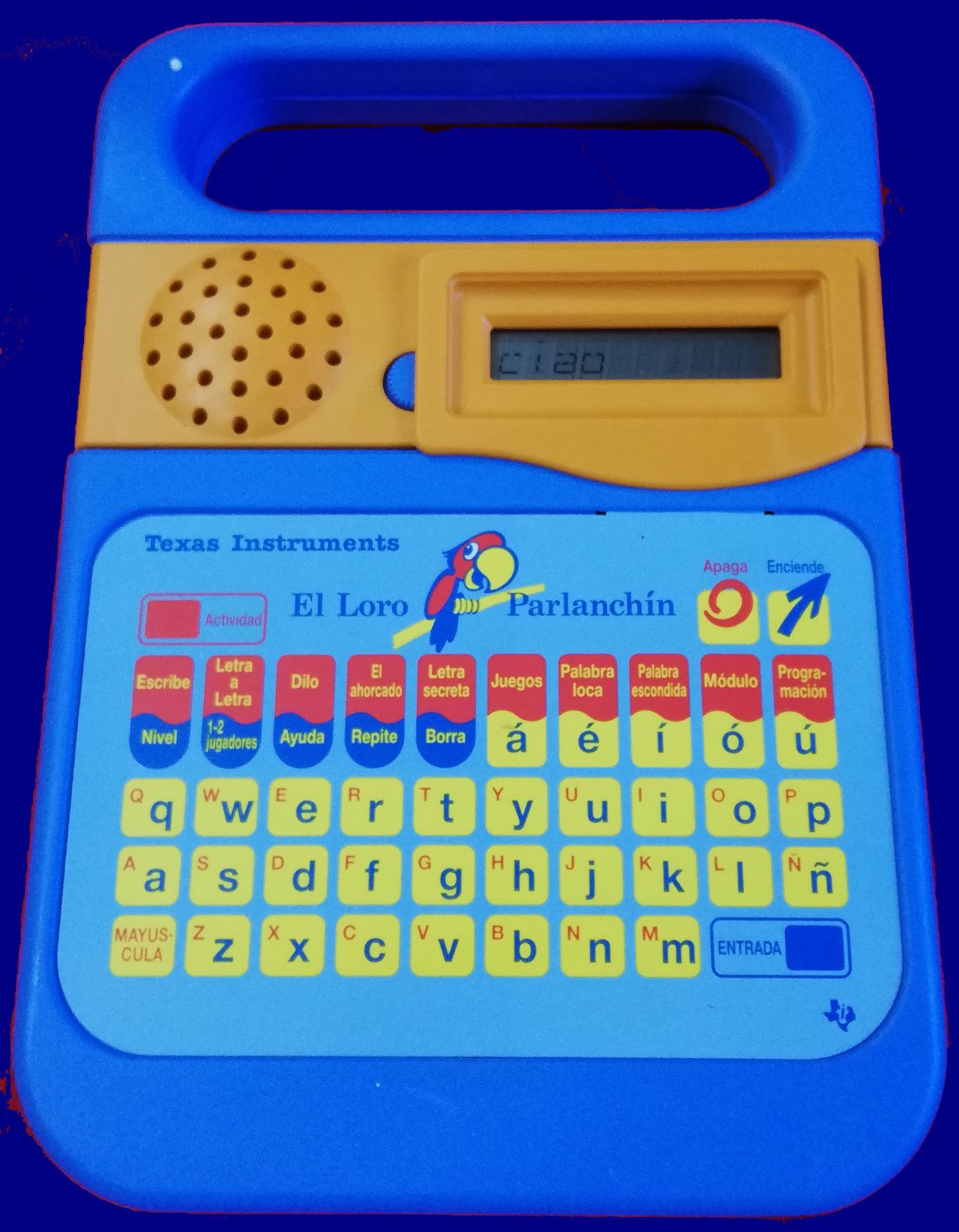 Model: El loro parlanchin
Battery: 4 x 1,5 C
AC adapter: AC9199
Year: 1991
Chip:
Info: Super Line
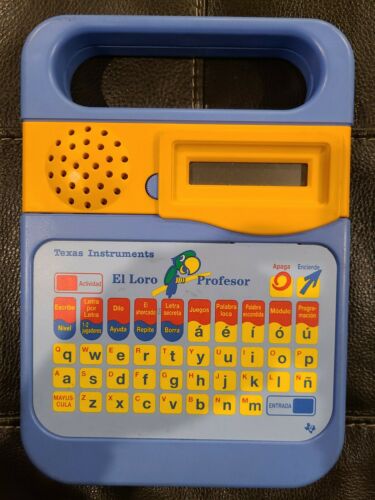 Model: El Loro Profesor ESP
Battery: 4 x 1,5 C cells
AC adapter: AC9199
Year: 1992
Chip: TSP50C42 (CSM42031), TSP60C19 (CMM19054), HD44780
Info: Super Line
Audio Guide
|
|
|
|
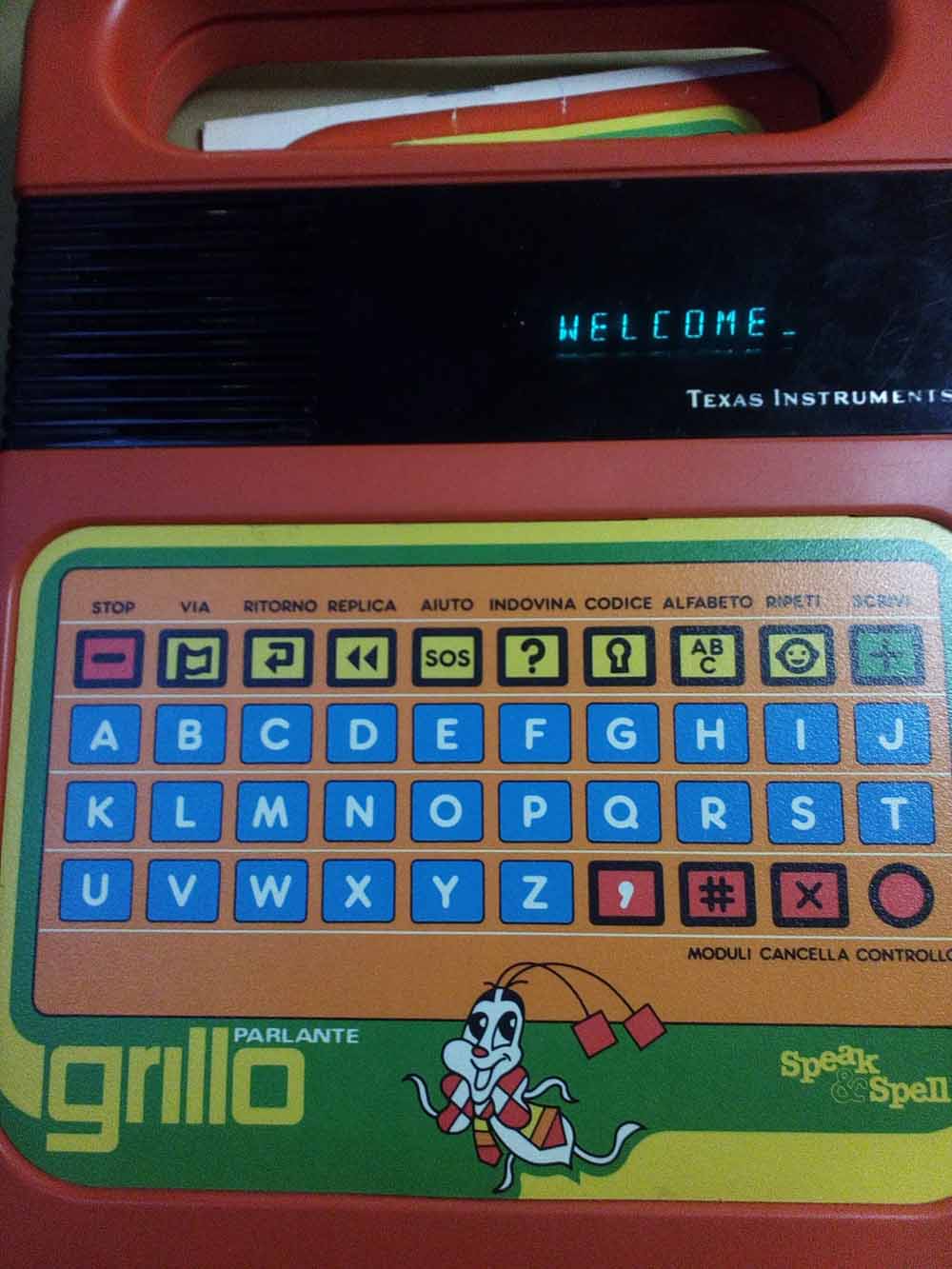 Model: Grillo Parlante
Battery: 4 x 1,5 C
AC adapter: AC9199
Year: 1980
Chip:
Info:The Grillo Parlante Italian Version (originally called Speak & Spell) is an electronic game based on speech synthesis, produced by Texas Instruments since 1978 and no longer in production. The Italian version was distributed by Clementoni. It was designed for educational purposes, aimed at children, allowing them to learn spelling while having fun. The device is equipped with a membrane keyboard, an 8-character fluorescent display, a speaker, and a carrying handle.The Grillo Parlante offers several game modes: Write, Repeat, ABC, Code, and Guess, during which each letter typed and word spoken displays a corresponding character on the display. The Write & Repeat games have four levels of increasing difficulty. The Italian voice of the Grillo Parlante is by Luciano De Ambrosis.
TroubleShooting
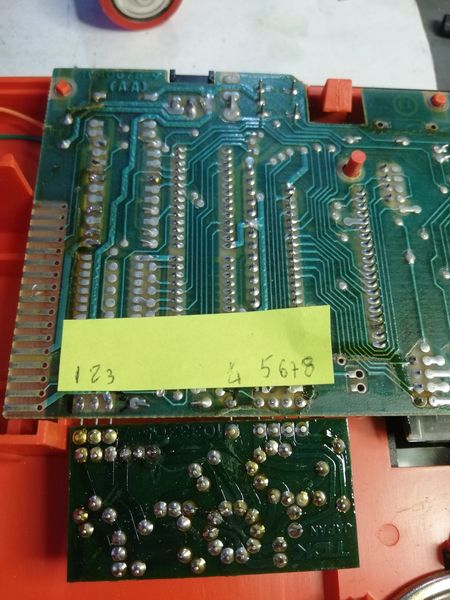
Fixing a power supply Grillo Parlante! The easiest fault to find is when it does not turn on, probably due to the incorrect connection of an external power supply.
Connect the battery or the external power supply 6 VDC 500 mA
Check with the tester that there are 6 volts between pins 3 (gnd) and 4 (vbat), this is the battery voltage.
Check that there is -17 volts between pins 3 (gnd) and 5 (display+speaker).
Check that there is -3,5 volts between pins 3 (gnd) and 6 (uC).
Without these last two values our Grillo Parlante will not work! Check and replace Q1 (2sb562 pnp)
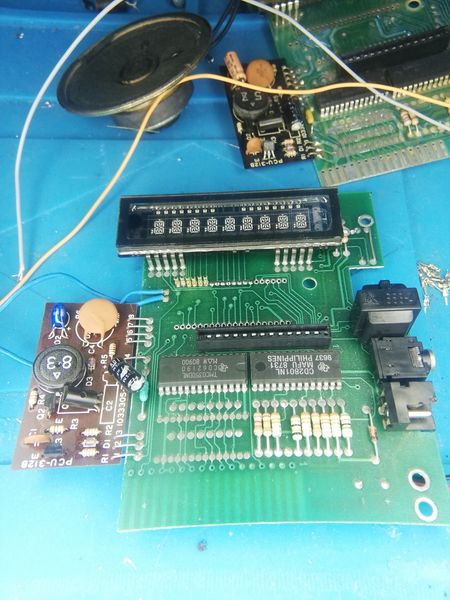
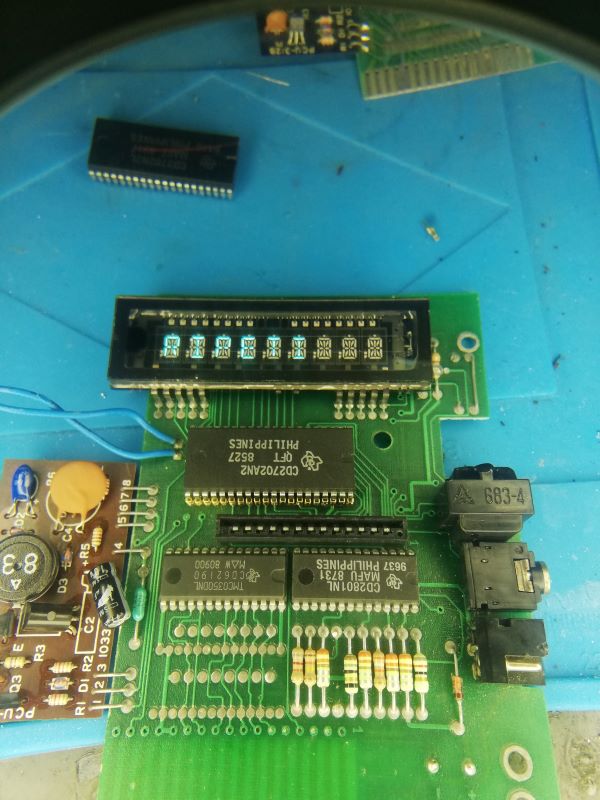
After many requests for repairs of Grillo Parlante, we had to set up a forklift to test the three chips that make up the game. I thought the pitch of the integrated circuits was 1.27mm, but no it's a little less than 1.25, so I had to take a strip with 1.27 gold-plated terminals, open it and use the individual terminals.in the second photo you can see the microcontroller on the socket.
CD2702AN2 / TMC0270 Microcontroller / Display (The microcontroller is derived from the TMS1000 series and adopted to control both the keyboard, the display and to feed the speech synthesizer)
CD62190NL / TMC0350DNL Word Rom ( Italy )
CD2801NL / TMC0280NL Speech Synthesizer
.jpg) Fix a membrane keyboard Grillo Parlante! I hope with this last phase I can help all those who want to try repairing Jiminy Cricket. Often the failure to turn on is due to the membrane keyboard which has some closed keys. The new sticker is available to put in place of the old one.
Fix a membrane keyboard Grillo Parlante! I hope with this last phase I can help all those who want to try repairing Jiminy Cricket. Often the failure to turn on is due to the membrane keyboard which has some closed keys. The new sticker is available to put in place of the old one.
.jpg) 1) Remove the keyboard gently, as you can see it is not completely attached to the case, follow the edge of the keyboard.
1) Remove the keyboard gently, as you can see it is not completely attached to the case, follow the edge of the keyboard.
.jpg)
2) Once the keyboard has been removed, clean the contact points of the case with isopropyl alcohol.
.jpg)
.jpg) 3) The same goes for cleaning with isopropyl alcohol.
3) The same goes for cleaning with isopropyl alcohol.
4) This is another type of keyboard but the same applies. Open it and clean with isopropyl alcohol.
.jpg) 5) Insert the keyboard you removed holding it still, it would be better not to remove all the adhesive paper around it after cutting.
5) Insert the keyboard you removed holding it still, it would be better not to remove all the adhesive paper around it after cutting.
.jpg)
.jpg) 6) We have had new stickers printed to use in case the removed one is damaged or torn. Many Thnaks to Centro Stampa Salaria
6) We have had new stickers printed to use in case the removed one is damaged or torn. Many Thnaks to Centro Stampa Salaria
7) Work finished.
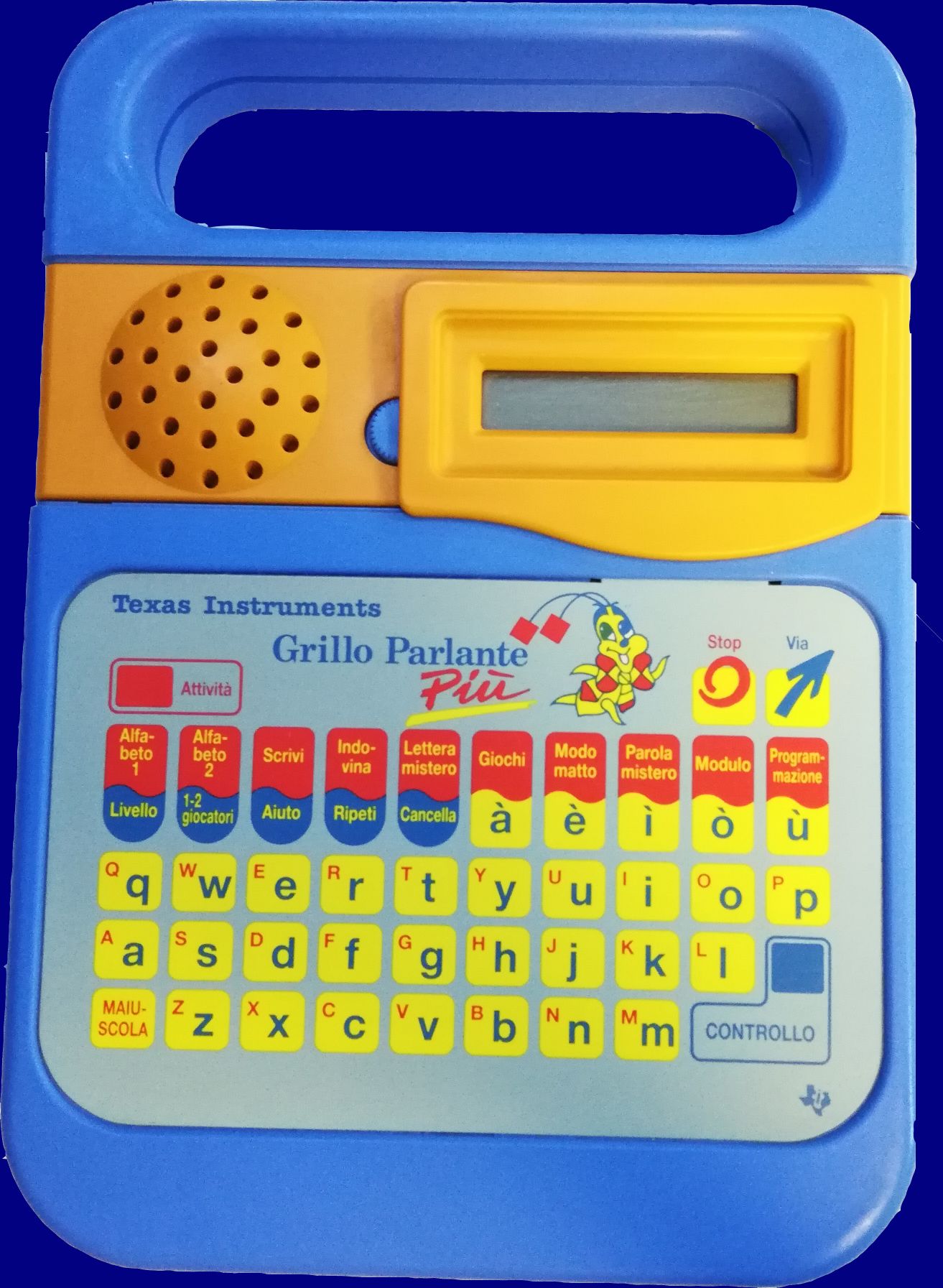 Model: Grillo Parlante piu'
Battery: 4 x 1,5 C
AC adapter: AC9199
Year: 1991
Chip:
Info: Super Line
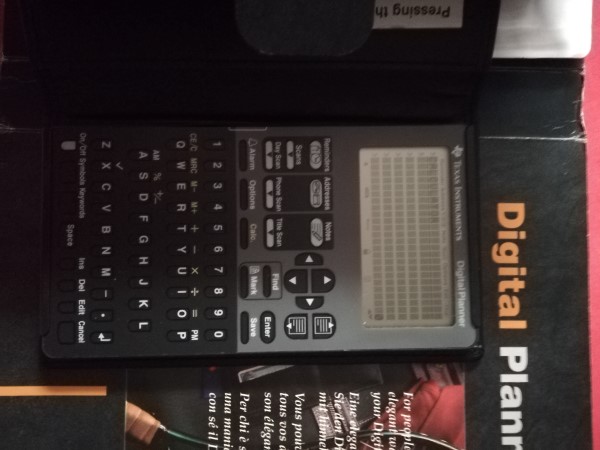
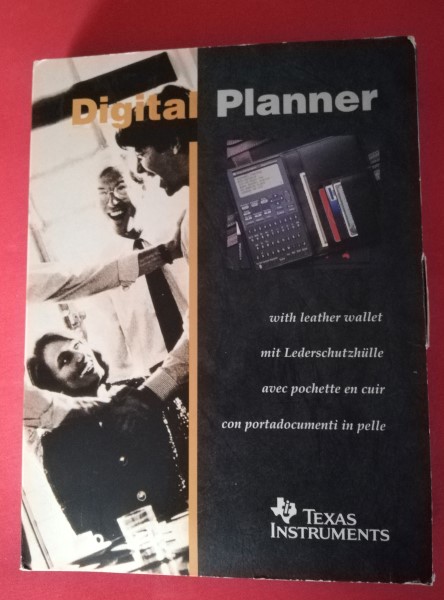 Model: IS-8400 digital planner
Battery: 2 x CR2016
AC adapter:
Year: 1993
Chip:Toshiba T6M58
Info:
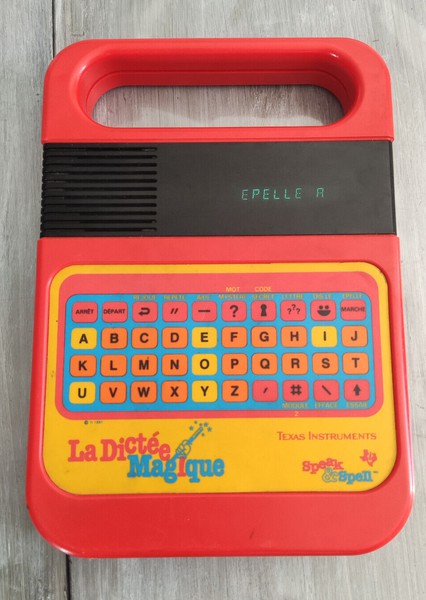 Model: La dictee magiques 1v
Battery: 4 x 1,5 C
AC adapter:
Year: 1986
Chip: TMC0270/CD2702, TMC0280/CD2801, CD2352
Info:French series . Made in Italy
 Model: La Palla che Parla
Battery: 4 x AA alkaline
AC adapter:
Year: 1991
Chip:
Info:Small toddlers use the Listen & Learn toy like a small ball. Due to the flats on each side the toy will find a stable position and play a sound associated to the Farm Animal on top of the ball. The Listen & Learn uses again Texas Instruments speech technology introduced with the Speak & Spell. Made in China
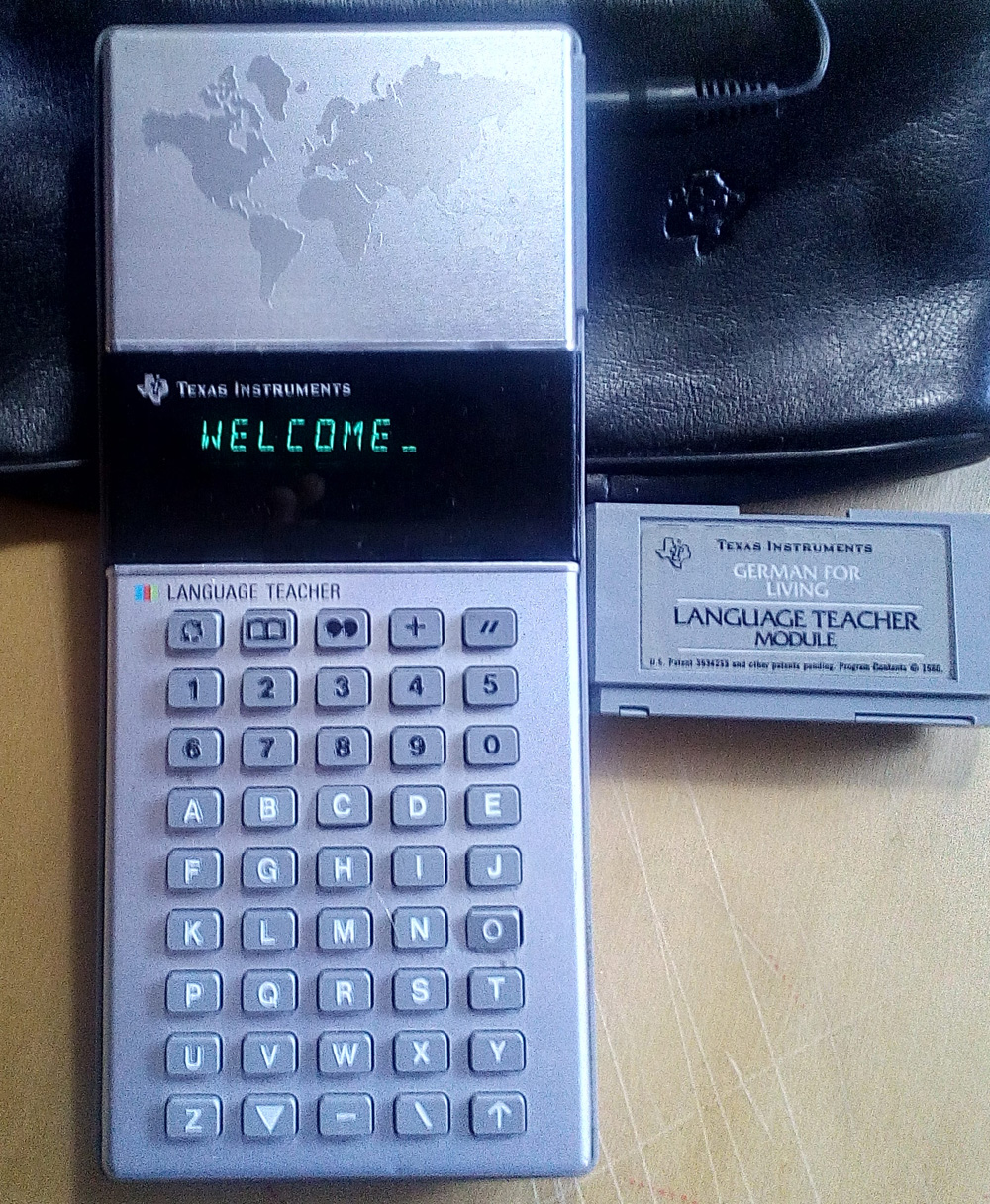 Model: Language Teacher
Battery: 4 x AA
AC adapter:
Year: 1980
Chip:
Info: module English / Spanish / German
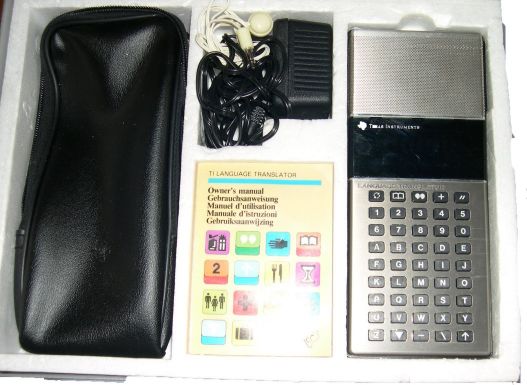 Model: Language Translator
Battery: 4 x AA
AC adapter:
Year: 1980
Chip:
Info: module English / French / Spanish / German

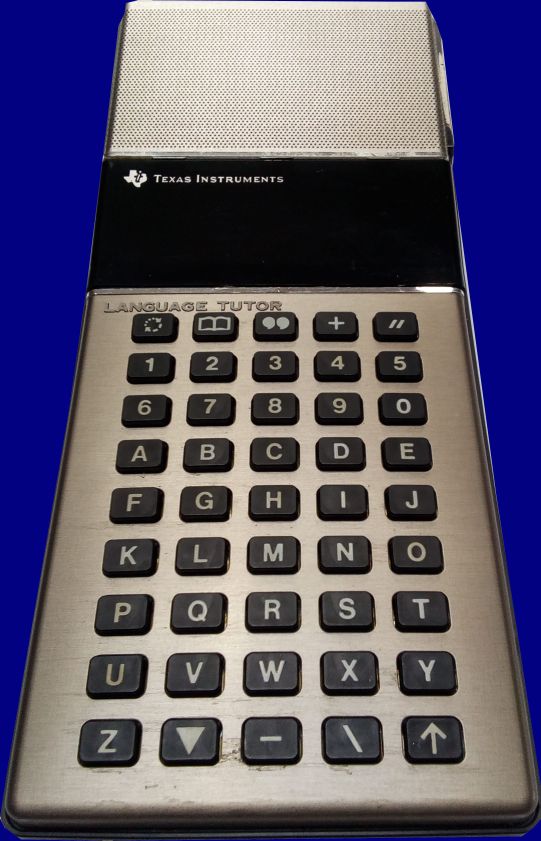 Model: Language Tutor
Battery: 4 x AA
AC adapter:
Year: 1981
Chip:TMC0275, TMC0280 + Module: 4*TMC0350
Info: module English / French / Spanish / German / Inglese Britannico
 Model: Le Calcul Magique
Battery: 4 x AA cells
AC adapter:
Year: 1986
Chip: TMS50C40A (CD54147)
Info: Nothing else than a Maths marvel trimmed to French language. Don't miss the Dotto Contaparla sold in Italy. Made in Italy
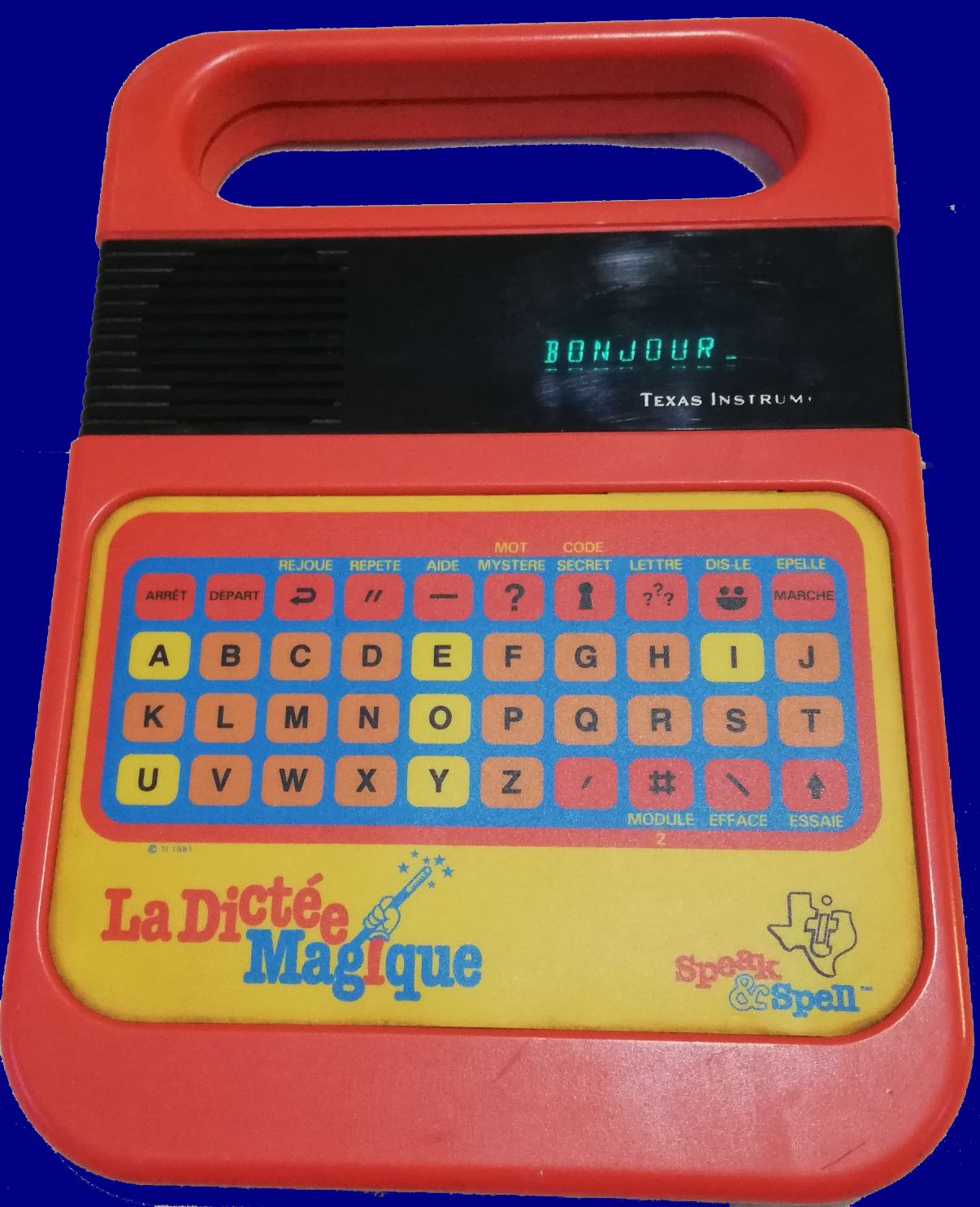 Model: La dictee magiques 1v
Battery: 4 x 1,5 C
AC adapter:
Year: 1985
Chip:
Info: French series
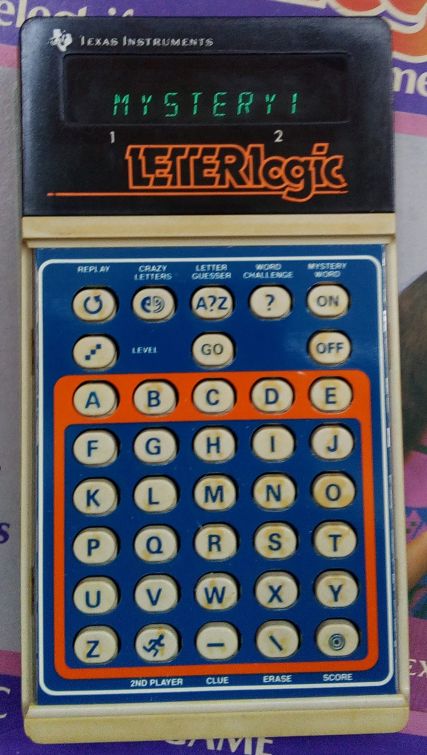 Model: Letter Logic
Battery: 9 volt
AC adapter:
Year: 1981
Chip:
Info: manufature UK
 Model: Little Computer
Battery: 2 x AA alkaline
AC adapter:
Year: 1992
Chip: COP444
Info:
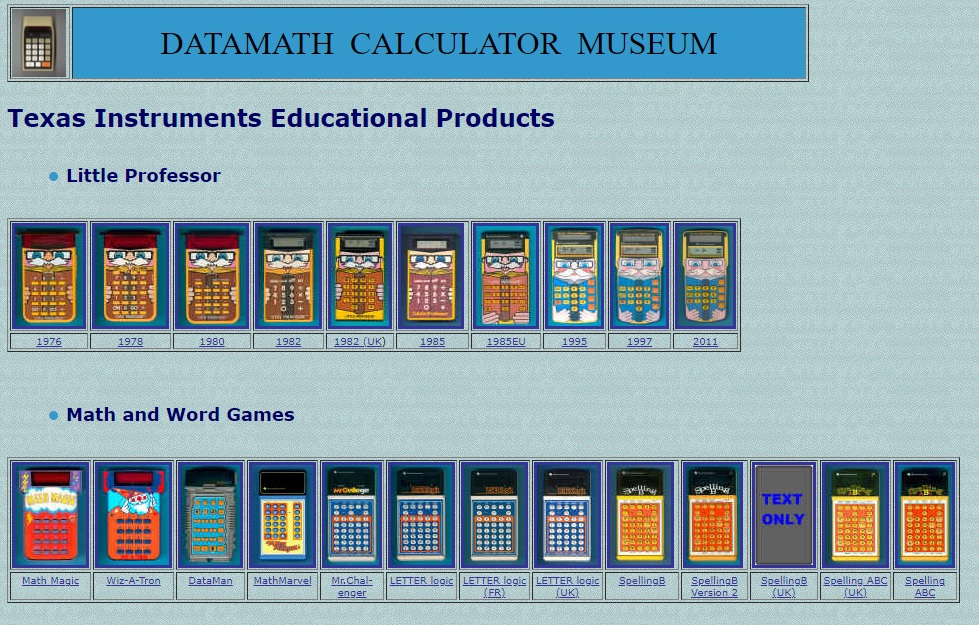
 Model: Little Professor 1976
Battery: 9 Volt
AC adapter:
Year: 1976
Chip: JP0975CS
Info:Portuguese Version Made in Brazil
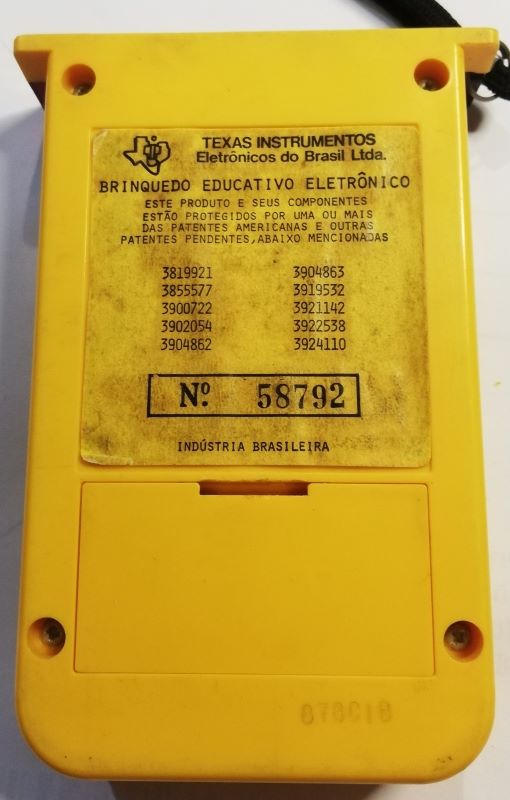
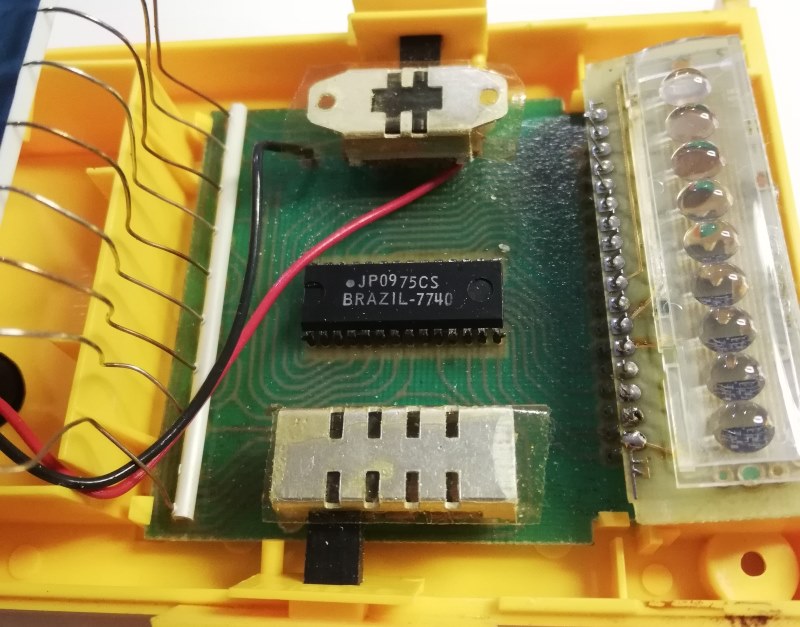
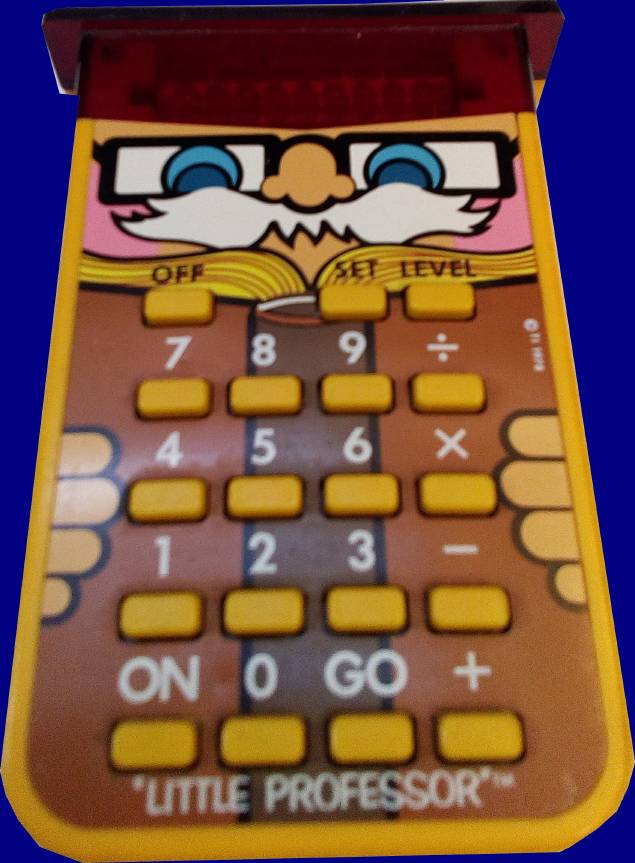 Model: Little Professor 1981
Battery: 9 Volt
AC adapter:
Year: 1981
Chip:
Info:
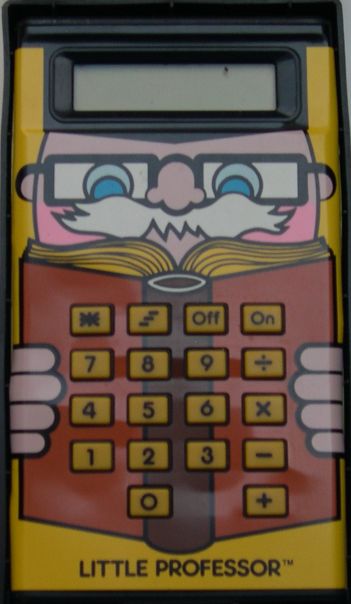 Model: Little Professor 1982 ITA
Battery: 2 x AA
AC adapter:
Year: 1982
Chip:
Info: manufacture Italy
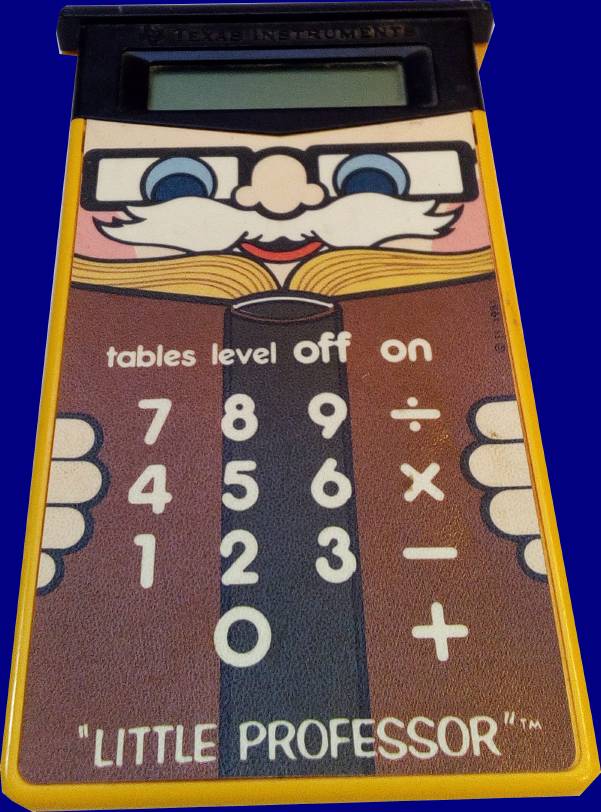 Model: Little Professor 1982 USA
Battery: 2 x AA
AC adapter:
Year: 1982
Chip:
Info: manufacture USA
 Model: Little Professor 1985 EU
Battery: 2 x LR44
AC adapter:
Year: 1985
Chip:
Info: manufacture EU
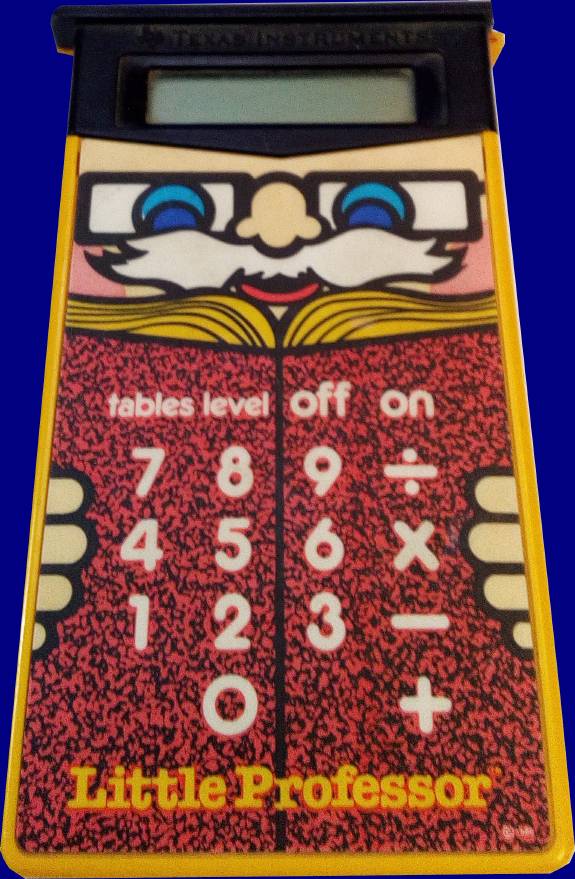 Model: Little Professor 1985 USA
Battery: 2 x AA
AC adapter:
Year: 1985
Chip:
Info: Made in USA
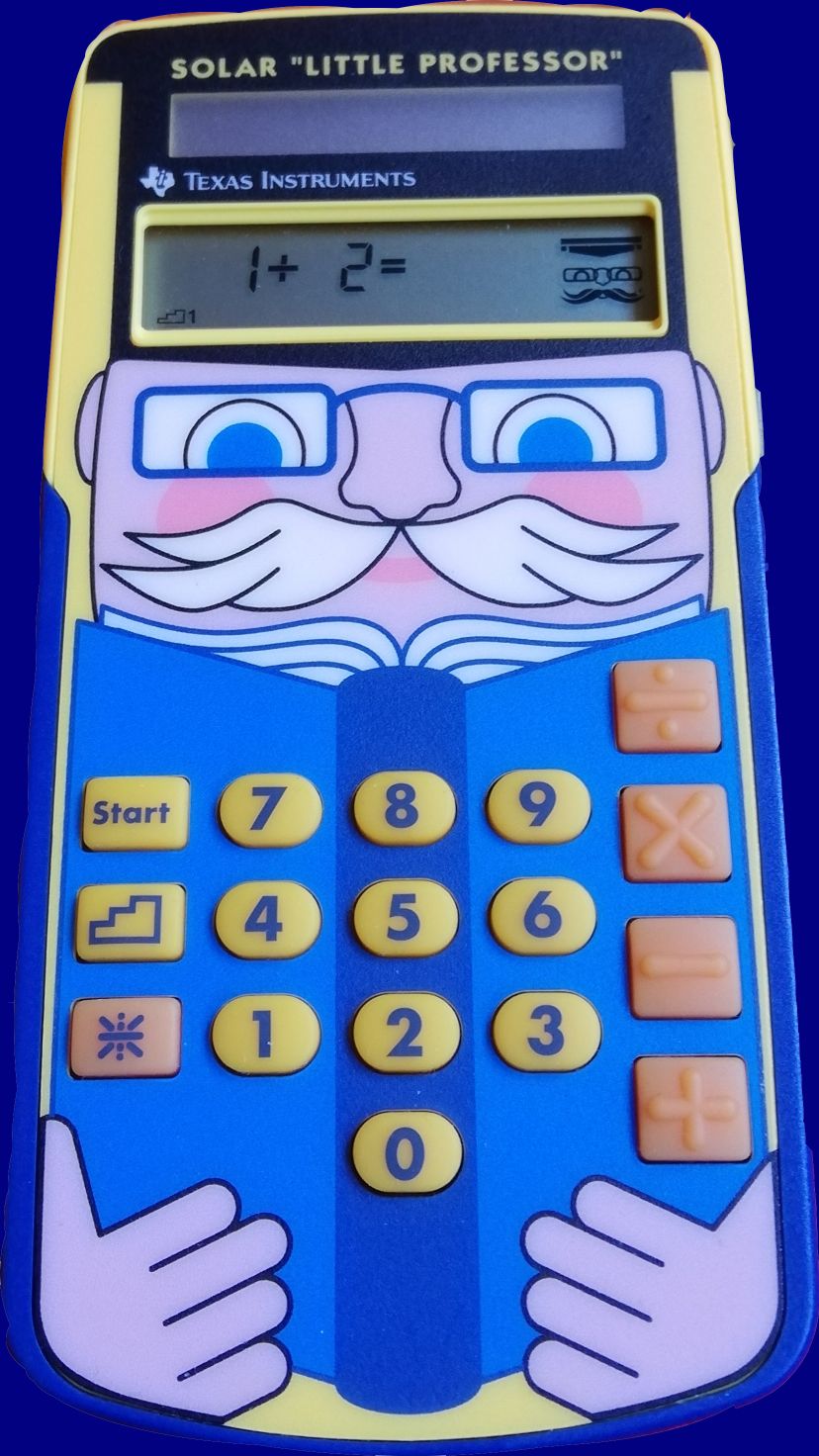 Model: Little Professor Solar
Battery: no
AC adapter:
Year: 1995
Chip:
Info: solar
 Model: Magic Clown
Battery: 4 x AA
AC adapter:
Year: 1993
Chip: TSP50C11/CSM11124 TSP50C50 ( voice Processor )
Info: The Stack-A-Round Clown, the first stacking toy that talks, was introduced in the US in 1991.
Five colorful rings, each representing a facial feature make up "Clarance the Clown's" face. Clarance recognizes each ring as it is placed on, or removed from, the stacking post. His friendly voice gives the name of the feature and explains the purpose of each part with a clever rhyme. Rings can be stacked in any order, allowing the child to create over 1000 faces.
Dismantling this Stack-A-Round Clown manufactured in 1992 by (or for) Texas Instruments in China reveals a technology very similar to the various Touch & Talkies. The design of the Magic Melody Tell is centered around a TSP50C11 Voice Synthesis Processor (VSP) and makes use of just one Integrated Circuit, TSP50C11 and TSP50C50 (Voice Synthesis Processor) with 8-bit microcontroller and 16k Bytes Mask ROM for both program and voice and 128 Bytes + 16 Nibbles RAM.
 Model: Magic Wand Speak and Learn
Battery: 4 x D cell
AC adapter:
Year: 1983
Chip:
Info:
 Model: Math Magic
Battery: 9 volt
AC adapter:
Year: 1977
Chip: TMC0907/ZA0379
Info: With the beautiful MATH MAGIC Texas Instruments introduced a variation of the Little Professor. The Little Professor gives you one of ten-thousands pre-programmed math questions and you have to type the correct answer. The MATH MAGIC works different: You have to type the question and the answer ! The MATH MAGIC gives you only a correct (flashing display) or wrong (EEE) answer.
Here you can find the WIZ-A-Tron manual (US), you can use it for this Math Magic as well. With permission from datamath.org
 Model: Math Marvel
Battery: 9 volt
AC adapter:
Year: 1980
Chip:
Info:
 Model: Math Star
Battery: 2 x AA
AC adapter:
Year: 1988
Chip: CD4616
Info: The Math Star is preprogrammed to teach the basic four mathematic functions through different games. This educational toy was rated by Texas Instruments for childrens aged between 6 and 11 years.
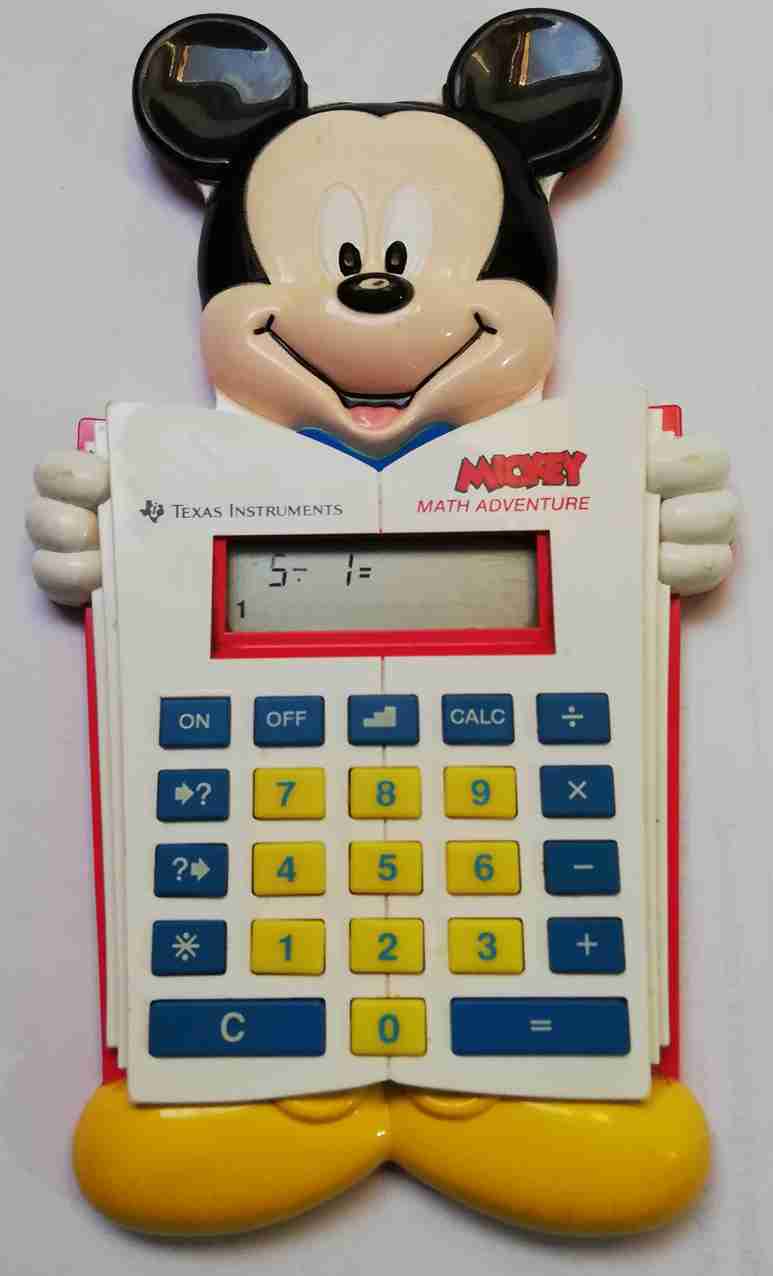 Model: Mickey Math adventure
Battery: CR2025
AC adapter:
Year: 1983
Chip:
Info: manufature China
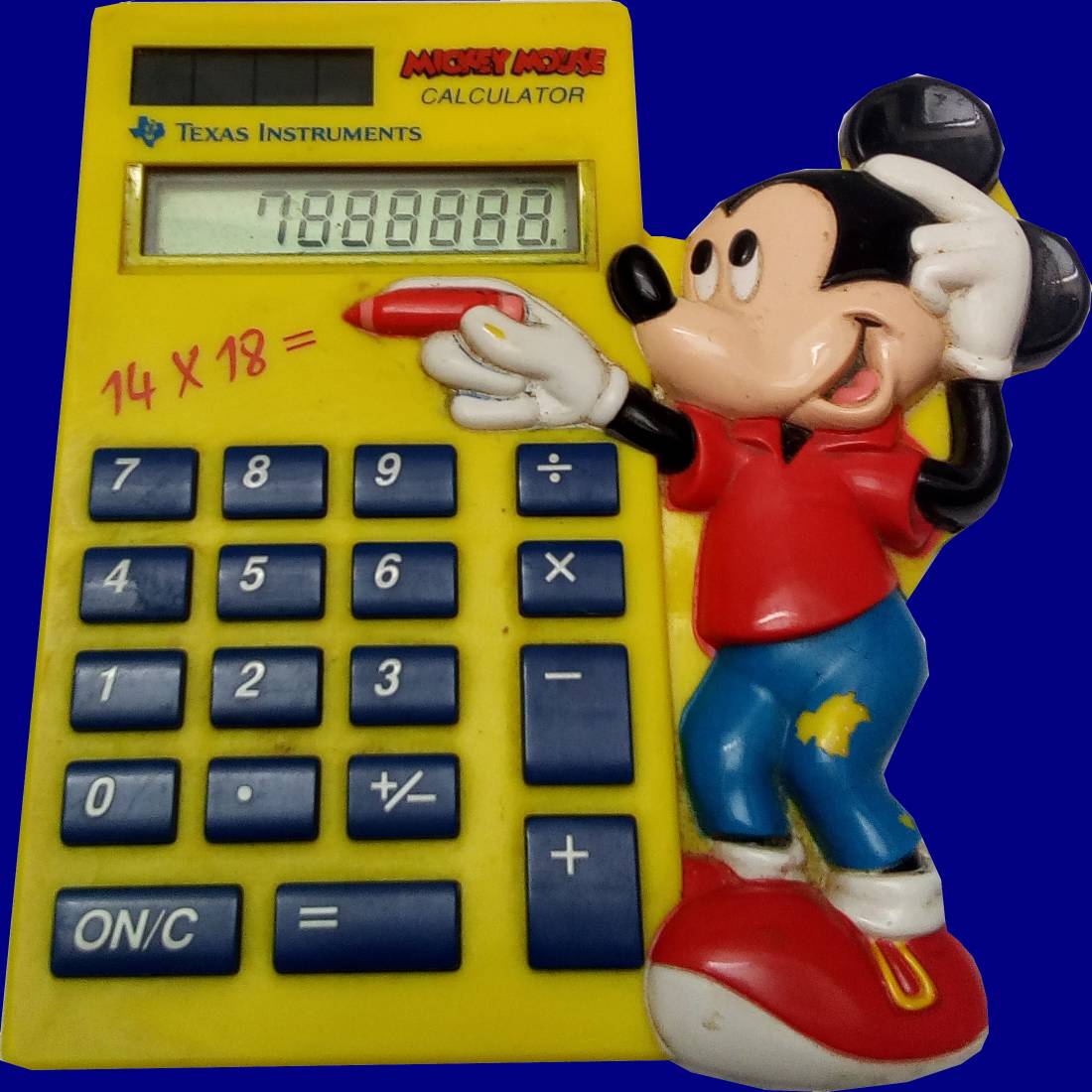 Model: Mickey Mouse
Battery: solar
AC adapter:
Year: 1983
Chip:
Info: manufature China
 Model: Mouse Computer
Battery: 4 x AA
AC adapter:
Year: 1993
Chip: TSP50C11 (CSM11128A), HD44780
Info: Texas Instruments introduced with the Talking Master Mouse Computer the first kids' computer with a real working mouse.


 Like all games or calculators that use LCD displays, they may have display problems, missing segments, extra characters, etc. Simply disassemble the display and clean both the conductive rubber tabs and the glass display with isopropyl alcohol.
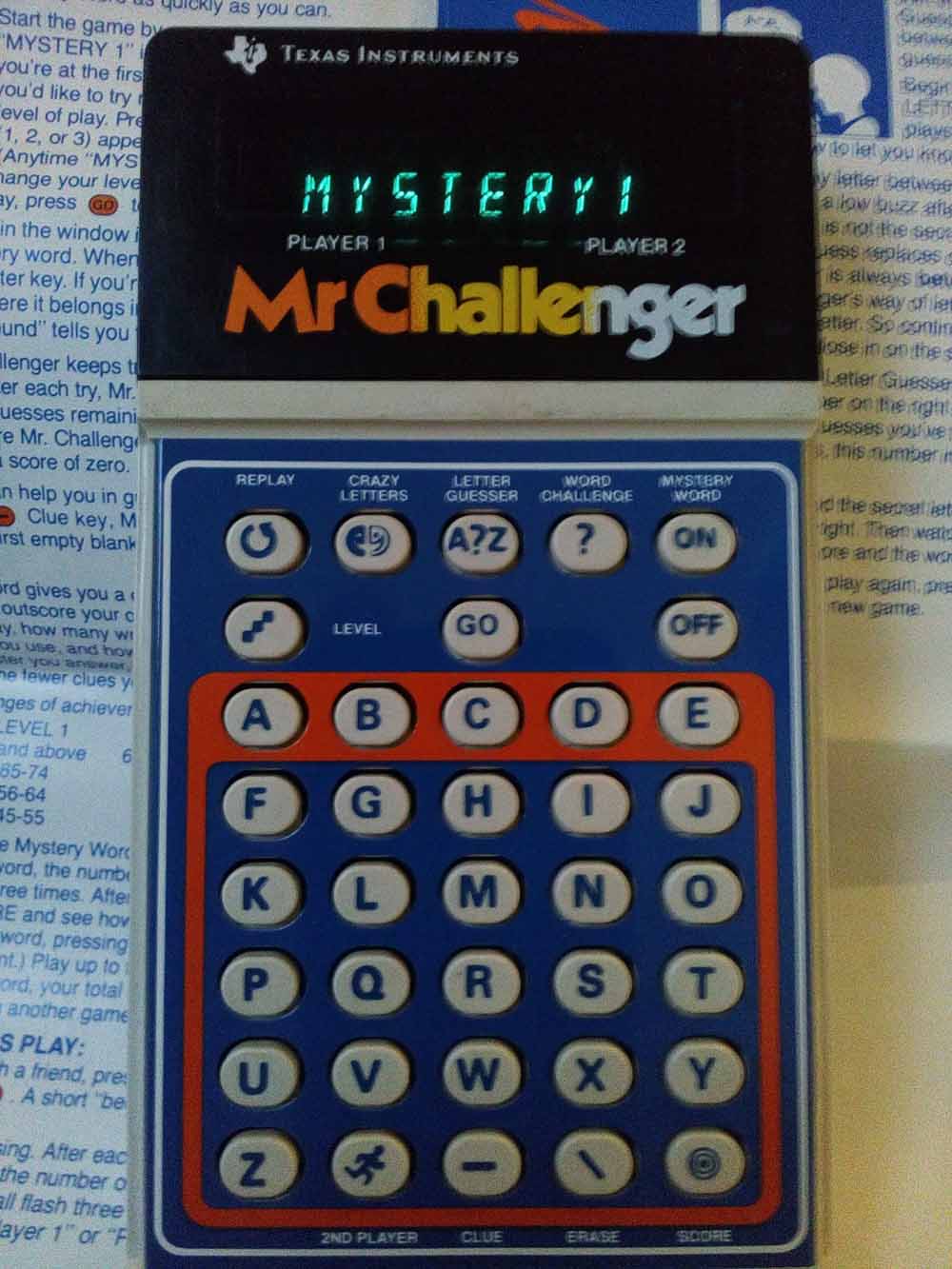 Model: Mr Challenger
Battery: 9 volt
AC adapter:
Year: 1979
Chip:
Info: manufacture Italy
 Model: Passport Flight Computer
Battery: 4 x AA
AC adapter:
Year: 1991
Chip:
Info:
 Model: Peek a Boo Zoo
Battery: 4 x AA
AC adapter:
Year: 1991
Chip:
Info: manufature China
 Model: Pitagora
Battery: 2 x AA alkaline
AC adapter:
Year: 1988
Chip: TP0456/CD4616
Info:Nothing else than the Italian edition of the Math Star distributed by Clementoni. Discovering the Pitagora reveals with the CD4616 an enhanced C-MOS calculator chip of the TP0456 family known from the TI-60.
.jpg) Model: PLT-SHH1
Model: PLT-SHH1
Battery: LI-Ion 3,7 volt 1400 mah
AC adapter: AD2973
Year: 2002
Chip: CPU: TI-OMAP1509E SDRAM: Hynix HY57V281620A Flash: Toshiba TC58V64A, Fujitsu 29LV400TC
Info: The PLT SHH1 seems to be a merger of a PDA (Personal Digital Assistant) and a graphing calculator. Both the size and resolution of the LCD screen are known from PDA's of that epoch and even a Stylus is used to operate the calculator.
.jpg)
.jpg)
Special thanks to Alexandru Balasa for the donation..jpg)
 Model: Professor 1.2.3
Battery: 2 x AAt
AC adapter:
Year: 1990
Chip:
Info:
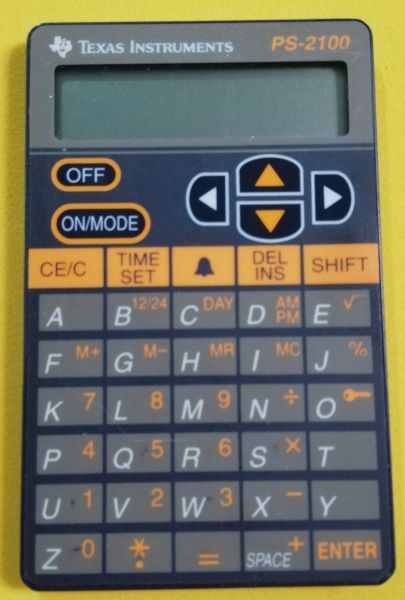 Model: PS-2100
Battery: CR 2025
AC adapter:
Year: 1993
Chip:
Info: no work
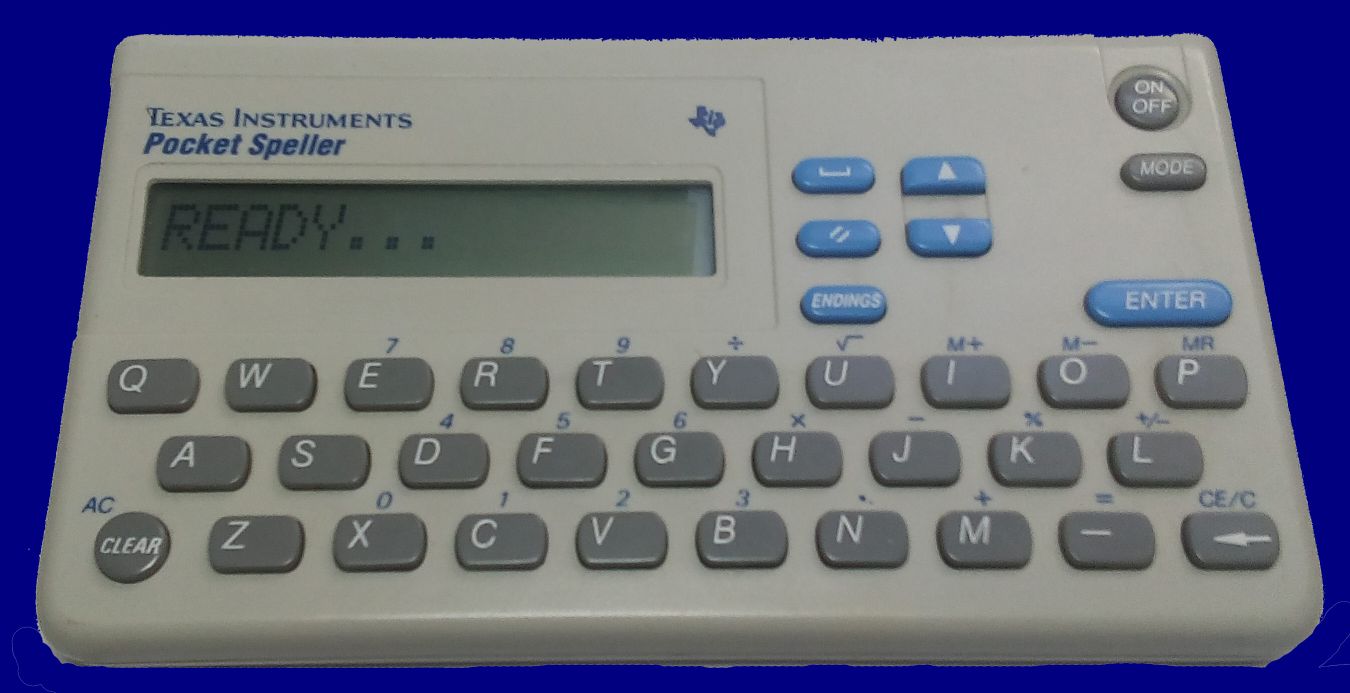 Model: PS-3000 pocket speller
Battery: 2 x AA
AC adapter:
Year: 1990
Chip:
Info:
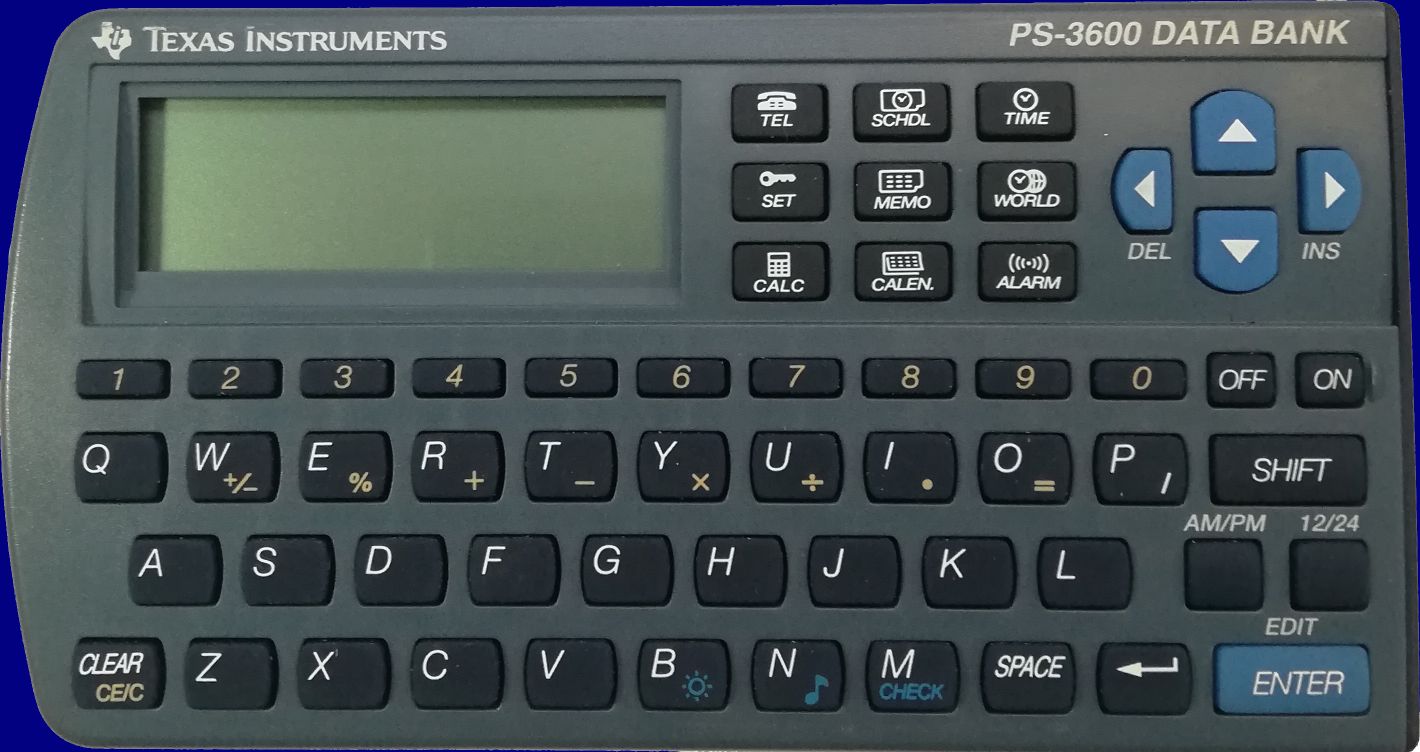 Model: PS-3600 data bank
Battery: 2 x CR2025
AC adapter:
Year: 1993
Chip:
Info:
 Model: PS-5600 translator
Battery: 2 x AAA + CR2016
AC adapter:
Year: 1991
Chip:
Info:
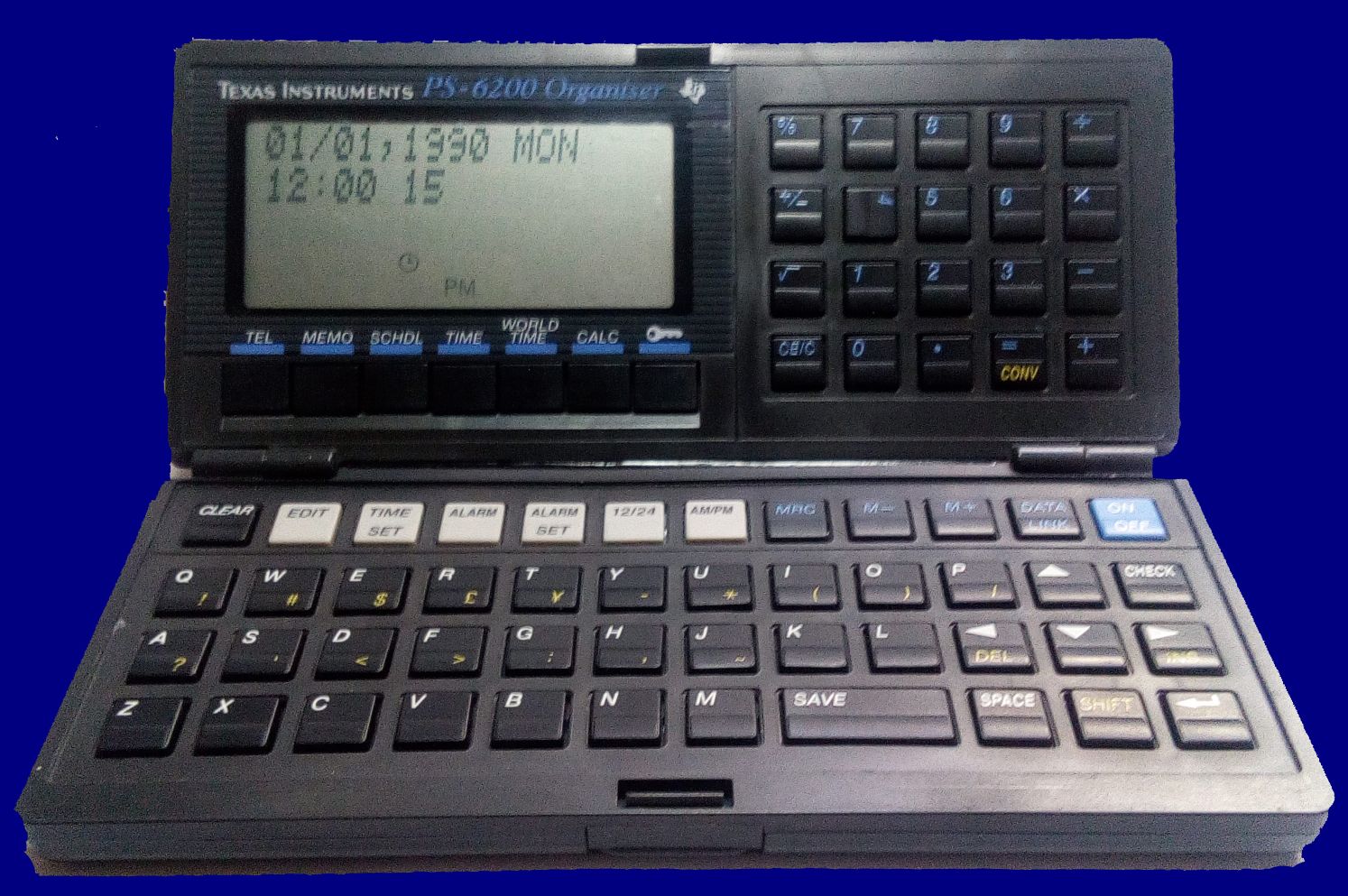 Model: PS-6200
Battery: 2 x CR2025 + CR2032
AC adapter:
Year: 1991
Chip:Toshiba TMP0210-5112
Info:
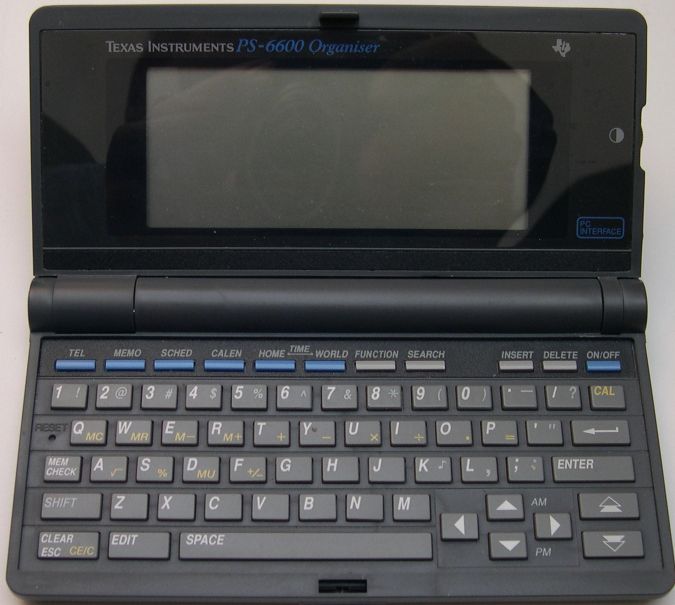 Model: PS-6600 organizer
Battery: 2 x AAA + CR2016
AC adapter:
Year: 1991
Chip:
Info:
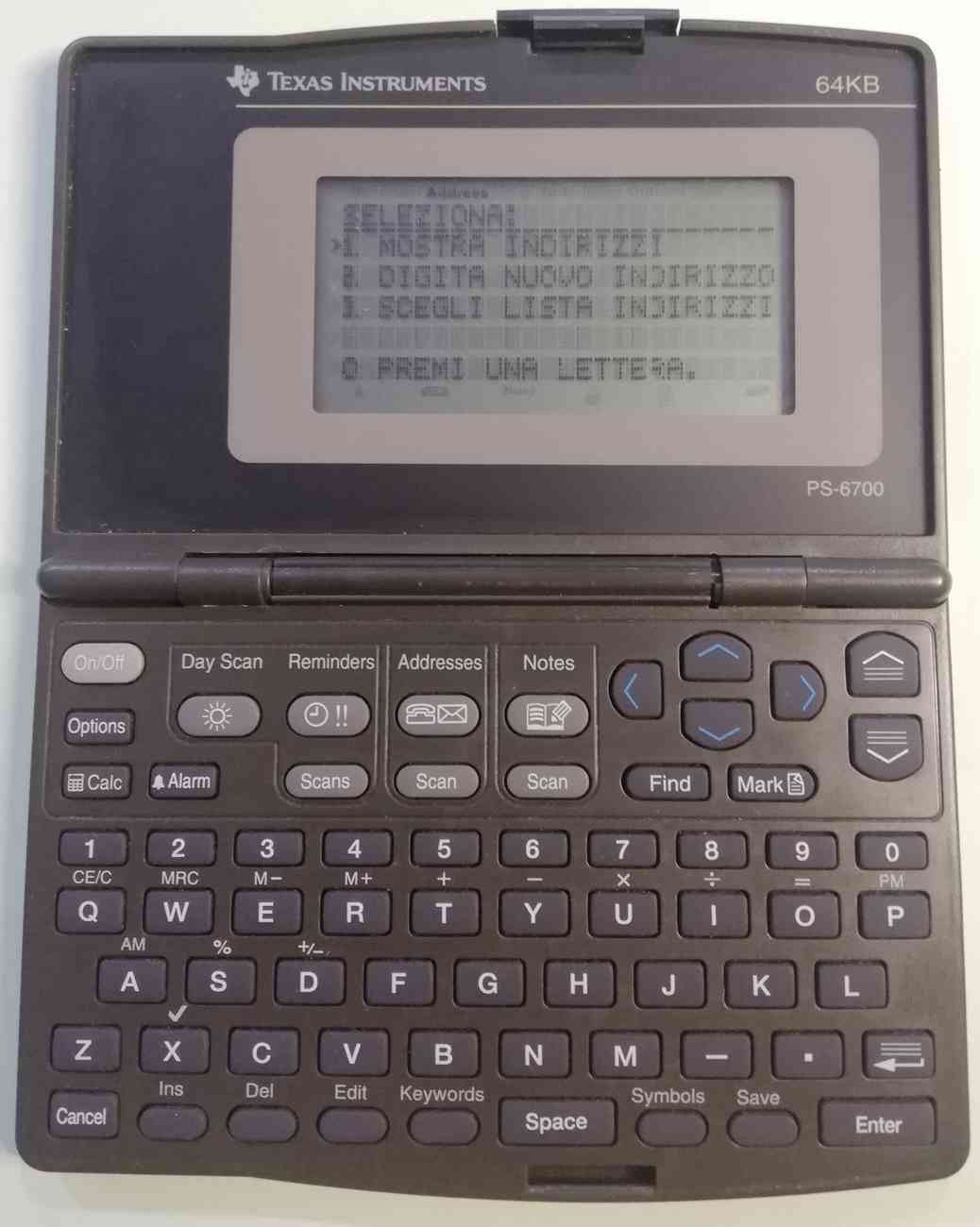 Model: PS-6700
Battery: 2 x CR2032
AC adapter:
Year: 1995
Chip: CPU: Toshiba T6M76 ROM: AT27C512 RAM: 2*UMC UM62256
Info:
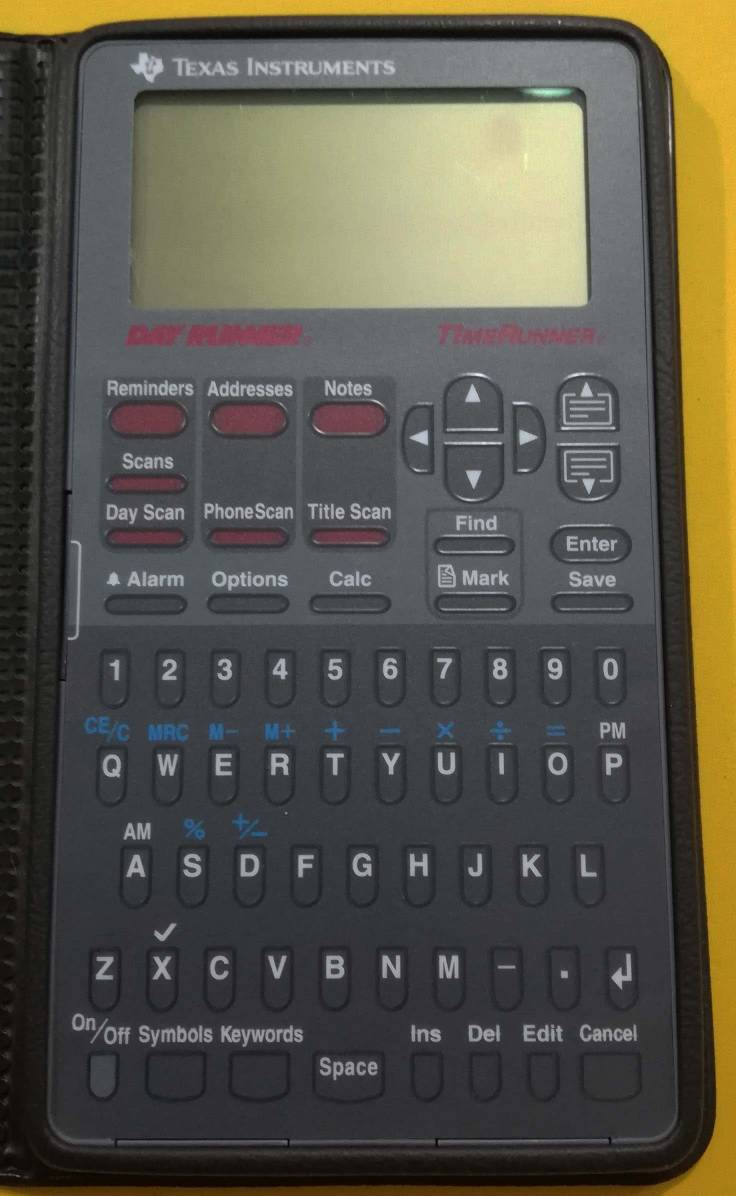 Model: PS-9500 64K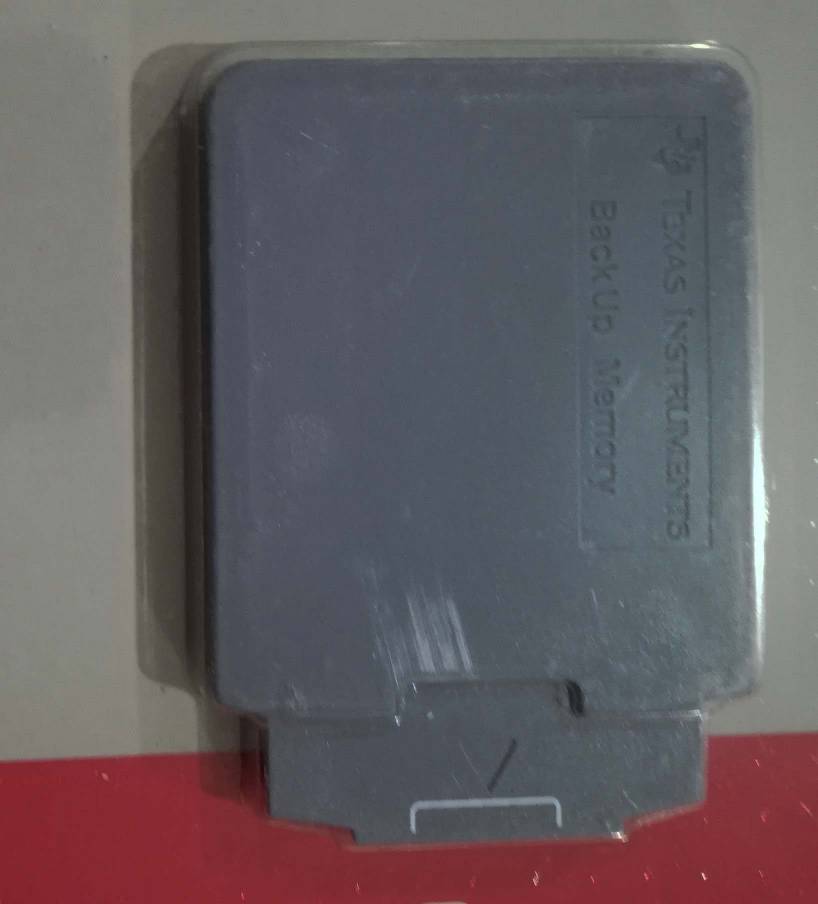
Battery: 2 x CR2016
AC adapter:
Year: 1994
Chip:Toshiba T6M58
Info: The module PS-9000 backup module module. Made in Italy
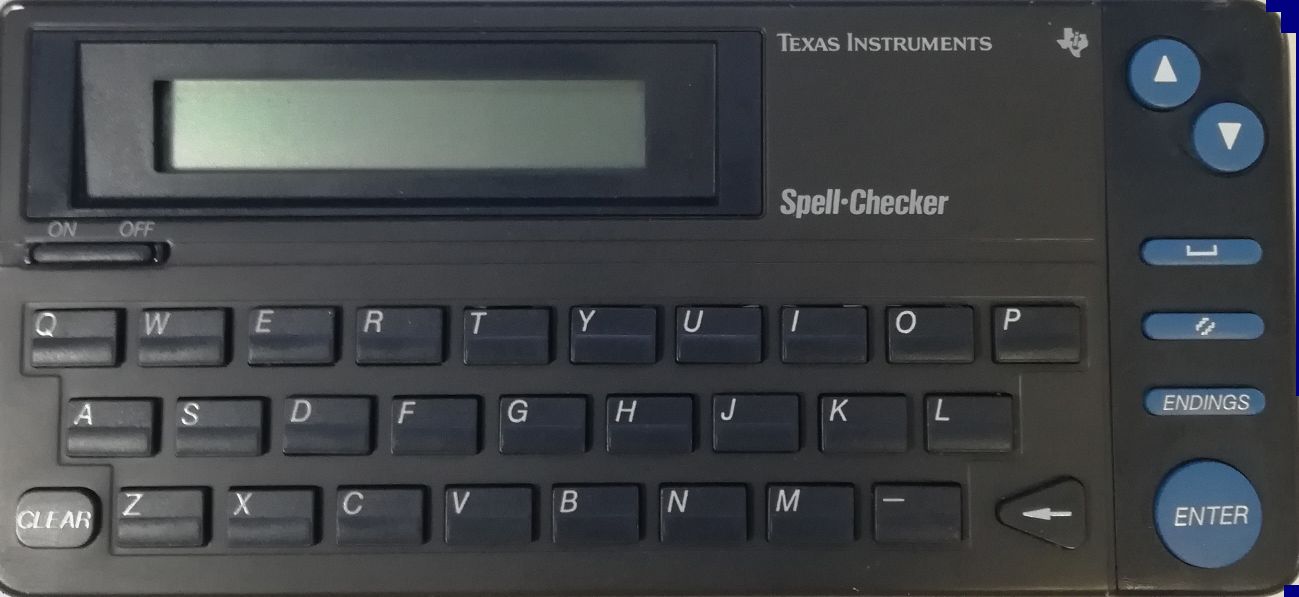 Model: RR-1 spell checker
Battery: 4 x AAA
AC adapter:
Year: 1981
Chip:
Info:
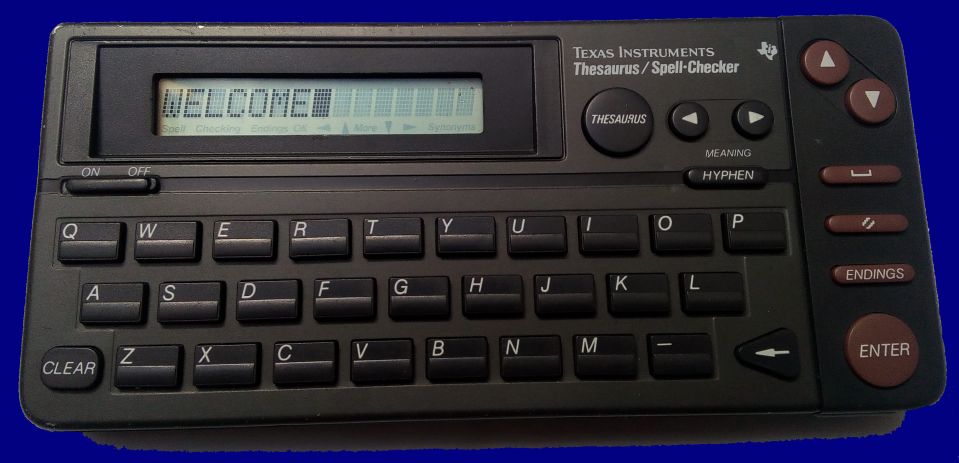 Model: RR-2 spell checker
Battery: 4 x AAA
AC adapter:
Year: 1989
Chip:
Info:
 Model: Silly Sound Stage
Battery: 4 x AA
AC adapter:
Year: 1994
Chip:
Info: made in China
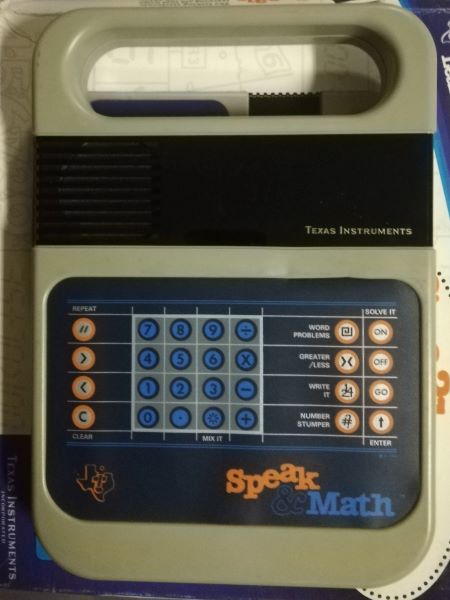 Model: Speak and Math 1v
Battery: 4 x 1,5 C
AC adapter: AC9199
Year: 1981
Chip: TMC0270/CD2704, CD2801, CD2392, CD2393
Info:1 series red logo on the left
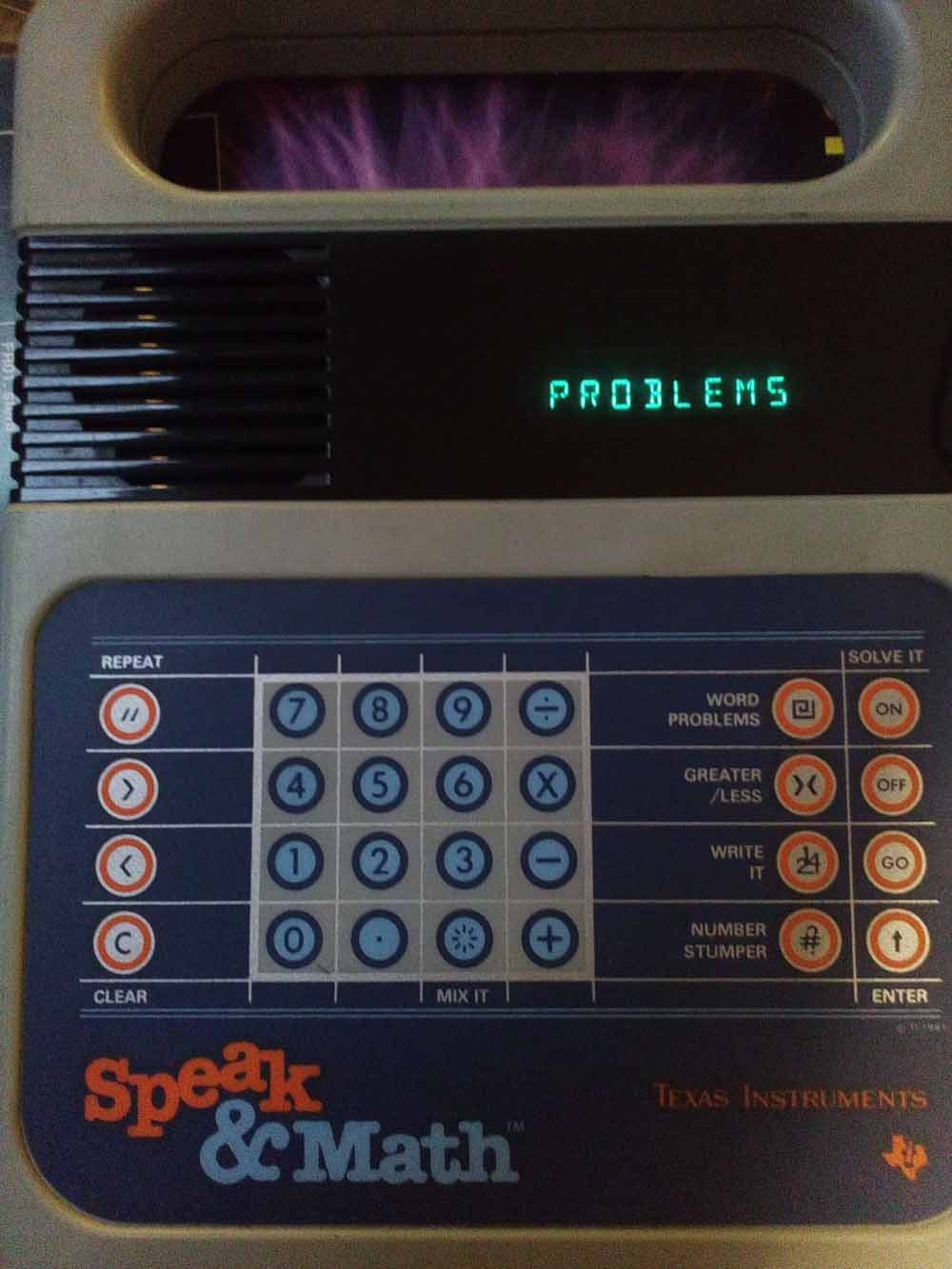 Model: Speak & Math 2v
Battery: 4 x 1,5 C
AC adapter: AC9199
Year: 1986
Chip:
Info: 2 series red logo on the right
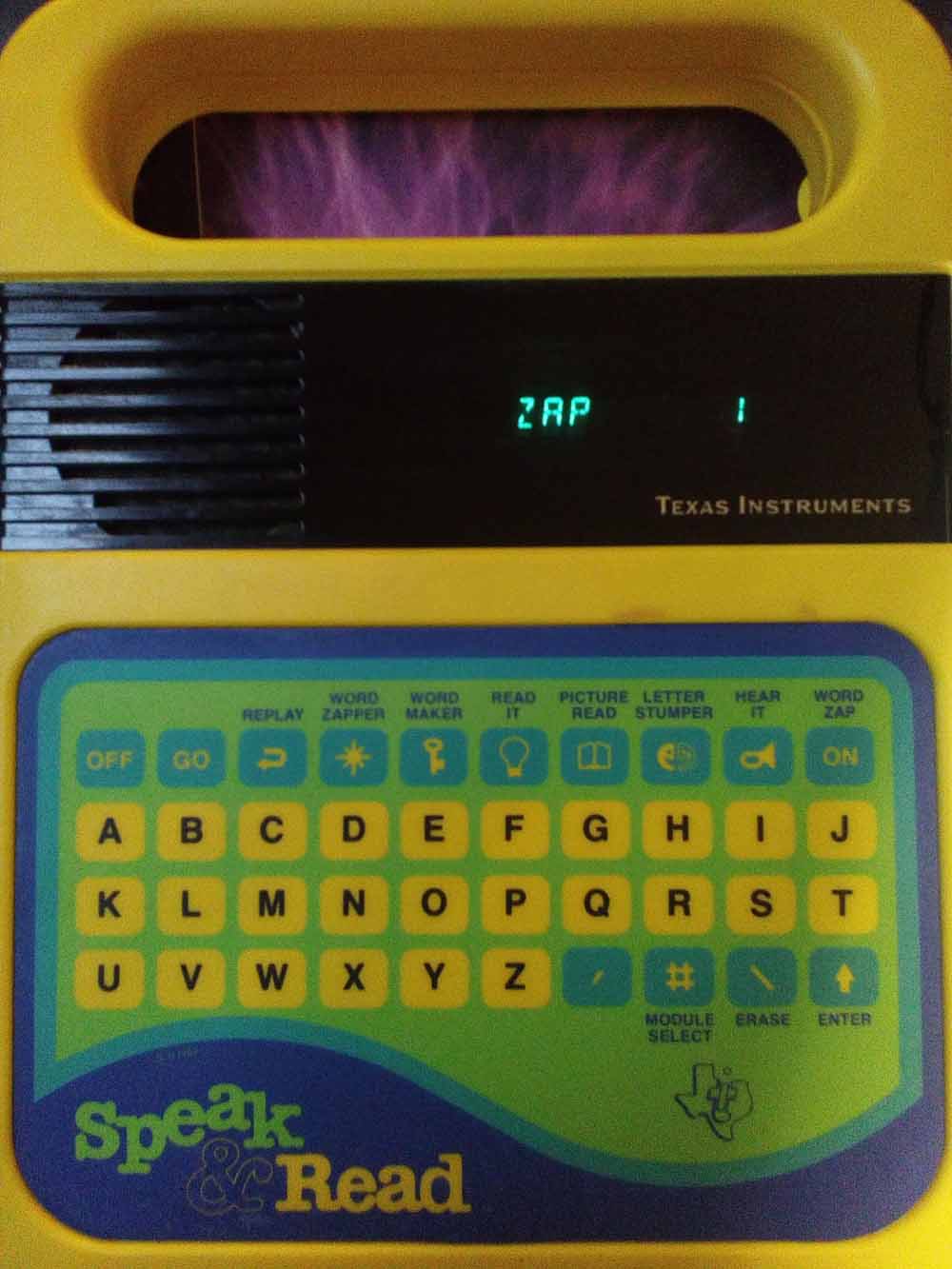 Model: Spell & Read 1 V
Battery: 4 x 1,5 C
AC adapter: AC9199
Year: 1980
Chip:
Info: 1 series blue logo on the center with wave
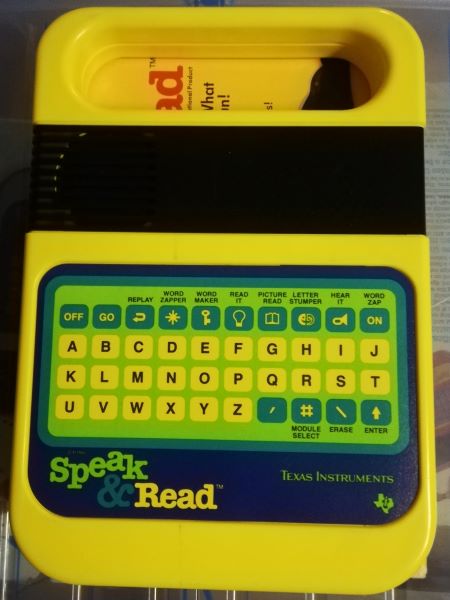 Model: Speak & Read 2 v
Battery: 4 x 1,5 C
AC adapter: AC9199
Year: 1986
Chip: TMC0270/CD2705, TMC0280/CD2801, 2*TMC0350 (CD2394, 2395)
Info:2 series blue logo without wave
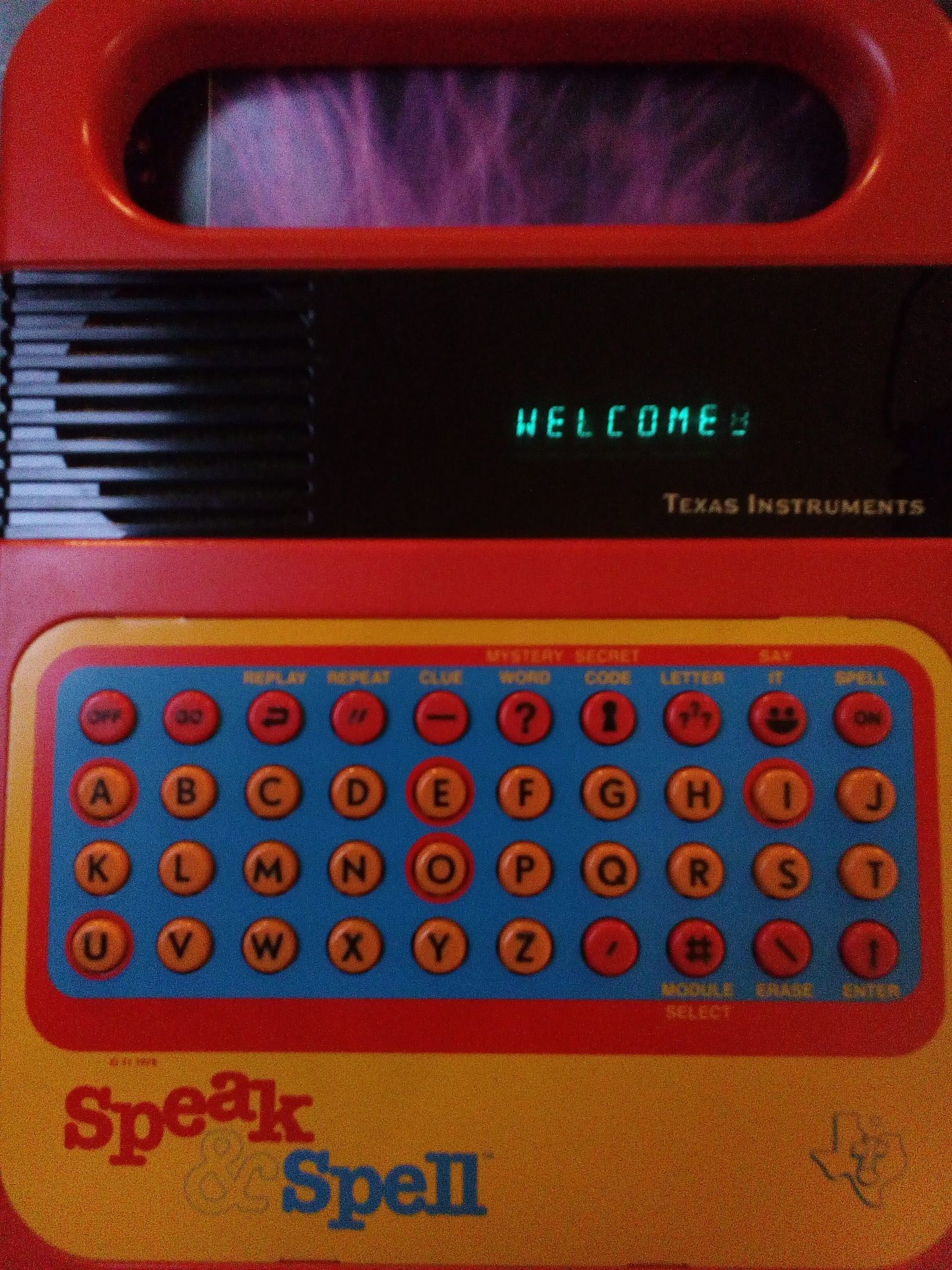 Model: Speak & Spell 1v
Battery: 4 x 1,5 C
AC adapter:
Year: 1978
Chip:
Info: 1 series blue logo on the right. The Speak & Spell series uses the first single chip LPC speech synthesizer with the TMC0280. Subsequent refinements to the Speak & Spell chips led to the TMS5100, 5200 and 5220 speech synthesis processors for commercial products. This Jiminy Cricket uses a CD2801 which it interprets as TMC0280, Version 1.
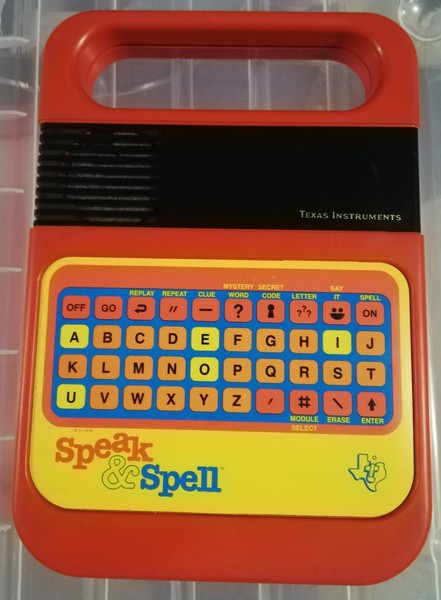 Model: Speak & Spell 1v 1981
Battery: 4 x 1,5 C
AC adapter: AC9199
Year: 1981
Chip: TMC0271, TMC0281, TMC0351 and TMC0352
Info:1 series blue logo on the right
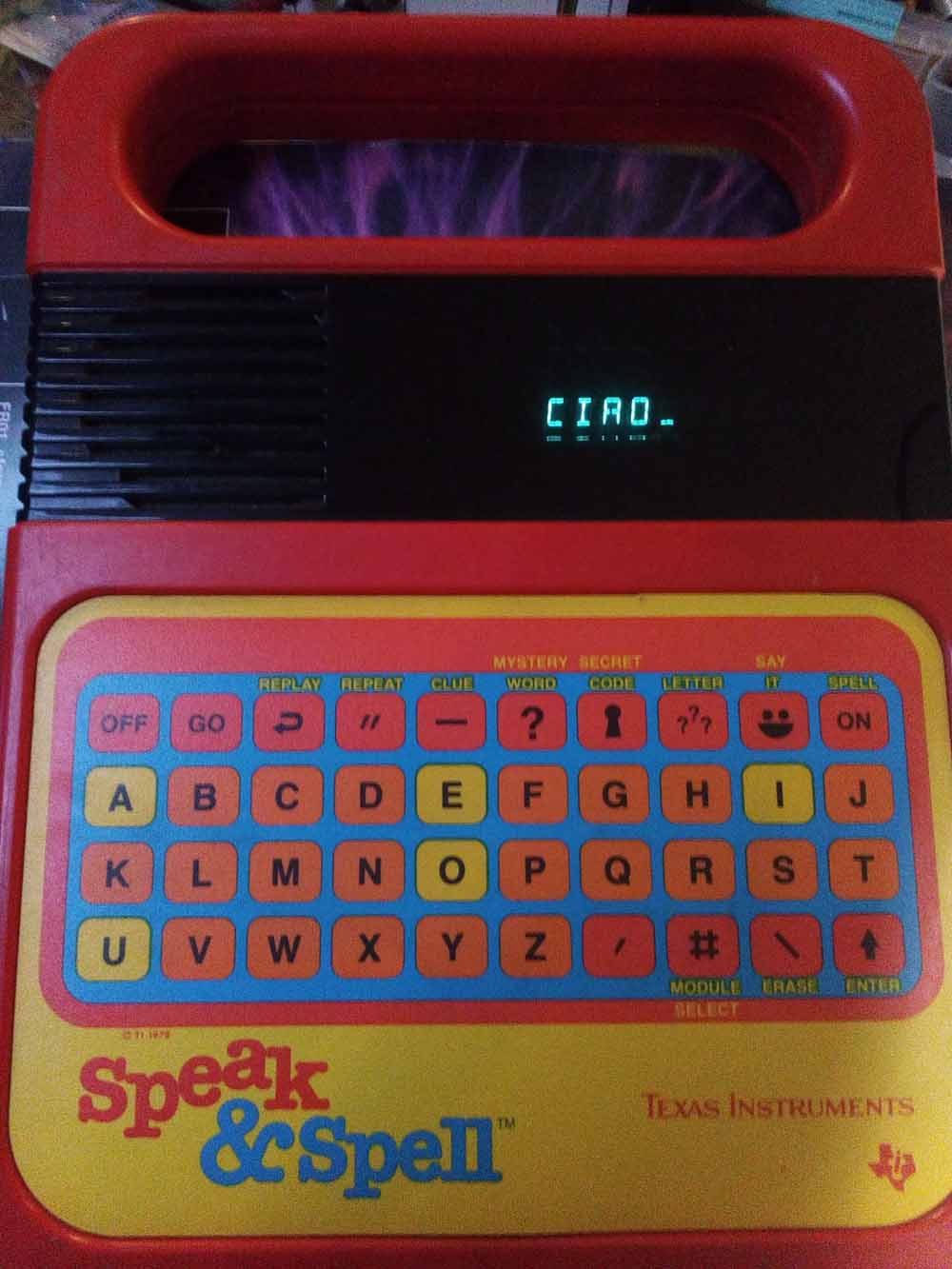 Model: Speak & Spell 2v
Battery: 4 x 1,5 C
AC adapter:
Year: 1986
Chip:
Info: 2 series red logo on the right
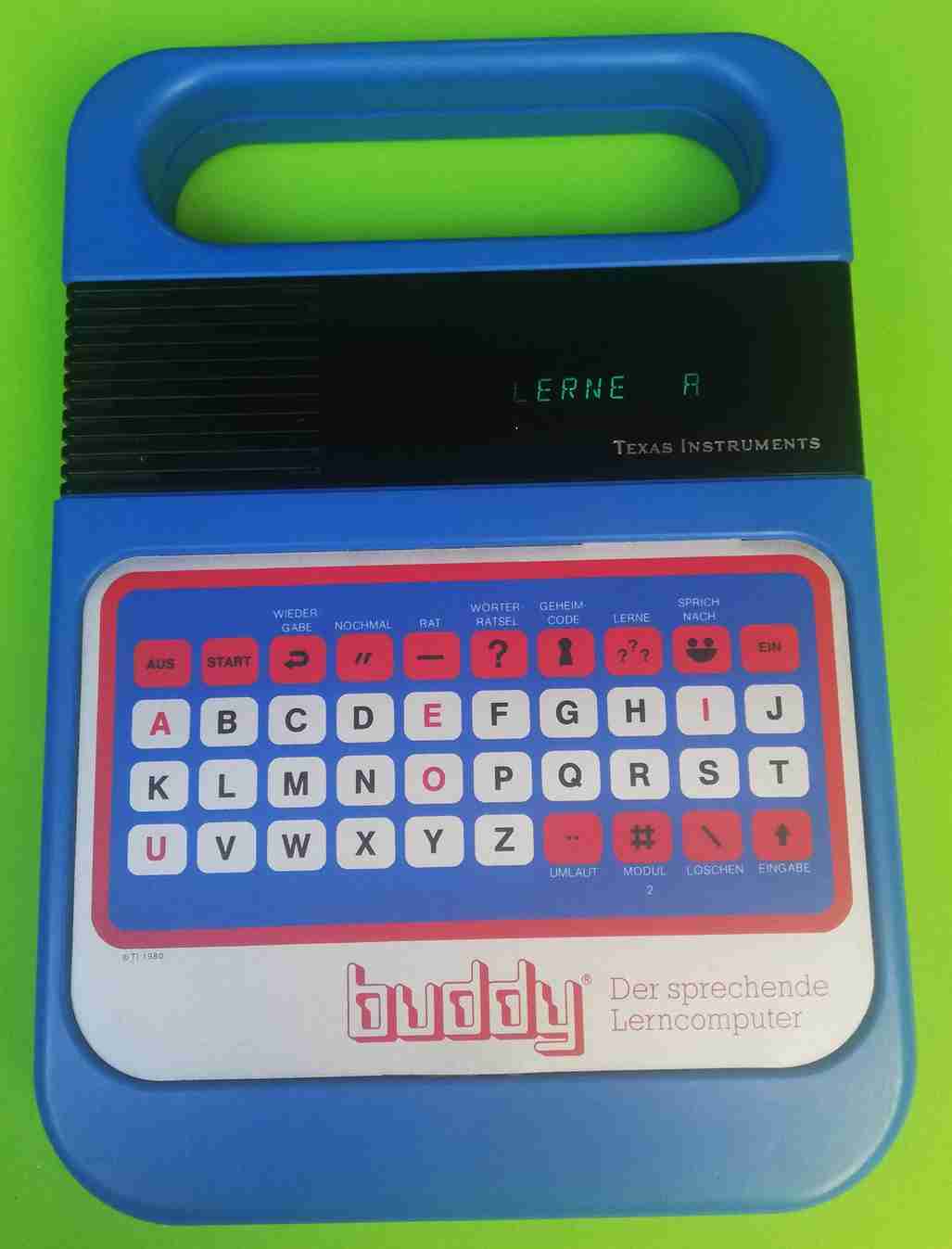 Model: Buddy Speak and Spell German
Battery: 4 x 1,5 C
AC adapter:
Year: 1981
Chip:
Info:It is the German version of the well known Speak & Spell (Type 2).Extremely rare Speak & Spell in German version, called Buddy.Dismantling the Buddy manufactured in December 1981 by Texas Instruments in their Rieti, Italy facility reveals a small surprise: The green fluorescent display of the Buddy uses only 8 alphanumeric characters compared to the 9 characters of the 2nd generation Speak & Spell manufactured in the same timeframe in the United States.
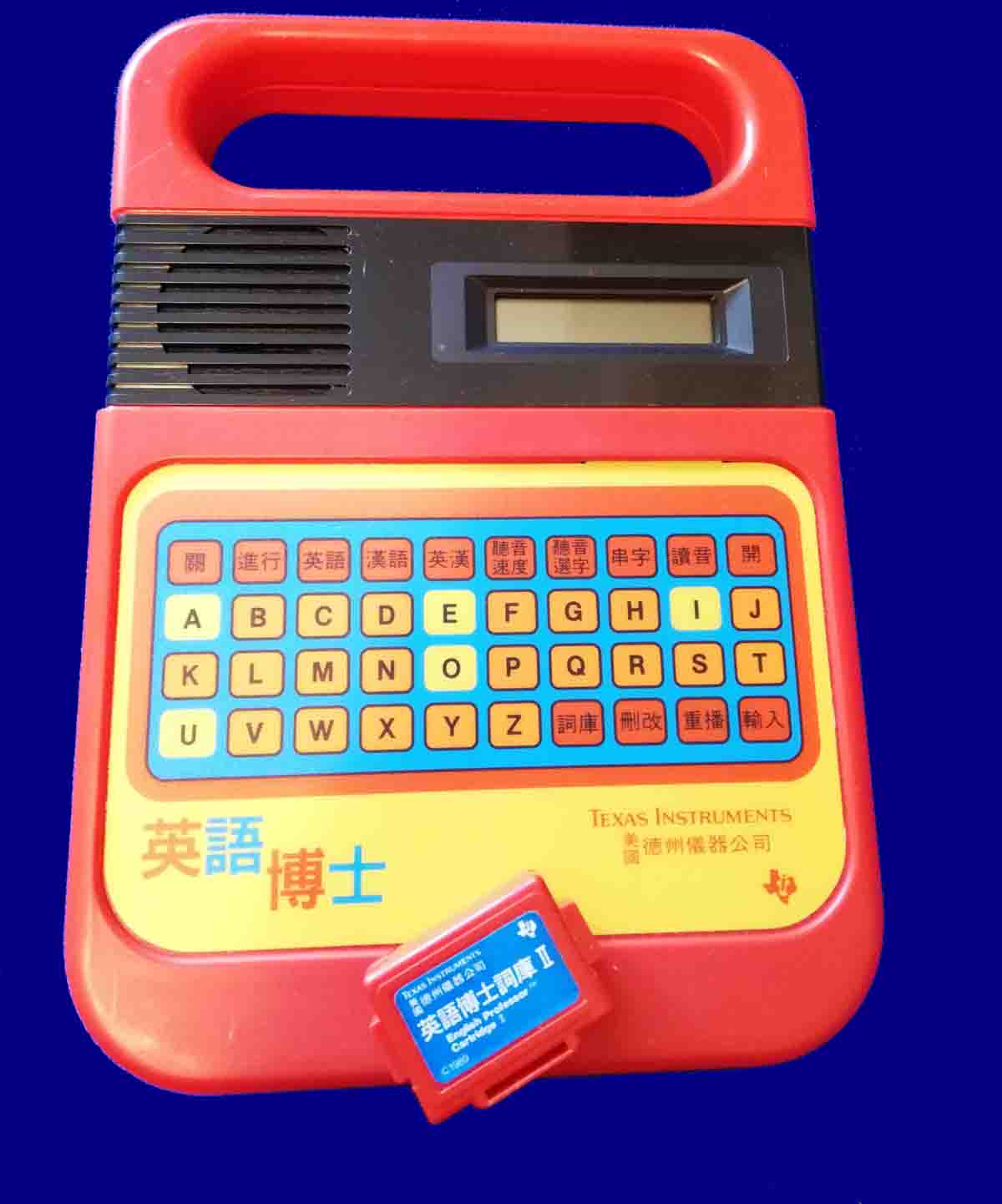 Model: Speak and Spell
Battery: 4 x 1,5 C
AC adapter:
Year: 1991
Chip:
Info: Chines series
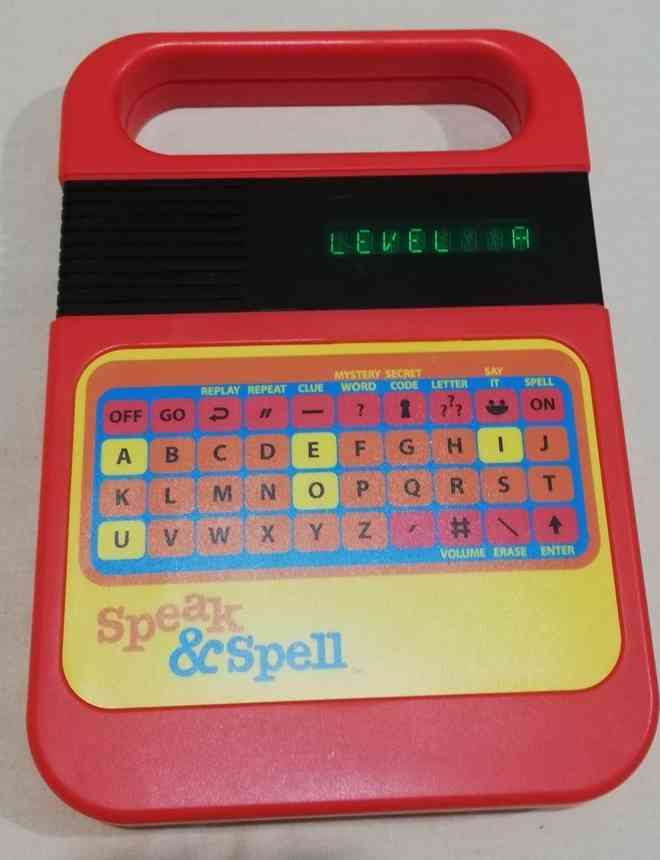 Model: Speak and Spell clone China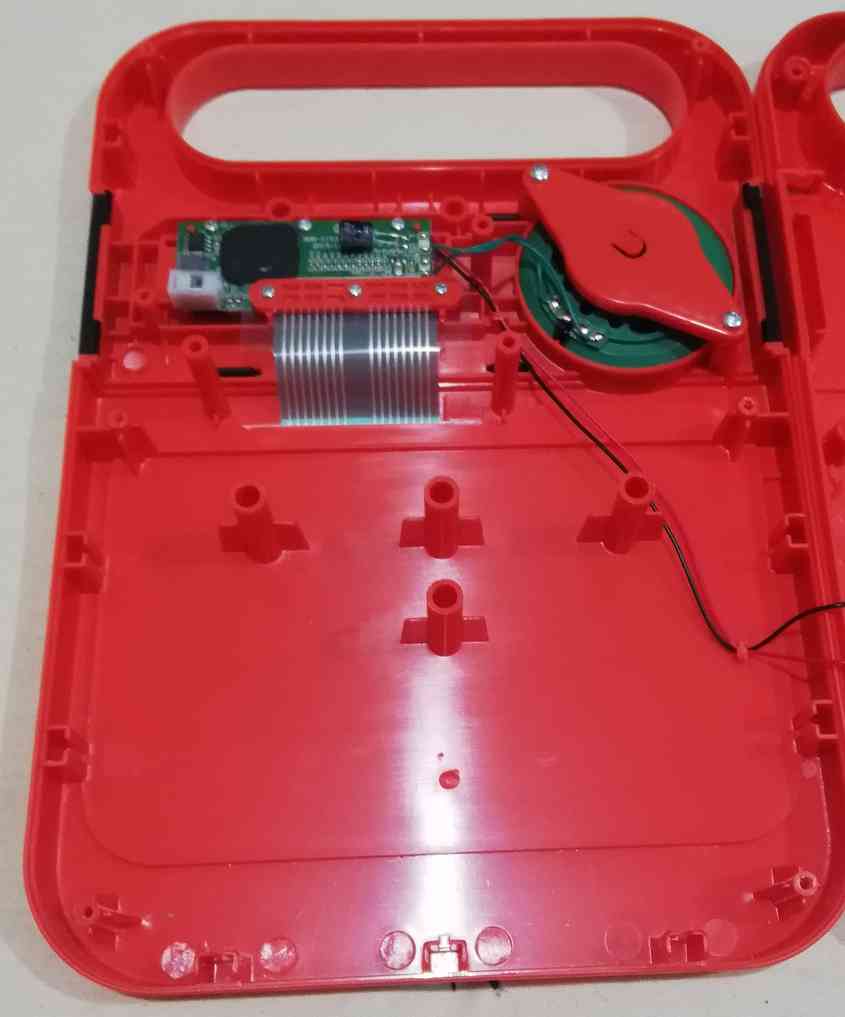
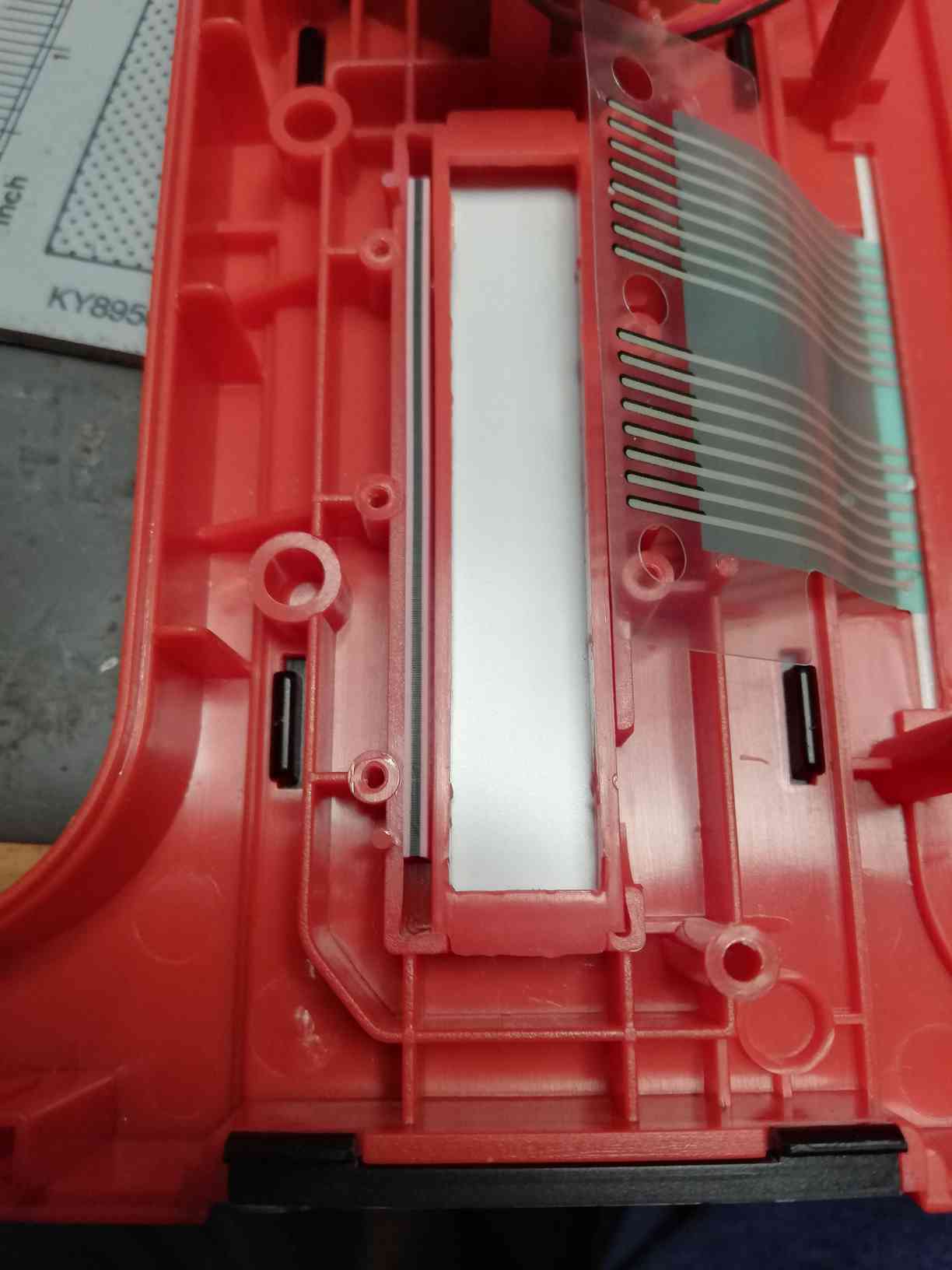
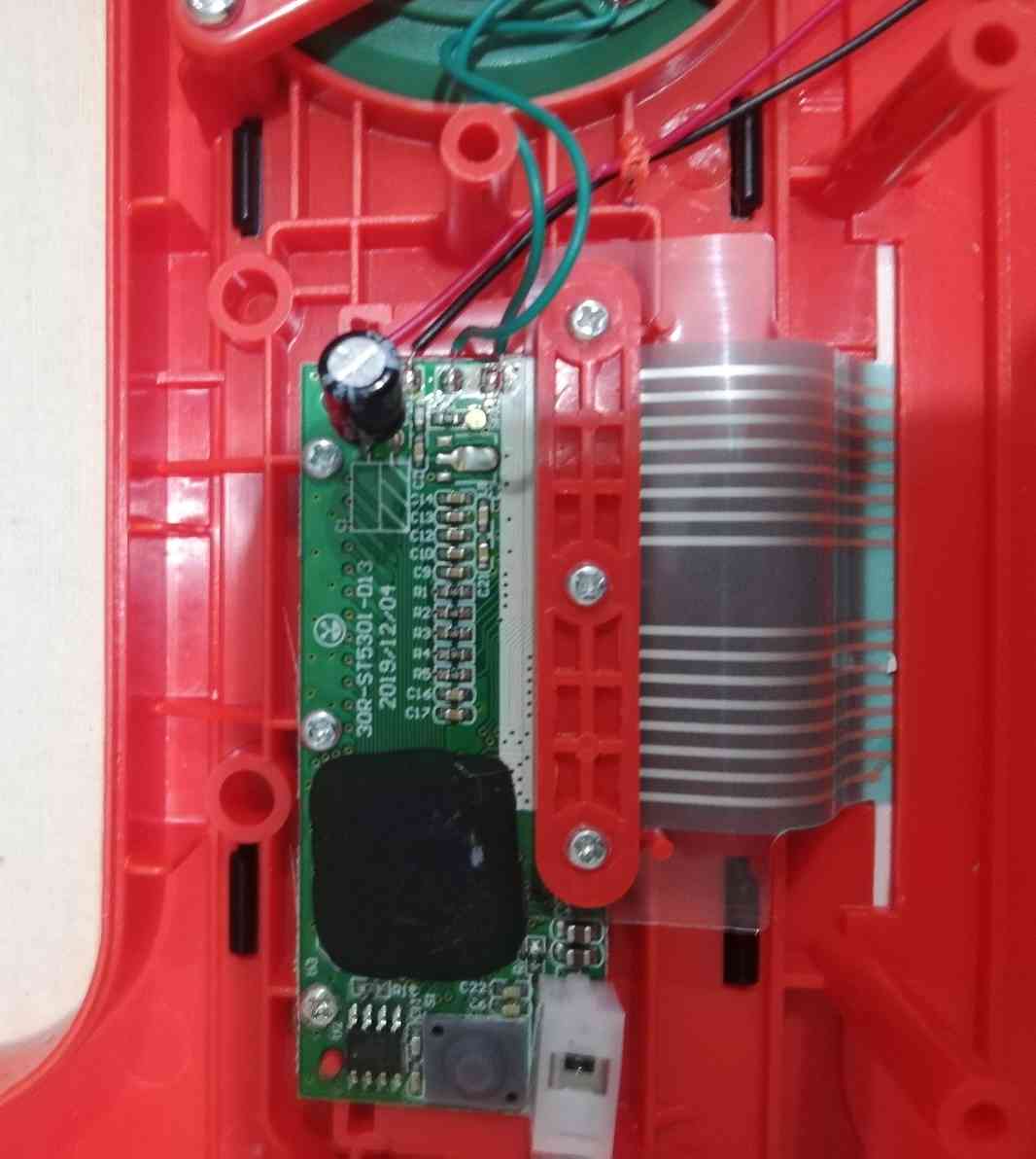
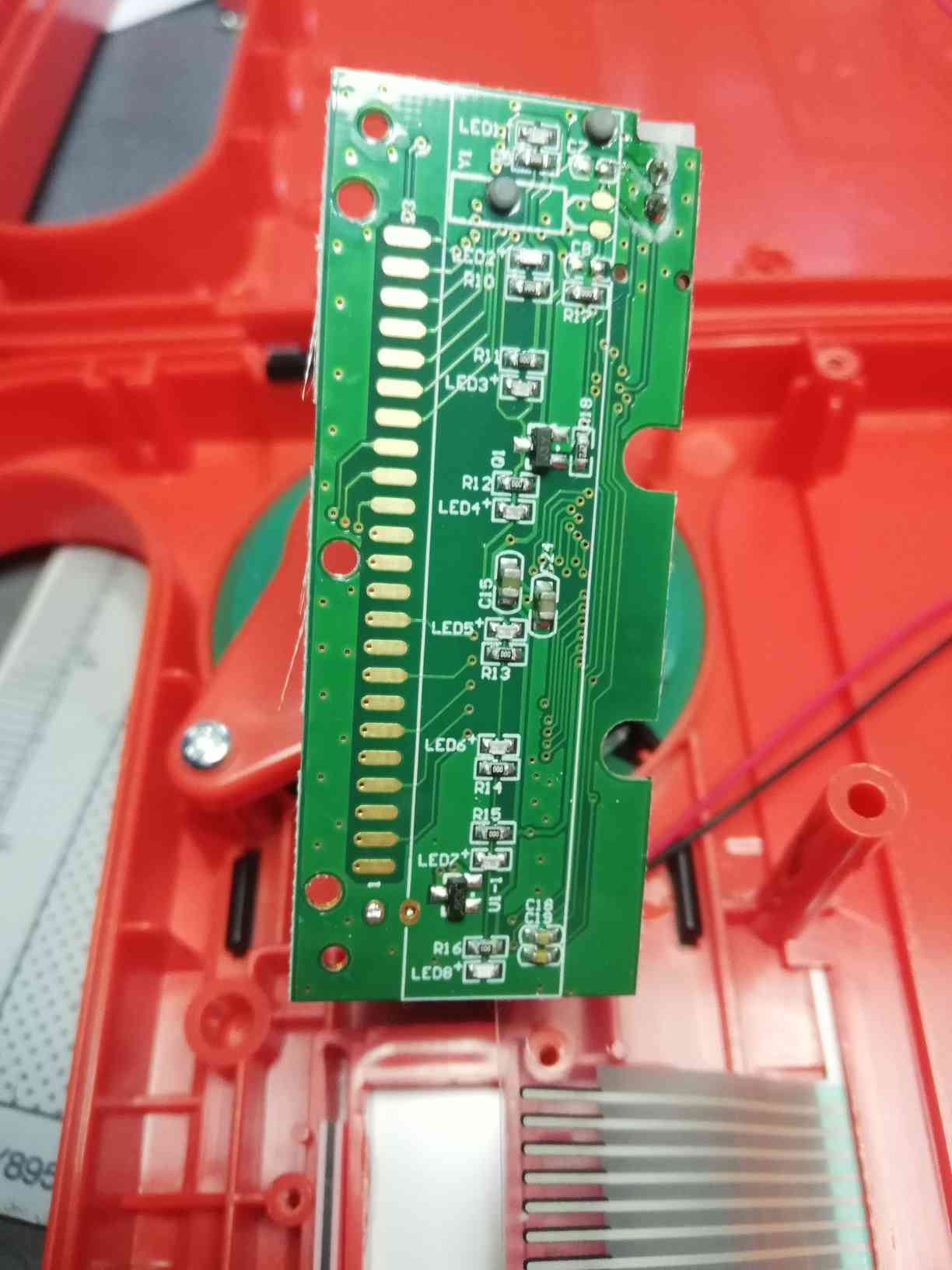
Battery: 3 x 1,5 C
AC adapter:ear: 2019
Chip:
Info: Here is a clone of the famous "Speak & Spell" produced in China in 2019, it uses an LCD display with a green backlight, has the polarizer in reverse, so as to have the green writing on a black background.
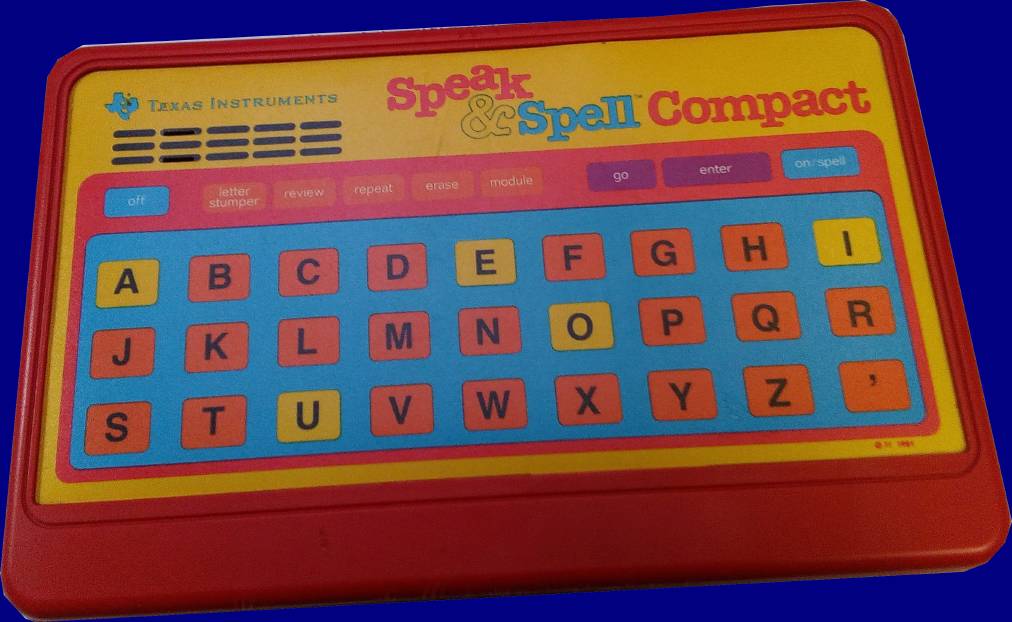 Model: Speak and spell Compact
Battery: 9 volt
AC adapter:
Year: 1982
Chip:
Info:
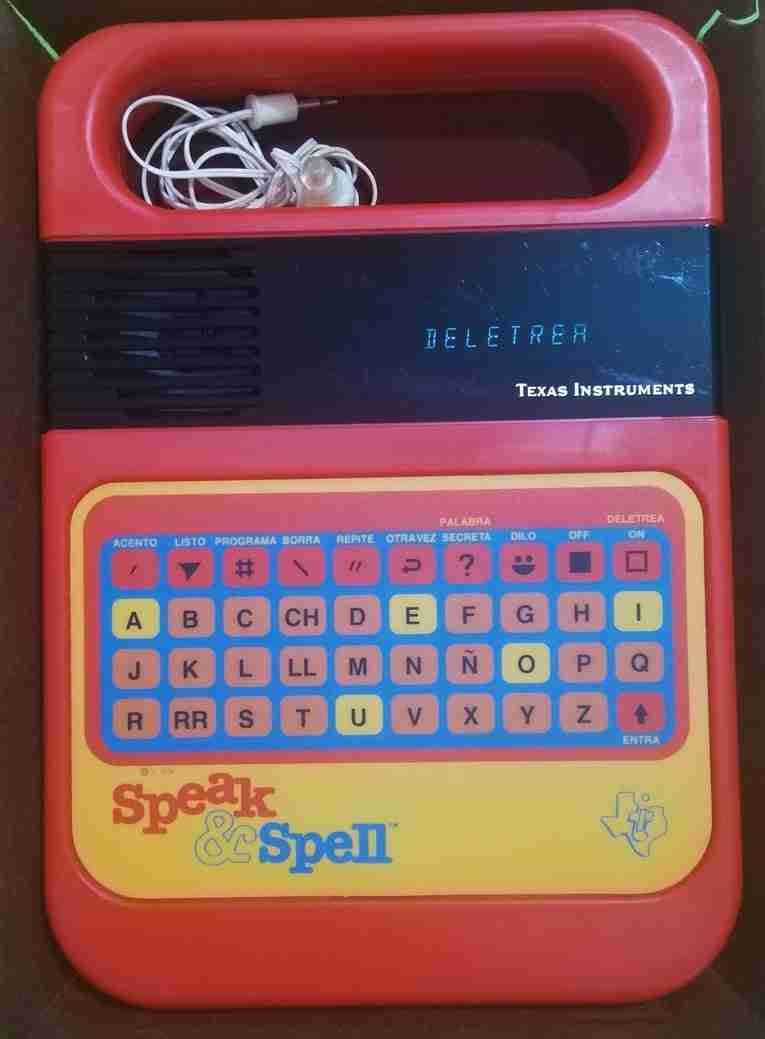 Model: Speak and Spell ESP
Battery: 4 x 1,5 C
AC adapter:
Year: 1981
Chip:
Info:Spain Series. This Prototype of the Speak & Spell Spanish Voice is based on Version 2, please notice the gold lettered "Texas Instruments" on the display screen and the large "TI" logo on the keyboard.
 Model: Speak and Spell JAP
Battery: 4 x 1,5 C
AC adapter:
Year: 1979
Chip:
Info: Japan series
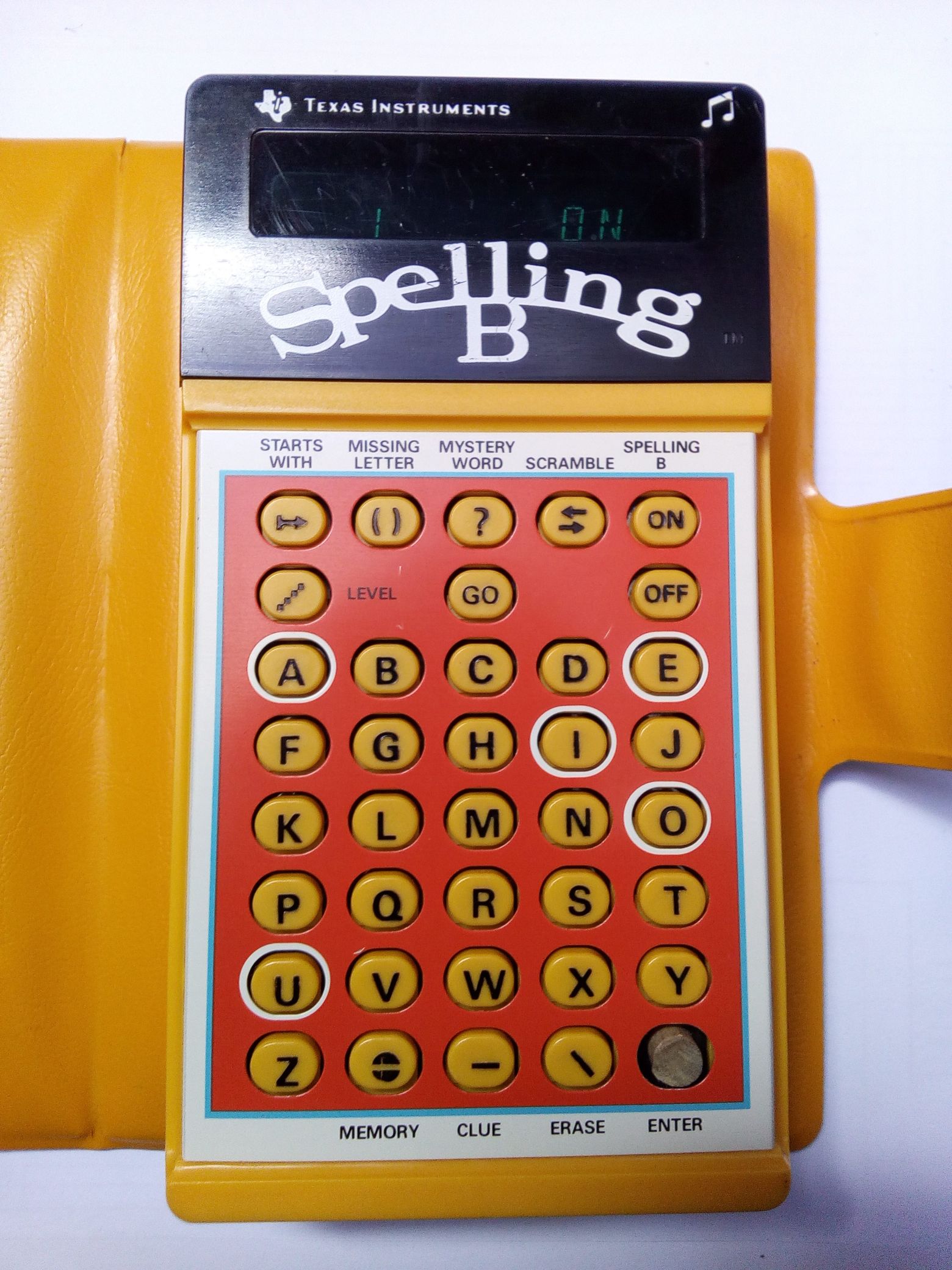 Model: Spelling abc
Battery: 9 volt
AC adapter:
Year: 1981
Chip: TMC0274, TMC0355 (CD2602)
Info:Nothing else than the UK version of the 2nd generation Spelling B.
Model: Spelling B
Battery: 9 volt
AC adapter:
Year: 1978
Chip:
Info:
 Model: Spelling B LCD
Battery: 9 volt
AC adapter:
Year: 1989
Chip: TP0456/CD4617, CD4618
Info:
 Model: Suonoparla Fonillo
Battery: 4 x AA alkaline
AC adapter:
Year: 1987
Chip: TMP50C40A ( CD54169), CF60034
Info:This funny synthesizer based product from Texas Instruments generates a lot of different sounds and stores them into an internal memory to replay. (ITALY). TMP50C40A/CD54169: TSP50C50 VSP (Voice Synthesis Processor) with 8-bit microcontroller and 8k Bytes Mask ROM for both program and voice and 32 Bytes RAM.CF60034: Not yet discovered, probably a Port-Expander for the VSP
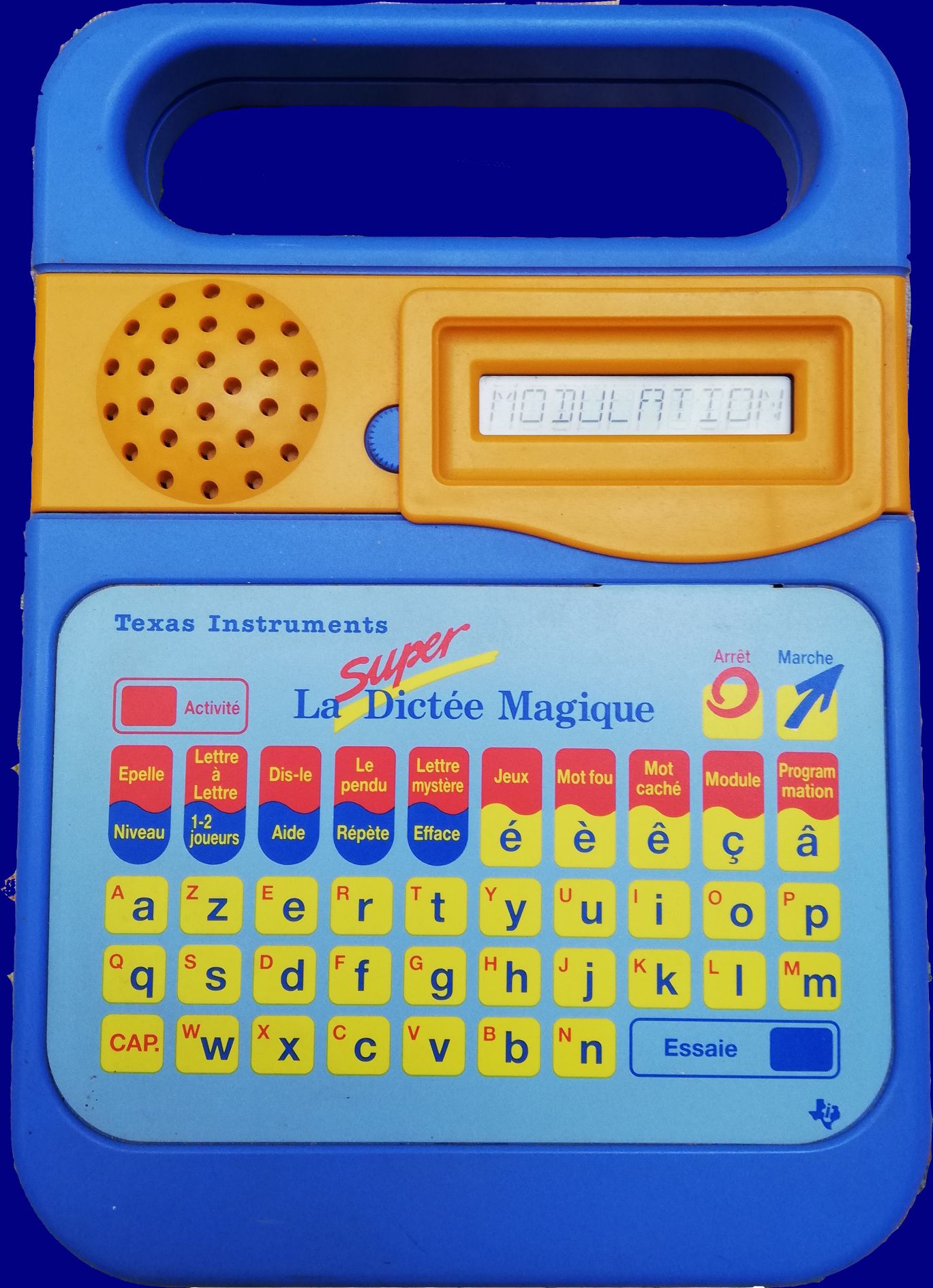 Model: Super Le dictee magique
Battery: 4 x 1,5 C
AC adapter:
Year: 1992
Chip:
Info: Super Line
 Model: Super Libro Parlante
Battery: 4 x AA alkaline
AC adapter:
Year: 1990
Chip: TSP50C42 (CSM42014), TSP60C19 (CMM19016)
Info:Nothing else than a colored Touch & Discover distributed by Clementoni with Italian voices stored in the Speech-ROM's.The toy is intended for players ages 2 to 5.The idea of the product is simple: Switch the game on and wait for the instructions. The only thing you need is your fingertip.
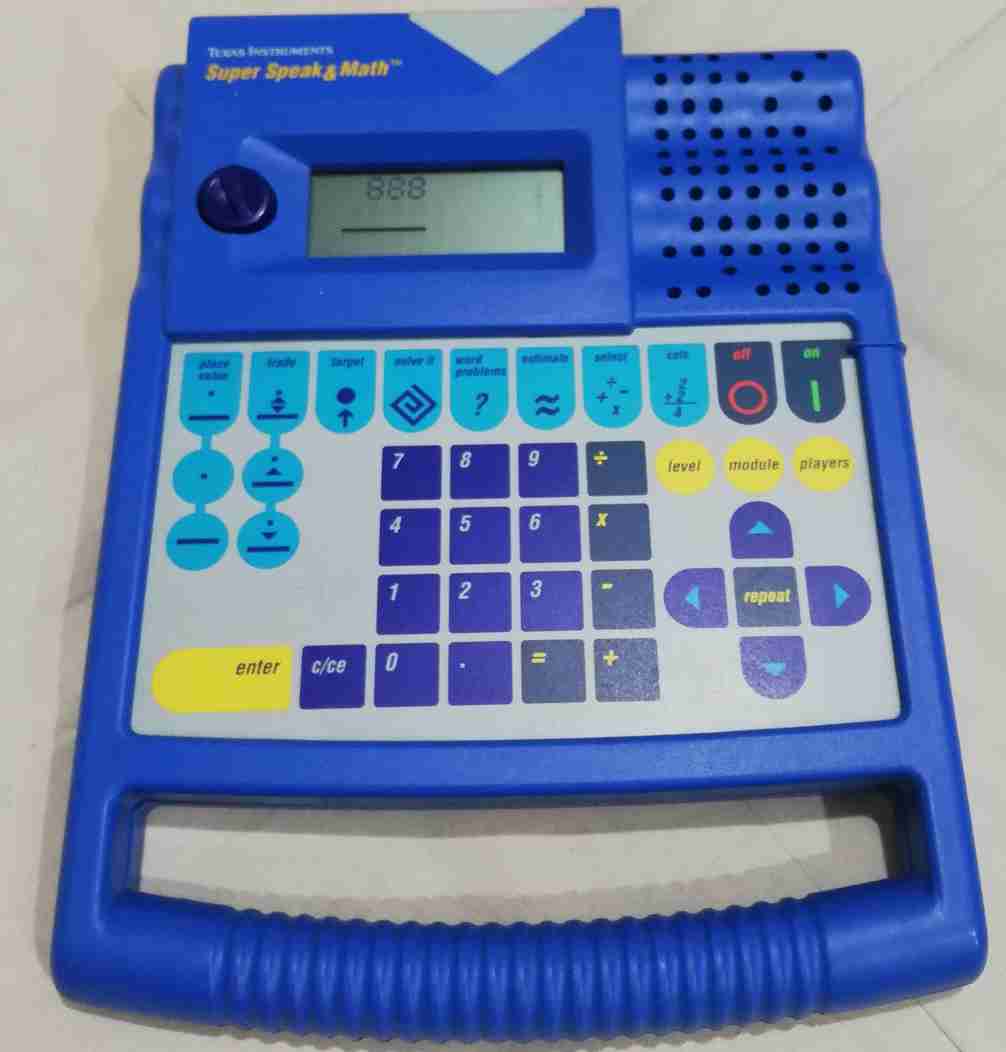 Model: Super Speak & Math
Battery: 4 x AA
AC adapter:
Year: 1991
Chip: TSP50C10 (CSM10047), TSP60C18 (CMM18001), Samsung KS0062
Info: With the Super Speak & line Texas Instruments introduced educational toys similar to the well known kids-computers with there small LCD-screens and ASCII-keyboards.
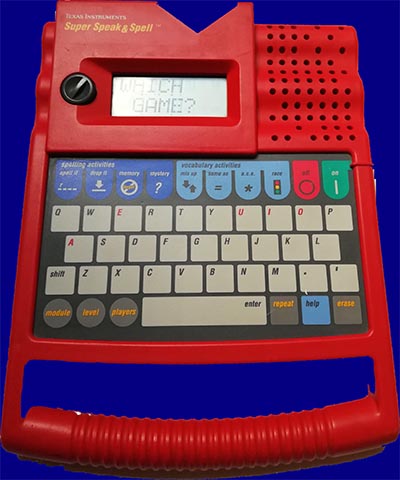 Model: Super Speak & Spell
Battery: 4 x AA
AC adapter:
Year: 1989
Chip:
Info: TSP50C42 (CSM42019) TSP60C18 (CMM18004) or TSP50C10 (CSM10087) HD44780
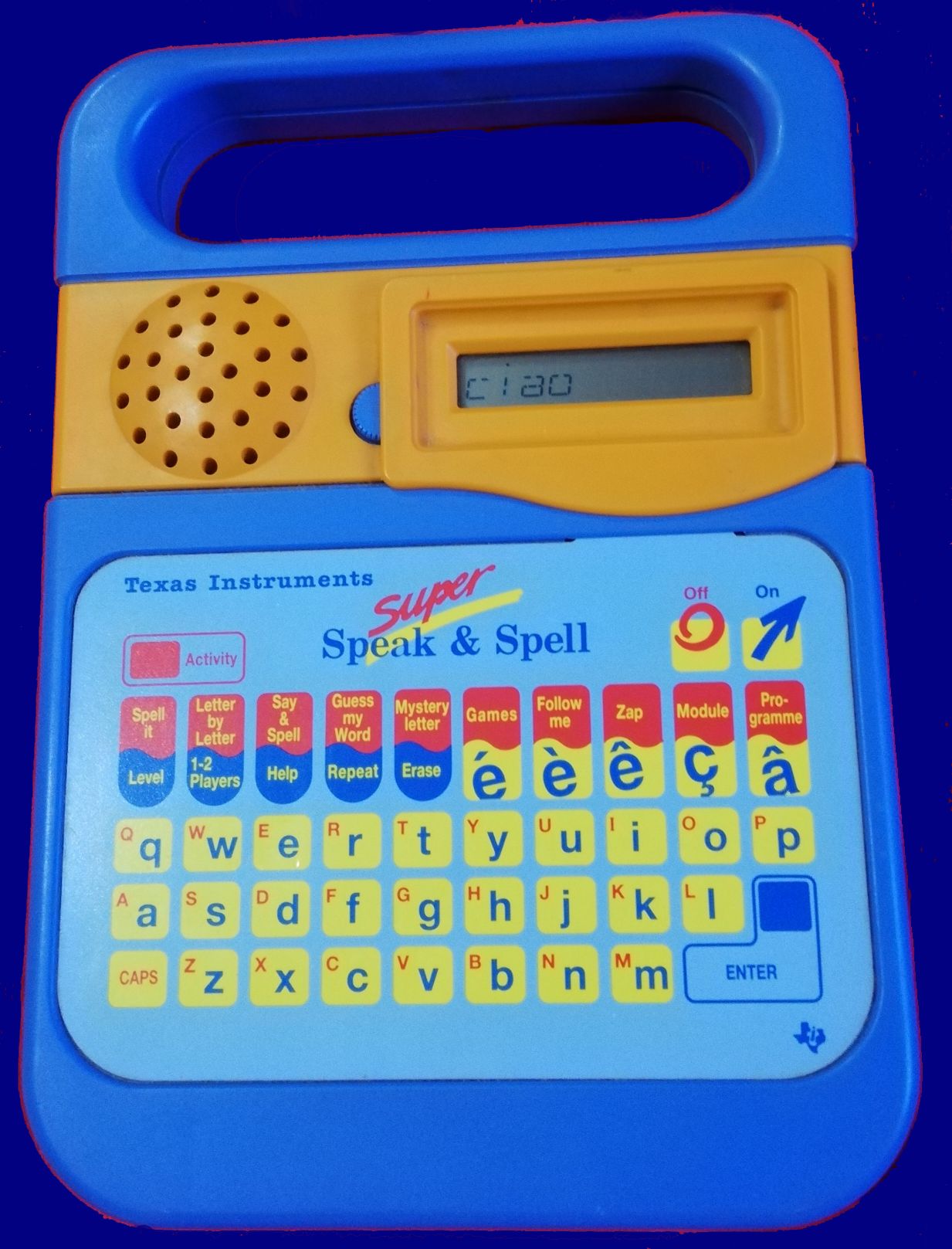 Model: Super Speak and Spell 2v
Battery: 4 x 1,5 C
AC adapter:
Year: 1992
Chip:
Info: 2 version
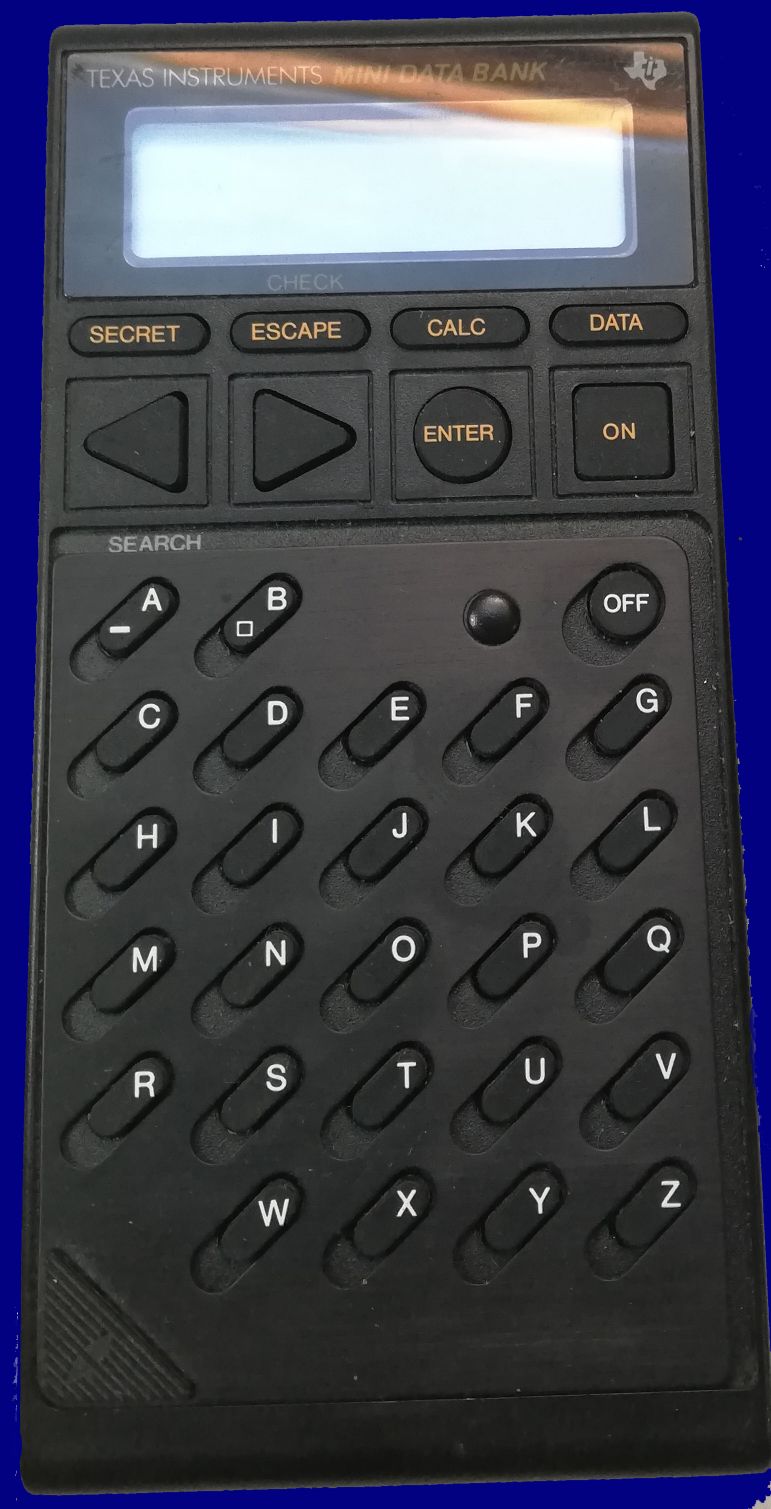 Model: TI-2700 mini data bank
Battery: 3 x LR43 + CR1220
AC adapter:
Year: 1988
Chip:Toshiba TC5518
Info:
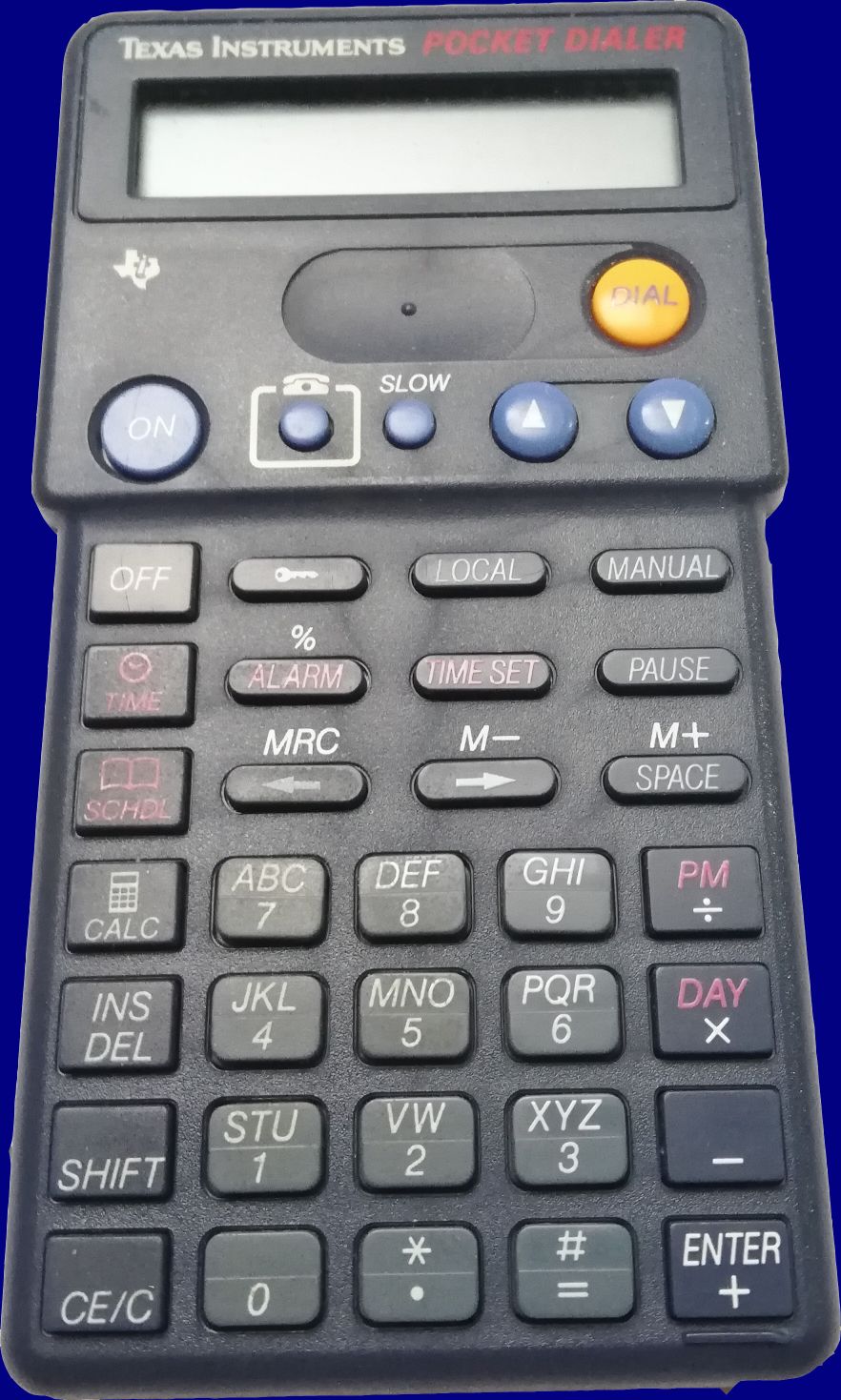 Model: TI-3100 pocket dialer
Battery: CR2025
AC adapter:
Year: 1990
Chip:
Info:
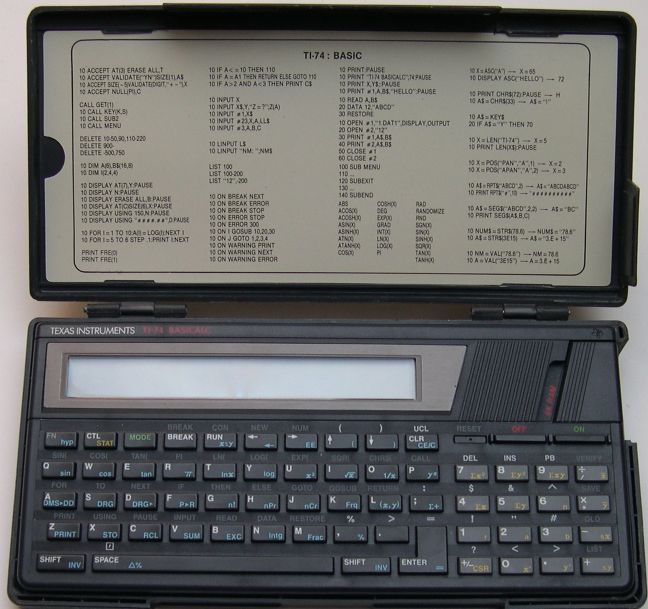
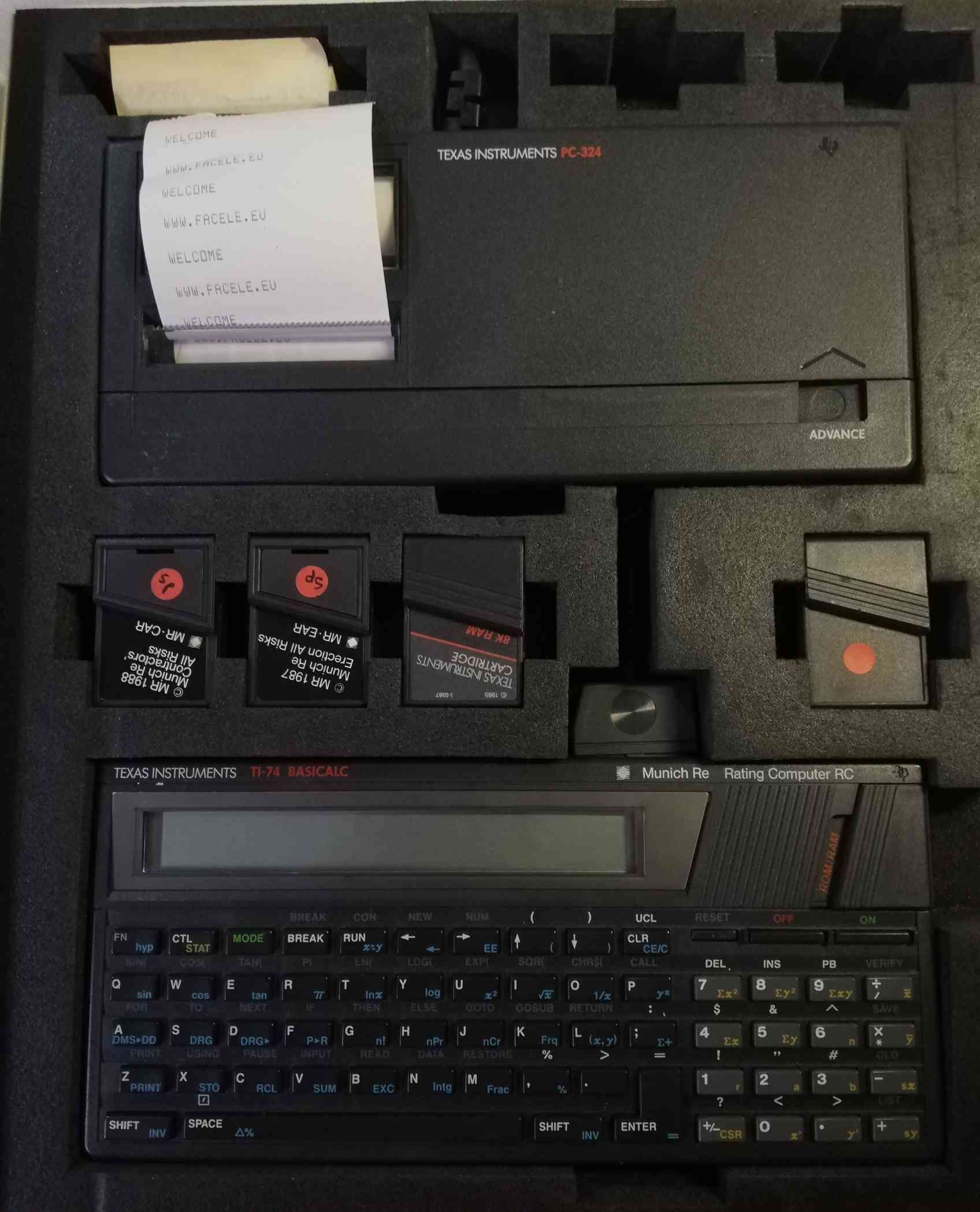 Model: TI-74 basicalc
Battery: 4 x AAA
AC adapter:
Year: 1987
Chip: Printer: PC-324
Info: The ti-74 was produced in two models with the Basic on board called TI-74 basicalc and TI-74 S(special) where it used a preprogrammed module, intended for insurance, banks, etc ..
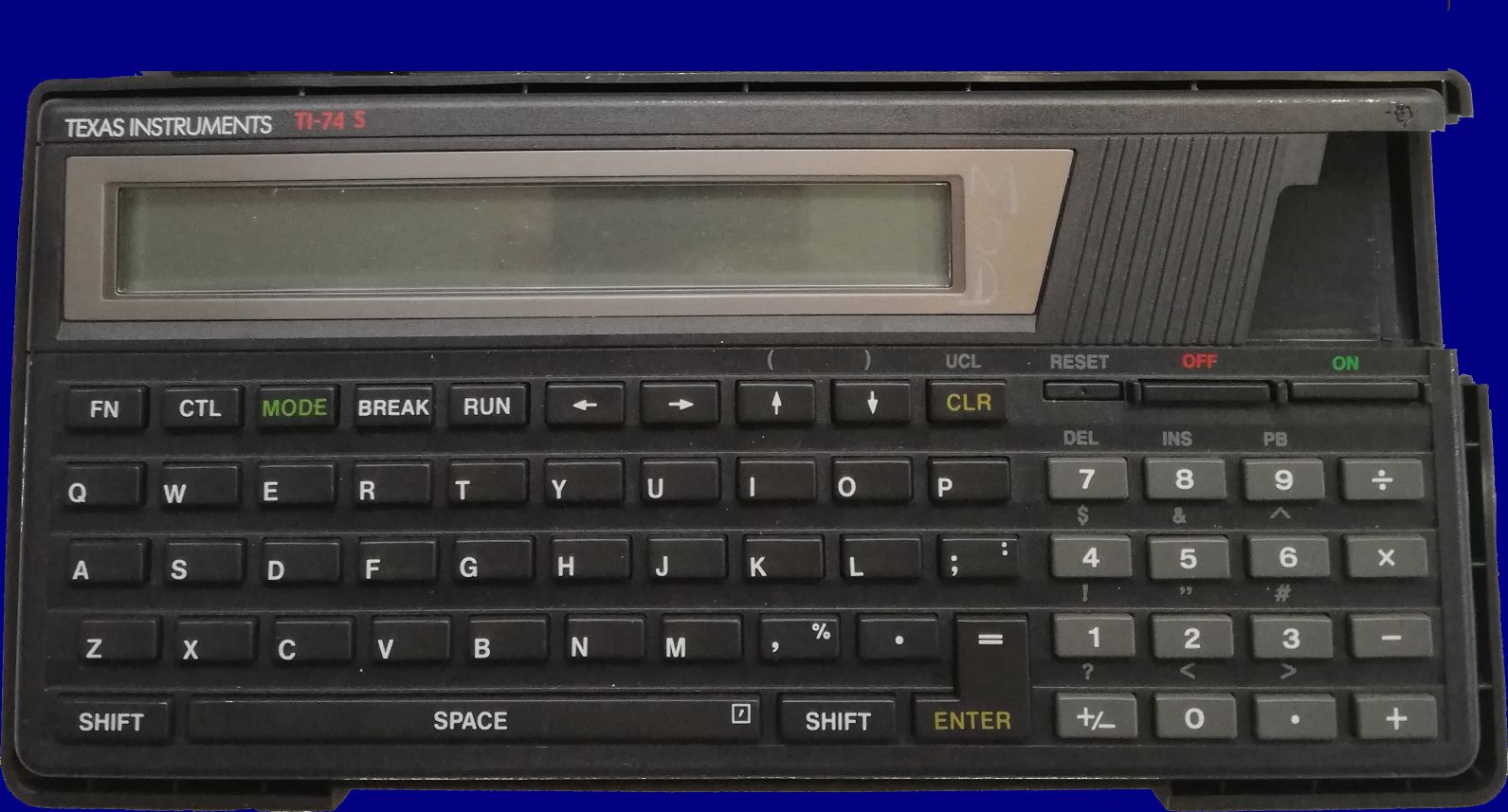 Model: TI-74 S
Battery: 4 x AAA
AC adapter:
Year: 1987
Chip: Printer: PC-324
Info: The ti-74 was produced in two models with the Basic on board called TI-74 basicalc and TI-74 S (special) where it used a preprogrammed module, intended for insurance, banks, etc ..
 Model: TI-89 Voyage 200
Battery: 4 x AAA + CR1616
AC adapter:
Year: 2002
Chip: CPU: MC68SEC000 ASIC: TI REF 200C040 Flash: LH28F320 RAM: 2* CY62128 Display: 3*T6B07, 2*T6B08
Info:
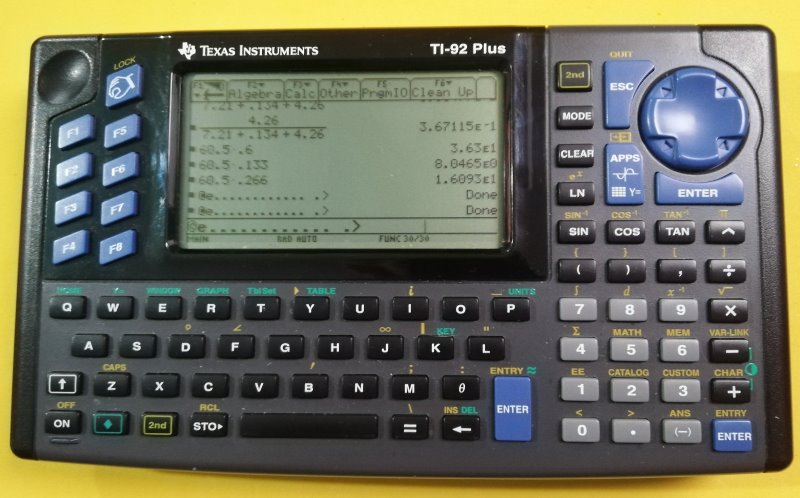 Model: TI-92-plus
Battery: 4 x AA + CR2032
Adapter:
Year: 1996
Chip: CPU: MC68SEC000 ASIC: TI REF 200C040 Flash: LH28F160 RAM: 2*SRM20V100 Display: 3*T6B07, 2*T6B08C414181
Info: first SYMBOLIC
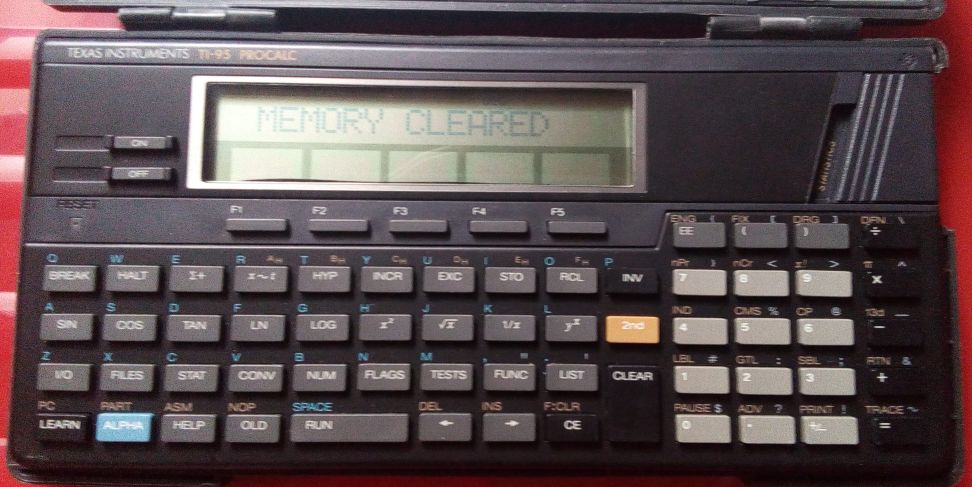 Model: TI-95 procalc
Battery: 4 x AAA
AC adapter:
Year: 1987
Chip:
Info: module statistic
 Model: Touch & Tell
Battery: 2 x D cells
AC adapter:
Year: 1988
Chip: CD8012, CD2802, CD2610
Info: hortly after the introduction of the Speak & Spell line Texas Instruments introduced with the Touch & Tell a novel product idea with their speech synthesizer technology. You place one of different pictures onto a position sensitive keyboard and start the game. Touch & Tell will ask you a random question and you point the solution with your fingertip on the picture. To keep the youngsters interested, musical tones and special sound effects appear.
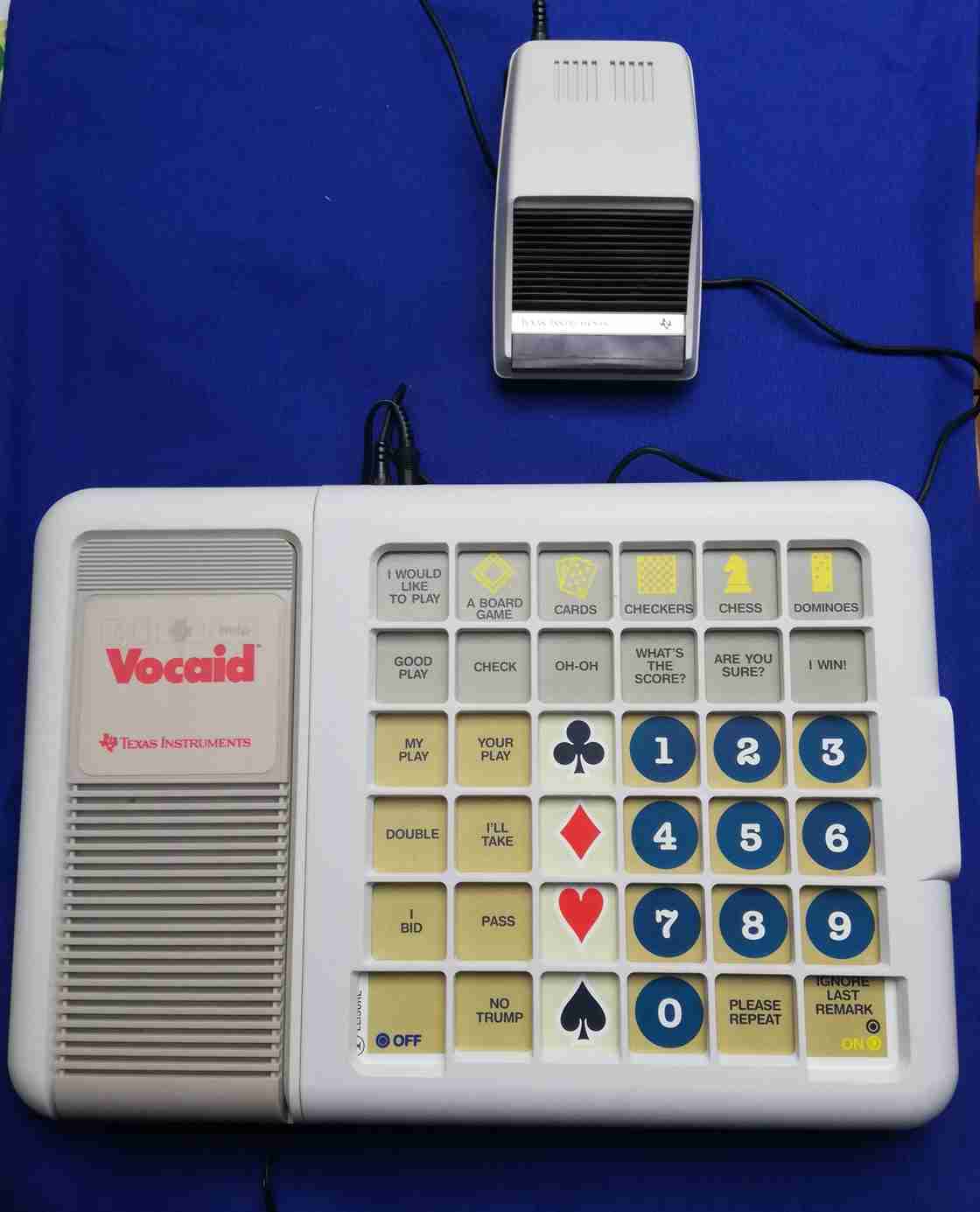 Model: Vocaid
Battery: 2 x D cells
AC adapter: AC9460
Year: 1984
Chip: CD8012, CD2802, CD2357
Info: A small change in the Speech-ROM but a huge difference in the application. This medical aid for the voice handicapped persons is based on a children game, the Touch & Tell.
 Model: Voyager
Battery: 4 x AAA cells
AC adapter:
Year: 1988
Chip: TSP50C41 (CMM41014),TSP60C19 (CMM19005) Modules: TSP60C21
Info:Texas Instruments introduced with the Voyager a novel educational toy that lacks the position sensitive keyboard of products like the Touch & Tell. Instead of the traditional keyboard a microphone is used to control the game. The speech recognition detects simple words like "yes", "no", "true" or "false" as an input to the game.The Voyager game uses exchangeable speech ROMs in an expansion port. This gives you access to other stories than the provided.
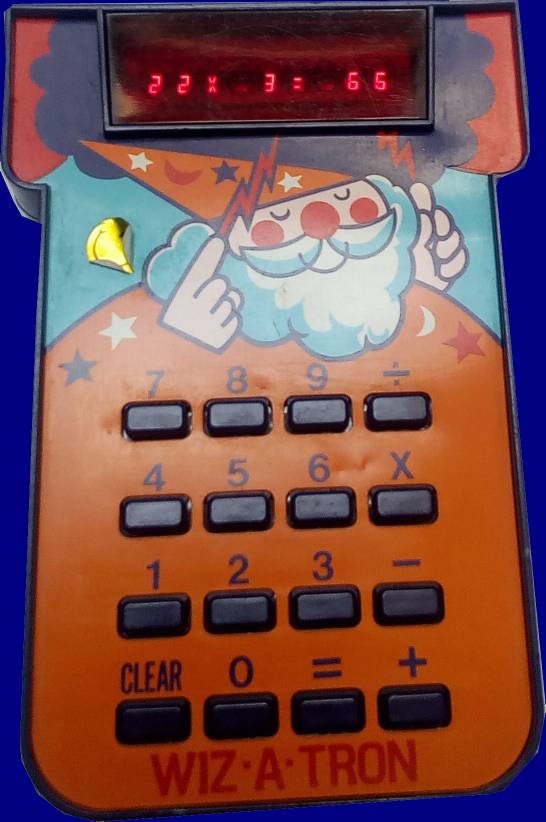 Model: Wiz a tron
Battery: 9 volt
AC adapter:
Year: 1977
Chip:
Info:
Here you can find the WIZ-A-Tron manual (US). With permission from datamath.org
.jpg) Model: HP-19C
Model: HP-19C
Battery:
Adapter:
Year: 1977-1979
Chip:.jpg) Info: The HP-19C and HP-29C were scientific/engineering pocket calculators made by Hewlett-Packard between 1977 and 1979. They were the most advanced and last models of the "20" family (compare HP-25) and included Continuous Memory (battery-backed CMOS memory) as a standard feature.
Info: The HP-19C and HP-29C were scientific/engineering pocket calculators made by Hewlett-Packard between 1977 and 1979. They were the most advanced and last models of the "20" family (compare HP-25) and included Continuous Memory (battery-backed CMOS memory) as a standard feature.
The HP-19C included a small thermal printer, one of the very few hand-held scientific calculators to offer such a feature (HP-91, HP-92 and HP-97 were desktop units and later models like the HP-41C only supported external printers). Due to the printer's power requirements, the 19C used a battery pack of four AA-sized NiCd cells, adding to the weight of the calculator and printer mechanism.
.JPG)
The coolest thing we have with the HP-19C is having the HP logo at the point used as a comma by the calculator. A special thanks goes to Alessandro (alexanderpentagon) who helps me with the HP.
.jpg)
.jpg)
.jpg)
 Model: HP-21
Battery:
Adapter:
Year: 1975-1978
Chip:
Info: The HP-21 was a scientific calculator produced by Hewlett-Packard between 1975 and 1978. It was designed as a replacement for the HP-35, and was one of a set of three calculators, the others being the HP-22 and HP-25, which were similarly built but aimed at different markets.
As with most HP calculators then and now, the HP-21 used RPN entry logic, with a four-level stack. It also had a single user-accessible memory register. As was normal at the time, memory was not preserved on power-down. A physical slider switch toggled between degrees and radians modes, which was an unusual feature. It had a 12-digit LED display, which was less than the 15 digits of the HP-35. Because of these fewer digits the HP-21 (and similar calculators such as the HP-25) could display 10-digit floating point numbers but only an 8-digit mantissa with a 2-digit exponent when scientific notation was used. A shift key provided access to functions whose legends were printed on the fronts of the tall trapezoidal keys.


 Model: HP-25
Battery:
Adapter:
Year: 1975/1978
Chip:
Info: The HP-25 was a hand-held programmable scientific/engineering calculator made by Hewlett-Packard between early January 1975 and 1978. The HP-25 was introduced as a cheaper (US$195 MSRP) alternative to the ground-breaking HP-65.
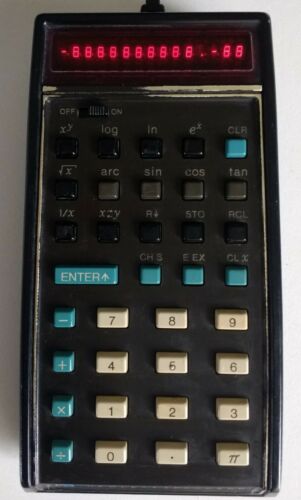
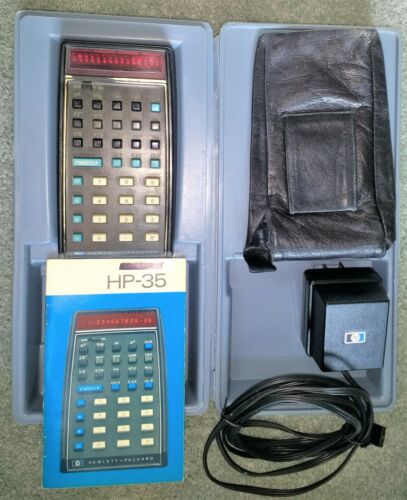 Model: HP-35
Battery:
Adapter:
Year: 1972
Chip:
Info: The HP-35 was Hewlett-Packard's first pocket calculator and the world's first scientific pocket calculator: a calculator with trigonometric and exponential functions. It was introduced in 1972
Wikepedia HP-35 HP-35 Simulator

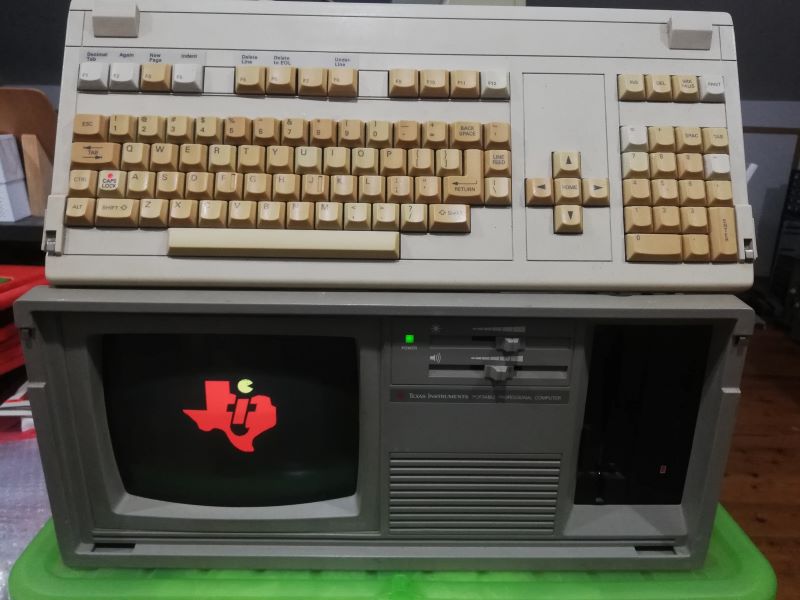
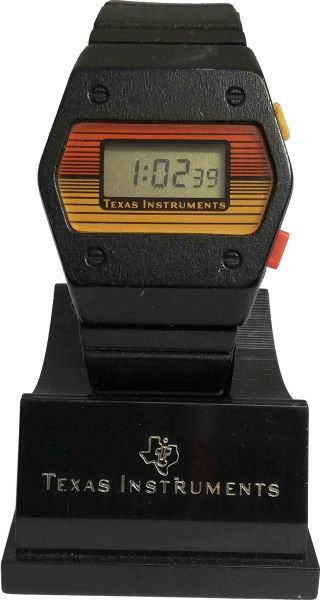
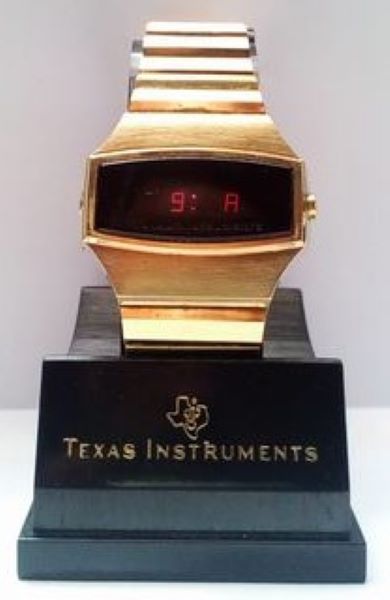
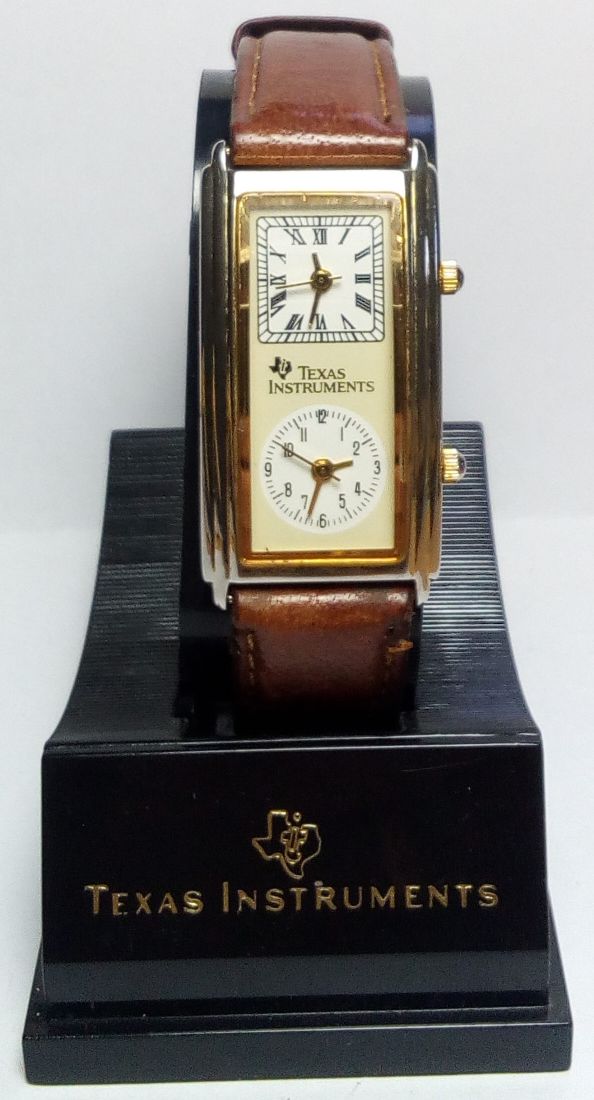
.jpg "Core Module Watch")

.jpg "Calculator Fuller")

.jpg "Olivetti Valentine")
.jpg "Battle Star Galactica")
.jpg "APPLE")


.png)