
TI Museum
 Model: TI-Nspire CX II
Battery: 3.7 L1200SPA Li-Ion
Adapter:
Year: 2019
Chip: CPU: ET-NS2018-000 (S6M98) SDRAM Micron MT46H32M Flash-ROM: Micron MT29F1G01
Info:Texas Instruments introduced at the 2011 T3 International Conference held on February 25-27 in San Antonio, TX with the TI-Nspire CX and TI-Nspire CX CAS their first graphing calculators with full color, backlit displays.
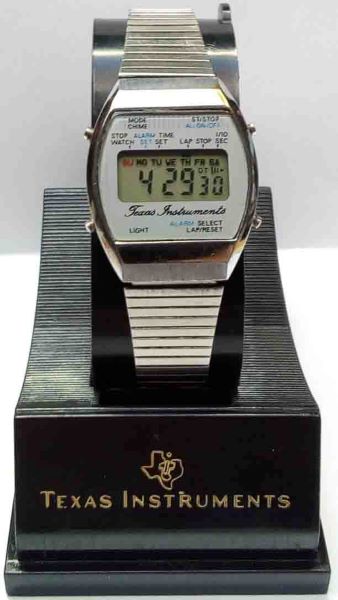
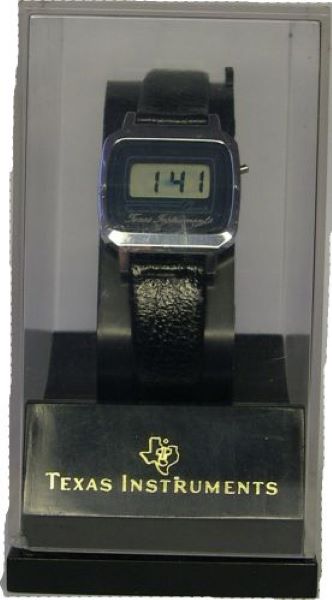
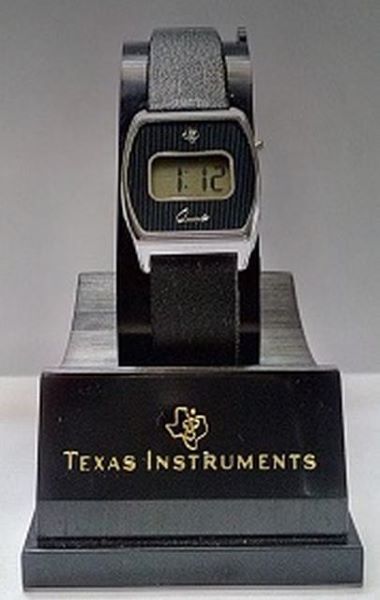
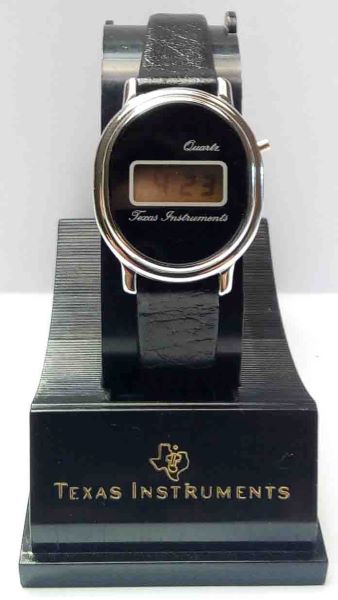

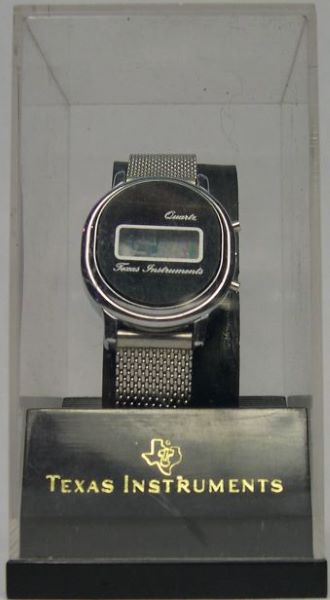
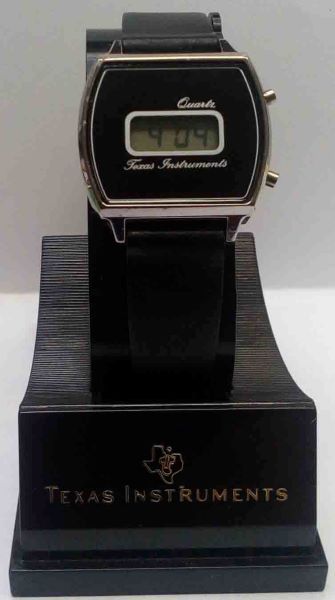



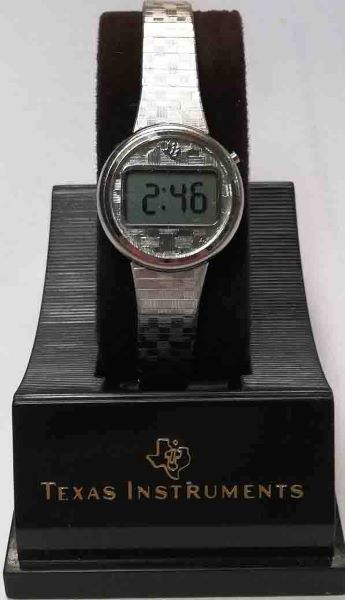
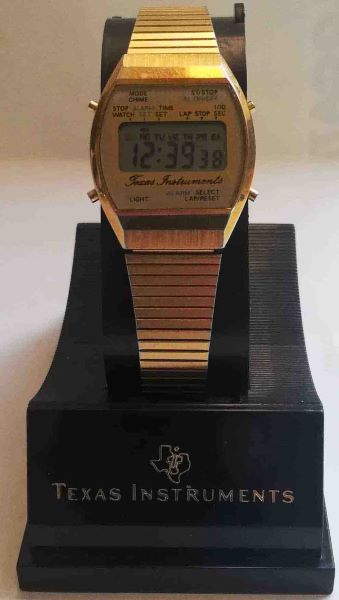
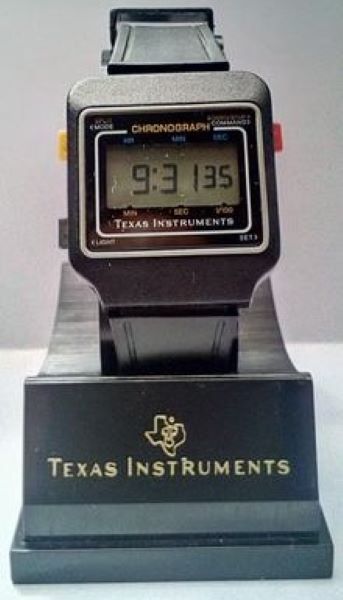 Model: TI-xxx-071
Battery: ?
WBand: black rubber
WCase: black plastic
Manual: no
Year:
Info:
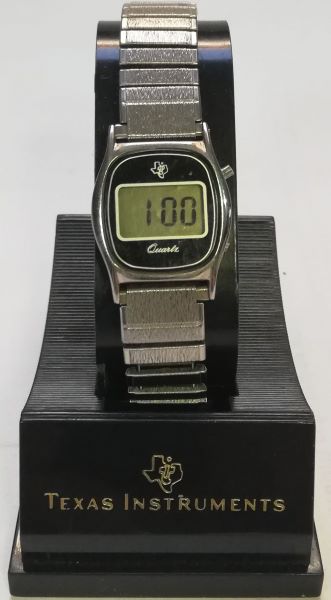
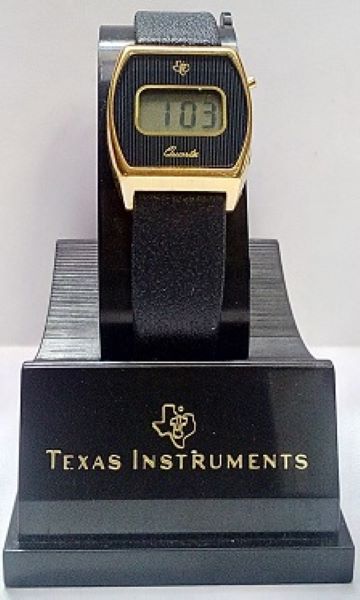
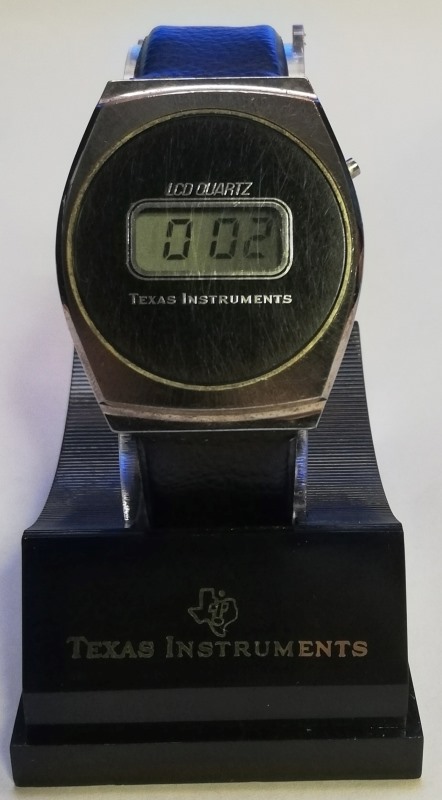 Model: TI-xxx-087
Battery: AG5 or 393
WBand: balck leather
WCase: steel / face black
Manual:
Year: 1976
Info:
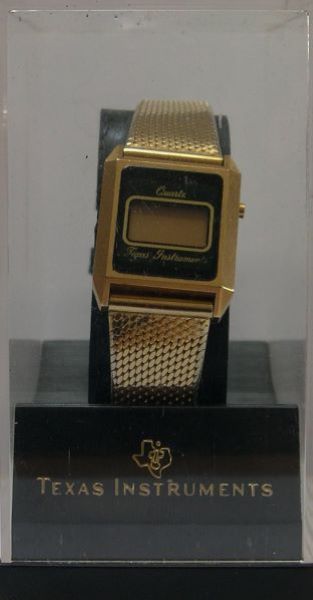
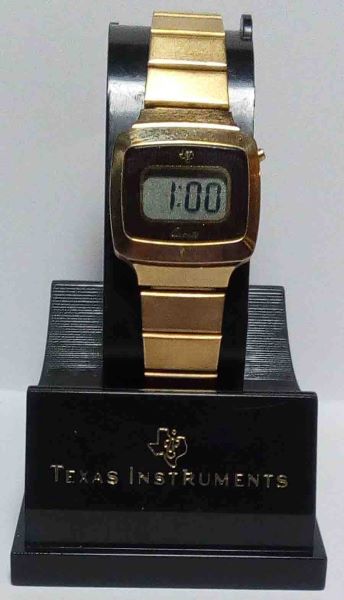
 Model: TI-xxx-088
Battery: AG5 or 393
WBand: steel gold
WCase: steel gold
Manual:
Year:
Info:
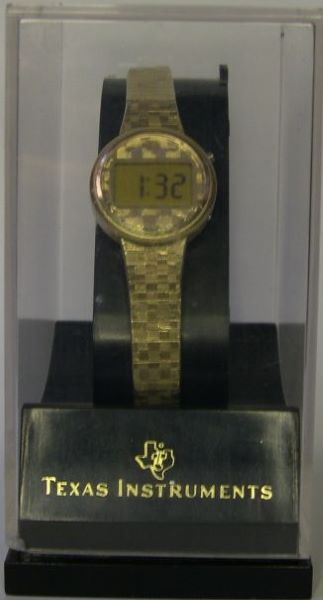
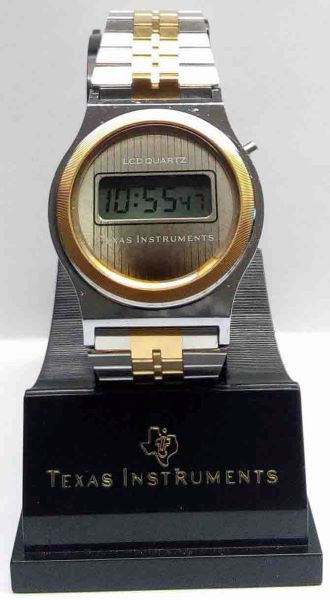 Model: TI-xxx-089
Battery: AG5 or 393
WBand: steel gold
WCase: steel gold
Manual:
Year:
Info:
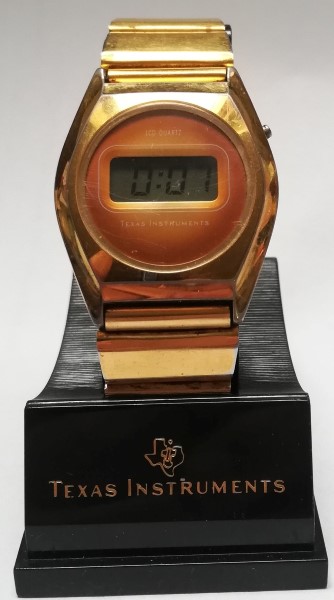 Model: TI-xxx-091
Battery: AG5 or 393
WBand: steel gold
WCase: steel gold
Manual:
Year:
Info: with lamp light
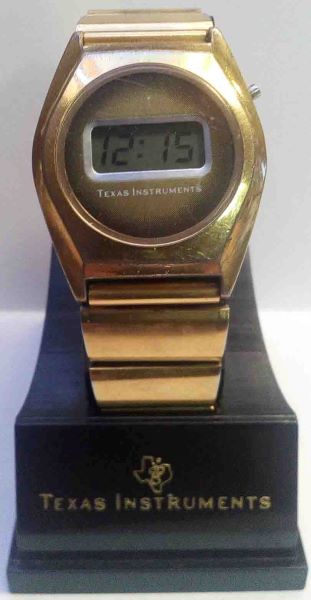 Model: TI-xxx-094
Battery: AG5 or 393
WBand: steel gold
WCase: steel gold
Manual:
Year:
Info:
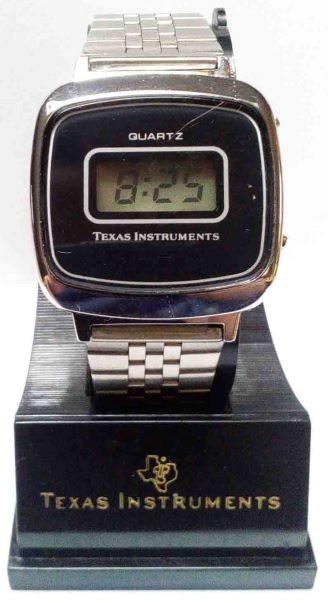 Model: TI-xxx-096
Battery: AG5 or 393
WBand: steel
WCase: steel
Manual:
Year:
Info:
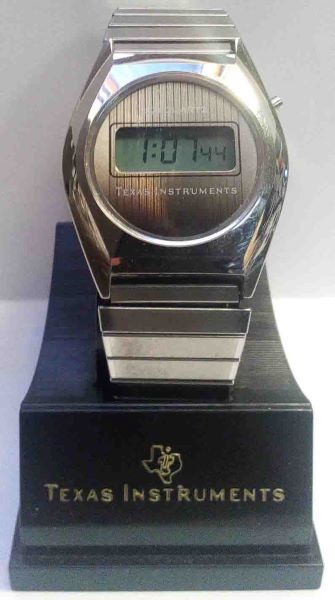 Model: TI-xxx-100
Battery: AG5 or 393
WBand: steel
WCase: steel
Manual:
Year:
Info:
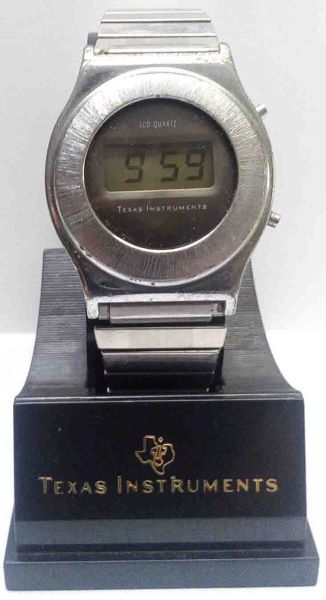 Model: TI-xxx-101
Battery: AG5 or 393
WBand: steel
WCase: steel
Manual:
Year:
Info:
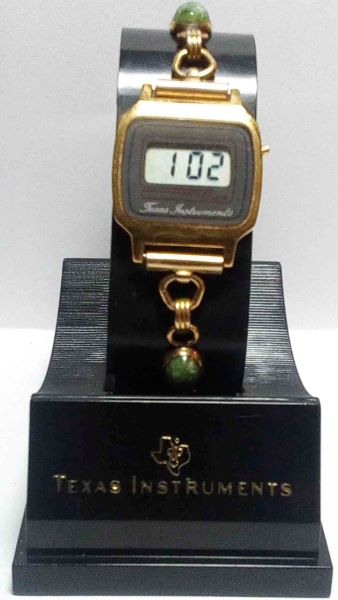
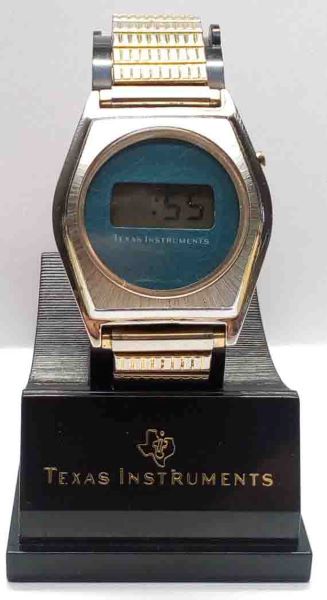 Model: TI-xxx-102
Battery: AG5 or 393
WBand: steel
WCase: steel
Manual:
Year:
Info:
 Model: TI-xxx-104
Battery: AG5 or 393
WBand: steel
WCase: steel
Manual:
Year: 1979
Info:
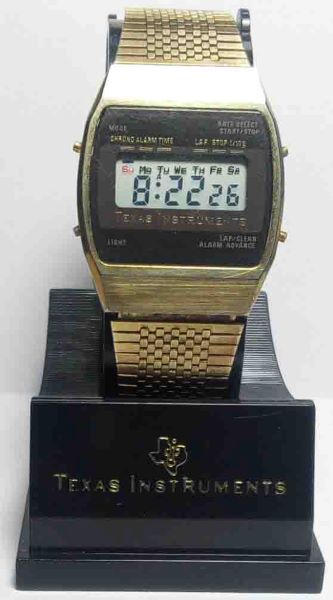 Model: TI-xxx-106
Battery: 2 x V392
WBand: steel gold
WCase: steel gold
Manual: yes
Year:
Info: the same model in steel
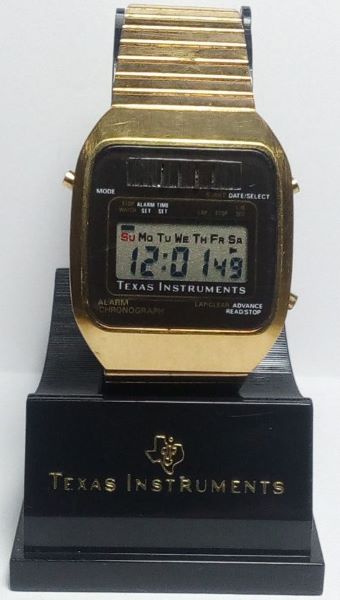 Model: TI-xxx-111
Battery: LR1120
WBand: steel gold
WCase: steel gold
Manual: yes
Year:
Info: the same in steel
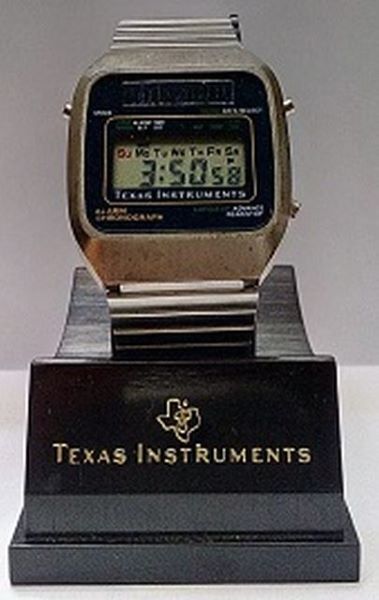 Model: TI-xxx-112
Battery: LR1120
WBand: steel
WCase: steel
Manual: yes
Year:
Info: the same in gold
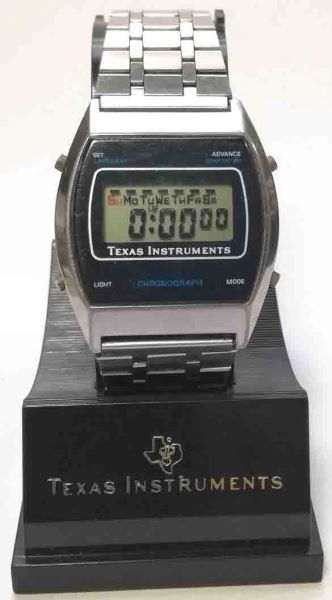 Model: TI-xxx-114
Battery: 2 x V392
WBand: steel
WCase: steel
Manual:
Year: 1981
Info:
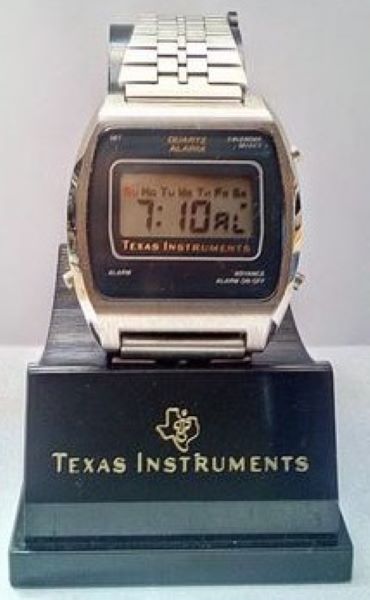 Model: TI-xxx-117
Battery: 2 x v392
WBand: steel
WCase: steel
Manual:
Year:
Info:
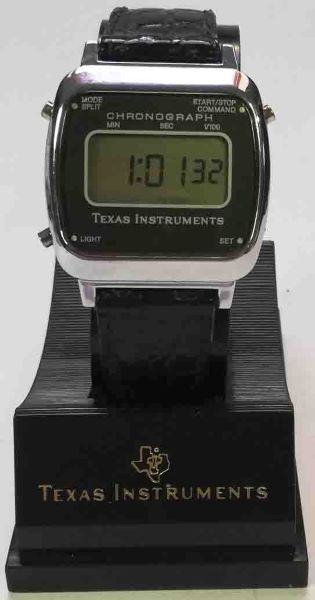 Model: TI-xxx-121
Battery: LR1120
WBand: black leather
WCase: steel
Manual:
Year:
Info:
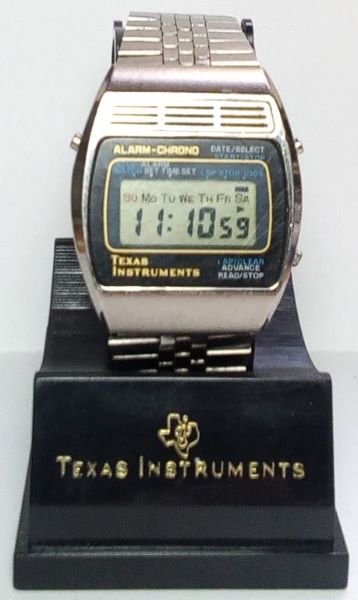 Model: TI-xxx-122
Battery: 2 x V392
WBand: steel
WCase: steel
Manual:
Year:
Info:
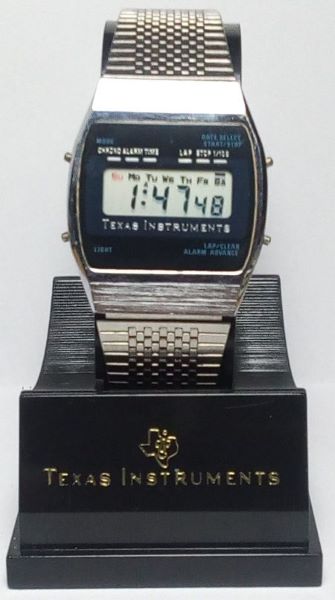 Model: TI-xxx-125
Battery: 2 x V392
WBand: steel
WCase: steel
Manual:
Year:
Info: the same model in steel gold
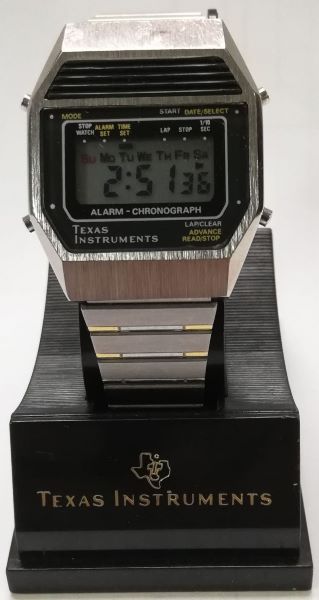 Model: TI-xxx-126
Battery: AG5
WBand: steel
WCase: steel
Manual:
Year:
Info:
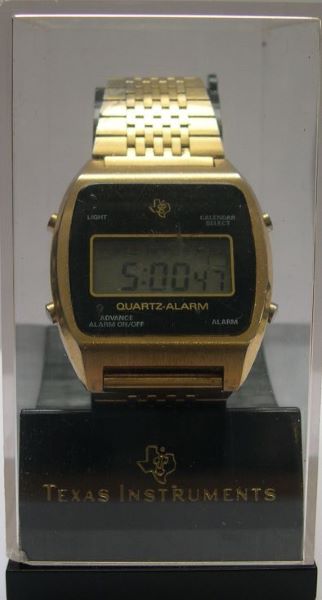 Model: TI-xxx-128
Battery: AG5 or 392
WBand: steel gold
WCase: steel gold
Manual:
Year:
Info:
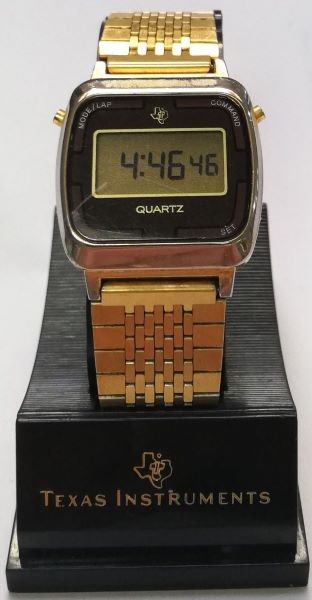 Model: TI-xxx-131
Battery: AG3
WBand: steel gold
WCase: steel gold
Manual:
Year:
Info:
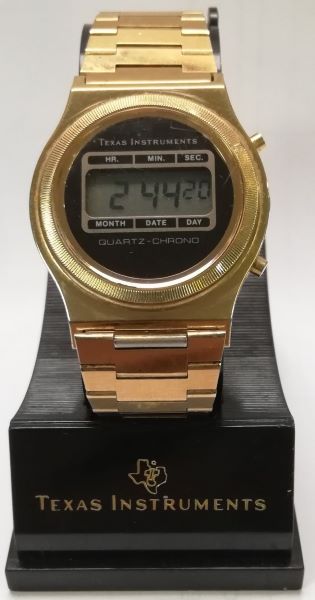 Model: TI-xxx-131
Battery: LR754
WBand: steel gold
WCase: steel gold
Manual:
Year:
Info: the same model in steel
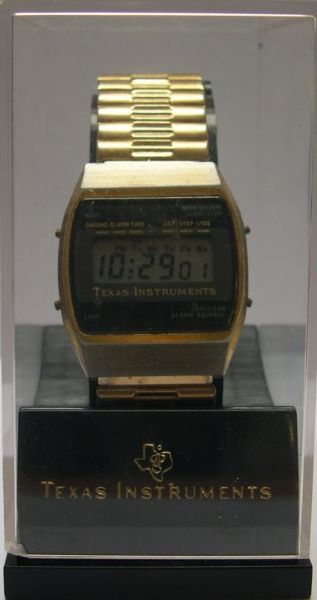 Model: TI-xxx-134
Battery: AG7
WBand: steel gold
WCase: steel gold
Manual:
Year:
Info:
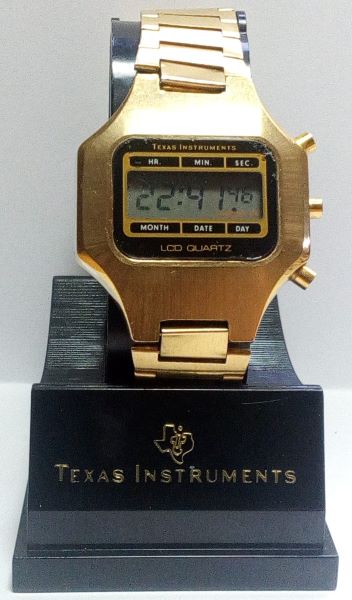 Model: TI-xxx-138
Battery: AG5 or 393
WBand: steel gold
WCase: steel gold
Manual:
Year:
Info: the same model in steel
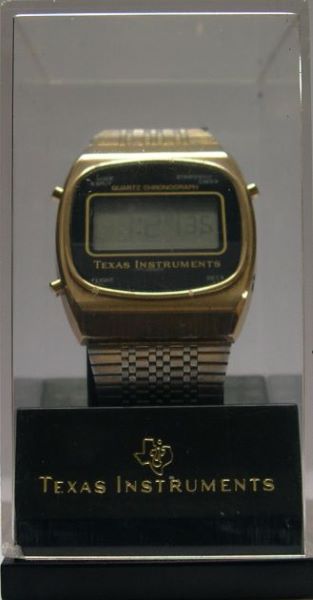 Model: TI-xxx-140
Battery: LR736
WBand: steel gold
WCase: steel gold
Manual:
Year:
Info:
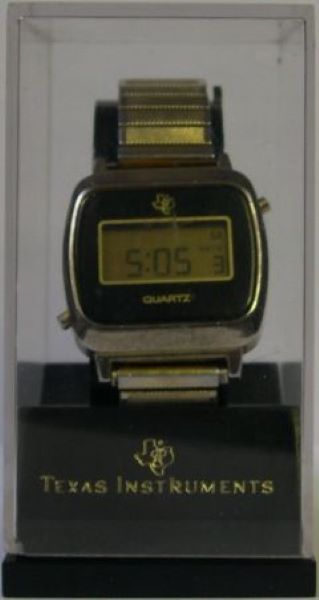 Model: TI-xxx-141
Battery: AG3
WBand: steel gold
WCase: steel gold
Manual:
Year: 1979
Info:
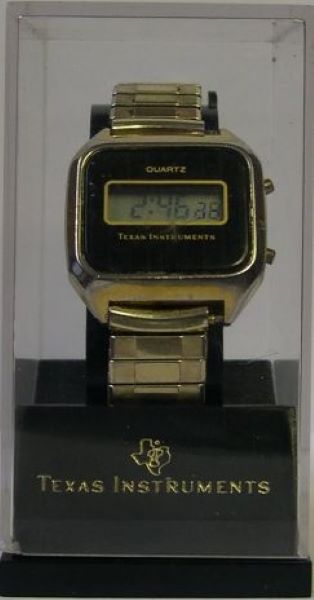 Model: TI-xxx-142
Battery: AG3
WBand: steel gold
WCase: steel gold
Manual:
Year:
Info:
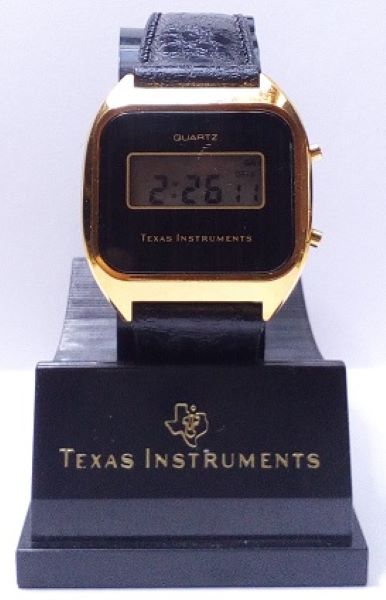 Model: TI-xxx-147
Battery: 393
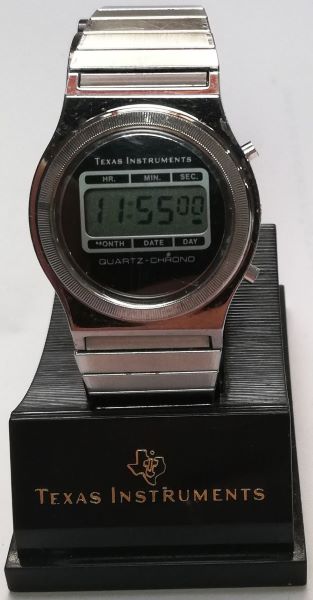
WBand: black leather
WCase: steel gold
Manual:
Year: 1980
Info: the model inside is Lambda Electronics
 Model: TI-xxx-150
Battery: 393
WBand: steel
WCase: steel
Manual:
Year:
Info:
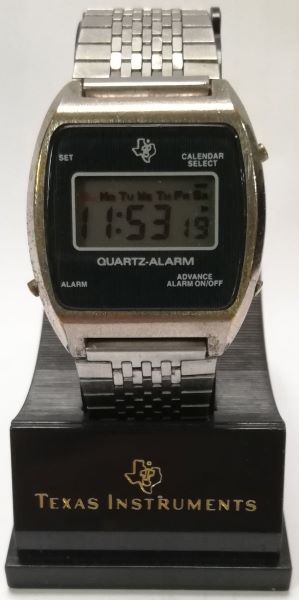 Model: TI-xxx-157
Battery: 2 x AG3 Module: 25_6_digit
WBand: steel
WCase: steel
Manual:
Year:
Info:
 Model: TI-xxx-158
Battery: 2 x AG3
WBand: steel
WCase: steel
Manual:
Year:
Info:
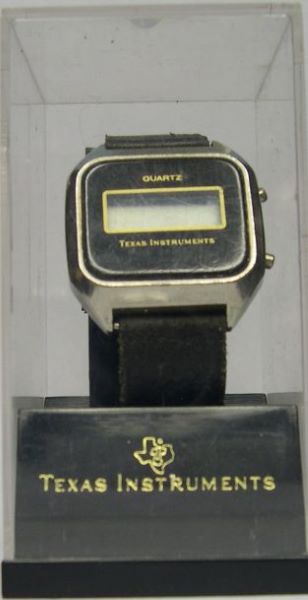 Model: TI-xxx-162
Battery: AG5 or 393
WBand: steel
WCase: steel
Manual:
Year:
Info:
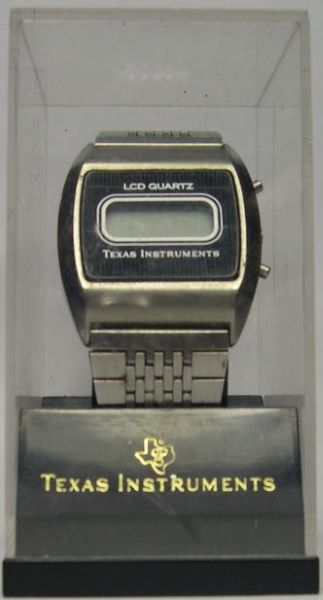 Model: TI-xxx-163
Battery: AG5 or 393
WBand: steel
WCase: steel
Manual:
Year:
Info:
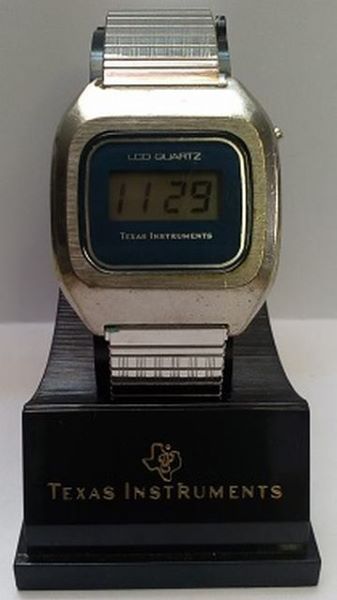
 Model: TI-xxx-166 Code: -
Battery: AG5 or 393
WCase: gold tone metal WBand: matching bracelet Face: brown frame with gold line
Manual: No Box: No Light: No
Year: 1979 Price: $
Function:
Info: The same model in gold tone metal
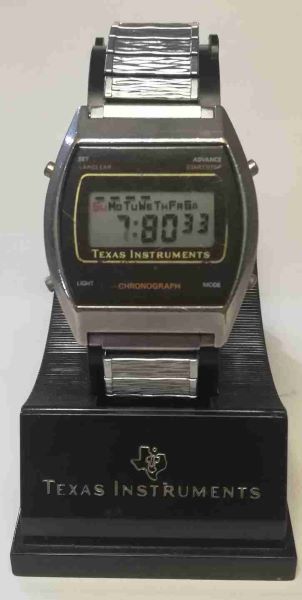
 Model: TI-xxx-167 Code: -
Battery: AG5 or 393
WCase: white tone metal WBand: matching bracelet Face: blue frame with silver line
Manual: No Box: No Light: No
Year: 1979 Price: $
Function:
Info: The same model in gold tone metal
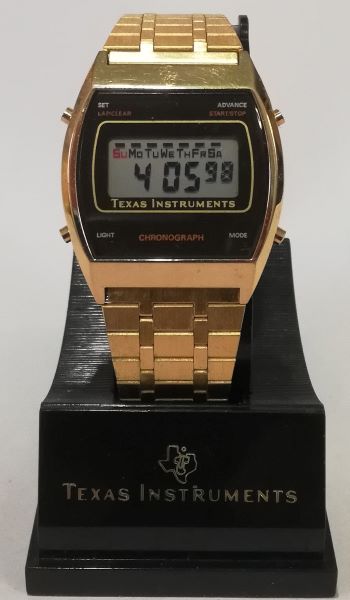
 Model: TI-xxx-170
Battery: 2 x 392
WBand: steel
WCase: steel
Manual:
Year:
Info: the same in gold
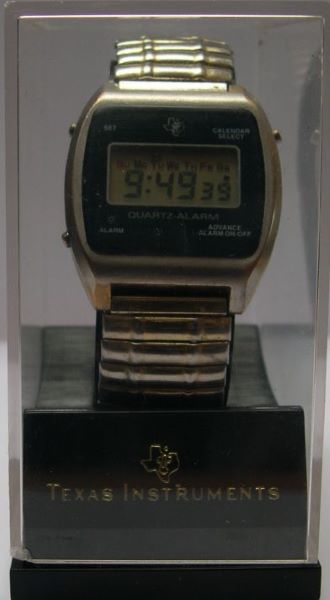
 Model: TI-xxx-171
Battery: 2 x 392
WBand: steel gold
WCase: steel gold
Manual:
Year:
Info: the same in steel
 Model: TI-xxx-172
Battery: 2 x V392
WBand: steel
WCase: steel
Manual:
Year:
Info:
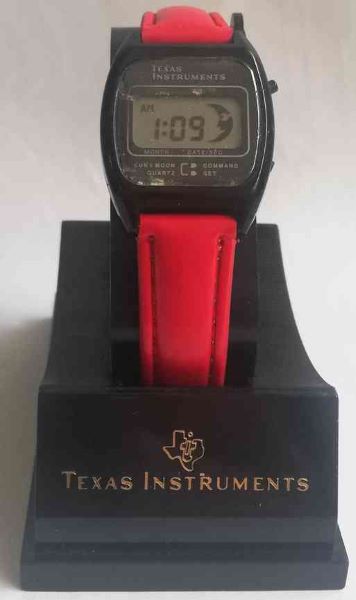 Model: TI-xxx-178
Battery:
WBand: red Leather
WCase: black plastic
Manual:
Year:
Info: extremly rare
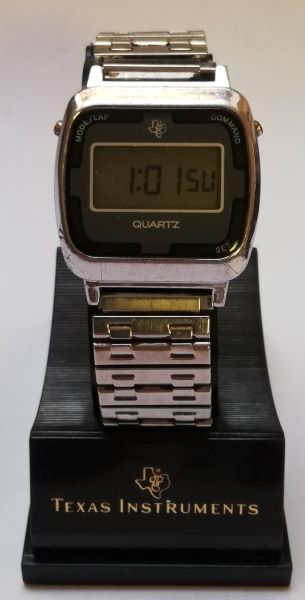 Model: TI-xxx-183 Code: ?
Battery: LR41 Module: 1035726_8
WCase: white tone metal WBand: matching bracelet Face: black frame with silver line.
Manual: Yes Box: No Light: no
Year: xxx Price: xxxx
Function: Men's chronograph. Displays hours, minutes, seconds, month, date, day of the week, am/pm, and stopwatch. The watch has five functions: hours, minutes, seconds, month, and date..
Info: The same model in white tone metal is TI-xxx-184
Model: TI-xxx-184 Code: ?
Battery: LR41 Module: 1035726_8
WCase: gold tone metal WBand: matching bracelet Face: brown frame with gold line.
Manual: Yes Box: No Light: no
Year: xxx Price: xxxx
Function: Men's chronograph. Displays hours, minutes, seconds, month, date, day of the week, am/pm, and stopwatch. The watch has five functions: hours, minutes, seconds, month, and date..
Info: The same model in white tone metal is TI-xxx-183
 Model: TI-xxx-278
Battery: 391
WBand: black lether
WCase: steel
Manual: NO
Year:
Info: with LIGHT
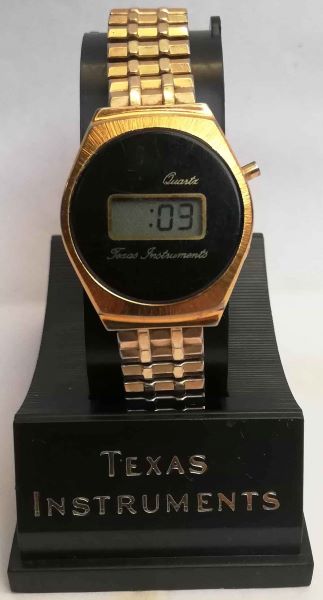 Model: TI-xxx-279
Battery: 391
WBand: gold steel
WCase: gold steel
Manual: NO
Year:
Info: without LIGHT
Model: TI-xxx-281
Battery: 391
WBand: steel
WCase: steel
Manual: NO
Year:
Info: without LIGHT
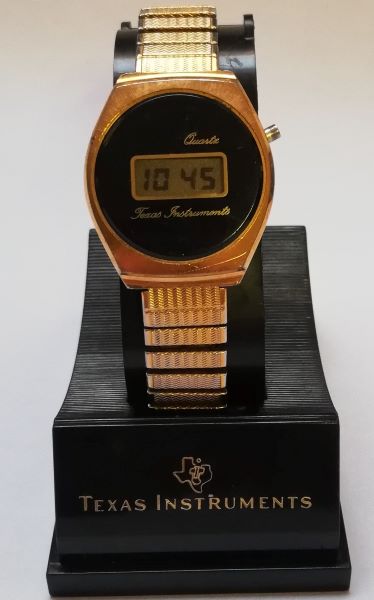 Model: TI-xxx-282
Battery: 391
WBand: gold steel
WCase: gold steel
Manual: NO
Year:
Info: without LIGHT
T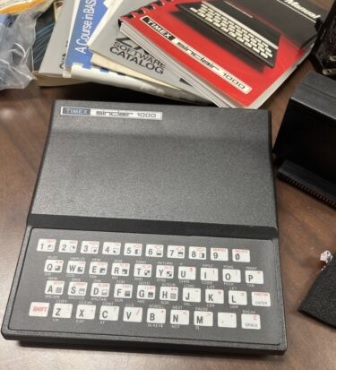 he Timex Sinclair 1000 (or T/S 1000) was the first computer produced by Timex Sinclair, a joint venture between Timex Corporation and Sinclair Research. It was launched in July 1982, with a US sales price of US$99.95, making it the cheapest home computer at the time; it was advertised as "the first computer under $100".[1] The computer was aimed at regular home users. As purchased, the T/S 1000 was fully assembled and ready to be plugged into home televisions, which served as a video monitor. The T/S 1000 was a slightly modified version of the Sinclair ZX81 with an NTSC RF modulator, for use with North American TVs, instead of PAL for European TVs. The T/S 1000 doubled the onboard RAM from 1 KB to 2 KB. The T/S 1000's casing had slightly more internal shielding but remained the same as Sinclair's, including the membrane keyboard. It had black-and-white graphics and no sound. It was followed by an improved version, the Timex Sinclair 1500 which had substantially more RAM (16 KB) and a lower price (US$80). However, the T/S 1500 did not achieve market success, given that the marketplace was by this time dominated by Commodore, RadioShack, Atari and Apple.
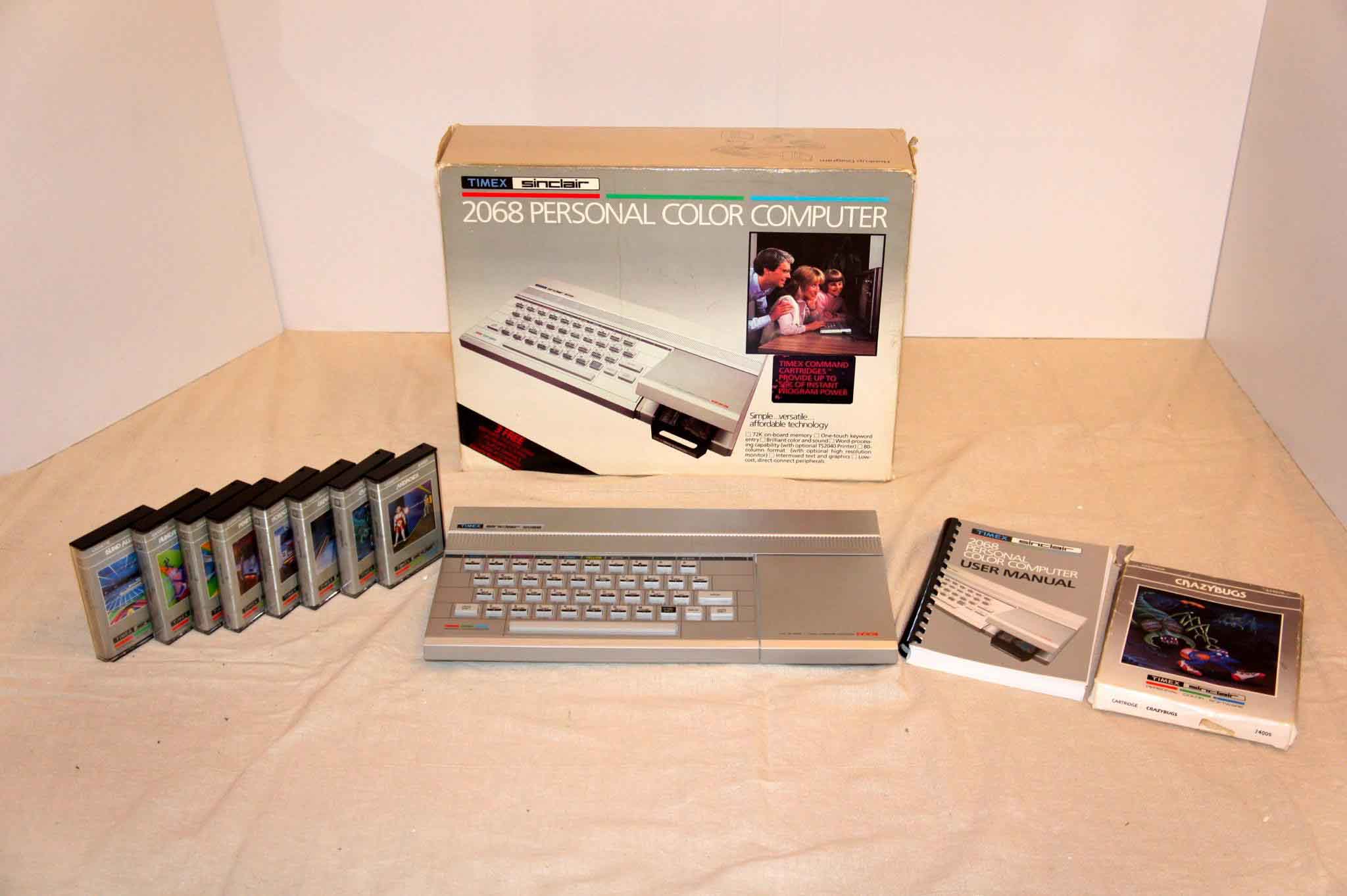 The Timex Sinclair 2068 (T/S 2068), released in November 1983, was Timex Sinclair's third and last home
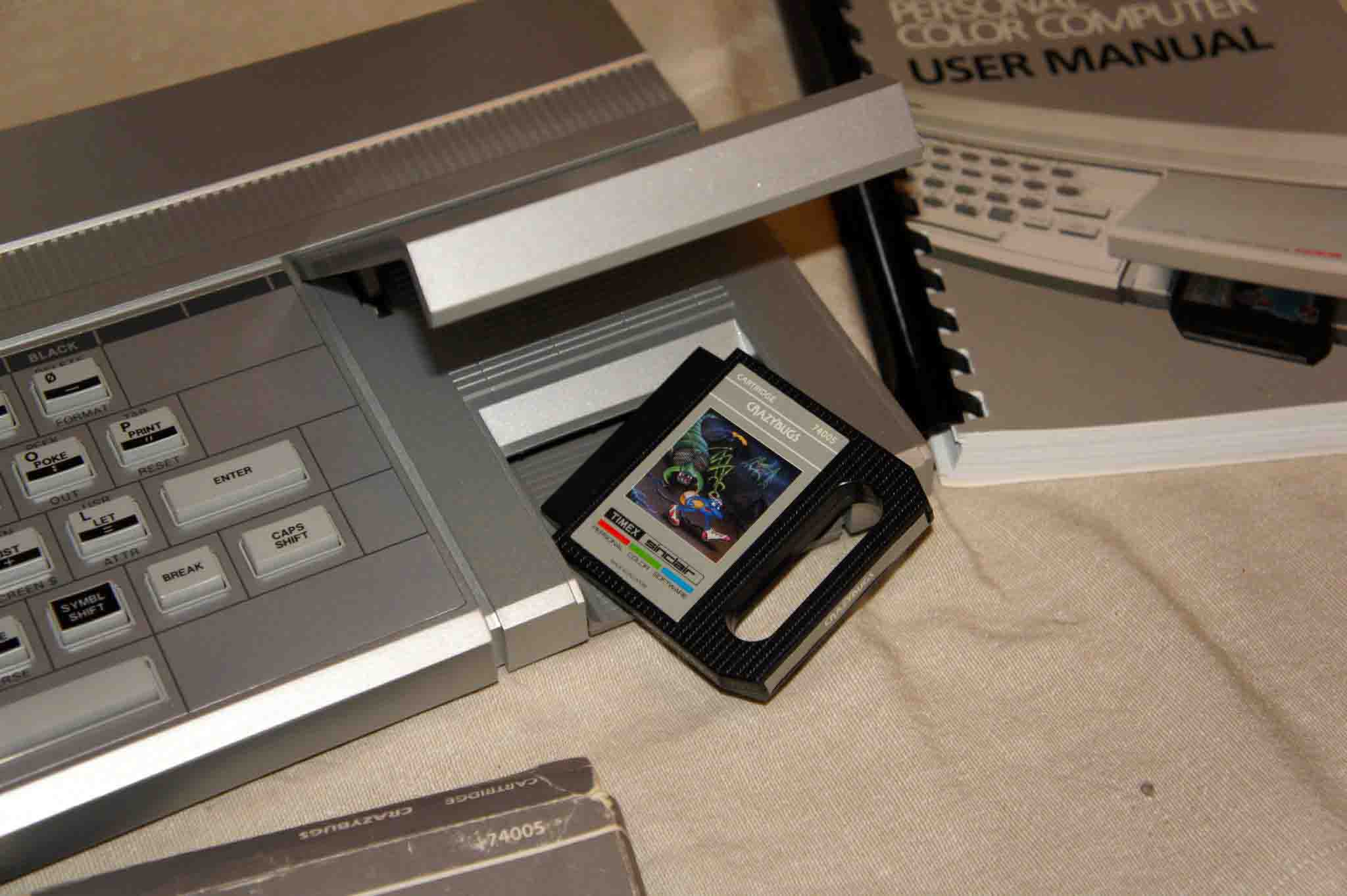 computer for the United States market. It was also marketed in Canada, Argentina, Portugal and Poland, as Timex Computer 2068 (TC 2068).
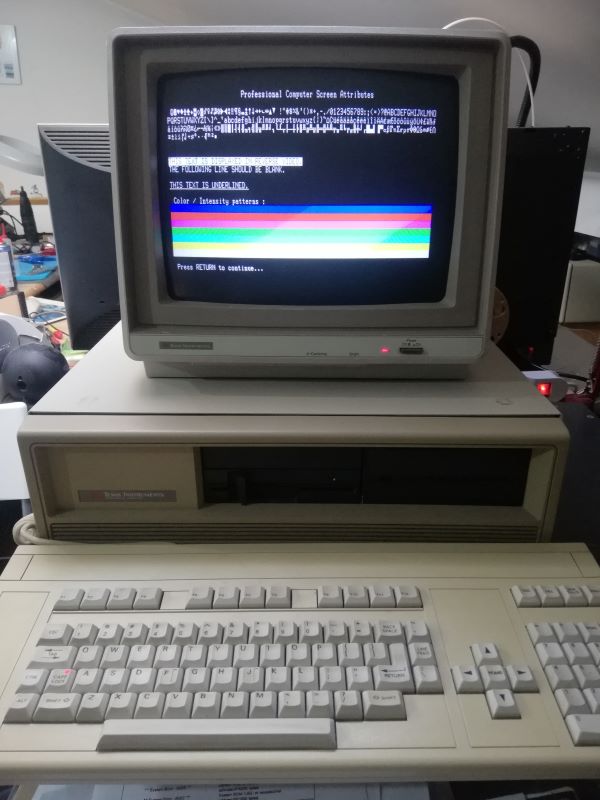
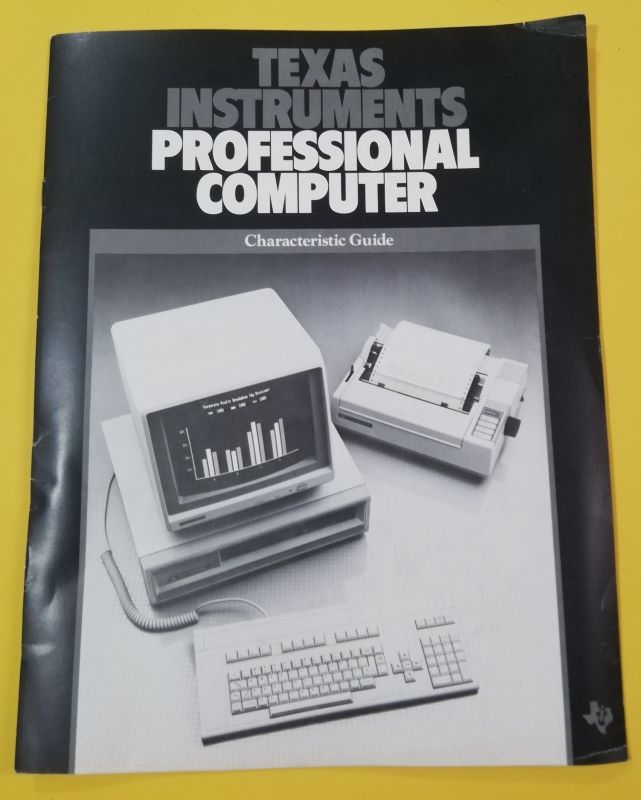 Model: Professional Computer (PC) Color Version
Adapter: 110 volt or 220 volt (Italy)
Year: 1983
Keyboard: QWERTY full-stroke keyboard with arrow keys and separated numeric keypad
Cpu: Intel 8086 Speed: 5 mhz CO-processor: 8087 Ram: 64k (up to 768k) Sound: Beeper
Text mode: 80 x 25 Graphics mode: 720 x 300
Size - Weight: 47 x 42 x 19 cm / 12 kg with monochrome monitor / 14 kg with the color monitor
I/O ports: Parallel/Centronics port, 5 expansion slots (non IBM compatible), 4 x serial ports
Media: two 5''1/4 disk-drive (320k) OS: MS-DOS 2.1 CP/M 86, UCSD P-system, Prologue and Concurrent CP/M 86.
Peripherals: 10Mb or 20Mb hard-drive ( need interface), RAM expansion cards, Voice recognition card, Ethernet card.
Price: 64k model about 3000$ (USA, november 1983) / 64k model : £ 4.000.000 (Italy, 1985)
Info: The TIPC is very similar to the IBM PC both architecturally and from a user-experience perspective, with some technically superior aspects.It is based on the Intel 8088 CPU and an optional Intel 8087 floating point coprocessor. It supports MS-DOS compatible operating systems,but is not a fully IBM PCcompatible computer. Alternative operating systems are CP/M-86, Concurrent CP/M-86, and the UCSD p-System. The TIPC was reviewed in Byte magazine in its December 1983 issue. The CPU clocked at 5 MHz (a bit faster than the 4.77 MHz of the IBM PC) and has 64 KB of RAM pre-installed. A RAM board can be installed in an expansion slot providing an additional 192 KB or RAM, for a maximum of 256 KB. A later version supports up to 768 KB of total memory. The computer featured 5 expansion slots and has either a 12-inch green-phosphor monochrome (CRT) monitor or a 12-inch color monitor with a color graphics resolution of 720x300 pixels. For text, the display shows 25 lines of 80 columns each. The device has a 5¼-inch floppy disk drive and can support a second floppy drive or a "Winchester" hard drive without requiring the use of an expansion slot or separate chassis, and typically features one of each.
Troubleshooting
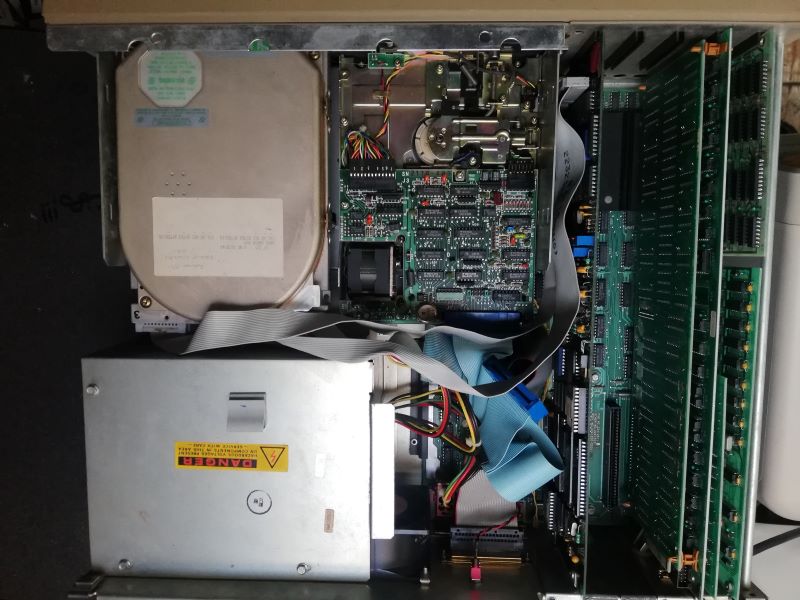
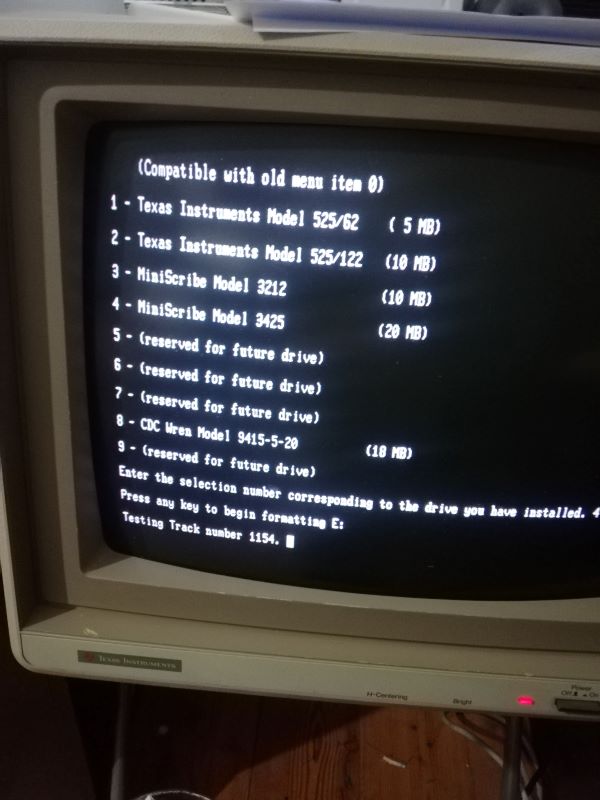 For this TIPC we used a Seagate ST225 (20 mByte) to be formatted with option 4 (miniscribe 3425). One thing that takes you back in time is the wship.com command from DOS 2.13 that allows you to park the HD heads.
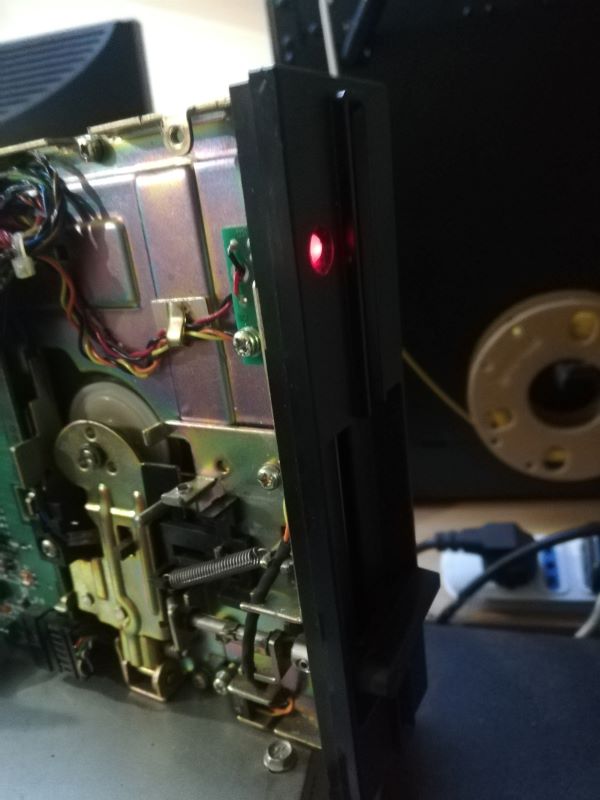 As for the floppy we used this 360 kByte y53, as we have to repair the original one.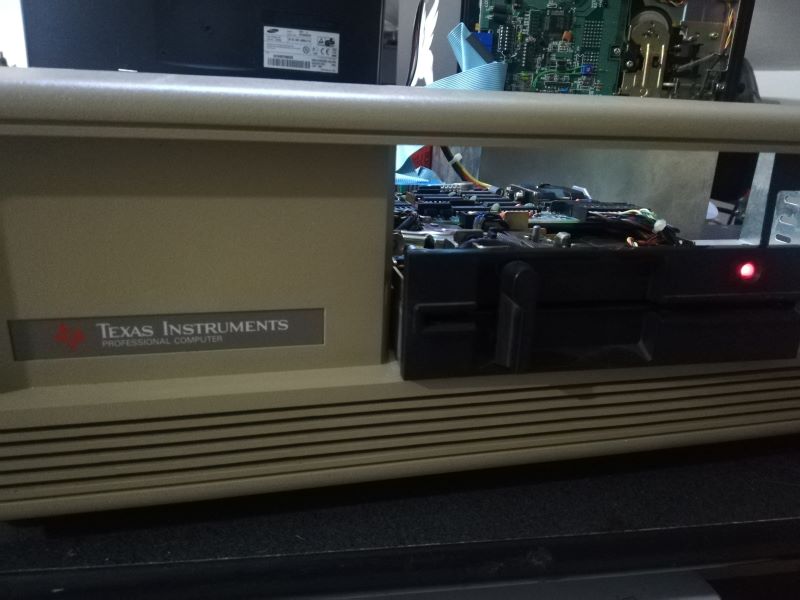
Library
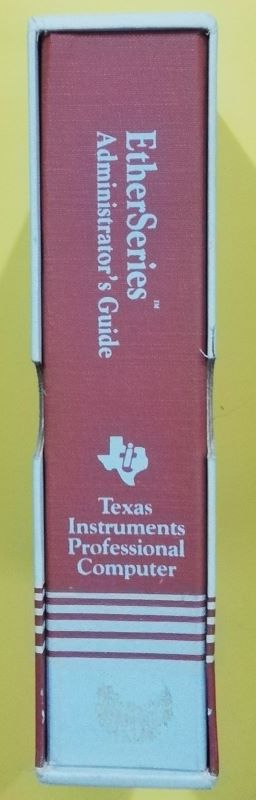
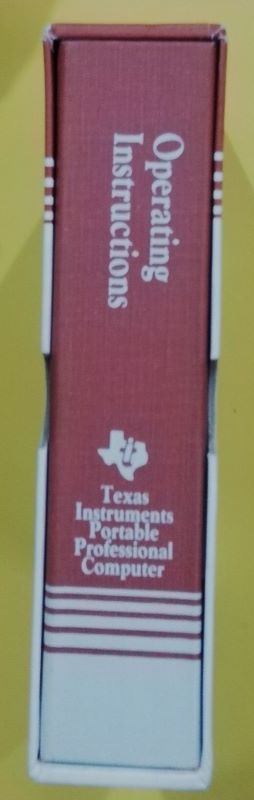
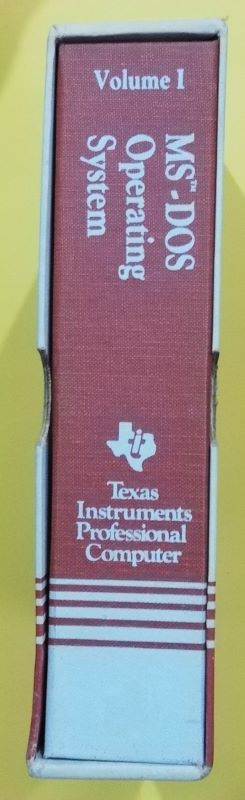
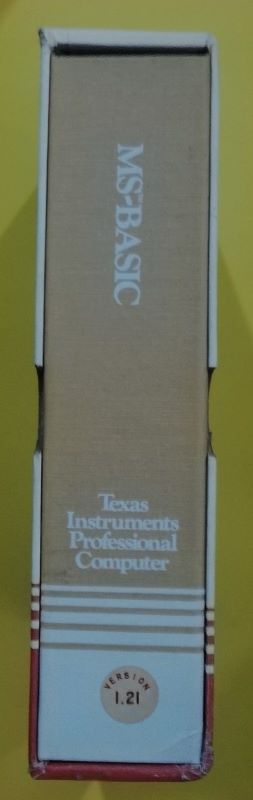
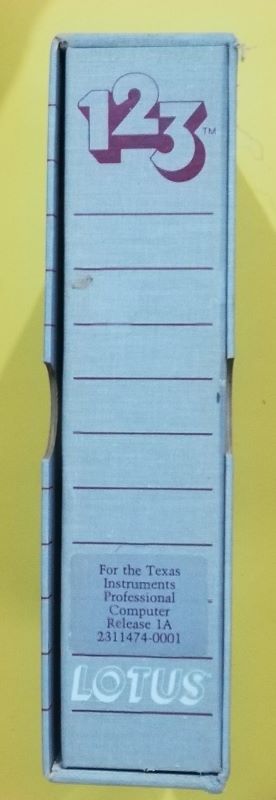
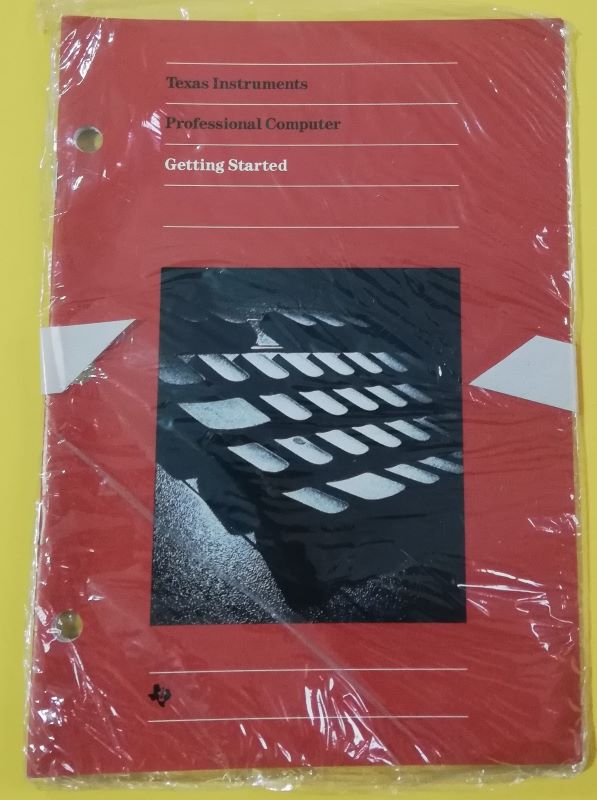
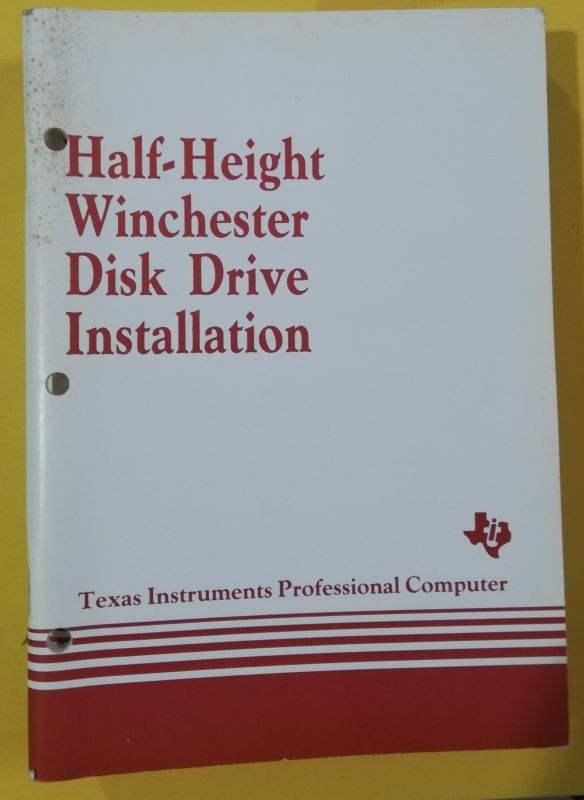
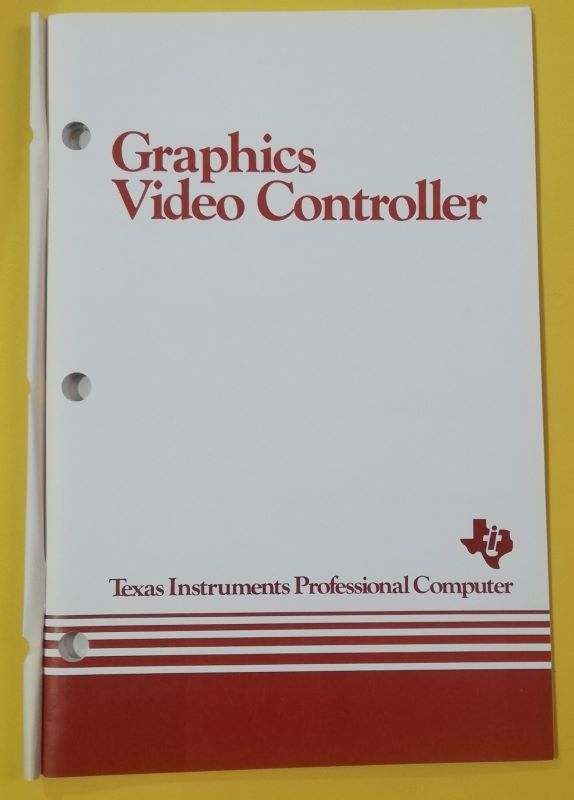
Hardware Interface
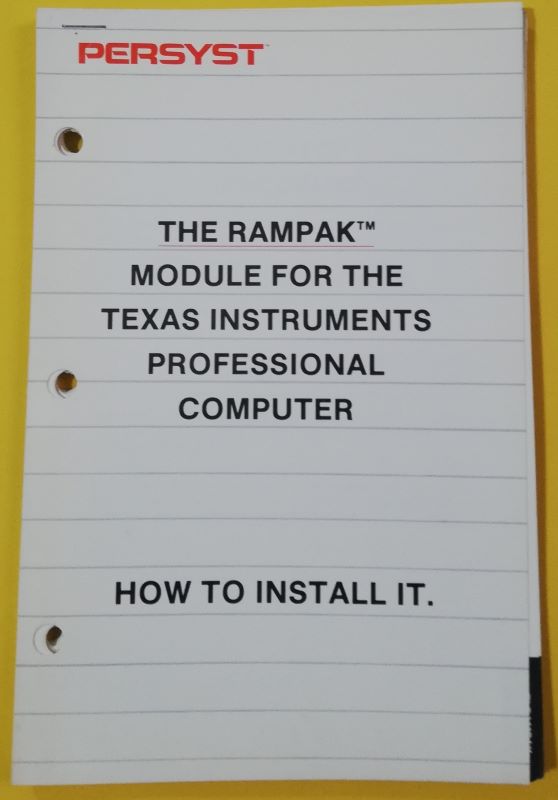
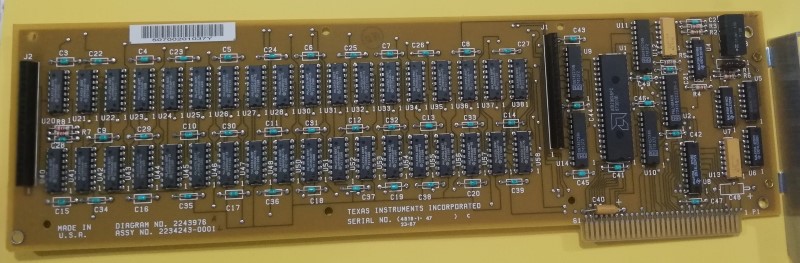 Model: Expansion RAM Card assy: 2234243-0001
Info:
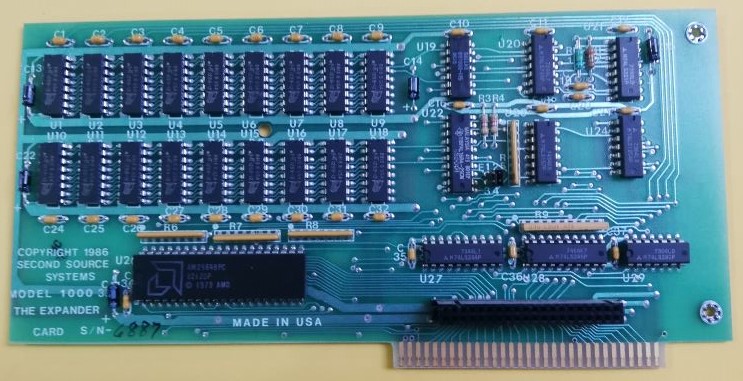
Model: Expander Card Second Source Mod.1000
Model: Second Source Mod. SP1100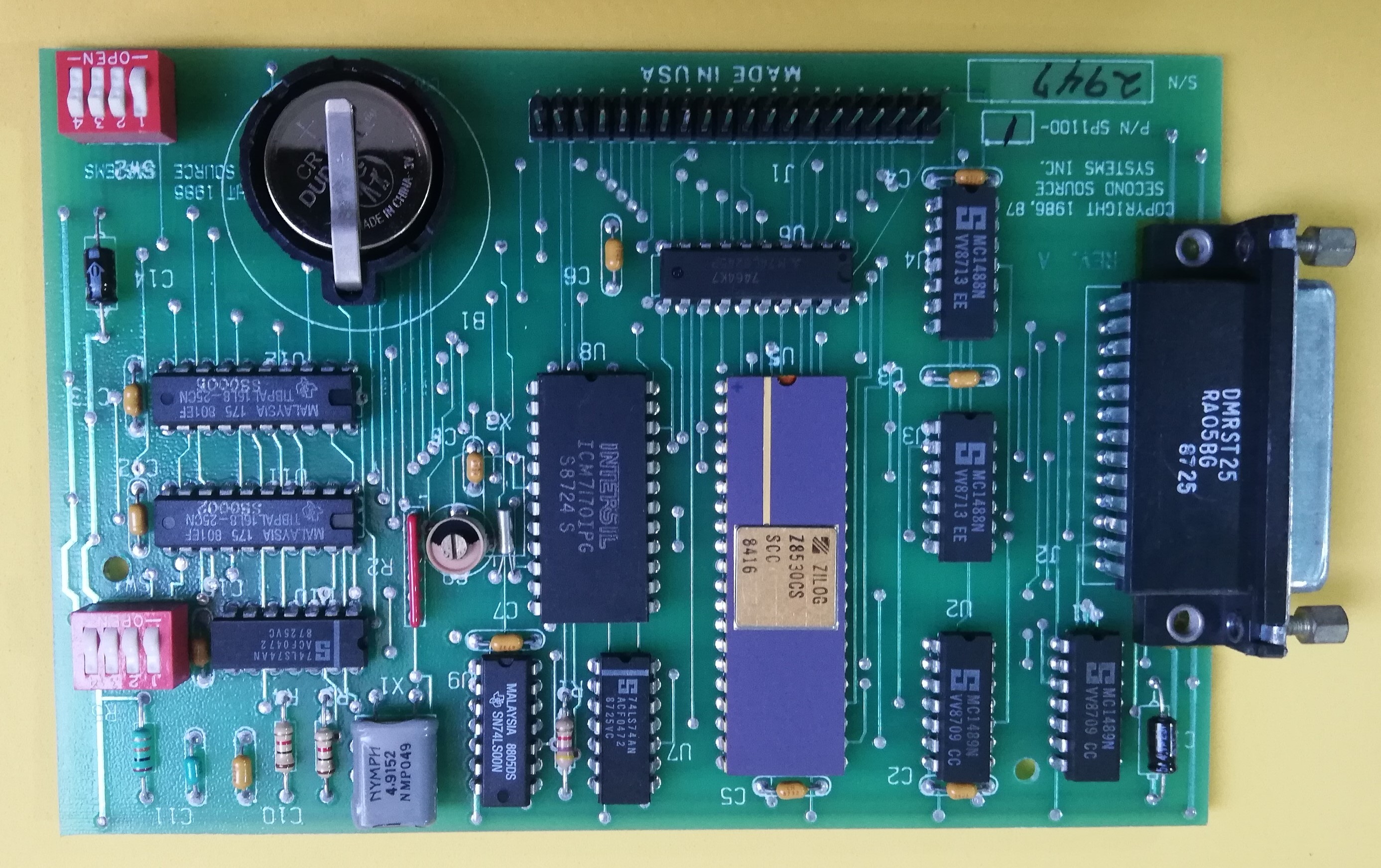
Info: This board is mounted in sandwich on the expander board, battery is BR2325
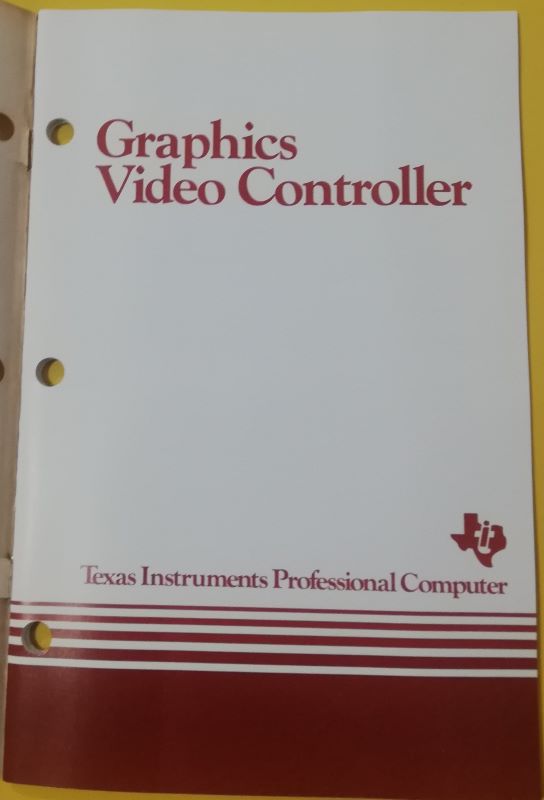
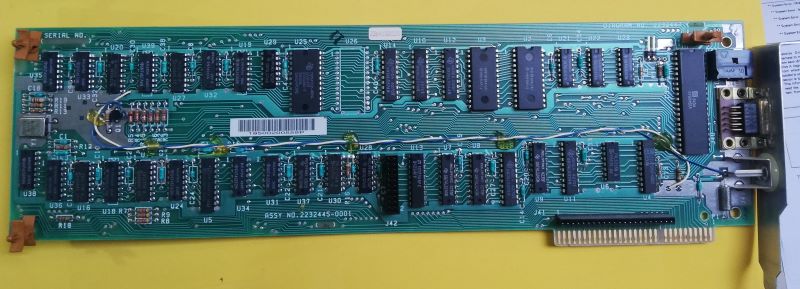 Model: Monochrome Graphics Video Controller assy:2232445-001
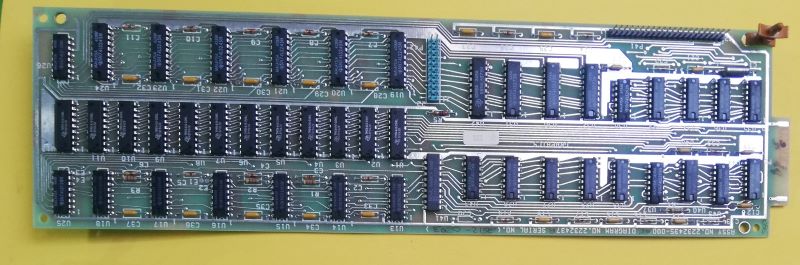
Model: Color Graphics Video Controller assy:2232435-000
Info: For monochromatic operation, only the monochromatic card is used; to have the color function it is necessary to insert the color card sandwiched on the monochromatic card.
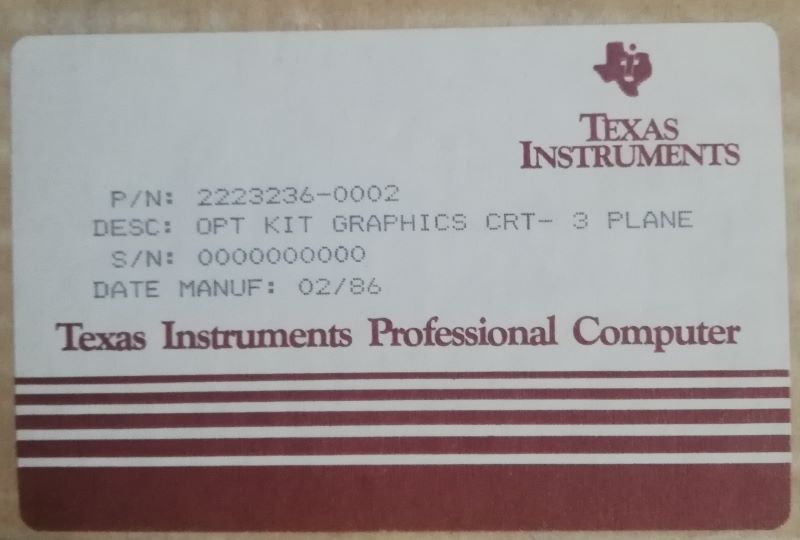
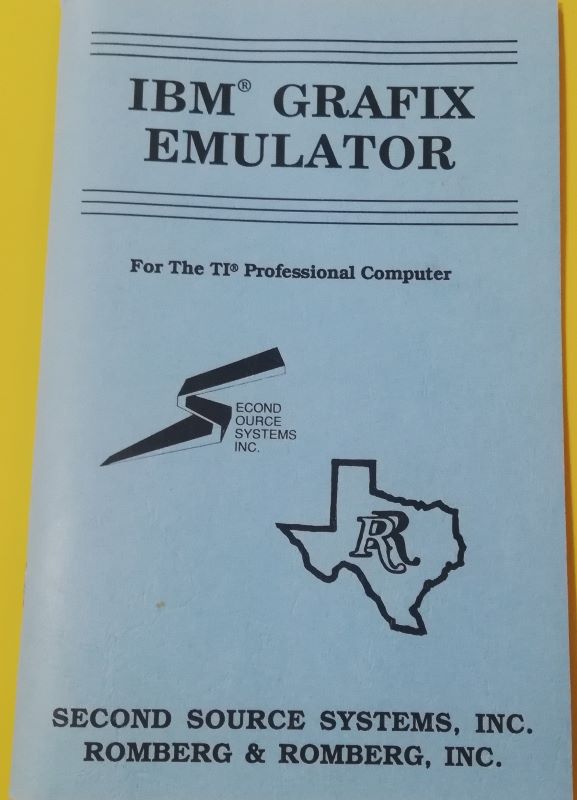
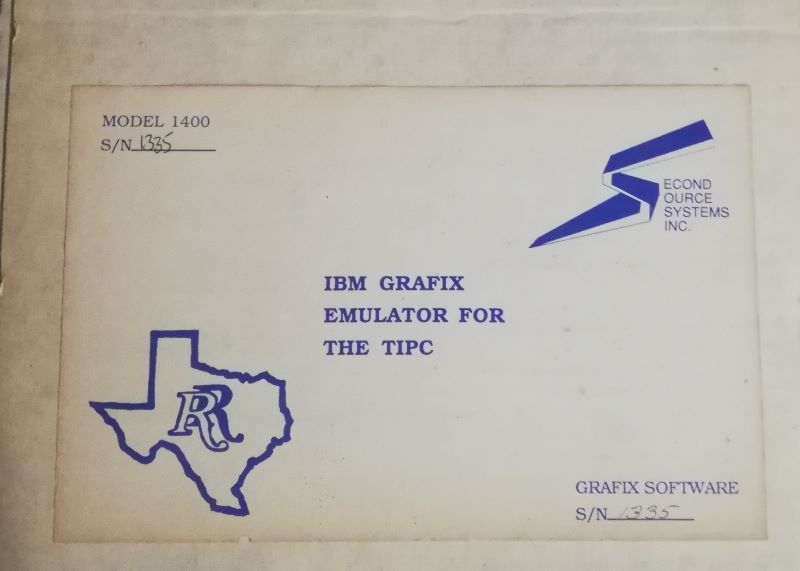
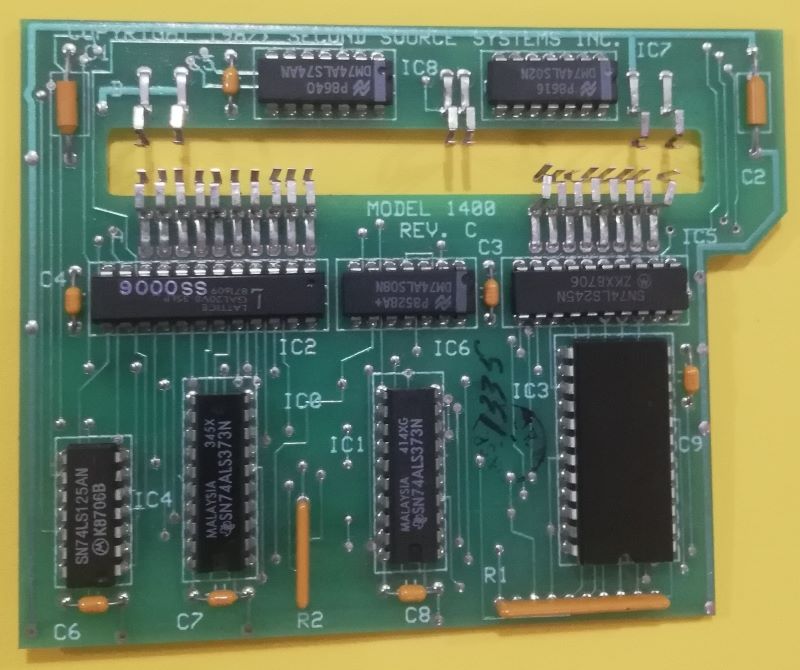 Model: IBM Graphics Emulator
Info:
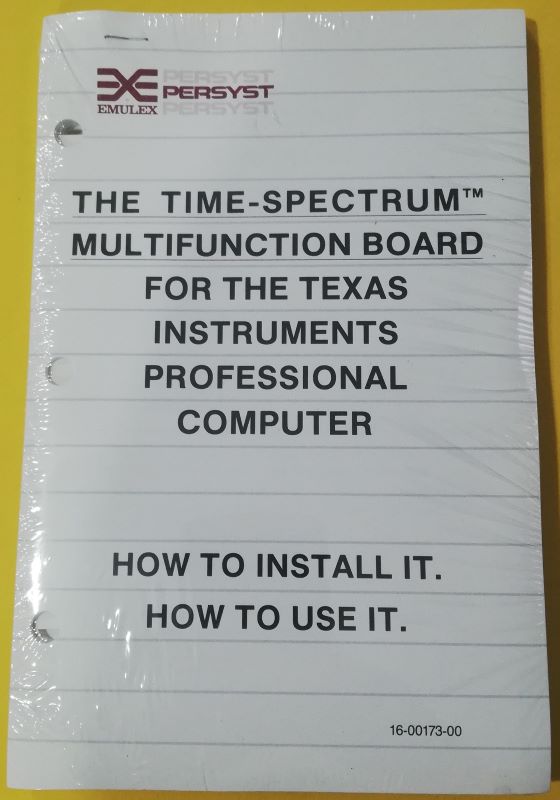
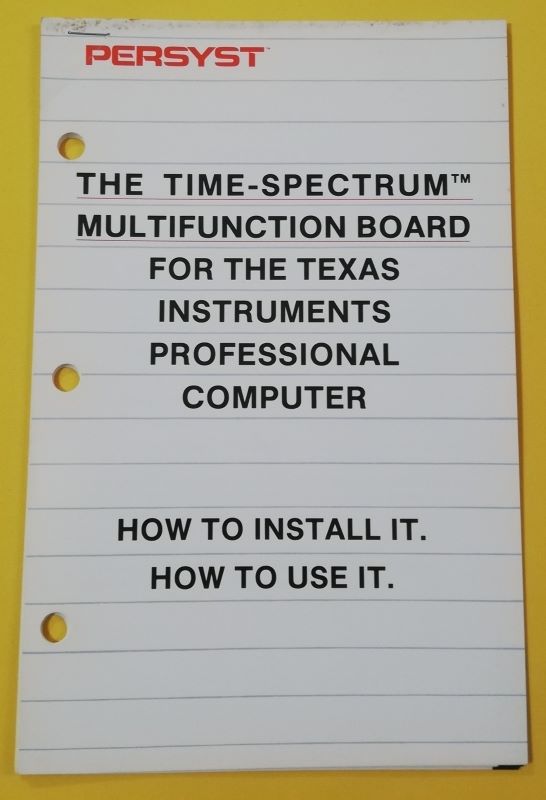
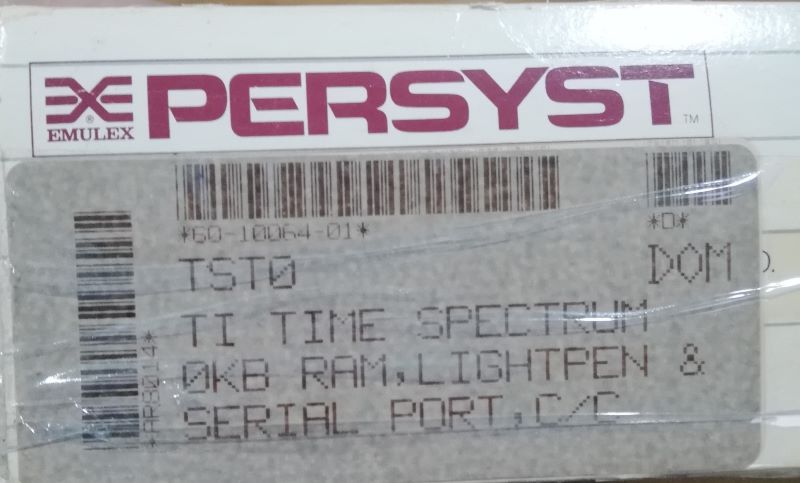
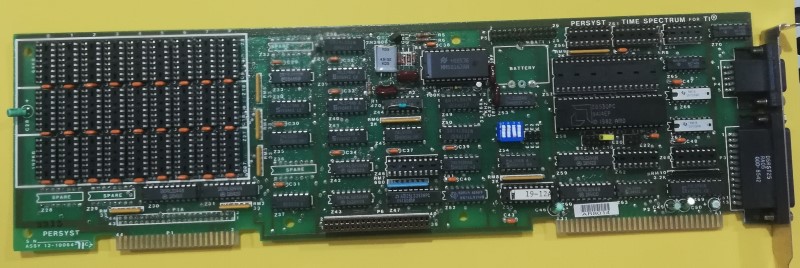 Model: The time Spectrume multifunction Board
Info:
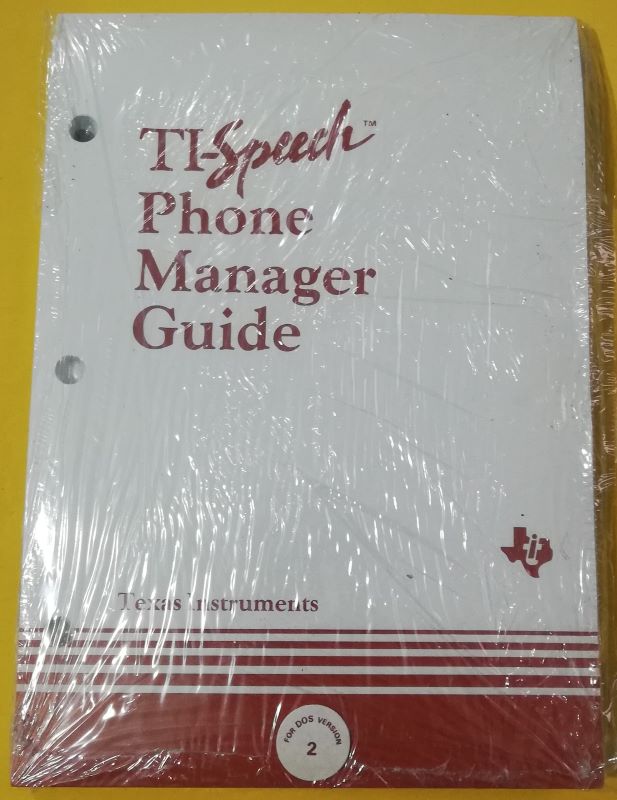
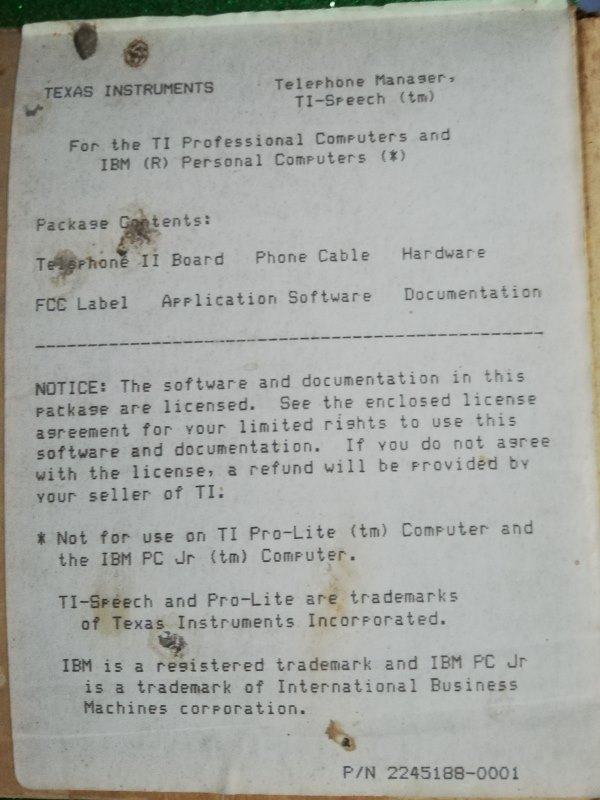
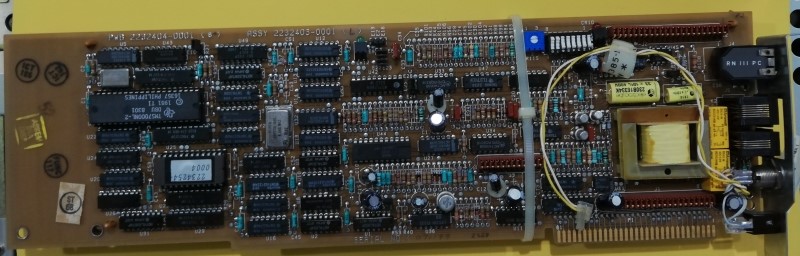 Model: TI speech Phone Manager
Info:
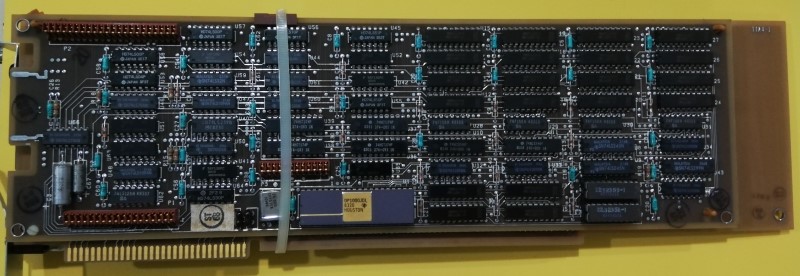
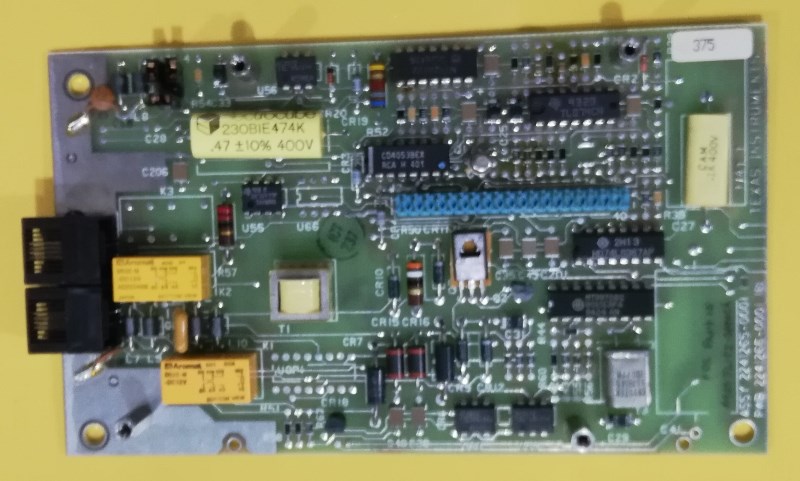
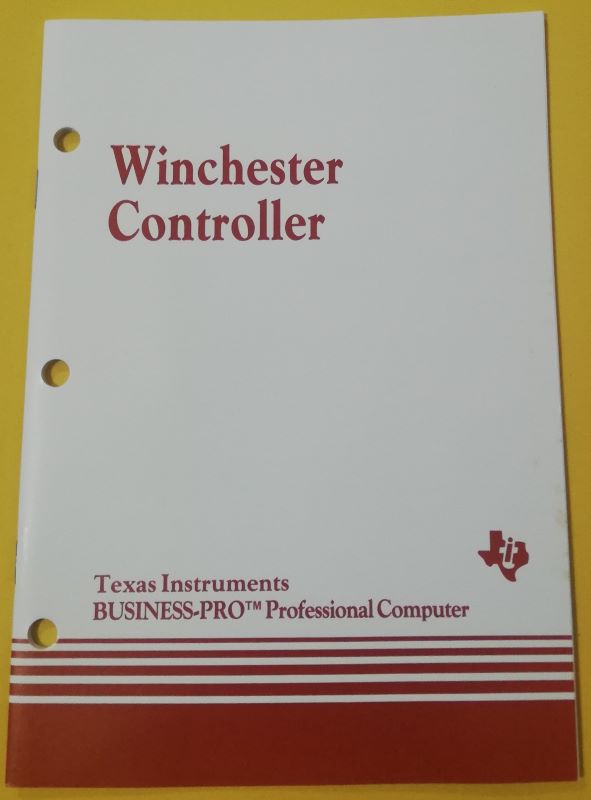
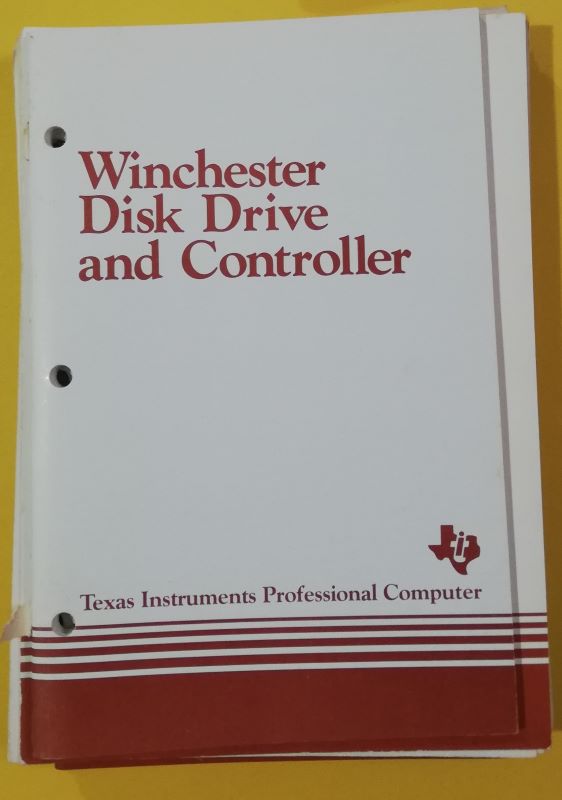
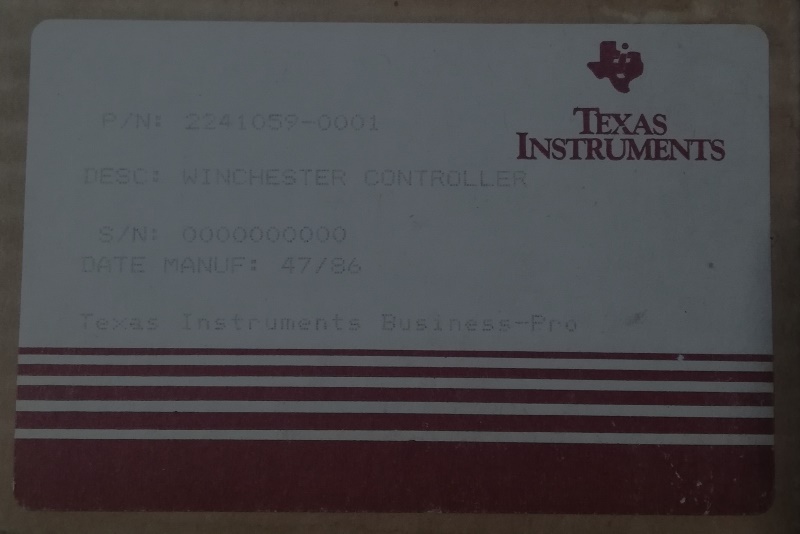
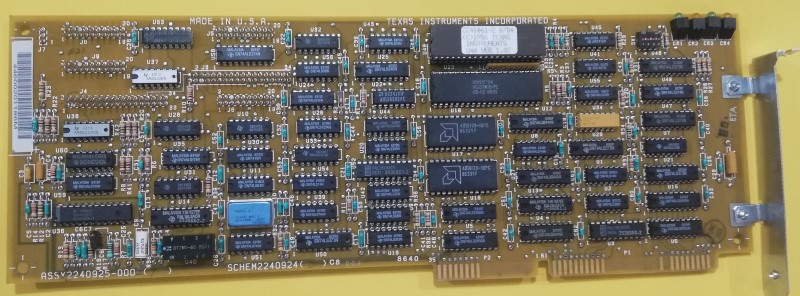 Model: Winchester Controller
Info:
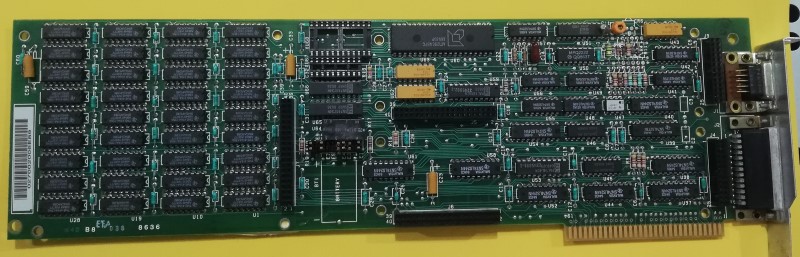
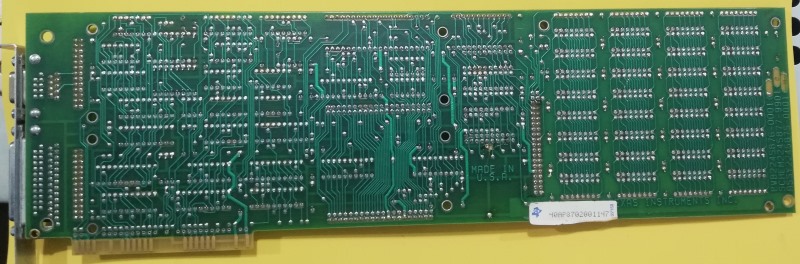
Model: Memory and clock assy: 2245876
Info: There is also a memory upgrade daughter board (256K Secondary Multi-Function Kit assy:2245895)
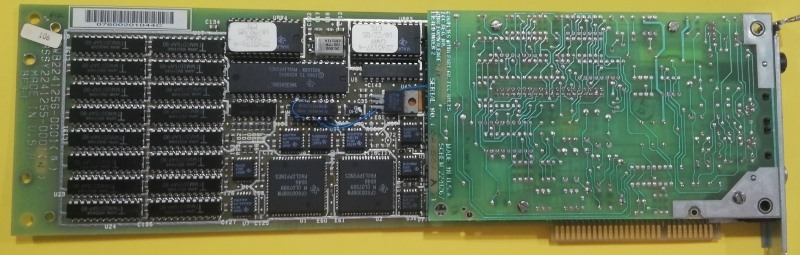
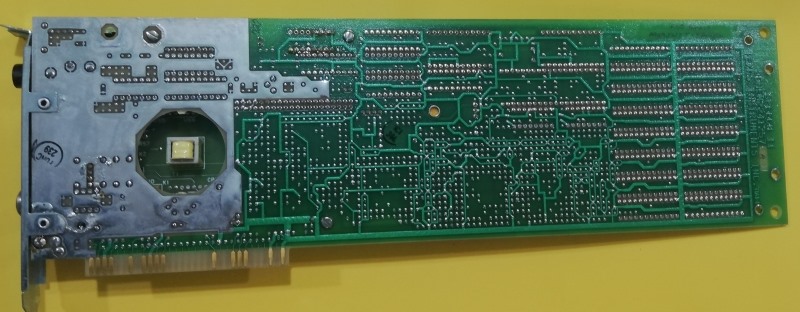
Model: Unidentified card
Info:
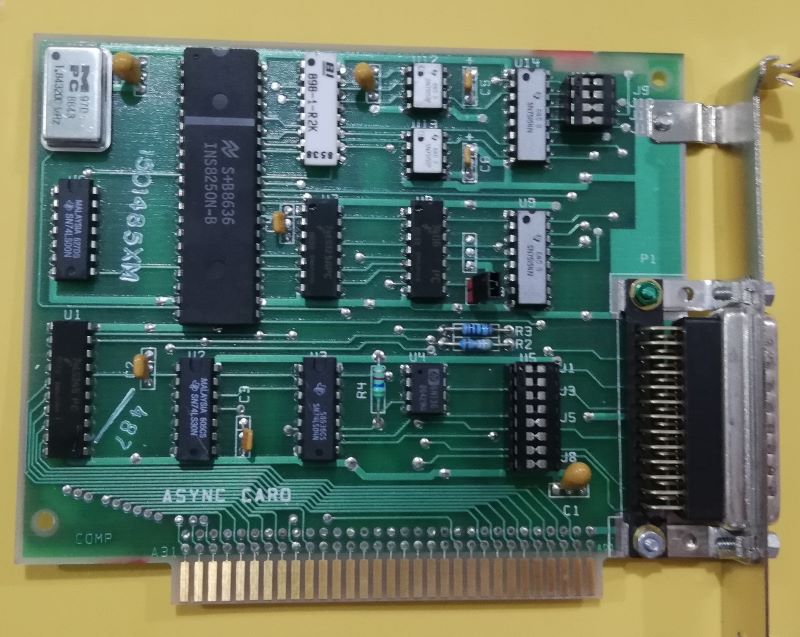
Model: Async Card
Info: I'm not sure if it can be used with the TIPC
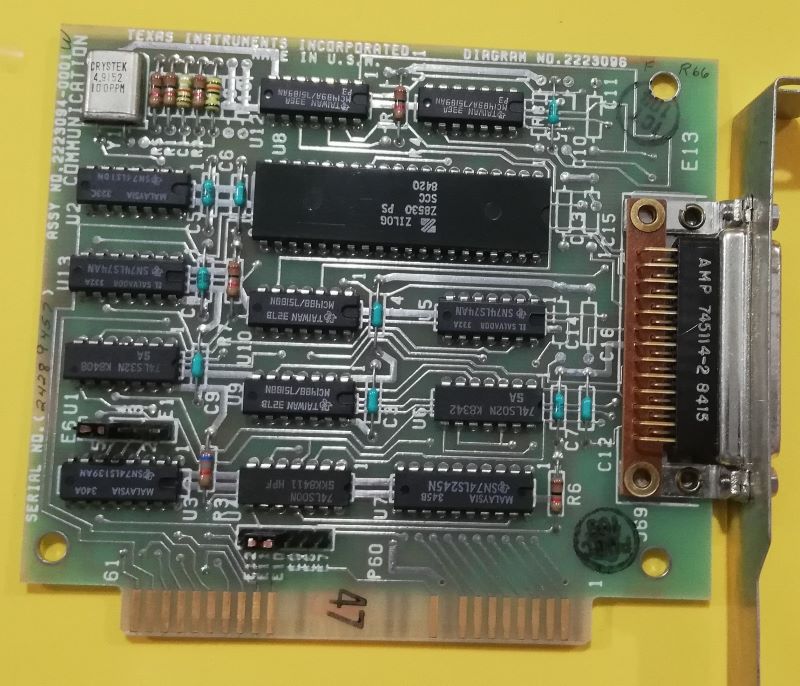
Model: Communication Card
Info: I'm not sure if it can be used with the TIPC
 Description: TIPI sidecar TIPI is a storage, network, and device solution expansion for the TI-99/4A home computer. There is some community driven support for the Myarc Geneve 9640 Family Computer. I do not own one, and so my ability and interest in contributing is limited.
Original Concept and Special Tanks To :
Jedimatt https://jedimatt42.com GitHub https://github.com/jedimatt42/tipi
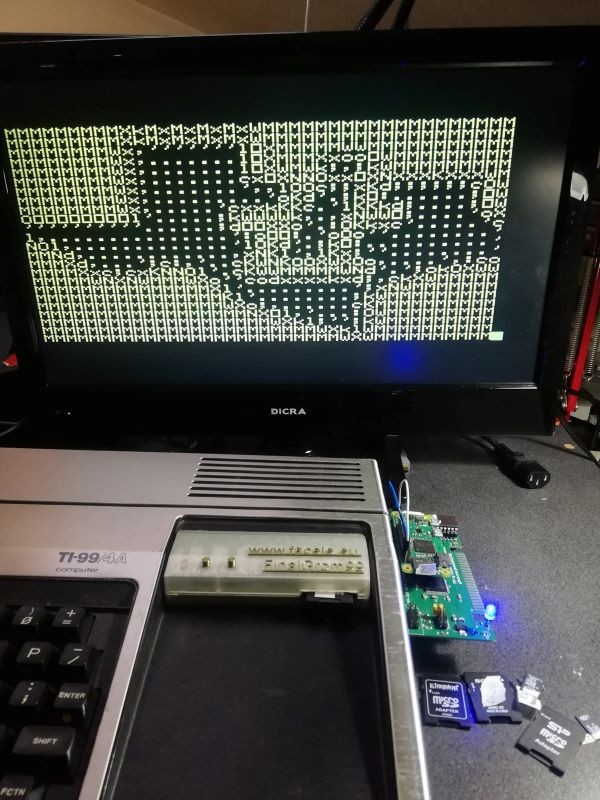


 In these images we can see the connection made with the TI-99/4A and the retrocampus BBS. Press 2 after 6 " TI Watch Museum ODV "
Press 1 TI-basic
CALL TIPI (Here you can enter network and password information, configure disks)
CALL TIPI ("TIPI.NET.TELNET")
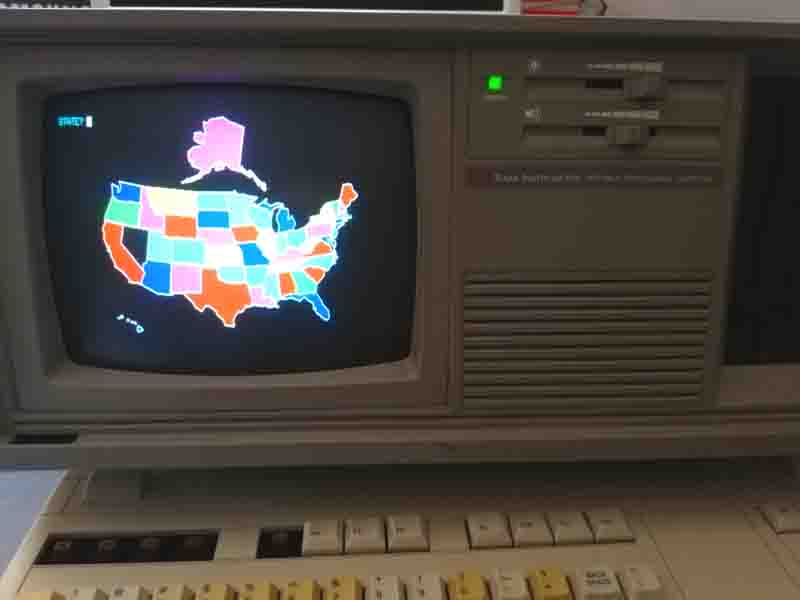
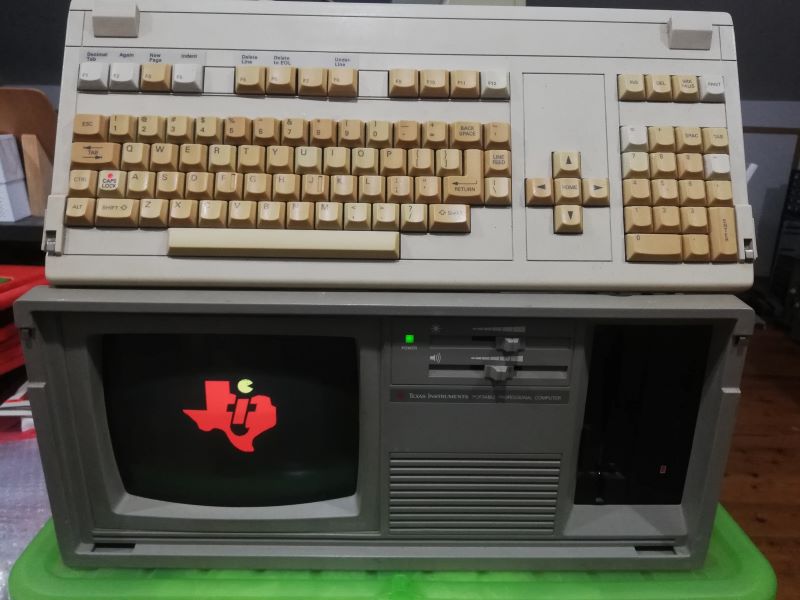 Model: Portable Professional Computer (PPC) Color Version
Adapter: 110 volt
Year: 1983
Keyboard: QWERTY full-stroke keyboard with arrow keys and separated numeric keypad
Cpu: Intel 8086 Speed: 5 mhz CO-processor: 8087
Ram: 64k (up to 768k) Sound: Beeper
Text mode: 80 x 25 Graphics mode: 720 x 300
Size - Weight: 47 x 42 x 19 cm / 12 kg with the monochrom monitor / 14 kg with the color monitor
I/O ports: Parallel/Centronics port, 5 expansion slots (non IBM compatible), 4 x serial ports
Media: two 5''1/4 disk-drive (320k)
OS: MS-DOS 2.1 CP/M 86, UCSD P-system, Prologue and Concurrent CP/M 86.
Peripherals: 10Mb or 20Mb hard-drive ( need interface), RAM expansion cards, Voice recognition card, Ethernet card.
Price: 64k model about 3000$ (USA, november 1983) / 64k model : £ 4.000.000 (Italy, 1985)
TroubleShooting
Video Tests
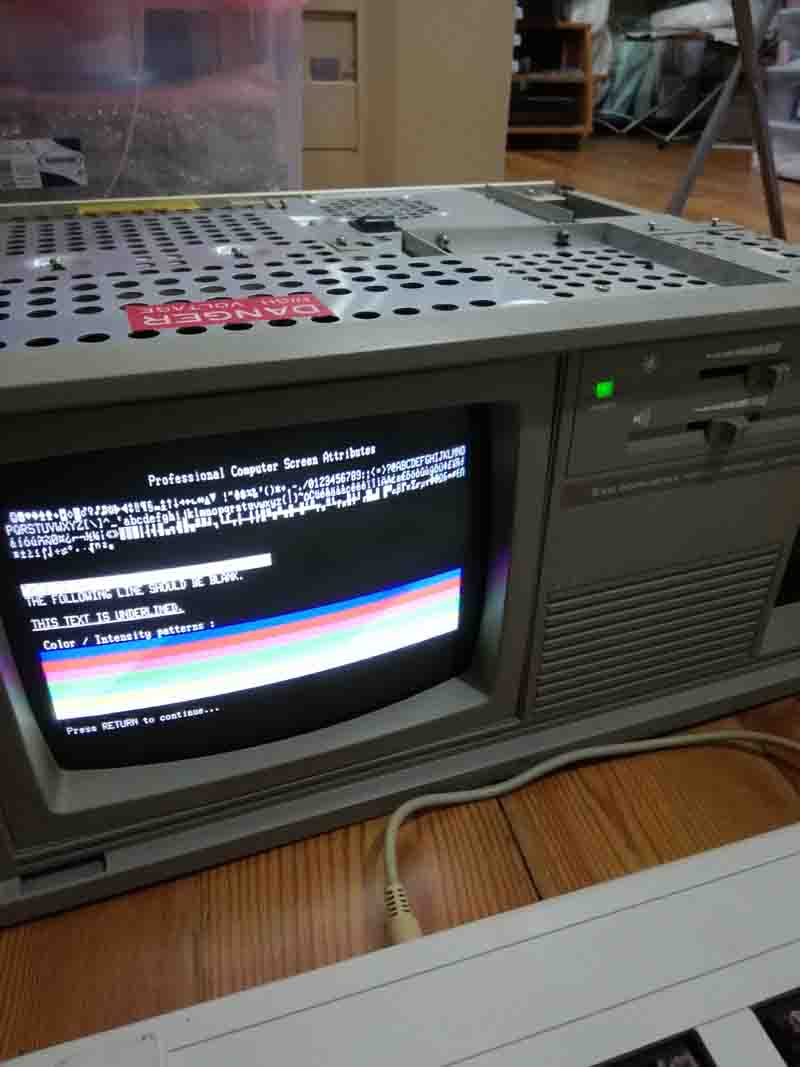
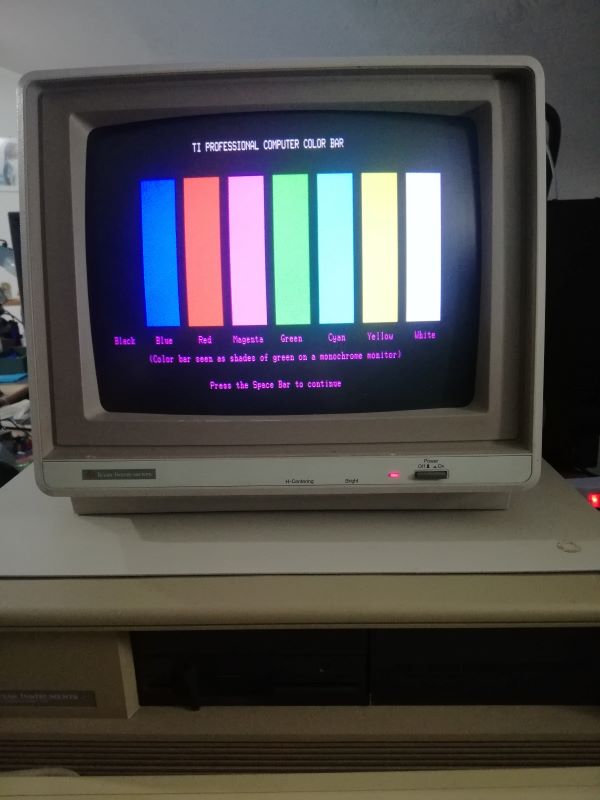
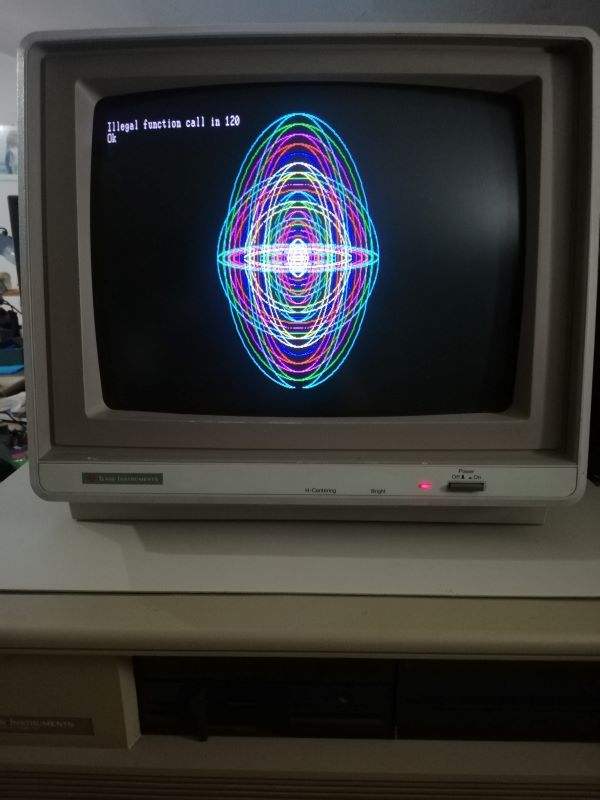
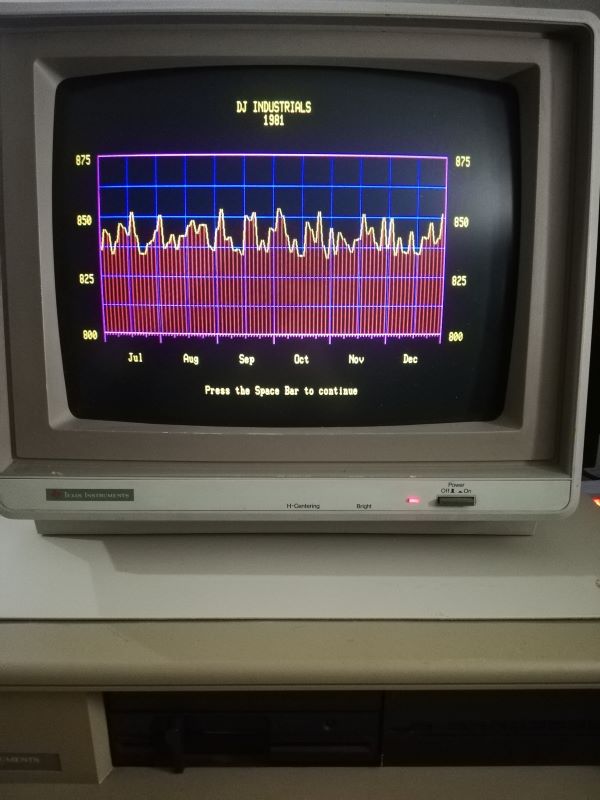
 Here you can see some video card tests.
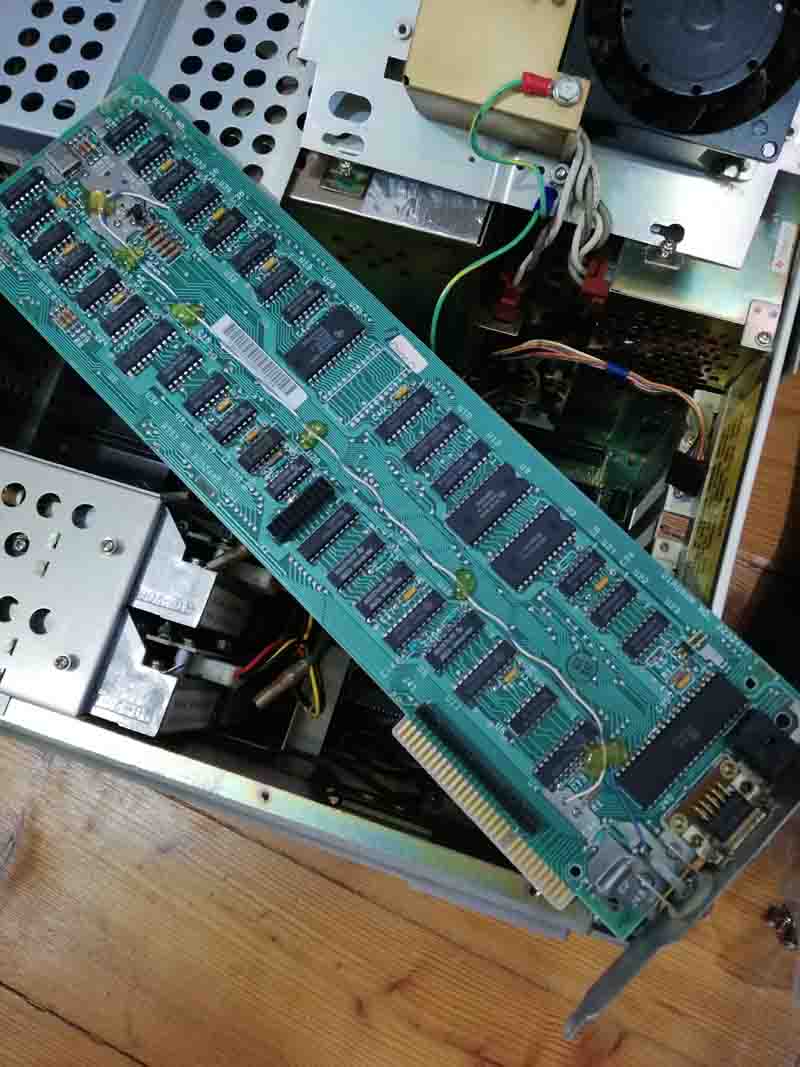
Here we tell you about some necessary repairs after the mother board broke, during the 2nd edition dedicated to Texas Instruments in the city of Rieti in 2023.
Mother Board broke
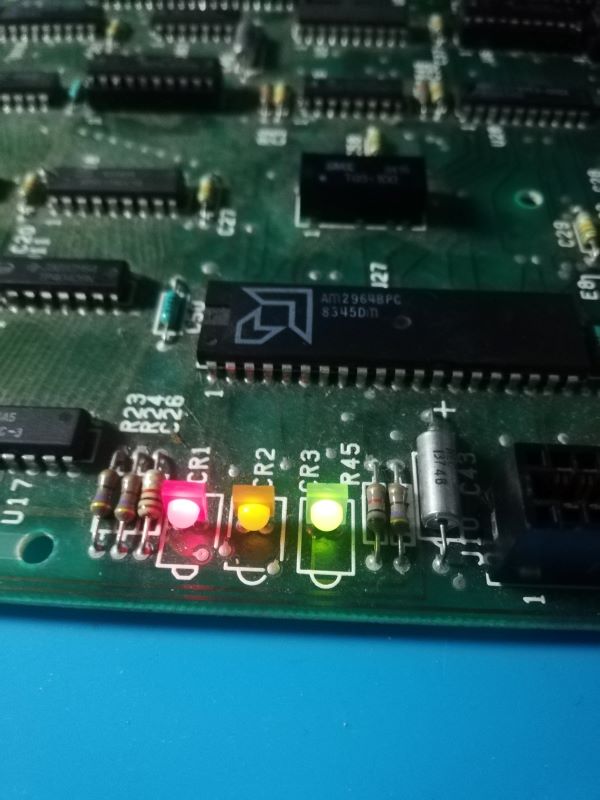
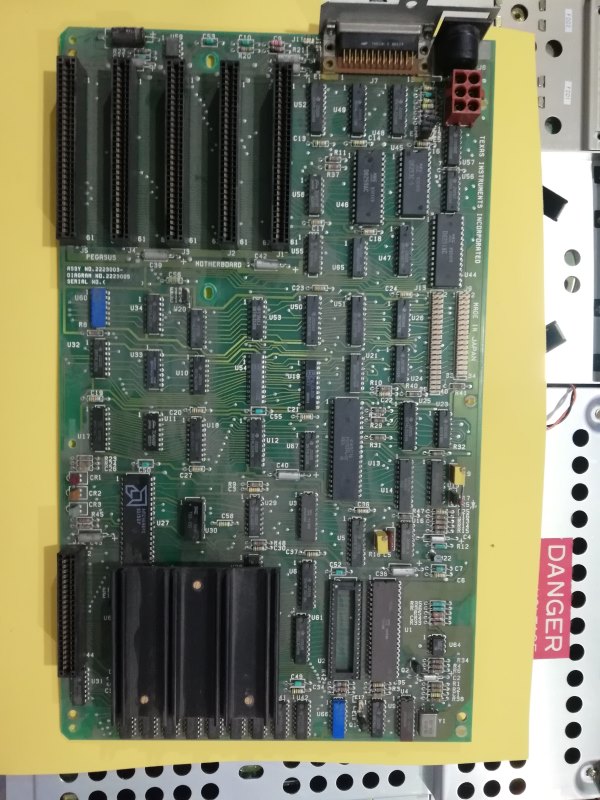 The first thing to do in the event of a fault is to check the status of the three LEDs above the mother board CR1, CR2, CR3. Normal operation at boot is the switching on of all three and subsequently the switching on of the red, orange and solid green. In our case all three are turned on, the manual states that there is a block in reading the EPROMs.
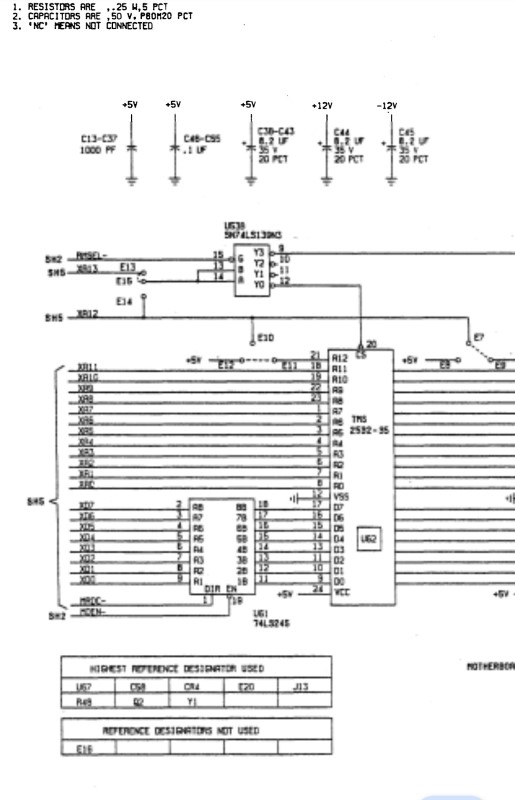 We started investigating both with the oscilloscope and with a logic analyzer, we concentrated on reading the data and in particular on U61.
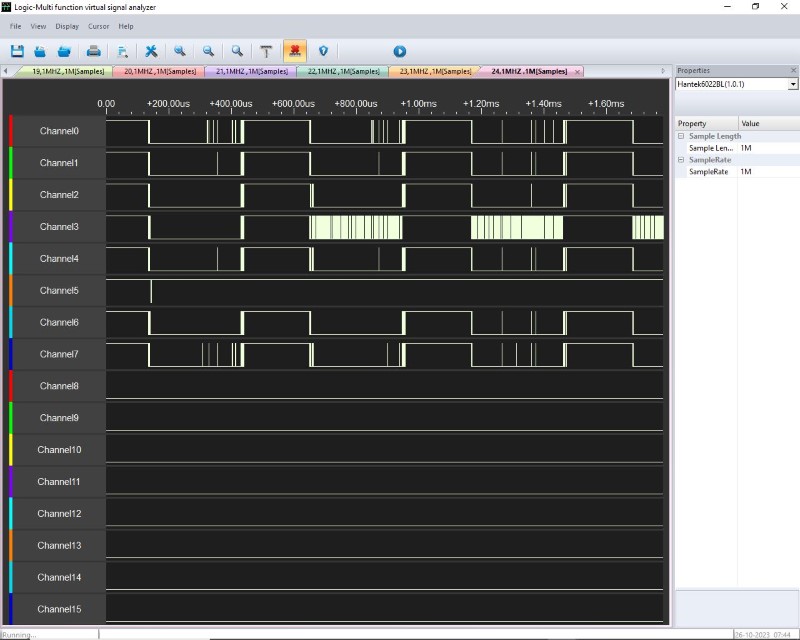
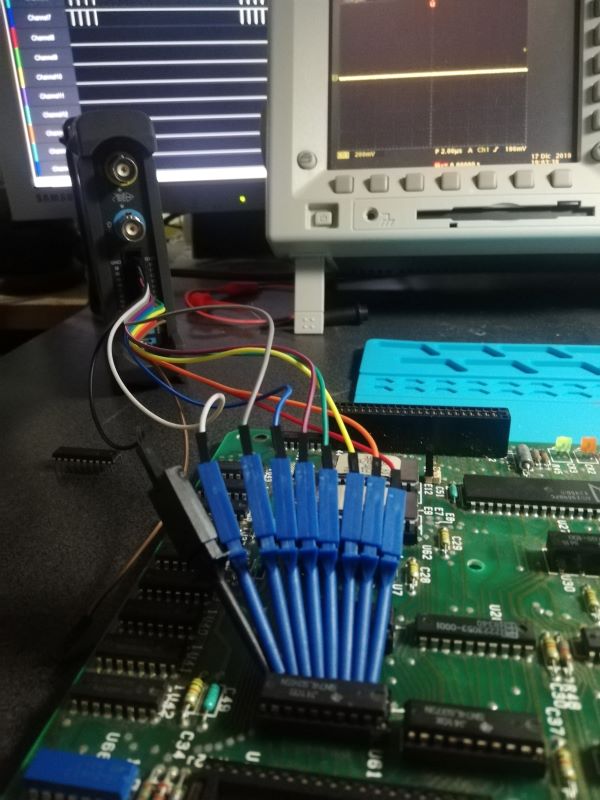
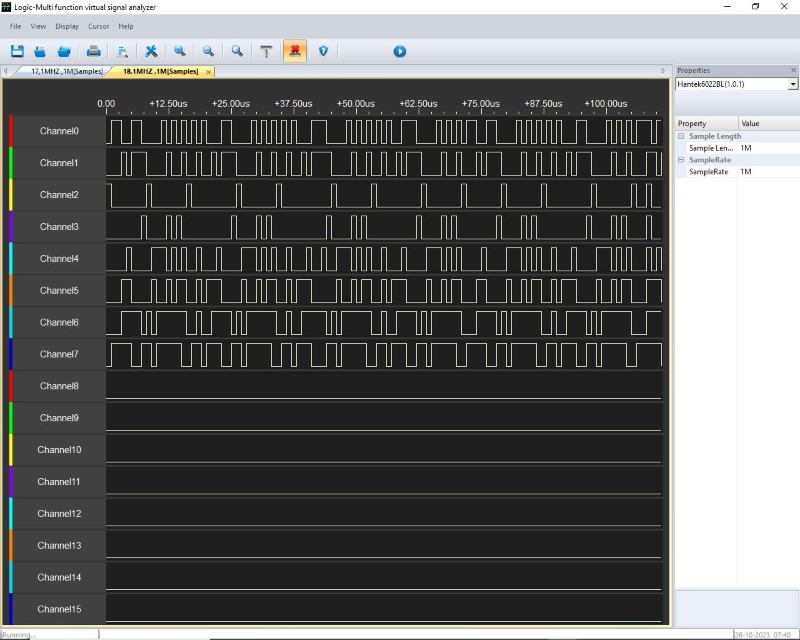 We noticed that on the EPROM side and on the U61 (74LS245) bus transceiver side, the data was not moving. After replacement, the mother board works again
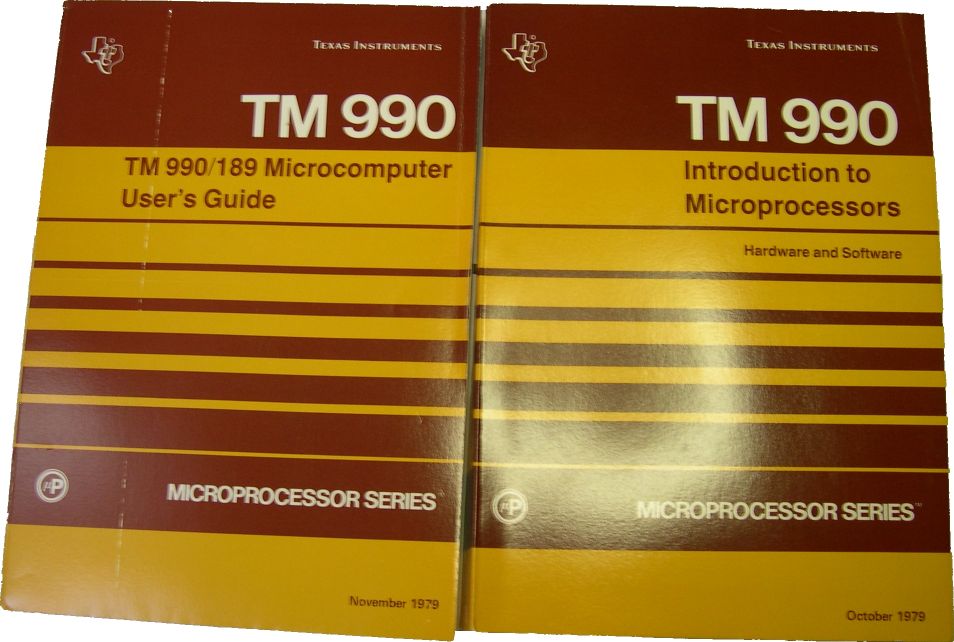
TM990 / 189 Microcomputer ( 1979)
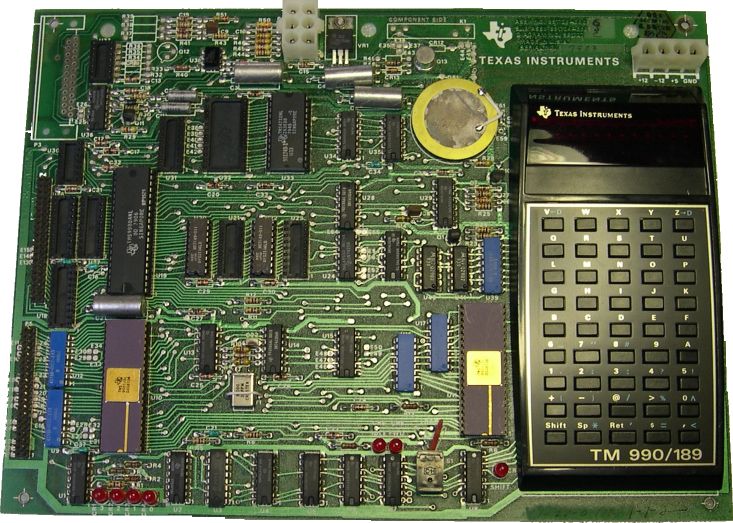 The TM990/189 is a self- contained, single board microcomputer system. It is intended for use as a learning aid in
 instruction of microcomputer fundamentals, machine and assembly language programming, and microcomputer
interfacing. It also demostrates TMS 9900 family applications and advanteges.
- TMS9980a microprocessor
-1024 bytes RAM
- 4096 bytes ROM
- 2 mhz oscillator
- audio cassette interfaces
- 16 biti I/O programmable
- 45 key alphanumeric keyboard
- Ten-digit, sevn-segment led
- Visual and acoustic indicators
- TMS9902 asynchronous communication controllers
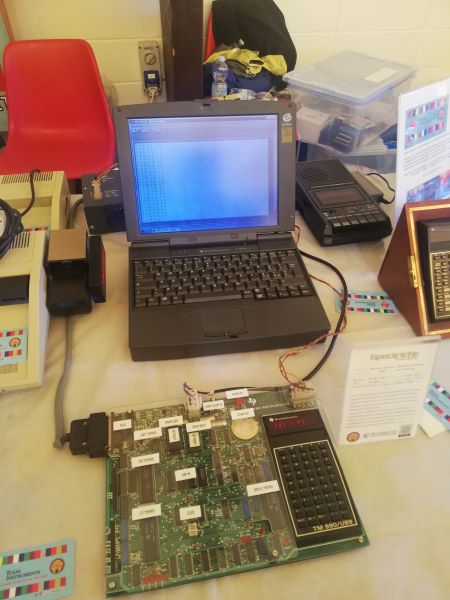 In the various events we attended, we were able to put a TM990 / 189 into operation. The main feature is to have a Basic interpreter on board, and to interface it with the Travelmate 560 via the RS232 serial. Programs are read and written via a recorder for the TI-99/4A PHP-2700.
The program loaded via laptop is a small program to generate a clock with hours, minutes and seconds.
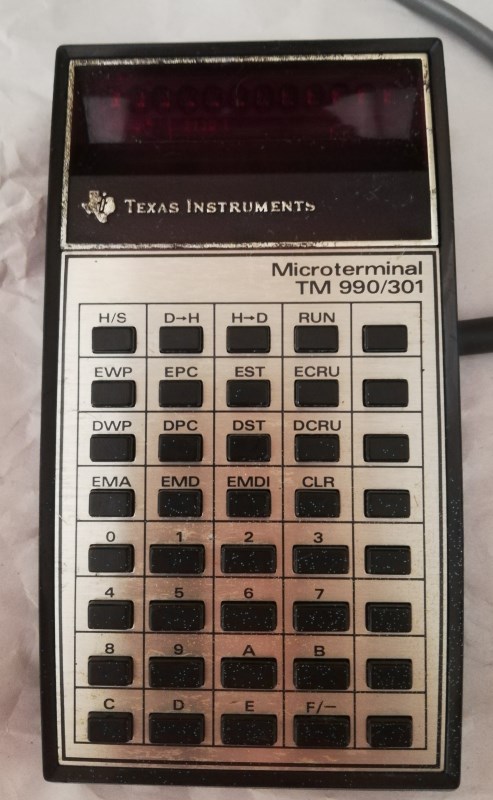 The TM 990/301 Microterminal was introduced in 1978 as a small console for the TMS9900 based computer system TM
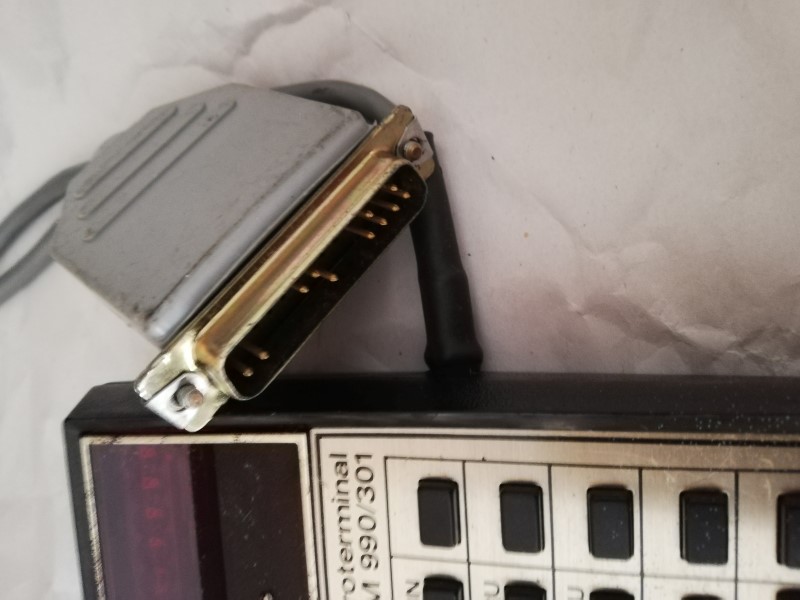 990/100M. This Microterminal is obviously based on a normal TI-30, the most successful scientific calculator of that time frame.
Dismantling the TM 990/301 Microterminal discovers a completely different internal construction. Instead the small printed circuit board (PCB) of the TI-30 and all the other calculators using its housing we notice a big PCB based on a TMS1000 single-chip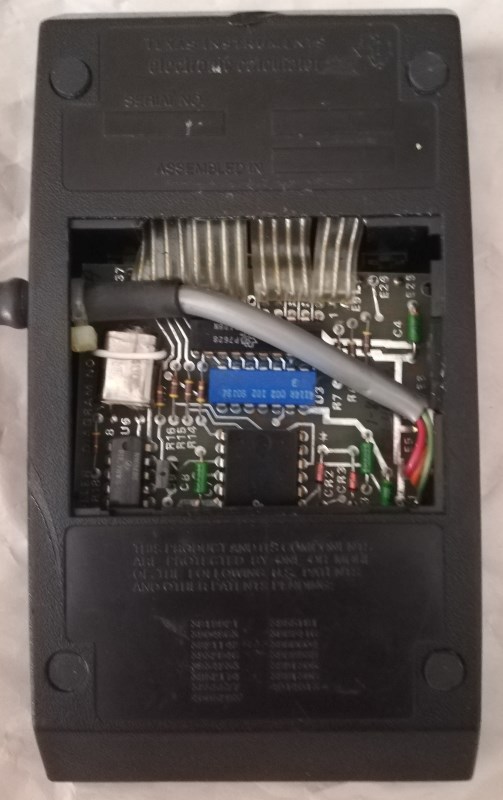 microcomputer. Remember that the TMS1000 is still recognized as the first true microcomputer and found its way into millions of products. A similar approach using a standard calculator housing for industrial products could be found with the TI-510 PLC Programmer.
Texas Instruments TMC1990
Texas Instruments introduced in 1978 the 2nd Generation of its wildly successful Little Professor, an educational toy very similar to a basic calculator but having the user answer computer-generated math questions. Compared to the 1st Generation of the Little Professor introduced in 1976 and based on the TMS0970 single-chip calculator family, replaced its successor based on a TMC1993 chip the power switch with a set of [ON] and [OFF] keys known already from the TI-30 calculator centered around the more capable TMC0980. The TMC1990 design exhibits an unconventional approach of scanning the keyboard switch-matrix with 10 dedicated pins (6 row outputs, 4 column inputs) instead of using either the digit-driver outputs or segment-driver outputs for the keyboard rows. While spending 6 extra pins for this purpose sounds counterproductive with respect to cost savings, did it actually reduce the complexity of the printed circuit board (PCB) dramatically by reducing cross-points in the layout between keyboard, single-chip calculator circuit, display, and battery and allowing for single-sided PCBs without using jumper wires.
From a technical point of view the TMC1990 is closely related to the TMS0970 and maintains the TMS1000 architecture with 8,192 Bits Read-Only Memory (ROM, 1k*8 Bits) and 256 Bits Random-Access Memory (RAM, 4*16 Digits), a 4-bit Arithmetic unit, a programmable PLA for segment decoding and both integrated segment and digit drivers for an 8-digit LED Display. Main differences are:
| • Integrated power latch and power transistor for [ON] and [OFF] keys • Six of the eight State Time Signals used for segment scanning bonded on dedicated pins for keyboard scanning • Package options with Die-up (standard pinout) or Die-down (reverse pinout) options |
While the TMC1990 was introduced too late to be successful in electronic handheld calculators, proofed it to be very successful with the Little Professor manufactured between 1978 and 1982.
With permission of the Author www.datamath.org
Texas Instruments TMS0970 / TMC0900
Texas Instruments introduced the TMS0970 in March 1976 as pin-compatible and cost-optimized upgrade of the TMS0950, effectively dropping 4 resistors and 1 capacitor from the printed circuit board (PCB) and shrinking its silicon area by almost 30%.
Based on the Digit Processor architecture of the TMS1000 Microcomputer and featuring a large program memory with 1,024 Bytes ROM (Read-Only Memory) capacity and a flexible RAM (Random-Access Memory) with 256 Bits organized in 4 files of 16-digits, each plus integrated segment and digit drivers for an 8-digit LED display and everything powered by a small 9V alkaline battery, the TMS0970 found its way into many products. Most successful was certainly the Little Professor introduced in 1976 but Texas Instruments sold a basic design (TMS0972, four-banger with 4-key memory) to third party manufactures, too and it proofed to be very successful with OEMs in Hong Kong around 1977 and 1978 with what we call here in the Datamath Calculator Museum "Far East Generic Design I, Design II, and Design III".
With millions and millions of the TMS1000 Microcomputer deployed in hundreds of customer designs by 1977 and the TMS0970 basically a very cost-effective way to implement electronic consumer products, Texas Instruments started marketing the design as TMC0900 (C as in Customer) and the chip found its way into various electronic games and toys.
With calculator prices dropping in 1977 significantly below the $10 mark, Texas Instruments introduced in 1977 both a cost-optimized version of the TMS0970/TMC0900 in a 28-pin Shrink Plastic Dual In-line Package and a design variation replacing a conventional [ON-OFF] switch with a simple push-button [ON] key as TMC1990.
with permission of the author www.datamath.org
Texas Instruments TMS1000
The TMS1000 is actually a series of 4-bit Microcontrollers containing ROM, RAM, I/O, & CPU on one chip produced by Texas Instruments. The units are not capable of expansion in any way. The highest clock frequency attainable by the series is 0.4MHz. This results in a 2.5 microsecond clock cycle. All instructions execute in 6 clock cycles. The devices were fabricated using PMOS and required a single -15V supply.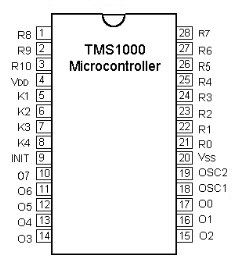 The only data input available is through the 4 bit K input lines. Input instructions collect whatever signals are available on the input lines at the time. Output data exist as 8 O lines and 11, 13, or 16 control, or R lines. The accumulator and the status flag determine the bit pattern of the O lines. This information has to be requested when the chip is produced. What this means is that only 32 distinct patterns can be generated by the O lines. The Y register determines which individual R control line is being set or reset. All of these units have internal clock logic which can be connected to an RC circuit with one end of the capacitor connected to Vss, one end of the resistor connected to Vdd and the opposite ends of the components connected to both OSC1 and OSC2. If an externally generated signal is to be used, it must be connected to OSC1 while OSC2 is grounded. The INIT (reset signal) should be held high for at least 6 clock cycles after power is applied. Reset causes the Page Address and Page Buffer registers to be loaded with binary ones. The O and R outputs as well as the program counter are zeroed.
The TMS 1000 Family
| TMS 1000 | TMS 12000 | TMS 1070 | TMS 1270 | TMS 1100 | TMS 1300 | |
| Pin Count | 28 | 40 | 28 | 40 | 28 | 40 |
| ROM program Bytes | 1024 | 1034 | 1024 | 1024 | 2048 | 2048 |
| Ram Data | 64 | 64 | 64 | 64 | 128 | 128 |
| R signals Output | 11 | 13 | 11 | 13 | 11 | 16 |
| O Data Outputs | 8 | 8 | 8 | 10 | 8 | 8 |
Texas Instruments TMS1000 / MP0027 / MP3310 / MP3318 / MP3228
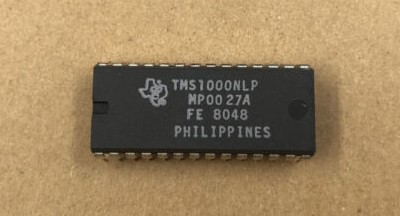 The MP0027 (USA) with TMS1000 base is an integrated circuit that we can call Musician, because it is capable of playing 24 musical motifs. Here is the List :
| link | pin 21 (R0) | pin 22 (R1) | pin 23 (R2) | pin 24 (R3) | pin 25 (R4) | pin 26 (R5) | pin 27 (R6) | pin 28 (R7) |
| pin 5 (K1) | Greensleeves | God Save the Queen | Rule Britannia | Land of Hope and Glory | Sailor's Hornpipe | Westimester Chimes | Oranges and lemons | Oh come all Ye Faithful |
| pin 6 (K2) | Cook House Door | The Stars and Stripes | Bethoven's Ode to Joy (9th) | Wiliam Tell Overture | Red Flag / Maryland/ Tannenbaum | Great Gate of Kiev | Twinkle Twinkle Little Star | Soldiers Chorus (Faust) |
| pin 7 (K3) | Fate Knocking (Beethoven) | The Marseillaise | Deutschland Uer Alles | Toccata in DO minor (Bach) | The lorelei | Wedding March | Colonel Bogie | Mozart |
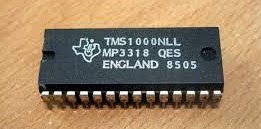 The MP3310 / MP 3318 (France) with TMS1000 base is an integrated circuit that we can call Musician, because it is capable of playing 24 musical motifs. Here is the List :
| link | pin 22 | pin 23 | pin 24 | pin 25 | pin 26 | pin 27 | pin 28 | pin 1 |
| pin 6 | Mon beau sapin | La cucaracha | ? | Popeye | Air des Lampions | Marche nuptiale | ILs ont des chapeaux ronds | Je vais revoir ma blonde |
| pin 7 | L'Ajaccienne | 5° de Beethoven | Guillaume Tell. | Halleluya | La charge de cavalerie | La corrida | La marsellaise | La madelon |
| pin 8 | La riviere Kwai | La bourree Auvergnate | Soldat Leve-toi | Lili Marlene | Oh I Suzanna | La petit Quinquin | o sole mio | Toccata de J.S. Bach |
The MP3310 / MP 3318 (Italy) with TMS1000 base is an integrated circuit that we can call Musician, because it is capable of playing 24 musical motifs. Here is the List :
| link | pin 22 | pin 23 | pin 24 | pin 25 | pin 26 | pin 27 | pin 28 | pin 1 |
| pin 6 | Viva Espana | L'Ajacienne | Le petite Quinquin | Susanna | Lili Marlene | Il ponte sul fiume Kwai | French Cancan | A la Bastille |
| pin 7 | La pantera Rosa | Ein Prosit | Barri | L'internazionale | Kalinka | Marcia nuziale | Tico Tico | La madelon |
| pin 8 | La Marsigliese | Cavalleria | Braccio di Ferro | Les Bretons | La Cucaracha | La Lorraine | Alma Alma | La Corrida |
The MP3228 (Germany) with TMS1000 base is an integrated circuit that we can call Musician, because it is capable of playing 24 musical motifs. Here is the List :
| link | pin 28 | pin 27 | pin 26 | pin 25 | pin 24 | pin 23 |
| pin 5 | Guten Abend , Gute Nacht | Elnmal am Rhein | Ich weis nicht, was soll es bedeuten | Gong | Am Brunnen vor dem Tore | Lied der Bayern |
| link | pin 23 | pin 24 | pin 25 | pin 26 | pin 27 | pin 28 |
| pin 6 | Trink Bruderlein | Dje Blauen Dragoner, sie reiten | Deutsche National-Hymne | Lili Marlene | Die Tiroler sind Lustig | Wer soll das Bezahlen ? |
Clearly the reasons are already set by the IT and are not modifiable
Texas Instruments TMS1802 (TMS0102)
Texas Instruments appears to have been caught out by the arrival of the calculator-on-a-chip from its rival Mostek. A few months before the announcement of the Mostek MK6010 the journal "Electronics" had reported:
"Like many MOS circuit makers, the Dallas company [Texas Instruments] is working to reduce the number of chips for a calculator set. Roop [TI's MOS marketing manager] says that designing and building a one or two chip calculator next year 'will be a snap'.
This would make possible a calculator selling at $200 retail. Even more dramatic, TI is designing an MOS chip which would contain all the electronics for a calculator that would sell for $99—truly a potential high volume consumer product. And TI is thinking 'very strongly' of selling this bigger custom chip in 1971, he notes. If TI can get the price of this one chip down to between $15 and $25, then a $99 electronic calculator will be possible, Roop says."
TI responded quickly after the announcement of the Busicom calculator with the Mostek chip, since also in February 1971 'Electronics Design' reported "Two days after Mostek announced its development of a calculator on a chip, another Dallas-based company Texas Instruments said that it, too, was completing development of a one-chip calculator that would be available "off-the-shelf" by June."
The TMS1802 was actually announced in September 1971 and is a very sophisticated device, being in reality a single-chip-microcontroller optimised for use in a calculator. The journal 'Wireless World' reported "The i.c. contains an eight-digit b.c.d. arithmetic logic unit; a three-register 182-bit random access store; a 3520-bit read-only memory for holding the programme; and timing, output, and control decoders. Floating-point or fixed-point operation calculations can be performed and there is automatic round-off of numbers and leading zero suppression. Arithmetic and control operations are based on a 4μs single-phase clock system." Thus the chip has an internal structure based on a processing unit linked to integral RAM and ROM. By employing different masks for the ROM during manufacture the functionality of the calculator could be adjusted. Texas Instruments later renamed this integrated circuit the TMS0102 and it was the start of a family of TMS01xx microcontroller chips that could be manufactured to be calculators or dedicated controllers.
The TMS1802 was initially sold on the general market to calculator manufacturers, with Texas Instruments delaying the manufacture and marketing its first calculator, the TI-2500 "Datamath", until July 1972. Several models of calculator used the TMS1802 including the Sinclair Executive hand-held calculator, the Texet 1 hand-held calculator, and the Advance Wireless World desktop calculator
Early Sinclair Executive calculators used the TMS1802NC "calculator-on-a-chip", here date-coded to 1971, week 37. The two smaller integrated circuits are LED drivers.
At first the Sinclair Executive used the TMS1802NC in a novel way where the power to the chip was pulsed to reduce the power consumption in order to give long life from the button cells used.
In November 1972 the journal IEEE Spectrum reported:
"MOS/LSI family expanded to nine standard 'calculator on a chip' circuits
The TMS0100 family of calculator-on-a-chip MOS/LSI integrated circuits, introduced by Texas Instruments last year as the TMS1802, has been expanded to nine off-the-shelf circuits. The TMS1802 is a specific implementation of a basic or host calculator chip. Any number of operational characteristics can be implemented by the manufacturer using single-level mask programming techniques of the same basic or host design. The only limitations are the size of the program ROM, the RAM storage, and the control, timing, and output decoders.
Four of the nine calculator circuits are considered preferred types. The TMS0101 and TMS0103 are the preferred eight-digit circuits. The preferred ten-digit circuits are the TMS0106 and the TMS0118.
The TMS0101 has the following features of the one-chip family: floating- or fixed-point result, chain operation, constant operation, protection of result in overflow, underflow in fixed-point mode, leading zero suppression, automatic power-on clear, and automatic sequence and powers. This eight-digit version uses algebraic keyboard entry—the user presses the keys exactly as he would describe the problem.
The TMS0103 provides eight digits, four operations, floating or fixed decimal point, constant or chain operation, automatic roundoff, overflow and underflow, leading zero suppression, and automatic power-up clear. This variation uses the arithmetic keyboard entry system—the same as standard business machines—and is ideally suited for most desktop machines.
The TMS0106 and TMS0118 are both ten-digit versions. Both feature a three-position selectable roundoff that uses a switch to determine how a number will be rounded—up, down, or off—when in fixed-point operation. The TMS0106 uses arithmetic entry; the TMS0118 uses formula entry.
All nine of these units are available immediately from stock. Price in 100-piece quantities for the elght-digit chips is $38.15, and $41.97 for the ten-digit ones."
The TMS0100 series proved to be a very popular family of chips for use in calculators during the 1970s.
By developing the TMS01xx system further TI went on to produce the very successful general-purpose TMS1000 micro-controller series, examples of which were also used in high-specification calculators later in the 1970s.
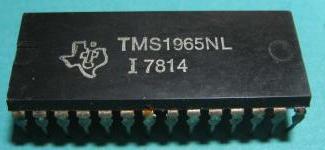 Texas Instruments TMS1965 it is a chip that allows you to have the following games,6 Ball & Paddle variant games.
Games: Tennis, Football, Squash, Pelota, Shoot 1, Shoot 2. First used in the Pong Polystil game.
Pin-compatible with the AY-3-8500; the figure shows the version with a 2.54 mm pin pitch.
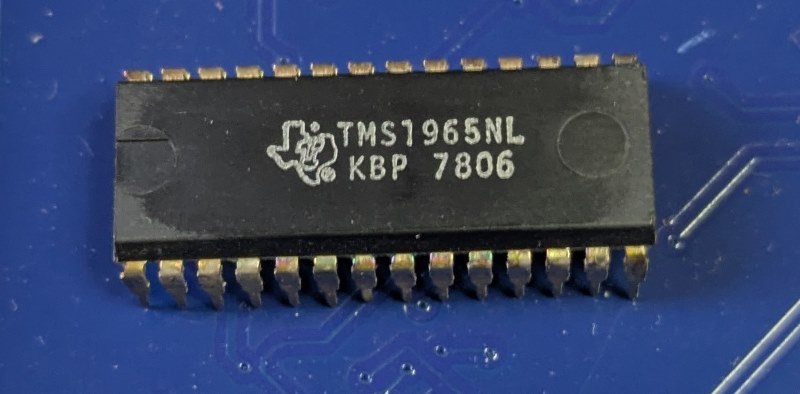
the figure shows the version with a 1.27 mm pin pitch.

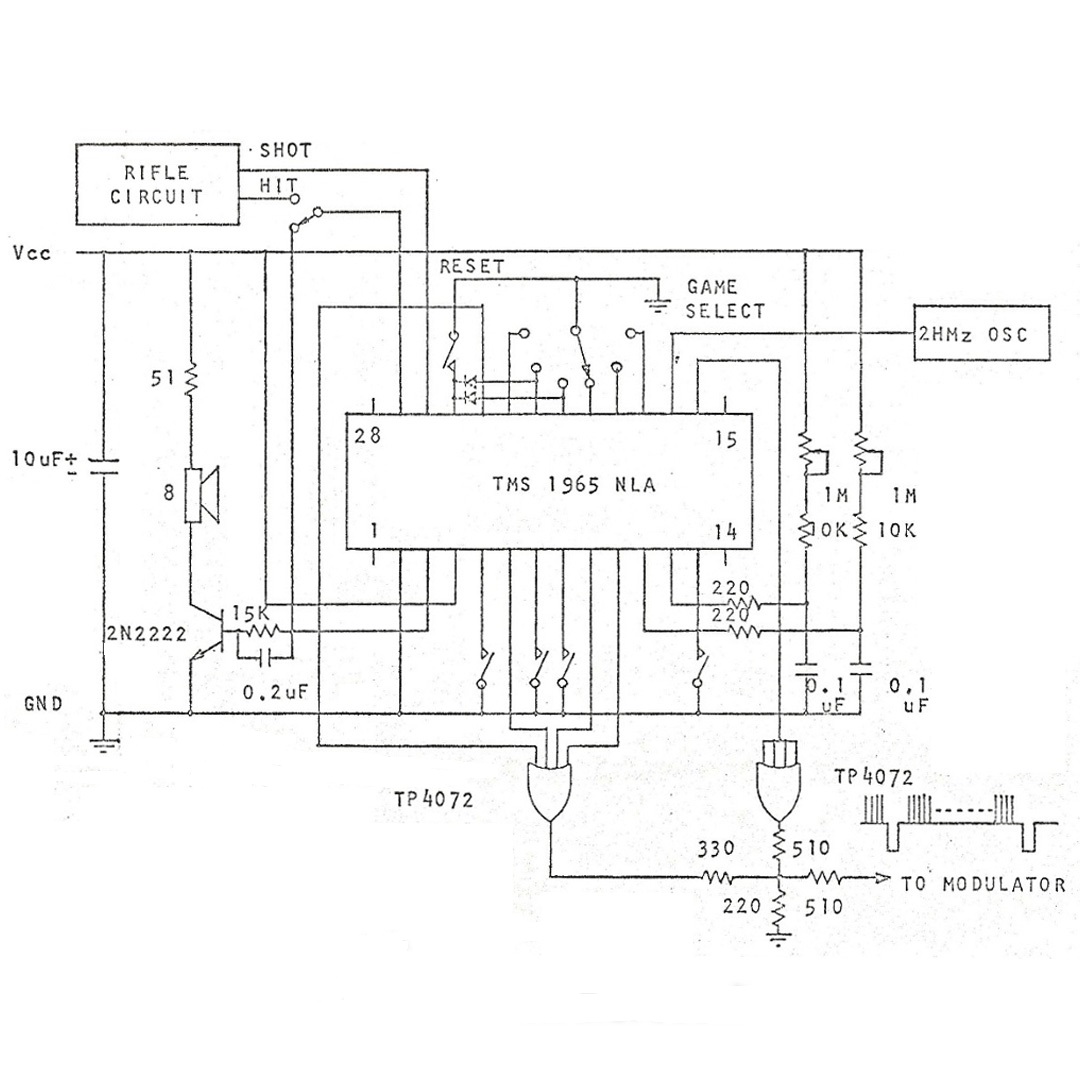
| PIN | Description | PIN | Description |
| 1 | NC | 15 | NC |
| 2 | Vss Earth | 16 | Sync output |
| 3 | Sound output | 17 | 2 MHz clock input |
| 4 | Vdc Power supply, the voltage must be between 6 and 7 Volt | 18 | Game 1: Rifle Game 1 |
| 5 | Angle of the ball's trajectory | 19 | Game 2: Shotgun Game 2 |
| 6 | Ball exit | 20 | Game 3: Tennis |
| 7 | Ball speed | 21 | Game 4: Football |
| 8 | Manual service | 22 | Game 5: Squash |
| 9 | Exit of the right player | 23 | Game 6: Practice |
| 10 | Exit of the left player | 24 | Score and field output |
| 11 | Right club entrance | 25 | Reset input |
| 12 | Left club entrance | 26 | Shot entry |
| 13 | Club size | 27 | Hit entrance |
| 14 | NC | 28 | NC |
Texas Instruments TMS3615 Octave Multiple Tone Synthesizer (2 footages)
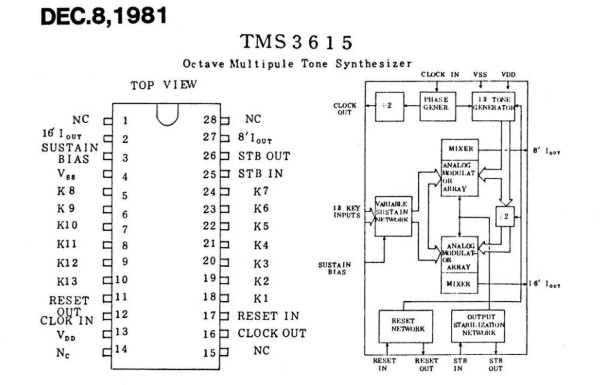 2 footages ( 16', 8', or 8', 4' or 4', 2')
Sustain of the output signals is possible by simply connecting a capacitor (1 uF) to each key input
Sustain decay time adjustable from a few ms to a very long time (key memorization) by connecting a variable voltage to the appropriate terminal
Possibility of controlling the amplitude swing of the footage outputs, to minimize the spread among different devices, by connecting a simple external network to the appropriate terminal.
Asynchronous reset to synchronize devices of different ocataves.
Single power supply 15v or 12v typical.
Clock output for lower ocatave device
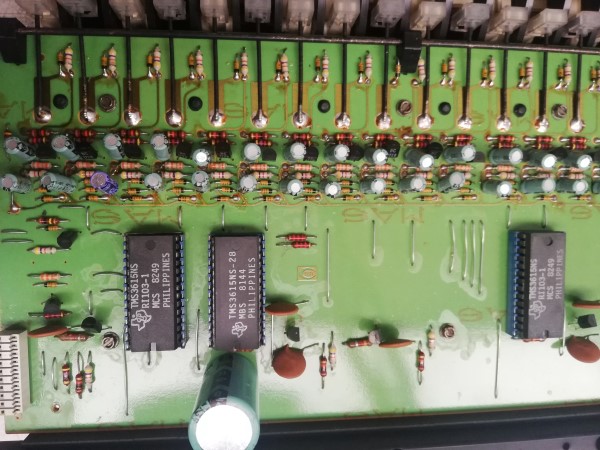 Inside ORGANO SOLTON KETRON S20 ( ITALY 1980 )
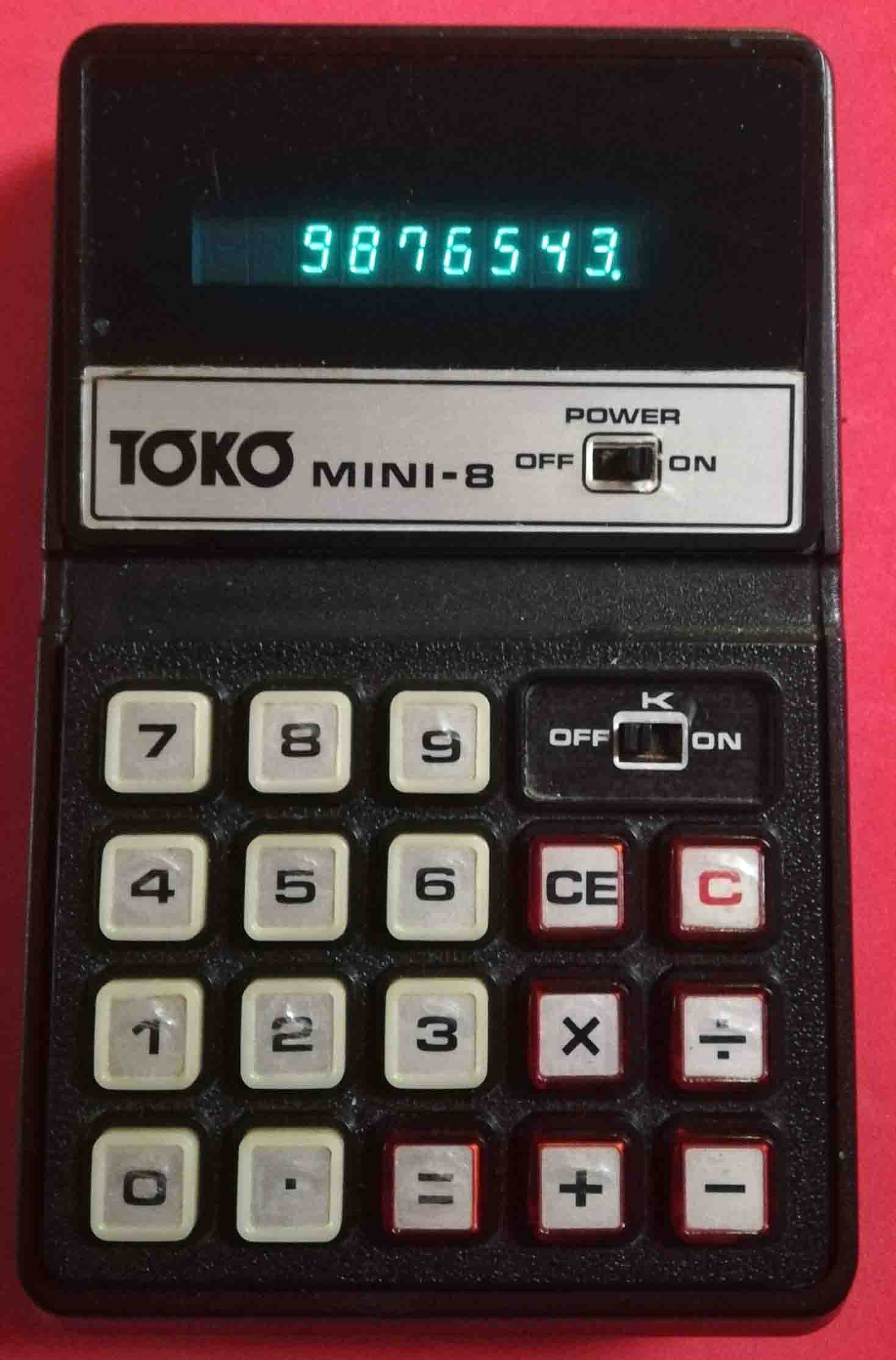 Model: TOKO mini 8
Battery: 4 x AA
Adapter: 6 vdc
Year:
Chip: TMS0101NC
Info:Made in Japan. According to the Toko, Inc., website, Toko was established in Tokyo in 1955 as a manufacturer of components for portable radios with the name TOKO Radio Coil Laboratories. The firm continues to manufacture electronic components.This relatively large handheld electronic calculator has a plastic case and eighteen square keys with rounded corners. These include ten digit keys, a decimal point key, a total key, four arithmetic function keys, a clear entry key, and a clear key. A switch on the right of the top row of keys can be set to having the constant (K) on or off. Behind this is an on/off switch. Test left of it reads: TOKO MINI-8. Behind this is an eight-digit green vacuum fluorescent display. A jack for a power adapter is on the right side.
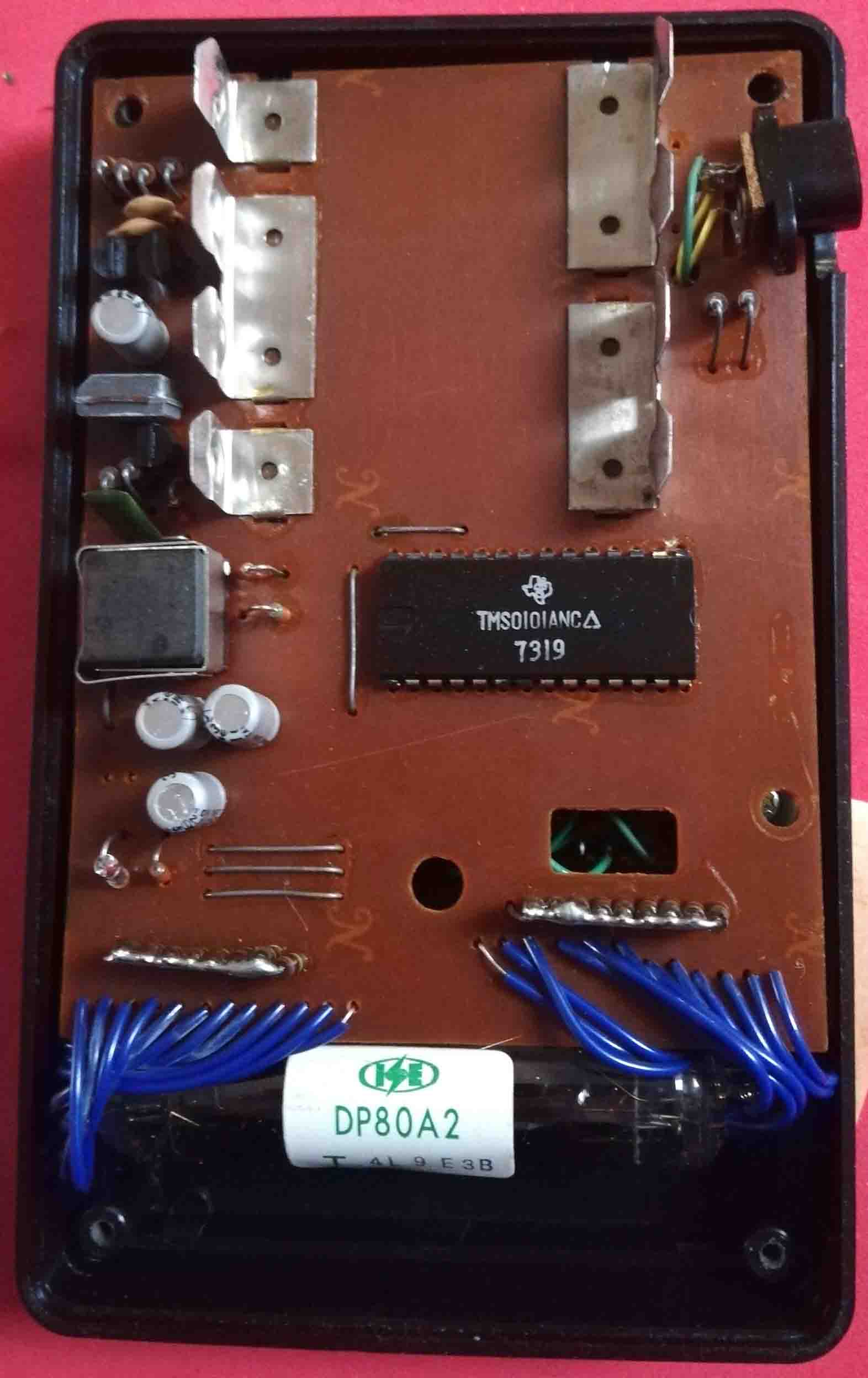
 The Tomy Tutor, originally sold in Japan as the Pyūta (ぴゅう太) and in the UK as the Grandstand Tutor, is a home computer produced by the Japanese toymaker Tomy. It was architecturally similar, but not identical, to the Texas Instruments TI-99/4A, and used a similar Texas Instruments 16-bit CPU.The computer was launched in the UK and the United States in 1983. Outside Japan, however, sales were not significant.
Toshiba
Toshiba's early history has two strands: 1875 saw the establishment of Tanaka Seizo-sho (Tanaka Engineering Works), Japan's first manufacturer of telegraphic equipment. Its founder, Hisashige Tanaka (1799-1881), was well known from his youth for inventions that included mechanical dolls and a perpetual clock. Under the name Shibaura Seisaku-sho (Shibaura Engineering Works), his company became one of Japan's largest manufacturers of heavy electrical apparatus. In 1890, Hakunetsu-sha & Co., Ltd., was established as Japan's first plant for electric incandescent lamps. Subsequent diversification saw the company evolve as a manufacturer of consumer products. In 1899, the company was renamed Tokyo Denki (Tokyo Electric Co.).
In 1939, these two companies, leaders in their respective fields, merged to form an integrated electric equipment manufacturer, Tokyo Shibaura Denki (Tokyo Shibaura Electric Co., Ltd.). The company was soon well known as 'Toshiba', which became its official name in 1978.
Toshiba, a world leader in high technology, is today an integrated manufacturer of electrical and electronic products spanning information & communications equipment and systems (PC and other computer systems, storage devices, telecommunications equipment, social automation systems, medical electronics equipment, space related products, etc.), electronic components & materials (semiconductors, electron tubes, optoelectronic devices, liquid crystal display, batteries, printed circuits boards, etc.), power systems & industrial equipment (industrial apparatus, power generating plants, transportation equipment, elevators & escalators, etc.) and consume products (video and digital home products, home appliances, etc.).
Toshiba plays an important role in the history of Texas Instrument‘s calculators. The only official reported calculator manufactured by Toshiba and sold under the TI brand is the TI-66. Anyway, if you dig deeper into some other calculators like the TI-1106, TI-1750 or TI-1790 you’ll notice more than the influence of Toshiba’s calculator chips. Toshiba TEC Corporation is the proven manufacturer of most desktop calculators introduced by Texas Instruments between 1981 and 1988. Today most calculators developed and manufactured by Texas Instruments and their OEM partners use a "brain" with the Toshiba logo.
with permission of the author www.datamath.org
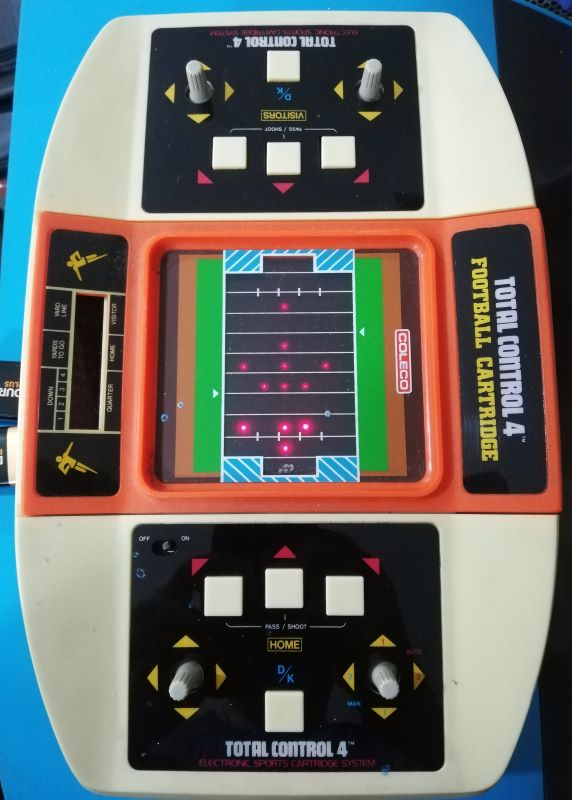
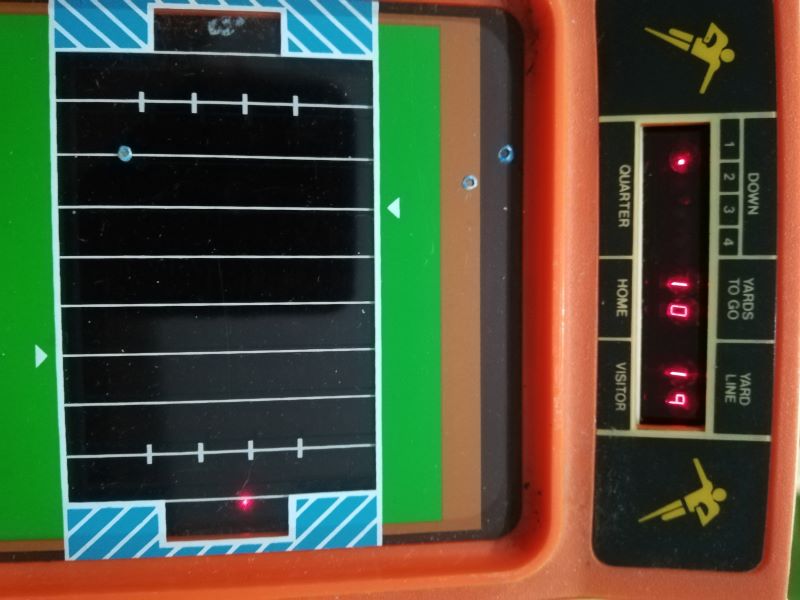
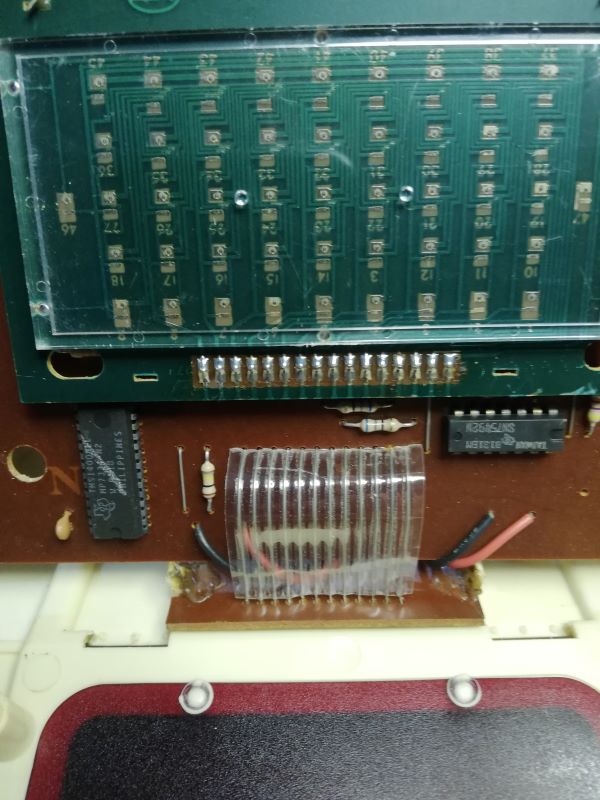
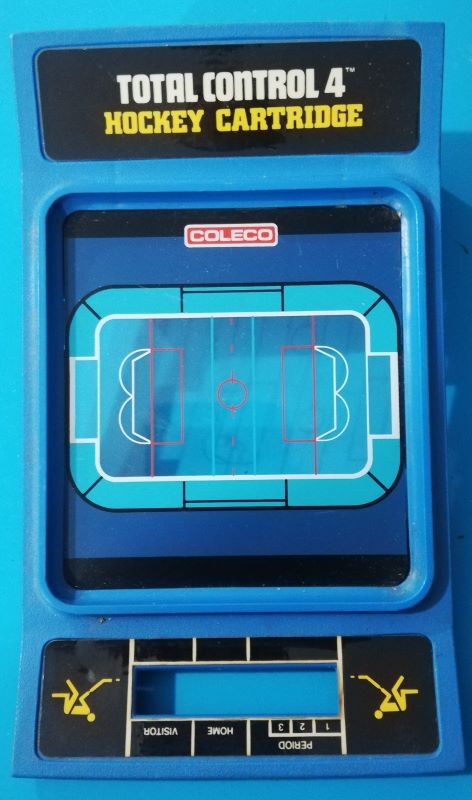
Model: Total Control 4
Battery: 2 x 9 volt battery
AC adapter:
Year: 1981
Chip: TMS1400 / MP7334
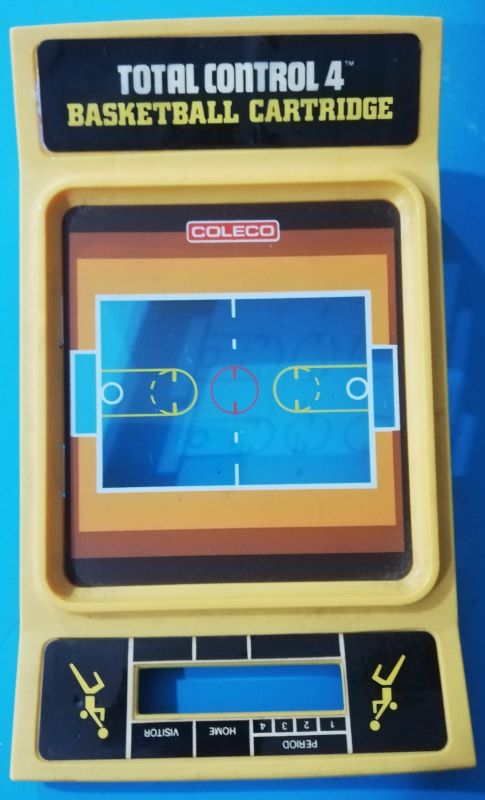
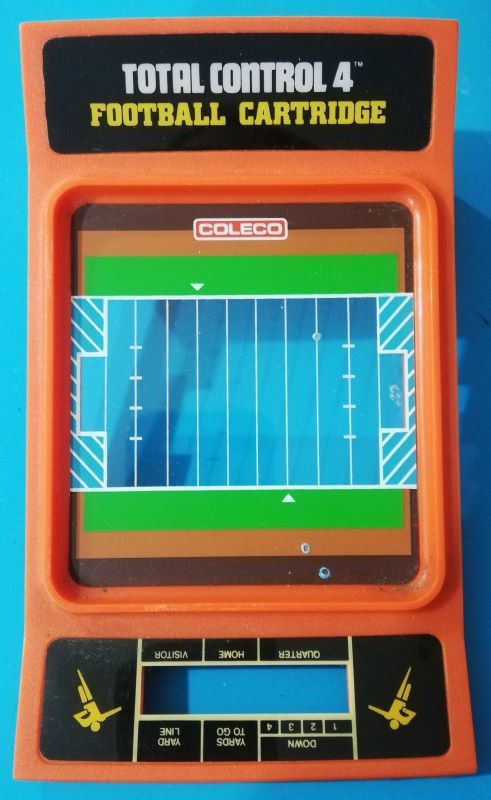
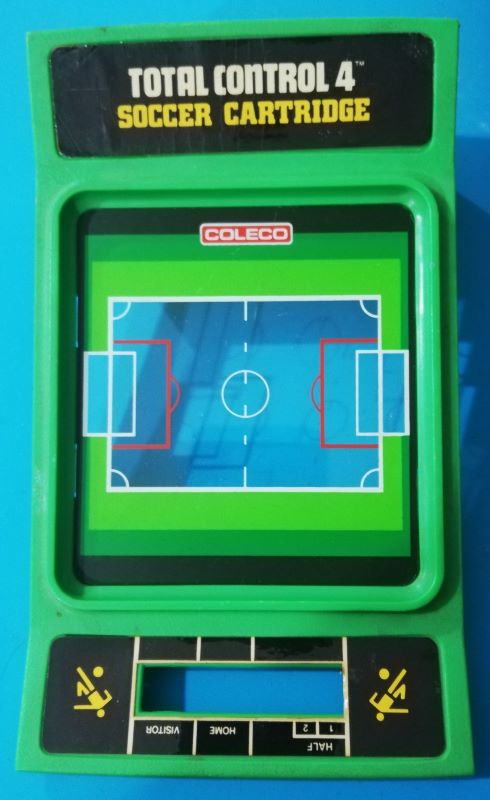
Info:Colecos Total Control 4 is a simple Tabletop, offering a range of multiplayer games with a sport-focus through various "cartridges". These cartridges actually do not contain any ROM or the like, but just some soldered path manipulating the LED-output on the tabletop. The "cartridges" serve as overlays as well.
 Model: Touch & Tell
Battery: 2 x D cells
AC adapter:
Year: 1988
Chip: CD8012, CD2802, CD2610
Info: hortly after the introduction of the Speak & Spell line Texas Instruments introduced with the Touch & Tell a novel product idea with their speech synthesizer technology. You place one of different pictures onto a position sensitive keyboard and start the game. Touch & Tell will ask you a random question and you point the solution with your fingertip on the picture. To keep the youngsters interested, musical tones and special sound effects appear.
First Transistor 2N117
 Example of a 1950s silicon transistor from the first commercial series produced. They were made by Texas Instruments, with a technology known as Grown Junction. In practice, a part of the N-type silicon wafer was grown, then a P layer was made and another thick N layer continued to grow. The wafer was cut into bars about 5mm high, the base was in the middle somewhere and was searched for by moving a thread that can also be seen in the photo until you find it. With this technology, first invented by Bell who tested a prototype in January 1954 and three months later and independently also by Texas Instruments with the same results, in 1954 the first commercial silicon transistors were produced by Texas. Here you can see one of these pieces from the 1950s, which has been opened to show the internal structure. Carefully opened, saving the side with the Texas symbol, the acronym is no longer legible. It was the first commercial silicon transistor technology. With the tester you can still measure the silicon junctions but with a gain of three, the base attachment would probably need to be realigned after 70 years.


Donated from Marco Legnani
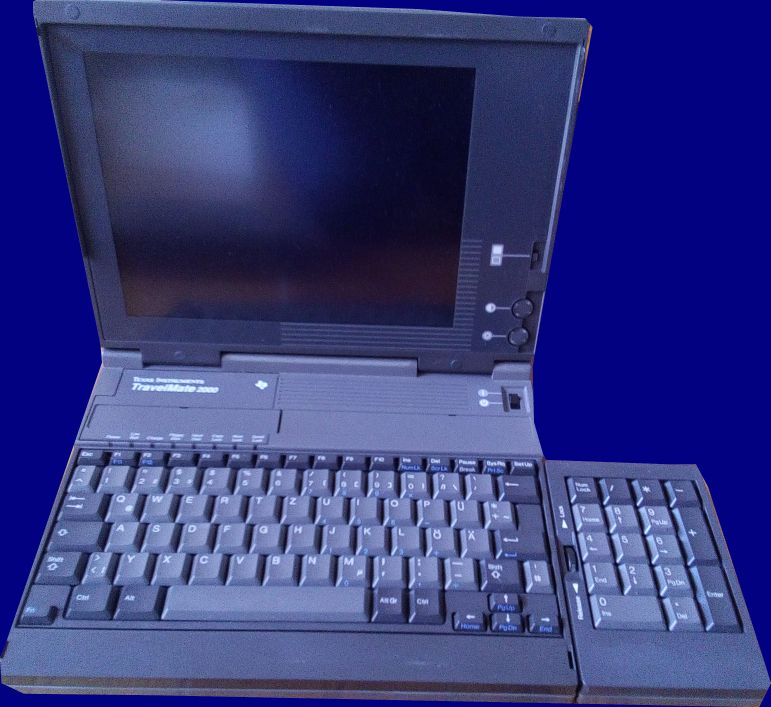 Model: Travelmate 2000
Adapter:
Year:
Keyboard:
Cpu: Speed: CO-processor:
Ram: Sound:
Text mode: Graphics mode:
Size - Weight:
I/O ports:
Media:
OS:
Peripherals:
Price: ? 000 $ (USA) / £ ?.000.000 (Italy)
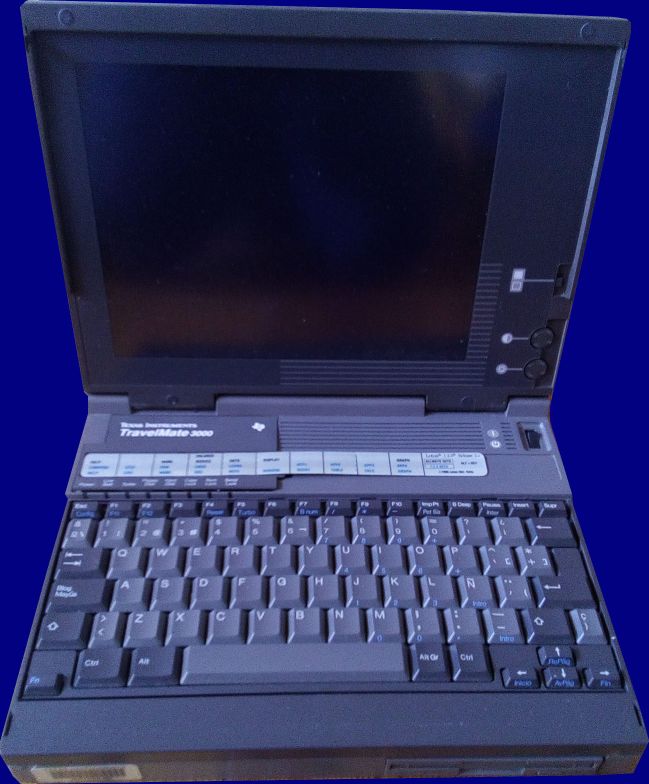 Model: Travelmate 3000
Adapter:
Year:
Keyboard:
Cpu: Speed: CO-processor:
Ram: Sound:
Text mode: Graphics mode:
Size - Weight:
I/O ports:
Media:
OS:
Peripherals:
Price: ? 000 $ (USA) / £ ?.000.000 (Italy)
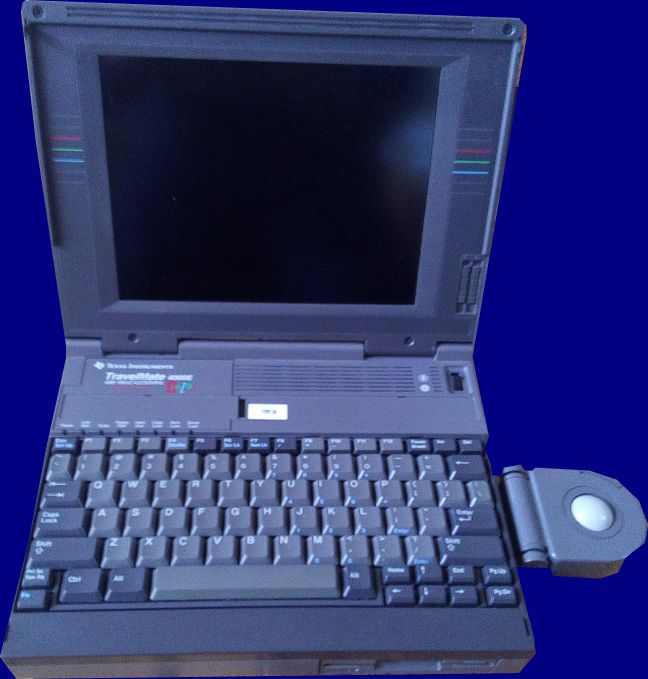 Model: Travelmate 4000 E
Adapter:
Year:
Keyboard:
Cpu: Speed: CO-processor:
Ram: Sound:
Text mode: Graphics mode:
Size - Weight:
I/O ports:
Media:
OS:
Peripherals:
Price: ? 000 $ (USA) / £ ?.000.000 (Italy)
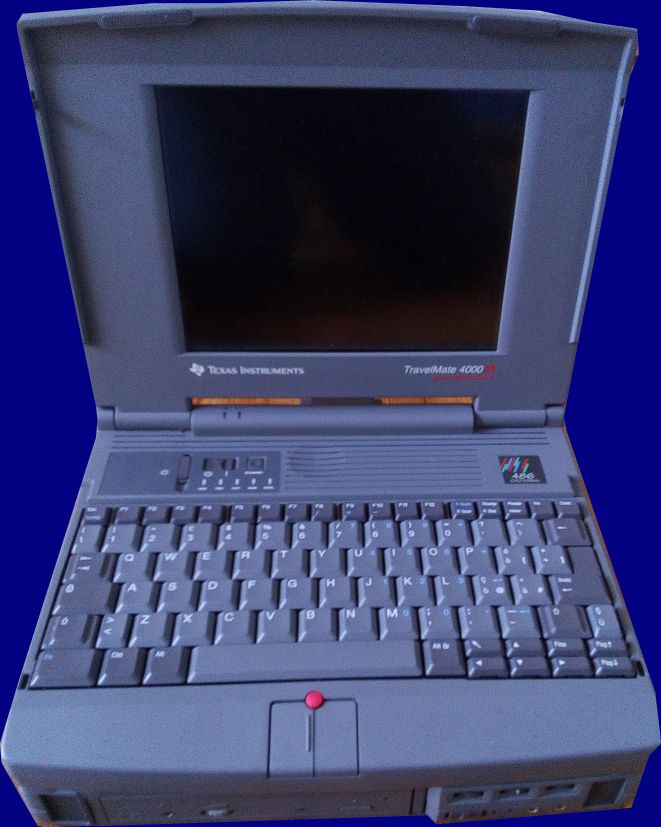 Model: Travelmate 4000 M
Adapter:
Year:
Keyboard:
Cpu: Speed: CO-processor:
Ram: Sound:
Text mode: Graphics mode:
Size - Weight:
I/O ports:
Media:
OS:
Peripherals:
Price: ? 000 $ (USA) / £ ?.000.000 (Italy)
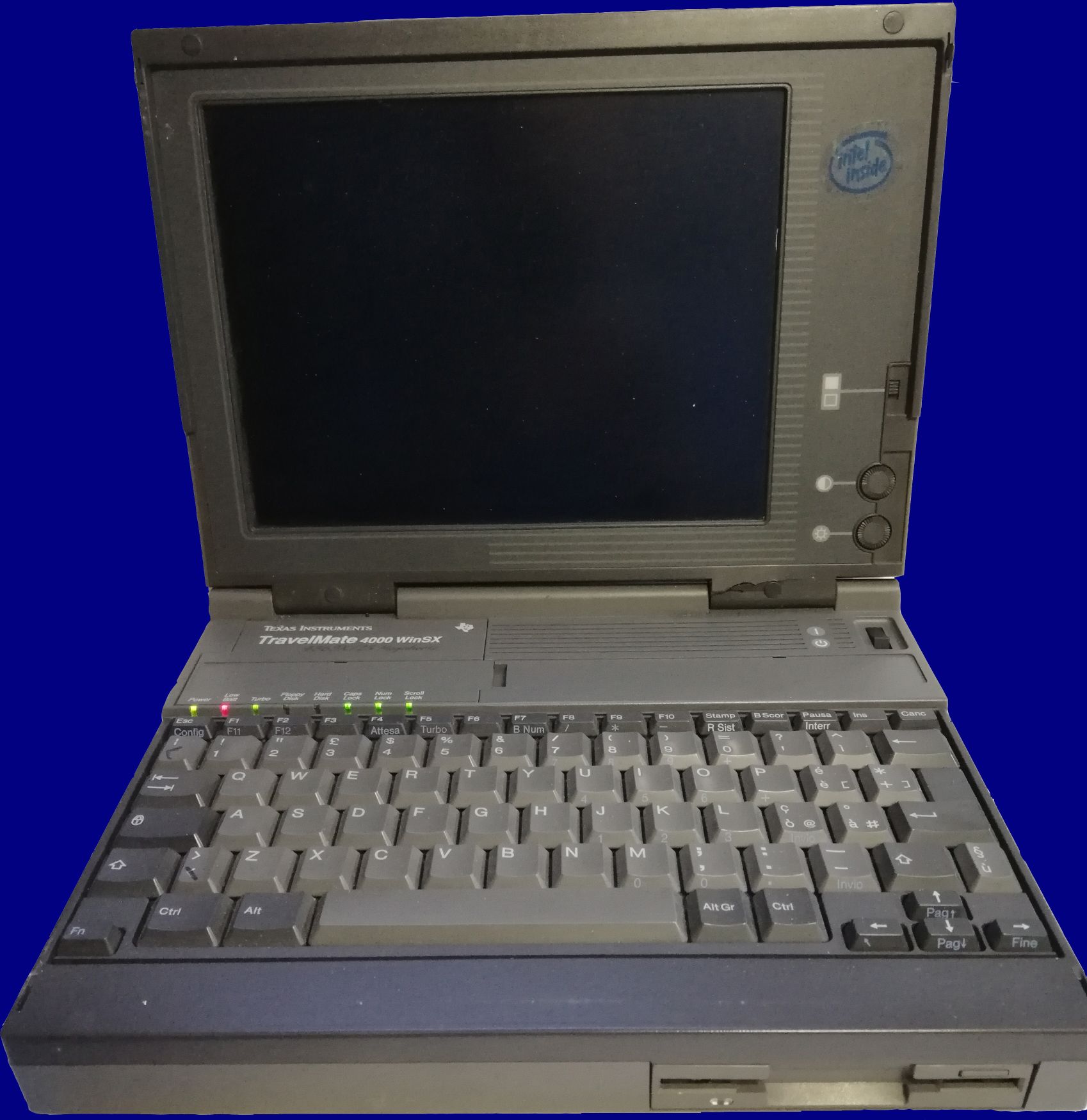 Model: Travelmate 4000 WIN SX
Adapter:
Year:
Keyboard:
Cpu: Speed: CO-processor:
Ram: Sound:
Text mode: Graphics mode:
Size - Weight:
I/O ports:
Media:
OS:
Peripherals:
Price: ? 000 $ (USA) / £ ?.000.000 (Italy)
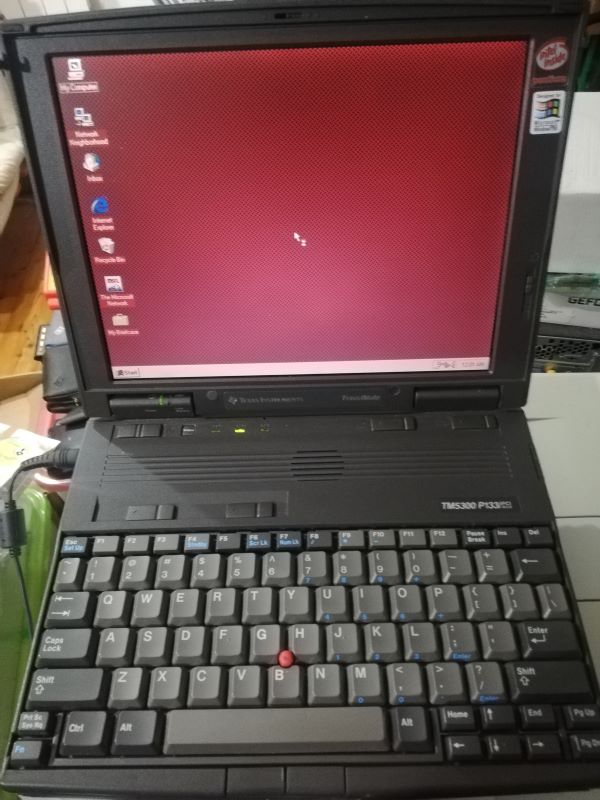 Model: Travelmate 5300
Adapter:
Year:
Keyboard:
Cpu: Pentium Speed: 133 mhz CO-processor:
Ram: Sound:
Text mode: Graphics mode:
Size - Weight:
I/O ports:
Media:
OS:
Peripherals:
Price: ? 000 $ (USA) / £ ?.000.000 (Italy)
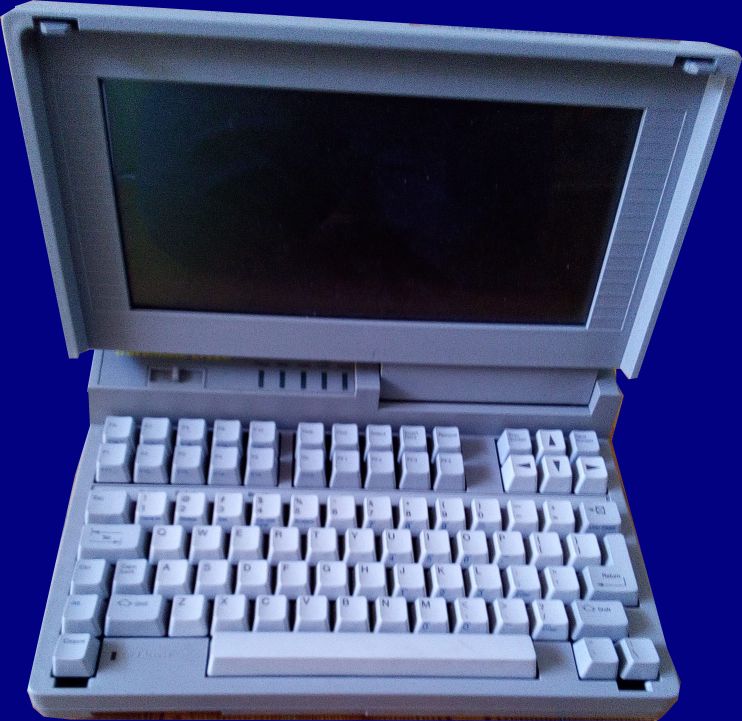 Model: Travelmate LT 286
Adapter:
Year:
Keyboard:
Cpu: Speed: CO-processor:
Ram: Sound:
Text mode: Graphics mode:
Size - Weight:
I/O ports:
Media:
OS:
Peripherals:
Price: ? 000 $ (USA) / £ ?.000.000 (Italy)
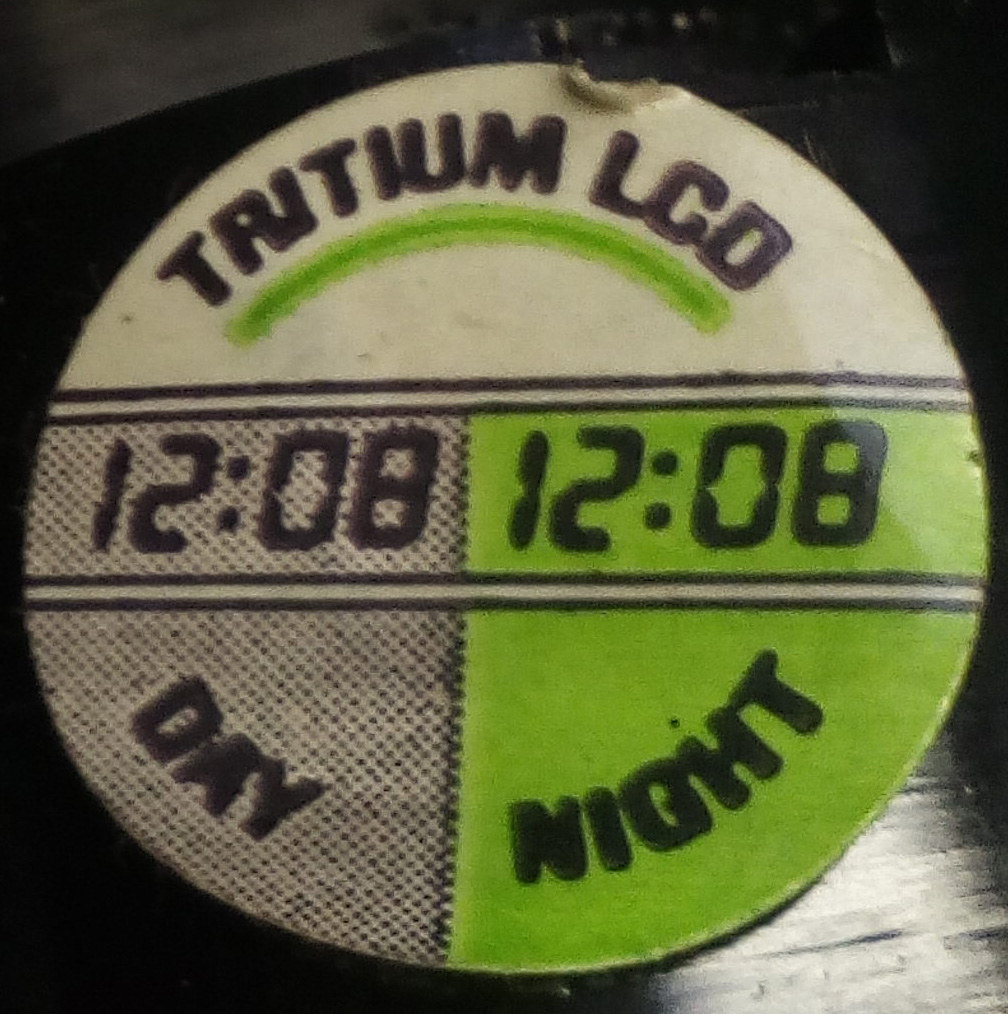 What is the Tritium lighting?
Tritium provides a constant light source that requires no additional power source. There are no buttons to press. The tritium is active every day for up to 25 years. Simply looking at the watch tells you exactly what time it is. Tritium ensures easy reading; the light is perfectly visible even in complete darkness. No other lighting system can boast these advantages. Today, after all these years, many museum watches that used this technology no longer show signs of tritium atom decay.
.jpg)
Here's a module 1015471_E that was used in wristwatches.
 Blank Screen
The problem is having the screen black after a few seconds, while it goes black the images tend to distort.
.jpg)
.jpg)
.jpg)
After checking that the power supplies are correct, we moved on to the various clocks, including the 4 clocks out of phase with each other of the TMS9900 CPU, then we moved on to the clock of the TMS9929 VDP, we were lucky it wasn't correct, we replaced the quartz and the capacitor from 12 pF.
VDP RAM wrong
If you have a problem with the 4116 video RAM and you don't have the oscilloscope, you can basically use these photos to find the faulty RAM. This help is useful if one of the RAMs has the DOUT pin locked (broken ram).
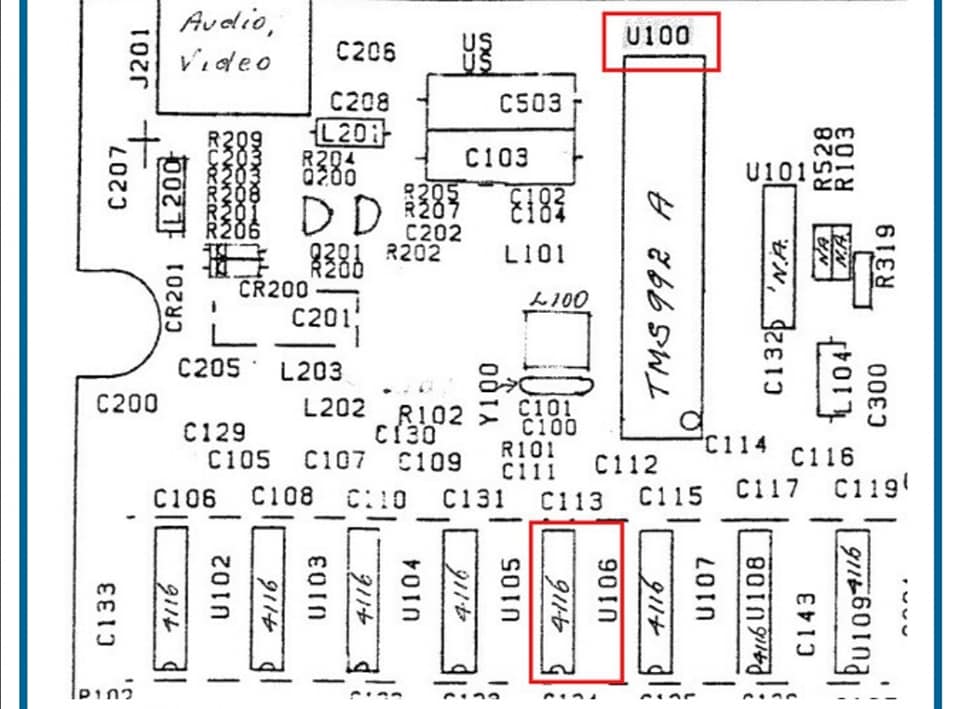 Wiring diagram.
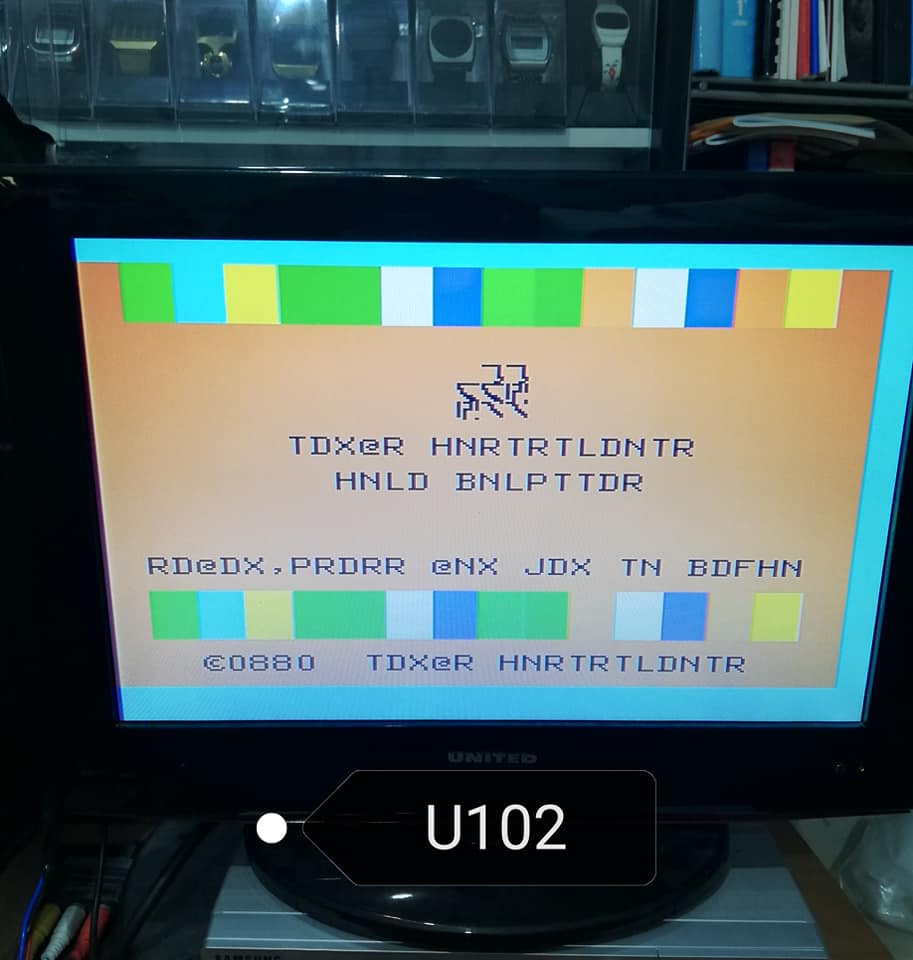
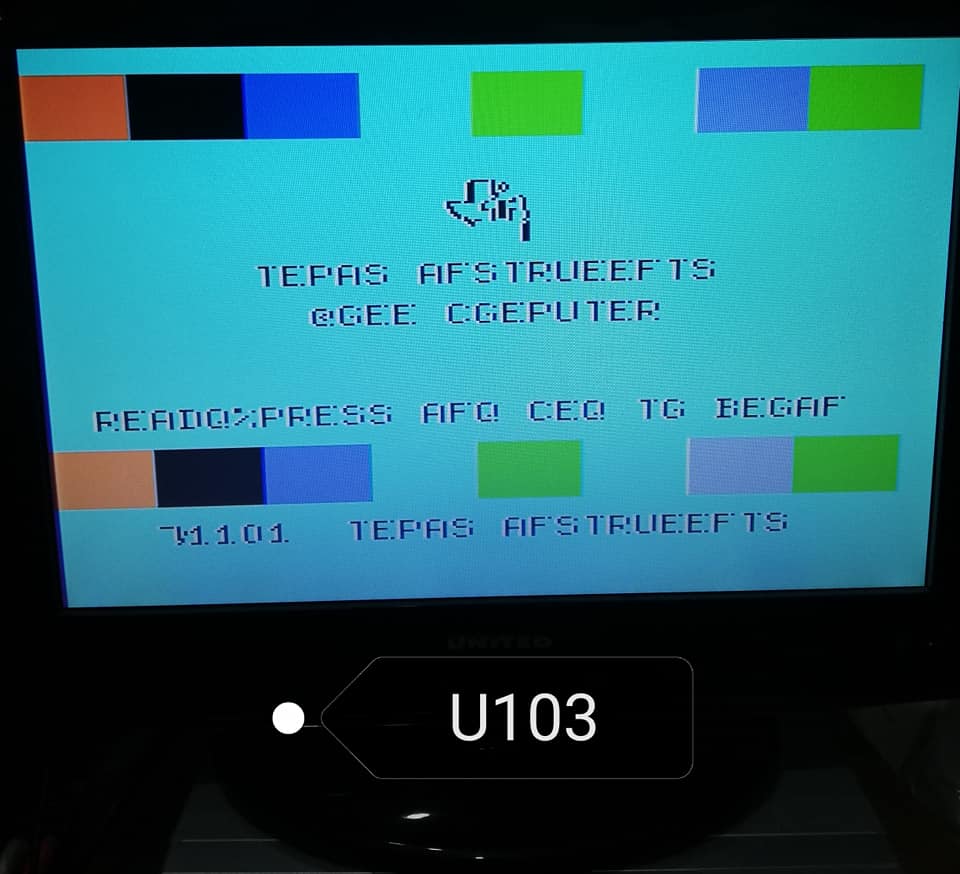
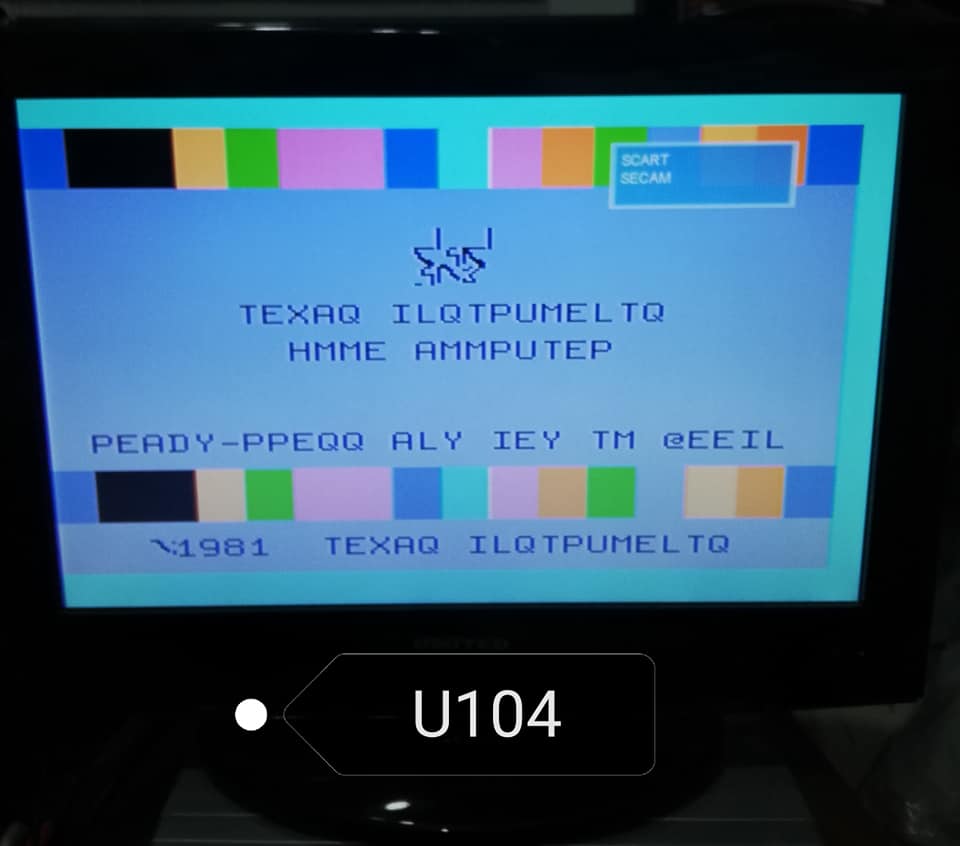
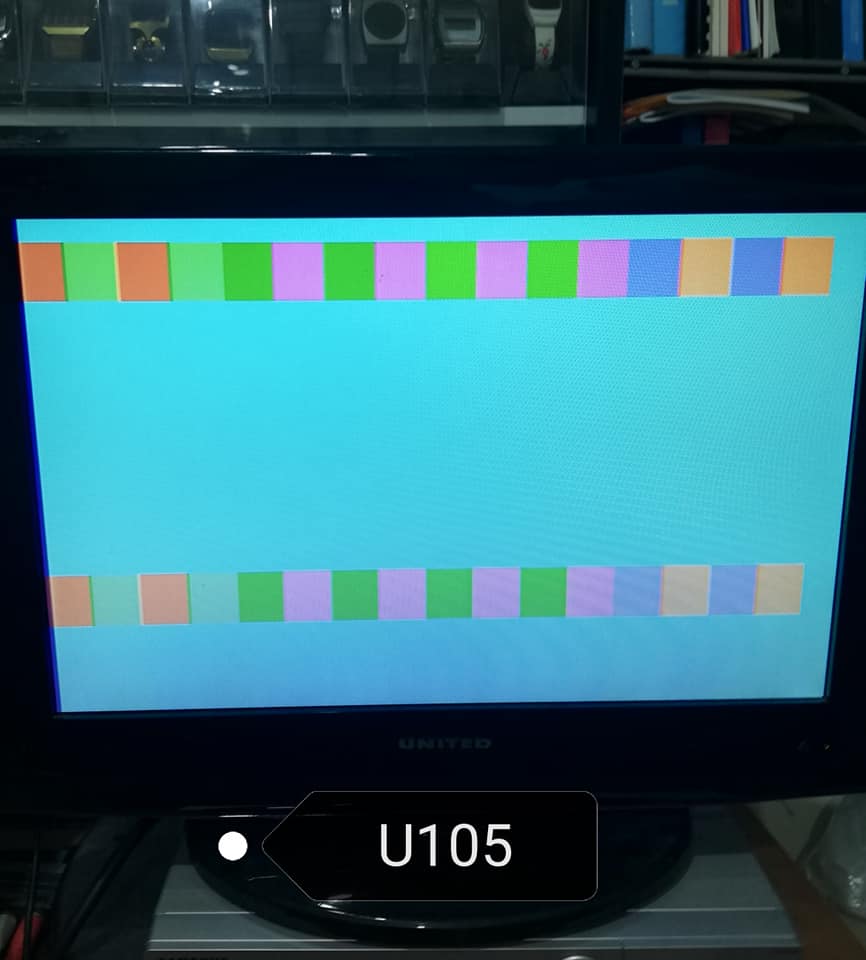
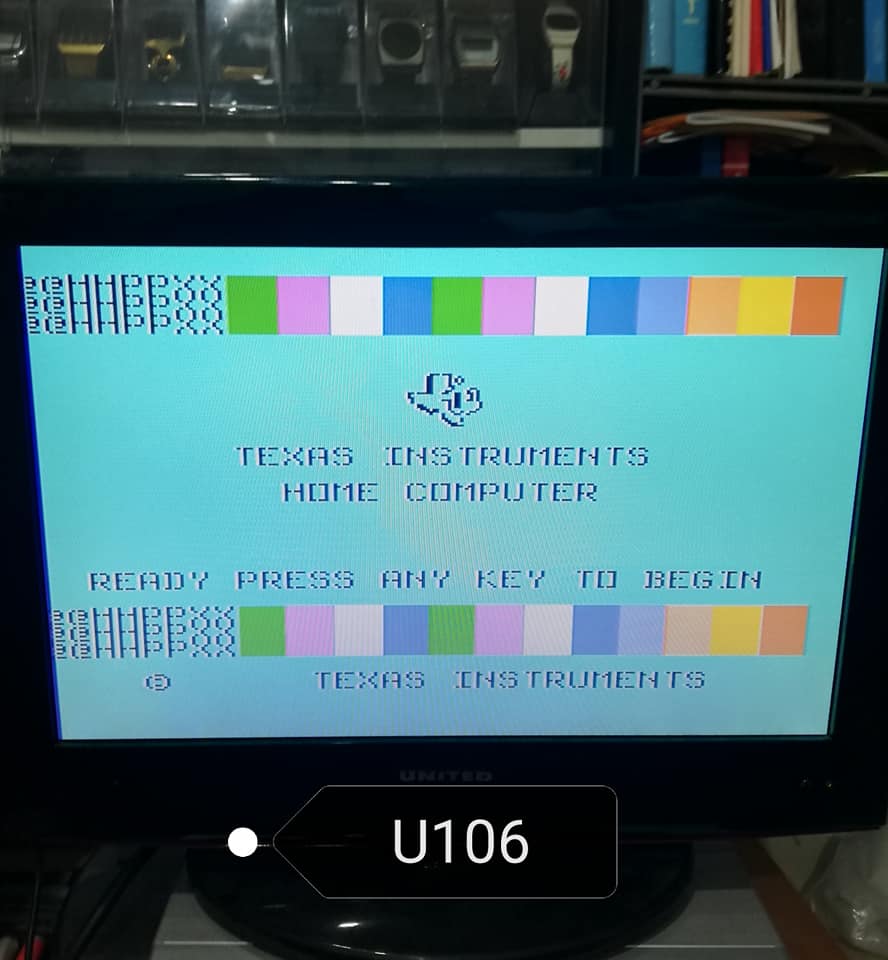
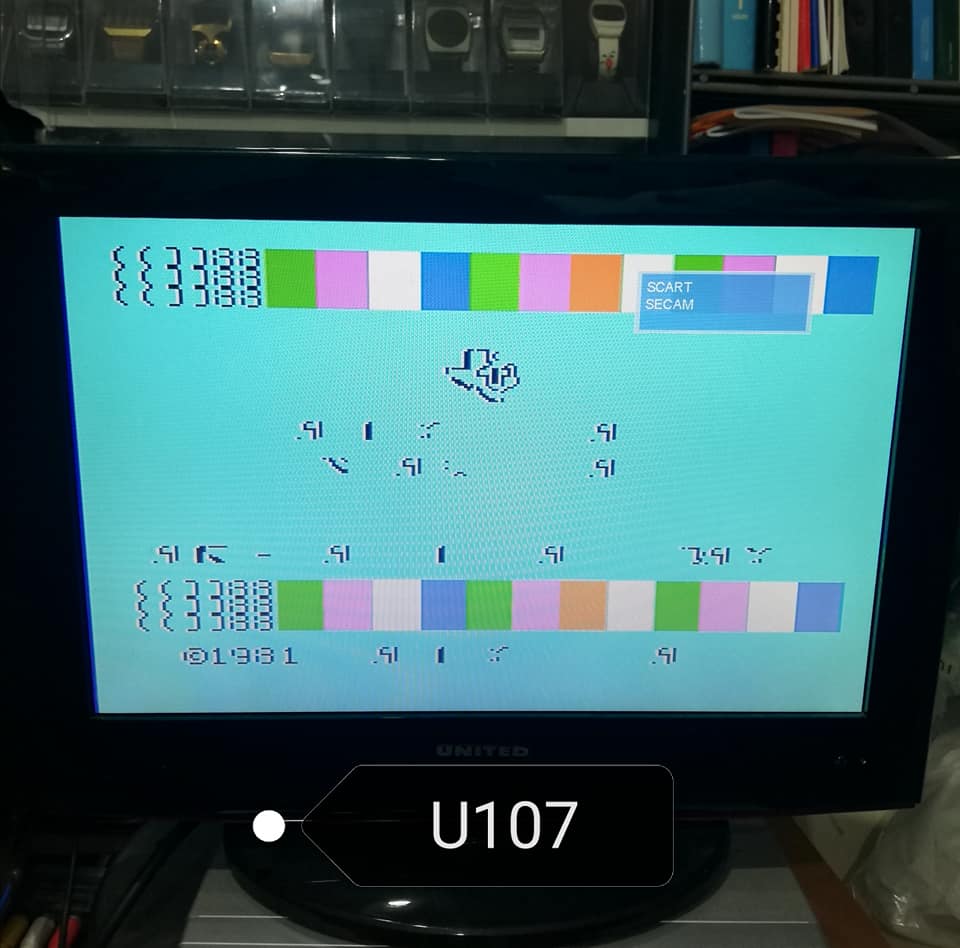
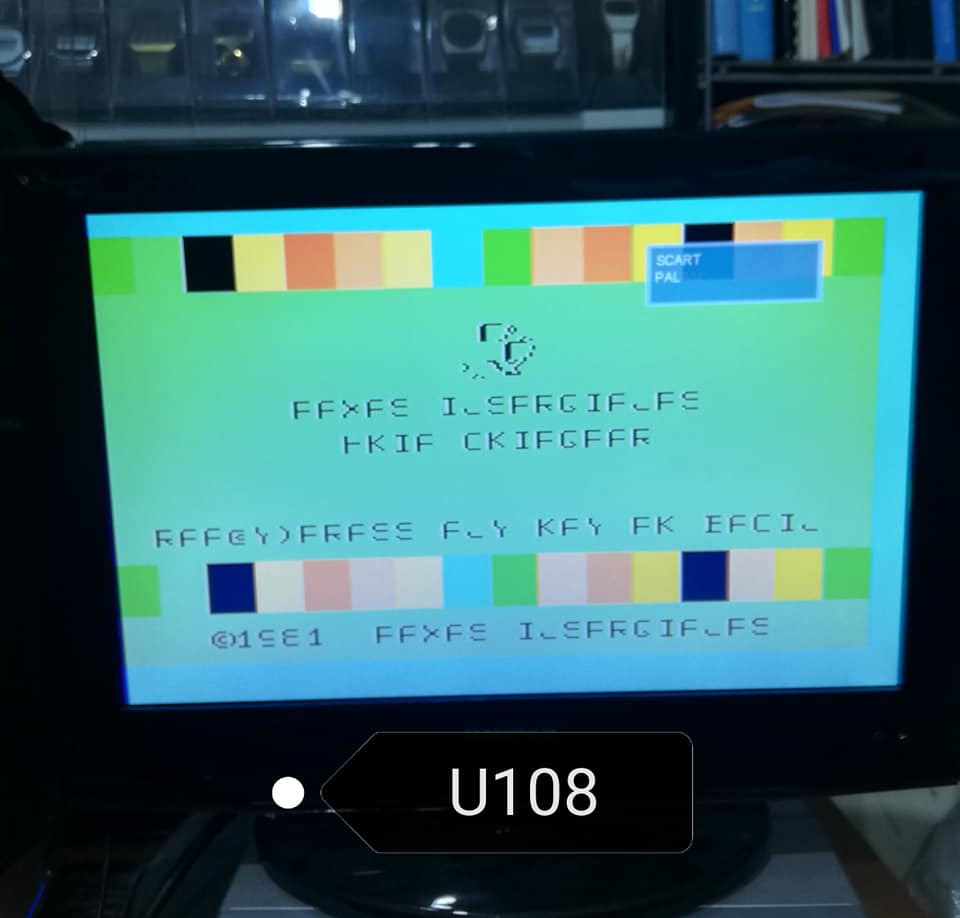
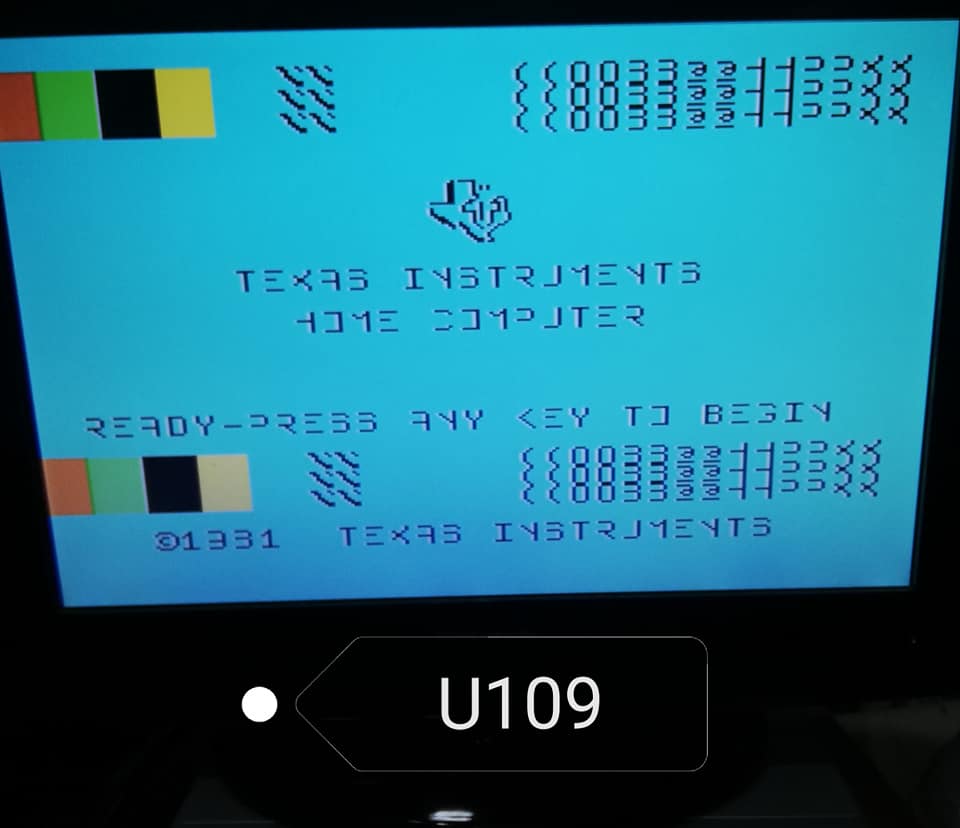
The videoprocessor use in the TI-99/4A comes in three flavors, that differ uniquely by the kind of output signal they send to the monitor port.
The TMS9918A issues a 525-lines, NTSC signal for US television format.
The TMS9928A issues a 525-line signal, in the form of a B&W luminance/sync signal and two color differential signals. This is meant to drive a RGB monitor, with a minimal external circuitery.
The TMS9929A issues a 625-line signal, in the same format as the 9928A. It is meant for use with the european PAL system.
DEBUGGING HELP
By John Guion
Dallas TI Home Computer Group
PROBLEM AREAS
1 CONSOLE WILL NOT POWER UP
1.1 General information.
Failure of the TI-99/4A console to power up and produce the TI title screen is a common problem that is also the hardest to track down and fix since failure of nearly any component in the console or power supply can cause this.
The following are not intended as solutions to the problem, but merely as points to check that may aid in finding the actual problem and fixing it.
Unless a particular part is suspected, replace any socketed chips possible with known working equivalents before de-soldering any components. Since the socketed chips are common causes of lock up, eliminating them as possible problems first may save excess soldering on the board. The console will power up if the sound chip is removed entirely, but not if that chip is shorted internally.
A simple TTL logic probe can be used for tracing signals in the circuit. An oscilloscope may also be used and has the advantage of being able to check clock signals for proper frequency. When a signal should exist as an output from a particular device, be sure to check that device's input for proper signals before attempting to replace the component. When checking for locked up signals, try to trace all signals back through the circuit to the point of origin. A set of schematics (available from several sources, including TI) will help greatly in this part of debugging.
Tracing locked signals can determine whether or not the signal is missing due to a faulty component that it must pass through or what power up operation was occurring during lock up.
1.2 Console power up procedure.
A. TMS9900 CPU resets and addresses low ROM locations.
B. TMS9900 initializes.
C. TMS9900 sets up workspace registers in MCM6810 RAM.
D. TMS9900 begins GROM read.
E. TMS9900 enters delay loop for about 1/4 second.
F. TMS9919 sound chip is disabled.
G. TMS9918A VDP chip is initialized.
H. 4116 VDP RAM is initialized (requires about 1 second).
I. Title screen is loaded into VDP.
J. TMS9919 sound chip emits beep.
K. TMS9900 CPU enters keyboard scan.
L. System is ready for use.
1.3 Voltage/signal checklist.
A. Check power supply for +5V, +12V, and -5V. Lack of -5V often results in a grey flickering screen on power up.
Check for +5V on chips throughout board.
Check TMS9900 for -5V at pin^1; +5V at pins^2, 33, 59, and 64; and +12V at pin^27. If any voltages are missing, check for shorts on main board. Replace power supply if necessary.
B. Check TMS9900 pins^8, 9, 25, and 28 for clock signal. If not found, check TIM9904 clock generator pins^1, 2, 3, and 4 for clock signal. If not found, check TIM9904 supply voltages (+5V at pin^20, +12V at pin^13), crystal, and tank circuit. If no external problem can be found, possible TIM9904 failure.
C. Check TMS9918A pin^39 and pin^40 for the 10.73863 MHz clock. If missing, check crystal and oscillator circuit. Otherwise, check TMS9918A pin^36 and pin^37 for clock outputs. If not found, remove GROMs and sound processor (located next to GROMs) and test again for clock. If missing, possible TMS9918A failure. Reinsert GROMs and sound processor after tests.
D. Check TMS9918A pins^14 (-CSW) and^15(-CSR) for lock up. If locked up, check memory enable from pin^6 of 74LS32 and pin^13 of 74LS138 located next to MCM6810. Trace signal to find possible failure.
E. Check TMS9918A pin^13 (MODE) for lock up. If locked up, trace signal back to TMS9900. Also check for other components that may be locking up this line (it is used as A14). If no other fault can be found on that line, possible TMS9918A failure.
F. Check TMS9918A pin^1 (-RAS), pin^2 (-CAS), and pin^11 (-R/W) for lock up. If locked up, possible TMS9918A failure.
G. Check TMS9918A pins^17 through 24 (data lines) for signals. If missing, trace to fault. Possible TMS9918A or TMS9900 failure.
H. Check TMS9918A pins^3 through 10 (RAM address/data lines) for signals. If missing, possible TMS9918A failure.
I. Check 4116 RAM pin^14 (DATA OUT) on each chip for signal. Each chip missing signal may be at fault as well as TMS9918A.
J. Check TMS9900 pin^62 (READY) for lock up. If locked up, check TMS9900 pin^6 (-RESET) for signal. If pin^6 is locked up low, possible TIM9904 failure. If high, possible TMS9900 failure. If TMS9900 pin^6 is not locked up, trace circuit back from pin^62 to find fault.
K. Check all three GROMs (CD2155, CD2156, and CD2157) at pin^10 (-CS) and pin^15 (GREADY) for signals. If either is missing, remove all three GROMs and test pin^10 again for signal. If the signal at pin^10 does not exist, trace back through circuit to find failure. If signal exists, replace GROMs one at a time until GROM that causes lock up on pin^15 is found.
L. Check all three GROMs for signal on pin^11 (M0/A14) and pin^12 (M1/DBIN). If missing, trace circuit to find break in signal path.
M. Check each GROM for -5V at pin^14, +5V at pin^9, and -.8V to -.6V at pin^16. If missing, check for broken trace. If -.8V/-.6V is missing or at
-5V, check diode connected to that line.
N. Remove sound generator. If console powers up, check pin^16 for +5V, pin^4 for clock from TMS9918A, pin^5 (-WE) for signal, and pin^6 (-CS) for signal from 74LS138 closest to MCM6810. If these signals exist, possible sound chip failure.
O. Check TMS9918A pin^36 for composite video output. If missing, check TMS9918A crystal and clock circuit and pin^16 (-INT) for interrupt signal. If signals exist, possible TMS9918A failure.
P. Check GROMs for clock on pin^13. If missing, check clock output on TMS9918A pin^37. If signal on TMS9918A exists, check for break in signal path. If not, check TMS9918A oscillator circuit. If oscillator operates, possible TMS9918A failure.
Q. Check pin^20 (-CS) of console ROMs for lockup. If locked up, trace circuit back to find fault.
R. Check pins^7 and 9 through 15 of 74LS138 nearest I/O port to determine memory area accessed during lock up. Check pin^4 (-MEMEN) for lock up. If no signal can be found on pin^7 or pins^9 through 15, possible 74LS138 failure.
S. Check pin^11 (-CS) of MCM6810 RAMs for lock up. If locked up, trace circuit back to find fault.
T. Check TMS9901 pin^5 (-CE) for lock up. If locked up, check 74LS138 nearest I/O port for failure. Check TMS9901 pin^11, 17, and 18 for lock up. If locked up, trace circuit back to find fault.
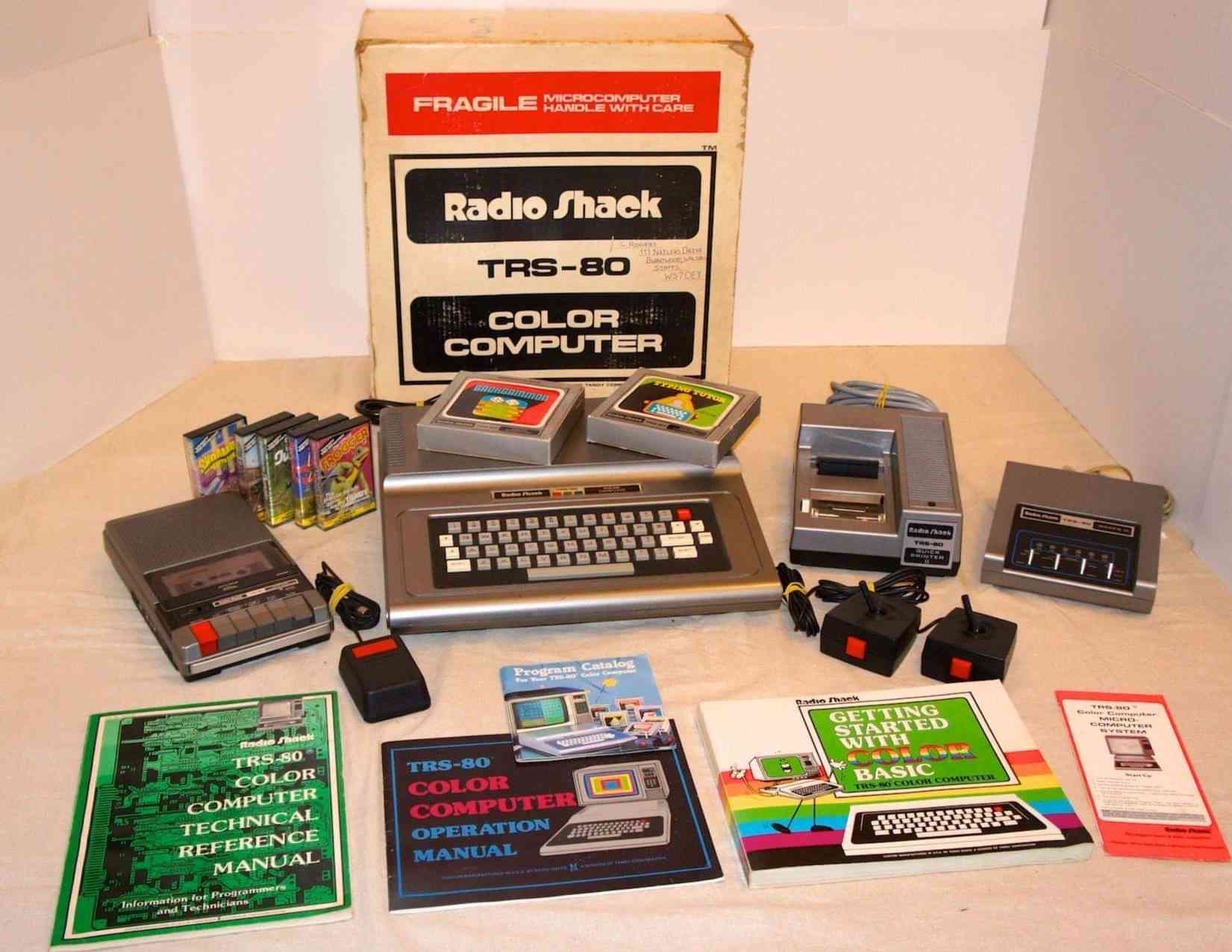 The TRS-80 Micro Computer System (TRS-80, later renamed the Model I to distinguish it from successors) is a desktop microcomputer launched in 1977 and sold by Tandy Corporation through their Radio Shack stores. The name is an abbreviation of Tandy Radio Shack, Z80 [microprocessor]. It is one of the earliest mass-produced and mass-marketed retail home computers.
The TRS-80 has a full-stroke QWERTY keyboard, the Zilog Z80 processor, 4 KB DRAM standard memory, small size and desk footprint, floating-point Level I BASIC language interpreter in ROM, 64-character per line video monitor, and a starting price of US$600 (equivalent to US$2,600 in 2020). A cassette tape drive for program storage was included in the original package.
True Value
True Value was founded already in 1948 and developed soon as leader in the hardware industry. With its huge product selection and nowadays over 7,000 stores, True Value is a trusted resource for do-it-yourselfers in big cities and small towns alike. In 1963 True Value merged with Cotter & Company, founded in 1948, too. In the year 1976 two calculators manufactured by Texas Instruments, the TI-1200 and TI-1250 were sold under the label of the True Value Hardware Stores.
Cotter & Company grew fast, in 1979 sales topped the first time $1 billion. But Cotter & Company didn't stop there! It had grown to a retail cooperative of over 5,000 stores with a wholesale volume of more than $2.4 billion by July 1997 when it merged with ServiStar Coast to Coast Corporation to form TruServ.
with permission of the author www.datamath.org
TSI The Telesensory Systems Inc. Speech+ shown here was the first commercial hand-held talking calculator for the blind. Also on this page is a talking calculator aimed as and educational aid for youngs.
This was the first commercial hand-held speaking calculator and a very early use of speech synthesis in a consumer product.
The TSI S14001A was developed by TeleSensory, Inc. and Silicon Systems, Inc. in 1975 as a single-IC speech chip for the Speech+ portable talking calculator for the blind. The speech technology was licensed from Forrest S. Mozer, a professor of atomic physics (speech was a spare time thing for him) at University of California, Berkeley. Ed Bernard worked for Silicon Systems, Inc., and was the design engineer for the S14001A speech chip.
With Permission of the Author vintagecalculators
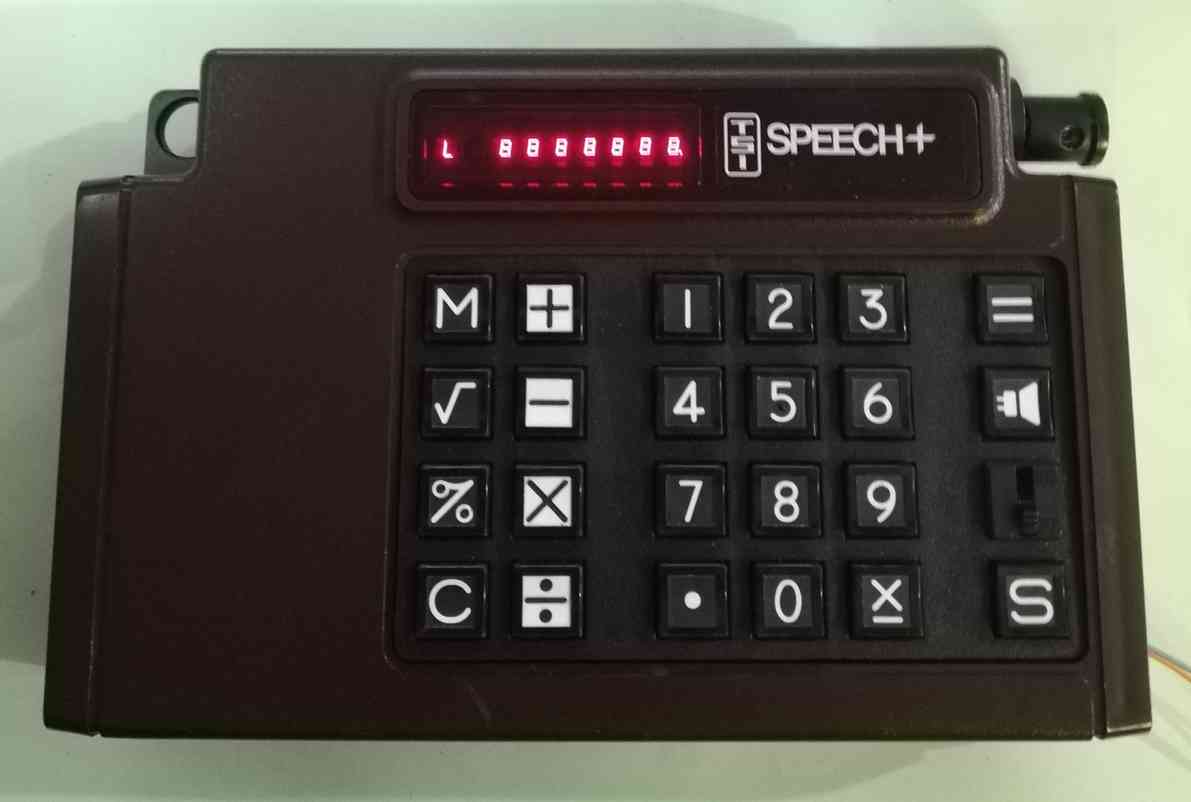 Model: TSI speech+
Battery: 4 x ni-cd
Adapter: 9 vac
Year: 1976
Chip: TMC1007NL
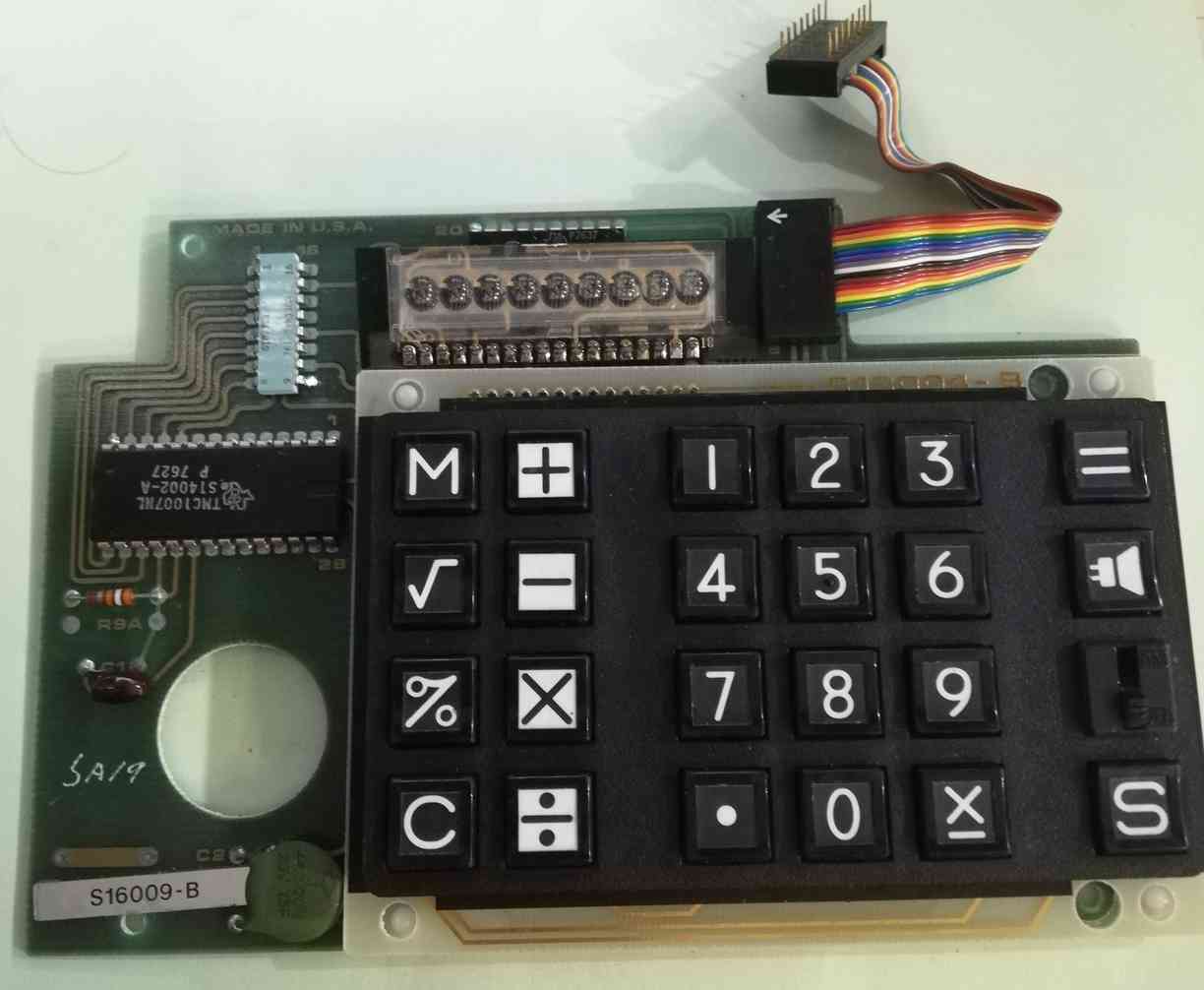
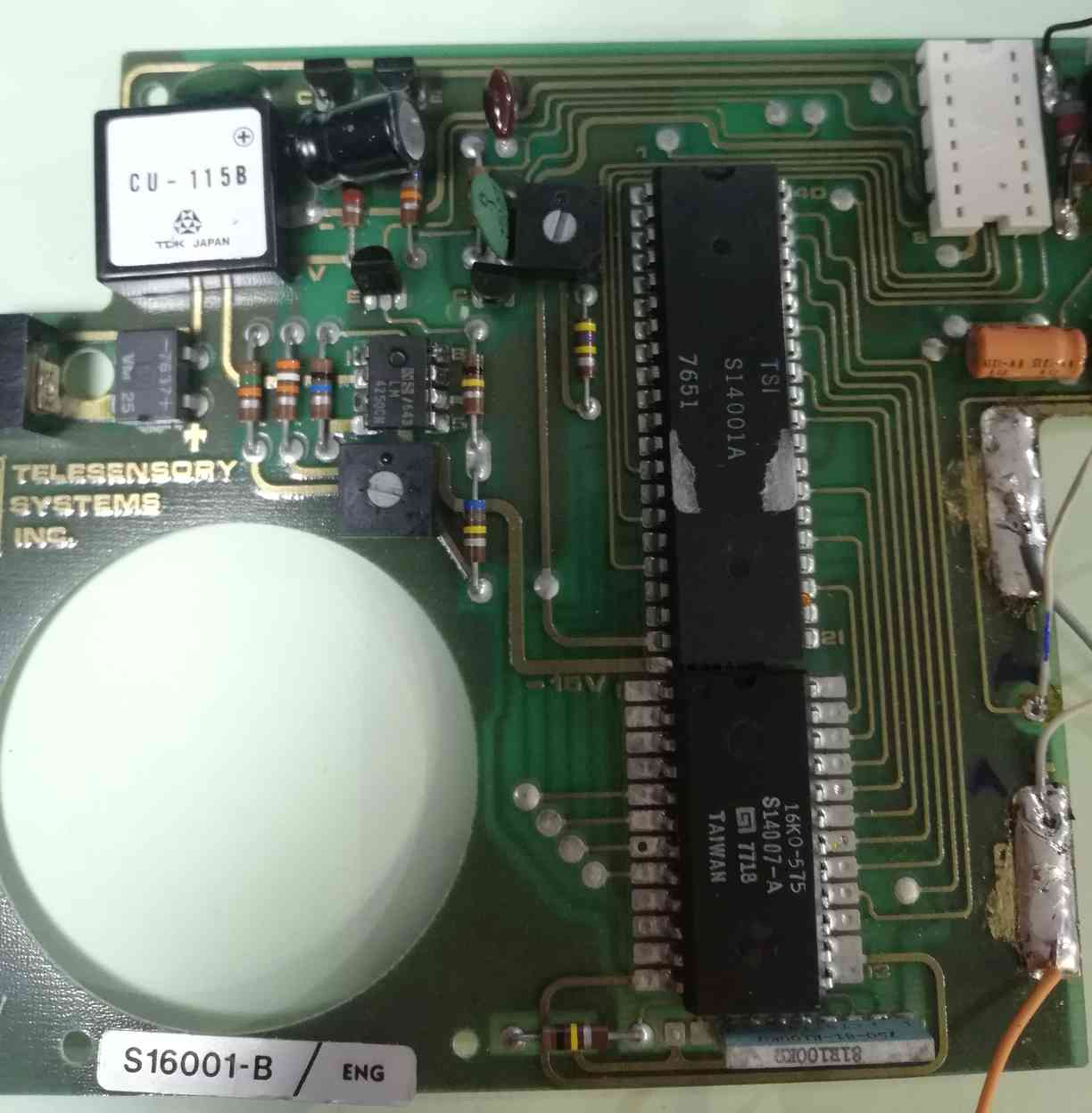
Info: TSI Speech + with Texas Instruments chip the TMC1007. In the early 1970s, Telesensory Systems Inc. Speech + was the first portable talking calculator for the blind, an interesting point is that, to aid the blind in use, the numbers on the keyboard are in the same order as a phone (with 1 at the top) instead of in the normal order of a calculator (with 9 at the top).
with permission of the author www.vintagecalculators.com
Transistor–Transistor-Logic (TTL) is a logic family built from bipolar junction transistors (BJTs). Its name signifies that transistors perform both the logic function (the first "transistor") and the amplifying function (the second "transistor"), as opposed to earlier resistor–transistor logic (RTL) and diode–transistor logic (DTL).
TTL integrated circuits (ICs) were widely used in applications such as computers, industrial controls, test equipment and instrumentation, consumer electronics, and synthesizers.
After their introduction in integrated circuit form in 1963 by Sylvania Electric Products, TTL integrated circuits were manufactured by several semiconductor companies. The 7400 series by Texas Instruments became particularly popular. TTL manufacturers offered a wide range of logic gates, flip-flops, counters, and other circuits. Variations of the original TTL circuit design offered higher speed or lower power dissipation to allow design optimization. TTL devices were originally made in ceramic and plastic dual in-line package(s) and in flat-pack form. Some TTL chips are now also made in surface-mount technology packages.
TTL became the foundation of computers and other digital electronics. Even after Very-Large-Scale Integration (VLSI) CMOS integrated circuit microprocessors made multiple-chip processors obsolete, TTL devices still found extensive use as glue logic interfacing between more densely integrated components.
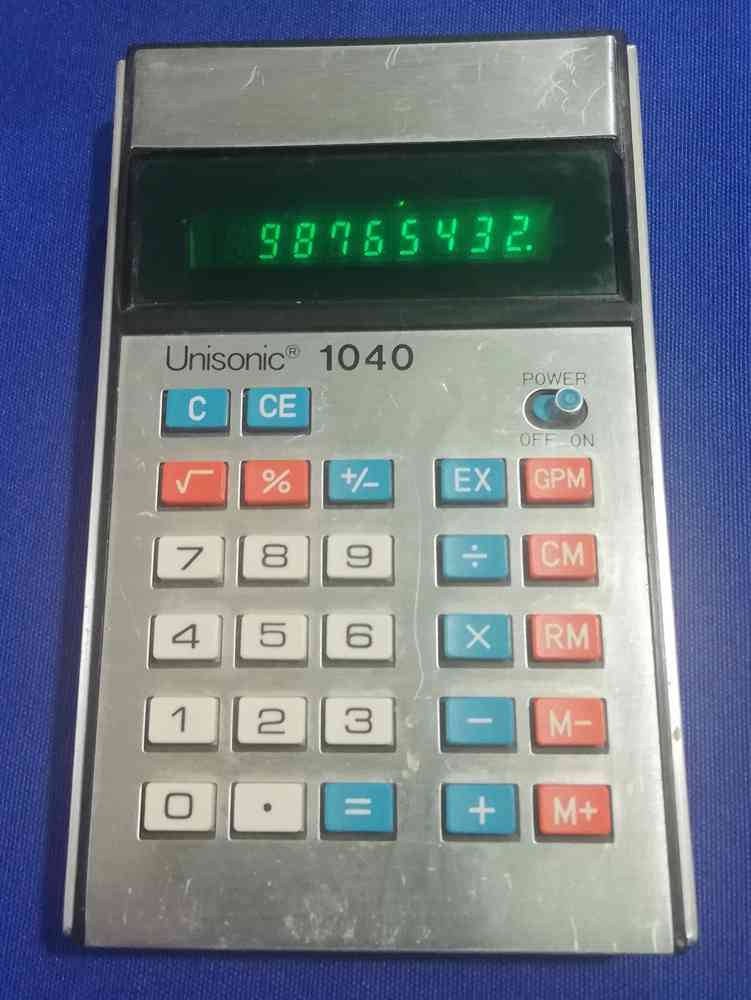 Model: unisonic 1040
Battery: 4 x AAA
Adapter: 6 volt adapter
Year: 1974
Chip: TMS1044
Info:
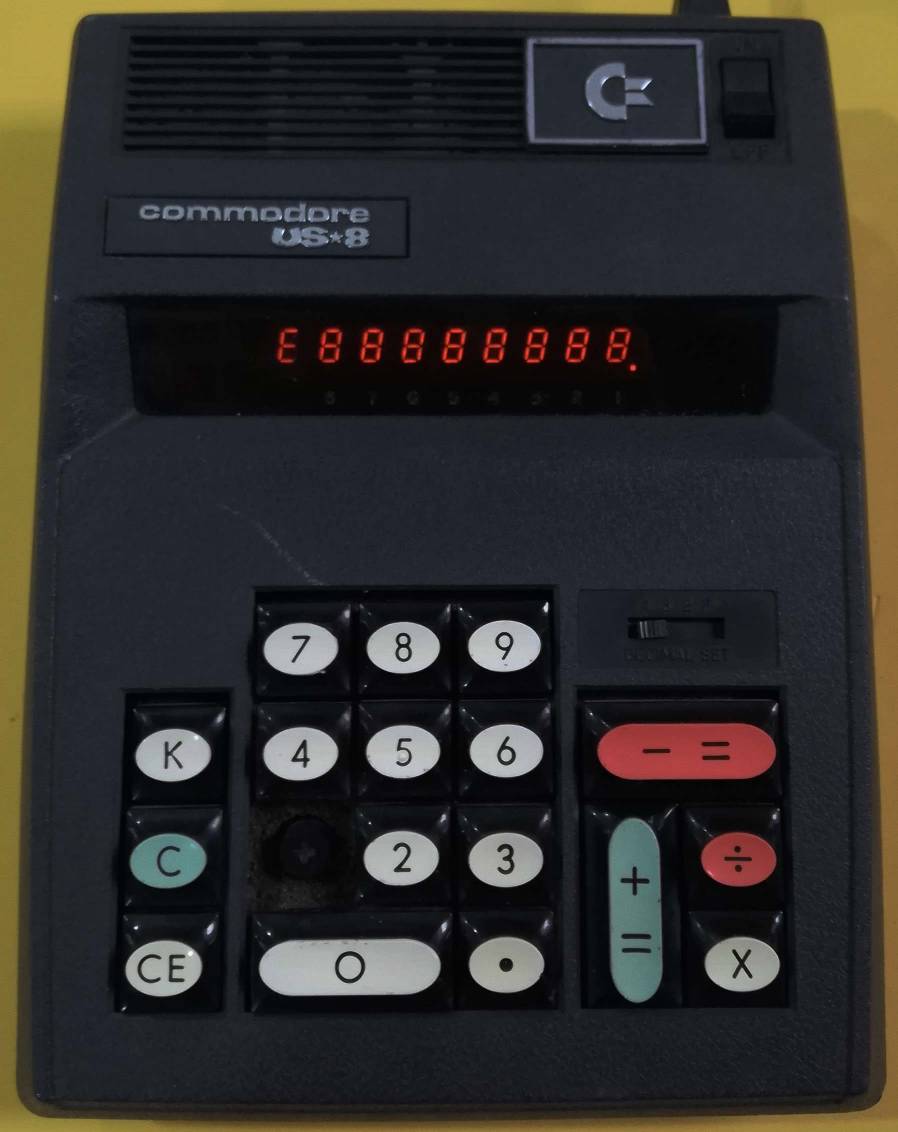 Model: US-8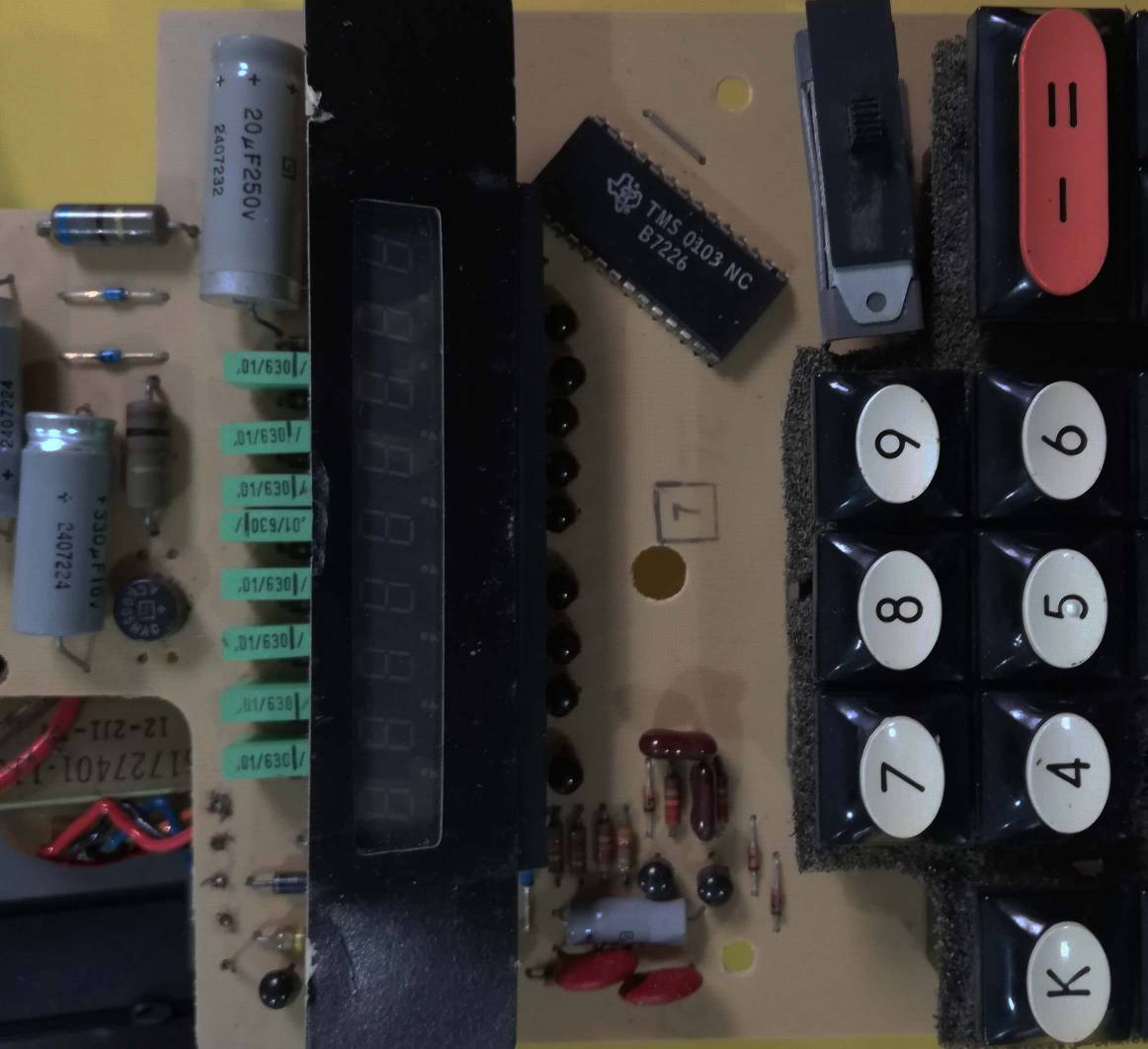
Battery:
Adapter: Adapter AC 110
Year: 1972
Chip: TMS0103NC
Manual:
Info: made in Japan
.jpg) Manual portable typewriter
Manual portable typewriter
Even the Valentine, presented in 1969, uses the mechanics of the Letter 32. The strong point of the Valentine is certainly its portability. The machine, whose bottom is equipped with a handle, is inserted into a container whose closure is ensured by the rear part of the machine itself; the external case in which the laptops were closed until then was replaced by a simple plastic shell. The Valentine, with a very modern and youthful design, is one of the icons of Pop Design. The machine is exhibited at the MOMA (The Museum of Modern Art) in New York in the Architecture and Design section. Why did I buy it? Because it's as beautiful as my daughter Valentina!
.jpg)
.jpg)
.jpg)
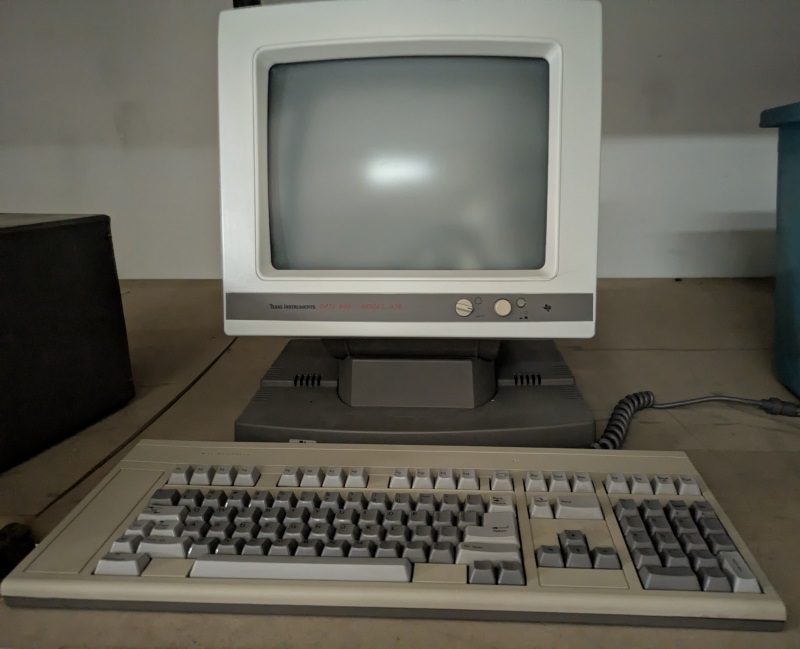 Model: 924 VDT
Adapter: 110 volt or 220 volt (Italy)
Year: 1987
Keyboard: Detached, low-profile, adjustable tilt Standard typewriter layout Acoustic feedback Calculator-style numeric keypad
Display: 14-inch (diagonal measure) cathode ray tube Cpu: ? Speed: ? mhz CO-processor: - Rom: ? kRam: ? k Sound: Beeper
Text mode: 80 columns or 132 columns by 24 rows Graphics mode: 2 colors
Size - Weight: 47 x 24 x 55 cm / 3 kg with monochrome monitor
I/O ports: -
Media: -OS: -
Peripherals: -
Price: - $ (USA) / £ (Italy)
Info: The Texas Instruments TI Model 924 was a vintage video display terminal introduced in 1987. It was primarily used as a workstation console for multi-user Unix and minicomputer environments and featured a dedicated, specialized keyboard
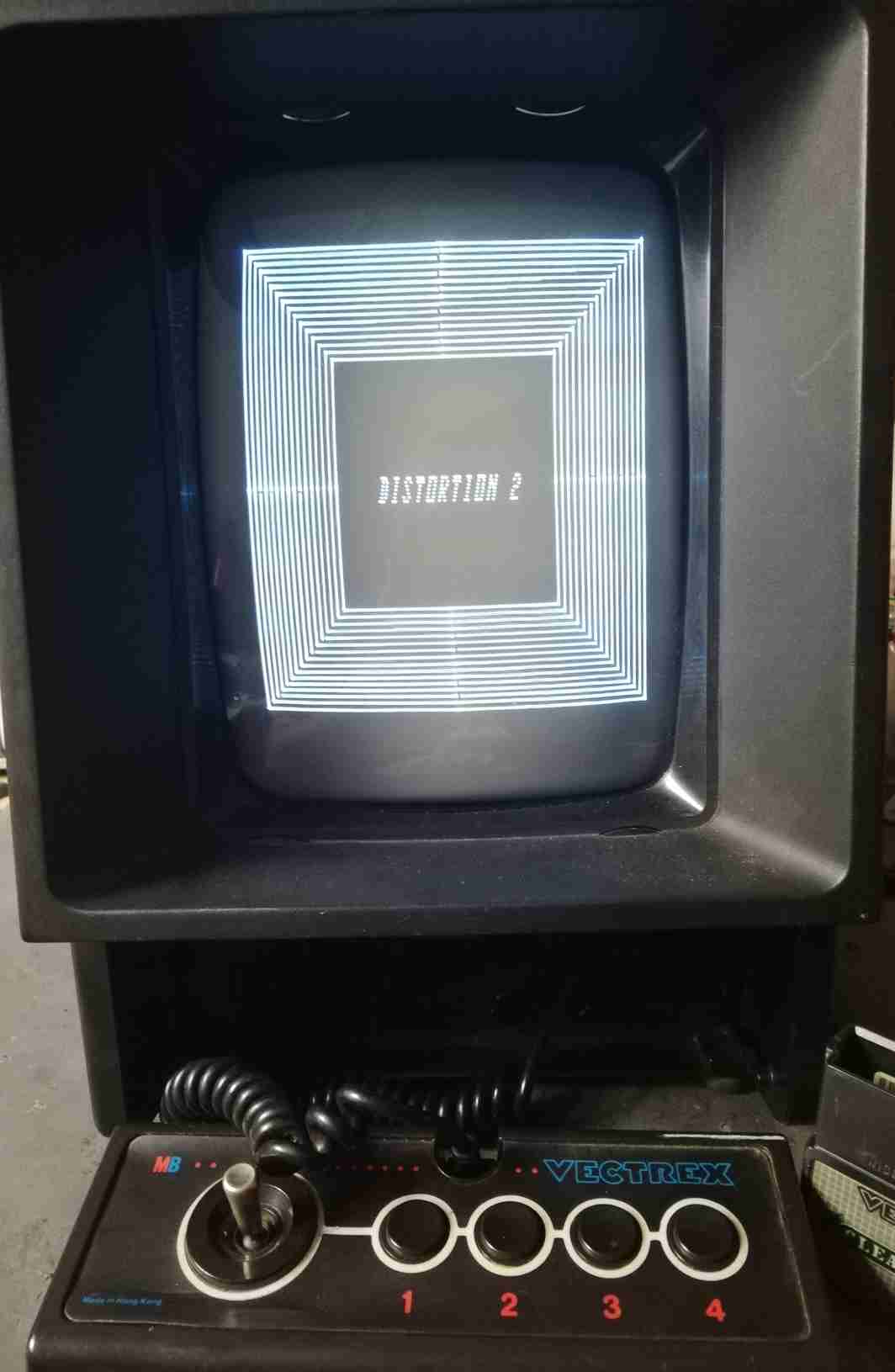 The Vectrex is an 8-bit console designed by Smith Engineering and distributed by General Consumer Electric (a subsidiary of General Electric), and later by the Milton Bradley Company. The Vectrex was the only home console to make hardware use of vector graphics (the same as bar classics such as Space Wars, Asteroids, Battlezone and Tempest) to play games on the integrated screen. Vectrex was also sold in the Japanese market under the name Bandai Vectrex Kousokusen.
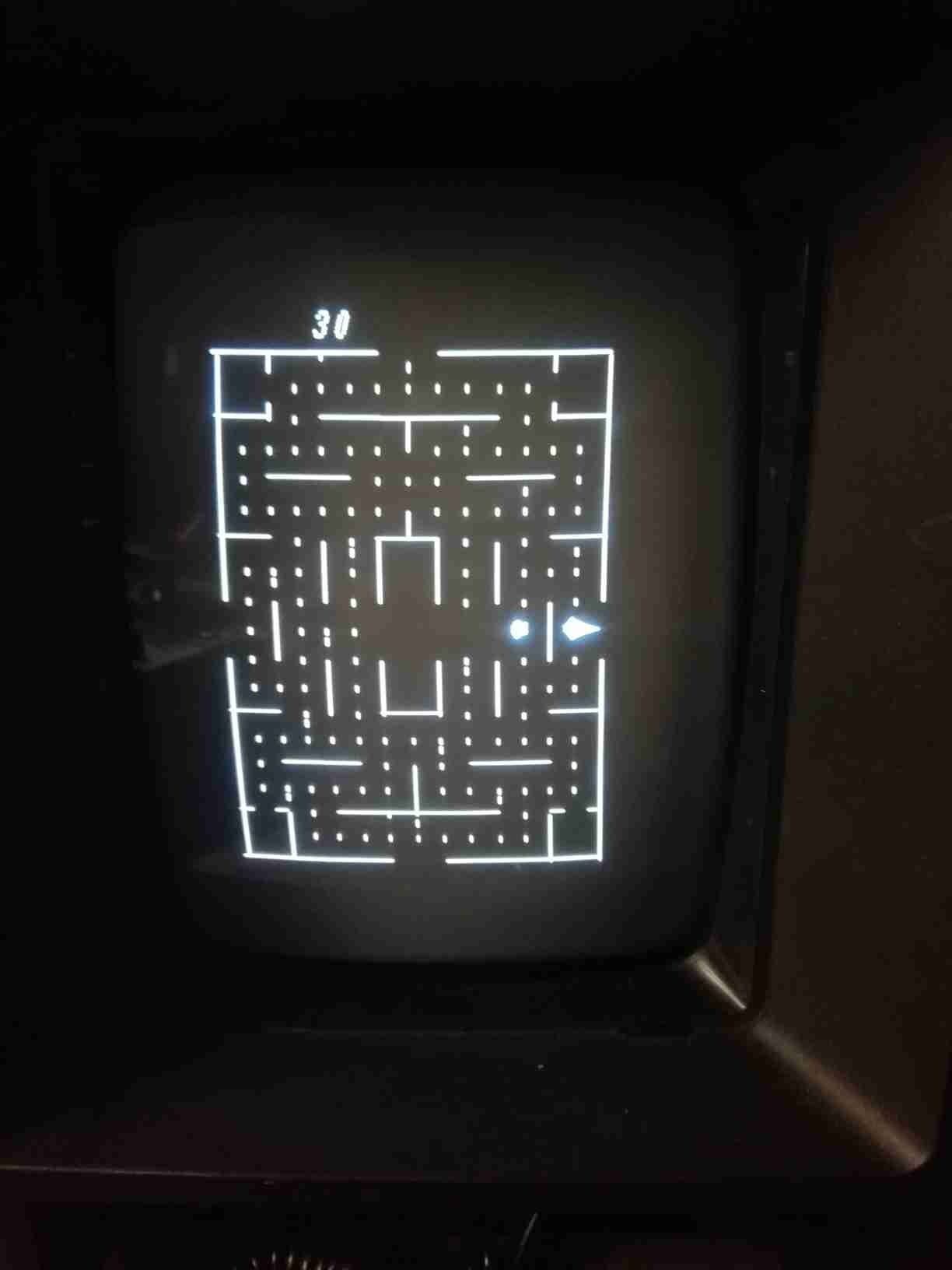
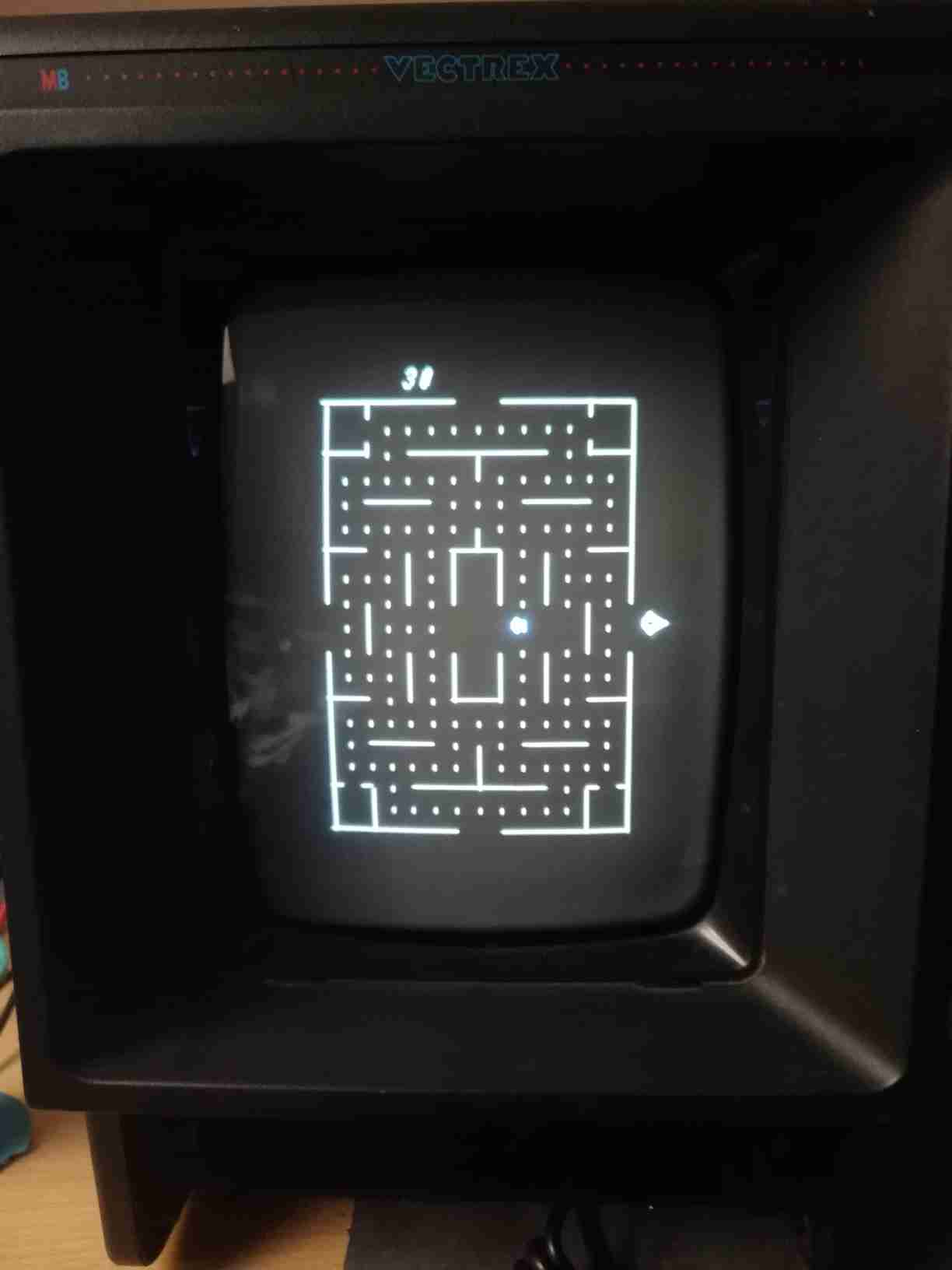
FAILURES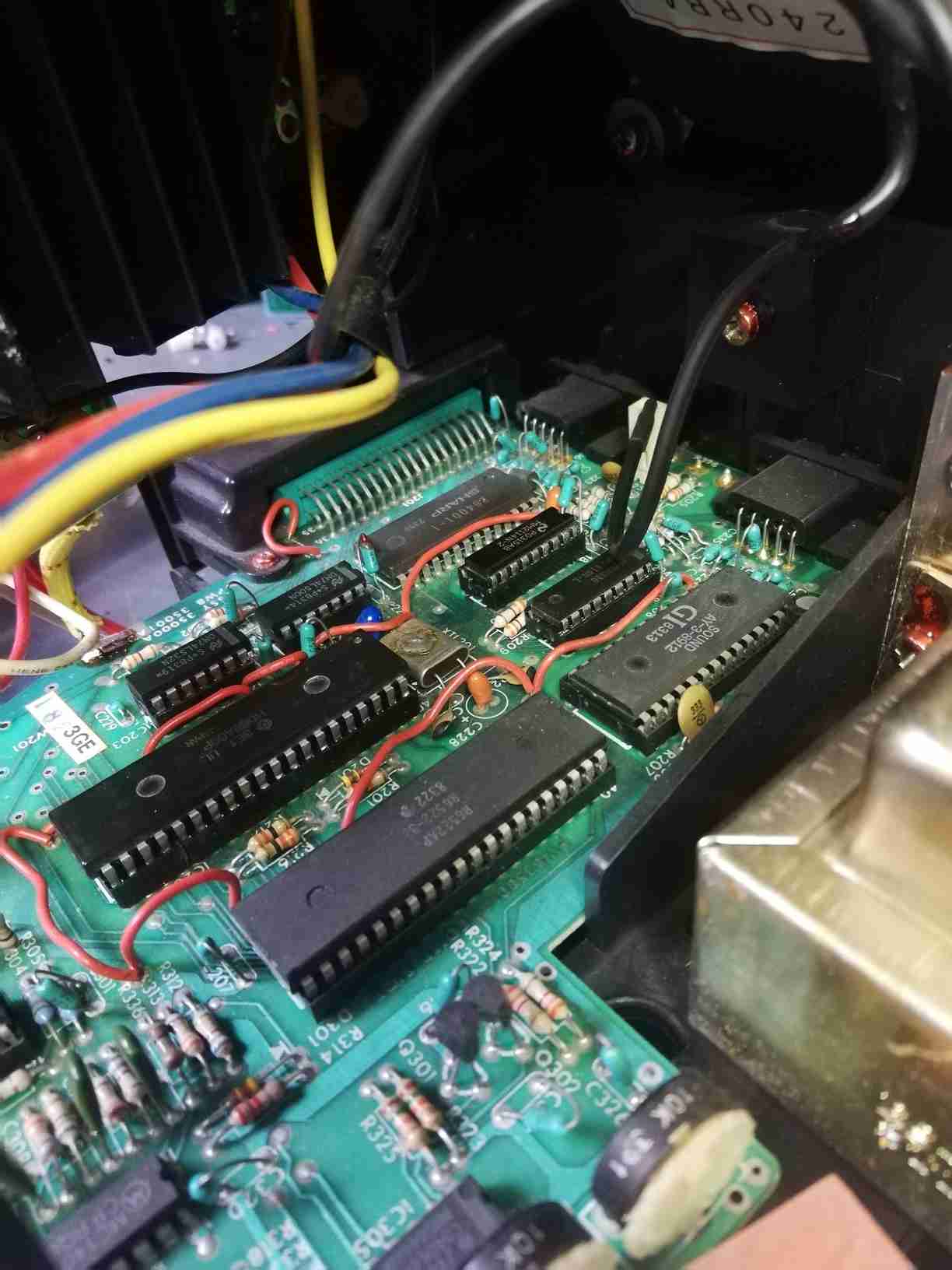
Problem encountered: With the Sweep Clean game some dots to eat in the game are not at the same distance.
With the game inserted BEDLAM, the menu appears but the game crashes immediately
Solution: IC204 RAM broken.
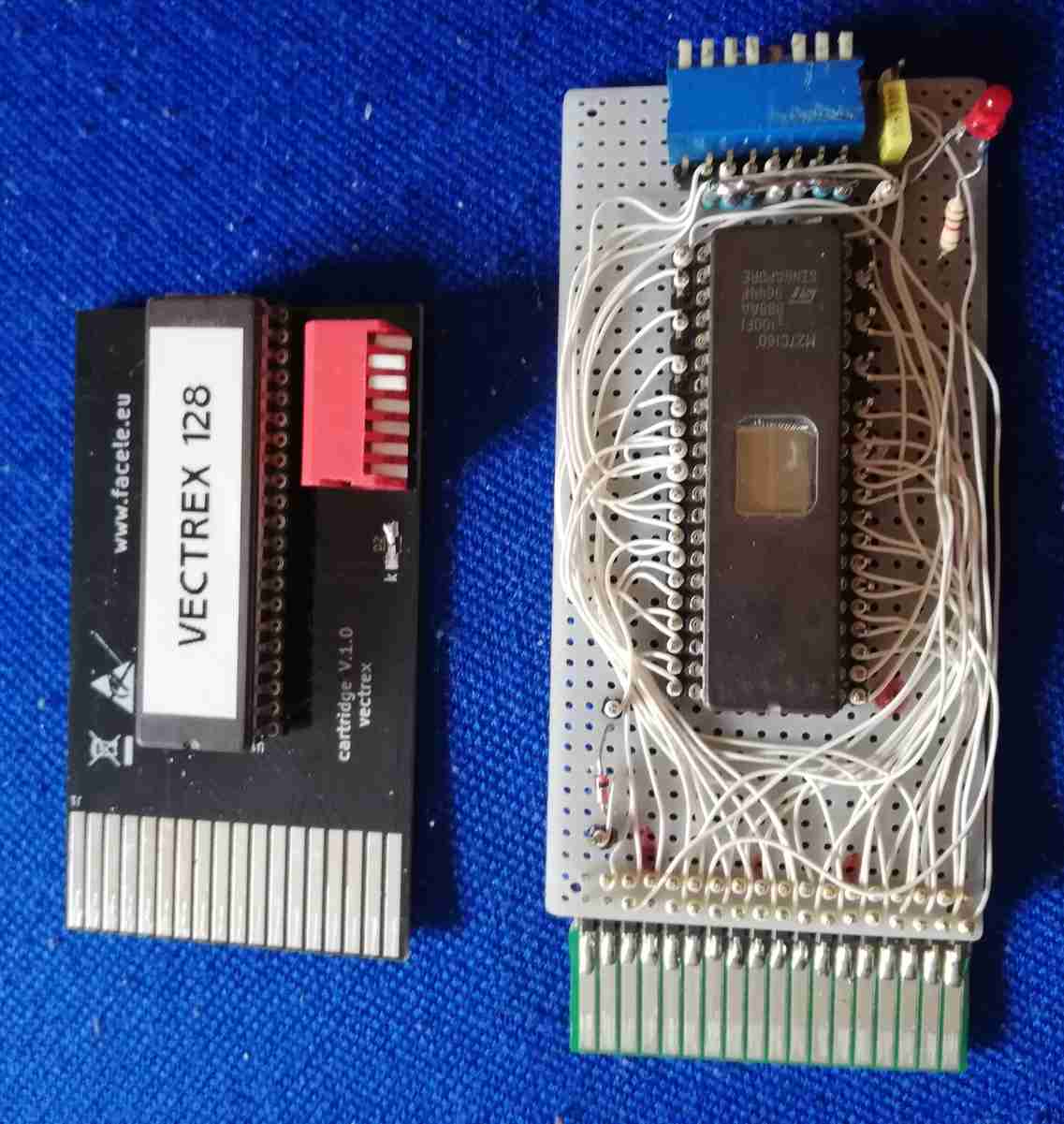
CARTRIDGE 128 PROGRAMS
Cartridge V.1.0 with demo e games
Part LIST: R1,2,3,4,5,6,7 = 10 kohm C1= 100 nF 50 volt D1= 1n4148 D2= LED

The file to be written to the EPROM has been split into four parts so that the 27C160 can be programmed using the TL866 programmer and an adapter.

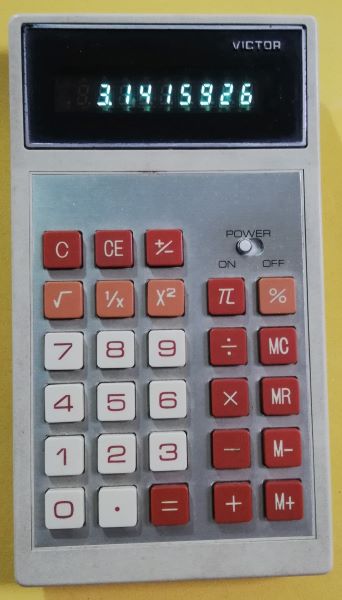 Model: 104R
Battery: 3 x AA
AC adapter:
Year: 1975
Chip: TMS1044NL
Info:
Vidicon
 Video camera tubes were devices based on the cathode-ray tube that were used in television cameras to capture television images, prior to the introduction of charge-coupled device (CCD) image sensors in the 1980s. Several different types of tubes were in use from the early 1930s, and as late as the 1990s.
In these tubes, an electron beam was scanned across an image of the scene to be broadcast focused on a target. This generated a current that was dependent on the brightness of the image on the target at the scan point. The size of the striking ray was tiny compared to the size of the target, allowing 480–486 horizontal scan lines per image in the NTSC format, 576 lines in PAL, and as many as 1035 lines in Hi-Vision.
 Model: View Screen TI-80 /81 /82 /83
Battery: power from calculator
Adapter:
Year: 2004
Chip: Toshiba T6A04A
Info:The TI ViewScreen panel connects with a cable to the Texas Instruments Graphing calculators. Placing the panel on the overhead projector enlarges the image of the handheld screen so that each student can follow along.
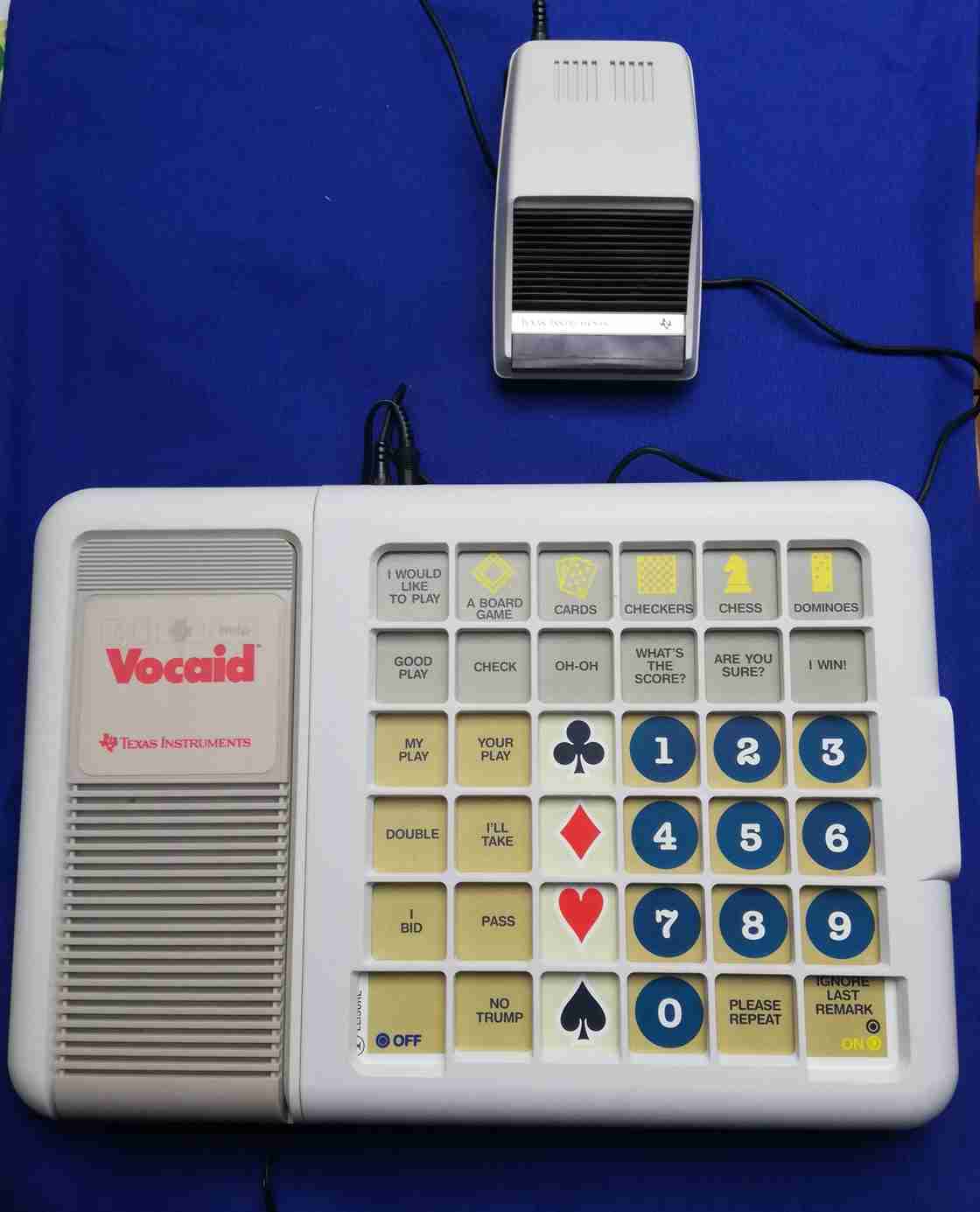 Model: Vocaid
Battery: 2 x D cells
AC adapter: AC9460
Year: 1984
Chip: CD8012, CD2802, CD2357
Info: A small change in the Speech-ROM but a huge difference in the application. This medical aid for the voice handicapped persons is based on a children game, the Touch & Tell.
 Model: Voyager
Battery: 4 x AAA cells
AC adapter:
Year: 1988
Chip: TSP50C41 (CMM41014),TSP60C19 (CMM19005) Modules: TSP60C21
Info:Texas Instruments introduced with the Voyager a novel educational toy that lacks the position sensitive keyboard of products like the Touch & Tell. Instead of the traditional keyboard a microphone is used to control the game. The speech recognition detects simple words like "yes", "no", "true" or "false" as an input to the game.The Voyager game uses exchangeable speech ROMs in an expansion port. This gives you access to other stories than the provided.
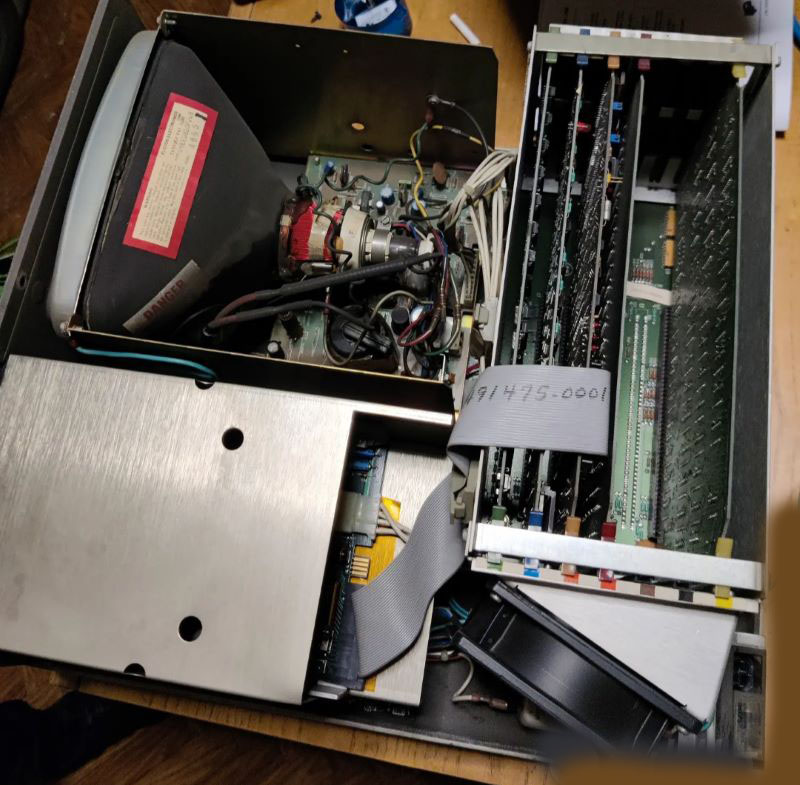
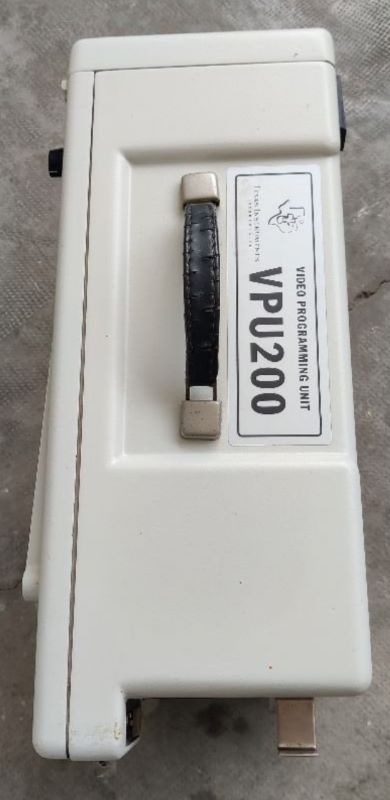
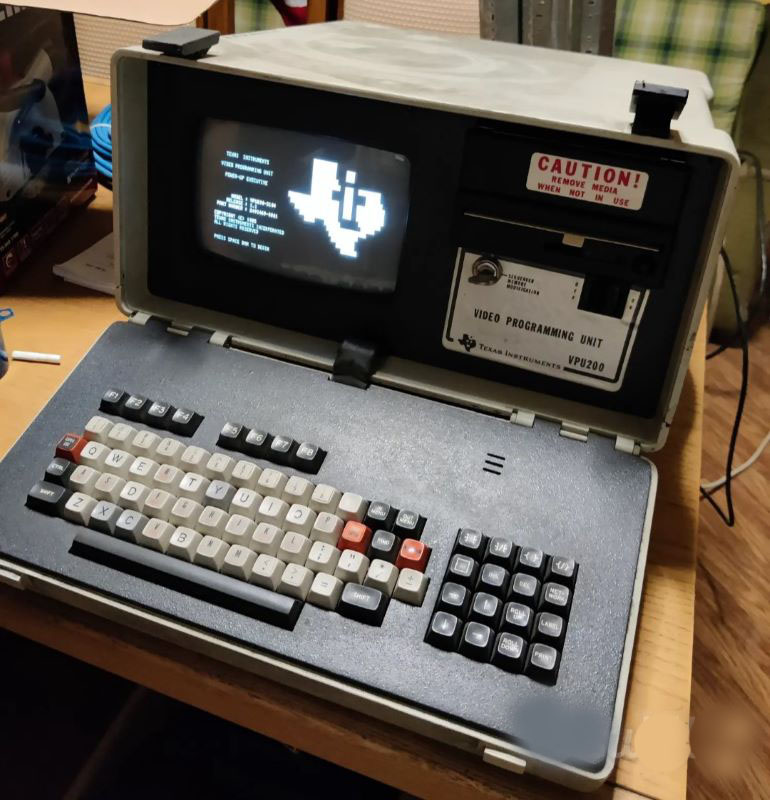 Model: VPU200-3104
Adapter: 110 volt or 220 volt (Italy)
Year: 1984
Keyboard: QWERTY full-stroke keyboard with arrow keys and separated numeric keypad
Cpu: TMS9900 Speed: 5 mhz CO-processor: - Rom: 8kRam: 128k Sound: Beeper
Text mode: 80 x 25 Graphics mode: 2 colors
Size - Weight: 47 x 24 x 55 cm / 18 kg with monochrome monitor
I/O ports: -
Media: one 5''1/4 disk-drive (320k) OS: -
Peripherals: -
Price: - 3000$ (USA, november 1983) / - model : £ 4.000.000 (Italy, 1985)
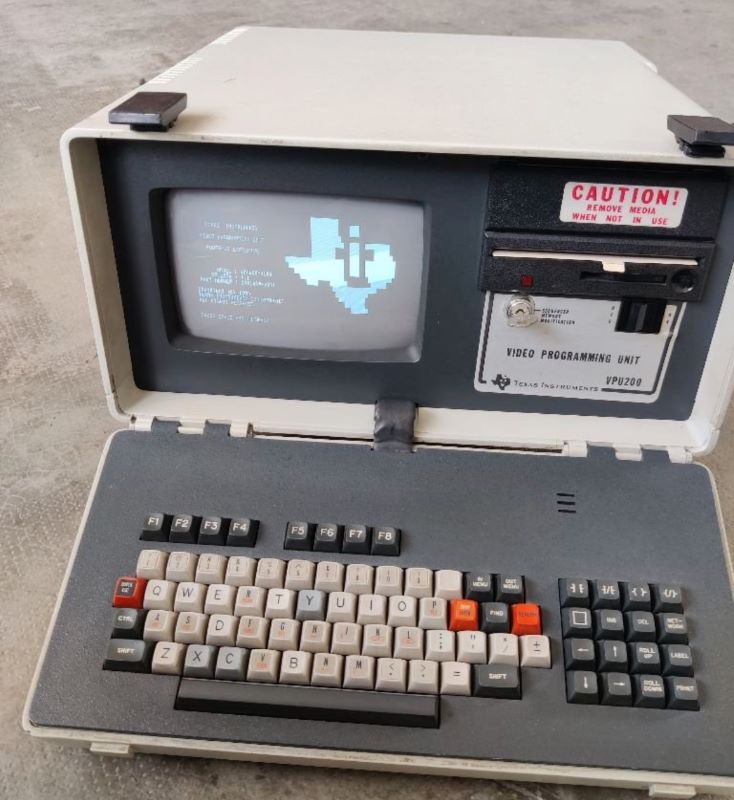
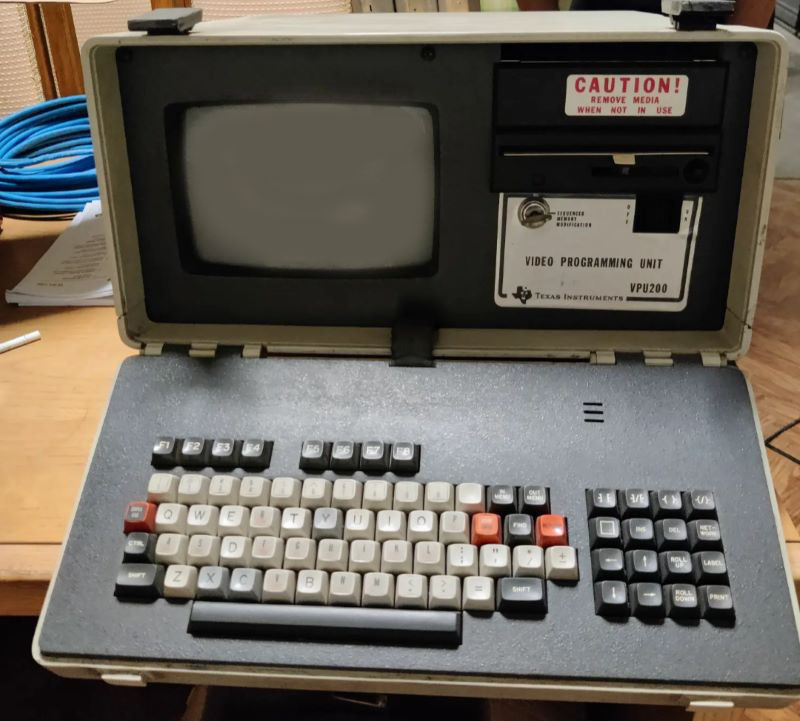
Info: The VPU200–3104 is a self-contained unit which houses a CRT display screen and features an attached hinge keyboard and a 3.3 MByte floppy disk drive. When the unit is not in use, the keyboard can be folded upward toward the display screen and latched in that position. The bottom of the keyboard then becomes the front of a completely closed case. For ease of handling, a carrying strap is affixed to one side of the case. The VPU200 is an industrial computer terminal and must be treated with the care given to electronic test equipment.
| Chemistry | Diameter (mm) | Maxell | Generic | Duracell | Rayovac | Varta | Seiko | Citizen | Timex | NewTEC | AG/Alkaline Equivalent |
| Silver Oxide |
11,6 | SR44W | 357 | D357 | 357 | V357 | SB-B9 | - | J | SR1154PW | AG13 |
| SR43W | 386 | D386 | 386 | V386 | SB-B8 | 280-41 | H | SR1142PW | AG12 | ||
| SR1130W | 389 | D389 | 389 | V389 | SB-BU | 280-15 | M | SR1130PW | AG10 | ||
| SR1120W | 391 | D391 | 391 | V391 | SB-BS | 280-30 | L | SR1120PW | AG8 | ||
| SR1116W | - | - | - | - | - | - | - | SR1116PW | - | ||
| 9,5 | SR927W | 399 | D399 | 399 | V399 | SB-BP | 280-44 | W | SR927PW | AG7 | |
| SR920W | 370 | D370 | - | - | SB-BN | 280-51 | Z | SR920PW | AG6 | ||
| SR916W | - | D372 | - | - | - | 280-61 | - | SR916PW | - | ||
| 7,9 | SR41W | 392 | D392 | 392 | V392 | SB-B1 | 280-13 | K | SR736PW | AG3 | |
| SR726W | 396 | D396 | 396 | V396 | SB-BL | 280-52 | V | SR726PW | AG2 | ||
| SR721W | 361 | D361 | - | - | SB-BK | 280-53 | X | SR721PW | AG11 | ||
| SR754W | 309 | D309 | 309 | V309 | - | - | - | - | AG5 | ||
| 6,8 | SR626W | 43 | - | - | - | SB-BW | 280-72 | - | SR626PW | - | |
| SR621W | - | - | - | - | - | 280-70 | - | SR621PW | - | ||
| 11,6 | SR44W | 303 | D303 | 303-1 | V303 | SB-A9 | 280-08 | A | SR1154SW | AG13 | |
| SR43SW | 301 | D301 | 301-1 | V301 | SB-A8 | 280-01 | D | SR1142SW | AG12 | ||
| SR1136SW | 344 | D344 | - | V344 | - | - | - | SR1136SW | - | ||
| SR1130SW | 390 | D390 | - | V390 | SB-AU | 280-24 | - | SR1130SW | AG10 | ||
| SR1120SW | 381 | D381 | 381 | V381 | SB-AS | 280-27 | - | SR1120SW | AG8 | ||
| SR1116SW | - | D366 | 366 | - | - | 280-46 | - | SR1116SW | - | ||
| 9,5 | SR936SW | 394 | D394 | 394 | V394 | SB-A4 | 280-17 | - | SR936SW | AG9 | |
| SR927SW | 395 | D395 | 395 | V395 | SB-AP | 280-48 | - | SR927SW | AG7 | ||
| SR920SW | 371 | D371 | 371 | V371 | SB-AN | 280-31 | - | SR920SW | AG6 | ||
| SR916SW | 373 | D373 | 373 | V373 | SB-AJ | 280-45 | - | SR916SW | - | ||
| 7,9 | SR41SW | 384 | D384 | 384 | V384 | SB-A1 | 280-18 | - | SR736SW | AG3 | |
| SR731SW | 329 | - | - | V329 | - | - | - | SR731SW | - | ||
| SR726SW | 397 | D397 | 397 | V397 | SB-AL | 280-28 | N | SR726SW | AG2 | ||
| SR721SW | 362 | D362 | 362 | V362 | SB-AK | 280-29 | S | SR721SW | AG11 | ||
| SR716SW | 315 | D315 | - | V315 | SB-AT | 280-56 | HA | SR716SW | - | ||
| SR712SW | - | - | - | - | SB-AH | 280-66 | - | SR712SW | - | ||
| 6,8 | SR626SW | 377 | D377 | 377 | V377 | SB-AW | 280-39 | BA | SR626SW | AG4 | |
| SR621SW | 364 | D364 | 364 | V364 | SB-AG | 280-34 | T | SR621SW | AG1 | ||
| SR616SW | 321 | D321 | 321 | V321 | SB-AF | 280-73 | DA | SR616SW | - | ||
| 5,8 | SR527SW | 319 | - | - | - | SB-AE | 280-60 | - | SR527SW | - | |
| SR521SW | 379 | D379 | - | V379 | SB-AC | 280-59 | JA | SR521SW | AG0 | ||
| SR516SW | 317 | D317 | - | V317 | SB-AR | 280-58 | CA | SR516SW | - | ||
| SR512SW | - | - | - | - | SB-AB | 280-68 | - | SR512SW | - | ||
| 4,8 | SR421SW | - | - | - | - | SB-A6 | 280-77 | - | SR421SW | - | |
| SR416SW | 337 | - | - | - | SB-A5 | 280-75 | - | SR416SW | - | ||
| Alkaline | 11,6 | LR44 | LR44 | PX76A675PK | RW82 | V13GA | - | - | KA | LR44 | AG13 |
| LR43 | LR43 | LR43 | 186-1 | V12GA | - | - | - | LR43 | AG12 | ||
| LR1130 | - | LR54 | 189-1 | V10GA | - | - | - | LR1130 | AG10 | ||
| LR1120 | - | LR55 | - | V8GA | - | - | - | LR1120 | AG8 | ||
| 7,9 | LR41 | - | - | - | V36A | - | 280-902 | GA | LR41 | AG3 | |
| Lithium Manganese |
20 | CR2032 | CR2032 | DL2032 | E-CR2032 | CR2032 | SB-T51 | - | - | CR2032 | - |
| CR2025 | CR2025 | DL2025 | E-CR2025 | CR2025 | SB-T14 | 280-205 | - | CR2025 | - | ||
| CR2016 | CR2016 | DL2016 | E-CR2016 | CR2016 | SB-T11 | 280-206 | FA | CR2016 | - | ||
| CR2012 | - | - | - | - | SB-T15 | 280-207 | - | CR2012 | - | ||
| 16 | CR1620 | - | DL1620 | - | CR1620 | - | - | - | CR1620 | - | |
| CR1616 | - | DL1616 | - | CR1616 | - | 280-209 | - | CR1616 | - | ||
| 12,5 | CR1220 | CR1220 | DL1220 | - | CR1220 | SB-T13 | - | - | CR1220 | - | |
| CR1216 | - | DL1216 | - | CR1216 | - | - | - | CR1216 | - | ||
| 10 | CR1025 | - | DL1025 | - | - | - | - | - | CR1025 | - |
No + Available:
LR55, LR1120, V8GA, CR2012, SB-T15, 280-207
17/08/26 - Update 2025 ODV 5x1000 Calculator TI-607
15/08/26 - Advertising / Bullettin
04/08/26 - Calculators Canon LE-82, Heath IC-2008-A
13/07/26 - Terminal VDT 924, Games w/ chip TI Jingle Ball Italy 1990, console RE-EL 403
11/06/26 - Console Magnavox Odyssey 500
11/06/26 - Watch Module 108, M150 Wristwatch TI-810-21
08/06/26 - Watch Module Tritum Light, 1014101_11, 1034395 Watch TI-459-04, TI-459-05
07/06/26 - Cartridge TI-99/4A Reading Rainbows Watch Module 026, 123, 1015471_E Calculator TI-0007 MathMate
02/06/26 - Calculators Eldorado Direct Two, Dog vanity fair, Wacth Module 1033805, 809008,1035691-3 rev.b
23/05/26 - Show / Event VCC Festival Nettuno Roma
08/05/26 - Calculator TI-31 solar, TI-40x galaxy, TI-30 galaxy
03/04/26 - Computer DRAGON 32 PLC & control CBL system 2
30/03/26 - Calculator TI-5008 microprinter, TI-1776
23/03/26 - Module 1015471_A, 54B_2, 54D_1, 9962B, 9971, 25 (6 digit), 1035057_8
19/03/26 - Educational Professor 1.2.3. Le Calc Magique Console Family Computer Nintendo
13/03/26 - Watches TI-3553-11, TI-3553-41
02/03/26 - Calculator TI-1754, TI-1795+, TI-5130 Watches TI-456-01
15/02/26 - Watches TI-xxx-183, TI-xxx-184, Phasar 2000 Gold, Module 1035726_8 Rev F, 1015331_E
13/02/26 - Computer AMIGA 1200
08/02/26 - Calculator with TI chip MBO Junior, Panasonic JE-860
06/02/26 - Lapel, Pins, Gadgets, Circuit Integrated
04/02/26 - Educational Little Professor Portuguese Version, Spelling B LCD
30/01/26 - Wristwatches TI-626-01 rare, TI-xxx-166 TI-xxx-167, TI-558-10, TI-441A-40, TI-441-06, Analogic One Hand, TI-601-21
15/01/26 - Educational Cyclon Battlestar Galactica Calculators TI-702 City Night, TI-3510 Diagram, TI-703 Blue Ocean
11/01/26 - Computer/console/repliche THE spectrum, THE C64, THE Sega Megadrive
11/01/26 - History Floppy Disk, Cassette Tapes, Silicon Wafer, Czochralski method
06/01/26 - Calculators TI-1783 card, Business Card, TI-35 plus, TI-701 graffiti, TI-55 II programmable, Commodore 301, TI-35 Galaxy Solar
28/11/25 - Event Viaggio nella storia del calcolo scuola " Angelo Maria Ricci (RI) "
07/11/25 - Watch Module 57, TI-441A-41, TI-656-30, TI-656-40, TI-401-05, Educational Entex Soccer
20/10/25 - Computer ZX-81 KIT , Eductional Big Trak
17/10/25 - Wristwatch TI-455-32, TI-3552-12, TI-262-41, TI-354-05
10/10/25 - Wristwatch TI-4652-11, TI-455-31, TI-555-10, TI-5550-10, TI-562-10, TI-562-11
16/09/25 - Mechanical Calculator Stanley Fuller
07/09/25 - Show 4a ed. "La storia con la Texas Instruments" 14a ed. "Fiera Mondiale del Peperoncino"
12/08/25 - uP-Trainer Gigatron Computer TTL, History TTL circuit integrated , CMOS circuit Integrated
07/07/25 - Console 1000 games for your color TV (1981)
07/07/25 - Show 2 edizione Terminillo Montagna Festival
07/07/25 - Calculators TI-59 / SR-52 Card reader , HP-55
30/05/25 - Console Atari XEGS, Super NES
27/05/25 - Rare Computer APPLE 1A
17/05/25 - History Magnetic Core
15/05/25 - To celebrate 1 million website visits - TI-99/4 Computer with built-in Speaker.
09/05/25 - Up Trainer MPF-I Printer and I/O interface
30/04/25 - VPU 200 - 3104 Video Terminal
11/03/25 - Event Rieti Biblioteca Paroniana
27/03/25 - TI-30 Schoenherr Braillotron
08/03/25 - Calculators TI-30 clear case prototype, Hands Watch Mos Memory (remember)
28/02/25 - SHOP
21/01/25 -History First Transistor 2N117 , SN7400
15/01/25 - WristWatch TI-3553-31 ,TI-3053-31, TI-851-01 round, TI-851-02 round
14/01/25 - Computer Apple Lisa 2/10, Apple Ipod Classic
05/01/25 - Calculators HP-19C, HP-21
06/12/24 - Show / Event Firenze Vintage Bit 2024
05/12/24 - Calculators ( Property Marie Collas ) TI-1255, TI-57 led Italiana
12/11/24 - Console Raspberry PI
09/11/24 - Wristwatch TI-xxx-088, TI-xxx-104, TI-xxx-122, TI-xxx-158, TI-467-12
08/11/24 - Web Site Inserted AudioGuide
05/11/24 - Web History Button Paypal Donate
02/11/24 - Calculator HP 48 GX , Wristwatch TI-454-12
17/10/24 - Mechanical Calculator Lagomarsino Numeria 5301
30/09/24 - Calculator Rare SR-40 LCD, TI-2500 (white), PLT-SHH1
24/09/24 - Calculator TI-1767, TI-5045 SV, Module Selector PC-100
08/09/24 - Educational Toys Defender Strikes Tabletopo
27/08/24 - Show 3a edizione "La Storia con la Texas Instruments" 13a Fiera mondiale del Peperoncino di Rieti
17/08/24 - Educational Super Libro Parlante, La Palla che Parla, Pitagora
07/08/24 - Commodore CBM Time Watch, Computer BBC micro
15/07/24 - Gadgets-Lapels-Pins Kinetic Balls
03/07/24 - Watches TI-8071 TI-8072 TI-8011 TI-8012
25/06/24 - Console Philips G7000
10/06/24 - Calculator Hewelett Packard HP-38 E
23/05/24 - Slide Rule Pickett N600-ES
15/05/24 - Calculator HP-25, TIPI sidecar
10/05/24 - Organizzazione di Volontariato ( OdV ) Inserito Bilancio e Statuto
03/05/24 - Computer Aquarius, QL Sinclair
01/05/24 - Calculator TI-92 plus, Educational Toy Mouse Computer,
Mechanical calculator Napier's Bones , How its made Vidicon
13/04/24 - Event A bit of History Mupin.IT Torino
22/03/24 - Computer Apple Macintosh 128K
22/03/24 - Calculator TI nspire CX II
04/03/24 - Calculator SR-60, TI-83 plus
01/03/24 - History PEMDAS, AOS
24/02/24 - Console Educational Amaze-A-Tron, Merlin, Bank Shot, Total Control 4
19/02/24 - Computer Mattel Aquarius , Travel Mate TM5300
07/02/24 - Calculator TI-1270 V0 RARE
02/02/24 - Calculator TI-30 D, TI-59 Scot Ware
02/01/24 - Wristwatch TI-451-02, TI-451-01, TI-451-03, TI-351-05, TI-351-06
05/12/23 - Computer Sinclair QL
14/11/23 - Mechanical Watch Solari Cifra 3
06/11/23 - Calculator TI-30 1 version ( Made in Italy ), Computer TI-99/4A Joystick Adapter, TI-99/4A Finalgrom, Eprom Adapter TI-99/4A
27/10/23 - Computer Repair Mother Board TIPPC , TIPC
18/10/23 - Calculators TI-30 X solar RCI, TI-68 RCI Prototype, TI-53 slanted RCI, TI-30 Test RCI
15/10/23 - Calculator Mechanical Abacus China, Console Simon (game) Milton Bradley, Autoracer Mattel
08/10/23 - Show Computers Stories , Brusaretro 2023
07/10/23 - Console Microvision, WristWatch TI-625-02, TI-xxx-087, Chip TMS1965
22/09/23 - New Link BitOld , Format Online , Francesco Sblendorio
03/09/23 - Show 2a edizione a Rieti in occasione della Fiera mondiale del peperoncino dal 30-08-23 al 03-09-23
13/08/23 - WristWatch TI-2551-30, TI-3553-21
10/08/23 - WristWatch very rare TI-800 Fantastic Find
09/08/23 - Let's play with P-Lab Claudio's WiFi modem and Francesco's BBS.
25/07/23 - Apple 1 replica Computer
26/06/23 - Watch Sinclair Black Watch
22/06/23 - Console Sears Telegames Pong Computer TM 990/301
04/06/23 - Educational Suonaparla Fonillo (ITALY)
15/05/23 - TMS3615 Octave Multiple Tone Synthesizer 2 footages ( Italy )
10/05/23 - Watch Boyscout Of America BSA TI-568-10
05/05/23 - We are officially a ODV ( voluntary organization )
16/04/23 - Entex Games w/TI Entex poker, Entex Space Invaders
07/04/23 - Watches TI-754-21, TI-451-01, Analogic DSP square , Phasar 1000 gold, Educational Robot Logo
06/04/23 - uProcessor Trainer KIM-1, SYM-1
30/03/23 - News TI Watch Museum - ODV was born !!!
21/03/23 - Computer EXL 100, IBM-604 Vacuum Tube
15/03/23 - Watches TI-851-01, TI-851-02
12/03/23 - Watches TI-565-11, TI-565-10, TI-566-10, TI-561-11, TI-561-11-ri, TI-502-06
26/02/23 - Calculators SR-51 1 version, TI-308 elle, TI-84 plus, PS-2100, Victor 104R, Radio Shack EC200
25/02/23 - New 3D box, Battery Pack BP7,BP8,BP9.
16/02/23 - news SSL certificate, NEW servers
08/02/23 - watches TI-461-01, TI-461-02, TI-741-04
31/01/23 - watches TI-403-04, TI-466-01, TI-626-02, TI-741-03, TI-808-31
30/01/23 - watches TI-801-01, TI-xxx-084, TI-xxx-103, TI-xxx-171
24/01/23 - uProcessor Trainer LCM 1002 - LCM 1003 - LCM1004
15/01/23 - Calculator TI-45 first version , Calculator Mechanical KL-1 Russian, Makeba Kombinator
13/01/23 - BBS.retrocampus.com
05/01/23 - Calculators TI-1744
21/12/22 - Olivetti Valentine Manual portable typewriter
26/11/22 - Firenze Vintage Bit
04/11/22 - Show OpenHub Rieti The first edition took place in Rieti, " History with Texas Instruments in the 20th Century "
17/10/22 - Calculators TI-59 WG & L, Canon F-31, Canon 8-T, Printer PC-800, TI-1750, Educational Star Trekulator
08/09/22 - Educational Speak & Math 1 version, Speak & Read 1 version, Speak & Spell 1 version 1981
09/07/22 - Educational Professor Mathics, Barbie, Little Leaners, Mickey Mouse, Math Magic
06/07/22 - Calculators TI-2500 Longines V 1, TI-30 Xa, TI-35 solar, Fun Calc, Zayre Concept V
25/06/22 - Calculators GTI-2001 ITA, Canon LE-80R
21/06/22 - Eductional La dictee Magique 2v, Mechanical Calculator Addometer, Show Museo L.Tellini Prato
20/06/22 - Calculators Ward P300, Panasonic JE-850, TI-36 x Solar, Citation 66-M4987-5
15/06/22 - Console Magnavox Odyssey 1
25/05/22 - Calculators Eldorado 8K, Computer Commodore SX-64
15/05/22 - Watches Analogic TI Square, Analogic TI express, Phasar 1000 gold, TI-xxx-282, TI-742-40, TI-xxx-183, new Pins
12/05/22 - Calculators HP-35, HP-45, HP-41C, HP-65, HP-80
10/05/22 - Calculators Comptator, TI-500, Educationals El Loro Profesor
15/04/22 - Computer Commodore 64C, Calculator Sinclair Executive, TI-1784 card
25/03/22 - Watches TI-562-11, TI-555-10, TI-576-11, TI-584-11, TI-584A-11, TI-131-11, TI-574-FK
22/03/22 - Calculators National Semiconductor 835A, Bowmar MX-80, TOKO mini 8
20/03/22 - Calculators Canon LE-83, LE-85, Commodore Minuteman 3, Panasonic JE855
18/03/22 - Watches TI-25241, TI-xxx-281, Wells LED
13/03/22 - COMPUTER ZX-80, Timex 1000, Timex 2068
08/03/22 - Watches TI-xxx-070, TI-402-01, TI-402-02, Diplomat, TI-441-03, TI-xxx-279, TI-457-06, TI-504-01, TI-xxx-085
02/03/22 - Calculators TI-309 nuance, TI-1002, TI-1880 checkwriter, TI-1050 Koh-I-Noor
01/03/22 - Calculators TI-1205, SR-50 Dismac, TI-1757-II, Number Beat
28/02/22 - Computer Osborne 1, Philips VG-8020
16/02/22 - Calculators TI-1706 III, TI-1606, TI-1768 II, TI-340, TI-30 slr
15/02/22 - Educational Voyager, Spelling abc, Silly SoundStage, Crazy ClubHouse, PS-9500, PLC Electronic Digital Thermostat
14/02/22 - Calculators Citation (66-4988-3), TI-34 Orion, Eldorado 8C, CL-80K, US-8, Minuteman 2, Avstar Piper
09/02/22 - Calculators SR-51A keys blue, Otis Kings, Aristo 868
24/01/22 - Calculators BP1 replacement
14/01/22 - Calculators TI-1032 BPR, TI-1757, Computer Commodore VIC20
07/01/22 - Calculators Battery Cover for TI-30 and others
20/12/21 - Calculators Studio 29, TI-31 lcd, TI-34 II, TI-65, TI-7100, TI-59 CREG, TI-59 EDF, TI-59 IMCO, TI-59 LVM
07/12/21 - Console Battle Ship, Educational Speak & Spell Clone China, Silent Terminals 703 , 745
28/11/21 - Show Gallery Firenze Vintage Bit 2021
15/11/21 - Calculators Canon Palmtronic 8M, TI Dotto conta e parla, PS-6700, Bonark 121 , TSI speech+, Zayre Concept III
06/11/21 - Calculators Koh-I-Noor TI-30, TI-45
15/10/21 - CONSOLE Atari 2600 Darth Vader, Atari 2600 Jr, HISTORY Allen Acorn, COMPUTER Apple Mac Mini
03/10/21 - Show Gallery Brusaretro 2021
27/09/21 - CALCULATOR TI-nspire CAS, Eur-2000+, Eur-2001 , Advertising
17/09/21 - EDUCATIONAL Magic Clown, CALCULATOR TI-5020
14/09/21 - COMPUTER Commodore Amiga 500, ZX Spectrum 16k, ZX Scpetrum+ 48k, TRS-80, PET-8032
24/08/21 - WATCHES TI-601-05 , TI-3552-11, TI-xxx-178 (extremly rare) , PINBACK, CALCULATOR Eur-2000
17/08/21 - CALCULATORS TI-5032, Programmer II lcd, TI-1626, TI-1750 II, TI-2200, TI-1020 Brown,
05/08/21 - CALCULATORS Citation, EDUCATIONAL Monkey See, Compucorp 324G
02/08/21 - COMPUTER Spectrum +2 , Spectrum +3 , Philips P2000T, Commodore C64, Olivetti Prodest PC1, IBM PS/2, Olivetti M24
15/07/21 - CALCULATORS Koh-i-noor TI-30 super
12/07/21 - HISTORY TMS1000, TMS0972, TMS1802, TMC1990, OEMs
07/07/21 - CALCULATORS Panasonic JE-170U, Sears 82
23/06/21 - COMPUTER Spectrum Inves+, Commodore C16, Sega SC-3000, ZX81
20/06/21 - COMPUTER Acorn Electron Enterprise, Cambrige Z88, Philips VG-8235
10/06/21 - CC-40 Printer/Plotter HX-1000
18/05/21 - CALCULATORS TI-1788 III, TI-1775, TI-7140, TI-1766 III, TI-30X solar, TI-32 solar, TI-1746
11/05/21 - CALCULATORS Sinclair Scientific, Concept 2000 Mr MUS-I-CAL
02/05/21 - Mechanical CALCULATORS Nestler Rietz 0232 WATCH man led TI-501-04, TI-808-41, Citizen Analogic, woman lcd TI-742-36
26/04/21 - CALCULATORS Conic EL-601, Canon LD-81, Unisonic 1040
15/04/21 - CALCULATORS Summit K16, Western Auto Citation (cloneTI-1050) , Casio Root 8S, TI-1265 KOH-I-NOOR, TI-5038 Paper Free Printer
26/03/21 - CALCULATORS Aristo M27 version 2, Privileg 842M
02/03/21 - CALCULATORS Logpit ( blue logo) EDUCATIONAL Speak and Spell SPAIN, Speak and Spell BUDDY German
19/02/21 - CALCULATORS Sinclair Cambridge Type 2 , Olivetti Logos 40, Olivetti Logos 59
06/02/21 - CALCULATORS TI-1040 , SR-10 upper keys blue, Casio ROOT-8, Aristo R-4000
31/01/21 - CALCULATORS TI-88 , PROJECT X
28/01/21 - CALCULATORS Galixa 40x, COMPUTERS TI-99/4 , TI-99/4A QI
12/01/21 - CALCULATORS TI-510, TI-5150, TI-5130 II, TI-5034, TI-5200 brown GADGETS Lamp, Pinback Learning, DLP WATCH chrono
24/12/20 - CALCULATORS TI-2001 GTI (FRA), TI-508 plus, EMG Hunor 88
21/12/20 - CALCULATORS TI-nspire CX, TEXET 880 , TEXET 2001 scientific, LJG 880, TI99 PHP1900, EDUCATIONAL Vocaid
03/12/20 - CALCULATORS Computer Fun laptop, SR-22, EC-425
15/11/20 - CALCULATORS Hema 1025, Kovac 808
06/11/20 - CALCULATORS TI-1895 II solar , Zayre Corporation Concept II, Concept I
12/10/20 - CALCULATORS TI-1020 brown, BOWMAR 905
06/10/20 - CALCULATORS TI-1750 III, TI-1015, TI-1775+, FIA-10 financial investment,TI-68,Investment Analyst, TI-2600 personal banker,
04/10/20 - CALCULATORS TI-1889, radio shack EC-201, Bhosei 3000, uP trainer TI LCM-1001
27/09/20 - CONSOLE Zanussi Ping-o-Tronic, Vectrex
24/09/20 - CALCULATORS Privileg SR-35 NC
20/09/20 - CALCULATORS overhead ( TI 30XS , intermediate plus, TI-10, TI-108, TI-15, TI-34II, TI-12 )
04/09/20 - MECHANICAL CALCULATORS Curta Type 1 and Type 2, Addiator ( Piccolo S )
15/08/20 - EDUCATIONAL based laboratory CBL, Vernier ( current probe, motion detector, magnetic field, acceleration, dual ch ampli, microphone, dual force) , View Screen, CALCULATOR TI-82
22/07/20 - CALCULATORS EC-2001 desktop, PTK-1050
02/07/20 - CALCULATORS investment analyst, TI-59 allianz, TI-59 Chrysler Credicavia, LE-10 Palmtronic, EDUCATIONAL Peek a boo zoo, Touch & Tell
19/06/20 - CALCULATORS TI-2600 personal banker, TI-21, TI-80, TI-68,
17/06/20 - EDUCATIONAL Mickey Math Adventure, Little Computer, Super speak & math, Math Star, COMPUTER APPLE IIc
12/06/20 - CALCULATORS LE-81M, Goulds Pumpulator, TI-15 lcd, TI-15 explorer lcd, TI-1706, TI-1750 III, TI-1015 brown, COMPUTER APPLE IIe
08/06/20 - CALCULATORS Exactra 19, 20, 21, 22, 23, 31 , Exactra TI-2000, TI-2511
03/06/20 - CALCULATORS TI-12 math explorer 1988, Pocketronic II, LD-80, LE-84, P200, P8M
29/05/20 - CALCULATORS BA-III , TI-12 Math Explorer 1998, Kosmos 1, Kosmos 2, Kosmos Astro, Radio Shack EC-314,
24/05/20 - CALCULATORS Electronic Wizard M4987,Citation 66-49-88, EDUCATIONAL Super Speak & Spell
19/05/20 - CALCULATORS EC-4000 Radio Shack , TE-8000 XAM
11/05/20 - CALCULATORS TI-7300, TI-3200 dialer, TI-501,TI-1100, TI-410, PHASAR 2000 steel, watches TI- first WATCH, TI-59 Marine
01/05/20 - CALCULATORS Pocketronic Canon - PPC portable professional computer
11/04/20 - EDUCATIONAL Spell master (radioshack), CALCULATORS TI-5112, TI-1020 brown, TI-1020 cream
01/04/20 - Covid19 - New Web Site with Joomla
28/03/20 - EDUCATIONAL Speak and Spell Chinese, CALCULATORS TI-1788
16/03/20 - CALCULATORS TI-5022, TI-1040, TI-502 blue, Galaxy 9, EDUCATIONAL TI-74 S, Little Professor EU, PS-3600 data bank, SR-10 EU
12/03/20 - CALCULATORS TI-150, TI-4000, TI-1798, TI-1755, TI-42 MBA,TI-1650
08/03/20 - CALCULATORS SR-60A, EDUCATIONAL Math Marvel, Le dictatee Magique FR, WATCHES PHASAR 1000 steel, Phasar 1000 gold woman
01/02/20 - CALCULATORS Little Professor Solar, TI-2550 IV, TI-10 Europa, TI-38, TI-2550
10/01/20 - CALCULATORS TI-professional KOH-I-Noor, TI-2700 mini data bank, TI-1505, TI-1788 II, TI-81 (1991) ,TI-82, TI-30 STAT, BA-35 student analyst
08/01/20 - EDUCATIONAL Super Le dictee magique, Super Speak & Spell 2 version EN, Speak & Spell ES
01/11/19 - CALCULATORS TI-investment analyst, TI-34 solar, TI-502 red, TI-1031, TI-1766 II, TI-1850 visor kit
27/10/19 - CALCULATORS TI-2550 III, PLC CBL System
16/10/19 - COMPUTERS Travelmate 2000, Travelmate 3000, LT-286
15/10/19 - EDUCATIONAL Grillo parlante più, Spell Master RADIO SHACK, Magic Wand Speak and Learn, RR1 Spell checker
13/10/19 -LAPTOP Travelmate 4000 winsx ,Computer TI-99/4A mini PHA 2037
23/09/19 - CALCULATORS TI-55 III, TI-1220, TI-2500 longines V1, TI-3000, TI-BA45,TI-73
06/09/19 - CALCULATORS TI-450, TI-5025
03/08/19 - PLC model 510, model 5TI programmer
27/07/19 - WATCHES LED stawars, TI-1260 , PM550-301, TI-2500 I series, TI-1760 datacard
15/04/19 - WATCHES TI-459-21, TI-459-31, TI-4652-31
03/01/19 - Calculators TI-2010 (Ciro)
26/12/18 - WATCHES TI-525-01, TI-525-03, TI-526-01, TI-526-02
06/12/18 - Inserted new page ( BOOKLET )
01/12/18 - Calculators BA-54 , PS-6200, The MBA, TI-2510, TI-70, PROSTAR, AVSTAR , PS-3000
24/11/18 - WATCHES added 21 news model !!!! exceeded 200 watches
13/10/18 - Calculators TI-3510, BA-55, SR-20
11/10/18 -EDUCATIONAL RR-1 spell checker
07/10/18 - CALCULATORS TI-95 procalc , TI-59 LLOYD
14/08/18 - EDUCATIONAL Math Marvel, letter logic, Language Tutor
10/08/18 - Computer Cartridge 512k TI-99/4a
16/07/18 - CALCULATORS TI-1225, TI-66, SR-56
20/05/17 - 32k Expansion RAM TI-99/4A
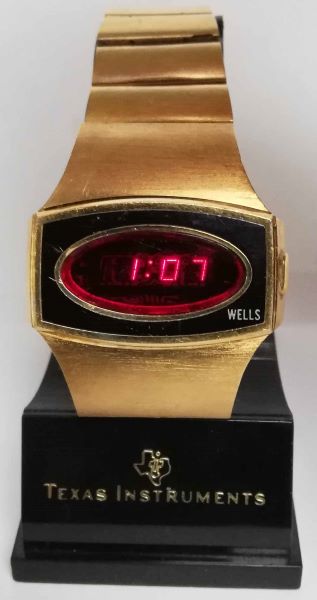 Model: Wells gold (logo wells) Code: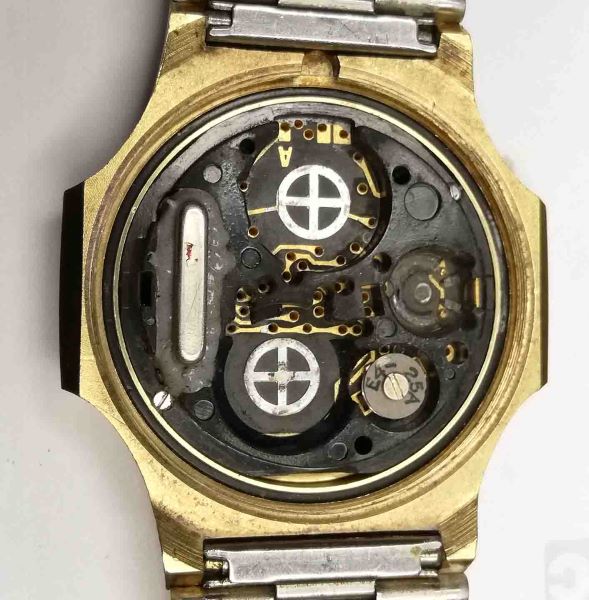
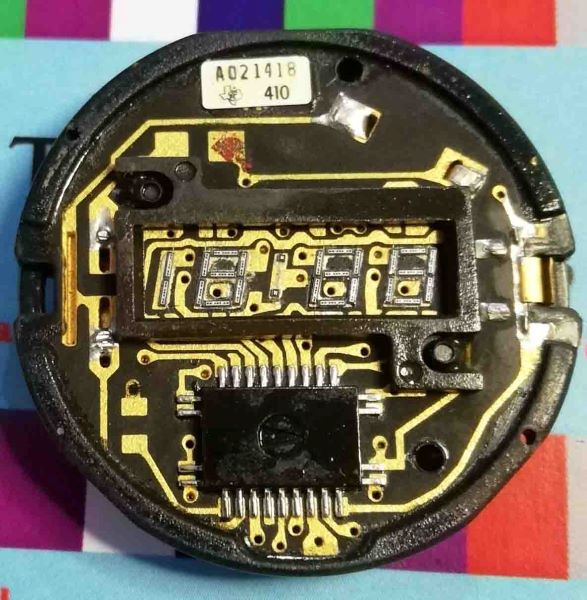
Battery: 2 x 386
WCase: gold 14K tone metal WBand: matching bracelet Face: red
Manual: yes Box: no Light: led
Year: 1979 Price: xxxx
Function: The three-function shows constant display of hours, minutes, seconds.
Info: The internal module used for operation is made by Texas Instruments
 Model: Wells gold (logo TI) Code:
Battery: 2 x 386
WCase: gold 14K tone metal WBand: matching bracelet Face: red
Manual: yes Box: no Light: led
Year: 1979 Price: xxxx
Function: The three-function shows constant display of hours, minutes, seconds.
Info: The internal module used for operation is made by Texas Instruments
Western Auto
Western Auto Supply Company was started in 1909 in Kansas City, Missouri by George Pepperdine as mail order business for replacement auto parts. The first retail store was established in 1921, and grew quickly as automobiles became more and more common. By the end of the 50s Western Auto was very much like a Sears store, even equipped with Catalog Order Center. Auto Parts comprised only a small percentage of the company's sales by the mid-60's and had all but disappeared by the 70s. In 1987, Sears Roebuck purchased Western Auto and in 1998 parent company Sears sold the remnants of Western Auto to Advance Auto Parts of Roanoke, Virginia.
You can easily recognize the calculators sold by Western Auto as Texas Instruments products. Most calculators were only personalized with a wooden foil on the key plate, the others received a new nameplate.
with permission of the author www.datamath.org
WG & L
Warren, Gorham & Lamont, Valhalla NY was founded in the 1950s, but traces its roots back to 1882, when Willard Warren started a weekly, the Connecticut Real Estate Record and Building News (later and still today, The Commercial Record). The Thomson Corporation acquired Warren, Gorham & Lamont (WG&L) in 1980. For more than three decades, WG&L was a major information source for finance professionals in companies of all sizes and industries. The WG&L product line includes some of the most valued newsletters, journals and treatises in the legal, tax and accounting fields. WG&L remains one of the most respected brands in the industry. In 1996, the tax publishing activities of Warren, Gorham & Lamont were merged with RIA.
Witschi Q Test 3000 ( 1977 )
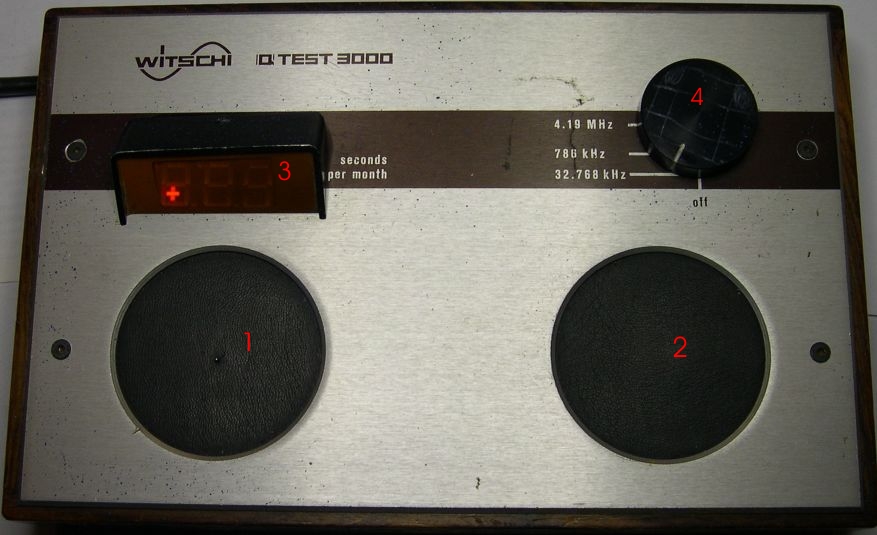
1 - Acoustic Sensor.
2 - Magnetic/capacitor Sensor.
3 - Display lights up if the result for the rate measurement is displayed in seconds per month.
4 - Rotary knob to change ON/OFF and the value of selected parameter : ( 32.768 khz , 786 khz, 4.19 mhz )
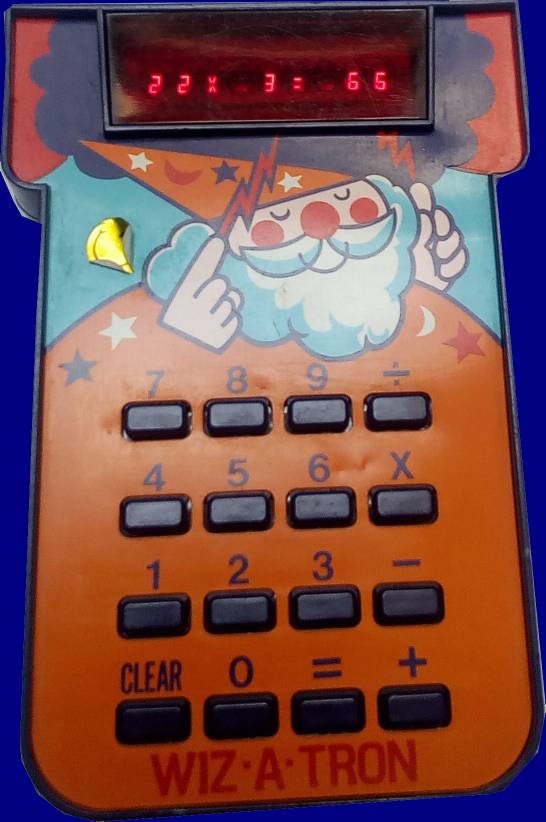 Model: Wiz a tron
Battery: 9 volt
AC adapter:
Year: 1977
Chip:
Info:
Here you can find the WIZ-A-Tron manual (US). With permission from datamath.org
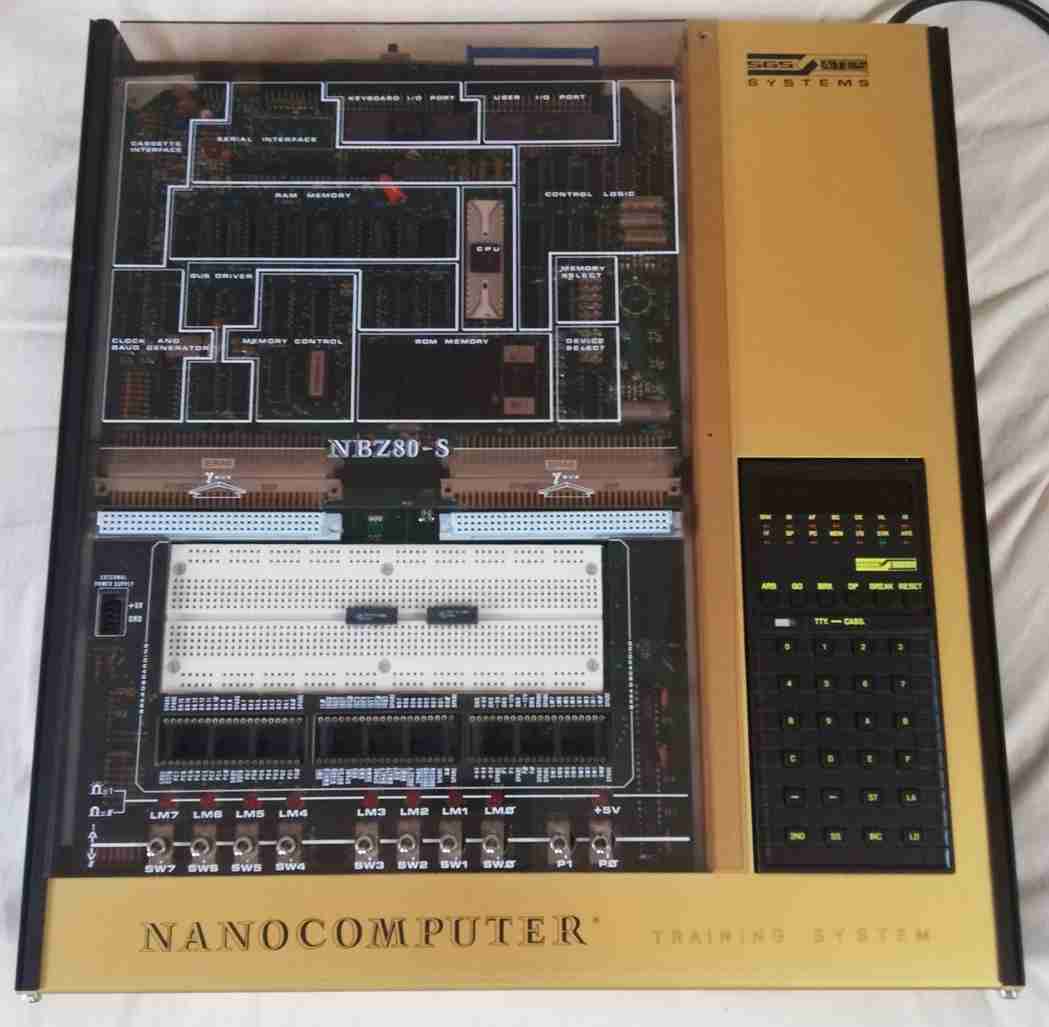 The NBZ80 is a microcomputer produced by the Italian company SGS-ATES around 1979, based on the Z80 microprocessor. It was marketed for educational purposes in the teaching of the microprocessor systems of the time, and defined by the manufacturer itself as a Nanocomputer (the term was a registered trademark). The primary interface is a hexadecimal keypad with a built-in 8-segment seven-segment display, connected to the main block via a flat cable. For testing with electronic circuits, the NBZ80-S version was offered, including a special hardware for experiments.
Zayre Corporation
Zayre Corporation was founded in 1956 by Stanley and Sumner Feldberg in Hyannis, Massachusetts as a discount department store chain. Zayre launched already in August 1975 the CONCEPT series of portable electronic calculators with the introduction of their first CONCEPT 24.
with permission of the author www.datamath.org
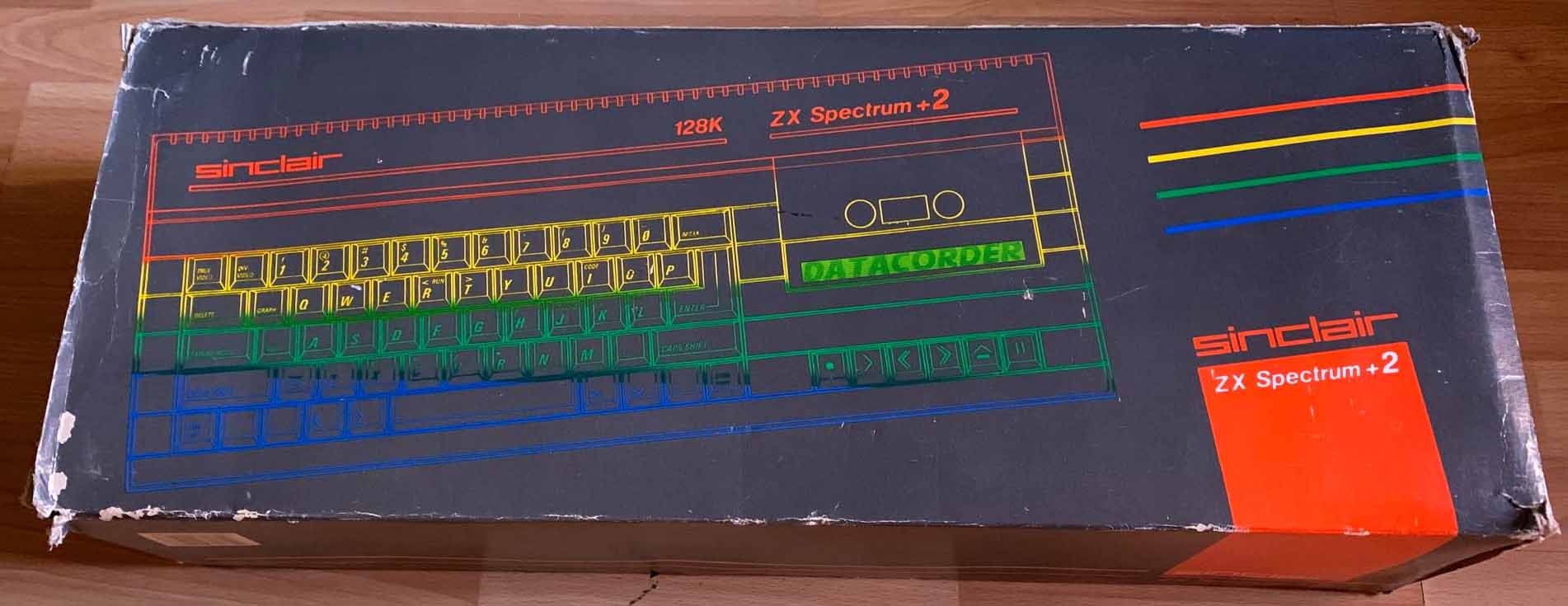
The ZX Spectrum +2 (UK: /zɛdɛks/) is an 8-bit personal home computer developed by Sinclair Research. It was first released in the United Kingdom on 23 April 1982 and went on to become Britain's best selling microcomputer.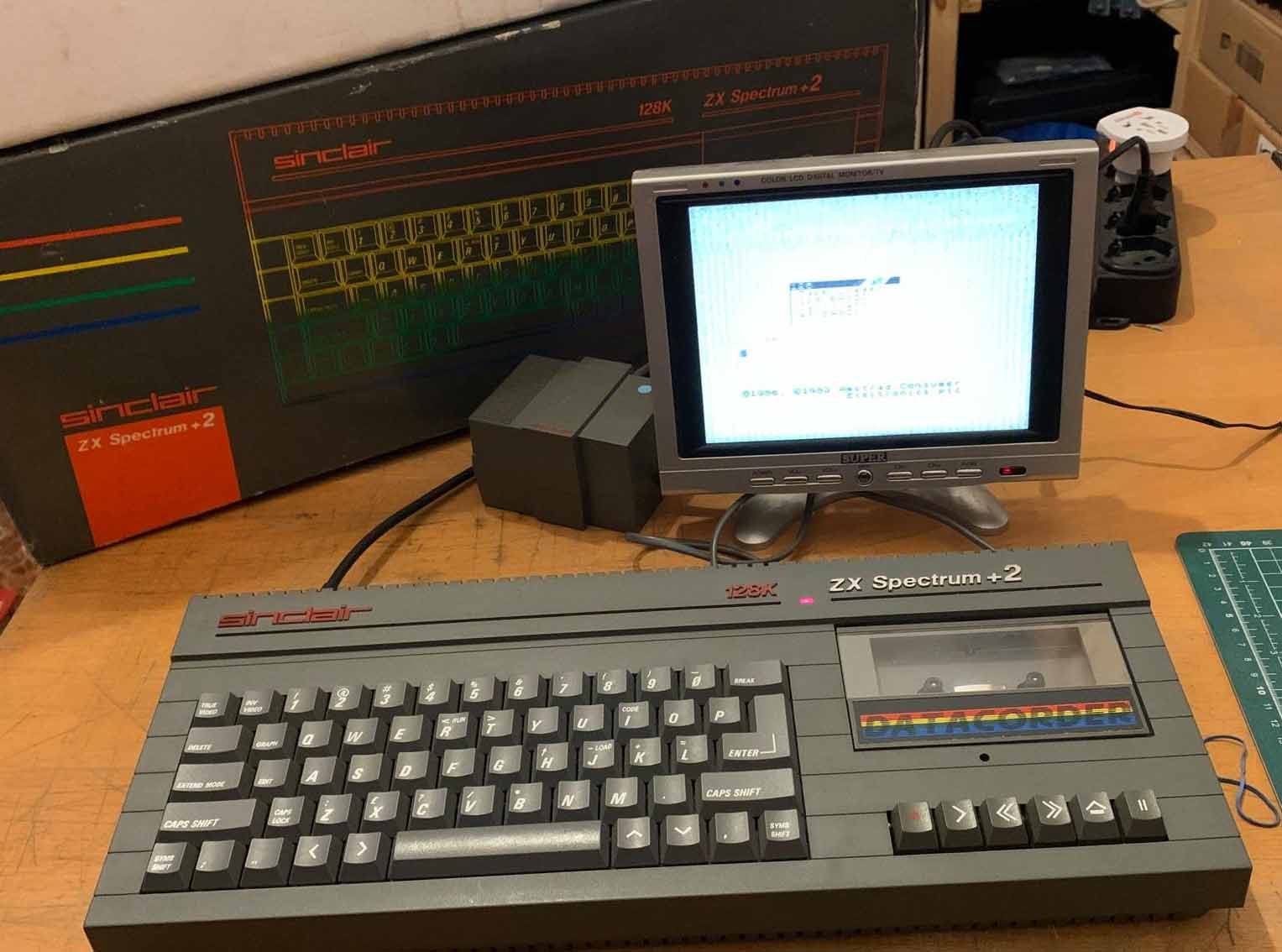
Referred to during development as the ZX81 Colour and ZX82, it was launched as the ZX Spectrum to highlight the machine's colour display, compared with the black and white display of its predecessor, the ZX81. The Spectrum was released as eight different models, ranging from the entry level with 16 KB RAM released in 1982 to the ZX Spectrum +3 with 128 KB RAM and built in floppy disk drive in 1987; altogether they sold over 5 million units worldwide (not counting unofficial clones).
The Spectrum was among the first home computers in the UK aimed at a mainstream audience, similar in significance to the Commodore 64 in the US or the MO5 in France. The introduction of the ZX Spectrum led to a boom in companies producing software and hardware for the machine, the effects of which are still seen. Some credit it as the machine which launched the UK IT industry. Licensing deals and clones followed, earning Clive Sinclair a knighthood for services to British industry.
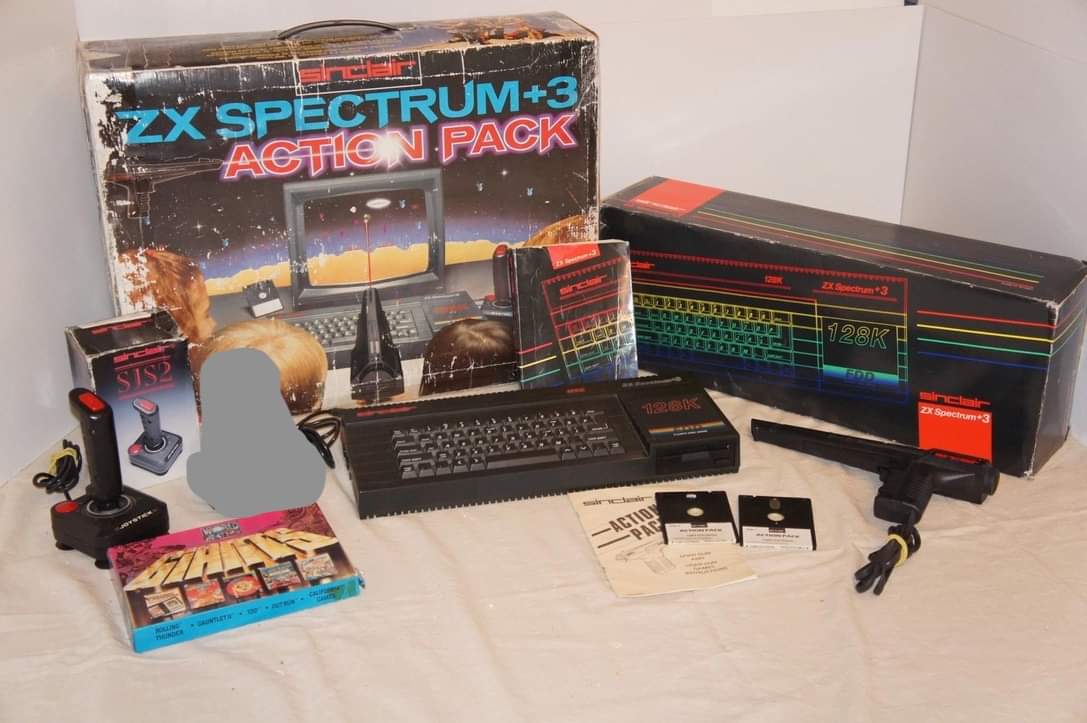
The ZX Spectrum +3 (UK: /zɛdɛks/) is an 8-bit personal home computer developed by Sinclair Research. It was first released in the United Kingdom on 23 April 1982 and went on to become Britain's best selling microcomputer.
Referred to during development as the ZX81 Colour and ZX82, it was launched as the ZX Spectrum to highlight the machine's colour display, compared with the black and white display of its predecessor, the ZX81. The Spectrum was released as eight different models, ranging from the entry level with 16 KB RAM released in 1982 to the ZX Spectrum +3 with 128 KB RAM and built in floppy disk drive in 1987; altogether they sold over 5 million units worldwide (not counting unofficial clones).
The Spectrum was among the first home computers in the UK aimed at a mainstream audience, similar in significance to the Commodore 64 in the US or the MO5 in France. The introduction of the ZX Spectrum led to a boom in companies producing software and hardware for the machine, the effects of which are still seen. Some credit it as the machine which launched the UK IT industry. Licensing deals and clones followed, earning Clive Sinclair a knighthood for services to British industry.
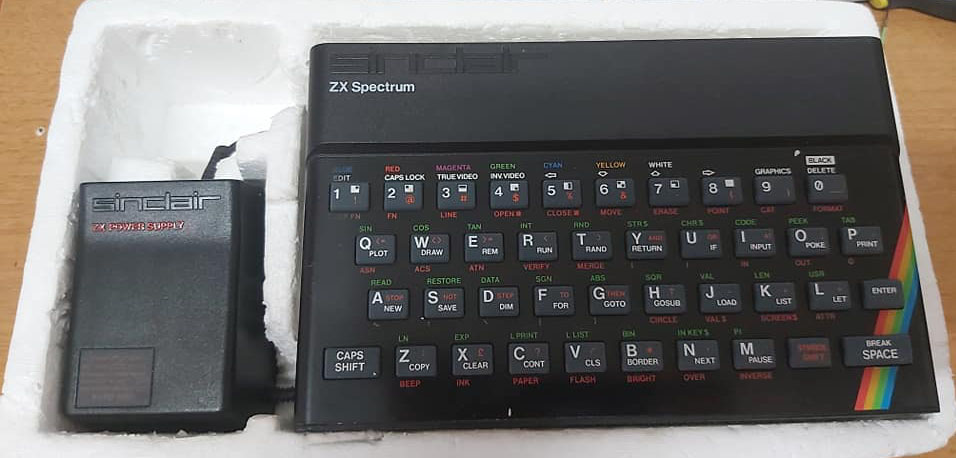 ZX Spectr
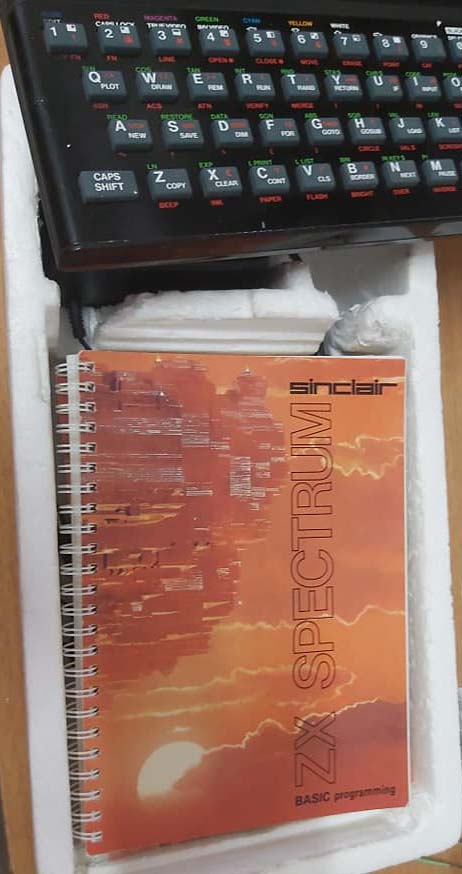 um 16K.
The ZX Spectrum (UK: /zɛdɛks/) is an 8-bit personal home computer developed by Sinclair Research. It was first released in the United Kingdom on 23 April 1982 and went on to become Britain's best selling microcomputer.
Referred to during development as the ZX81 Colour and ZX82, it was launched as the ZX Spectrum to highlight the machine's colour display, compared with the black and white display of its predecessor, the ZX81. The Spectrum was released as eight different models, ranging from the entry level with 16 KB RAM released in 1982 to the ZX Spectrum +3 with 128 KB RAM and built in floppy disk drive in 1987; altogether they sold over 5 million units worldwide (not counting unofficial clones).
The Spectrum was among the first home computers in the UK aimed at a mainstream audience, similar in significance to the Commodore 64 in the US or the MO5 in France. The introduction of the ZX Spectrum led to a boom in companies producing software and hardware for the machine, the effects of which are still seen. Some credit it as the machine which launched the UK IT industry. Licensing deals and clones followed, earning Clive Sinclair a knighthood for services to British industry.
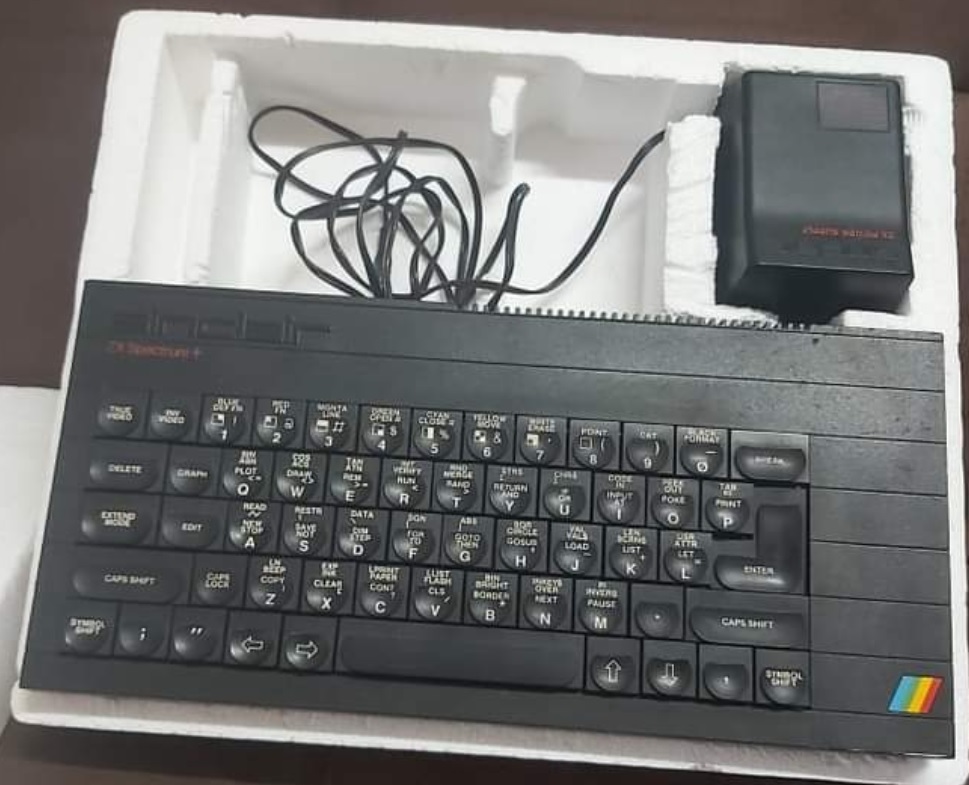 ZX Spectrum+ 48K. Planning of the ZX Spectrum+ started in June 1984, and was released on October 15th. This 48 KB Spectrum (development code-name TB) introduced a new QL-style case with an injection-moulded keyboard and a reset button that was basically a switch that shorted across the CPU reset capacitor. Electronically, it was identical to the previous 48 KB model. It was possible to change the system boards between the original case and the Spectrum+ case. It retailed for £179.95 (equivalent to £583 in 2019). A DIY conversion-kit for older machines was available. Early on, the machine outsold the rubber-key model 2:1; however, some retailers reported a failure rate of up to 30%, compared with a more usual 5–6% for the older model. In early 1985, the original Spectrum was officially discontinued and the ZX Spectrum+ was reduced in price to £129.95 (equivalent to £397 in 2019).
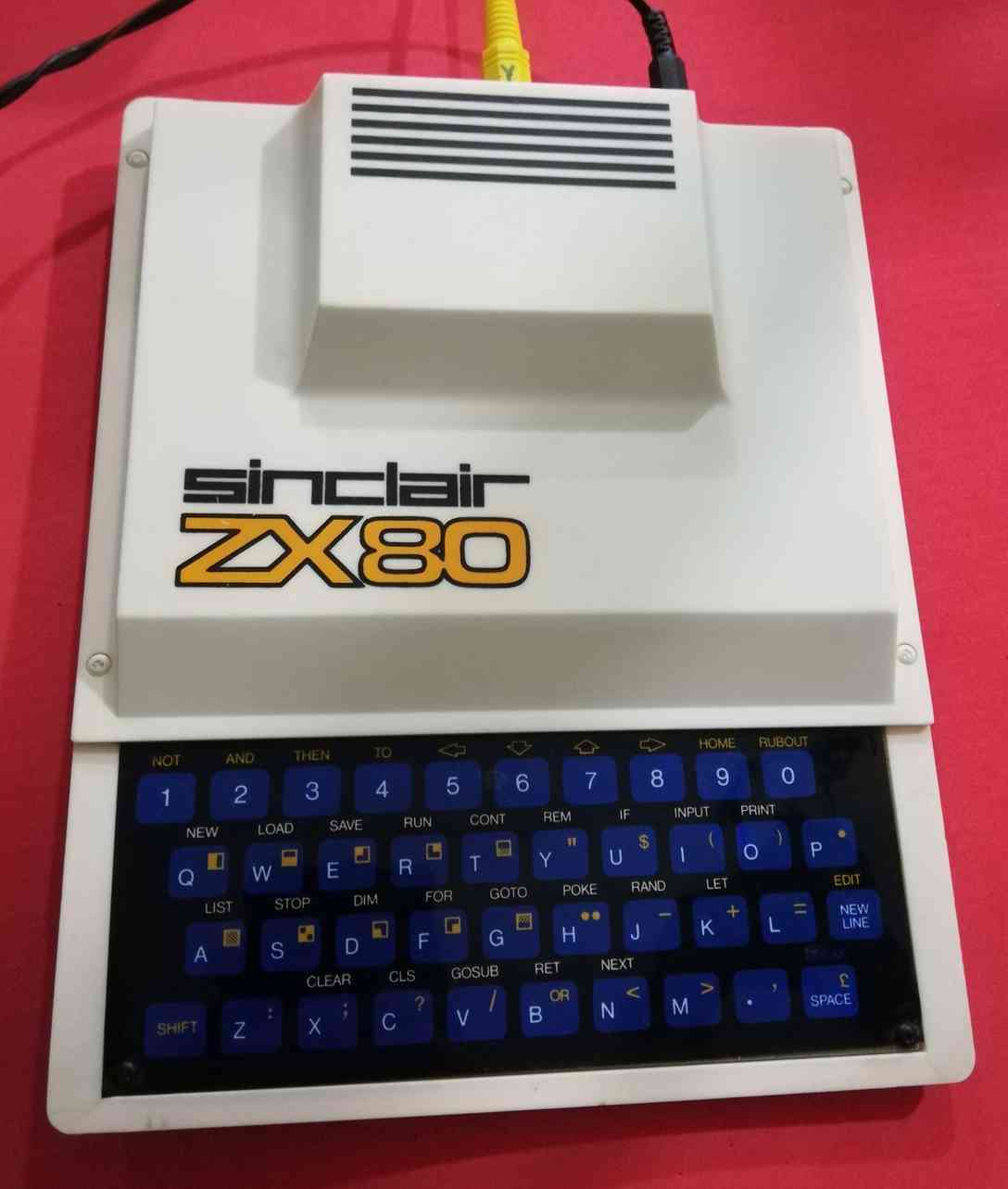 The Sinclair ZX80 is a home computer launched on 29 January 1980 by Science of Cambridge Ltd. (later to be better
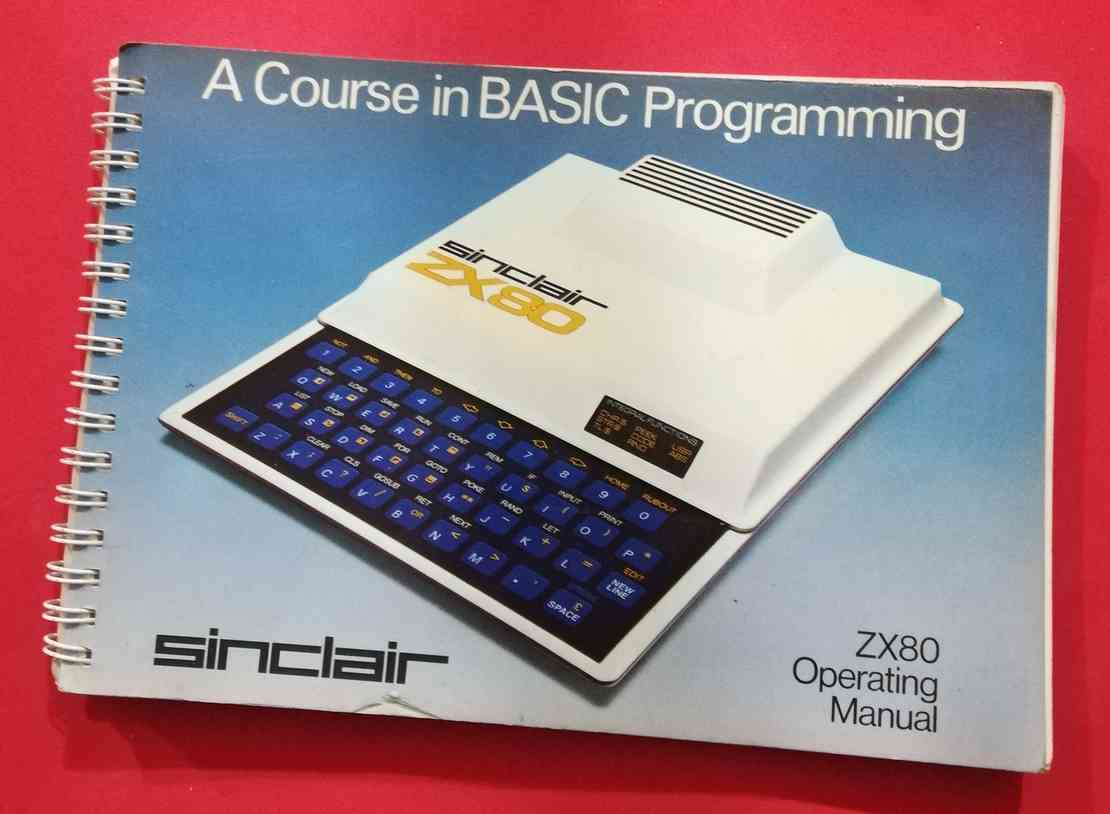 known as Sinclair Research). It is notable for being one of the first computers available in the United Kingdom for less than a hundred pounds. It was available in kit form for £79.95, where purchasers had to assemble and solder it together, and as a ready-built version at £99.95.The ZX80 was very popular straight away, and for some time there was a waiting list of several months for either version of the machine.
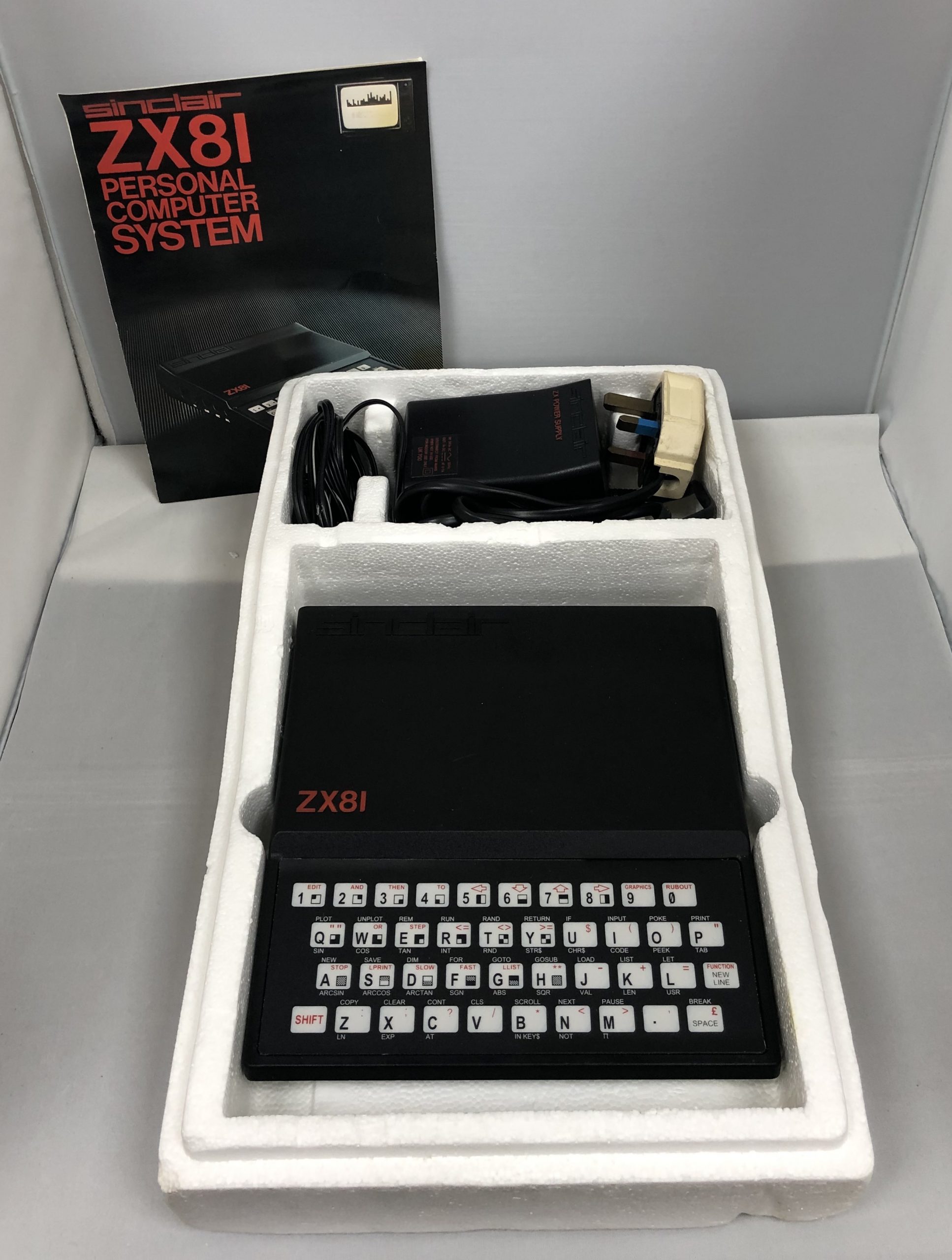 The ZX 81 is a home computer that was produced by Sinclair Research and manufactured in Dundee, Scotland, by Timex Corporation. It was launched in the United Kingdom in March 1981 as the successor to Sinclair's ZX80 and designed to be a low-cost introduction to home computing for the general public. It was hugely successful; more than 1.5 million units were sold. In the United States it was initially sold as the ZX-81 under licence by Timex. Timex later produced its own versions of the ZX81: the Timex Sinclair 1000 and Timex Sinclair 1500. Unauthorized ZX81 clones were produced in several countries.
The ZX81 was designed to be small, simple, and above all, inexpensive, with as few components as possible. Video output is to a television set rather than a dedicated monitor. Programs and data are loaded and saved onto compact audio cassettes. It uses only four silicon chips and a mere 1 KB of memory. There is no power switch or any moving parts with the exception of a VHF TV channel selector switch present in some models. It has a pressure-sensitive membrane keyboard. The ZX81's limitations prompted a market in third-party peripherals to improve its capabilities. Its distinctive case and keyboard brought designer Rick Dickinson a Design Council award.
The ZX81 could be bought by mail order preassembled or, for a lower price, in kit form. It was the first inexpensive mass-market home computer to be sold by high street stores, led by W. H. Smith and soon many other retailers. The ZX81 marked the point when computing in Britain became an activity for the general public rather than the preserve of businessmen and electronics hobbyists. It produced a huge community of enthusiasts, some of whom founded their own businesses producing software and hardware for the ZX81. Many went on to have roles in the British computer industry. The ZX81's commercial success made Sinclair Research one of Britain's leading computer manufacturers and earned a fortune and an eventual knighthood for the company's founder Sir Clive Sinclair.
 KIT version of the famous ZX-81
The ZX 81 is a home computer that was produced by Sinclair Research and manufactured in Dundee, Scotland, by Timex Corporation. It was launched in the United Kingdom in March 1981 as the successor to Sinclair's ZX80 and designed to be a low-cost introduction to home computing for the general public. It was hugely successful; more than 1.5 million units were sold. In the United States it was initially sold as the ZX-81 under licence by Timex. Timex later produced its own versions of the ZX81: the Timex Sinclair 1000 and Timex Sinclair 1500. Unauthorized ZX81 clones were produced in several countries.
The ZX81 was designed to be small, simple, and above all, inexpensive, with as few components as possible. Video output is to a television set rather than a dedicated monitor. Programs and data are loaded and saved onto compact audio cassettes. It uses only four silicon chips and a mere 1 KB of memory. There is no power switch or any moving parts with the exception of a VHF TV channel selector switch present in some models. It has a pressure-sensitive membrane keyboard. The ZX81's limitations prompted a market in third-party peripherals to improve its capabilities. Its distinctive case and keyboard brought designer Rick Dickinson a Design Council award.
The ZX81 could be bought by mail order preassembled or, for a lower price, in kit form. It was the first inexpensive mass-market home computer to be sold by high street stores, led by W. H. Smith and soon many other retailers. The ZX81 marked the point when computing in Britain became an activity for the general public rather than the preserve of businessmen and electronics hobbyists. It produced a huge community of enthusiasts, some of whom founded their own businesses producing software and hardware for the ZX81. Many went on to have roles in the British computer industry. The ZX81's commercial success made Sinclair Research one of Britain's leading computer manufacturers and earned a fortune and an eventual knighthood for the company's founder Sir Clive Sinclair.


Donated Sergio Massacesi

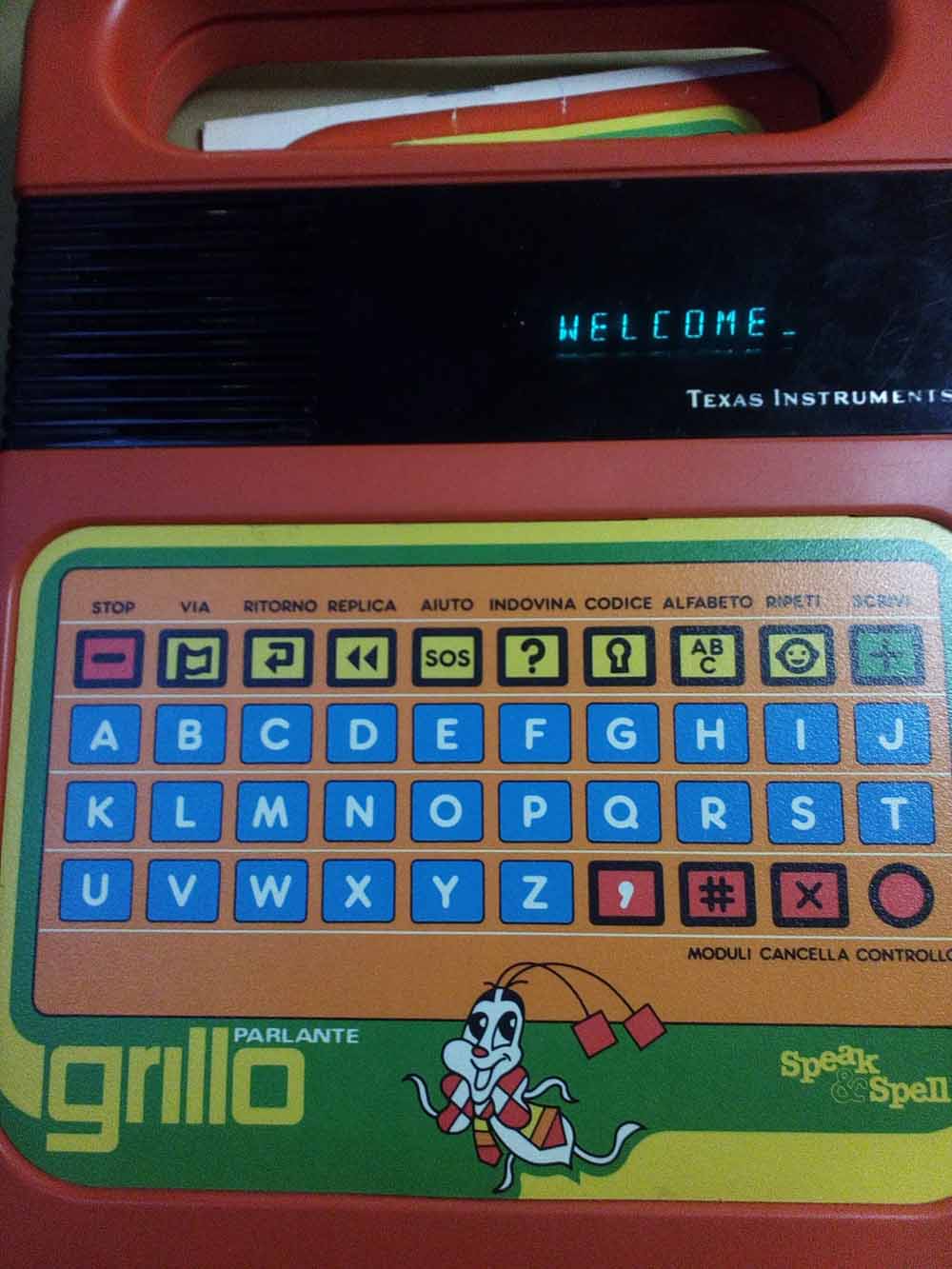
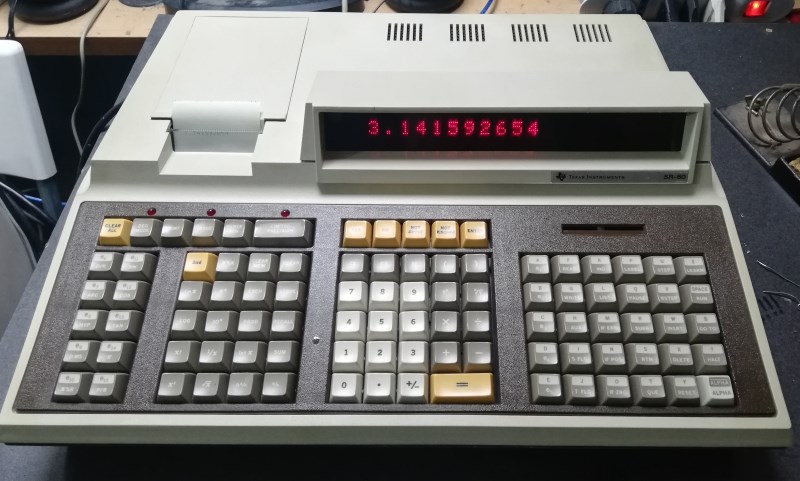
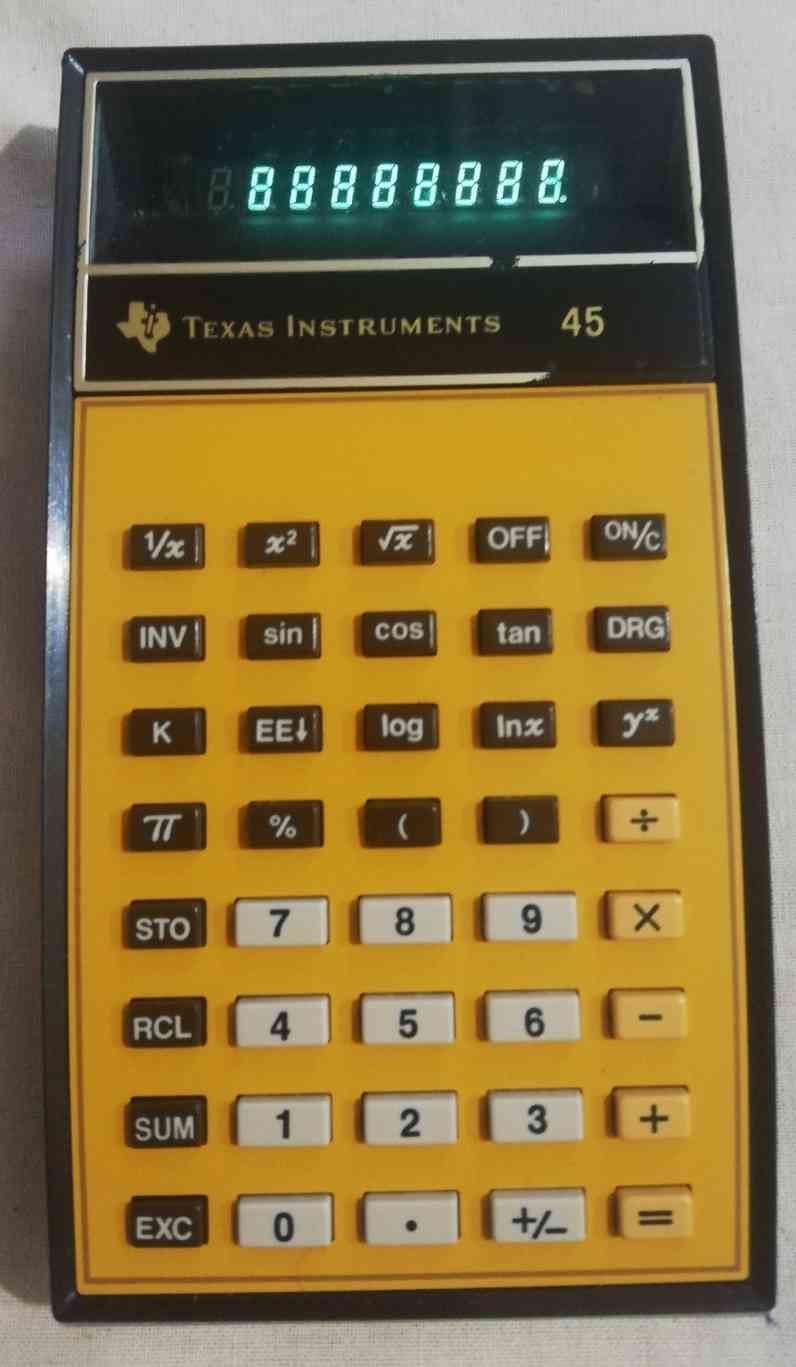
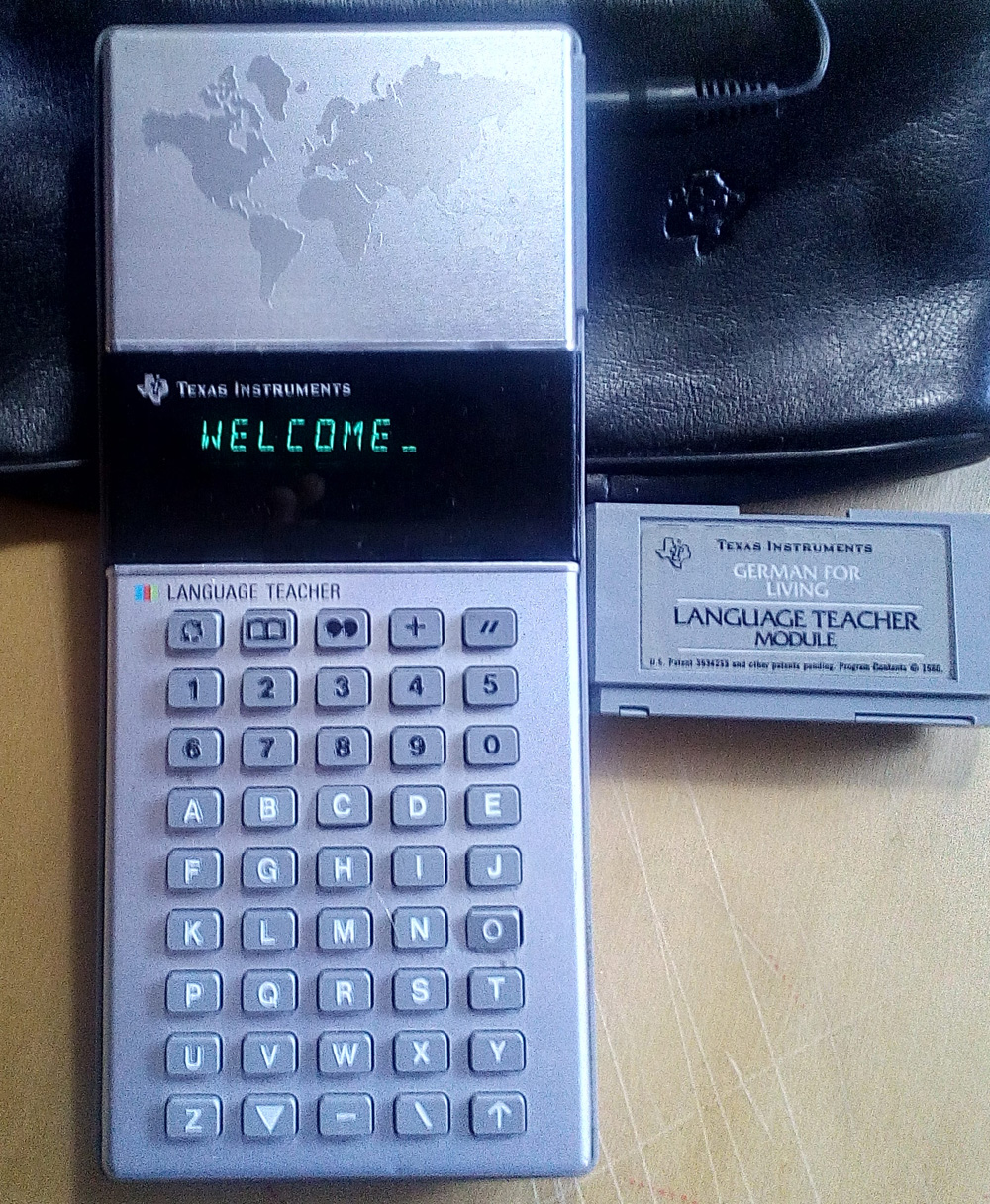
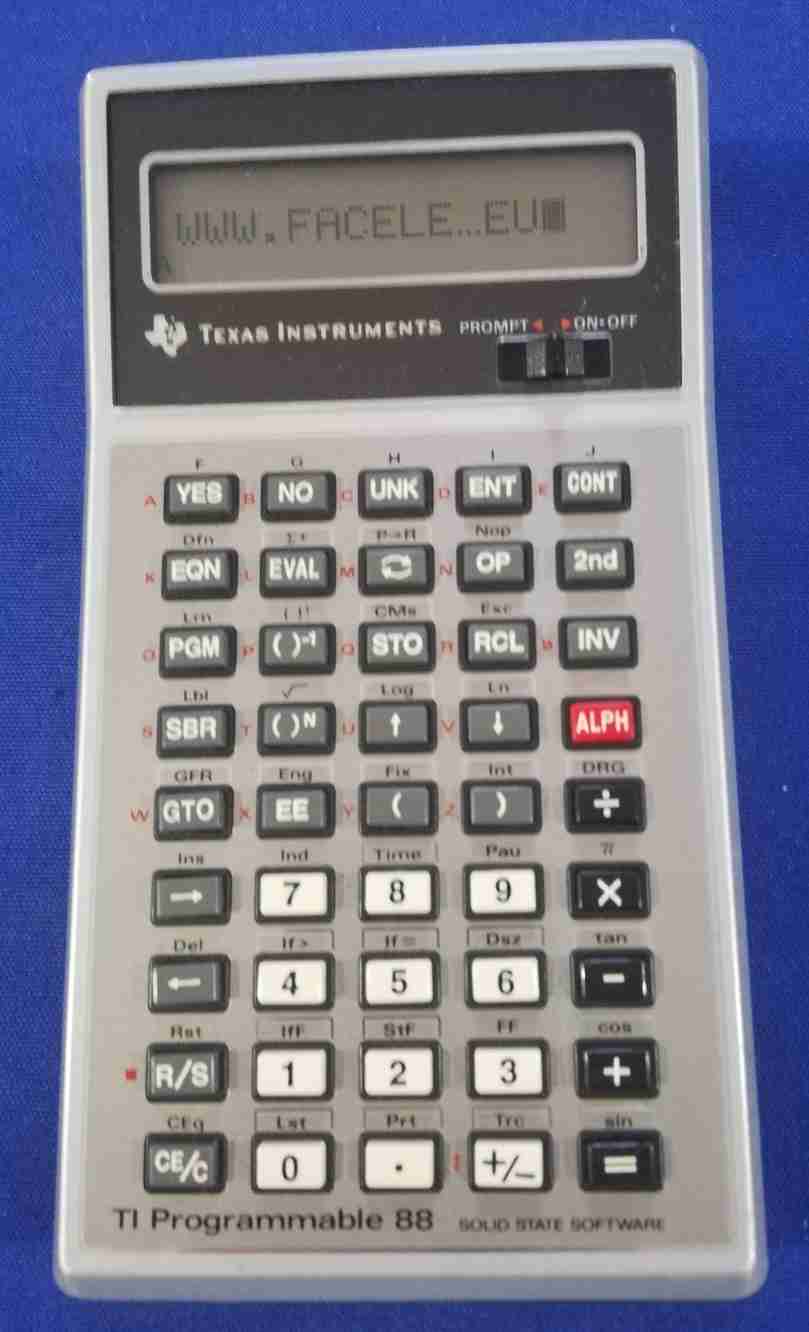
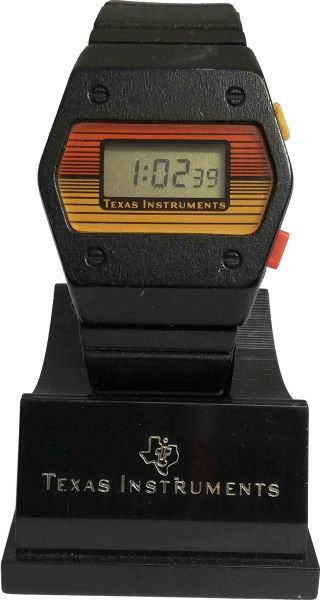
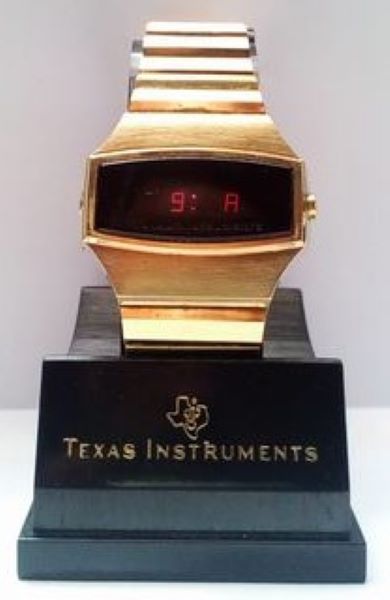
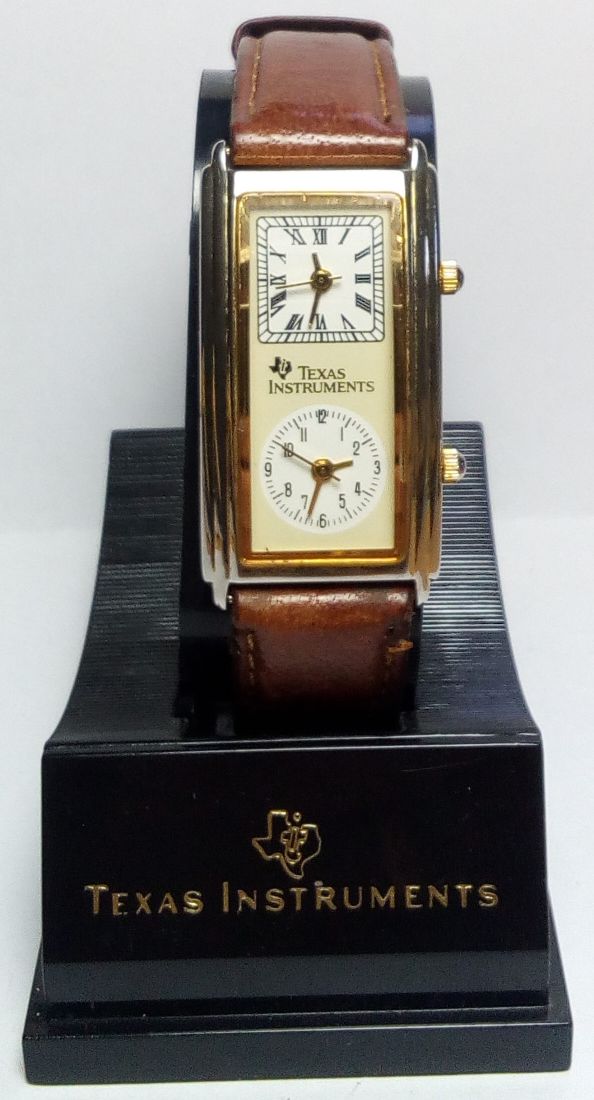
.jpg "Core Module Watch")
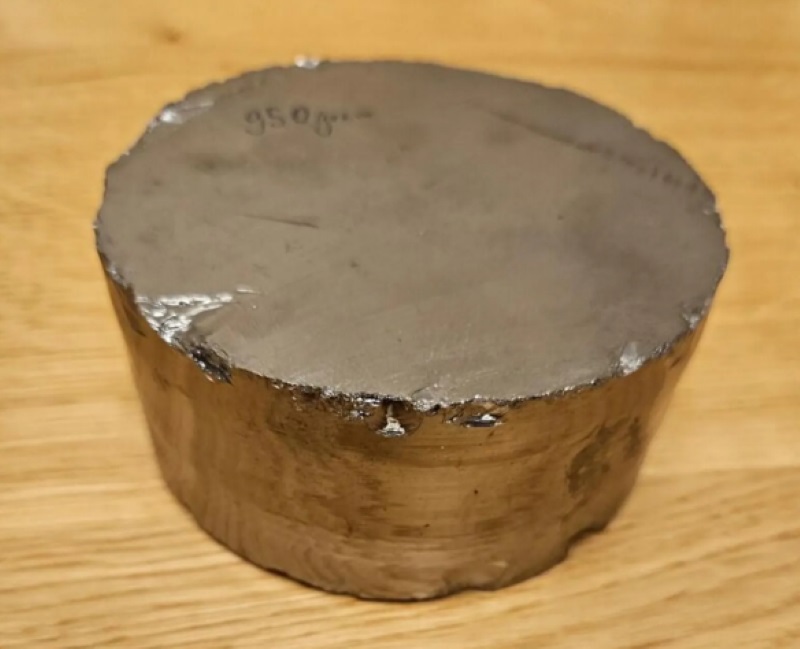
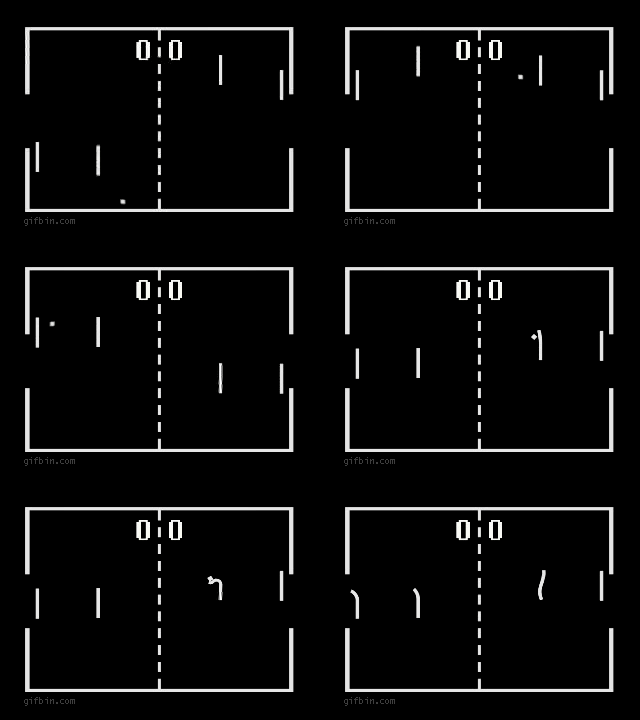
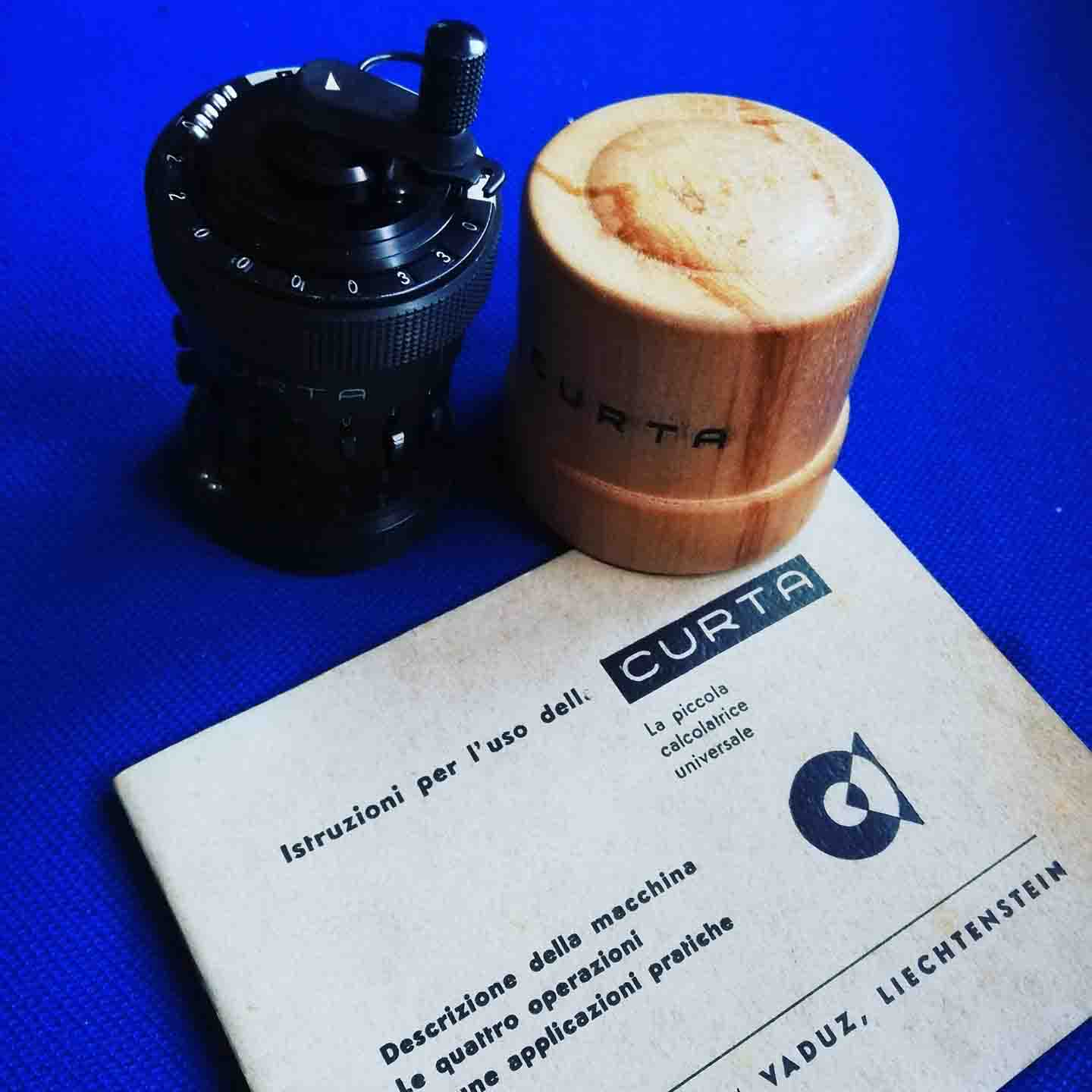
.jpg "Calculator Fuller")
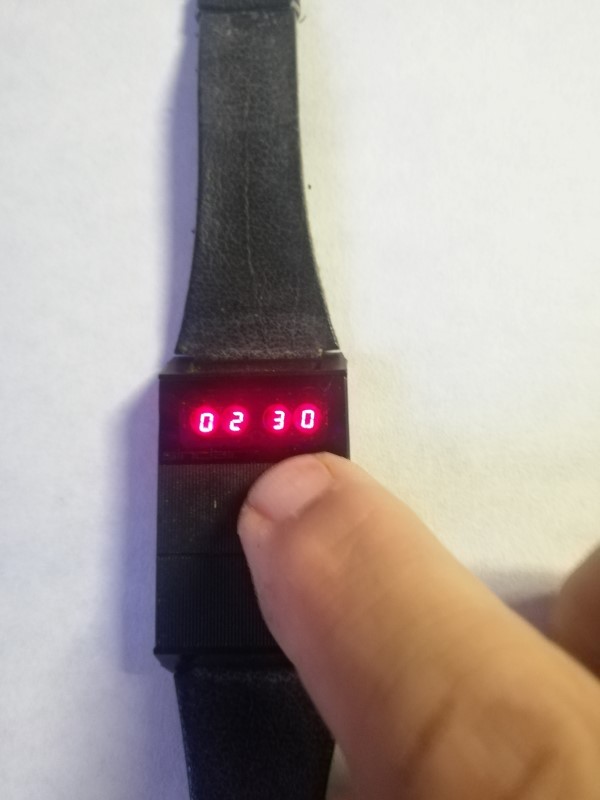

.jpg "Console / Games")
.jpg "Battle Star Galactica")
.jpg "APPLE")


.png)